
Aim: How did nuclear production and Cold War





Description: Aim: How did nuclear production and Cold War tensions lead to a Red Scare in the 1950s? What symbols are used in the cartoon what do they represent? What is the main idea of the cartoon? The Nuclear Arms Race The American monopoly on
Related Topics
Download Presentation
"Aim: How did nuclear production and Cold War" is the property of its rightful owner. Permission is granted to download and print the materials on this website for personal, non-commercial use only, and to display it on your personal computer provided you do not modify the materials and that you retain all copyright notices contained in the materials. By downloading content from our website, you accept the terms of this agreement.
Presentation Transcript
slide1. Aim: How did nuclear production and Cold War tensions lead to a Red Scare in the 1950’s?<br>
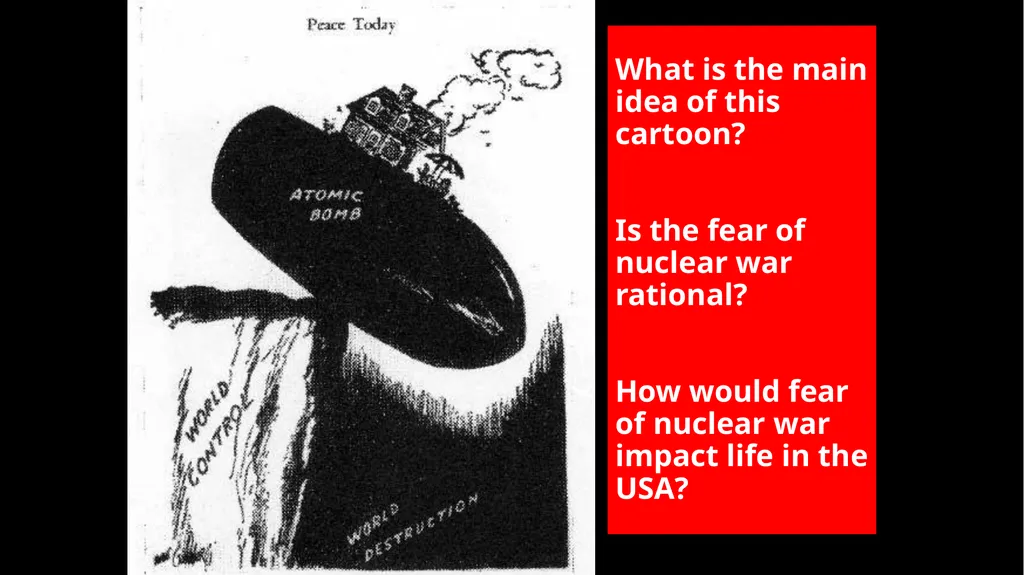
slide2. What symbols are used in the cartoon – what do they represent?
What is the main idea of the cartoon?<br>
slide3. The Nuclear Arms Race The American monopoly on nuclear weapons technology ended in 1949 when the USSR successfully tested their own atomic bomb The Soviet testing of the atomic bomb motivated the USA to regain its advantage; In 1952, the U.S. tested the 1st hydrogen bomb (1,000 times more powerful than the a-bomb) The Soviets responded with their own h-bomb in 1953 Delivering a Hydrogen Bomb<br>
slide4. What is the main idea of this cartoon? Is the fear of nuclear war rational? How would fear of nuclear war impact life in the USA?<br>
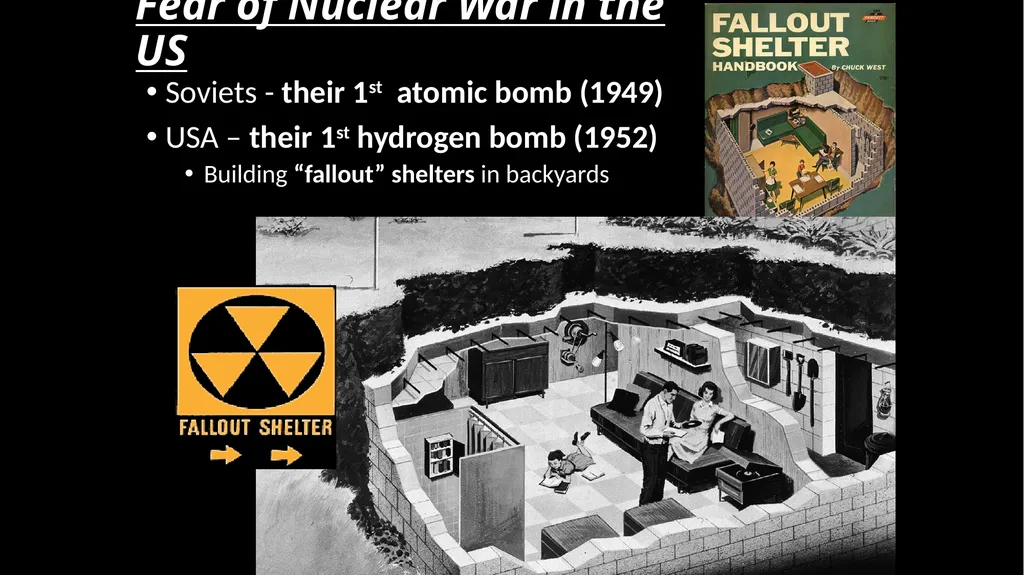
slide5. Fear of Nuclear War in the US Soviets - their 1st atomic bomb (1949)
USA – their 1st hydrogen bomb (1952)
Building “fallout” shelters in backyards<br>
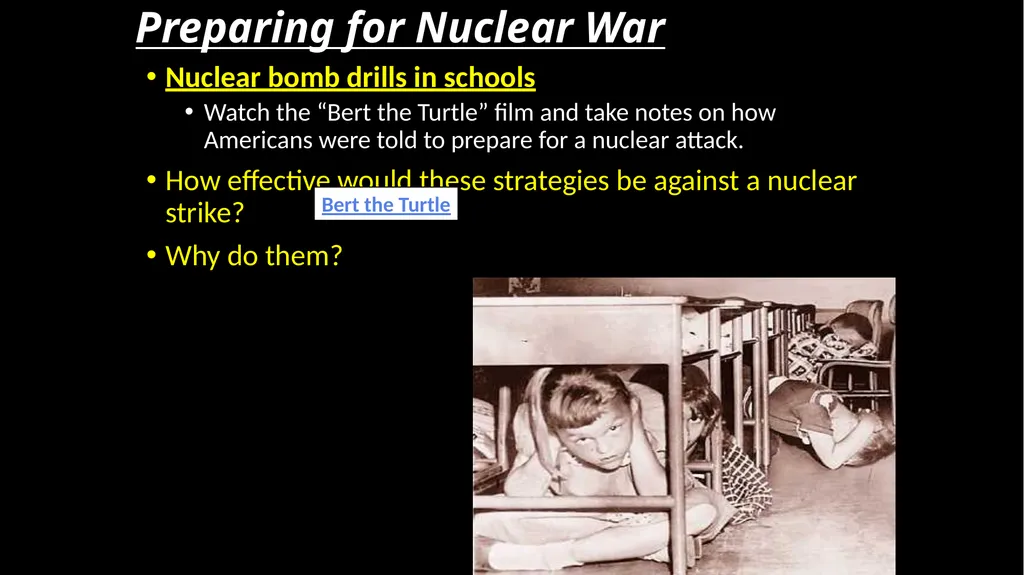
slide6. Preparing for Nuclear War Nuclear bomb drills in schools
Watch the “Bert the Turtle” film and take notes on how Americans were told to prepare for a nuclear attack.
How effective would these strategies be against a nuclear strike?
Why do them? Bert the Turtle<br>
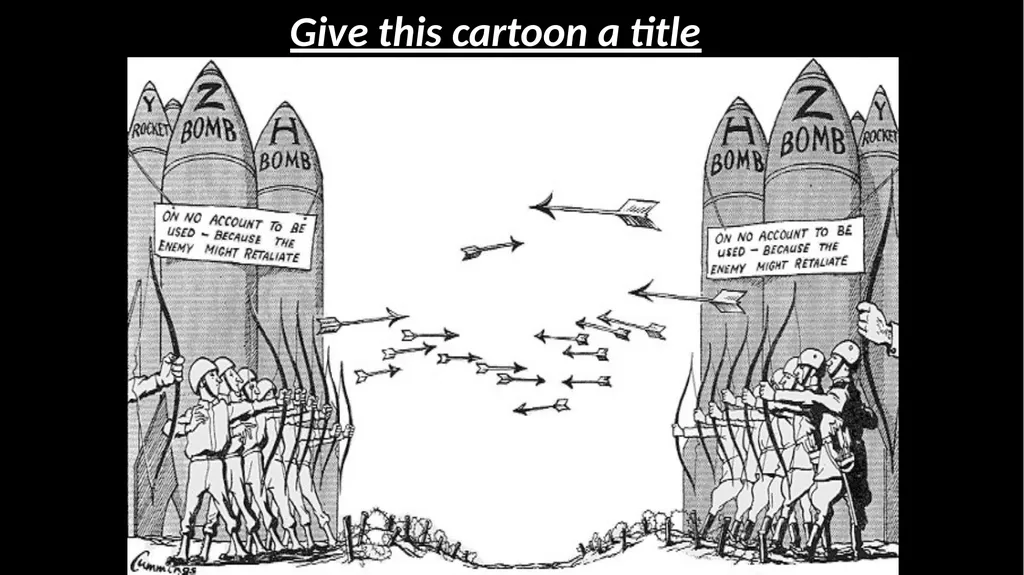
slide7. Give this cartoon a title<br>
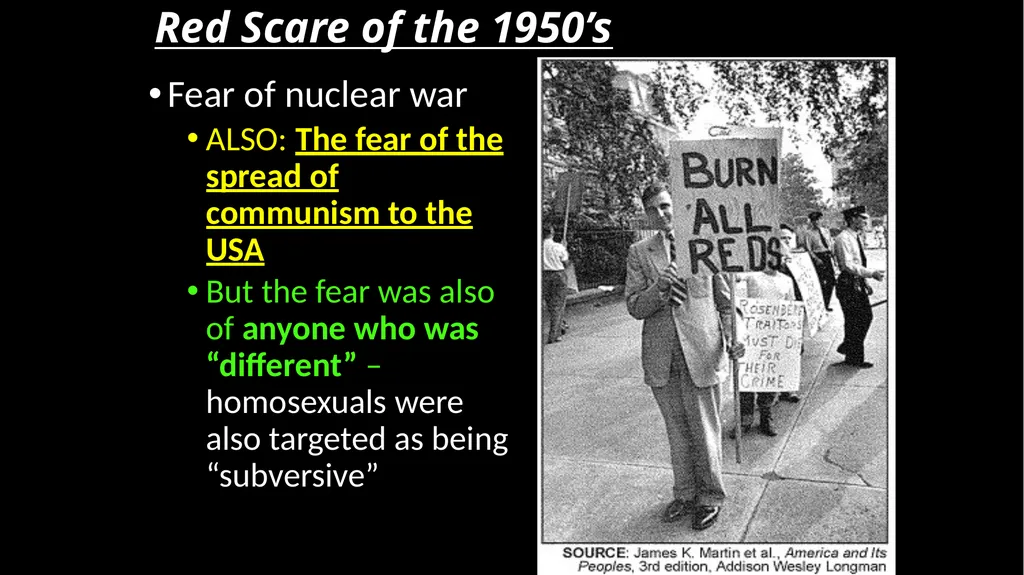
slide8. Red Scare of the 1950’s Fear of nuclear war
ALSO: The fear of the spread of communism to the USA
But the fear was also of anyone who was “different” – homosexuals were also targeted as being “subversive”<br>
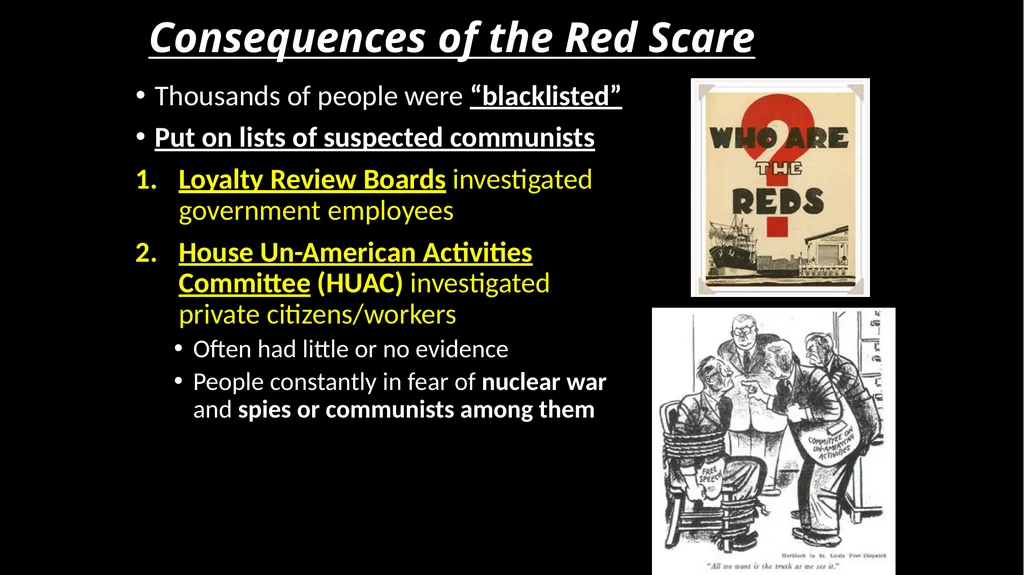
slide9. Consequences of the Red Scare Thousands of people were “blacklisted”
Put on lists of suspected communists
Loyalty Review Boards investigated government employees
House Un-American Activities Committee (HUAC) investigated private citizens/workers
Often had little or no evidence
People constantly in fear of nuclear war and spies or communists among them<br>
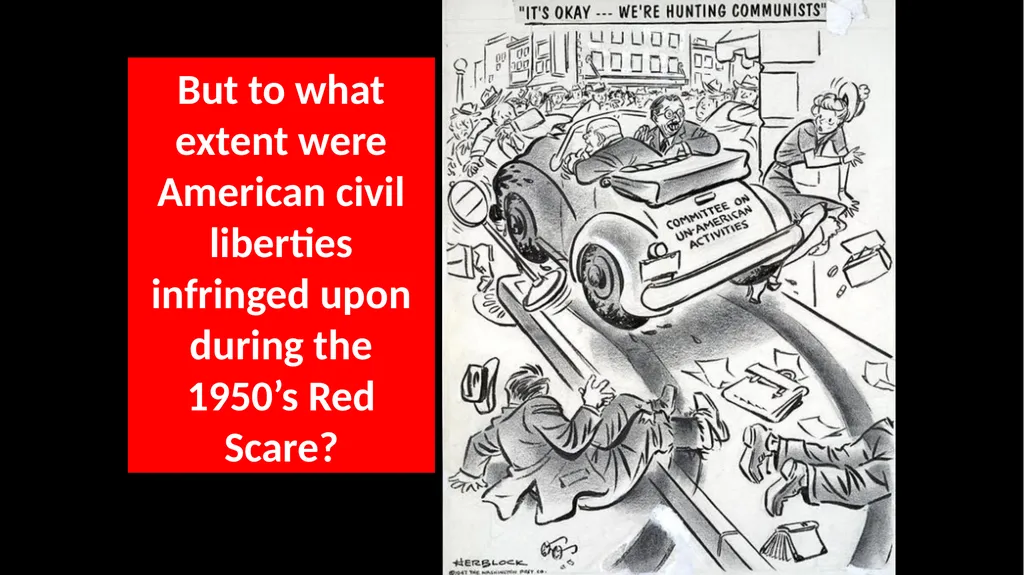
slide10. But to what extent were American civil liberties infringed upon during the 1950’s Red Scare?<br>
slide11. 1. What symbols/figures are used in the cartoon – what do they represent? 2. What is the main idea of the cartoon?<br>
slide12. Imagine that one day you are summoned before a government panel, even though you haven’t committed any crime! (or been formally charged with one)
You are REPEATEDLY questioned about your political views, accused of disloyalty, and asked to incriminate your friends.
If you don’t cooperate, you risk going to jail or losing your job.
How would you feel?<br>
slide13. McCarthyism in the 1950’s Senator Joseph McCarthy (R), Wisconsin
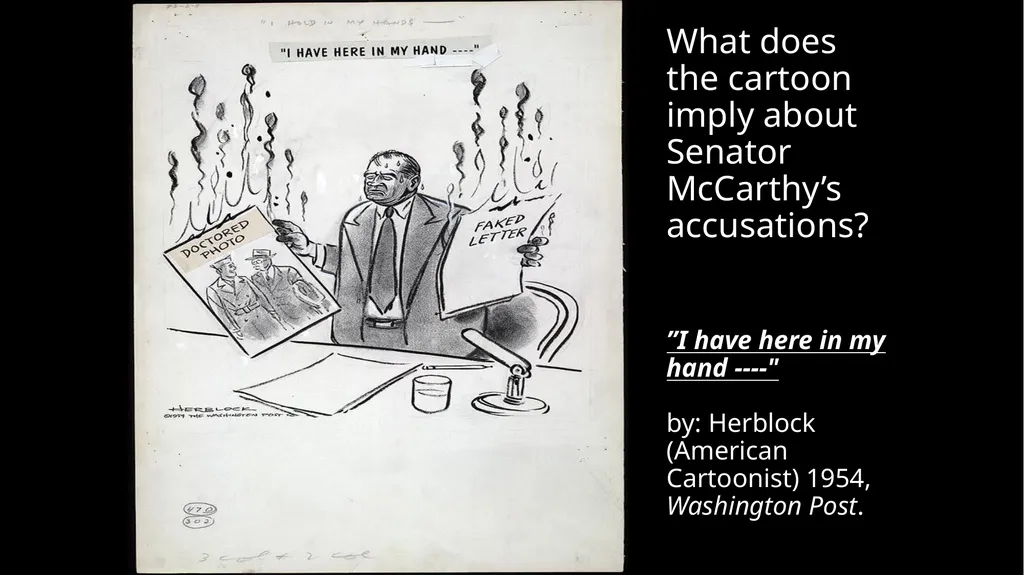
Claimed there were over 200 communists in the State Department Time period is often compared to a “Witch Hunt” where there is little or no evidence to prove the charges – violating constitutional rights
Sound familiar? VIDEO<br>
slide14. What does the cartoon imply about Senator McCarthy’s accusations? ”I have here in my hand ----" by: Herblock (American Cartoonist) 1954, Washington Post.<br>
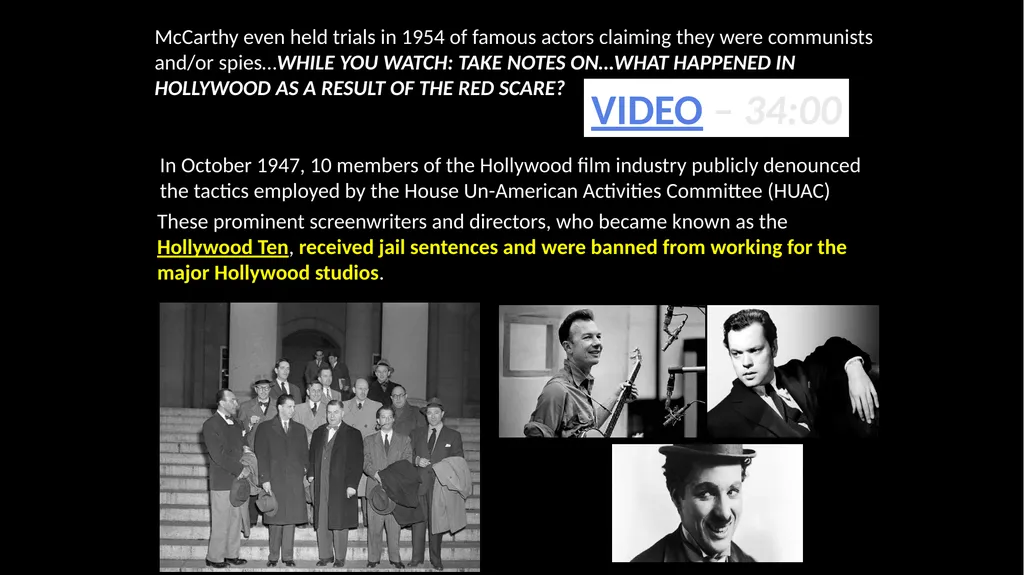
slide15. McCarthy even held trials in 1954 of famous actors claiming they were communists and/or spies…WHILE YOU WATCH: TAKE NOTES ON…WHAT HAPPENED IN HOLLYWOOD AS A RESULT OF THE RED SCARE? In October 1947, 10 members of the Hollywood film industry publicly denounced the tactics employed by the House Un-American Activities Committee (HUAC) These prominent screenwriters and directors, who became known as the Hollywood Ten, received jail sentences and were banned from working for the major Hollywood studios. VIDEO – 34:00<br>
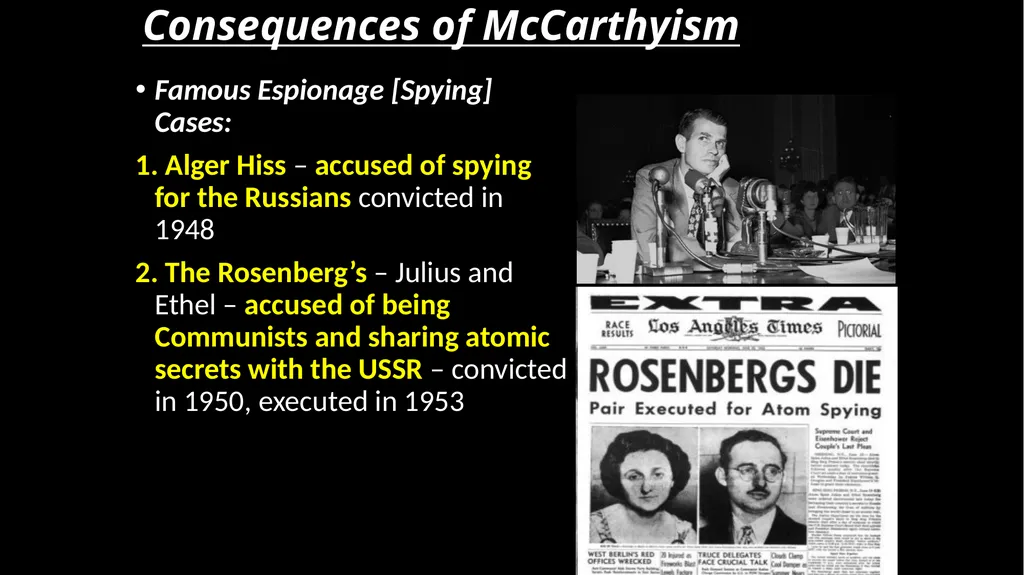
slide16. Consequences of McCarthyism Famous Espionage [Spying] Cases:
Alger Hiss – accused of spying for the Russians convicted in 1948
The Rosenberg’s – Julius and Ethel – accused of being Communists and sharing atomic secrets with the USSR – convicted in 1950, executed in 1953<br>
slide17. Compare/Contrast 1st Red Scare 2nd Red Scare<br>
slide18. ”Fire!" by: Herblock (American Cartoonist) 1949, Washington Post. Tomorrow:
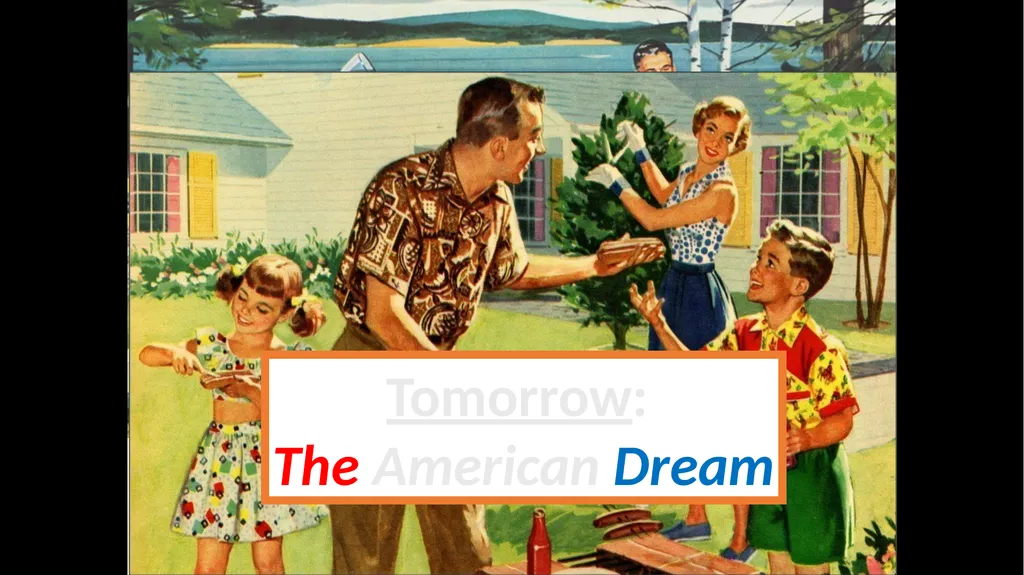
The American Dream<br>
slide2. What symbols are used in the cartoon – what do they represent?
What is the main idea of the cartoon?<br>
slide3. The Nuclear Arms Race The American monopoly on nuclear weapons technology ended in 1949 when the USSR successfully tested their own atomic bomb The Soviet testing of the atomic bomb motivated the USA to regain its advantage; In 1952, the U.S. tested the 1st hydrogen bomb (1,000 times more powerful than the a-bomb) The Soviets responded with their own h-bomb in 1953 Delivering a Hydrogen Bomb<br>
slide4. What is the main idea of this cartoon? Is the fear of nuclear war rational? How would fear of nuclear war impact life in the USA?<br>
slide5. Fear of Nuclear War in the US Soviets - their 1st atomic bomb (1949)
USA – their 1st hydrogen bomb (1952)
Building “fallout” shelters in backyards<br>
slide6. Preparing for Nuclear War Nuclear bomb drills in schools
Watch the “Bert the Turtle” film and take notes on how Americans were told to prepare for a nuclear attack.
How effective would these strategies be against a nuclear strike?
Why do them? Bert the Turtle<br>
slide7. Give this cartoon a title<br>
slide8. Red Scare of the 1950’s Fear of nuclear war
ALSO: The fear of the spread of communism to the USA
But the fear was also of anyone who was “different” – homosexuals were also targeted as being “subversive”<br>
slide9. Consequences of the Red Scare Thousands of people were “blacklisted”
Put on lists of suspected communists
Loyalty Review Boards investigated government employees
House Un-American Activities Committee (HUAC) investigated private citizens/workers
Often had little or no evidence
People constantly in fear of nuclear war and spies or communists among them<br>
slide10. But to what extent were American civil liberties infringed upon during the 1950’s Red Scare?<br>
slide11. 1. What symbols/figures are used in the cartoon – what do they represent? 2. What is the main idea of the cartoon?<br>
slide12. Imagine that one day you are summoned before a government panel, even though you haven’t committed any crime! (or been formally charged with one)
You are REPEATEDLY questioned about your political views, accused of disloyalty, and asked to incriminate your friends.
If you don’t cooperate, you risk going to jail or losing your job.
How would you feel?<br>
slide13. McCarthyism in the 1950’s Senator Joseph McCarthy (R), Wisconsin
Claimed there were over 200 communists in the State Department Time period is often compared to a “Witch Hunt” where there is little or no evidence to prove the charges – violating constitutional rights
Sound familiar? VIDEO<br>
slide14. What does the cartoon imply about Senator McCarthy’s accusations? ”I have here in my hand ----" by: Herblock (American Cartoonist) 1954, Washington Post.<br>
slide15. McCarthy even held trials in 1954 of famous actors claiming they were communists and/or spies…WHILE YOU WATCH: TAKE NOTES ON…WHAT HAPPENED IN HOLLYWOOD AS A RESULT OF THE RED SCARE? In October 1947, 10 members of the Hollywood film industry publicly denounced the tactics employed by the House Un-American Activities Committee (HUAC) These prominent screenwriters and directors, who became known as the Hollywood Ten, received jail sentences and were banned from working for the major Hollywood studios. VIDEO – 34:00<br>
slide16. Consequences of McCarthyism Famous Espionage [Spying] Cases:
Alger Hiss – accused of spying for the Russians convicted in 1948
The Rosenberg’s – Julius and Ethel – accused of being Communists and sharing atomic secrets with the USSR – convicted in 1950, executed in 1953<br>
slide17. Compare/Contrast 1st Red Scare 2nd Red Scare<br>
slide18. ”Fire!" by: Herblock (American Cartoonist) 1949, Washington Post. Tomorrow:
The American Dream<br>