Approaches to Discourse Analysis Deborah Schiffrin Approaches to Discourse (1994); The Speech Act Approach; The Ethnography of Communication; Pragmatic Approach; Conversational Analysis; Interactional Sociolinguistics;
"Approaches to Discourse Analysis Deborah Schiffrin" is the property of its rightful owner. Permission is granted to
download and print the materials on this website for personal, non-commercial use only, and to display it
on your personal computer provided you do not modify the materials and that you retain all copyright
notices contained in the materials. By downloading content from our website, you accept the terms of this
agreement.
Presentation Transcript
01
Approaches to Discourse Analysis<br>
02
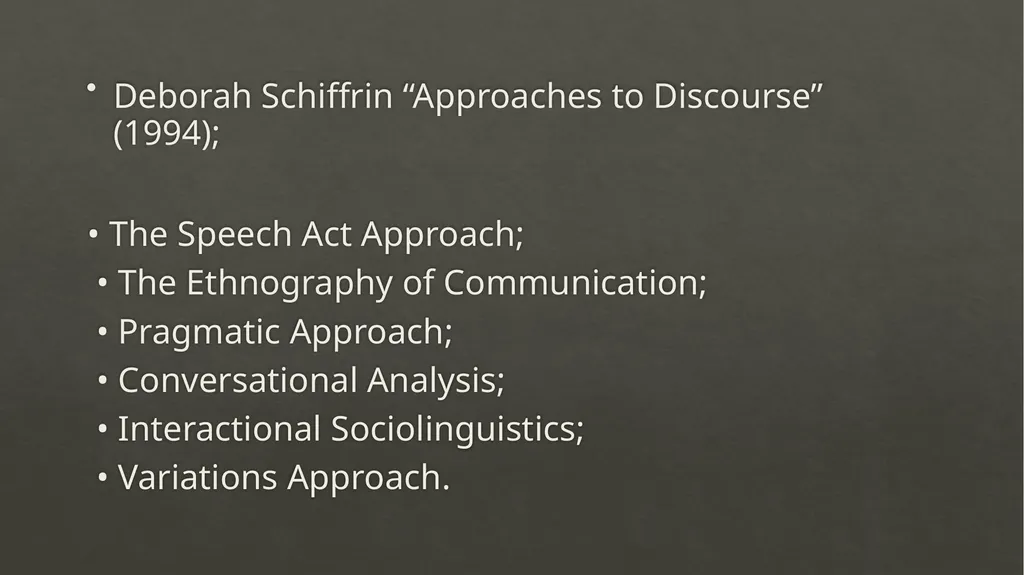
Deborah Schiffrin “Approaches to Discourse” (1994);
• The Speech Act Approach;
• The Ethnography of Communication;
• Pragmatic Approach;
• Conversational Analysis;
• Interactional Sociolinguistics;
• Variations Approach.<br>
03
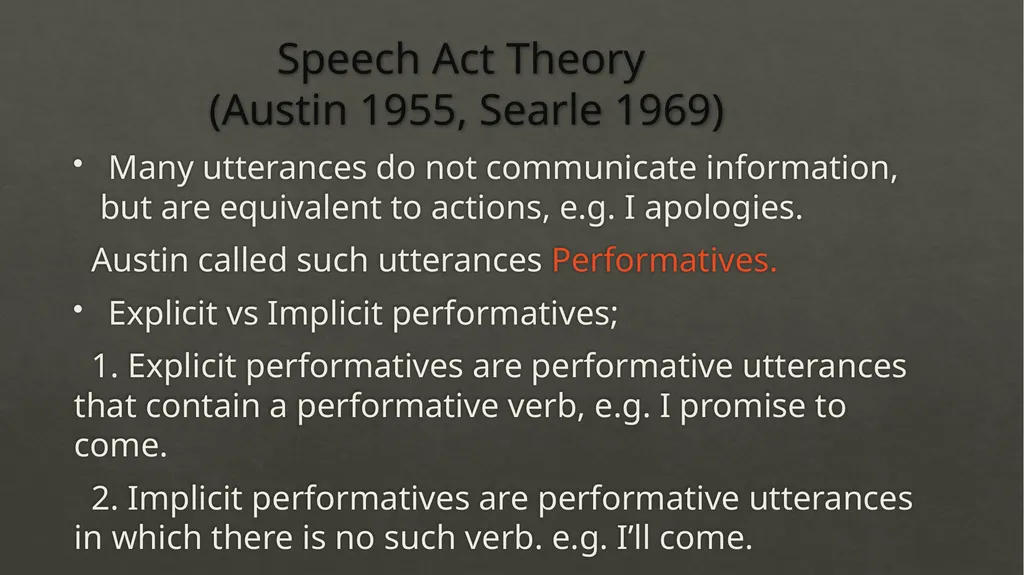
Speech Act Theory (Austin 1955, Searle 1969) Many utterances do not communicate information, but are equivalent to actions, e.g. I apologies.
Austin called such utterances Performatives.
Explicit vs Implicit performatives;
1. Explicit performatives are performative utterances that contain a performative verb, e.g. I promise to come.
2. Implicit performatives are performative utterances in which there is no such verb. e.g. I’ll come.<br>
04
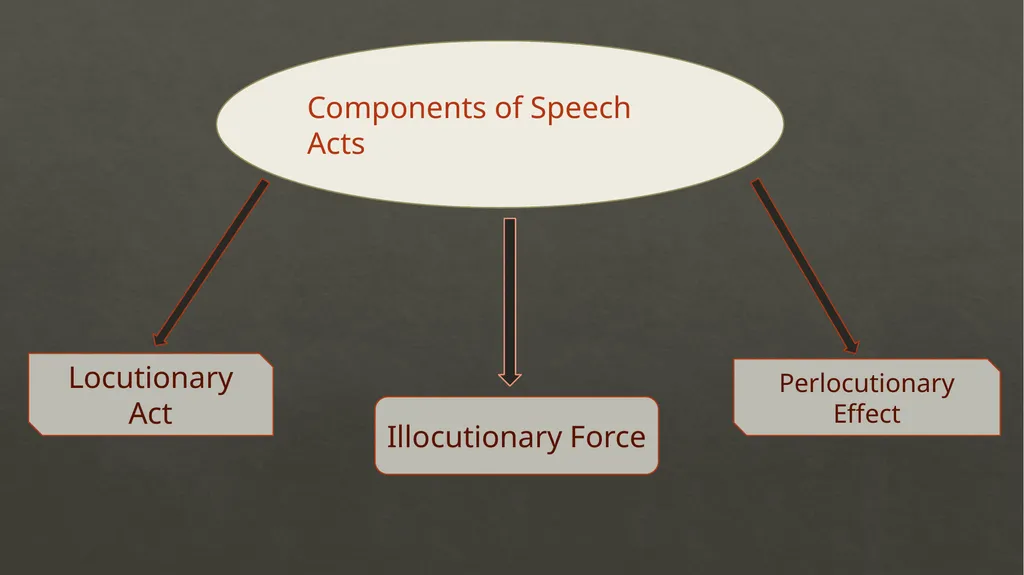
Components of Speech Acts Illocutionary Force Locutionary Act Perlocutionary Effect<br>
05
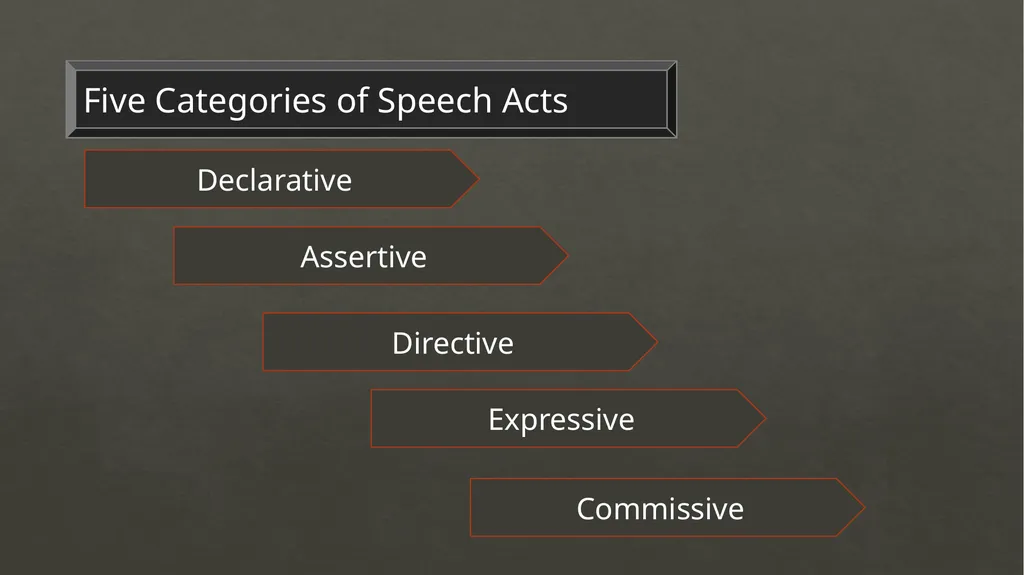
Declarative Assertive Directive Expressive Commissive Five Categories of Speech Acts<br>
06
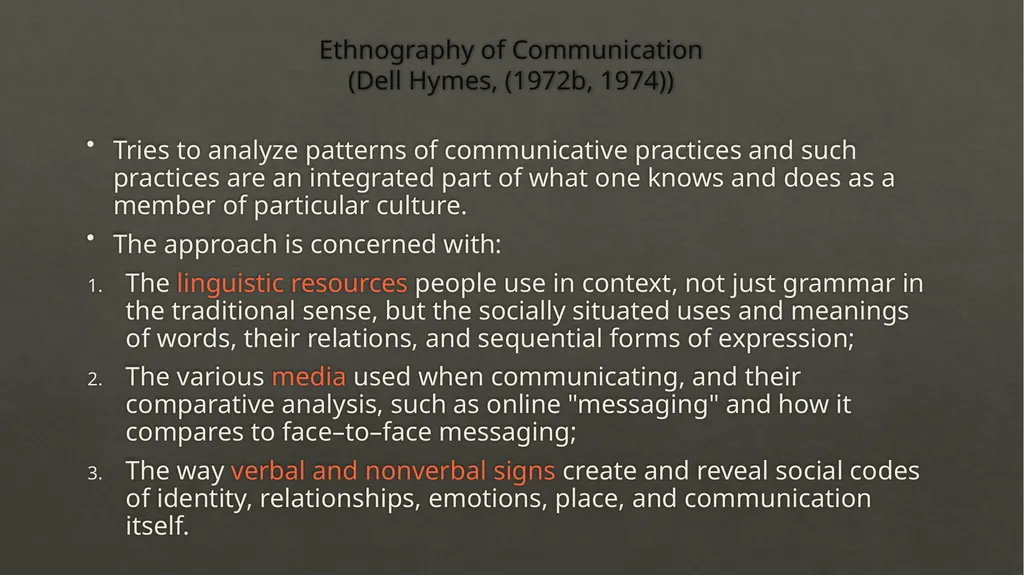
Ethnography of Communication (Dell Hymes, (1972b, 1974)) Tries to analyze patterns of communicative practices and such practices are an integrated part of what one knows and does as a member of particular culture.
The approach is concerned with:
The linguistic resources people use in context, not just grammar in the traditional sense, but the socially situated uses and meanings of words, their relations, and sequential forms of expression;
The various media used when communicating, and their comparative analysis, such as online "messaging" and how it compares to face–to–face messaging;
The way verbal and nonverbal signs create and reveal social codes of identity, relationships, emotions, place, and communication itself.<br>
07
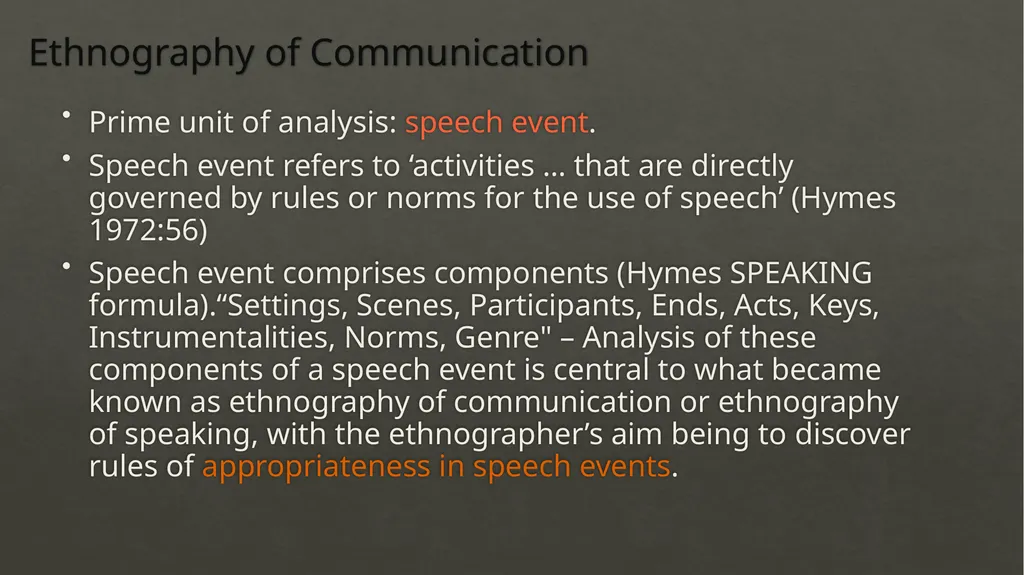
Ethnography of Communication Prime unit of analysis: speech event.
Speech event refers to ‘activities … that are directly governed by rules or norms for the use of speech’ (Hymes 1972:56)
Speech event comprises components (Hymes SPEAKING formula).“Settings, Scenes, Participants, Ends, Acts, Keys, Instrumentalities, Norms, Genre" – Analysis of these components of a speech event is central to what became known as ethnography of communication or ethnography of speaking, with the ethnographer’s aim being to discover rules of appropriateness in speech events.<br>
08
Pragmatics (Grice 1975, Leech 1983, Levinson 1983) The study of contextual meaning as communicated by a speaker, and interpreted by a listener.
Fasold (1993) pragmatics is a study of the use of context to make inferences about meaning.
Pragmatics concerns speech-acts, and what people can infer from language but is not said (implicature, presuppositions, indirect speech acts).<br>
09
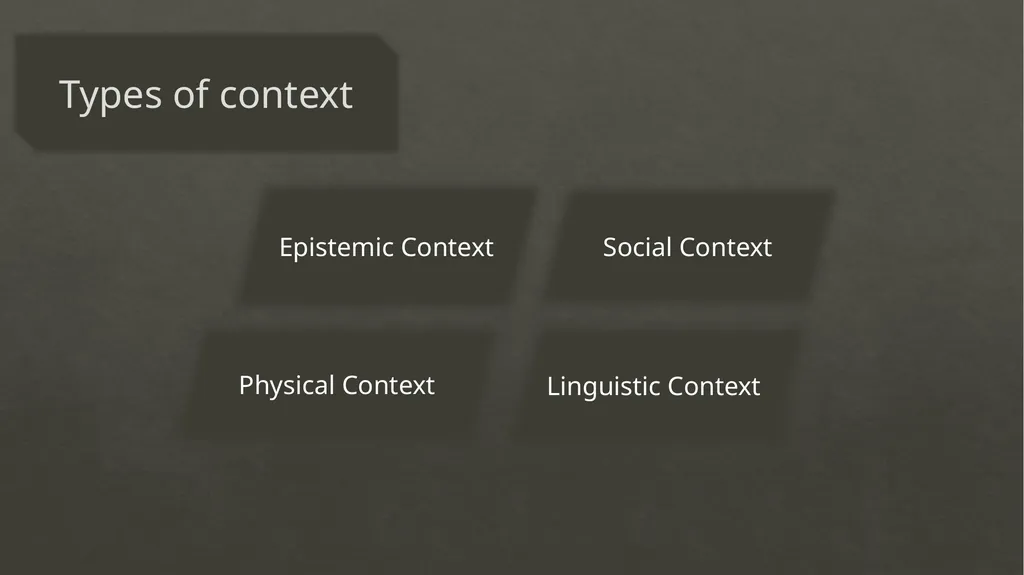
Types of context Physical Context Linguistic Context Social Context Epistemic Context<br>
10
Conversation Analysis (CA) Harold Garfinkel 1960s-1970s CA is a branch of ethnomethodology.
It is a method that explores systematically how people talk, verbally and nonverbally. investigate the phenomenon of conversation as a social activity.
It studies:
• opening and closing conversation
• topic-organization
• turn-taking
• adjacency pairs; A paired sequence of turns in which the second turn is a response to the first and conditionally relevant to it.<br>
11
Interactional Sociolinguistics (Gumperz 1982, Goffman 1959-1981) Concerned with the importance of context in the production and interpretation of discourse.
Gumperz demonstrated that interactants from different socio-cultural backgrounds may “hear” and understand discourse differently according to their interpretation contextualization cues in discourse, e.g. intonation, ‘speaking for another’, alignment, gender so on. Her basic concern is the accomplishment of conversational coherence” the connection of ideas at the idea level”
Topics of interest include; cross-cultural miscommunication, politeness, and framing.<br>
12
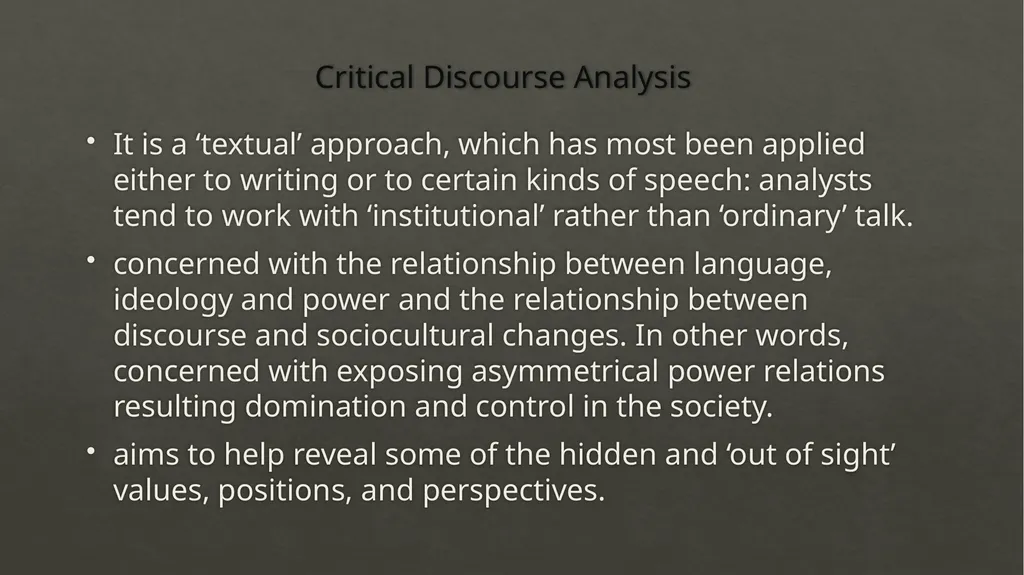
Critical Discourse Analysis It is a ‘textual’ approach, which has most been applied either to writing or to certain kinds of speech: analysts tend to work with ‘institutional’ rather than ‘ordinary’ talk.
concerned with the relationship between language, ideology and power and the relationship between discourse and sociocultural changes. In other words, concerned with exposing asymmetrical power relations resulting domination and control in the society.
aims to help reveal some of the hidden and ‘out of sight’ values, positions, and perspectives.<br>
13
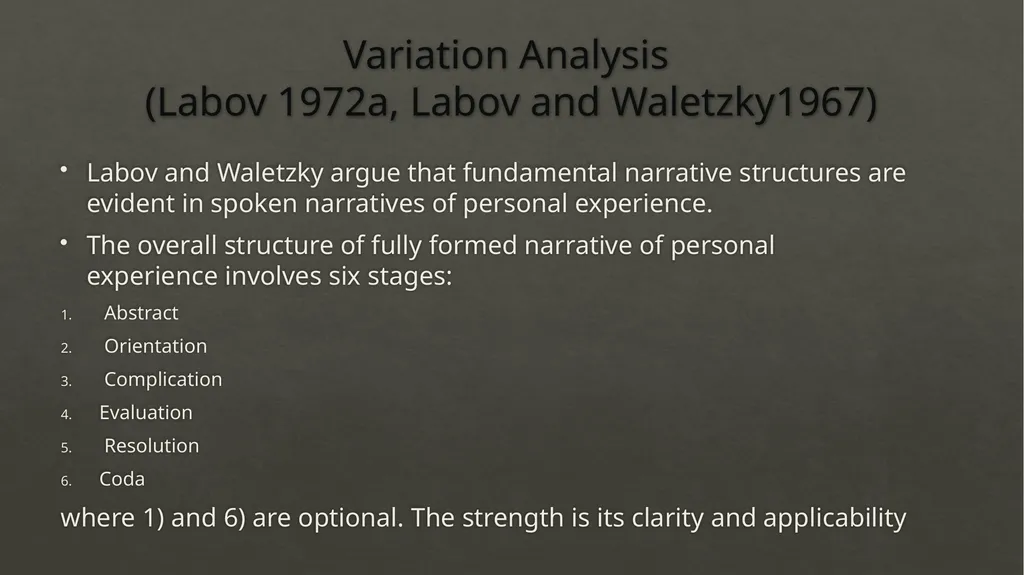
Variation Analysis (Labov 1972a, Labov and Waletzky1967) Labov and Waletzky argue that fundamental narrative structures are evident in spoken narratives of personal experience.
The overall structure of fully formed narrative of personal experience involves six stages:
Abstract
Orientation
Complication
Evaluation
Resolution
Coda
where 1) and 6) are optional. The strength is its clarity and applicability<br>