04
Background The first complex society in Mesoamerica was the Olmec Civilization
The Olmec Civilization lasted from 1500BCE-200 CE
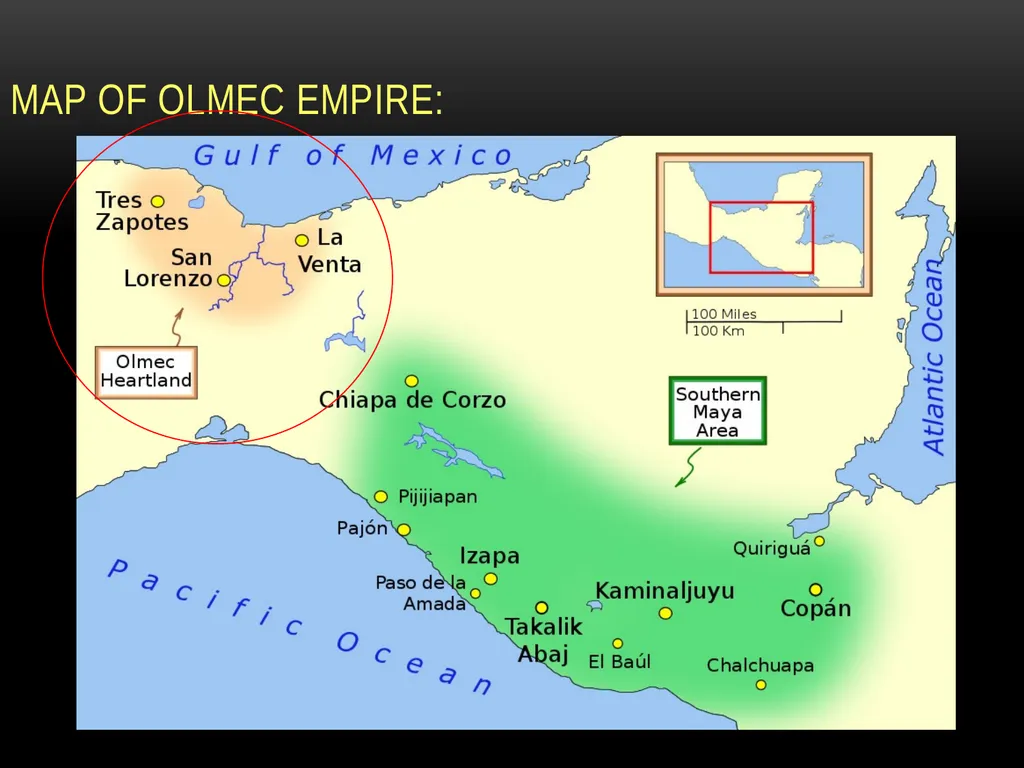
Extended from the Tuxtlas mountains in the west to the lowlands of the Chontalpa in the east
Olmec means “the rubber people” in Nahuatl, the language of the Aztec
Named after the practice extracting latex from trees and making rubber<br>
05
Background Many historians consider the Olmec civilization the “mother culture” of Mesoamerica
A mother culture is a way of life that strongly influences later cultures
The Olmec empire led to the development of other civilizations, such as the Maya and the Aztec<br>
06
Map of Olmec Empire:<br>
07
Background Developed along the Coatzacoalcos River
Area is fairly fertile naturally
Hot & humid area and covered with swamps and jungle
100 inches of rainfall per year
Somewhat reliable flooding<br>
08
Society & Economy Like the other river civilizations the Olmec were an agricultural civilizations
Mostly grew Maize(Corn)
Began to be domesticated in around 3000BCE
Also domesticated:
Cotton
Rubber
Cocoa bean
Beans
Squash/Sweet Potatoes<br>
09
Society & Economy Relied on flooding from river somewhat
However more likely than not the Olmec mostly depended on Slash and Burn agriculture
Way to clear the forests and shrubs, and to provide new fields once the old fields were exhausted
Agricultural fields were located on outskirts of villages<br>
10
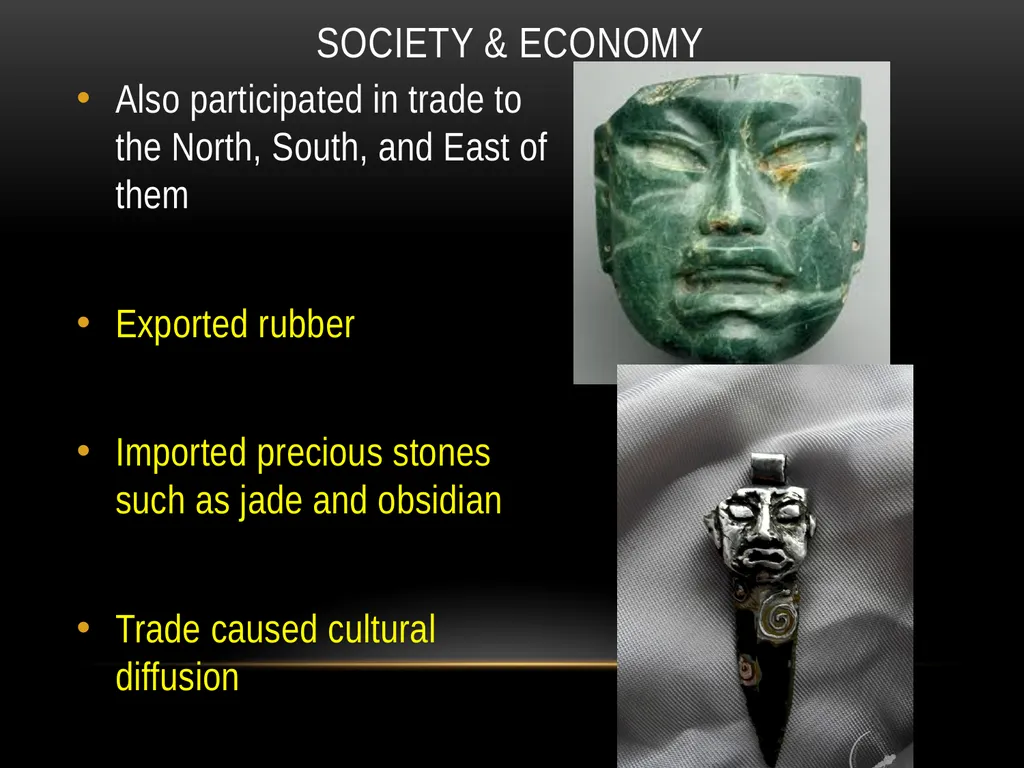
Society & Economy Also participated in trade to the North, South, and East of them
Exported rubber
Imported precious stones such as jade and obsidian
Trade caused cultural diffusion<br>
11
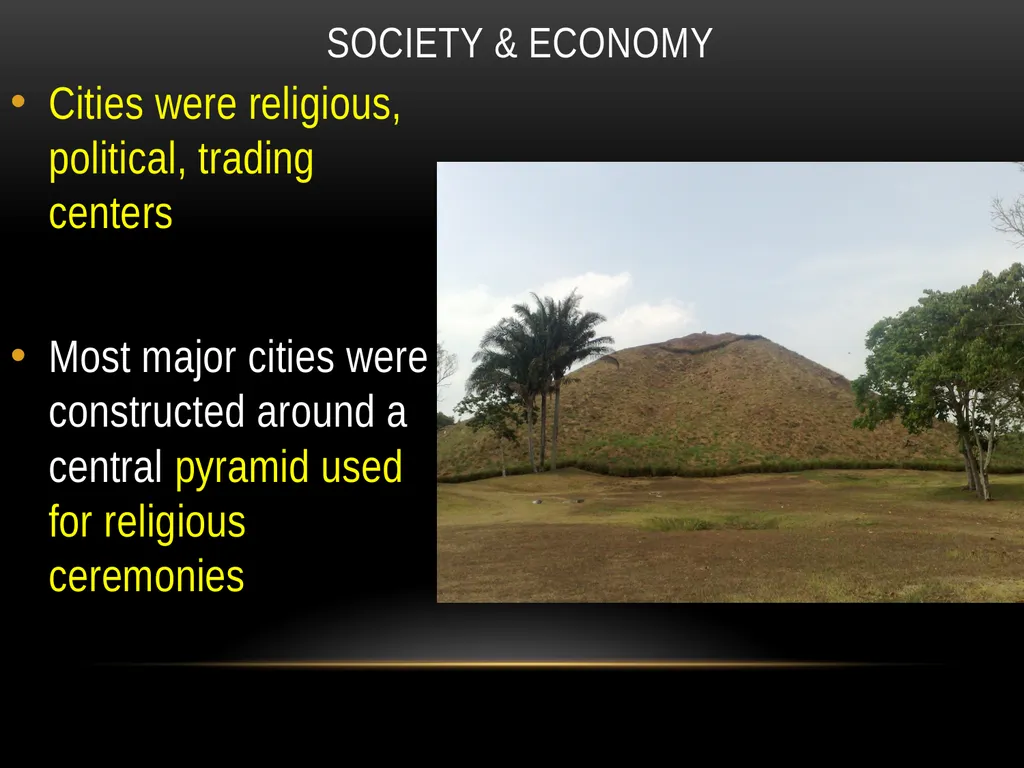
Society & Economy Cities were religious, political, trading centers
Most major cities were constructed around a central pyramid used for religious ceremonies<br>
12
four major centers San Lorenzo(The Cultural Center)
La Venta(Replaced San Lorenzo)
Tres Zapotes
Laguna de Los Cerros
These cities had populations of around 5-10,000 people<br>
13
Society & Economy Had an animal based animistic religion religion
Different gods were connected to different important aspects of life
Such as corn, fire, fertility ect
Made offerings and prayers to these gods<br>
14
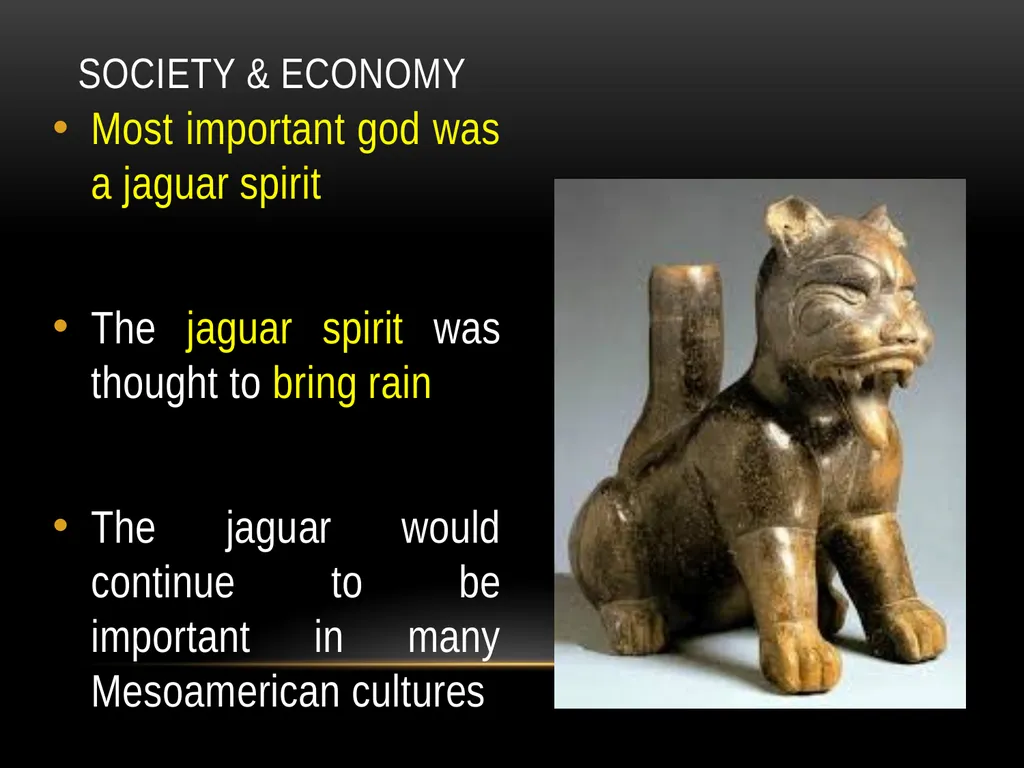
Society & Economy Most important god was a jaguar spirit
The jaguar spirit was thought to bring rain
The jaguar would continue to be important in many Mesoamerican cultures<br>
15
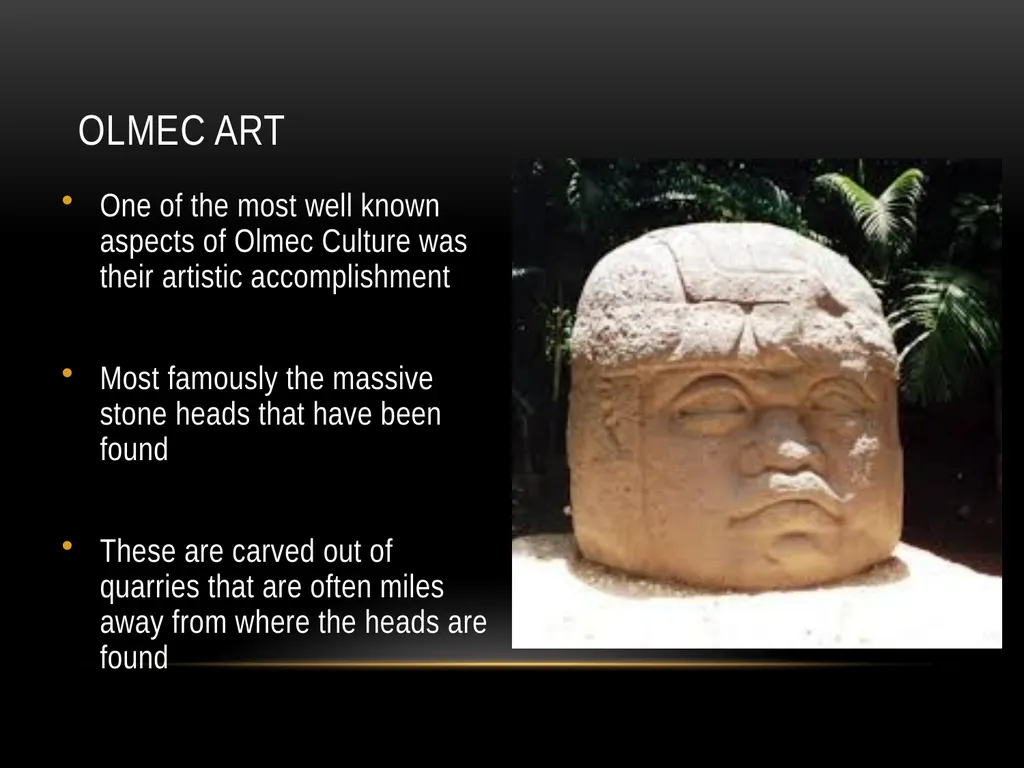
Olmec Art One of the most well known aspects of Olmec Culture was their artistic accomplishment
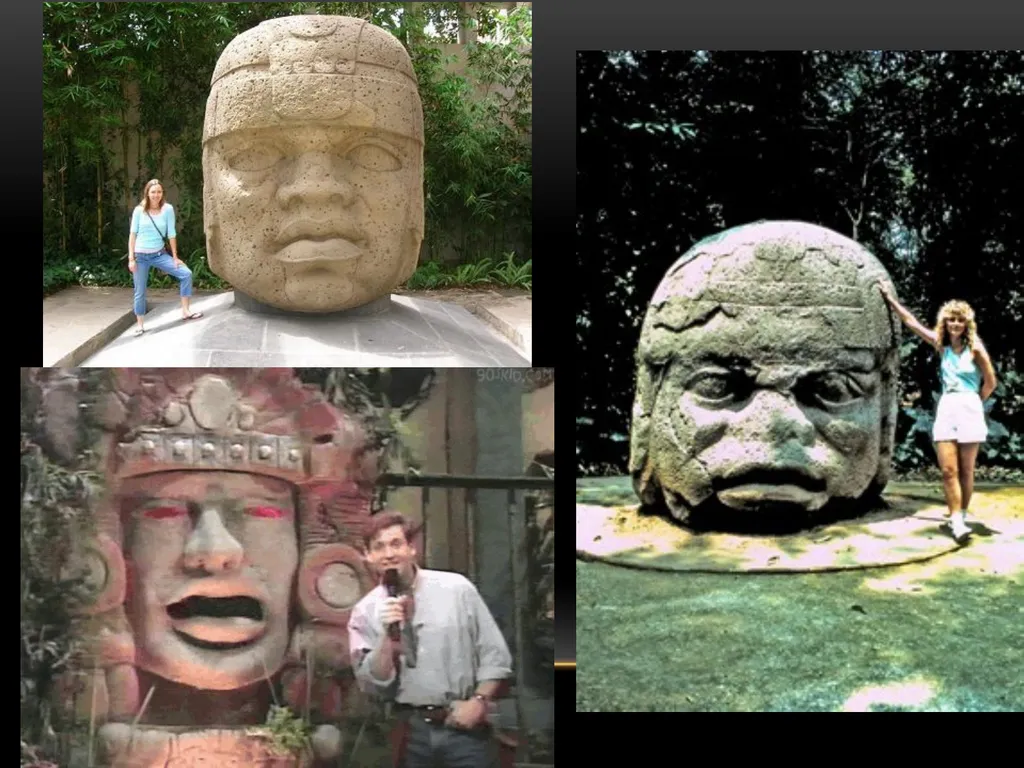
Most famously the massive stone heads that have been found
These are carved out of quarries that are often miles away from where the heads are found<br>
16
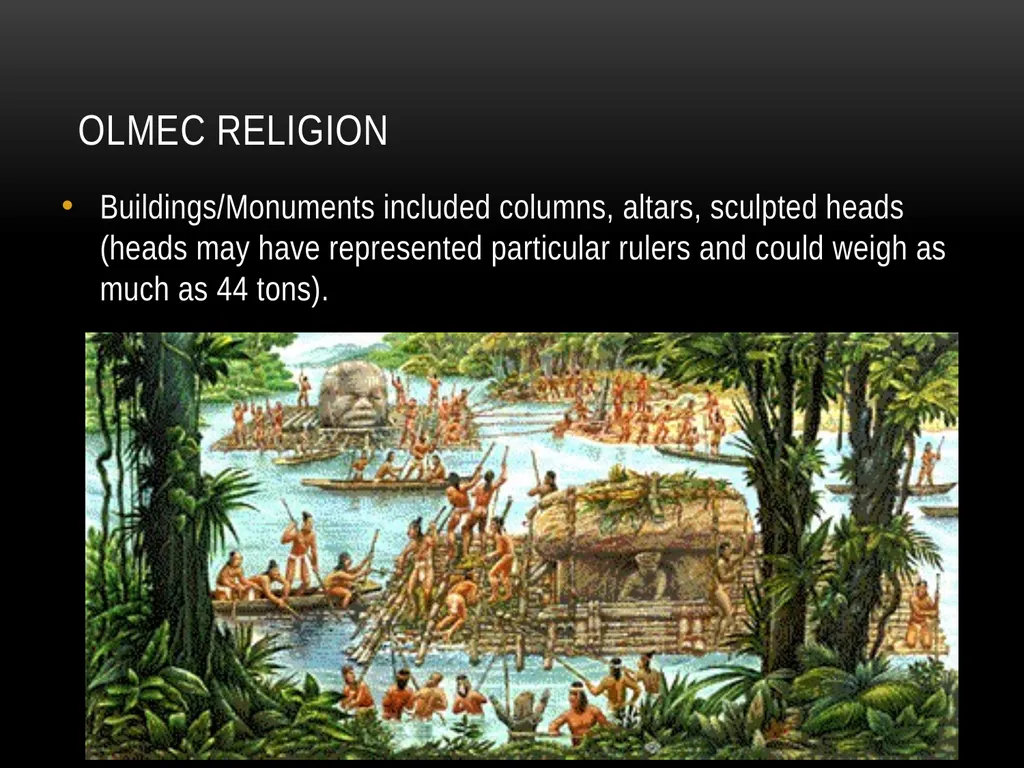
Olmec Religion Buildings/Monuments included columns, altars, sculpted heads (heads may have represented particular rulers and could weigh as much as 44 tons).<br>
17
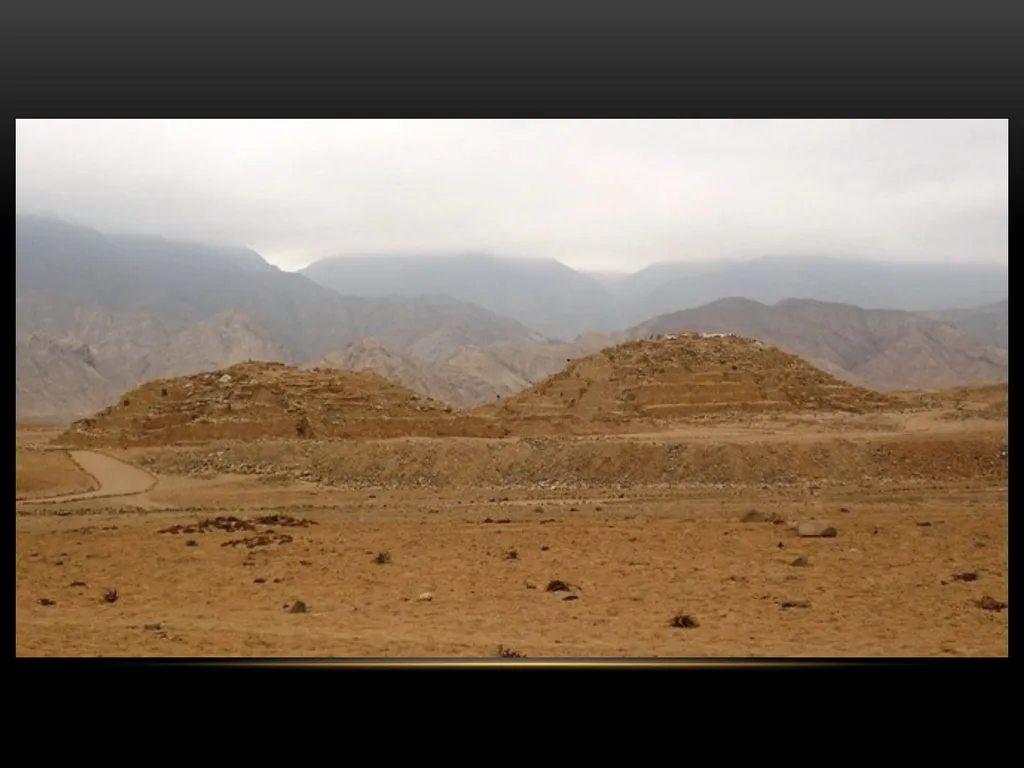
Caral AKA Norte Chico Located in what is now north-central coastal Peru
Existed between roughly 3500-1700 BCE
Cities were located on one of three rivers in the region that were used for irrigation
Massive production of cotton for textiles and fishing nets<br>
18
Caral AKA Norte Chico Little evidence of agriculture for food production
Food must have come from sea and perhaps hunting
Flutes made of bird bones and cornetts—a type of instrument similar to a flute, made of deer and llama bones
Monumental architecture in the form of platform mounds and sunken circular plazas<br>
19
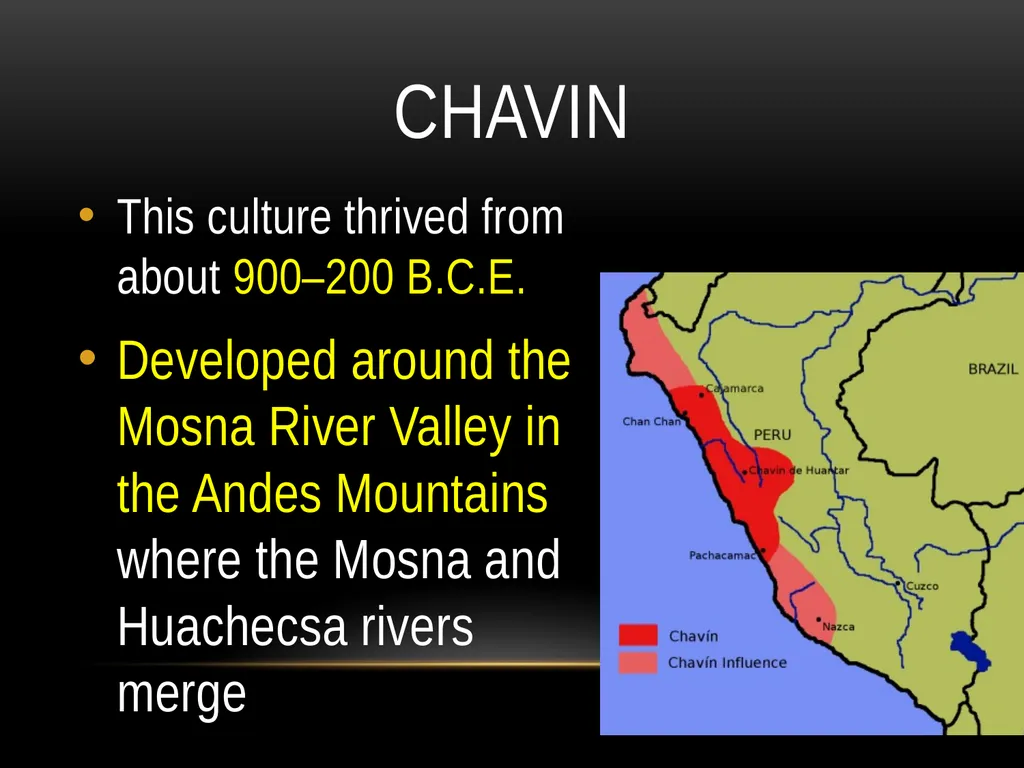
Chavin This culture thrived from about 900–200 B.C.E.
Developed around the Mosna River Valley in the Andes Mountains where the Mosna and Huachecsa rivers merge<br>
20
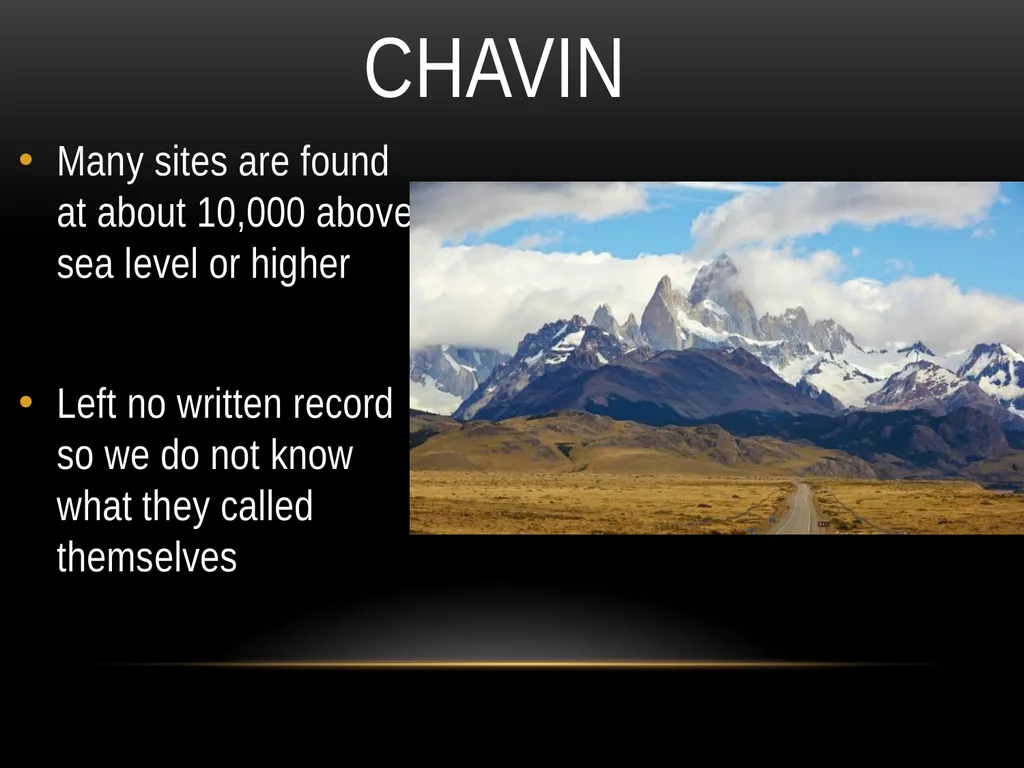
Chavin Many sites are found at about 10,000 above sea level or higher
Left no written record so we do not know what they called themselves<br>
21
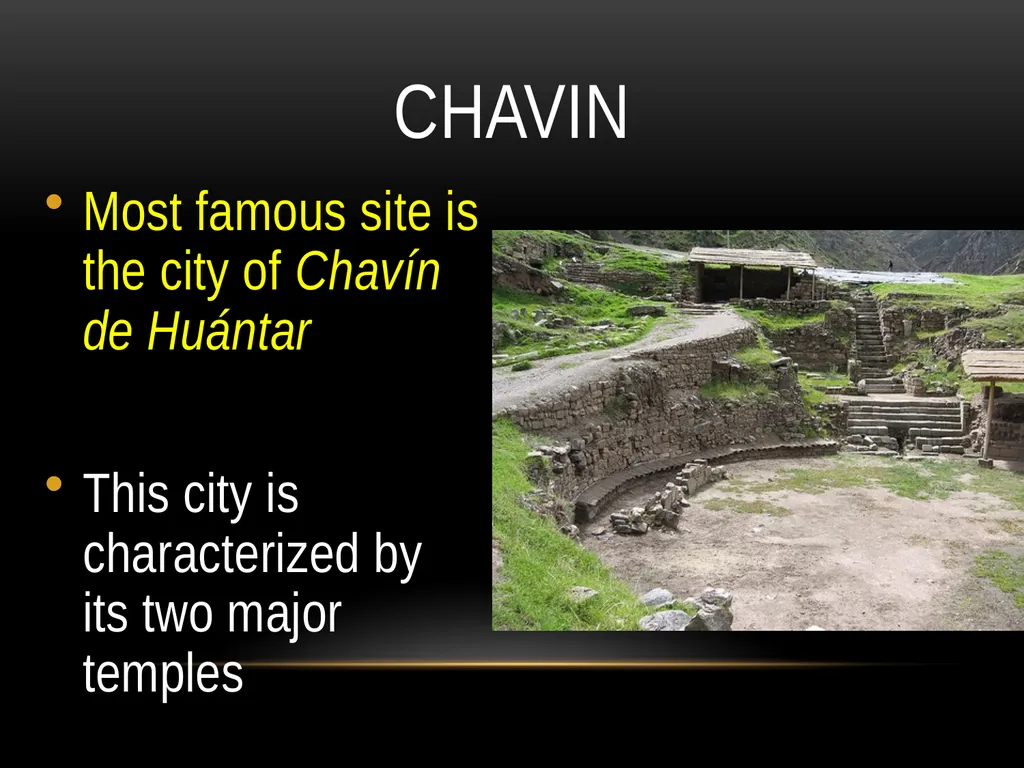
Chavin Most famous site is the city of Chavín de Huántar
This city is characterized by its two major temples<br>
22
Chavin Grew maize and potatoes, the Chavin people also grew the grain quinoa
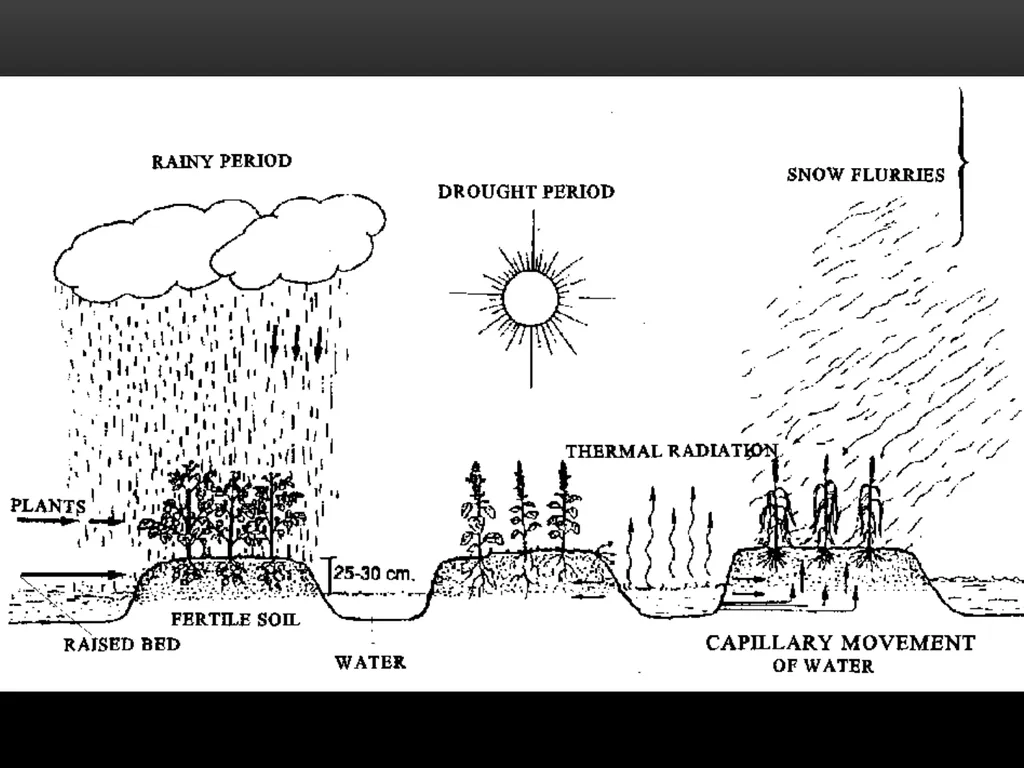
Developed irrigation system called Waru Waru to help with dry regions and unpredictable rainfall
Domesticated Llamas, mostly for their meat and carrying goods
Shaman religion was the center of political and social life<br>
23
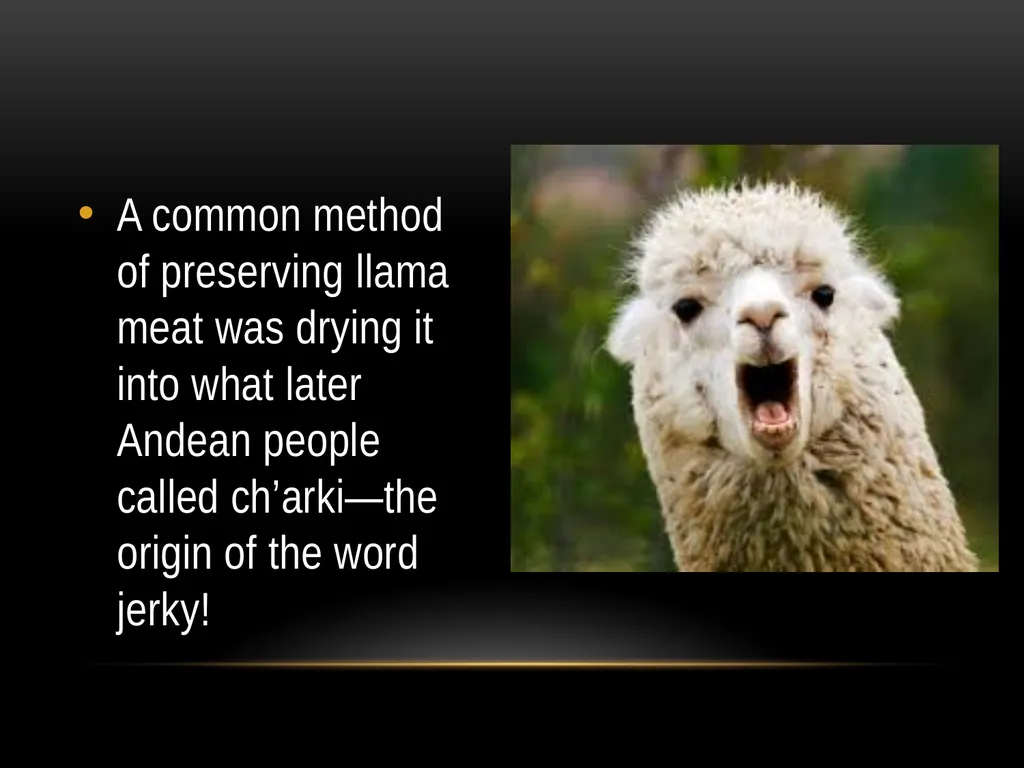
A common method of preserving llama meat was drying it into what later Andean people called ch’arki—the origin of the word jerky!<br>
24
Theme Tuesday Bellwork What is an example of Interaction Between Humans and the Environment in the Olmec Civilization?
Answers Vary
What is an Development and Transformation of Social Structures in the Umayyad Dynasty?
Answers Vary<br>
25
Objective WWBAT: Gather information and summarize the major characteristics of the Chavin Culture<br>
26
Olmec Bellwork What are three characteristics of the Olmec Civilization we have seen in other areas/civilizations?
Polytheism, developed along river, gender roles, dependence on agriculture, cultural diffusion via trade, religious worship sites<br>
27
Objective WWBAT: Read about politics and economics of Europe during the Middle Ages<br>