Biosecurity Overview Biosecurity Series of management practices Prevent introduction Keep disease agents out of animal populations where they are not present Prevent further spread From infected to uninfected groups By animals, personnel,
"Biosecurity Overview Biosecurity Series of" is the property of its rightful owner. Permission is granted to
download and print the materials on this website for personal, non-commercial use only, and to display it
on your personal computer provided you do not modify the materials and that you retain all copyright
notices contained in the materials. By downloading content from our website, you accept the terms of this
agreement.
Presentation Transcript
01
Biosecurity Overview<br>
02
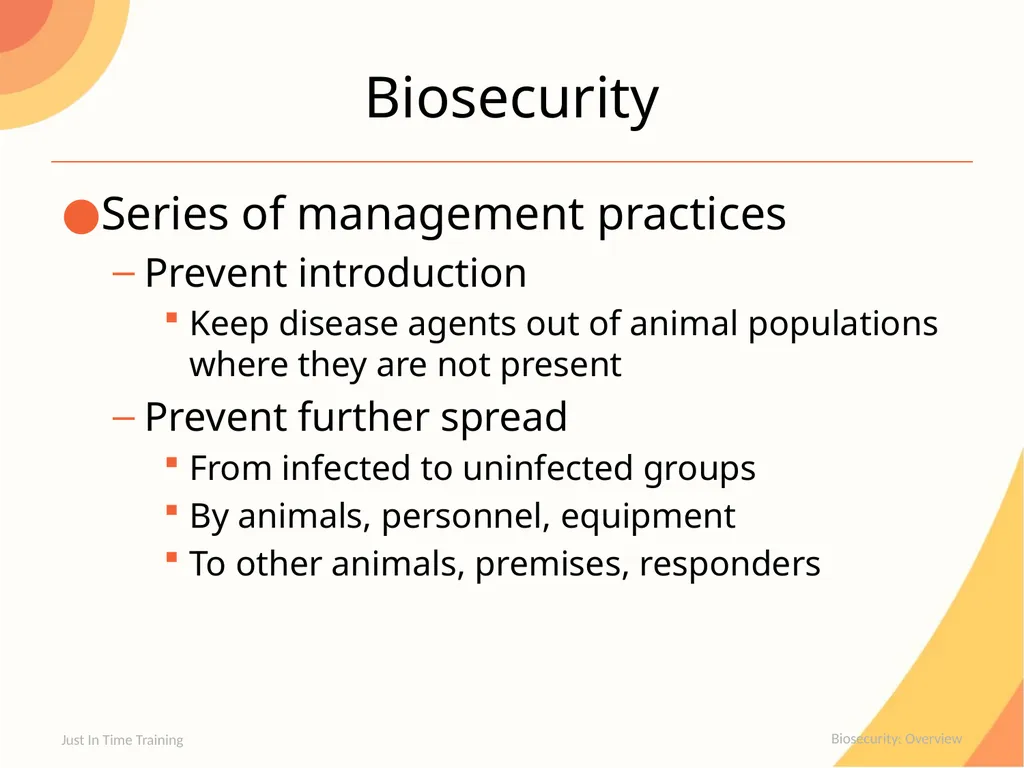
Biosecurity Series of management practices
Prevent introduction
Keep disease agents out of animal populations where they are not present
Prevent further spread
From infected to uninfected groups
By animals, personnel, equipment
To other animals, premises, responders Just In Time Training Biosecurity: Overview<br>
03
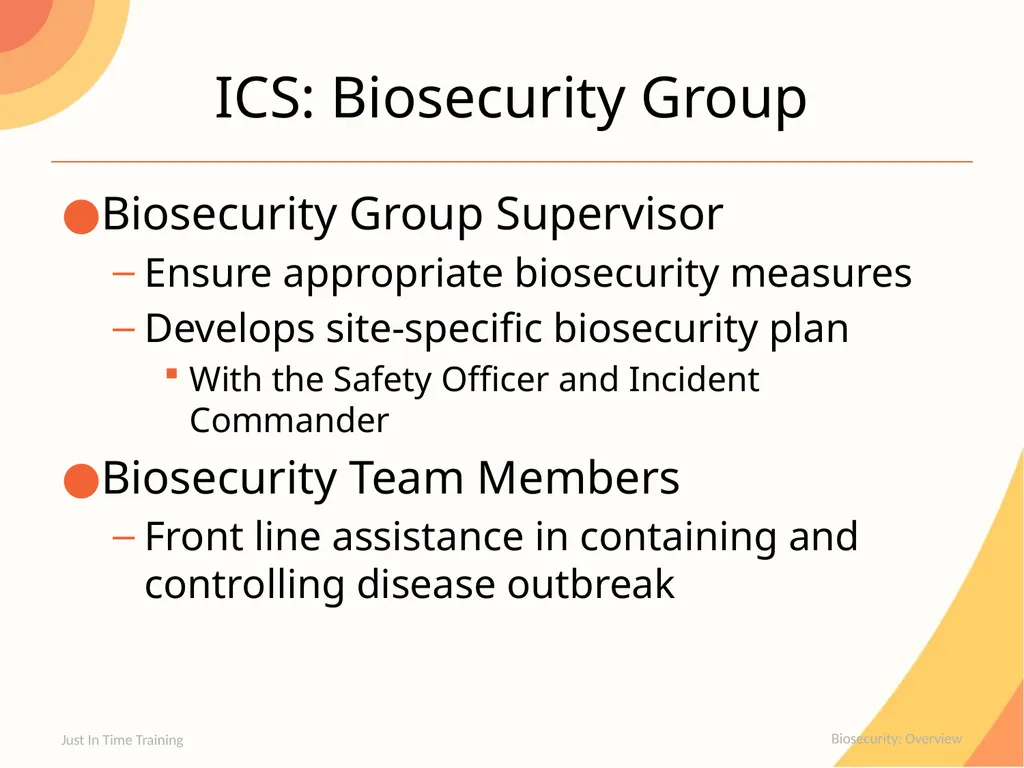
ICS: Biosecurity Group Biosecurity Group Supervisor
Ensure appropriate biosecurity measures
Develops site-specific biosecurity plan
With the Safety Officer and Incident Commander
Biosecurity Team Members
Front line assistance in containing and controlling disease outbreak Just In Time Training Biosecurity: Overview<br>
04
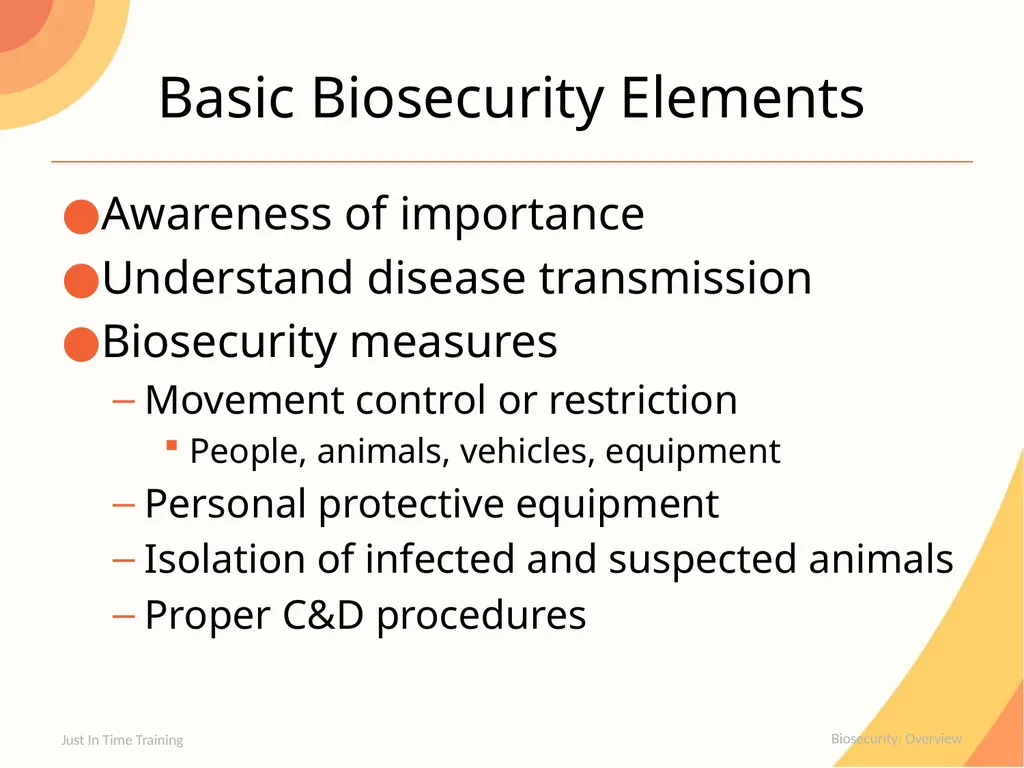
Basic Biosecurity Elements Awareness of importance
Understand disease transmission
Biosecurity measures
Movement control or restriction
People, animals, vehicles, equipment
Personal protective equipment
Isolation of infected and suspected animals
Proper C&D procedures Just In Time Training Biosecurity: Overview<br>
05
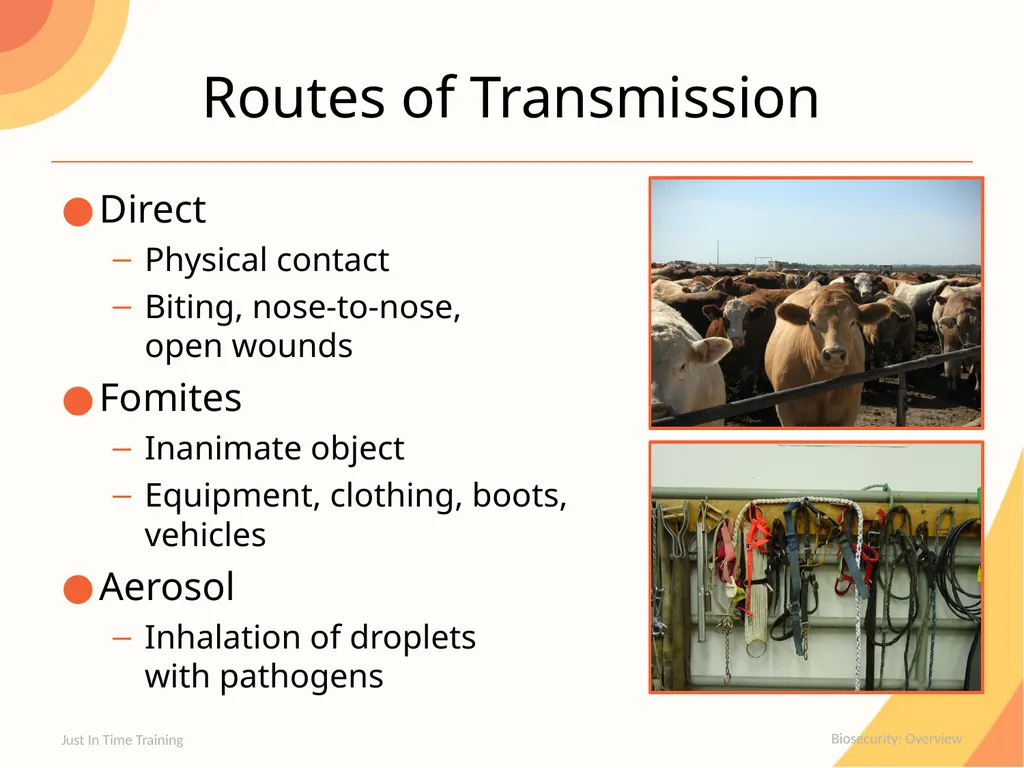
Routes of Transmission Direct
Physical contact
Biting, nose-to-nose, open wounds
Fomites
Inanimate object
Equipment, clothing, boots, vehicles
Aerosol
Inhalation of droplets with pathogens Just In Time Training Biosecurity: Overview<br>
06
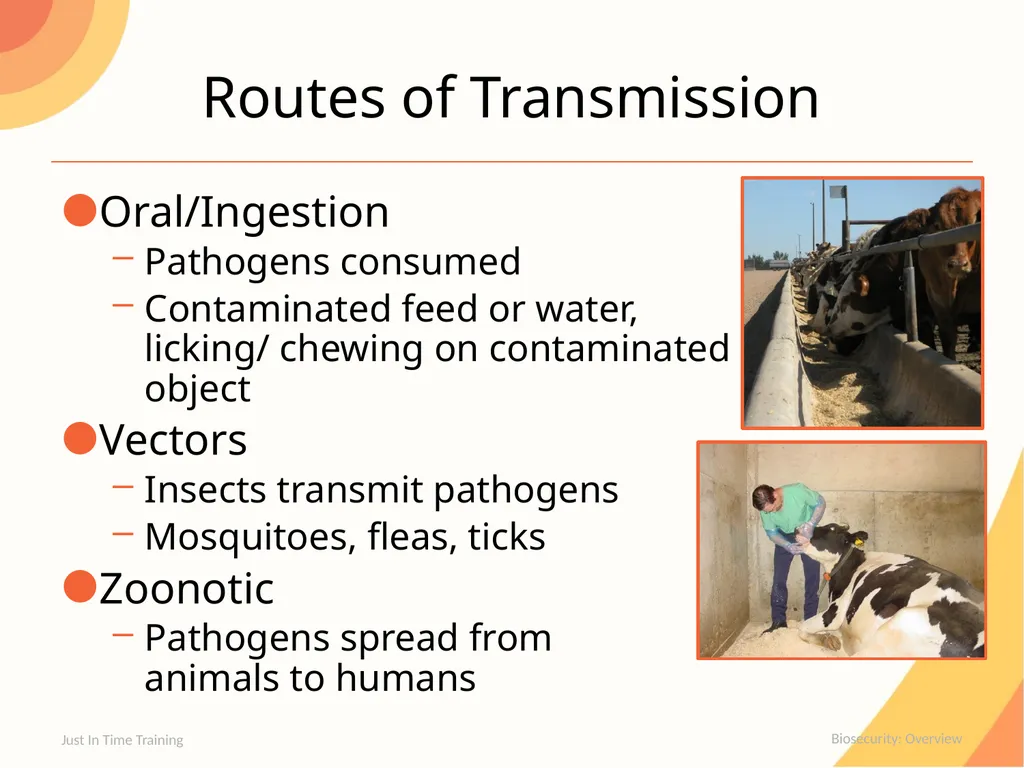
Routes of Transmission Oral/Ingestion
Pathogens consumed
Contaminated feed or water, licking/ chewing on contaminated object
Vectors
Insects transmit pathogens
Mosquitoes, fleas, ticks
Zoonotic
Pathogens spread from animals to humans Just In Time Training Biosecurity: Overview<br>
07
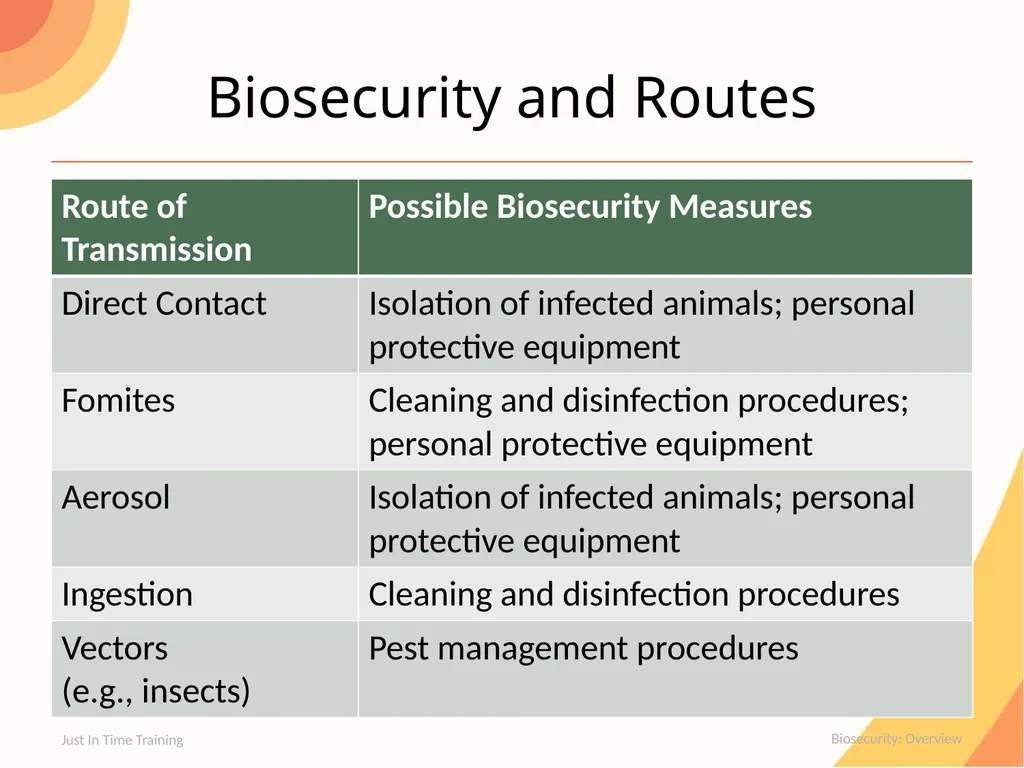
Biosecurity and Routes Just In Time Training Biosecurity: Overview<br>
08
Biosecurity measures Movement control and restriction
Personal protective equipment
Cleaning and disinfection
Isolation
Vector control Just In Time Training Biosecurity: Overview<br>
09
Movement Control: Animals Stop movements
Movement restrictions
Animals should not be moved if:
From a confirmed or suspected premises
Contact with infected or suspect animal
Susceptible animal near infected or suspected premises
Transport vehicles do not meet biosecurity standards Just In Time Training Biosecurity: Overview<br>
10
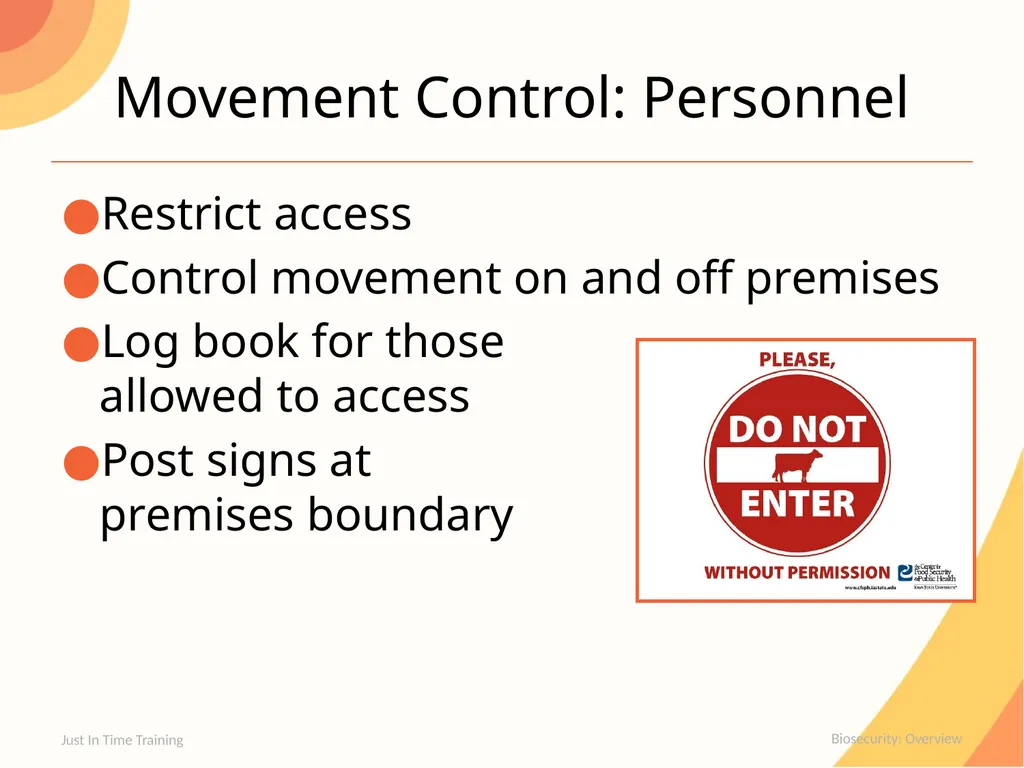
Movement Control: Personnel Restrict access
Control movement on and off premises
Log book for those allowed to access
Post signs at premises boundary Just In Time Training Biosecurity: Overview<br>
11
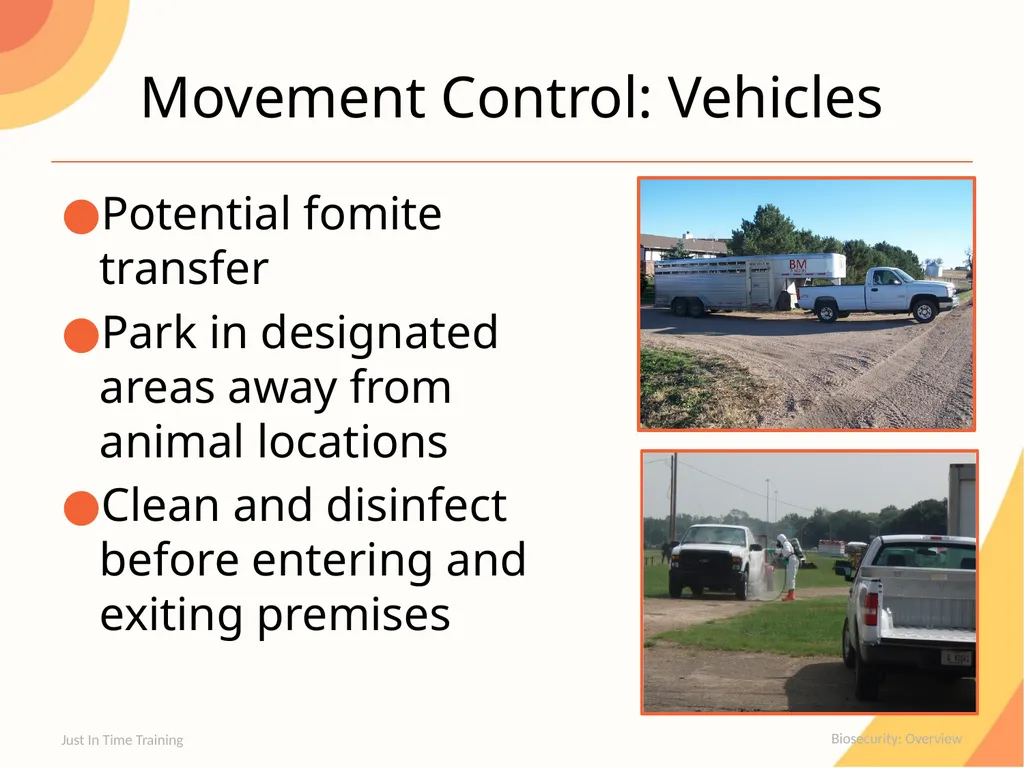
Movement Control: Vehicles Potential fomite transfer
Park in designated areas away from animal locations
Clean and disinfect before entering and exiting premises Just In Time Training Biosecurity: Overview<br>
12
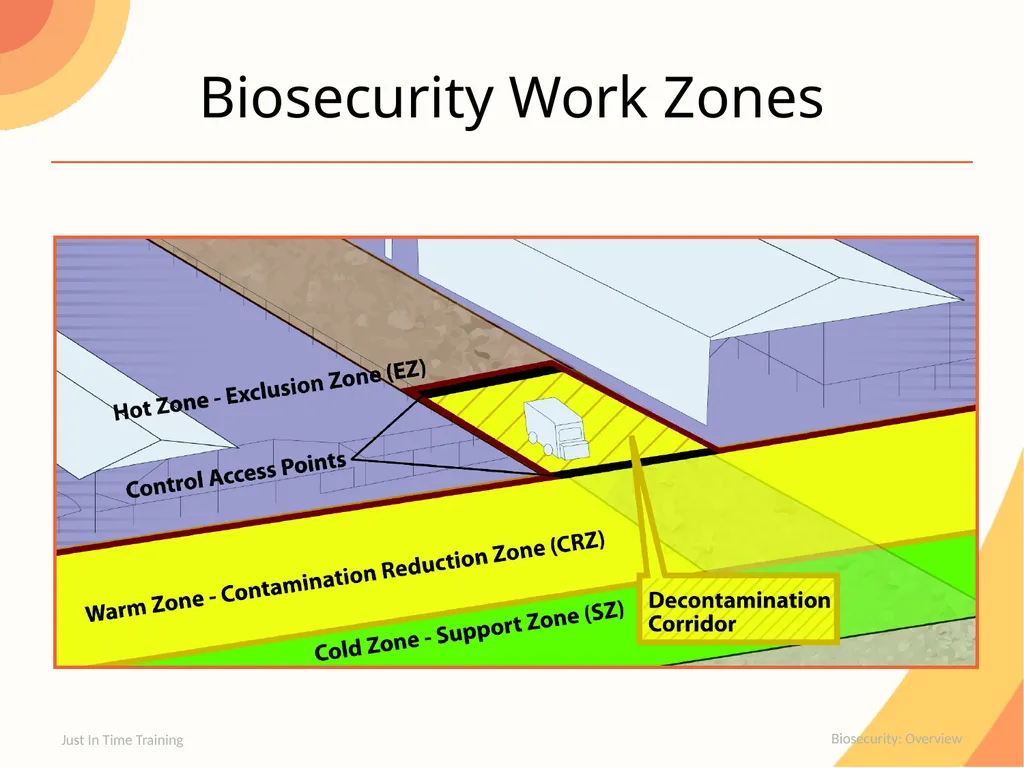
Biosecurity Work Zones Just In Time Training Biosecurity: Overview<br>
13
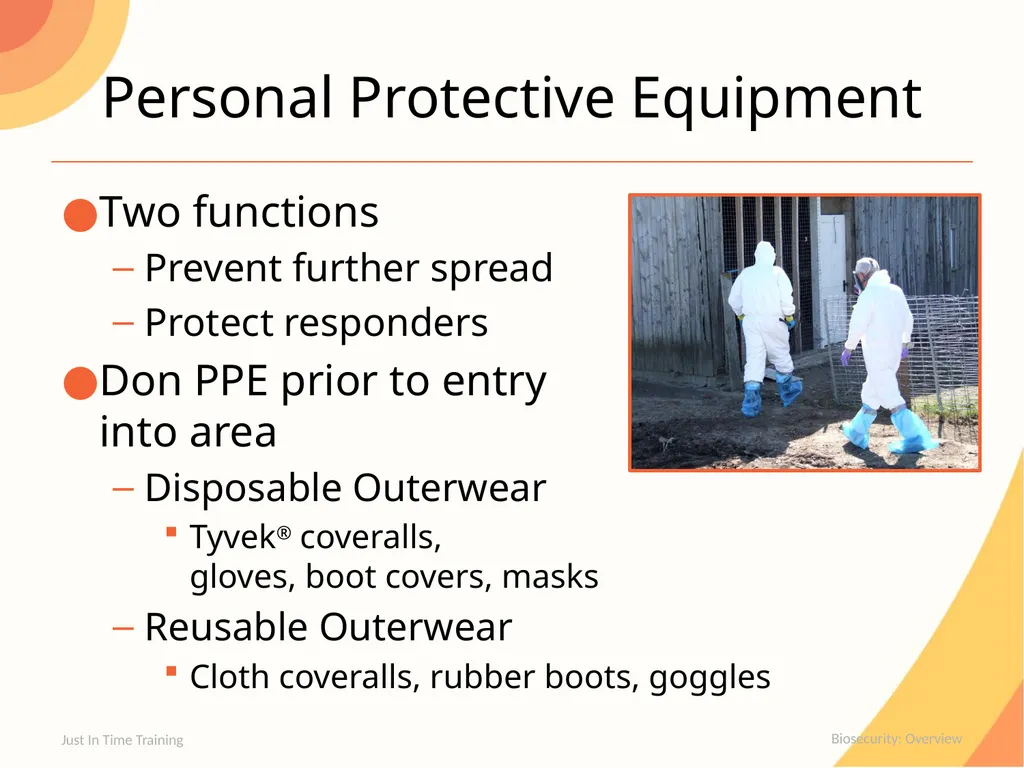
Personal Protective Equipment Two functions
Prevent further spread
Protect responders
Don PPE prior to entry into area
Disposable Outerwear
Tyvek® coveralls, gloves, boot covers, masks
Reusable Outerwear
Cloth coveralls, rubber boots, goggles Just In Time Training Biosecurity: Overview<br>
14
Personnel Biosecurity Once on infected premises, do not return to Cold Zone until
PPE doffed
Disposable items left on premises or placed in designated area
Clean/disinfect reusable items on site
WASH HANDS! Just In Time Training Biosecurity: Overview<br>
15
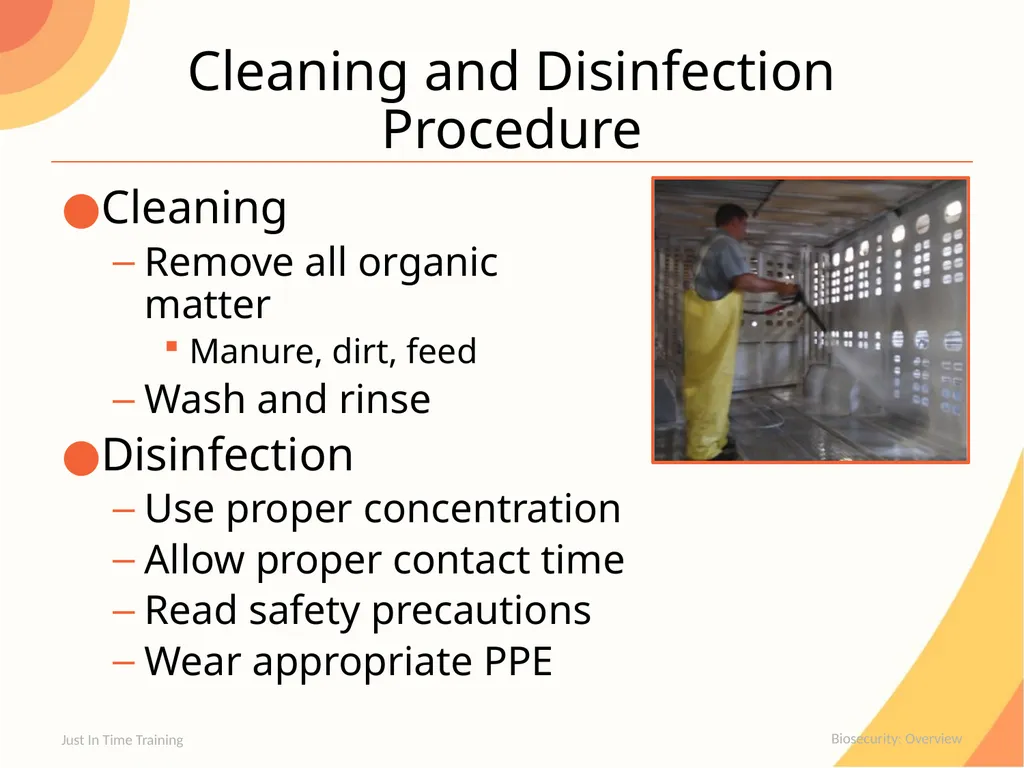
Cleaning and Disinfection Procedure Cleaning
Remove all organic matter
Manure, dirt, feed
Wash and rinse
Disinfection
Use proper concentration
Allow proper contact time
Read safety precautions
Wear appropriate PPE Just In Time Training Biosecurity: Overview<br>
16
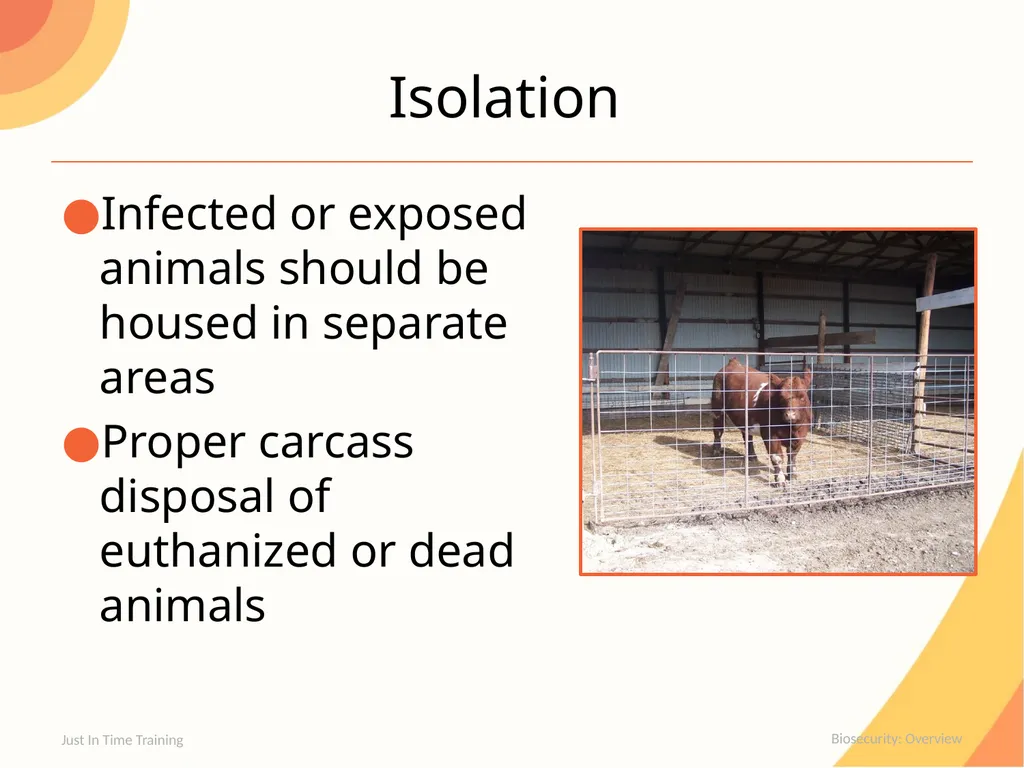
Isolation Infected or exposed animals should be housed in separate areas
Proper carcass disposal of euthanized or dead animals Just In Time Training Biosecurity: Overview<br>
17
Wildlife Control Wildlife can carry diseases on and off the property
Keep animals isolated from wildlife contact
Ensure boundary measures are checked regularly and maintained
Store food in a way that does not attract wildlife Just In Time Training Biosecurity: Overview<br>
18
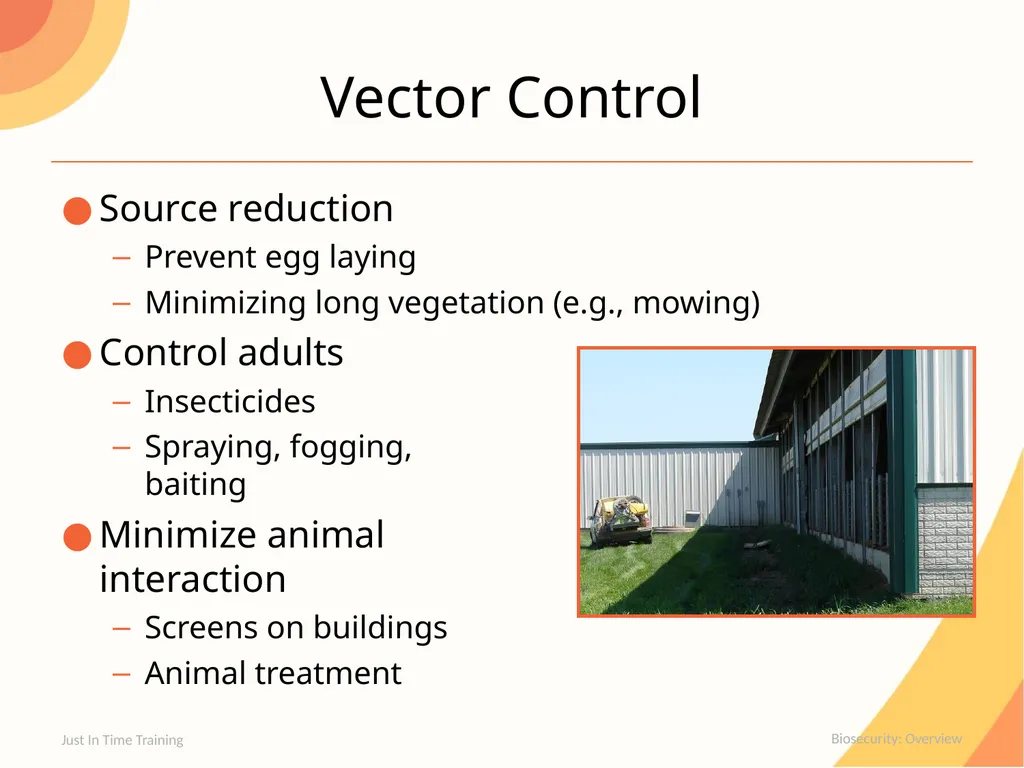
Vector Control Source reduction
Prevent egg laying
Minimizing long vegetation (e.g., mowing)
Control adults
Insecticides
Spraying, fogging, baiting
Minimize animal interaction
Screens on buildings
Animal treatment Just In Time Training Biosecurity: Overview<br>
19
Resources USDA Foreign Animal Disease Preparedness (FAD PReP) Guidelines: Biosecurity
http://www.aphis.usda.gov/animal_health/emrs/nahems.shtml Just In Time Training Biosecurity: Overview<br>
20
Acknowledgments Development of this presentation was by the Center for Food Security and Public Health at Iowa State University through funding from the Multi-State Partnership for Security in Agriculture Authors: Sarah Viera, MPH; Glenda Dvorak, DVM, MPH, DACVPM<br>