Bloodborne Pathogens Training Please view this
Description: Bloodborne Pathogens Training Please view this presentation as a slide show in order for the links to be active. Navigate to the slide show tab at the top, then select From current slide. s Bloodborne Pathogens Standard Designed to
Related Topics
Download Presentation
"Bloodborne Pathogens Training Please view this" is the property of its rightful owner. Permission is granted to download and print the materials on this website for personal, non-commercial use only, and to display it on your personal computer provided you do not modify the materials and that you retain all copyright notices contained in the materials. By downloading content from our website, you accept the terms of this agreement.
Presentation Transcript
slide1. Bloodborne Pathogens Training<br>
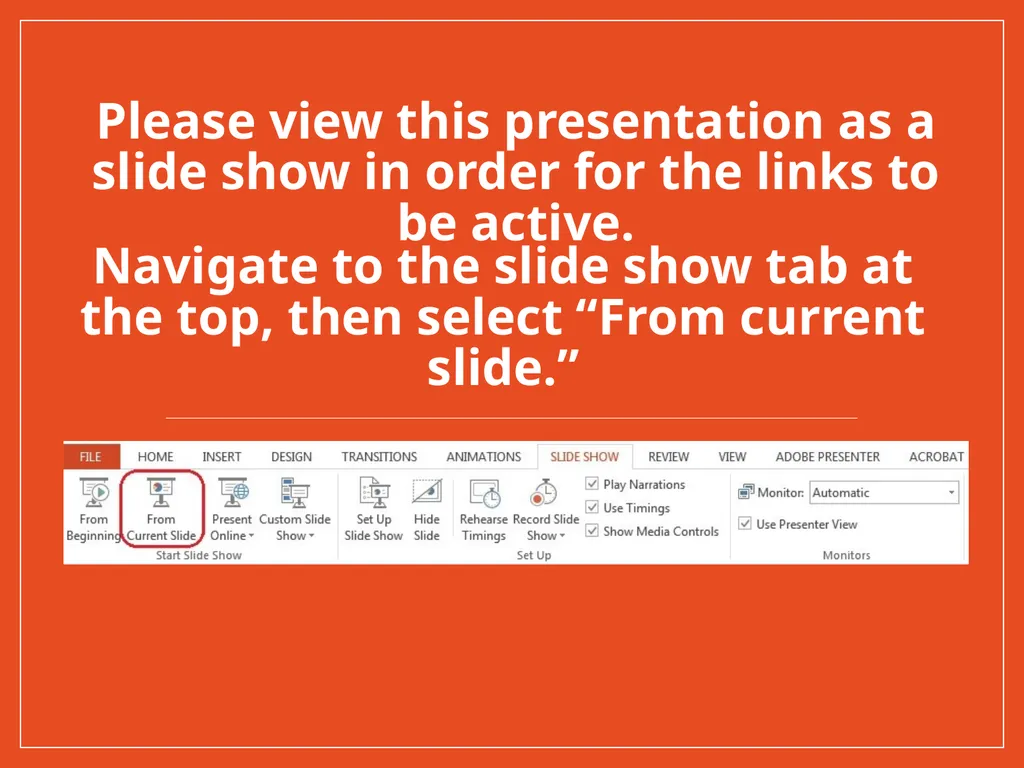
slide2. Please view this presentation as a slide show in order for the links to be active. Navigate to the slide show tab at the top, then select “From current slide.”<br>
slide3. ’s Bloodborne Pathogens Standard Designed to protect employees with occupational exposure to blood or other potentially infectious materials (OPIM)
For our purposes, all bodily fluids should be considered OPIM
Requires DePaul to have an Exposure Control Plan
Click here to view the BBP standard<br>
slide4. DePaul’s Exposure Control Plan Current version is maintained on EHS website
Identifies positions and tasks that involve exposure to blood/OPIM
Describes safe work practices and procedures
Outlines employees’ rights to receive the hepatitis B vaccination as well as confidential medical evaluation and follow up in case of exposure
Several departments maintain their own ECP specific to their operations
A template is provided for this purpose in Appendix A 4<br>
slide5. ! Even if you are not usually exposed to blood/OPIM, it is important to be aware of the hazards and know how to react if you find yourself in such a situation.<br>
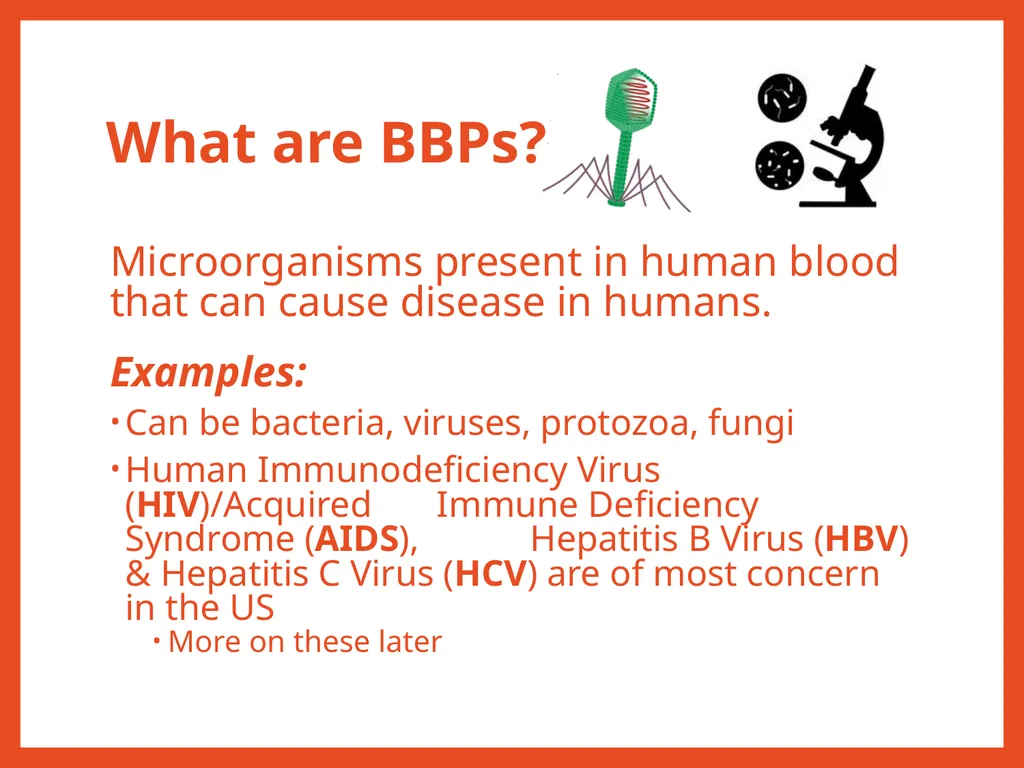
slide6. Microorganisms present in human blood that can cause disease in humans.
Examples:
Can be bacteria, viruses, protozoa, fungi
Human Immunodeficiency Virus (HIV)/Acquired Immune Deficiency Syndrome (AIDS), Hepatitis B Virus (HBV) & Hepatitis C Virus (HCV) are of most concern in the US
More on these later What are BBPs?<br>
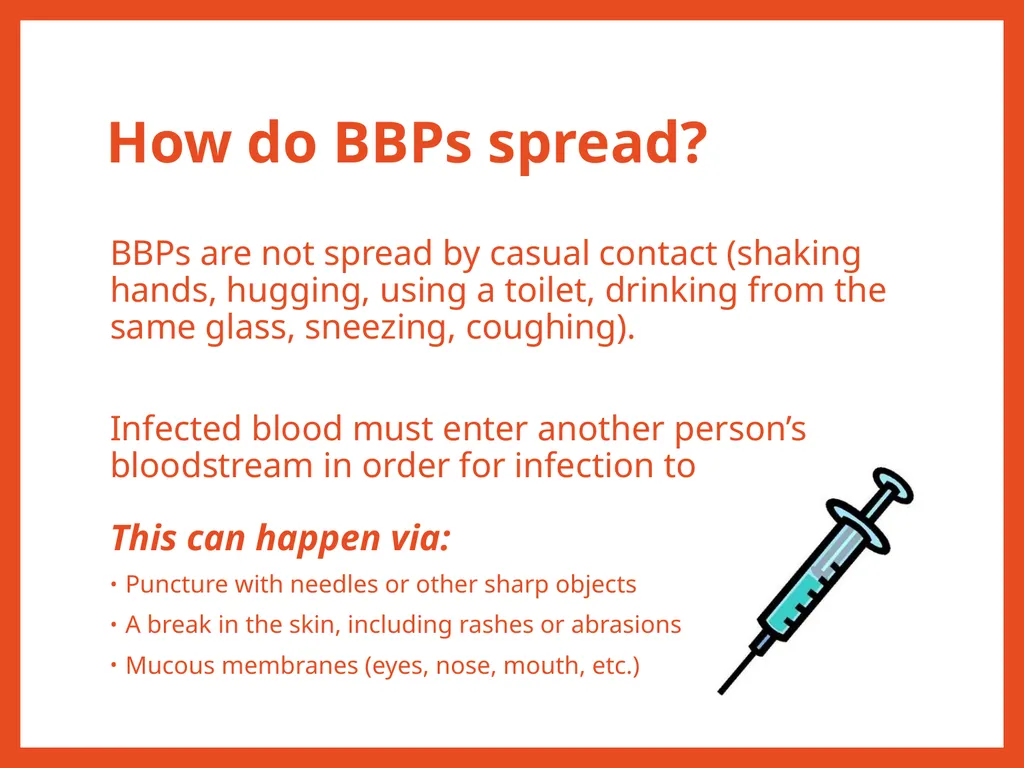
slide7. How do BBPs spread? BBPs are not spread by casual contact (shaking hands, hugging, using a toilet, drinking from the same glass, sneezing, coughing).
Infected blood must enter another person’s bloodstream in order for infection to occur.
This can happen via:
Puncture with needles or other sharp objects
A break in the skin, including rashes or abrasions
Mucous membranes (eyes, nose, mouth, etc.)<br>
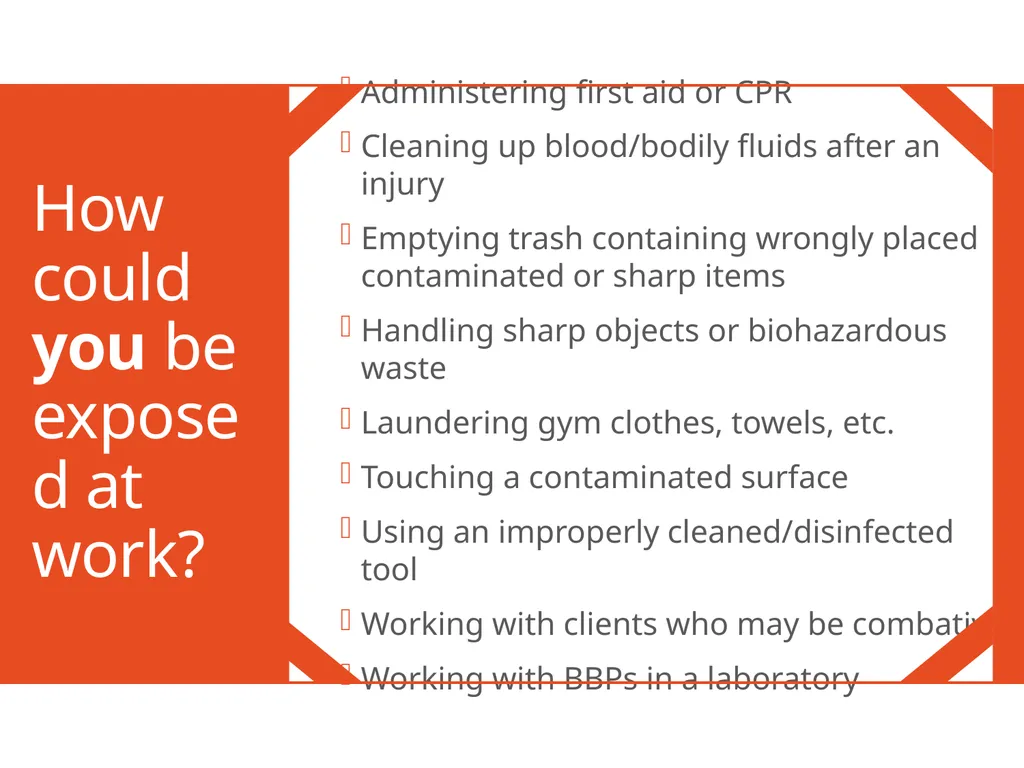
slide8. How could you be exposed at work? Administering first aid or CPR
Cleaning up blood/bodily fluids after an injury
Emptying trash containing wrongly placed contaminated or sharp items
Handling sharp objects or biohazardous waste
Laundering gym clothes, towels, etc.
Touching a contaminated surface
Using an improperly cleaned/disinfected tool
Working with clients who may be combative
Working with BBPs in a laboratory<br>
slide9. Anyone’s blood or bodily fluids might carry BBPs. A person you know well
A person who does not appear to be ill
A person of any gender, age, race, sexual orientation or any other characteristic<br>
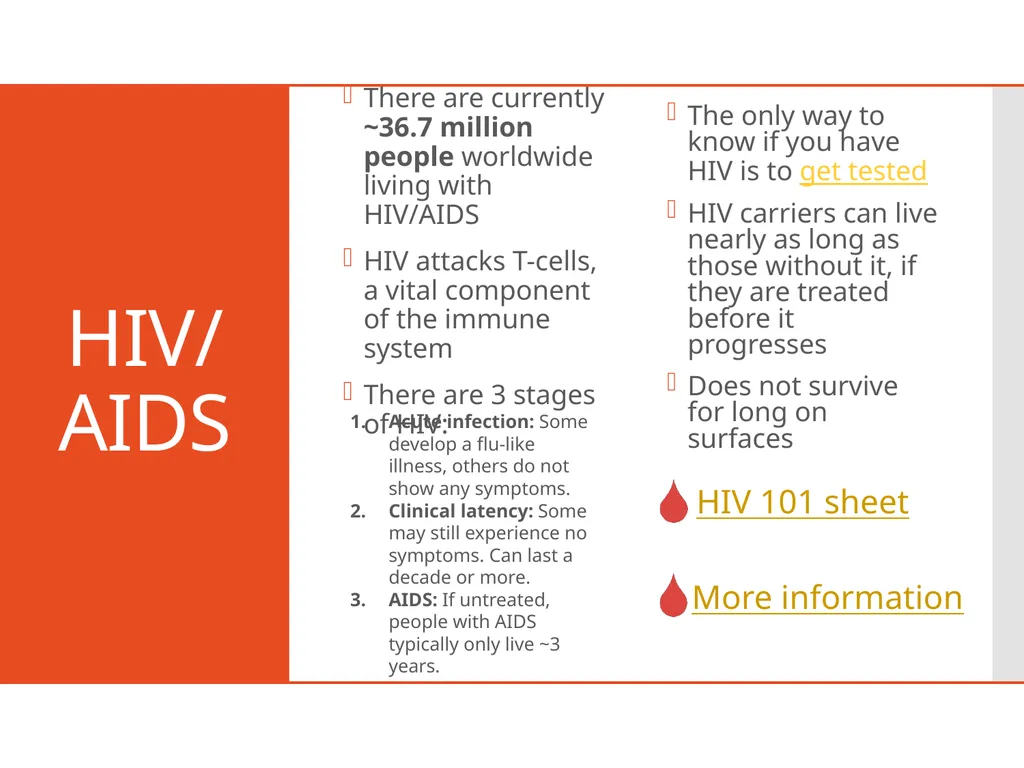
slide10. HIV/AIDS There are currently ~36.7 million people worldwide living with HIV/AIDS
HIV attacks T-cells, a vital component of the immune system
There are 3 stages of HIV: The only way to know if you have HIV is to get tested
HIV carriers can live nearly as long as those without it, if they are treated before it progresses
Does not survive for long on surfaces HIV 101 sheet More information Acute infection: Some develop a flu-like illness, others do not show any symptoms.
Clinical latency: Some may still experience no symptoms. Can last a decade or more.
AIDS: If untreated, people with AIDS typically only live ~3 years.<br>
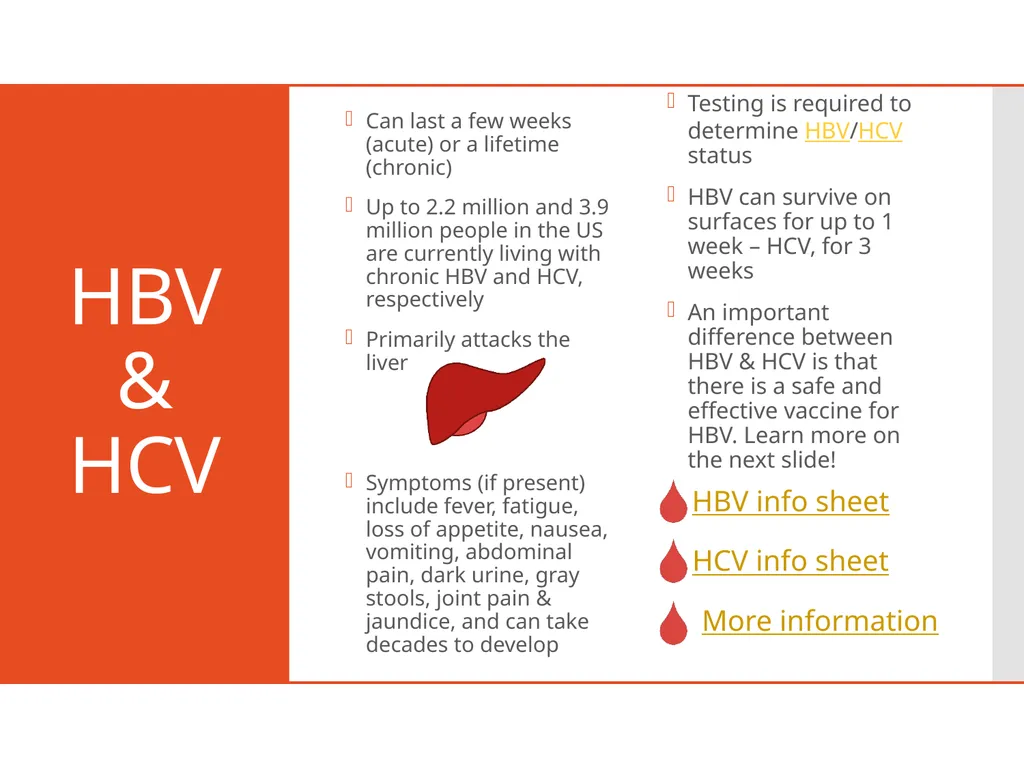
slide11. Testing is required to determine HBV/HCV status
HBV can survive on surfaces for up to 1 week – HCV, for 3 weeks
An important difference between HBV & HCV is that there is a safe and effective vaccine for HBV. Learn more on the next slide! HBV&HCV Can last a few weeks (acute) or a lifetime (chronic)
Up to 2.2 million and 3.9 million people in the US are currently living with chronic HBV and HCV, respectively
Primarily attacks the liver
Symptoms (if present) include fever, fatigue, loss of appetite, nausea, vomiting, abdominal pain, dark urine, gray stools, joint pain & jaundice, and can take decades to develop HBV info sheet HCV info sheet More information<br>
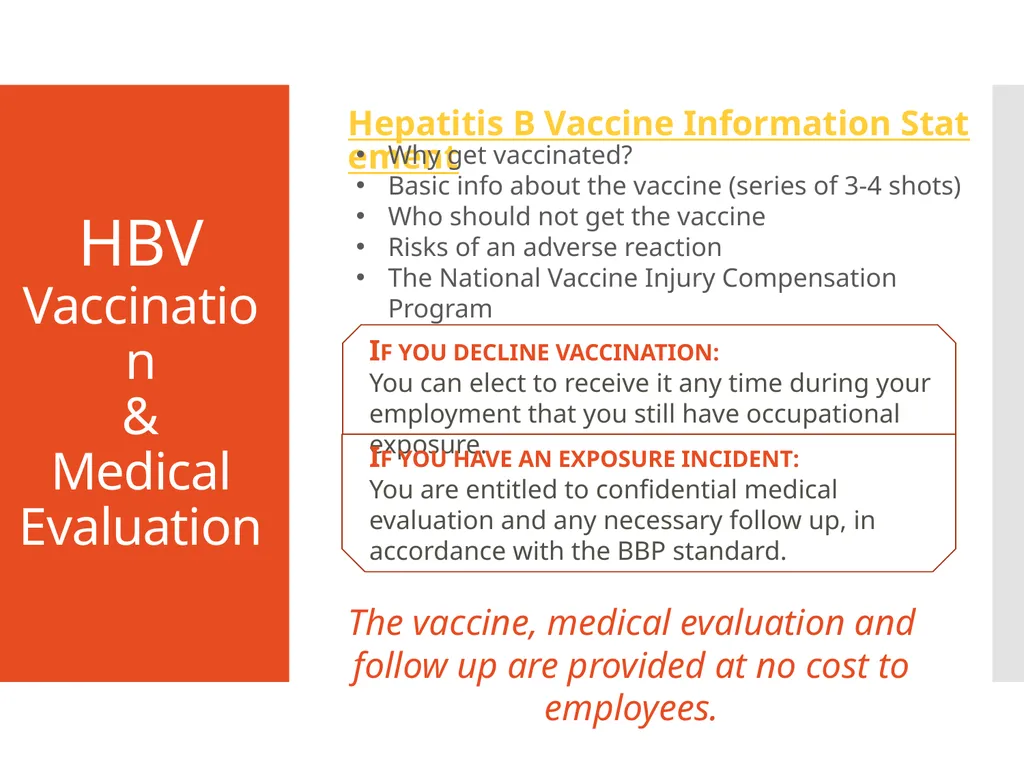
slide12. Hepatitis B Vaccine Information Statement HBVVaccination&Medical Evaluation The vaccine, medical evaluation and follow up are provided at no cost to employees. If you decline vaccination:
You can elect to receive it any time during your employment that you still have occupational exposure. If you have an exposure incident:
You are entitled to confidential medical evaluation and any necessary follow up, in accordance with the BBP standard. Why get vaccinated?
Basic info about the vaccine (series of 3-4 shots)
Who should not get the vaccine
Risks of an adverse reaction
The National Vaccine Injury Compensation Program<br>
slide13. How can we prevent exposure to BBPs?<br>
slide14. Universal Precautions An approach to infection control where all blood and bodily fluids are treated as if they contain BBPs.
This means:
Using the same procedures and level of caution around all blood and bodily fluids, even if you do not suspect they contain BBPs.<br>
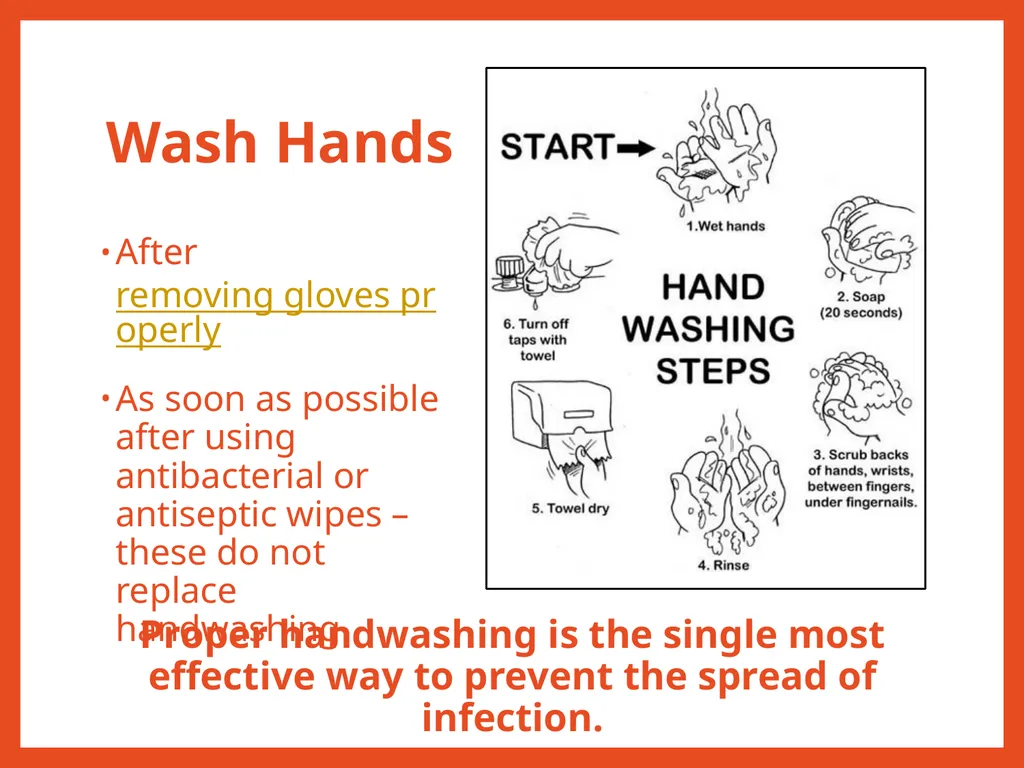
slide15. Proper handwashing is the single most effective way to prevent the spread of infection. Wash Hands After removing gloves properly
As soon as possible after using antibacterial or antiseptic wipes – these do not replace handwashing<br>
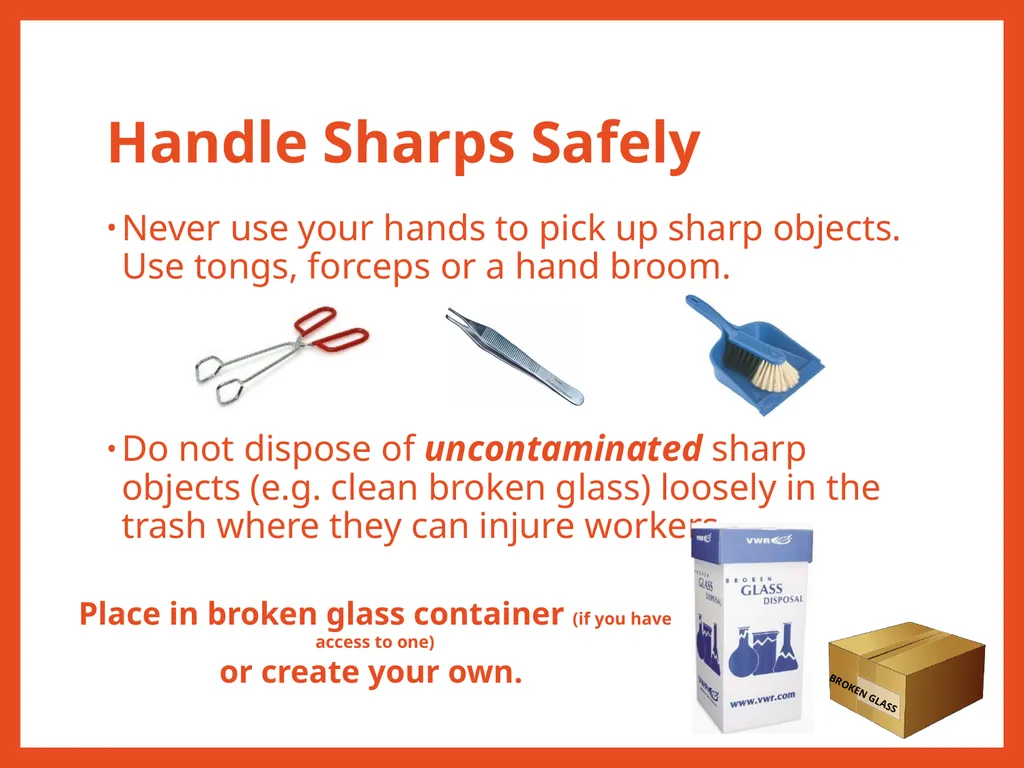
slide16. Handle Sharps Safely Never use your hands to pick up sharp objects. Use tongs, forceps or a hand broom.
Do not dispose of uncontaminated sharp objects (e.g. clean broken glass) loosely in the trash where they can injure workers. Place in broken glass container (if you have access to one)
or create your own. BROKEN GLASS<br>
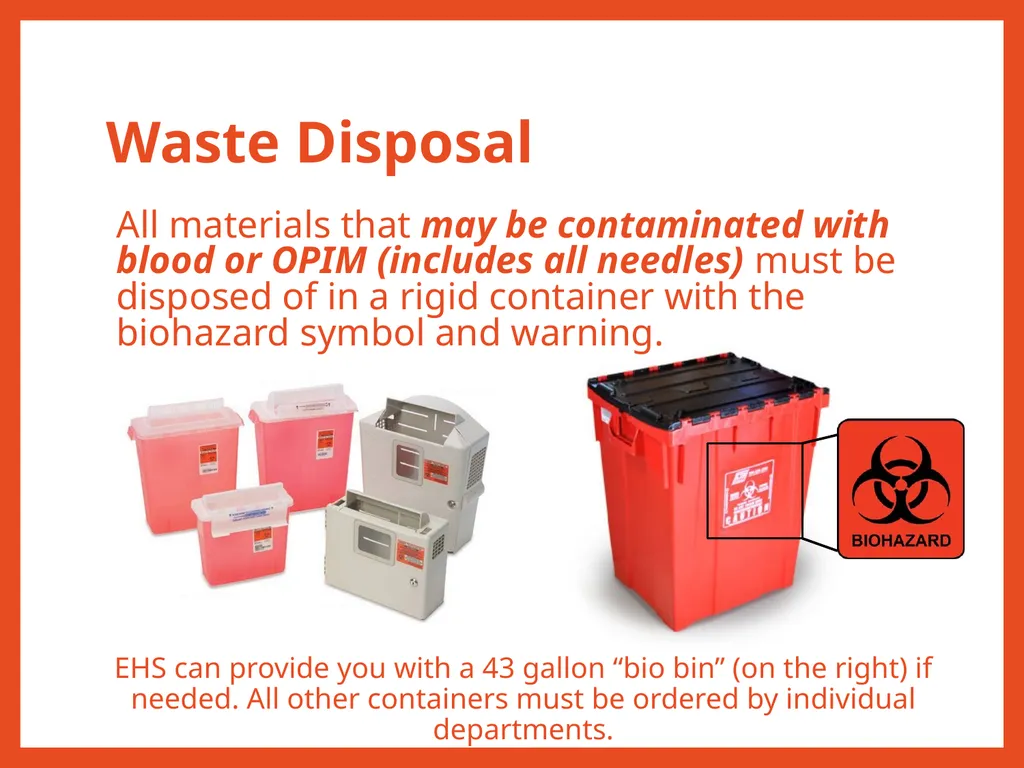
slide17. All materials that may be contaminated with blood or OPIM (includes all needles) must be disposed of in a rigid container with the biohazard symbol and warning. EHS can provide you with a 43 gallon “bio bin” (on the right) if needed. All other containers must be ordered by individual departments. Waste Disposal<br>
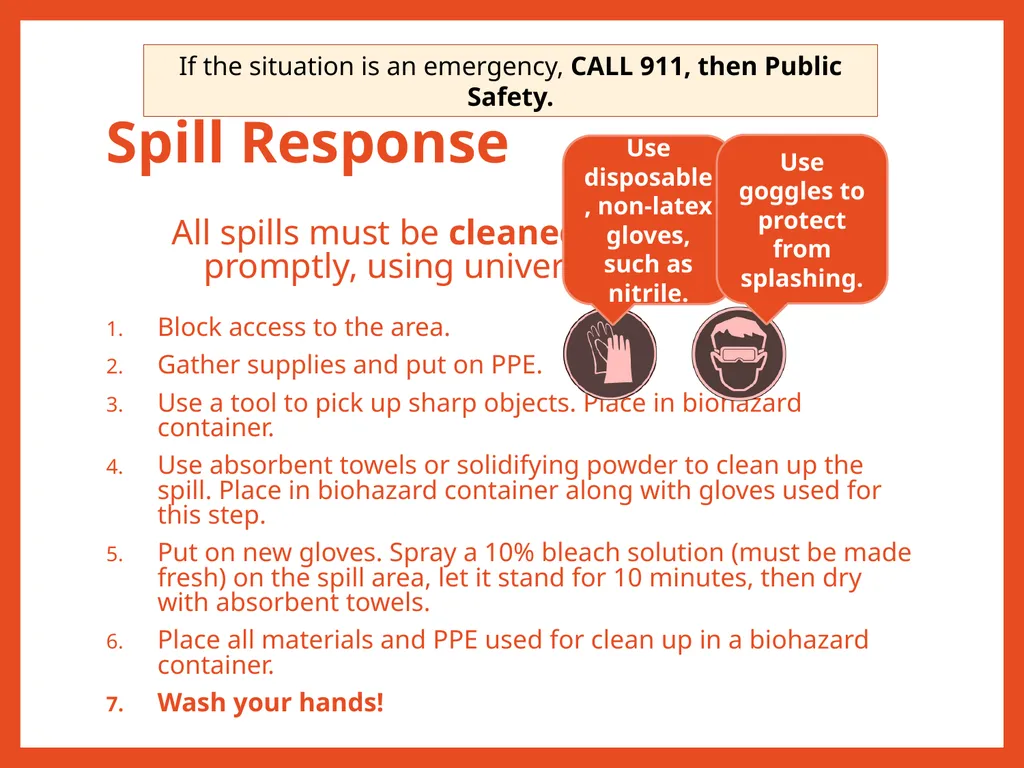
slide18. Spill Response All spills must be cleaned and disinfected promptly, using universal precautions.
Block access to the area.
Gather supplies and put on PPE.
Use a tool to pick up sharp objects. Place in biohazard container.
Use absorbent towels or solidifying powder to clean up the spill. Place in biohazard container along with gloves used for this step.
Put on new gloves. Spray a 10% bleach solution (must be made fresh) on the spill area, let it stand for 10 minutes, then dry with absorbent towels.
Place all materials and PPE used for clean up in a biohazard container.
Wash your hands! If the situation is an emergency, CALL 911, then Public Safety. Use disposable, non-latex gloves, such as nitrile. Use goggles to protect from splashing.<br>
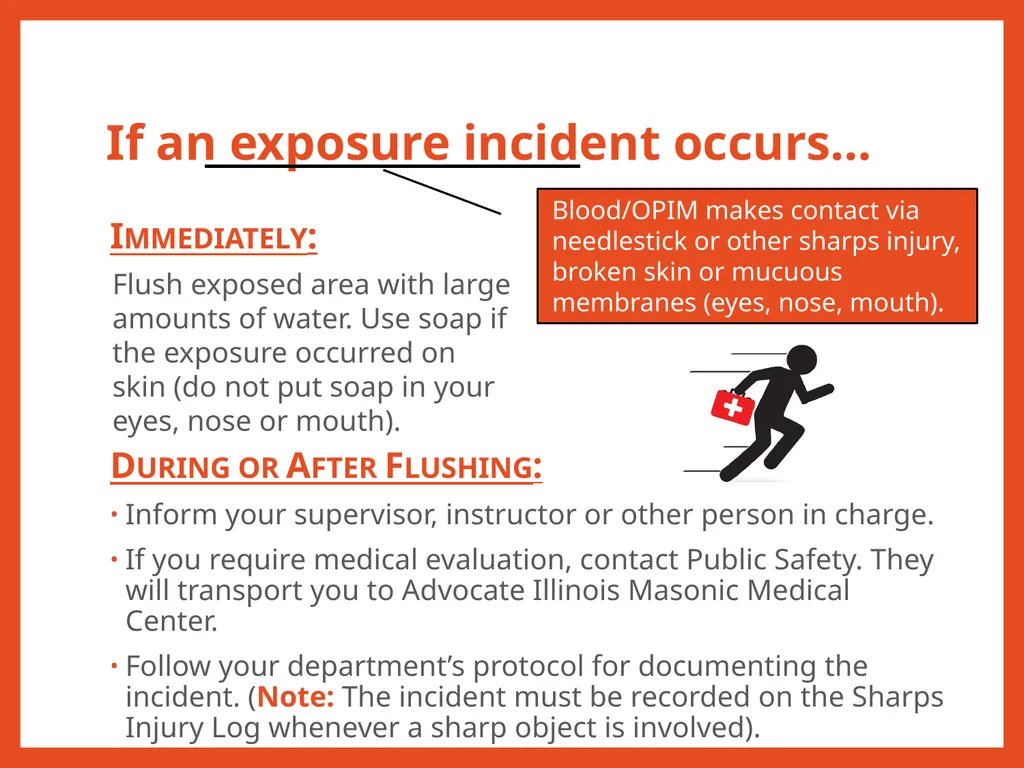
slide19. If an exposure incident occurs… Immediately:
During or After Flushing:
Inform your supervisor, instructor or other person in charge.
If you require medical evaluation, contact Public Safety. They will transport you to Advocate Illinois Masonic Medical Center.
Follow your department’s protocol for documenting the incident. (Note: The incident must be recorded on the Sharps Injury Log whenever a sharp object is involved). Blood/OPIM makes contact via needlestick or other sharps injury, broken skin or mucuous membranes (eyes, nose, mouth). Flush exposed area with large amounts of water. Use soap if the exposure occurred on skin (do not put soap in your eyes, nose or mouth).<br>
slide20. Have questions?Contact EHS at any time! (773) 325-3344
ehsoffice@depaul.edu
ehs.depaul.edu<br>

slide2. Please view this presentation as a slide show in order for the links to be active. Navigate to the slide show tab at the top, then select “From current slide.”<br>
slide3. ’s Bloodborne Pathogens Standard Designed to protect employees with occupational exposure to blood or other potentially infectious materials (OPIM)
For our purposes, all bodily fluids should be considered OPIM
Requires DePaul to have an Exposure Control Plan
Click here to view the BBP standard<br>
slide4. DePaul’s Exposure Control Plan Current version is maintained on EHS website
Identifies positions and tasks that involve exposure to blood/OPIM
Describes safe work practices and procedures
Outlines employees’ rights to receive the hepatitis B vaccination as well as confidential medical evaluation and follow up in case of exposure
Several departments maintain their own ECP specific to their operations
A template is provided for this purpose in Appendix A 4<br>
slide5. ! Even if you are not usually exposed to blood/OPIM, it is important to be aware of the hazards and know how to react if you find yourself in such a situation.<br>
slide6. Microorganisms present in human blood that can cause disease in humans.
Examples:
Can be bacteria, viruses, protozoa, fungi
Human Immunodeficiency Virus (HIV)/Acquired Immune Deficiency Syndrome (AIDS), Hepatitis B Virus (HBV) & Hepatitis C Virus (HCV) are of most concern in the US
More on these later What are BBPs?<br>
slide7. How do BBPs spread? BBPs are not spread by casual contact (shaking hands, hugging, using a toilet, drinking from the same glass, sneezing, coughing).
Infected blood must enter another person’s bloodstream in order for infection to occur.
This can happen via:
Puncture with needles or other sharp objects
A break in the skin, including rashes or abrasions
Mucous membranes (eyes, nose, mouth, etc.)<br>
slide8. How could you be exposed at work? Administering first aid or CPR
Cleaning up blood/bodily fluids after an injury
Emptying trash containing wrongly placed contaminated or sharp items
Handling sharp objects or biohazardous waste
Laundering gym clothes, towels, etc.
Touching a contaminated surface
Using an improperly cleaned/disinfected tool
Working with clients who may be combative
Working with BBPs in a laboratory<br>
slide9. Anyone’s blood or bodily fluids might carry BBPs. A person you know well
A person who does not appear to be ill
A person of any gender, age, race, sexual orientation or any other characteristic<br>
slide10. HIV/AIDS There are currently ~36.7 million people worldwide living with HIV/AIDS
HIV attacks T-cells, a vital component of the immune system
There are 3 stages of HIV: The only way to know if you have HIV is to get tested
HIV carriers can live nearly as long as those without it, if they are treated before it progresses
Does not survive for long on surfaces HIV 101 sheet More information Acute infection: Some develop a flu-like illness, others do not show any symptoms.
Clinical latency: Some may still experience no symptoms. Can last a decade or more.
AIDS: If untreated, people with AIDS typically only live ~3 years.<br>
slide11. Testing is required to determine HBV/HCV status
HBV can survive on surfaces for up to 1 week – HCV, for 3 weeks
An important difference between HBV & HCV is that there is a safe and effective vaccine for HBV. Learn more on the next slide! HBV&HCV Can last a few weeks (acute) or a lifetime (chronic)
Up to 2.2 million and 3.9 million people in the US are currently living with chronic HBV and HCV, respectively
Primarily attacks the liver
Symptoms (if present) include fever, fatigue, loss of appetite, nausea, vomiting, abdominal pain, dark urine, gray stools, joint pain & jaundice, and can take decades to develop HBV info sheet HCV info sheet More information<br>
slide12. Hepatitis B Vaccine Information Statement HBVVaccination&Medical Evaluation The vaccine, medical evaluation and follow up are provided at no cost to employees. If you decline vaccination:
You can elect to receive it any time during your employment that you still have occupational exposure. If you have an exposure incident:
You are entitled to confidential medical evaluation and any necessary follow up, in accordance with the BBP standard. Why get vaccinated?
Basic info about the vaccine (series of 3-4 shots)
Who should not get the vaccine
Risks of an adverse reaction
The National Vaccine Injury Compensation Program<br>
slide13. How can we prevent exposure to BBPs?<br>
slide14. Universal Precautions An approach to infection control where all blood and bodily fluids are treated as if they contain BBPs.
This means:
Using the same procedures and level of caution around all blood and bodily fluids, even if you do not suspect they contain BBPs.<br>
slide15. Proper handwashing is the single most effective way to prevent the spread of infection. Wash Hands After removing gloves properly
As soon as possible after using antibacterial or antiseptic wipes – these do not replace handwashing<br>
slide16. Handle Sharps Safely Never use your hands to pick up sharp objects. Use tongs, forceps or a hand broom.
Do not dispose of uncontaminated sharp objects (e.g. clean broken glass) loosely in the trash where they can injure workers. Place in broken glass container (if you have access to one)
or create your own. BROKEN GLASS<br>
slide17. All materials that may be contaminated with blood or OPIM (includes all needles) must be disposed of in a rigid container with the biohazard symbol and warning. EHS can provide you with a 43 gallon “bio bin” (on the right) if needed. All other containers must be ordered by individual departments. Waste Disposal<br>
slide18. Spill Response All spills must be cleaned and disinfected promptly, using universal precautions.
Block access to the area.
Gather supplies and put on PPE.
Use a tool to pick up sharp objects. Place in biohazard container.
Use absorbent towels or solidifying powder to clean up the spill. Place in biohazard container along with gloves used for this step.
Put on new gloves. Spray a 10% bleach solution (must be made fresh) on the spill area, let it stand for 10 minutes, then dry with absorbent towels.
Place all materials and PPE used for clean up in a biohazard container.
Wash your hands! If the situation is an emergency, CALL 911, then Public Safety. Use disposable, non-latex gloves, such as nitrile. Use goggles to protect from splashing.<br>
slide19. If an exposure incident occurs… Immediately:
During or After Flushing:
Inform your supervisor, instructor or other person in charge.
If you require medical evaluation, contact Public Safety. They will transport you to Advocate Illinois Masonic Medical Center.
Follow your department’s protocol for documenting the incident. (Note: The incident must be recorded on the Sharps Injury Log whenever a sharp object is involved). Blood/OPIM makes contact via needlestick or other sharps injury, broken skin or mucuous membranes (eyes, nose, mouth). Flush exposed area with large amounts of water. Use soap if the exposure occurred on skin (do not put soap in your eyes, nose or mouth).<br>
slide20. Have questions?Contact EHS at any time! (773) 325-3344
ehsoffice@depaul.edu
ehs.depaul.edu<br>