Bovine Anaplasmosis VMD- Unit: 5 Dr. Anil Kumar Associate Professor Department of Veterinary Medicine, BVC, BASU, Patna Introduction Synonym: Gall sickness It is an infectious hemotropic (intra-erythrocytic)disease of ruminants caused by by
"Bovine Anaplasmosis VMD- Unit: 5 Dr. Anil Kumar" is the property of its rightful owner. Permission is granted to
download and print the materials on this website for personal, non-commercial use only, and to display it
on your personal computer provided you do not modify the materials and that you retain all copyright
notices contained in the materials. By downloading content from our website, you accept the terms of this
agreement.
Presentation Transcript
01
Bovine Anaplasmosis
VMD- Unit: 5
Dr. Anil Kumar
Associate Professor
Department of Veterinary Medicine, BVC, BASU, Patna<br>
02
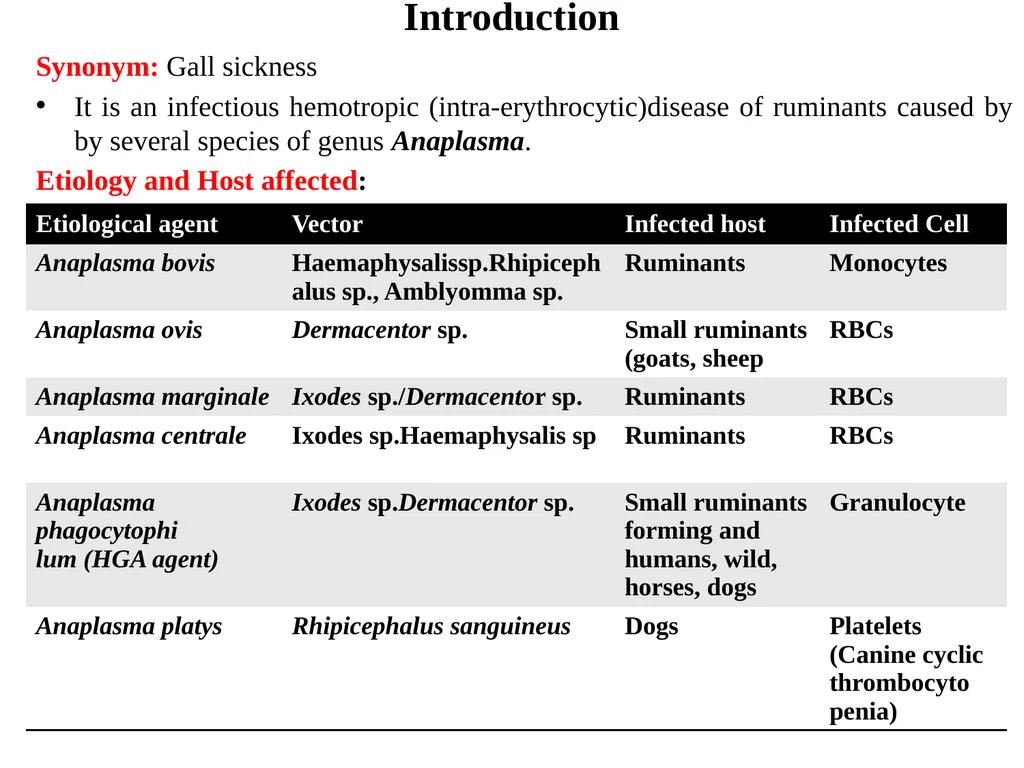
Introduction Synonym: Gall sickness
It is an infectious hemotropic (intra-erythrocytic)disease of ruminants caused by by several species of genus Anaplasma.
Etiology and Host affected:<br>
03
About 20 species of ticks have been incriminated as vectors worldwide, but the disease is principally transmitted biologically through tick bites (Ixodes ticks, mainly Boophilus microplus).
Host Affected:
Cattle are the major hosts but infections also occur in zebra, water buffalo, bison, sheep, goats, deer, antelope, giraffes and camel
Bos indicus type cattle are less susceptible because of their greater resistance to tick infection than Bos taurus and their cross bred
Anaplasmosis infection is higher in female than male animals due to hormonal disturbances, milk production, draught power and breeding system which pose it to weakened immune system<br>
04
Age-related host susceptibility:
Under 6 months of age, the illness is rare
Cattle more than 2 years of age are most likely to have severe, acute and potentially fatal disease
Method of Transmissions:
Transstadial transmission
Biological pathway through mostly ticks
Mechanical pathway (biting insects or fomites contaminated with blood/by blood contaminated equipment)
The organism can be transmitted from cow to calf transplacentally during gestation, particularly during the second or third trimester of pregnancy<br>
05
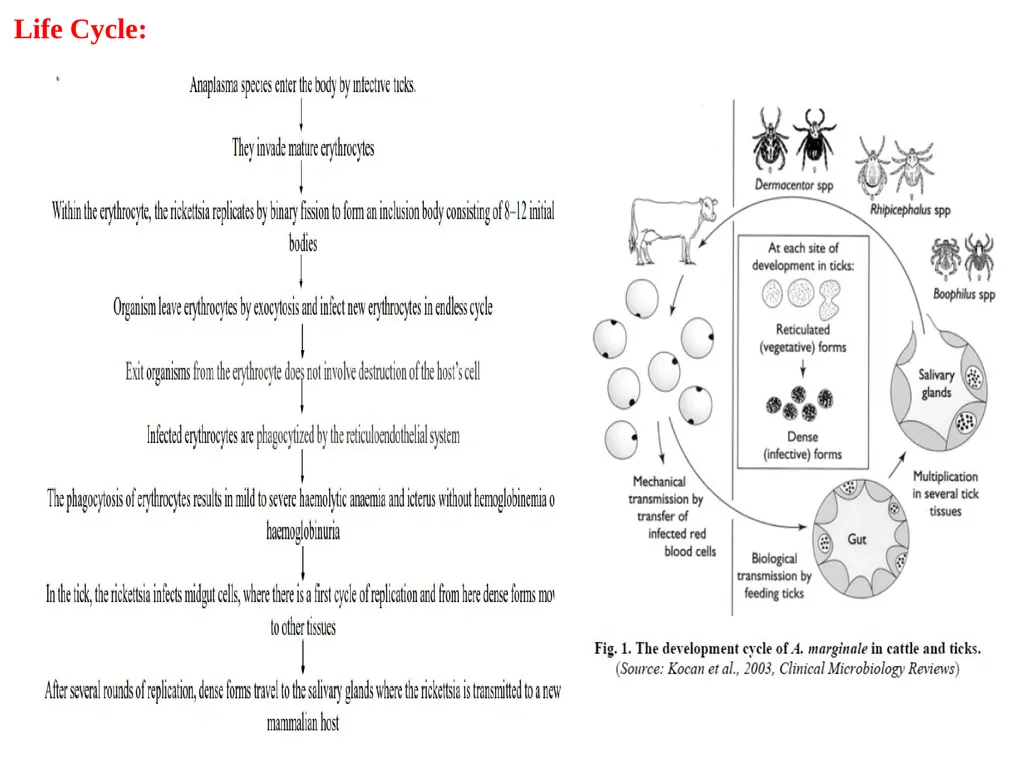
Life Cycle:<br>
06
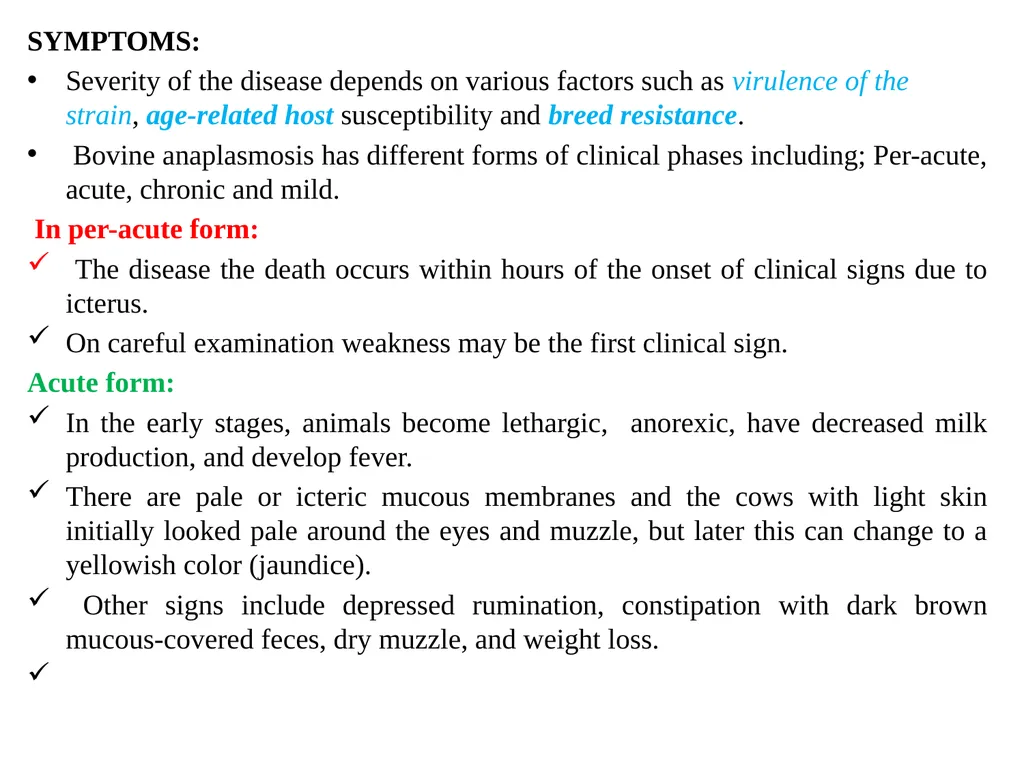
SYMPTOMS:
Severity of the disease depends on various factors such as virulence of the strain, age-related host susceptibility and breed resistance.
Bovine anaplasmosis has different forms of clinical phases including; Per-acute, acute, chronic and mild.
In per-acute form:
The disease the death occurs within hours of the onset of clinical signs due to icterus.
On careful examination weakness may be the first clinical sign.
Acute form:
In the early stages, animals become lethargic, anorexic, have decreased milk production, and develop fever.
There are pale or icteric mucous membranes and the cows with light skin initially looked pale around the eyes and muzzle, but later this can change to a yellowish color (jaundice).
Other signs include depressed rumination, constipation with dark brown mucous-covered feces, dry muzzle, and weight loss.<br>
07
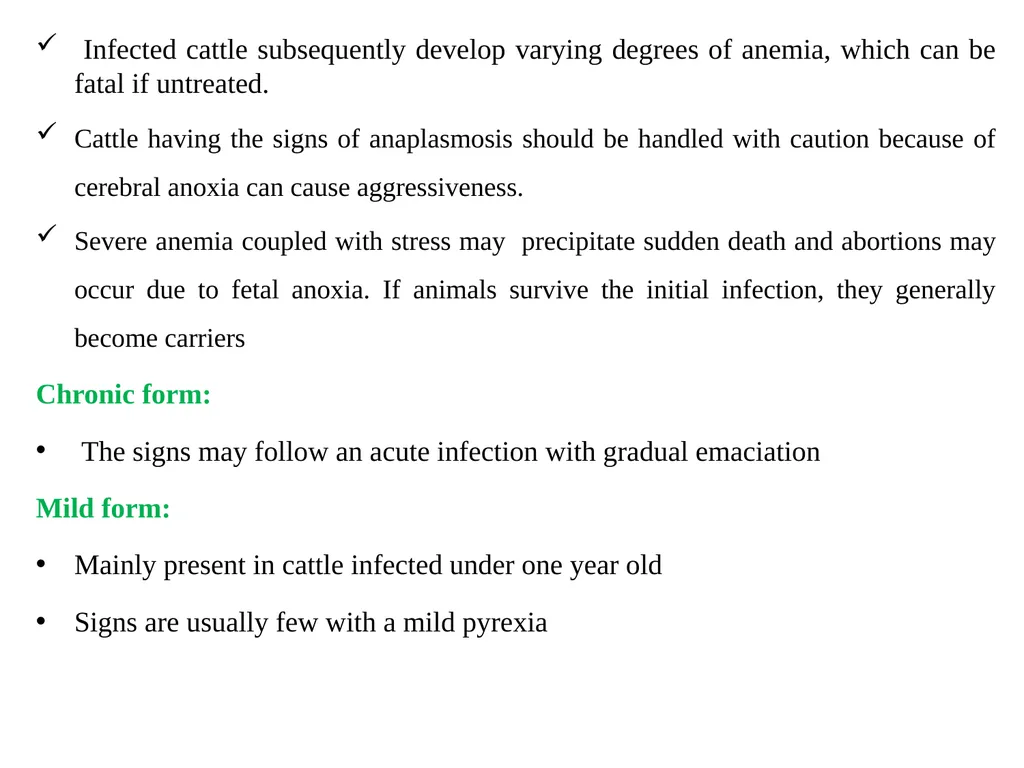
Infected cattle subsequently develop varying degrees of anemia, which can be fatal if untreated.
Cattle having the signs of anaplasmosis should be handled with caution because of cerebral anoxia can cause aggressiveness.
Severe anemia coupled with stress may precipitate sudden death and abortions may occur due to fetal anoxia. If animals survive the initial infection, they generally become carriers
Chronic form:
The signs may follow an acute infection with gradual emaciation
Mild form:
Mainly present in cattle infected under one year old
Signs are usually few with a mild pyrexia<br>
08
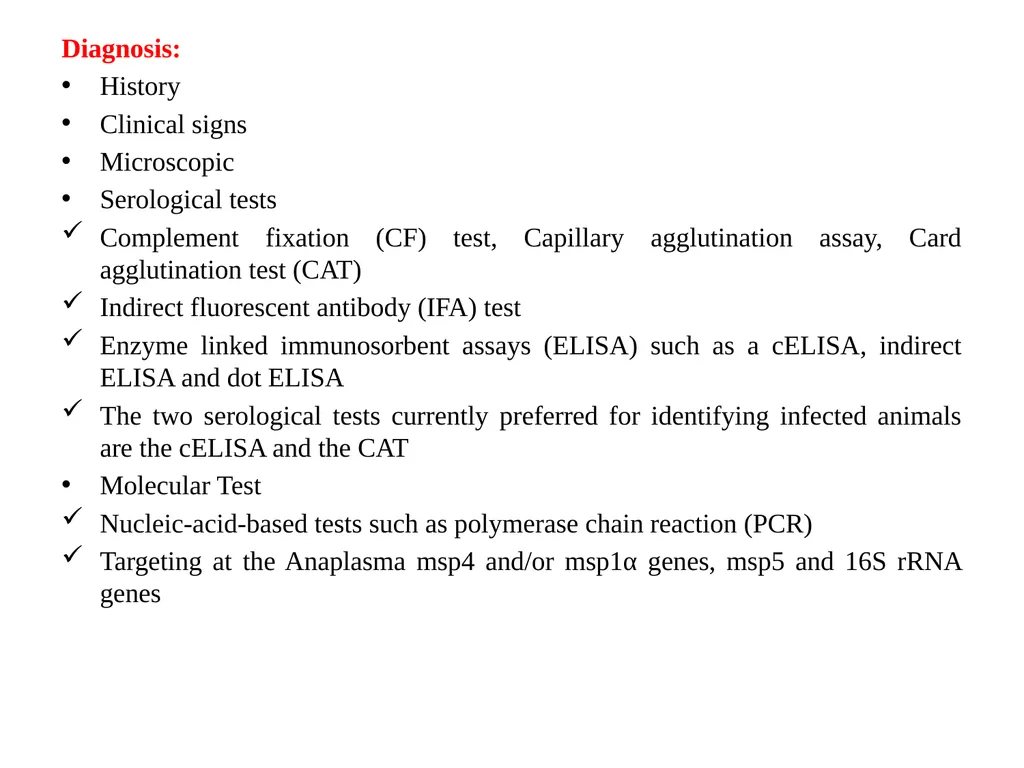
Diagnosis:
History
Clinical signs
Microscopic
Serological tests
Complement fixation (CF) test, Capillary agglutination assay, Card agglutination test (CAT)
Indirect fluorescent antibody (IFA) test
Enzyme linked immunosorbent assays (ELISA) such as a cELISA, indirect ELISA and dot ELISA
The two serological tests currently preferred for identifying infected animals are the cELISA and the CAT
Molecular Test
Nucleic-acid-based tests such as polymerase chain reaction (PCR)
Targeting at the Anaplasma msp4 and/or msp1α genes, msp5 and 16S rRNA genes<br>
09
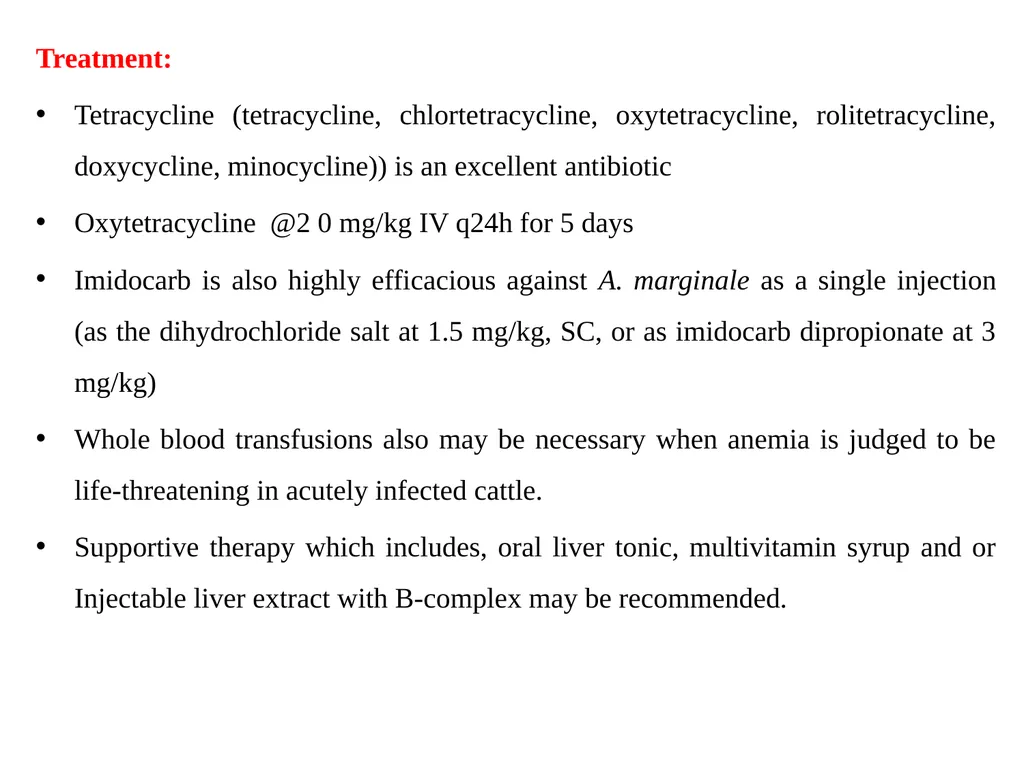
Treatment:
Tetracycline (tetracycline, chlortetracycline, oxytetracycline, rolitetracycline, doxycycline, minocycline)) is an excellent antibiotic
Oxytetracycline @2 0 mg/kg IV q24h for 5 days
Imidocarb is also highly efficacious against A. marginale as a single injection (as the dihydrochloride salt at 1.5 mg/kg, SC, or as imidocarb dipropionate at 3 mg/kg)
Whole blood transfusions also may be necessary when anemia is judged to be life-threatening in acutely infected cattle.
Supportive therapy which includes, oral liver tonic, multivitamin syrup and or Injectable liver extract with B-complex may be recommended.<br>
10
PREVENTION AND CONTROL:
Currently the available control measures for tick-borne diseases are the use of acaricides for reduction or tick populations, specific chemotherapy, chemoprophylaxis, controlled exposure and vaccination.
However, the control measures for bovine anaplasmosis vary with geographical location which include:
Maintenance of Anaplasma‐free herds
Vector control
Prevention of iatrogenic transmission
Administration of antibiotics and
Vaccination.<br>