
Breakout Session 1 Objectives Of Breakout Session







Description: Breakout Session 1 Objectives Of Breakout Session Design a pre-operative platform trial testing novel agents in patients with resectable Non-Small Cell Lung Cancer (NSCLC) Classify: Therapeutic versus non-therapeutic Identify primary and
Related Topics
Download Presentation
"Breakout Session 1 Objectives Of Breakout Session" is the property of its rightful owner. Permission is granted to download and print the materials on this website for personal, non-commercial use only, and to display it on your personal computer provided you do not modify the materials and that you retain all copyright notices contained in the materials. By downloading content from our website, you accept the terms of this agreement.
Presentation Transcript
slide1. Breakout Session 1<br>
slide2. Objectives Of Breakout Session Design a pre-operative platform trial testing novel agents in patients with resectable Non-Small Cell Lung Cancer (NSCLC)
Classify: Therapeutic versus non-therapeutic
Identify primary and secondary outcome measures 2<br>
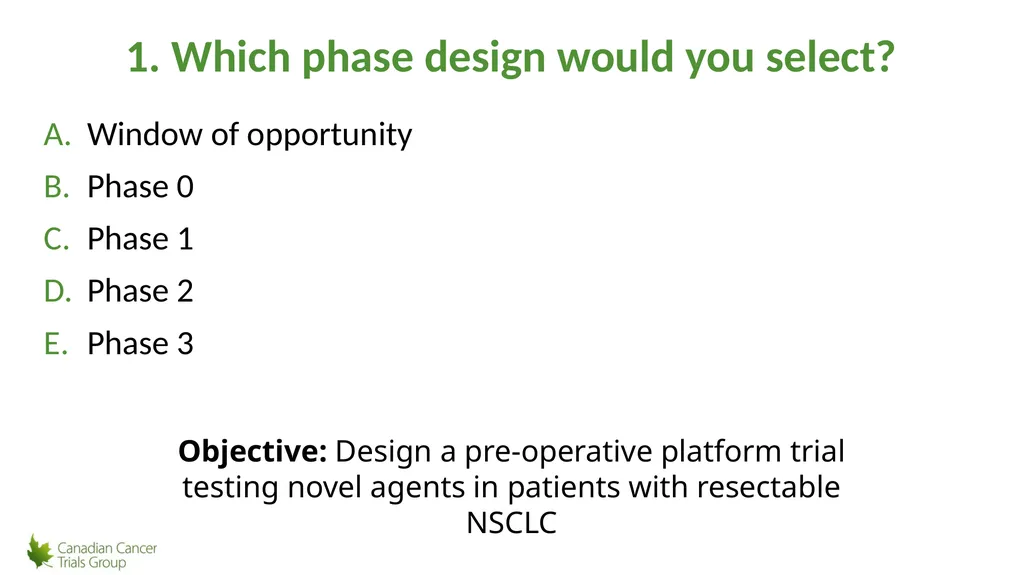
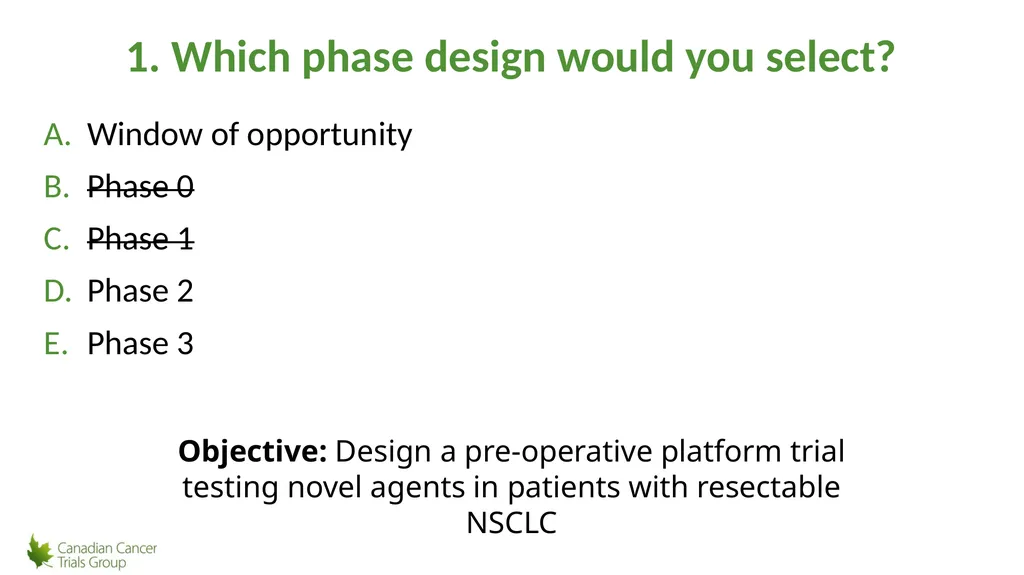
slide3. 1. Which phase design would you select? Window of opportunity
Phase 0
Phase 1
Phase 2
Phase 3 3 Objective: Design a pre-operative platform trial testing novel agents in patients with resectable NSCLC<br>
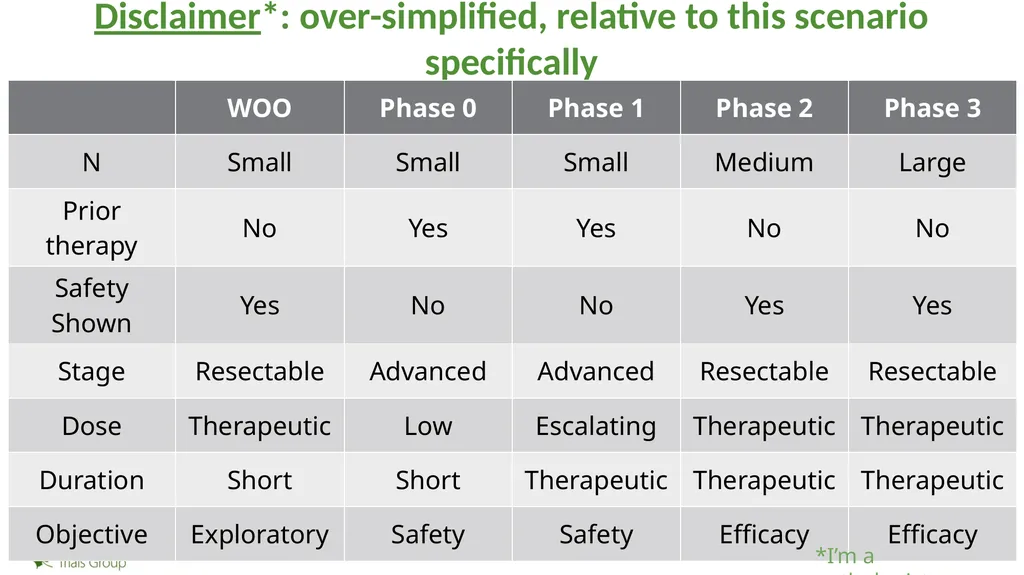
slide4. Disclaimer*: over-simplified, relative to this scenario specifically 4 *I’m a pathologist….<br>
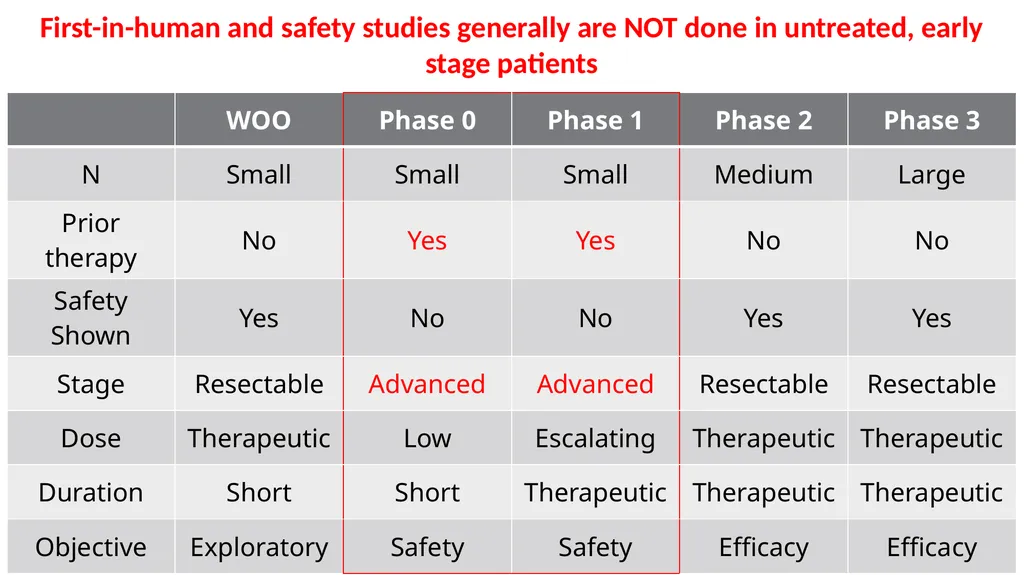
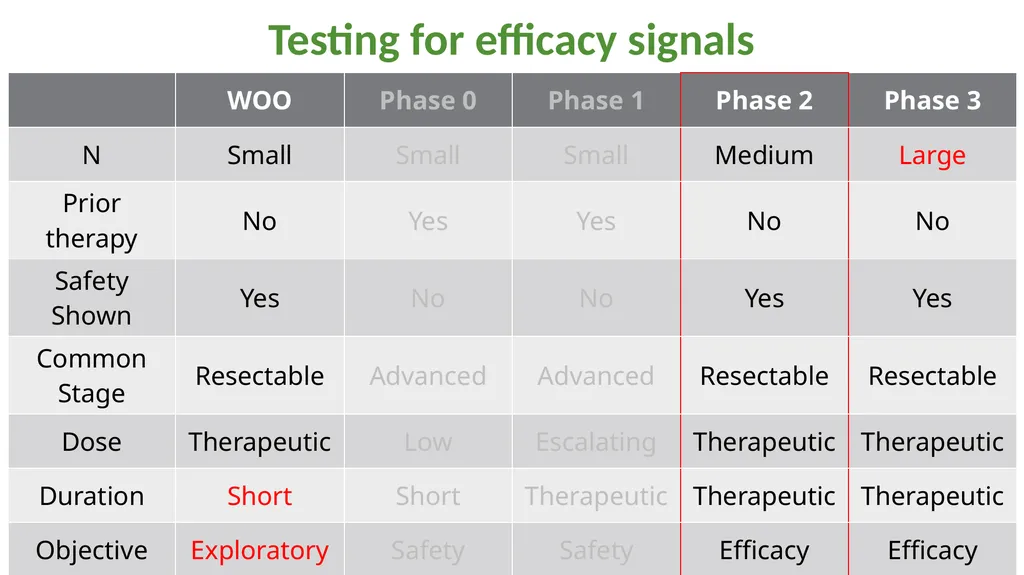
slide5. First-in-human and safety studies generally are NOT done in untreated, early stage patients 5<br>
slide6. 1. Which phase design would you select? Window of opportunity
Phase 0
Phase 1
Phase 2
Phase 3 6 Objective: Design a pre-operative platform trial testing novel agents in patients with resectable NSCLC<br>
slide7. 7 Testing for efficacy signals<br>
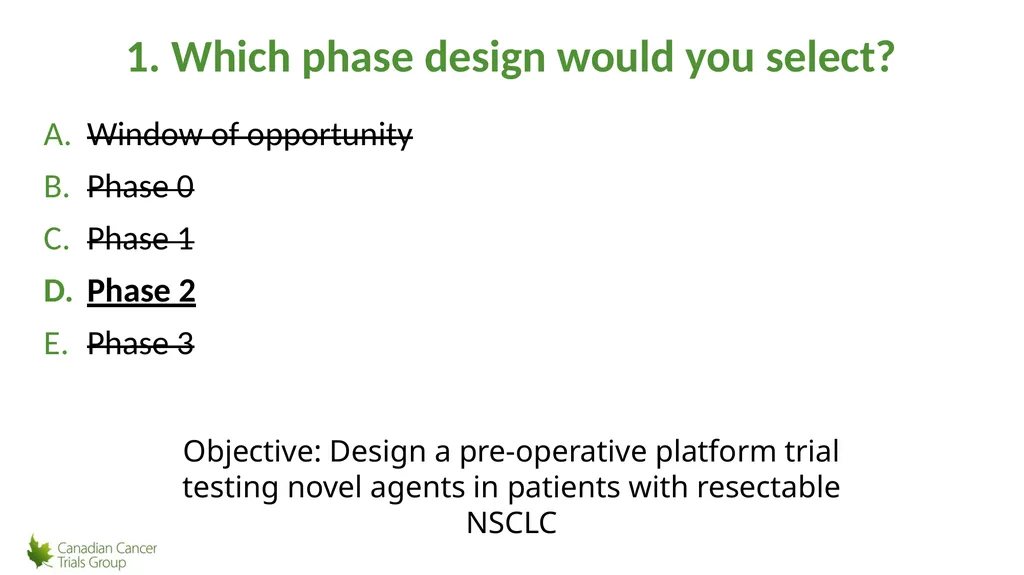
slide8. 1. Which phase design would you select? Window of opportunity
Phase 0
Phase 1
Phase 2
Phase 3 8 Objective: Design a pre-operative platform trial testing novel agents in patients with resectable NSCLC<br>
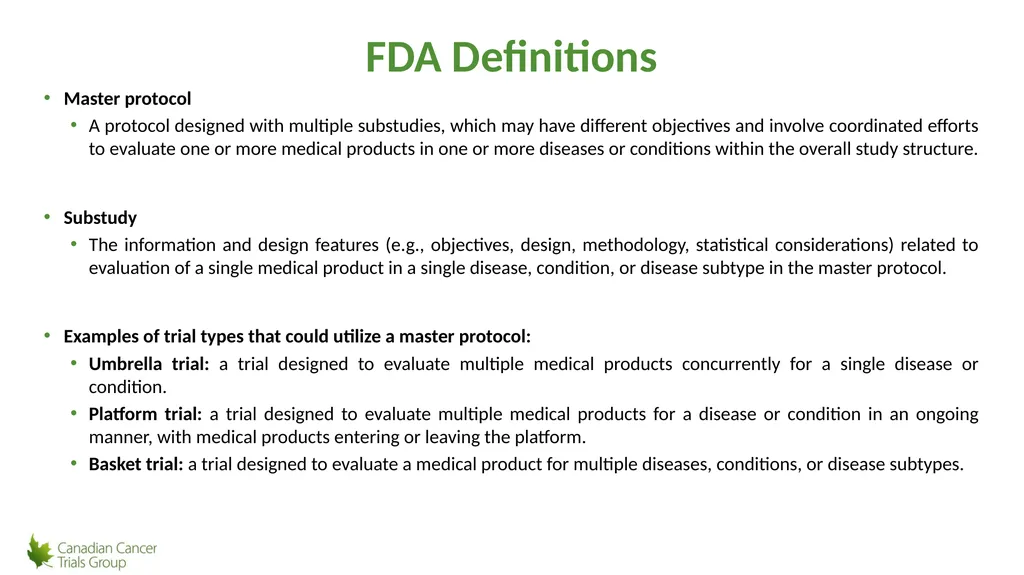
slide9. FDA Definitions Master protocol
A protocol designed with multiple substudies, which may have different objectives and involve coordinated efforts to evaluate one or more medical products in one or more diseases or conditions within the overall study structure.
Substudy
The information and design features (e.g., objectives, design, methodology, statistical considerations) related to evaluation of a single medical product in a single disease, condition, or disease subtype in the master protocol.
Examples of trial types that could utilize a master protocol:
Umbrella trial: a trial designed to evaluate multiple medical products concurrently for a single disease or condition.
Platform trial: a trial designed to evaluate multiple medical products for a disease or condition in an ongoing manner, with medical products entering or leaving the platform.
Basket trial: a trial designed to evaluate a medical product for multiple diseases, conditions, or disease subtypes. 9<br>
slide10. 2. Which of the following are benefits of a platform trial design? Assumes a heterogeneous patient population
Allows parallel and sequential testing of novel therapies and combinations
Trial adapts based on data collected
Pre-defined criteria for “success” or “failure” of a treatment arm
Speed and cost-efficiency
All of the above 10 Objective: Design a pre-operative platform trial testing novel agents in patients with resectable NSCLC<br>
slide11. 2. Which of the following are benefits of a platform trial design? Assumes a heterogeneous patient population
Allows parallel and sequential testing of novel therapies and combinations
Trial adapts based on data collected
Pre-defined criteria for “success” or “failure” of a treatment arm
Speed and cost-efficiency
All of the above 11<br>
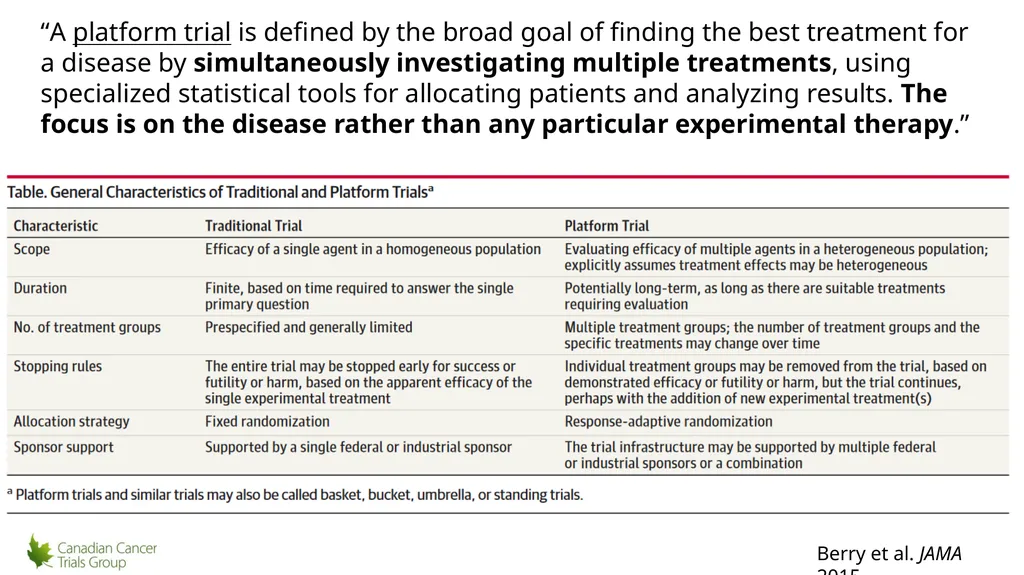
slide12. 12 Berry et al. JAMA 2015 “A platform trial is defined by the broad goal of finding the best treatment for a disease by simultaneously investigating multiple treatments, using specialized statistical tools for allocating patients and analyzing results. The focus is on the disease rather than any particular experimental therapy.”<br>
slide13. 3. What are potential pro’s and con’s of using a biomarker-selected population? 13 Objective: Design a pre-operative platform trial testing novel agents in patients with resectable NSCLC<br>
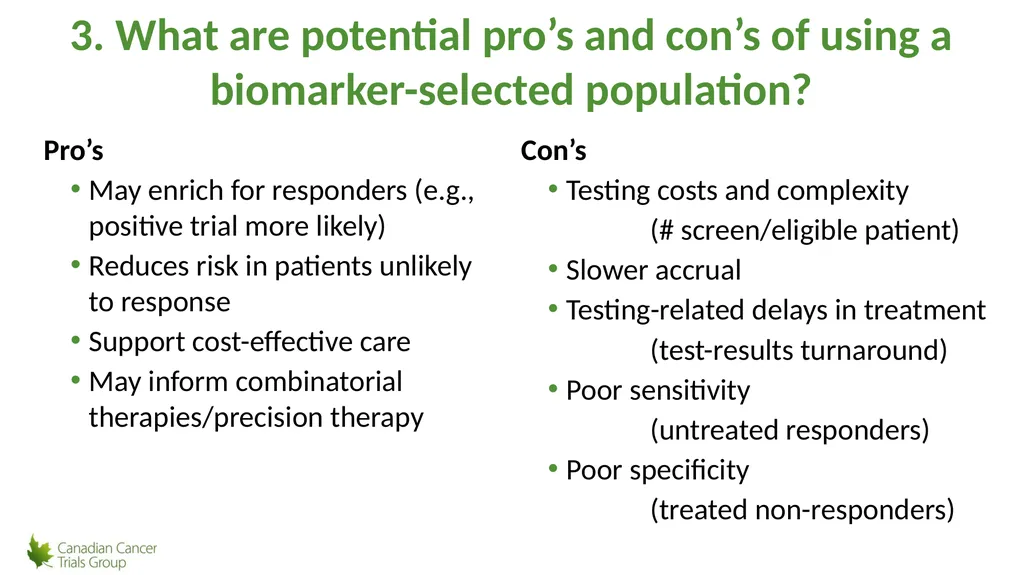
slide14. 3. What are potential pro’s and con’s of using a biomarker-selected population? Pro’s
May enrich for responders (e.g., positive trial more likely)
Reduces risk in patients unlikely to response
Support cost-effective care
May inform combinatorial therapies/precision therapy Con’s
Testing costs and complexity
(# screen/eligible patient)
Slower accrual
Testing-related delays in treatment
(test-results turnaround)
Poor sensitivity
(untreated responders)
Poor specificity
(treated non-responders) 14<br>
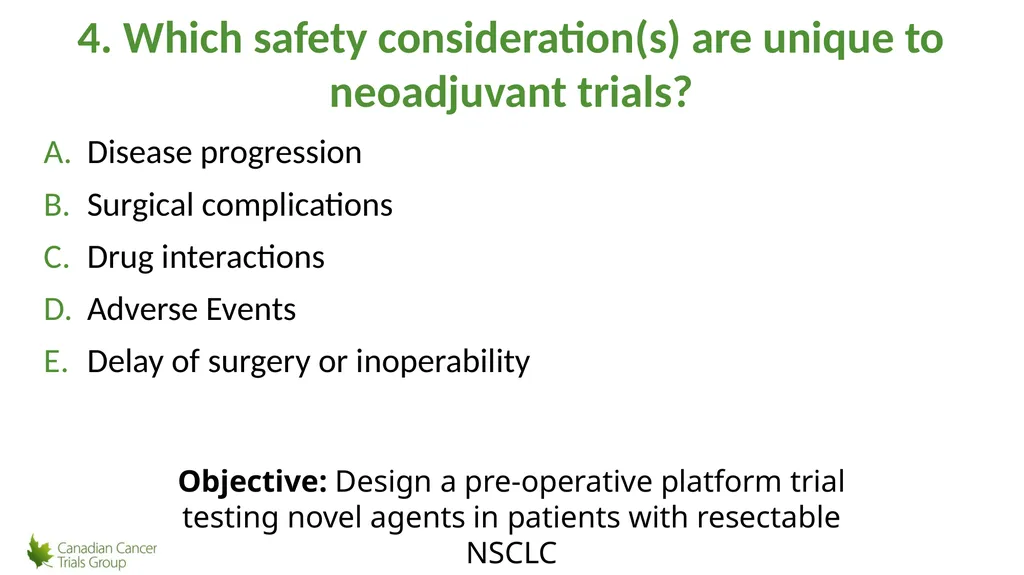
slide15. 4. Which safety consideration(s) are unique to neoadjuvant trials? Disease progression
Surgical complications
Drug interactions
Adverse Events
Delay of surgery or inoperability 15 Objective: Design a pre-operative platform trial testing novel agents in patients with resectable NSCLC<br>
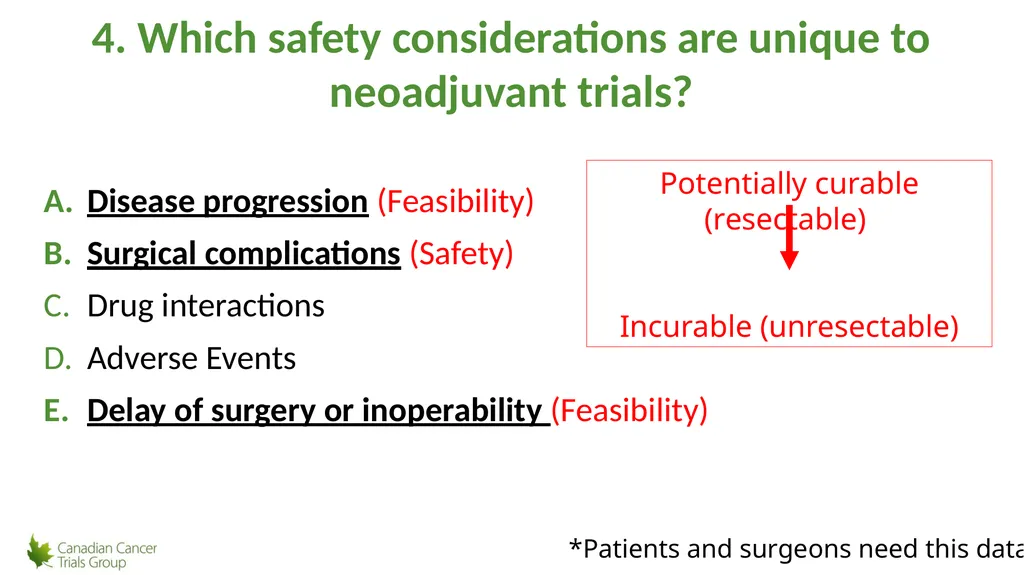
slide16. 4. Which safety considerations are unique to neoadjuvant trials? Disease progression (Feasibility)
Surgical complications (Safety)
Drug interactions
Adverse Events
Delay of surgery or inoperability (Feasibility) 16 *Patients and surgeons need this data<br>
slide17. 5. If our goal is speedy results, which efficacy outcome measure(s) is/are preferred? Event-free survival (EFS)
Recurrence-free survival (RFS)
Major pathologic response (MPR)
Overall survival (OS)
Pathologic complete response (pCR) 17 Objective: Design a pre-operative platform trial testing novel agents in patients with resectable NSCLC<br>
slide18. 5. If our goal is speedy results, which efficacy endpoint(s) is/are preferred? Event-free survival (EFS)*
Recurrence-free survival (RFS)
Major pathologic response (MPR)
Overall survival (OS)
Pathologic complete response (pCR) 18 Objective: Design a pre-operative platform trial testing novel agents in patients with resectable NSCLC<br>
slide19. 6. Proposed primary and secondary endpoints? 19 Objective: Design a pre-operative platform trial testing novel agents in patients with resectable NSCLC<br>
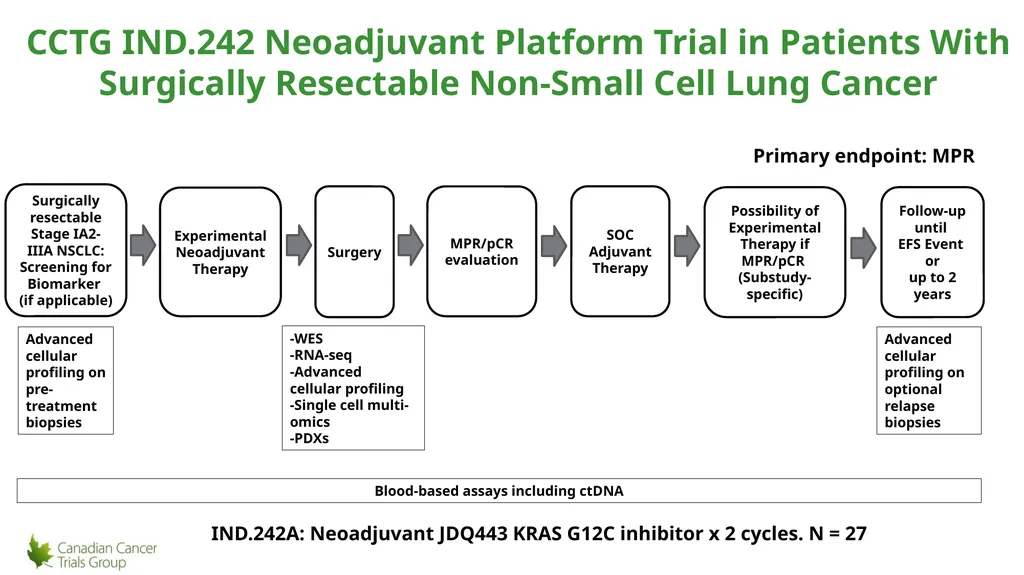
slide20. CCTG IND.242 Neoadjuvant Platform Trial in Patients With Surgically Resectable Non-Small Cell Lung Cancer 20 Surgically resectable Stage IA2-IIIA NSCLC:
Screening for Biomarker
(if applicable) Experimental Neoadjuvant Therapy MPR/pCR evaluation SOC Adjuvant Therapy Possibility of Experimental Therapy if MPR/pCR
(Substudy-specific) Follow-up until
EFS Event
or
up to 2 years Advanced cellular profiling on pre-treatment biopsies Advanced cellular profiling on optional relapse biopsies -WES
-RNA-seq
-Advanced cellular profiling
-Single cell multi-omics
-PDXs Blood-based assays including ctDNA Surgery IND.242A: Neoadjuvant JDQ443 KRAS G12C inhibitor x 2 cycles. N = 27 Primary endpoint: MPR<br>
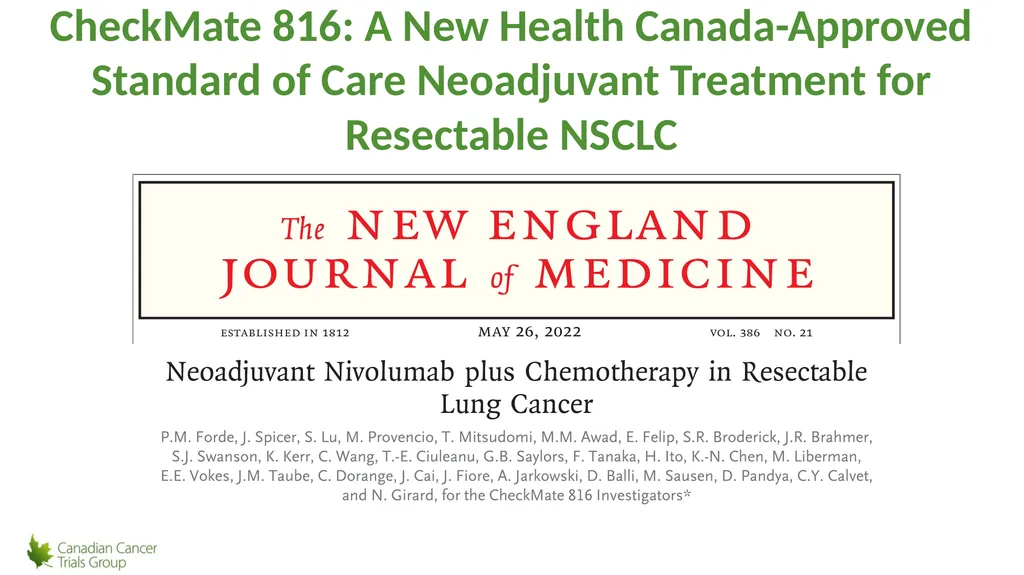
slide21. CheckMate 816: A New Health Canada-Approved Standard of Care Neoadjuvant Treatment for Resectable NSCLC 21<br>
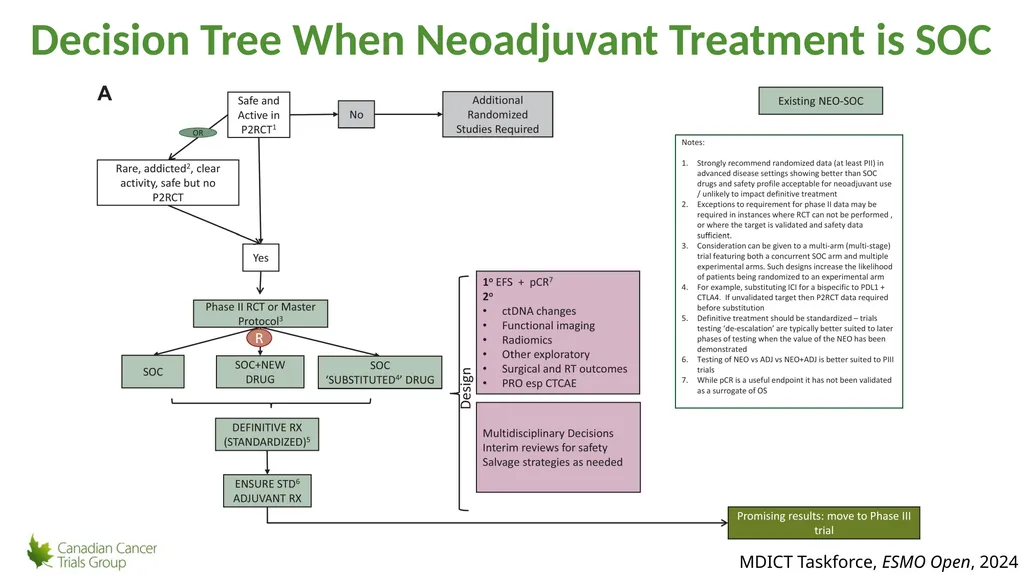
slide22. Decision Tree When Neoadjuvant Treatment is SOC 22 MDICT Taskforce, ESMO Open, 2024<br>
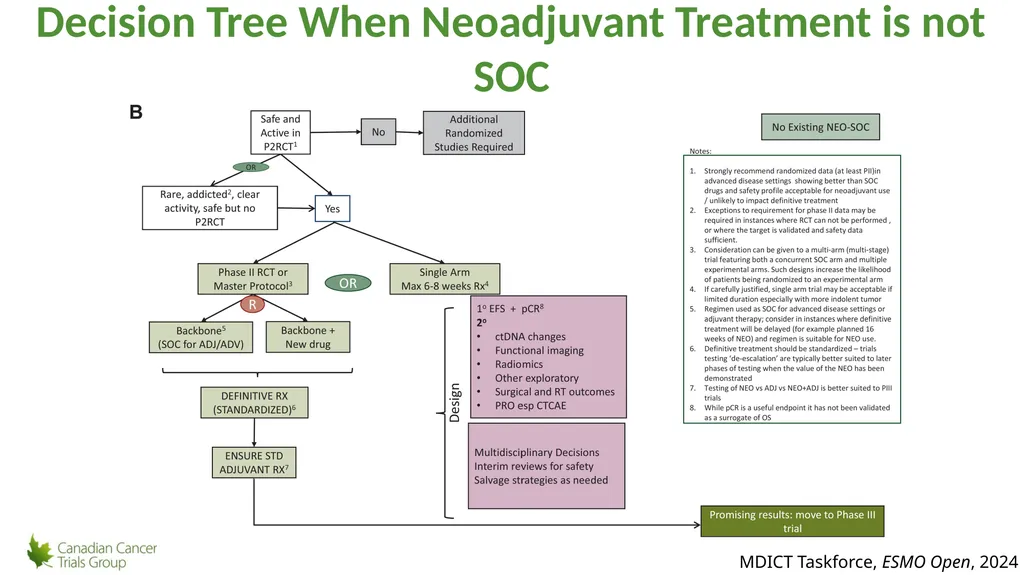
slide23. Decision Tree When Neoadjuvant Treatment is not SOC 23 MDICT Taskforce, ESMO Open, 2024<br>
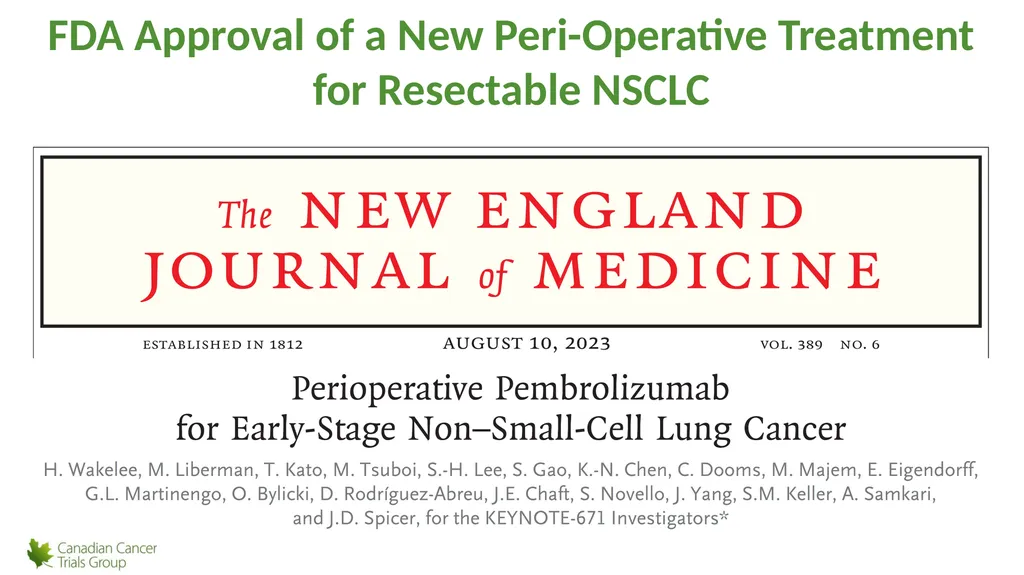
slide24. FDA Approval of a New Peri-Operative Treatment for Resectable NSCLC 24<br>
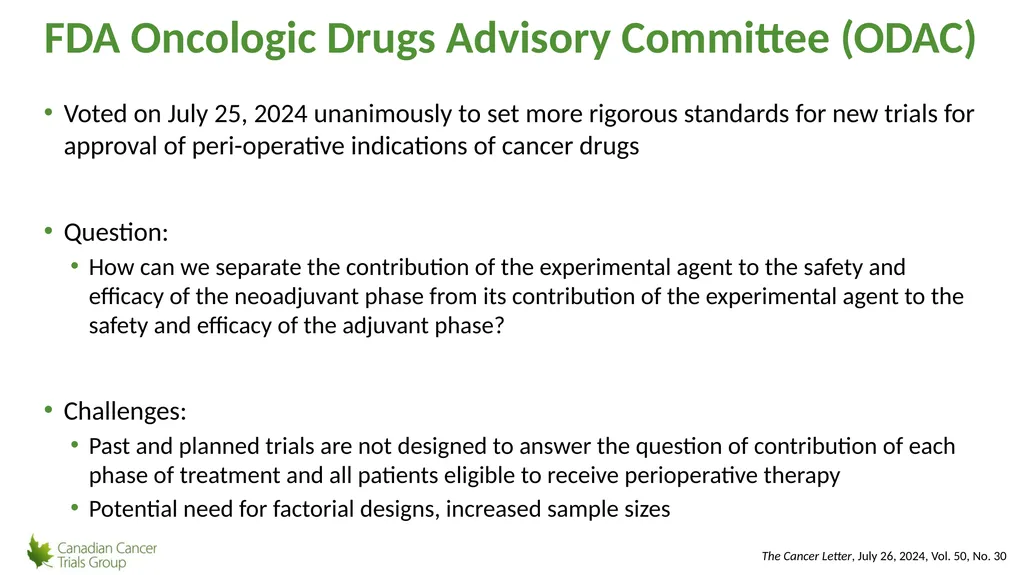
slide25. FDA Oncologic Drugs Advisory Committee (ODAC) Voted on July 25, 2024 unanimously to set more rigorous standards for new trials for approval of peri-operative indications of cancer drugs
Question:
How can we separate the contribution of the experimental agent to the safety and efficacy of the neoadjuvant phase from its contribution of the experimental agent to the safety and efficacy of the adjuvant phase?
Challenges:
Past and planned trials are not designed to answer the question of contribution of each phase of treatment and all patients eligible to receive perioperative therapy
Potential need for factorial designs, increased sample sizes 25 The Cancer Letter, July 26, 2024, Vol. 50, No. 30<br>
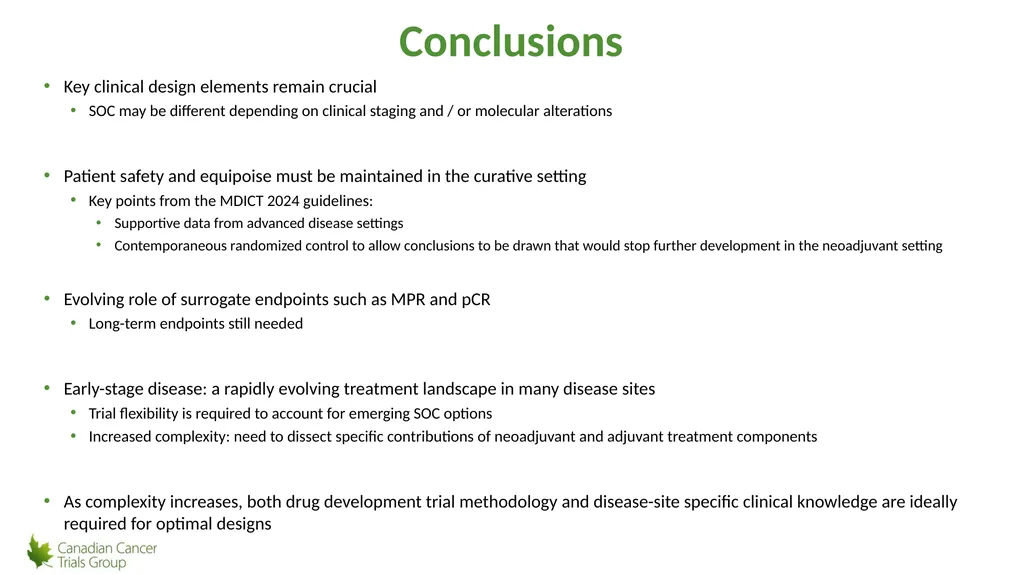
slide26. Conclusions Key clinical design elements remain crucial
SOC may be different depending on clinical staging and / or molecular alterations
Patient safety and equipoise must be maintained in the curative setting
Key points from the MDICT 2024 guidelines:
Supportive data from advanced disease settings
Contemporaneous randomized control to allow conclusions to be drawn that would stop further development in the neoadjuvant setting
Evolving role of surrogate endpoints such as MPR and pCR
Long-term endpoints still needed
Early-stage disease: a rapidly evolving treatment landscape in many disease sites
Trial flexibility is required to account for emerging SOC options
Increased complexity: need to dissect specific contributions of neoadjuvant and adjuvant treatment components
As complexity increases, both drug development trial methodology and disease-site specific clinical knowledge are ideally required for optimal designs 26<br>
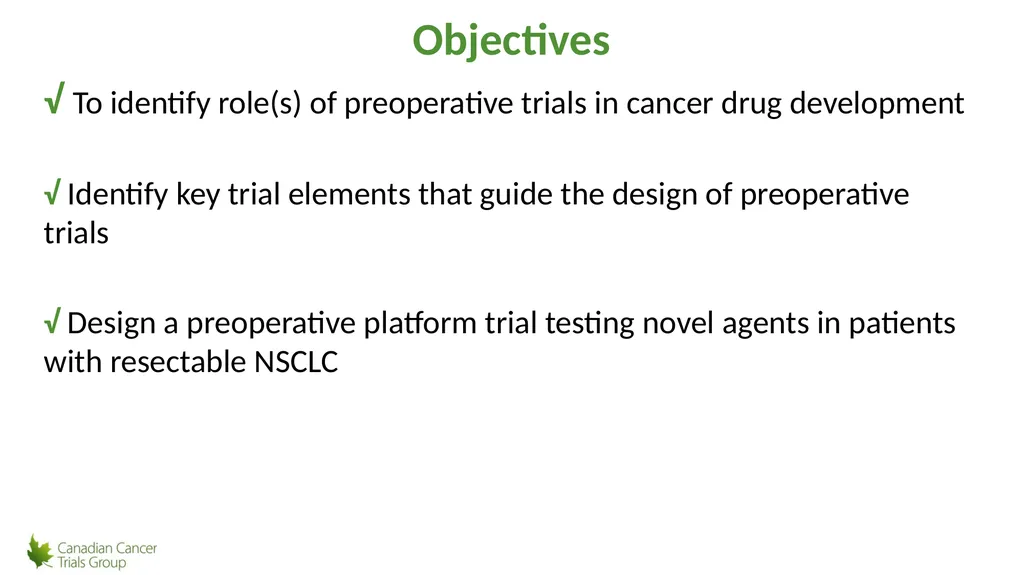
slide27. Objectives 27 √ To identify role(s) of preoperative trials in cancer drug development
√ Identify key trial elements that guide the design of preoperative trials
√ Design a preoperative platform trial testing novel agents in patients with resectable NSCLC<br>
slide28. THANK YOU! 28<br>
slide2. Objectives Of Breakout Session Design a pre-operative platform trial testing novel agents in patients with resectable Non-Small Cell Lung Cancer (NSCLC)
Classify: Therapeutic versus non-therapeutic
Identify primary and secondary outcome measures 2<br>
slide3. 1. Which phase design would you select? Window of opportunity
Phase 0
Phase 1
Phase 2
Phase 3 3 Objective: Design a pre-operative platform trial testing novel agents in patients with resectable NSCLC<br>
slide4. Disclaimer*: over-simplified, relative to this scenario specifically 4 *I’m a pathologist….<br>
slide5. First-in-human and safety studies generally are NOT done in untreated, early stage patients 5<br>
slide6. 1. Which phase design would you select? Window of opportunity
Phase 0
Phase 1
Phase 2
Phase 3 6 Objective: Design a pre-operative platform trial testing novel agents in patients with resectable NSCLC<br>
slide7. 7 Testing for efficacy signals<br>
slide8. 1. Which phase design would you select? Window of opportunity
Phase 0
Phase 1
Phase 2
Phase 3 8 Objective: Design a pre-operative platform trial testing novel agents in patients with resectable NSCLC<br>
slide9. FDA Definitions Master protocol
A protocol designed with multiple substudies, which may have different objectives and involve coordinated efforts to evaluate one or more medical products in one or more diseases or conditions within the overall study structure.
Substudy
The information and design features (e.g., objectives, design, methodology, statistical considerations) related to evaluation of a single medical product in a single disease, condition, or disease subtype in the master protocol.
Examples of trial types that could utilize a master protocol:
Umbrella trial: a trial designed to evaluate multiple medical products concurrently for a single disease or condition.
Platform trial: a trial designed to evaluate multiple medical products for a disease or condition in an ongoing manner, with medical products entering or leaving the platform.
Basket trial: a trial designed to evaluate a medical product for multiple diseases, conditions, or disease subtypes. 9<br>
slide10. 2. Which of the following are benefits of a platform trial design? Assumes a heterogeneous patient population
Allows parallel and sequential testing of novel therapies and combinations
Trial adapts based on data collected
Pre-defined criteria for “success” or “failure” of a treatment arm
Speed and cost-efficiency
All of the above 10 Objective: Design a pre-operative platform trial testing novel agents in patients with resectable NSCLC<br>
slide11. 2. Which of the following are benefits of a platform trial design? Assumes a heterogeneous patient population
Allows parallel and sequential testing of novel therapies and combinations
Trial adapts based on data collected
Pre-defined criteria for “success” or “failure” of a treatment arm
Speed and cost-efficiency
All of the above 11<br>
slide12. 12 Berry et al. JAMA 2015 “A platform trial is defined by the broad goal of finding the best treatment for a disease by simultaneously investigating multiple treatments, using specialized statistical tools for allocating patients and analyzing results. The focus is on the disease rather than any particular experimental therapy.”<br>
slide13. 3. What are potential pro’s and con’s of using a biomarker-selected population? 13 Objective: Design a pre-operative platform trial testing novel agents in patients with resectable NSCLC<br>
slide14. 3. What are potential pro’s and con’s of using a biomarker-selected population? Pro’s
May enrich for responders (e.g., positive trial more likely)
Reduces risk in patients unlikely to response
Support cost-effective care
May inform combinatorial therapies/precision therapy Con’s
Testing costs and complexity
(# screen/eligible patient)
Slower accrual
Testing-related delays in treatment
(test-results turnaround)
Poor sensitivity
(untreated responders)
Poor specificity
(treated non-responders) 14<br>
slide15. 4. Which safety consideration(s) are unique to neoadjuvant trials? Disease progression
Surgical complications
Drug interactions
Adverse Events
Delay of surgery or inoperability 15 Objective: Design a pre-operative platform trial testing novel agents in patients with resectable NSCLC<br>
slide16. 4. Which safety considerations are unique to neoadjuvant trials? Disease progression (Feasibility)
Surgical complications (Safety)
Drug interactions
Adverse Events
Delay of surgery or inoperability (Feasibility) 16 *Patients and surgeons need this data<br>
slide17. 5. If our goal is speedy results, which efficacy outcome measure(s) is/are preferred? Event-free survival (EFS)
Recurrence-free survival (RFS)
Major pathologic response (MPR)
Overall survival (OS)
Pathologic complete response (pCR) 17 Objective: Design a pre-operative platform trial testing novel agents in patients with resectable NSCLC<br>
slide18. 5. If our goal is speedy results, which efficacy endpoint(s) is/are preferred? Event-free survival (EFS)*
Recurrence-free survival (RFS)
Major pathologic response (MPR)
Overall survival (OS)
Pathologic complete response (pCR) 18 Objective: Design a pre-operative platform trial testing novel agents in patients with resectable NSCLC<br>
slide19. 6. Proposed primary and secondary endpoints? 19 Objective: Design a pre-operative platform trial testing novel agents in patients with resectable NSCLC<br>
slide20. CCTG IND.242 Neoadjuvant Platform Trial in Patients With Surgically Resectable Non-Small Cell Lung Cancer 20 Surgically resectable Stage IA2-IIIA NSCLC:
Screening for Biomarker
(if applicable) Experimental Neoadjuvant Therapy MPR/pCR evaluation SOC Adjuvant Therapy Possibility of Experimental Therapy if MPR/pCR
(Substudy-specific) Follow-up until
EFS Event
or
up to 2 years Advanced cellular profiling on pre-treatment biopsies Advanced cellular profiling on optional relapse biopsies -WES
-RNA-seq
-Advanced cellular profiling
-Single cell multi-omics
-PDXs Blood-based assays including ctDNA Surgery IND.242A: Neoadjuvant JDQ443 KRAS G12C inhibitor x 2 cycles. N = 27 Primary endpoint: MPR<br>
slide21. CheckMate 816: A New Health Canada-Approved Standard of Care Neoadjuvant Treatment for Resectable NSCLC 21<br>
slide22. Decision Tree When Neoadjuvant Treatment is SOC 22 MDICT Taskforce, ESMO Open, 2024<br>
slide23. Decision Tree When Neoadjuvant Treatment is not SOC 23 MDICT Taskforce, ESMO Open, 2024<br>
slide24. FDA Approval of a New Peri-Operative Treatment for Resectable NSCLC 24<br>
slide25. FDA Oncologic Drugs Advisory Committee (ODAC) Voted on July 25, 2024 unanimously to set more rigorous standards for new trials for approval of peri-operative indications of cancer drugs
Question:
How can we separate the contribution of the experimental agent to the safety and efficacy of the neoadjuvant phase from its contribution of the experimental agent to the safety and efficacy of the adjuvant phase?
Challenges:
Past and planned trials are not designed to answer the question of contribution of each phase of treatment and all patients eligible to receive perioperative therapy
Potential need for factorial designs, increased sample sizes 25 The Cancer Letter, July 26, 2024, Vol. 50, No. 30<br>
slide26. Conclusions Key clinical design elements remain crucial
SOC may be different depending on clinical staging and / or molecular alterations
Patient safety and equipoise must be maintained in the curative setting
Key points from the MDICT 2024 guidelines:
Supportive data from advanced disease settings
Contemporaneous randomized control to allow conclusions to be drawn that would stop further development in the neoadjuvant setting
Evolving role of surrogate endpoints such as MPR and pCR
Long-term endpoints still needed
Early-stage disease: a rapidly evolving treatment landscape in many disease sites
Trial flexibility is required to account for emerging SOC options
Increased complexity: need to dissect specific contributions of neoadjuvant and adjuvant treatment components
As complexity increases, both drug development trial methodology and disease-site specific clinical knowledge are ideally required for optimal designs 26<br>
slide27. Objectives 27 √ To identify role(s) of preoperative trials in cancer drug development
√ Identify key trial elements that guide the design of preoperative trials
√ Design a preoperative platform trial testing novel agents in patients with resectable NSCLC<br>
slide28. THANK YOU! 28<br>