Building Resilience Explore examples of adversity. Discuss what resilience is and is not, and why it is important. Practice ways you as parents and caregivers can help the children in your lives build resilience. Session Objectives What is
"Building Resilience Explore examples of adversity." is the property of its rightful owner. Permission is granted to
download and print the materials on this website for personal, non-commercial use only, and to display it
on your personal computer provided you do not modify the materials and that you retain all copyright
notices contained in the materials. By downloading content from our website, you accept the terms of this
agreement.
Presentation Transcript
01
Building Resilience<br>
02
Explore examples of adversity.
Discuss what resilience is and is not, and why it is important.
Practice ways you as parents and caregivers can help the children in your lives build resilience. Session Objectives<br>
03
What is Adversity? Adversity noun
ad·ver·si·ty | \ ad-ˈvər-sə-tē \
grave or persistent difficulty, misfortune or tragedy. Types of Adversity:
Physical Adversity
Mental Adversity
Emotional Adversity
Social Adversity
Financial Adversity<br>
04
Resilience noun
re·sil·ience | \ rəˈzilyəns \
the capacity to recover quickly from difficulties; toughness. What is Resilience?<br>
05
What does someone who is resilient look like?<br>
06
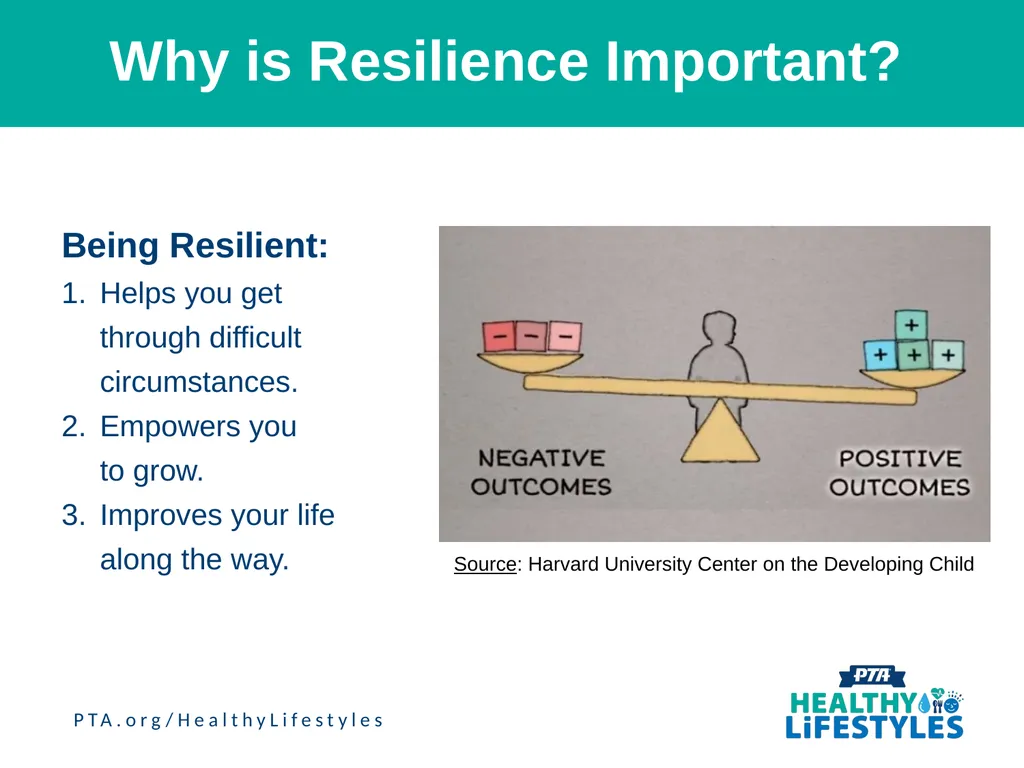
Why is Resilience Important? Being Resilient:
Helps you get through difficult circumstances.
Empowers you to grow.
Improves your life along the way. Source: Harvard University Center on the Developing Child<br>
07
Myth Versus Reality What Many Think:
Resilience can only come from a negative experiences.
Resilient people never feel down or hopeless.
People can have experienced too many negative things to build resilience. What is Real:
Resilience can be developed from both positive and negative experiences.
Someone who is resilient can still struggle with mental and emotional challenges.
It is never too late to build resilience.<br>
08
Making connections
Having your child help others
Maintaining a daily routine
Practicing healthy coping skills
Teaching child self-care What Can Families Do?<br>
09
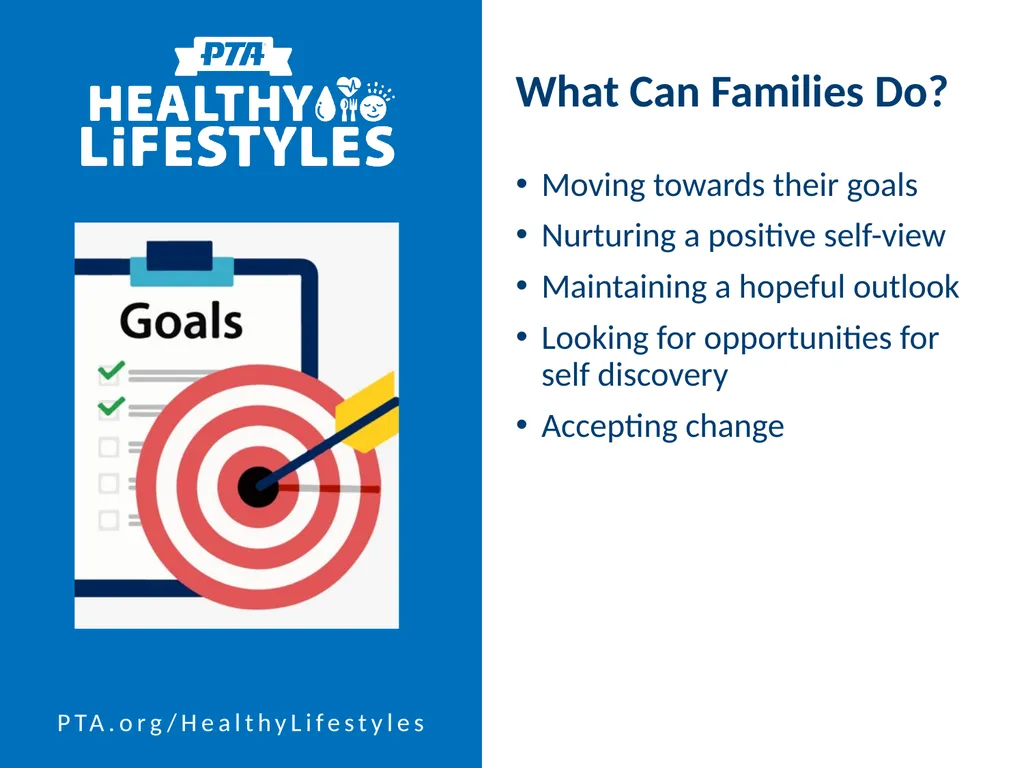
What Can Families Do? Moving towards their goals
Nurturing a positive self-view
Maintaining a hopeful outlook
Looking for opportunities for self discovery
Accepting change<br>
10
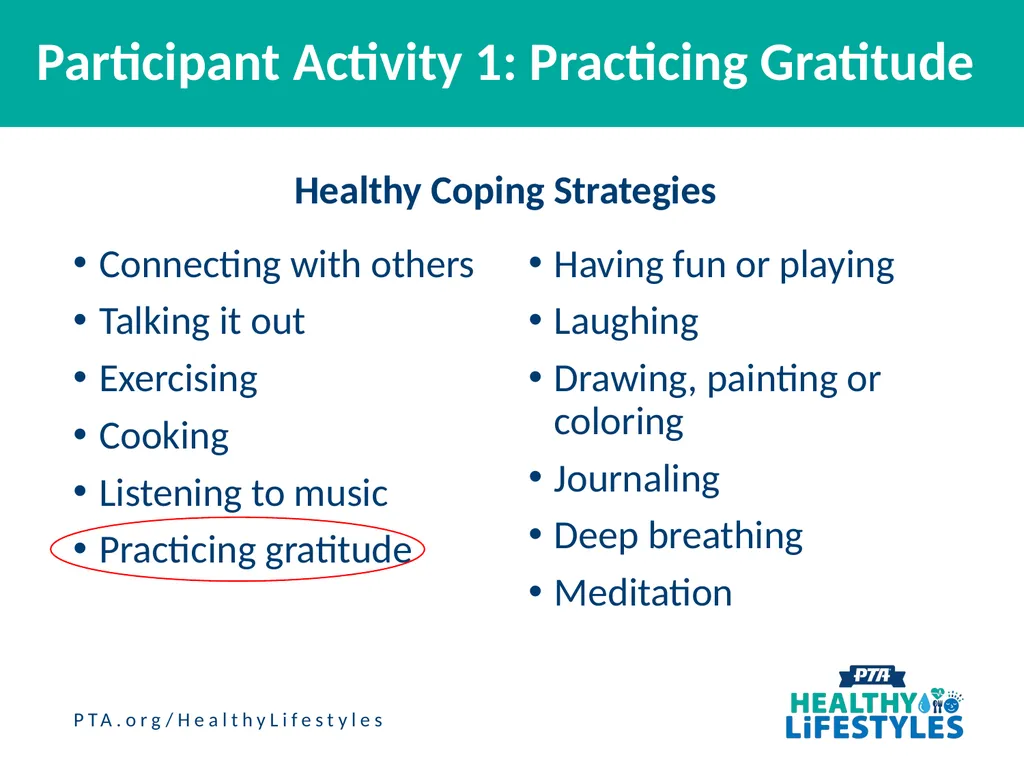
Participant Activity 1: Practicing Gratitude Connecting with others
Talking it out
Exercising
Cooking
Listening to music
Practicing gratitude Having fun or playing
Laughing
Drawing, painting or coloring
Journaling
Deep breathing
Meditation Healthy Coping Strategies<br>
11
Take turns asking each other these questions.
What coping strategies have you used to get yourself get through the COVID-19 pandemic?
How have you helped your child get through it? Participant Activity 2: What Helps You Cope?<br>
12
Participant Activity 3: What Would You Do? Your child comes home from school and tells you someone they thought was their friend started spreading an embarrassing story about them around school, and now everyone is making fun of them. Work together to figure out:
How would you help your child overcome this situation?
How can you help your child avoid a similar situation in the future?<br>
13
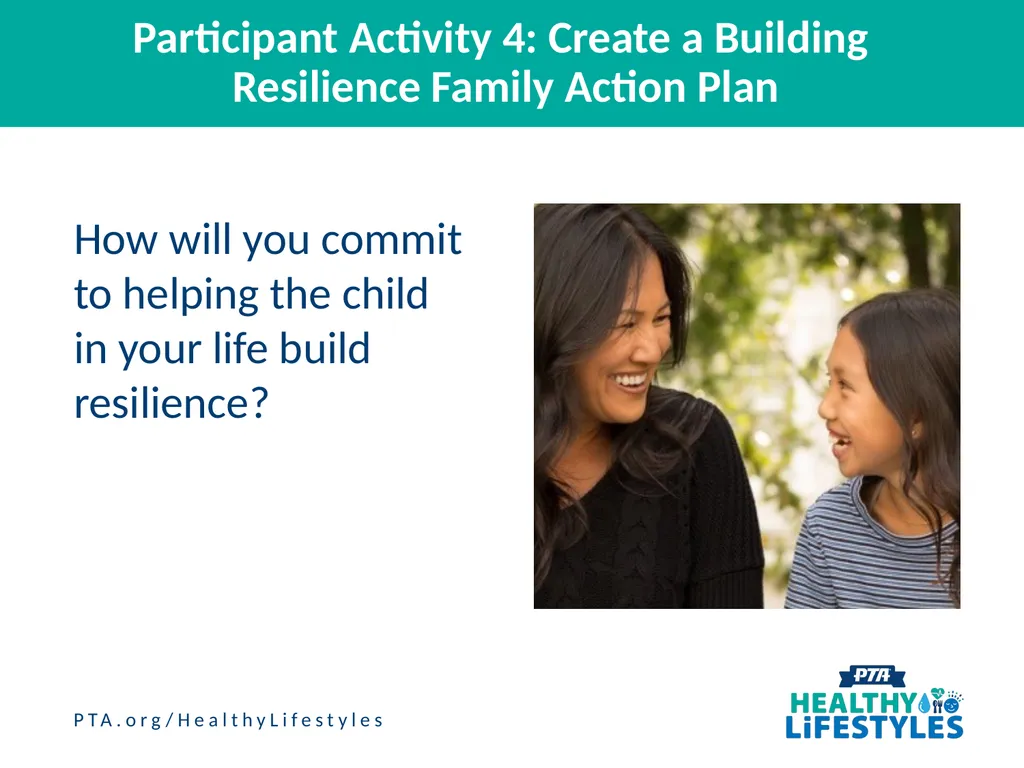
Participant Activity 4: Create a Building Resilience Family Action Plan How will you commit to helping the child
in your life build resilience?<br>
14
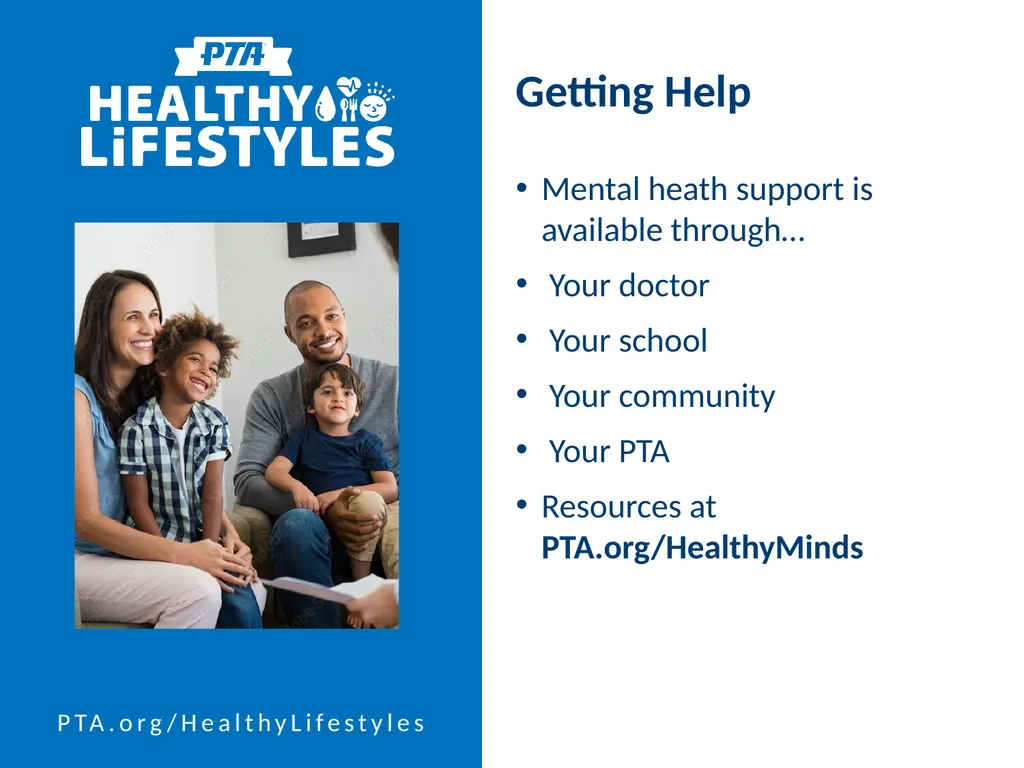
Getting Help Mental heath support is available through…
Your doctor
Your school
Your community
Your PTA
Resources at PTA.org/HealthyMinds<br>