04
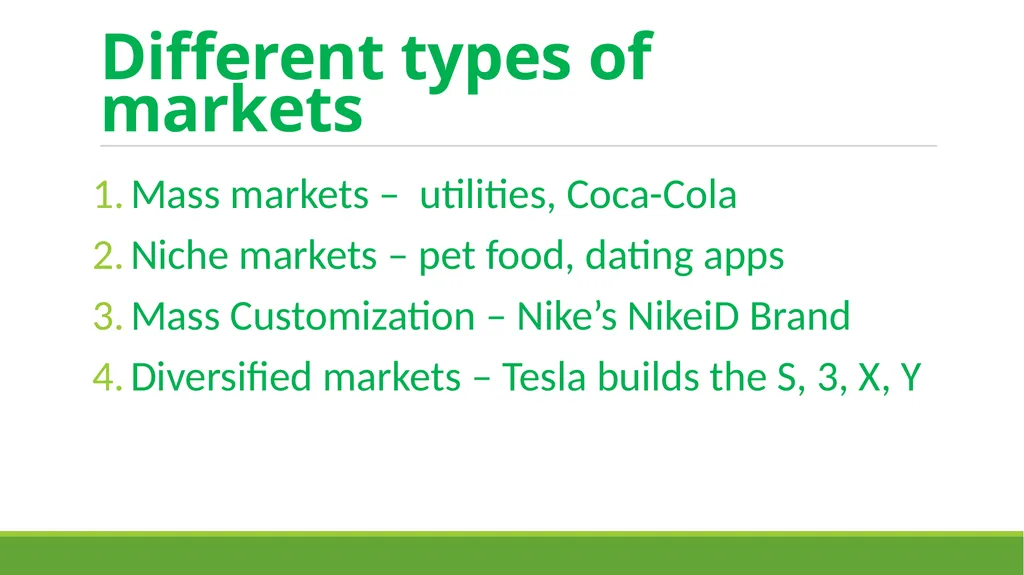
Different types of markets Mass markets – utilities, Coca-Cola
Niche markets – pet food, dating apps
Mass Customization – Nike’s NikeiD Brand
Diversified markets – Tesla builds the S, 3, X, Y<br>
05
Exercise 1 – The Persona:
(Focus on the customer not the types of market)
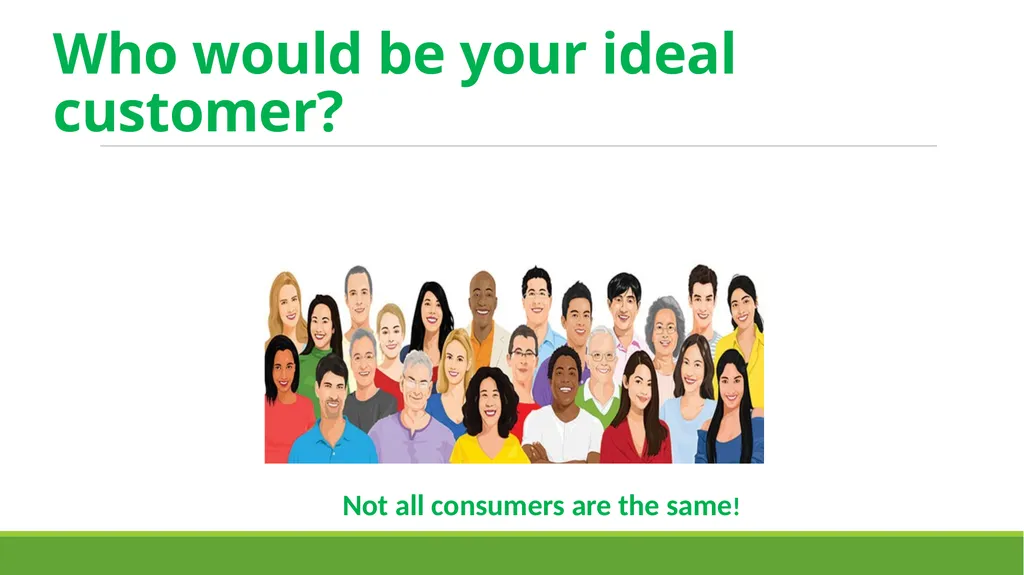
Describe the ideal customer that you want to buy your product or service:<br>
07
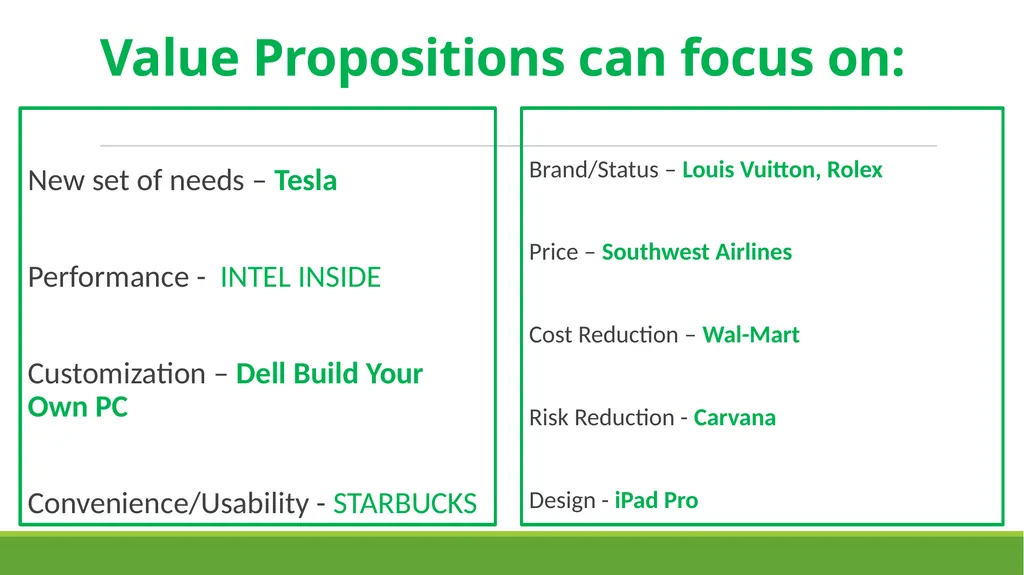
Value Propositions can focus on: New set of needs – Tesla
Performance - INTEL INSIDE
Customization – Dell Build Your Own PC
Convenience/Usability - STARBUCKS Brand/Status – Louis Vuitton, Rolex
Price – Southwest Airlines
Cost Reduction – Wal-Mart
Risk Reduction - Carvana
Design - iPad Pro<br>
08
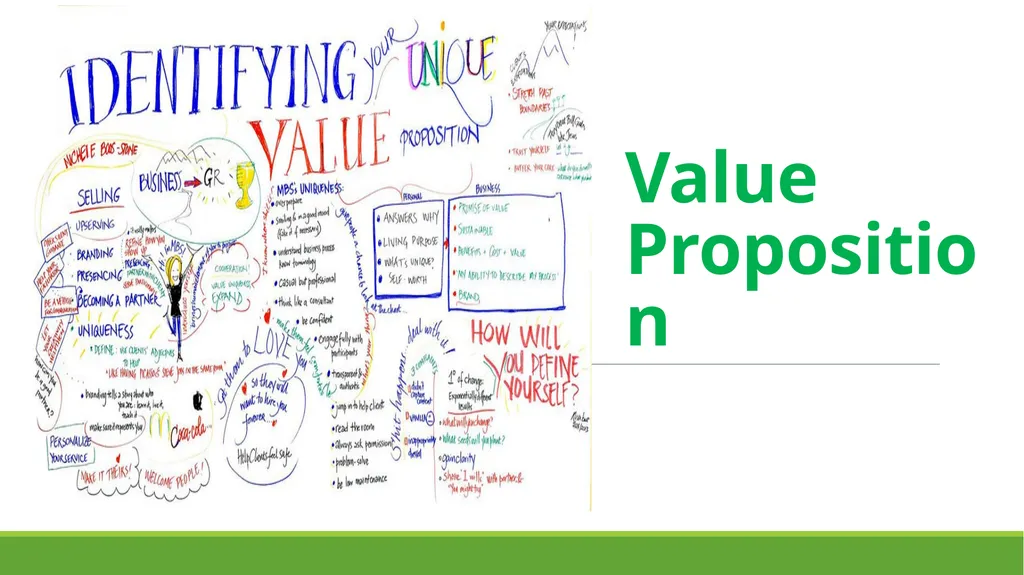
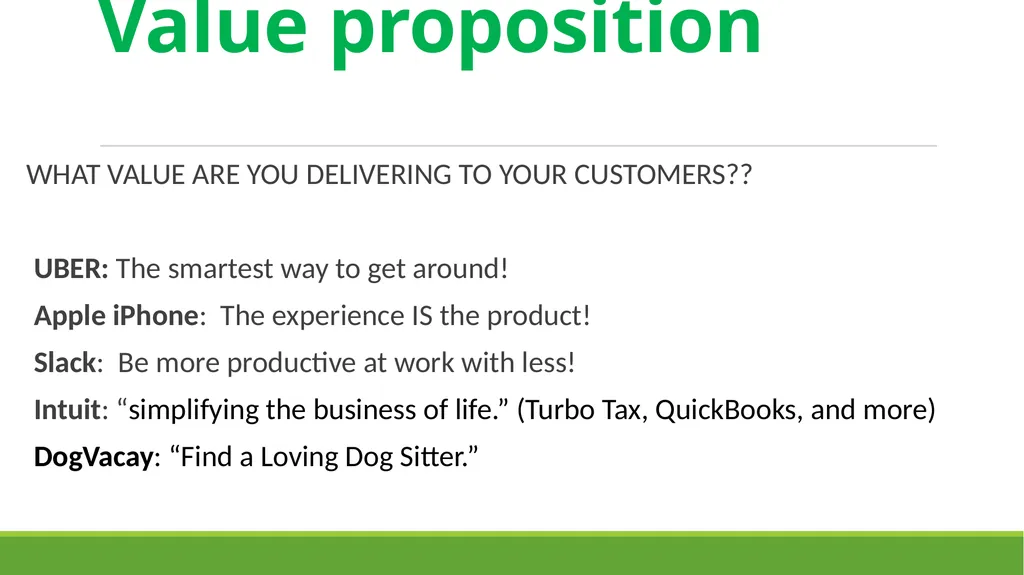
Value proposition WHAT VALUE ARE YOU DELIVERING TO YOUR CUSTOMERS??
UBER: The smartest way to get around!
Apple iPhone: The experience IS the product!
Slack: Be more productive at work with less!
Intuit: “simplifying the business of life.” (Turbo Tax, QuickBooks, and more)
DogVacay: “Find a Loving Dog Sitter.”<br>
09
Exercise 2: What do you think your ideal customer wants (needs) from your product or service?
Why would that customer buy your product?
What value can you give them?<br>
10
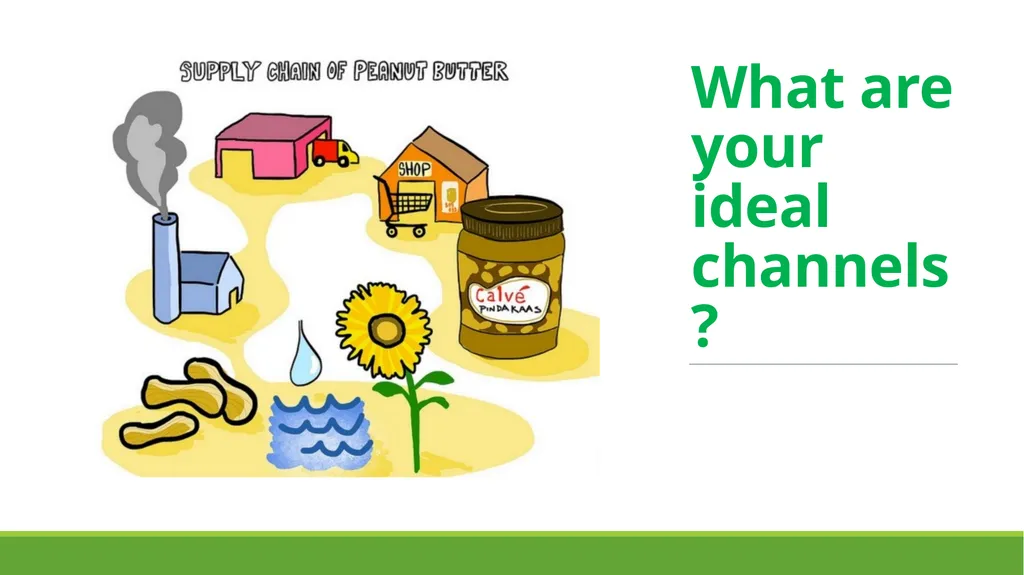
What are your ideal channels?<br>
11
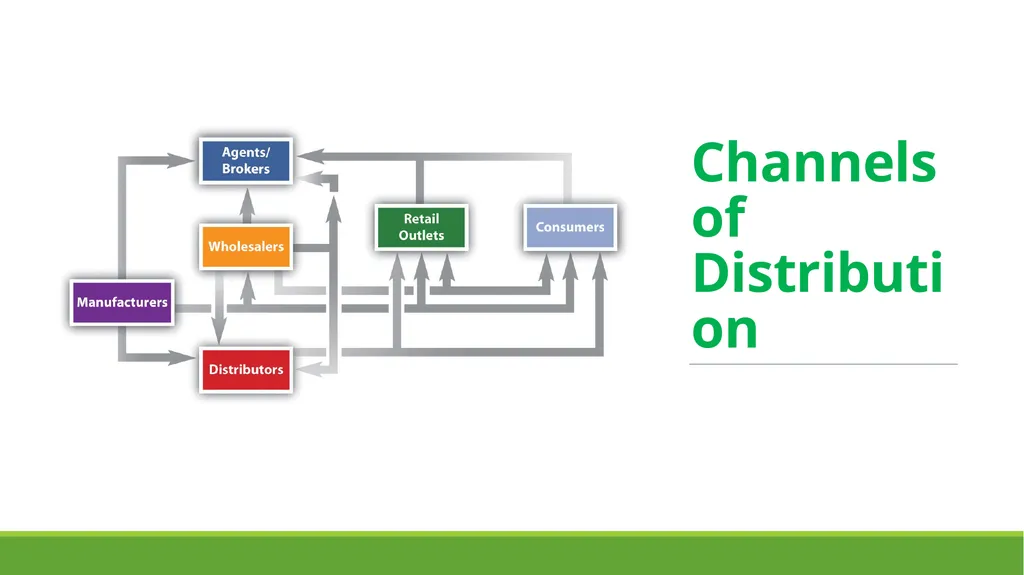
Channels of Distribution<br>
12
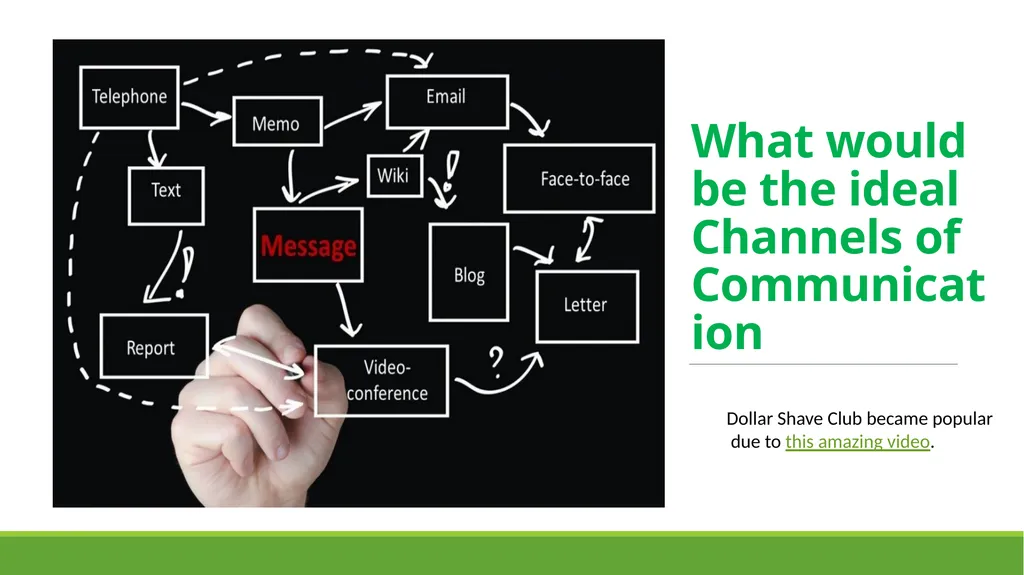
What would be the ideal Channels of Communication Dollar Shave Club became popular
due to this amazing video.<br>
13
Exercise 3 What would be the best way to communicate with your ideal customer?
What channels would you use?
Would you expect your ideal customer to use those channels to learn about products?<br>
14
Customer Relationships<br>
15
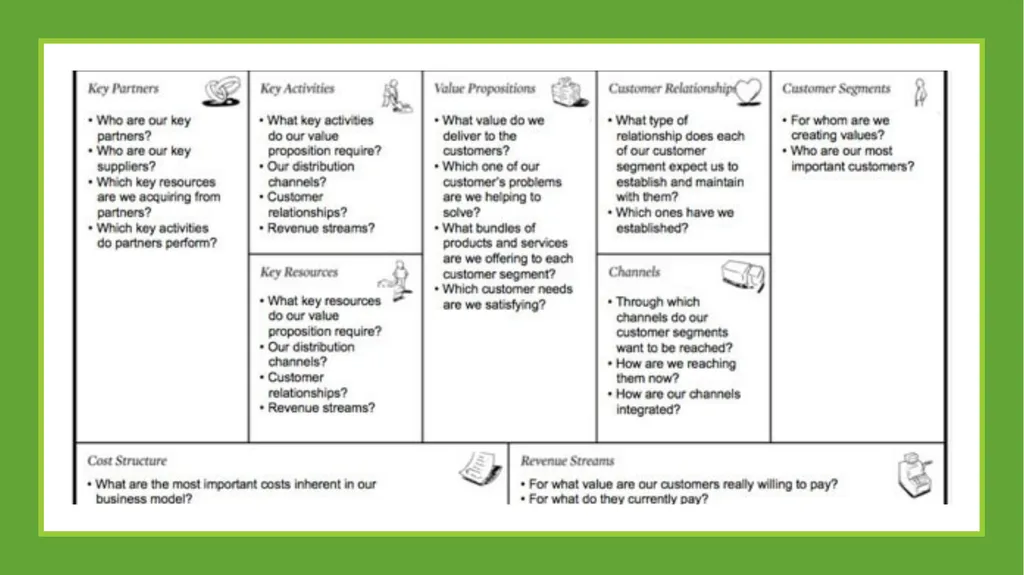
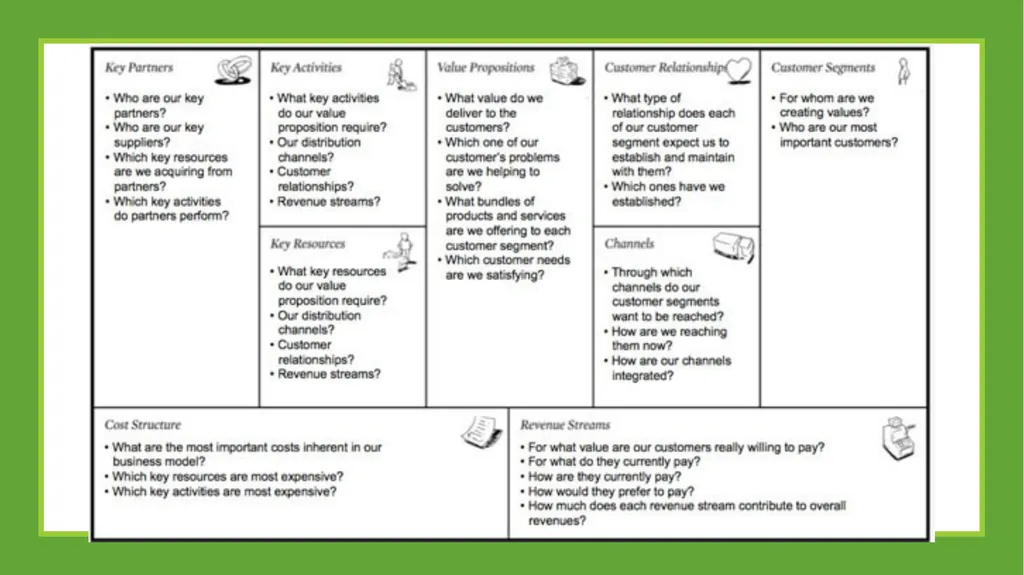
Customer Relationships Customer Acquisition: What type of relationship do each of your customers segments expect to establish/grow?
Customer Retention: Which ones do we work to keep and how much does it cost us?
Boosting sales (upselling): How are the customers integrated into the rest of your business?<br>
16
Exercise 4: What would you keep your ideal customer coming back?
How would you get new customers?
What should you do to find out if your customers are happy with your products/services?
Are all customers good customers?<br>
18
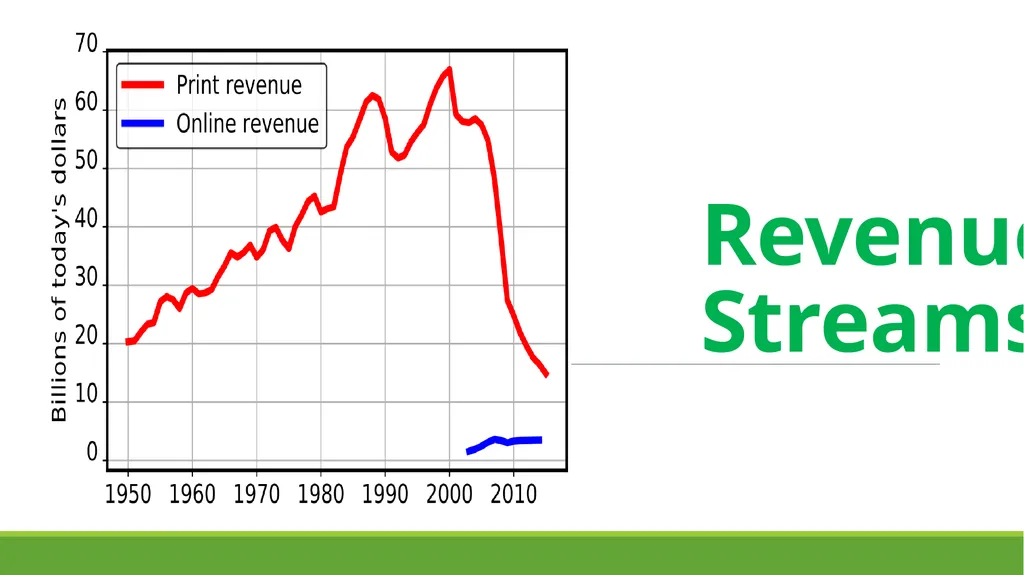
Revenue Streams How much are our customers really willing to pay?
What do they currently pay?
How are they currently paying for that product?
How much does each Revenue Stream contribute to your overall revenue?<br>
19
Exercise 5: How do you get revenue from your customers?
How do you get revenues from the way that you do business?
For example: subscription fees, licensing, renting/leasing, usage fee (delivery fees), etc.<br>
21
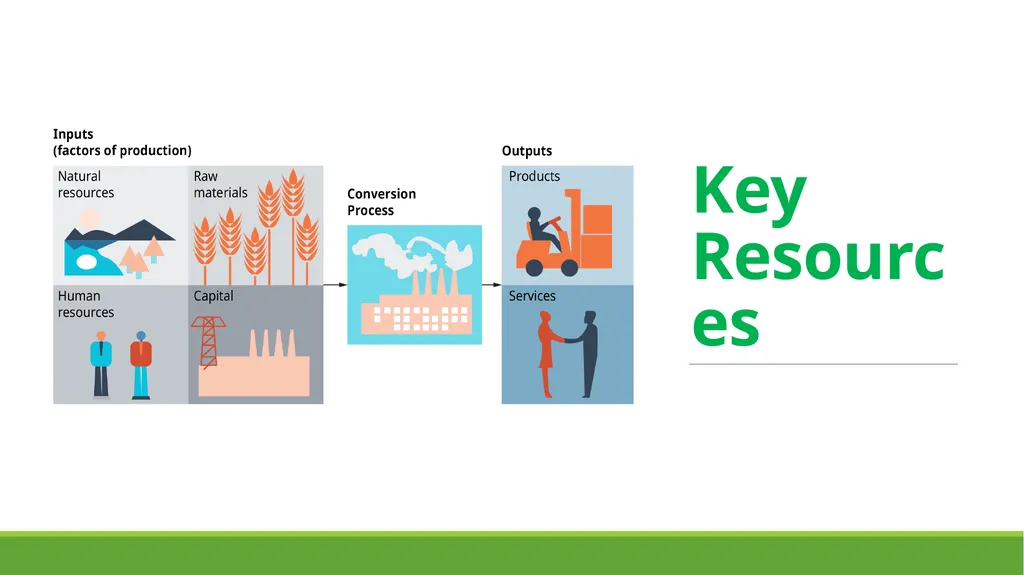
Key Resources Key resources can be:
physical (building/office),
financial (lines of credit, cash in bank, stock options),
intellectual (brands, patents, copyrights, proprietary knowledge), or
human (skilled workforce, employees).
They can be owned or leased by a business.
Link your Key Resources to VP, Dist Channels, CR, Rev Streams.<br>
22
Exercise 6: What are examples of key resources that your business has?
Or what type of key resources would you need to start your business?<br>
24
Key Activities Critical actions a business needs to operate successfully.
What are the key activities required to create and offer:
YOUR Value proposition,
Reach your target customers,
Maintain relationships with your customers, and
earn $$<br>
25
Exercise 7: What do you produce?
What do you sell that can solve a customer’s problems?
Do you or would you like to sell on a platform such as eBay or a SHOPIFY website?<br>
27
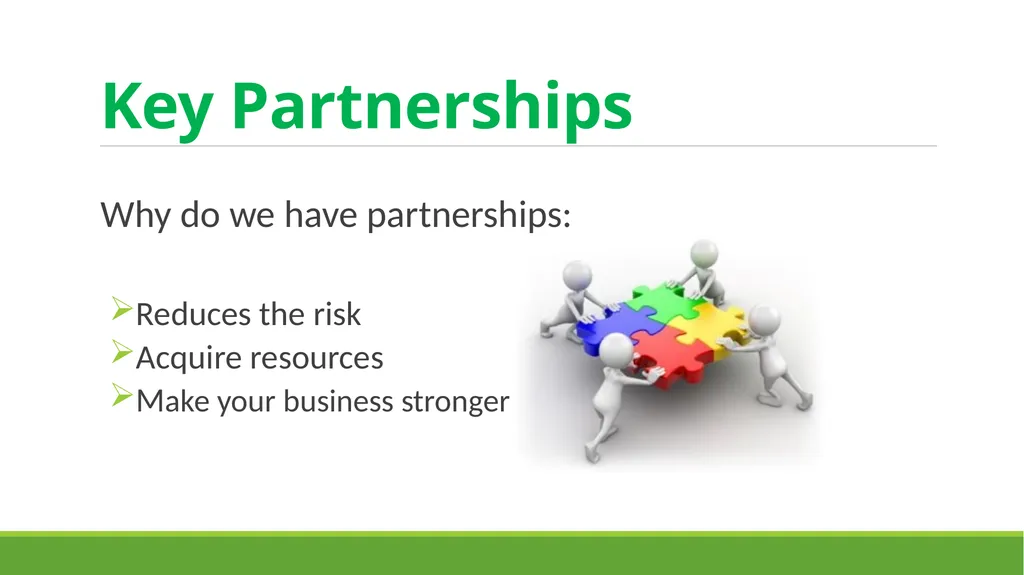
Key Partnerships Why do we have partnerships:
Reduces the risk
Acquire resources
Make your business stronger<br>
28
Exercise 8: Who are or would be your key partners that can help you survive and grow as a business?<br>
31
Exercise 9: What are the most important costs that you incur or would incur in your business?<br>
32
Putting it all together<br>
33
Take all this and then put together your business plan!<br>
34
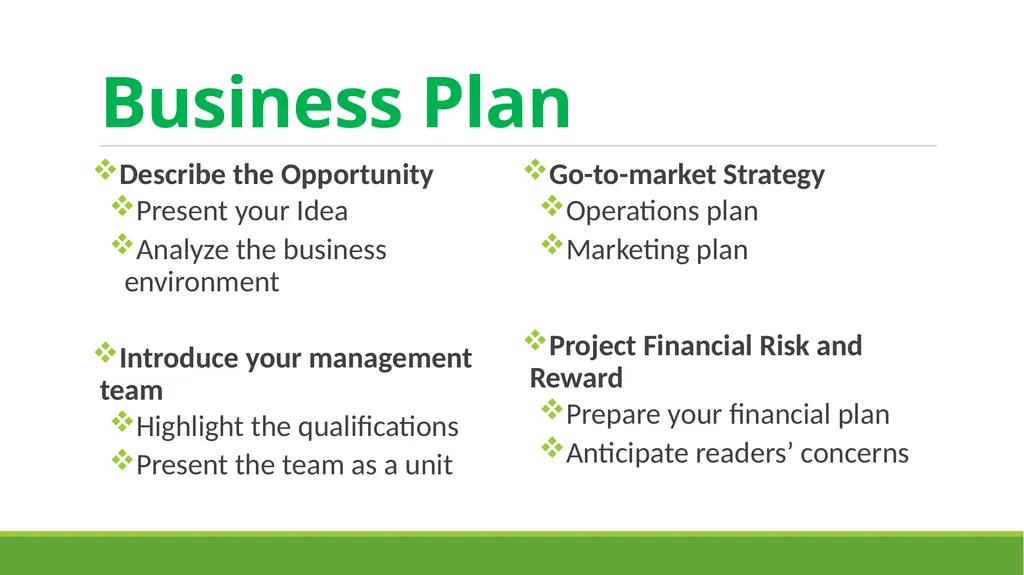
Business Plan Describe the Opportunity
Present your Idea
Analyze the business environment
Introduce your management team
Highlight the qualifications
Present the team as a unit Go-to-market Strategy
Operations plan
Marketing plan
Project Financial Risk and Reward
Prepare your financial plan
Anticipate readers’ concerns<br>
35
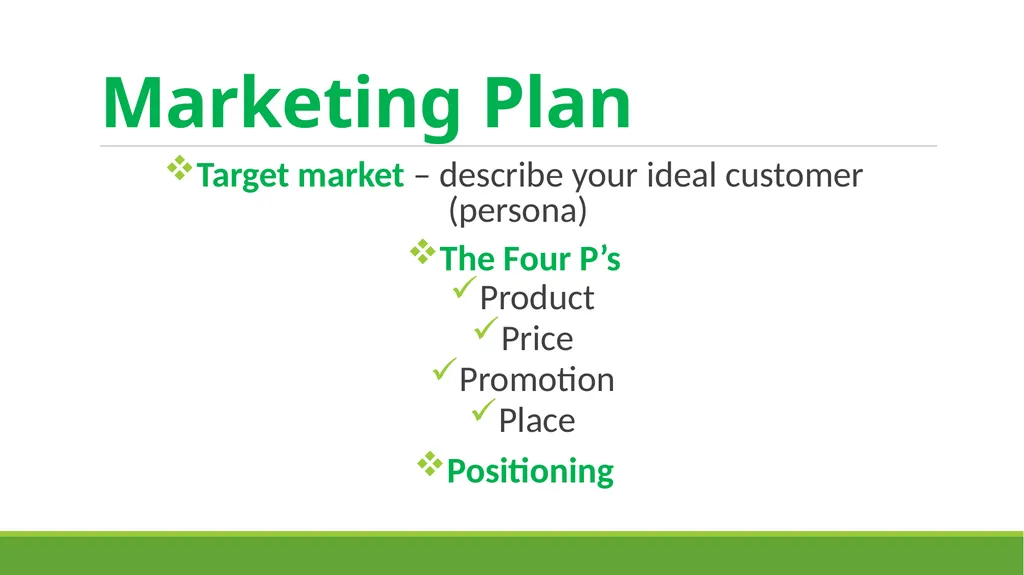
Marketing Plan Target market – describe your ideal customer (persona)
The Four P’s
Product
Price
Promotion
Place
Positioning<br>