Calmer Classrooms - 3 Session 3: Improving outcomes for students who have experienced trauma Developing strategies for managing incidents with dysregulated students The presentation and management of trauma in the classroom Trauma is a
"Calmer Classrooms - 3 Session 3: Improving" is the property of its rightful owner. Permission is granted to
download and print the materials on this website for personal, non-commercial use only, and to display it
on your personal computer provided you do not modify the materials and that you retain all copyright
notices contained in the materials. By downloading content from our website, you accept the terms of this
agreement.
Presentation Transcript
01
Calmer Classrooms - 3 Session 3:
Improving outcomes for students who have experienced trauma
Developing strategies for managing incidents with dysregulated students The presentation and management of trauma in the classroom Trauma is a sensitive topic
– be respectful of the impact which the session might have on other people<br>
02
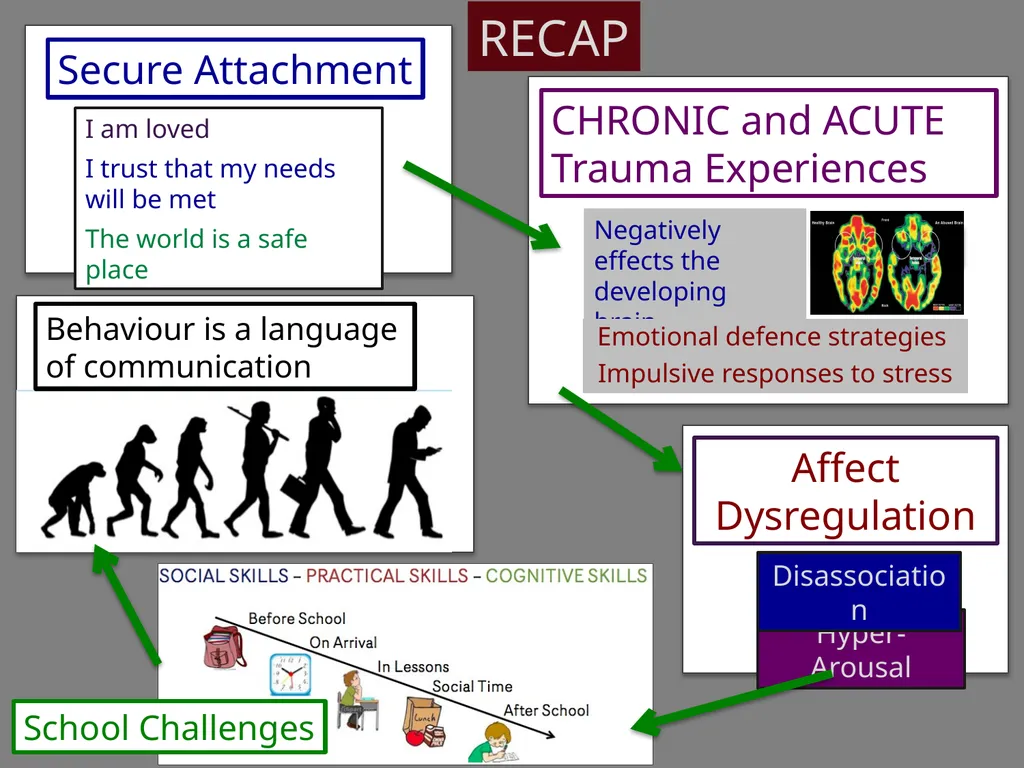
RECAP<br>
03
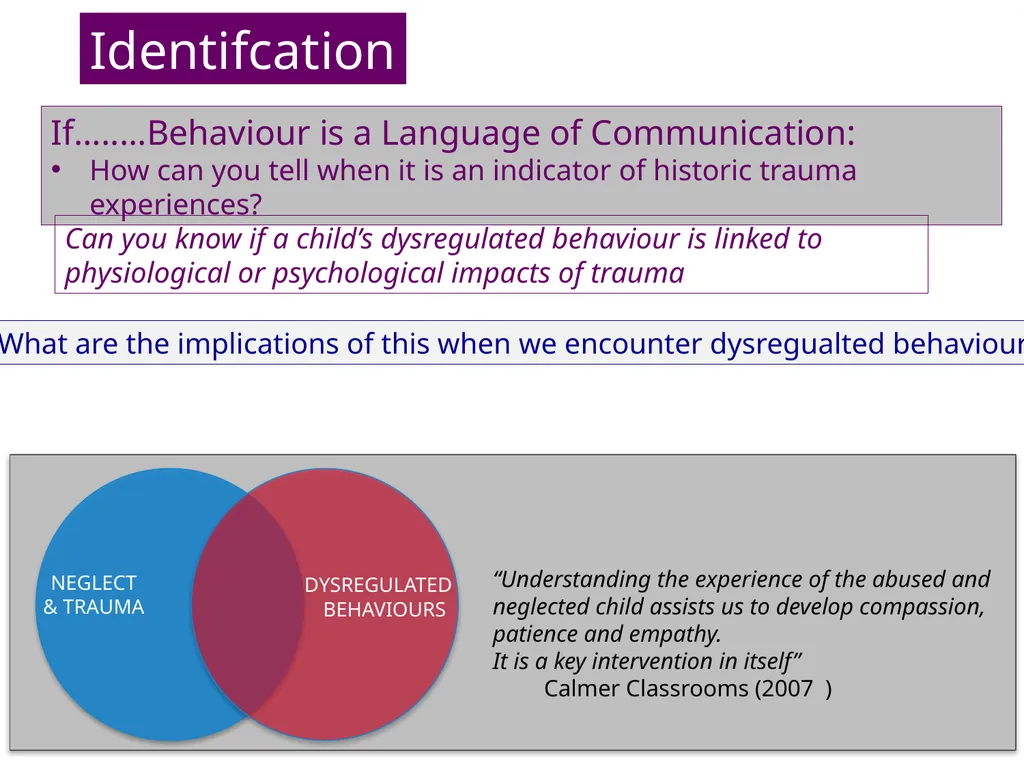
If….....Behaviour is a Language of Communication:
How can you tell when it is an indicator of historic trauma experiences? What are the implications of this when we encounter dysregualted behaviour? Can you know if a child’s dysregulated behaviour is linked to physiological or psychological impacts of trauma Identifcation<br>
04
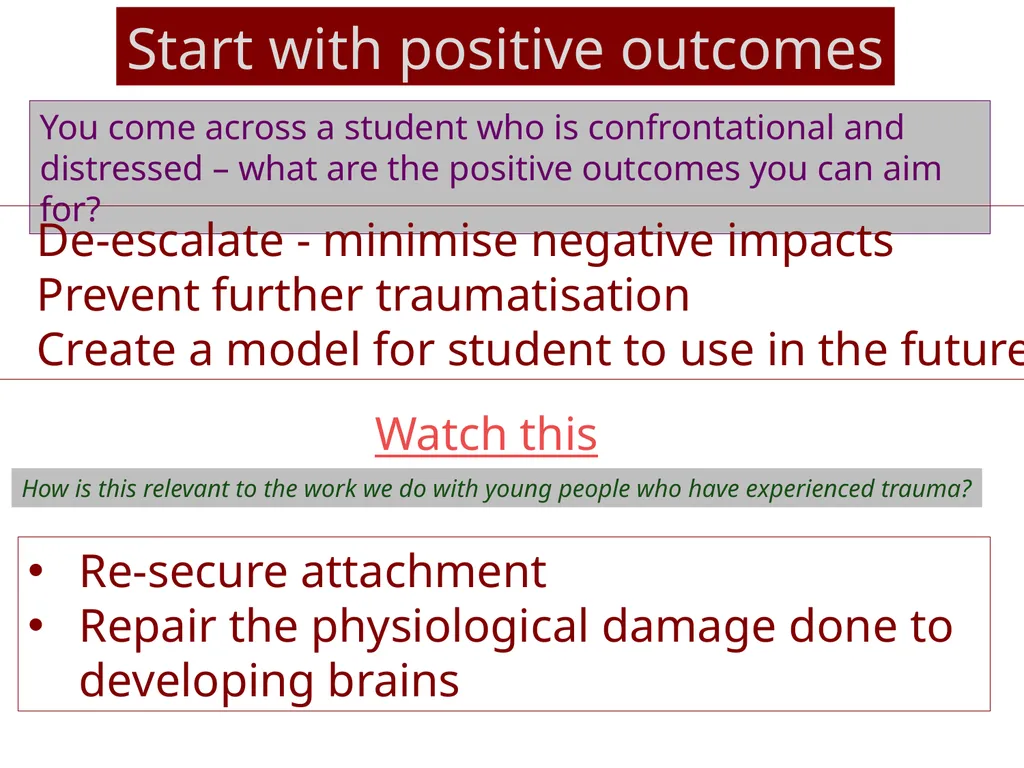
You come across a student who is confrontational and distressed – what are the positive outcomes you can aim for? De-escalate - minimise negative impacts
Prevent further traumatisation
Create a model for student to use in the future Start with positive outcomes Watch this How is this relevant to the work we do with young people who have experienced trauma? Re-secure attachment
Repair the physiological damage done to developing brains<br>
05
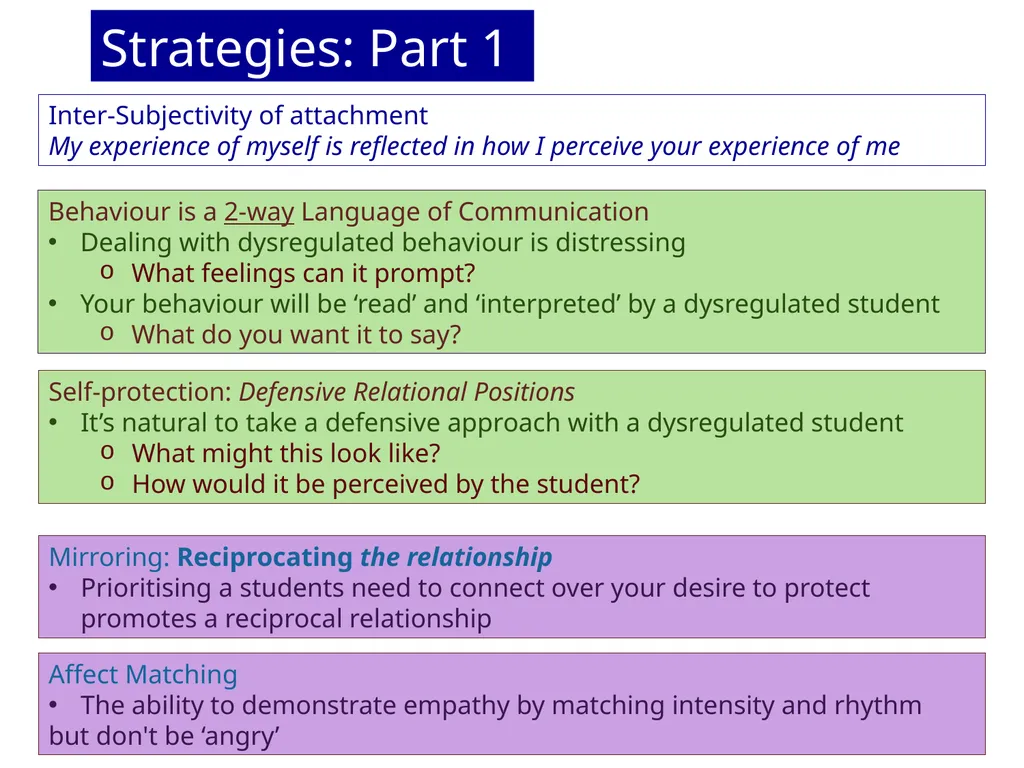
Behaviour is a 2-way Language of Communication
Dealing with dysregulated behaviour is distressing
What feelings can it prompt?
Your behaviour will be ‘read’ and ‘interpreted’ by a dysregulated student
What do you want it to say? Strategies: Part 1 Affect Matching
The ability to demonstrate empathy by matching intensity and rhythm
but don't be ‘angry’ Mirroring: Reciprocating the relationship
Prioritising a students need to connect over your desire to protect promotes a reciprocal relationship Inter-Subjectivity of attachment
My experience of myself is reflected in how I perceive your experience of me Self-protection: Defensive Relational Positions
It’s natural to take a defensive approach with a dysregulated student
What might this look like?
How would it be perceived by the student?<br>
06
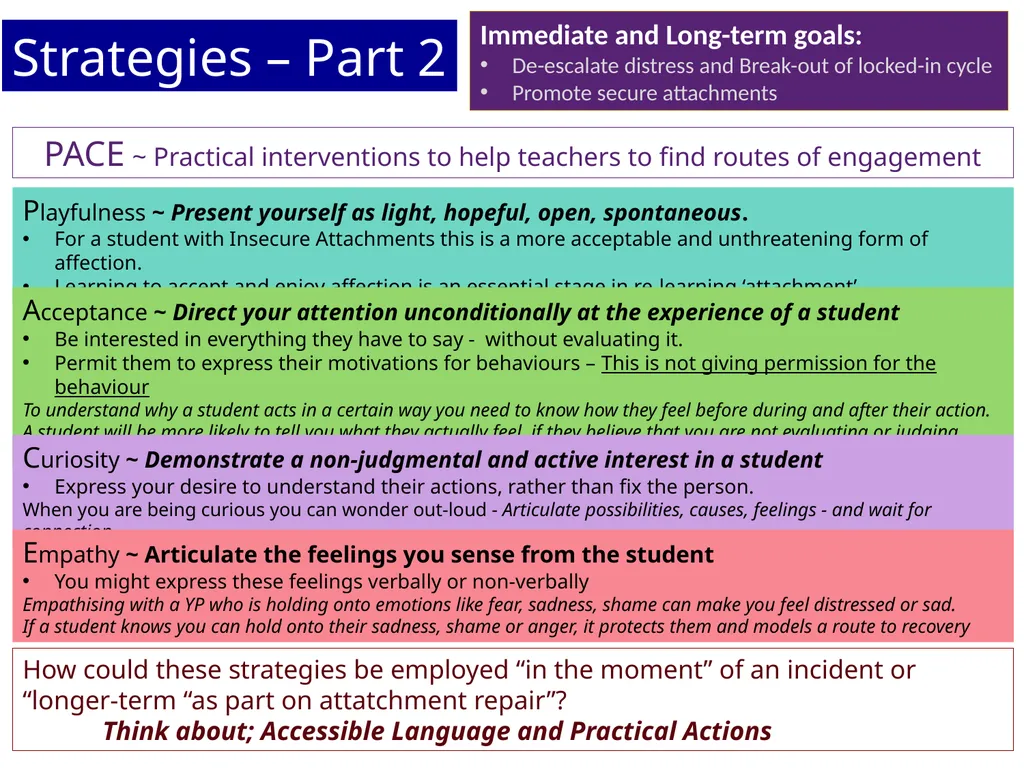
Playfulness ~ Present yourself as light, hopeful, open, spontaneous.
For a student with Insecure Attachments this is a more acceptable and unthreatening form of affection.
Learning to accept and enjoy affection is an essential stage in re-learning ‘attachment’ Acceptance ~ Direct your attention unconditionally at the experience of a student
Be interested in everything they have to say - without evaluating it.
Permit them to express their motivations for behaviours – This is not giving permission for the behaviour
To understand why a student acts in a certain way you need to know how they feel before during and after their action.
A student will be more likely to tell you what they actually feel, if they believe that you are not evaluating or judging them. Curiosity ~ Demonstrate a non-judgmental and active interest in a student
Express your desire to understand their actions, rather than fix the person.
When you are being curious you can wonder out-loud - Articulate possibilities, causes, feelings - and wait for connection Empathy ~ Articulate the feelings you sense from the student
You might express these feelings verbally or non-verbally
Empathising with a YP who is holding onto emotions like fear, sadness, shame can make you feel distressed or sad.
If a student knows you can hold onto their sadness, shame or anger, it protects them and models a route to recovery PACE ~ Practical interventions to help teachers to find routes of engagement Strategies – Part 2 How could these strategies be employed “in the moment” of an incident or “longer-term “as part on attatchment repair”?
Think about; Accessible Language and Practical Actions Immediate and Long-term goals:
De-escalate distress and Break-out of locked-in cycle
Promote secure attachments<br>
07
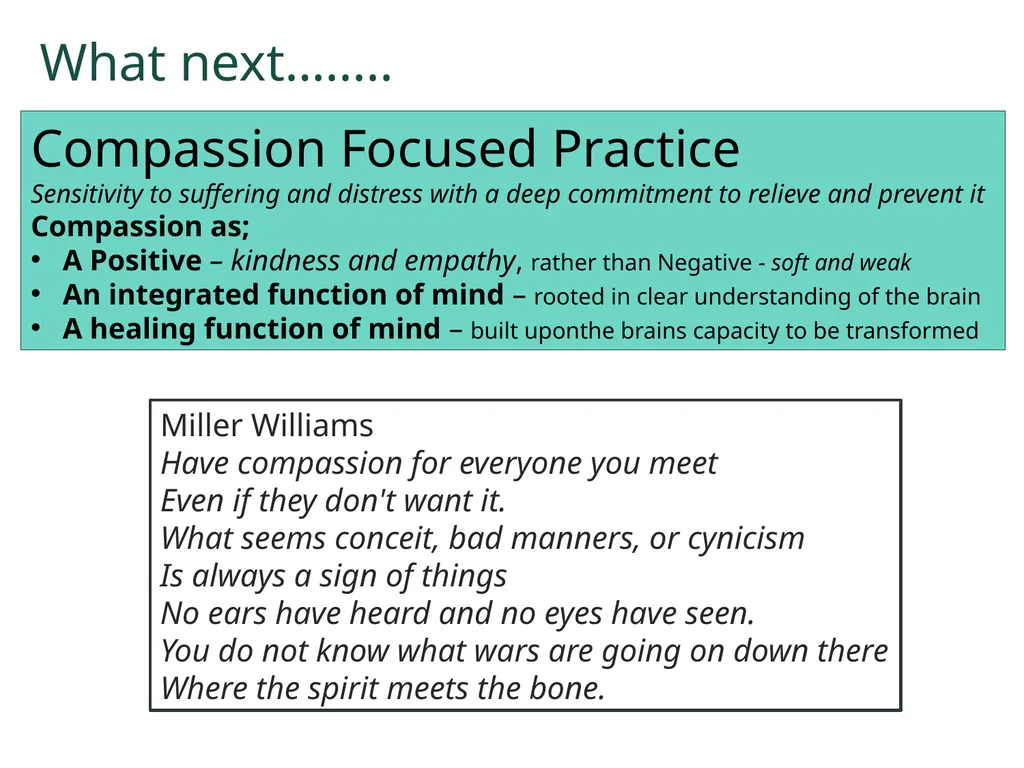
Miller Williams
Have compassion for everyone you meet
Even if they don't want it.
What seems conceit, bad manners, or cynicism
Is always a sign of things
No ears have heard and no eyes have seen.
You do not know what wars are going on down there
Where the spirit meets the bone. Compassion Focused Practice
Sensitivity to suffering and distress with a deep commitment to relieve and prevent it
Compassion as;
A Positive – kindness and empathy, rather than Negative - soft and weak
An integrated function of mind – rooted in clear understanding of the brain
A healing function of mind – built uponthe brains capacity to be transformed What next….....<br>
08
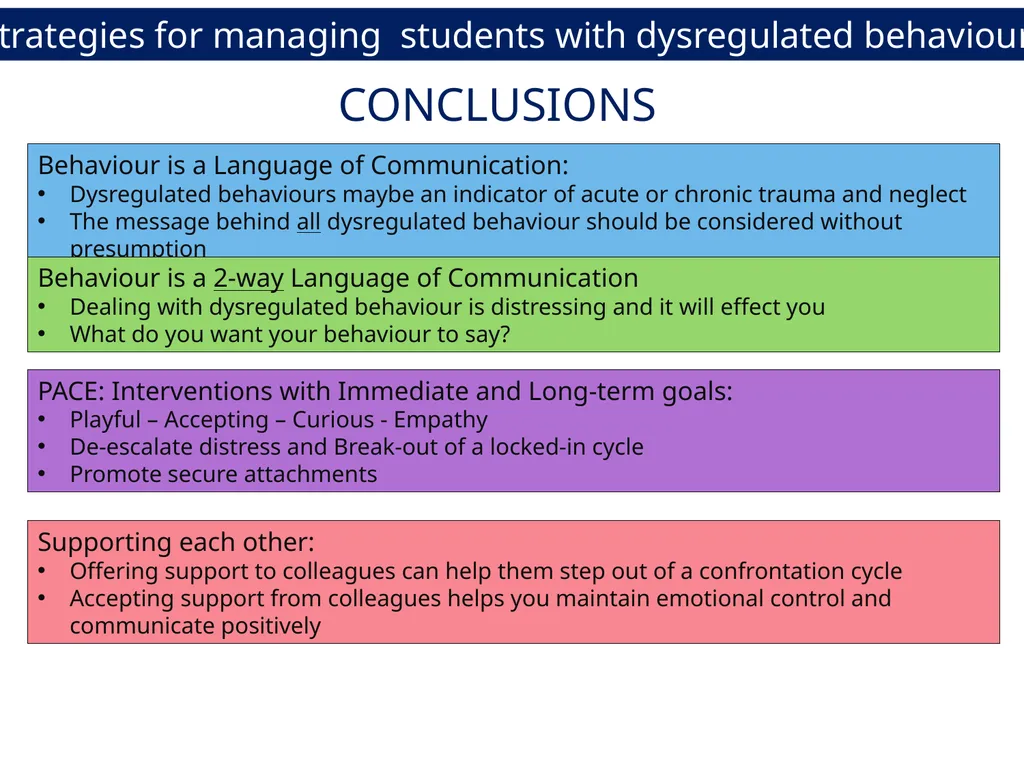
Supporting each other:
Offering support to colleagues can help them step out of a confrontation cycle
Accepting support from colleagues helps you maintain emotional control and communicate positively Strategies for managing students with dysregulated behaviours Behaviour is a Language of Communication:
Dysregulated behaviours maybe an indicator of acute or chronic trauma and neglect
The message behind all dysregulated behaviour should be considered without presumption Behaviour is a 2-way Language of Communication
Dealing with dysregulated behaviour is distressing and it will effect you
What do you want your behaviour to say? PACE: Interventions with Immediate and Long-term goals:
Playful – Accepting – Curious - Empathy
De-escalate distress and Break-out of a locked-in cycle
Promote secure attachments CONCLUSIONS<br>
09
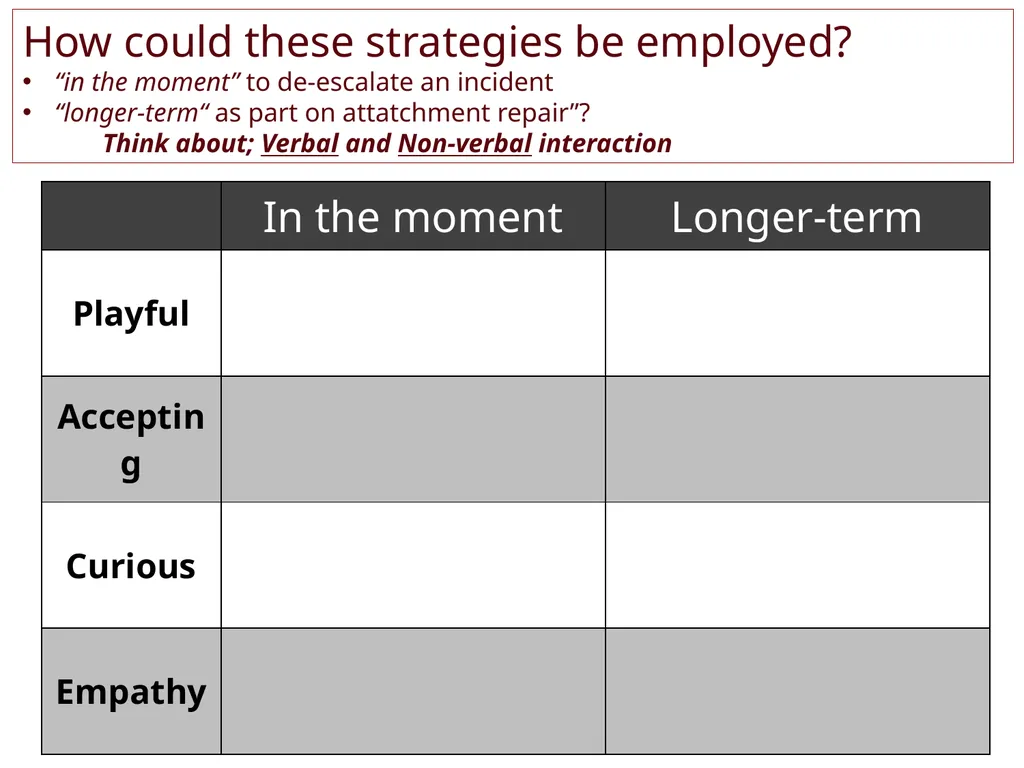
How could these strategies be employed?
“in the moment” to de-escalate an incident
“longer-term“ as part on attatchment repair”?
Think about; Verbal and Non-verbal interaction<br>
10
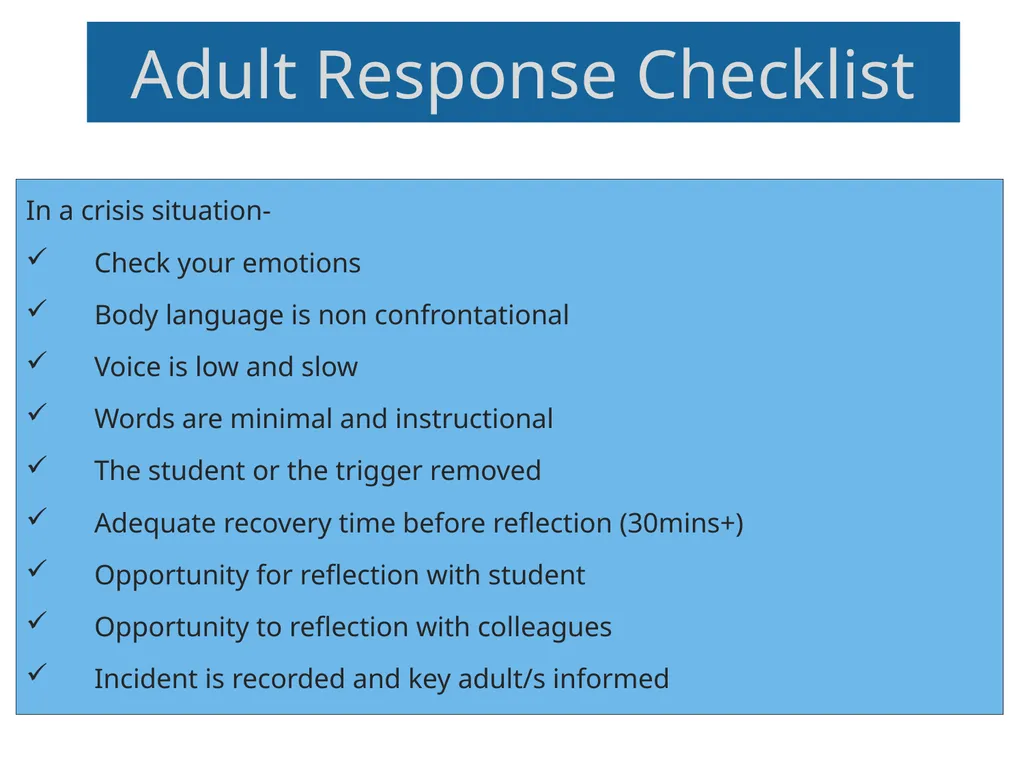
Adult Response Checklist In a crisis situation-
Check your emotions
Body language is non confrontational
Voice is low and slow
Words are minimal and instructional
The student or the trigger removed
Adequate recovery time before reflection (30mins+)
Opportunity for reflection with student
Opportunity to reflection with colleagues
Incident is recorded and key adult/s informed<br>