CCAC Training Module on: the Ethical Use and Care of Farm Animals in Biomedical Research www.ccac.ca Species Applicability This training module applies to all farm animals used in biomedical research including: dairy and beef cattle sheep
"CCAC Training Module on: the Ethical Use and Care" is the property of its rightful owner. Permission is granted to
download and print the materials on this website for personal, non-commercial use only, and to display it
on your personal computer provided you do not modify the materials and that you retain all copyright
notices contained in the materials. By downloading content from our website, you accept the terms of this
agreement.
Share
Embed code
Presentation Transcript
01
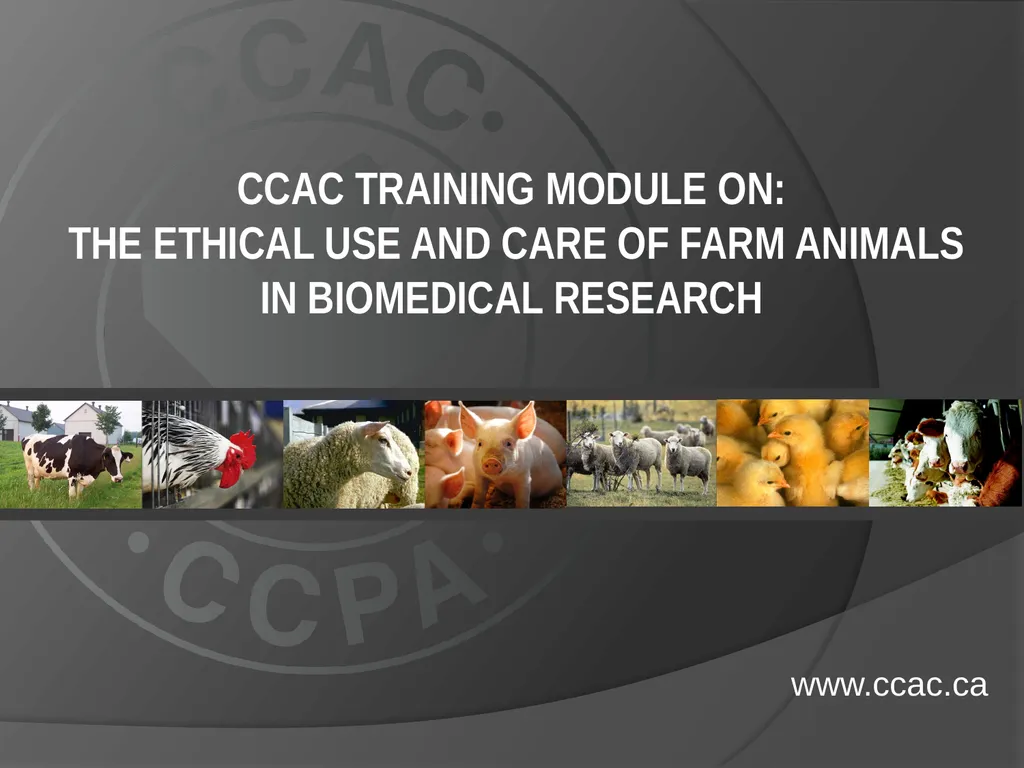
CCAC Training Module on: the Ethical Use and Care of Farm Animals in Biomedical Research www.ccac.ca<br>
02
Species Applicability This training module applies to all farm animals used in biomedical research including:
dairy and beef cattle
sheep
goats
swine
poultry
horses
farmed wildlife<br>
03
Training Module Goals Provide an overview of the special care requirements of farm animals in biomedical research
Establish methodology for selecting appropriate farm animal models, as well as endpoints which address animal welfare while achieving scientific goals
Provide investigators with references and resources for the use of farm animals in biomedical research Basic principles of farm animal welfare, fundamental needs, acquisition, routine handling and specialized procedures and termination of scientific use are covered in the CCAC training module on: the ethical use and care of farm
animals in science (2010)<br>
04
Training Module Outline Biomedical research and other applications
Special considerations and challenges
Model selection
Meeting animal needs
Facility and disease control considerations
Example of biomedical application: Medical devices<br>
05
Farm Animals in Biomedical Research The purpose of utilizing farm animals in biomedical research and science is to address questions concerning human health
Many applications exist, e.g.:
neurological research
development and testing of pharmaceuticals and medical devices
reconstructive surgery research
medical education<br>
06
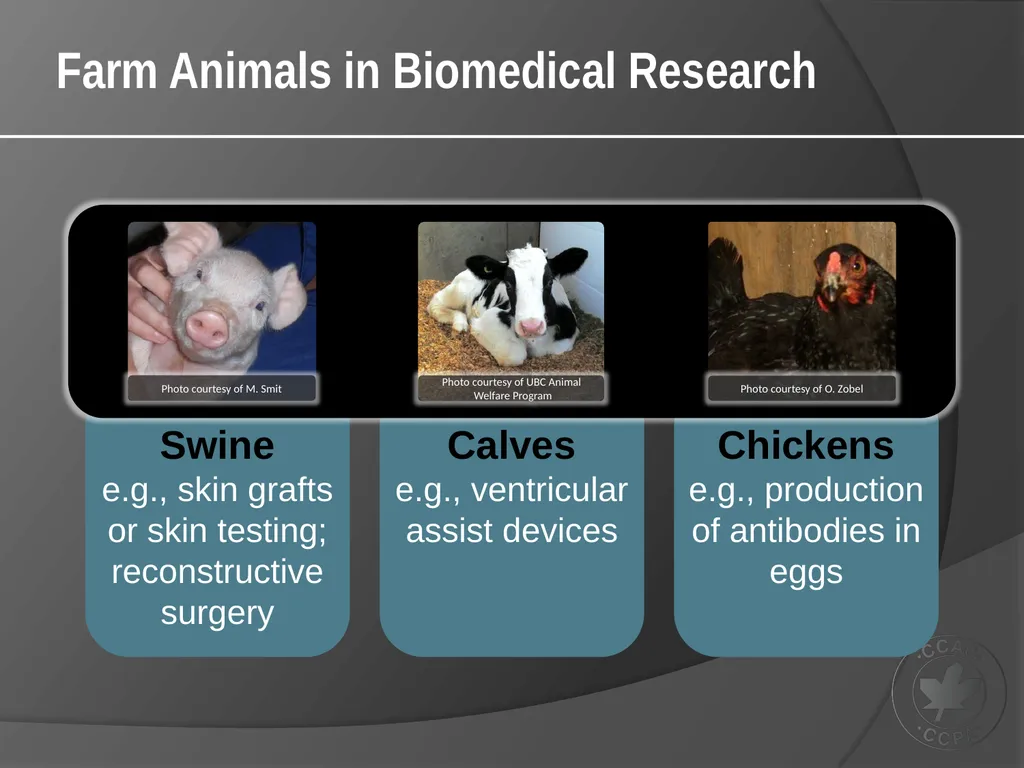
Farm Animals in Biomedical Research Swine
e.g., skin grafts or skin testing; reconstructive surgery Calves
e.g., ventricular assist devices Chickens
e.g., production of antibodies in eggs<br>
07
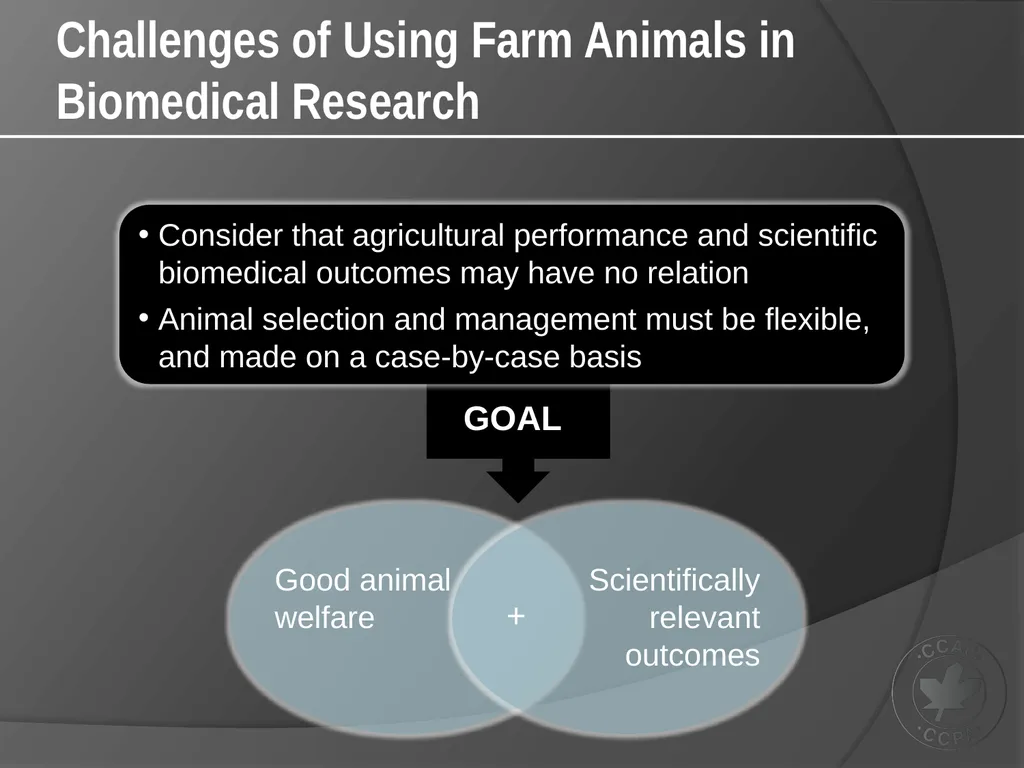
Challenges of Using Farm Animals in Biomedical Research GOAL: Consider that agricultural performance and scientific biomedical outcomes may have no relation
Animal selection and management must be flexible, and made on a case-by-case basis<br>
08
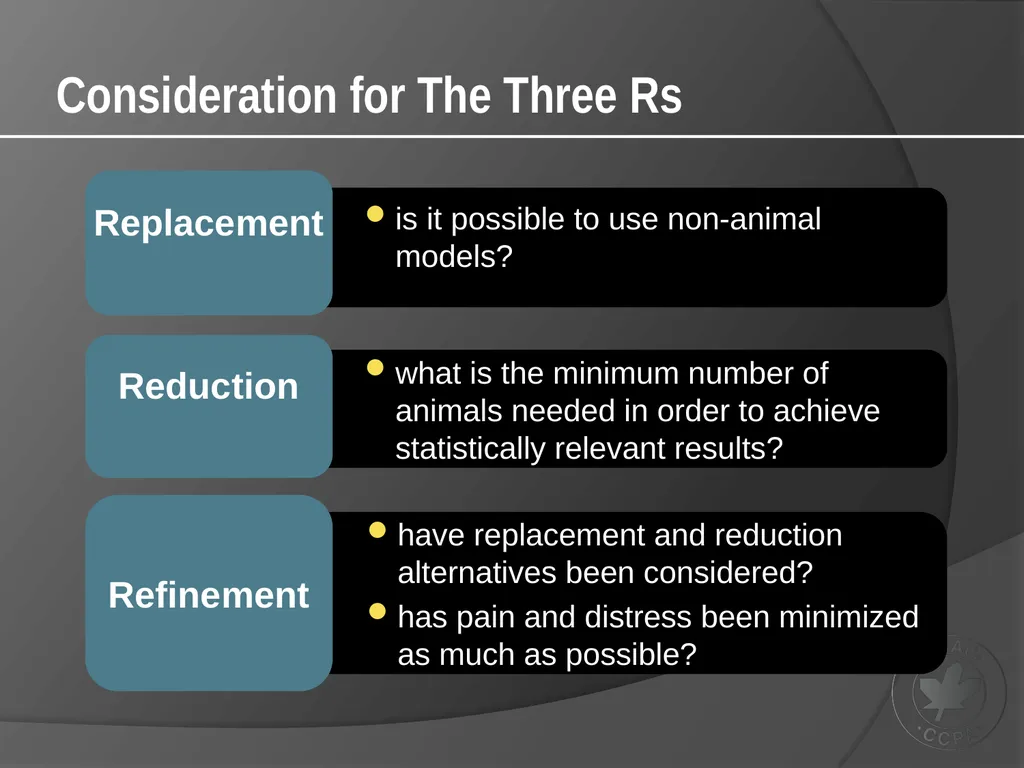
Consideration for The Three Rs have replacement and reduction alternatives been considered?
has pain and distress been minimized as much as possible? Refinement what is the minimum number of animals needed in order to achieve statistically relevant results? Reduction is it possible to use non-animal models? Replacement<br>
09
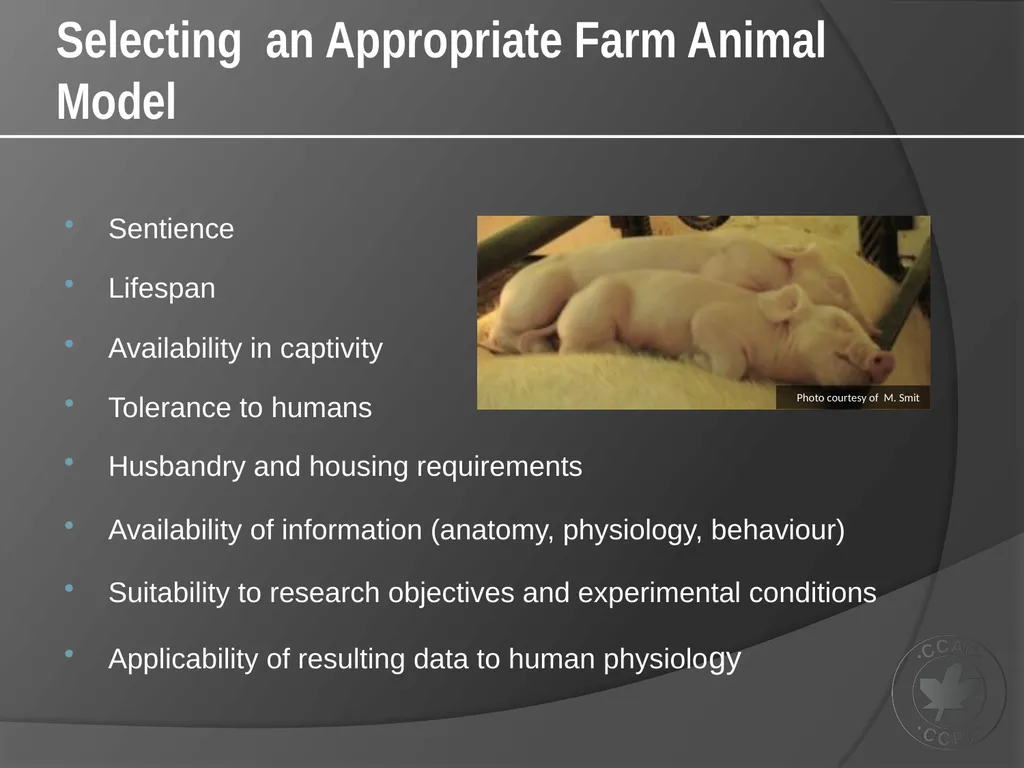
Selecting an Appropriate Farm Animal Model Husbandry and housing requirements
Availability of information (anatomy, physiology, behaviour)
Suitability to research objectives and experimental conditions
Applicability of resulting data to human physiology Sentience
Lifespan
Availability in captivity
Tolerance to humans<br>
10
Appropriate Models in Relation to Study Duration Consider growth and life stage in relation to study requirements
Adult human models
need physiological, anatomical or biochemical criteria match
issues: maturity, size, long-term studies difficult
Pediatric Models
shorter time course to adulthood useful for answering questions in research timeframe<br>
11
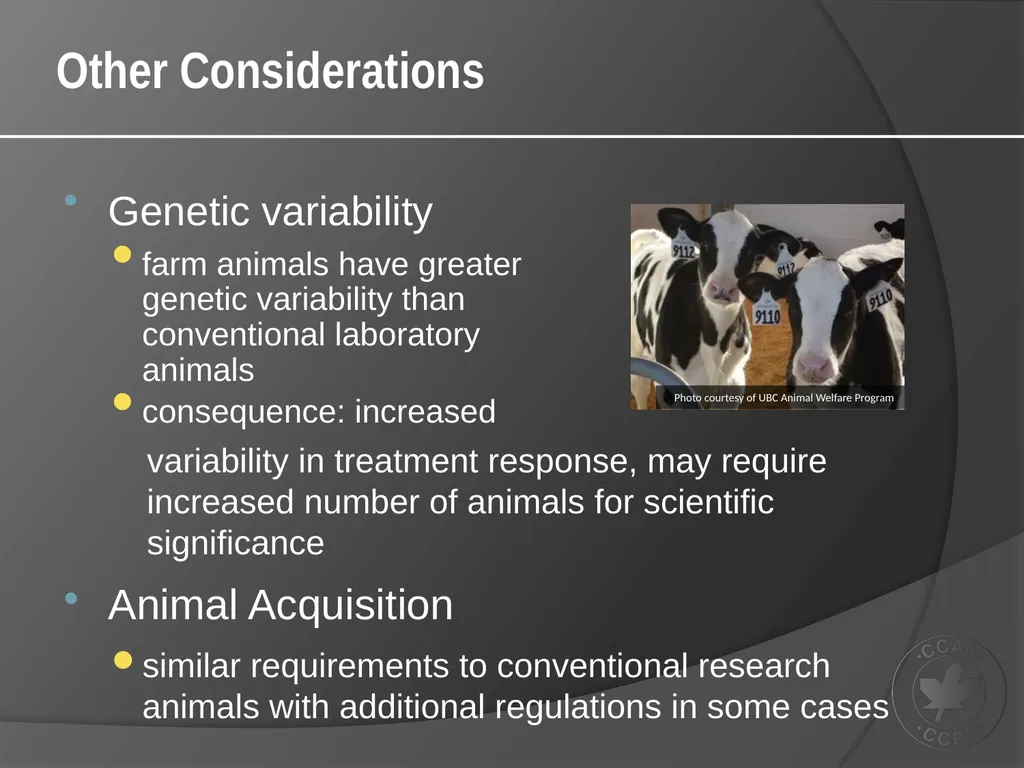
Other Considerations Genetic variability
farm animals have greater genetic variability than conventional laboratory animals
consequence: increased Animal Acquisition
similar requirements to conventional research animals with additional regulations in some cases variability in treatment response, may require increased number of animals for scientific significance<br>
12
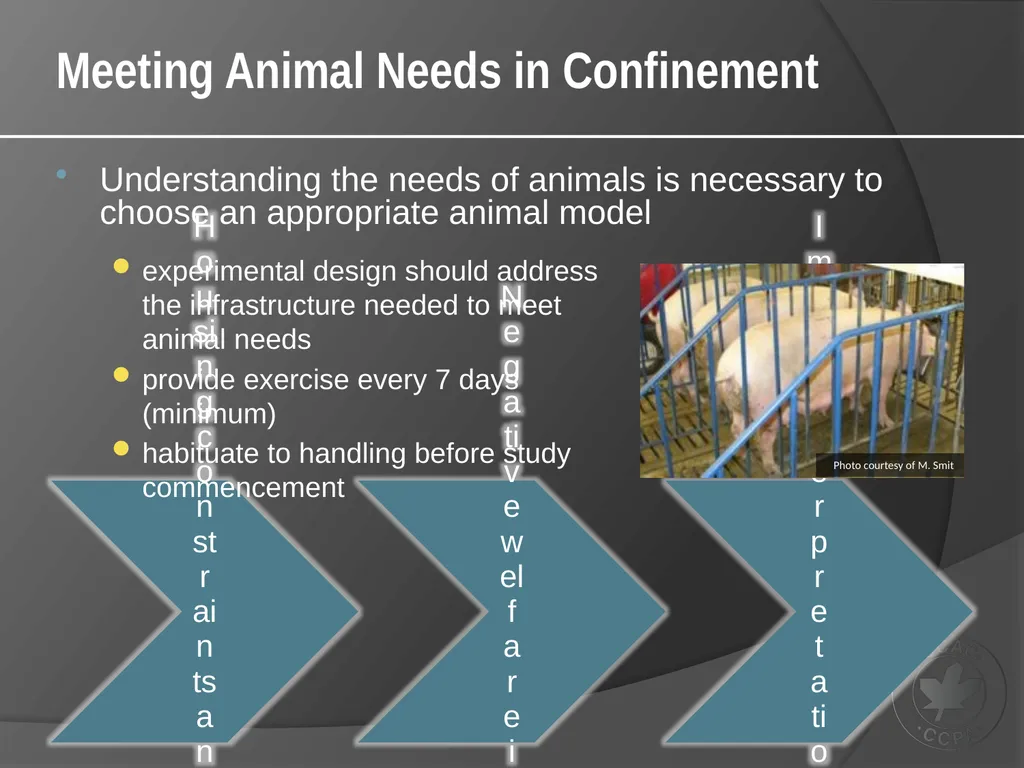
Meeting Animal Needs in Confinement Understanding the needs of animals is necessary to choose an appropriate animal model experimental design should address the infrastructure needed to meet animal needs
provide exercise every 7 days (minimum)
habituate to handling before study commencement<br>
13
Facilities & Disease Control Considerations Species-specific husbandry
Sanitation and hygiene program to address animal and human health issues
dedicated equipment
medical management according to standard veterinary practices
necropsy facilities address zoosanitary issues
Zoonoses infection control
particularly important for “cross-over” agents<br>
14
Example of a Biomedical Application: Medical Devices Two types of devices
external: may require animal restraint and confinement
internal: require on-going short and long-term assessment strategies
Size and physiological similarities make farm animals good candidates for testing medical devices such as:
ventricular assist devices (cardiovascular research)
bone implants (endosseous research)
implanted cerebral stimulators (neural research)
The testing of medical devices requires careful attention to potential welfare impacts, special care, and endpoint determination<br>
15
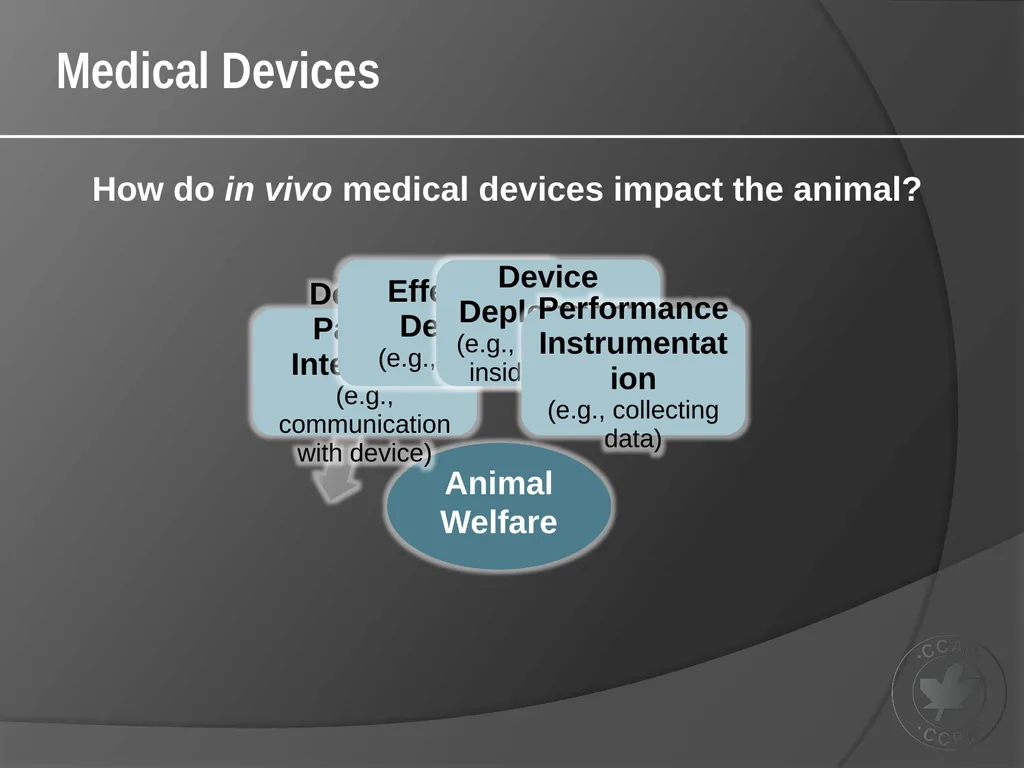
Medical Devices How do in vivo medical devices impact the animal?<br>
16
Medical Device Testing Prior to in vivo, test in vitro to ensure intended use is appropriate for target species
devices must be designed in the context of intended use and the target species
during design refinement, could use non-survival, anesthetized animal models<br>
17
Medical Device Failure & Endpoints Protocol should include device performance reliability, biocompatibility, device failure and repair strategies
Endpoints should balance the scientific goals and animal welfare, and detail the procedures needed to handle device failure and malfunction
minor component – replacement might be an option
if repair/replacement of component involves major surgery – euthanasia may be the most humane endpoint For further information on endpoints:
CCAC guidelines on: choosing an appropriate endpoint in experiments using animals for research, teaching and testing (1998)
CCAC training module on: pain, distress and endpoints<br>
18
Summary Farm animals are useful in some biomedical research, as long as the correct model is used
Careful consideration must be given to:
balancing animal needs and achieving scientific goals
understanding animal welfare impacts on the specific biomedical research Investigators should strive to achieve their scientific goals in line with the best possible animal welfare standards<br>