
Chapter 10 Strategic Workforce Planning Cascio &
EM
Published · 31 slides · 0 views
1 / 1
Description
Chapter 10 Strategic Workforce Planning Cascio Aguinis, Applied Psychology in Talent Management, 8e. SAGE Publishing, 2019. Learning Goals (1 of 4) 10-1: Describe the four components of the strategic workforce planning process and
Related Topics
Share
Embed code
Download this presentation From Below
"Chapter 10 Strategic Workforce Planning Cascio &" is the property of its rightful owner. Permission is granted to download and print the materials on this website for personal, non-commercial use only, and to display it on your personal computer provided you do not modify the materials and that you retain all copyright notices contained in the materials. By downloading content from our website, you accept the terms of this agreement.
Presentation Transcript
01
Chapter 10
Strategic Workforce Planning<br>
Strategic Workforce Planning<br>
02
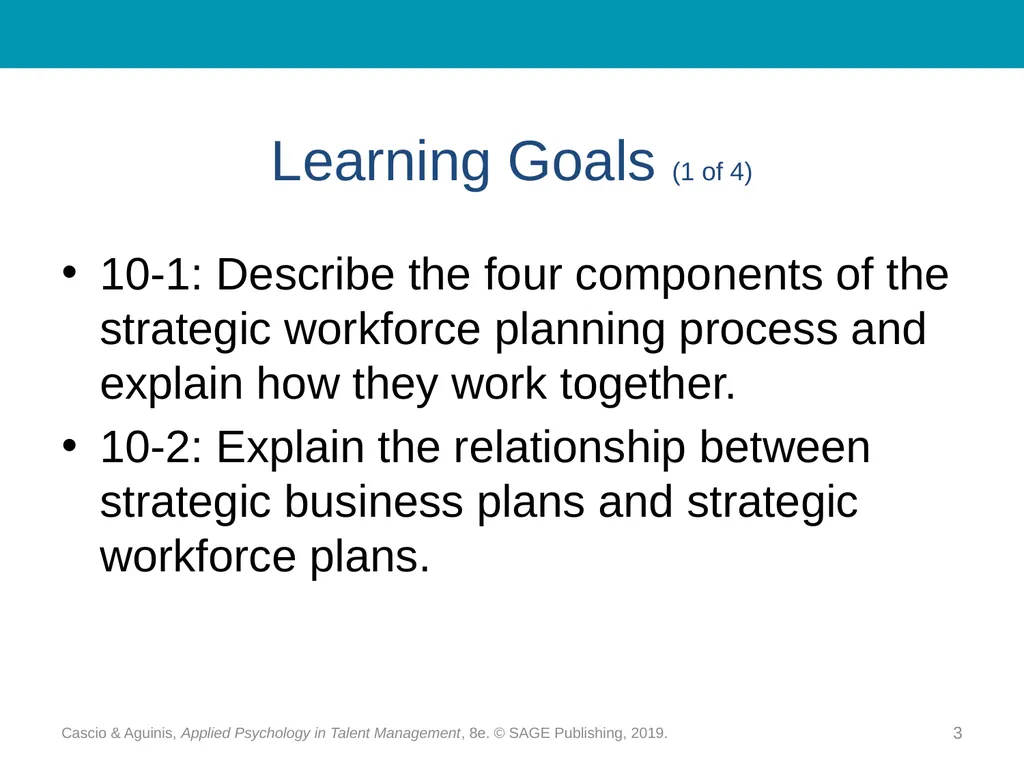
Cascio & Aguinis, Applied Psychology in Talent Management, 8e. © SAGE Publishing, 2019. Learning Goals (1 of 4) 10-1: Describe the four components of the strategic workforce planning process and explain how they work together.
10-2: Explain the relationship between strategic business plans and strategic workforce plans. 3<br>
10-2: Explain the relationship between strategic business plans and strategic workforce plans. 3<br>
03
Cascio & Aguinis, Applied Psychology in Talent Management, 8e. © SAGE Publishing, 2019. Learning Goals (2 of 4) 10-3: Compare and contrast traditional and values-based approaches to developing strategy.
10-4: Identify key talent management issues that arise at various business-planning horizons. 4<br>
10-4: Identify key talent management issues that arise at various business-planning horizons. 4<br>
04
Cascio & Aguinis, Applied Psychology in Talent Management, 8e. © SAGE Publishing, 2019. Learning Goals (3 of 4) 10-5: Describe the multiple uncertainties that characterize supply and demand forecasts.
10-6: Know the steps to take to avoid a crisis in leadership succession. 5<br>
10-6: Know the steps to take to avoid a crisis in leadership succession. 5<br>
05
Cascio & Aguinis, Applied Psychology in Talent Management, 8e. © SAGE Publishing, 2019. Learning Goals (4 of 4) 10-7: Identify when it makes more sense to “buy” rather than “make” talent.
10-8: Explain the kinds of information to collect when evaluating newly established versus well-established strategic workforce planning systems. 6<br>
10-8: Explain the kinds of information to collect when evaluating newly established versus well-established strategic workforce planning systems. 6<br>
06
Cascio & Aguinis, Applied Psychology in Talent Management, 8e. © SAGE Publishing, 2019. What Is Strategic Workforce Planning? (1 of 6) Strategic workforce planning
Anticipate and respond to needs emerging within and outside the organization
Determine priorities
Allocate resources where they can do the most good 7<br>
Anticipate and respond to needs emerging within and outside the organization
Determine priorities
Allocate resources where they can do the most good 7<br>
07
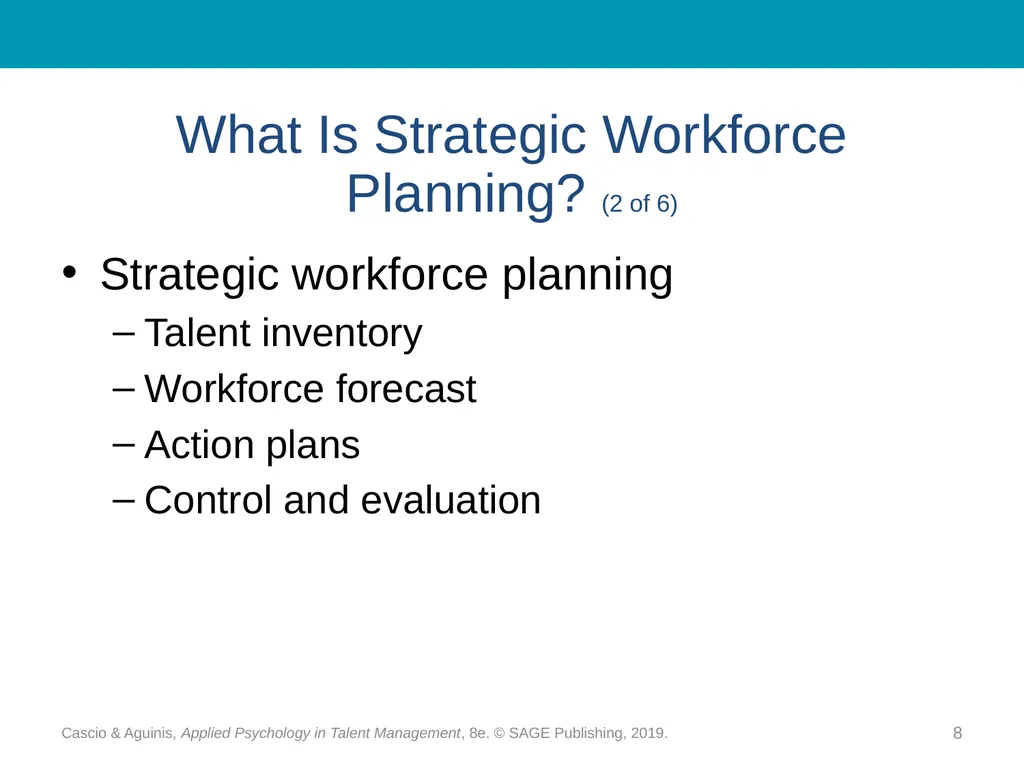
Cascio & Aguinis, Applied Psychology in Talent Management, 8e. © SAGE Publishing, 2019. What Is Strategic Workforce Planning? (2 of 6) Strategic workforce planning
Talent inventory
Workforce forecast
Action plans
Control and evaluation 8<br>
Talent inventory
Workforce forecast
Action plans
Control and evaluation 8<br>
08
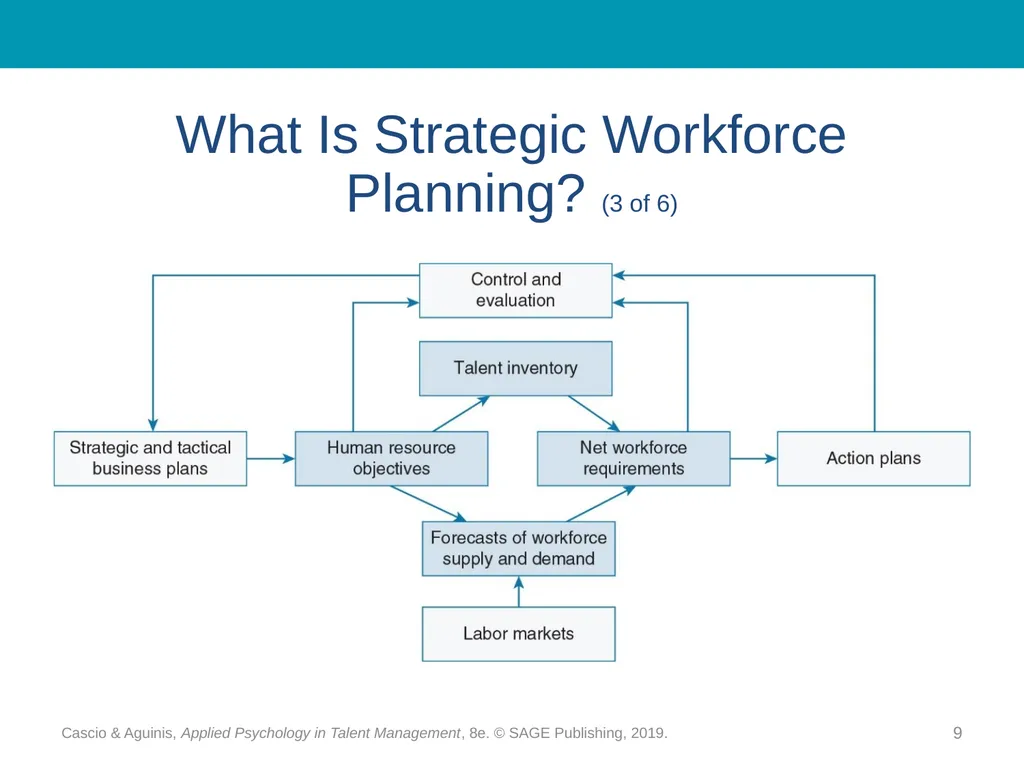
Cascio & Aguinis, Applied Psychology in Talent Management, 8e. © SAGE Publishing, 2019. What Is Strategic Workforce Planning? (3 of 6) 9<br>
09
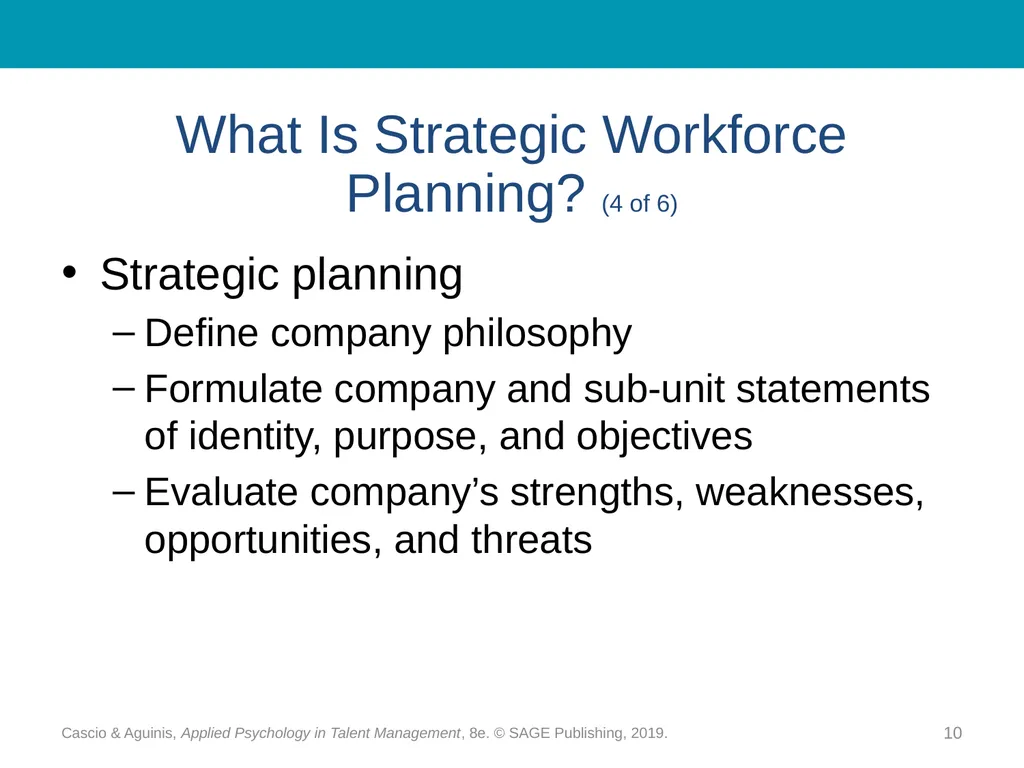
Cascio & Aguinis, Applied Psychology in Talent Management, 8e. © SAGE Publishing, 2019. What Is Strategic Workforce Planning? (4 of 6) Strategic planning
Define company philosophy
Formulate company and sub-unit statements of identity, purpose, and objectives
Evaluate company’s strengths, weaknesses, opportunities, and threats 10<br>
Define company philosophy
Formulate company and sub-unit statements of identity, purpose, and objectives
Evaluate company’s strengths, weaknesses, opportunities, and threats 10<br>
10
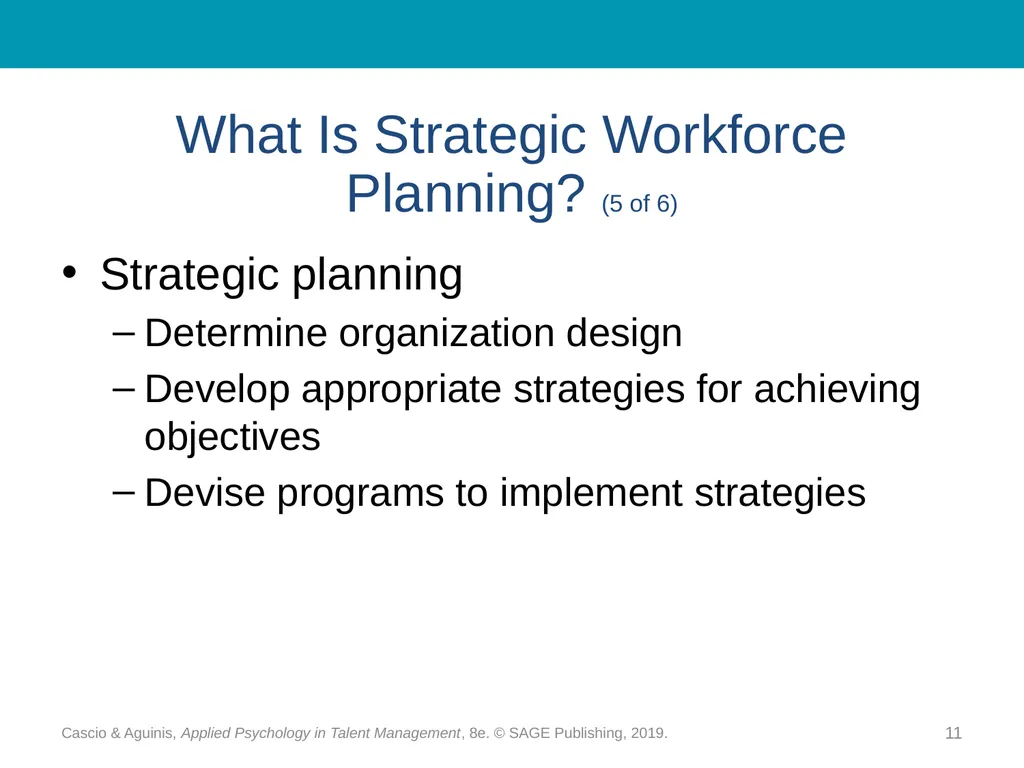
Cascio & Aguinis, Applied Psychology in Talent Management, 8e. © SAGE Publishing, 2019. What Is Strategic Workforce Planning? (5 of 6) Strategic planning
Determine organization design
Develop appropriate strategies for achieving objectives
Devise programs to implement strategies 11<br>
Determine organization design
Develop appropriate strategies for achieving objectives
Devise programs to implement strategies 11<br>
11
Cascio & Aguinis, Applied Psychology in Talent Management, 8e. © SAGE Publishing, 2019. What Is Strategic Workforce Planning? (6 of 6) Alternative, or values-based, approach
Fundamental values energizing and capable of unlocking human potential of people
Use these values to develop management policies and practices that express organizational values 12<br>
Fundamental values energizing and capable of unlocking human potential of people
Use these values to develop management policies and practices that express organizational values 12<br>
12
Cascio & Aguinis, Applied Psychology in Talent Management, 8e. © SAGE Publishing, 2019. Talent Inventory (1 of 3) Talent inventory
Fundamental requirement of SWP system
Organized database of existing skills, abilities, career interests, and experience of current workforce 13<br>
Fundamental requirement of SWP system
Organized database of existing skills, abilities, career interests, and experience of current workforce 13<br>
13
Cascio & Aguinis, Applied Psychology in Talent Management, 8e. © SAGE Publishing, 2019. Talent Inventory (2 of 3) Talent inventory information
Current position information
Previous positions in company
Other significant work experience
Education
Language skills and international experience 14<br>
Current position information
Previous positions in company
Other significant work experience
Education
Language skills and international experience 14<br>
14
Cascio & Aguinis, Applied Psychology in Talent Management, 8e. © SAGE Publishing, 2019. Talent Inventory (3 of 3) Talent inventory information
Training and development programs attended
Community or industry leadership responsibilities
Current and past performance appraisal data
Disciplinary actions
Awards received 15<br>
Training and development programs attended
Community or industry leadership responsibilities
Current and past performance appraisal data
Disciplinary actions
Awards received 15<br>
15
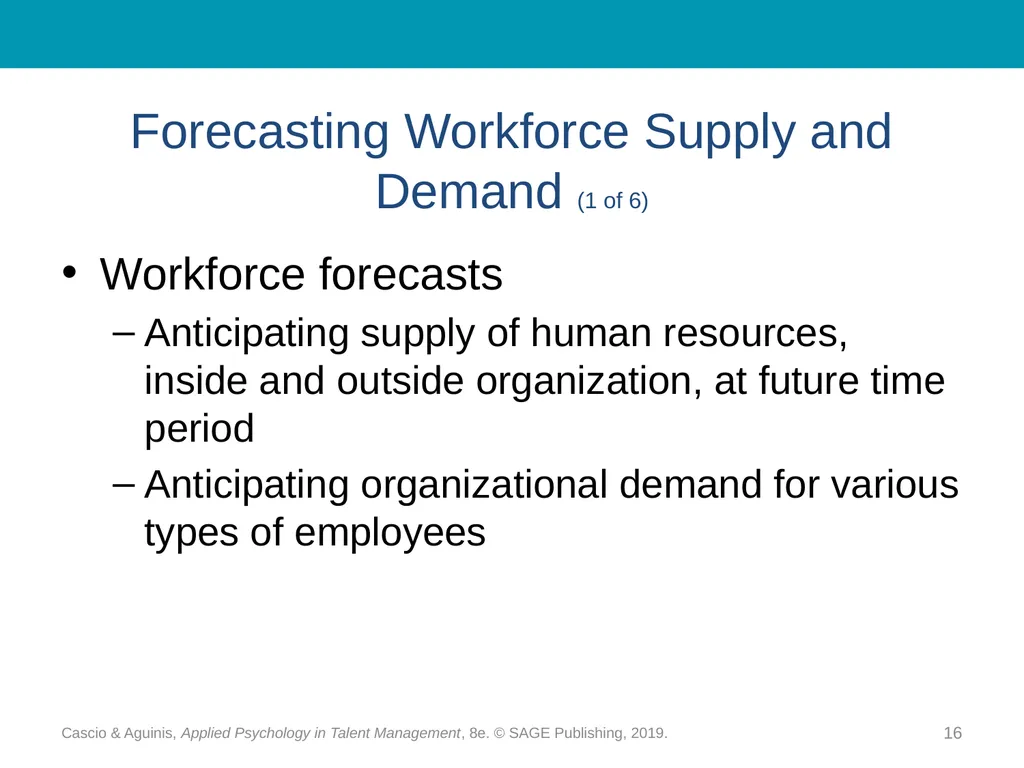
Cascio & Aguinis, Applied Psychology in Talent Management, 8e. © SAGE Publishing, 2019. Forecasting Workforce Supply and Demand (1 of 6) Workforce forecasts
Anticipating supply of human resources, inside and outside organization, at future time period
Anticipating organizational demand for various types of employees 16<br>
Anticipating supply of human resources, inside and outside organization, at future time period
Anticipating organizational demand for various types of employees 16<br>
16
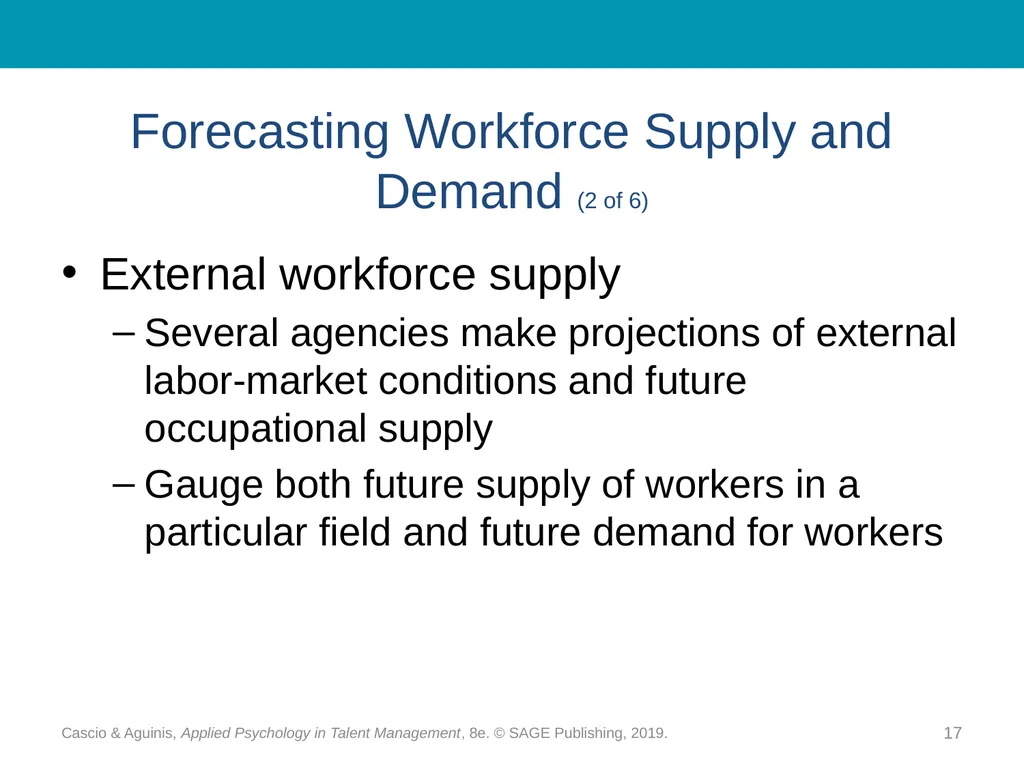
Cascio & Aguinis, Applied Psychology in Talent Management, 8e. © SAGE Publishing, 2019. Forecasting Workforce Supply and Demand (2 of 6) External workforce supply
Several agencies make projections of external labor-market conditions and future occupational supply
Gauge both future supply of workers in a particular field and future demand for workers 17<br>
Several agencies make projections of external labor-market conditions and future occupational supply
Gauge both future supply of workers in a particular field and future demand for workers 17<br>
17
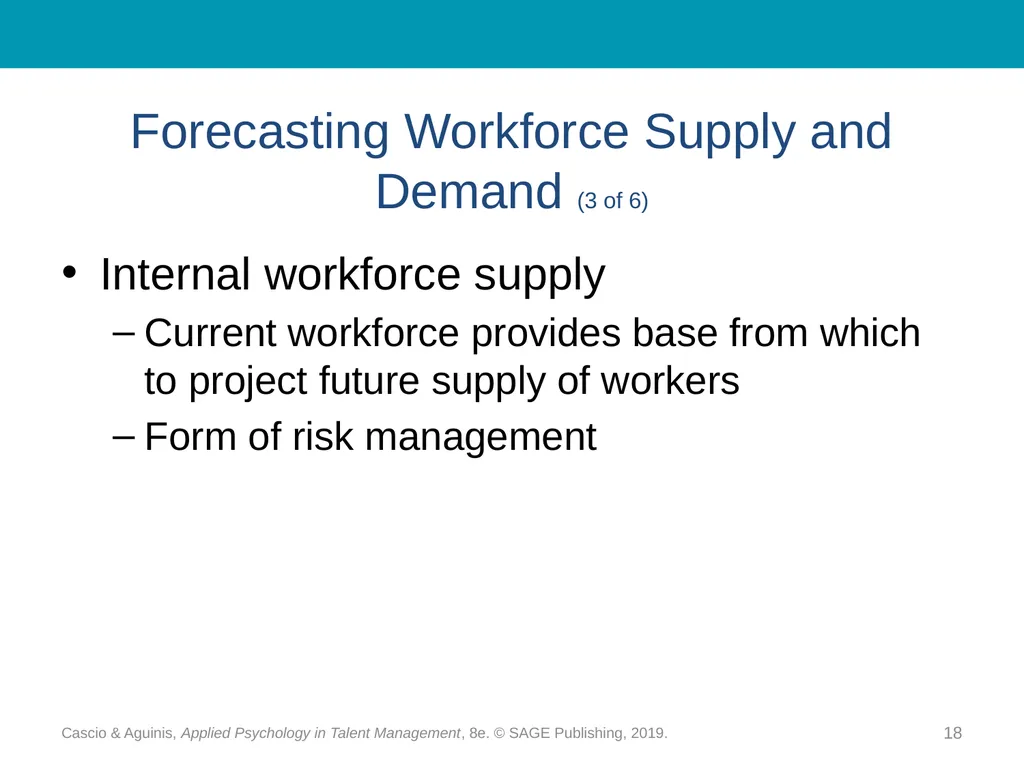
Cascio & Aguinis, Applied Psychology in Talent Management, 8e. © SAGE Publishing, 2019. Forecasting Workforce Supply and Demand (3 of 6) Internal workforce supply
Current workforce provides base from which to project future supply of workers
Form of risk management 18<br>
Current workforce provides base from which to project future supply of workers
Form of risk management 18<br>
18
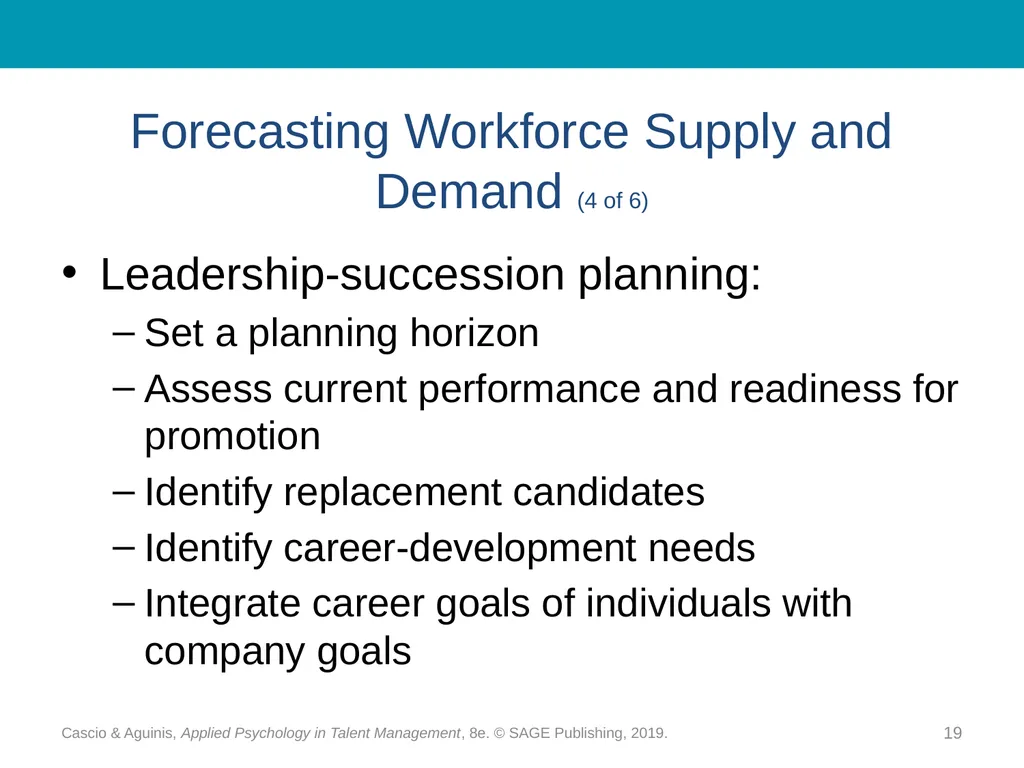
Cascio & Aguinis, Applied Psychology in Talent Management, 8e. © SAGE Publishing, 2019. Forecasting Workforce Supply and Demand (4 of 6) Leadership-succession planning:
Set a planning horizon
Assess current performance and readiness for promotion
Identify replacement candidates
Identify career-development needs
Integrate career goals of individuals with company goals 19<br>
Set a planning horizon
Assess current performance and readiness for promotion
Identify replacement candidates
Identify career-development needs
Integrate career goals of individuals with company goals 19<br>
19
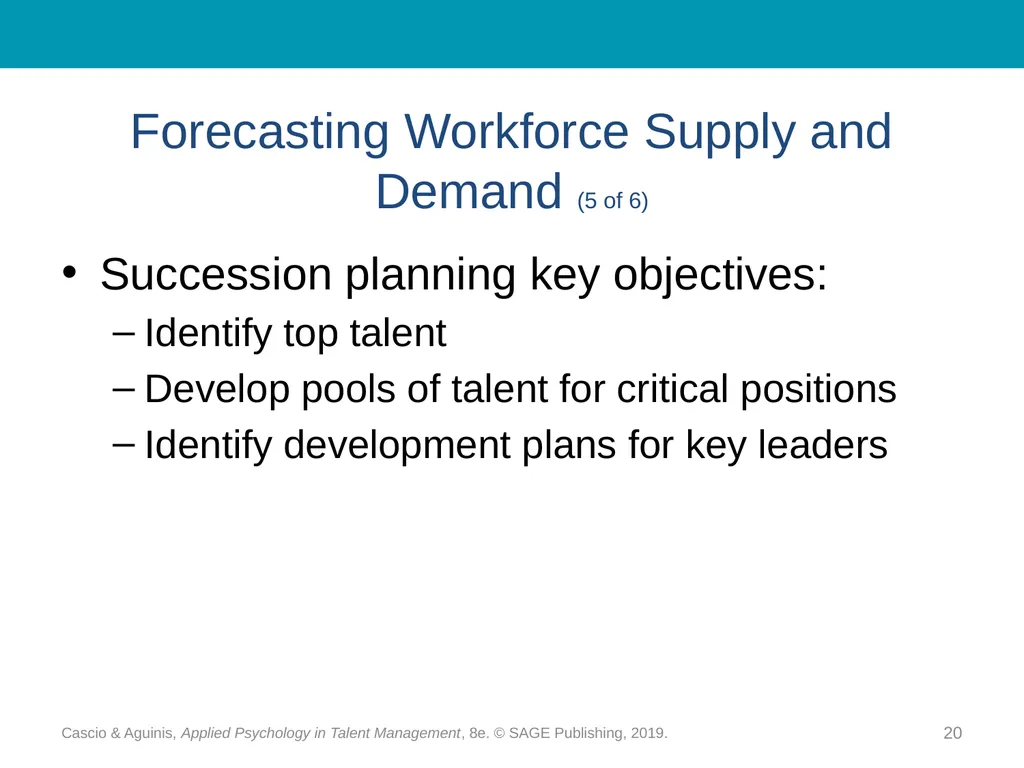
Cascio & Aguinis, Applied Psychology in Talent Management, 8e. © SAGE Publishing, 2019. Forecasting Workforce Supply and Demand (5 of 6) Succession planning key objectives:
Identify top talent
Develop pools of talent for critical positions
Identify development plans for key leaders 20<br>
Identify top talent
Develop pools of talent for critical positions
Identify development plans for key leaders 20<br>
20
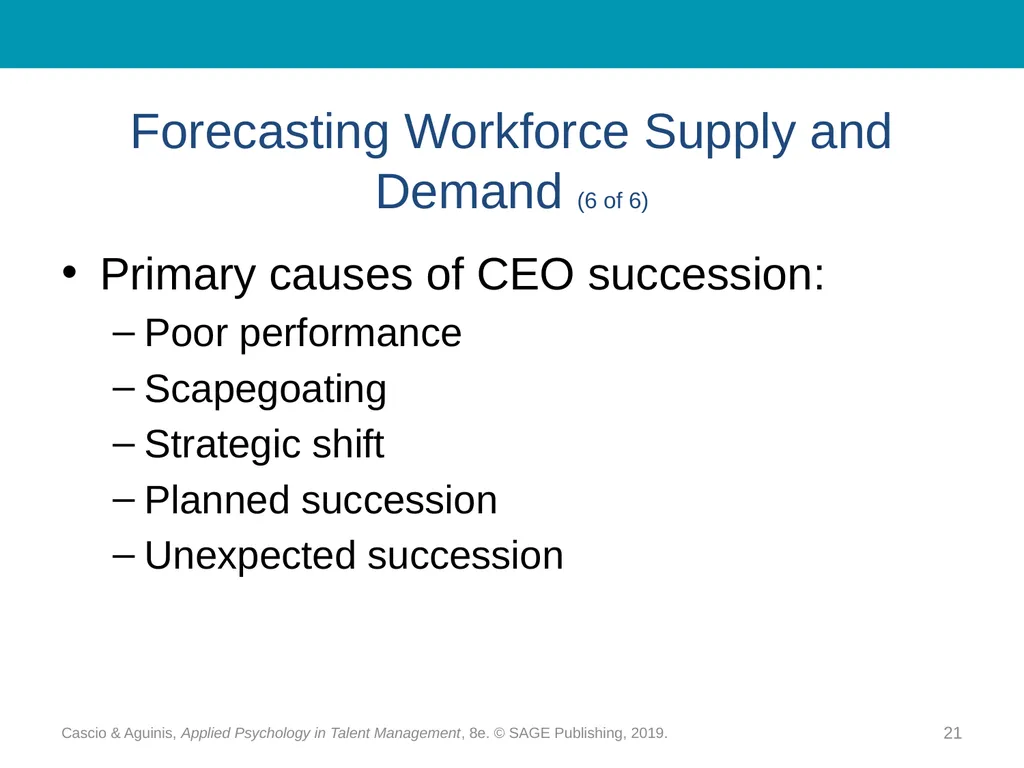
Cascio & Aguinis, Applied Psychology in Talent Management, 8e. © SAGE Publishing, 2019. Forecasting Workforce Supply and Demand (6 of 6) Primary causes of CEO succession:
Poor performance
Scapegoating
Strategic shift
Planned succession
Unexpected succession 21<br>
Poor performance
Scapegoating
Strategic shift
Planned succession
Unexpected succession 21<br>
21
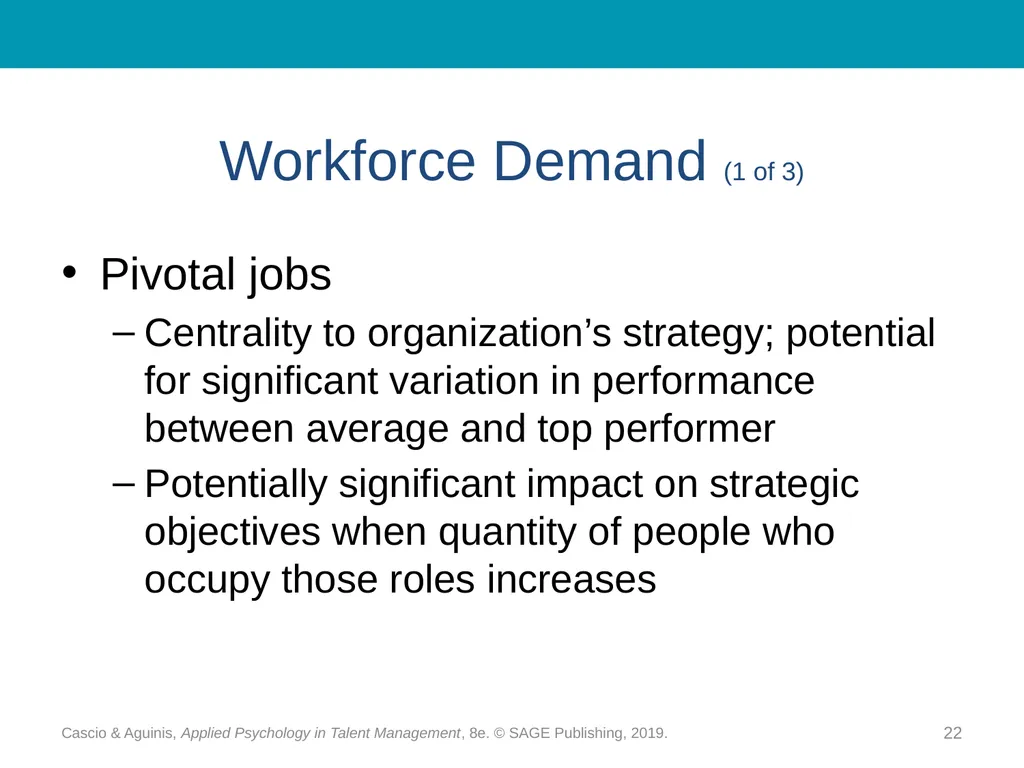
Cascio & Aguinis, Applied Psychology in Talent Management, 8e. © SAGE Publishing, 2019. Workforce Demand (1 of 3) Pivotal jobs
Centrality to organization’s strategy; potential for significant variation in performance between average and top performer
Potentially significant impact on strategic objectives when quantity of people who occupy those roles increases 22<br>
Centrality to organization’s strategy; potential for significant variation in performance between average and top performer
Potentially significant impact on strategic objectives when quantity of people who occupy those roles increases 22<br>
22
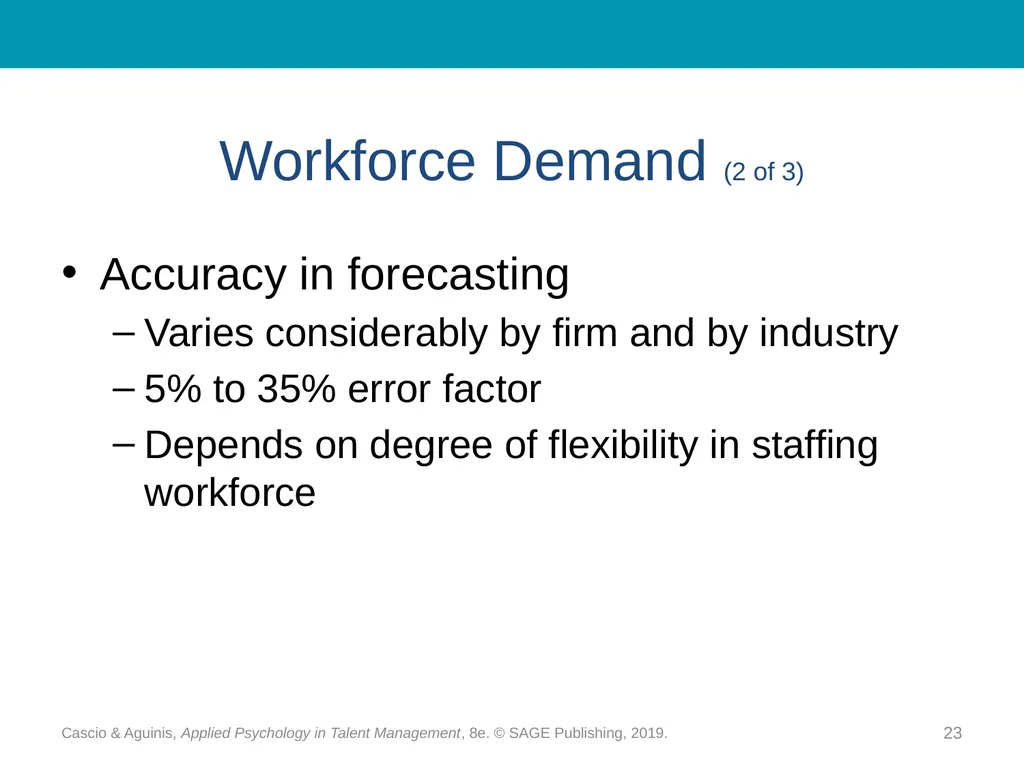
Cascio & Aguinis, Applied Psychology in Talent Management, 8e. © SAGE Publishing, 2019. Workforce Demand (2 of 3) Accuracy in forecasting
Varies considerably by firm and by industry
5% to 35% error factor
Depends on degree of flexibility in staffing workforce 23<br>
Varies considerably by firm and by industry
5% to 35% error factor
Depends on degree of flexibility in staffing workforce 23<br>
23
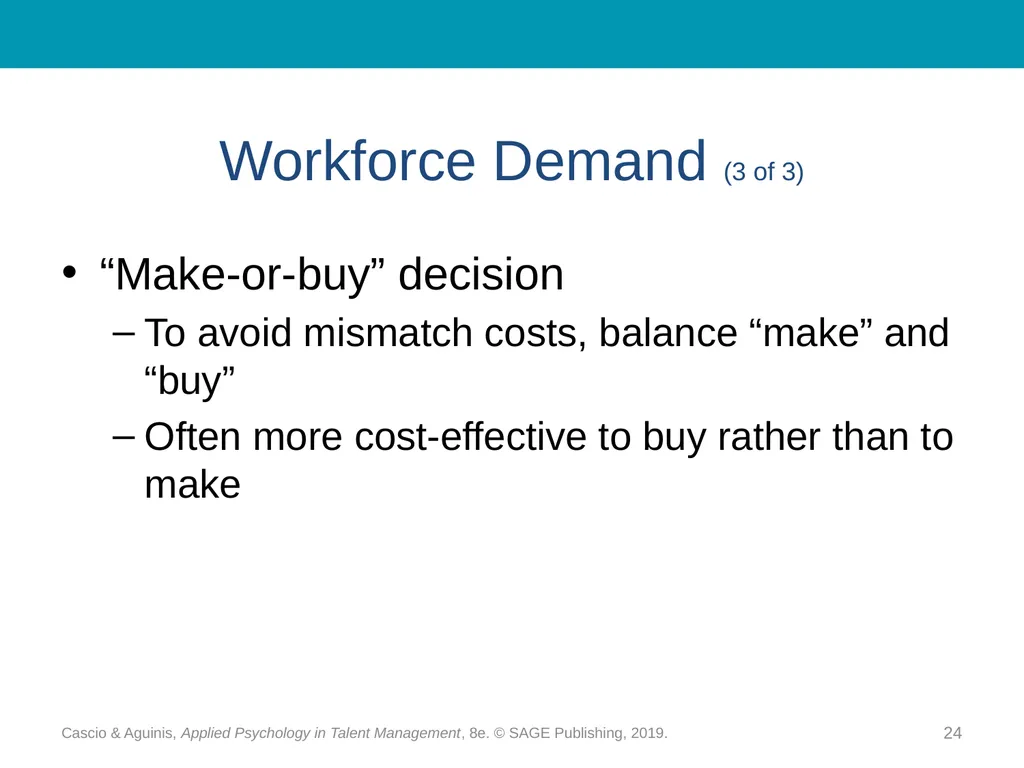
Cascio & Aguinis, Applied Psychology in Talent Management, 8e. © SAGE Publishing, 2019. Workforce Demand (3 of 3) “Make-or-buy” decision
To avoid mismatch costs, balance “make” and “buy”
Often more cost-effective to buy rather than to make 24<br>
To avoid mismatch costs, balance “make” and “buy”
Often more cost-effective to buy rather than to make 24<br>
24
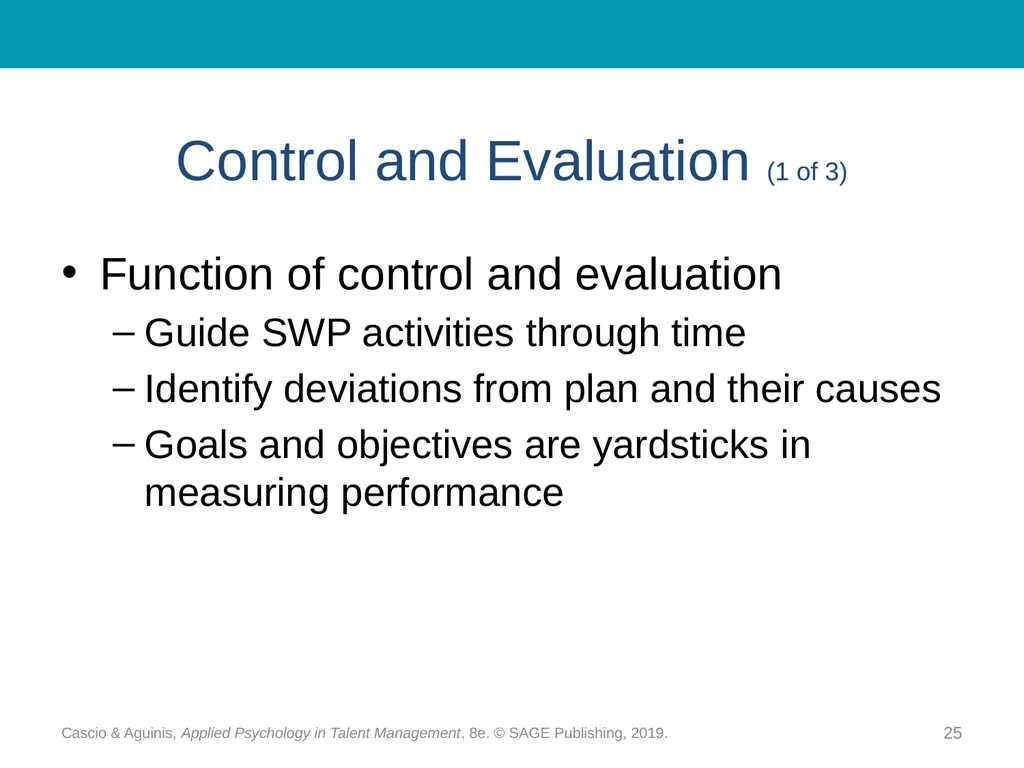
Cascio & Aguinis, Applied Psychology in Talent Management, 8e. © SAGE Publishing, 2019. Control and Evaluation (1 of 3) Function of control and evaluation
Guide SWP activities through time
Identify deviations from plan and their causes
Goals and objectives are yardsticks in measuring performance 25<br>
Guide SWP activities through time
Identify deviations from plan and their causes
Goals and objectives are yardsticks in measuring performance 25<br>
25
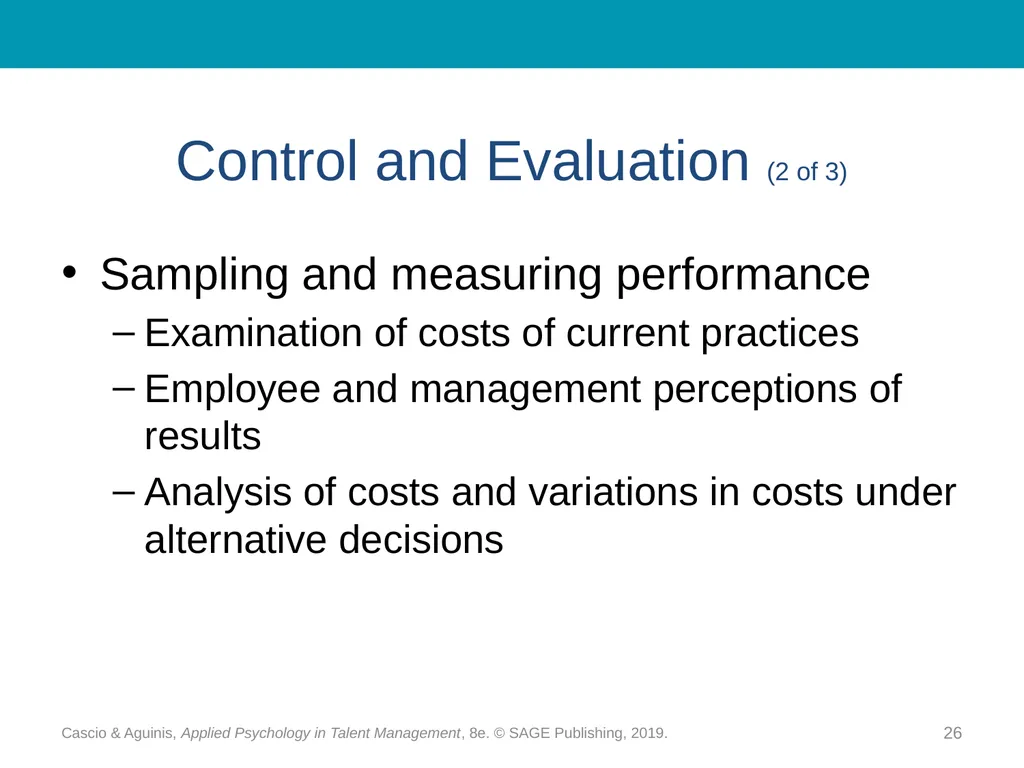
Cascio & Aguinis, Applied Psychology in Talent Management, 8e. © SAGE Publishing, 2019. Control and Evaluation (2 of 3) Sampling and measuring performance
Examination of costs of current practices
Employee and management perceptions of results
Analysis of costs and variations in costs under alternative decisions 26<br>
Examination of costs of current practices
Employee and management perceptions of results
Analysis of costs and variations in costs under alternative decisions 26<br>
26
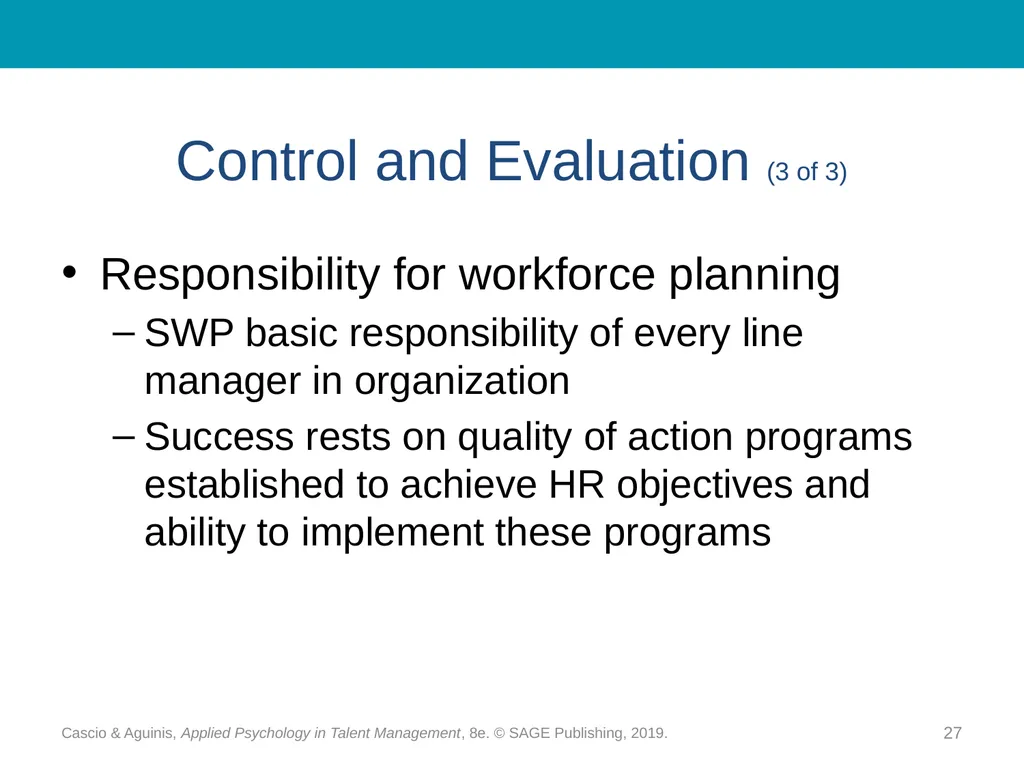
Cascio & Aguinis, Applied Psychology in Talent Management, 8e. © SAGE Publishing, 2019. Control and Evaluation (3 of 3) Responsibility for workforce planning
SWP basic responsibility of every line manager in organization
Success rests on quality of action programs established to achieve HR objectives and ability to implement these programs 27<br>
SWP basic responsibility of every line manager in organization
Success rests on quality of action programs established to achieve HR objectives and ability to implement these programs 27<br>
27
Cascio & Aguinis, Applied Psychology in Talent Management, 8e. © SAGE Publishing, 2019. Evidence-Based Implications for Practice (1 of 4) Recognize that organizations compete just as fiercely in talent markets as they do in financial and customer markets.
Plan for people in the context of managing a business strategically, recognizing the tight linkage between HR and business strategies. 28<br>
Plan for people in the context of managing a business strategically, recognizing the tight linkage between HR and business strategies. 28<br>
28
Cascio & Aguinis, Applied Psychology in Talent Management, 8e. © SAGE Publishing, 2019. Evidence-Based Implications for Practice (2 of 4) View the four components of a SWP system--a talent inventory, forecasts of workforce supply and demand, action plans, and control and evaluation--as an integrated system, not as unrelated activities. 29<br>
29
Cascio & Aguinis, Applied Psychology in Talent Management, 8e. © SAGE Publishing, 2019. Evidence-Based Implications for Practice (3 of 4) With respect to leadership succession, recognize that the CEO must drive the talent agenda. It all begins with commitment from the top.
Identify and communicate a common set of leadership attributes to promote a common set of expectations for everyone in the organization about what is expected of leaders. 30<br>
Identify and communicate a common set of leadership attributes to promote a common set of expectations for everyone in the organization about what is expected of leaders. 30<br>
30
Cascio & Aguinis, Applied Psychology in Talent Management, 8e. © SAGE Publishing, 2019. Evidence-Based Implications for Practice (4 of 4) Keep to a regular schedule for performance reviews, broader talent reviews outside one’s functional area, and the identification of talent pools for critical positions.
Link all decisions about talent to the organization’s business strategy. 31<br>
Link all decisions about talent to the organization’s business strategy. 31<br>