
Chapter 16 Motivating Employees The Concept of


Description: Chapter 16 Motivating Employees The Concept of Motivation Motivation the arousal of enthusiasm and persistence to pursue a course of action Forces either intrinsic or extrinsic to a person that arouse enthusiasm and persistence Employee
Related Topics
Download Presentation
"Chapter 16 Motivating Employees The Concept of" is the property of its rightful owner. Permission is granted to download and print the materials on this website for personal, non-commercial use only, and to display it on your personal computer provided you do not modify the materials and that you retain all copyright notices contained in the materials. By downloading content from our website, you accept the terms of this agreement.
Presentation Transcript
slide1. Chapter 16 Motivating Employees<br>
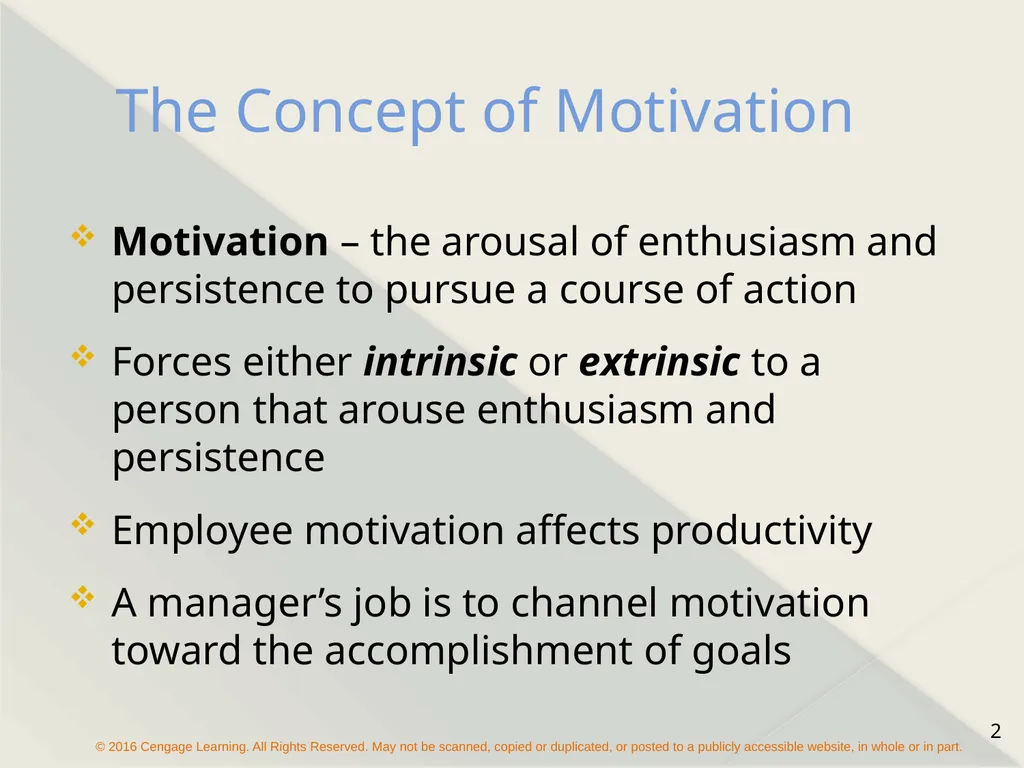
slide2. The Concept of Motivation Motivation – the arousal of enthusiasm and persistence to pursue a course of action
Forces either intrinsic or extrinsic to a person that arouse enthusiasm and persistence
Employee motivation affects productivity
A manager’s job is to channel motivation toward the accomplishment of goals 2<br>
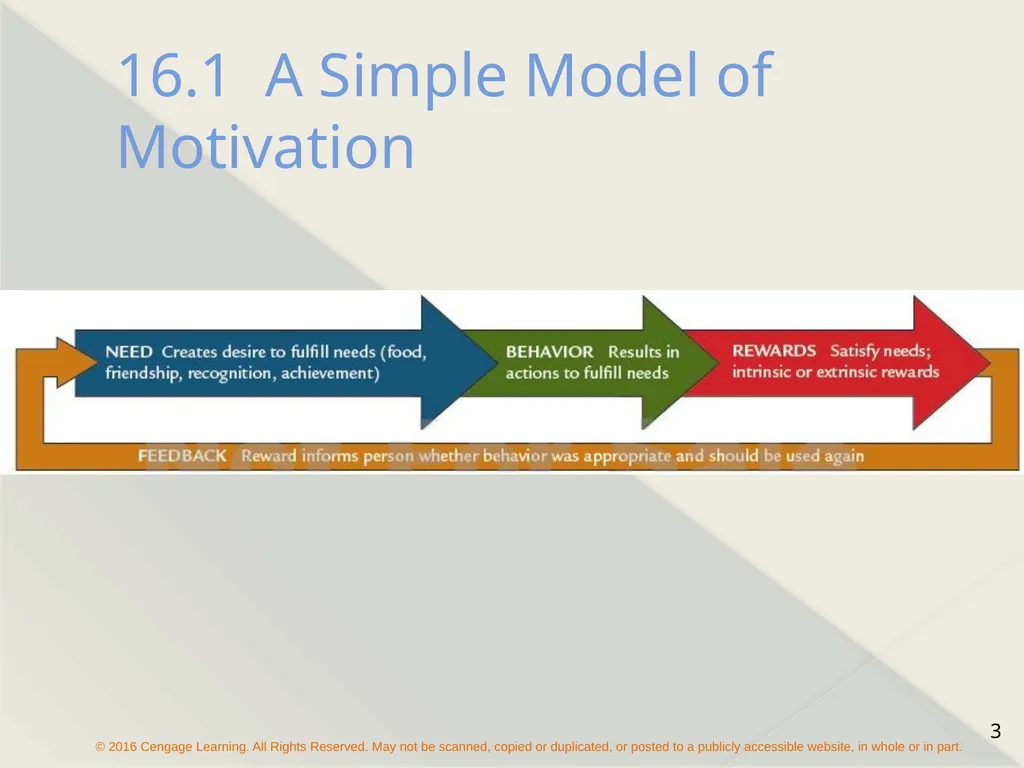
slide3. 16.1 A Simple Model of Motivation 3<br>
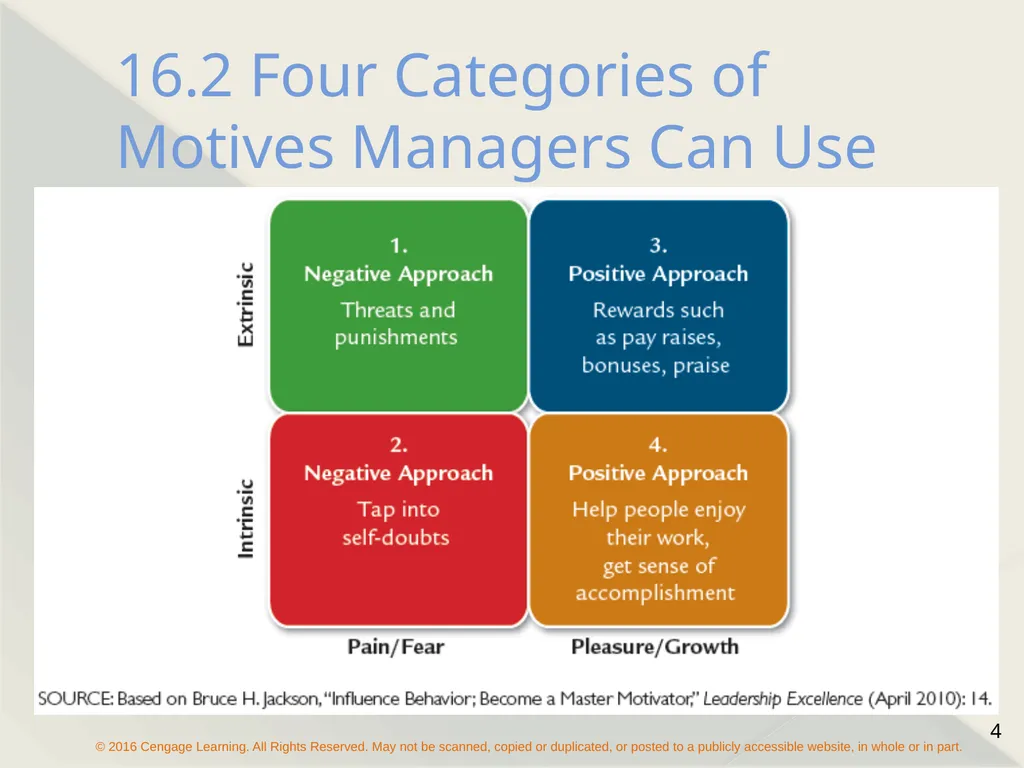
slide4. 16.2 Four Categories of Motives Managers Can Use 4<br>
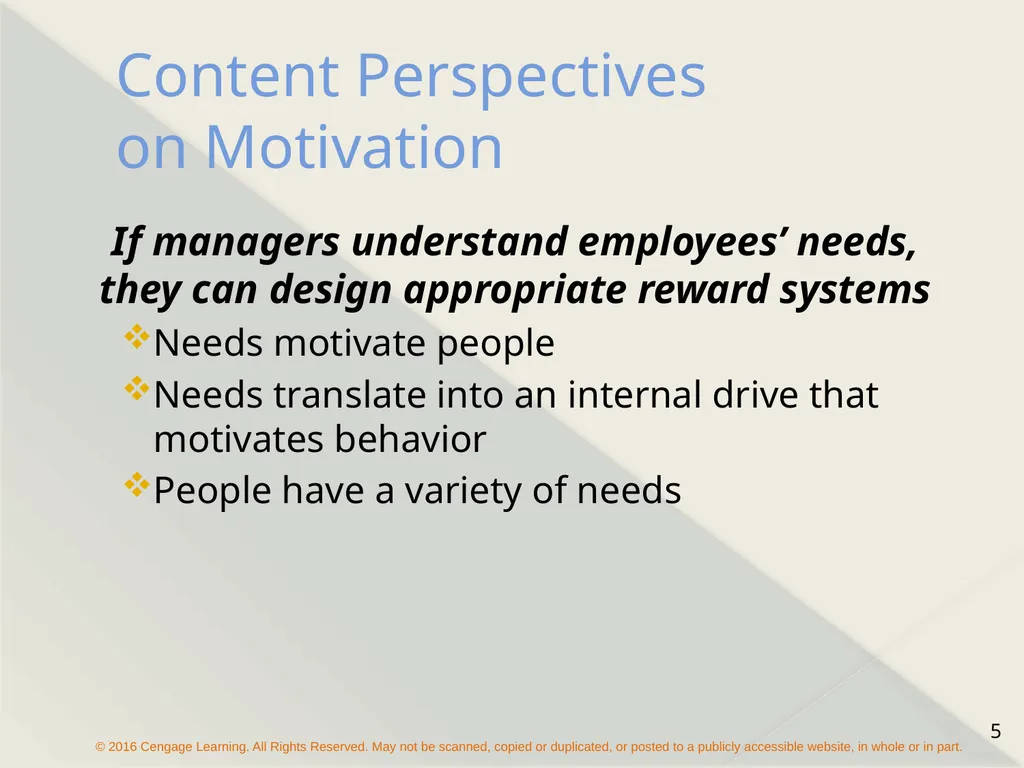
slide5. Content Perspectives on Motivation If managers understand employees’ needs, they can design appropriate reward systems
Needs motivate people
Needs translate into an internal drive that motivates behavior
People have a variety of needs 5<br>
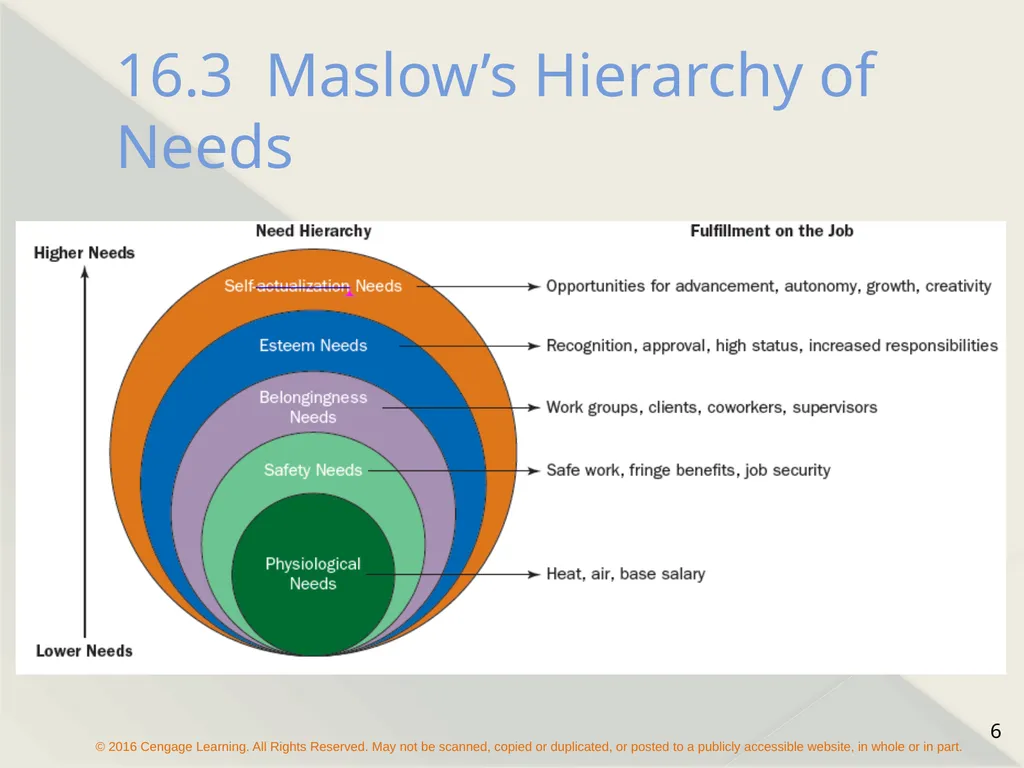
slide6. 16.3 Maslow’s Hierarchy of Needs 6<br>
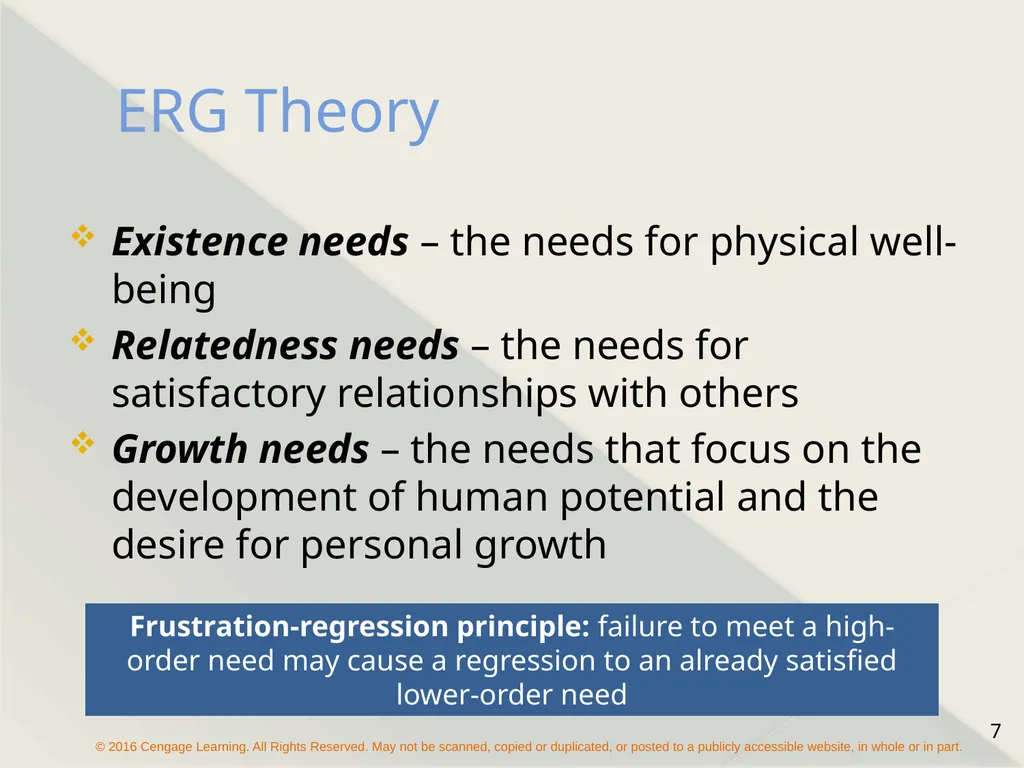
slide7. ERG Theory Existence needs – the needs for physical well-being
Relatedness needs – the needs for satisfactory relationships with others
Growth needs – the needs that focus on the development of human potential and the desire for personal growth 7 Frustration-regression principle: failure to meet a high-order need may cause a regression to an already satisfied lower-order need<br>
slide8. 16.4 Herzberg’s Two-Factor Theory 8<br>
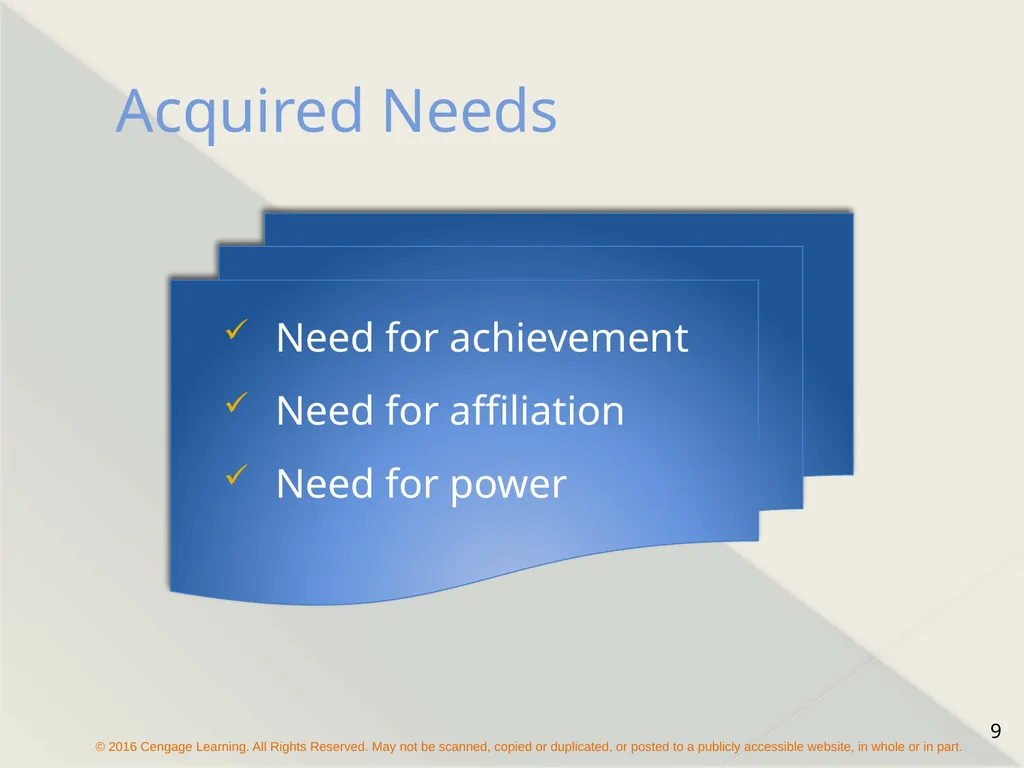
slide9. Acquired Needs 9 Need for achievement
Need for affiliation
Need for power<br>
slide10. Process Perspectives on Motivation How people select behavioral actions
Goal-Setting Theory
Equity Theory
Expectancy Theory 10<br>
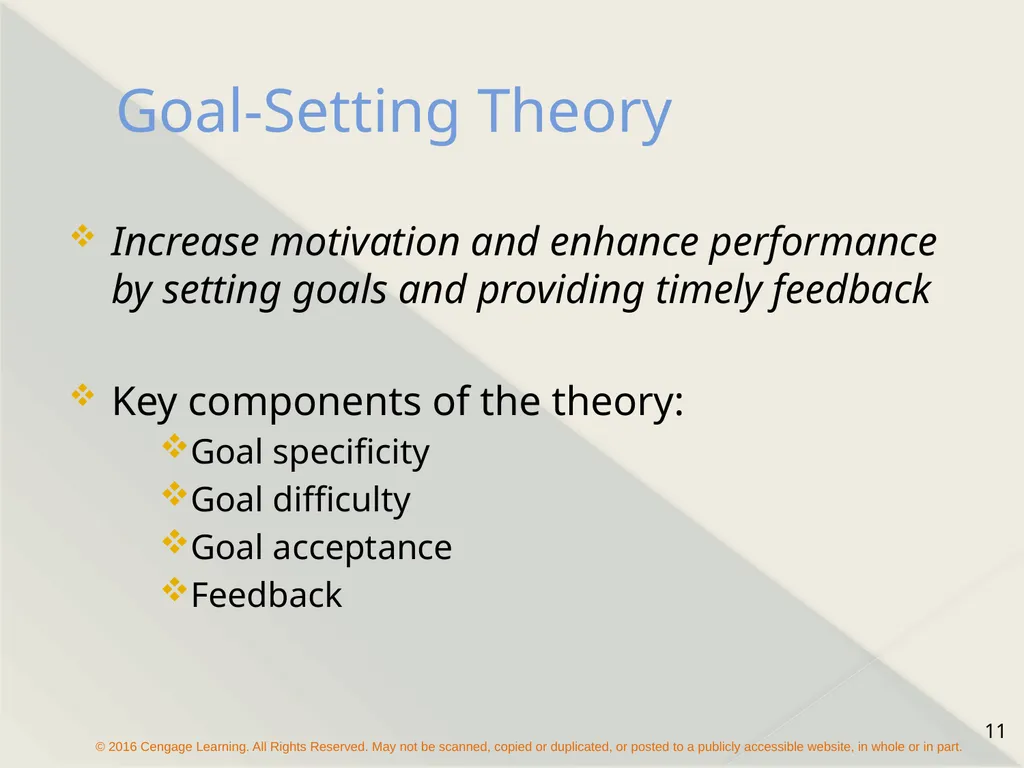
slide11. Goal-Setting Theory Increase motivation and enhance performance by setting goals and providing timely feedback
Key components of the theory:
Goal specificity
Goal difficulty
Goal acceptance
Feedback 11<br>
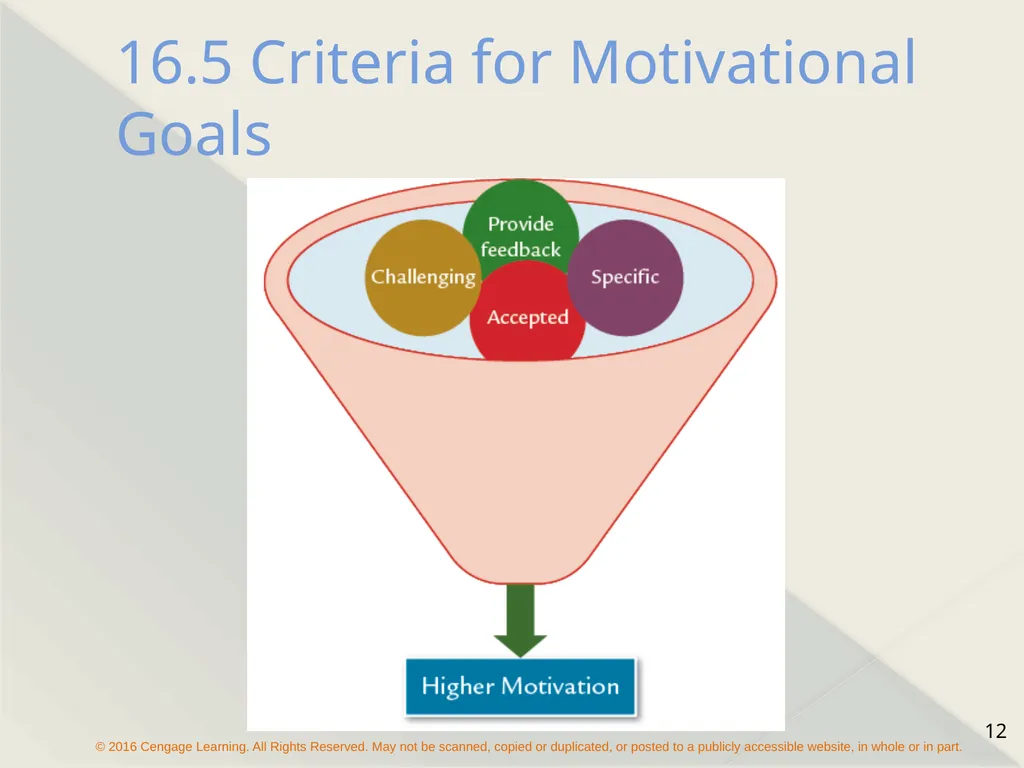
slide12. 16.5 Criteria for Motivational Goals 12<br>
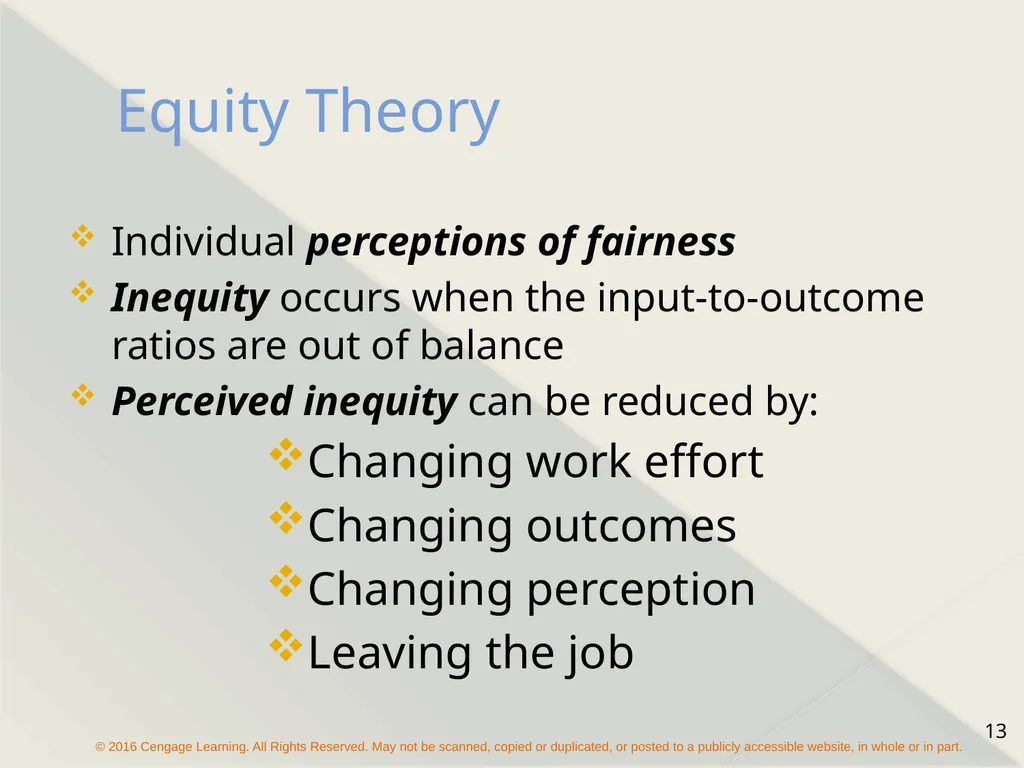
slide13. Equity Theory Individual perceptions of fairness
Inequity occurs when the input-to-outcome ratios are out of balance
Perceived inequity can be reduced by:
Changing work effort
Changing outcomes
Changing perception
Leaving the job 13<br>
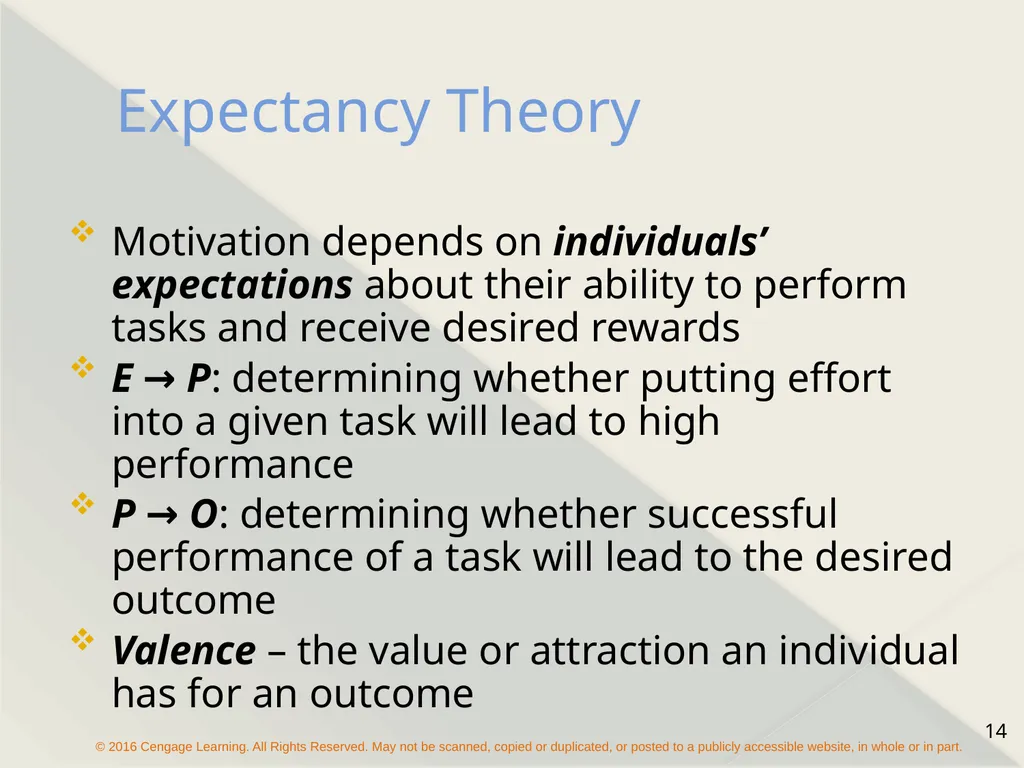
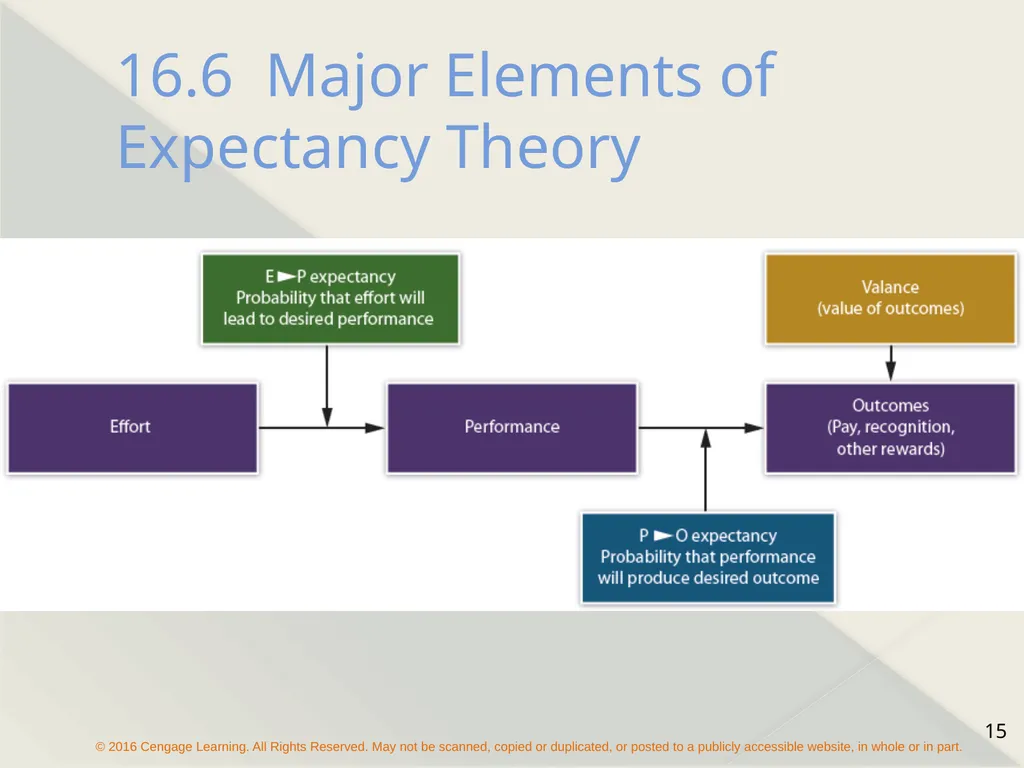
slide14. Expectancy Theory Motivation depends on individuals’ expectations about their ability to perform tasks and receive desired rewards
E → P: determining whether putting effort into a given task will lead to high performance
P → O: determining whether successful performance of a task will lead to the desired outcome
Valence – the value or attraction an individual has for an outcome 14<br>
slide15. 16.6 Major Elements of Expectancy Theory 15<br>
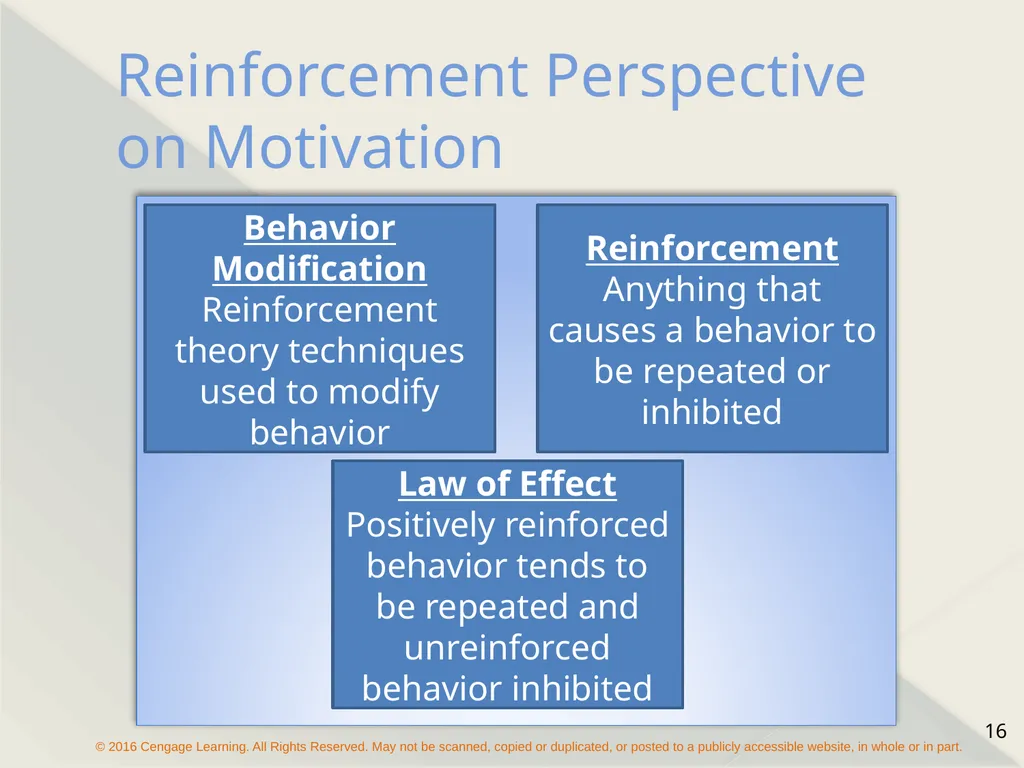
slide16. Reinforcement Perspective on Motivation 16 Behavior Modification
Reinforcement theory techniques used to modify behavior Reinforcement
Anything that causes a behavior to be repeated or inhibited Law of Effect
Positively reinforced behavior tends to be repeated and unreinforced behavior inhibited<br>
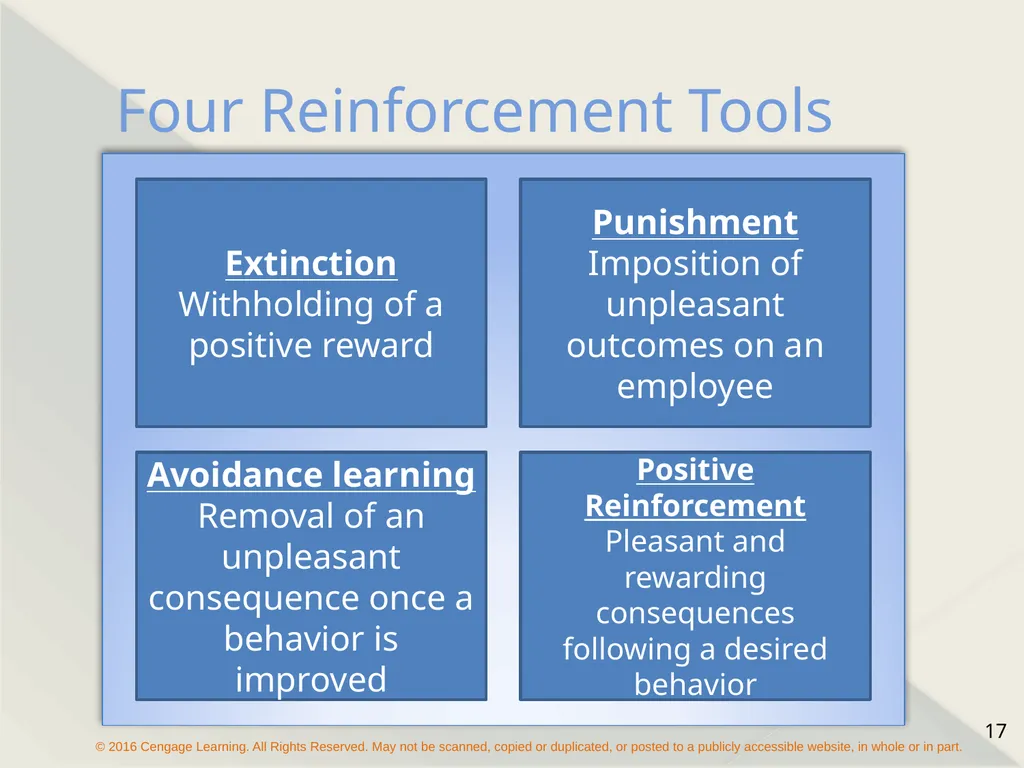
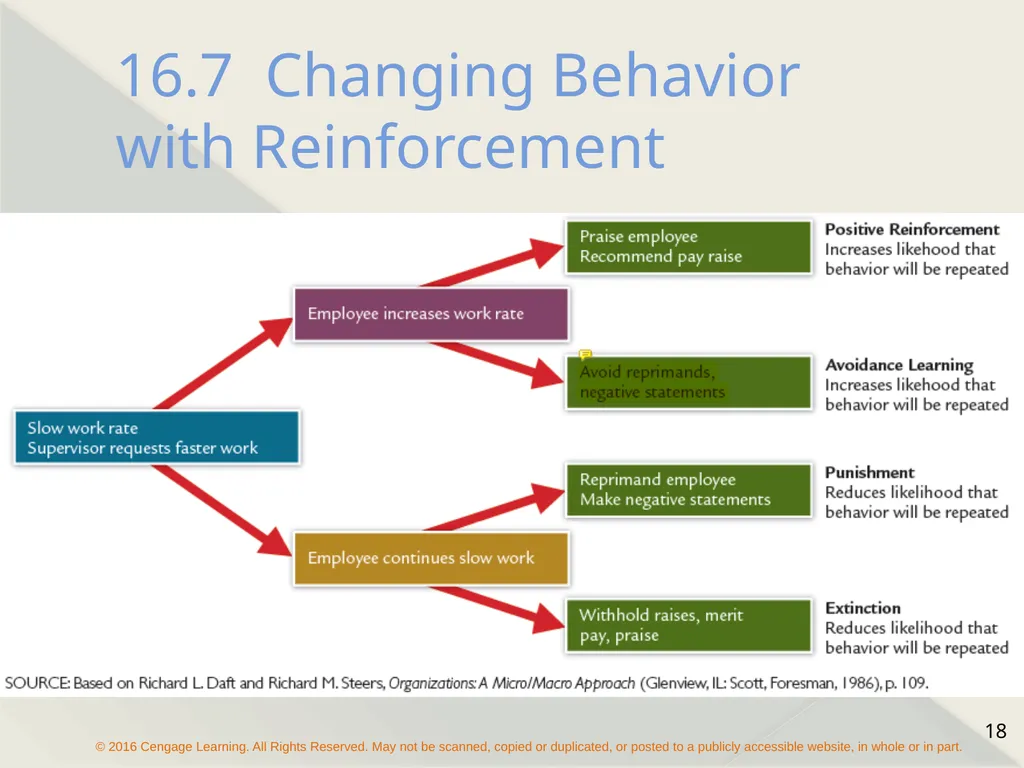
slide17. Four Reinforcement Tools 17 Extinction
Withholding of a positive reward Punishment
Imposition of unpleasant outcomes on an employee Avoidance learning
Removal of an unpleasant consequence once a behavior is improved Positive Reinforcement
Pleasant and rewarding consequences following a desired behavior<br>
slide18. 16.7 Changing Behavior with Reinforcement 18<br>
slide19. Social Learning Theory Individual’s motivation can result from the person’s observations of other people’s behavior
Vicarious learning – observational learning from seeing others’ behaviors and getting rewarded for them 19<br>
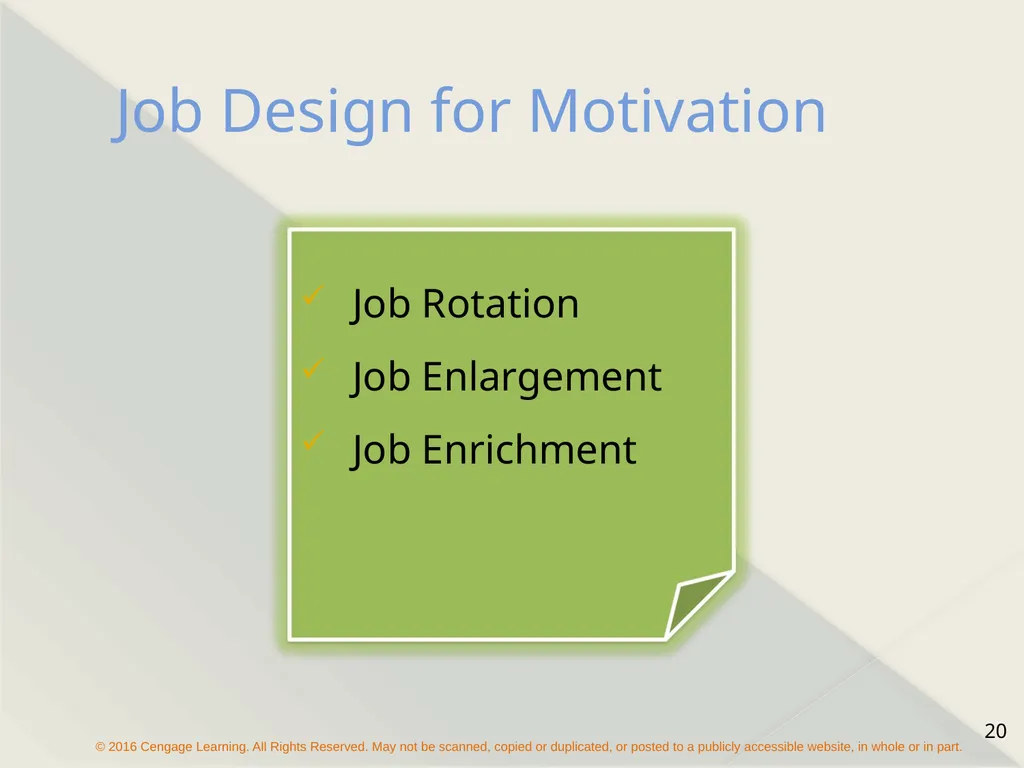
slide20. Job Design for Motivation 20 Job Rotation
Job Enlargement
Job Enrichment<br>
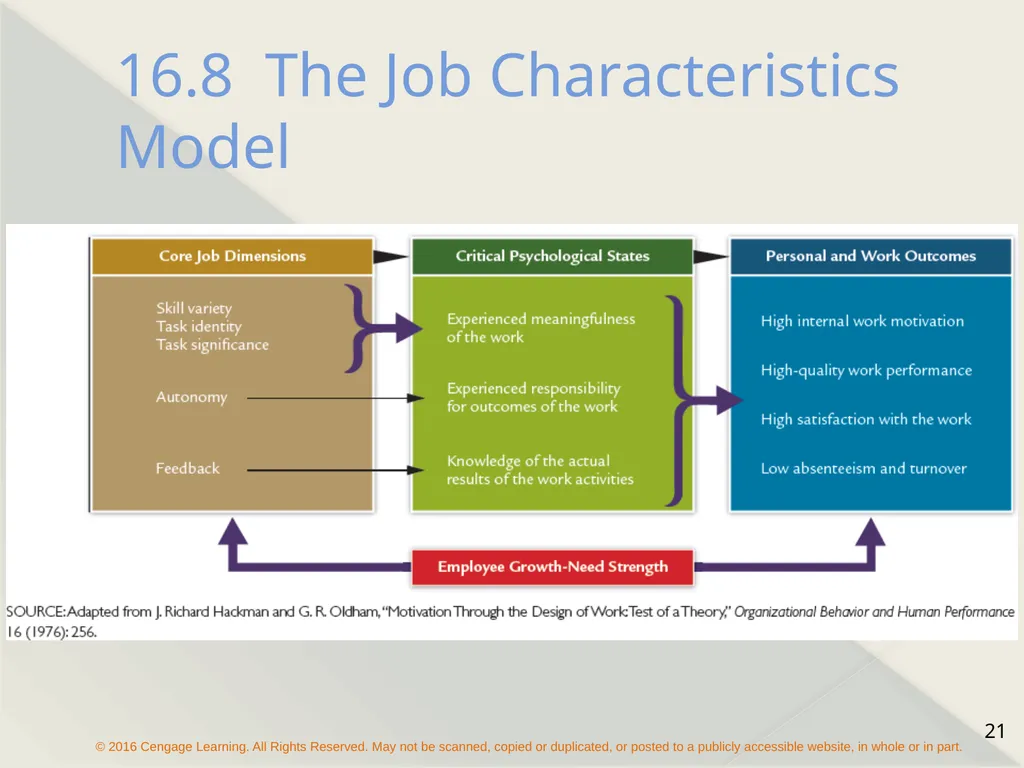
slide21. 16.8 The Job Characteristics Model 21<br>
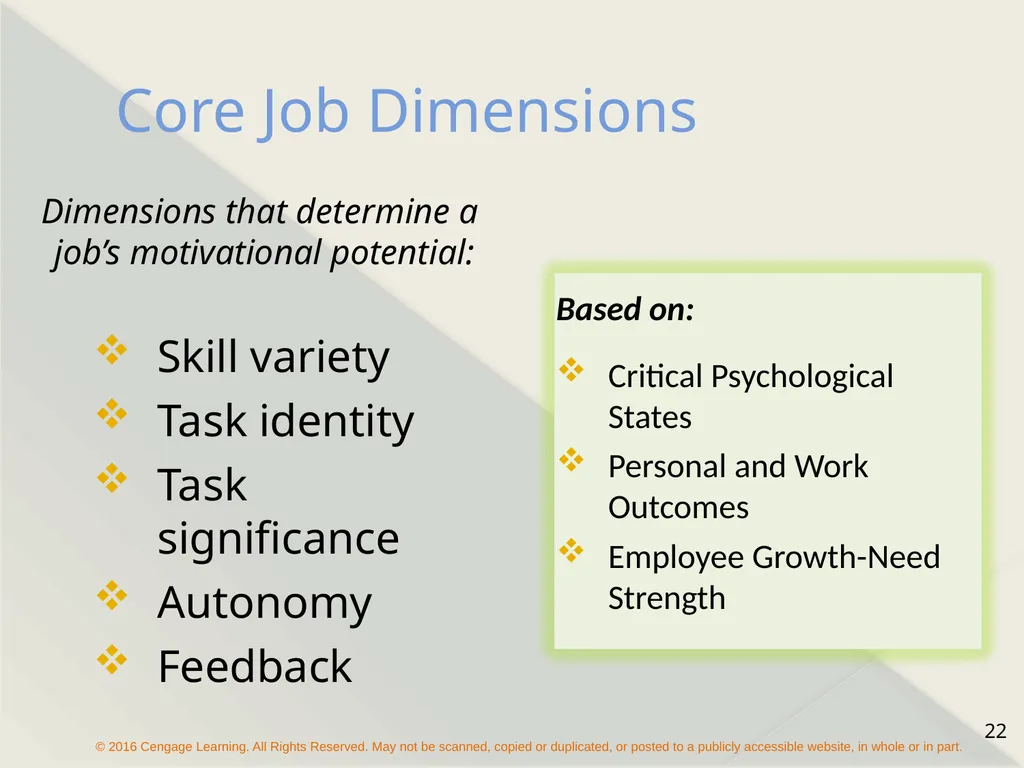
slide22. Core Job Dimensions 22 Dimensions that determine a job’s motivational potential:
Skill variety
Task identity
Task significance
Autonomy
Feedback Based on:
Critical Psychological States
Personal and Work Outcomes
Employee Growth-Need Strength<br>
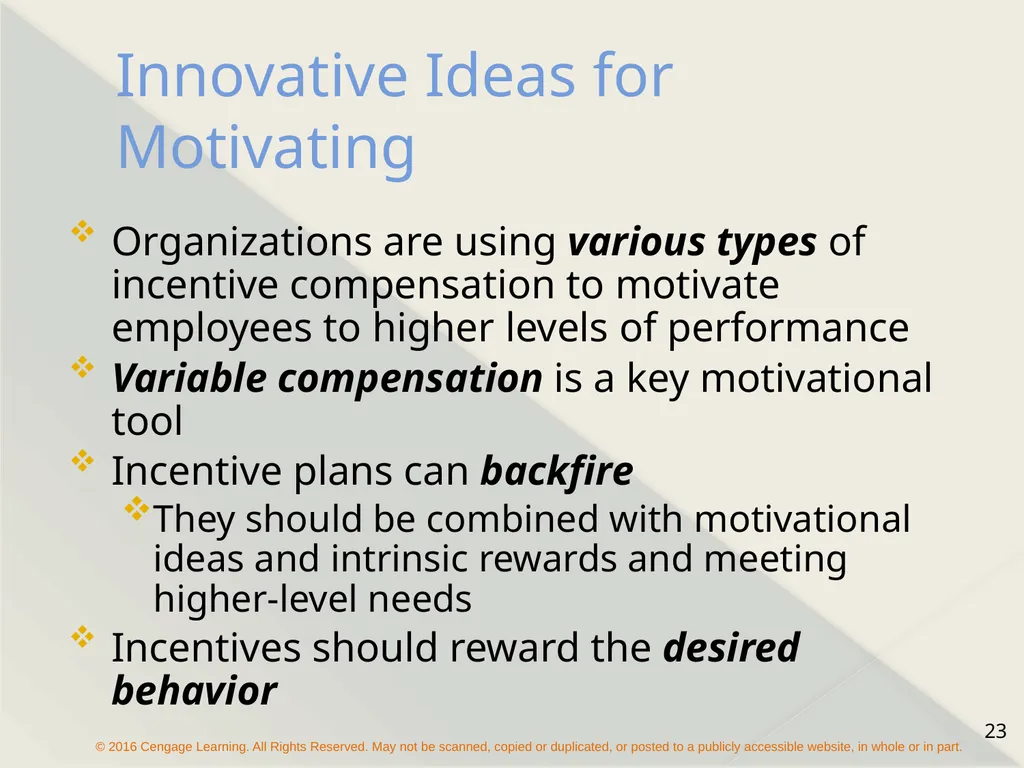
slide23. Innovative Ideas for Motivating Organizations are using various types of incentive compensation to motivate employees to higher levels of performance
Variable compensation is a key motivational tool
Incentive plans can backfire
They should be combined with motivational ideas and intrinsic rewards and meeting higher-level needs
Incentives should reward the desired behavior 23<br>
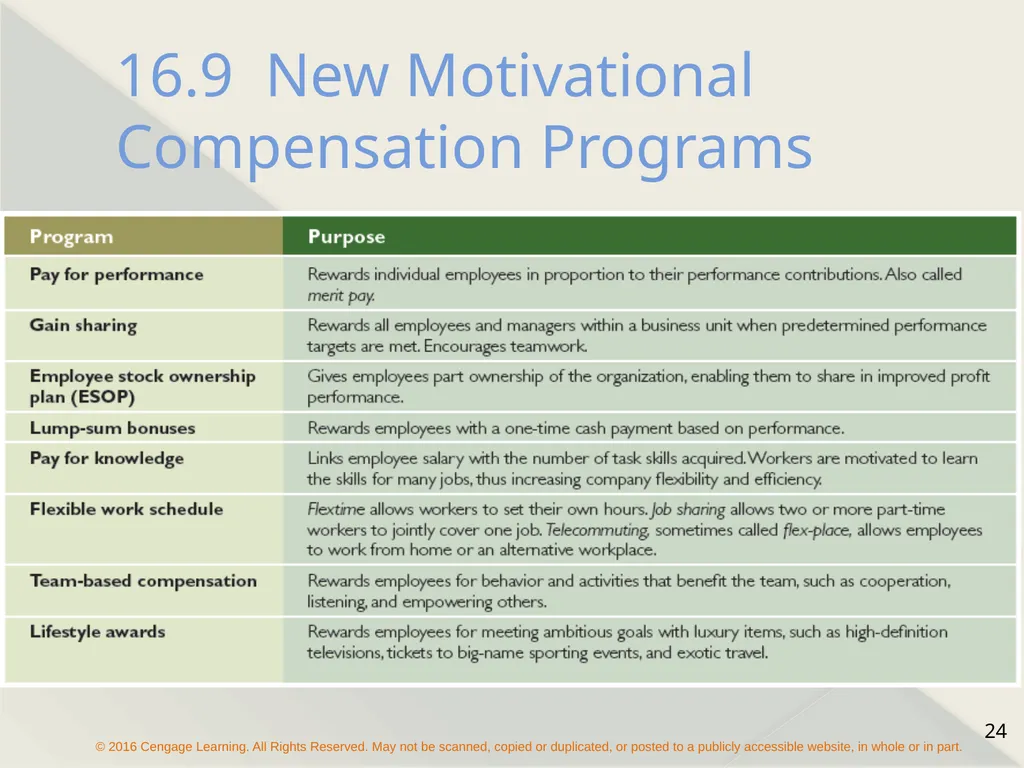
slide24. 16.9 New Motivational Compensation Programs 24<br>
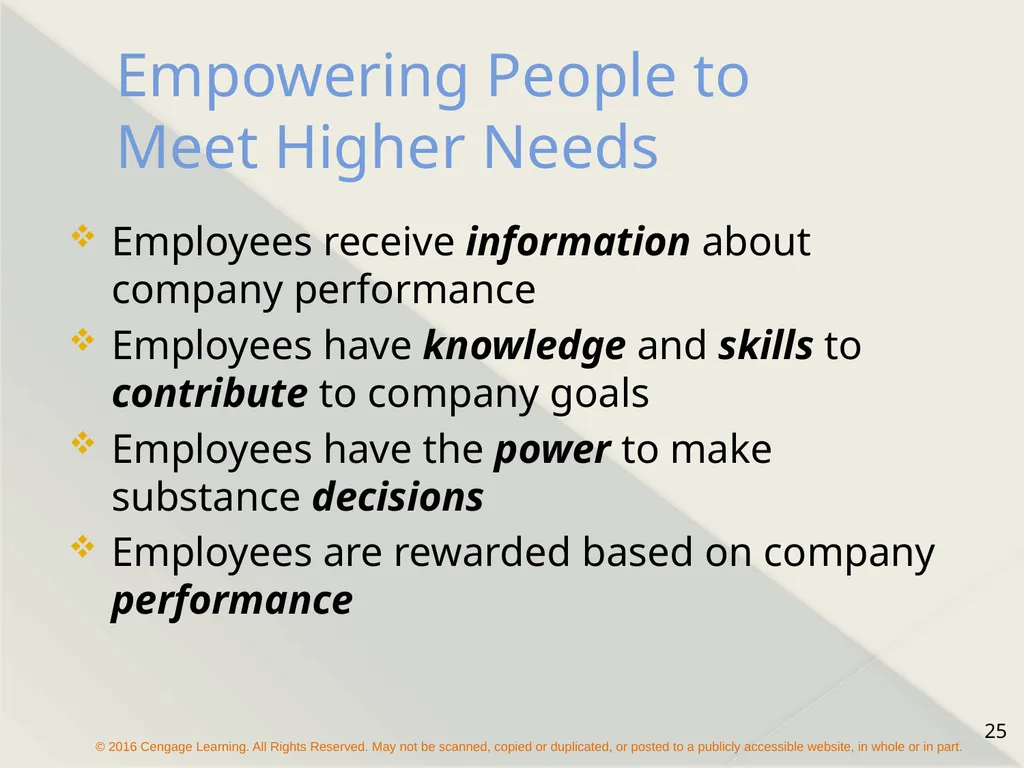
slide25. Empowering People to Meet Higher Needs Employees receive information about company performance
Employees have knowledge and skills to contribute to company goals
Employees have the power to make substance decisions
Employees are rewarded based on company performance 25<br>
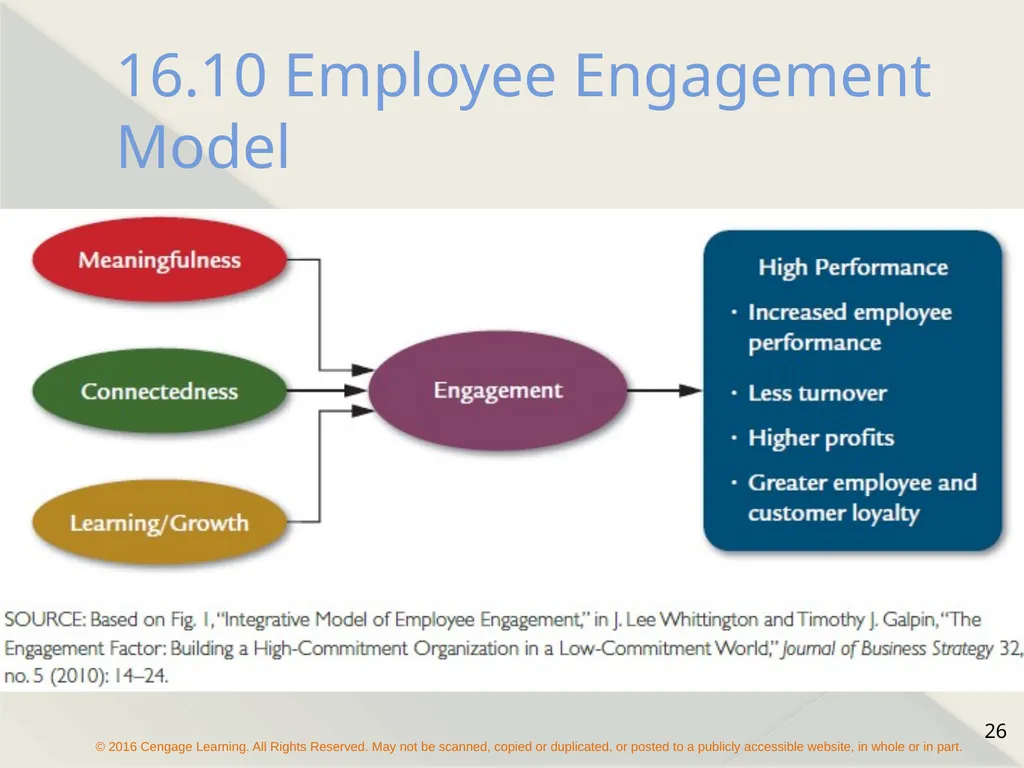
slide26. 16.10 Employee Engagement Model 26<br>
slide2. The Concept of Motivation Motivation – the arousal of enthusiasm and persistence to pursue a course of action
Forces either intrinsic or extrinsic to a person that arouse enthusiasm and persistence
Employee motivation affects productivity
A manager’s job is to channel motivation toward the accomplishment of goals 2<br>
slide3. 16.1 A Simple Model of Motivation 3<br>
slide4. 16.2 Four Categories of Motives Managers Can Use 4<br>
slide5. Content Perspectives on Motivation If managers understand employees’ needs, they can design appropriate reward systems
Needs motivate people
Needs translate into an internal drive that motivates behavior
People have a variety of needs 5<br>
slide6. 16.3 Maslow’s Hierarchy of Needs 6<br>
slide7. ERG Theory Existence needs – the needs for physical well-being
Relatedness needs – the needs for satisfactory relationships with others
Growth needs – the needs that focus on the development of human potential and the desire for personal growth 7 Frustration-regression principle: failure to meet a high-order need may cause a regression to an already satisfied lower-order need<br>
slide8. 16.4 Herzberg’s Two-Factor Theory 8<br>
slide9. Acquired Needs 9 Need for achievement
Need for affiliation
Need for power<br>
slide10. Process Perspectives on Motivation How people select behavioral actions
Goal-Setting Theory
Equity Theory
Expectancy Theory 10<br>
slide11. Goal-Setting Theory Increase motivation and enhance performance by setting goals and providing timely feedback
Key components of the theory:
Goal specificity
Goal difficulty
Goal acceptance
Feedback 11<br>
slide12. 16.5 Criteria for Motivational Goals 12<br>
slide13. Equity Theory Individual perceptions of fairness
Inequity occurs when the input-to-outcome ratios are out of balance
Perceived inequity can be reduced by:
Changing work effort
Changing outcomes
Changing perception
Leaving the job 13<br>
slide14. Expectancy Theory Motivation depends on individuals’ expectations about their ability to perform tasks and receive desired rewards
E → P: determining whether putting effort into a given task will lead to high performance
P → O: determining whether successful performance of a task will lead to the desired outcome
Valence – the value or attraction an individual has for an outcome 14<br>
slide15. 16.6 Major Elements of Expectancy Theory 15<br>
slide16. Reinforcement Perspective on Motivation 16 Behavior Modification
Reinforcement theory techniques used to modify behavior Reinforcement
Anything that causes a behavior to be repeated or inhibited Law of Effect
Positively reinforced behavior tends to be repeated and unreinforced behavior inhibited<br>
slide17. Four Reinforcement Tools 17 Extinction
Withholding of a positive reward Punishment
Imposition of unpleasant outcomes on an employee Avoidance learning
Removal of an unpleasant consequence once a behavior is improved Positive Reinforcement
Pleasant and rewarding consequences following a desired behavior<br>
slide18. 16.7 Changing Behavior with Reinforcement 18<br>
slide19. Social Learning Theory Individual’s motivation can result from the person’s observations of other people’s behavior
Vicarious learning – observational learning from seeing others’ behaviors and getting rewarded for them 19<br>
slide20. Job Design for Motivation 20 Job Rotation
Job Enlargement
Job Enrichment<br>
slide21. 16.8 The Job Characteristics Model 21<br>
slide22. Core Job Dimensions 22 Dimensions that determine a job’s motivational potential:
Skill variety
Task identity
Task significance
Autonomy
Feedback Based on:
Critical Psychological States
Personal and Work Outcomes
Employee Growth-Need Strength<br>
slide23. Innovative Ideas for Motivating Organizations are using various types of incentive compensation to motivate employees to higher levels of performance
Variable compensation is a key motivational tool
Incentive plans can backfire
They should be combined with motivational ideas and intrinsic rewards and meeting higher-level needs
Incentives should reward the desired behavior 23<br>
slide24. 16.9 New Motivational Compensation Programs 24<br>
slide25. Empowering People to Meet Higher Needs Employees receive information about company performance
Employees have knowledge and skills to contribute to company goals
Employees have the power to make substance decisions
Employees are rewarded based on company performance 25<br>
slide26. 16.10 Employee Engagement Model 26<br>