
CONFLICT MANAGEMENT CHAPTER 2: CONFLICT
Description: CONFLICT MANAGEMENT CHAPTER 2: CONFLICT RESOLUTION, NEGOTIATIONS, AND LABOUR RELATIONS Unless otherwise noted, this work is licensed under a Creative Commons Attribution-NonCommercial-ShareAlike 4.0 International (CC BY-NC-SA 4.0) license.
Related Topics
Download Presentation
"CONFLICT MANAGEMENT CHAPTER 2: CONFLICT" is the property of its rightful owner. Permission is granted to download and print the materials on this website for personal, non-commercial use only, and to display it on your personal computer provided you do not modify the materials and that you retain all copyright notices contained in the materials. By downloading content from our website, you accept the terms of this agreement.
Presentation Transcript
slide1. CONFLICT MANAGEMENT CHAPTER 2: CONFLICT RESOLUTION, NEGOTIATIONS, AND LABOUR RELATIONS Unless otherwise noted, this work is licensed under a Creative Commons Attribution-NonCommercial-ShareAlike 4.0 International (CC BY-NC-SA 4.0) license. Feel free to use, modify, reuse or redistribute any portion of this presentation.<br>
slide2. Learning Outcomes Upon successful completion of this chapter, you will be able to:
Summarize stages in the conflict process.
Recognize characteristics of conflict escalation.
Describe common approaches to conflict and explain when to use them.
Explore common strategies for preventing and managing conflict at work.
Define negotiations.
Contrast distributive and integrated approaches to bargaining.
Summarize the steps in the negotiation process.
Demonstrate awareness of the history of labour relations in Canada.
Describe how the collective bargaining agreement impacts negotiation and conflict management in the workplace.<br>
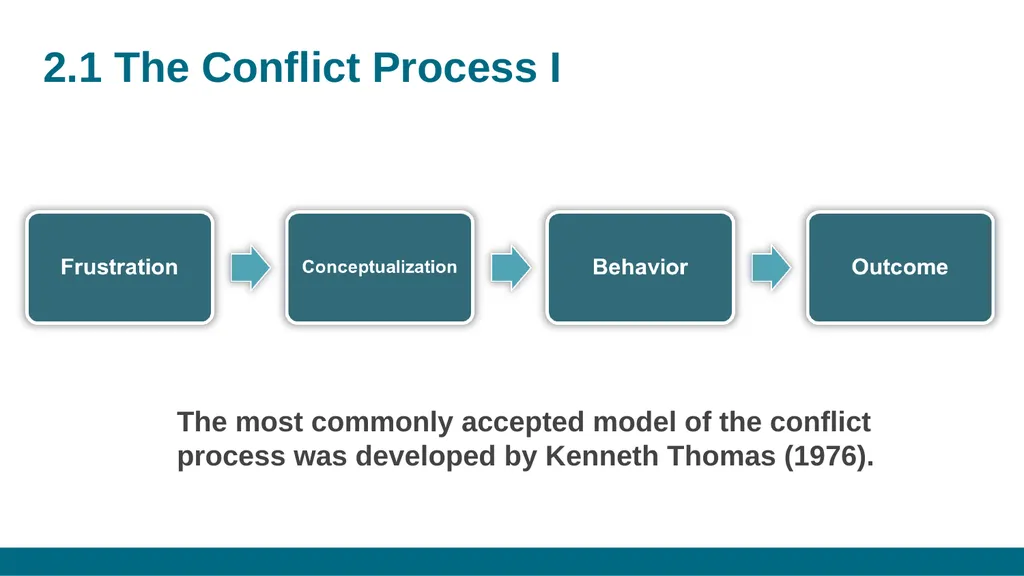
slide3. 2.1 The Conflict Process I The most commonly accepted model of the conflict process was developed by Kenneth Thomas (1976).<br>
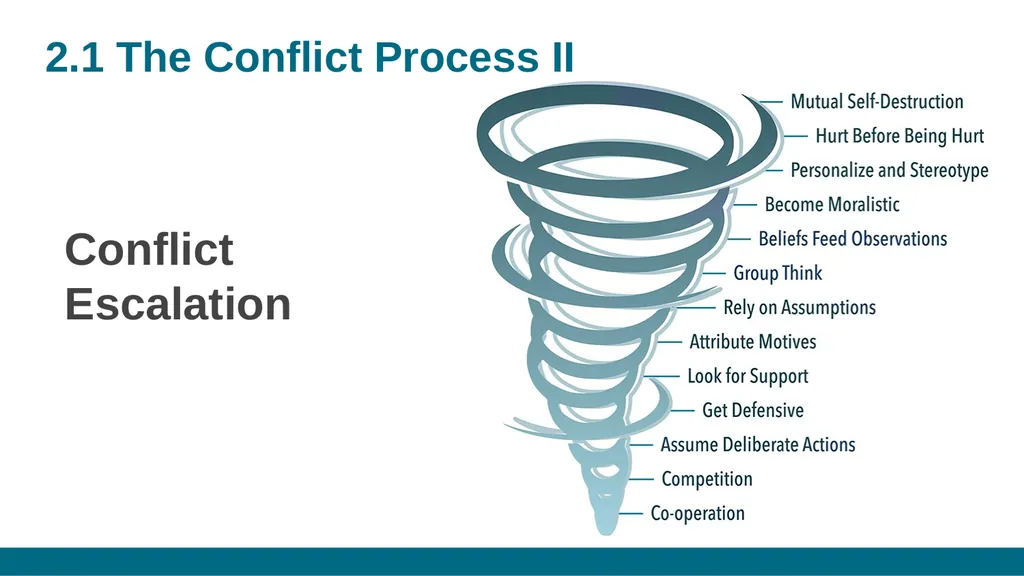
slide4. 2.1 The Conflict Process II Conflict Escalation<br>
slide5. 2.2 Approaches to Conflict I Every individual or group manages conflict differently. In the 1970s, consultants Kenneth W. Thomas and Ralph H. Kilmann developed a tool for analyzing the approaches to conflict resolution. This tool is called the Thomas-Kilmann Conflict Mode Instrument (TKI) (Kilmann Diagnostics, 2017).<br>
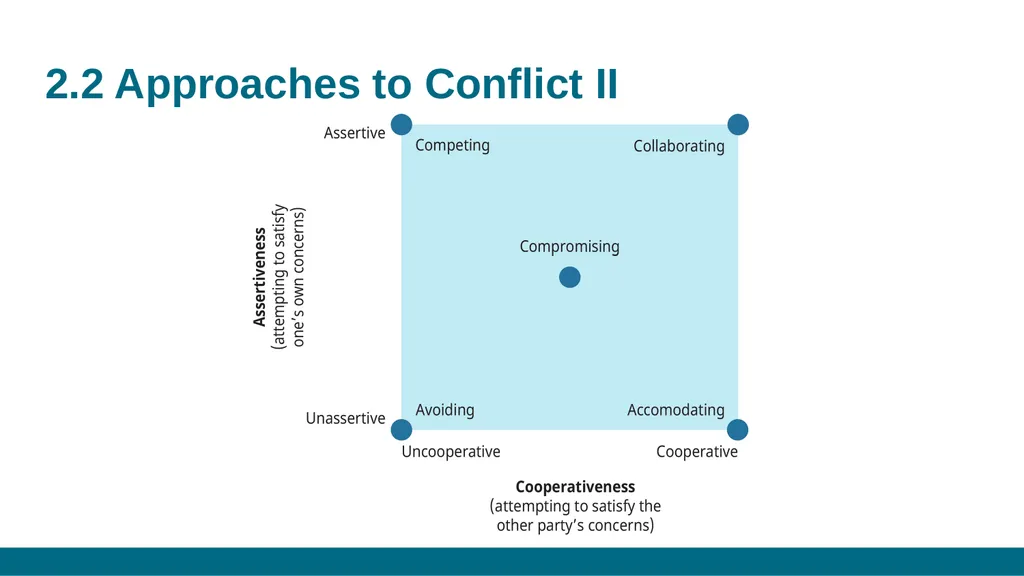
slide6. 2.2 Approaches to Conflict II<br>
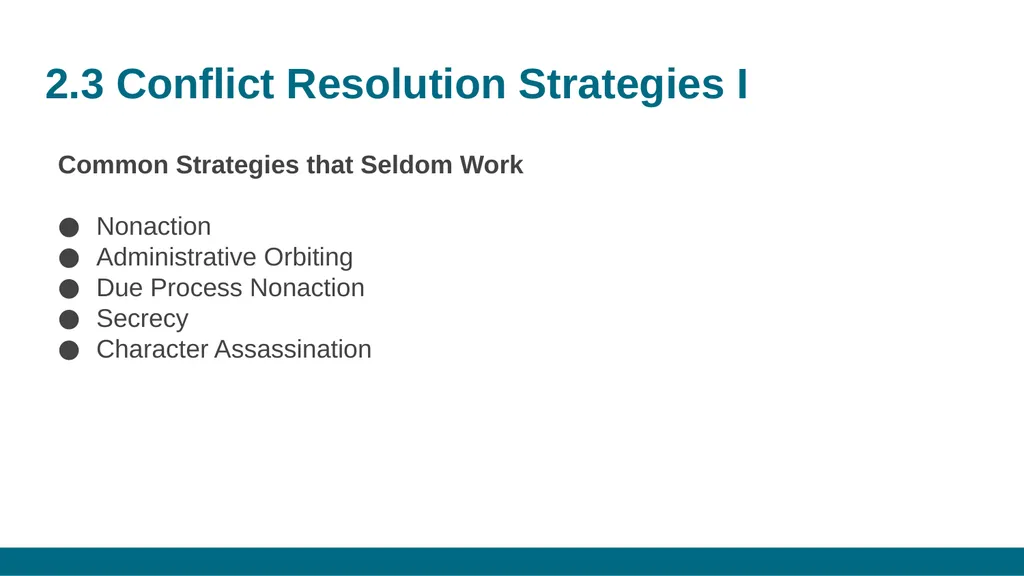
slide7. 2.3 Conflict Resolution Strategies I Common Strategies that Seldom Work
Nonaction
Administrative Orbiting
Due Process Nonaction
Secrecy
Character Assassination<br>
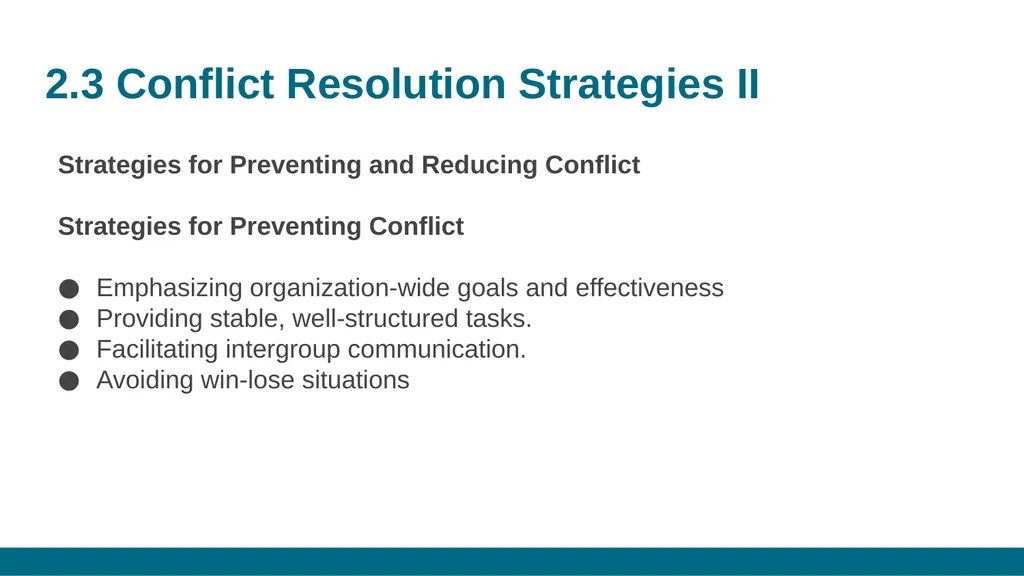
slide8. 2.3 Conflict Resolution Strategies II Strategies for Preventing and Reducing Conflict
Strategies for Preventing Conflict
Emphasizing organization-wide goals and effectiveness
Providing stable, well-structured tasks.
Facilitating intergroup communication.
Avoiding win-lose situations<br>
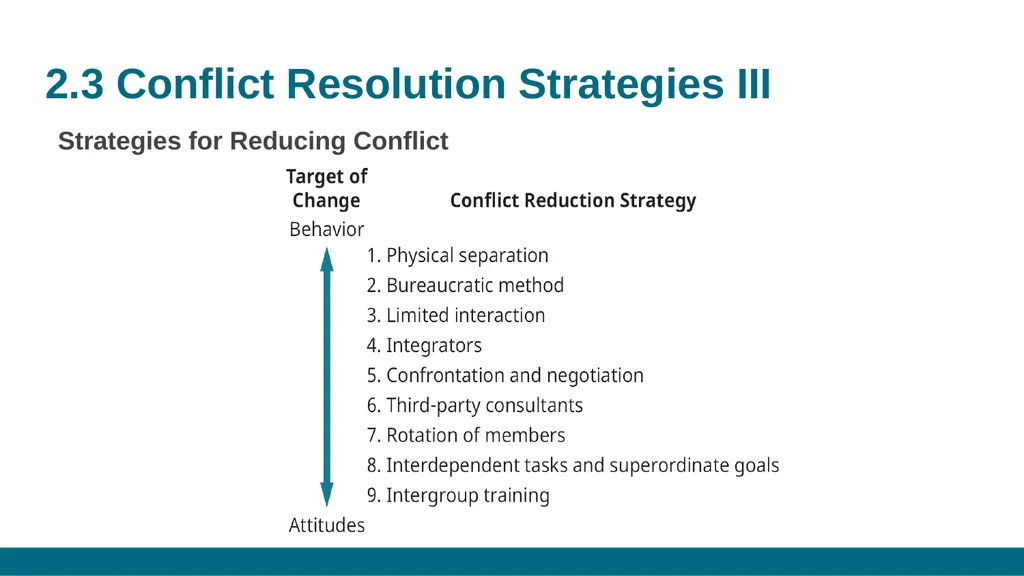
slide9. 2.3 Conflict Resolution Strategies III Strategies for Reducing Conflict<br>
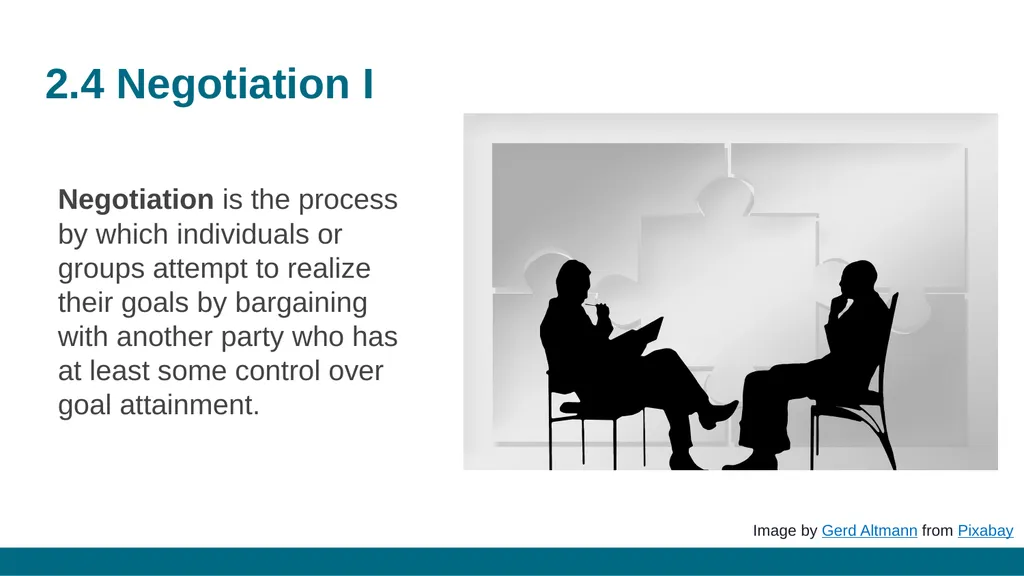
slide10. 2.4 Negotiation I Negotiation is the process by which individuals or groups attempt to realize their goals by bargaining with another party who has at least some control over goal attainment. Image by Gerd Altmann from Pixabay<br>
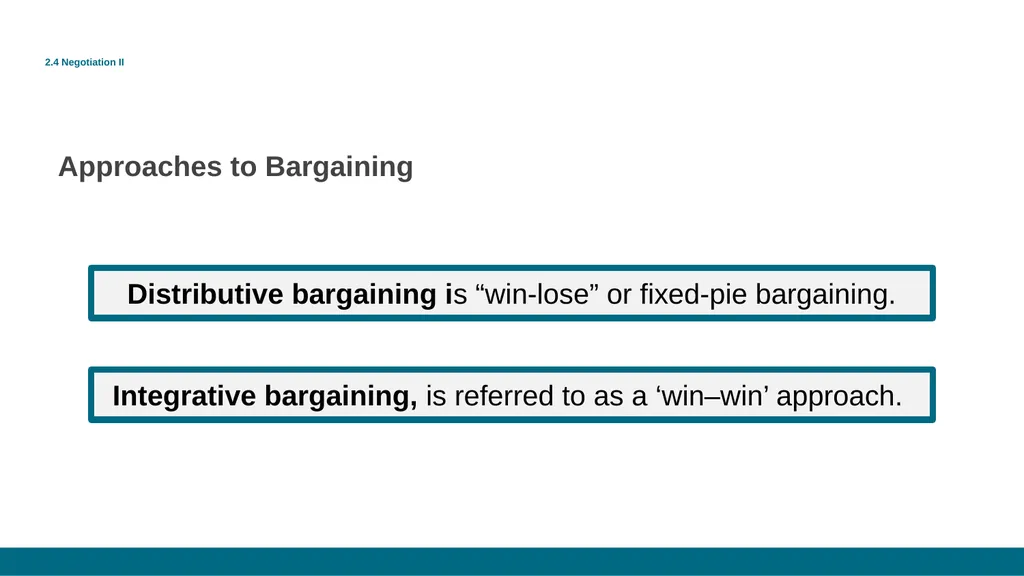
slide11. 2.4 Negotiation II Approaches to Bargaining Distributive bargaining is “win-lose” or fixed-pie bargaining. Integrative bargaining, is referred to as a ‘win–win’ approach.<br>
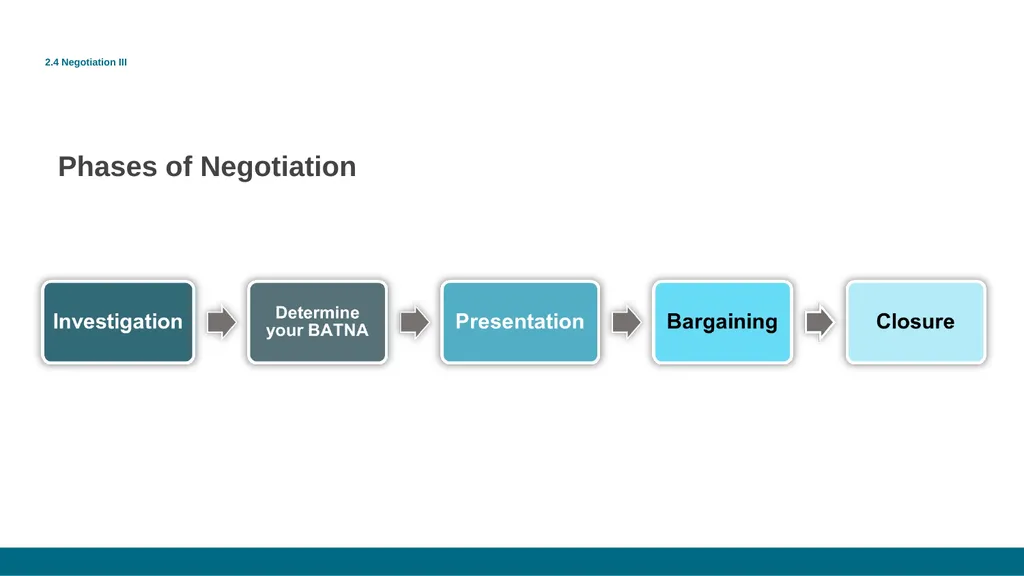
slide12. 2.4 Negotiation III Phases of Negotiation<br>
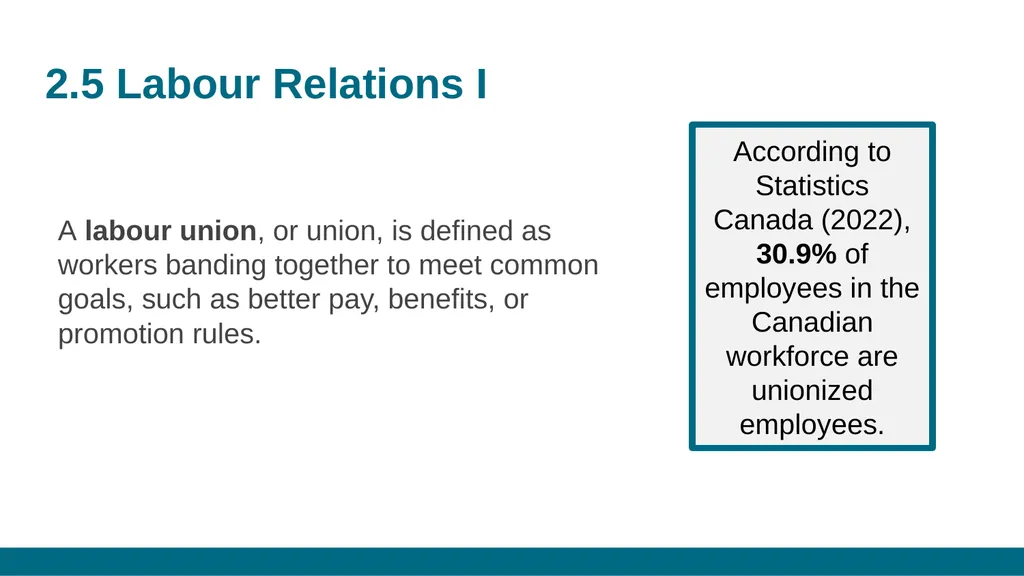
slide13. 2.5 Labour Relations I A labour union, or union, is defined as workers banding together to meet common goals, such as better pay, benefits, or promotion rules. According to Statistics Canada (2022), 30.9% of employees in the Canadian workforce are unionized employees.<br>
slide14. 2.5 Labour Relations II Collective Bargaining
Collective bargaining is the process of negotiations between the company and representatives of the union. The goal is for management and the union to reach a contract agreement, which is put into place for a specified period of time.<br>
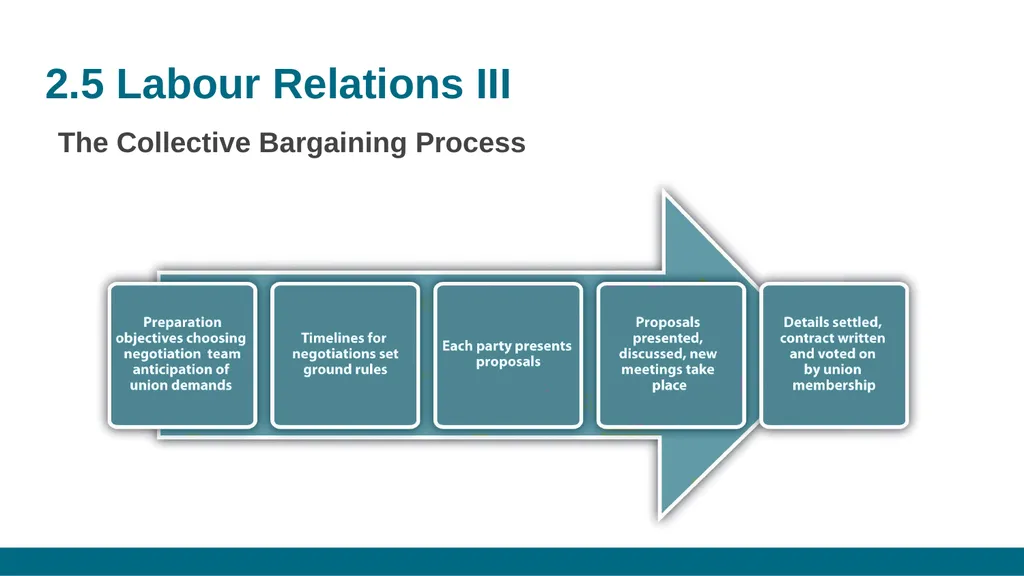
slide15. 2.5 Labour Relations III The Collective Bargaining Process<br>
slide16. 2.6 Key Takeaways The conflict process consists of four stages
Conflict can often escalate in similar patterns.
The Thomas and Kilmann model identifies five approaches to conflict
Ineffective conflict resolution strategies include nonaction, administrative orbiting, due process nonaction, secrecy, and character assassination.
Negotiation is the process by which individuals or groups attempt to realize their goals by bargaining with another party who has at least some control over goal attainment.
Different negotiation strategies include the distributive approach and the integrative approach.
Negotiation consists of five phases
Collective bargaining is the process of negotiating the contact with union representatives.
The collective bargaining process can take time.<br>
slide2. Learning Outcomes Upon successful completion of this chapter, you will be able to:
Summarize stages in the conflict process.
Recognize characteristics of conflict escalation.
Describe common approaches to conflict and explain when to use them.
Explore common strategies for preventing and managing conflict at work.
Define negotiations.
Contrast distributive and integrated approaches to bargaining.
Summarize the steps in the negotiation process.
Demonstrate awareness of the history of labour relations in Canada.
Describe how the collective bargaining agreement impacts negotiation and conflict management in the workplace.<br>
slide3. 2.1 The Conflict Process I The most commonly accepted model of the conflict process was developed by Kenneth Thomas (1976).<br>
slide4. 2.1 The Conflict Process II Conflict Escalation<br>
slide5. 2.2 Approaches to Conflict I Every individual or group manages conflict differently. In the 1970s, consultants Kenneth W. Thomas and Ralph H. Kilmann developed a tool for analyzing the approaches to conflict resolution. This tool is called the Thomas-Kilmann Conflict Mode Instrument (TKI) (Kilmann Diagnostics, 2017).<br>
slide6. 2.2 Approaches to Conflict II<br>
slide7. 2.3 Conflict Resolution Strategies I Common Strategies that Seldom Work
Nonaction
Administrative Orbiting
Due Process Nonaction
Secrecy
Character Assassination<br>
slide8. 2.3 Conflict Resolution Strategies II Strategies for Preventing and Reducing Conflict
Strategies for Preventing Conflict
Emphasizing organization-wide goals and effectiveness
Providing stable, well-structured tasks.
Facilitating intergroup communication.
Avoiding win-lose situations<br>
slide9. 2.3 Conflict Resolution Strategies III Strategies for Reducing Conflict<br>
slide10. 2.4 Negotiation I Negotiation is the process by which individuals or groups attempt to realize their goals by bargaining with another party who has at least some control over goal attainment. Image by Gerd Altmann from Pixabay<br>
slide11. 2.4 Negotiation II Approaches to Bargaining Distributive bargaining is “win-lose” or fixed-pie bargaining. Integrative bargaining, is referred to as a ‘win–win’ approach.<br>
slide12. 2.4 Negotiation III Phases of Negotiation<br>
slide13. 2.5 Labour Relations I A labour union, or union, is defined as workers banding together to meet common goals, such as better pay, benefits, or promotion rules. According to Statistics Canada (2022), 30.9% of employees in the Canadian workforce are unionized employees.<br>
slide14. 2.5 Labour Relations II Collective Bargaining
Collective bargaining is the process of negotiations between the company and representatives of the union. The goal is for management and the union to reach a contract agreement, which is put into place for a specified period of time.<br>
slide15. 2.5 Labour Relations III The Collective Bargaining Process<br>
slide16. 2.6 Key Takeaways The conflict process consists of four stages
Conflict can often escalate in similar patterns.
The Thomas and Kilmann model identifies five approaches to conflict
Ineffective conflict resolution strategies include nonaction, administrative orbiting, due process nonaction, secrecy, and character assassination.
Negotiation is the process by which individuals or groups attempt to realize their goals by bargaining with another party who has at least some control over goal attainment.
Different negotiation strategies include the distributive approach and the integrative approach.
Negotiation consists of five phases
Collective bargaining is the process of negotiating the contact with union representatives.
The collective bargaining process can take time.<br>