
DEVIATION FROM HEALTH AND THE IMMUNE System
GB
Published · 50 slides · 0 views

1 / 1


Description
DEVIATION FROM HEALTH AND THE IMMUNE System Mustapha Mneimne, MD,ABS LAU-2008 Infection and Immunity -Description of the immune system and its role. -Auto immune diseases, anaphylactic shock, -Immunosuppression. -Importance of vaccination
Related Topics
Share
Embed code
Download this presentation From Below
"DEVIATION FROM HEALTH AND THE IMMUNE System" is the property of its rightful owner. Permission is granted to download and print the materials on this website for personal, non-commercial use only, and to display it on your personal computer provided you do not modify the materials and that you retain all copyright notices contained in the materials. By downloading content from our website, you accept the terms of this agreement.
Presentation Transcript
01
DEVIATION FROM HEALTH AND THE IMMUNE System Mustapha Mneimne, MD,ABS
LAU-2008<br>
LAU-2008<br>
02
Infection and Immunity -Description of the immune system and its role.
-Auto immune diseases, anaphylactic shock,
-Immunosuppression.
-Importance of vaccination in cancer and disease prevention.
-Anemias: Definition and types.
-Thalassemia: definition and types. Treatment and prevention.<br>
-Auto immune diseases, anaphylactic shock,
-Immunosuppression.
-Importance of vaccination in cancer and disease prevention.
-Anemias: Definition and types.
-Thalassemia: definition and types. Treatment and prevention.<br>
03
Outline Introduction : Illness and disease
Causes of diseases
Understanding the Immune System,
How It Works
Immunity and infection
Immune response<br>
Causes of diseases
Understanding the Immune System,
How It Works
Immunity and infection
Immune response<br>
04
What is Health? Health is a state of complete physical, mental and social well being and not merely the absence of disease or infirmity.
WHO 1948<br>
WHO 1948<br>
05
A. Introduction: Illness and disease A lot of factors affect our health and cause disturbances in our body.
Manifestations of these disturbances are called illnesses and Diseases.<br>
Manifestations of these disturbances are called illnesses and Diseases.<br>
06
Introduction: Illness and diseases Cont’d Illness: is the state of sickness of a person
( weakness, feverish, fatigue)
Disease: is the diagnosis of the illness, usually made by doctors.(Gastroenteritis, pneumonia ,Diabetes Mellitus etc..).<br>
( weakness, feverish, fatigue)
Disease: is the diagnosis of the illness, usually made by doctors.(Gastroenteritis, pneumonia ,Diabetes Mellitus etc..).<br>
07
B. What are the Causes of Disease Diseases are usually classified according to the producing factor:
Hereditary
Infectious organisms, Bacteria, viruses, fungi
Life Style and personal habits
Accidents -Environment
Poisons and Toxic chemicals<br>
Hereditary
Infectious organisms, Bacteria, viruses, fungi
Life Style and personal habits
Accidents -Environment
Poisons and Toxic chemicals<br>
08
2. Infectious Diseases Are caused by microorganisms not seen by the naked eye
These organisms have many modes of spread:
- Air-borned : Person to person ( common cold)
- body fluids: blood, body secretions
- contaminated food etc( food poisoning).
- Contaminated needles…<br>
These organisms have many modes of spread:
- Air-borned : Person to person ( common cold)
- body fluids: blood, body secretions
- contaminated food etc( food poisoning).
- Contaminated needles…<br>
09
Causes of diseases Cont’d 3. Life Style and personal habits: Smoking, sedentary life, diet
4. Accidents : road traffic A, war injuries etc…
5. Poisons and Toxic chemicals
Drug abuse, snake bites, industrial chemicals.<br>
4. Accidents : road traffic A, war injuries etc…
5. Poisons and Toxic chemicals
Drug abuse, snake bites, industrial chemicals.<br>
10
C.
C. Understanding the Immune System How It Works<br>
11
Understanding the Immune System
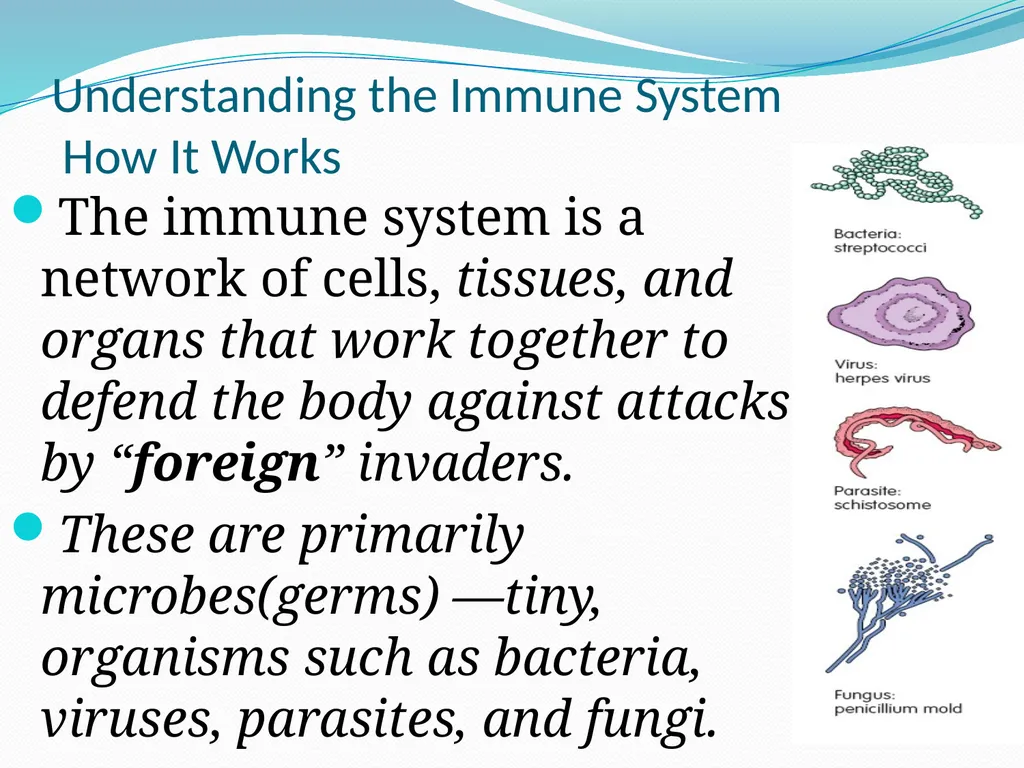
How It Works The immune system is a network of cells, tissues, and organs that work together to defend the body against attacks by “foreign” invaders.
These are primarily microbes(germs) —tiny, organisms such as bacteria, viruses, parasites, and fungi.<br>
These are primarily microbes(germs) —tiny, organisms such as bacteria, viruses, parasites, and fungi.<br>
12
Understanding the Immune System Because the human body provides an ideal environment for many microbes, they try to break in.
It is the immune system’s job to keep them out or, failing that, to seek out and destroy them.<br>
It is the immune system’s job to keep them out or, failing that, to seek out and destroy them.<br>
13
Understanding the Immune System
How It Works. Cont’d The immune system is amazingly complex.
It can recognize and remember millions of different enemies, and it can produce secretions and cells to match up with and wipe out each one of them.<br>
It can recognize and remember millions of different enemies, and it can produce secretions and cells to match up with and wipe out each one of them.<br>
14
Understanding the Immune System
How It Works. Cont’d The secret to its success is an elaborate and dynamic communications network.
When the immune system hits the wrong target or is crippled, however, it can unleash multiple reactions or diseases, including allergy, arthritis, or AIDs.<br>
When the immune system hits the wrong target or is crippled, however, it can unleash multiple reactions or diseases, including allergy, arthritis, or AIDs.<br>
15
Understanding the Immune System
How It Works Once immune cells receive the alarm, they undergo tactical changes and begin to produce powerful chemicals.
These substances allow the cells to regulate their own growth and behavior, enlist their fellows, and direct new recruits to trouble spots.<br>
These substances allow the cells to regulate their own growth and behavior, enlist their fellows, and direct new recruits to trouble spots.<br>
16
Understanding the Immune System: How It Works
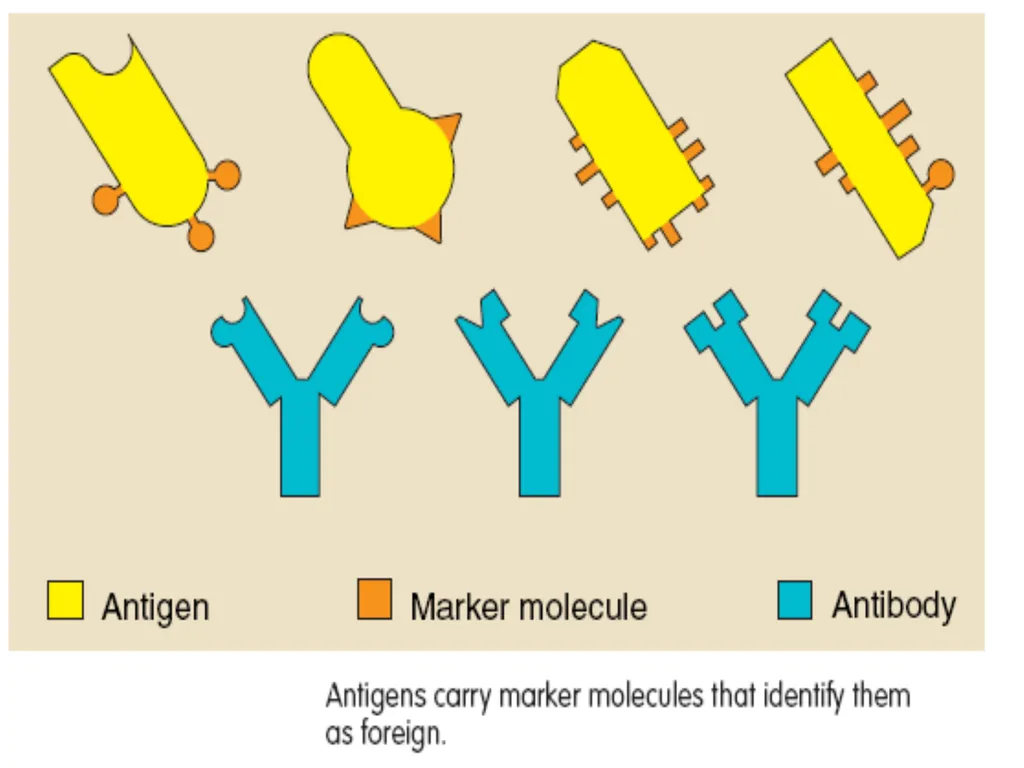
Self and None self The key to a healthy immune system is its remarkable ability to distinguish between the body’s own cells—self—and foreign cells—nonself.
The body’s immune defenses normally coexist peacefully with cells that carry distinctive “self” marker molecules.
But when immune defenders encounter cells or organisms carrying markers that say “foreign,” they quickly launch an attack.<br>
The body’s immune defenses normally coexist peacefully with cells that carry distinctive “self” marker molecules.
But when immune defenders encounter cells or organisms carrying markers that say “foreign,” they quickly launch an attack.<br>
17
Understanding the Immune System: How It Works Anything that can trigger this immune response is called an antigen.
An antigen can be a microbe such as a virus, or even a part of a microbe. Tissues or cells from another person (except an identical twin) also carry nonself markers and act as antigens.
This explains why tissue transplants may be rejected.<br>
An antigen can be a microbe such as a virus, or even a part of a microbe. Tissues or cells from another person (except an identical twin) also carry nonself markers and act as antigens.
This explains why tissue transplants may be rejected.<br>
18
Understanding the Immune System: How It Works In abnormal situations, the immune system can mistake self for nonself , and launch an attack against the body’s own cells or tissues.
The result is called an autoimmune disease. Some forms of arthritis and diabetes are autoimmune diseases.
In other cases, the immune system responds to a seemingly harmless foreign substance such as ragweed pollen. The result is allergy, and this kind of antigen is called an allergen.<br>
The result is called an autoimmune disease. Some forms of arthritis and diabetes are autoimmune diseases.
In other cases, the immune system responds to a seemingly harmless foreign substance such as ragweed pollen. The result is allergy, and this kind of antigen is called an allergen.<br>
19
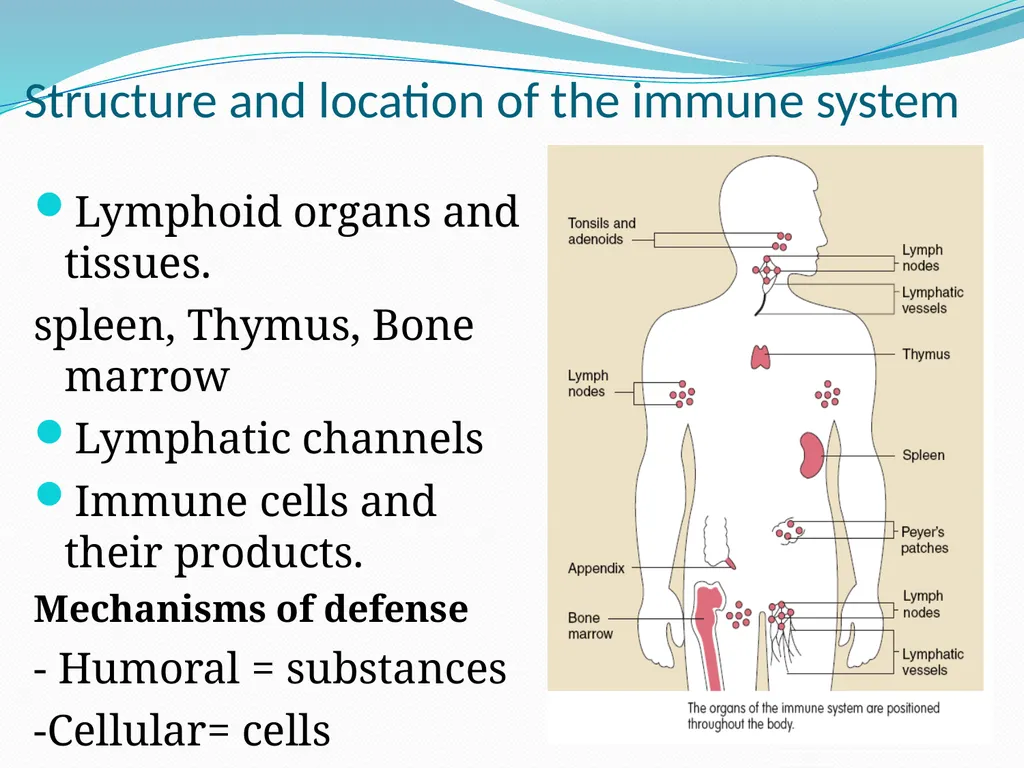
Structure and location of the immune system Lymphoid organs and tissues.
spleen, Thymus, Bone marrow
Lymphatic channels
Immune cells and their products.
Mechanisms of defense
- Humoral = substances
-Cellular= cells<br>
spleen, Thymus, Bone marrow
Lymphatic channels
Immune cells and their products.
Mechanisms of defense
- Humoral = substances
-Cellular= cells<br>
20
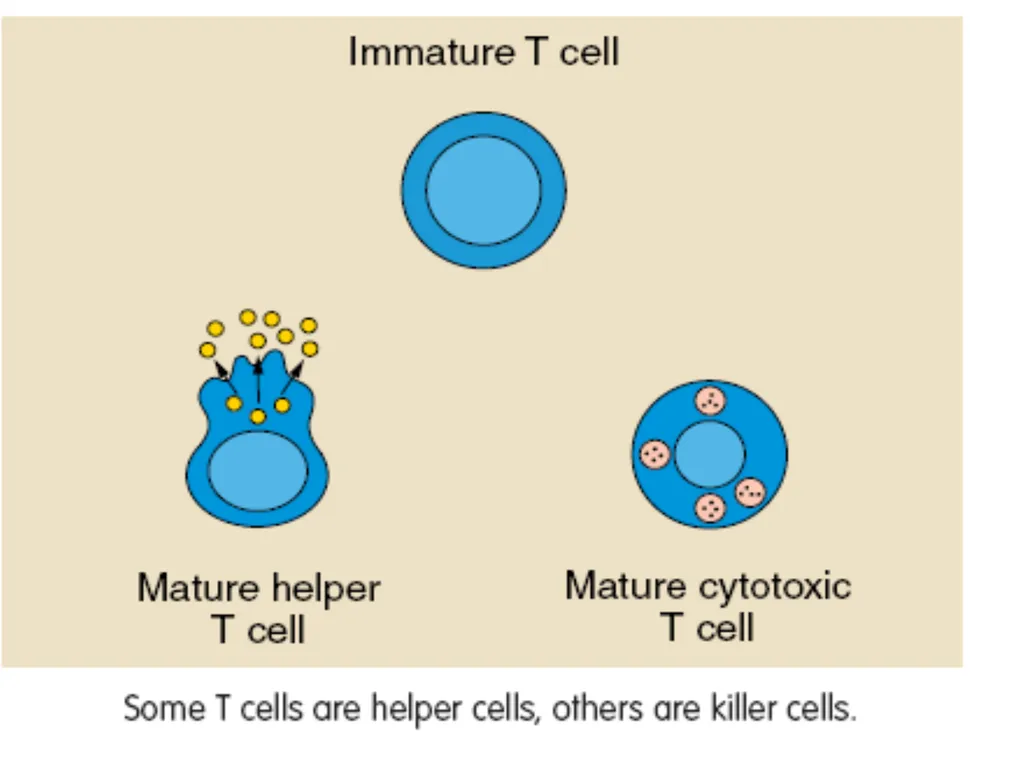
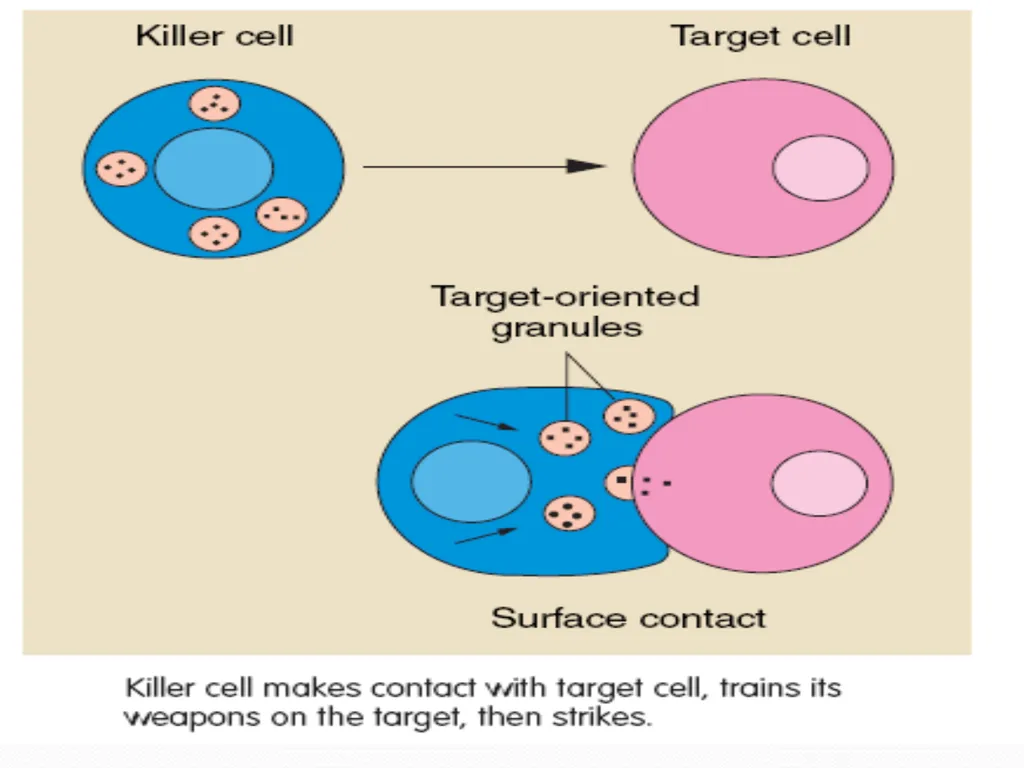
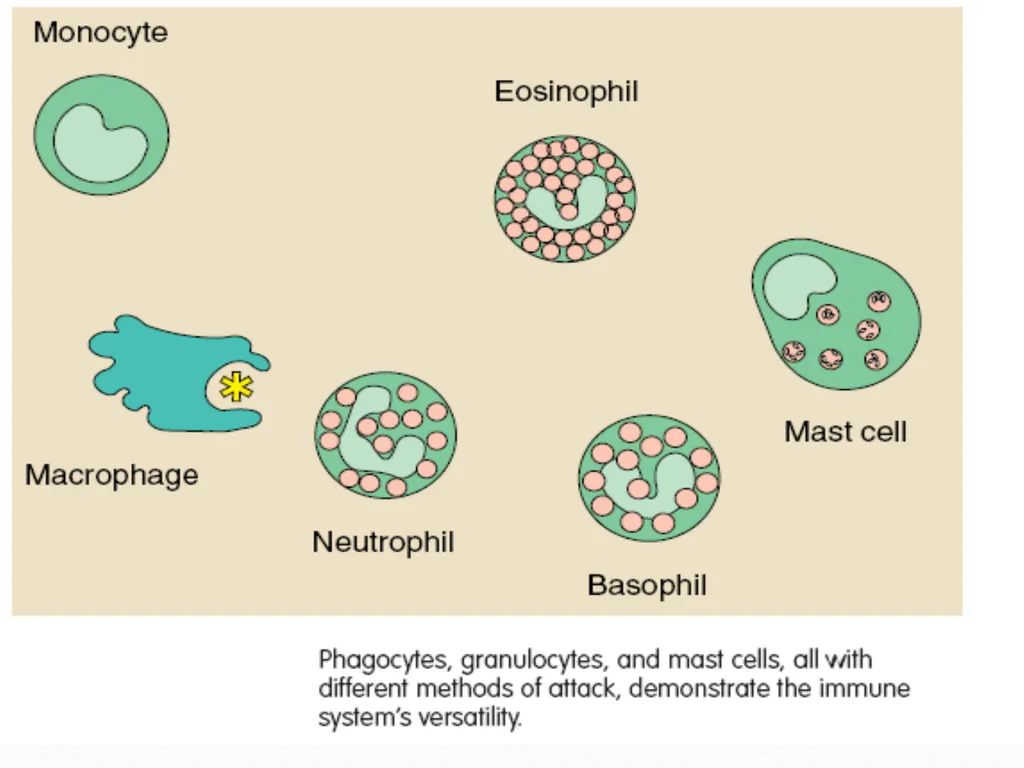
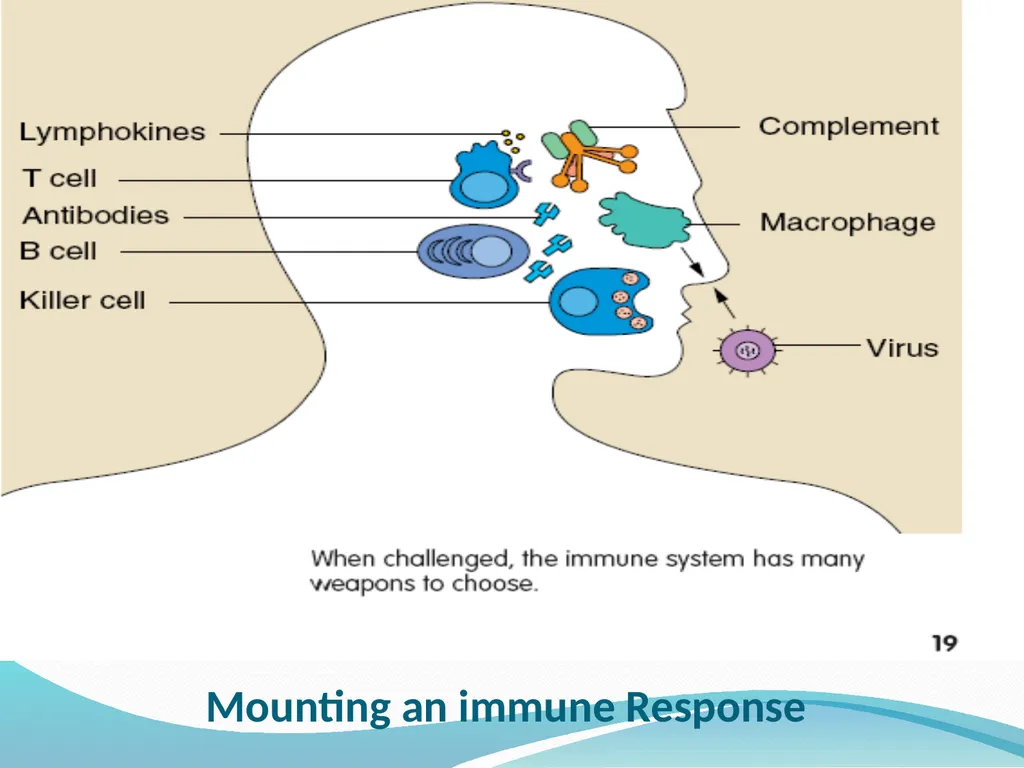
Immune Cells and Their Products The immune system has a huge arsenal of cells, so called lymphocytes, phagocytes and their relatives.
Some immune cells take on all comers, while others are trained on highly specific targets.
Sometimes immune cells communicate by direct physical contact, sometimes by releasing chemical messengers.<br>
Some immune cells take on all comers, while others are trained on highly specific targets.
Sometimes immune cells communicate by direct physical contact, sometimes by releasing chemical messengers.<br>
21
Immune Cells and Their Products The immune system stores just a few of each kind of the different cells needed to recognize millions of possible enemies.
When an antigen appears, those few matching cells multiply into a full-scale army.
After their job is done, they fade away, leaving sentries behind to watch for future attacks.<br>
When an antigen appears, those few matching cells multiply into a full-scale army.
After their job is done, they fade away, leaving sentries behind to watch for future attacks.<br>
22
Immune Cells and Their Products All immune cells begin as immature stem cells in the bone marrow.
They respond to different cytokines and other signals to grow into specific immune cell types, such as T cells, B cells, or phagocytes.
Researchers currently are investigating if a person’s own stem cells can be used to regenerate damaged immune responses in autoimmune diseases and immune deficiency diseases.<br>
They respond to different cytokines and other signals to grow into specific immune cell types, such as T cells, B cells, or phagocytes.
Researchers currently are investigating if a person’s own stem cells can be used to regenerate damaged immune responses in autoimmune diseases and immune deficiency diseases.<br>
23
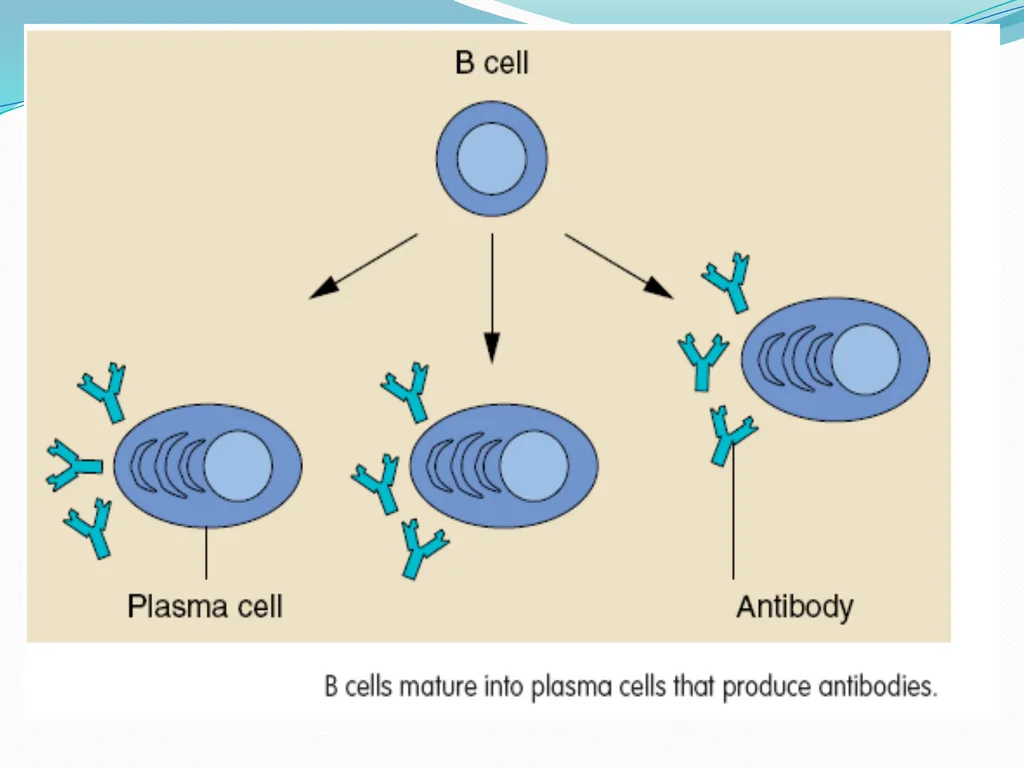
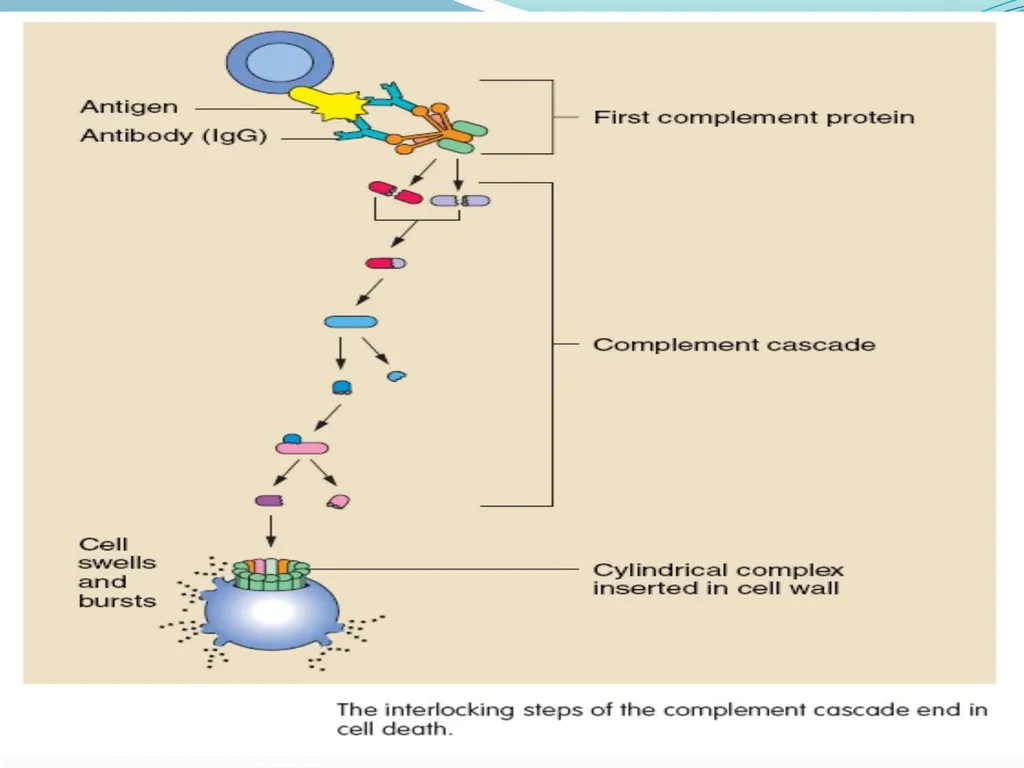
Antibodies: Immunoglobulins substances and products of the immune cells.
They travel in blood
recognize foreign particles so these can be neutralized.
They do not destroy cells<br>
They travel in blood
recognize foreign particles so these can be neutralized.
They do not destroy cells<br>
24
Mounting an immune Response<br>
25
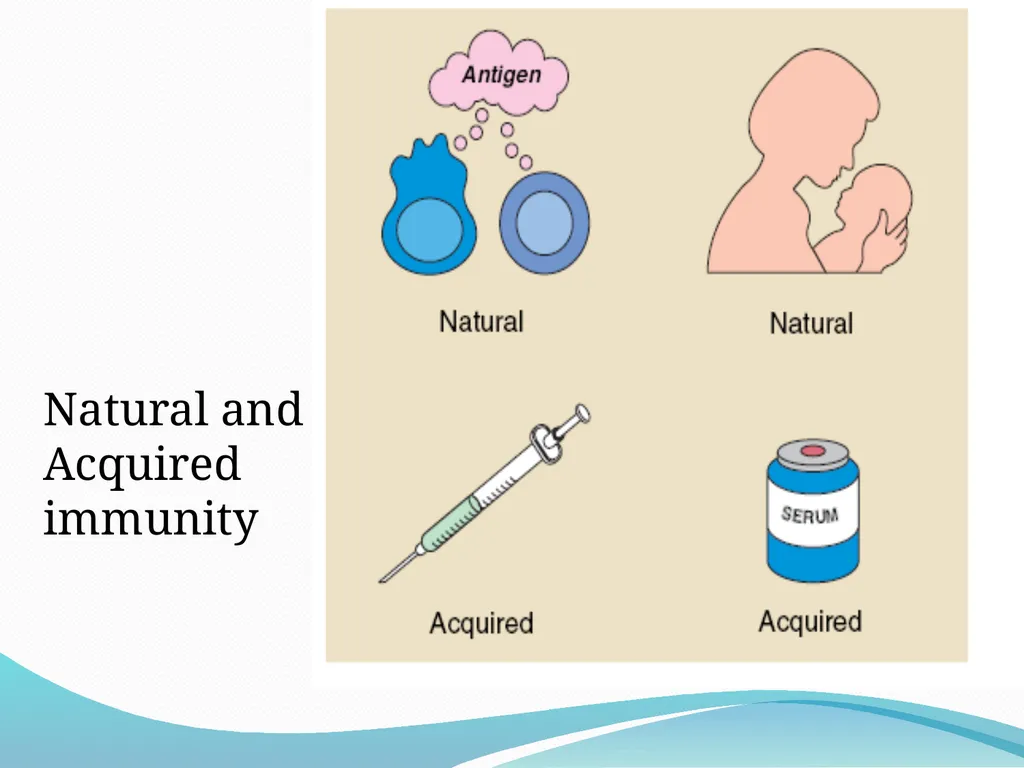
Natural and Acquired immunity<br>
26
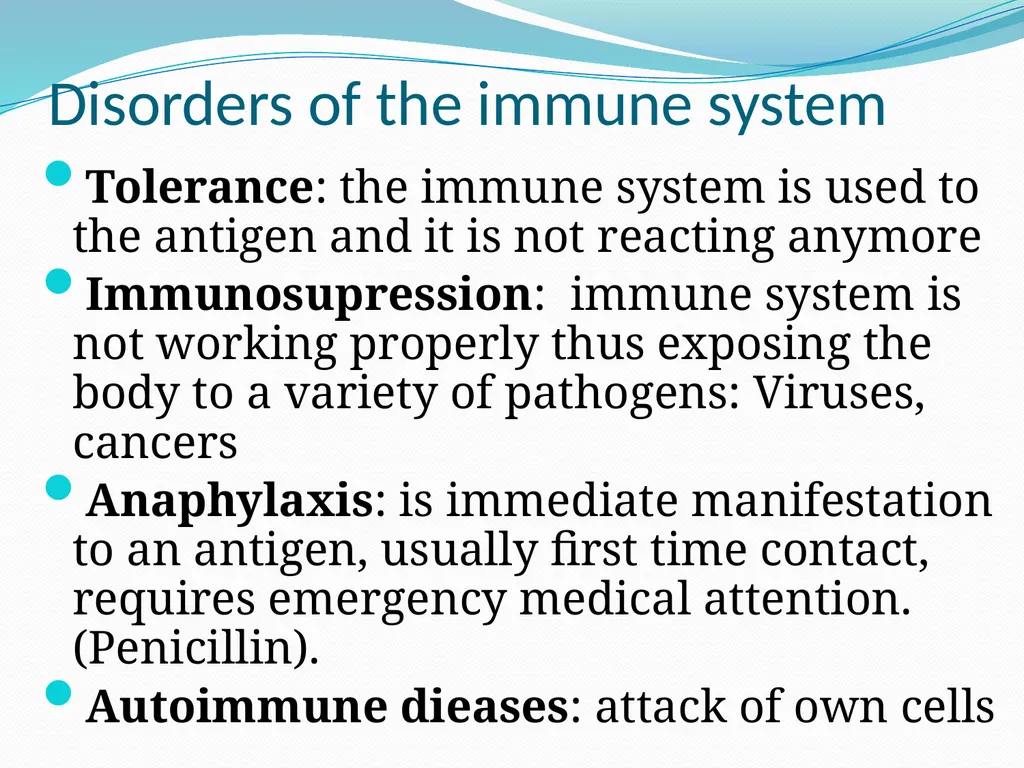
Disorders of the immune system Tolerance: the immune system is used to the antigen and it is not reacting anymore
Immunosupression: immune system is not working properly thus exposing the body to a variety of pathogens: Viruses, cancers
Anaphylaxis: is immediate manifestation to an antigen, usually first time contact, requires emergency medical attention.(Penicillin).
Autoimmune dieases: attack of own cells<br>
Immunosupression: immune system is not working properly thus exposing the body to a variety of pathogens: Viruses, cancers
Anaphylaxis: is immediate manifestation to an antigen, usually first time contact, requires emergency medical attention.(Penicillin).
Autoimmune dieases: attack of own cells<br>
27
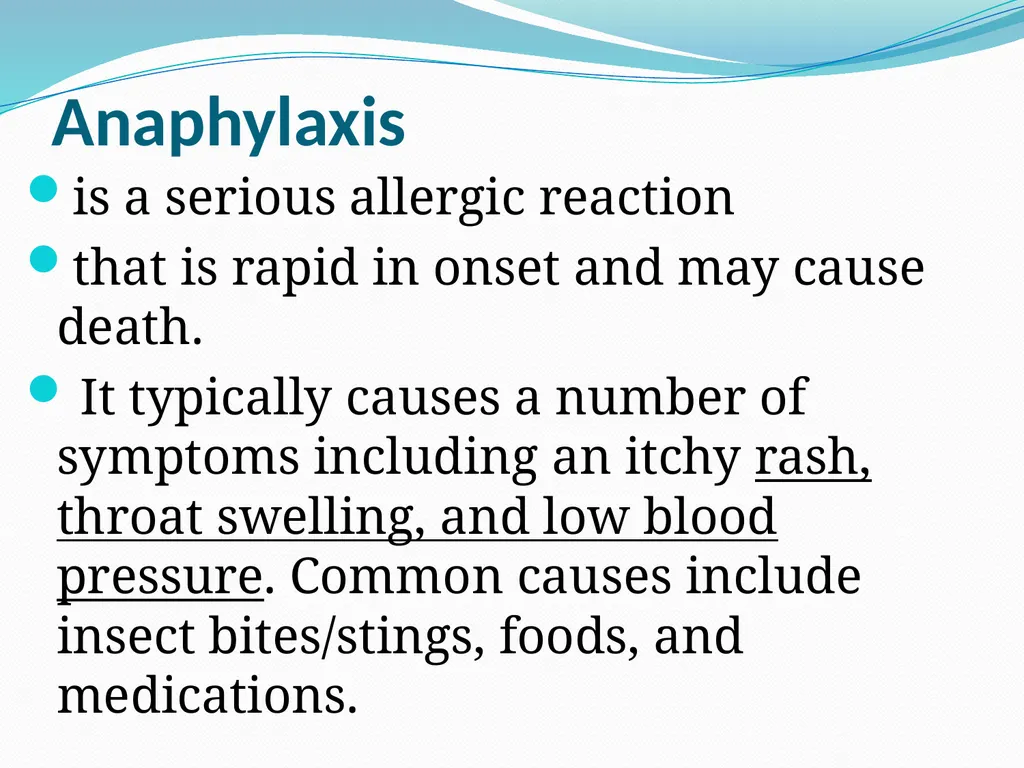
Anaphylaxis is a serious allergic reaction
that is rapid in onset and may cause death.
It typically causes a number of symptoms including an itchy rash, throat swelling, and low blood pressure. Common causes include insect bites/stings, foods, and medications.<br>
that is rapid in onset and may cause death.
It typically causes a number of symptoms including an itchy rash, throat swelling, and low blood pressure. Common causes include insect bites/stings, foods, and medications.<br>
28
Effect of Nutrition on the Immune Response Both under and over nutrition are associated with an increased incidence of infections, illness and altered immune responses.
Changes in diet might modify the host's ability to withstand certain diseases.<br>
Changes in diet might modify the host's ability to withstand certain diseases.<br>
29
Effect of Aging on the Immune Response The immune system changes with age. The increased susceptibility of elderly people to infectious and neoplastic (cancer) disease may be a consequence of immune senescence.(weaker immune system).
Autoimmune diseases become more common with advancing age.<br>
Autoimmune diseases become more common with advancing age.<br>
30
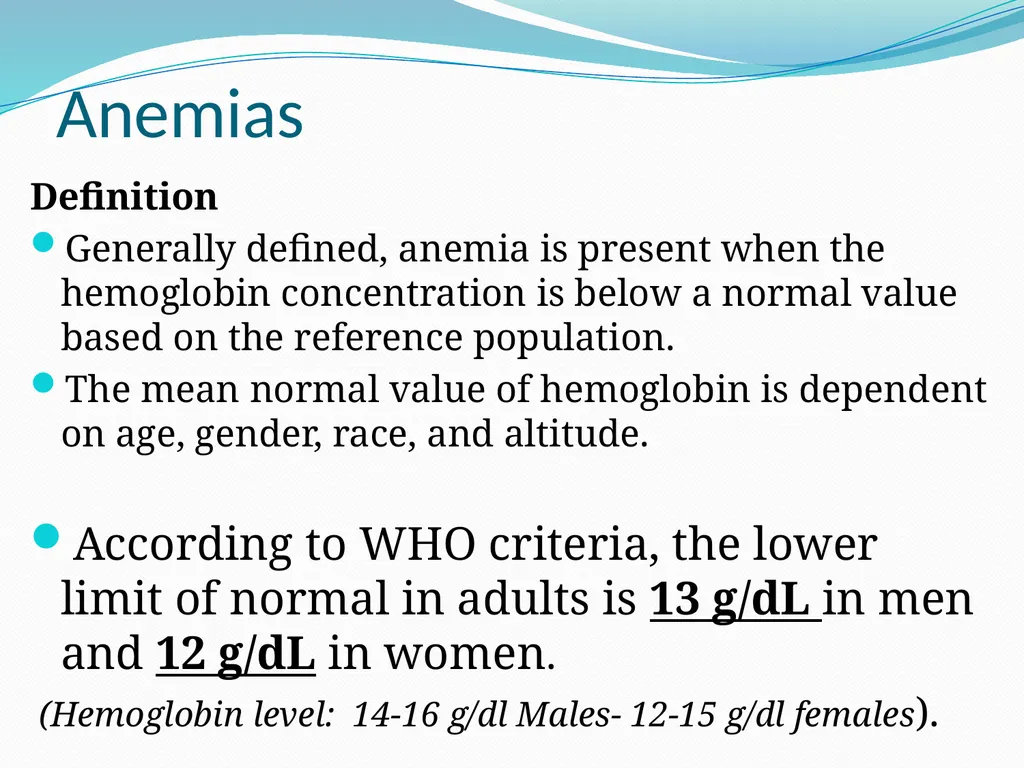
Anemias Definition
Generally defined, anemia is present when the hemoglobin concentration is below a normal value based on the reference population.
The mean normal value of hemoglobin is dependent on age, gender, race, and altitude.
According to WHO criteria, the lower limit of normal in adults is 13 g/dL in men and 12 g/dL in women.
(Hemoglobin level: 14-16 g/dl Males- 12-15 g/dl females).<br>
Generally defined, anemia is present when the hemoglobin concentration is below a normal value based on the reference population.
The mean normal value of hemoglobin is dependent on age, gender, race, and altitude.
According to WHO criteria, the lower limit of normal in adults is 13 g/dL in men and 12 g/dL in women.
(Hemoglobin level: 14-16 g/dl Males- 12-15 g/dl females).<br>
31
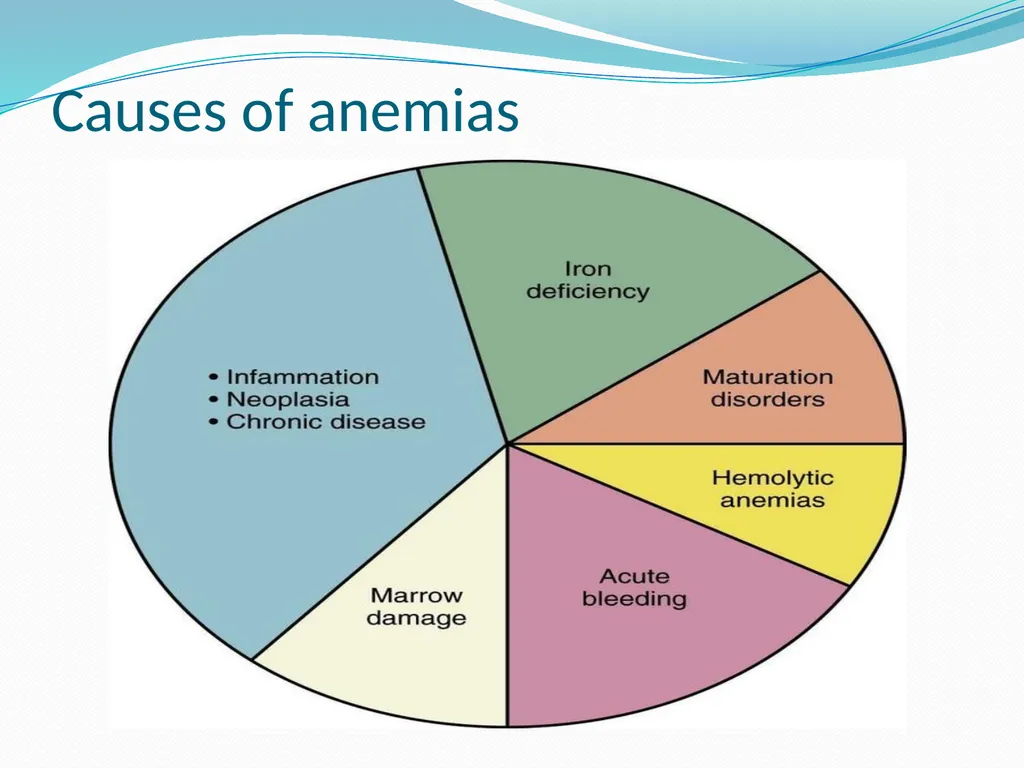
What Causes Anemia? There are more than 400 types of anemia, which are divided into three groups:
1- Anemia caused by blood loss
2- Anemia caused by decreased or faulty red blood cell production.
3- Anemia caused by destruction of red blood cells<br>
1- Anemia caused by blood loss
2- Anemia caused by decreased or faulty red blood cell production.
3- Anemia caused by destruction of red blood cells<br>
32
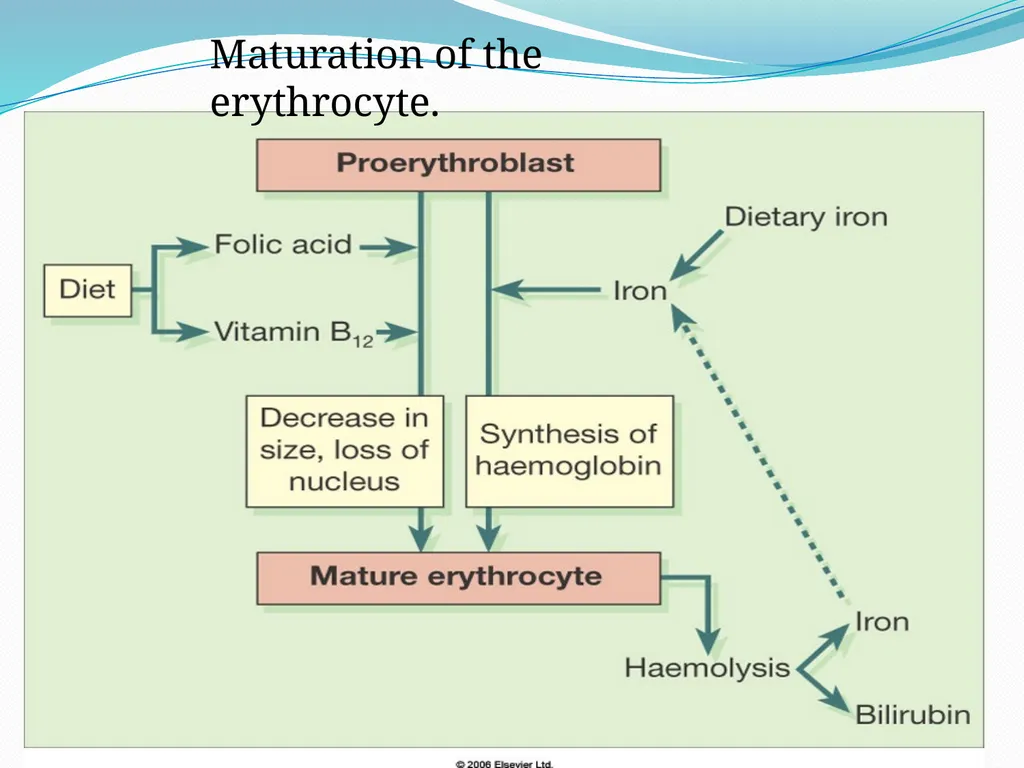
Maturation of the erythrocyte.<br>
33
Causes of anemias<br>
34
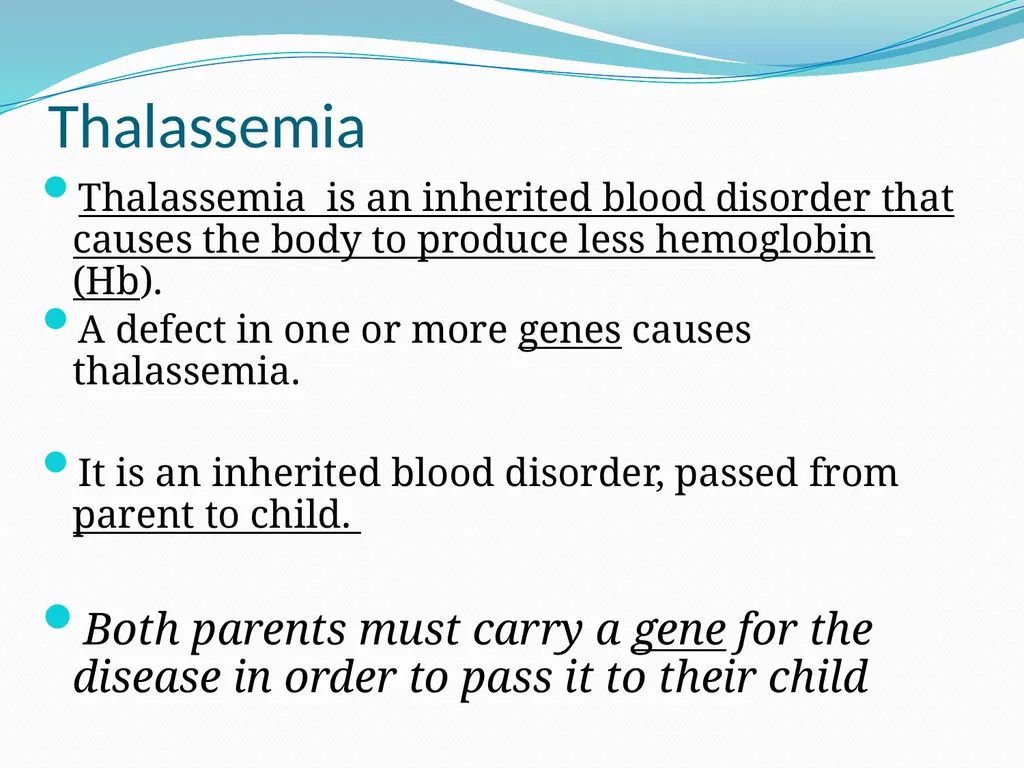
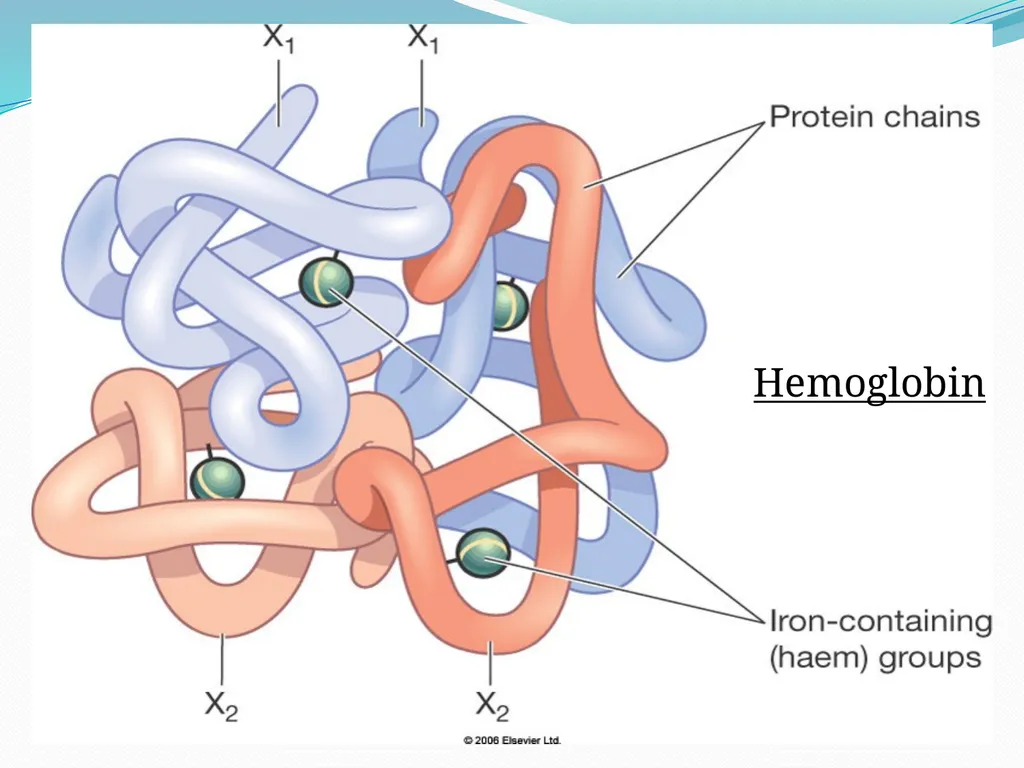
Thalassemia Thalassemia is an inherited blood disorder that causes the body to produce less hemoglobin (Hb).
A defect in one or more genes causes thalassemia.
It is an inherited blood disorder, passed from parent to child.
Both parents must carry a gene for the disease in order to pass it to their child<br>
A defect in one or more genes causes thalassemia.
It is an inherited blood disorder, passed from parent to child.
Both parents must carry a gene for the disease in order to pass it to their child<br>
35
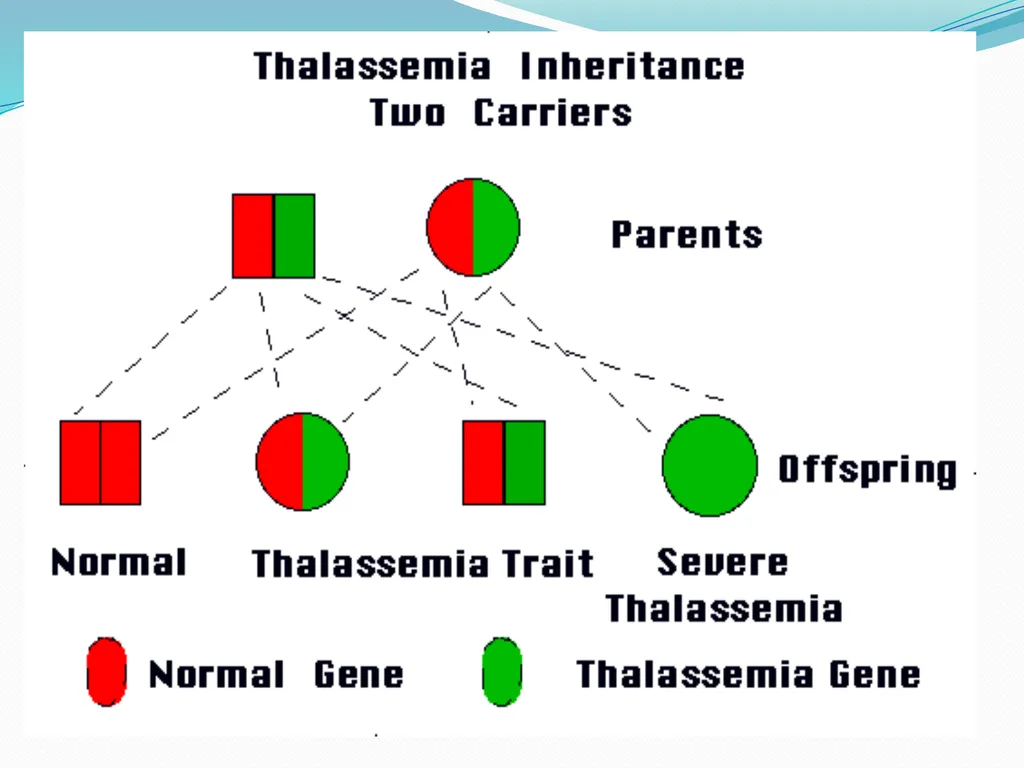
Thalassemia: mode of inheritance
β-thalassemias are inherited in an autosomal recessive manner<br>
36
Hemoglobin<br>
37
What are the types of thalassemia? Alpha thalassemia and beta thalassemia are the two main types of the disease.
Beta is the most common form.
A "carrier" has one normal gene and one thalassemia gene in all body cells, a state sometimes called "thalassemia trait."
Most carriers lead completely normal, healthy lives.<br>
Beta is the most common form.
A "carrier" has one normal gene and one thalassemia gene in all body cells, a state sometimes called "thalassemia trait."
Most carriers lead completely normal, healthy lives.<br>
38
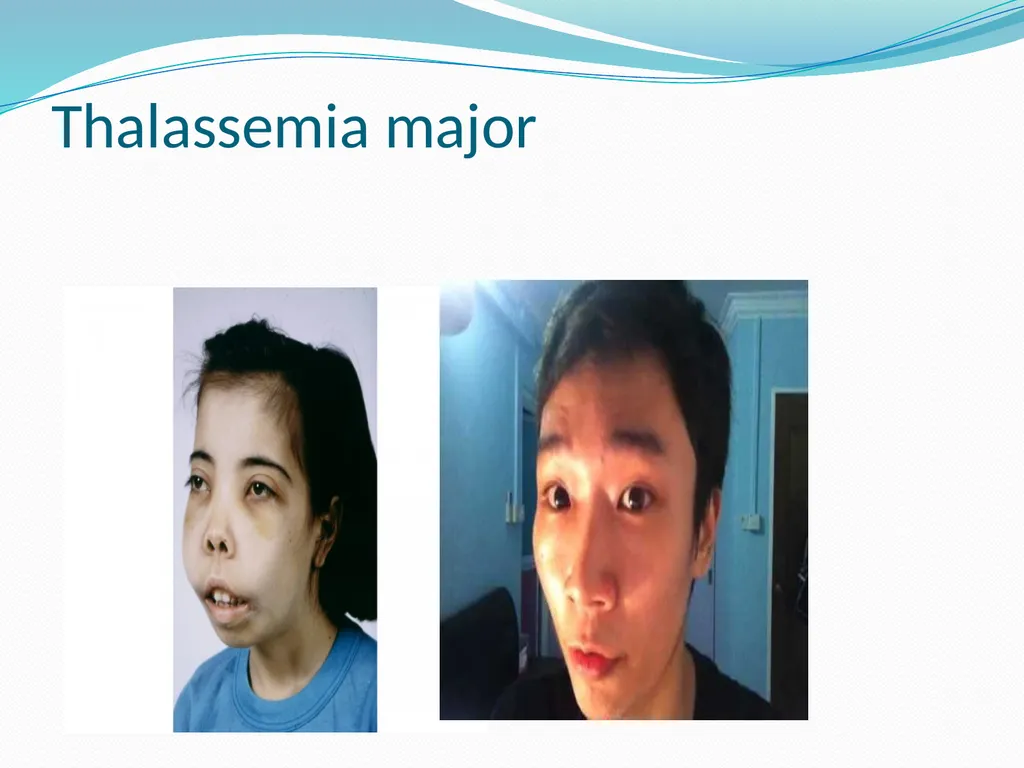
What are the types of thalassemia? Cont’d beta thalassemia intermedia, need some blood transfusions: moderate anemia.
-People who have beta thalassemia intermedia usually live into adulthood.
beta thalassemia major or Cooley's anemia, usually will not live into adulthood without continuous treatment.
Symptoms of anemia usually develop within 6 months of birth. Death is usually a result of damage to organs, such as the heart or liver.<br>
-People who have beta thalassemia intermedia usually live into adulthood.
beta thalassemia major or Cooley's anemia, usually will not live into adulthood without continuous treatment.
Symptoms of anemia usually develop within 6 months of birth. Death is usually a result of damage to organs, such as the heart or liver.<br>
39
What are the symptoms? Weakness.
Fatigue.
Lightheadedness.
Skin that looks paler than normal.
Jaundice (skin and whites of the eyes appear yellow).
Dark urine.
Decreased appetite and weight loss (poor growth in a child).
A rapid heartbeat.
Shortness of breath during exercise<br>
Fatigue.
Lightheadedness.
Skin that looks paler than normal.
Jaundice (skin and whites of the eyes appear yellow).
Dark urine.
Decreased appetite and weight loss (poor growth in a child).
A rapid heartbeat.
Shortness of breath during exercise<br>
40
Thalassemia major<br>
41
How is thalassemia diagnosed? A physical exam and complete medical history are usually the first steps in diagnosing thalassemia.
Tests that help confirm a diagnosis of thalassemia include:
Complete blood count(CBC) and blood smear.
Gene test.
Iron level test
A complete blood count (CBC) test on other members of your family (parents and siblings), to discover whether they may also have thalassemia.<br>
Tests that help confirm a diagnosis of thalassemia include:
Complete blood count(CBC) and blood smear.
Gene test.
Iron level test
A complete blood count (CBC) test on other members of your family (parents and siblings), to discover whether they may also have thalassemia.<br>
42
Thalassemia: Concluding remarks Premarital testing can identify thalassemia traits or carriers.
Women with thalasemia who wish to become pregnant should have a genetic counseling about the risk of disease transmission.
Thalassemia is not a contagious disease<br>
Women with thalasemia who wish to become pregnant should have a genetic counseling about the risk of disease transmission.
Thalassemia is not a contagious disease<br>
43
References U.S. DEPARTMENT OF HEALTH AND HUMAN SERVICES. NATIONAL INSTITUTES OF HEALTH.
National Institute of Allergy and Infectious Diseases
National Cancer Institute
NIH Publication No. 03-5423 September 2003 www.niaid.nih.gov www.nci.nih.gov
Merck’s manual, Home edition
Harrison ,textbook of medicine
www.WebMed.com<br>
National Institute of Allergy and Infectious Diseases
National Cancer Institute
NIH Publication No. 03-5423 September 2003 www.niaid.nih.gov www.nci.nih.gov
Merck’s manual, Home edition
Harrison ,textbook of medicine
www.WebMed.com<br>