
Disaster Risk Reduction and Climate Change

Description: Disaster Risk Reduction and Climate Change Adaptation in Koshi River Basin Nepal Laxmi Devkota Principal Investigator NDRI Project Brief Funded by: Climate and Development Knowledge Network (CDKN) and Global Change SysTem for Analysis,
Related Topics
Download Presentation
"Disaster Risk Reduction and Climate Change" is the property of its rightful owner. Permission is granted to download and print the materials on this website for personal, non-commercial use only, and to display it on your personal computer provided you do not modify the materials and that you retain all copyright notices contained in the materials. By downloading content from our website, you accept the terms of this agreement.
Presentation Transcript
slide1. Disaster Risk Reduction and Climate Change Adaptation in Koshi River Basin Nepal Laxmi Devkota
Principal Investigator
NDRI<br>
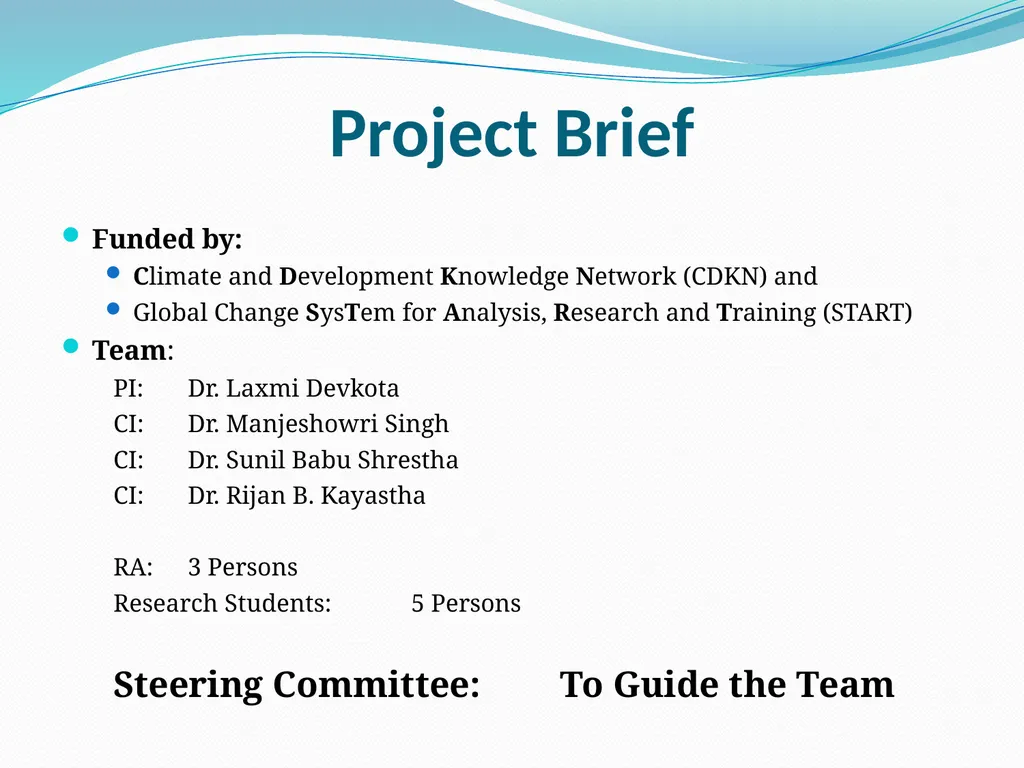
slide2. Project Brief Funded by:
Climate and Development Knowledge Network (CDKN) and
Global Change SysTem for Analysis, Research and Training (START)
Team:
PI: Dr. Laxmi Devkota
CI: Dr. Manjeshowri Singh
CI: Dr. Sunil Babu Shrestha
CI: Dr. Rijan B. Kayastha
RA: 3 Persons
Research Students: 5 Persons
Steering Committee: To Guide the Team<br>
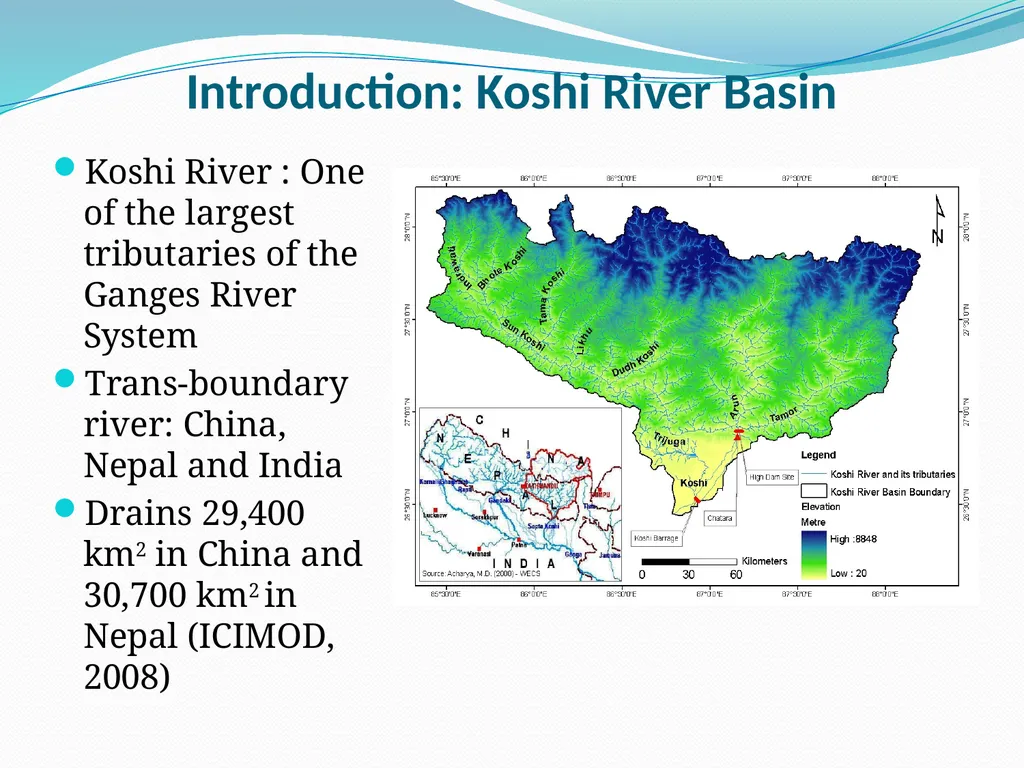
slide3. Introduction: Koshi River Basin Koshi River : One of the largest tributaries of the Ganges River System
Trans-boundary river: China, Nepal and India
Drains 29,400 km2 in China and 30,700 km2 in Nepal (ICIMOD, 2008)<br>
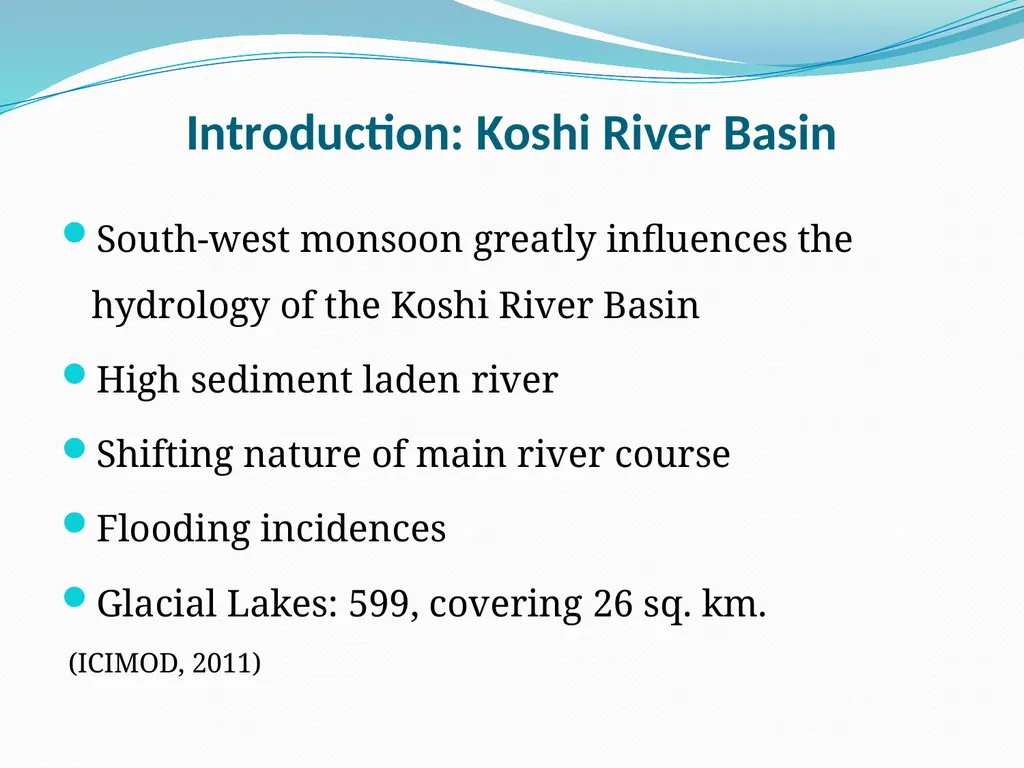
slide4. Introduction: Koshi River Basin South-west monsoon greatly influences the hydrology of the Koshi River Basin
High sediment laden river
Shifting nature of main river course
Flooding incidences
Glacial Lakes: 599, covering 26 sq. km.
(ICIMOD, 2011)<br>
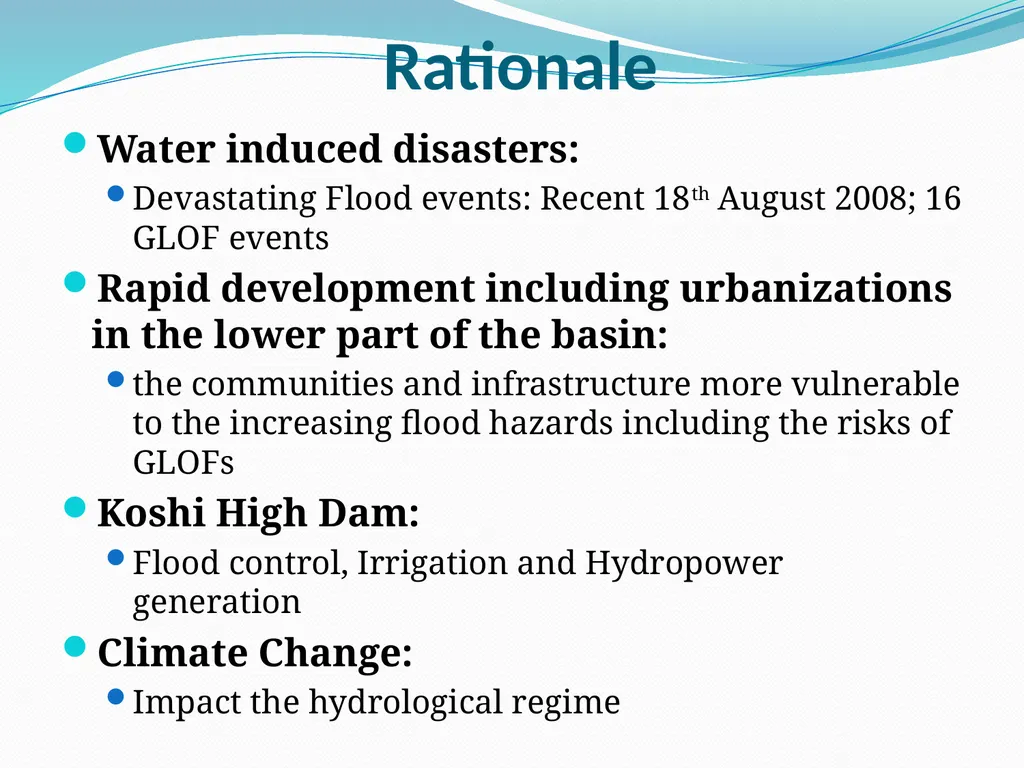
slide5. Rationale Water induced disasters:
Devastating Flood events: Recent 18th August 2008; 16 GLOF events
Rapid development including urbanizations in the lower part of the basin:
the communities and infrastructure more vulnerable to the increasing flood hazards including the risks of GLOFs
Koshi High Dam:
Flood control, Irrigation and Hydropower generation
Climate Change:
Impact the hydrological regime<br>
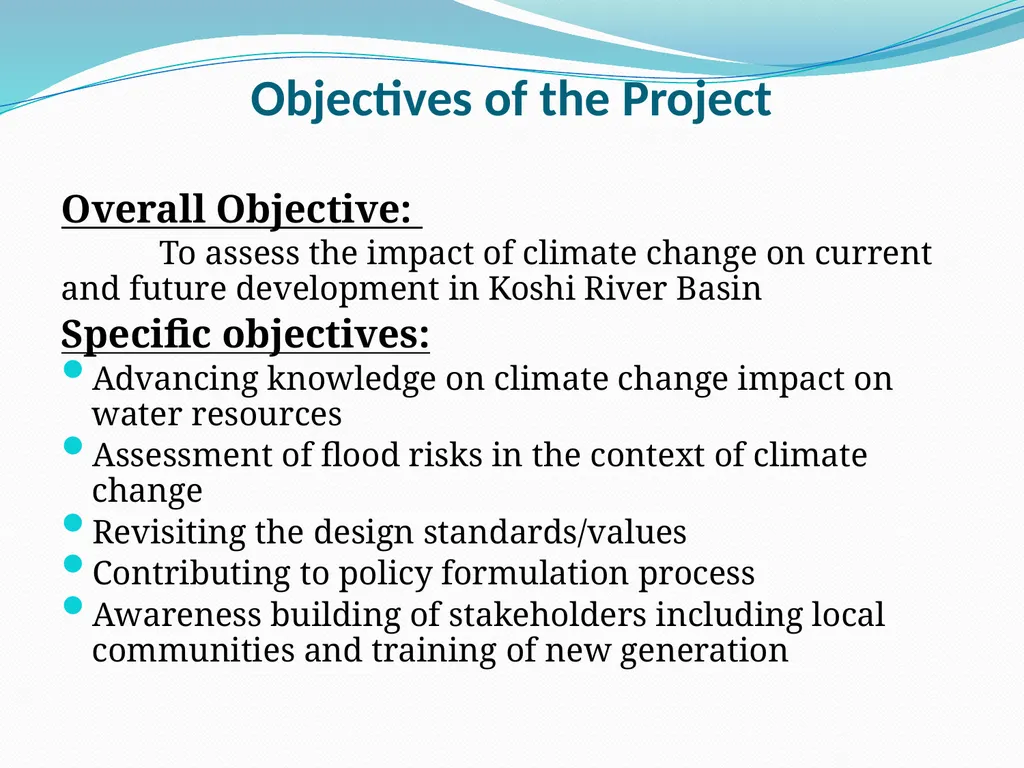
slide6. Objectives of the Project Overall Objective:
To assess the impact of climate change on current and future development in Koshi River Basin
Specific objectives:
Advancing knowledge on climate change impact on water resources
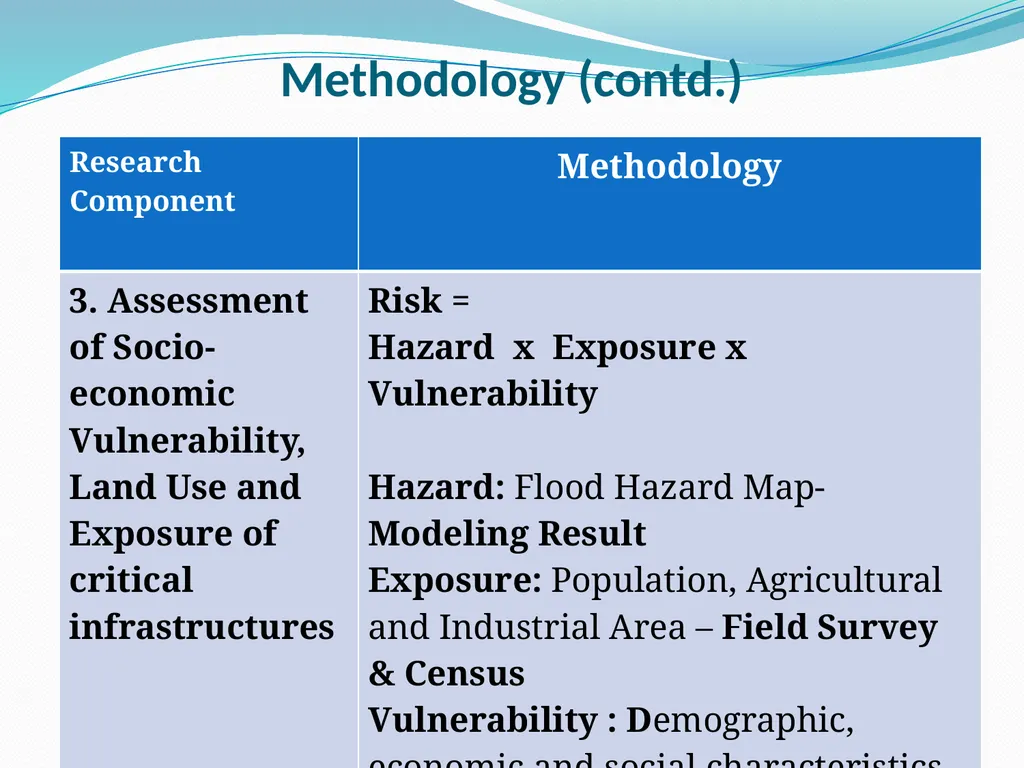
Assessment of flood risks in the context of climate change
Revisiting the design standards/values
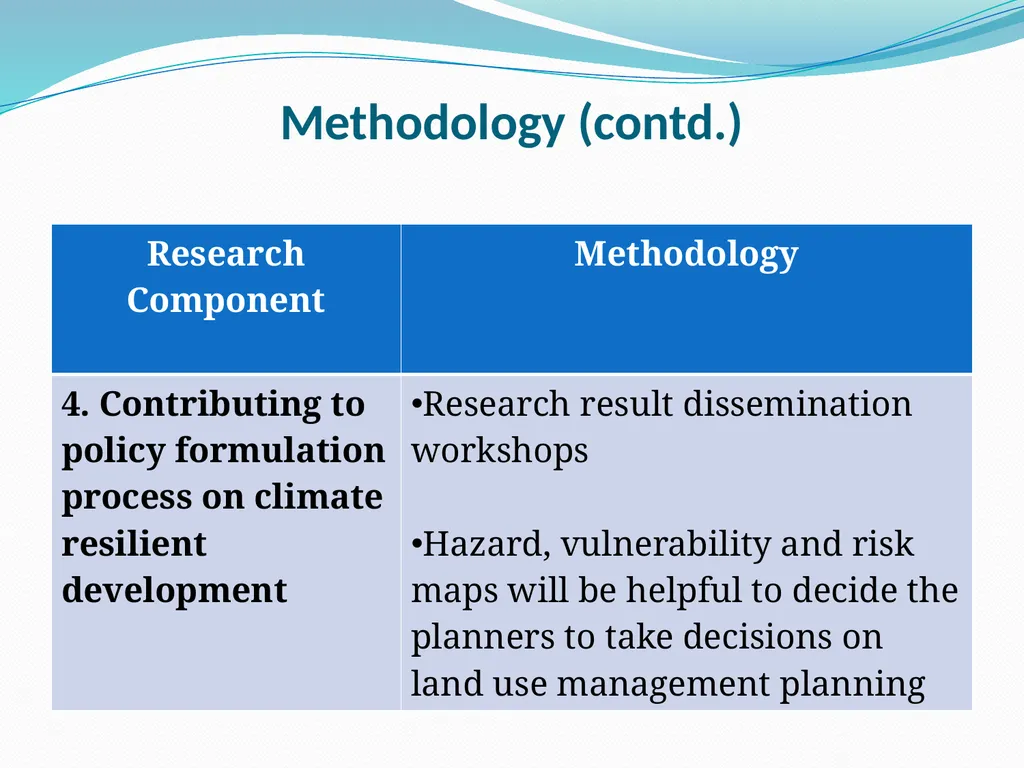
Contributing to policy formulation process
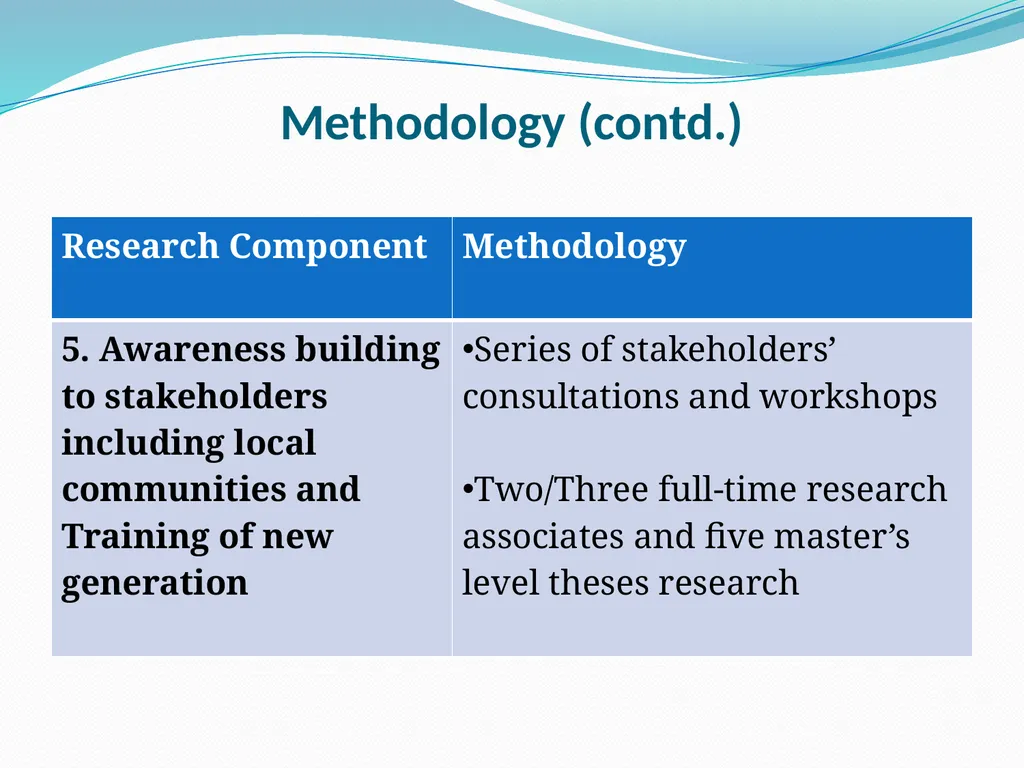
Awareness building of stakeholders including local communities and training of new generation<br>
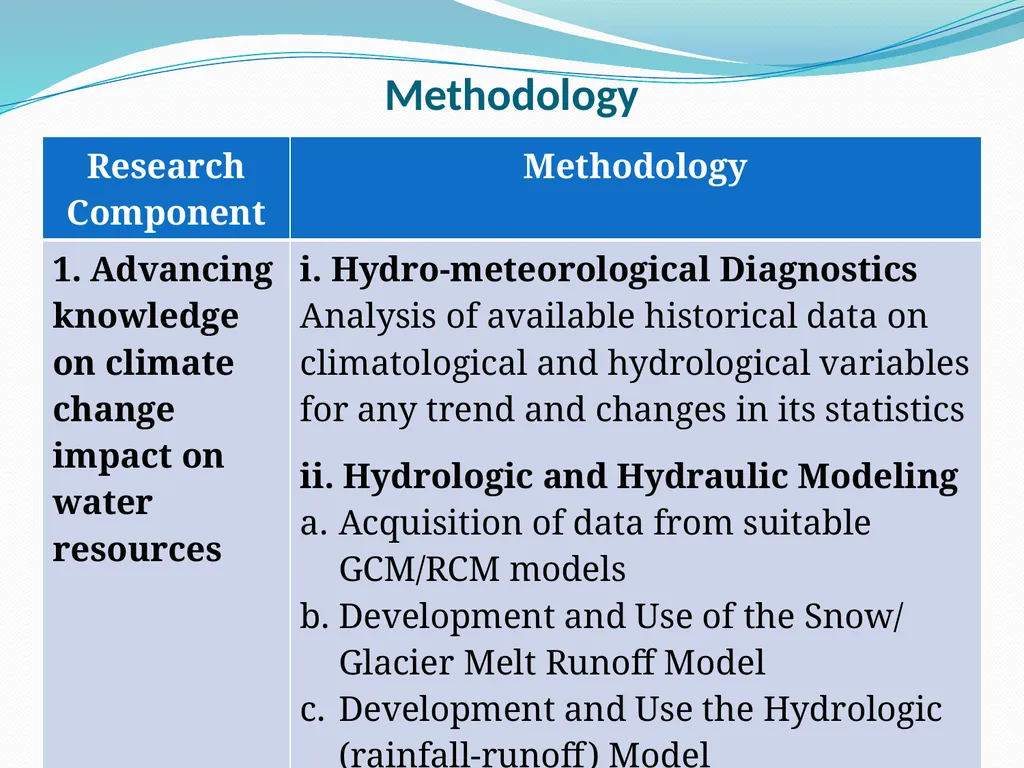
slide7. Methodology<br>
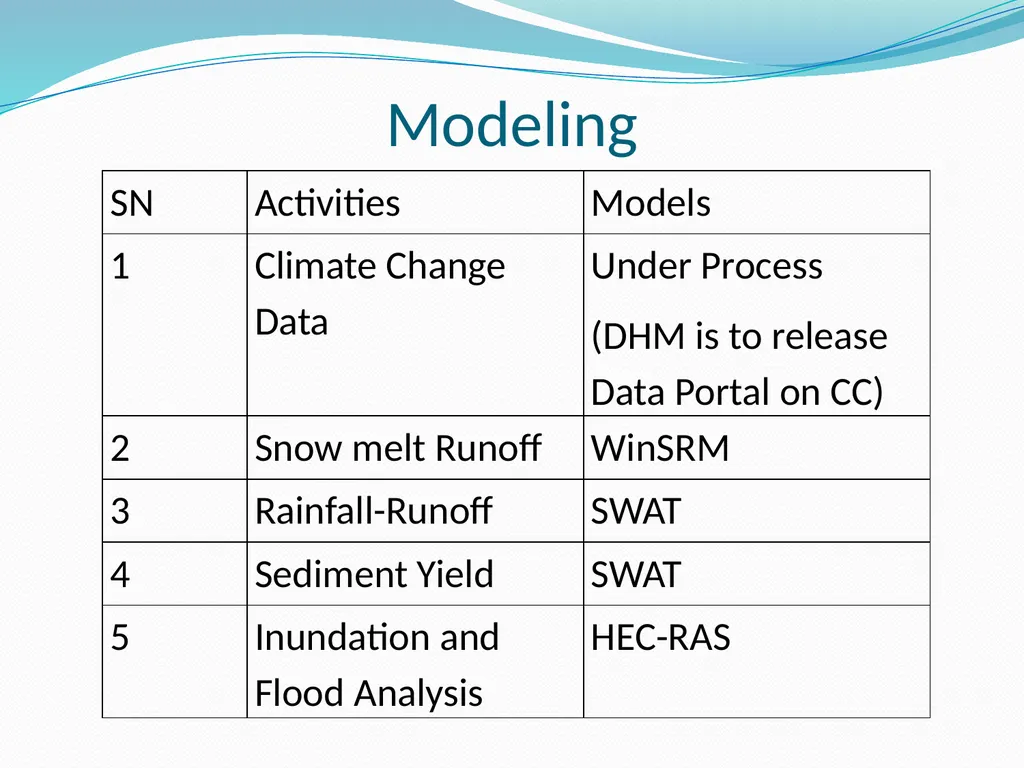
slide8. Modeling<br>
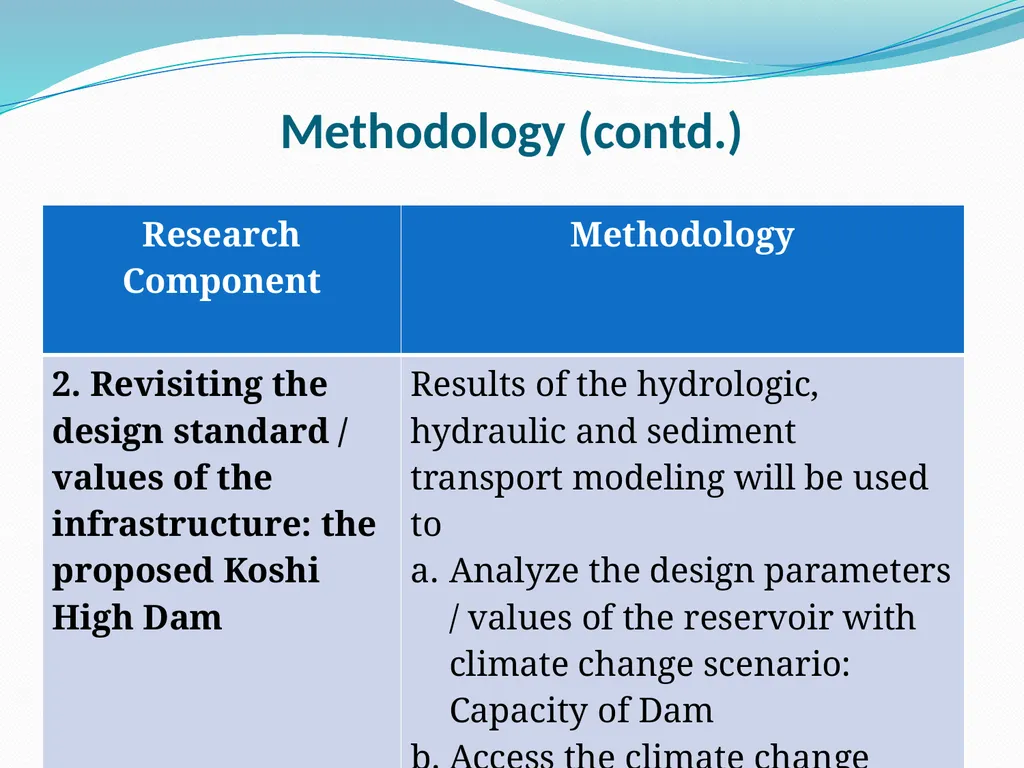
slide9. Methodology (contd.)<br>
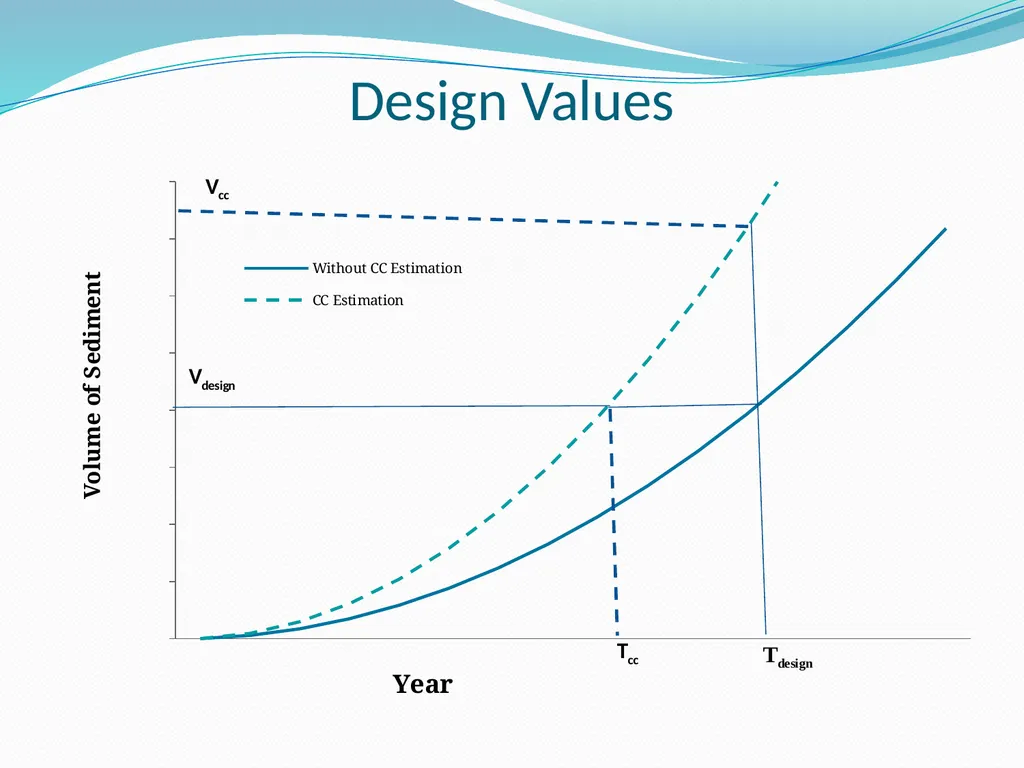
slide10. Design Values<br>
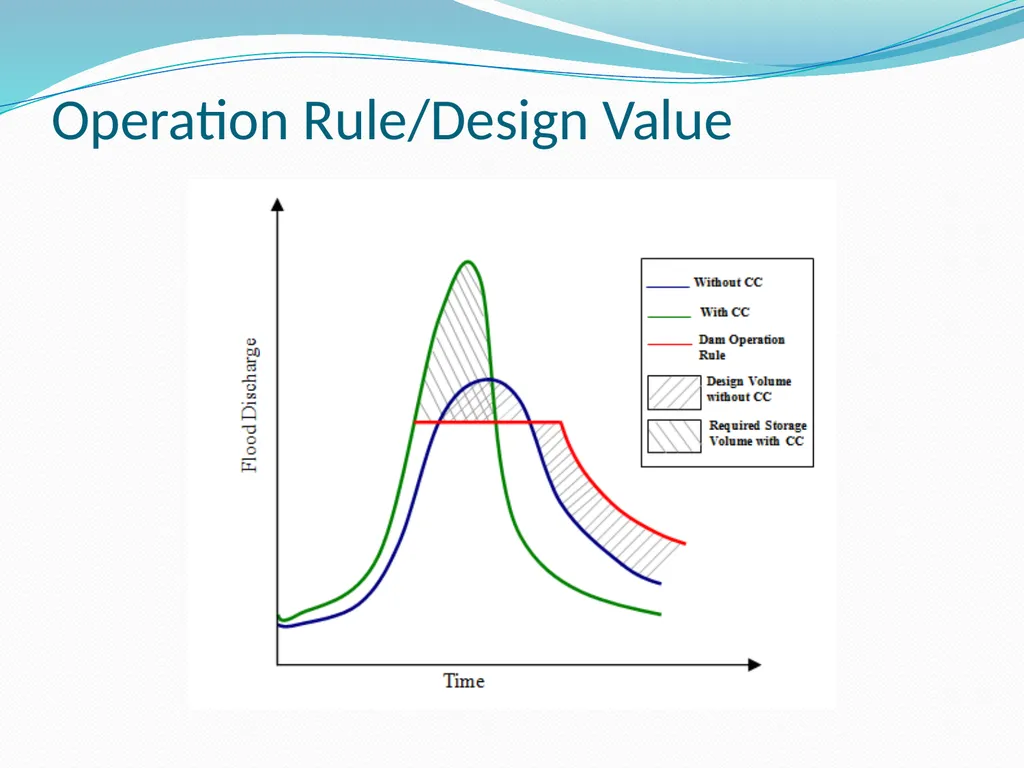
slide11. Operation Rule/Design Value<br>
slide12. Methodology (contd.)<br>
slide13. Methodology (contd.)<br>
slide14. Methodology (contd.)<br>
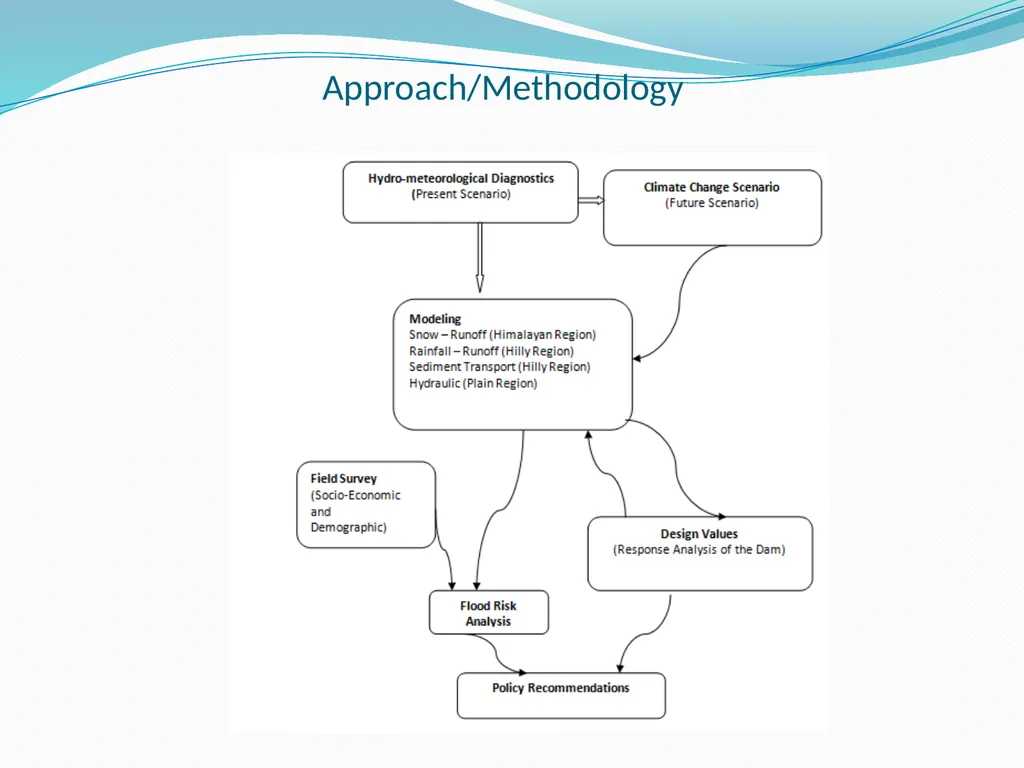
slide15. Approach/Methodology<br>
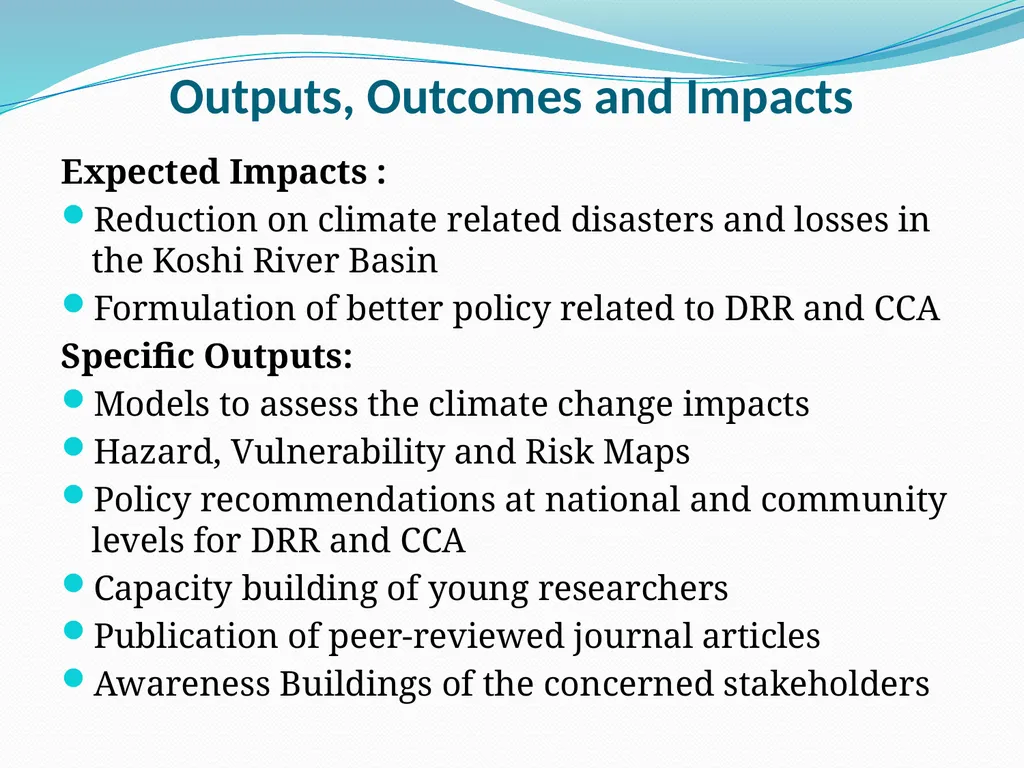
slide16. Outputs, Outcomes and Impacts Expected Impacts :
Reduction on climate related disasters and losses in the Koshi River Basin
Formulation of better policy related to DRR and CCA
Specific Outputs:
Models to assess the climate change impacts
Hazard, Vulnerability and Risk Maps
Policy recommendations at national and community levels for DRR and CCA
Capacity building of young researchers
Publication of peer-reviewed journal articles
Awareness Buildings of the concerned stakeholders<br>
slide17. Thank You Very Much !<br>
Principal Investigator
NDRI<br>
slide2. Project Brief Funded by:
Climate and Development Knowledge Network (CDKN) and
Global Change SysTem for Analysis, Research and Training (START)
Team:
PI: Dr. Laxmi Devkota
CI: Dr. Manjeshowri Singh
CI: Dr. Sunil Babu Shrestha
CI: Dr. Rijan B. Kayastha
RA: 3 Persons
Research Students: 5 Persons
Steering Committee: To Guide the Team<br>
slide3. Introduction: Koshi River Basin Koshi River : One of the largest tributaries of the Ganges River System
Trans-boundary river: China, Nepal and India
Drains 29,400 km2 in China and 30,700 km2 in Nepal (ICIMOD, 2008)<br>
slide4. Introduction: Koshi River Basin South-west monsoon greatly influences the hydrology of the Koshi River Basin
High sediment laden river
Shifting nature of main river course
Flooding incidences
Glacial Lakes: 599, covering 26 sq. km.
(ICIMOD, 2011)<br>
slide5. Rationale Water induced disasters:
Devastating Flood events: Recent 18th August 2008; 16 GLOF events
Rapid development including urbanizations in the lower part of the basin:
the communities and infrastructure more vulnerable to the increasing flood hazards including the risks of GLOFs
Koshi High Dam:
Flood control, Irrigation and Hydropower generation
Climate Change:
Impact the hydrological regime<br>
slide6. Objectives of the Project Overall Objective:
To assess the impact of climate change on current and future development in Koshi River Basin
Specific objectives:
Advancing knowledge on climate change impact on water resources
Assessment of flood risks in the context of climate change
Revisiting the design standards/values
Contributing to policy formulation process
Awareness building of stakeholders including local communities and training of new generation<br>
slide7. Methodology<br>
slide8. Modeling<br>
slide9. Methodology (contd.)<br>
slide10. Design Values<br>
slide11. Operation Rule/Design Value<br>
slide12. Methodology (contd.)<br>
slide13. Methodology (contd.)<br>
slide14. Methodology (contd.)<br>
slide15. Approach/Methodology<br>
slide16. Outputs, Outcomes and Impacts Expected Impacts :
Reduction on climate related disasters and losses in the Koshi River Basin
Formulation of better policy related to DRR and CCA
Specific Outputs:
Models to assess the climate change impacts
Hazard, Vulnerability and Risk Maps
Policy recommendations at national and community levels for DRR and CCA
Capacity building of young researchers
Publication of peer-reviewed journal articles
Awareness Buildings of the concerned stakeholders<br>
slide17. Thank You Very Much !<br>