Ecosystem Presented by: Nabin Mandal State Aided College Teacher-I Head of the Geography Department Domkal Girls College Domkal, Murshidabad, West Bengal Table Contents Definition Introduction Structure of Ecosystem Functions of Ecosystem
"Ecosystem Presented by: Nabin Mandal State Aided" is the property of its rightful owner. Permission is granted to
download and print the materials on this website for personal, non-commercial use only, and to display it
on your personal computer provided you do not modify the materials and that you retain all copyright
notices contained in the materials. By downloading content from our website, you accept the terms of this
agreement.
Presentation Transcript
01
Ecosystem Presented by:
Nabin Mandal
State Aided College Teacher-I
Head of the Geography Department
Domkal Girls’ College
Domkal, Murshidabad, West Bengal<br>
02
Table Contents Definition
Introduction
Structure of Ecosystem
Functions of Ecosystem
Types of Ecosystem
Conclusion 2<br>
03
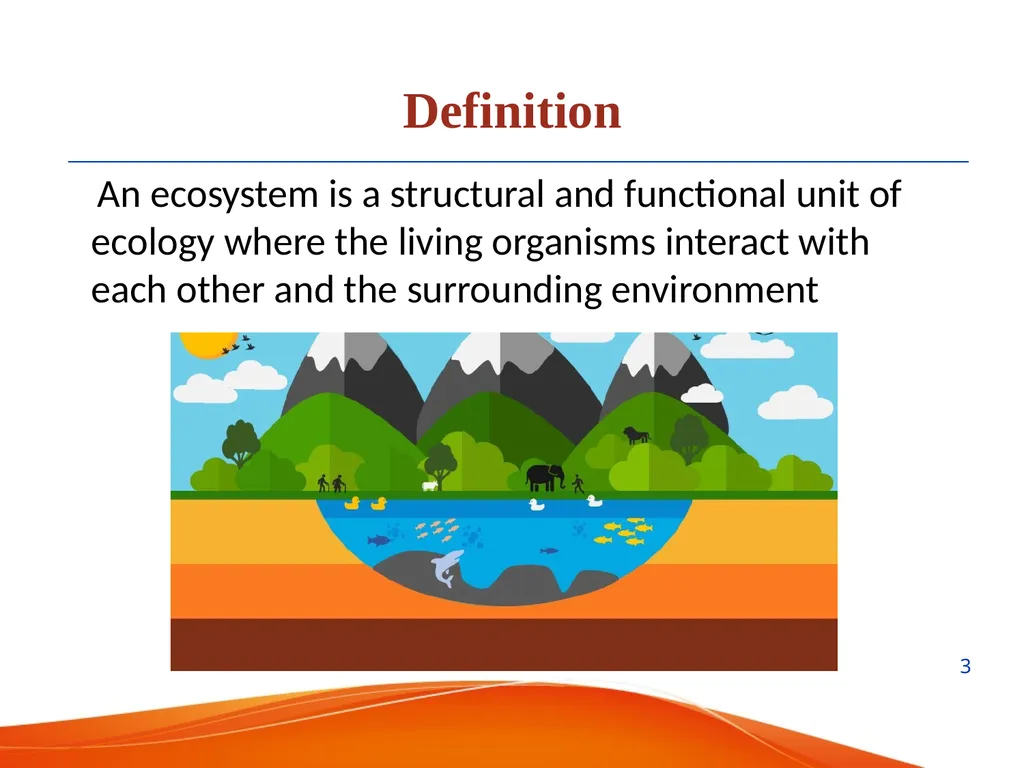
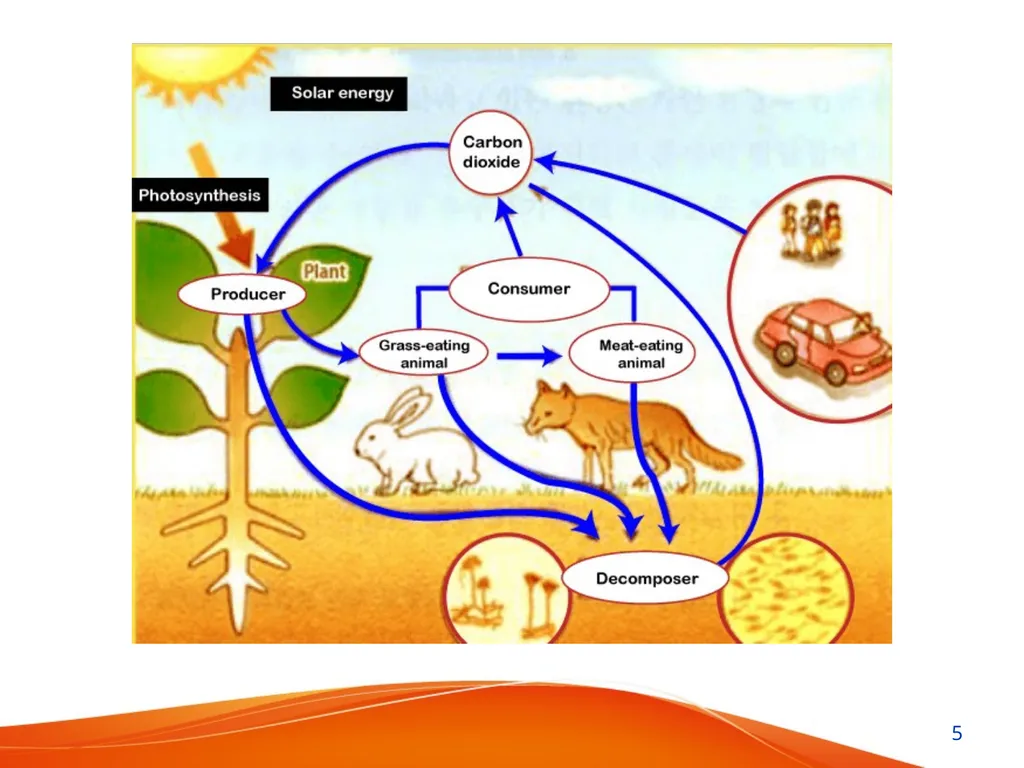
Definition An ecosystem is a structural and functional unit of ecology where the living organisms interact with each other and the surrounding environment 3<br>
04
Introduction In other words, an ecosystem is a chain of interactions between organisms and their environment. The term “Ecosystem” was first coined by A.G.Tansley, an English botanist, in 1935.
The structure of an ecosystem is characterised by the organisation of both biotic and abiotic components. This includes the distribution of energy in our environment. It also includes the climatic conditions prevailing in that particular environment. 4<br>
05
5<br>
06
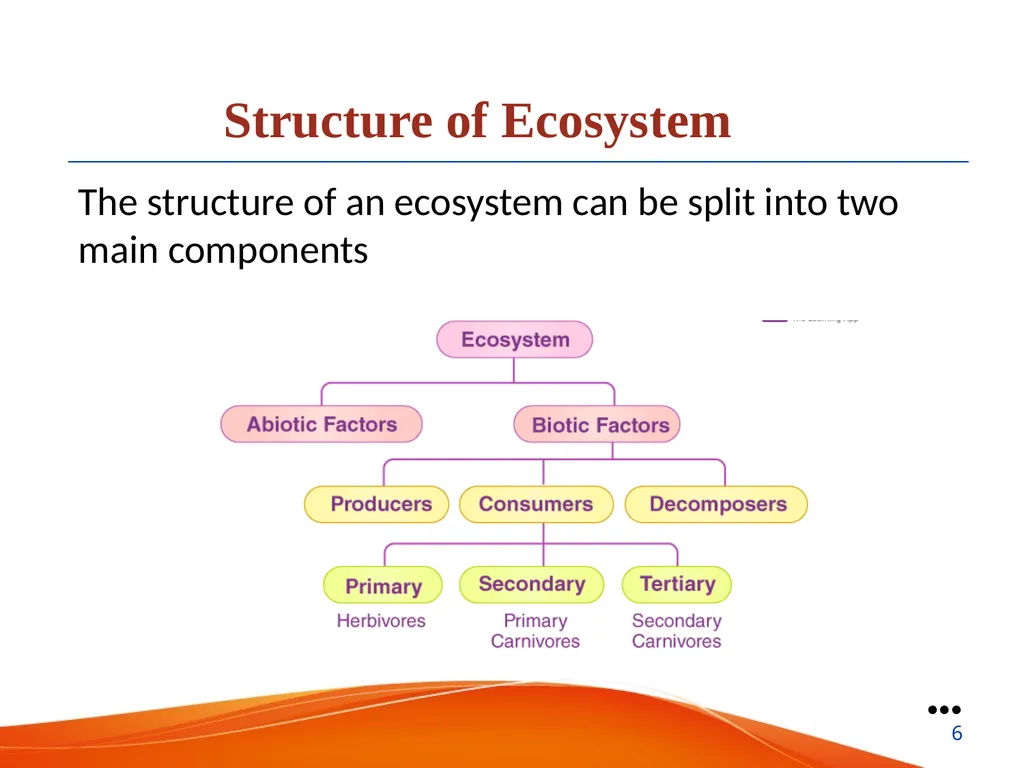
Structure of Ecosystem The structure of an ecosystem can be split into two main components ●●●
6<br>
07
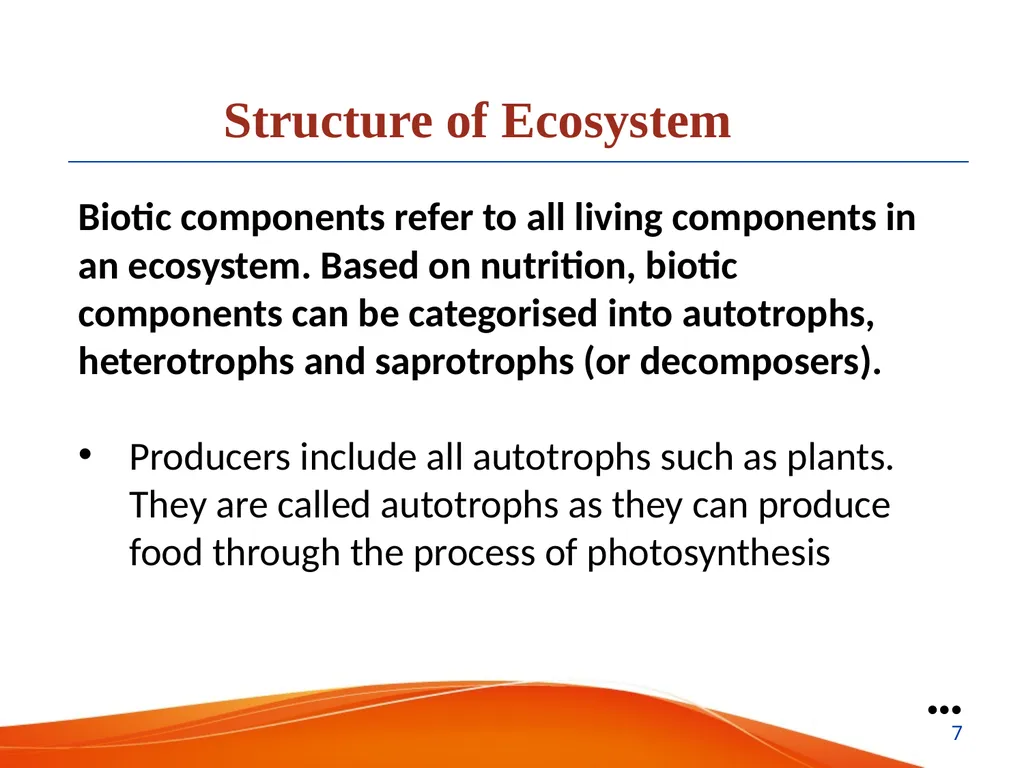
Structure of Ecosystem Biotic components refer to all living components in an ecosystem. Based on nutrition, biotic components can be categorised into autotrophs, heterotrophs and saprotrophs (or decomposers).
Producers include all autotrophs such as plants. They are called autotrophs as they can produce food through the process of photosynthesis ●●●
7<br>
08
Structure of Ecosystem Consumers or heterotrophs are organisms that depend on other organisms for food.
Primary consumers are always herbivores as they rely on producers for food.
Secondary consumers depend on primary consumers for energy.
Tertiary consumers are organisms that depend on secondary consumers for food.
Quaternary consumers are present in some food chains. ●●●
8<br>
09
Structure of Ecosystem Decomposers
It include saprophytes such as fungi and bacteria. They directly thrive on the dead and decaying organic matter.
Decomposers are essential for the ecosystem as they help in recycling nutrients to be reused by plants. ●●●
9<br>
10
Structure of Ecosystem Abiotic Components
Abiotic components are the non-living component of an ecosystem.
It includes air, water, soil, minerals, sunlight, temperature, nutrients, wind, altitude, turbidity, etc. 10<br>
11
Functions of Ecosystem It regulates the essential ecological processes, supports life systems and renders stability.
It is also responsible for the cycling of nutrients between biotic and abiotic components.
It maintains a balance among the various trophic levels in the ecosystem.
It cycles the minerals through the biosphere.
The abiotic components help in the synthesis of organic components that involve the exchange of energy. 11<br>
12
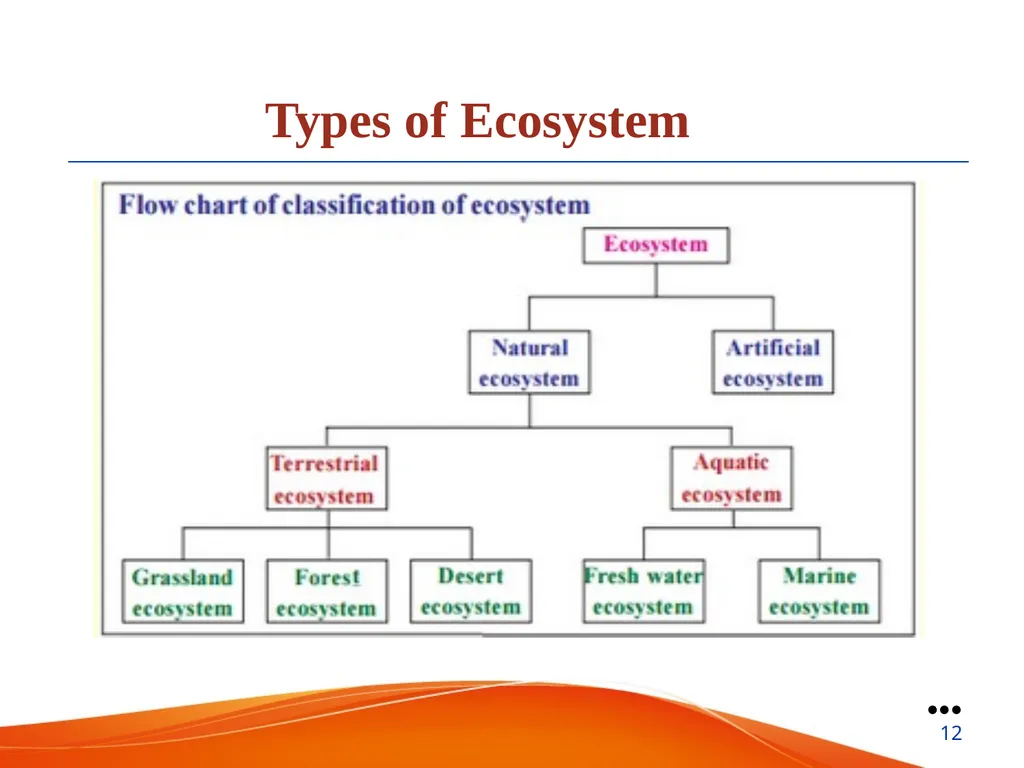
Types of Ecosystem ●●●
12<br>
13
Types of Ecosystem Terrestrial ecosystems are exclusively land-based ecosystems. There are different types of terrestrial ecosystems distributed around various geological zones.
Forest Ecosystem
Grassland Ecosystem
Tundra Ecosystem
Desert Ecosystem ●●●
13<br>
14
Types of Ecosystem Forest Ecosystem
A forest ecosystem consists of several plants, particularly trees, animals and microorganisms that live in coordination with the abiotic factors of the environment.
Forests help in maintaining the temperature of the earth and are the major carbon sink. ●●●
14<br>
15
Types of Ecosystem Grassland Ecosystem
In a grassland ecosystem, the vegetation is dominated by grasses and herbs.
Temperate grasslands and tropical or savanna grasslands are examples of grassland ecosystems. ●●●
15<br>
16
Types of Ecosystem Tundra Ecosystem
Tundra ecosystems are devoid of trees and are found in cold climates or where rainfall is scarce.
These are covered with snow for most of the year. Tundra type of ecosystem is found in the Arctic or mountain tops. ●●●
16<br>
17
Types of Ecosystem Desert Ecosystem
Deserts are found throughout the world.
These are regions with little rainfall and scarce vegetation.
The days are hot, and the nights are cold. ●●●
17<br>
18
Types of Ecosystem Aquatic Ecosystem
Aquatic ecosystems are ecosystems present in a body of water. These can be further divided into two types, namely:
Freshwater Ecosystem
Marine Ecosystem ●●●
18<br>
19
Types of Ecosystem Freshwater Ecosystem
The freshwater ecosystem is an aquatic ecosystem that includes lakes, ponds, rivers, streams and wetlands.
These have no salt content in contrast with the marine ecosystem. ●●●
19<br>
20
Types of Ecosystem Marine Ecosystem
The marine ecosystem includes seas and oceans.
These have a more substantial salt content and greater biodiversity in comparison to the freshwater ecosystem. 20<br>
21
Conclusion An ecosystem is a geographic area where plants, animals, and other organisms, as well as weather and landscape, work together to form a bubble of life.
Ecosystems contain biotic or living, parts, as well as abiotic factors, or nonliving parts. Biotic factors include plants, animals, and other organisms. 21<br>