Education for Justice (E4J) Integrity and Ethics Module 1: Introduction and Conceptual Framework Agenda Conceptual analysis of integrity (15 minutes) Conceptual analysis of ethics (10 minutes) Class exercises (30 minutes) Introduction to
"Education for Justice (E4J) Integrity and Ethics" is the property of its rightful owner. Permission is granted to
download and print the materials on this website for personal, non-commercial use only, and to display it
on your personal computer provided you do not modify the materials and that you retain all copyright
notices contained in the materials. By downloading content from our website, you accept the terms of this
agreement.
Presentation Transcript
01
Education for Justice (E4J)
Integrity and Ethics
Module 1: Introduction and Conceptual Framework<br>
02
Agenda Conceptual analysis of integrity (15 minutes)
Conceptual analysis of ethics (10 minutes)
Class exercises (30 minutes)
Introduction to ethical theories and major ethical philosophers (60 minutes)
Discussion of ethical dilemmas in small groups (45 minutes)
Plenary discussion and conclusion (20 minutes)<br>
03
Learning Outcomes Upon completion of this module students should be able to:
Understand and define the concepts of integrity and ethics
Describe three major theoretical approaches in integrity and ethics
Identify ethical dilemmas and apply different theoretical approaches
Understand the concept of personal integrity in the context of this module<br>
04
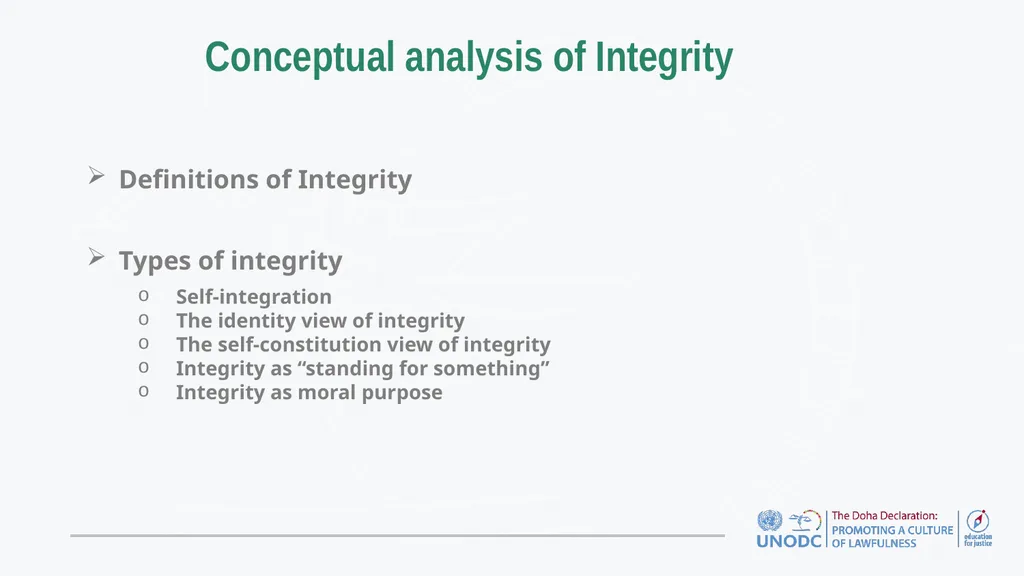
Conceptual analysis of Integrity Types of integrity
Self-integration
The identity view of integrity
The self-constitution view of integrity
Integrity as “standing for something”
Integrity as moral purpose Definitions of Integrity<br>
05
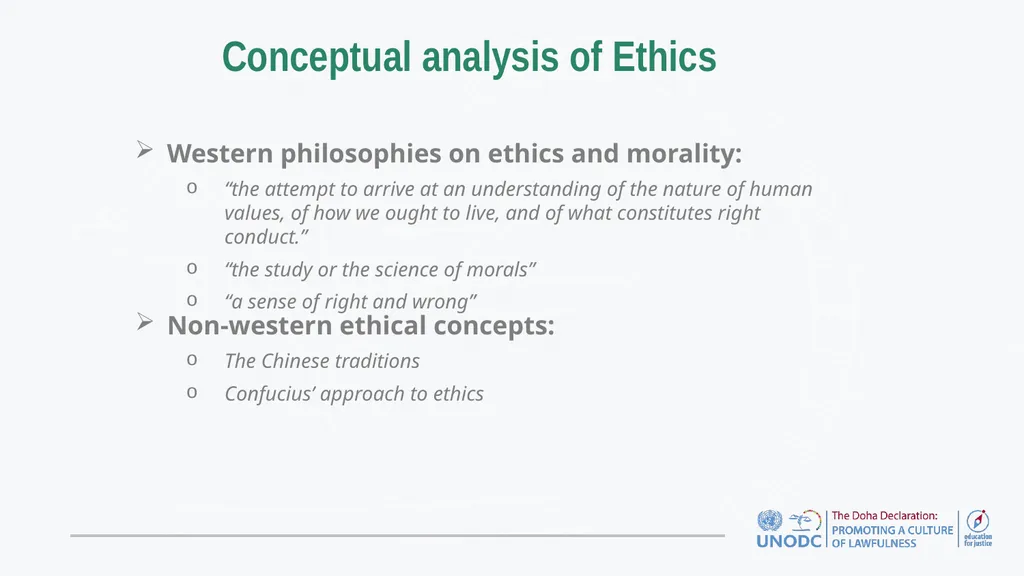
Conceptual analysis of Ethics Non-western ethical concepts:
The Chinese traditions
Confucius’ approach to ethics Western philosophies on ethics and morality:
“the attempt to arrive at an understanding of the nature of human values, of how we ought to live, and of what constitutes right conduct.”
“the study or the science of morals”
“a sense of right and wrong”<br>
06
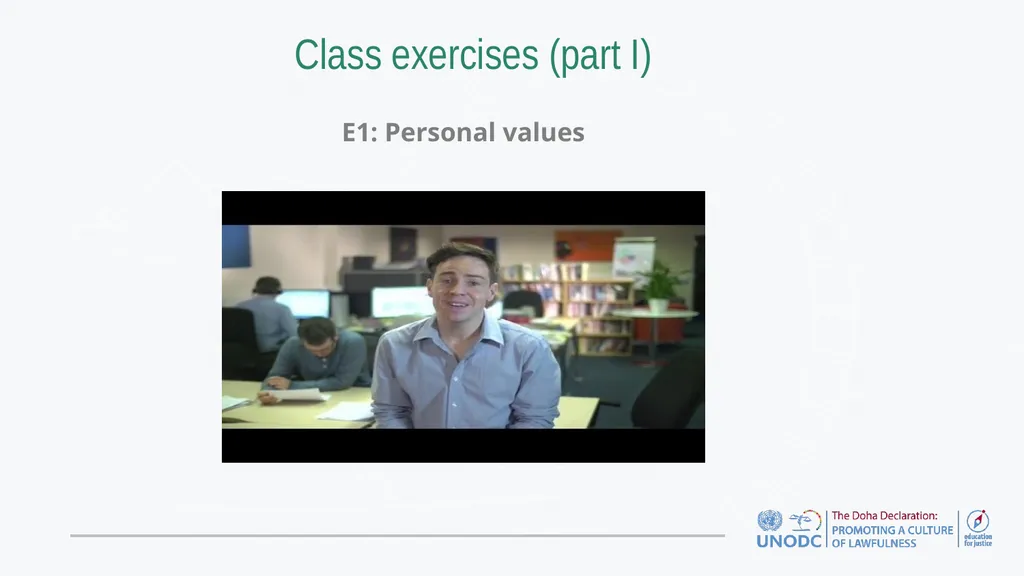
Class exercises (part I) E1: Personal values<br>
07
Class exercises (part II) E2: “Shipwreck Situation”
E3: “Baby Theresa” (case study)
E4: “The Parable of the Sadhu” (case study)<br>
08
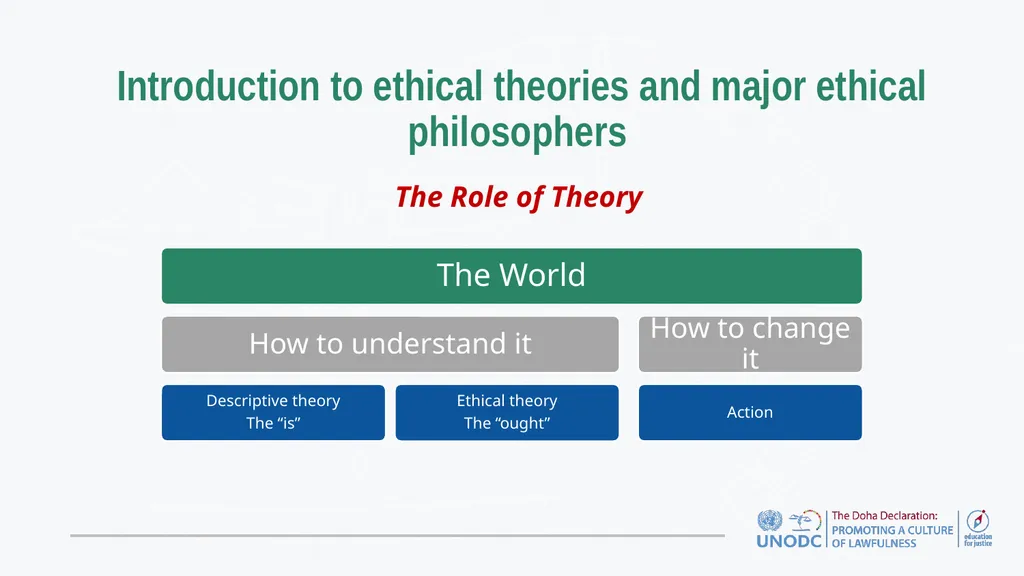
Introduction to ethical theories and major ethical philosophers The Role of Theory<br>
09
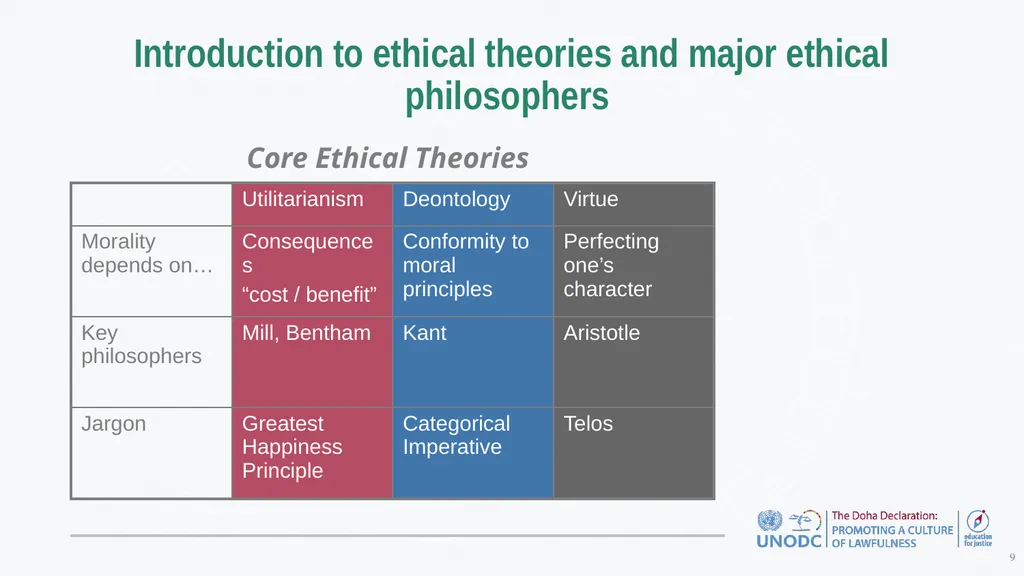
Introduction to ethical theories and major ethical philosophers 9 Core Ethical Theories<br>
10
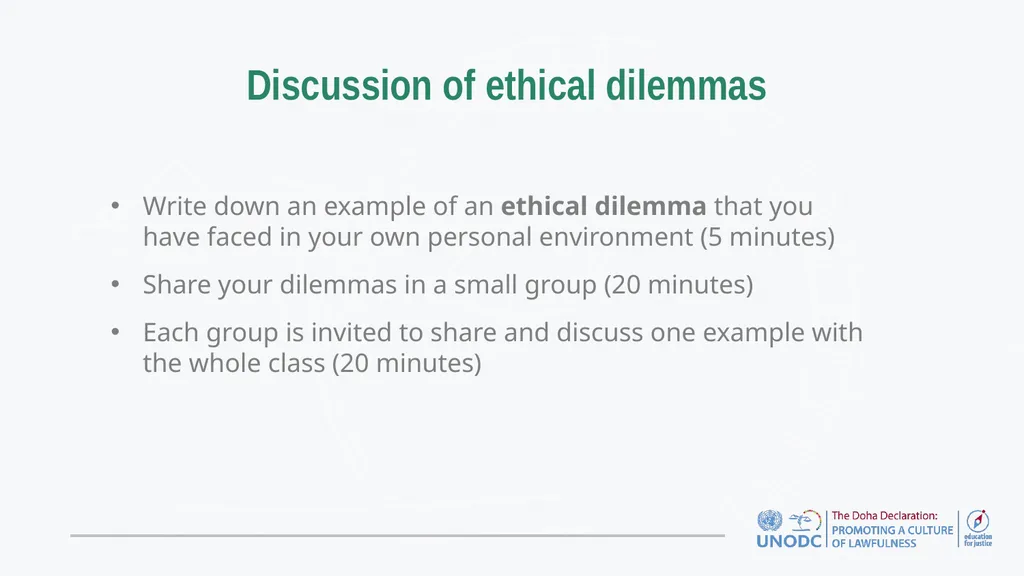
Discussion of ethical dilemmas Write down an example of an ethical dilemma that you have faced in your own personal environment (5 minutes)
Share your dilemmas in a small group (20 minutes)
Each group is invited to share and discuss one example with the whole class (20 minutes)<br>
11
Core reading Deigh, John (2010). An Introduction to Ethics. Cambridge: Cambridge University Press. » An open access version of chapter one of this introductory text is available from http://www.insightsonindia.com/wp-content/uploads/2013/09/what-is-ethics-cambridge-university.pdf
Internet Encyclopedia of Philosophy (section on ethics, more specifically subsection on normative ethics). Available from http://www.iep.utm.edu/ethics/#H2
Parry, Richard (2014). Ancient ethical theory. The Stanford Encyclopedia of Philosophy. Edward N. Zalta, ed. Available from https://plato.stanford.edu/archives/fall2014/entries/ethics-ancient/<br>