EU EXIT BUSINESS CONTINUITY WORKSHOP TOOLKIT FOR VOLUNTARY AND COMMUNITY SECTOR RESILIENCE PARTNERS December 2020 - Document 3 of 5 Domestic Arrangements Mobile Phones Fire Procedures Toilets Refreshments Smoking policy Workshop Aim To
"EU EXIT BUSINESS CONTINUITY WORKSHOP TOOLKIT FOR" is the property of its rightful owner. Permission is granted to
download and print the materials on this website for personal, non-commercial use only, and to display it
on your personal computer provided you do not modify the materials and that you retain all copyright
notices contained in the materials. By downloading content from our website, you accept the terms of this
agreement.
Presentation Transcript
01
EU EXIT BUSINESS CONTINUITY WORKSHOP TOOLKIT FOR VOLUNTARY AND COMMUNITY SECTOR RESILIENCE PARTNERS December 2020 - Document 3 of 5<br>
02
Domestic Arrangements Mobile Phones
Fire Procedures
Toilets
Refreshments
Smoking policy<br>
03
Workshop Aim
To ensure that our organisation is well-prepared to manage and respond to potential consequences arising from a the UK’s exit from the European Union.<br>
04
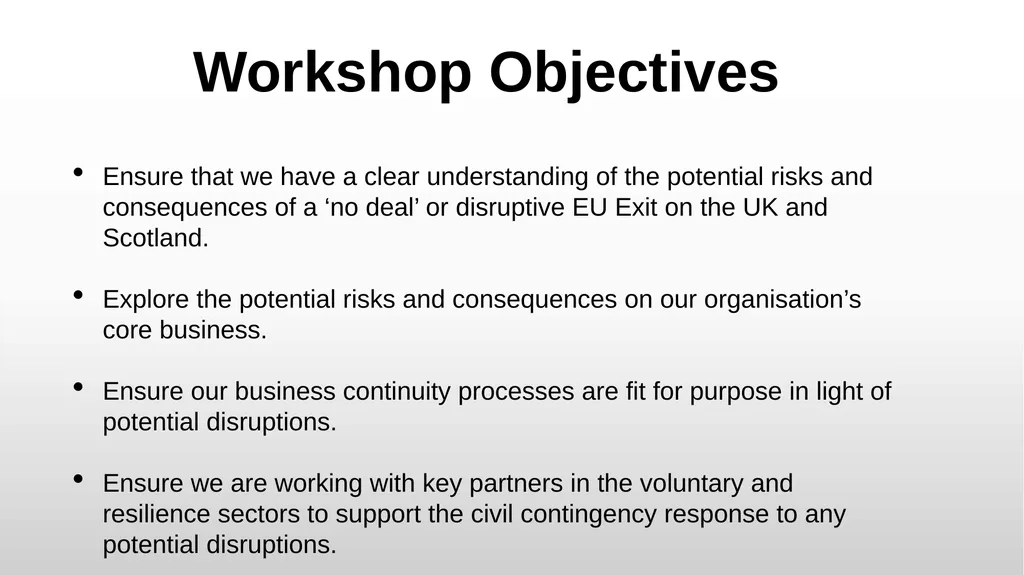
Workshop Objectives
Ensure that we have a clear understanding of the potential risks and consequences of a ‘no deal’ or disruptive EU Exit on the UK and Scotland.
Explore the potential risks and consequences on our organisation’s core business.
Ensure our business continuity processes are fit for purpose in light of potential disruptions.
Ensure we are working with key partners in the voluntary and resilience sectors to support the civil contingency response to any potential disruptions.<br>
05
Guiding principles<br>
06
Opening Address<br>
07
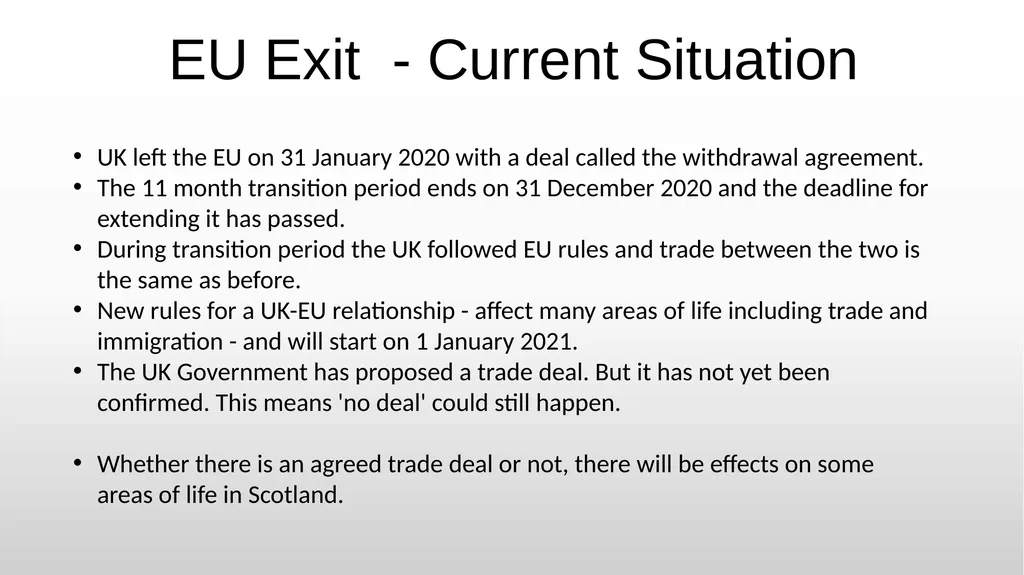
EU Exit - Current Situation UK left the EU on 31 January 2020 with a deal called the withdrawal agreement.
The 11 month transition period ends on 31 December 2020 and the deadline for extending it has passed.
During transition period the UK followed EU rules and trade between the two is the same as before.
New rules for a UK-EU relationship - affect many areas of life including trade and immigration - and will start on 1 January 2021.
The UK Government has proposed a trade deal. But it has not yet been confirmed. This means 'no deal' could still happen.
Whether there is an agreed trade deal or not, there will be effects on some areas of life in Scotland.<br>
08
Potential Impact on ”our business”<br>
09
Travel, Freight & Borders – Impact on Supply Chain Disruption in the short-term to travel, freight and borders which would impact on the supply chain into Scotland, e.g.:
Delays to processing time for goods at UK-EU borders would result in delays to the supply chain on most goods particularly those who rely in ‘just in time’ deliveries or time-sensitive goods such as some medicines or seafood.
Delays could also result in animal welfare issues in the transport of livestock.
Status of legal contracts and commercial arrangement may be unclear.
Flights could face disruption due to flight numbers being capped.
May lead to some foods becoming more expensive or harder to find, which may affect those who need it most.
Concerns raised over supply of goods such as chemicals and machinery to critical infrastructure<br>
10
Disruption of Services Public sector organisations have Business Continuity plans in place and these have been recently reviewed to consider the potential EU-exit impacts.
Depending on the scale and longevity of possible disruptions – for reasons of supply, workforce issues, cash flow impacts - it may not be possible to ensure full service continuity in areas such as social care, health care, policing, education provision.
Any increase in poverty, a perceived or actual change in circumstance, wealth or wellbeing, could give rise to a reduction in public health and greater levels of anxiety and stress/anger. Any public disorder could give rise to injuries and accidents.<br>
11
Remote and Rural Remote and rural populations could be disproportionately affected:
Distance from market and dispersed services and populations.
Difficulty in recruiting and retaining staff and fewer sources of employment.
Poor physical and digital connectivity.
Cost of living can be up to 30% higher in remote rural Scotland than in other parts of the country. Despite this, rural Scotland currently delivers 27% of the Gross Value Added (GVA) from only 19% of the working age population and is growing.
A 'no deal' situation is likely to affect Scottish food and drink producers who export their goods to EU countries. Some of these goods (like beef and lamb) could face large tariffs. Others, like seafood, may have other barriers, like additional certification and delays getting their products to market. This could have a financial impact particularly on farming and coastal communities.<br>
12
Workforce and Volunteers Concerns over recruitment and retention, where it already difficult, that workforce shortages may be exacerbated.
If fewer staff/volunteers are placed under greater pressure, and this could manifest in retention issues and sickness.
Reduced pool of low skilled workers currently servicing sectors such as hospitality, tourism, agriculture, food processing and social care.
Emotional wellbeing of staff from EU Nations<br>
13
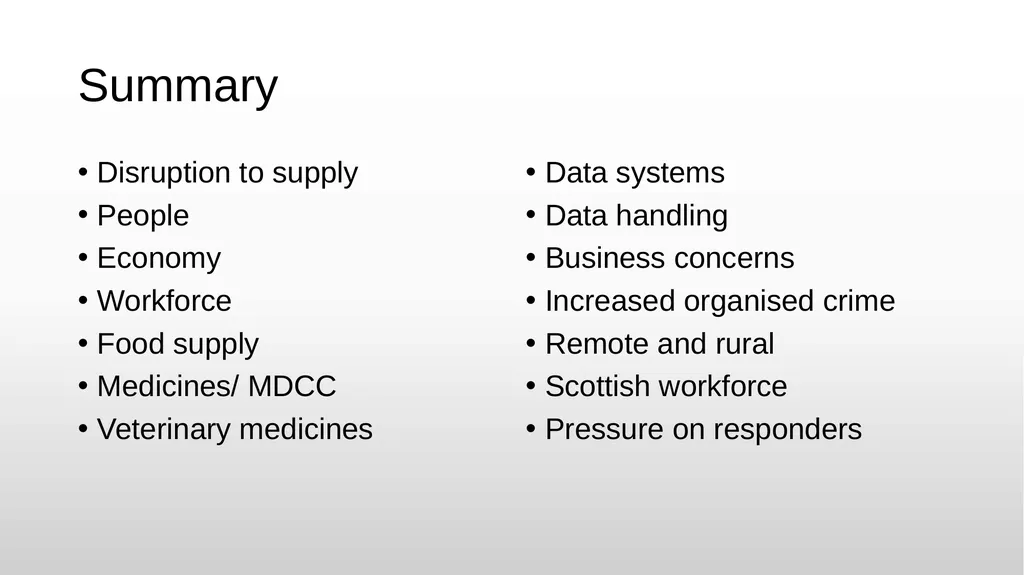
Summary Disruption to supply
People
Economy
Workforce
Food supply
Medicines/ MDCC
Veterinary medicines Data systems
Data handling
Business concerns
Increased organised crime
Remote and rural
Scottish workforce
Pressure on responders<br>
14
What are your concerns? Do they reflect the potential impacts shown here?
Have we missed anything?<br>
15
Table Discussions<br>
16
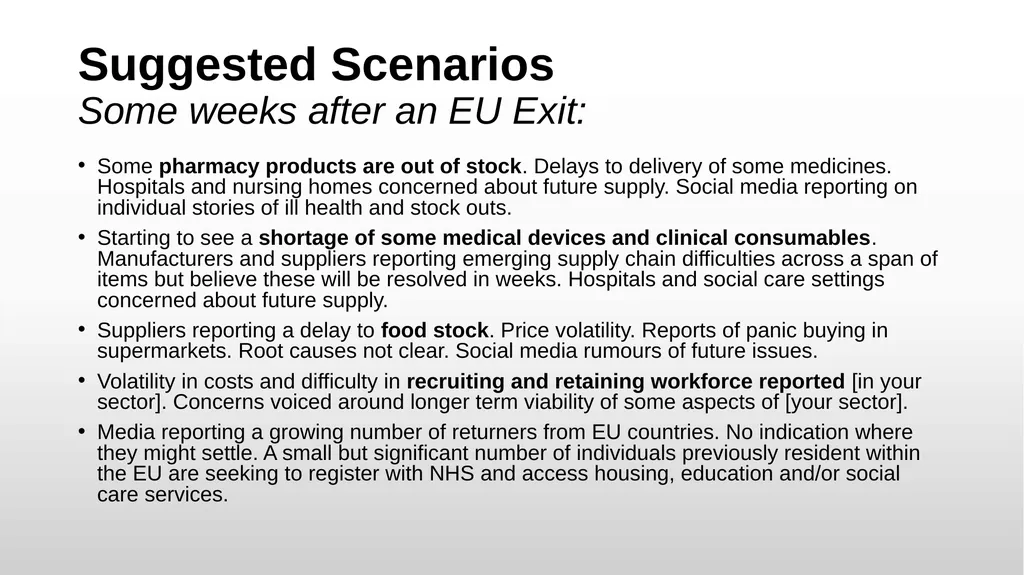
Suggested Scenarios Some weeks after an EU Exit: Some pharmacy products are out of stock. Delays to delivery of some medicines. Hospitals and nursing homes concerned about future supply. Social media reporting on individual stories of ill health and stock outs.
Starting to see a shortage of some medical devices and clinical consumables. Manufacturers and suppliers reporting emerging supply chain difficulties across a span of items but believe these will be resolved in weeks. Hospitals and social care settings concerned about future supply.
Suppliers reporting a delay to food stock. Price volatility. Reports of panic buying in supermarkets. Root causes not clear. Social media rumours of future issues.
Volatility in costs and difficulty in recruiting and retaining workforce reported [in your sector]. Concerns voiced around longer term viability of some aspects of [your sector].
Media reporting a growing number of returners from EU countries. No indication where they might settle. A small but significant number of individuals previously resident within the EU are seeking to register with NHS and access housing, education and/or social care services.<br>
17
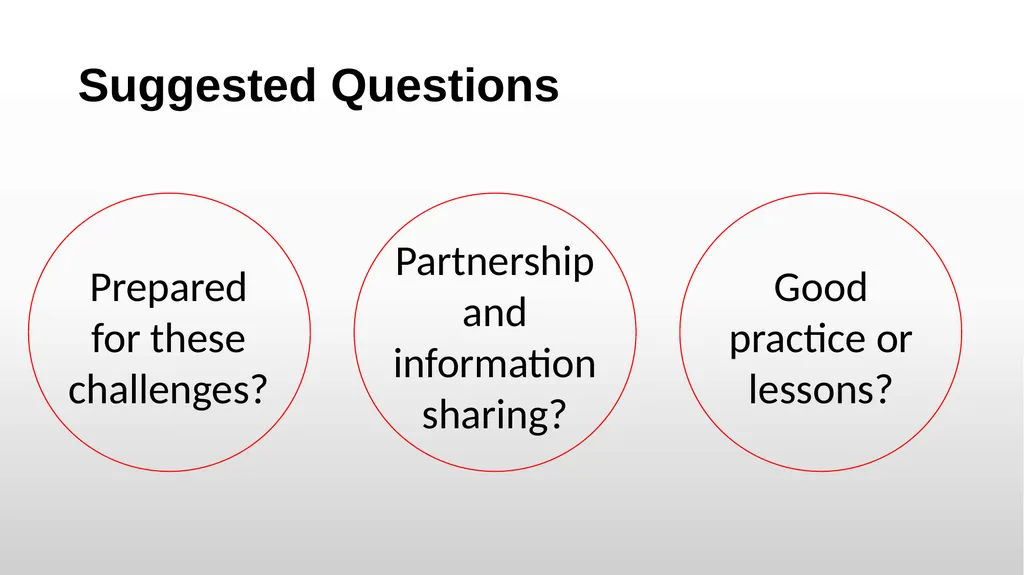
Prepared for these challenges? Partnership and information sharing? Good practice or lessons? Suggested Questions<br>