
Evidence Based Practice Training Reinforcement


Description: Evidence Based Practice Training Reinforcement Objectives Become aware of 27 EBPs identified for students with ASD Describe key steps to using reinforcement How to prepare for implementation How to implement How to assess progress Identify
Related Topics
Download Presentation
"Evidence Based Practice Training Reinforcement" is the property of its rightful owner. Permission is granted to download and print the materials on this website for personal, non-commercial use only, and to display it on your personal computer provided you do not modify the materials and that you retain all copyright notices contained in the materials. By downloading content from our website, you accept the terms of this agreement.
Presentation Transcript
slide1. Evidence Based Practice Training Reinforcement<br>
slide2. Objectives Become aware of 27 EBPs identified for students with ASD
Describe key steps to using reinforcement
How to prepare for implementation
How to implement
How to assess progress
Identify key pitfalls and ways to avoid them
Identify ways to learn more about how to implement reinforcement<br>
slide3. What are EBPs? Focused interventions that:
Produce specific behavioral and developmental outcomes for a student
Have been demonstrated as effective in applied research literature
Can be successfully implemented in educational settings
(Odom, Colett-Klingenberg, Rogers, & Hatton, 2010)<br>
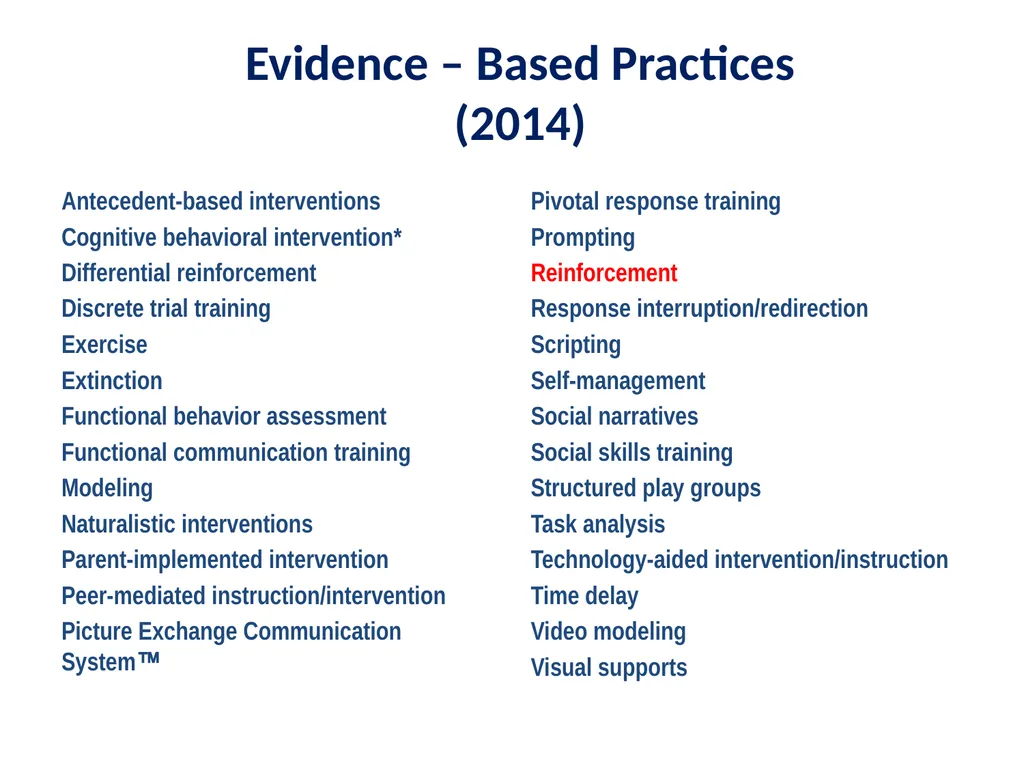
slide4. Evidence – Based Practices (2014) Antecedent-based interventions
Cognitive behavioral intervention*
Differential reinforcement
Discrete trial training
Exercise
Extinction
Functional behavior assessment
Functional communication training
Modeling
Naturalistic interventions
Parent-implemented intervention
Peer-mediated instruction/intervention
Picture Exchange Communication System Pivotal response training
Prompting
Reinforcement
Response interruption/redirection
Scripting
Self-management
Social narratives
Social skills training
Structured play groups
Task analysis
Technology-aided intervention/instruction
Time delay
Video modeling
Visual supports<br>
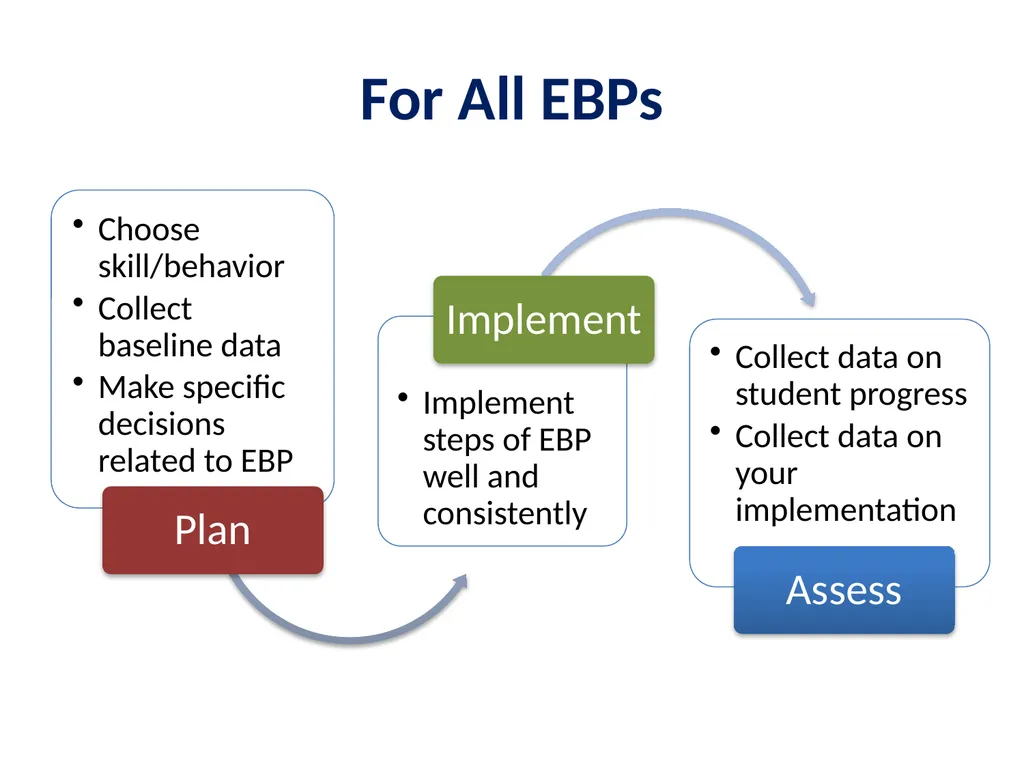
slide5. For All EBPs<br>
slide6. Reinforcement<br>
slide7. Who uses Reinforcement?<br>
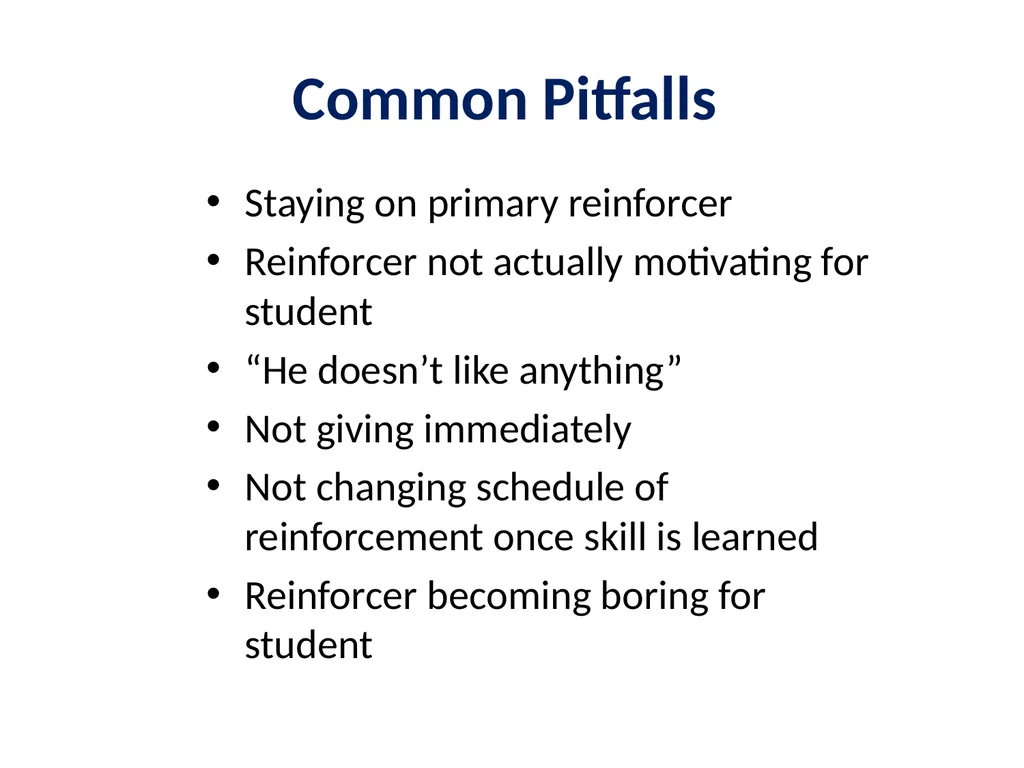
slide8. Common Pitfalls Staying on primary reinforcer
Reinforcer not actually motivating for student
“He doesn’t like anything”
Not giving immediately
Not changing schedule of reinforcement once skill is learned
Reinforcer becoming boring for student<br>
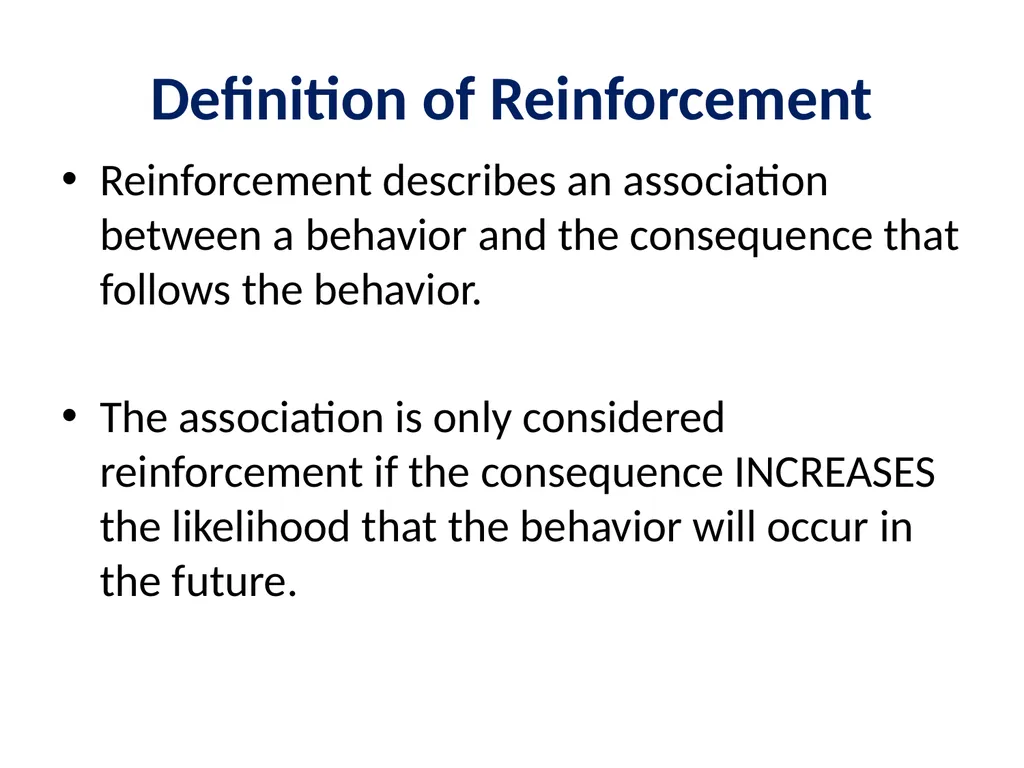
slide9. Definition of Reinforcement Reinforcement describes an association between a behavior and the consequence that follows the behavior.
The association is only considered reinforcement if the consequence INCREASES the likelihood that the behavior will occur in the future.<br>
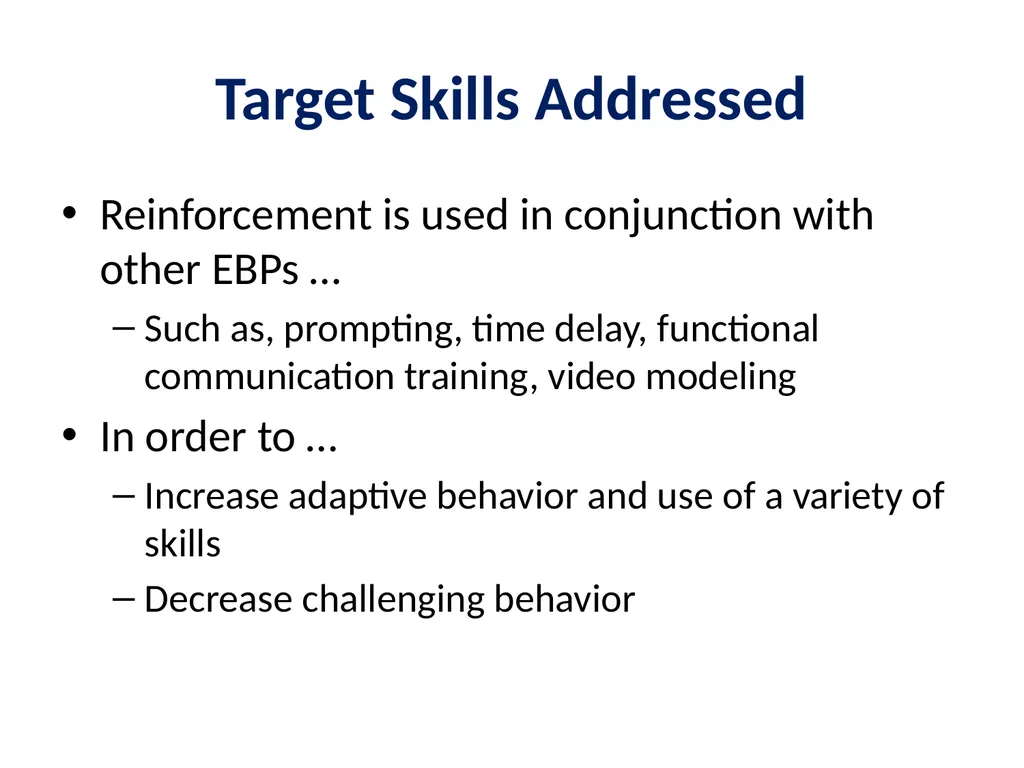
slide10. Target Skills Addressed Reinforcement is used in conjunction with other EBPs …
Such as, prompting, time delay, functional communication training, video modeling
In order to …
Increase adaptive behavior and use of a variety of skills
Decrease challenging behavior<br>
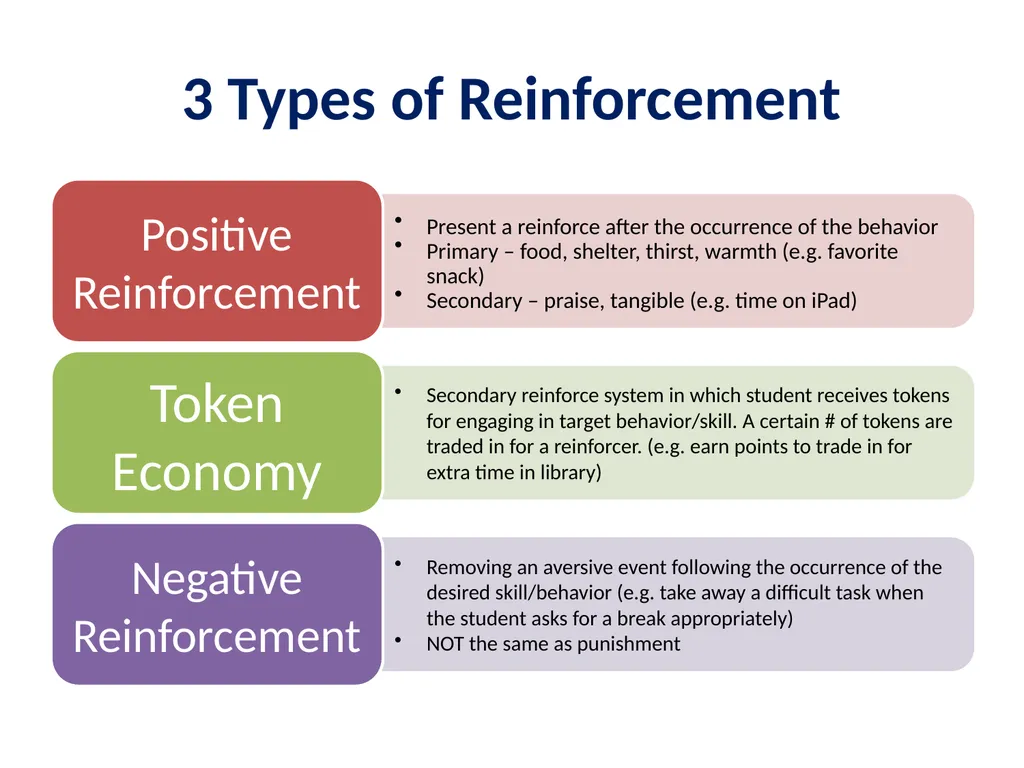
slide11. 3 Types of Reinforcement<br>
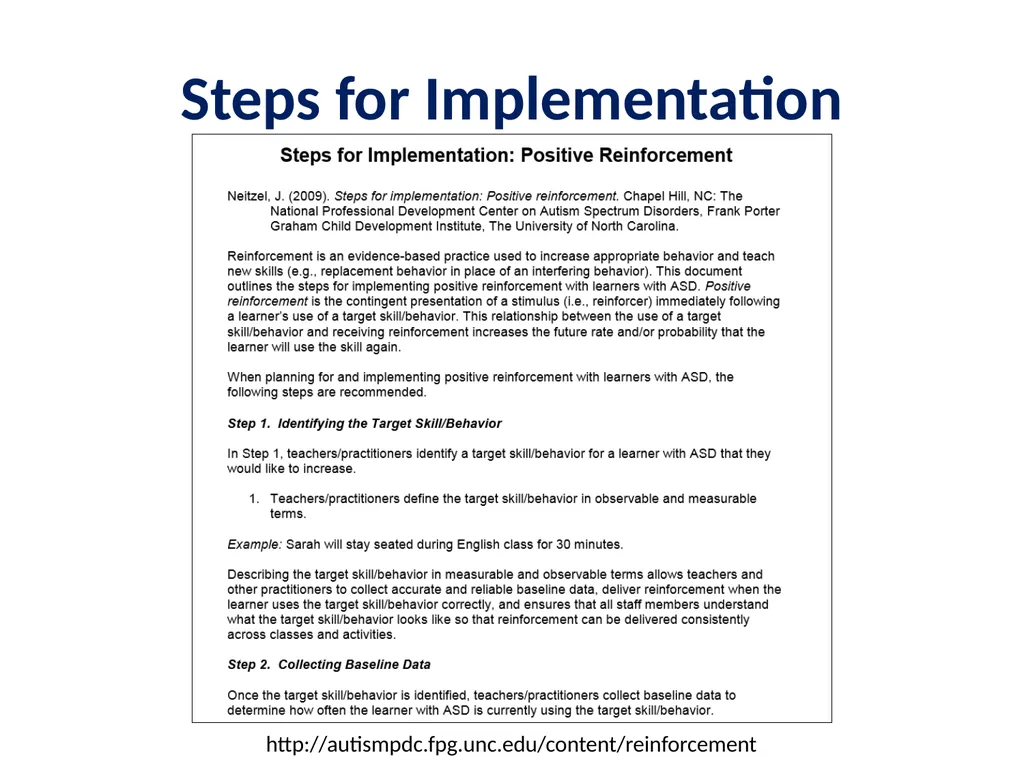
slide12. Steps for Implementation http://autismpdc.fpg.unc.edu/content/reinforcement<br>
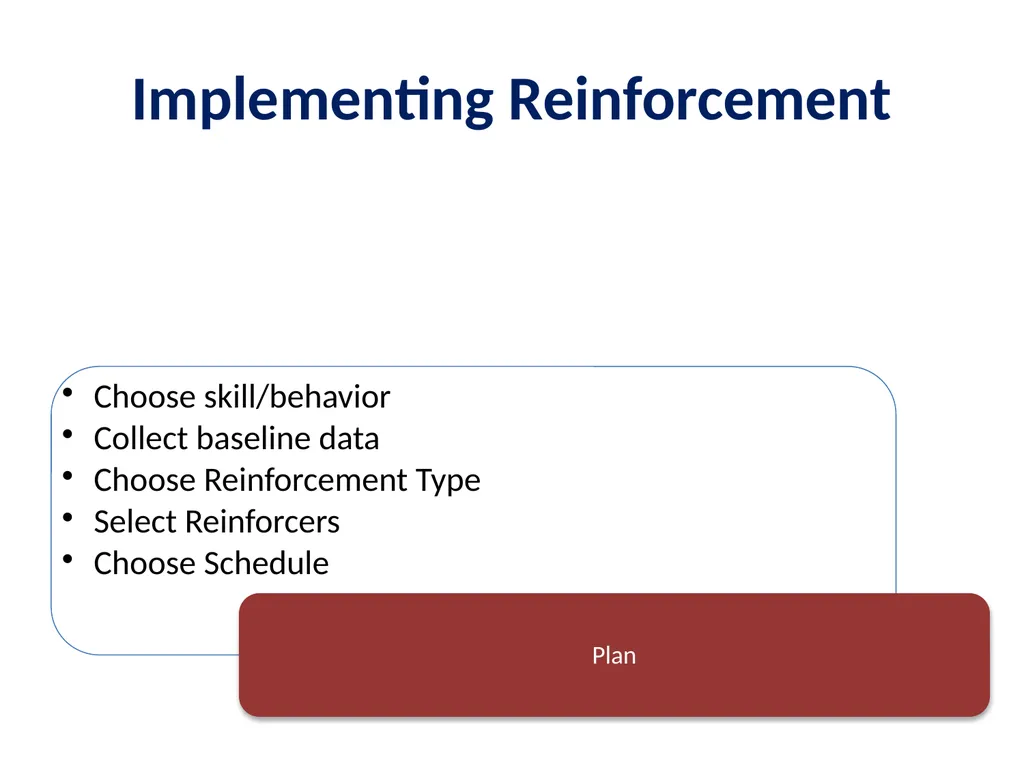
slide13. Implementing Reinforcement<br>
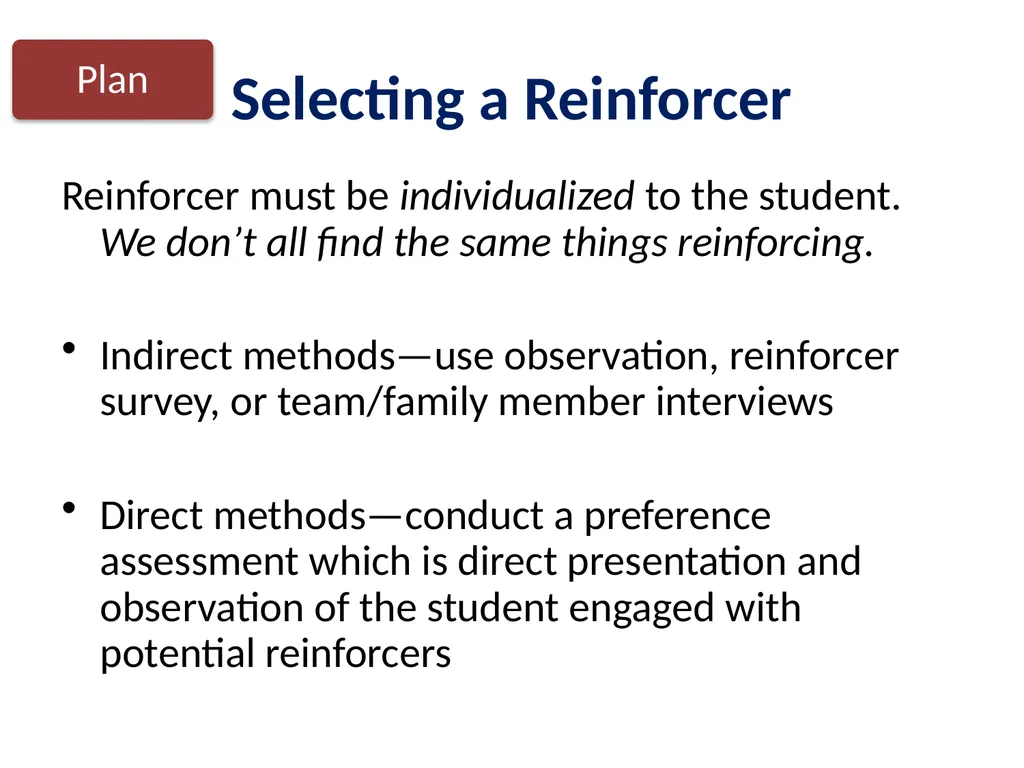
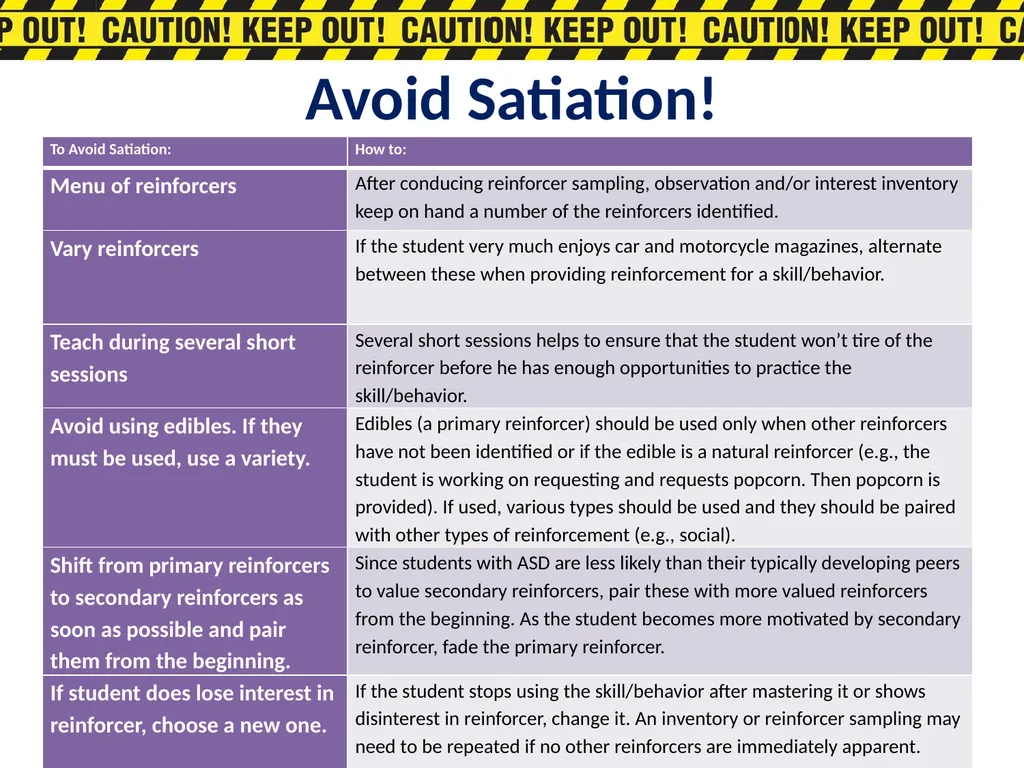
slide14. Selecting a Reinforcer Reinforcer must be individualized to the student. We don’t all find the same things reinforcing.
Indirect methods—use observation, reinforcer survey, or team/family member interviews
Direct methods—conduct a preference assessment which is direct presentation and observation of the student engaged with potential reinforcers<br>
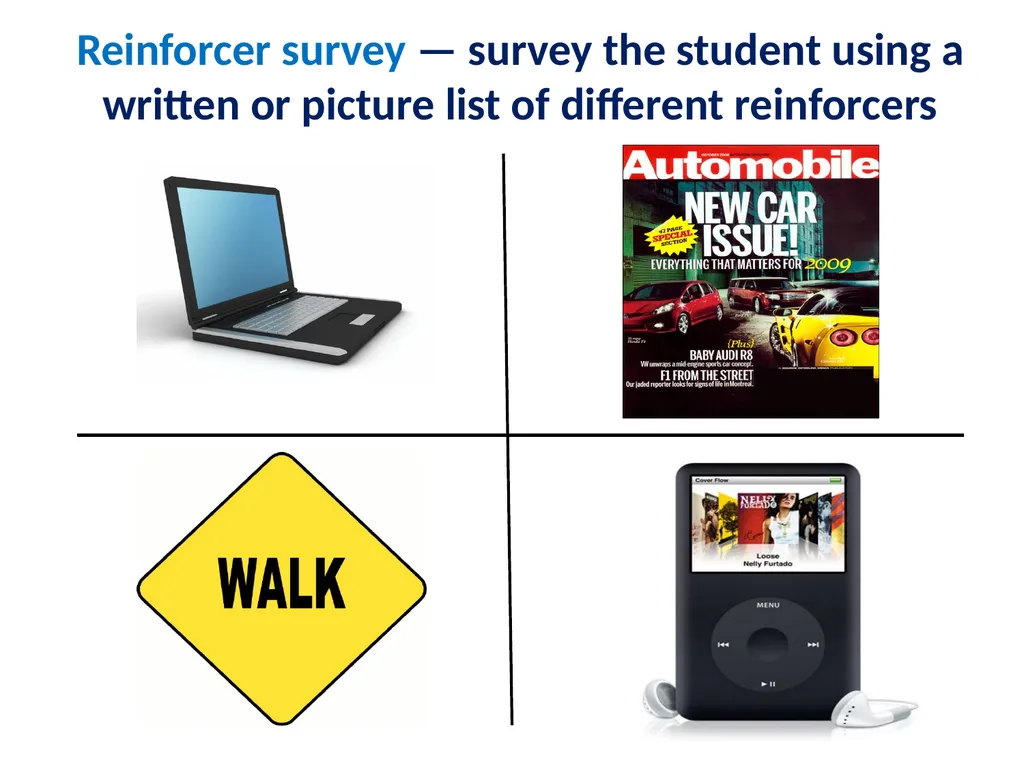
slide15. Reinforcer survey — survey the student using a written or picture list of different reinforcers<br>
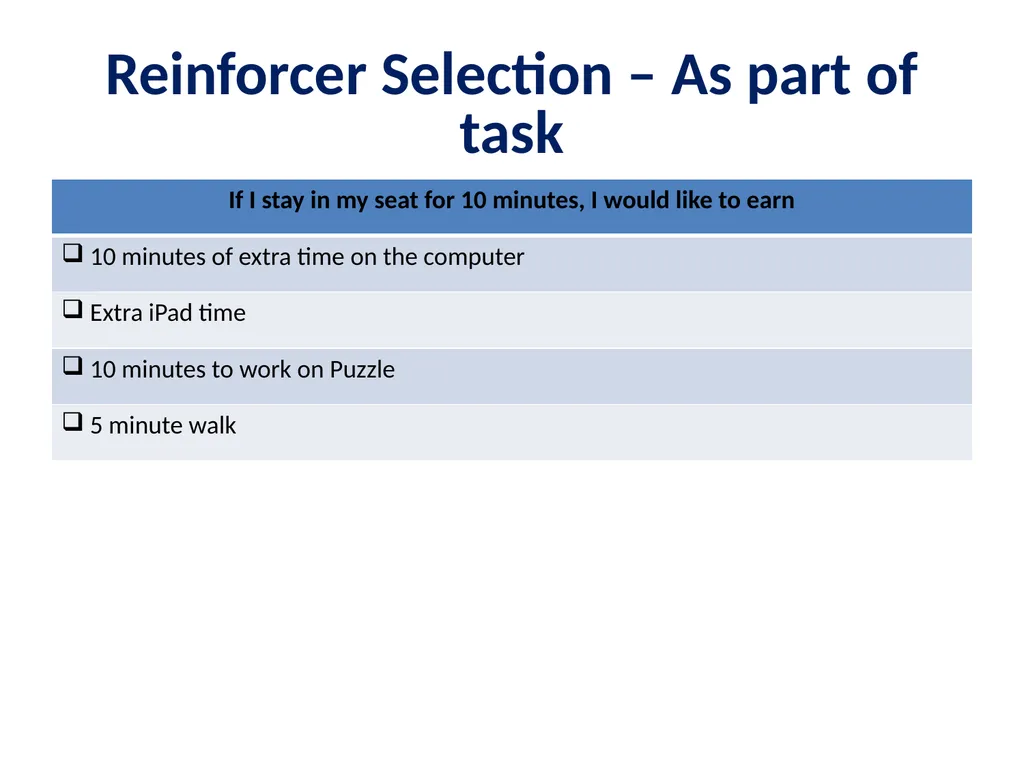
slide16. Reinforcer Selection – As part of task<br>
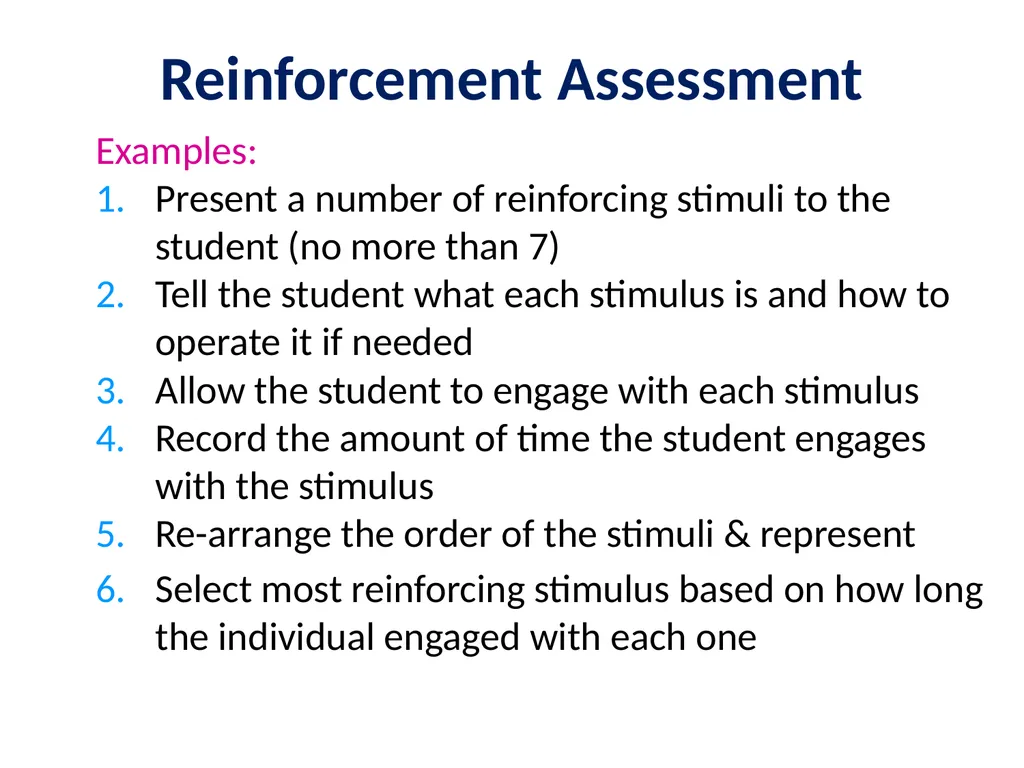
slide17. Reinforcement Assessment Examples:
Present a number of reinforcing stimuli to the student (no more than 7)
Tell the student what each stimulus is and how to operate it if needed
Allow the student to engage with each stimulus
Record the amount of time the student engages with the stimulus
Re-arrange the order of the stimuli & represent
Select most reinforcing stimulus based on how long the individual engaged with each one<br>
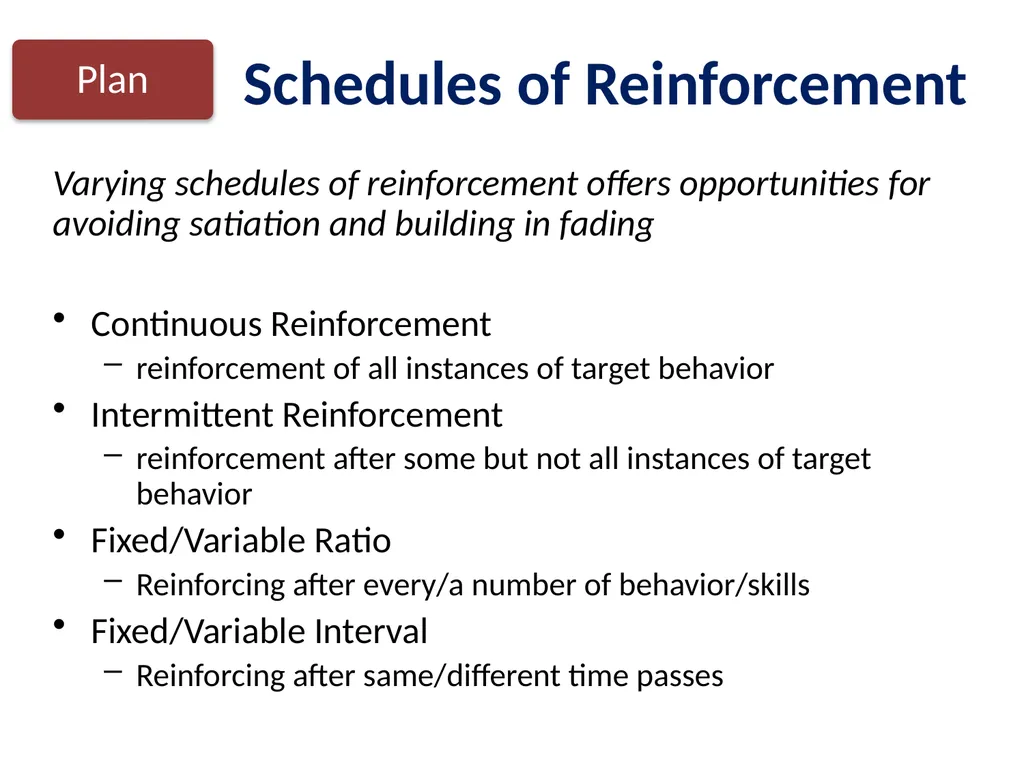
slide18. Schedules of Reinforcement Varying schedules of reinforcement offers opportunities for avoiding satiation and building in fading
Continuous Reinforcement
reinforcement of all instances of target behavior
Intermittent Reinforcement
reinforcement after some but not all instances of target behavior
Fixed/Variable Ratio
Reinforcing after every/a number of behavior/skills
Fixed/Variable Interval
Reinforcing after same/different time passes<br>
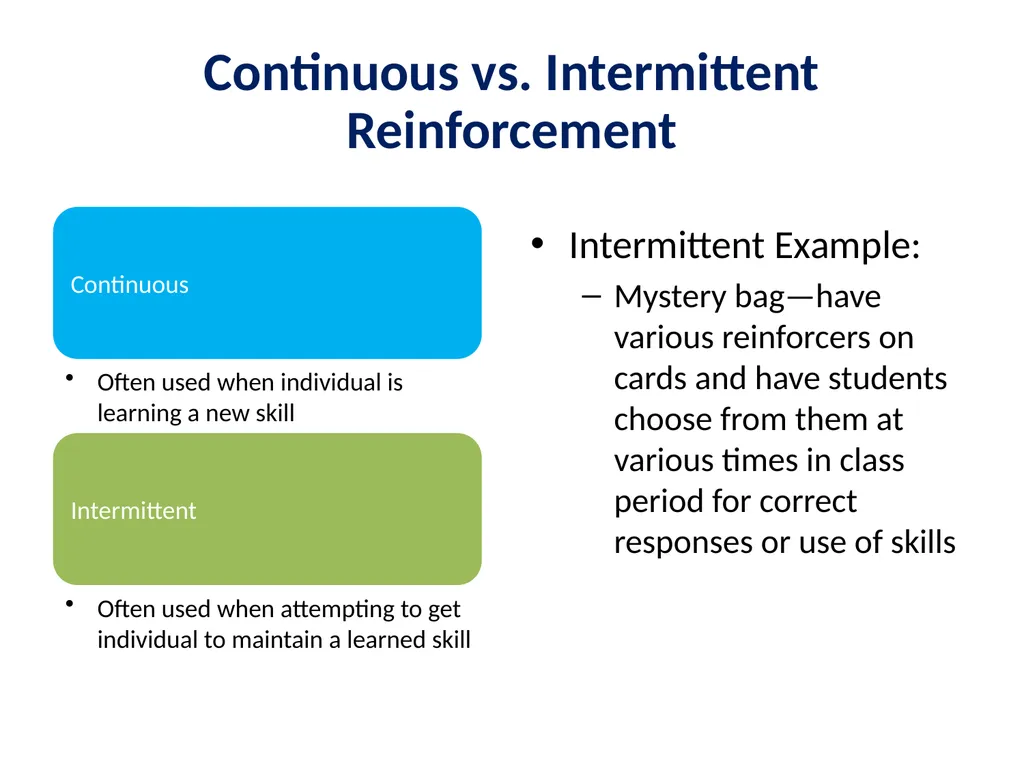
slide19. Continuous vs. Intermittent Reinforcement Intermittent Example:
Mystery bag—have various reinforcers on cards and have students choose from them at various times in class period for correct responses or use of skills<br>
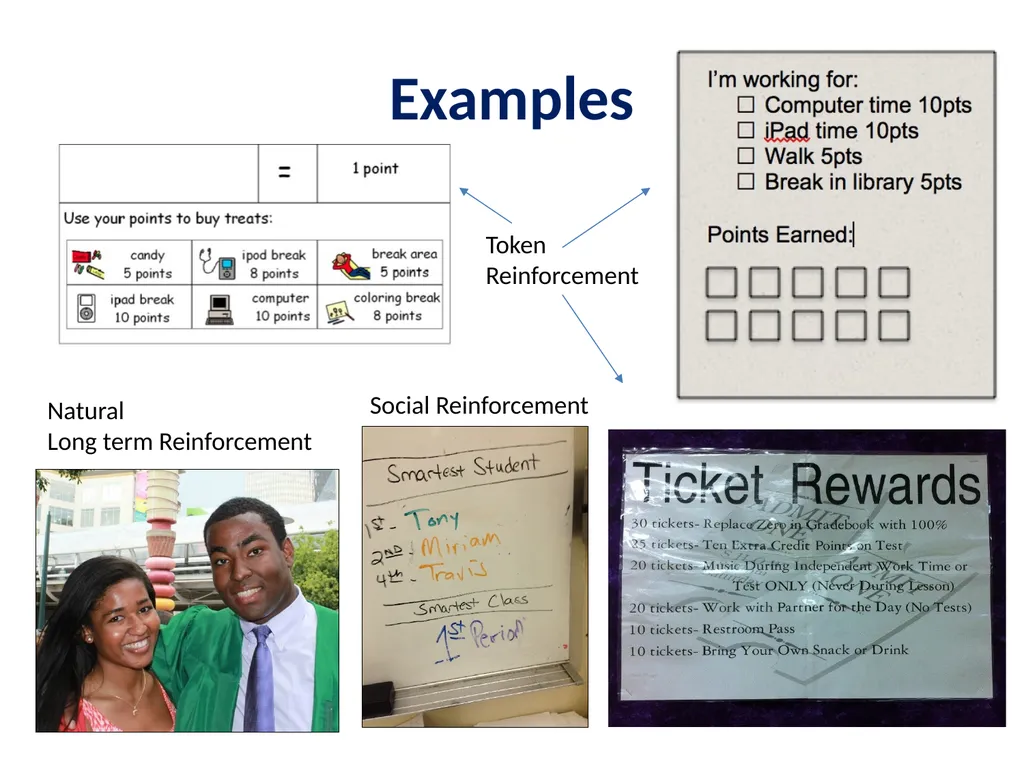
slide20. Examples Natural
Long term Reinforcement Social Reinforcement Token
Reinforcement<br>
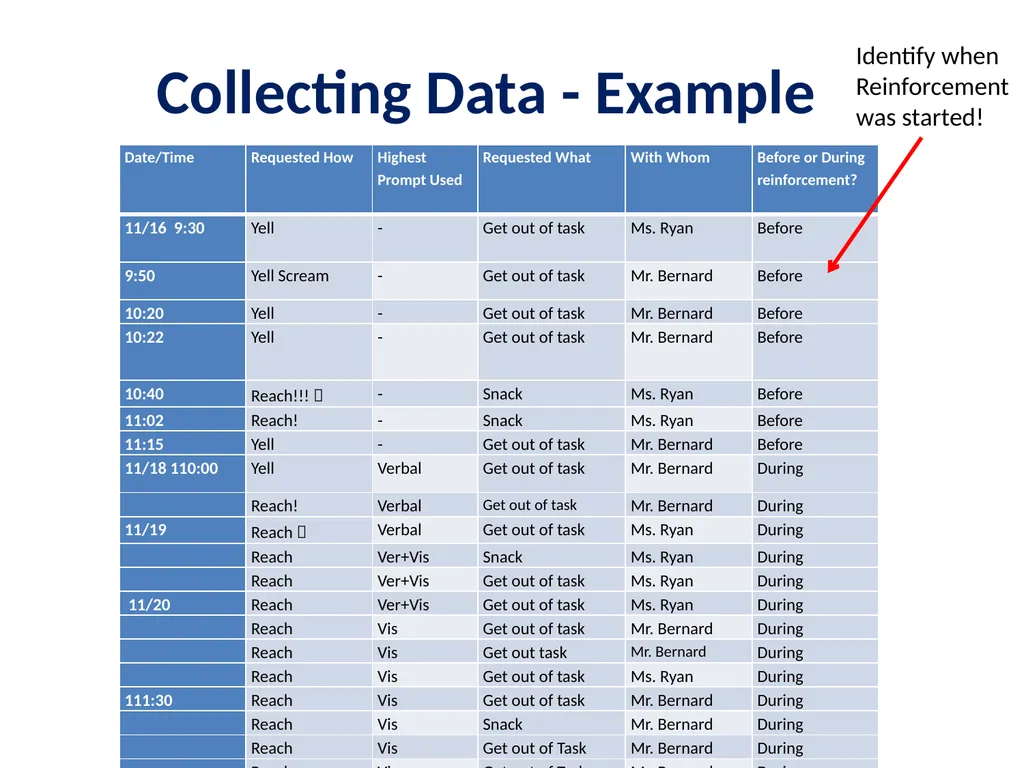
slide21. Collecting Data - Example Identify when
Reinforcement
was started!<br>
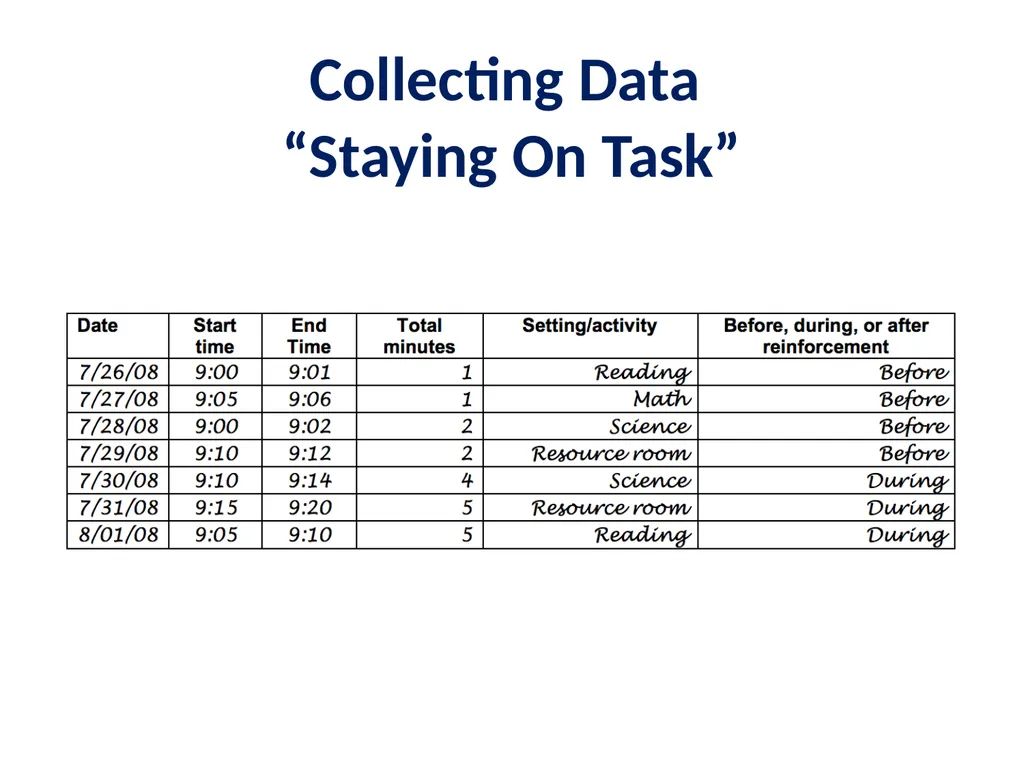
slide22. Collecting Data “Staying On Task”<br>
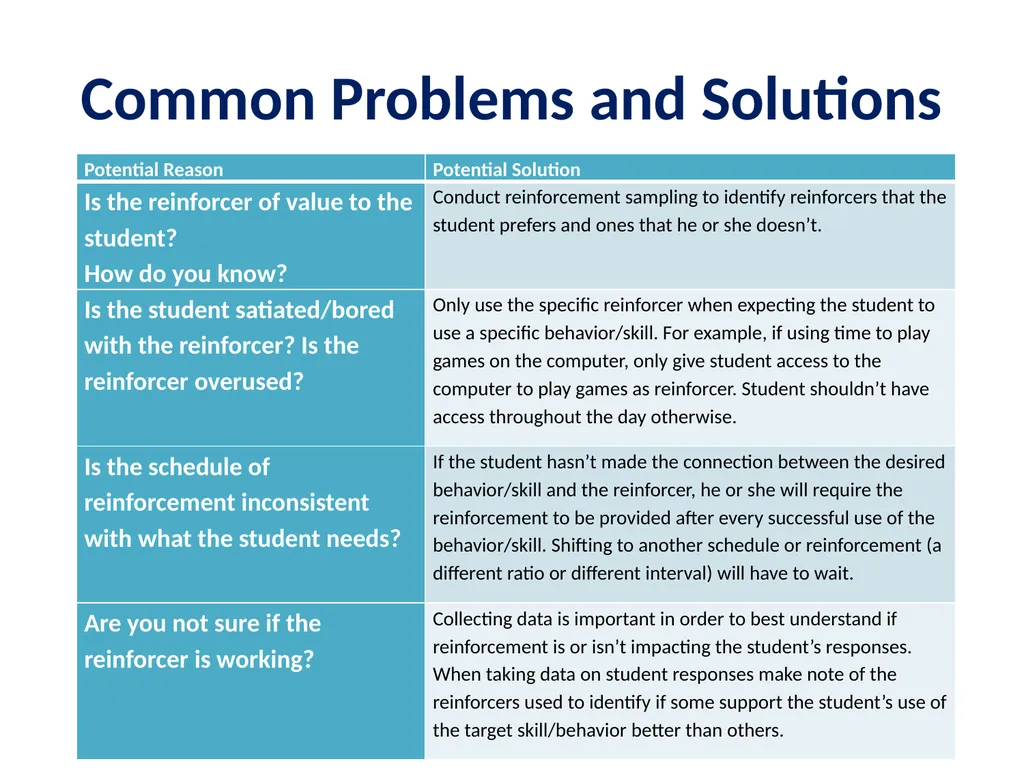
slide23. Common Problems and Solutions<br>
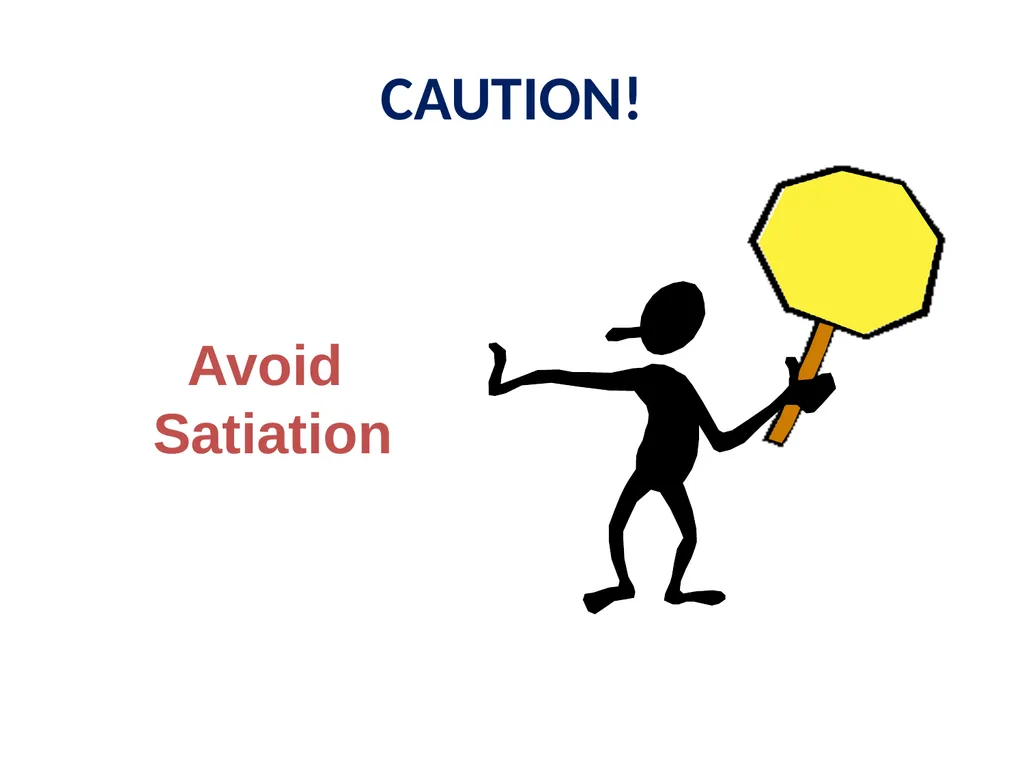
slide24. CAUTION! Avoid
Satiation<br>
slide25. Avoid Satiation!<br>
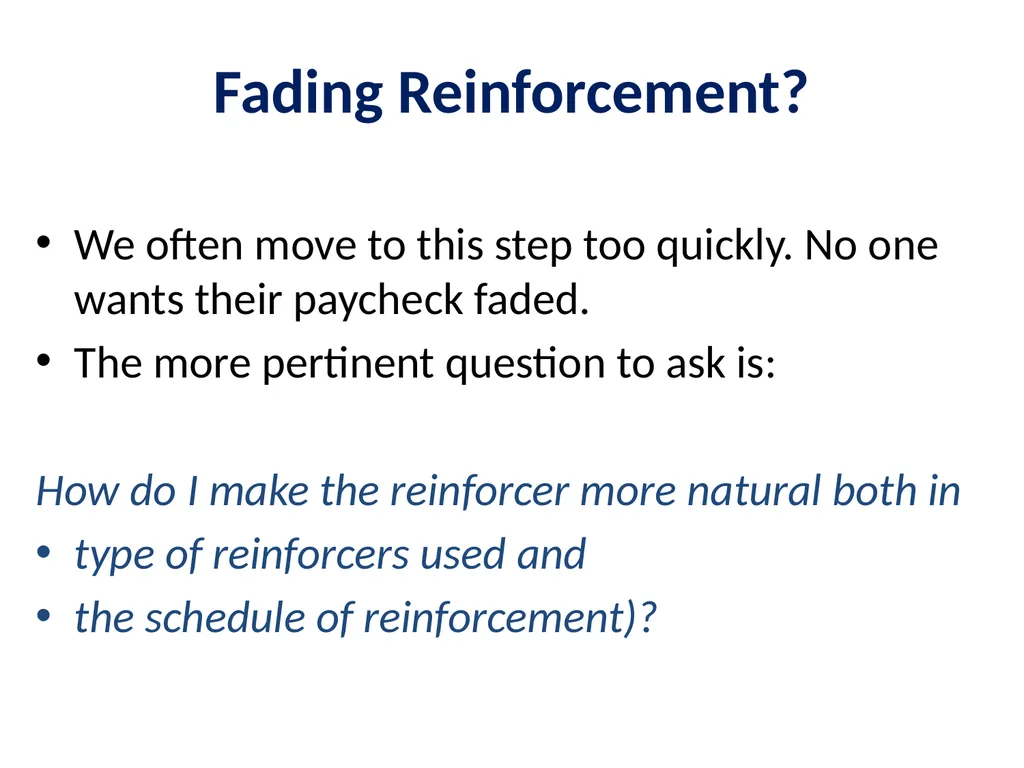
slide26. Fading Reinforcement? We often move to this step too quickly. No one wants their paycheck faded.
The more pertinent question to ask is:
How do I make the reinforcer more natural both in
type of reinforcers used and
the schedule of reinforcement)?<br>
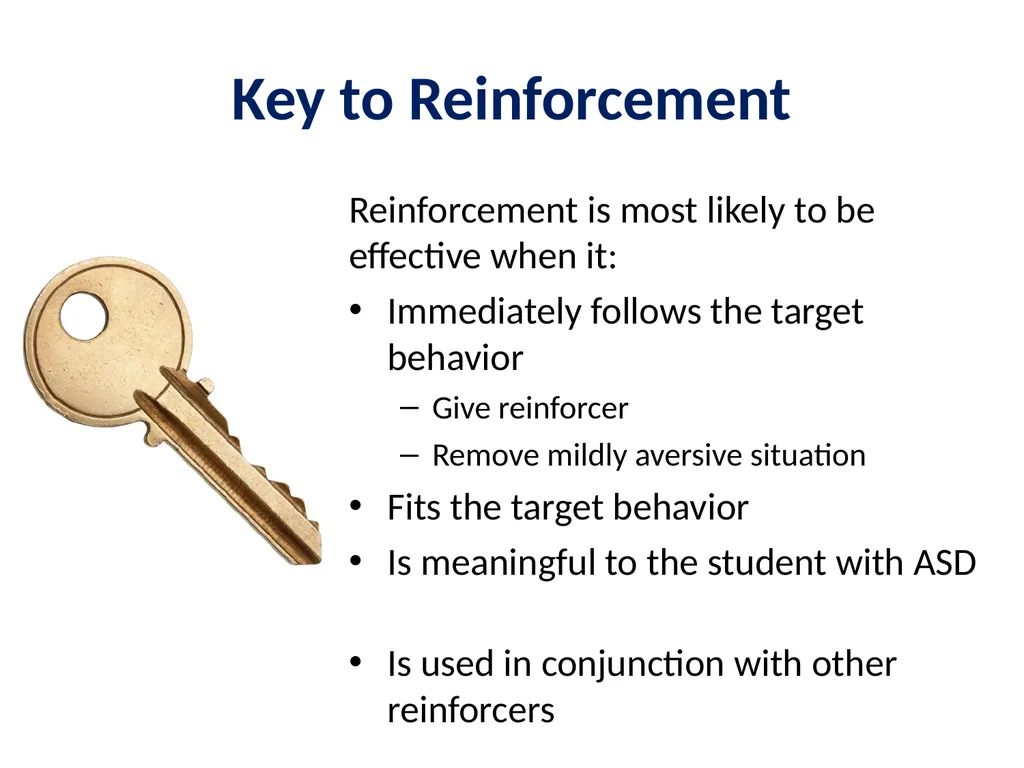
slide27. Key to Reinforcement Reinforcement is most likely to be effective when it:
Immediately follows the target behavior
Give reinforcer
Remove mildly aversive situation
Fits the target behavior
Is meaningful to the student with ASD
Is used in conjunction with other reinforcers<br>
slide28. To Learn More… Find additional information on Reinforcement and other
Evidence Based Practices within the following resources.<br>
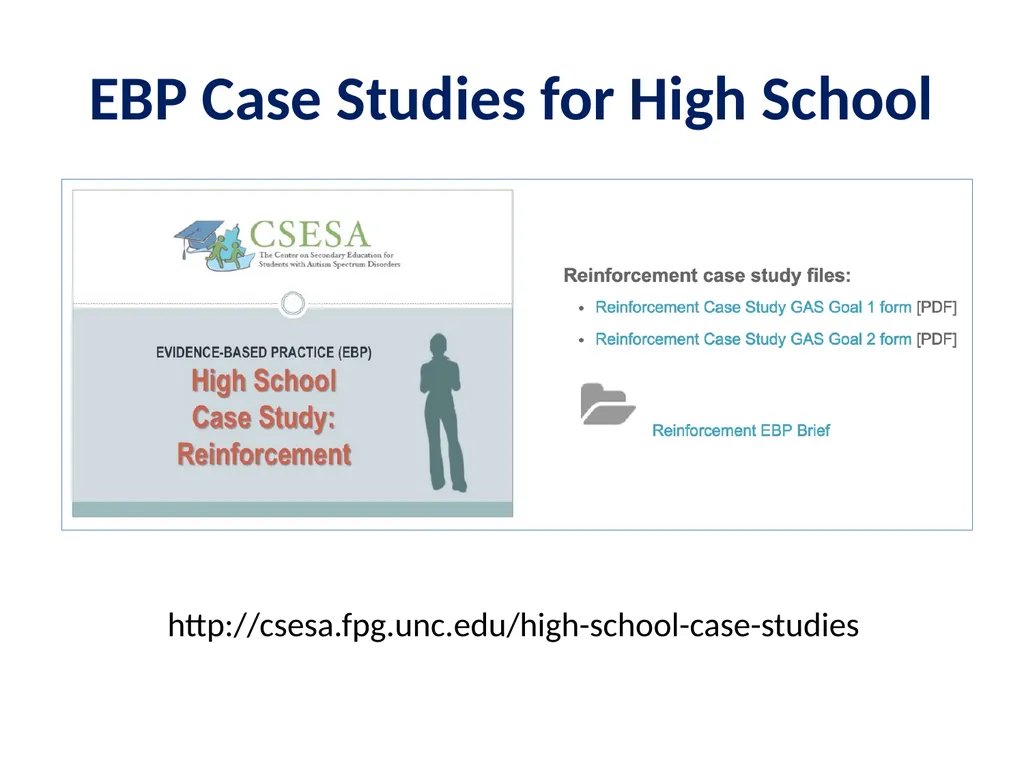
slide29. EBP Case Studies for High School http://csesa.fpg.unc.edu/high-school-case-studies<br>
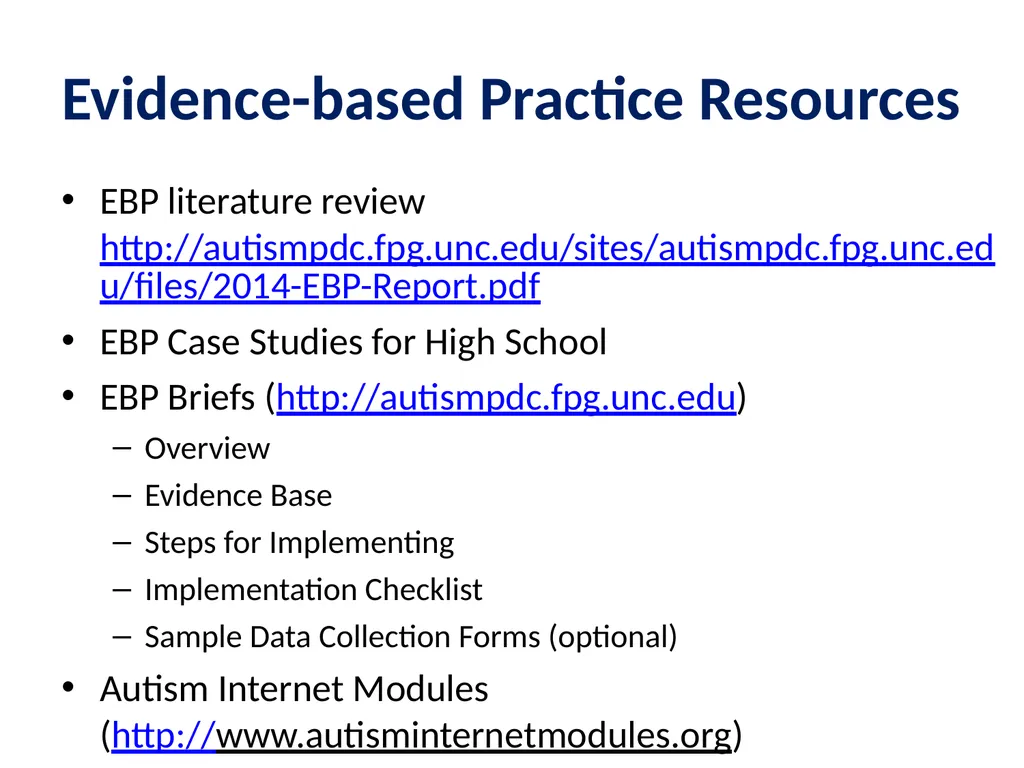
slide30. Evidence-based Practice Resources EBP literature review http://autismpdc.fpg.unc.edu/sites/autismpdc.fpg.unc.edu/files/2014-EBP-Report.pdf
EBP Case Studies for High School
EBP Briefs (http://autismpdc.fpg.unc.edu)
Overview
Evidence Base
Steps for Implementing
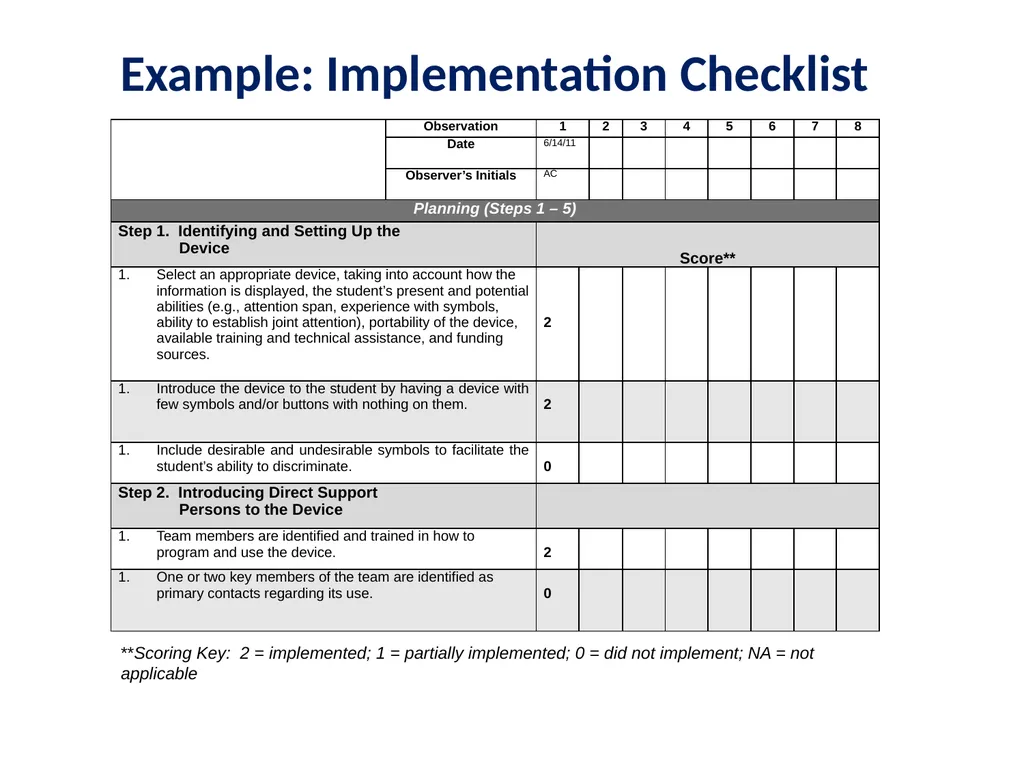
Implementation Checklist
Sample Data Collection Forms (optional)
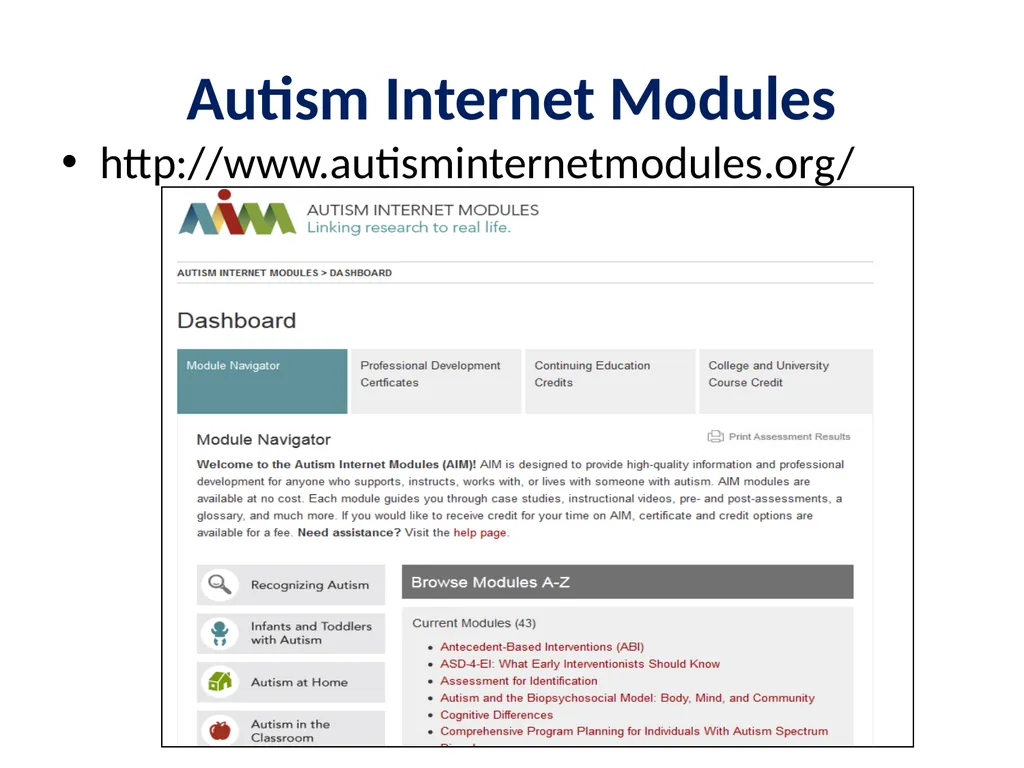
Autism Internet Modules (http://www.autisminternetmodules.org)<br>
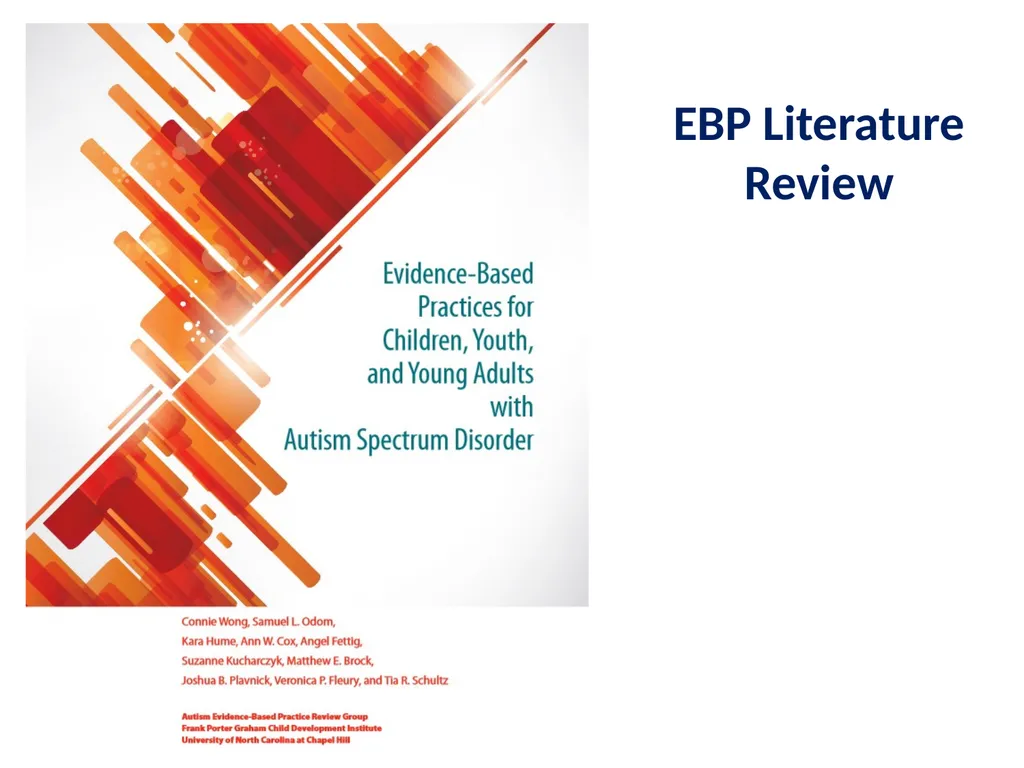
slide31. EBP Literature Review<br>
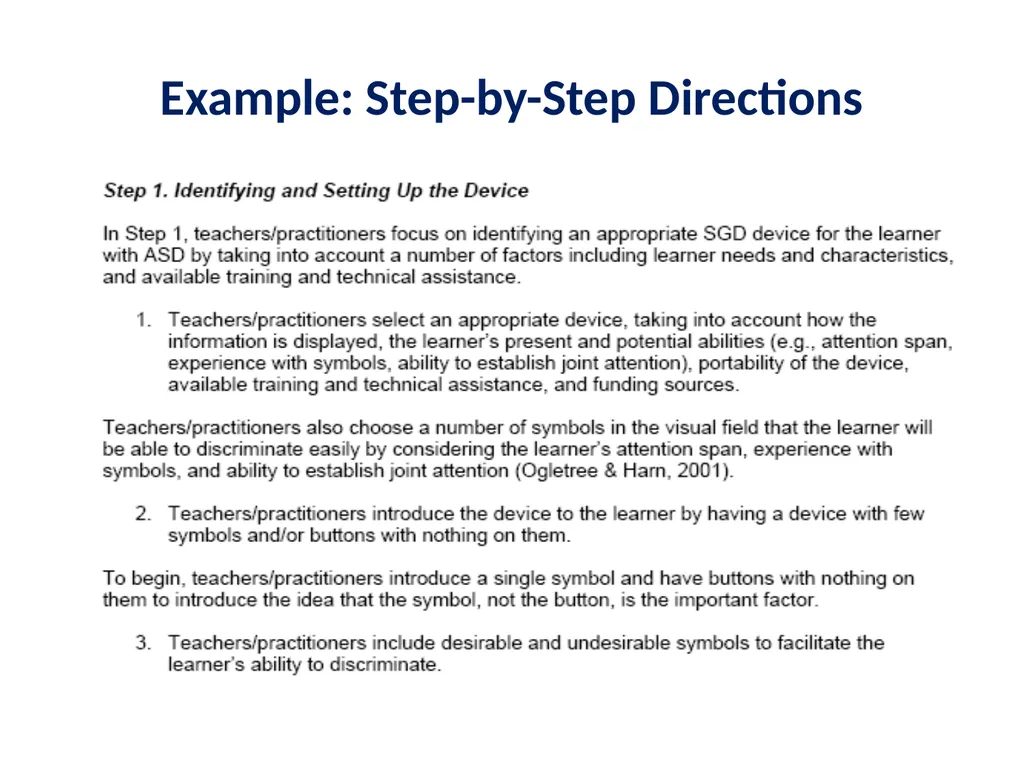
slide32. Example: Step-by-Step Directions<br>
slide33. Example: Implementation Checklist **Scoring Key: 2 = implemented; 1 = partially implemented; 0 = did not implement; NA = not applicable<br>
slide34. Autism Internet Modules http://www.autisminternetmodules.org/<br>
slide35. Action Plan What will I do tomorrow:
1.
2.
3.<br>
slide36. Questions<br>
slide2. Objectives Become aware of 27 EBPs identified for students with ASD
Describe key steps to using reinforcement
How to prepare for implementation
How to implement
How to assess progress
Identify key pitfalls and ways to avoid them
Identify ways to learn more about how to implement reinforcement<br>
slide3. What are EBPs? Focused interventions that:
Produce specific behavioral and developmental outcomes for a student
Have been demonstrated as effective in applied research literature
Can be successfully implemented in educational settings
(Odom, Colett-Klingenberg, Rogers, & Hatton, 2010)<br>
slide4. Evidence – Based Practices (2014) Antecedent-based interventions
Cognitive behavioral intervention*
Differential reinforcement
Discrete trial training
Exercise
Extinction
Functional behavior assessment
Functional communication training
Modeling
Naturalistic interventions
Parent-implemented intervention
Peer-mediated instruction/intervention
Picture Exchange Communication System Pivotal response training
Prompting
Reinforcement
Response interruption/redirection
Scripting
Self-management
Social narratives
Social skills training
Structured play groups
Task analysis
Technology-aided intervention/instruction
Time delay
Video modeling
Visual supports<br>
slide5. For All EBPs<br>
slide6. Reinforcement<br>
slide7. Who uses Reinforcement?<br>
slide8. Common Pitfalls Staying on primary reinforcer
Reinforcer not actually motivating for student
“He doesn’t like anything”
Not giving immediately
Not changing schedule of reinforcement once skill is learned
Reinforcer becoming boring for student<br>
slide9. Definition of Reinforcement Reinforcement describes an association between a behavior and the consequence that follows the behavior.
The association is only considered reinforcement if the consequence INCREASES the likelihood that the behavior will occur in the future.<br>
slide10. Target Skills Addressed Reinforcement is used in conjunction with other EBPs …
Such as, prompting, time delay, functional communication training, video modeling
In order to …
Increase adaptive behavior and use of a variety of skills
Decrease challenging behavior<br>
slide11. 3 Types of Reinforcement<br>
slide12. Steps for Implementation http://autismpdc.fpg.unc.edu/content/reinforcement<br>
slide13. Implementing Reinforcement<br>
slide14. Selecting a Reinforcer Reinforcer must be individualized to the student. We don’t all find the same things reinforcing.
Indirect methods—use observation, reinforcer survey, or team/family member interviews
Direct methods—conduct a preference assessment which is direct presentation and observation of the student engaged with potential reinforcers<br>
slide15. Reinforcer survey — survey the student using a written or picture list of different reinforcers<br>
slide16. Reinforcer Selection – As part of task<br>
slide17. Reinforcement Assessment Examples:
Present a number of reinforcing stimuli to the student (no more than 7)
Tell the student what each stimulus is and how to operate it if needed
Allow the student to engage with each stimulus
Record the amount of time the student engages with the stimulus
Re-arrange the order of the stimuli & represent
Select most reinforcing stimulus based on how long the individual engaged with each one<br>
slide18. Schedules of Reinforcement Varying schedules of reinforcement offers opportunities for avoiding satiation and building in fading
Continuous Reinforcement
reinforcement of all instances of target behavior
Intermittent Reinforcement
reinforcement after some but not all instances of target behavior
Fixed/Variable Ratio
Reinforcing after every/a number of behavior/skills
Fixed/Variable Interval
Reinforcing after same/different time passes<br>
slide19. Continuous vs. Intermittent Reinforcement Intermittent Example:
Mystery bag—have various reinforcers on cards and have students choose from them at various times in class period for correct responses or use of skills<br>
slide20. Examples Natural
Long term Reinforcement Social Reinforcement Token
Reinforcement<br>
slide21. Collecting Data - Example Identify when
Reinforcement
was started!<br>
slide22. Collecting Data “Staying On Task”<br>
slide23. Common Problems and Solutions<br>
slide24. CAUTION! Avoid
Satiation<br>
slide25. Avoid Satiation!<br>
slide26. Fading Reinforcement? We often move to this step too quickly. No one wants their paycheck faded.
The more pertinent question to ask is:
How do I make the reinforcer more natural both in
type of reinforcers used and
the schedule of reinforcement)?<br>
slide27. Key to Reinforcement Reinforcement is most likely to be effective when it:
Immediately follows the target behavior
Give reinforcer
Remove mildly aversive situation
Fits the target behavior
Is meaningful to the student with ASD
Is used in conjunction with other reinforcers<br>
slide28. To Learn More… Find additional information on Reinforcement and other
Evidence Based Practices within the following resources.<br>
slide29. EBP Case Studies for High School http://csesa.fpg.unc.edu/high-school-case-studies<br>
slide30. Evidence-based Practice Resources EBP literature review http://autismpdc.fpg.unc.edu/sites/autismpdc.fpg.unc.edu/files/2014-EBP-Report.pdf
EBP Case Studies for High School
EBP Briefs (http://autismpdc.fpg.unc.edu)
Overview
Evidence Base
Steps for Implementing
Implementation Checklist
Sample Data Collection Forms (optional)
Autism Internet Modules (http://www.autisminternetmodules.org)<br>
slide31. EBP Literature Review<br>
slide32. Example: Step-by-Step Directions<br>
slide33. Example: Implementation Checklist **Scoring Key: 2 = implemented; 1 = partially implemented; 0 = did not implement; NA = not applicable<br>
slide34. Autism Internet Modules http://www.autisminternetmodules.org/<br>
slide35. Action Plan What will I do tomorrow:
1.
2.
3.<br>
slide36. Questions<br>