Five Ways to Wellbeing Staff Training What do you think is meant by the term Wellbeing? A good or satisfactory condition of existence; a state characterised by health, happiness, and prosperity; welfare: to influence the well-being of
"Five Ways to Wellbeing Staff Training What do you" is the property of its rightful owner. Permission is granted to
download and print the materials on this website for personal, non-commercial use only, and to display it
on your personal computer provided you do not modify the materials and that you retain all copyright
notices contained in the materials. By downloading content from our website, you accept the terms of this
agreement.
Presentation Transcript
01
Five Ways to Wellbeing
Staff Training<br>
02
What do you think is meant by the term ‘Wellbeing’?<br>
03
“A good or satisfactory condition of existence; a state characterised by health, happiness, and prosperity; welfare: to influence the well-being of the nation and its people.”
“Feelings of wellbeing are fundamental to the overall health of an individual, enabling them to successfully overcome difficulties and achieve what they want out of life”.<br>
04
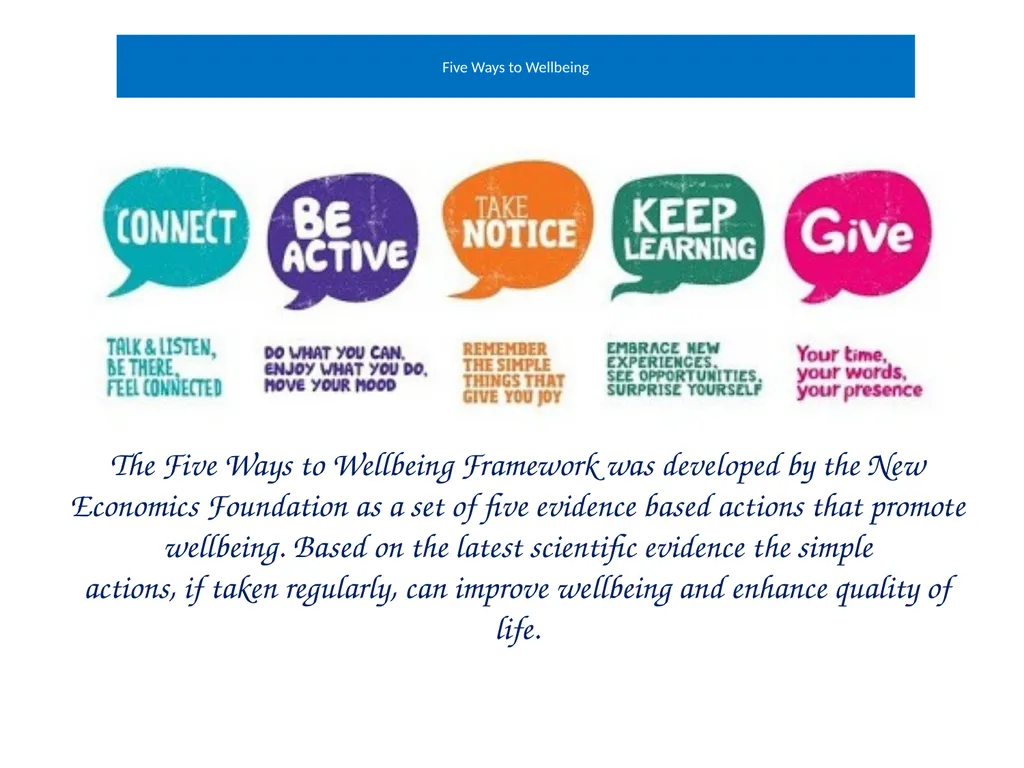
Five Ways to Wellbeing The Five Ways to Wellbeing Framework was developed by the New Economics Foundation as a set of five evidence based actions that promote wellbeing. Based on the latest scientific evidence the simple
actions, if taken regularly, can improve wellbeing and enhance quality of life.<br>
05
The Five Ways to Wellbeing are: Connect with people
Make opportunity to spend some quality time with family/friends.
Talk and listen, be there, feel connected.<br>
06
The Five Ways to Wellbeing are: Give your time, your words, your presence.
Be kind – do something nice for a family member or a friend/neighbour/local community
Share your positivity – being positive and sharing your optimism can be a big help to some people.<br>
07
The Five Ways to Wellbeing are: Do what you can. Enjoy what you do. Move your mood.
Go for a walk or a run. Step outside. Cycle. Play a game. Dance.
Exercising makes you feel good.<br>
08
The Five Ways to Wellbeing are: Remember the simple things that give you joy.
Be curious. Catch sight of the beautiful. Notice the changing seasons. Be aware of the world around you and what you are feeling. Be in the present.<br>
09
The Five Ways to Wellbeing are: Embrace new experiences. See opportunities. Surprise yourself.
Try something new. Set a challenge you will enjoy achieving. Learning new things will make you more confident as well as being fun.<br>
10
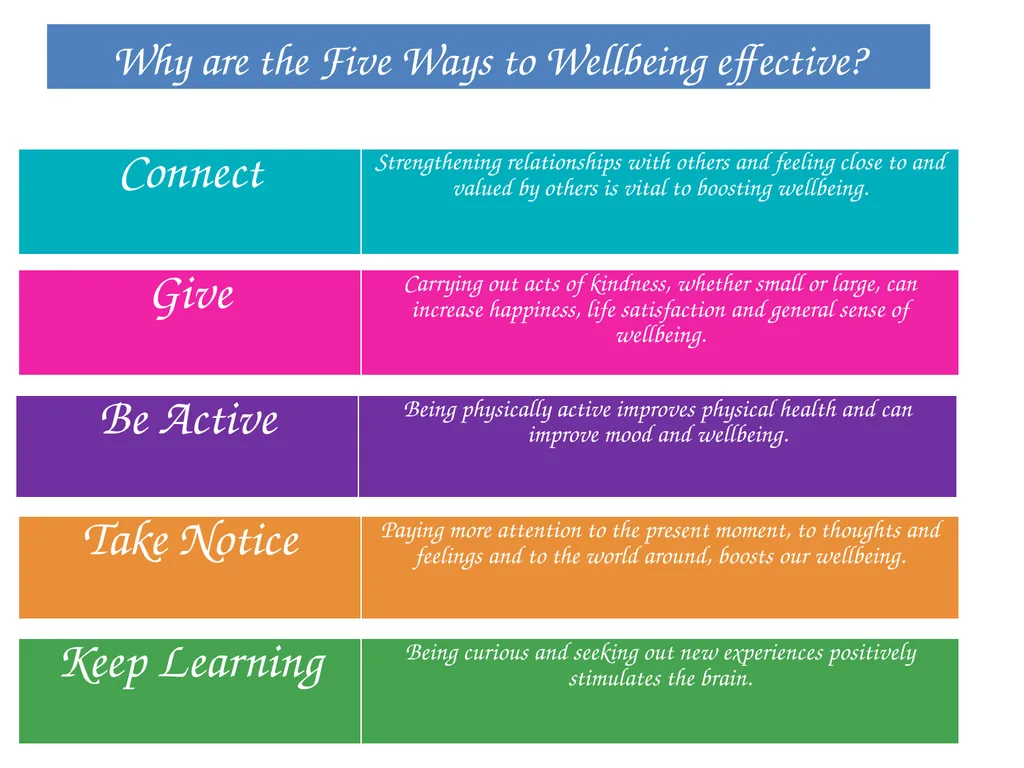
Why are the Five Ways to Wellbeing effective?<br>
11
What the Five Ways look like in action Think about the things you have done over the last week. Under each of the Five Ways write down an activity.<br>
12
Implementation in school How will we go about doing this?<br>
13
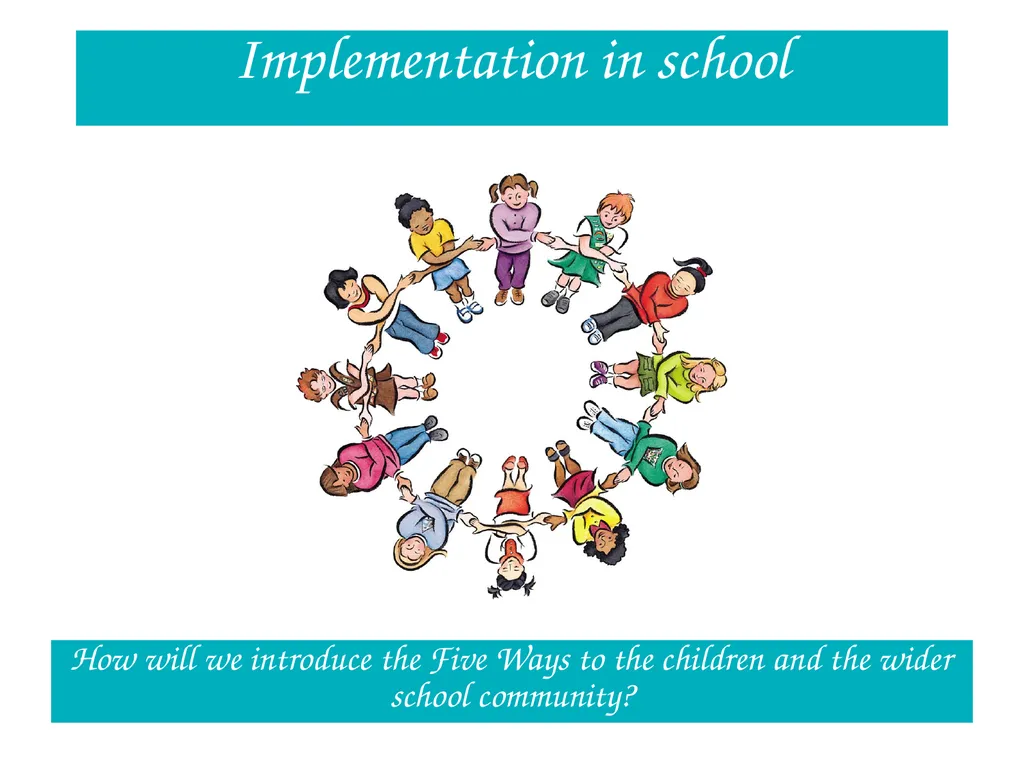
Implementation in school How will we introduce the Five Ways to the children and the wider school community?<br>