
Flying by Numbers with the lift equation Using and

Description: Flying by Numbers with the lift equation Using and rearranging the lift calculation Stay safe Whether you are a scientist researching a new medicine or an engineer solving climate change, safety always comes first. An adult must always be
Related Topics
Download Presentation
"Flying by Numbers with the lift equation Using and" is the property of its rightful owner. Permission is granted to download and print the materials on this website for personal, non-commercial use only, and to display it on your personal computer provided you do not modify the materials and that you retain all copyright notices contained in the materials. By downloading content from our website, you accept the terms of this agreement.
Presentation Transcript
slide1. Flying by Numbers with the lift equation Using and rearranging the lift calculation<br>
slide2. Stay safe
Whether you are a scientist researching a new medicine or an engineer solving climate change, safety always comes first. An adult must always be around and supervising when doing this activity. You are responsible for:
• ensuring that any equipment used for this activity is in good working condition
• behaving sensibly and following any safety instructions so as not to hurt or injure yourself or others
Please note that in the absence of any negligence or other breach of duty by us, this activity is carried out at your own risk. It is important to take extra care at the stages marked with this symbol ⚠<br>
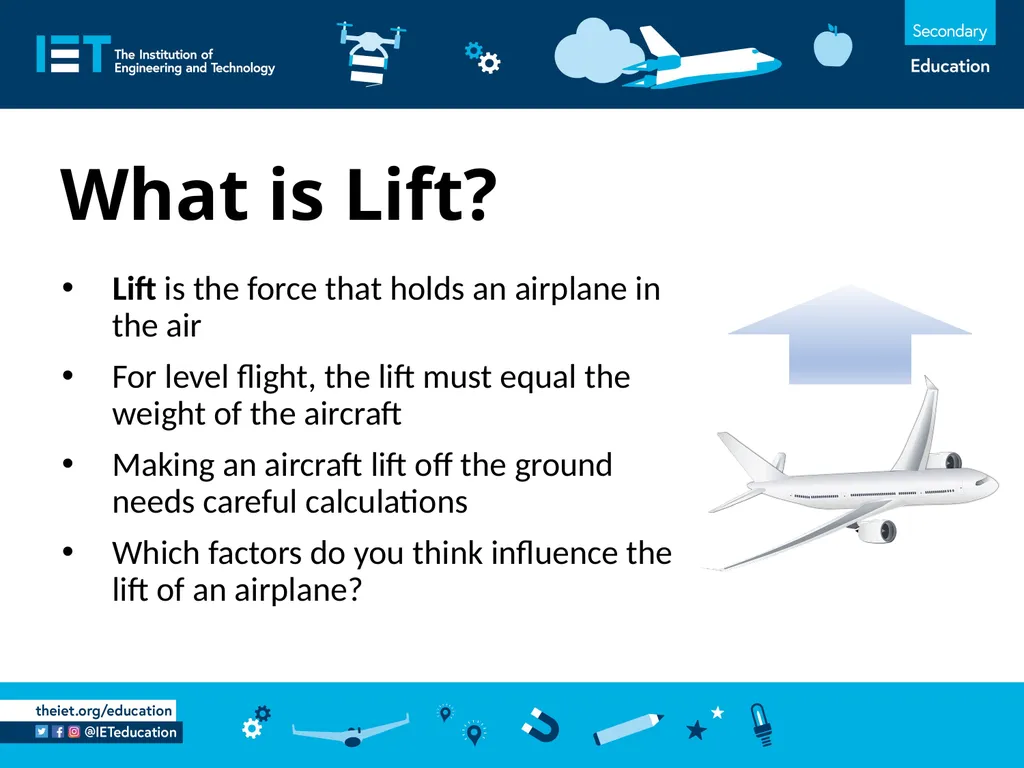
slide3. What is Lift? Lift is the force that holds an airplane in the air
For level flight, the lift must equal the weight of the aircraft
Making an aircraft lift off the ground needs careful calculations
Which factors do you think influence the lift of an airplane?<br>
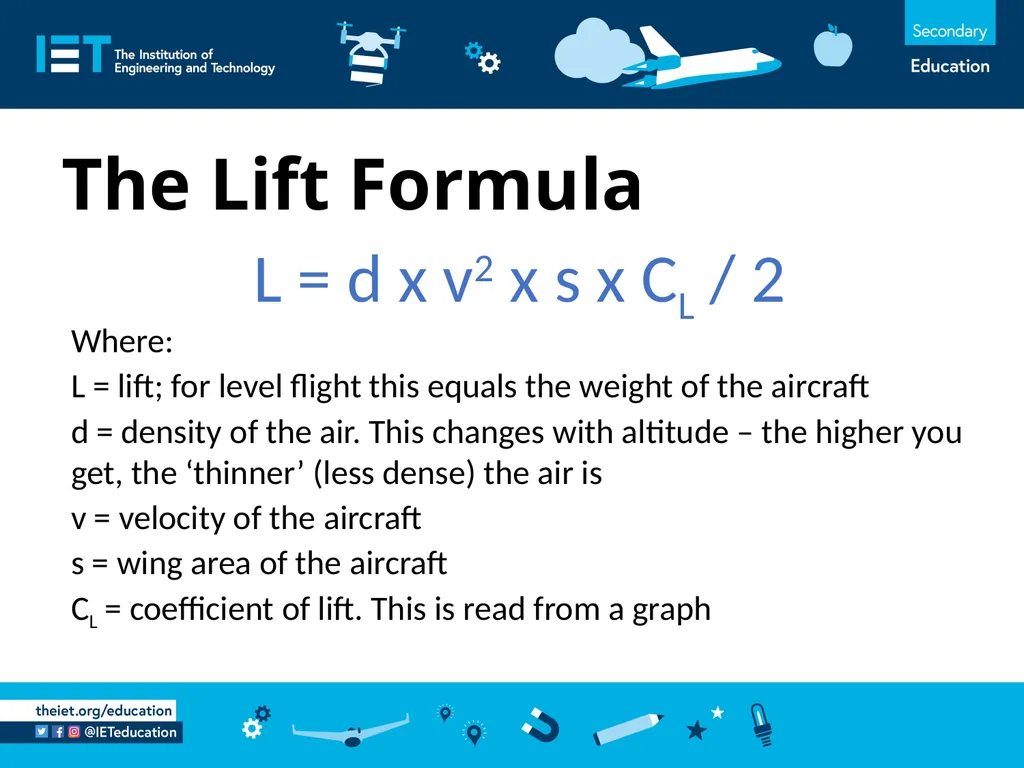
slide4. The Lift Formula L = d x v2 x s x CL / 2
Where:
L = lift; for level flight this equals the weight of the aircraft
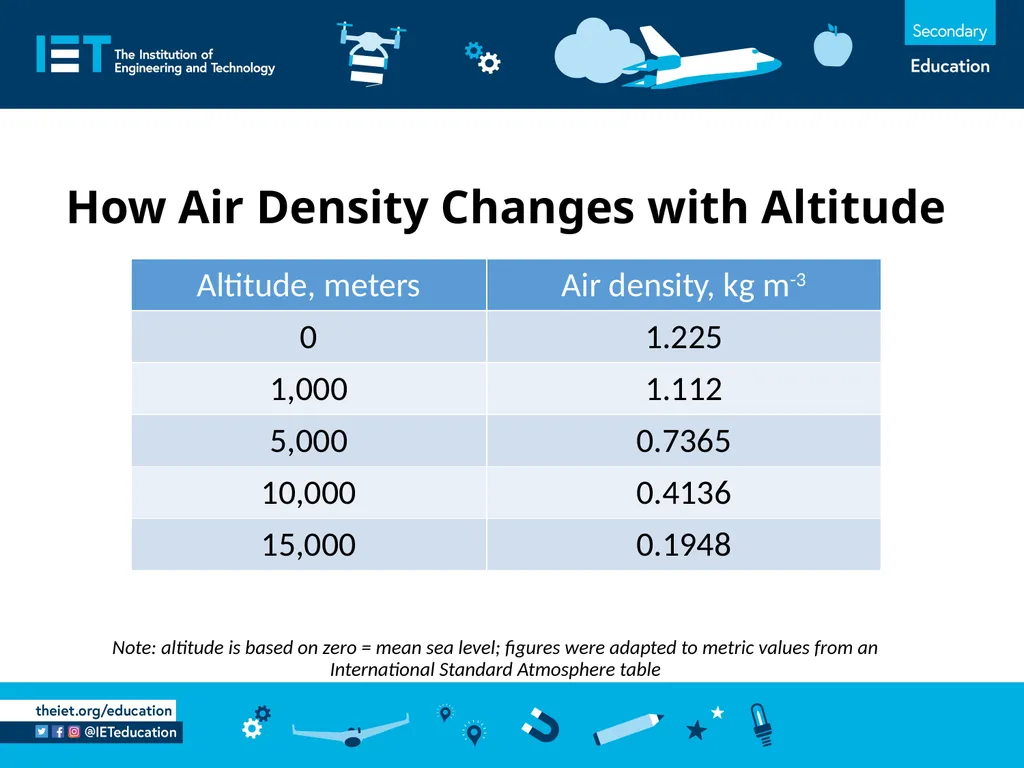
d = density of the air. This changes with altitude – the higher you get, the ‘thinner’ (less dense) the air is
v = velocity of the aircraft
s = wing area of the aircraft
CL = coefficient of lift. This is read from a graph<br>
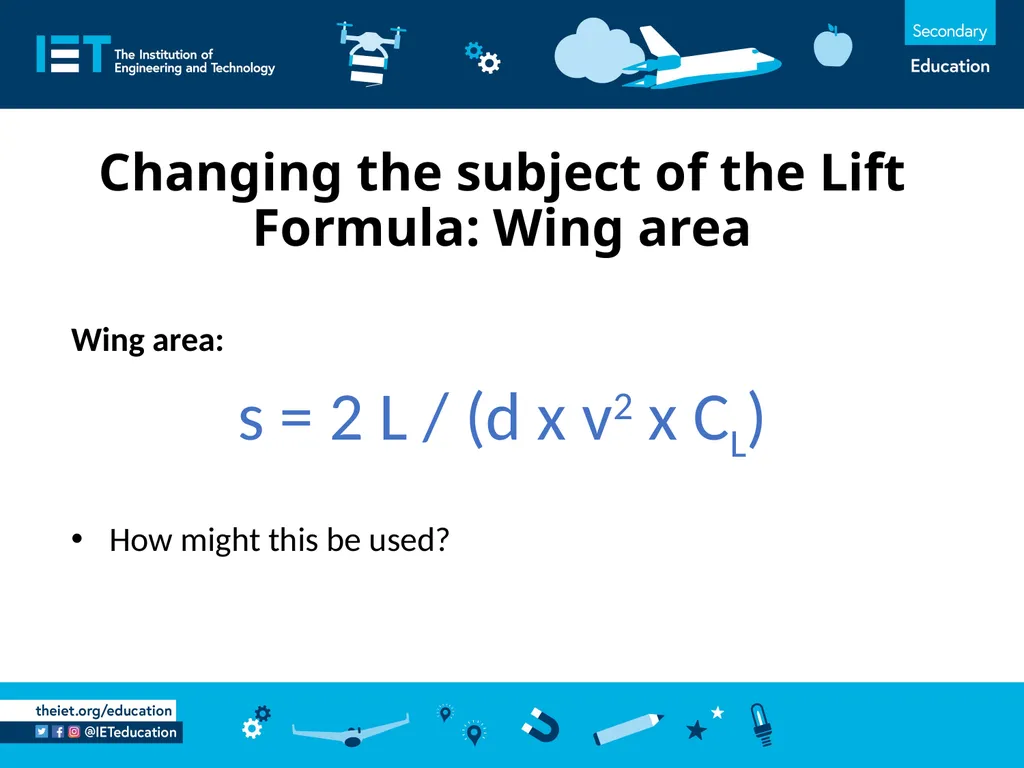
slide5. Changing the subject of the Lift Formula: Wing area Wing area:
s = 2 L / (d x v2 x CL)
How might this be used?<br>
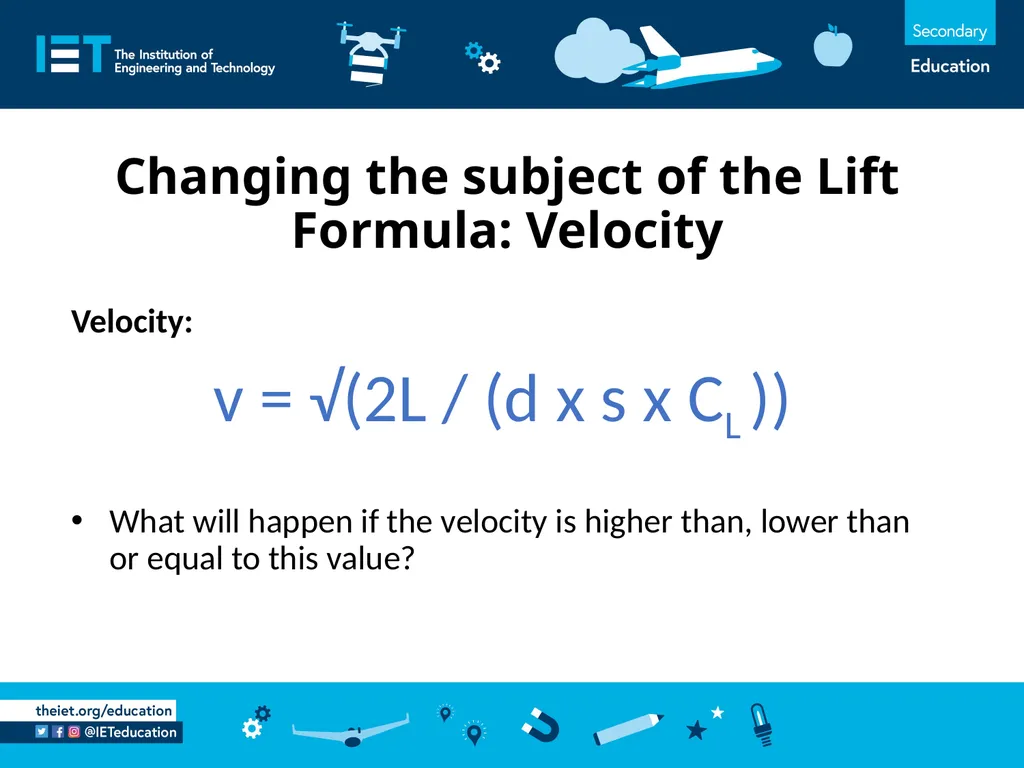
slide6. Changing the subject of the Lift Formula: Velocity Velocity:
v = √(2L / (d x s x CL ))
What will happen if the velocity is higher than, lower than or equal to this value?<br>
slide7. How Air Density Changes with Altitude Note: altitude is based on zero = mean sea level; figures were adapted to metric values from an International Standard Atmosphere table<br>
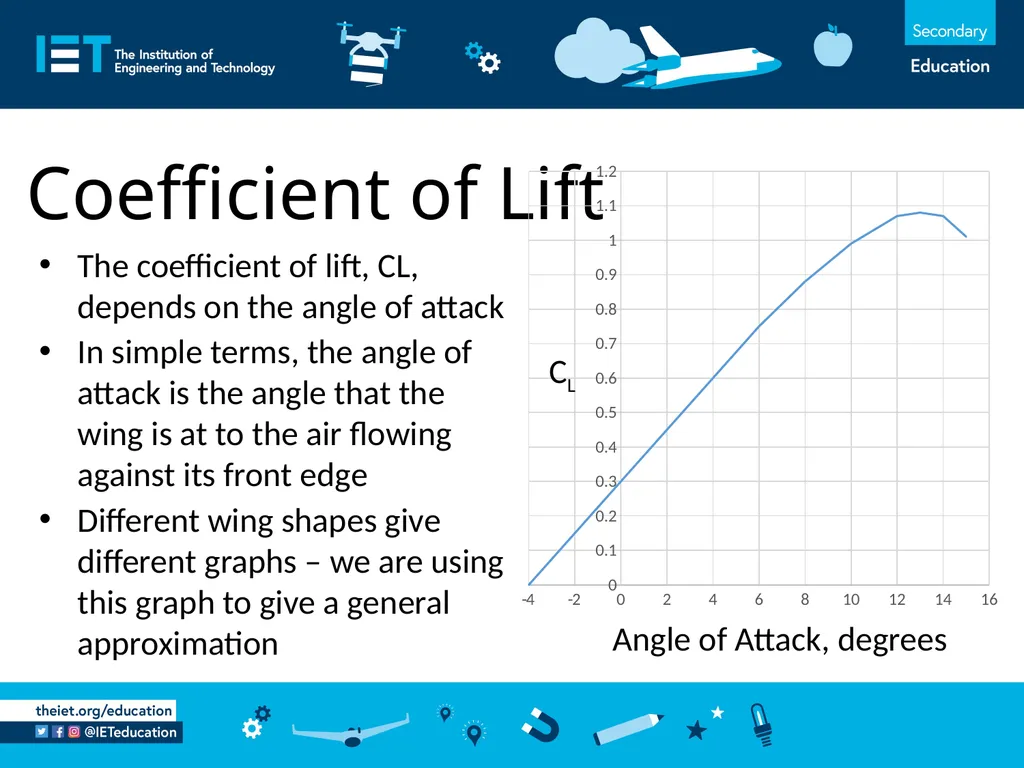
slide8. Coefficient of Lift The coefficient of lift, CL, depends on the angle of attack
In simple terms, the angle of attack is the angle that the wing is at to the air flowing against its front edge
Different wing shapes give different graphs – we are using this graph to give a general approximation<br>
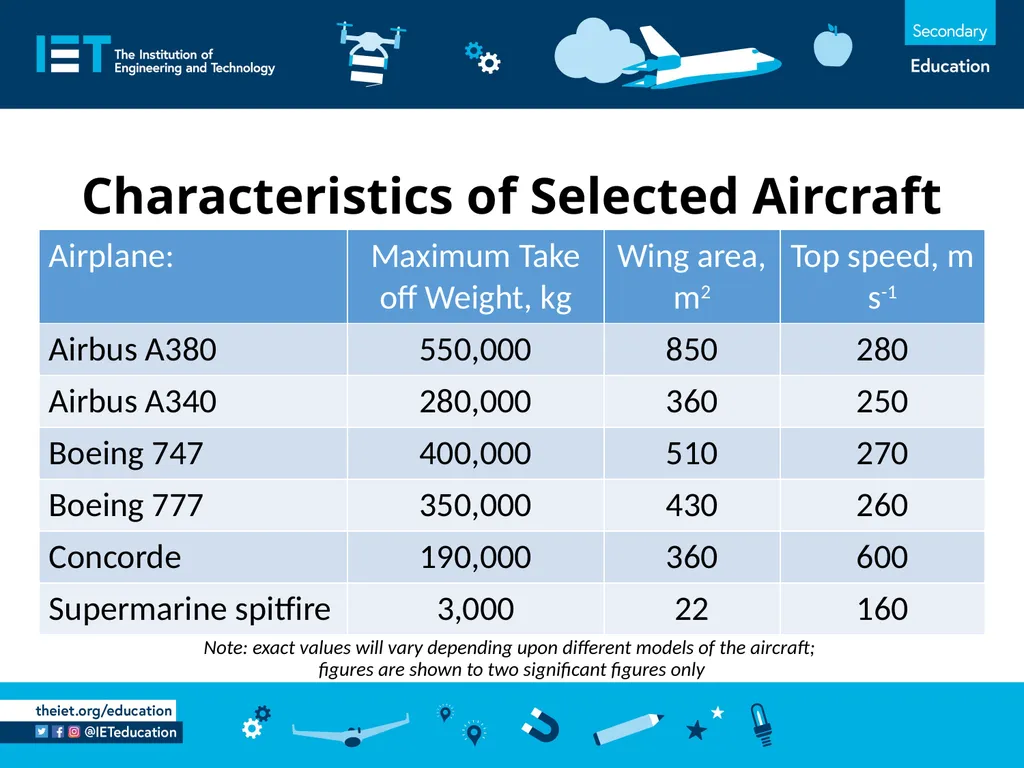
slide9. Characteristics of Selected Aircraft Note: exact values will vary depending upon different models of the aircraft;
figures are shown to two significant figures only<br>
slide10. Now do this: Using the data provided, answer the questions on the worksheet
For one of the listed aircraft, produce a graph showing how changing the angle of attack affects the velocity needed to achieve level flight
Identify the design characteristics in a typical aircraft that you can change to improve the lift. Explain, in detail, the changes that you could make to improve the lift.<br>
slide2. Stay safe
Whether you are a scientist researching a new medicine or an engineer solving climate change, safety always comes first. An adult must always be around and supervising when doing this activity. You are responsible for:
• ensuring that any equipment used for this activity is in good working condition
• behaving sensibly and following any safety instructions so as not to hurt or injure yourself or others
Please note that in the absence of any negligence or other breach of duty by us, this activity is carried out at your own risk. It is important to take extra care at the stages marked with this symbol ⚠<br>
slide3. What is Lift? Lift is the force that holds an airplane in the air
For level flight, the lift must equal the weight of the aircraft
Making an aircraft lift off the ground needs careful calculations
Which factors do you think influence the lift of an airplane?<br>
slide4. The Lift Formula L = d x v2 x s x CL / 2
Where:
L = lift; for level flight this equals the weight of the aircraft
d = density of the air. This changes with altitude – the higher you get, the ‘thinner’ (less dense) the air is
v = velocity of the aircraft
s = wing area of the aircraft
CL = coefficient of lift. This is read from a graph<br>
slide5. Changing the subject of the Lift Formula: Wing area Wing area:
s = 2 L / (d x v2 x CL)
How might this be used?<br>
slide6. Changing the subject of the Lift Formula: Velocity Velocity:
v = √(2L / (d x s x CL ))
What will happen if the velocity is higher than, lower than or equal to this value?<br>
slide7. How Air Density Changes with Altitude Note: altitude is based on zero = mean sea level; figures were adapted to metric values from an International Standard Atmosphere table<br>
slide8. Coefficient of Lift The coefficient of lift, CL, depends on the angle of attack
In simple terms, the angle of attack is the angle that the wing is at to the air flowing against its front edge
Different wing shapes give different graphs – we are using this graph to give a general approximation<br>
slide9. Characteristics of Selected Aircraft Note: exact values will vary depending upon different models of the aircraft;
figures are shown to two significant figures only<br>
slide10. Now do this: Using the data provided, answer the questions on the worksheet
For one of the listed aircraft, produce a graph showing how changing the angle of attack affects the velocity needed to achieve level flight
Identify the design characteristics in a typical aircraft that you can change to improve the lift. Explain, in detail, the changes that you could make to improve the lift.<br>