GCSE Textiles Technology THEORY BOOKLET Name: Group: Fibres and Fabrics PROPERTIES AND CHARACTERISTICS What are natural fibres? Complete the table below: What are synthetic fibres? Complete the table below: What are regenerated fibres?
"GCSE Textiles Technology THEORY BOOKLET Name:" is the property of its rightful owner. Permission is granted to
download and print the materials on this website for personal, non-commercial use only, and to display it
on your personal computer provided you do not modify the materials and that you retain all copyright
notices contained in the materials. By downloading content from our website, you accept the terms of this
agreement.
Presentation Transcript
01
GCSE Textiles Technology THEORY BOOKLET Name:
Group:<br>
02
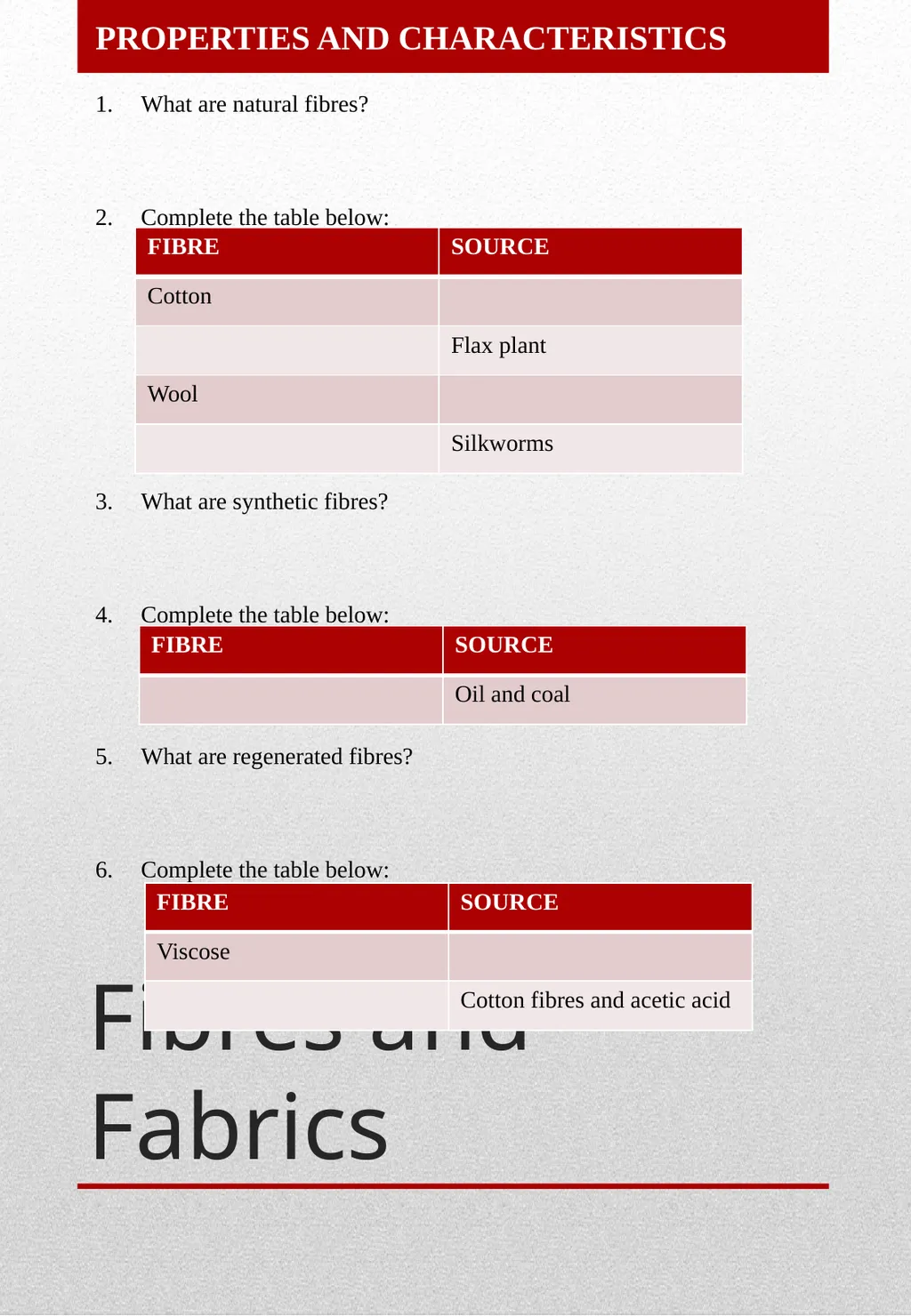
Fibres and Fabrics PROPERTIES AND CHARACTERISTICS
What are natural fibres?
Complete the table below:
What are synthetic fibres?
Complete the table below:
What are regenerated fibres?
Complete the table below:<br>
03
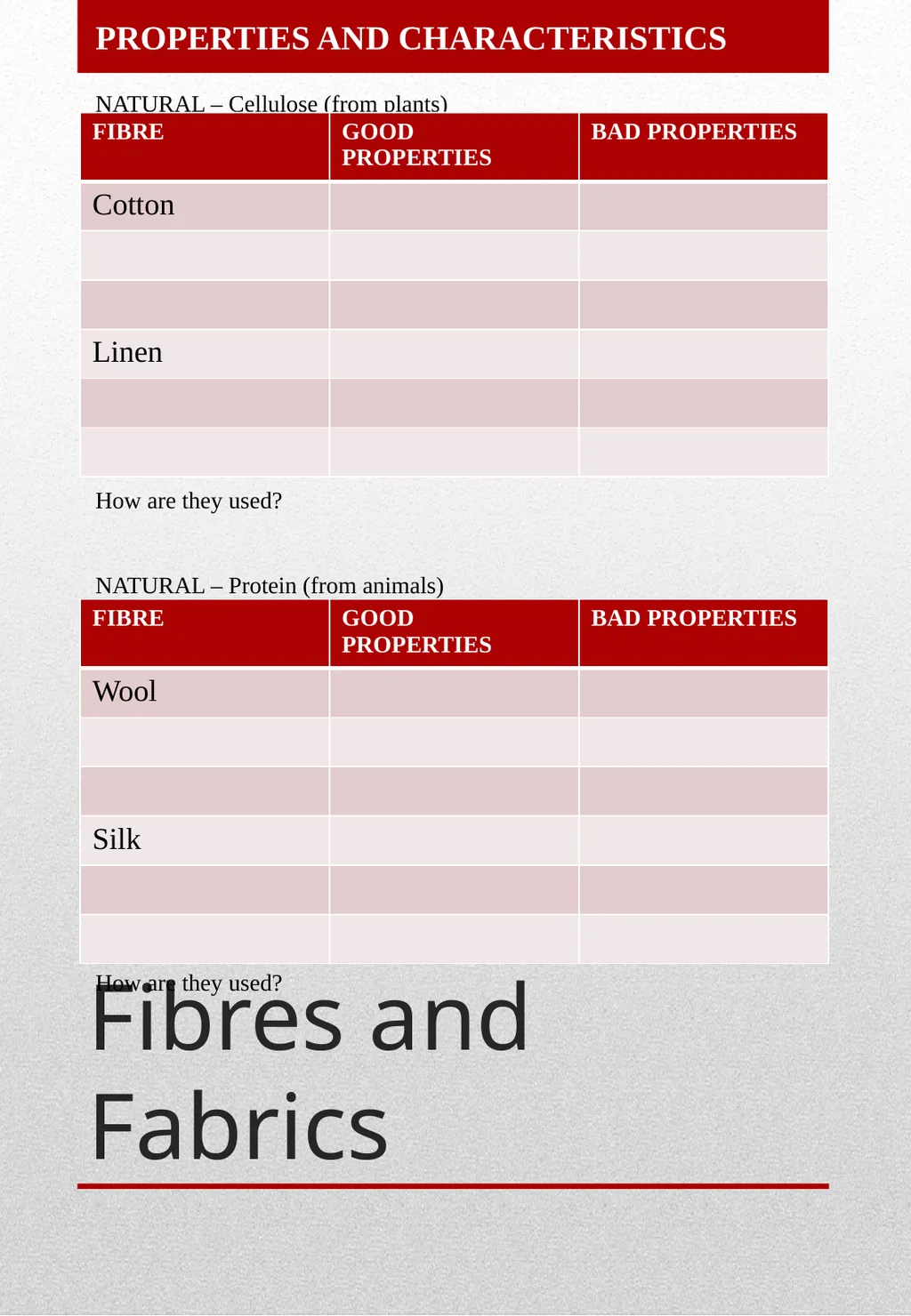
Fibres and Fabrics PROPERTIES AND CHARACTERISTICS
NATURAL – Cellulose (from plants)
How are they used?
NATURAL – Protein (from animals)
How are they used?<br>
04
Fibres and Fabrics PROPERTIES AND CHARACTERISTICS
SYNTHETIC
How are they used?
REGENERATED
How are they used?<br>
05
Fibres and Fabrics PROPERTIES AND CHARACTERISTICS
MICROFIBRES
What is a microfibre? Give a definition and an example.
How are microfibres used?
What type of fibre can be heat treated to make textured yarns?
What are textured yarns used for and why?
FIBRE BLENDS
Blending fibres can improve:
-
-
-
-
Fill in the table below:
MODERN MICROFIRES
1. Fill in the table below:<br>
06
Fibres and Fabrics PROPERTIES AND CHARACTERISTICS
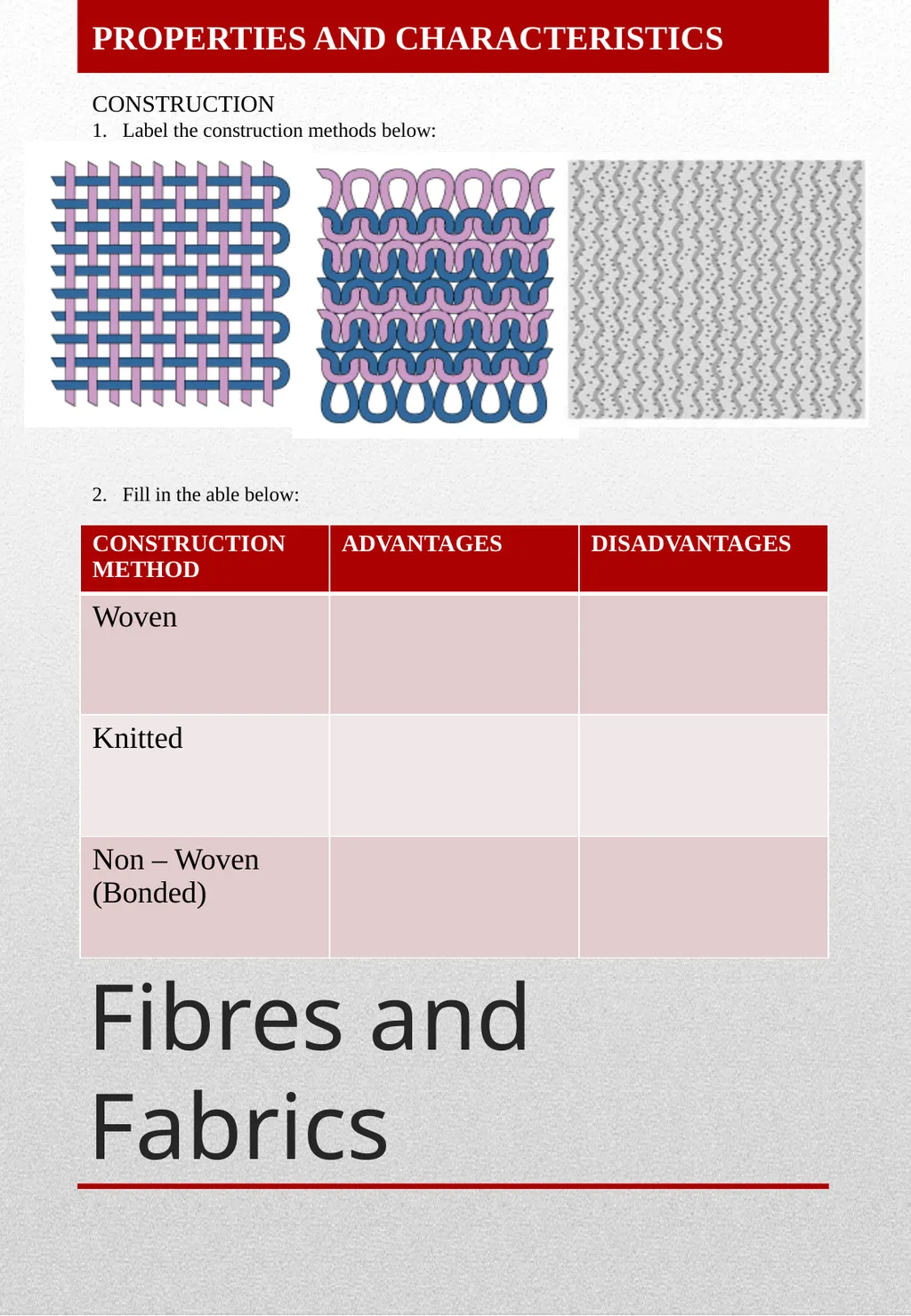
CONSTRUCTION
Label the construction methods below:
Fill in the able below:<br>
07
Fibres and Fabrics PROPERTIES AND CHARACTERISTICS
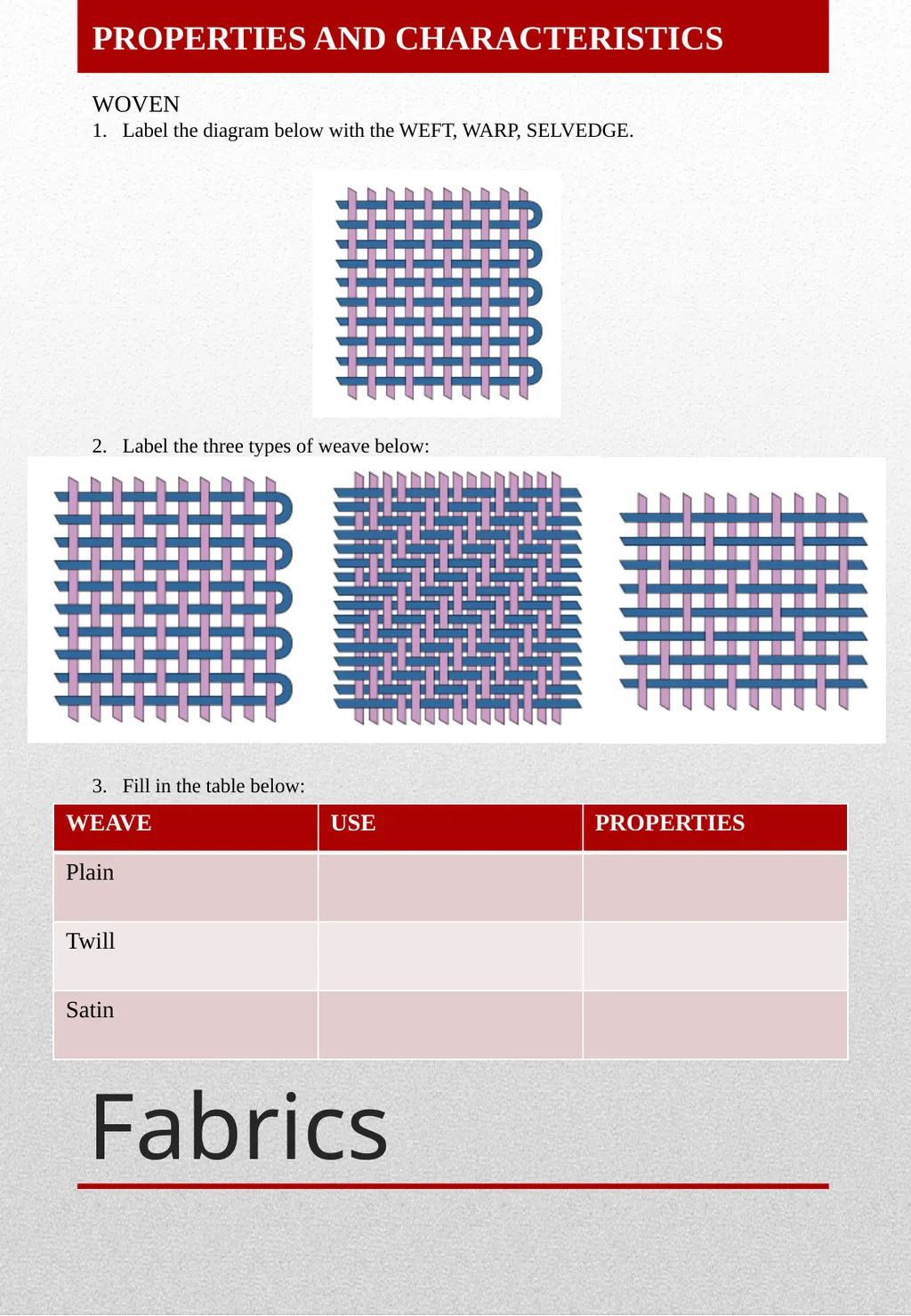
WOVEN
Label the diagram below with the WEFT, WARP, SELVEDGE.
Label the three types of weave below:
Fill in the table below:<br>
08
Fibres and Fabrics PROPERTIES AND CHARACTERISTICS
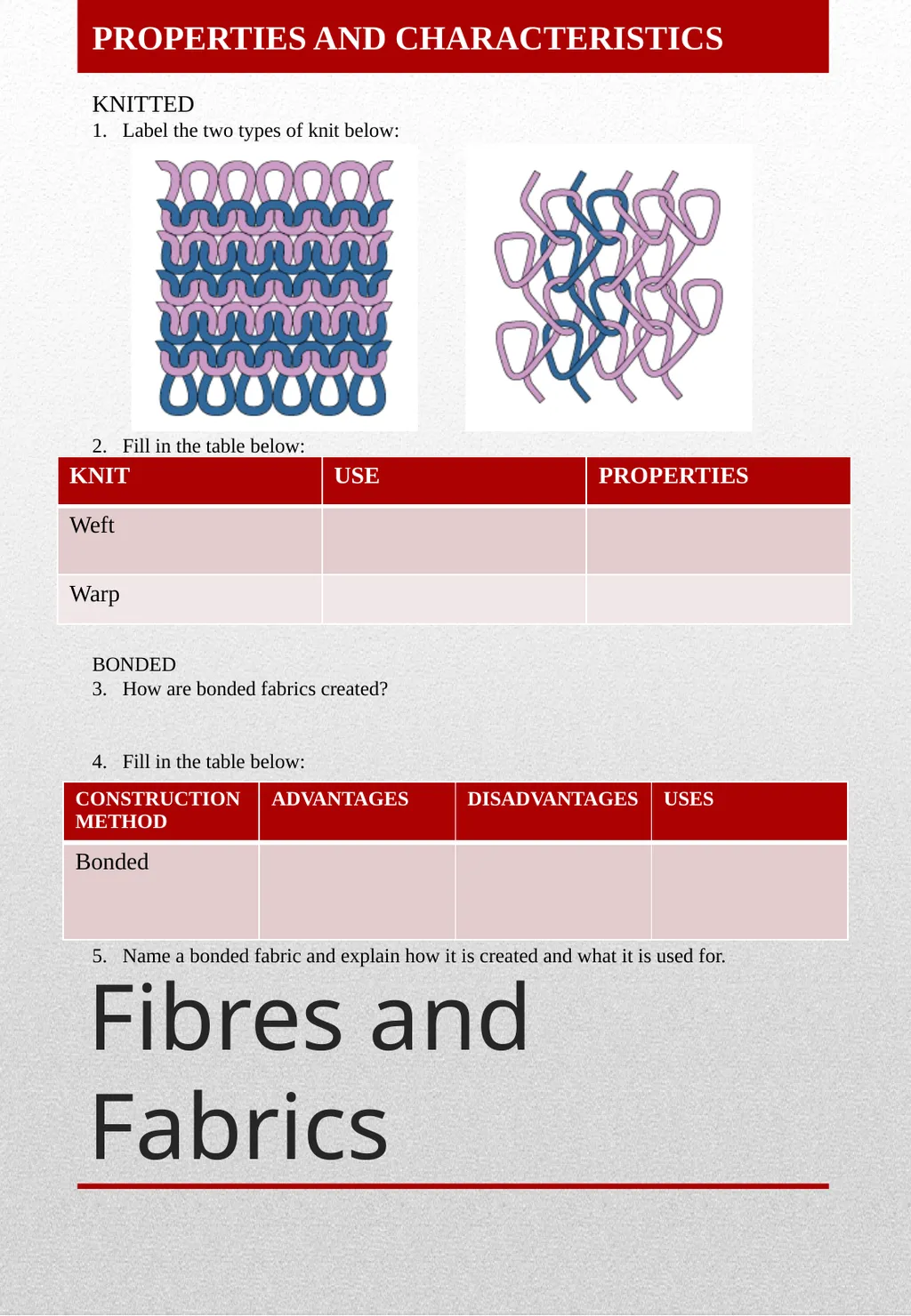
KNITTED
Label the two types of knit below:
Fill in the table below:
BONDED
How are bonded fabrics created?
Fill in the table below:
Name a bonded fabric and explain how it is created and what it is used for.<br>
09
Fibres and Fabrics PROPERTIES AND CHARACTERISTICS
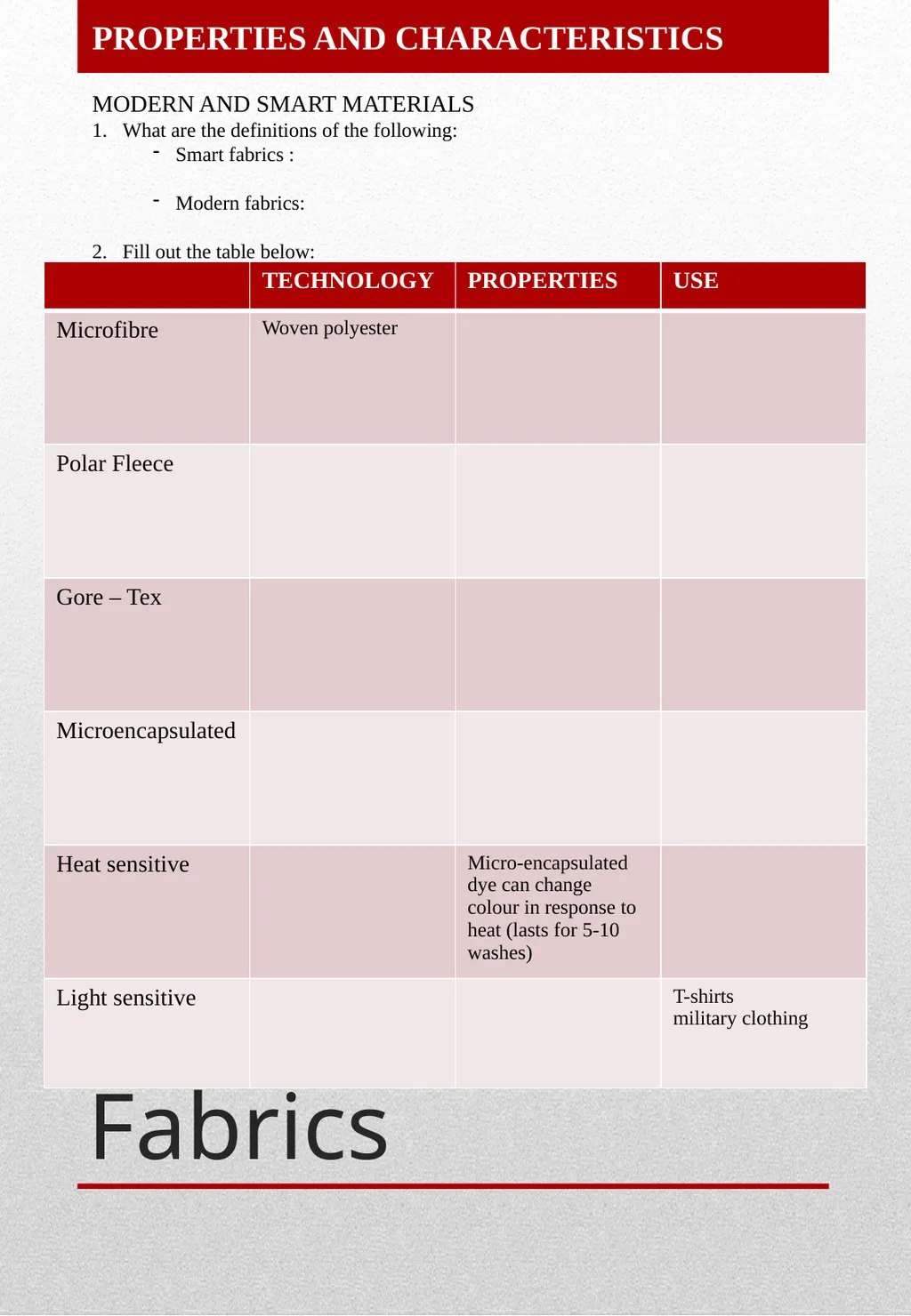
MODERN AND SMART MATERIALS
What are the definitions of the following:
Smart fabrics :
Modern fabrics:
Fill out the table below:<br>
10
Fibres and Fabrics PROPERTIES AND CHARACTERISTICS
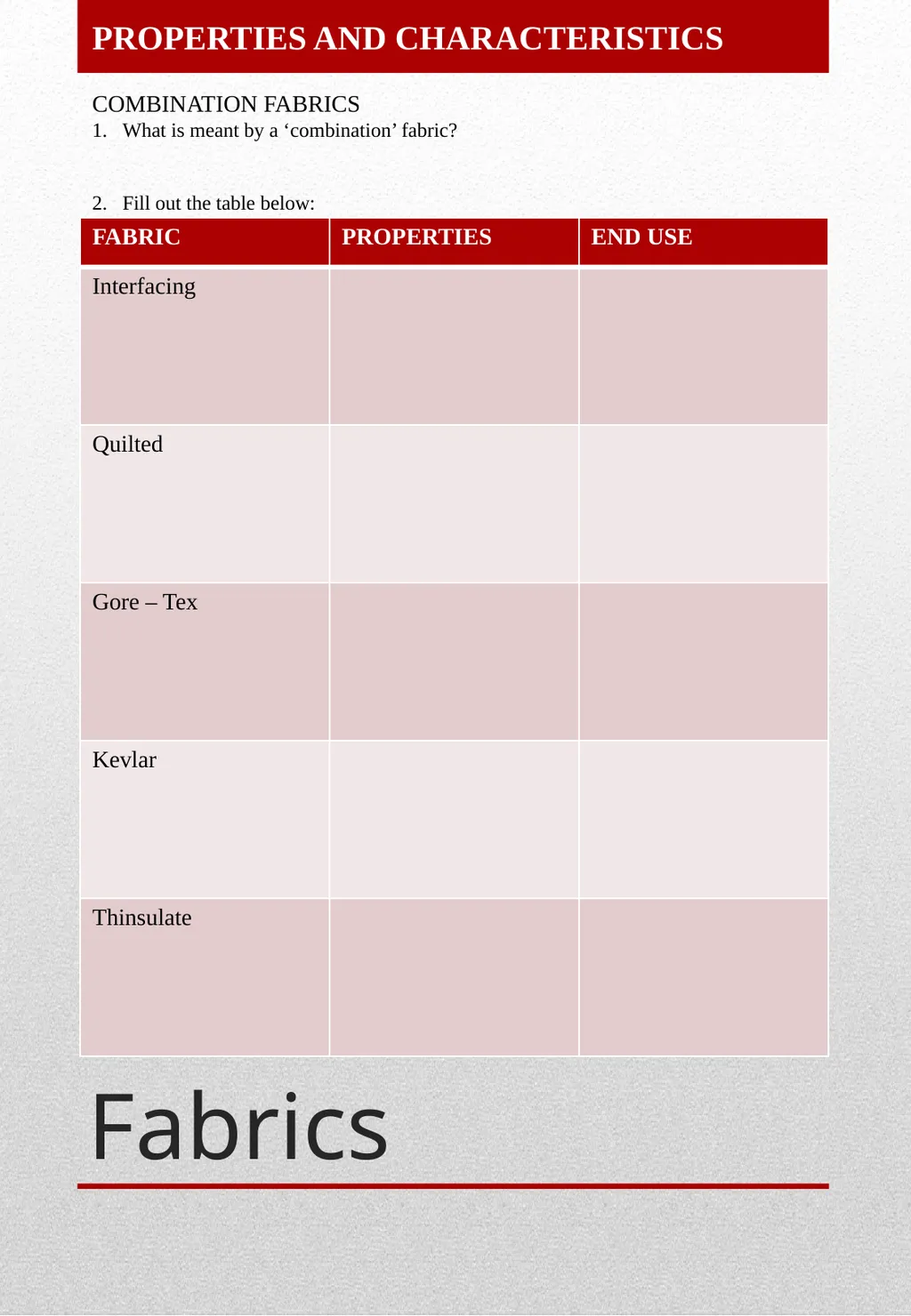
COMBINATION FABRICS
What is meant by a ‘combination’ fabric?
Fill out the table below:<br>
11
Fibres and Fabrics PROPERTIES AND CHARACTERISTICS
TECHNOLOGY IN TEXTILES
What fabric technology could we use to make us more stream line in water?
Where have we gained the inspiration in developing this technology?
What are the benefits of using memory form and in what products?
How and why do we use smart-shape-memory alloy in textiles?
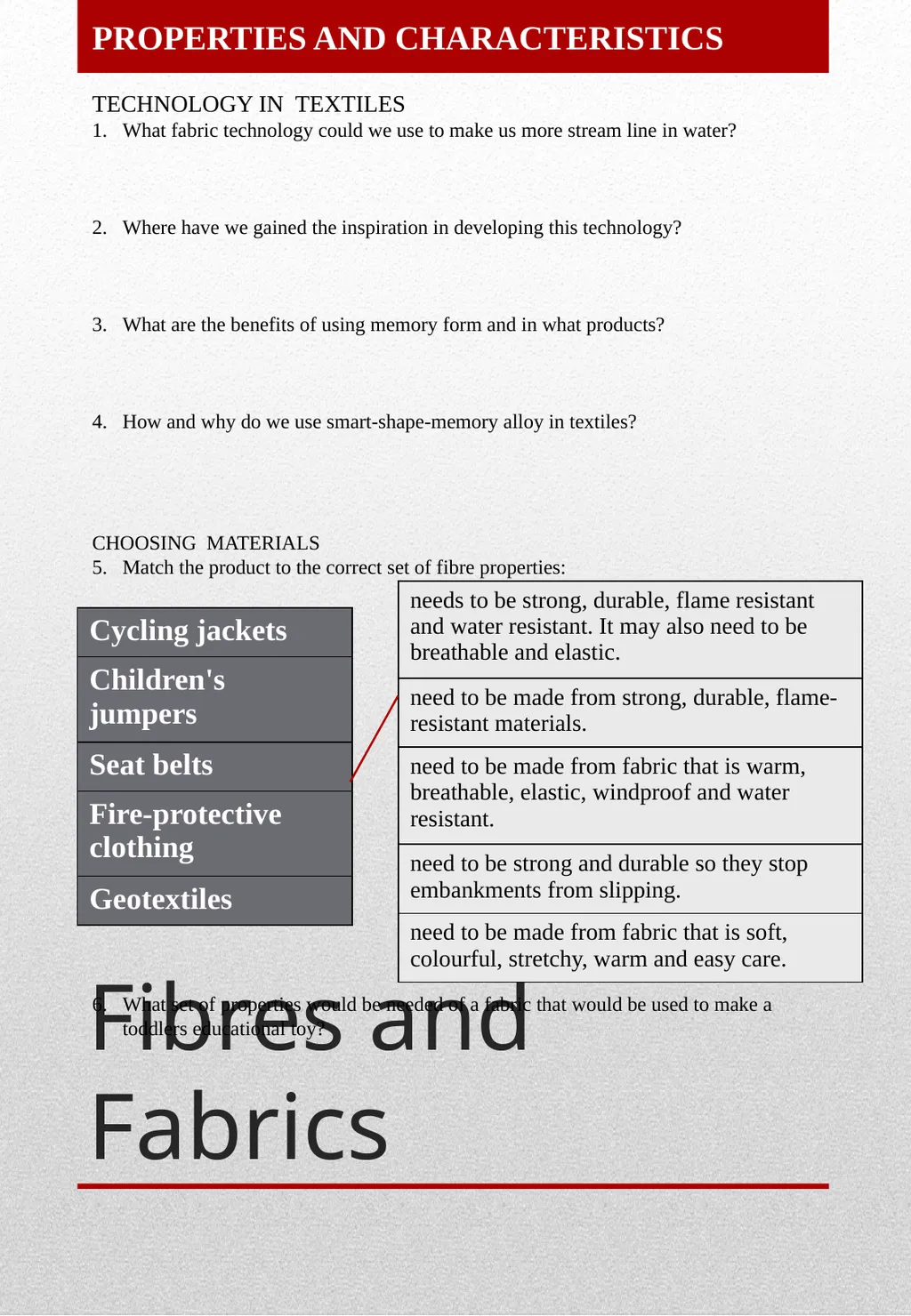
CHOOSING MATERIALS
Match the product to the correct set of fibre properties:
What set of properties would be needed of a fabric that would be used to make a toddlers educational toy?<br>
12
Finishing Processes DYEING AND PRINTING
DYEING
How is fabric prepared before dyeing?
What effects the strength of a dye colour?
What are the two types of commercial dying and can you describe them?
PRINTING
Fill in the below table about two types of printing:
Below, describe the process of using one of these printing methods. Use diagrams if needed.<br>
13
Finishing Processes DECORATION AND ENHANCEMENT APPLIQUE
What is the definition of ‘applique’?
What stitch is used and why?
RESIST DYING (TYE DYE AND BATIK)
Fill in the below table about two types of resist dying:
EMBROIDERY
Name three embroidery stitches
-
-
-
Below, describe how one of these embroidery stitches are created. Use diagrams if needed.<br>
14
Finishing Processes FINISHES
Finishing is…..
MECHANICAL FINISHING
Mechanical finishing is…
Examples of mechanical finishing (fill out the table):
CHEMICAL FINISHING
Chemical finishing is…
Examples of chemical finishing (fill out the table):<br>
15
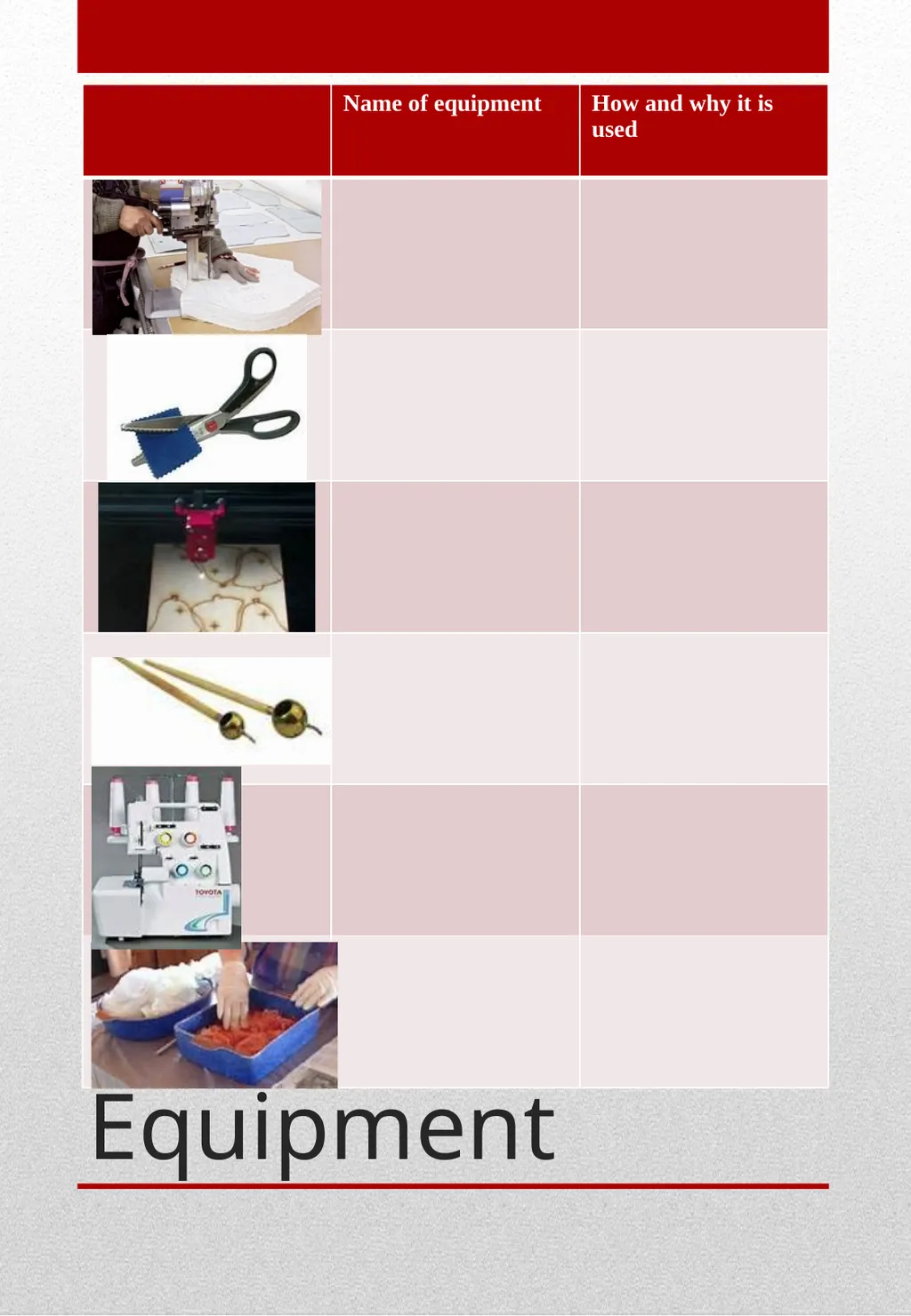
Equipment<br>
16
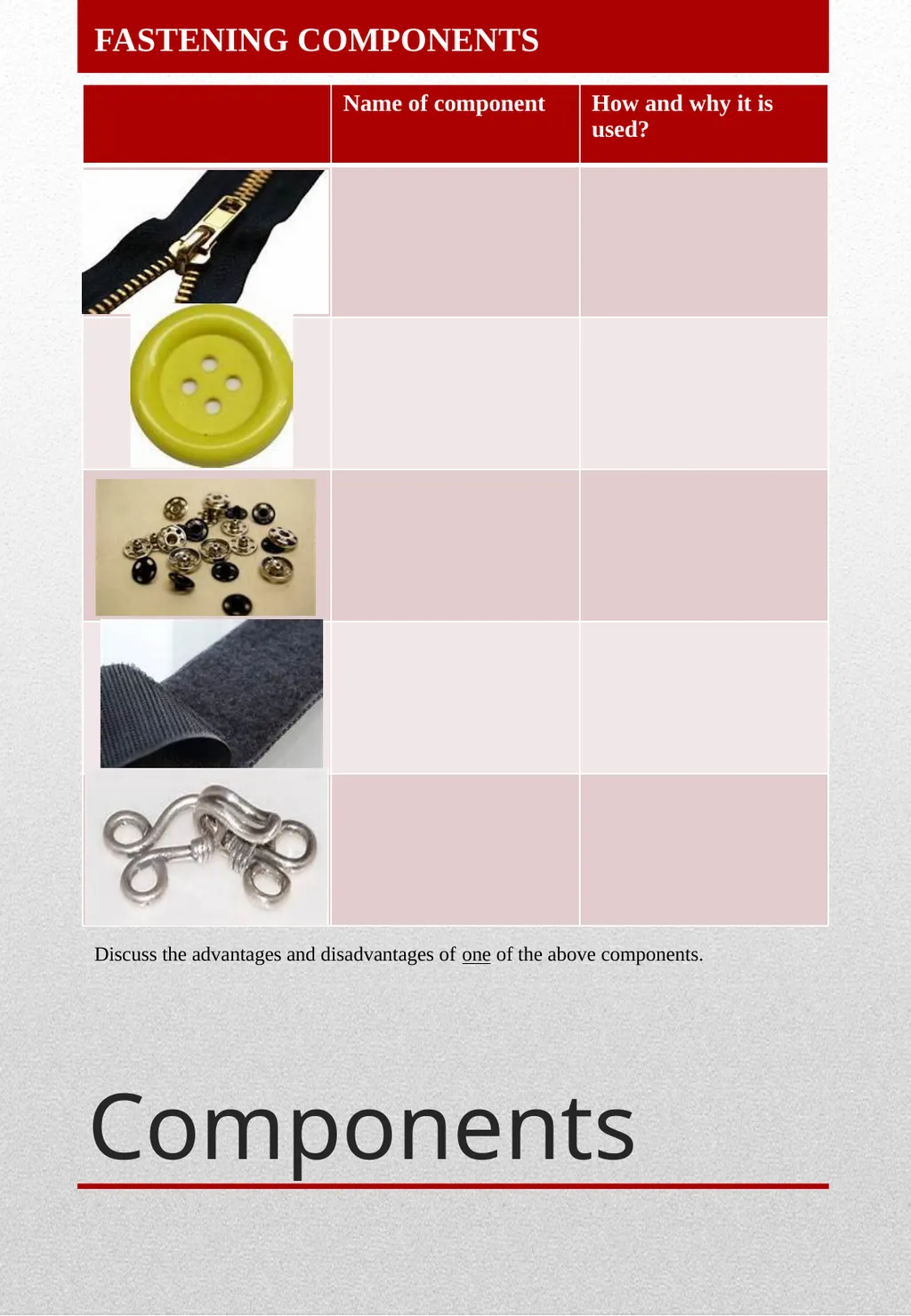
Components Discuss the advantages and disadvantages of one of the above components. FASTENING COMPONENTS<br>
17
Product Analysis What is the definition of a ‘trend forecast’?
How do trend forecasts influence a designers future designs?
List 5 types of research a designer could do before designing:
-
-
-
-
-
List 5 types of design criteria for a product that a designer must consider:
- Size
-
-
-
-
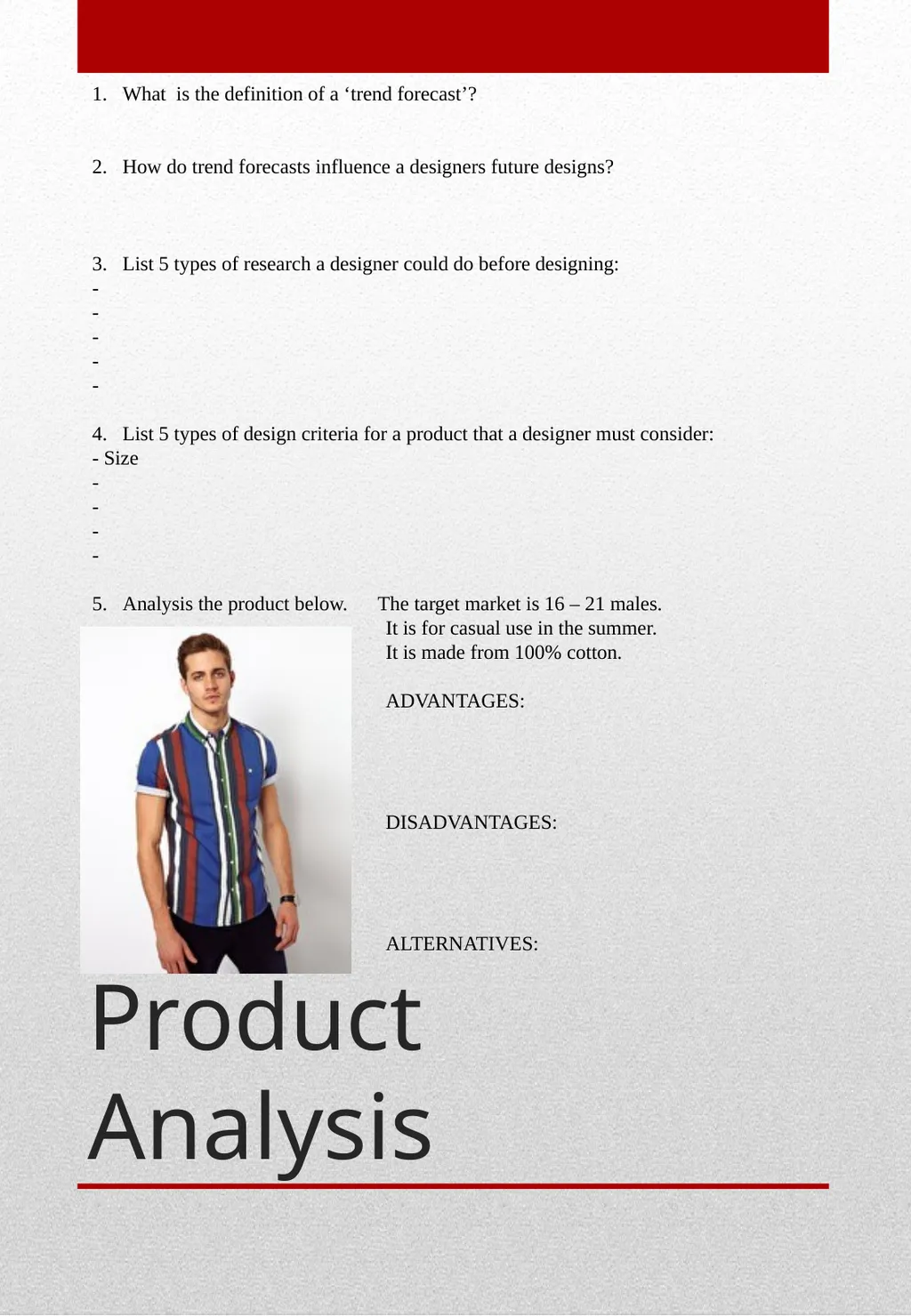
Analysis the product below. The target market is 16 – 21 males.
It is for casual use in the summer.
It is made from 100% cotton.
ADVANTAGES:
DISADVANTAGES:
ALTERNATIVES:<br>
18
Social, Cultural, Moral, Health and Safety and Environment Issues What is the definition of the following terms?
Sustainable:
Fair trade:
Organic cotton:
Bio fibres:
Biodegradable fibres / fabrics:
What is the difference between a recycled and reused product?
Discuss why parents would prefer to buy organic and faire trade clothing for their children?
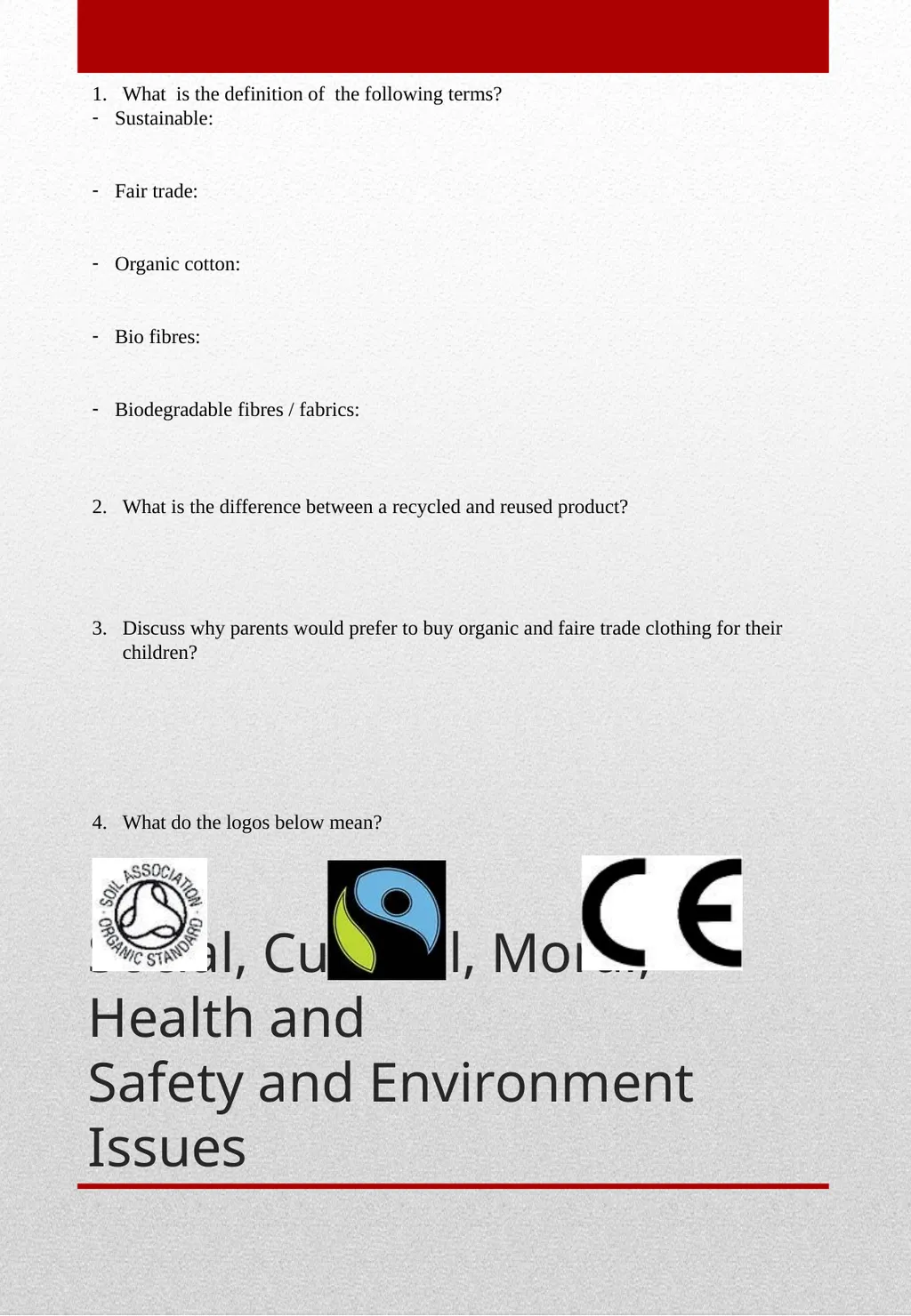
What do the logos below mean?<br>
19
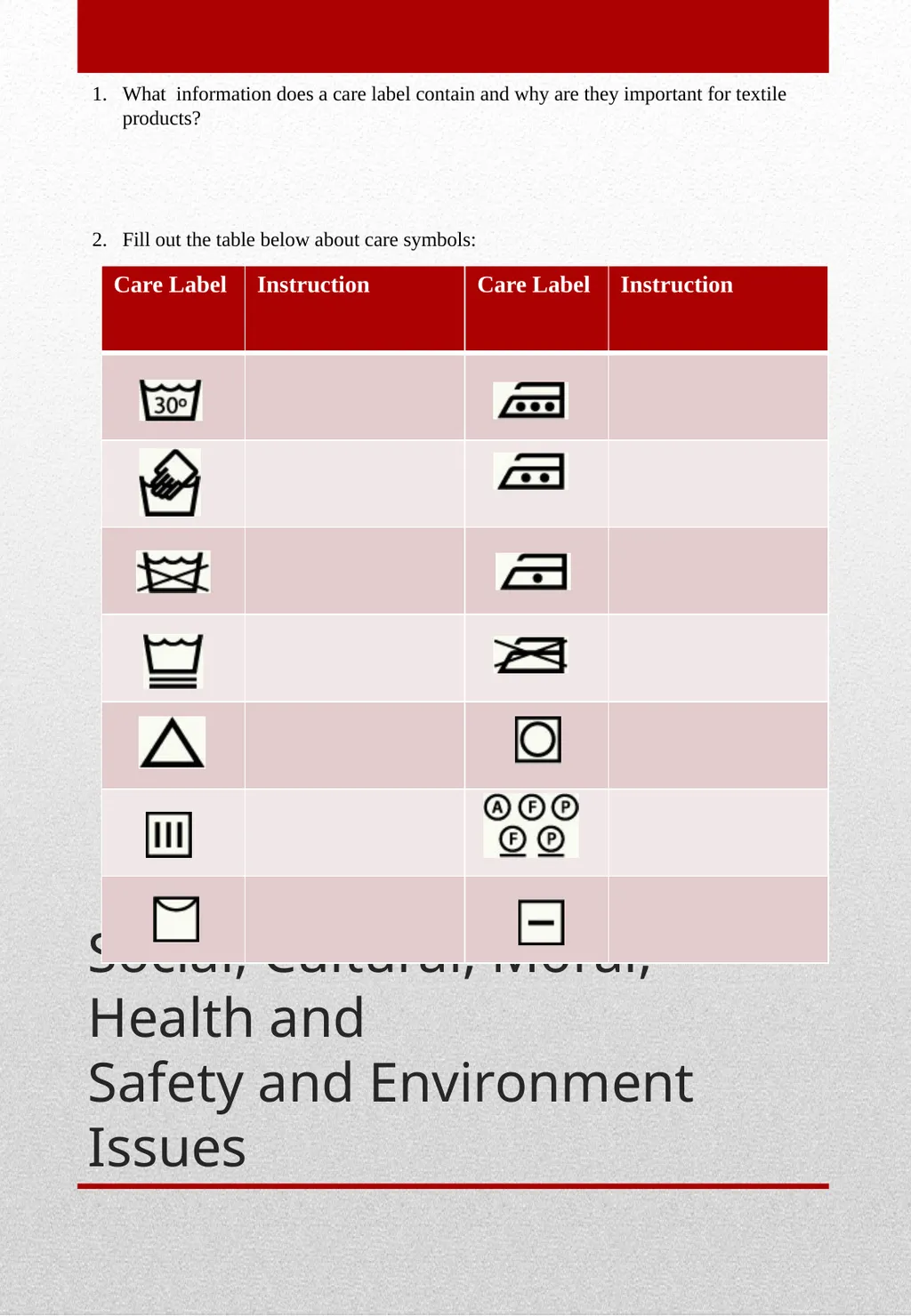
Social, Cultural, Moral, Health and Safety and Environment Issues What information does a care label contain and why are they important for textile products?
Fill out the table below about care symbols:<br>
20
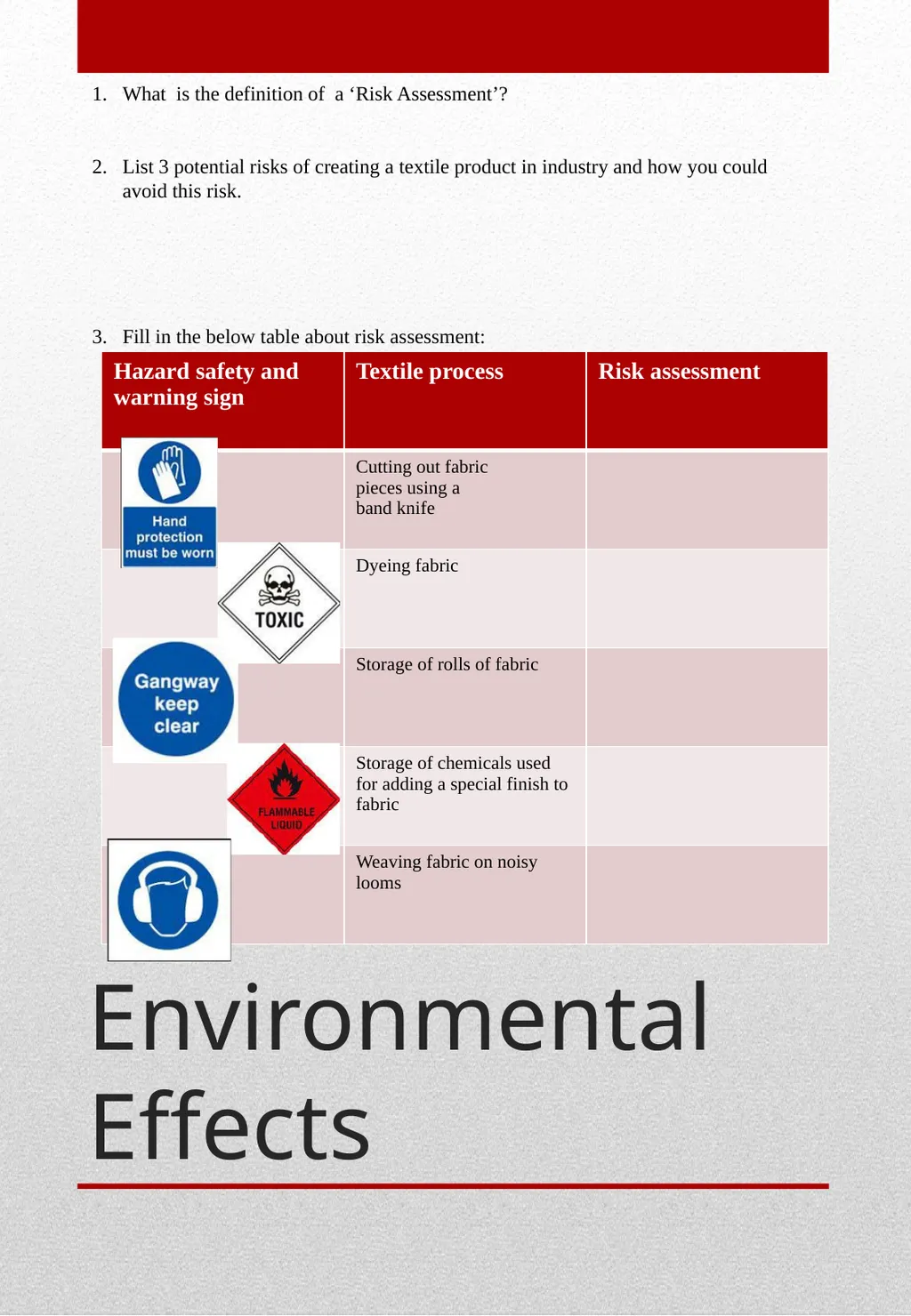
Environmental Effects What is the definition of a ‘Risk Assessment’?
List 3 potential risks of creating a textile product in industry and how you could avoid this risk.
Fill in the below table about risk assessment:<br>
21
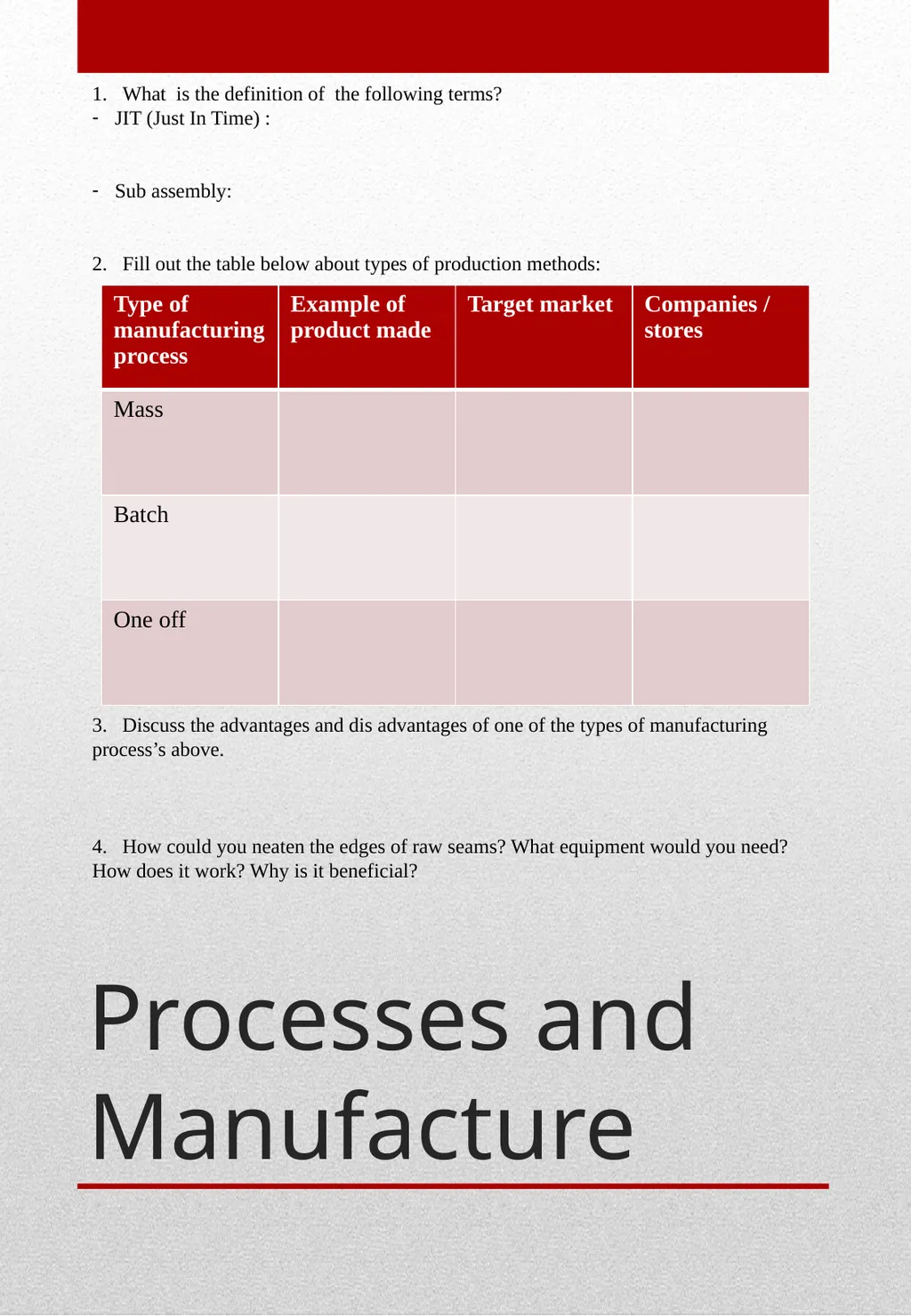
Processes and Manufacture What is the definition of the following terms?
JIT (Just In Time) :
Sub assembly:
Fill out the table below about types of production methods:
3. Discuss the advantages and dis advantages of one of the types of manufacturing process’s above.
4. How could you neaten the edges of raw seams? What equipment would you need? How does it work? Why is it beneficial?<br>
22
Production Planning What is the definition of a working drawing and how is it used in Textile design?
What is a prototype and how is it used within the design process?
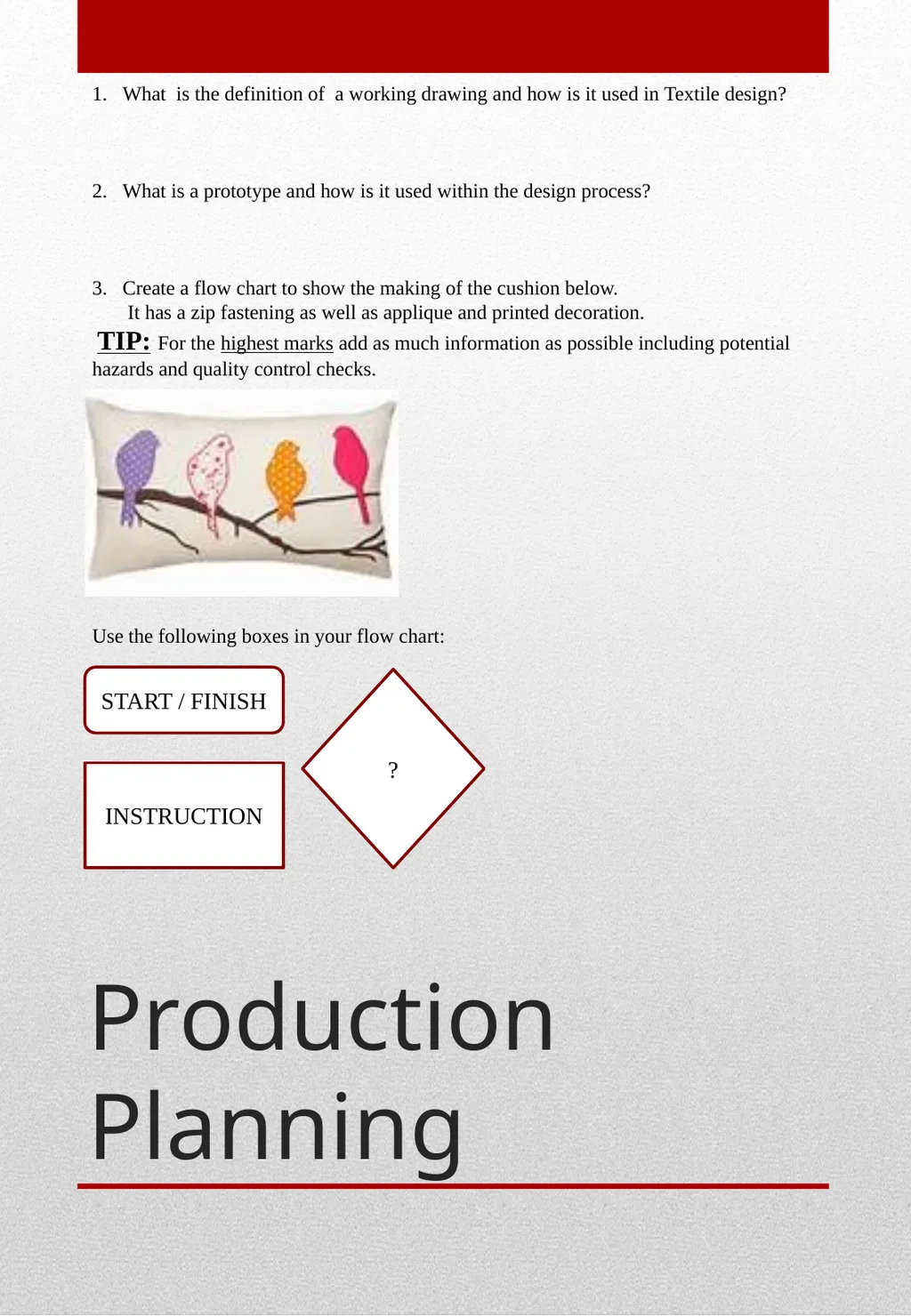
Create a flow chart to show the making of the cushion below.
It has a zip fastening as well as applique and printed decoration.
TIP: For the highest marks add as much information as possible including potential hazards and quality control checks.
Use the following boxes in your flow chart: START / FINISH INSTRUCTION ?<br>