
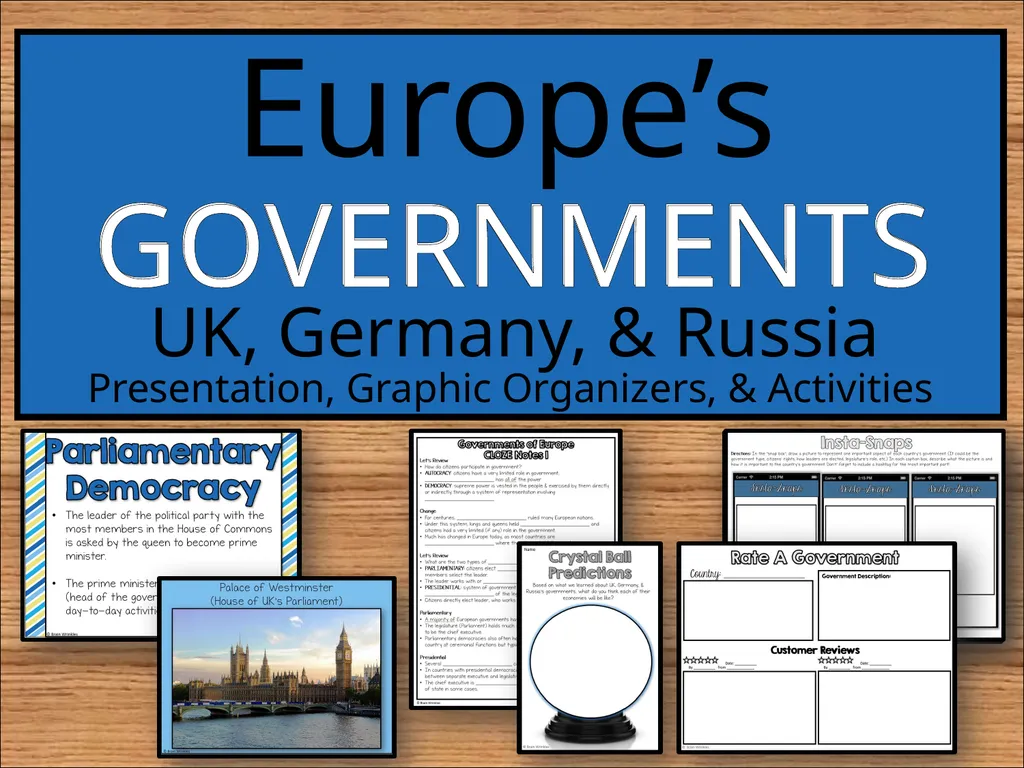
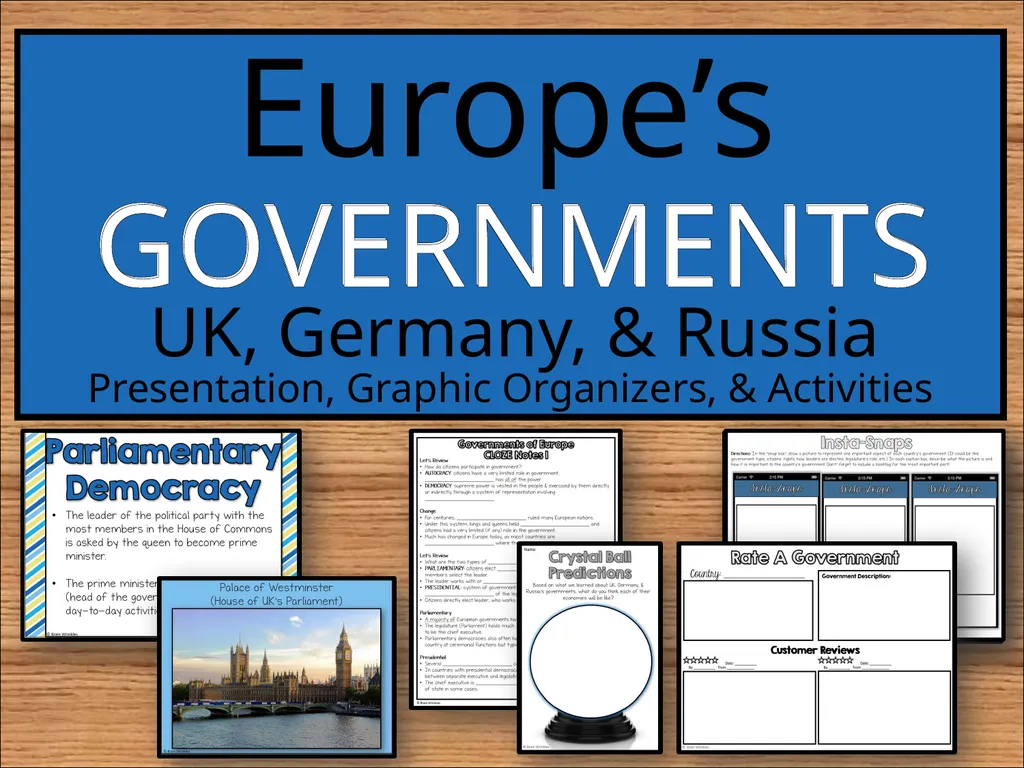
GOVERNMENTS Presentation, Graphic Organizers, &
TA
Published · 88 slides · 0 views
1 / 1
Description
GOVERNMENTS Presentation, Graphic Organizers, Activities Europes GOVERNMENTS UK, Germany, Russia STANDARDS: SS6CG3 Compare and contrast various forms of government. Explain citizen participation in autocratic and democratic
Related Topics
Share
Embed code
Download this presentation From Below
"GOVERNMENTS Presentation, Graphic Organizers, &" is the property of its rightful owner. Permission is granted to download and print the materials on this website for personal, non-commercial use only, and to display it on your personal computer provided you do not modify the materials and that you retain all copyright notices contained in the materials. By downloading content from our website, you accept the terms of this agreement.
Presentation Transcript
01
GOVERNMENTS Presentation, Graphic Organizers, & Activities Europe’s GOVERNMENTS UK, Germany, & Russia<br>
02
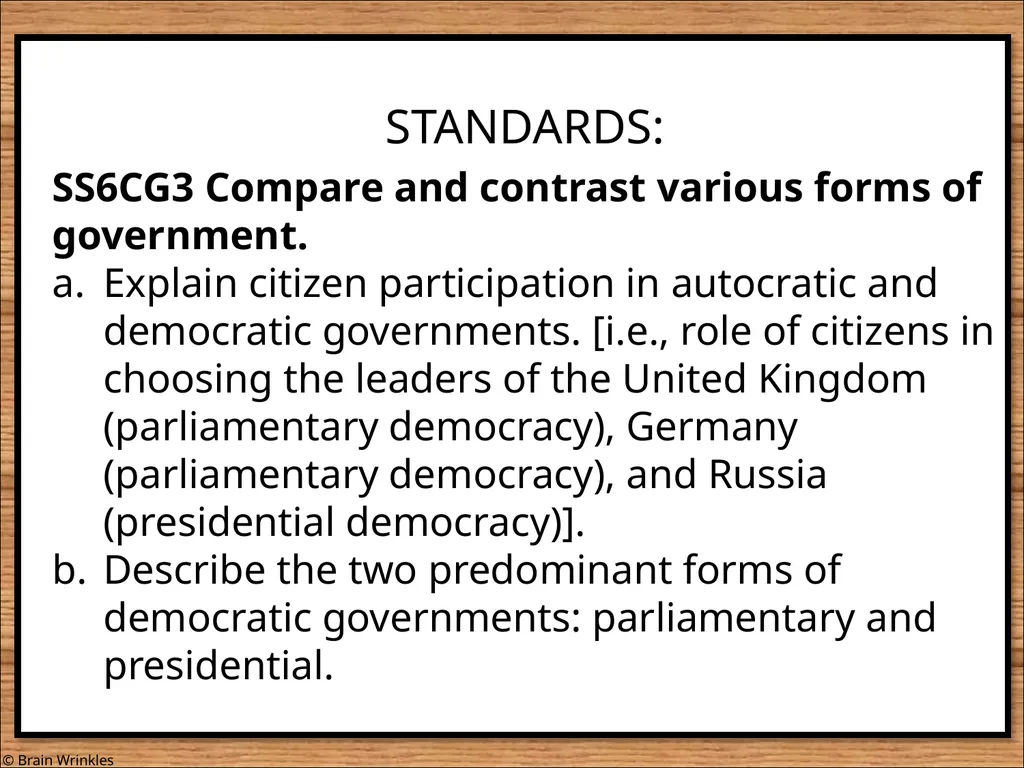
STANDARDS:
SS6CG3 Compare and contrast various forms of government.
Explain citizen participation in autocratic and democratic governments. [i.e., role of citizens in choosing the leaders of the United Kingdom (parliamentary democracy), Germany (parliamentary democracy), and Russia (presidential democracy)].
Describe the two predominant forms of democratic governments: parliamentary and presidential. © Brain Wrinkles<br>
03
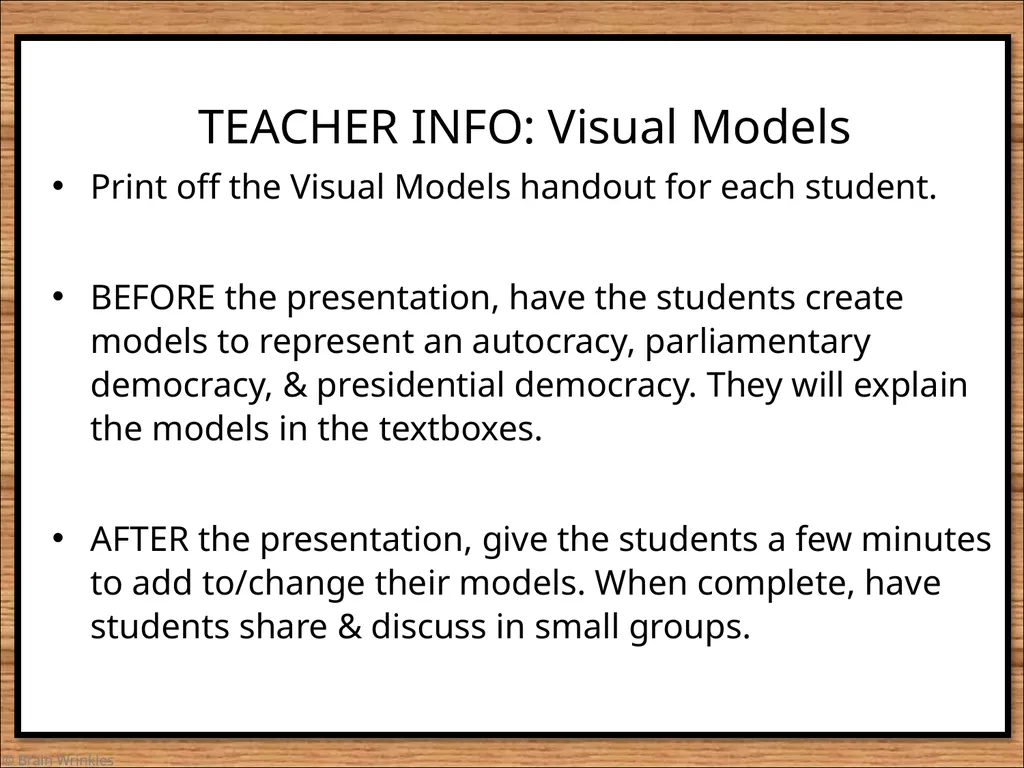
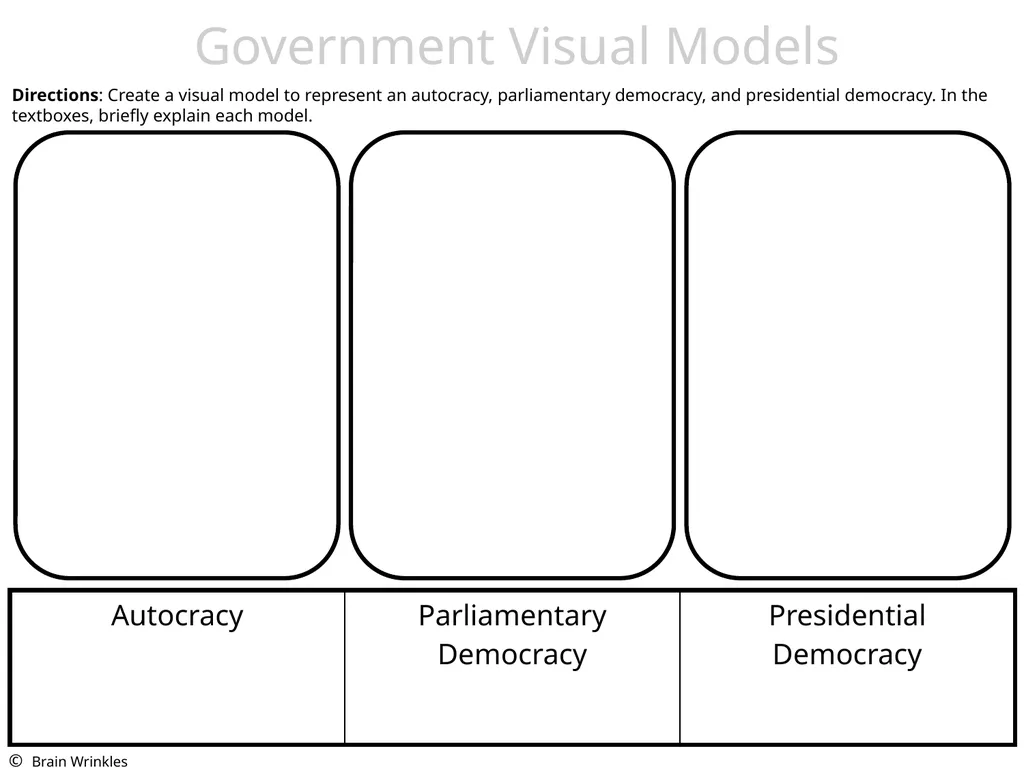
TEACHER INFO: Visual Models
Print off the Visual Models handout for each student.
BEFORE the presentation, have the students create models to represent an autocracy, parliamentary democracy, & presidential democracy. They will explain the models in the textboxes.
AFTER the presentation, give the students a few minutes to add to/change their models. When complete, have students share & discuss in small groups. © Brain Wrinkles<br>
04
© Brain Wrinkles Directions: Create a visual model to represent an autocracy, parliamentary democracy, and presidential democracy. In the textboxes, briefly explain each model. Government Visual Models<br>
05
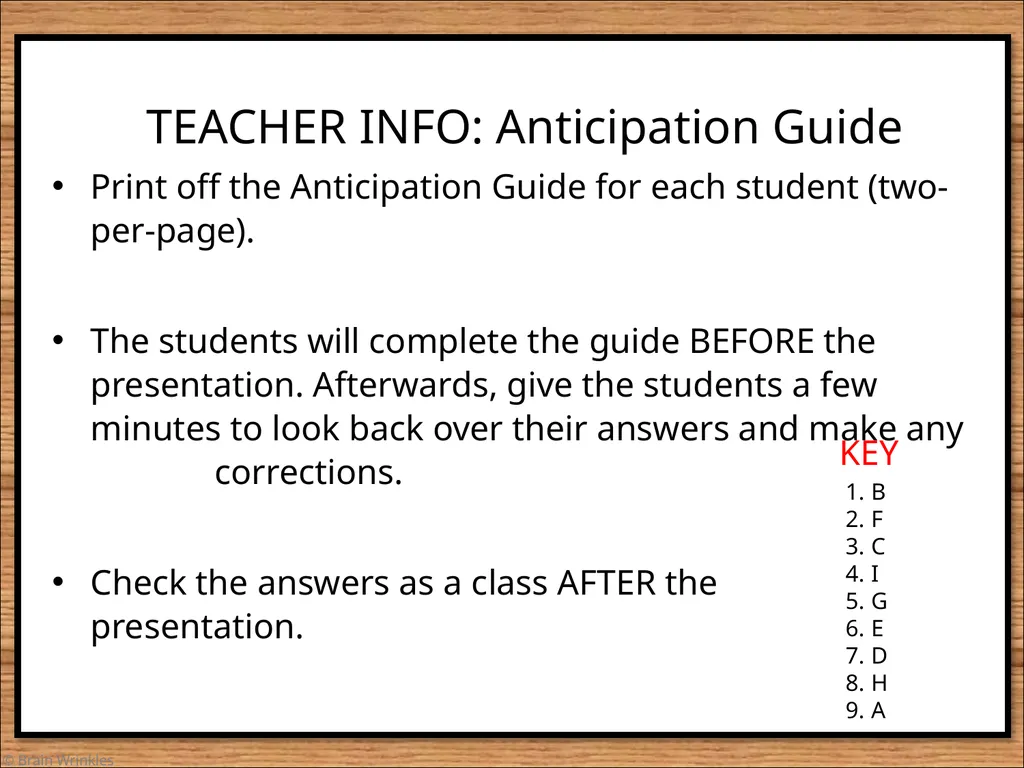
TEACHER INFO: Anticipation Guide
Print off the Anticipation Guide for each student (two-per-page).
The students will complete the guide BEFORE the presentation. Afterwards, give the students a few minutes to look back over their answers and make any corrections.
Check the answers as a class AFTER the presentation. © Brain Wrinkles B
F
C
I
G
E
D
H
A KEY<br>
06
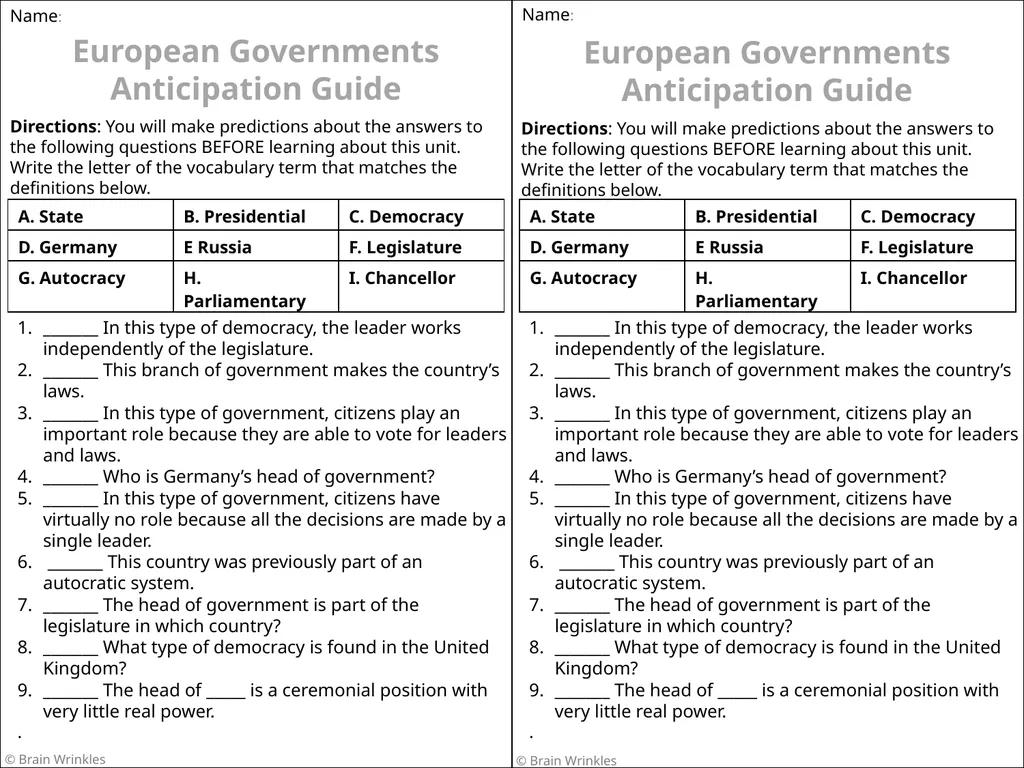
European Governments
Anticipation Guide Directions: You will make predictions about the answers to the following questions BEFORE learning about this unit. Write the letter of the vocabulary term that matches the definitions below. © Brain Wrinkles Name: Name: _______ In this type of democracy, the leader works independently of the legislature.
_______ This branch of government makes the country’s laws.
_______ In this type of government, citizens play an important role because they are able to vote for leaders and laws.
_______ Who is Germany’s head of government?
_______ In this type of government, citizens have virtually no role because all the decisions are made by a single leader.
_______ This country was previously part of an autocratic system.
_______ The head of government is part of the legislature in which country?
_______ What type of democracy is found in the United Kingdom?
_______ The head of _____ is a ceremonial position with very little real power.
. European Governments
Anticipation Guide Directions: You will make predictions about the answers to the following questions BEFORE learning about this unit. Write the letter of the vocabulary term that matches the definitions below. © Brain Wrinkles _______ In this type of democracy, the leader works independently of the legislature.
_______ This branch of government makes the country’s laws.
_______ In this type of government, citizens play an important role because they are able to vote for leaders and laws.
_______ Who is Germany’s head of government?
_______ In this type of government, citizens have virtually no role because all the decisions are made by a single leader.
_______ This country was previously part of an autocratic system.
_______ The head of government is part of the legislature in which country?
_______ What type of democracy is found in the United Kingdom?
_______ The head of _____ is a ceremonial position with very little real power.
.<br>
07
TEACHER INFO: CLOZE Notes
The next pages are handouts for the students to use for note-taking during the presentation. (Print front to back to save paper and ink.)
Check the answers as a class after the presentation. © Brain Wrinkles<br>
The next pages are handouts for the students to use for note-taking during the presentation. (Print front to back to save paper and ink.)
Check the answers as a class after the presentation. © Brain Wrinkles<br>
08
Governments of Europe
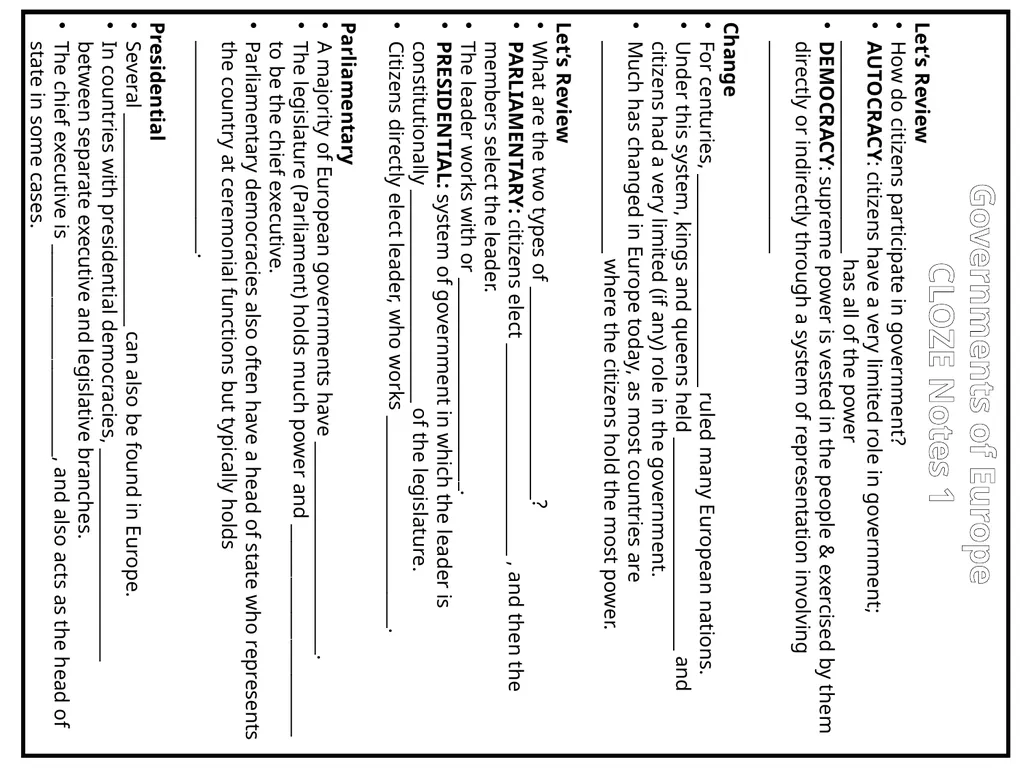
CLOZE Notes 1 Let’s Review
How do citizens participate in government?
AUTOCRACY: citizens have a very limited role in government; ________________________ has all of the power
DEMOCRACY: supreme power is vested in the people & exercised by them directly or indirectly through a system of representation involving ________________________
Change
For centuries, ________________________ ruled many European nations.
Under this system, kings and queens held ________________________ and citizens had a very limited (if any) role in the government.
Much has changed in Europe today, as most countries are ________________________ where the citizens hold the most power.
Let’s Review
What are the two types of ________________________?
PARLIAMENTARY: citizens elect ________________________ , and then the members select the leader.
The leader works with or ________________________.
PRESIDENTIAL: system of government in which the leader is constitutionally ________________________ of the legislature.
Citizens directly elect leader, who works ________________________.
Parliamentary
A majority of European governments have ________________________.
The legislature (Parliament) holds much power and ________________________ to be the chief executive.
Parliamentary democracies also often have a head of state who represents the country at ceremonial functions but typically holds ________________________.
Presidential
Several ________________________ can also be found in Europe.
In countries with presidential democracies, ________________________ between separate executive and legislative branches.
The chief executive is ________________________, and also acts as the head of state in some cases.<br>
09
Governments of Europe
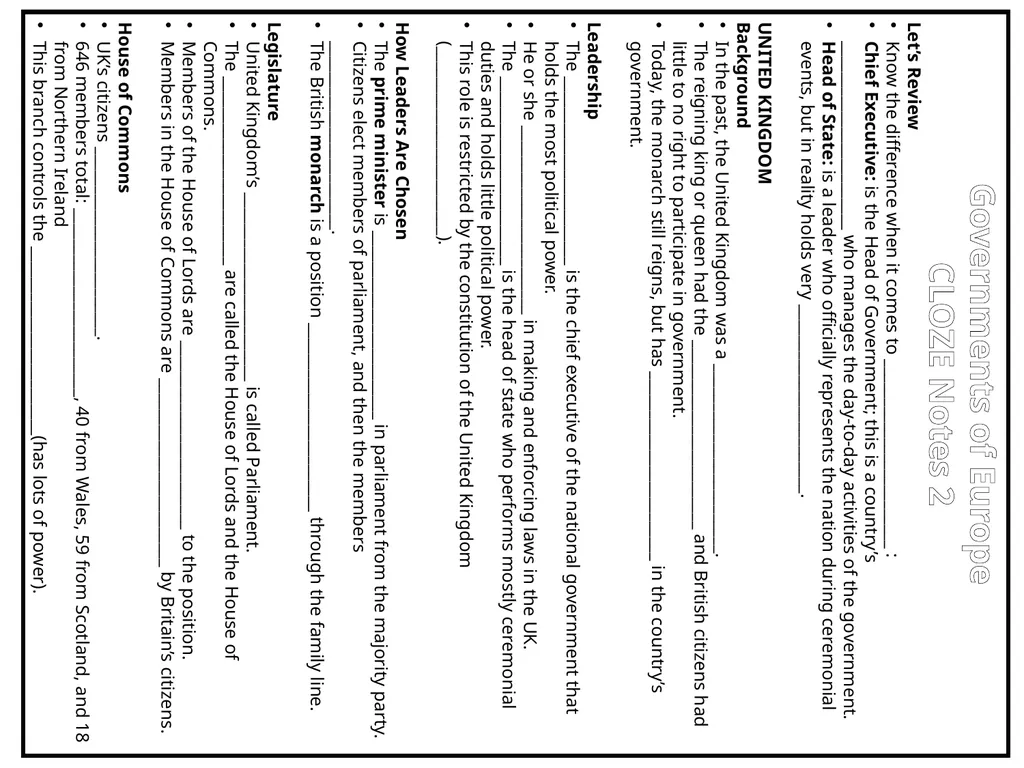
CLOZE Notes 2 Let’s Review
Know the difference when it comes to ________________________ :
Chief Executive: is the Head of Government; this is a country’s ________________________ who manages the day-to-day activities of the government.
Head of State: is a leader who officially represents the nation during ceremonial events, but in reality holds very ________________________.
UNITED KINGDOM
Background
In the past, the United Kingdom was a ________________________.
The reigning king or queen had the ________________________ and British citizens had little to no right to participate in government.
Today, the monarch still reigns, but has ________________________ in the country’s government.
Leadership
The ________________________ is the chief executive of the national government that holds the most political power.
He or she ________________________ in making and enforcing laws in the UK.
The ________________________ is the head of state who performs mostly ceremonial duties and holds little political power.
This role is restricted by the constitution of the United Kingdom (________________________).
How Leaders Are Chosen
The prime minister is ________________________ in parliament from the majority party.
Citizens elect members of parliament, and then the members ________________________.
The British monarch is a position ________________________ through the family line.
Legislature
United Kingdom’s ________________________ is called Parliament.
The ________________________ are called the House of Lords and the House of Commons.
Members of the House of Lords are ________________________ to the position.
Members in the House of Commons are ________________________ by Britain’s citizens.
House of Commons
UK’s citizens ________________________.
646 members total: ________________________, 40 from Wales, 59 from Scotland, and 18 from Northern Ireland
This branch controls the ________________________(has lots of power).<br>
10
Governments of Europe
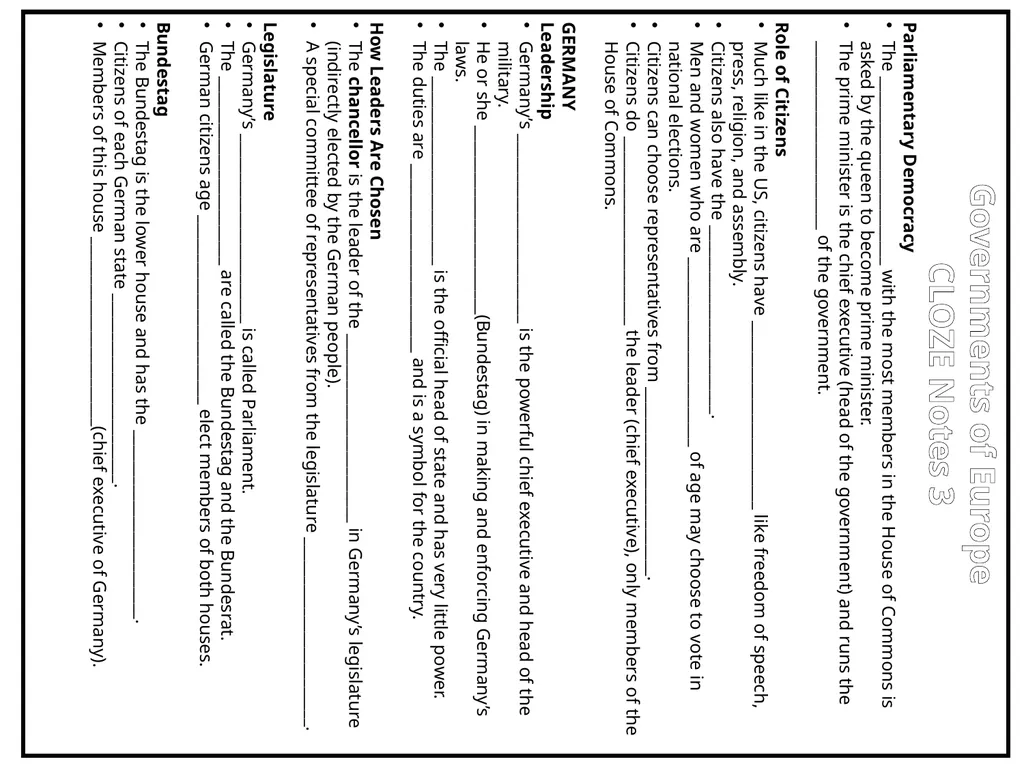
CLOZE Notes 3 Parliamentary Democracy
The ________________________ with the most members in the House of Commons is asked by the queen to become prime minister.
The prime minister is the chief executive (head of the government) and runs the ________________________ of the government.
Role of Citizens
Much like in the US, citizens have ________________________ like freedom of speech, press, religion, and assembly.
Citizens also have the ________________________.
Men and women who are ________________________ of age may choose to vote in national elections.
Citizens can choose representatives from ________________________.
Citizens do ________________________ the leader (chief executive), only members of the House of Commons.
GERMANY Leadership
Germany’s ________________________ is the powerful chief executive and head of the military.
He or she ________________________(Bundestag) in making and enforcing Germany’s laws.
The ________________________ is the official head of state and has very little power.
The duties are ________________________ and is a symbol for the country.
How Leaders Are Chosen
The chancellor is the leader of the ________________________ in Germany’s legislature (indirectly elected by the German people).
A special committee of representatives from the legislature ________________________.
Legislature
Germany’s ________________________ is called Parliament.
The ________________________ are called the Bundestag and the Bundesrat.
German citizens age ________________________ elect members of both houses.
Bundestag
The Bundestag is the lower house and has the ________________________.
Citizens of each German state ________________________.
Members of this house ________________________(chief executive of Germany).<br>
11
Governments of Europe
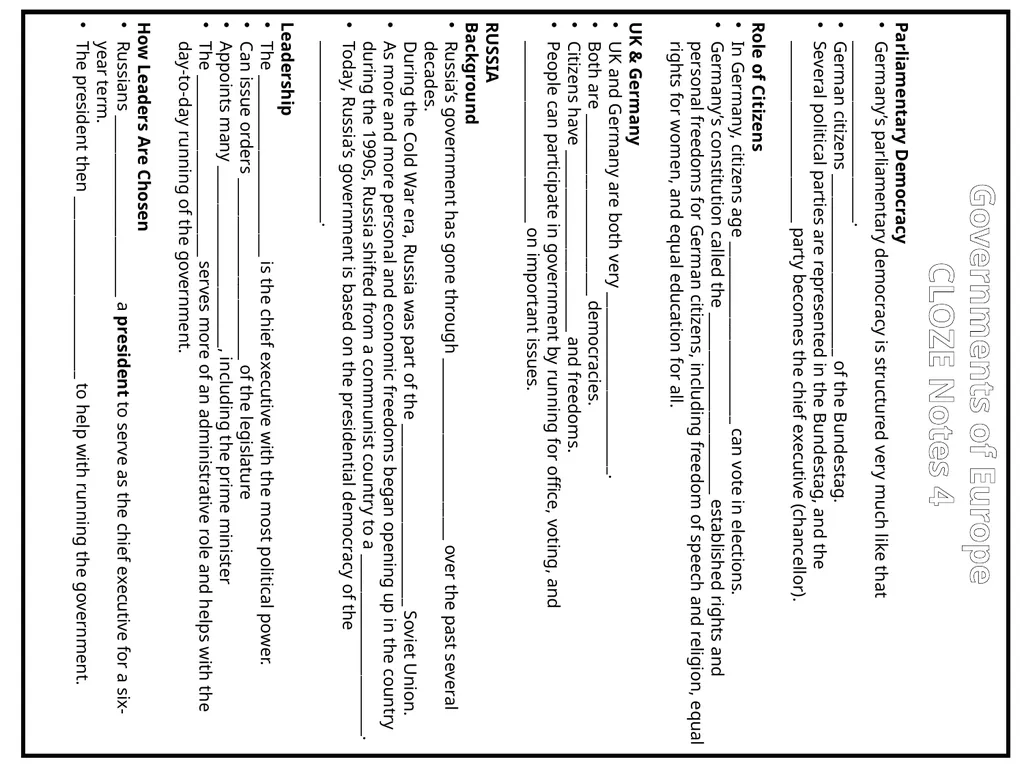
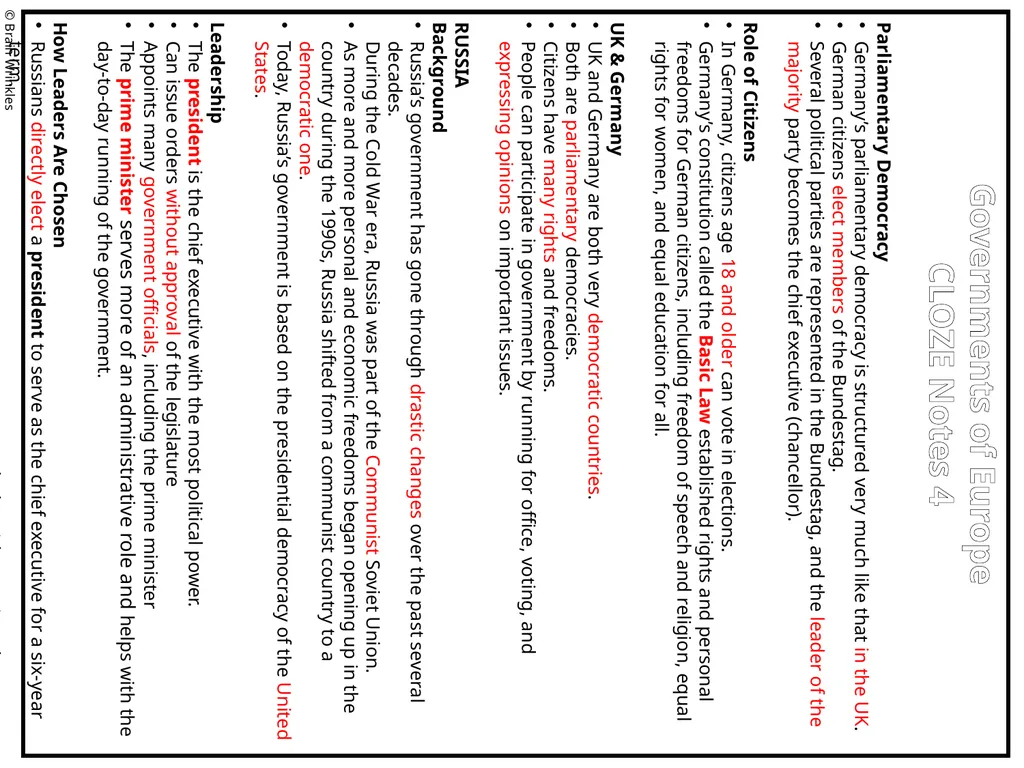
CLOZE Notes 4 Parliamentary Democracy
Germany’s parliamentary democracy is structured very much like that ________________________.
German citizens ________________________ of the Bundestag.
Several political parties are represented in the Bundestag, and the ________________________ party becomes the chief executive (chancellor).
Role of Citizens
In Germany, citizens age ________________________ can vote in elections.
Germany’s constitution called the ________________________ established rights and personal freedoms for German citizens, including freedom of speech and religion, equal rights for women, and equal education for all.
UK & Germany
UK and Germany are both very ________________________.
Both are ________________________ democracies.
Citizens have ________________________ and freedoms.
People can participate in government by running for office, voting, and ________________________ on important issues.
RUSSIA
Background
Russia’s government has gone through ________________________ over the past several decades. During the Cold War era, Russia was part of the ________________________ Soviet Union.
As more and more personal and economic freedoms began opening up in the country during the 1990s, Russia shifted from a communist country to a ________________________.
Today, Russia’s government is based on the presidential democracy of the ________________________.
Leadership
The ________________________ is the chief executive with the most political power.
Can issue orders ________________________ of the legislature
Appoints many ________________________, including the prime minister
The ________________________ serves more of an administrative role and helps with the day-to-day running of the government.
How Leaders Are Chosen
Russians ________________________ a president to serve as the chief executive for a six-year term.
The president then ________________________ to help with running the government.<br>
12
Governments of Europe
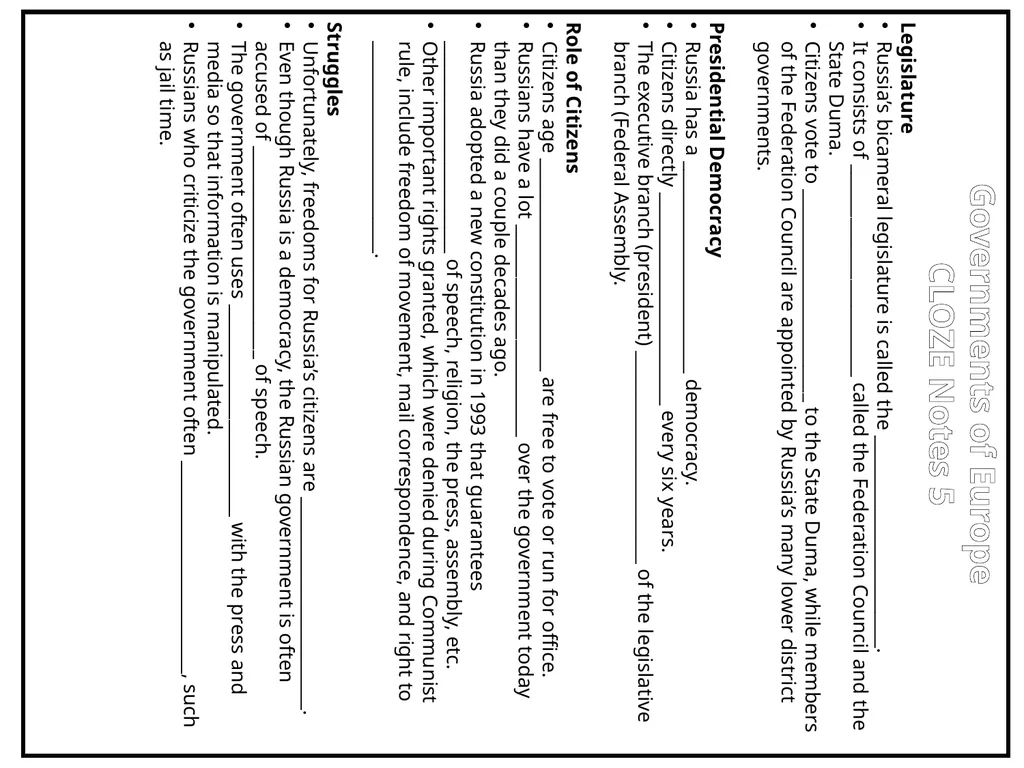
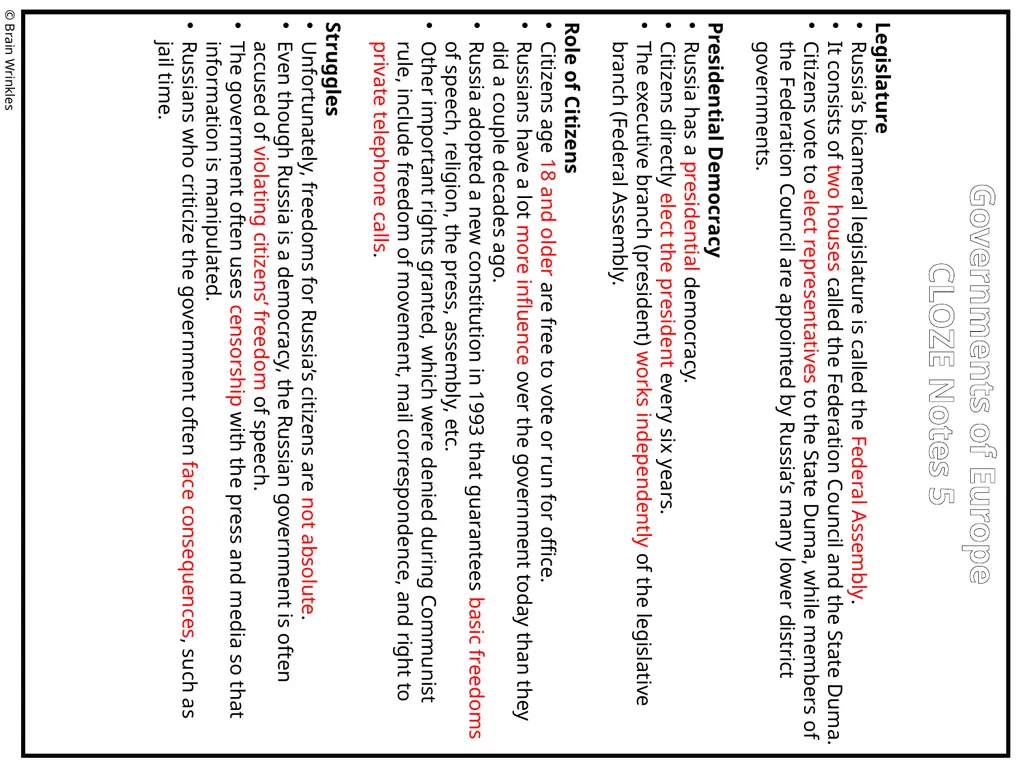
CLOZE Notes 5 Legislature
Russia’s bicameral legislature is called the ________________________.
It consists of ________________________ called the Federation Council and the State Duma.
Citizens vote to ________________________ to the State Duma, while members of the Federation Council are appointed by Russia’s many lower district governments.
Presidential Democracy
Russia has a ________________________ democracy.
Citizens directly ________________________ every six years.
The executive branch (president) ________________________ of the legislative branch (Federal Assembly.
Role of Citizens
Citizens age ________________________ are free to vote or run for office.
Russians have a lot ________________________ over the government today than they did a couple decades ago.
Russia adopted a new constitution in 1993 that guarantees ________________________ of speech, religion, the press, assembly, etc.
Other important rights granted, which were denied during Communist rule, include freedom of movement, mail correspondence, and right to ________________________.
Struggles
Unfortunately, freedoms for Russia’s citizens are ________________________.
Even though Russia is a democracy, the Russian government is often accused of ________________________ of speech.
The government often uses ________________________ with the press and media so that information is manipulated.
Russians who criticize the government often ________________________, such as jail time.<br>
13
Governments of Europe
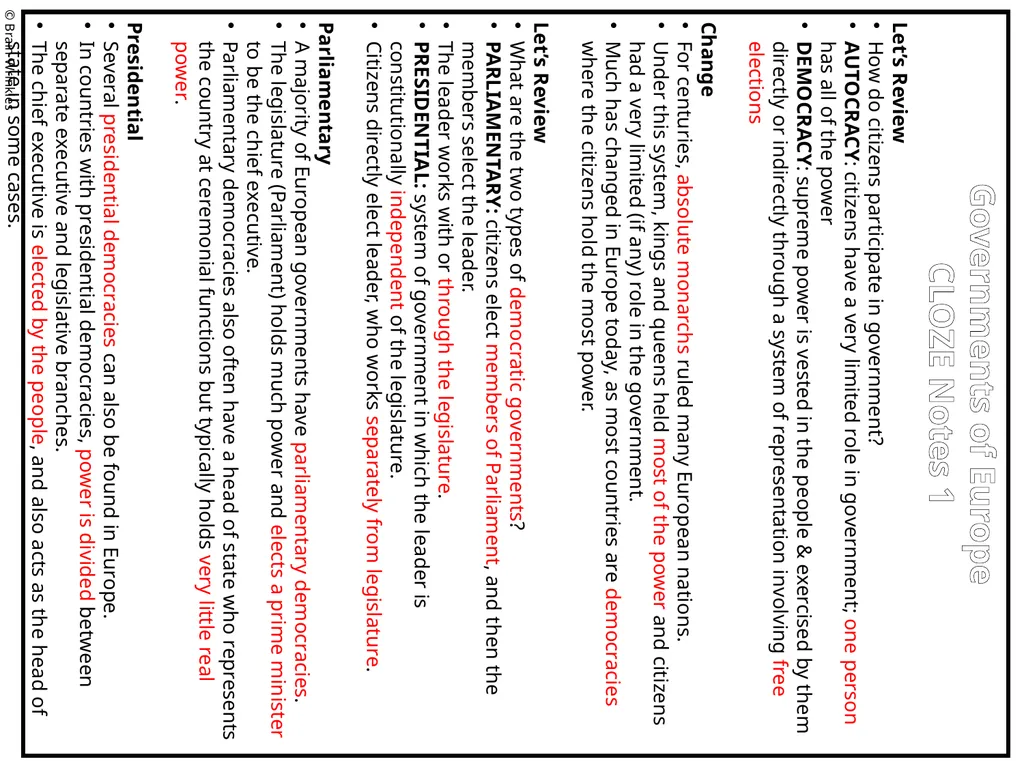
CLOZE Notes 1 Let’s Review
How do citizens participate in government?
AUTOCRACY: citizens have a very limited role in government; one person has all of the power
DEMOCRACY: supreme power is vested in the people & exercised by them directly or indirectly through a system of representation involving free elections
Change
For centuries, absolute monarchs ruled many European nations.
Under this system, kings and queens held most of the power and citizens had a very limited (if any) role in the government.
Much has changed in Europe today, as most countries are democracies where the citizens hold the most power.
Let’s Review
What are the two types of democratic governments?
PARLIAMENTARY: citizens elect members of Parliament, and then the members select the leader.
The leader works with or through the legislature.
PRESIDENTIAL: system of government in which the leader is constitutionally independent of the legislature.
Citizens directly elect leader, who works separately from legislature.
Parliamentary
A majority of European governments have parliamentary democracies.
The legislature (Parliament) holds much power and elects a prime minister to be the chief executive.
Parliamentary democracies also often have a head of state who represents the country at ceremonial functions but typically holds very little real power.
Presidential
Several presidential democracies can also be found in Europe.
In countries with presidential democracies, power is divided between separate executive and legislative branches.
The chief executive is elected by the people, and also acts as the head of state in some cases. © Brain Wrinkles<br>
14
Governments of Europe
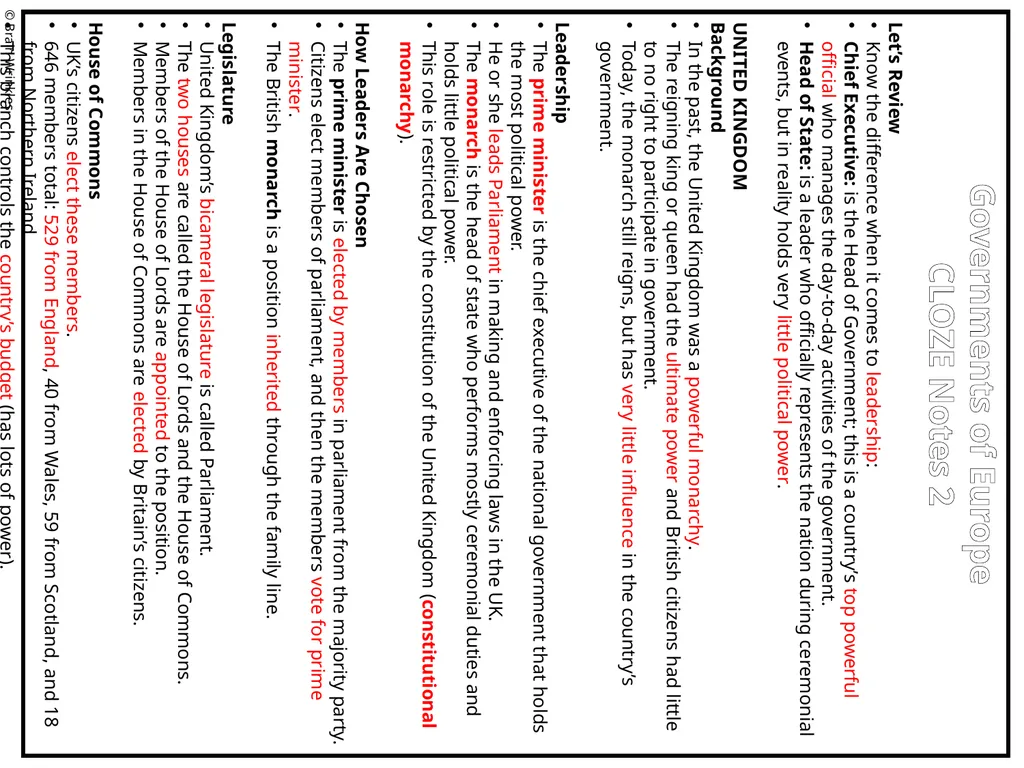
CLOZE Notes 2 Let’s Review
Know the difference when it comes to leadership:
Chief Executive: is the Head of Government; this is a country’s top powerful official who manages the day-to-day activities of the government.
Head of State: is a leader who officially represents the nation during ceremonial events, but in reality holds very little political power.
UNITED KINGDOM
Background
In the past, the United Kingdom was a powerful monarchy.
The reigning king or queen had the ultimate power and British citizens had little to no right to participate in government.
Today, the monarch still reigns, but has very little influence in the country’s government.
Leadership
The prime minister is the chief executive of the national government that holds the most political power.
He or she leads Parliament in making and enforcing laws in the UK.
The monarch is the head of state who performs mostly ceremonial duties and holds little political power.
This role is restricted by the constitution of the United Kingdom (constitutional monarchy).
How Leaders Are Chosen
The prime minister is elected by members in parliament from the majority party.
Citizens elect members of parliament, and then the members vote for prime minister.
The British monarch is a position inherited through the family line.
Legislature
United Kingdom’s bicameral legislature is called Parliament.
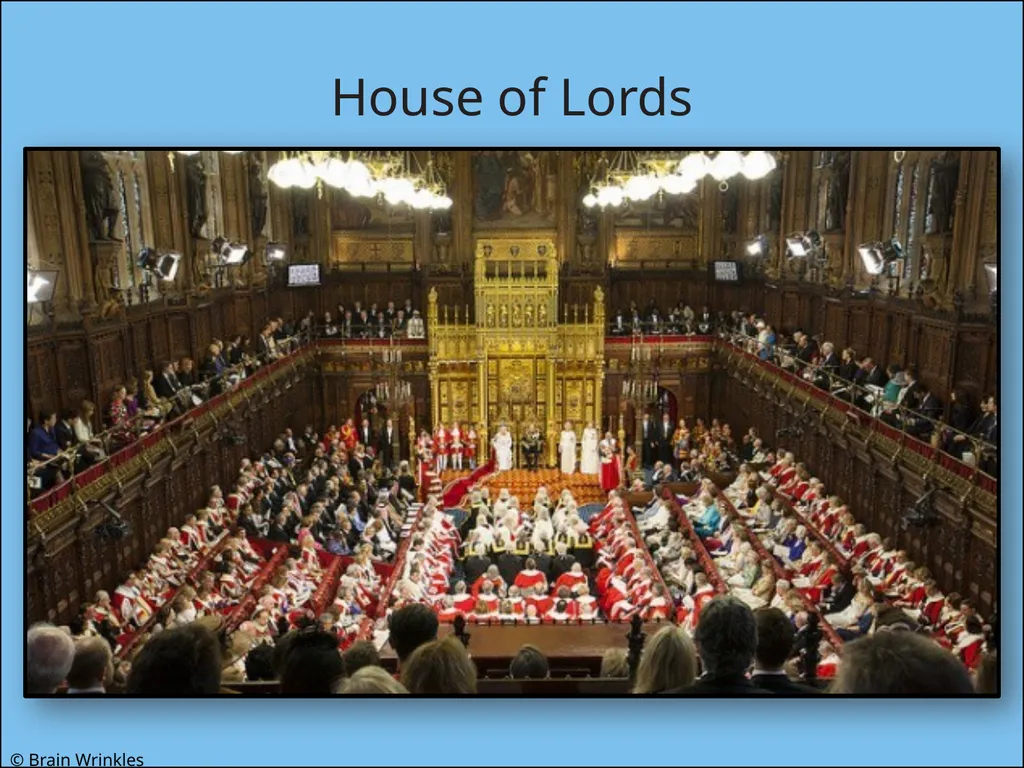
The two houses are called the House of Lords and the House of Commons.
Members of the House of Lords are appointed to the position.
Members in the House of Commons are elected by Britain’s citizens.
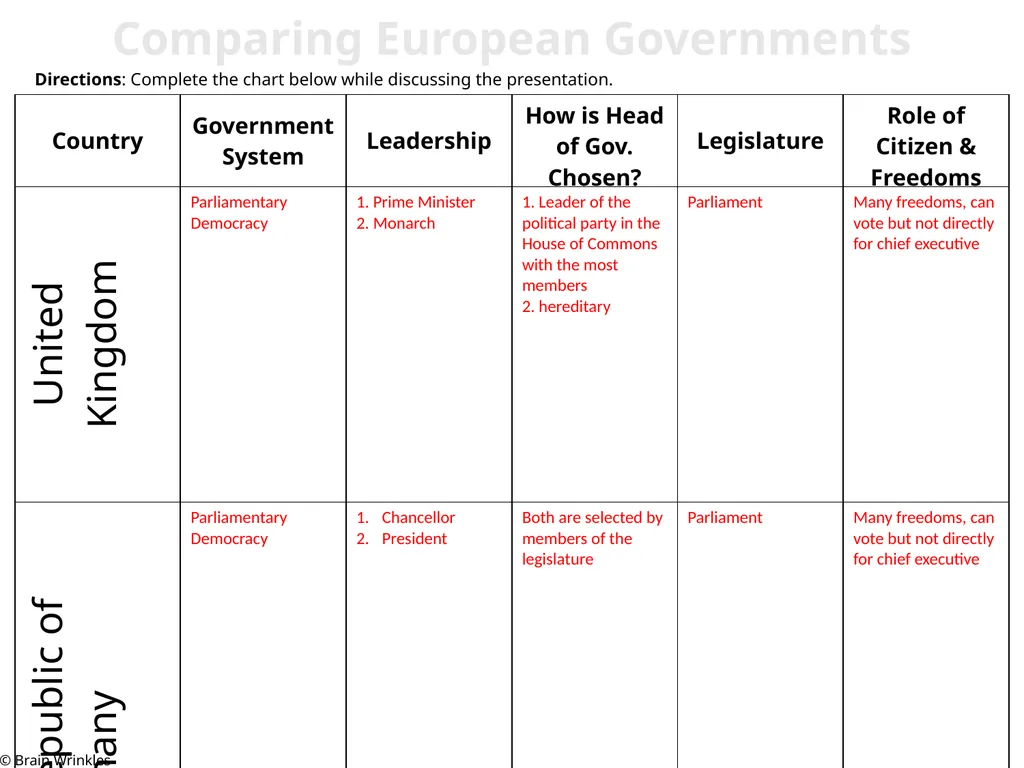
House of Commons
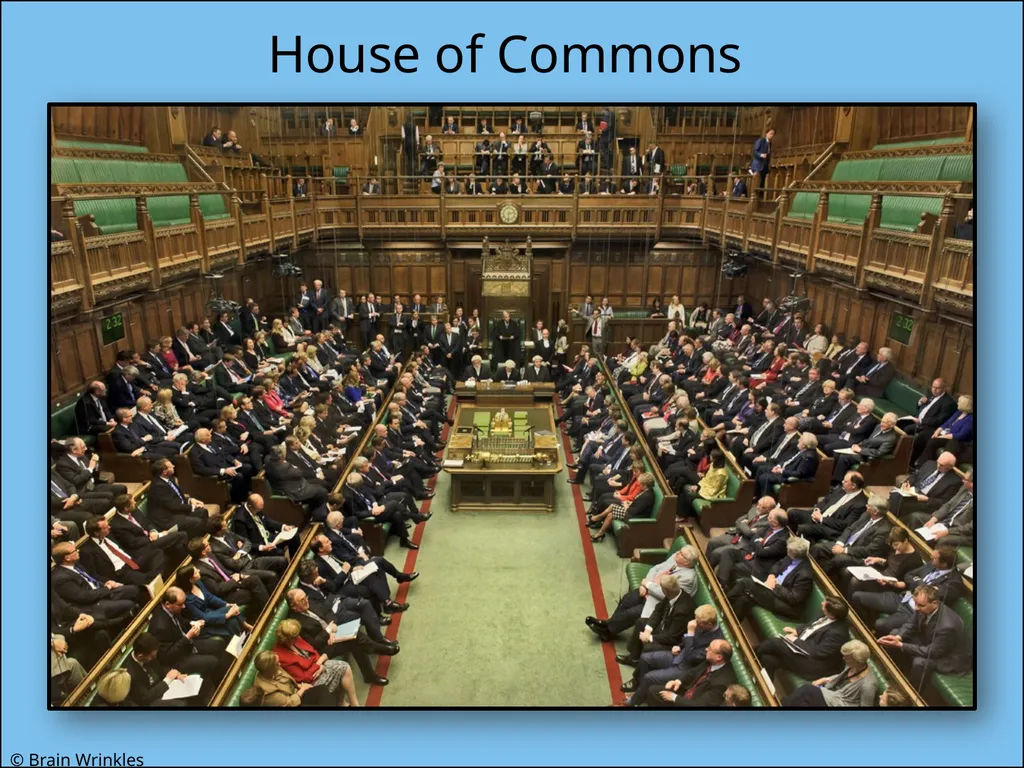
UK’s citizens elect these members.
646 members total: 529 from England, 40 from Wales, 59 from Scotland, and 18 from Northern Ireland
This branch controls the country’s budget (has lots of power). © Brain Wrinkles<br>
15
Governments of Europe
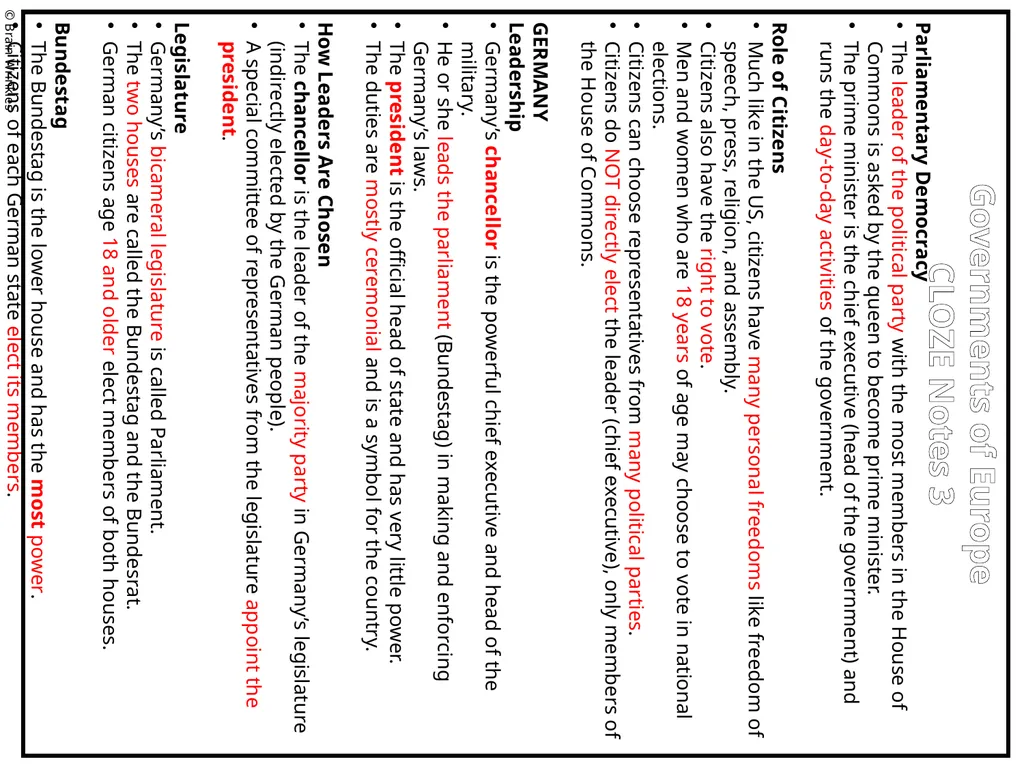
CLOZE Notes 3 Parliamentary Democracy
The leader of the political party with the most members in the House of Commons is asked by the queen to become prime minister.
The prime minister is the chief executive (head of the government) and runs the day-to-day activities of the government.
Role of Citizens
Much like in the US, citizens have many personal freedoms like freedom of speech, press, religion, and assembly.
Citizens also have the right to vote.
Men and women who are 18 years of age may choose to vote in national elections.
Citizens can choose representatives from many political parties.
Citizens do NOT directly elect the leader (chief executive), only members of the House of Commons.
GERMANY Leadership
Germany’s chancellor is the powerful chief executive and head of the military.
He or she leads the parliament (Bundestag) in making and enforcing Germany’s laws.
The president is the official head of state and has very little power.
The duties are mostly ceremonial and is a symbol for the country.
How Leaders Are Chosen
The chancellor is the leader of the majority party in Germany’s legislature (indirectly elected by the German people).
A special committee of representatives from the legislature appoint the president.
Legislature
Germany’s bicameral legislature is called Parliament.
The two houses are called the Bundestag and the Bundesrat.
German citizens age 18 and older elect members of both houses.
Bundestag
The Bundestag is the lower house and has the most power.
Citizens of each German state elect its members.
Members of this house elect the chancellor (chief executive of Germany). © Brain Wrinkles<br>
16
Governments of Europe
CLOZE Notes 4 Parliamentary Democracy
Germany’s parliamentary democracy is structured very much like that in the UK.
German citizens elect members of the Bundestag.
Several political parties are represented in the Bundestag, and the leader of the majority party becomes the chief executive (chancellor).
Role of Citizens
In Germany, citizens age 18 and older can vote in elections.
Germany’s constitution called the Basic Law established rights and personal freedoms for German citizens, including freedom of speech and religion, equal rights for women, and equal education for all.
UK & Germany
UK and Germany are both very democratic countries.
Both are parliamentary democracies.
Citizens have many rights and freedoms.
People can participate in government by running for office, voting, and expressing opinions on important issues.
RUSSIA
Background
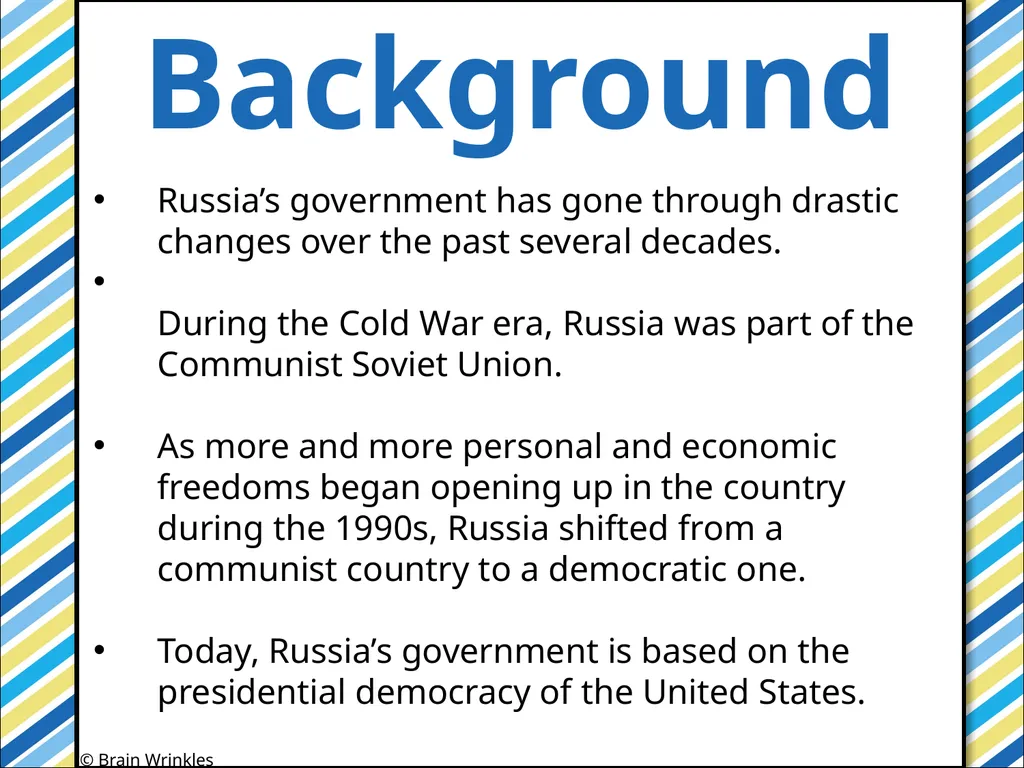
Russia’s government has gone through drastic changes over the past several decades. During the Cold War era, Russia was part of the Communist Soviet Union.
As more and more personal and economic freedoms began opening up in the country during the 1990s, Russia shifted from a communist country to a democratic one.
Today, Russia’s government is based on the presidential democracy of the United States.
Leadership
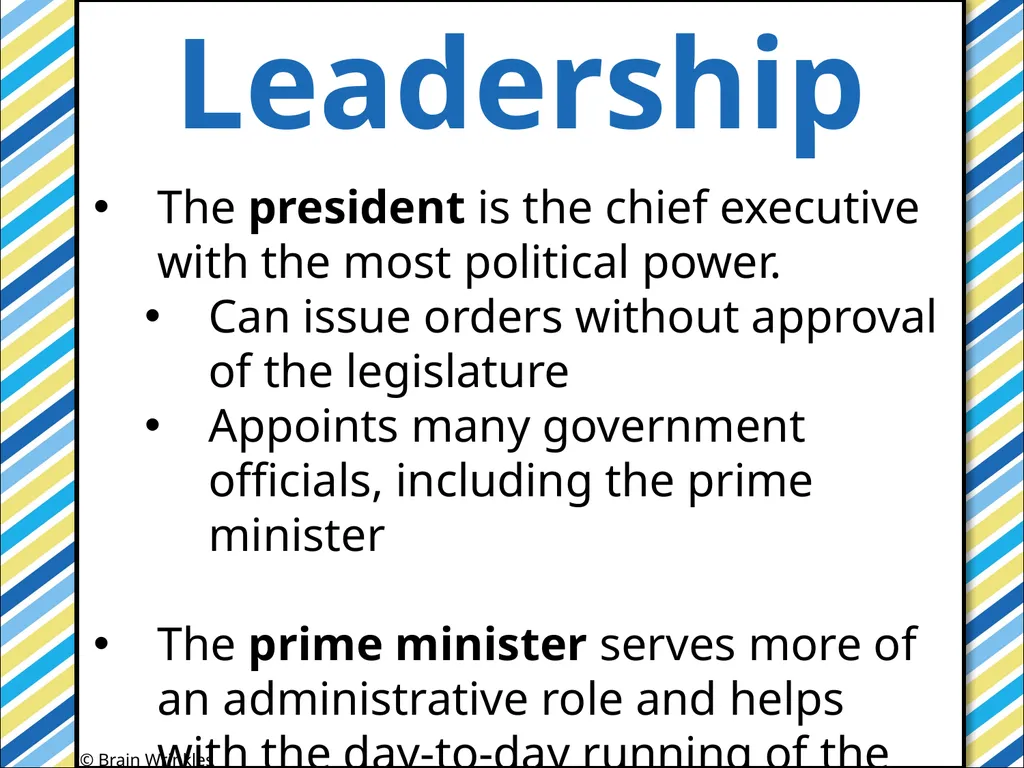
The president is the chief executive with the most political power.
Can issue orders without approval of the legislature
Appoints many government officials, including the prime minister
The prime minister serves more of an administrative role and helps with the day-to-day running of the government.
How Leaders Are Chosen
Russians directly elect a president to serve as the chief executive for a six-year term.
The president then appoints a prime minister to help with running the government. © Brain Wrinkles<br>
17
Governments of Europe
CLOZE Notes 5 Legislature
Russia’s bicameral legislature is called the Federal Assembly.
It consists of two houses called the Federation Council and the State Duma.
Citizens vote to elect representatives to the State Duma, while members of the Federation Council are appointed by Russia’s many lower district governments.
Presidential Democracy
Russia has a presidential democracy.
Citizens directly elect the president every six years.
The executive branch (president) works independently of the legislative branch (Federal Assembly.
Role of Citizens
Citizens age 18 and older are free to vote or run for office.
Russians have a lot more influence over the government today than they did a couple decades ago.
Russia adopted a new constitution in 1993 that guarantees basic freedoms of speech, religion, the press, assembly, etc.
Other important rights granted, which were denied during Communist rule, include freedom of movement, mail correspondence, and right to private telephone calls.
Struggles
Unfortunately, freedoms for Russia’s citizens are not absolute.
Even though Russia is a democracy, the Russian government is often accused of violating citizens’ freedom of speech.
The government often uses censorship with the press and media so that information is manipulated.
Russians who criticize the government often face consequences, such as jail time. © Brain Wrinkles<br>
18
© Brain Wrinkles GOVERNMENTS Europe’s UK, Germany,
& Russia<br>
& Russia<br>
19
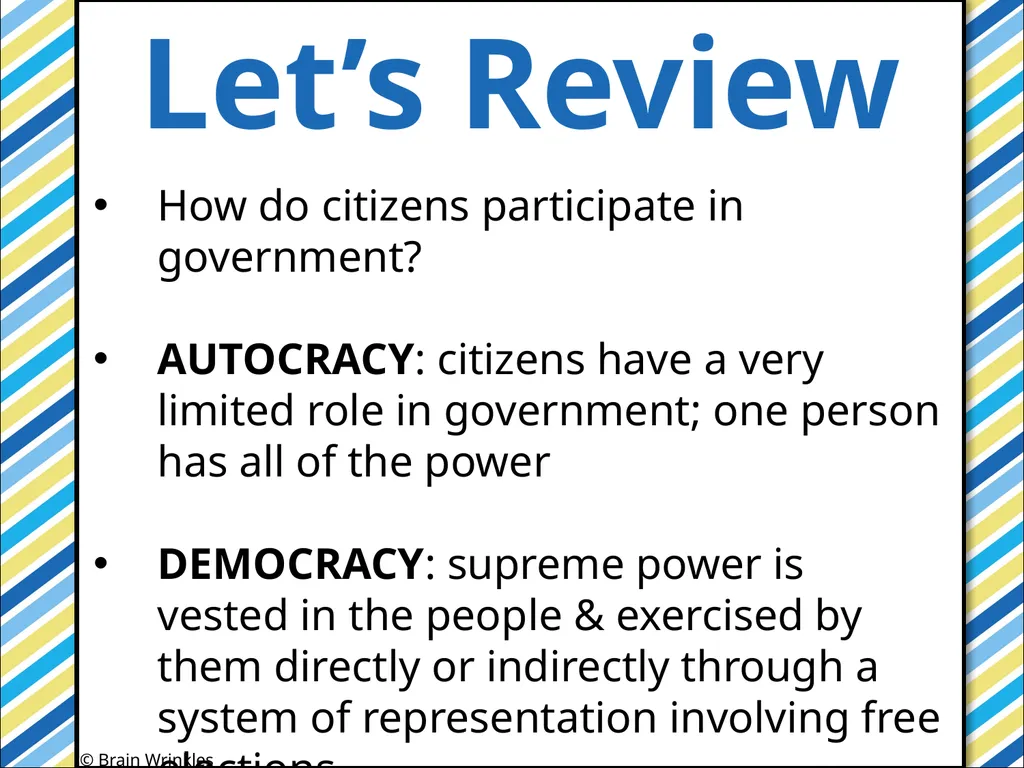
Let’s Review How do citizens participate in government?
AUTOCRACY: citizens have a very limited role in government; one person has all of the power
DEMOCRACY: supreme power is vested in the people & exercised by them directly or indirectly through a system of representation involving free elections © Brain Wrinkles<br>
AUTOCRACY: citizens have a very limited role in government; one person has all of the power
DEMOCRACY: supreme power is vested in the people & exercised by them directly or indirectly through a system of representation involving free elections © Brain Wrinkles<br>
20
Change For centuries, absolute monarchs ruled many European nations.
Under this system, kings and queens held most of the power and citizens had a very limited (if any) role in the government.
Much has changed in Europe today, as most countries are democracies where the citizens hold the most power. © Brain Wrinkles<br>
Under this system, kings and queens held most of the power and citizens had a very limited (if any) role in the government.
Much has changed in Europe today, as most countries are democracies where the citizens hold the most power. © Brain Wrinkles<br>
21
Let’s Review What are the two types of democratic governments?
PARLIAMENTARY: citizens elect members of Parliament, and then the members select the leader.
The leader works with or through the legislature.
PRESIDENTIAL: system of government in which the leader is constitutionally independent of the legislature.
Citizens directly elect leader, who works separately from legislature. © Brain Wrinkles<br>
22
Parliamentary A majority of European governments have parliamentary democracies.
The legislature (Parliament) holds much power and elects a prime minister to be the chief executive.
Parliamentary democracies also often have a head of state who represents the country at ceremonial functions but typically holds very little real power. © Brain Wrinkles<br>
The legislature (Parliament) holds much power and elects a prime minister to be the chief executive.
Parliamentary democracies also often have a head of state who represents the country at ceremonial functions but typically holds very little real power. © Brain Wrinkles<br>
23
Presidential Several presidential democracies can also be found in Europe.
In countries with presidential democracies, power is divided between separate executive and legislative branches.
The chief executive is elected by the people, and also acts as the head of state in some cases. © Brain Wrinkles<br>
In countries with presidential democracies, power is divided between separate executive and legislative branches.
The chief executive is elected by the people, and also acts as the head of state in some cases. © Brain Wrinkles<br>
24
Let’s Review Know the difference when it comes to leadership:
Chief Executive: is the Head of Government; this is a country’s top powerful official who manages the day-to-day activities of the government.
Head of State: is a leader who officially represents the nation during ceremonial events, but in reality holds very little political power. © Brain Wrinkles<br>
25
© Brain Wrinkles UNITED
KINGDOM Parliamentary Democracy<br>
KINGDOM Parliamentary Democracy<br>
26
Background In the past, the United Kingdom was a powerful monarchy.
The reigning king or queen had the ultimate power and British citizens had little to no right to participate in government.
Today, the monarch still reigns, but has very little influence in the country’s government. © Brain Wrinkles<br>
The reigning king or queen had the ultimate power and British citizens had little to no right to participate in government.
Today, the monarch still reigns, but has very little influence in the country’s government. © Brain Wrinkles<br>
27
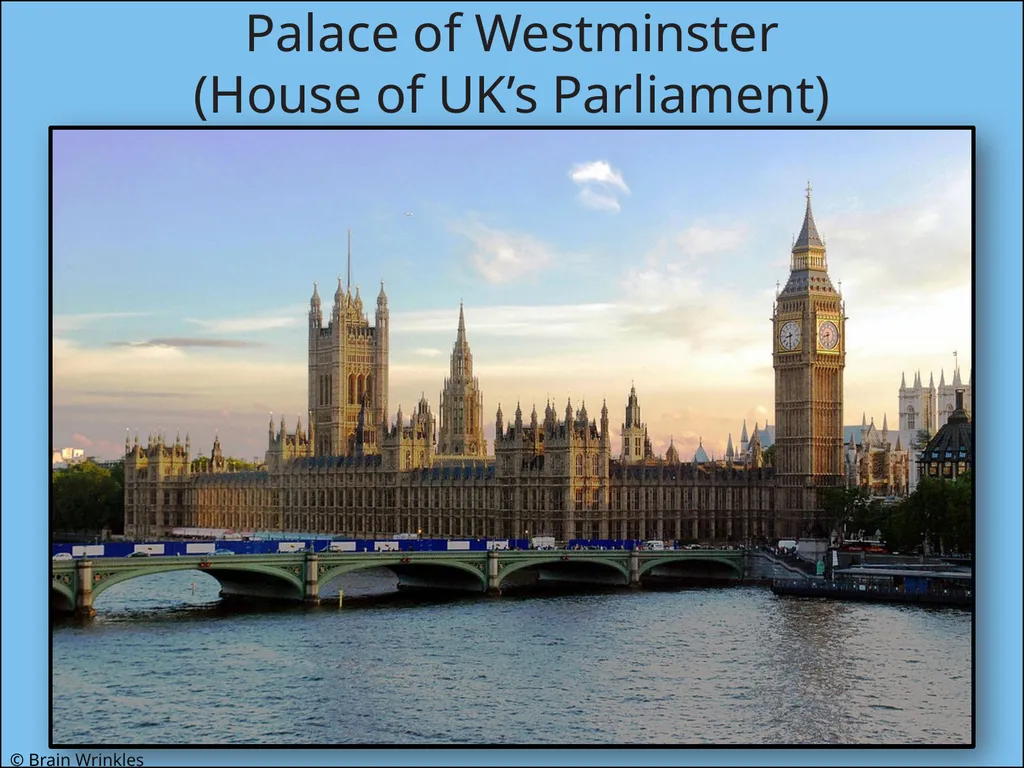
© Brain Wrinkles Palace of Westminster
(House of UK’s Parliament)<br>
(House of UK’s Parliament)<br>
28
Leadership The prime minister is the chief executive of the national government that holds the most political power.
He or she leads Parliament in making and enforcing laws in the UK.
The monarch is the head of state who performs mostly ceremonial duties and holds little political power.
This role is restricted by the constitution of the United Kingdom (constitutional monarchy). © Brain Wrinkles<br>
He or she leads Parliament in making and enforcing laws in the UK.
The monarch is the head of state who performs mostly ceremonial duties and holds little political power.
This role is restricted by the constitution of the United Kingdom (constitutional monarchy). © Brain Wrinkles<br>
29
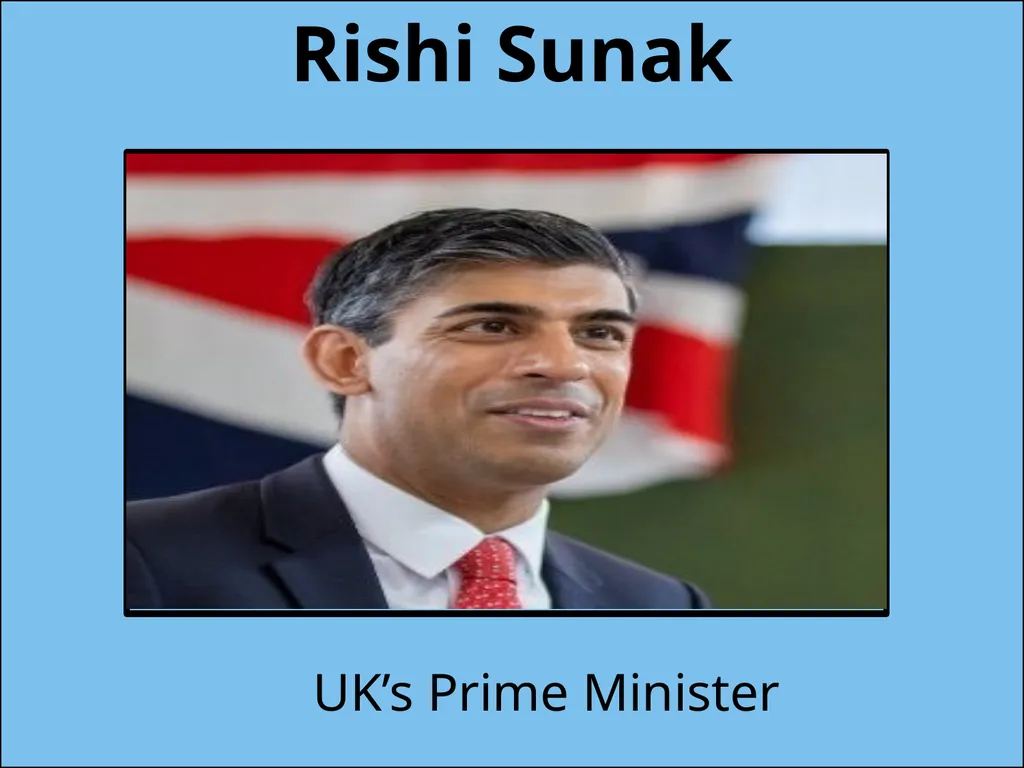
Rishi Sunak UK’s Prime Minister<br>
30
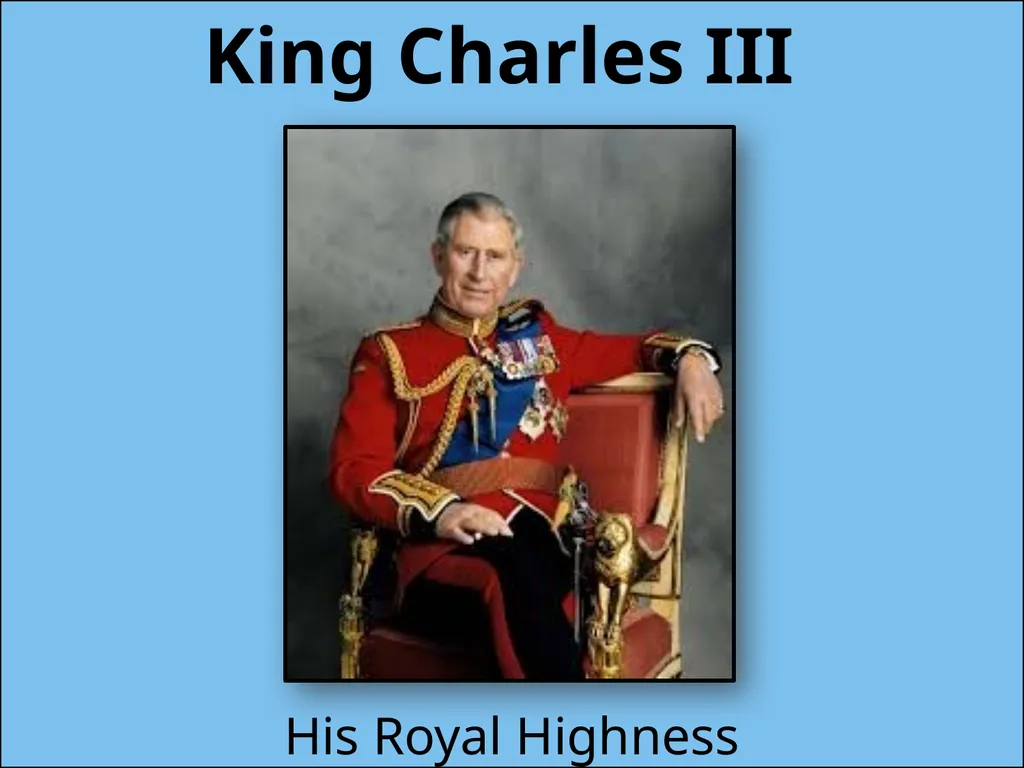
His Royal Highness King Charles III<br>
31
How Leaders
Are Chosen The prime minister is elected by members in parliament from the majority party.
Citizens elect members of parliament, and then the members vote for prime minister.
The British monarch is a position inherited through the family line. © Brain Wrinkles<br>
Are Chosen The prime minister is elected by members in parliament from the majority party.
Citizens elect members of parliament, and then the members vote for prime minister.
The British monarch is a position inherited through the family line. © Brain Wrinkles<br>
32
Legislature United Kingdom’s bicameral legislature is called Parliament.
The two houses are called the House of Lords and the House of Commons.
Members of the House of Lords are appointed to the position.
Members in the House of Commons are elected by Britain’s citizens. © Brain Wrinkles<br>
The two houses are called the House of Lords and the House of Commons.
Members of the House of Lords are appointed to the position.
Members in the House of Commons are elected by Britain’s citizens. © Brain Wrinkles<br>
33
© Brain Wrinkles House of Lords<br>
34
House of
Commons UK’s citizens elect these members.
646 members total: 529 from England, 40 from Wales, 59 from Scotland, and 18 from Northern Ireland
This branch controls the country’s budget (has lots of power). © Brain Wrinkles<br>
Commons UK’s citizens elect these members.
646 members total: 529 from England, 40 from Wales, 59 from Scotland, and 18 from Northern Ireland
This branch controls the country’s budget (has lots of power). © Brain Wrinkles<br>
35
© Brain Wrinkles House of Commons<br>
36
Parliamentary
Democracy The leader of the political party with the most members in the House of Commons is asked by the queen to become prime minister.
The prime minister is the chief executive (head of the government) and runs the day-to-day activities of the government. © Brain Wrinkles<br>
Democracy The leader of the political party with the most members in the House of Commons is asked by the queen to become prime minister.
The prime minister is the chief executive (head of the government) and runs the day-to-day activities of the government. © Brain Wrinkles<br>
37
Role of
Citizens Much like in the US, citizens have many personal freedoms like freedom of speech, press, religion, and assembly.
Citizens also have the right to vote.
Men and women who are 18 years of age may choose to vote in national elections. © Brain Wrinkles<br>
Citizens Much like in the US, citizens have many personal freedoms like freedom of speech, press, religion, and assembly.
Citizens also have the right to vote.
Men and women who are 18 years of age may choose to vote in national elections. © Brain Wrinkles<br>
38
Role of
Citizens Citizens can choose representatives from many political parties.
Citizens do NOT directly elect the leader (chief executive), only members of the House of Commons. © Brain Wrinkles<br>
Citizens Citizens can choose representatives from many political parties.
Citizens do NOT directly elect the leader (chief executive), only members of the House of Commons. © Brain Wrinkles<br>
39
© Brain Wrinkles GERMANY Parliamentary Democracy<br>
40
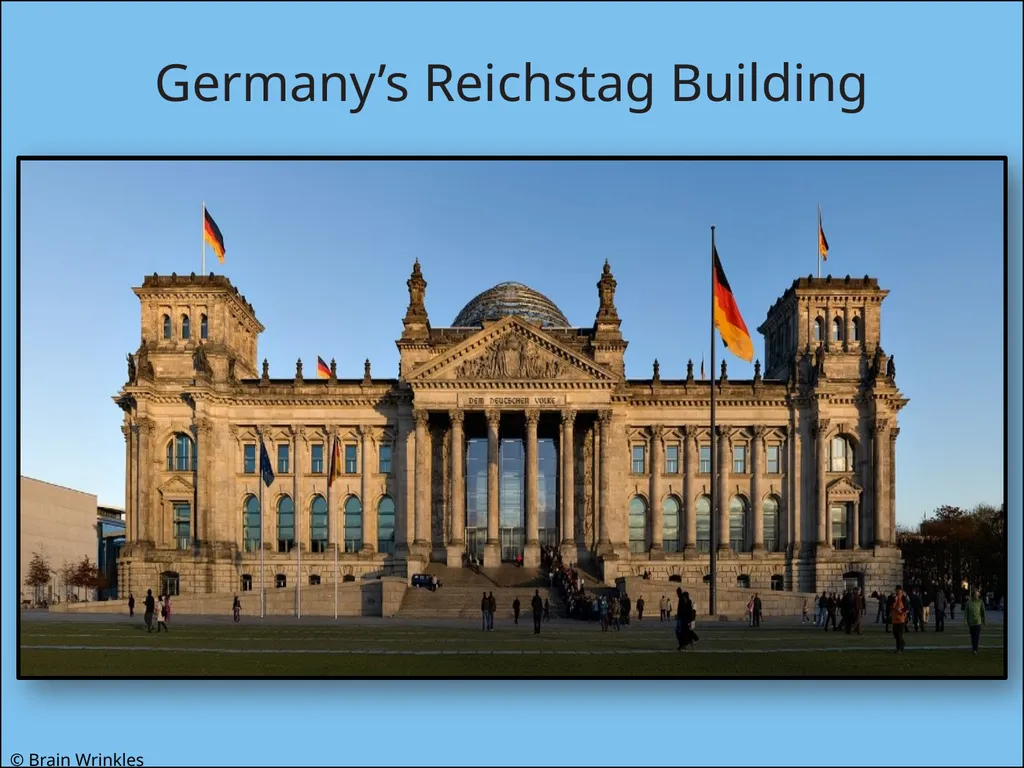
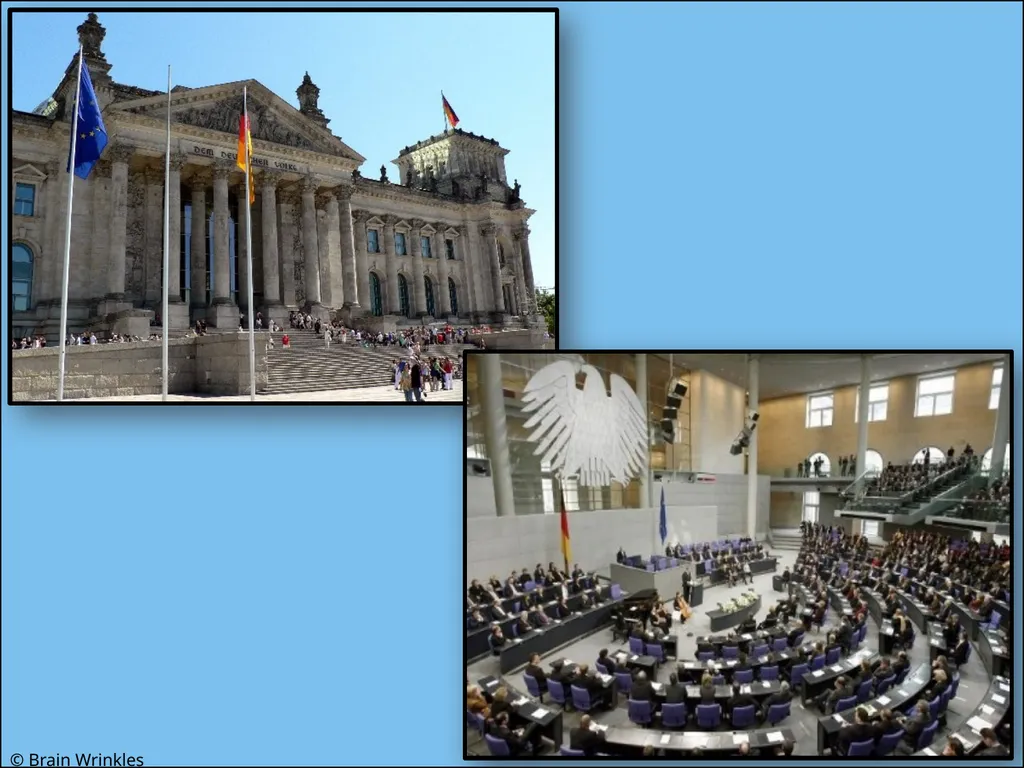
© Brain Wrinkles Germany’s Reichstag Building<br>
41
Leadership Germany’s chancellor is the powerful chief executive and head of the military.
He or she leads the parliament (Bundestag) in making and enforcing Germany’s laws.
The president is the official head of state and has very little power.
The duties are mostly ceremonial and is a symbol for the country. © Brain Wrinkles<br>
He or she leads the parliament (Bundestag) in making and enforcing Germany’s laws.
The president is the official head of state and has very little power.
The duties are mostly ceremonial and is a symbol for the country. © Brain Wrinkles<br>
42
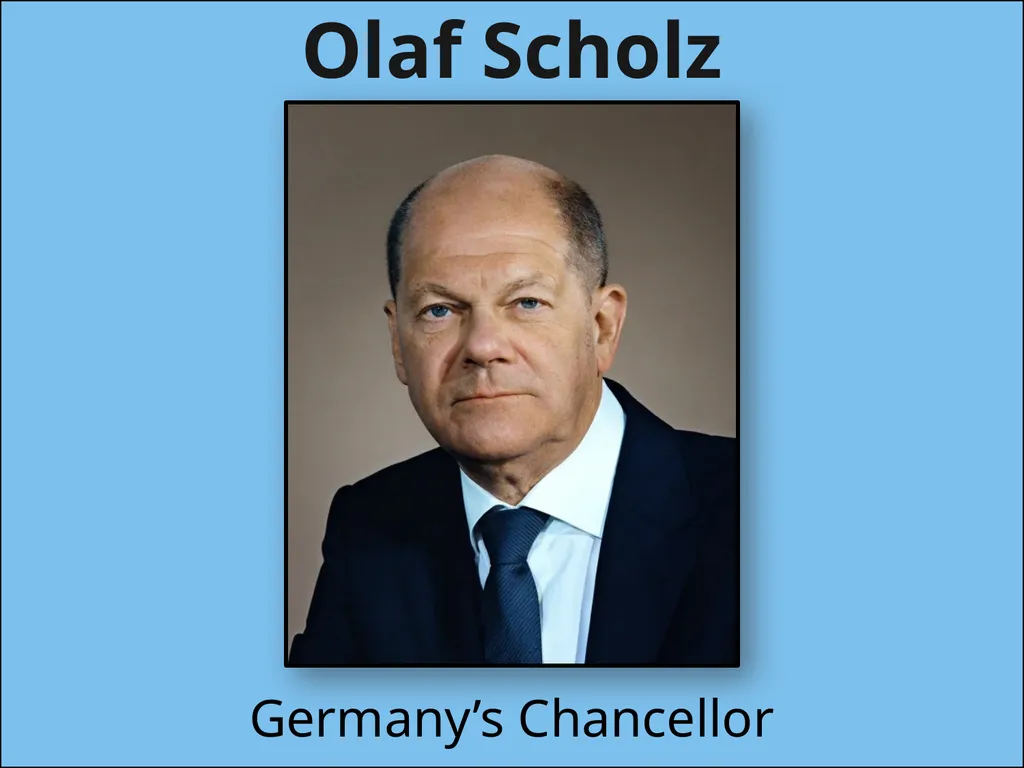
Germany’s Chancellor Olaf Scholz<br>
43
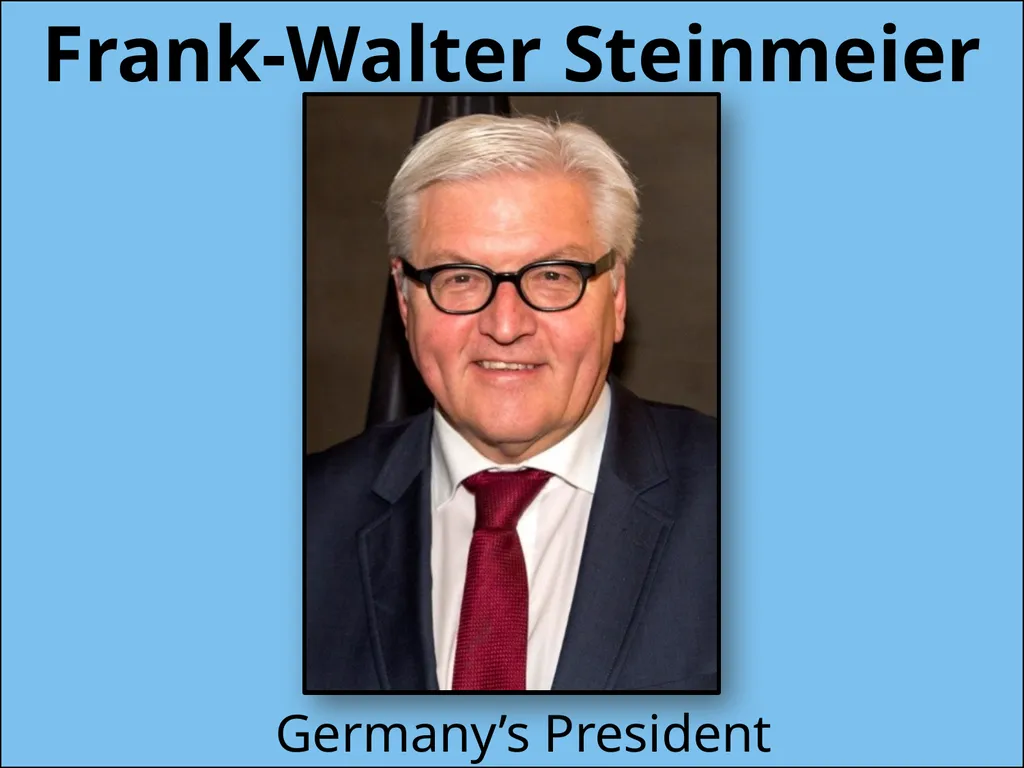
Germany’s President Frank-Walter Steinmeier<br>
44
How Leaders
Are Chosen The chancellor is the leader of the majority party in Germany’s legislature (indirectly elected by the German people).
A special committee of representatives from the legislature appoint the president. © Brain Wrinkles<br>
Are Chosen The chancellor is the leader of the majority party in Germany’s legislature (indirectly elected by the German people).
A special committee of representatives from the legislature appoint the president. © Brain Wrinkles<br>
45
Legislature Germany’s bicameral legislature is called Parliament.
The two houses are called the Bundestag and the Bundesrat.
German citizens age 18 and older elect members of both houses. © Brain Wrinkles<br>
The two houses are called the Bundestag and the Bundesrat.
German citizens age 18 and older elect members of both houses. © Brain Wrinkles<br>
46
Bundestag The Bundestag is the lower house and has the most power.
Citizens of each German state elect its members.
Members of this house elect the chancellor (chief executive of Germany). © Brain Wrinkles<br>
Citizens of each German state elect its members.
Members of this house elect the chancellor (chief executive of Germany). © Brain Wrinkles<br>
47
© Brain Wrinkles<br>
48
Parliamentary
Democracy Germany’s parliamentary democracy is structured very much like that in the UK.
German citizens elect members of the Bundestag.
Several political parties are represented in the Bundestag, and the leader of the majority party becomes the chief executive (chancellor). © Brain Wrinkles<br>
Democracy Germany’s parliamentary democracy is structured very much like that in the UK.
German citizens elect members of the Bundestag.
Several political parties are represented in the Bundestag, and the leader of the majority party becomes the chief executive (chancellor). © Brain Wrinkles<br>
49
Role of
Citizens In Germany, citizens age 18 and older can vote in elections.
Germany’s constitution called the Basic Law established rights and personal freedoms for German citizens, including freedom of speech and religion, equal rights for women, and equal education for all. © Brain Wrinkles<br>
Citizens In Germany, citizens age 18 and older can vote in elections.
Germany’s constitution called the Basic Law established rights and personal freedoms for German citizens, including freedom of speech and religion, equal rights for women, and equal education for all. © Brain Wrinkles<br>
50
UK & Germany UK and Germany are both very democratic countries.
Both are parliamentary democracies.
Citizens have many rights and freedoms.
People can participate in government by running for office, voting, and expressing opinions on important issues. © Brain Wrinkles<br>
Both are parliamentary democracies.
Citizens have many rights and freedoms.
People can participate in government by running for office, voting, and expressing opinions on important issues. © Brain Wrinkles<br>
51
© Brain Wrinkles RUSSIA Presidential Democracy<br>
52
Background Russia’s government has gone through drastic changes over the past several decades.
During the Cold War era, Russia was part of the Communist Soviet Union.
As more and more personal and economic freedoms began opening up in the country during the 1990s, Russia shifted from a communist country to a democratic one.
Today, Russia’s government is based on the presidential democracy of the United States. © Brain Wrinkles<br>
53
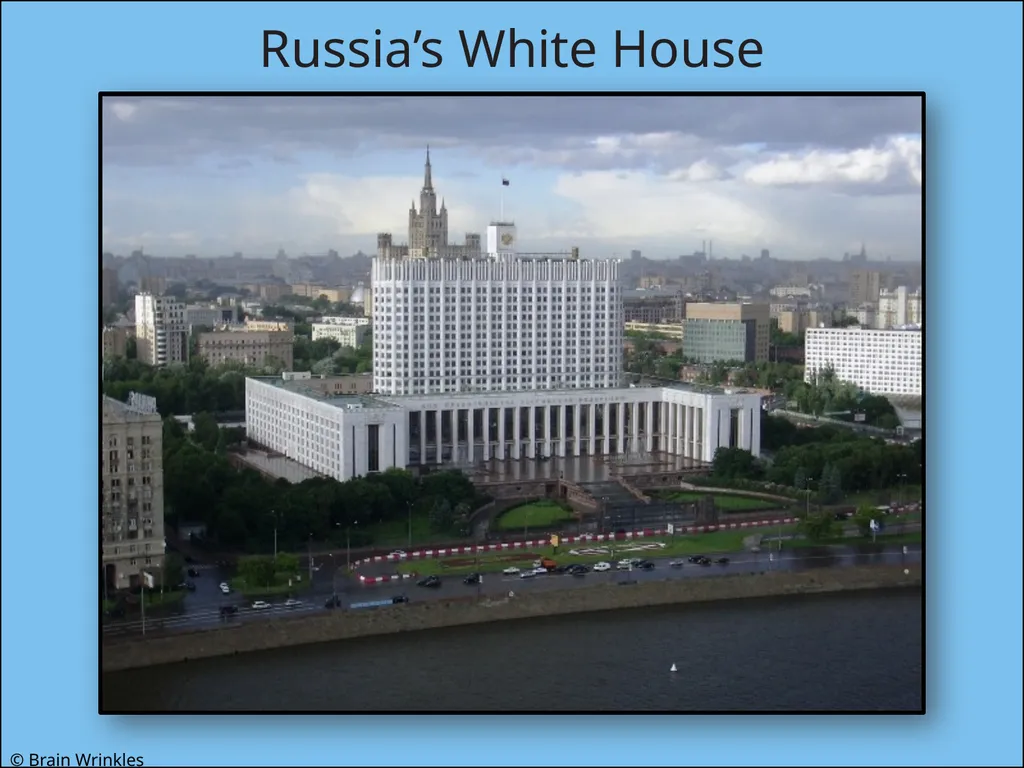
© Brain Wrinkles Russia’s White House<br>
54
Leadership The president is the chief executive with the most political power.
Can issue orders without approval of the legislature
Appoints many government officials, including the prime minister
The prime minister serves more of an administrative role and helps with the day-to-day running of the government. © Brain Wrinkles<br>
Can issue orders without approval of the legislature
Appoints many government officials, including the prime minister
The prime minister serves more of an administrative role and helps with the day-to-day running of the government. © Brain Wrinkles<br>
55
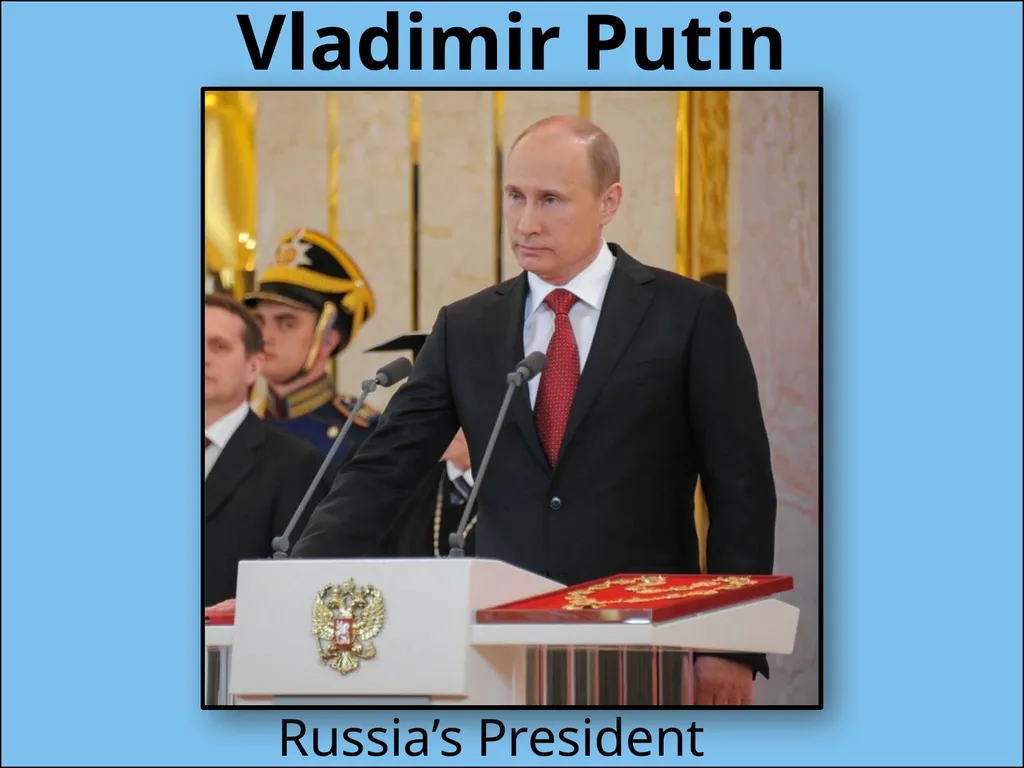
Vladimir Putin Russia’s President<br>
56
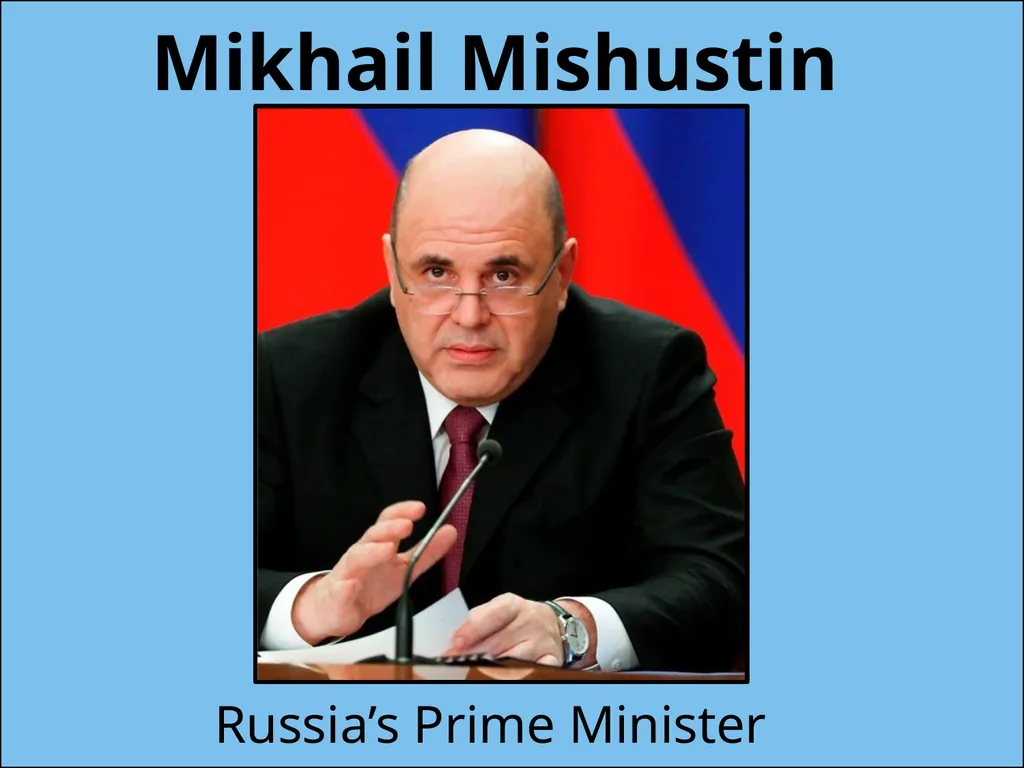
Russia’s Prime Minister Mikhail Mishustin<br>
57
How Leaders
Are Chosen Russians directly elect a president to serve as the chief executive for a six-year term.
The president then appoints a prime minister to help with running the government. © Brain Wrinkles<br>
Are Chosen Russians directly elect a president to serve as the chief executive for a six-year term.
The president then appoints a prime minister to help with running the government. © Brain Wrinkles<br>
58
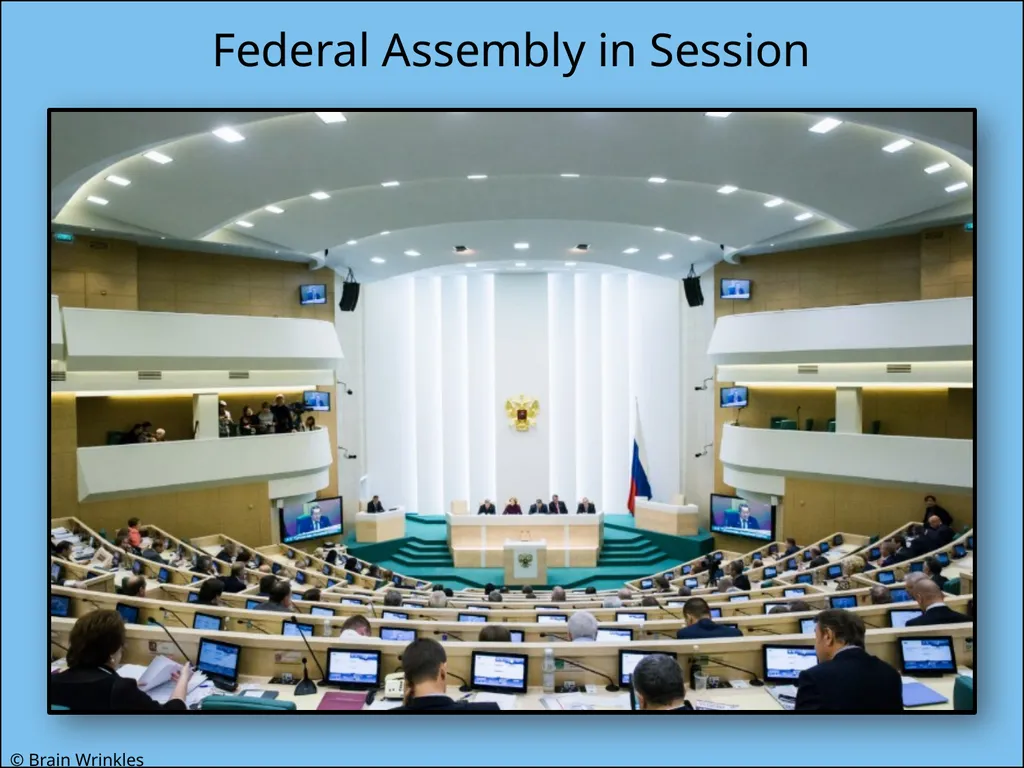
Legislature Russia’s bicameral legislature is called the Federal Assembly.
It consists of two houses called the Federation Council and the State Duma.
Citizens vote to elect representatives to the State Duma, while members of the Federation Council are appointed by Russia’s many lower district governments. © Brain Wrinkles<br>
It consists of two houses called the Federation Council and the State Duma.
Citizens vote to elect representatives to the State Duma, while members of the Federation Council are appointed by Russia’s many lower district governments. © Brain Wrinkles<br>
59
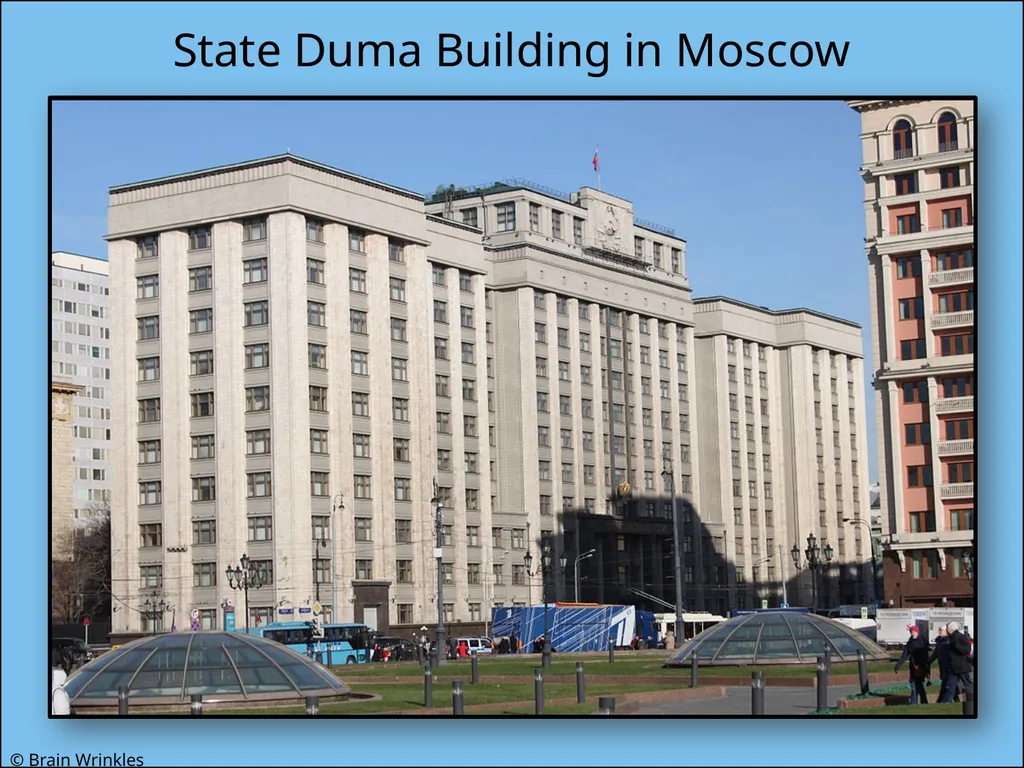
© Brain Wrinkles State Duma Building in Moscow<br>
60
© Brain Wrinkles Federal Assembly in Session<br>
61
Presidential
Democracy Russia has a presidential democracy.
Citizens directly elect the president every six years.
The executive branch (president) works independently of the legislative branch (Federal Assembly. © Brain Wrinkles<br>
Democracy Russia has a presidential democracy.
Citizens directly elect the president every six years.
The executive branch (president) works independently of the legislative branch (Federal Assembly. © Brain Wrinkles<br>
62
Role of
Citizens Citizens age 18 and older are free to vote or run for office.
Russians have a lot more influence over the government today than they did a couple decades ago. © Brain Wrinkles<br>
Citizens Citizens age 18 and older are free to vote or run for office.
Russians have a lot more influence over the government today than they did a couple decades ago. © Brain Wrinkles<br>
63
Role of
Citizens Russia adopted a new constitution in 1993 that guarantees basic freedoms of speech, religion, the press, assembly, etc.
Other important rights granted, which were denied during Communist rule, include freedom of movement, mail correspondence, and right to private telephone calls. © Brain Wrinkles<br>
64
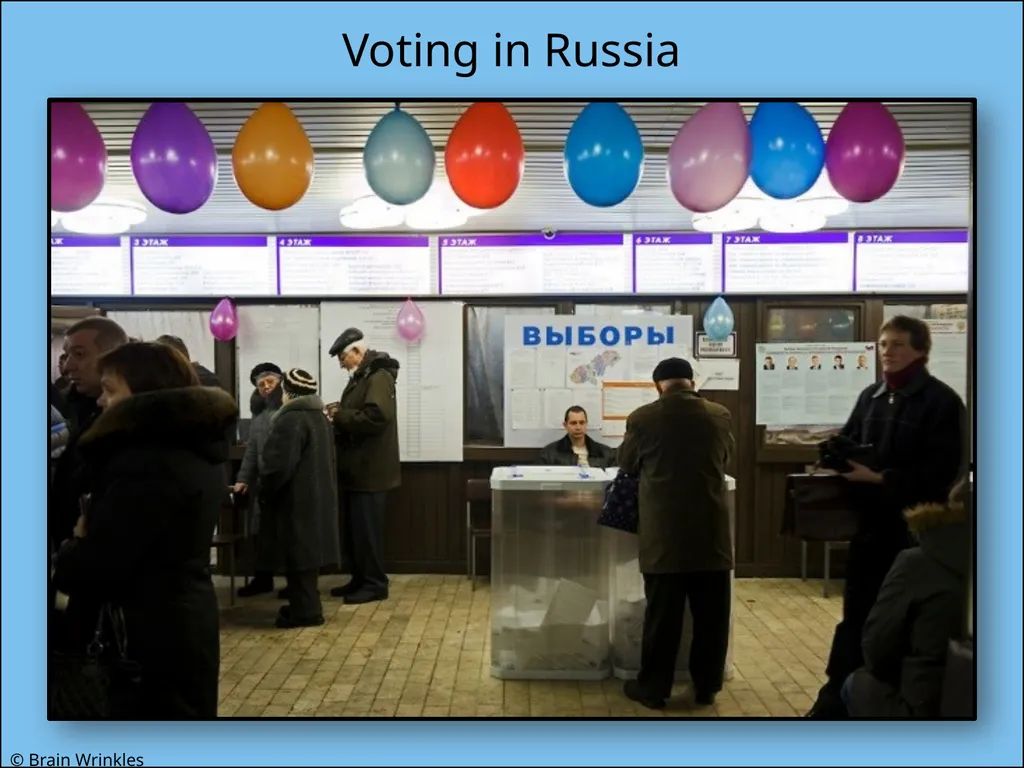
© Brain Wrinkles Voting in Russia<br>
65
Struggles Unfortunately, freedoms for Russia’s citizens are not absolute.
Even though Russia is a democracy, the Russian government is often accused of violating citizens’ freedom of speech.
The government often uses censorship with the press and media so that information is manipulated.
Russians who criticize the government often face consequences, such as jail time. © Brain Wrinkles<br>
66
© Brain Wrinkles<br>
67
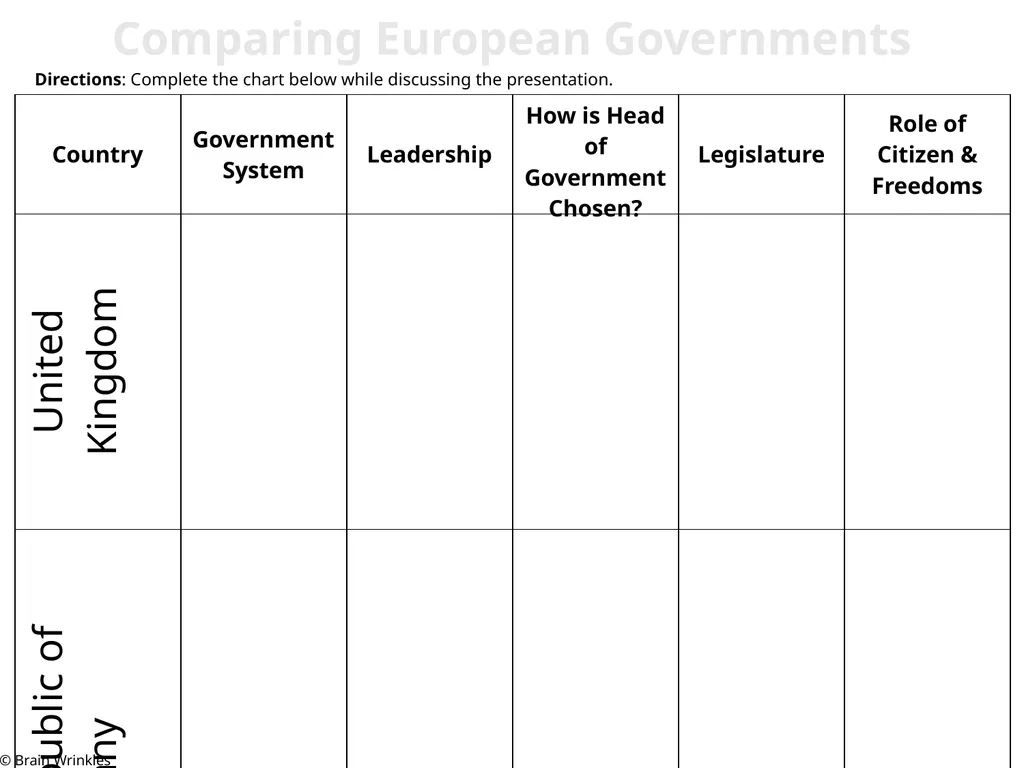
TEACHER INFO: Government Charts
Print off the Government charts for each student. (Print front-to-back to save paper.)
The students will complete the charts after discussing the presentation.
Check the answers as a class to be sure that all charts are completed correctly. © Brain Wrinkles<br>
Print off the Government charts for each student. (Print front-to-back to save paper.)
The students will complete the charts after discussing the presentation.
Check the answers as a class to be sure that all charts are completed correctly. © Brain Wrinkles<br>
68
© Brain Wrinkles Comparing European Governments Directions: Complete the chart below while discussing the presentation.<br>
69
© Brain Wrinkles Comparing European Governments Directions: Complete the chart below while discussing the presentation.<br>
70
TEACHER INFO: Insta-Snaps
Print off the following slide & make a copy for each student.
In each “snap box” the students will draw a picture to represent a part of each country’s government. (It could be a leader, legislature, citizens’ rights, building, etc.)
In the text box, they should describe what the picture is and why/how it is important to the country’s government. © Brain Wrinkles<br>
71
Insta-Snaps Directions: In the “snap box”, draw a picture to represent one important aspect of each country’s government. (It could be the government type, citizens’ rights, how leaders are elected, legislature’s role, etc.) In each caption box, describe what the picture is and how it is important to the country’s government. Don’t forget to include a hashtag for the most important part! Insta-Snaps © Brain Wrinkles Insta-Snaps Insta-Snaps<br>
72
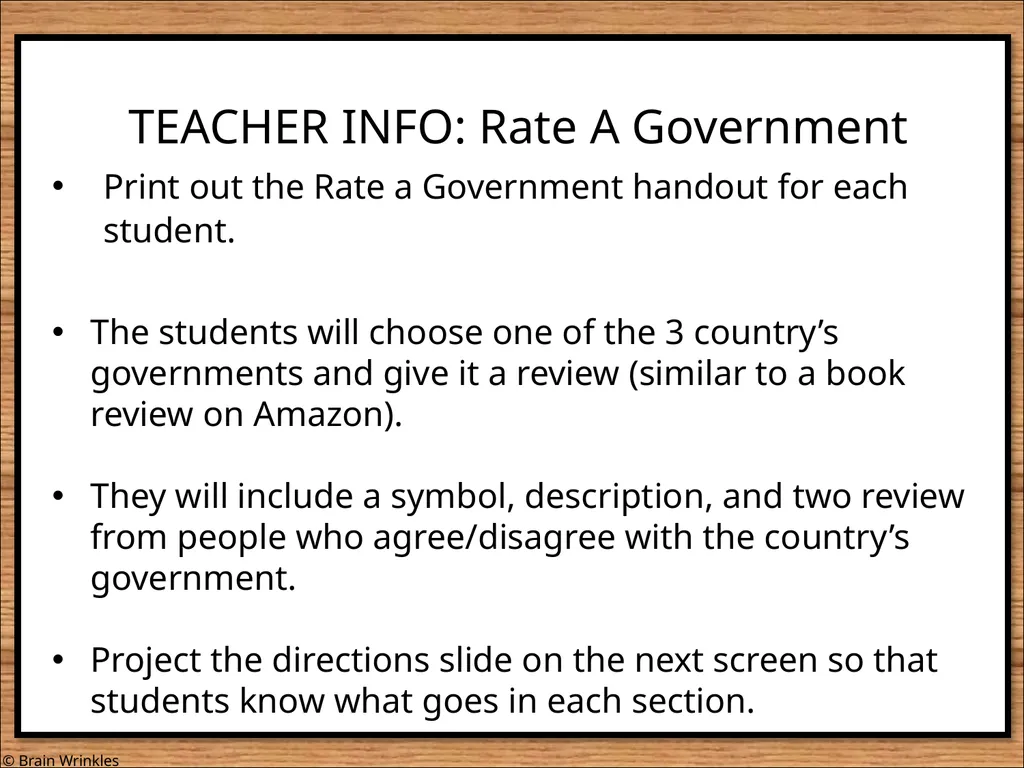
TEACHER INFO: Rate A Government
Print out the Rate a Government handout for each student.
The students will choose one of the 3 country’s governments and give it a review (similar to a book review on Amazon).
They will include a symbol, description, and two review from people who agree/disagree with the country’s government.
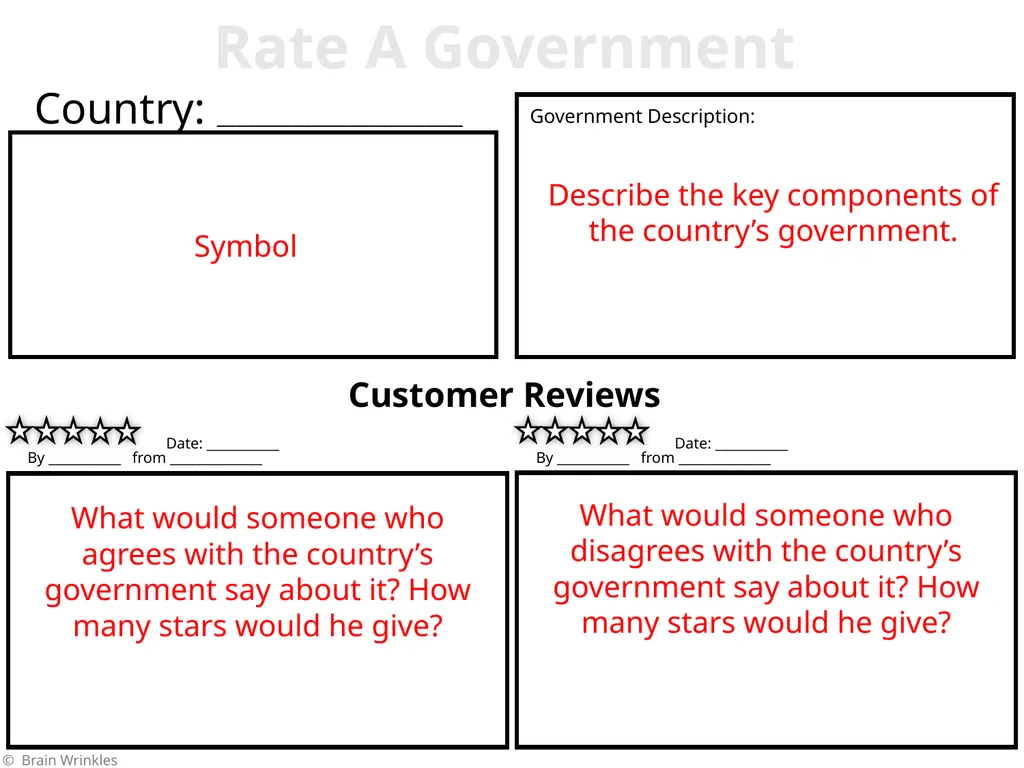
Project the directions slide on the next screen so that students know what goes in each section. © Brain Wrinkles<br>
73
Rate A Government Country: __________________________ Government Description: Customer Reviews By ___________ from ______________ Date: ___________ By ___________ from ______________ Date: ___________ Describe the key components of the country’s government. What would someone who agrees with the country’s government say about it? How many stars would he give? What would someone who disagrees with the country’s government say about it? How many stars would he give? © Brain Wrinkles Symbol<br>
74
Rate A Government Country: __________________________ Government Description: Customer Reviews By ___________ from ______________ Date: ___________ By ___________ from ______________ Date: ___________ © Brain Wrinkles<br>
75
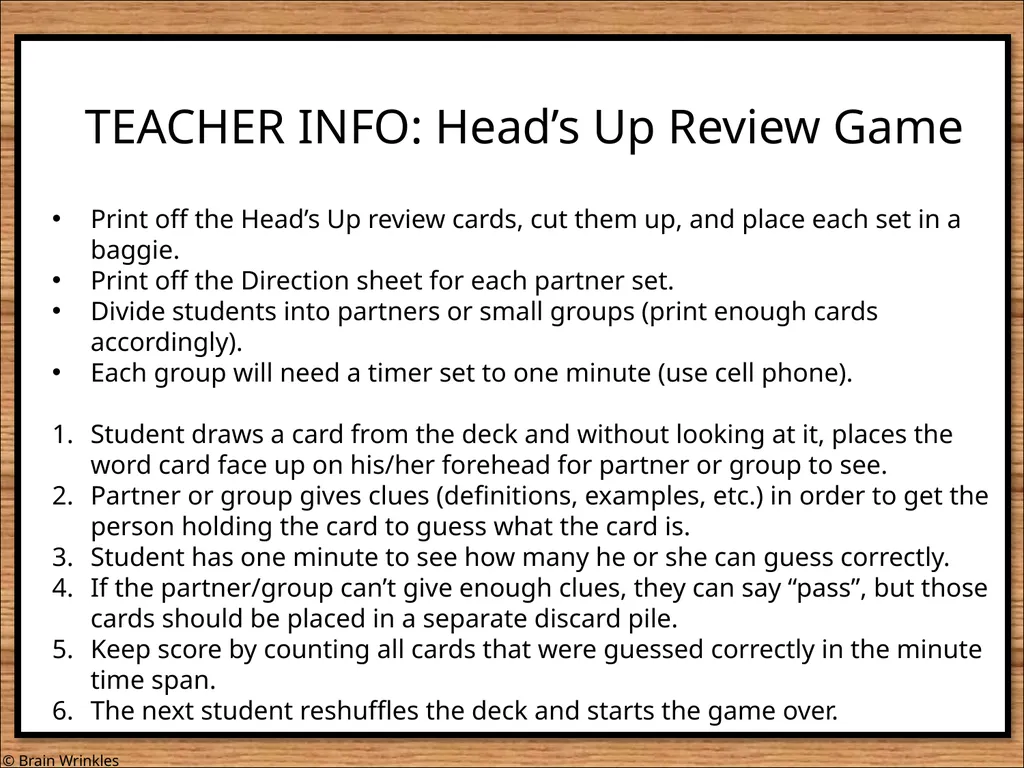
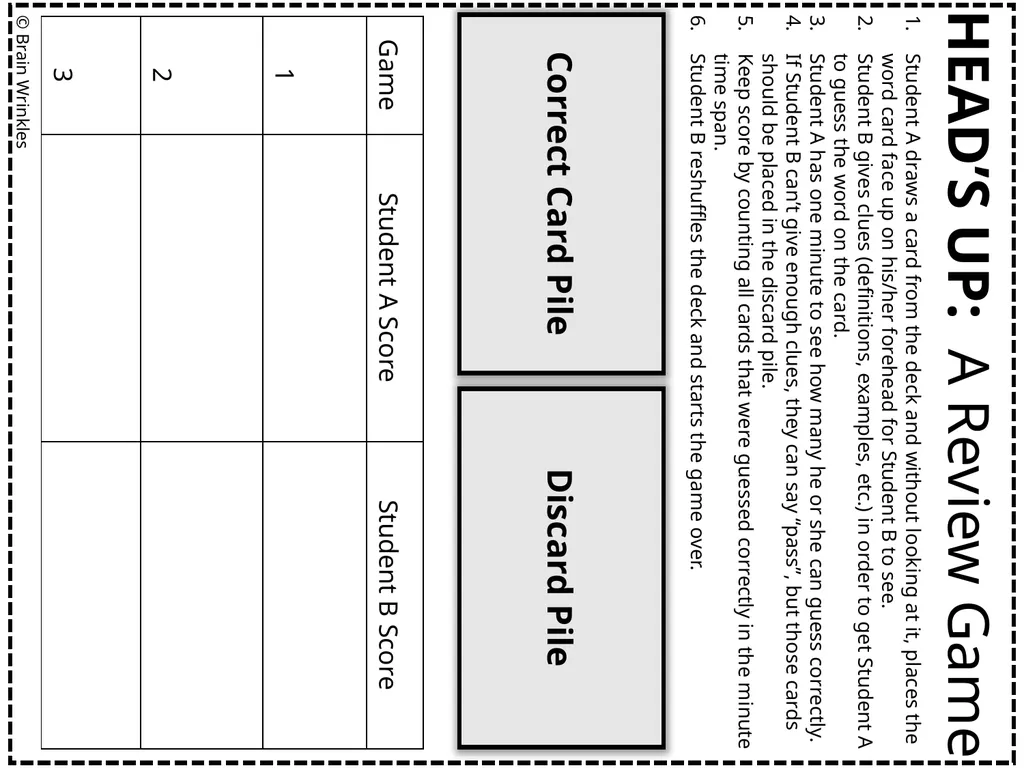
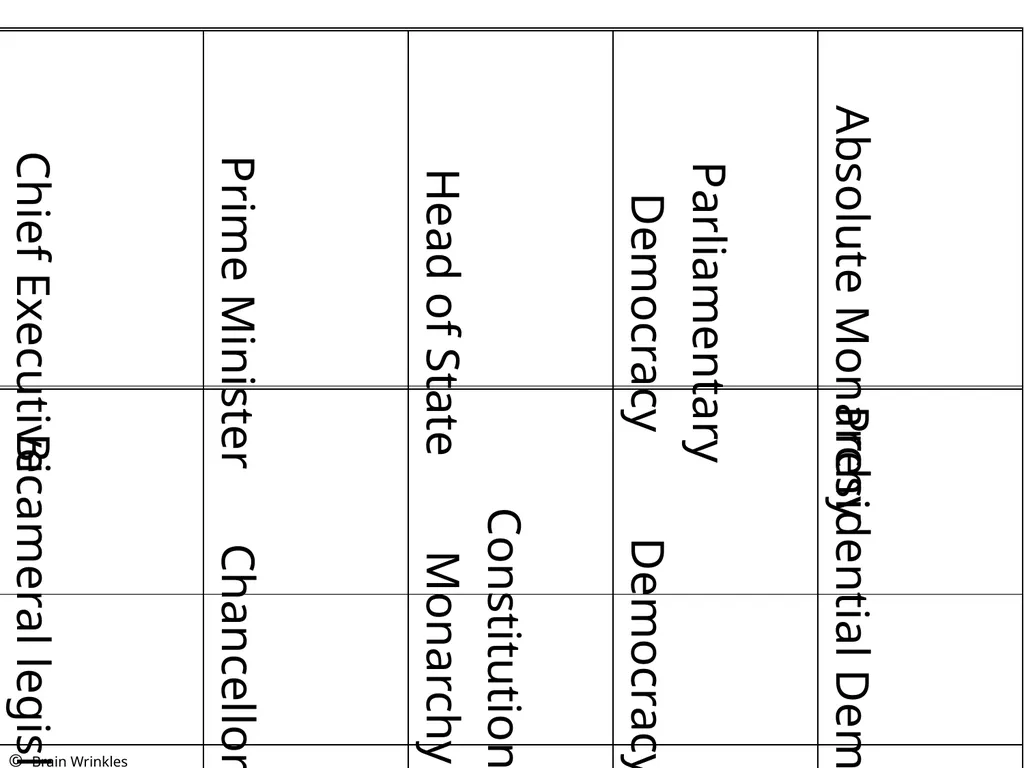
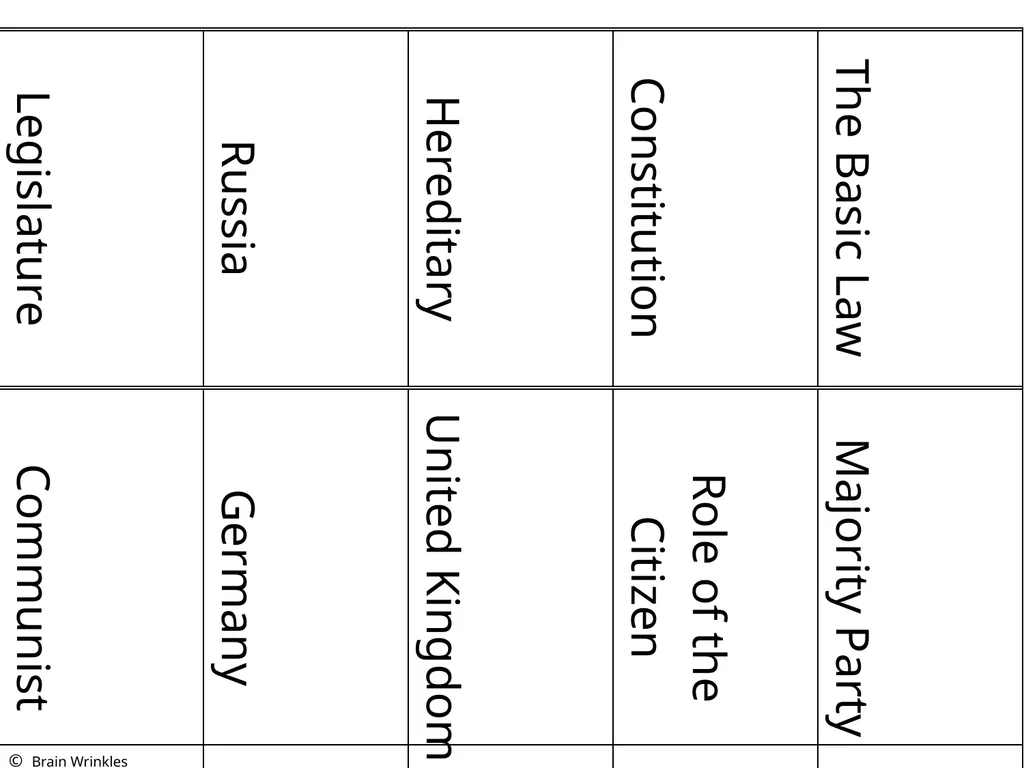
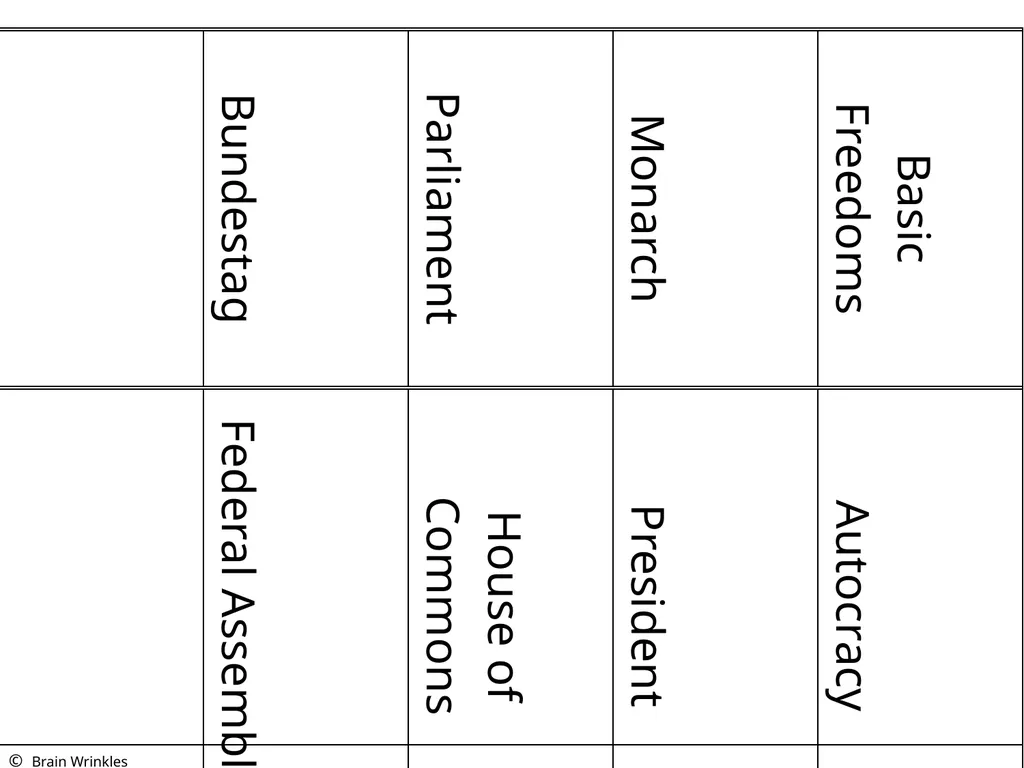
TEACHER INFO: Head’s Up Review Game
Print off the Head’s Up review cards, cut them up, and place each set in a baggie.
Print off the Direction sheet for each partner set.
Divide students into partners or small groups (print enough cards accordingly).
Each group will need a timer set to one minute (use cell phone).
Student draws a card from the deck and without looking at it, places the word card face up on his/her forehead for partner or group to see.
Partner or group gives clues (definitions, examples, etc.) in order to get the person holding the card to guess what the card is.
Student has one minute to see how many he or she can guess correctly.
If the partner/group can’t give enough clues, they can say “pass”, but those cards should be placed in a separate discard pile.
Keep score by counting all cards that were guessed correctly in the minute time span.
The next student reshuffles the deck and starts the game over. © Brain Wrinkles<br>
76
HEAD’S UP: A Review Game Student A draws a card from the deck and without looking at it, places the word card face up on his/her forehead for Student B to see.
Student B gives clues (definitions, examples, etc.) in order to get Student A to guess the word on the card.
Student A has one minute to see how many he or she can guess correctly.
If Student B can’t give enough clues, they can say “pass”, but those cards should be placed in the discard pile.
Keep score by counting all cards that were guessed correctly in the minute time span.
Student B reshuffles the deck and starts the game over. © Brain Wrinkles Correct Card Pile Discard Pile<br>
77
© Brain Wrinkles<br>
78
© Brain Wrinkles<br>
79
© Brain Wrinkles<br>
80
TEACHER INFO: Comprehension Check
Print off the Comprehension Check for each student.
The students will complete this handout at the end of the lesson. You can count this as a quiz! © Brain Wrinkles<br>
Print off the Comprehension Check for each student.
The students will complete this handout at the end of the lesson. You can count this as a quiz! © Brain Wrinkles<br>
81
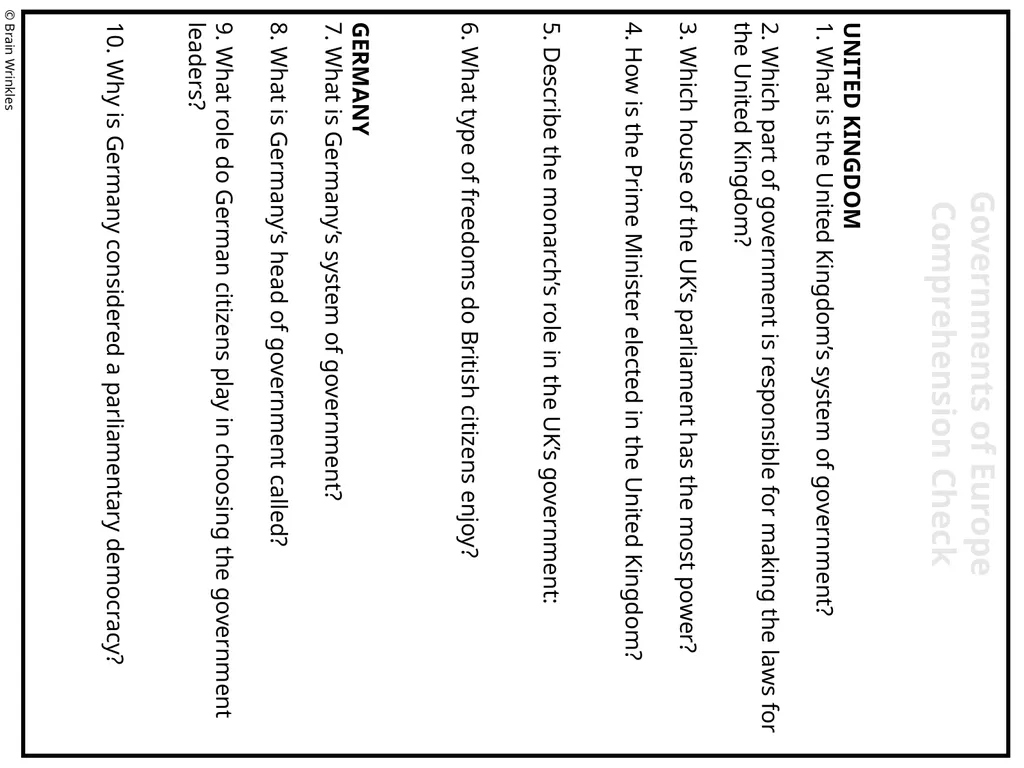
Governments of Europe
Comprehension Check UNITED KINGDOM
1. What is the United Kingdom’s system of government?
2. Which part of government is responsible for making the laws for the United Kingdom?
3. Which house of the UK’s parliament has the most power?
4. How is the Prime Minister elected in the United Kingdom?
5. Describe the monarch’s role in the UK’s government:
6. What type of freedoms do British citizens enjoy?
GERMANY
7. What is Germany’s system of government?
8. What is Germany’s head of government called?
9. What role do German citizens play in choosing the government leaders?
10. Why is Germany considered a parliamentary democracy? © Brain Wrinkles<br>
82
Governments of Europe
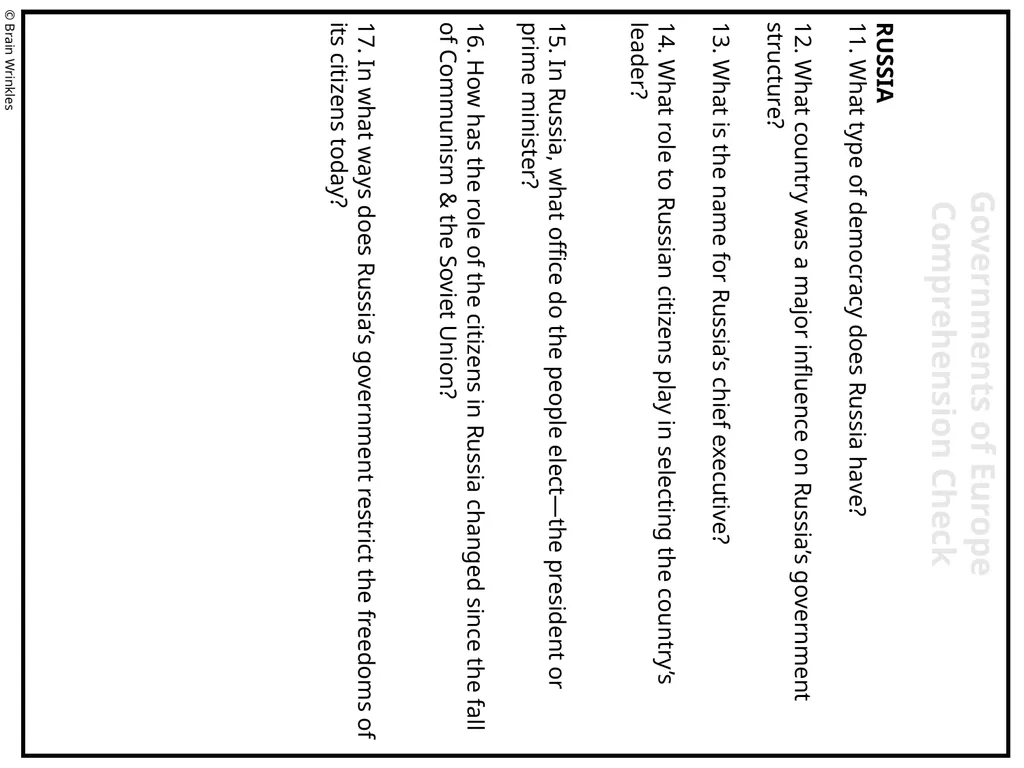
Comprehension Check RUSSIA
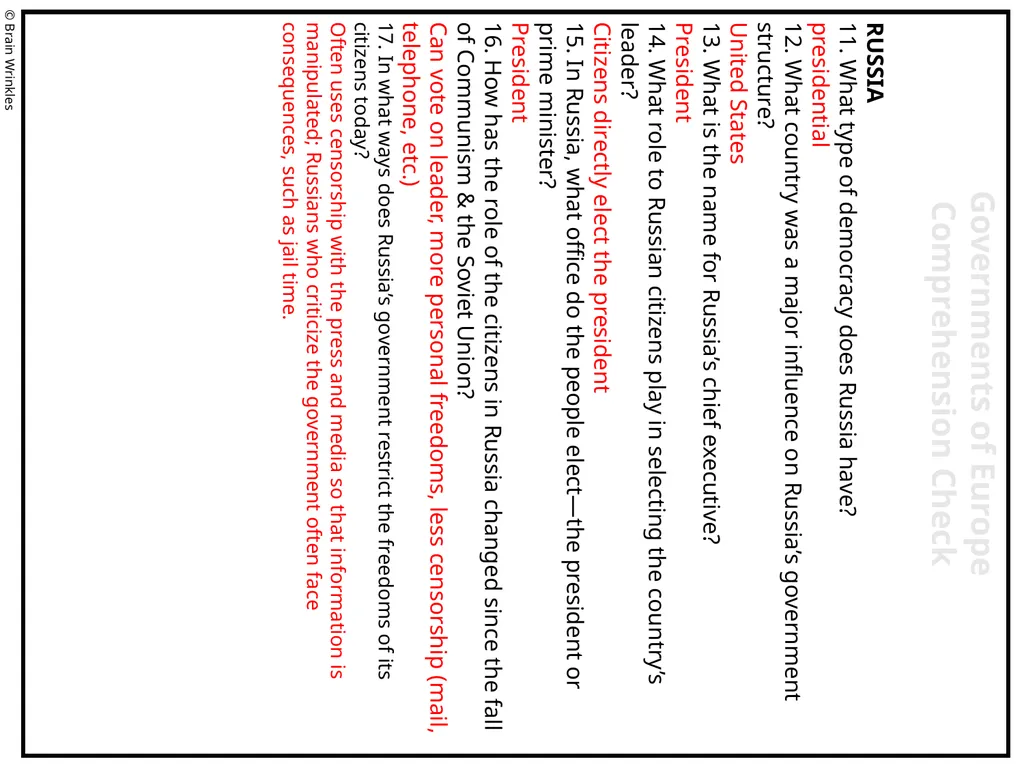
11. What type of democracy does Russia have?
12. What country was a major influence on Russia’s government structure?
13. What is the name for Russia’s chief executive?
14. What role to Russian citizens play in selecting the country’s leader?
15. In Russia, what office do the people elect—the president or prime minister?
16. How has the role of the citizens in Russia changed since the fall of Communism & the Soviet Union?
17. In what ways does Russia’s government restrict the freedoms of its citizens today? © Brain Wrinkles<br>
83
Governments of Europe
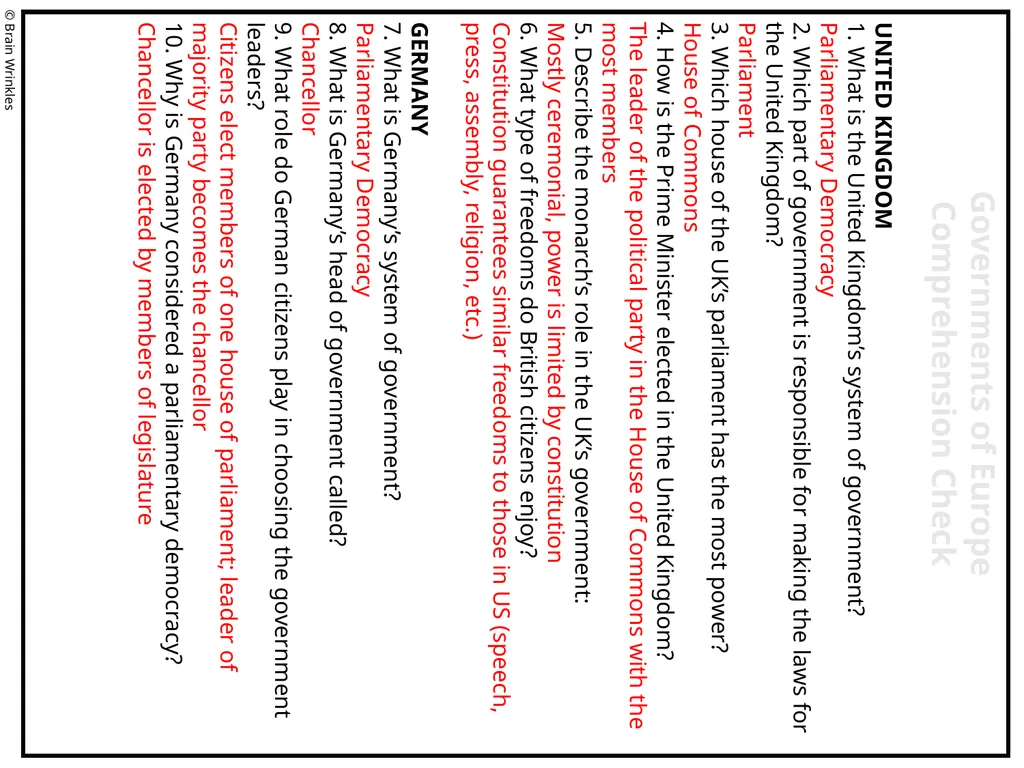
Comprehension Check UNITED KINGDOM
1. What is the United Kingdom’s system of government?
Parliamentary Democracy
2. Which part of government is responsible for making the laws for the United Kingdom?
Parliament
3. Which house of the UK’s parliament has the most power?
House of Commons
4. How is the Prime Minister elected in the United Kingdom?
The leader of the political party in the House of Commons with the most members
5. Describe the monarch’s role in the UK’s government:
Mostly ceremonial, power is limited by constitution
6. What type of freedoms do British citizens enjoy?
Constitution guarantees similar freedoms to those in US (speech, press, assembly, religion, etc.)
GERMANY
7. What is Germany’s system of government?
Parliamentary Democracy
8. What is Germany’s head of government called?
Chancellor
9. What role do German citizens play in choosing the government leaders?
Citizens elect members of one house of parliament; leader of majority party becomes the chancellor
10. Why is Germany considered a parliamentary democracy?
Chancellor is elected by members of legislature © Brain Wrinkles<br>
84
Governments of Europe
Comprehension Check RUSSIA
11. What type of democracy does Russia have?
presidential
12. What country was a major influence on Russia’s government structure?
United States
13. What is the name for Russia’s chief executive?
President
14. What role to Russian citizens play in selecting the country’s leader?
Citizens directly elect the president
15. In Russia, what office do the people elect—the president or prime minister?
President
16. How has the role of the citizens in Russia changed since the fall of Communism & the Soviet Union?
Can vote on leader, more personal freedoms, less censorship (mail, telephone, etc.)
17. In what ways does Russia’s government restrict the freedoms of its citizens today?
Often uses censorship with the press and media so that information is manipulated; Russians who criticize the government often face consequences, such as jail time. © Brain Wrinkles<br>
85
TEACHER INFO: TICKET OUT THE DOOR
Print off the Crystal Ball handout for each student (two-per-page).
Have the students make predictions about each country’s economy based on what they learned about the country’s government.
Collect & read their responses and begin the next day’s lesson by sharing a few outloud. © Brain Wrinkles<br>
86
Crystal Ball
Predictions Based on what we learned about UK, Germany, & Russia’s governments, what do you think each of their economies will be like? Crystal Ball
Predictions Based on what we learned about UK, Germany, & Russia’s governments, what do you think each of their economies will be like? © Brain Wrinkles © Brain Wrinkles Name: Name:<br>
87
Thank you so much for downloading this file. I sincerely hope you find it helpful and that your students learn a lot from it! I look forward to reading your feedback in my store.
If you like this file, you might want to check out some of my other products that teach social studies topics in creative, engaging, and hands-on ways.
Best wishes,
Ansley at Brain Wrinkles Thank You!<br>
If you like this file, you might want to check out some of my other products that teach social studies topics in creative, engaging, and hands-on ways.
Best wishes,
Ansley at Brain Wrinkles Thank You!<br>
88
© Brain Wrinkles. Your download includes a limited use license from Brain Wrinkles. The purchaser may use the resource for personal classroom use only. The license is not transferable to another person. Other teachers should purchase their own license through my store.
This resource is not to be used:
By an entire grade level, school, or district without purchasing the proper number of licenses. For school/district licenses at a discount, please contact me.
As part of a product listed for sale or for free by another individual.
On shared databases.
Online in any way other than on password-protected website for student use only.
© Copyright Brain Wrinkles. All rights reserved. Permission is granted to copy pages specifically designed for student or teacher use by the original purchaser or licensee. The reproduction of any other part of this product is strictly prohibited. Copying any part of this product and placing it on the Internet in any form (even a personal/classroom website) is strictly forbidden. Doing so makes it possible for an Internet search to make the document available on the Internet, free of charge, and is a violation of the Digital Millennium Copyright Act (DMCA).
Thank you,
Ansley at Brain Wrinkles Terms of Use Clipart, fonts, & digital papers for this product were purchased from:<br>