
Harmonise & extend statutory protection from
CP
Published · 39 slides · 0 views
1 / 1

Description
Harmonise extend statutory protection from discrimination for wider range of people Aim is to ensure equal access in: Employment Goods Services Education Public Functions Premises Associations Equality Act 2017 Societal Benefits of
Related Topics
Share
Embed code
Download this presentation From Below
"Harmonise & extend statutory protection from" is the property of its rightful owner. Permission is granted to download and print the materials on this website for personal, non-commercial use only, and to display it on your personal computer provided you do not modify the materials and that you retain all copyright notices contained in the materials. By downloading content from our website, you accept the terms of this agreement.
Presentation Transcript
01
Harmonise & extend statutory protection from discrimination for wider range of people
Aim is to ensure equal access in:
Employment
Goods & Services
Education
Public Functions
Premises
Associations Equality Act 2017<br>
Aim is to ensure equal access in:
Employment
Goods & Services
Education
Public Functions
Premises
Associations Equality Act 2017<br>
02
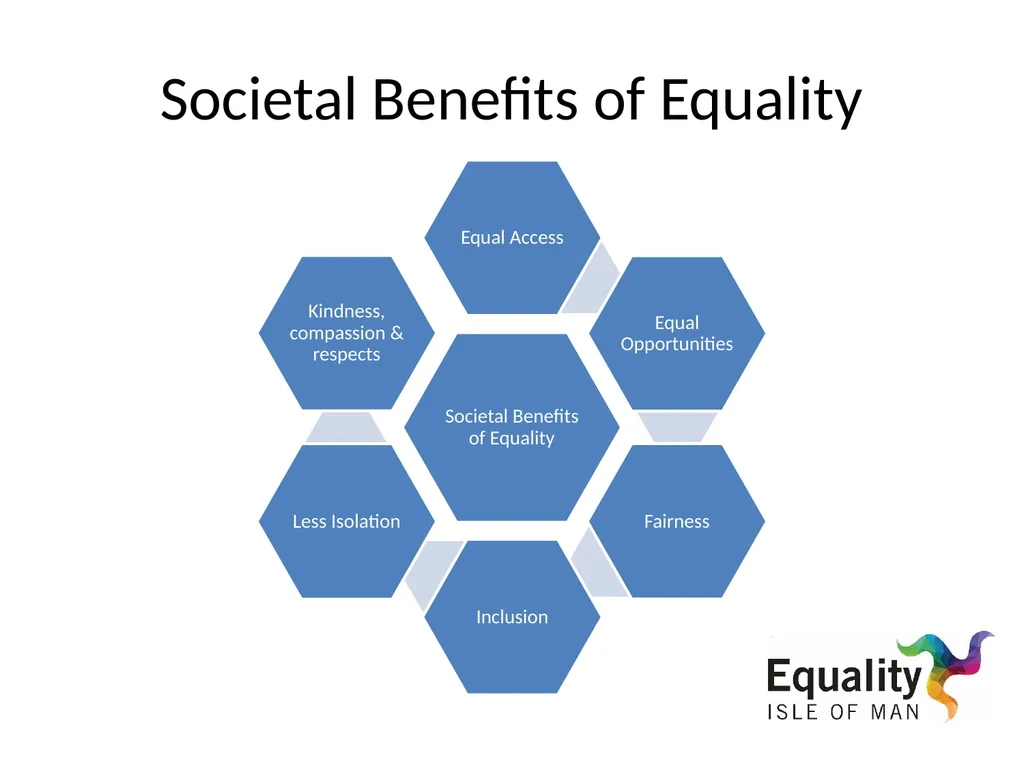
Societal Benefits of Equality<br>
03
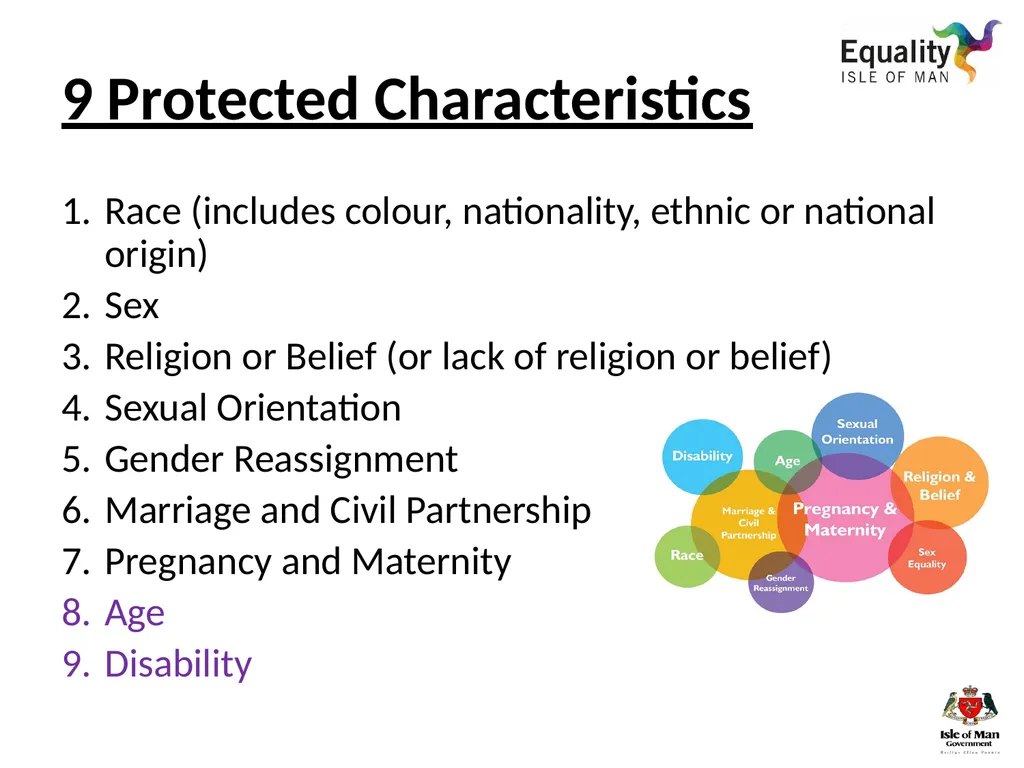
9 Protected Characteristics Race (includes colour, nationality, ethnic or national origin)
Sex
Religion or Belief (or lack of religion or belief)
Sexual Orientation
Gender Reassignment
Marriage and Civil Partnership
Pregnancy and Maternity
Age
Disability<br>
Sex
Religion or Belief (or lack of religion or belief)
Sexual Orientation
Gender Reassignment
Marriage and Civil Partnership
Pregnancy and Maternity
Age
Disability<br>
04
Forms of Discrimination<br>
05
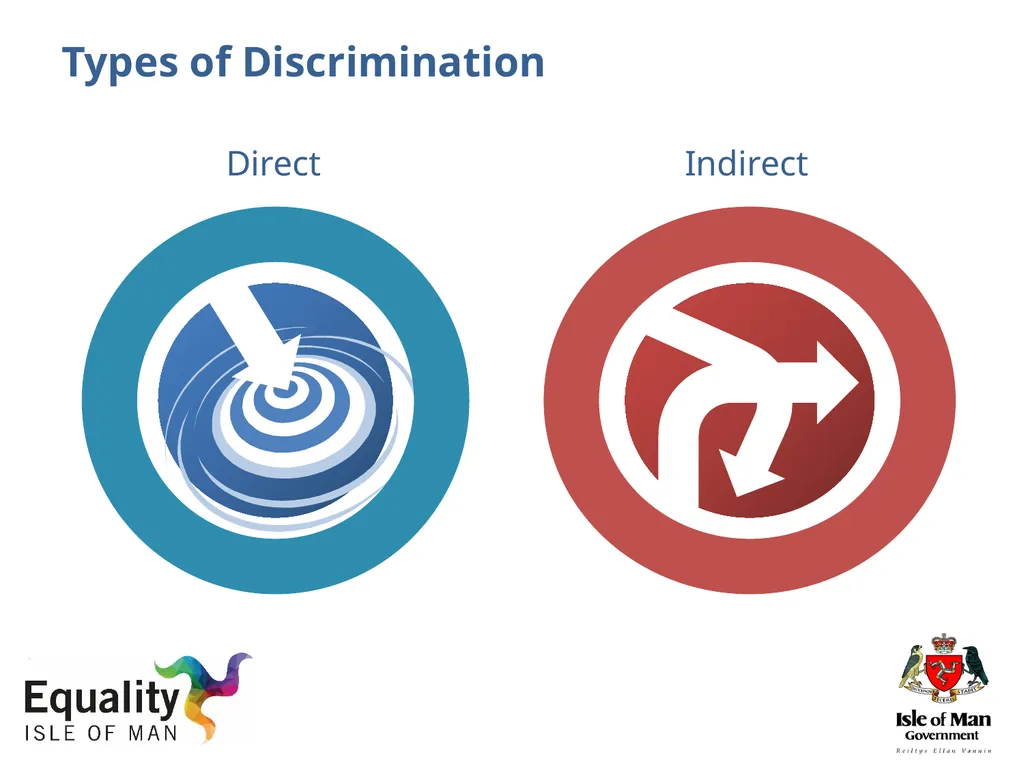
Types of Discrimination Direct Indirect<br>
06
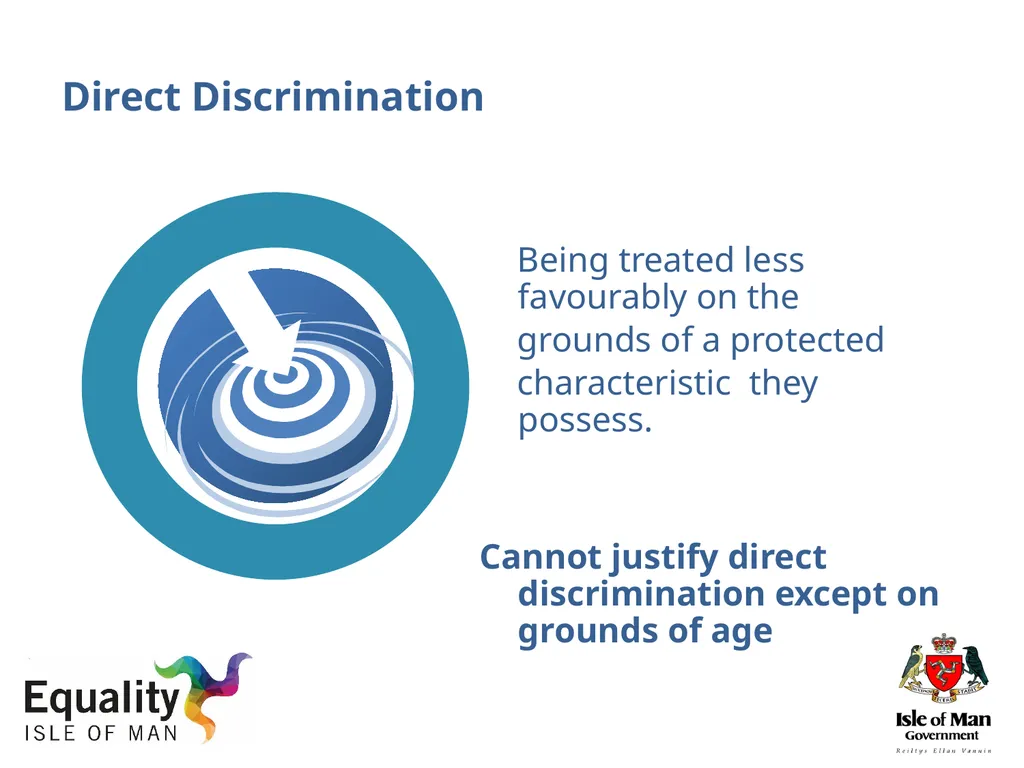
Direct Discrimination Being treated less favourably on the
grounds of a protected
characteristic they possess.
Cannot justify direct discrimination except on grounds of age<br>
grounds of a protected
characteristic they possess.
Cannot justify direct discrimination except on grounds of age<br>
07
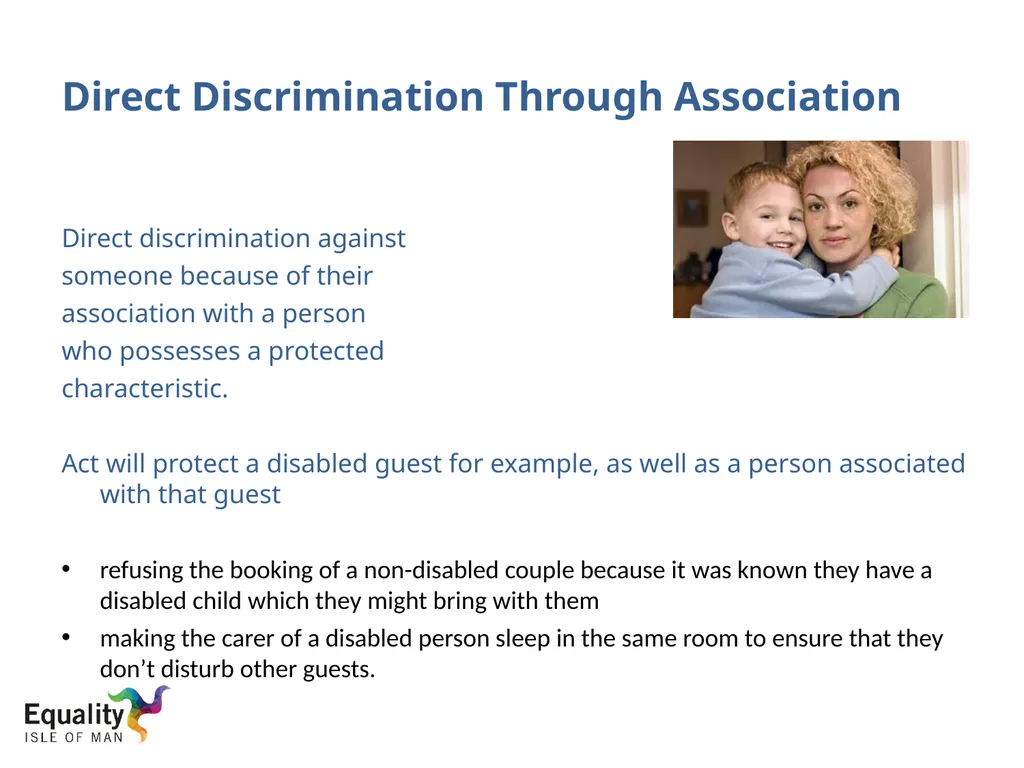
Direct Discrimination Through Association Direct discrimination against
someone because of their
association with a person
who possesses a protected
characteristic.
Act will protect a disabled guest for example, as well as a person associated with that guest
refusing the booking of a non-disabled couple because it was known they have a disabled child which they might bring with them
making the carer of a disabled person sleep in the same room to ensure that they don’t disturb other guests.<br>
someone because of their
association with a person
who possesses a protected
characteristic.
Act will protect a disabled guest for example, as well as a person associated with that guest
refusing the booking of a non-disabled couple because it was known they have a disabled child which they might bring with them
making the carer of a disabled person sleep in the same room to ensure that they don’t disturb other guests.<br>
08
Direct Discrimination by Perception Discrimination based on the
perception that a person
possesses a protected
Characteristic.
Avoid treating someone less favourably because you think they have a particular characteristic<br>
perception that a person
possesses a protected
Characteristic.
Avoid treating someone less favourably because you think they have a particular characteristic<br>
09
Indirect Discrimination Where a provision, criterion
or practice is applied equally,
but has the effect of putting
a person with a protected
characteristic at a
disadvantage when
compared to others.<br>
or practice is applied equally,
but has the effect of putting
a person with a protected
characteristic at a
disadvantage when
compared to others.<br>
10
Objective Justification Possible to defend indirect discrimination claim by arguing practice or treatment is justified.
To be successful in the defence:
Show there is a good business reason – “legitimate aim”
That the way of doing it is appropriate, necessary, fair and reasonable – “proportionate means” and in doing so has considered any other less discriminatory ways of achieving the legitimate aim<br>
To be successful in the defence:
Show there is a good business reason – “legitimate aim”
That the way of doing it is appropriate, necessary, fair and reasonable – “proportionate means” and in doing so has considered any other less discriminatory ways of achieving the legitimate aim<br>
11
HARASSMENT
A person harasses another if that person engages in…. Which violates a person’s dignity and creates a hostile, humiliating, intimidating, degrading or offensive environment NB. CLAIMANT MAY NOT HAVE BEEN INTENDED RECIPIENT OF HARASSMENT<br>
A person harasses another if that person engages in…. Which violates a person’s dignity and creates a hostile, humiliating, intimidating, degrading or offensive environment NB. CLAIMANT MAY NOT HAVE BEEN INTENDED RECIPIENT OF HARASSMENT<br>
12
Victimisation Victimisation is when a person is subject to a
detriment because they have (or are believed to have):
Made an allegation of discrimination.
Supported a complaint of discrimination.
Given evidence relating to a complaint.
Raised a grievance concerning discrimination.<br>
detriment because they have (or are believed to have):
Made an allegation of discrimination.
Supported a complaint of discrimination.
Given evidence relating to a complaint.
Raised a grievance concerning discrimination.<br>
13
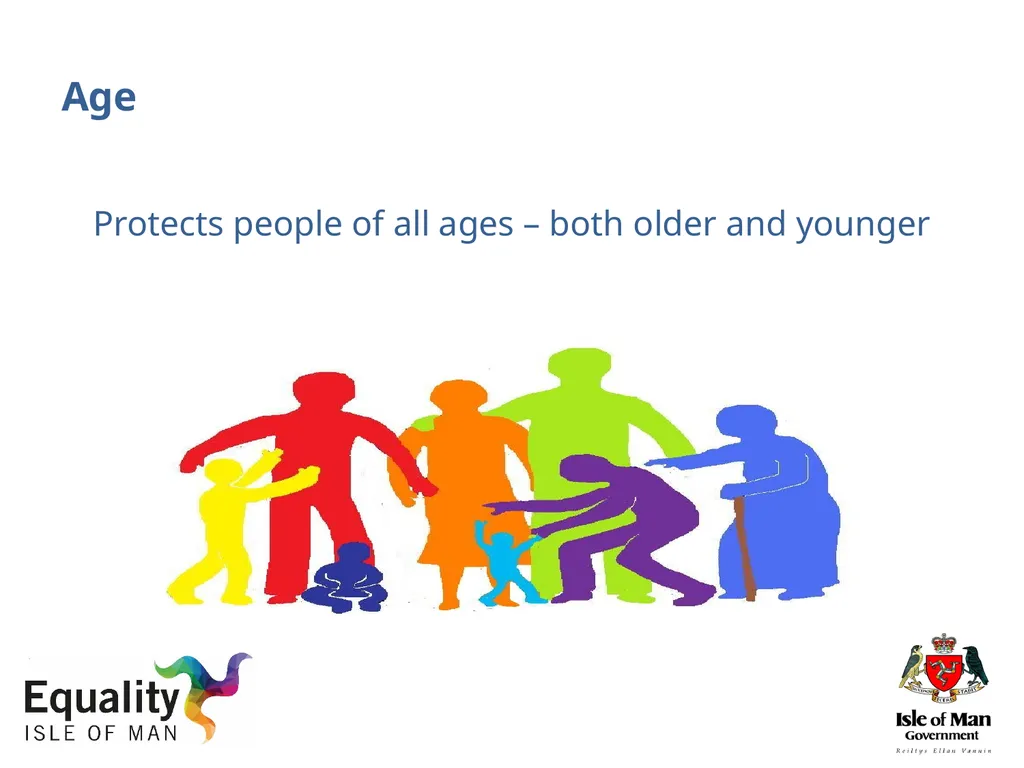
Age Protects people of all ages – both older and younger<br>
14
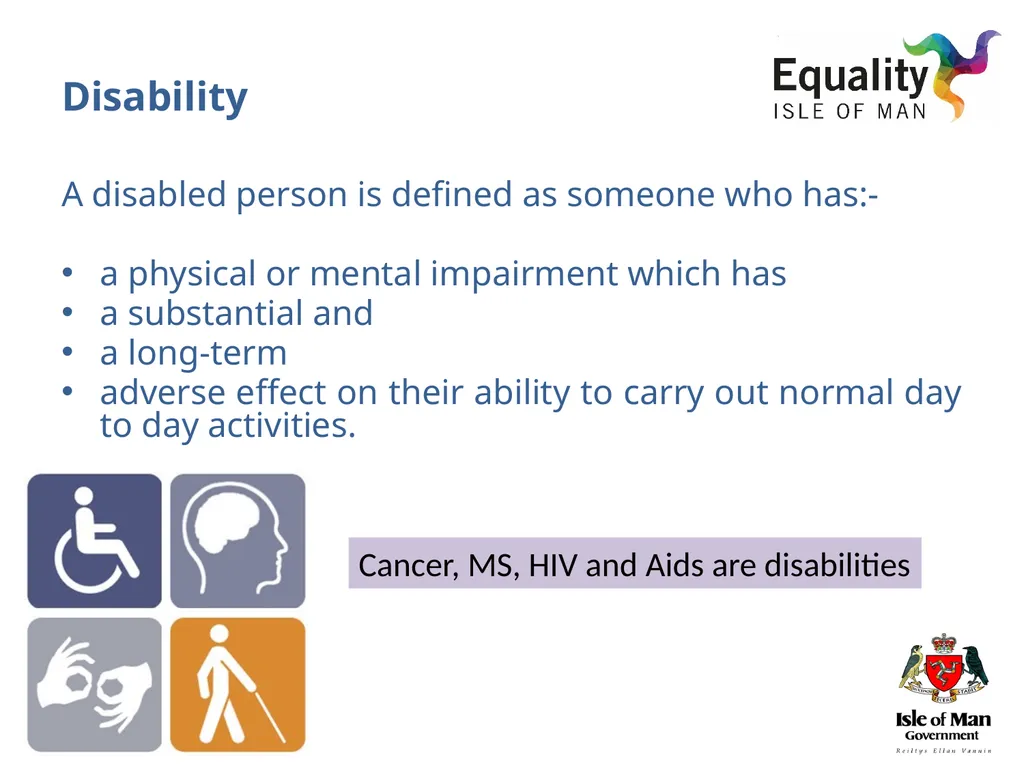
Disability A disabled person is defined as someone who has:-
a physical or mental impairment which has
a substantial and
a long-term
adverse effect on their ability to carry out normal day to day activities. Cancer, MS, HIV and Aids are disabilities<br>
a physical or mental impairment which has
a substantial and
a long-term
adverse effect on their ability to carry out normal day to day activities. Cancer, MS, HIV and Aids are disabilities<br>
15
Disability Discrimination Making reasonable adjustments
Treating disabled persons more favourably because of their disability than non-disabled persons
Failure to make reasonable adjustments is unlawful.
Non-disabled person cannot claim discrimination on the grounds that they are treated less favourably.<br>
Treating disabled persons more favourably because of their disability than non-disabled persons
Failure to make reasonable adjustments is unlawful.
Non-disabled person cannot claim discrimination on the grounds that they are treated less favourably.<br>
16
Reasonable Adjustments Duty is anticipatory – plan ahead
Adjustments to a policy or procedure
Adjustments involving the provision of auxiliary aids and services
Adjustments to physical features
Take advice – Crossroads Care Tiered Award Scheme<br>
Adjustments to a policy or procedure
Adjustments involving the provision of auxiliary aids and services
Adjustments to physical features
Take advice – Crossroads Care Tiered Award Scheme<br>
17
Direct disability discrimination Make sure you treat disabled guests the same as you treat other guests. You would be treating guests with disabilities less favourably if you:
refuse to serve them
offer less favourable terms
offer a lower standard of service compared with what you normally offer.<br>
refuse to serve them
offer less favourable terms
offer a lower standard of service compared with what you normally offer.<br>
18
Disability Discrimination in employment You should not ask job applicants to complete a pre-employment medical questionnaire
You should not ask health related questions generally unless:
Exceptions:
Employers can therefore ask health-related questions:
to help decide if reasonable adjustments are needed in the selection process
to determine if an applicant can carry out a function that is essential to the job such as heavy lifting, or
for diversity monitoring purposes.<br>
You should not ask health related questions generally unless:
Exceptions:
Employers can therefore ask health-related questions:
to help decide if reasonable adjustments are needed in the selection process
to determine if an applicant can carry out a function that is essential to the job such as heavy lifting, or
for diversity monitoring purposes.<br>
19
Disability arising from discrimination Differs from direct discrimination because of a protected characteristic – person discriminated against must show less favourable treatment compared to a person without that characteristic. This discrimination cannot be objectively justified.
Treating a disabled person unfavourably because of something arising in consequence of their disability. The treatment may be able to be objectively justified.
Examples:
banning a person with Tourette's syndrome from a bar area because their outbursts may offend other customers
providing plastic cups and plates to a person with muscular dystrophy because you think that they might break items.<br>
Treating a disabled person unfavourably because of something arising in consequence of their disability. The treatment may be able to be objectively justified.
Examples:
banning a person with Tourette's syndrome from a bar area because their outbursts may offend other customers
providing plastic cups and plates to a person with muscular dystrophy because you think that they might break items.<br>
20
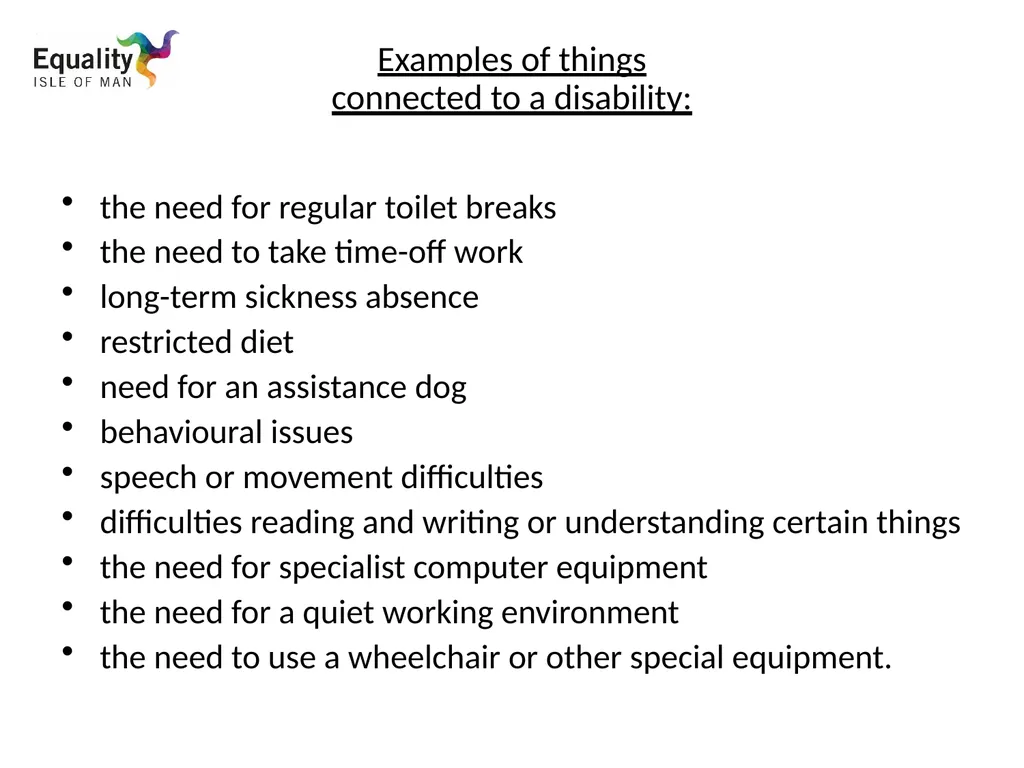
Examples of things
connected to a disability: the need for regular toilet breaks
the need to take time-off work
long-term sickness absence
restricted diet
need for an assistance dog
behavioural issues
speech or movement difficulties
difficulties reading and writing or understanding certain things
the need for specialist computer equipment
the need for a quiet working environment
the need to use a wheelchair or other special equipment.<br>
the need to take time-off work
long-term sickness absence
restricted diet
need for an assistance dog
behavioural issues
speech or movement difficulties
difficulties reading and writing or understanding certain things
the need for specialist computer equipment
the need for a quiet working environment
the need to use a wheelchair or other special equipment.<br>
21
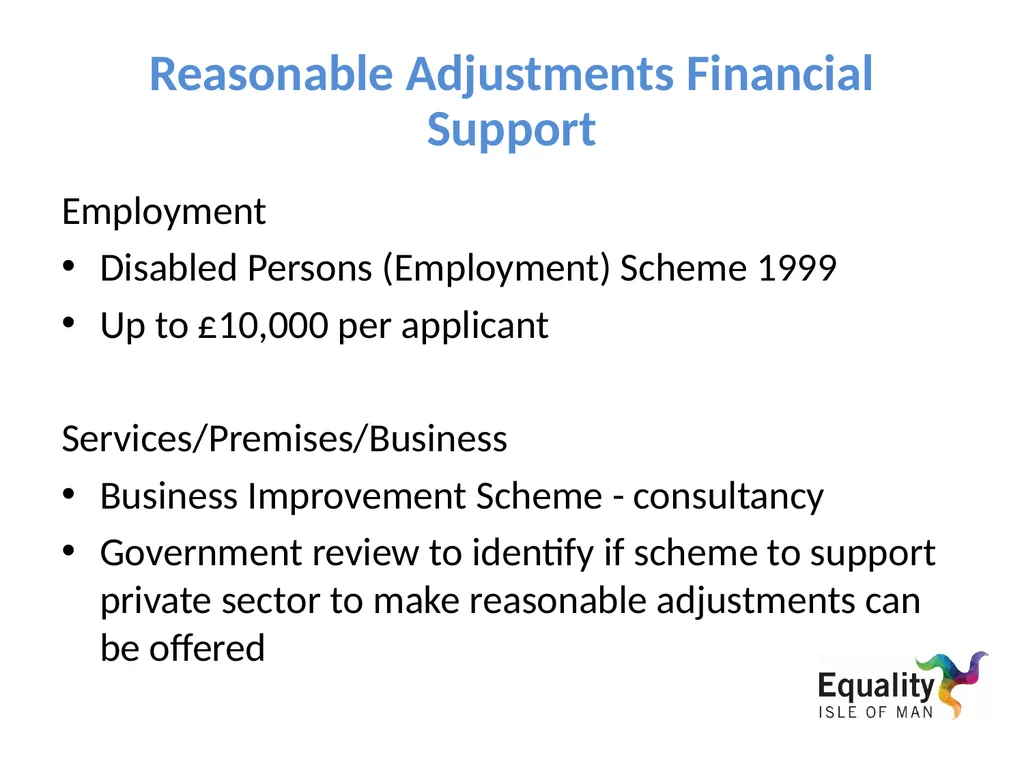
Reasonable Adjustments Financial Support Employment
Disabled Persons (Employment) Scheme 1999
Up to £10,000 per applicant
Services/Premises/Business
Business Improvement Scheme - consultancy
Government review to identify if scheme to support private sector to make reasonable adjustments can be offered<br>
Disabled Persons (Employment) Scheme 1999
Up to £10,000 per applicant
Services/Premises/Business
Business Improvement Scheme - consultancy
Government review to identify if scheme to support private sector to make reasonable adjustments can be offered<br>
22
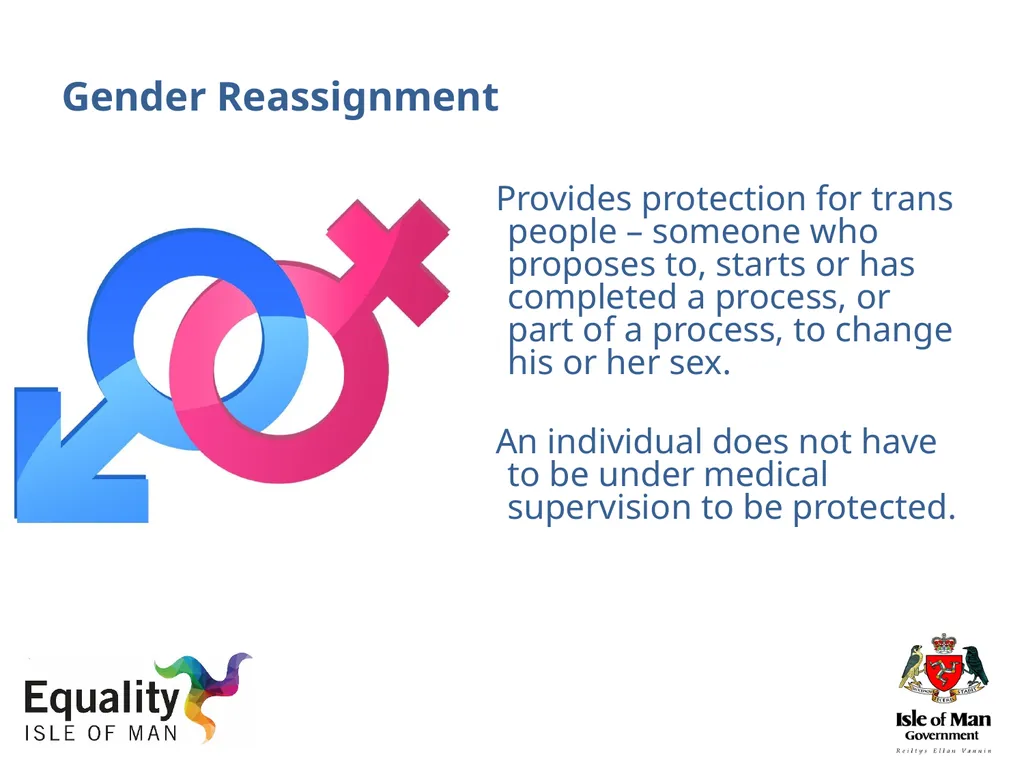
Gender Reassignment Provides protection for trans people – someone who proposes to, starts or has completed a process, or part of a process, to change his or her sex.
An individual does not have to be under medical supervision to be protected.<br>
An individual does not have to be under medical supervision to be protected.<br>
23
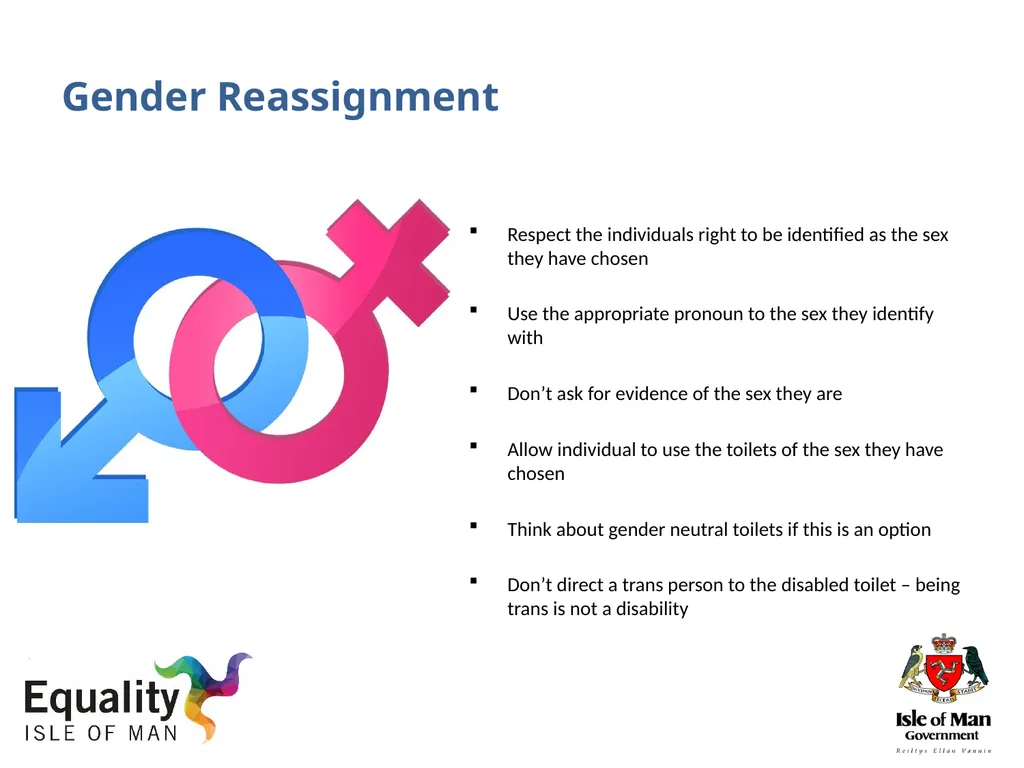
Gender Reassignment Respect the individuals right to be identified as the sex they have chosen
Use the appropriate pronoun to the sex they identify with
Don’t ask for evidence of the sex they are
Allow individual to use the toilets of the sex they have chosen
Think about gender neutral toilets if this is an option
Don’t direct a trans person to the disabled toilet – being trans is not a disability<br>
Use the appropriate pronoun to the sex they identify with
Don’t ask for evidence of the sex they are
Allow individual to use the toilets of the sex they have chosen
Think about gender neutral toilets if this is an option
Don’t direct a trans person to the disabled toilet – being trans is not a disability<br>
24
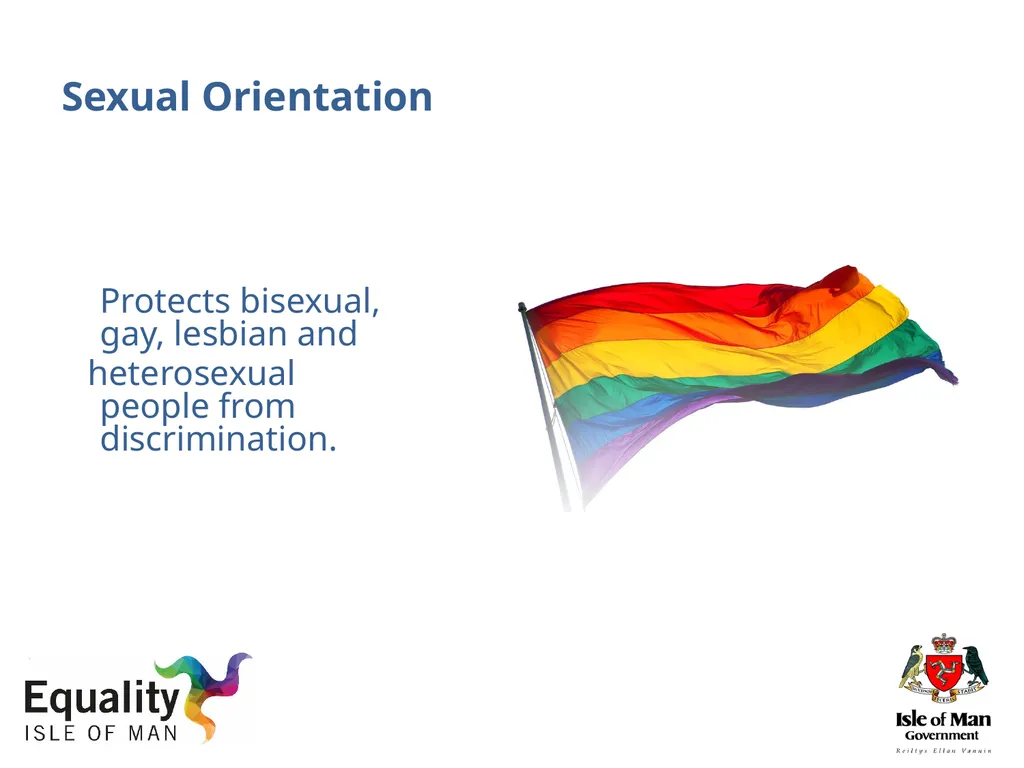
Sexual Orientation Protects bisexual, gay, lesbian and
heterosexual people from discrimination.<br>
heterosexual people from discrimination.<br>
25
Bull v Preddy Mr & Mrs Bull, Christian hotel owners
Mr Preddy & Mr Hall, civil partners
Refused to honour booking of double room as such rooms reserved for heterosexual married couples only
Court said Preddy & Hall directly discriminated against on the grounds of their sexual orientation
Bulls argued right to manifest religious belief (human right)
Court stated the right to manifest religious belief could be limited where it interfered with the rights of others
Decision applied in Black v Wilkinson, B&B owner objected to sexual relations outside marriage; court stated direct discrimination on grounds of sexual orientation<br>
Mr Preddy & Mr Hall, civil partners
Refused to honour booking of double room as such rooms reserved for heterosexual married couples only
Court said Preddy & Hall directly discriminated against on the grounds of their sexual orientation
Bulls argued right to manifest religious belief (human right)
Court stated the right to manifest religious belief could be limited where it interfered with the rights of others
Decision applied in Black v Wilkinson, B&B owner objected to sexual relations outside marriage; court stated direct discrimination on grounds of sexual orientation<br>
26
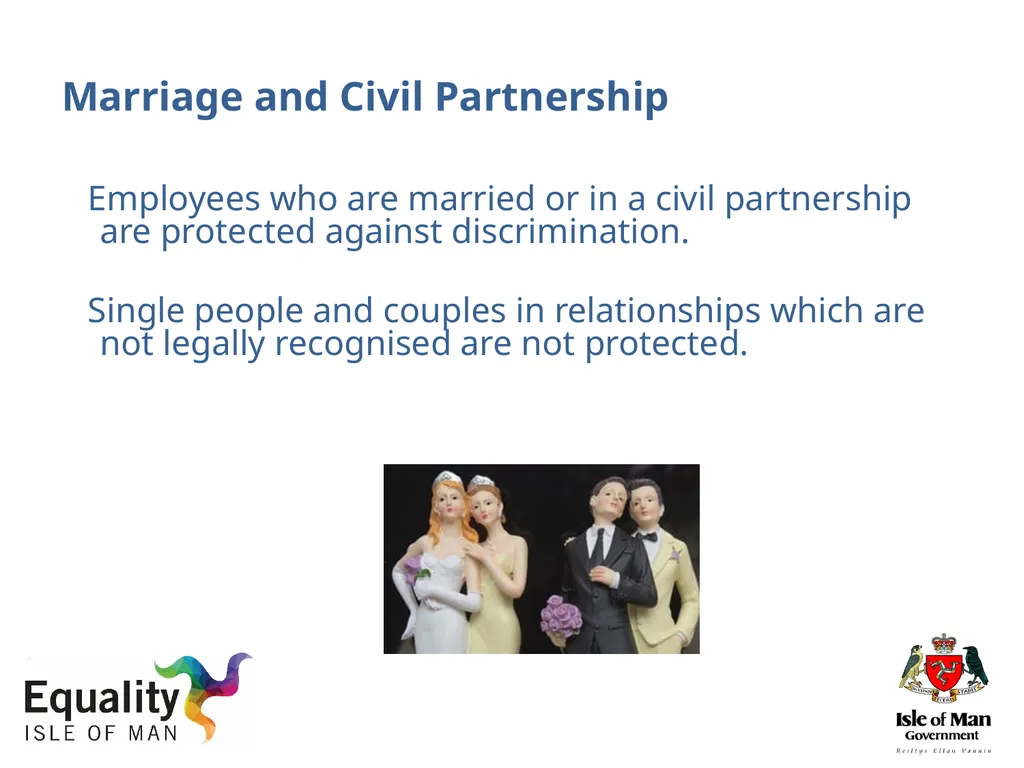
Marriage and Civil Partnership Employees who are married or in a civil partnership are protected against discrimination.
Single people and couples in relationships which are not legally recognised are not protected.<br>
Single people and couples in relationships which are not legally recognised are not protected.<br>
27
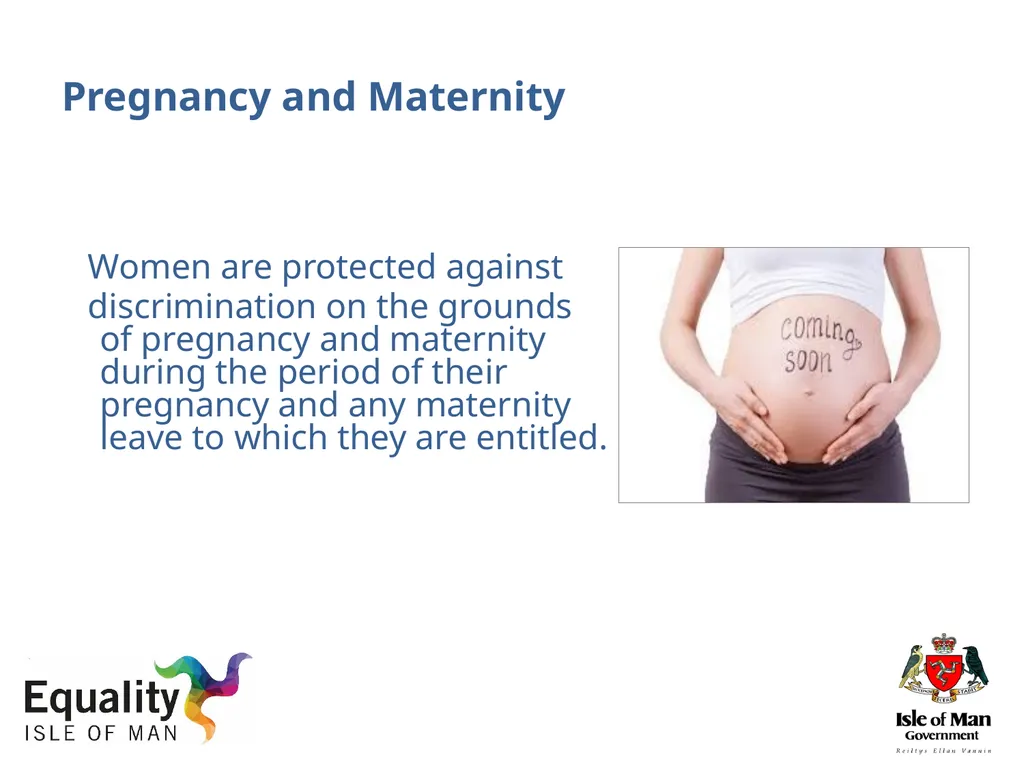
Pregnancy and Maternity Women are protected against
discrimination on the grounds of pregnancy and maternity during the period of their pregnancy and any maternity leave to which they are entitled.<br>
discrimination on the grounds of pregnancy and maternity during the period of their pregnancy and any maternity leave to which they are entitled.<br>
28
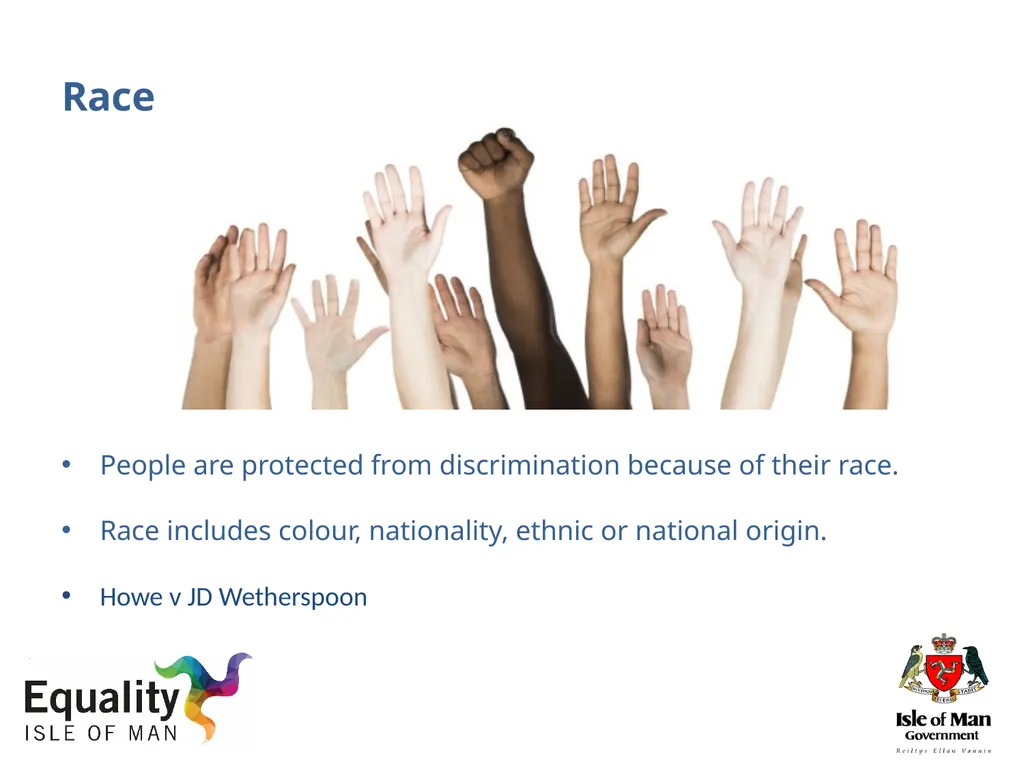
Race People are protected from discrimination because of their race.
Race includes colour, nationality, ethnic or national origin.
Howe v JD Wetherspoon<br>
Race includes colour, nationality, ethnic or national origin.
Howe v JD Wetherspoon<br>
29
Religion or Belief People are protected from discrimination on the grounds of their religion or belief. Or if they don’t have a particular religion or belief.
Religion includes any religion which has a clear structure and belief system.
A belief covers any religious or philosophical belief.<br>
Religion includes any religion which has a clear structure and belief system.
A belief covers any religious or philosophical belief.<br>
30
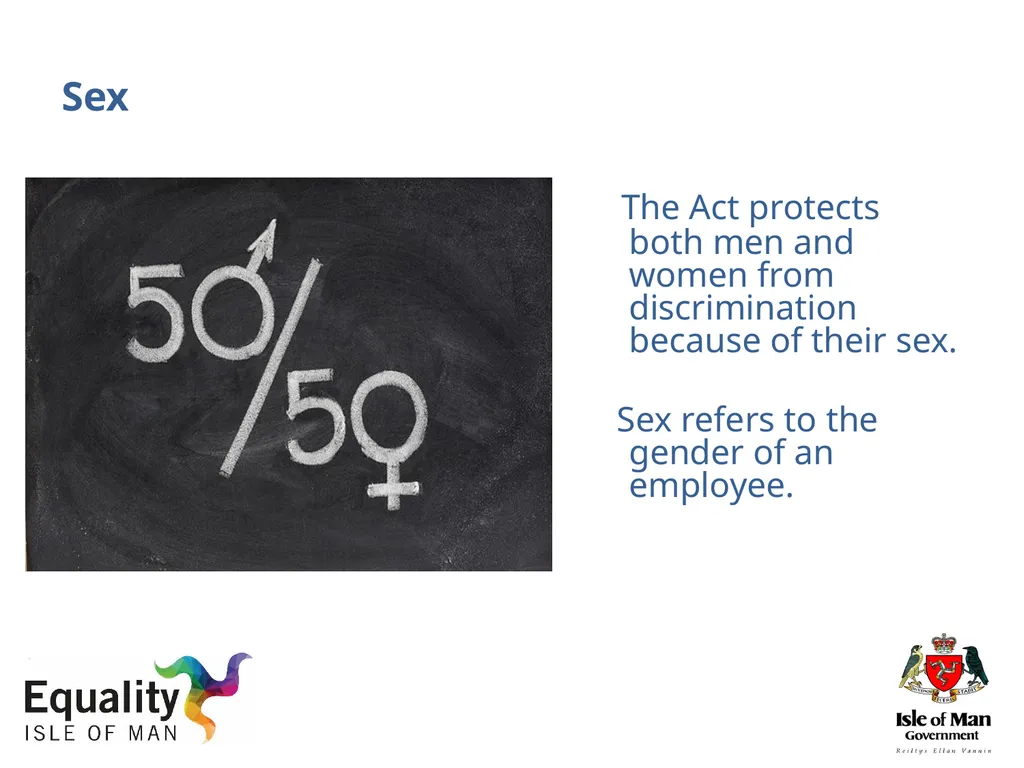
Sex The Act protects both men and women from discrimination because of their sex.
Sex refers to the gender of an employee.<br>
Sex refers to the gender of an employee.<br>
31
Job Advertisements Care with wording that is not discriminatory
Is there a genuine occupational requirement
Are you taking positive action to encourage applicants from under-represented groups?<br>
Is there a genuine occupational requirement
Are you taking positive action to encourage applicants from under-represented groups?<br>
32
Genuine Occupational Requirements
- job advertisements Must be:
Crucial to the post;
Relating to the nature of the job not the culture of
the organisation;
You have a real business need and what you are proposing is appropriate, reasonable, necessary and fair (“Proportionate means of achieving a legitimate aim”)<br>
Crucial to the post;
Relating to the nature of the job not the culture of
the organisation;
You have a real business need and what you are proposing is appropriate, reasonable, necessary and fair (“Proportionate means of achieving a legitimate aim”)<br>
33
Interviews Reasonable adjustments required before interview or selection process?
Flexibility with interview dates/times
Don’t ask about someone’s protected characteristics unless very clearly related to the job
Don’t ask about health, sickness or disability records – if disabled, focus on person’s ability to do the job and what RA are needed
Avoid making instant and unfair judgments as soon as someone arrives – establish their skills, qualities & experience
Keep record of interview and notes for 12 months<br>
Flexibility with interview dates/times
Don’t ask about someone’s protected characteristics unless very clearly related to the job
Don’t ask about health, sickness or disability records – if disabled, focus on person’s ability to do the job and what RA are needed
Avoid making instant and unfair judgments as soon as someone arrives – establish their skills, qualities & experience
Keep record of interview and notes for 12 months<br>
34
Questions to avoid in interviews Are you married?
How old are you? What is your date of birth?
How many children do you have?
What does your husband do? What does he think of you applying for this role?
How do you feel about managing a team of younger people?
What church do you go to?
When do you plan to retire?
Which political party do you belong to?<br>
How old are you? What is your date of birth?
How many children do you have?
What does your husband do? What does he think of you applying for this role?
How do you feel about managing a team of younger people?
What church do you go to?
When do you plan to retire?
Which political party do you belong to?<br>
35
Liability Personal employee liability for the discriminator/harasser/victimiser
Vicarious liability for employer for acts “in the course of employment” unless defence that all reasonable steps taken can be shown
Criminal liability for false or misleading statements (£5k)
Reputational and/or financial risks<br>
Vicarious liability for employer for acts “in the course of employment” unless defence that all reasonable steps taken can be shown
Criminal liability for false or misleading statements (£5k)
Reputational and/or financial risks<br>
36
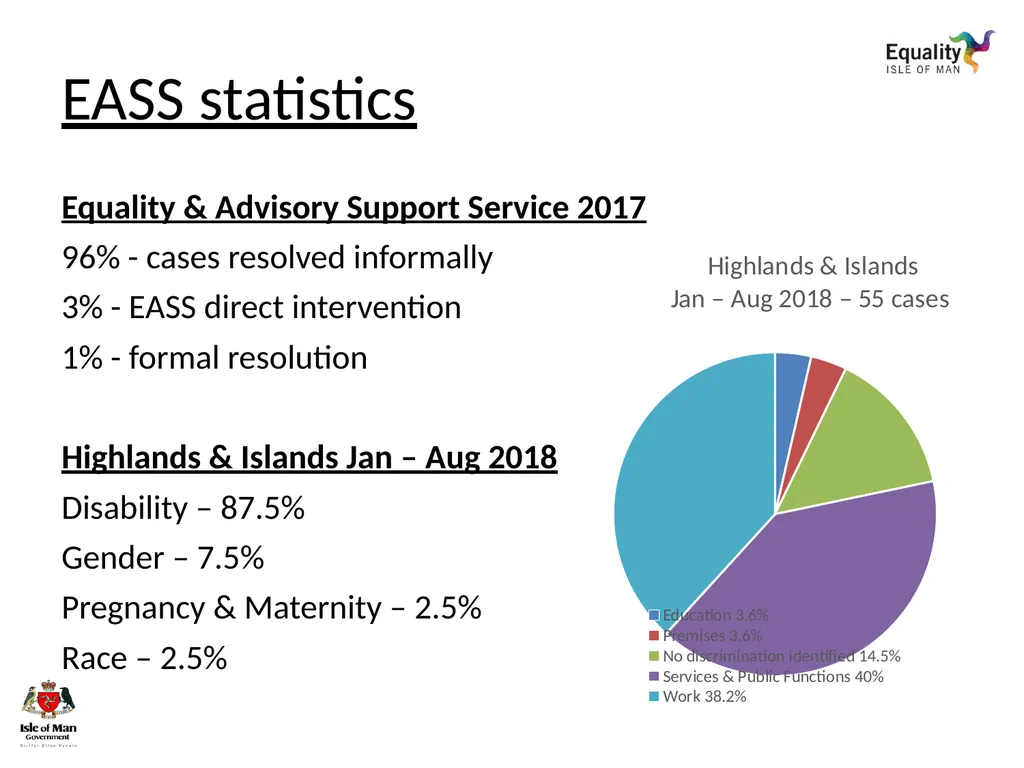
EASS statistics Equality & Advisory Support Service 2017
96% - cases resolved informally
3% - EASS direct intervention
1% - formal resolution
Highlands & Islands Jan – Aug 2018
Disability – 87.5%
Gender – 7.5%
Pregnancy & Maternity – 2.5%
Race – 2.5%<br>
96% - cases resolved informally
3% - EASS direct intervention
1% - formal resolution
Highlands & Islands Jan – Aug 2018
Disability – 87.5%
Gender – 7.5%
Pregnancy & Maternity – 2.5%
Race – 2.5%<br>
37
Next steps Train you, employees and contractors in equality issues
Review policies/practices, written or not
Review website & advertisements; check wording; think about inclusive pictures
Consider having an equality policy
Review your accessibility for disability and make your customers aware
Consider reasonable adjustments carefully – take advice
Be sensitive to needs; ask/listen
Make sure complaints are dealt with; manage poor behaviours<br>
Review policies/practices, written or not
Review website & advertisements; check wording; think about inclusive pictures
Consider having an equality policy
Review your accessibility for disability and make your customers aware
Consider reasonable adjustments carefully – take advice
Be sensitive to needs; ask/listen
Make sure complaints are dealt with; manage poor behaviours<br>
38
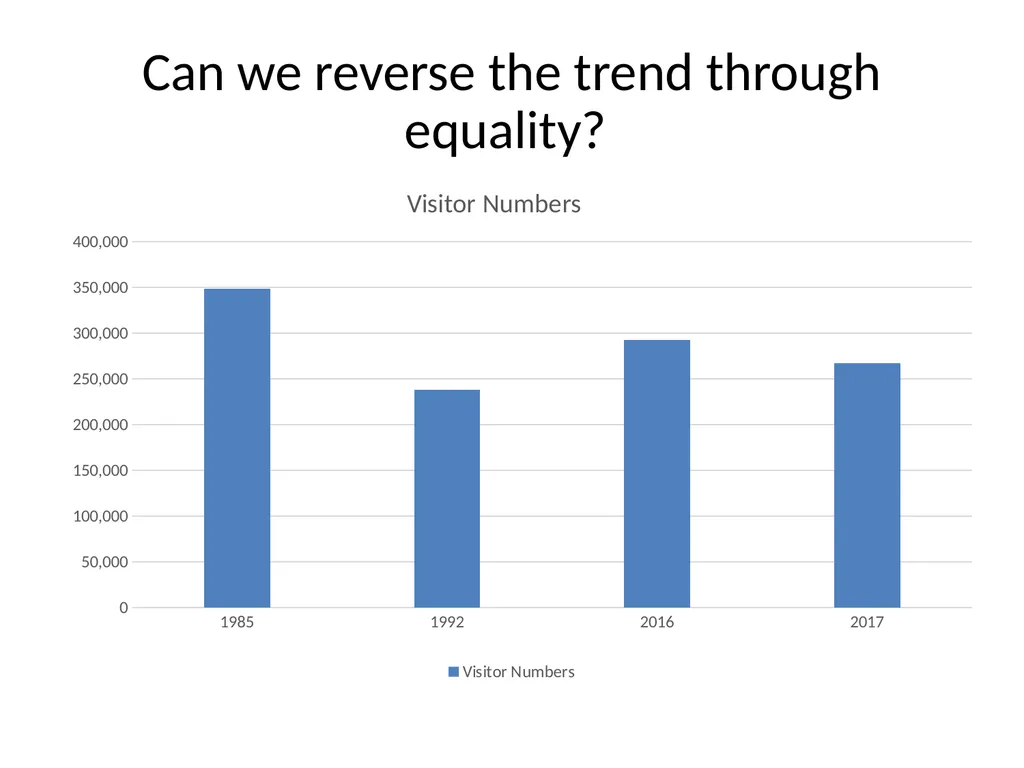
Can we reverse the trend through equality?<br>