Hierarchy-Based Algorithms for Minimizing Makespan under Precedence and Communication Constraints Janardhan Kulkarni Shi Li Jakub Tarnawski Minwei Ye Microsoft Research University at Buffalo 08.01.2020 SODA Scheduling with precedence
"Hierarchy-Based Algorithms for Minimizing Makespan" is the property of its rightful owner. Permission is granted to
download and print the materials on this website for personal, non-commercial use only, and to display it
on your personal computer provided you do not modify the materials and that you retain all copyright
notices contained in the materials. By downloading content from our website, you accept the terms of this
agreement.
Presentation Transcript
01
Hierarchy-Based Algorithms for Minimizing Makespan under Precedence and Communication Constraints Janardhan Kulkarni Shi Li Jakub Tarnawski Minwei Ye
Microsoft Research University at Buffalo
08.01.2020 SODA<br>
02
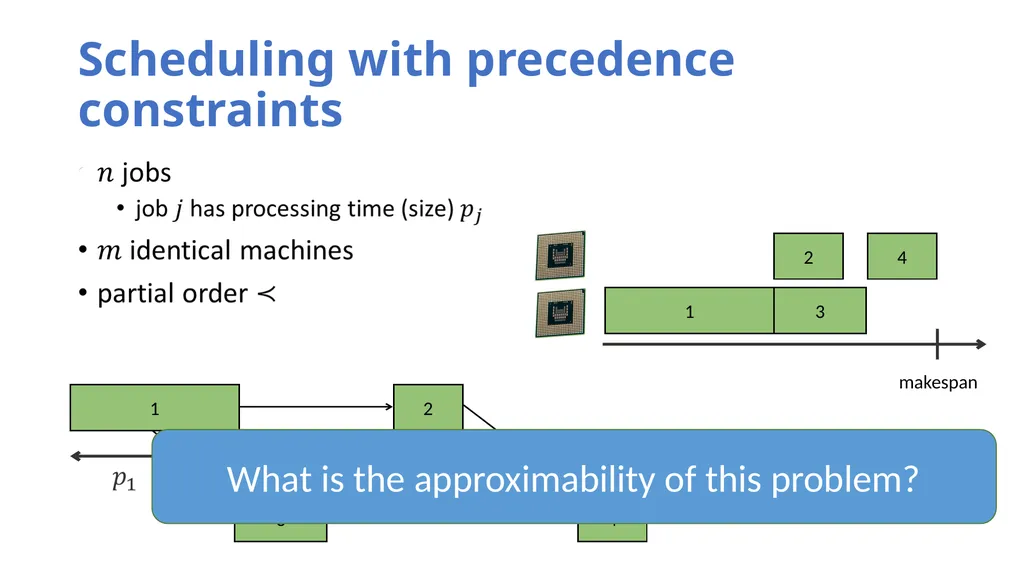
Scheduling with precedence constraints 4 3 2 1 1 2 3 4 makespan What is the approximability of this problem?<br>
03
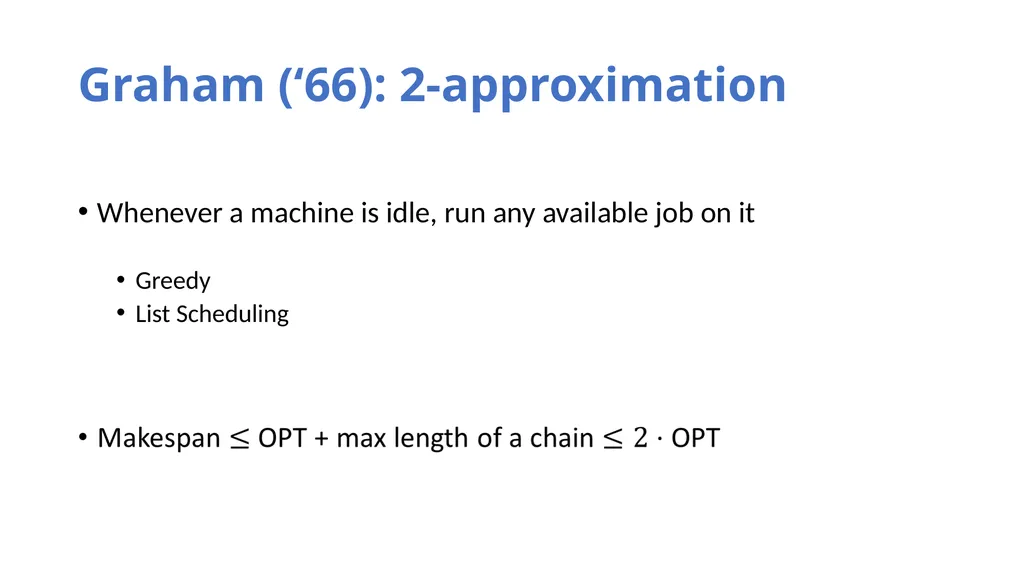
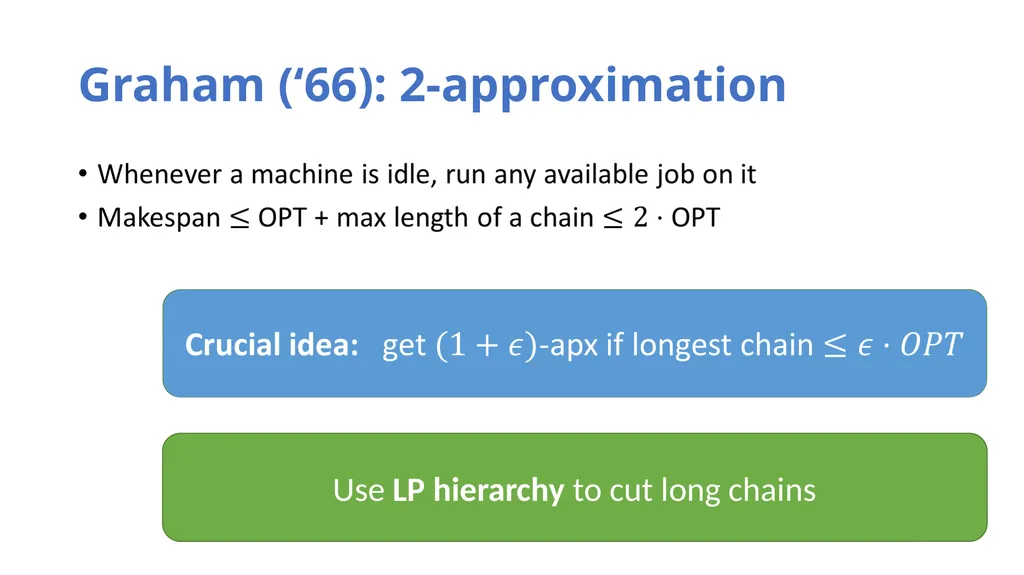
Graham (‘66): 2-approximation Whenever a machine is idle, run any available job on it
Greedy
List Scheduling<br>
04
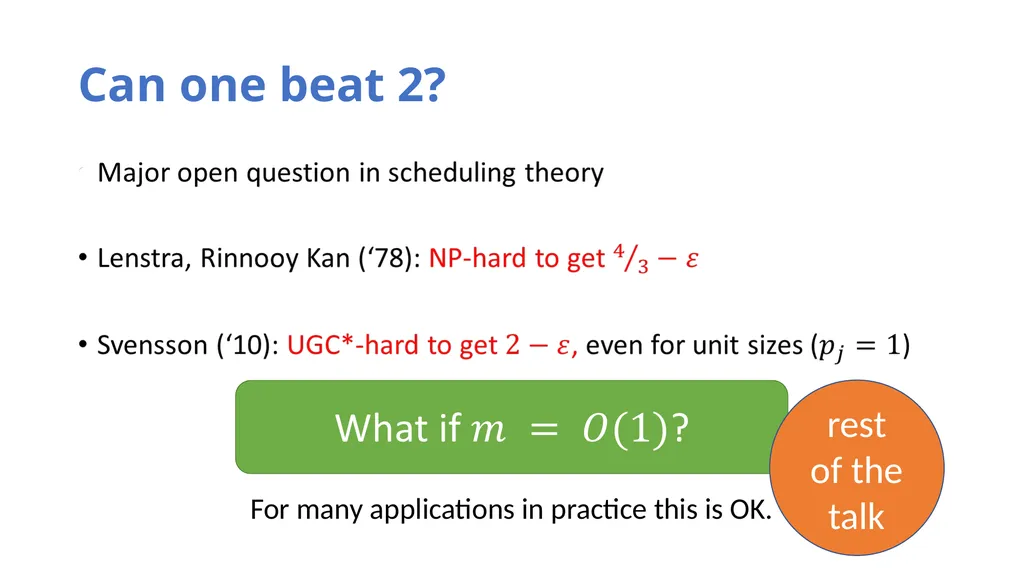
Can one beat 2? For many applications in practice this is OK. rest of the talk<br>
05
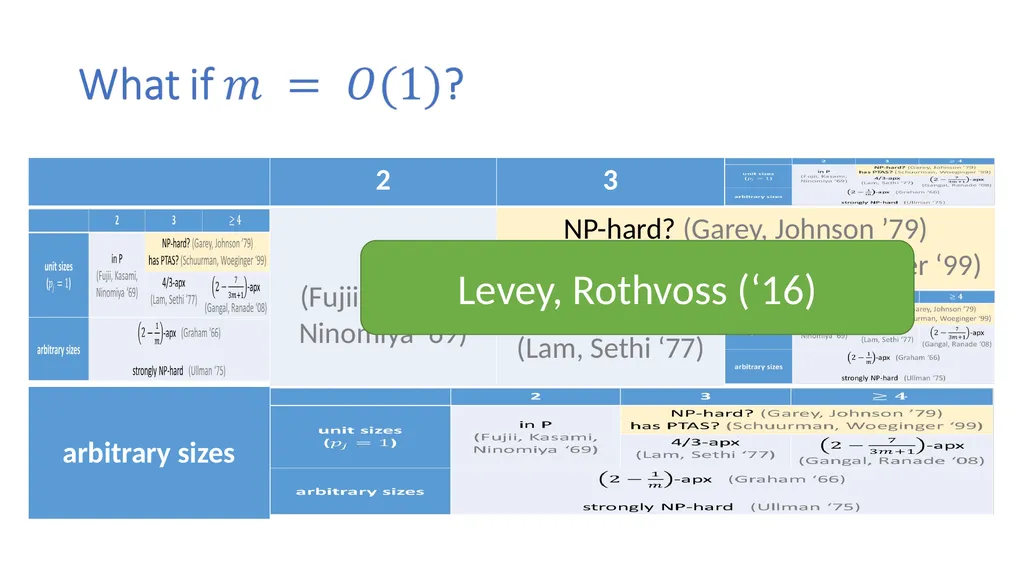
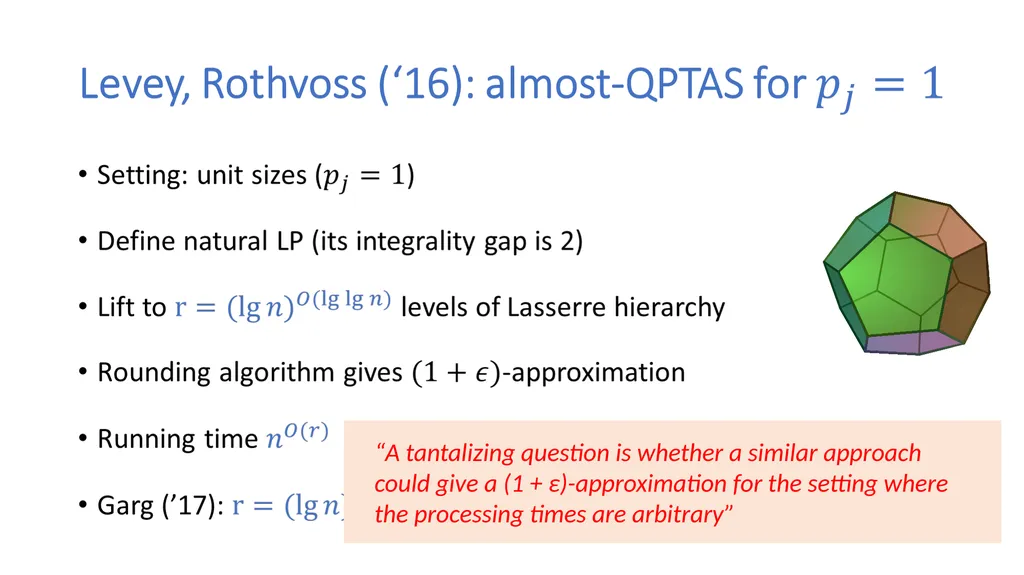
Levey, Rothvoss (‘16)<br>
06
“A tantalizing question is whether a similar approach could give a (1 + ε)-approximation for the setting where the processing times are arbitrary”<br>
07
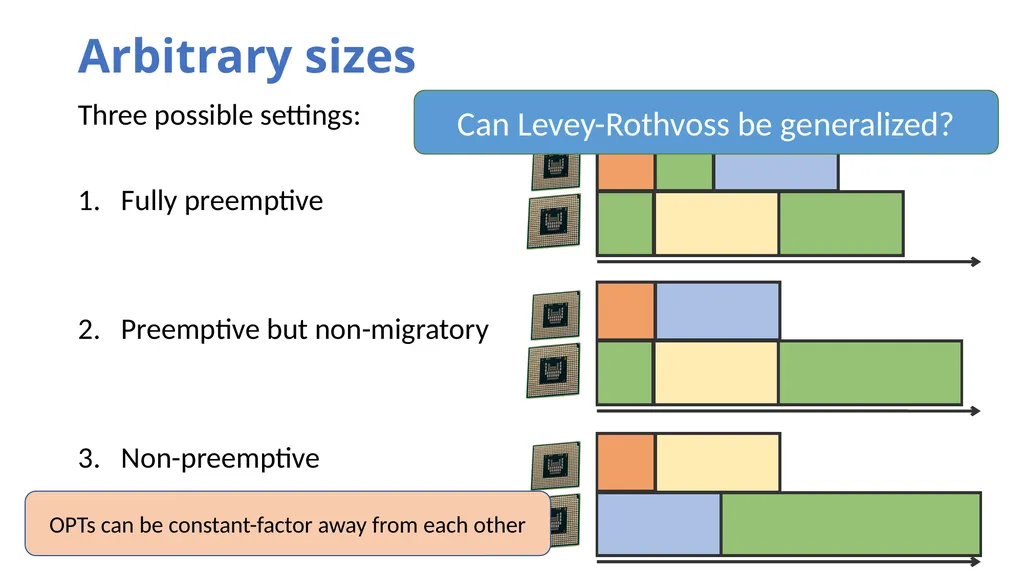
Arbitrary sizes Three possible settings:
Fully preemptive
Preemptive but non-migratory
Non-preemptive OPTs can be constant-factor away from each other Can Levey-Rothvoss be generalized?<br>
08
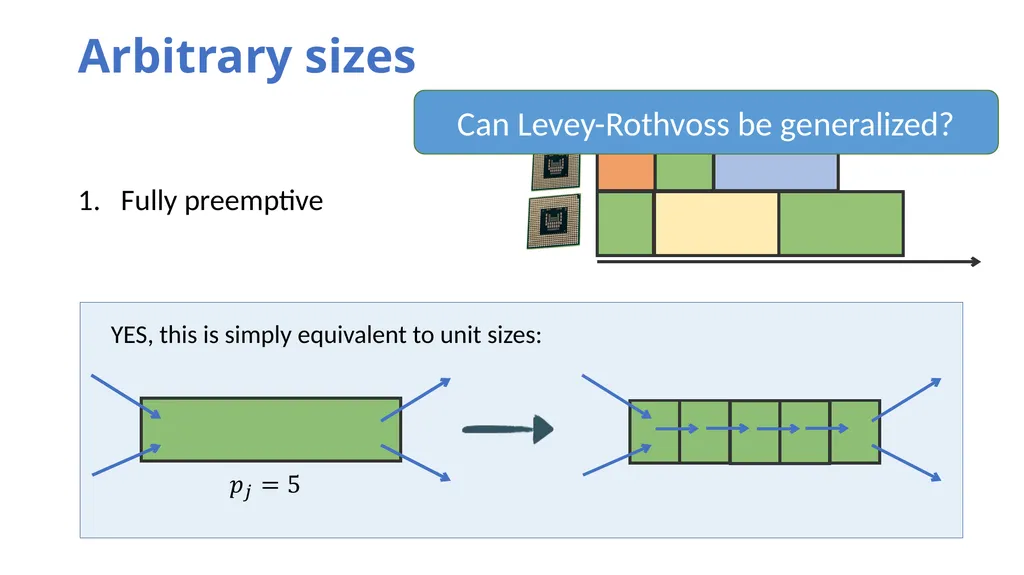
Arbitrary sizes Three possible settings:
Fully preemptive Can Levey-Rothvoss be generalized?<br>
09
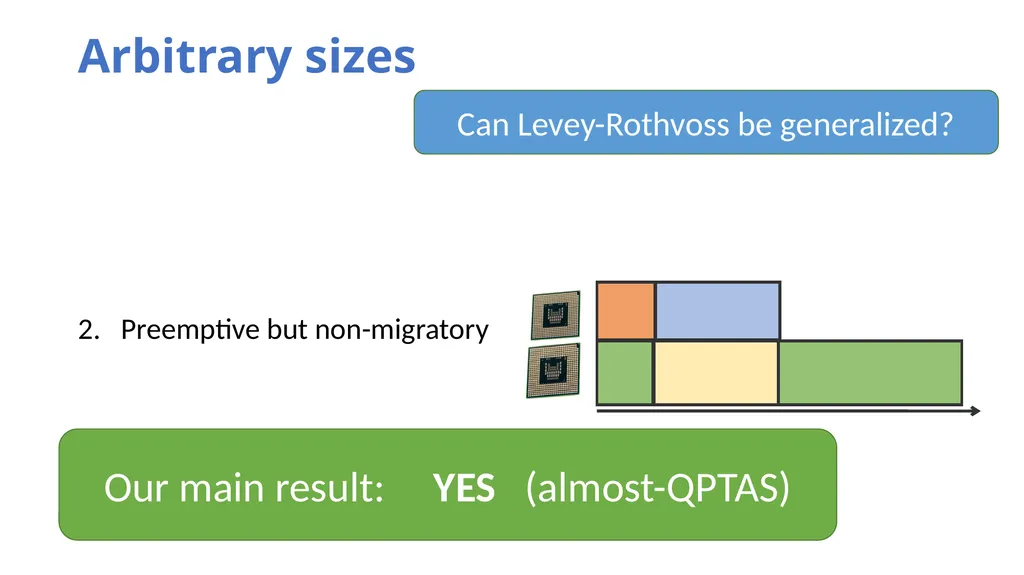
Arbitrary sizes Three possible settings:
Fully preemptive
Preemptive but non-migratory Our main result: YES (almost-QPTAS) Can Levey-Rothvoss be generalized?<br>
10
Arbitrary sizes Three possible settings:
Fully preemptive
Preemptive but non-migratory
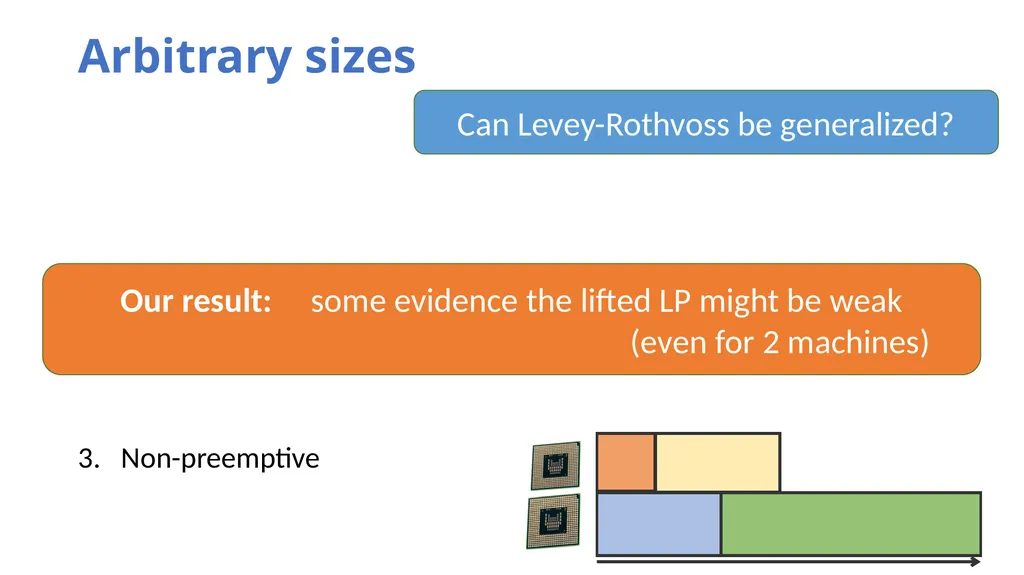
Non-preemptive Can Levey-Rothvoss be generalized? Our result: some evidence the lifted LP might be weak (even for 2 machines)<br>
11
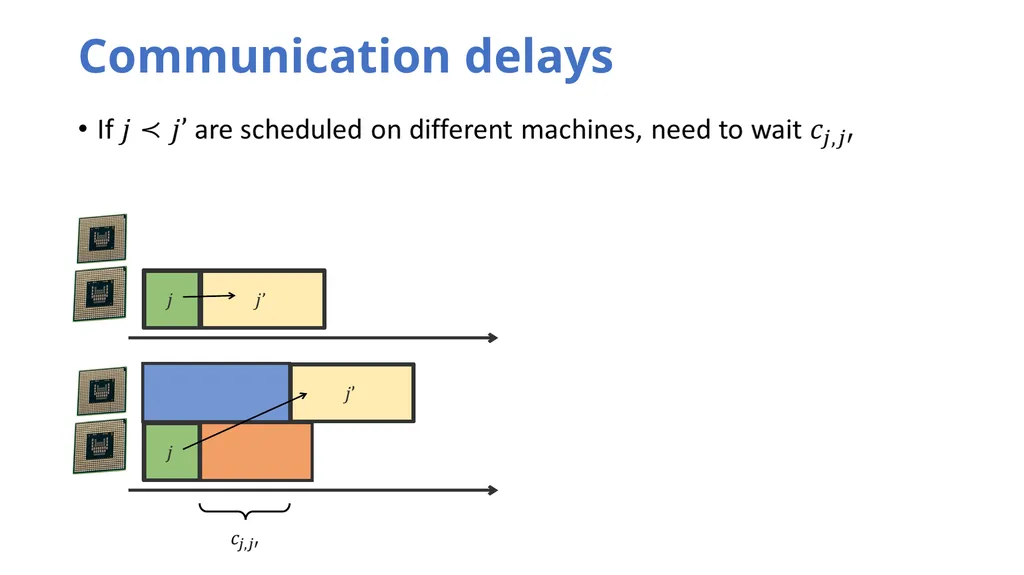
Communication delays<br>
12
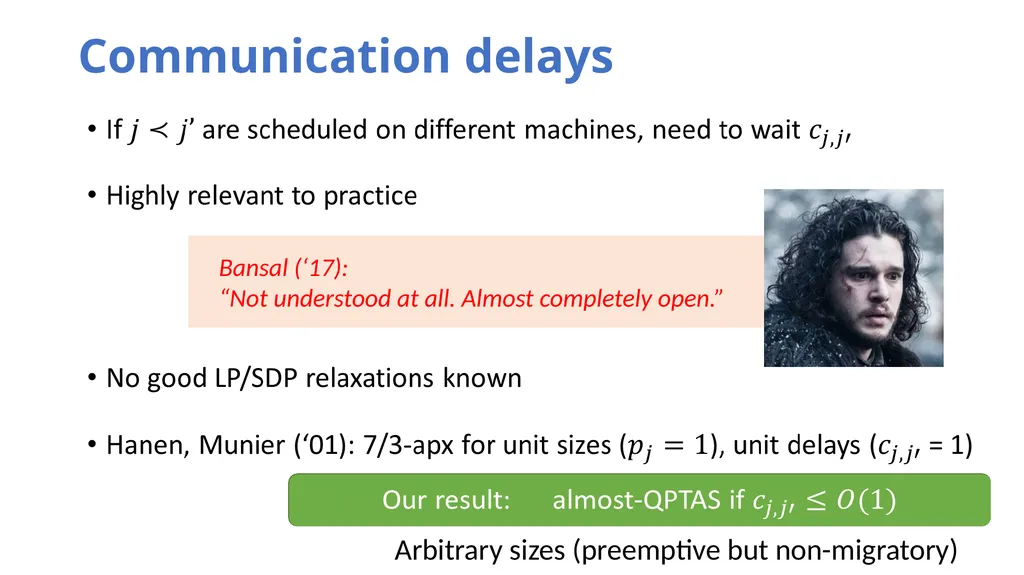
Bansal (‘17): “Not understood at all. Almost completely open.” Communication delays Arbitrary sizes (preemptive but non-migratory)<br>
13
Outline of the rest of talk Levey-Rothvoss framework
Challenges of arbitrary sizes
Our new ideas Our main result: almost-QPTAS for preemptive but non-migratory setting<br>
14
Graham (‘66): 2-approximation Use LP hierarchy to cut long chains<br>
15
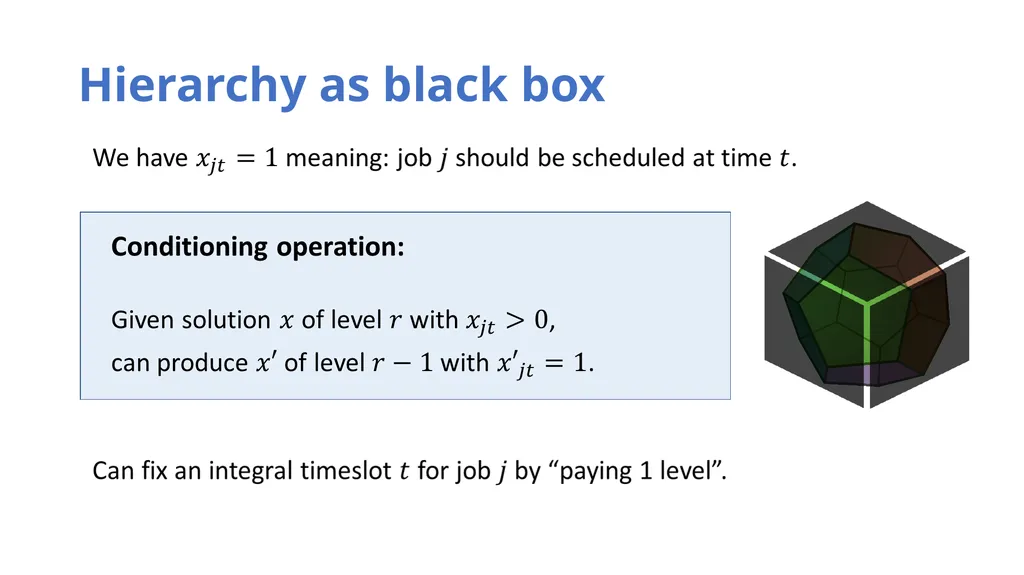
Hierarchy as black box<br>
16
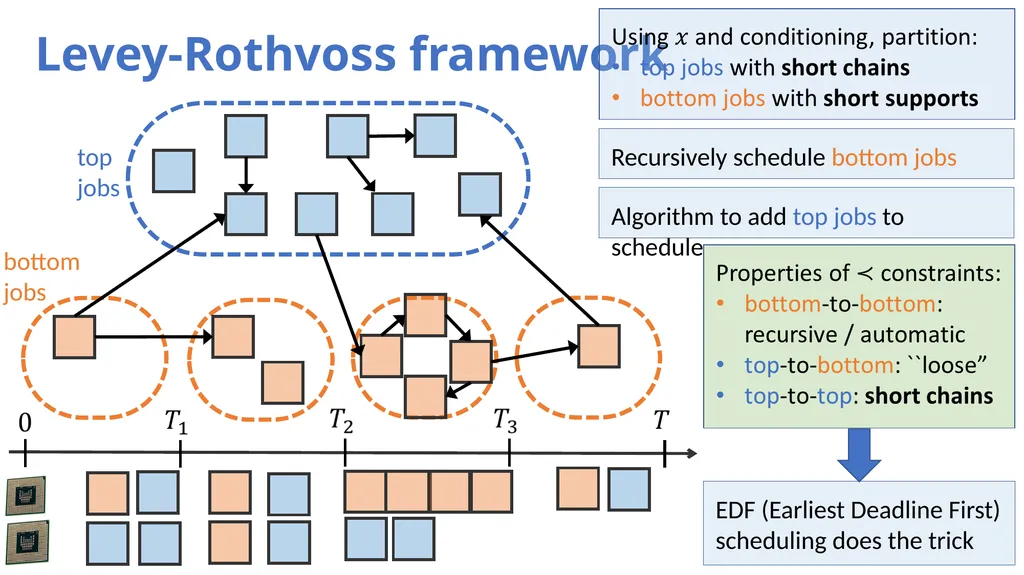
Levey-Rothvoss framework top jobs bottom jobs Recursively schedule bottom jobs Algorithm to add top jobs to schedule EDF (Earliest Deadline First) scheduling does the trick<br>
17
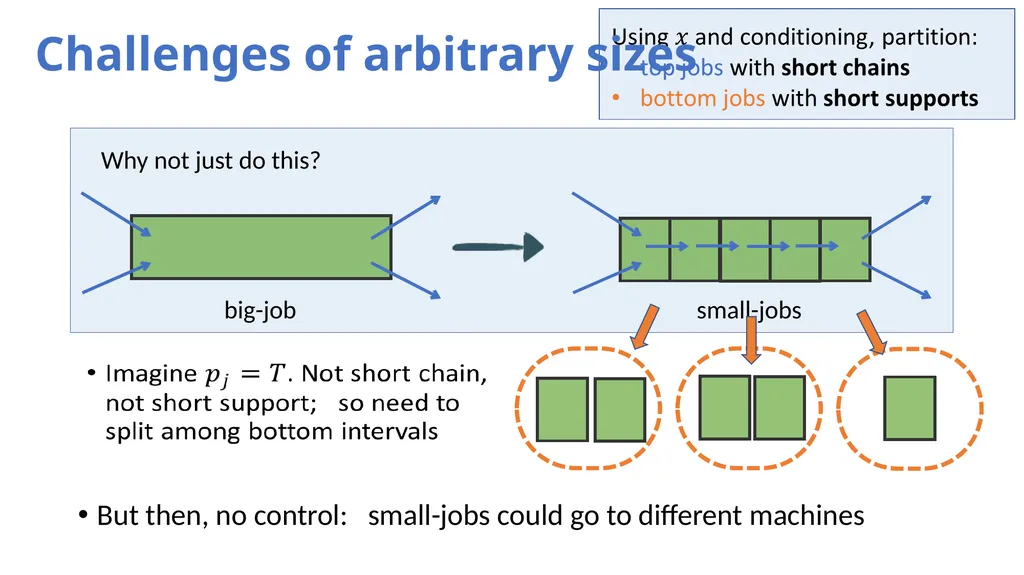
Why not just do this? Challenges of arbitrary sizes But then, no control: small-jobs could go to different machines big-job small-jobs<br>
18
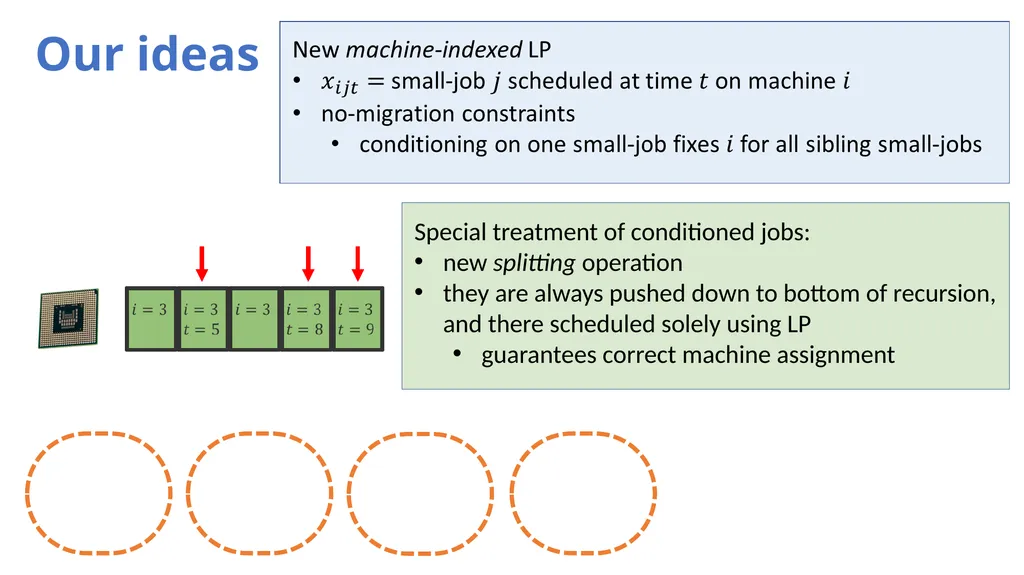
Our ideas Special treatment of conditioned jobs:
new splitting operation
they are always pushed down to bottom of recursion, and there scheduled solely using LP
guarantees correct machine assignment<br>
19
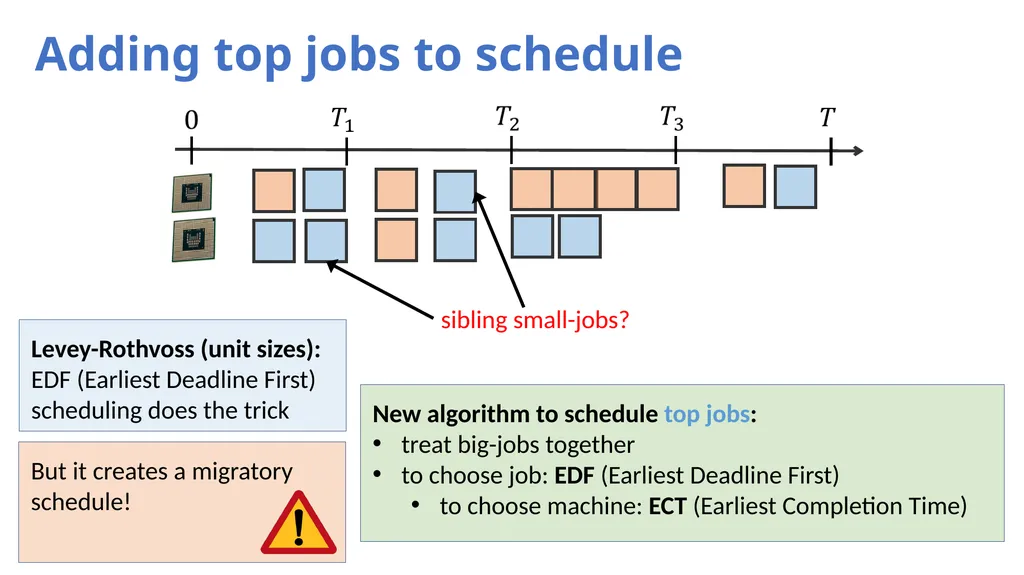
Adding top jobs to schedule Levey-Rothvoss (unit sizes):
EDF (Earliest Deadline First) scheduling does the trick sibling small-jobs? But it creates a migratory schedule! New algorithm to schedule top jobs:
treat big-jobs together
to choose job: EDF (Earliest Deadline First)
to choose machine: ECT (Earliest Completion Time)<br>
20
Summary + a few words on our hardness result<br>
21
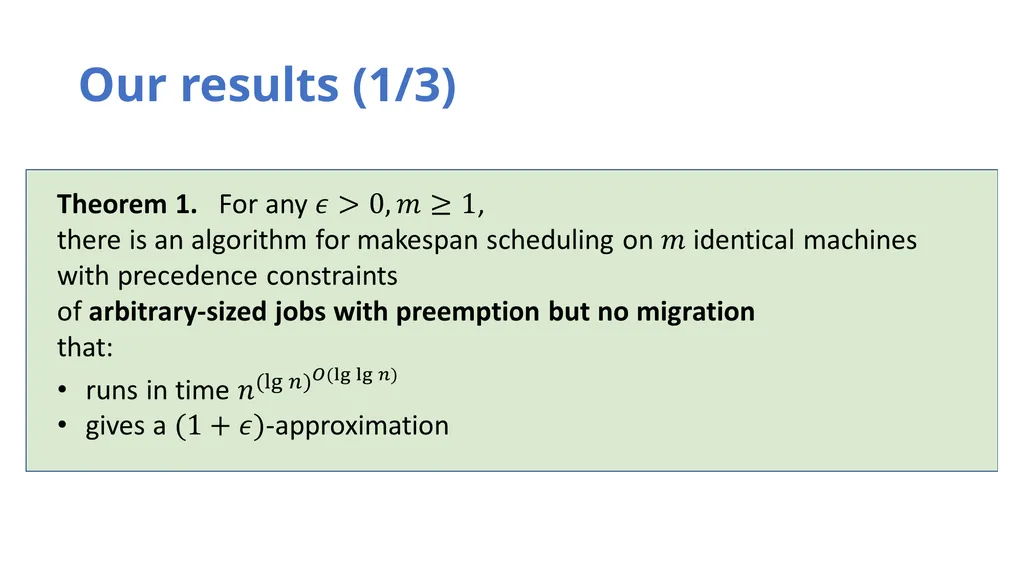
Our results (1/3)<br>
22
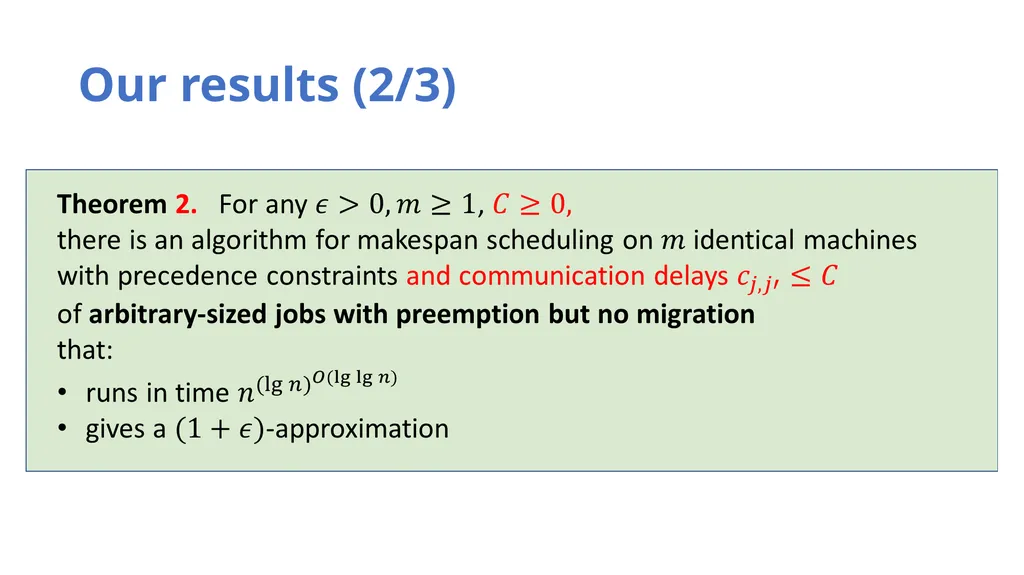
Our results (2/3)<br>
23
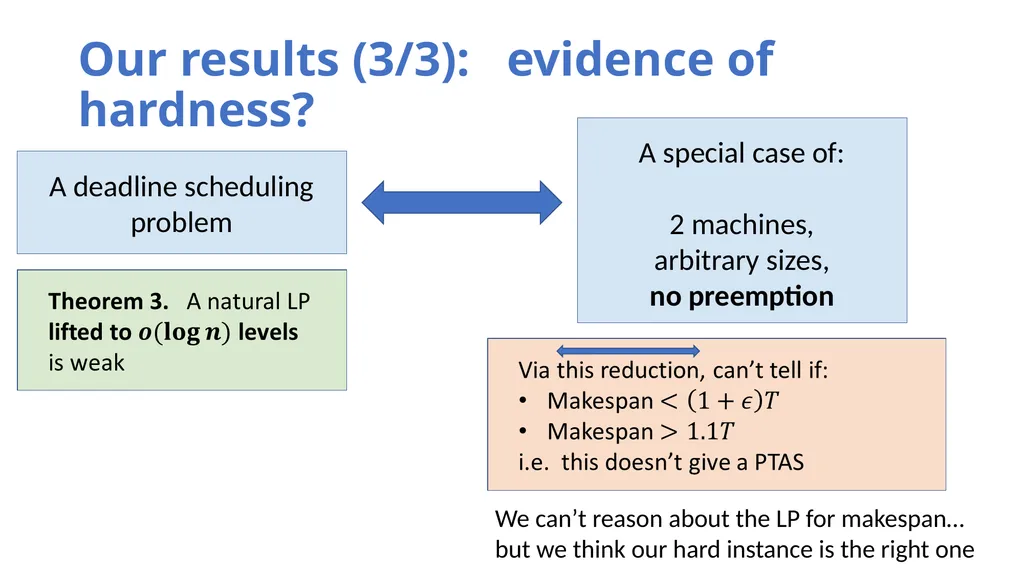
Our results (3/3): evidence of hardness? A deadline scheduling problem A special case of:
2 machines,
arbitrary sizes,
no preemption We can’t reason about the LP for makespan… but we think our hard instance is the right one<br>