
HSFC Transition Day This sample lesson is for
Description: HSFC Transition Day This sample lesson is for those interested in the: Level 3 Cambridge Technical in Business This course is roughly 5050 exams and coursework. This means the work you produce in lesson will go towards your final result.
Related Topics
Download Presentation
"HSFC Transition Day This sample lesson is for" is the property of its rightful owner. Permission is granted to download and print the materials on this website for personal, non-commercial use only, and to display it on your personal computer provided you do not modify the materials and that you retain all copyright notices contained in the materials. By downloading content from our website, you accept the terms of this agreement.
Presentation Transcript
slide1. HSFC Transition Day This sample lesson is for those interested in the:
Level 3 Cambridge Technical in Business
This course is roughly 50/50 exams and coursework. This means the work you produce in lesson will go towards your final result.<br>
slide2. Hello and Welcome!
Really sorry I cant see you all in person today but I would like to try and give you an idea of what my Business lessons are like.
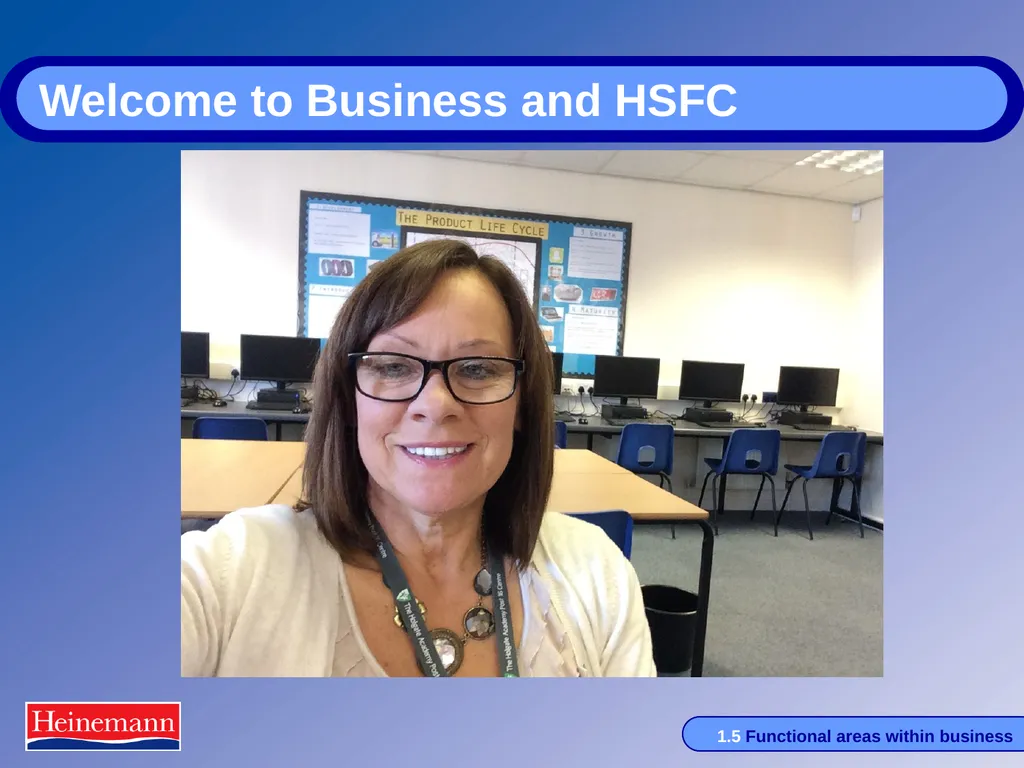
There is a photo of me in my classroom below so you can get an idea of the facilities here (which are great). I have been teaching Business for over 20 years and I LOVE IT! So I hope you will enjoy this subject also.
My email is on the last slide so any questions make sure to get in touch
I hope to see you in September
Mrs Jones Welcome to Business at HSFC<br>
slide3. Welcome to Business and HSFC<br>
slide4. Functional areas within business<br>
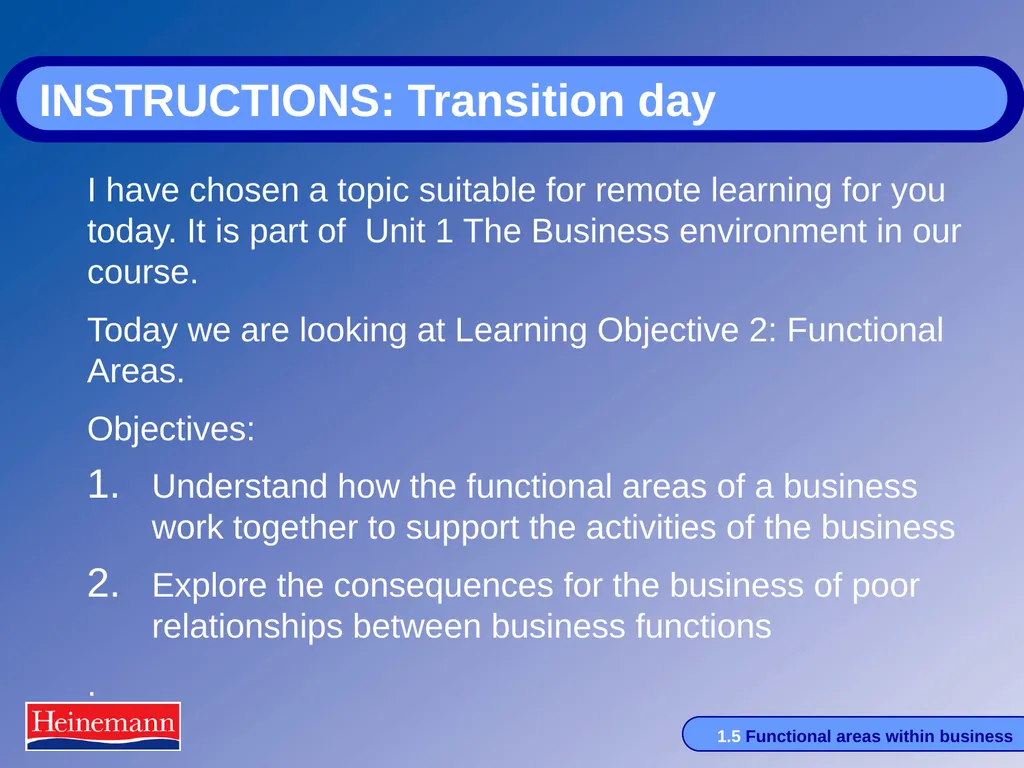
slide5. INSTRUCTIONS: Transition day I have chosen a topic suitable for remote learning for you today. It is part of Unit 1 The Business environment in our course.
Today we are looking at Learning Objective 2: Functional Areas.
Objectives:
Understand how the functional areas of a business work together to support the activities of the business
Explore the consequences for the business of poor relationships between business functions
.<br>
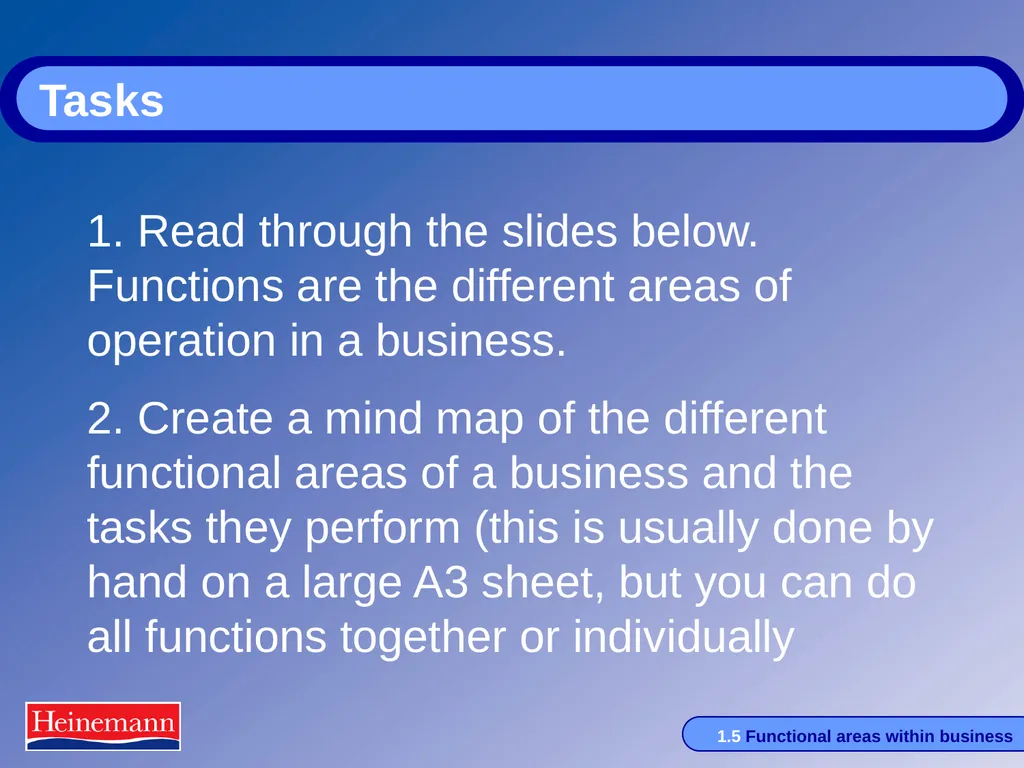
slide6. Tasks 1. Read through the slides below. Functions are the different areas of operation in a business.
2. Create a mind map of the different functional areas of a business and the tasks they perform (this is usually done by hand on a large A3 sheet, but you can do all functions together or individually<br>
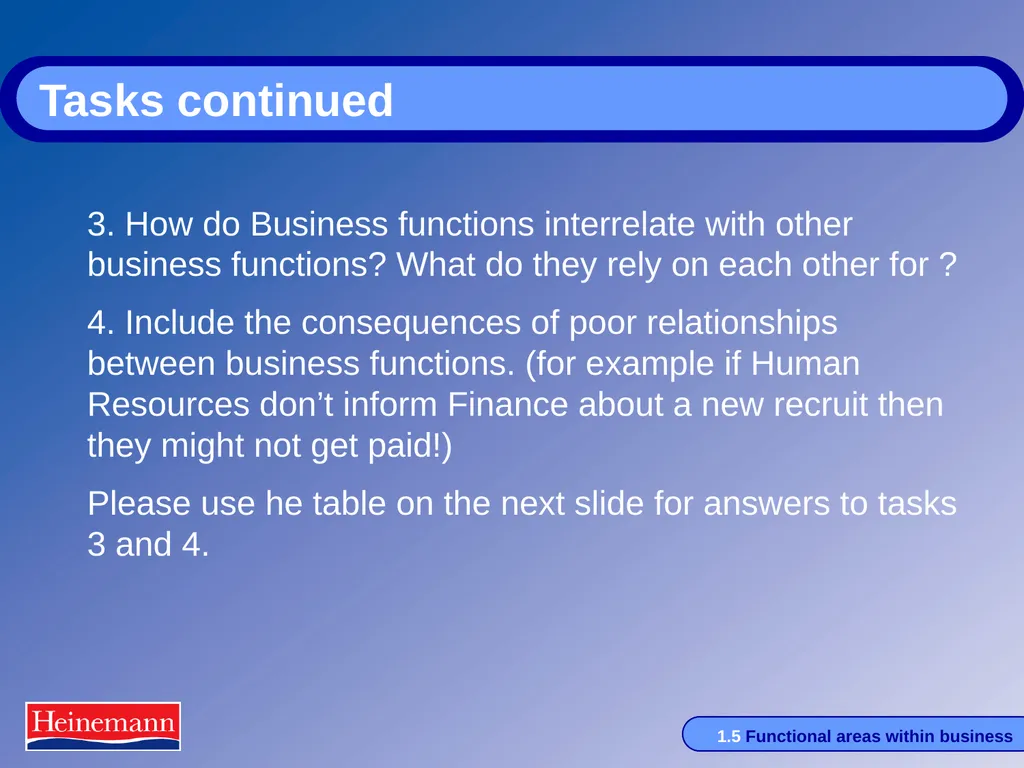
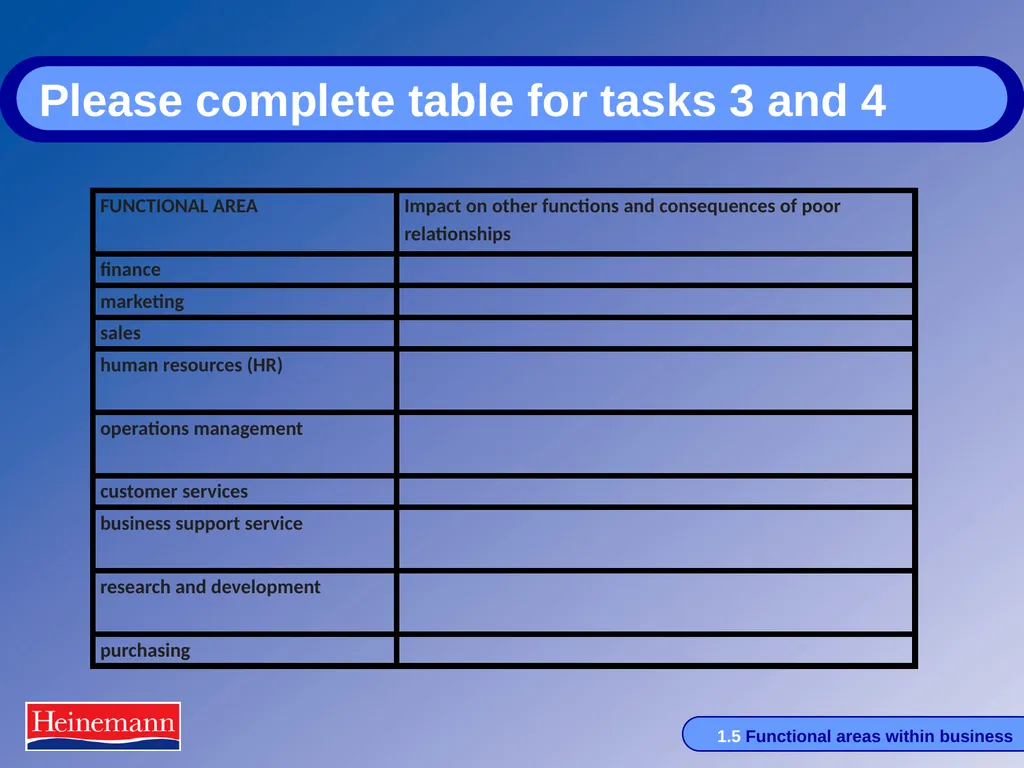
slide7. Tasks continued 3. How do Business functions interrelate with other business functions? What do they rely on each other for ?
4. Include the consequences of poor relationships between business functions. (for example if Human Resources don’t inform Finance about a new recruit then they might not get paid!)
Please use he table on the next slide for answers to tasks 3 and 4.<br>
slide8. Please complete table for tasks 3 and 4<br>
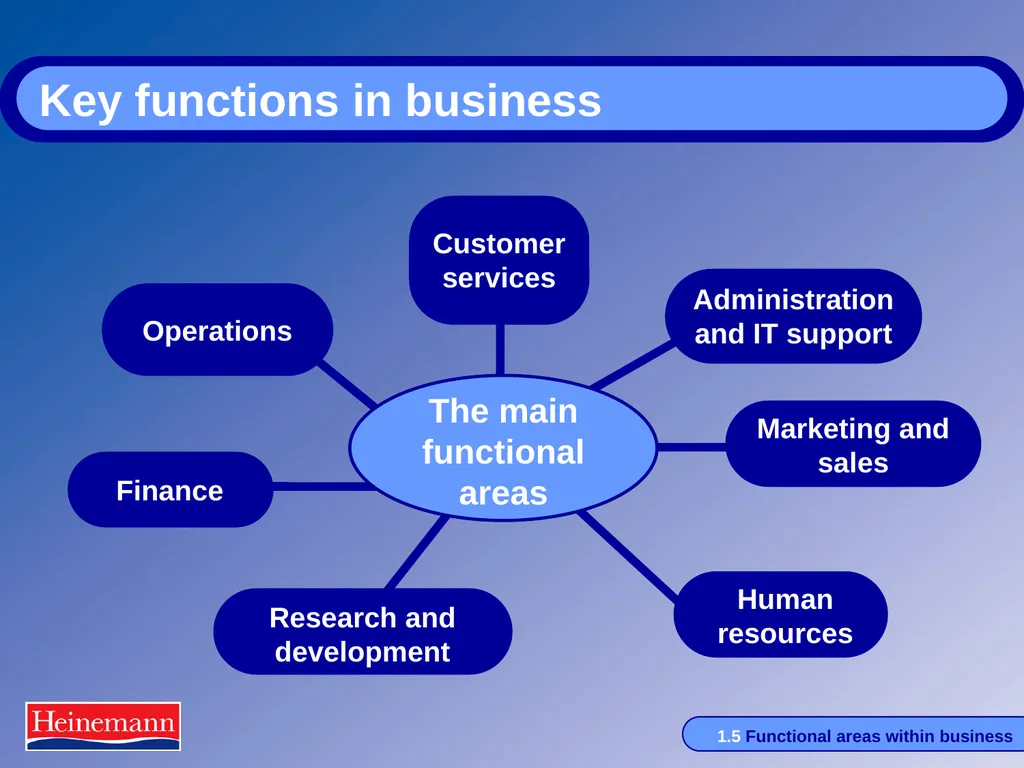
slide9. Key functions in business<br>
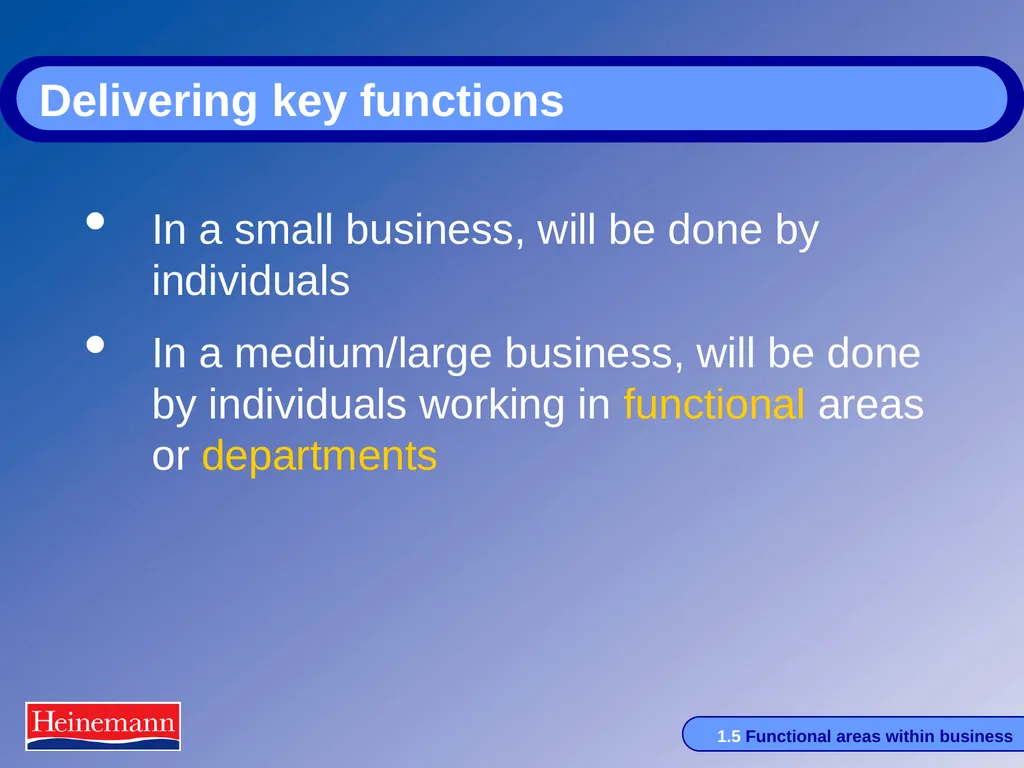
slide10. Delivering key functions In a small business, will be done by individuals
In a medium/large business, will be done by individuals working in functional areas or departments<br>
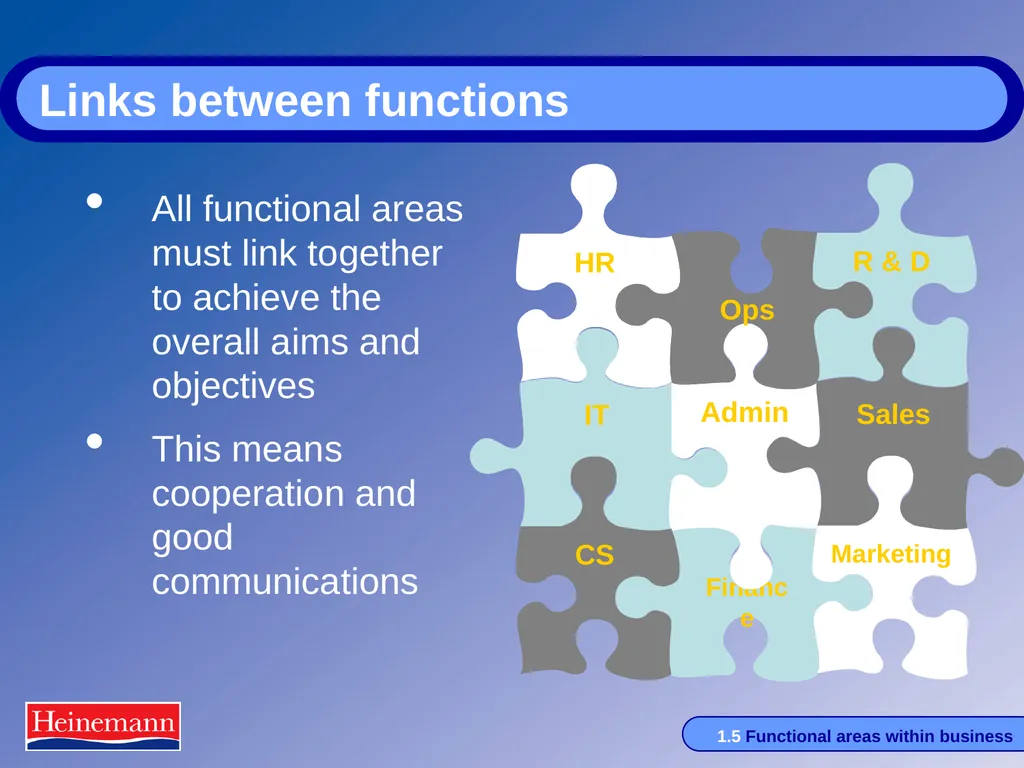
slide11. Links between functions All functional areas must link together to achieve the overall aims and objectives
This means cooperation and good communications Sales Finance Marketing Admin IT CS Ops R & D HR<br>
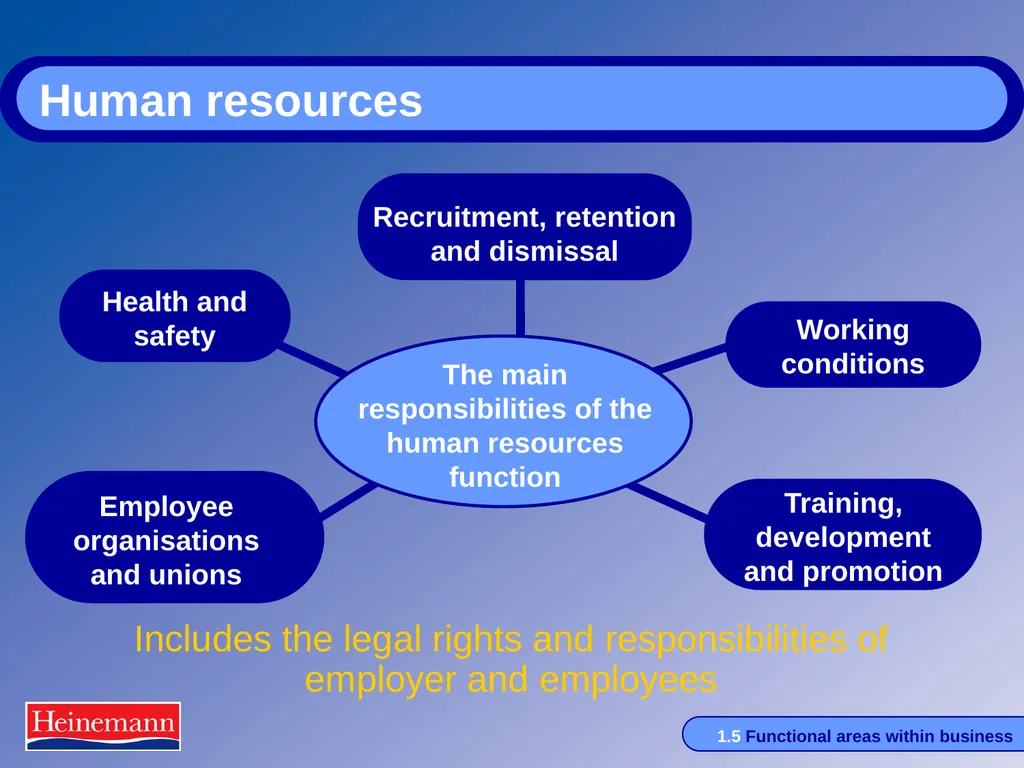
slide12. Human resources Includes the legal rights and responsibilities of employer and employees<br>
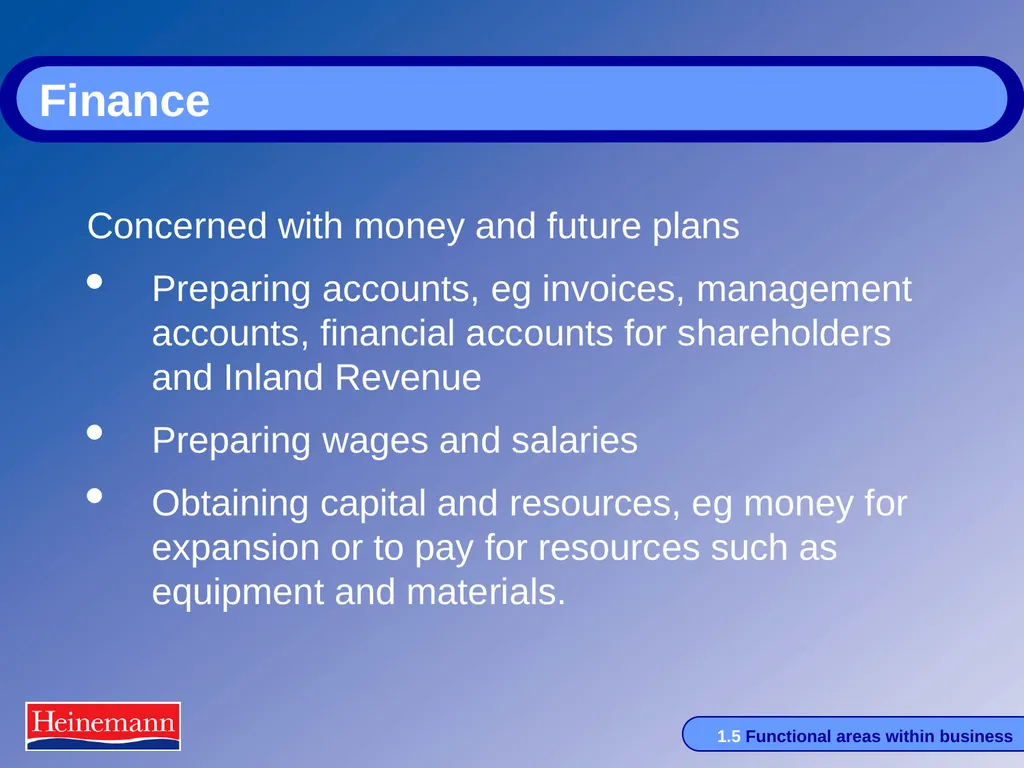
slide13. Finance Concerned with money and future plans
Preparing accounts, eg invoices, management accounts, financial accounts for shareholders and Inland Revenue
Preparing wages and salaries
Obtaining capital and resources, eg money for expansion or to pay for resources such as equipment and materials.<br>
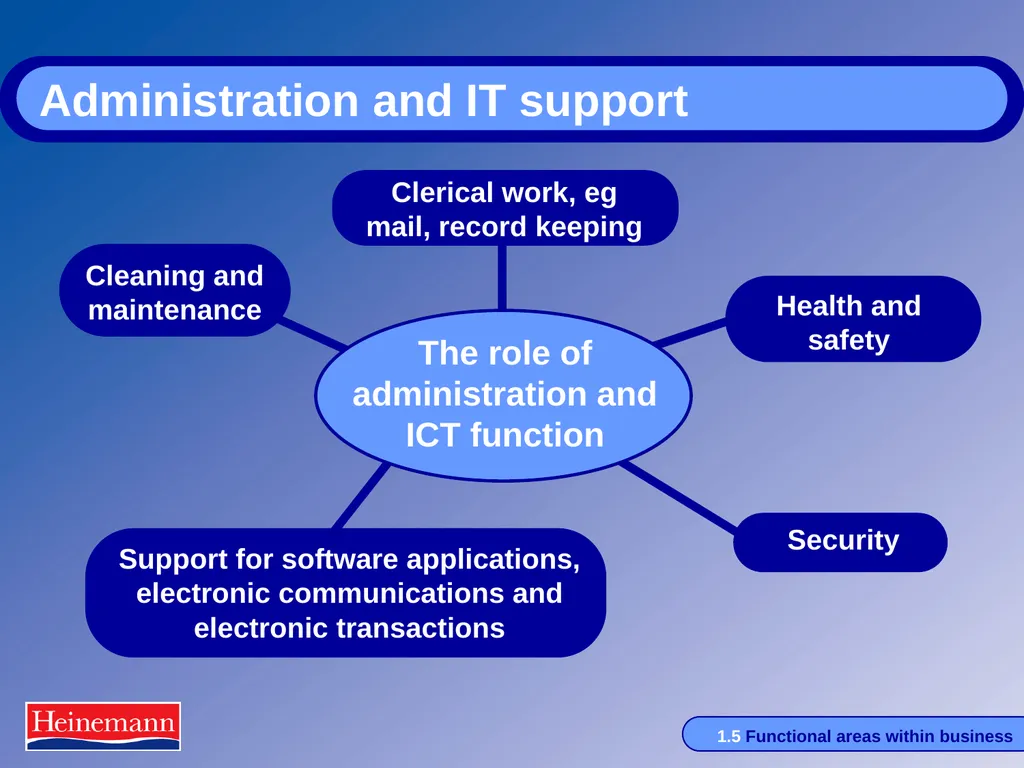
slide14. Administration and IT support<br>
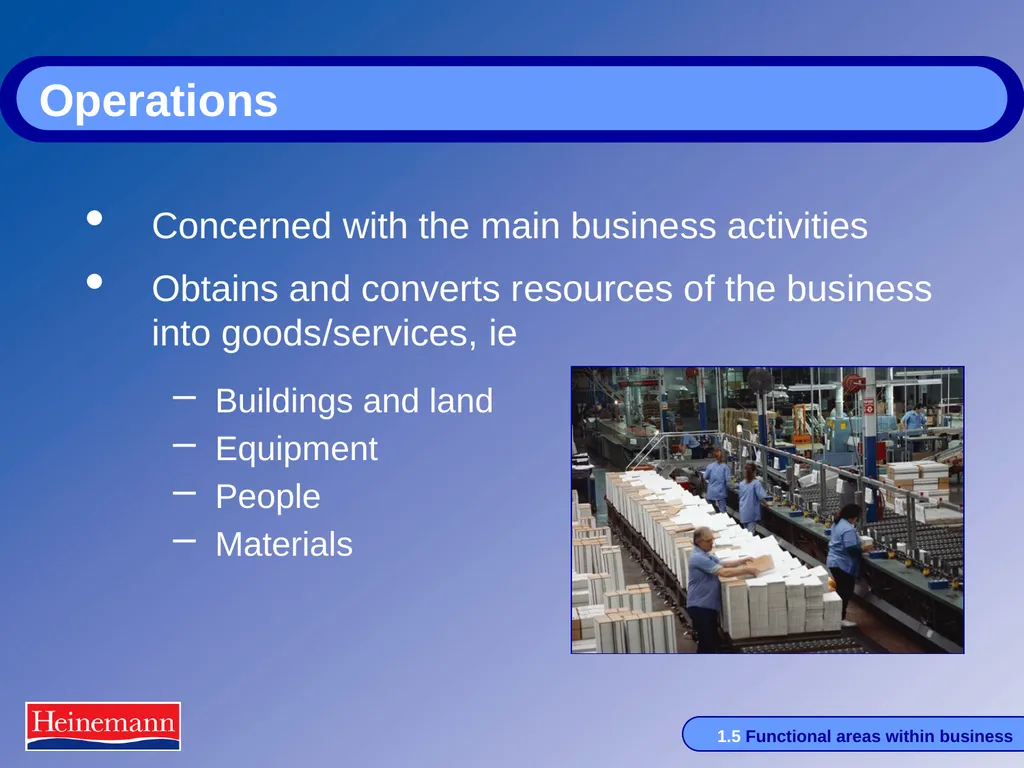
slide15. Operations Concerned with the main business activities
Obtains and converts resources of the business into goods/services, ie
Buildings and land
Equipment
People
Materials<br>
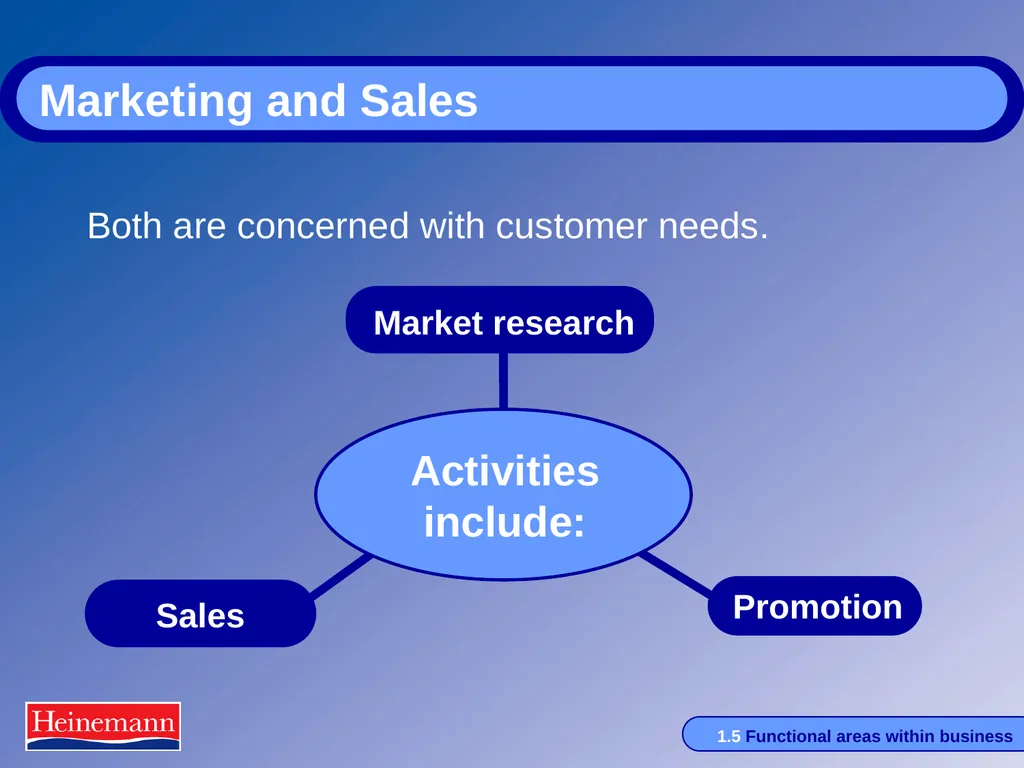
slide16. Marketing and Sales Both are concerned with customer needs.<br>
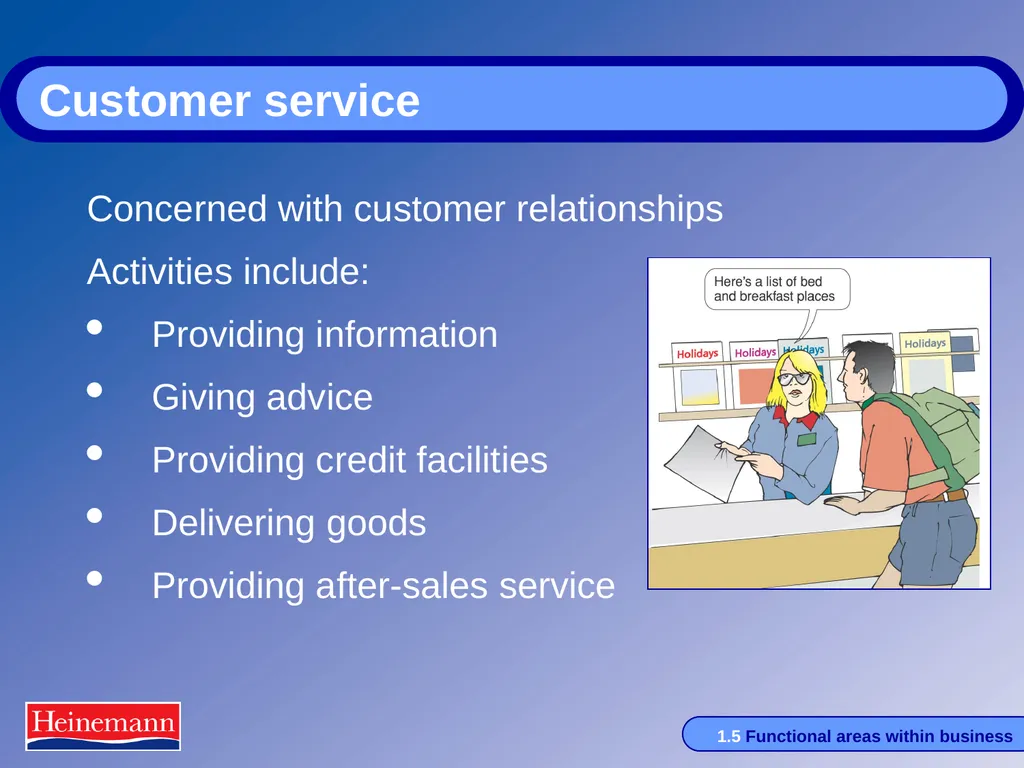
slide17. Customer service Concerned with customer relationships
Activities include:
Providing information
Giving advice
Providing credit facilities
Delivering goods
Providing after-sales service<br>
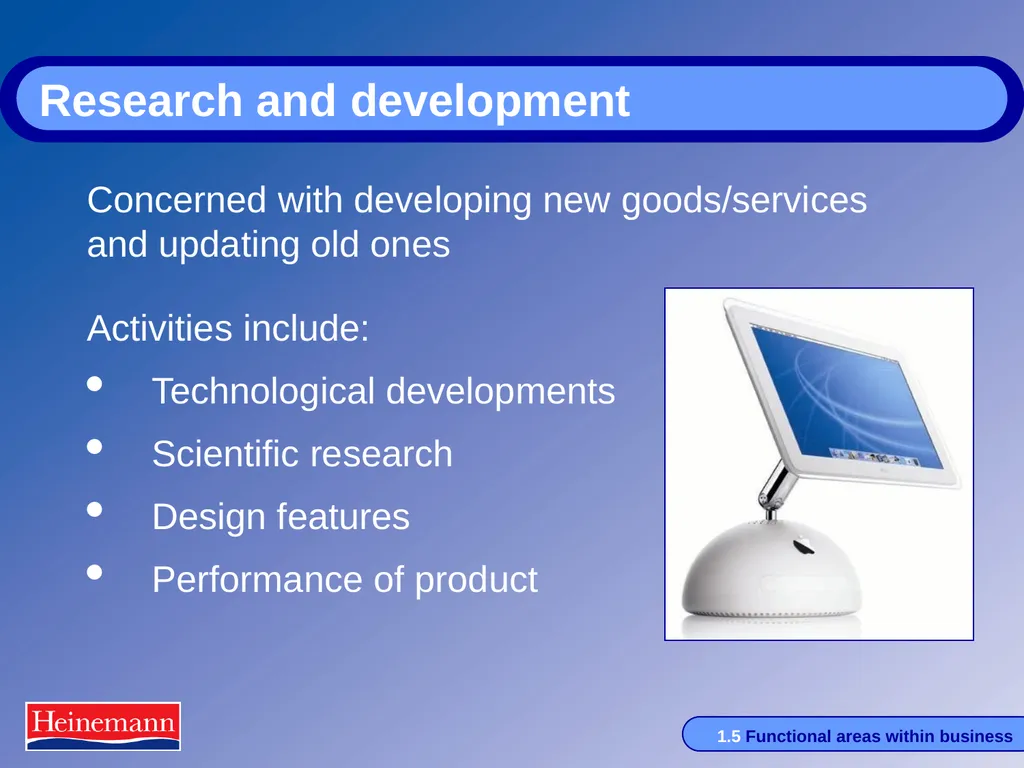
slide18. Research and development Activities include:
Technological developments
Scientific research
Design features
Performance of product Concerned with developing new goods/services and updating old ones<br>
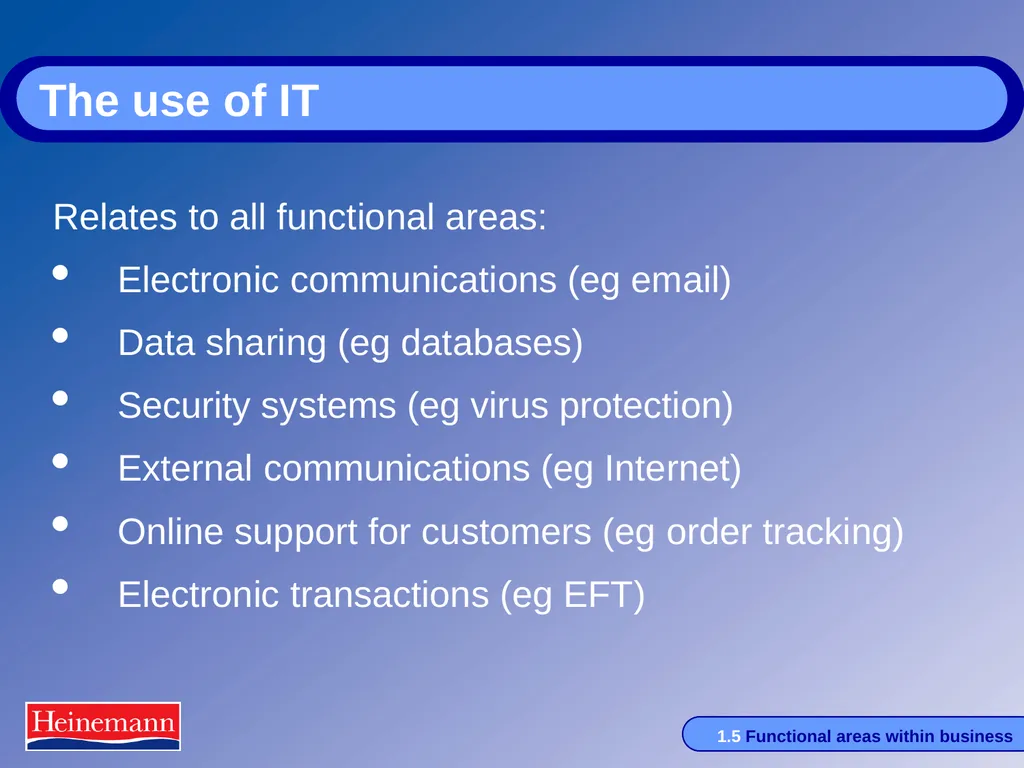
slide19. The use of IT Relates to all functional areas:
Electronic communications (eg email)
Data sharing (eg databases)
Security systems (eg virus protection)
External communications (eg Internet)
Online support for customers (eg order tracking)
Electronic transactions (eg EFT)<br>
slide20. Functional variations No two businesses are the same!
Functions will vary because of:
Size and scale of business
Activities of business
Type(s) of customers
Needs of customers
Preferences of owner(s)<br>
slide21. Investigating functional areas Identify key functions
Find out where these carried out (or by whom)
Check names of key areas/departments
Identify links between functions/areas
Identify use of IT within/between functions and customers
Note any problem areas<br>
slide22. What next? Once you have completed your work make sure you SAVE IT!
If you decide to this course in September you will need this work.
I look forward to seeing you soon!
Mrs Jones<br>
slide23. Any Questions?? If you have any questions about this task or the course in general please contact:
Mrs Jones on the email below
cjones@Holgate-ac.org.uk<br>
Level 3 Cambridge Technical in Business
This course is roughly 50/50 exams and coursework. This means the work you produce in lesson will go towards your final result.<br>
slide2. Hello and Welcome!
Really sorry I cant see you all in person today but I would like to try and give you an idea of what my Business lessons are like.
There is a photo of me in my classroom below so you can get an idea of the facilities here (which are great). I have been teaching Business for over 20 years and I LOVE IT! So I hope you will enjoy this subject also.
My email is on the last slide so any questions make sure to get in touch
I hope to see you in September
Mrs Jones Welcome to Business at HSFC<br>
slide3. Welcome to Business and HSFC<br>
slide4. Functional areas within business<br>
slide5. INSTRUCTIONS: Transition day I have chosen a topic suitable for remote learning for you today. It is part of Unit 1 The Business environment in our course.
Today we are looking at Learning Objective 2: Functional Areas.
Objectives:
Understand how the functional areas of a business work together to support the activities of the business
Explore the consequences for the business of poor relationships between business functions
.<br>
slide6. Tasks 1. Read through the slides below. Functions are the different areas of operation in a business.
2. Create a mind map of the different functional areas of a business and the tasks they perform (this is usually done by hand on a large A3 sheet, but you can do all functions together or individually<br>
slide7. Tasks continued 3. How do Business functions interrelate with other business functions? What do they rely on each other for ?
4. Include the consequences of poor relationships between business functions. (for example if Human Resources don’t inform Finance about a new recruit then they might not get paid!)
Please use he table on the next slide for answers to tasks 3 and 4.<br>
slide8. Please complete table for tasks 3 and 4<br>
slide9. Key functions in business<br>
slide10. Delivering key functions In a small business, will be done by individuals
In a medium/large business, will be done by individuals working in functional areas or departments<br>
slide11. Links between functions All functional areas must link together to achieve the overall aims and objectives
This means cooperation and good communications Sales Finance Marketing Admin IT CS Ops R & D HR<br>
slide12. Human resources Includes the legal rights and responsibilities of employer and employees<br>
slide13. Finance Concerned with money and future plans
Preparing accounts, eg invoices, management accounts, financial accounts for shareholders and Inland Revenue
Preparing wages and salaries
Obtaining capital and resources, eg money for expansion or to pay for resources such as equipment and materials.<br>
slide14. Administration and IT support<br>
slide15. Operations Concerned with the main business activities
Obtains and converts resources of the business into goods/services, ie
Buildings and land
Equipment
People
Materials<br>
slide16. Marketing and Sales Both are concerned with customer needs.<br>
slide17. Customer service Concerned with customer relationships
Activities include:
Providing information
Giving advice
Providing credit facilities
Delivering goods
Providing after-sales service<br>
slide18. Research and development Activities include:
Technological developments
Scientific research
Design features
Performance of product Concerned with developing new goods/services and updating old ones<br>
slide19. The use of IT Relates to all functional areas:
Electronic communications (eg email)
Data sharing (eg databases)
Security systems (eg virus protection)
External communications (eg Internet)
Online support for customers (eg order tracking)
Electronic transactions (eg EFT)<br>
slide20. Functional variations No two businesses are the same!
Functions will vary because of:
Size and scale of business
Activities of business
Type(s) of customers
Needs of customers
Preferences of owner(s)<br>
slide21. Investigating functional areas Identify key functions
Find out where these carried out (or by whom)
Check names of key areas/departments
Identify links between functions/areas
Identify use of IT within/between functions and customers
Note any problem areas<br>
slide22. What next? Once you have completed your work make sure you SAVE IT!
If you decide to this course in September you will need this work.
I look forward to seeing you soon!
Mrs Jones<br>
slide23. Any Questions?? If you have any questions about this task or the course in general please contact:
Mrs Jones on the email below
cjones@Holgate-ac.org.uk<br>