
International Synthesis Workshop on “Migration,
LV
Published · 25 slides · 0 views
1 / 1

Description
International Synthesis Workshop on Migration, Rural Livelihoods and Natural Resource Management February 21 - 24, 2011 Chalatenango, El Salvador Migration, Rural Livelihoods and Natural Resource Management: Lessons from El Salvador From
Related Topics
Share
Embed code
Download this presentation From Below
"International Synthesis Workshop on “Migration," is the property of its rightful owner. Permission is granted to download and print the materials on this website for personal, non-commercial use only, and to display it on your personal computer provided you do not modify the materials and that you retain all copyright notices contained in the materials. By downloading content from our website, you accept the terms of this agreement.
Presentation Transcript
01
International Synthesis Workshop on
“Migration, Rural Livelihoods and Natural Resource Management”
February 21 - 24, 2011 Chalatenango, El Salvador Migration, Rural Livelihoods and Natural Resource Management: Lessons from El Salvador<br>
February 21 - 24, 2011 Chalatenango, El Salvador Migration, Rural Livelihoods and Natural Resource Management: Lessons from El Salvador<br>
02
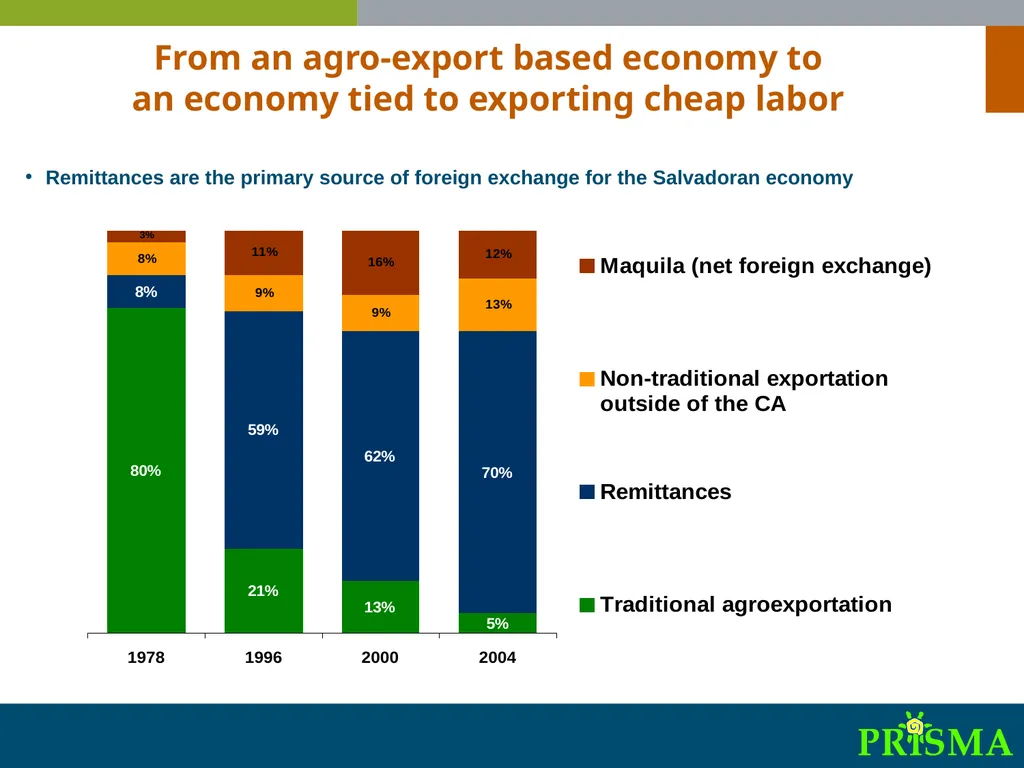
From an agro-export based economy to
an economy tied to exporting cheap labor Remittances are the primary source of foreign exchange for the Salvadoran economy<br>
03
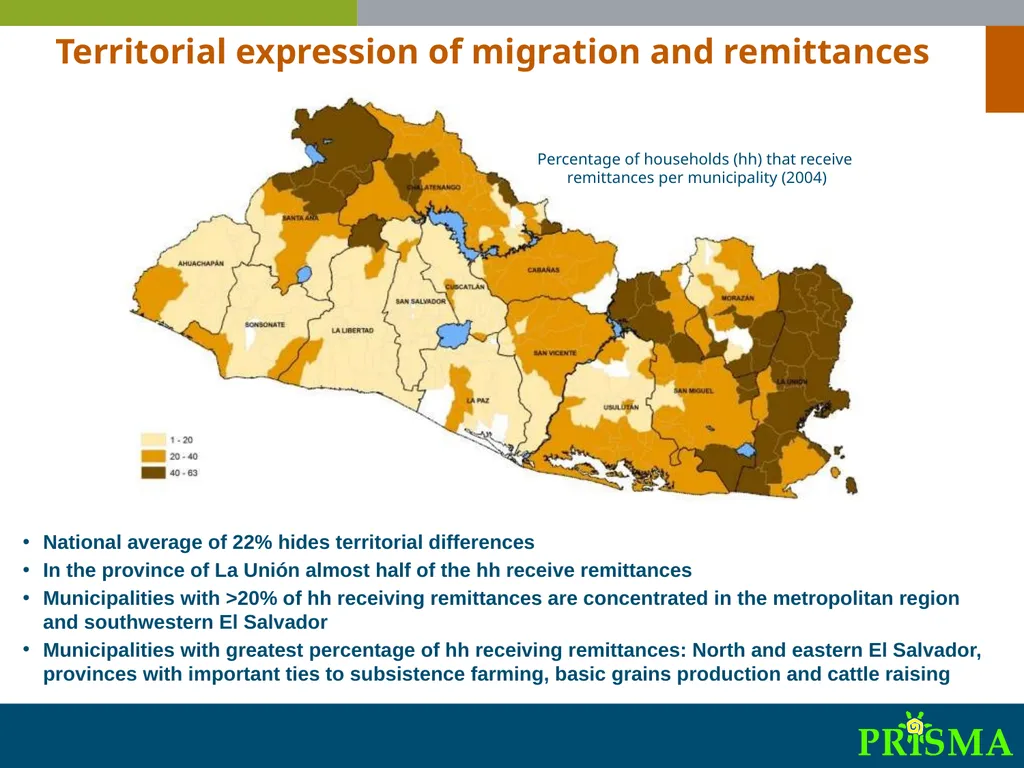
Territorial expression of migration and remittances National average of 22% hides territorial differences
In the province of La Unión almost half of the hh receive remittances
Municipalities with >20% of hh receiving remittances are concentrated in the metropolitan region and southwestern El Salvador
Municipalities with greatest percentage of hh receiving remittances: North and eastern El Salvador, provinces with important ties to subsistence farming, basic grains production and cattle raising Percentage of households (hh) that receive remittances per municipality (2004)<br>
04
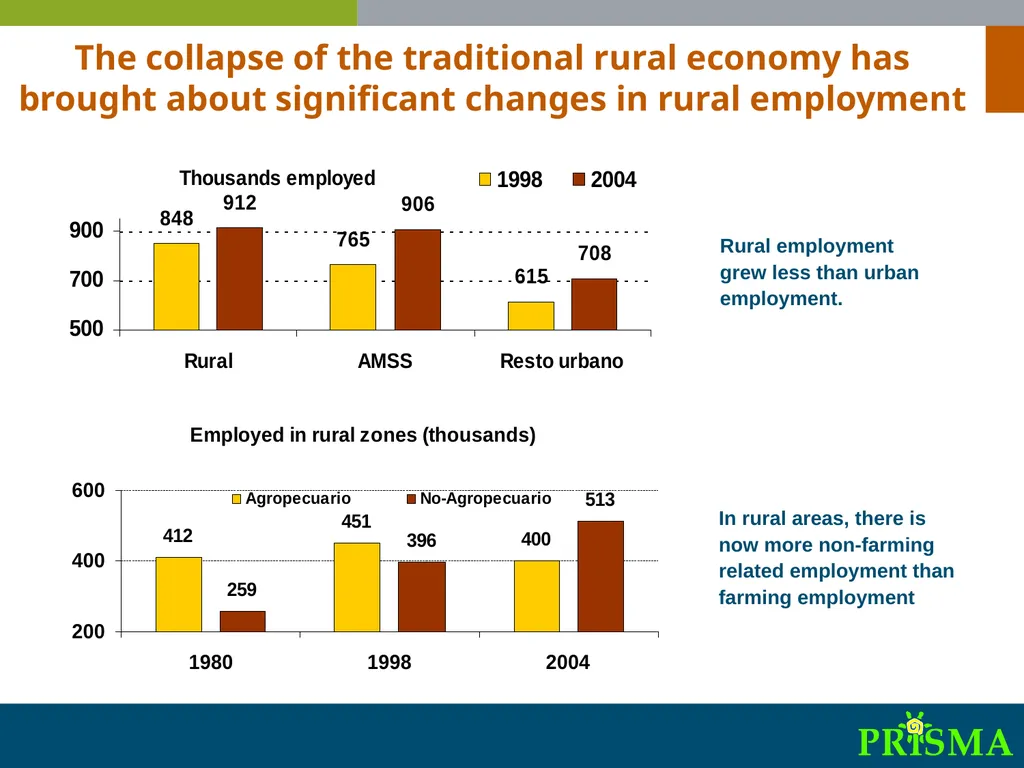
The collapse of the traditional rural economy has brought about significant changes in rural employment Rural employment grew less than urban employment. In rural areas, there is now more non-farming related employment than farming employment<br>
05
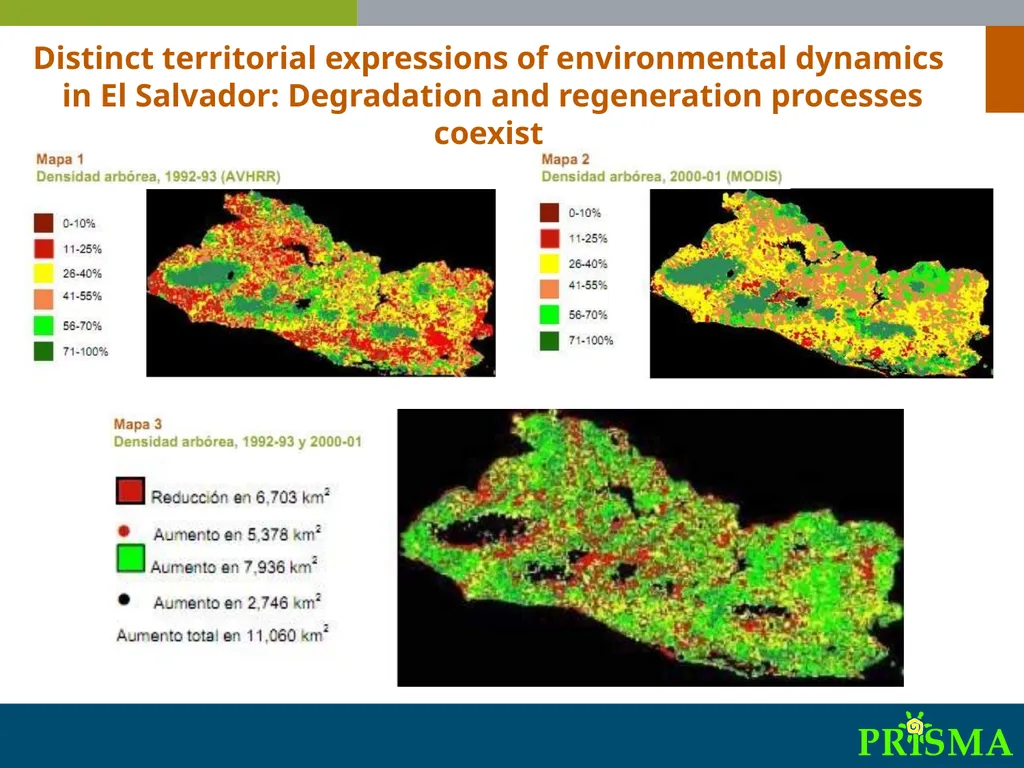
Distinct territorial expressions of environmental dynamics
in El Salvador: Degradation and regeneration processes coexist<br>
06
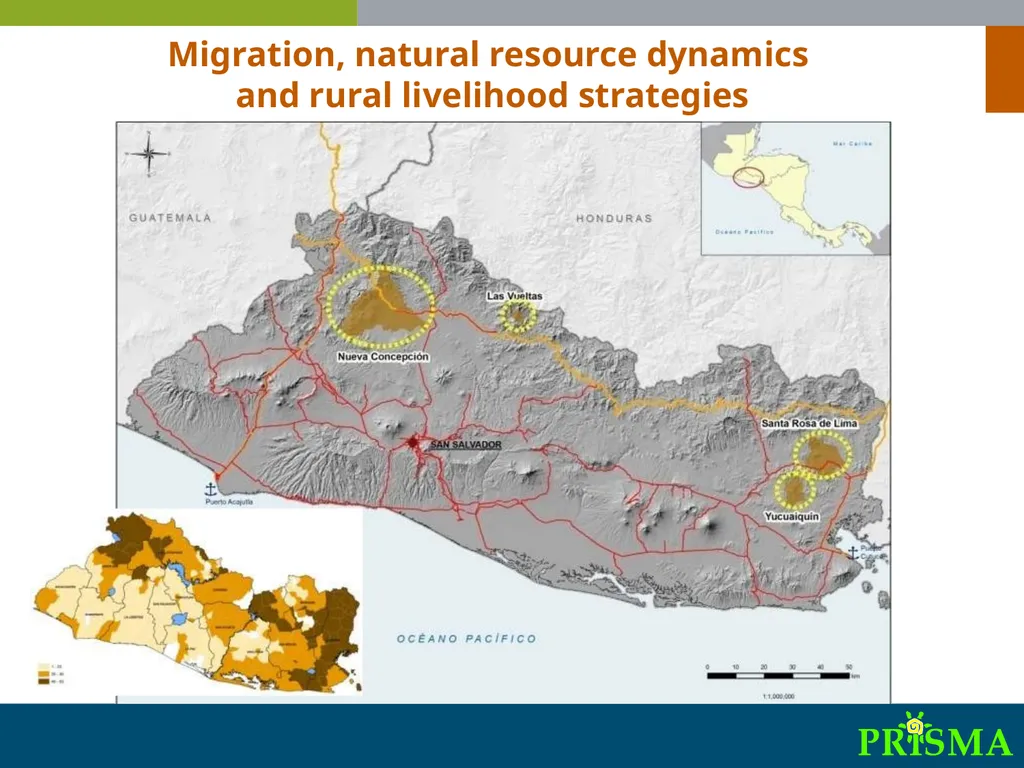
Migration, natural resource dynamics
and rural livelihood strategies<br>
07
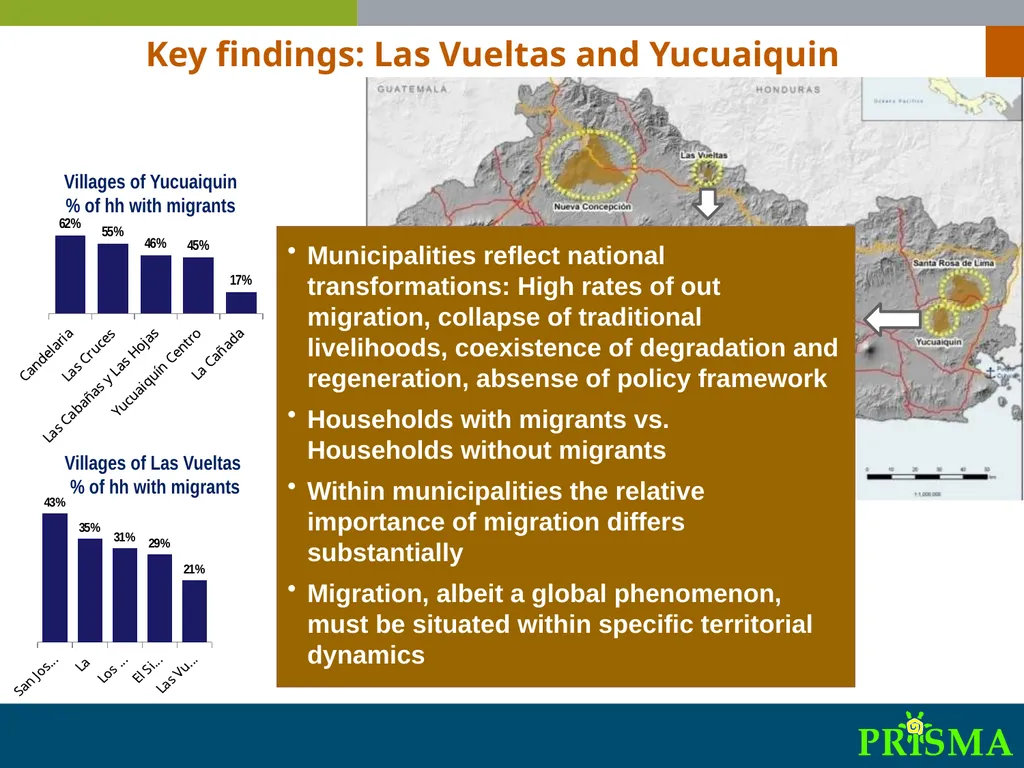
Key findings: Las Vueltas and Yucuaiquin Municipalities reflect national transformations: High rates of out migration, collapse of traditional livelihoods, coexistence of degradation and regeneration, absense of policy framework
Households with migrants vs. Households without migrants
Within municipalities the relative importance of migration differs substantially
Migration, albeit a global phenomenon, must be situated within specific territorial dynamics Villages of Las Vueltas % of hh with migrants Villages of Yucuaiquin % of hh with migrants<br>
08
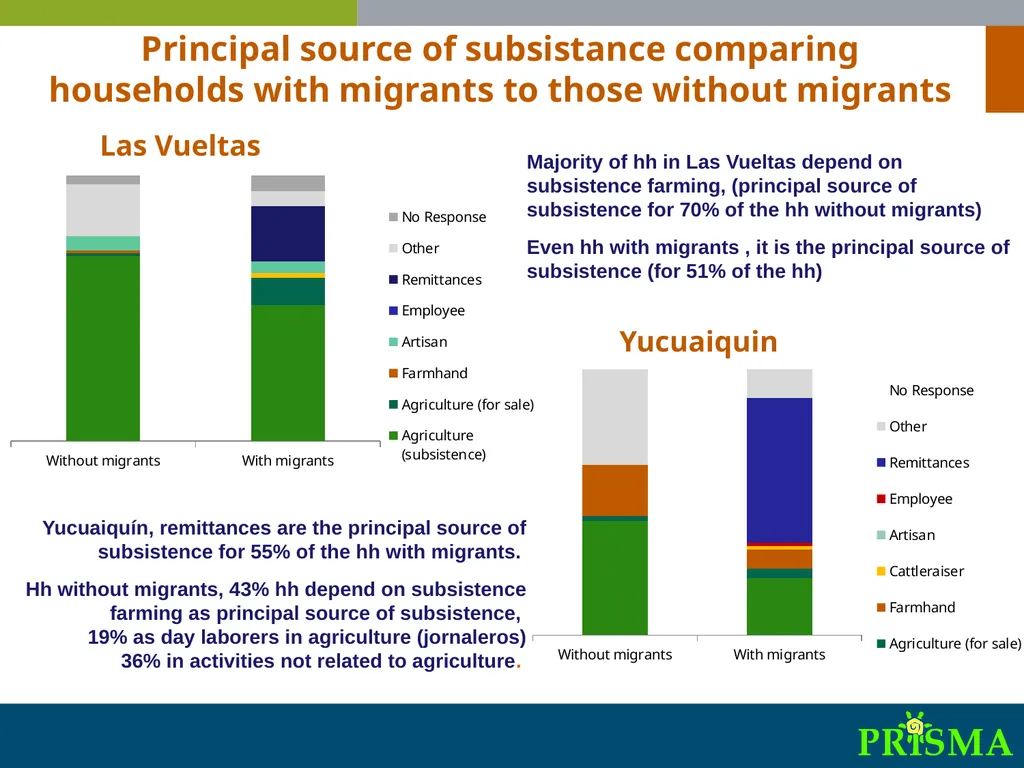
Las Vueltas Yucuaiquin Principal source of subsistance comparing
households with migrants to those without migrants Majority of hh in Las Vueltas depend on subsistence farming, (principal source of subsistence for 70% of the hh without migrants)
Even hh with migrants , it is the principal source of subsistence (for 51% of the hh) Yucuaiquín, remittances are the principal source of subsistence for 55% of the hh with migrants.
Hh without migrants, 43% hh depend on subsistence farming as principal source of subsistence, 19% as day laborers in agriculture (jornaleros) 36% in activities not related to agriculture.<br>
09
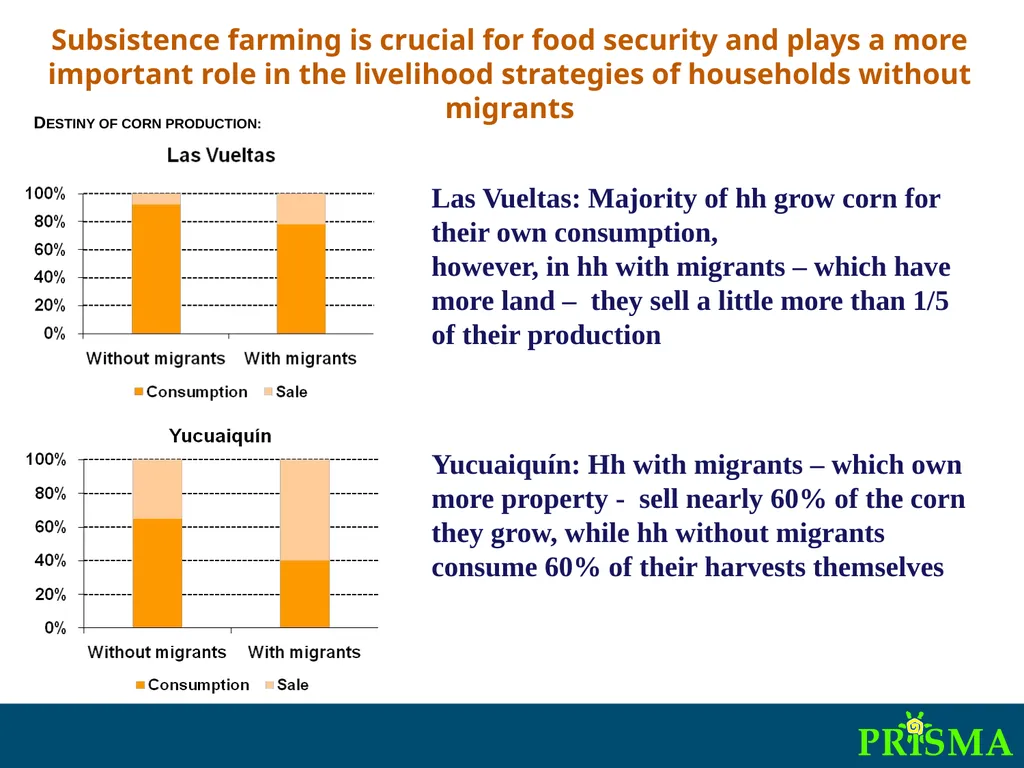
Subsistence farming is crucial for food security and plays a more important role in the livelihood strategies of households without migrants Las Vueltas: Majority of hh grow corn for their own consumption,
however, in hh with migrants – which have more land – they sell a little more than 1/5 of their production
Yucuaiquín: Hh with migrants – which own more property - sell nearly 60% of the corn they grow, while hh without migrants consume 60% of their harvests themselves Destiny of corn production:<br>
Yucuaiquín: Hh with migrants – which own more property - sell nearly 60% of the corn they grow, while hh without migrants consume 60% of their harvests themselves Destiny of corn production:<br>
10
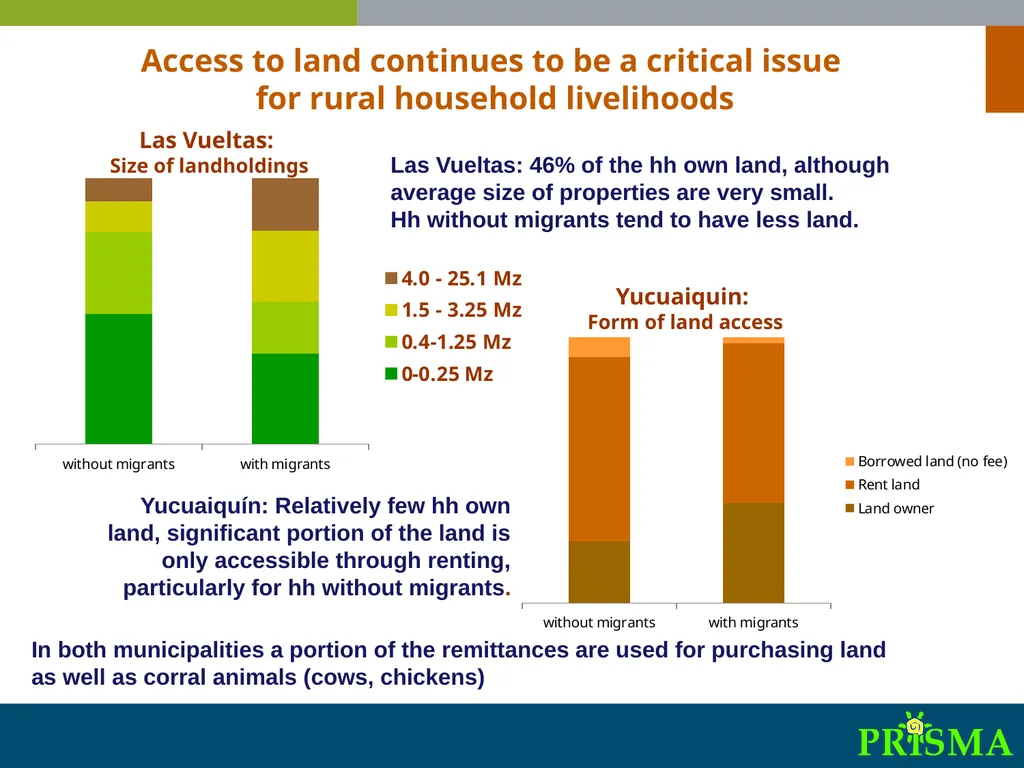
Las Vueltas:
Size of landholdings Yucuaiquin:
Form of land access Access to land continues to be a critical issue
for rural household livelihoods Las Vueltas: 46% of the hh own land, although average size of properties are very small.
Hh without migrants tend to have less land. Yucuaiquín: Relatively few hh own land, significant portion of the land is only accessible through renting, particularly for hh without migrants. In both municipalities a portion of the remittances are used for purchasing land
as well as corral animals (cows, chickens)<br>
11
Key findings: Las Vueltas and Yucuaiquin Subsistence farming is crucial for food security and plays a more important role in the livelihood strategies of rural households – more so for those left out of the migration circuits
Access to land continues to be a critical issue for rural household livelihoods
Hh without migrants depend more on land, yet tend to have less access to land, and what land they have tends to be of low soil quality
Part of remittances are used for buying land and corral animals (cows, chickens) with mixed environmental impacts
Stimulation of non-agricultural activities in rural areas related to remittances: Less ties to the land
New forms of social exclusion– Hh with migrants / Hh without migrants and formation of a core group of entrenched rural poor, outside the migration circuits<br>
12
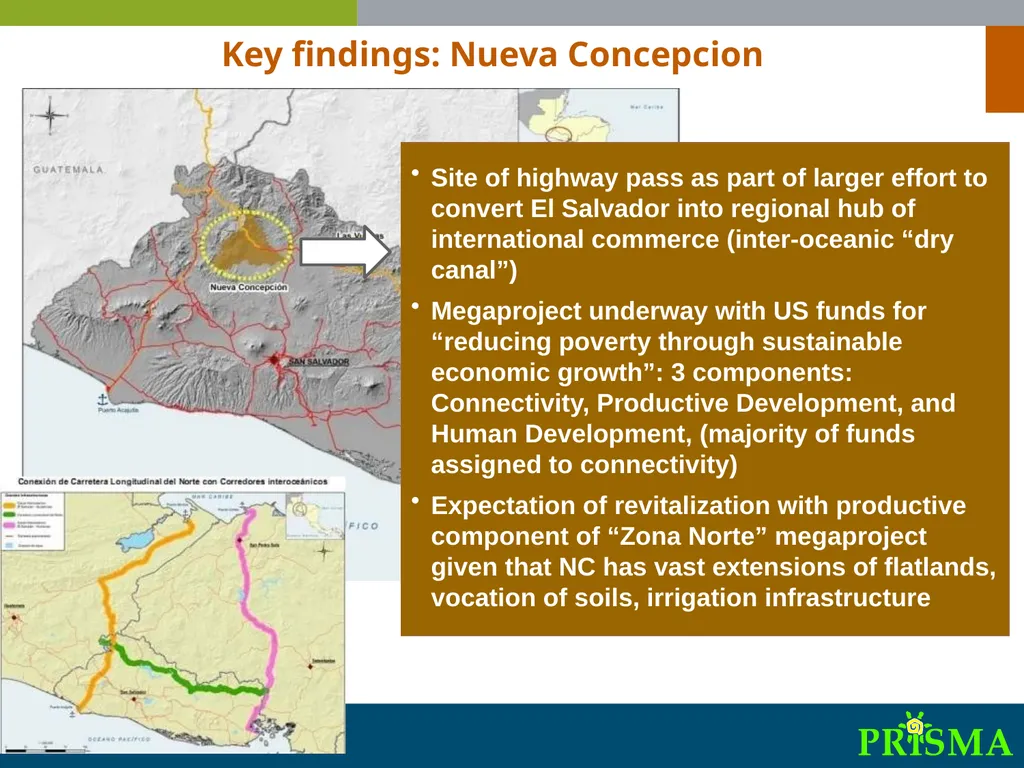
Key findings: Nueva Concepcion Site of highway pass as part of larger effort to convert El Salvador into regional hub of international commerce (inter-oceanic “dry canal”)
Megaproject underway with US funds for “reducing poverty through sustainable economic growth”: 3 components: Connectivity, Productive Development, and Human Development, (majority of funds assigned to connectivity)
Expectation of revitalization with productive component of “Zona Norte” megaproject given that NC has vast extensions of flatlands, vocation of soils, irrigation infrastructure<br>
13
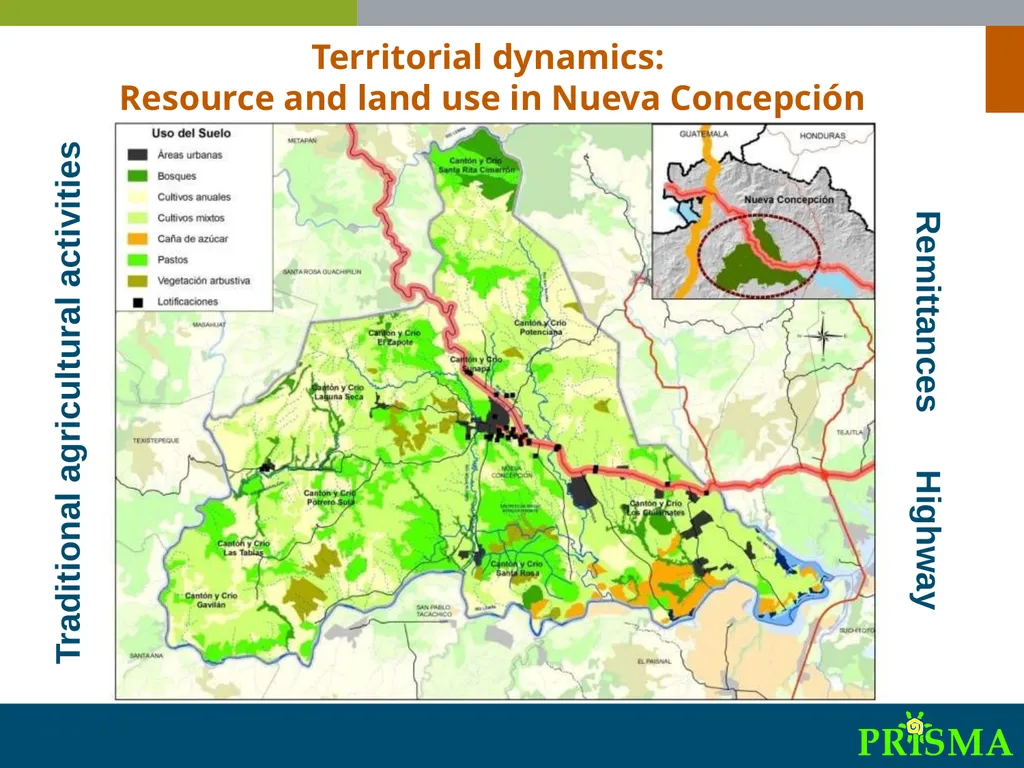
Territorial dynamics:
Resource and land use in Nueva Concepción Traditional agricultural activities Remittances Highway<br>
14
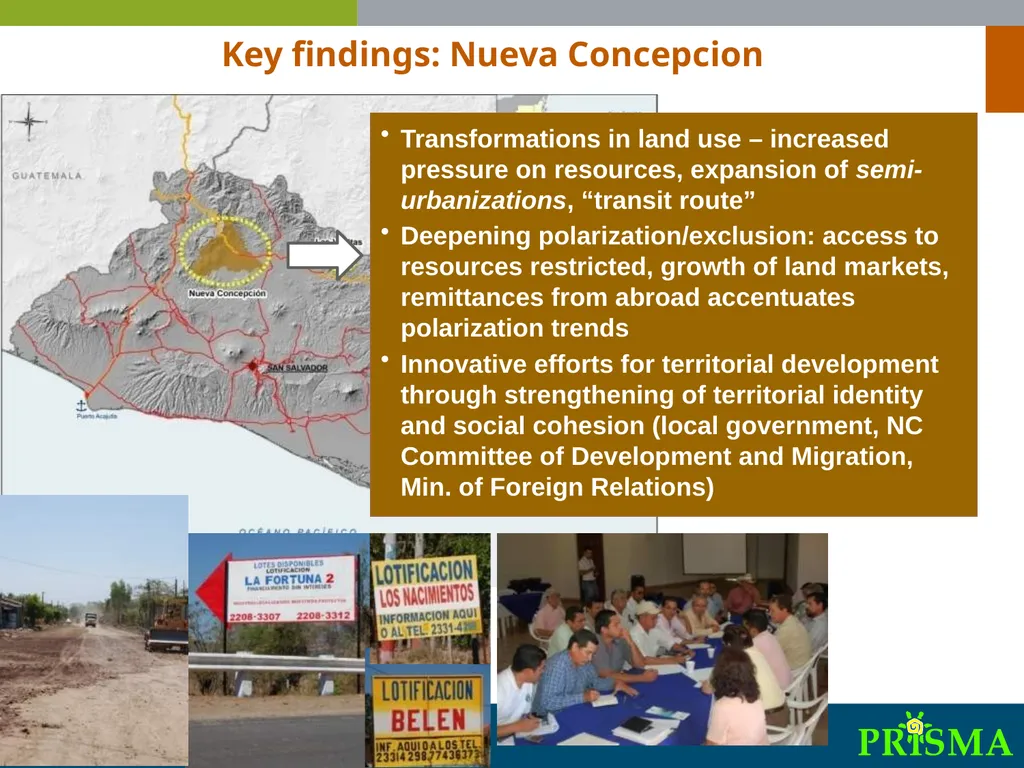
Key findings: Nueva Concepcion Transformations in land use – increased pressure on resources, expansion of semi-urbanizations, “transit route”
Deepening polarization/exclusion: access to resources restricted, growth of land markets, remittances from abroad accentuates polarization trends
Innovative efforts for territorial development through strengthening of territorial identity and social cohesion (local government, NC Committee of Development and Migration, Min. of Foreign Relations)<br>
15
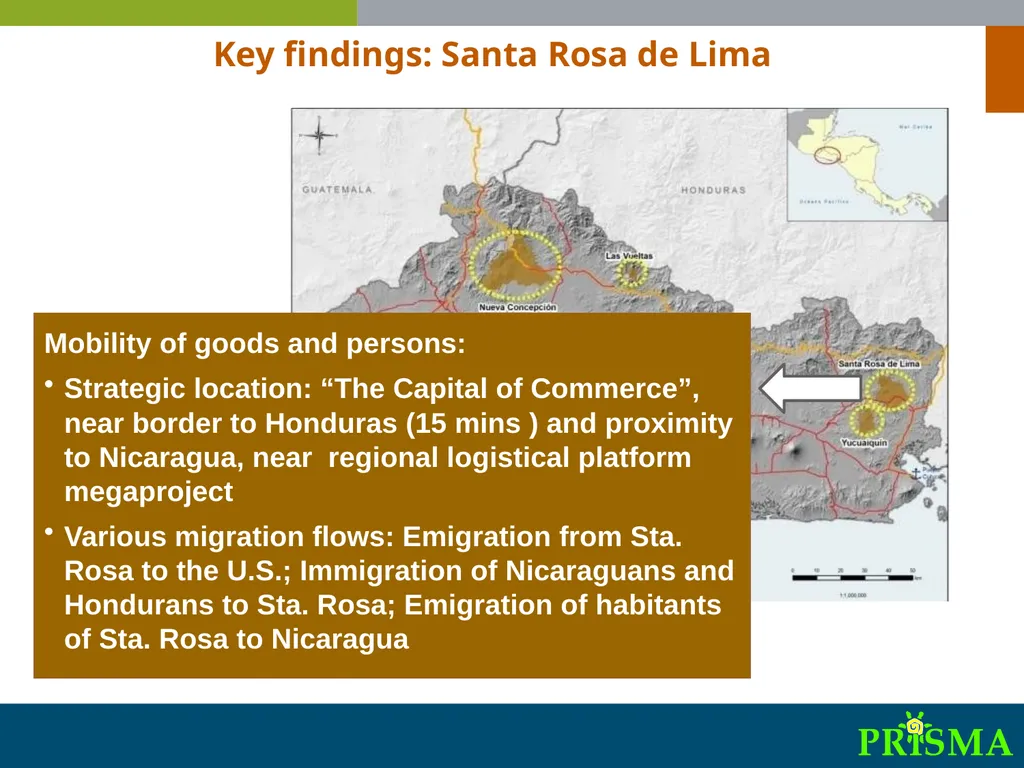
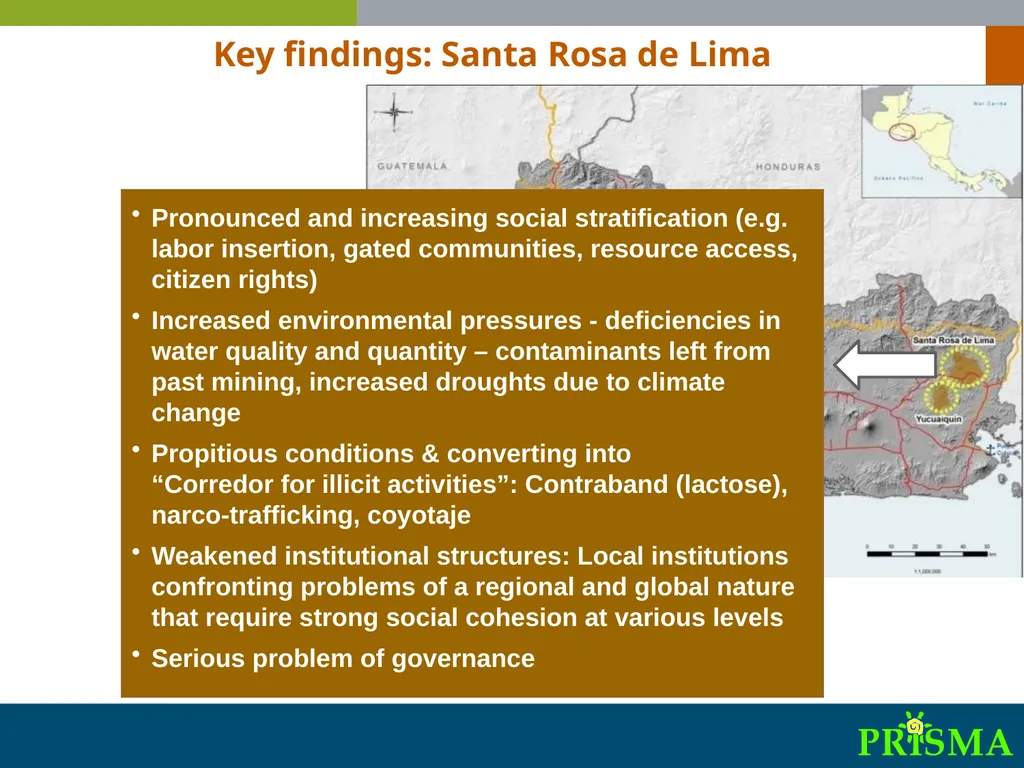
Key findings: Santa Rosa de Lima Mobility of goods and persons:
Strategic location: “The Capital of Commerce”, near border to Honduras (15 mins ) and proximity to Nicaragua, near regional logistical platform megaproject
Various migration flows: Emigration from Sta. Rosa to the U.S.; Immigration of Nicaraguans and Hondurans to Sta. Rosa; Emigration of habitants of Sta. Rosa to Nicaragua<br>
16
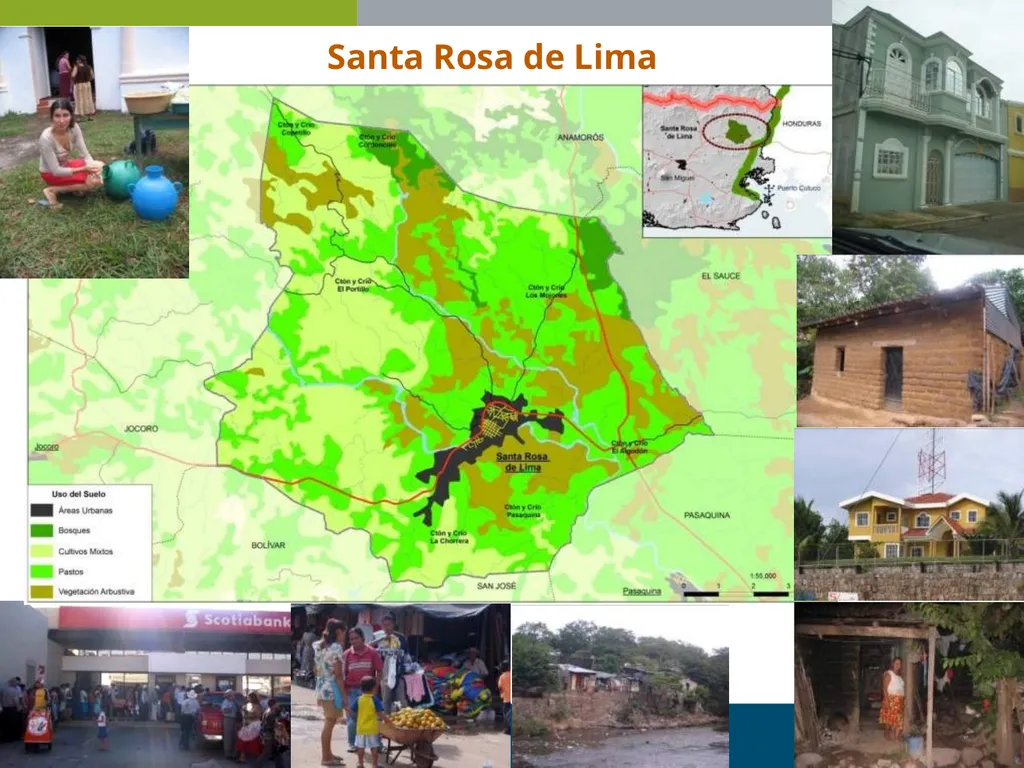
Santa Rosa de Lima<br>
17
Key findings: Santa Rosa de Lima Pronounced and increasing social stratification (e.g. labor insertion, gated communities, resource access, citizen rights)
Increased environmental pressures - deficiencies in water quality and quantity – contaminants left from past mining, increased droughts due to climate change
Propitious conditions & converting into “Corredor for illicit activities”: Contraband (lactose), narco-trafficking, coyotaje
Weakened institutional structures: Local institutions confronting problems of a regional and global nature that require strong social cohesion at various levels
Serious problem of governance<br>
18
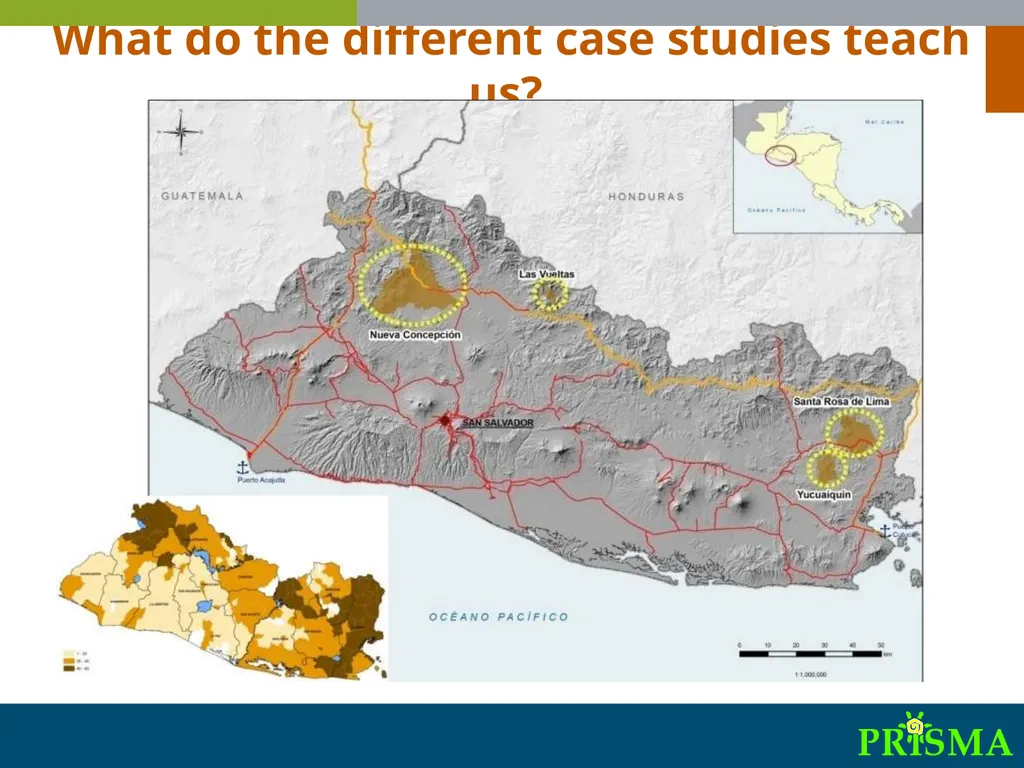
What do the different case studies teach us?<br>
19
Overall findings Despite migration and increased non agricultural employment, large numbers of rural households depend on subsistence farming for food security
The poorest depend more heavily on subsistence farming, have less access to land - converting into a nucleus of hardcore poor (unable to migrate nor diversify their livelihood strategies)
Environmentally a mixed picture: Regeneration and degradation
New and old forms of differentiation (migrants and no-migrants; closed communities; labor insertion, access to resources, etc) – undermining social cohesion.
Increased social-economic polarization, disenfranchisement and further entrenchment of a sector of hardcore rural poor (hh without migrants, immigrants without full rights)
Serious threat for governance at various scales (local, national, regional, global)<br>
20
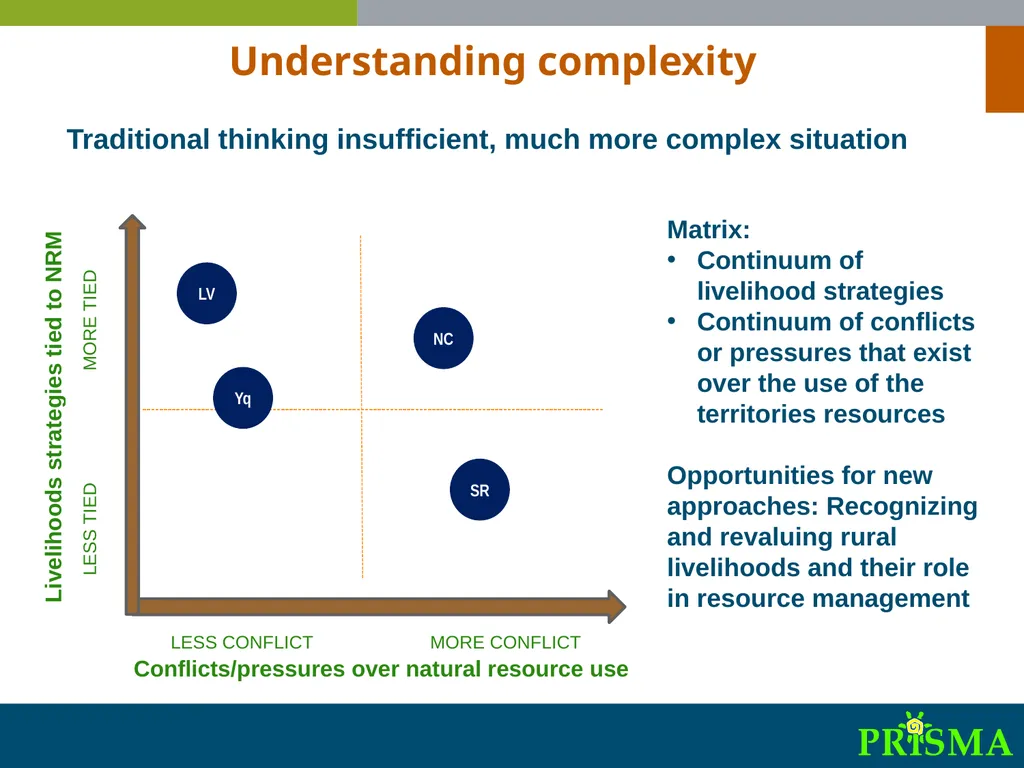
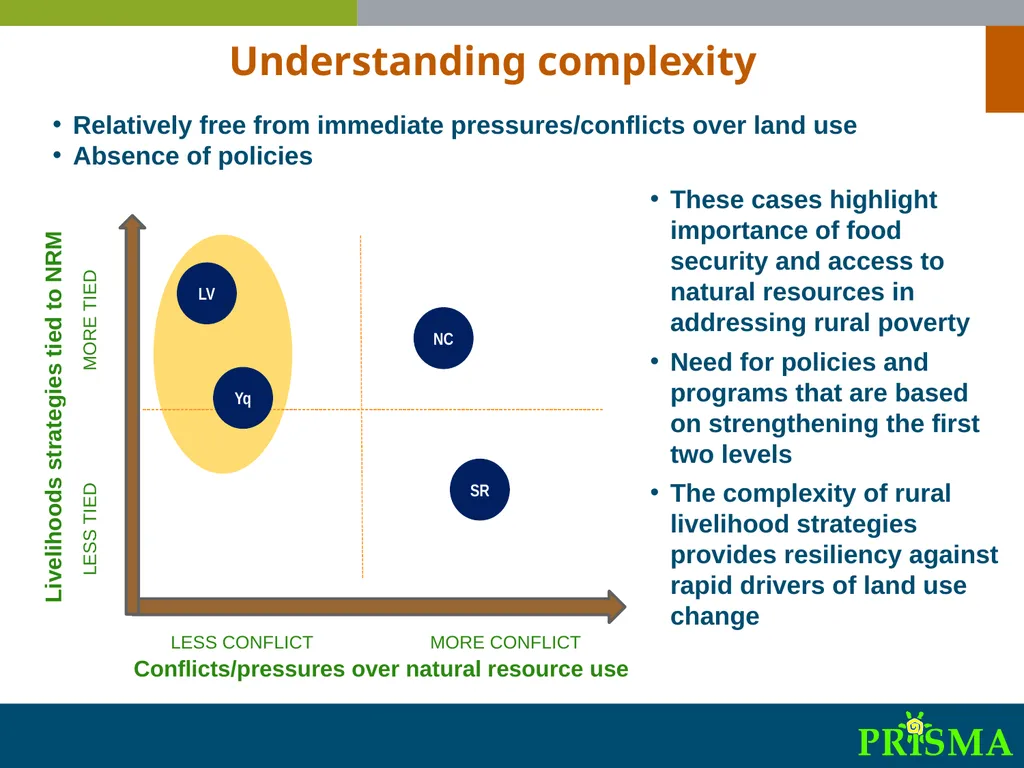
Understanding complexity Livelihoods strategies tied to NRM less tied more tied Conflicts/pressures over natural resource use less conflict more conflict NC Yq LV SR Traditional thinking insufficient, much more complex situation Matrix:
Continuum of livelihood strategies
Continuum of conflicts or pressures that exist over the use of the territories resources
Opportunities for new approaches: Recognizing and revaluing rural livelihoods and their role in resource management<br>
Continuum of livelihood strategies
Continuum of conflicts or pressures that exist over the use of the territories resources
Opportunities for new approaches: Recognizing and revaluing rural livelihoods and their role in resource management<br>
21
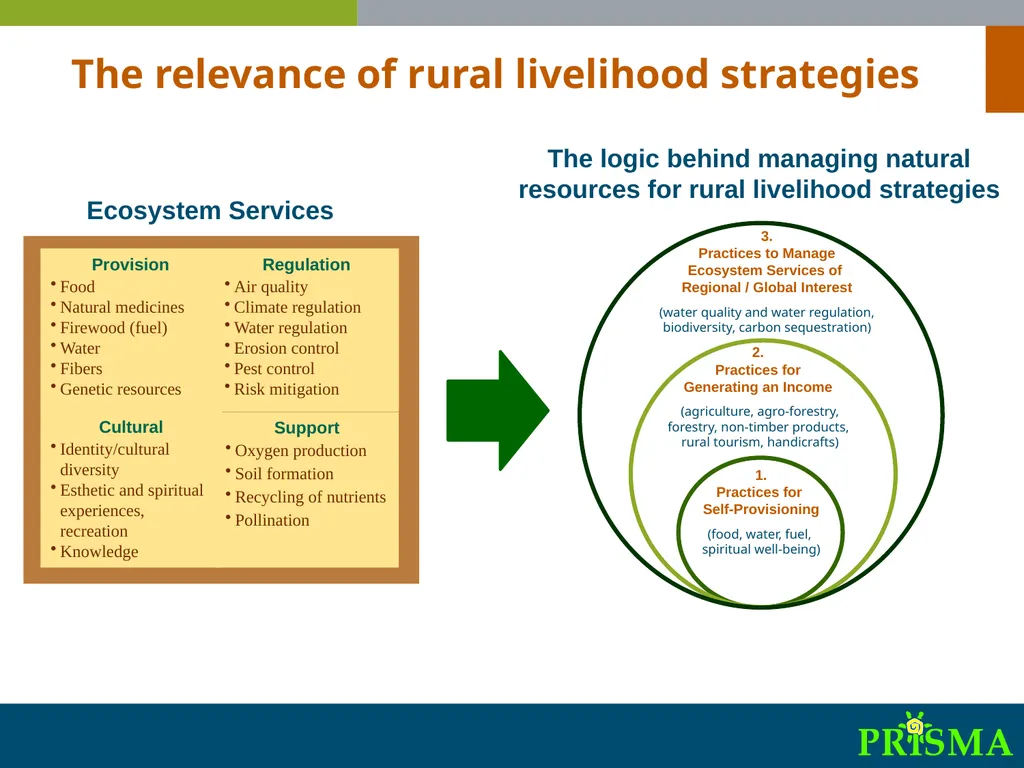
Ecosystem Services The logic behind managing natural resources for rural livelihood strategies The relevance of rural livelihood strategies<br>
22
Understanding complexity Livelihoods strategies tied to NRM less tied more tied Conflicts/pressures over natural resource use less conflict more conflict NC Yq LV SR These cases highlight importance of food security and access to natural resources in addressing rural poverty
Need for policies and programs that are based on strengthening the first two levels
The complexity of rural livelihood strategies provides resiliency against rapid drivers of land use change Relatively free from immediate pressures/conflicts over land use
Absence of policies<br>
Need for policies and programs that are based on strengthening the first two levels
The complexity of rural livelihood strategies provides resiliency against rapid drivers of land use change Relatively free from immediate pressures/conflicts over land use
Absence of policies<br>
23
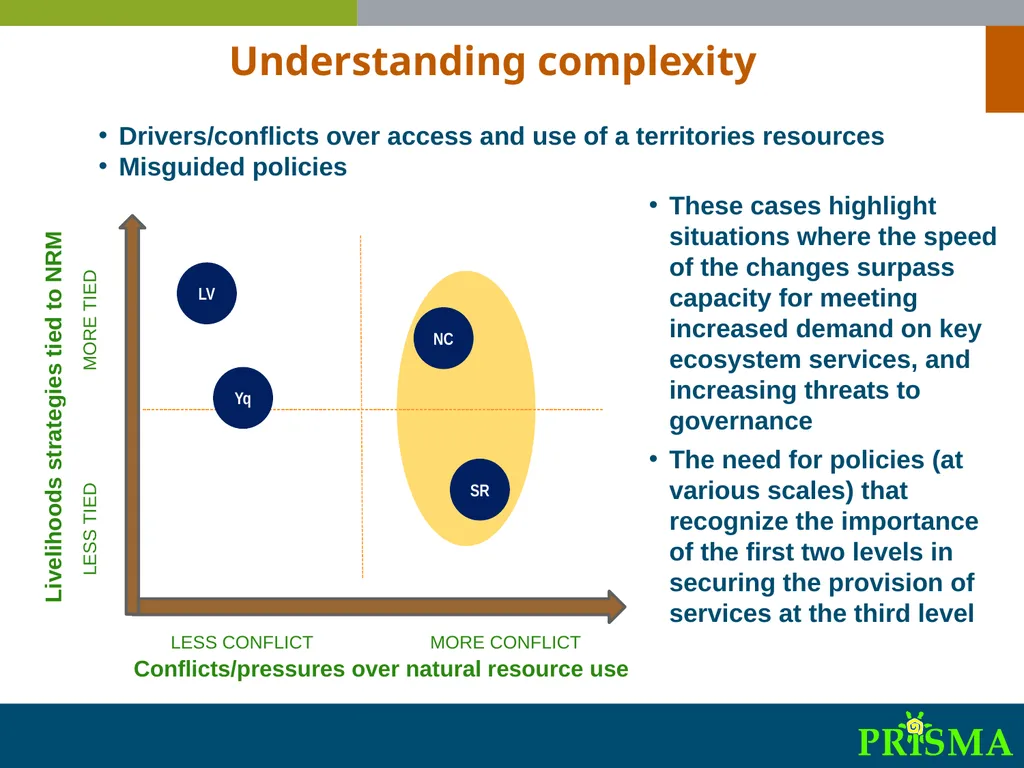
Understanding complexity Livelihoods strategies tied to NRM less tied more tied Conflicts/pressures over natural resource use less conflict more conflict NC Yq LV SR These cases highlight situations where the speed of the changes surpass capacity for meeting increased demand on key ecosystem services, and increasing threats to governance
The need for policies (at various scales) that recognize the importance of the first two levels in securing the provision of services at the third level Drivers/conflicts over access and use of a territories resources
Misguided policies<br>
The need for policies (at various scales) that recognize the importance of the first two levels in securing the provision of services at the third level Drivers/conflicts over access and use of a territories resources
Misguided policies<br>
24
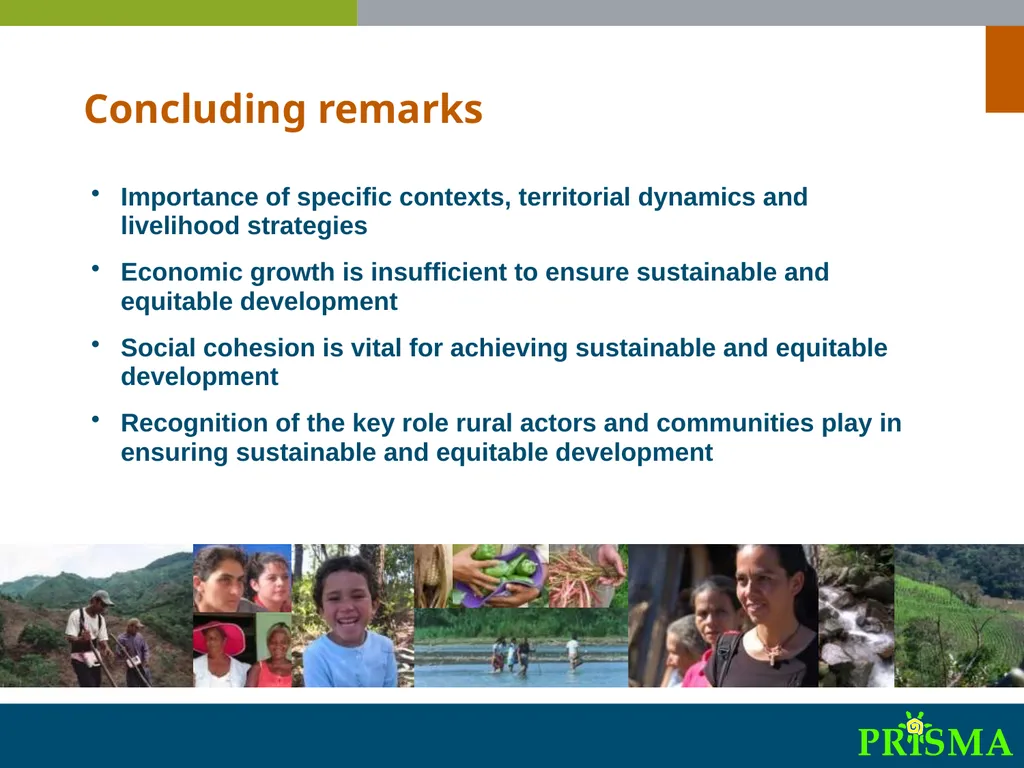
Concluding remarks Importance of specific contexts, territorial dynamics and livelihood strategies
Economic growth is insufficient to ensure sustainable and equitable development
Social cohesion is vital for achieving sustainable and equitable development
Recognition of the key role rural actors and communities play in ensuring sustainable and equitable development<br>
Economic growth is insufficient to ensure sustainable and equitable development
Social cohesion is vital for achieving sustainable and equitable development
Recognition of the key role rural actors and communities play in ensuring sustainable and equitable development<br>
25
Thanks
www.prisma.org.sv<br>
www.prisma.org.sv<br>