
Intervention Mapping Step 2: Program Outcomes and
MY
Published · 45 slides · 0 views
1 / 1
Description
Intervention Mapping Step 2: Program Outcomes and Objectives Logic Model of Change Intervention Mapping Steps Logic model of the problem Program outcomes and objectives (logic model of change) Program design Program production Program
Related Topics
Share
Embed code
Download this presentation From Below
"Intervention Mapping Step 2: Program Outcomes and" is the property of its rightful owner. Permission is granted to download and print the materials on this website for personal, non-commercial use only, and to display it on your personal computer provided you do not modify the materials and that you retain all copyright notices contained in the materials. By downloading content from our website, you accept the terms of this agreement.
Presentation Transcript
01
Intervention Mapping Step 2: Program Outcomes and Objectives – Logic Model of Change<br>
02
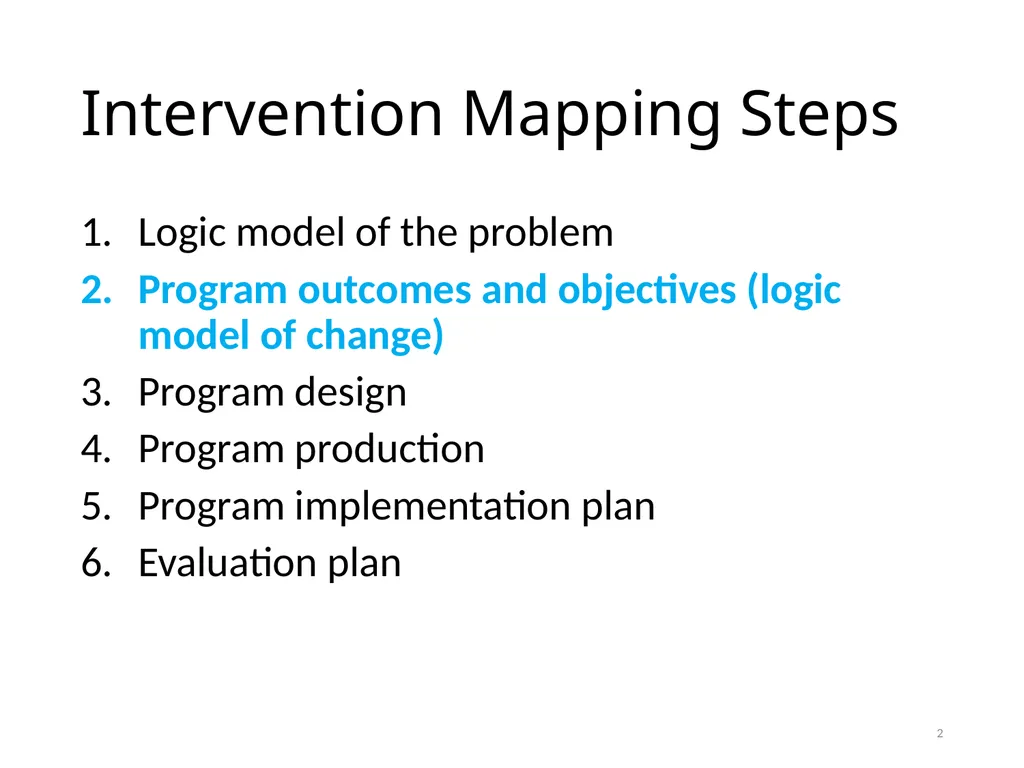
Intervention Mapping Steps Logic model of the problem
Program outcomes and objectives (logic model of change)
Program design
Program production
Program implementation plan
Evaluation plan 2<br>
Program outcomes and objectives (logic model of change)
Program design
Program production
Program implementation plan
Evaluation plan 2<br>
03
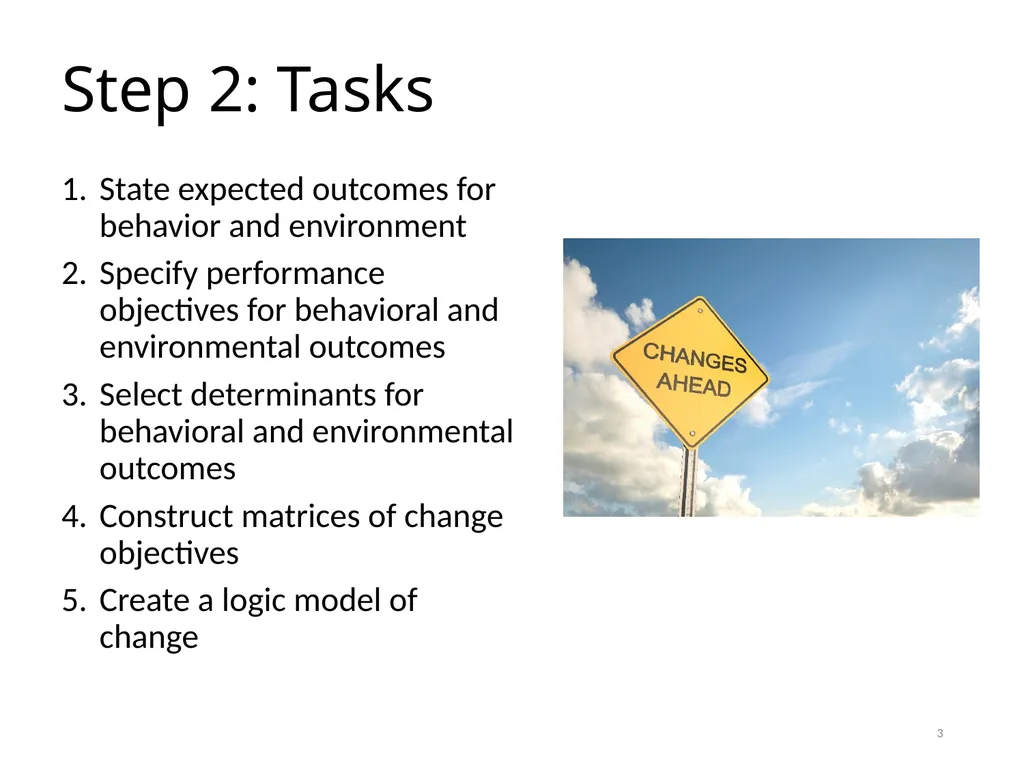
Step 2: Tasks State expected outcomes for behavior and environment
Specify performance objectives for behavioral and environmental outcomes
Select determinants for behavioral and environmental outcomes
Construct matrices of change objectives
Create a logic model of change 3<br>
Specify performance objectives for behavioral and environmental outcomes
Select determinants for behavioral and environmental outcomes
Construct matrices of change objectives
Create a logic model of change 3<br>
04
Task 1: State Expected Outcomes for Behavior and Environment Start with your PRECEDE model (risk model)
ASK - what needs to change in the behavioral and environmental risks factors to have improved heath outcomes? 4<br>
ASK - what needs to change in the behavioral and environmental risks factors to have improved heath outcomes? 4<br>
05
What Needs to Change? INSERT Figure 1.2 HERE<br>
06
What Needs to Change? Do the FLIP! INSERT Figure 1.2 HERE<br>
07
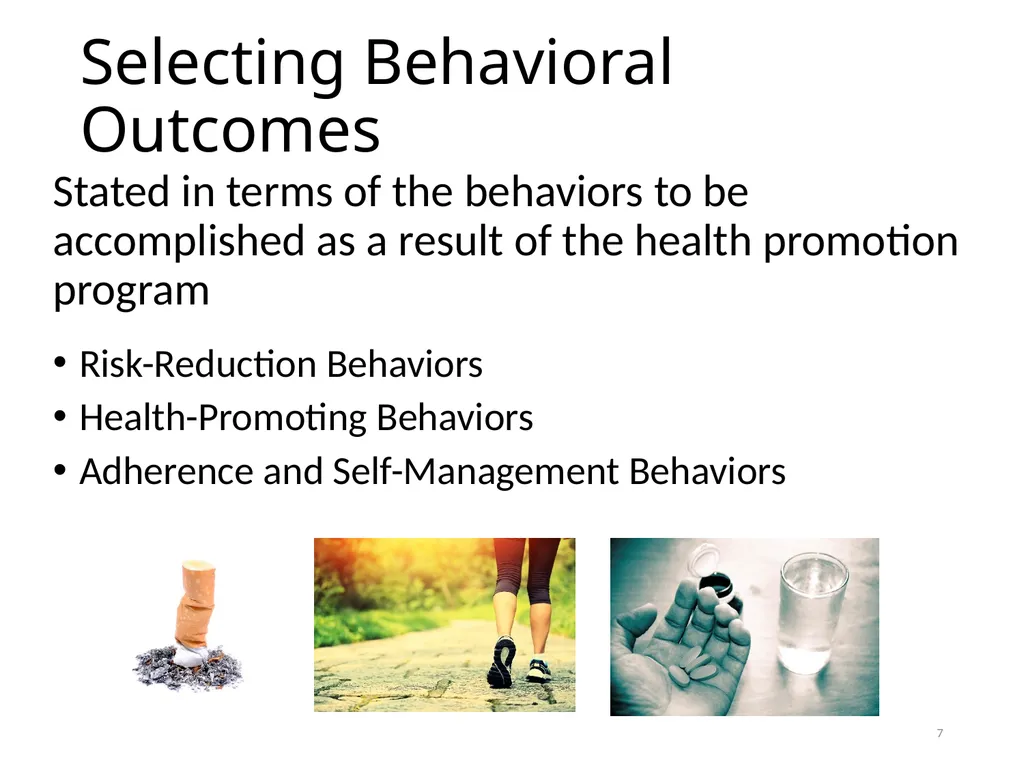
Selecting Behavioral Outcomes Stated in terms of the behaviors to be accomplished as a result of the health promotion program
Risk-Reduction Behaviors
Health-Promoting Behaviors
Adherence and Self-Management Behaviors 7<br>
Risk-Reduction Behaviors
Health-Promoting Behaviors
Adherence and Self-Management Behaviors 7<br>
08
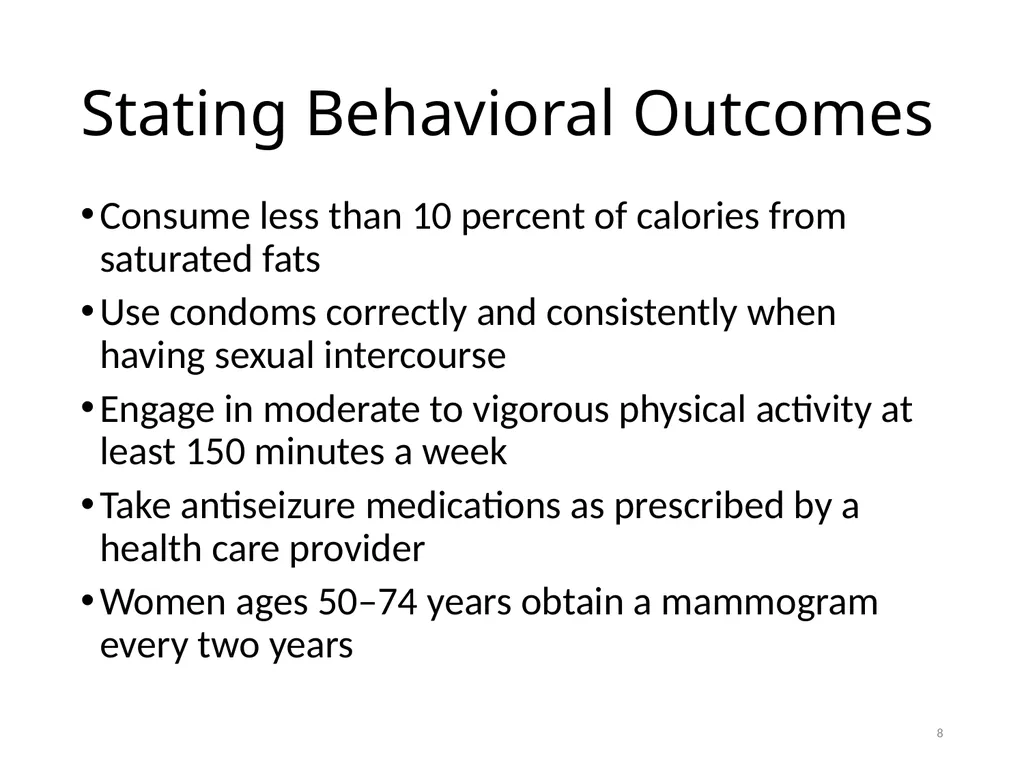
Stating Behavioral Outcomes Consume less than 10 percent of calories from saturated fats
Use condoms correctly and consistently when having sexual intercourse
Engage in moderate to vigorous physical activity at least 150 minutes a week
Take antiseizure medications as prescribed by a health care provider
Women ages 50–74 years obtain a mammogram every two years 8<br>
Use condoms correctly and consistently when having sexual intercourse
Engage in moderate to vigorous physical activity at least 150 minutes a week
Take antiseizure medications as prescribed by a health care provider
Women ages 50–74 years obtain a mammogram every two years 8<br>
09
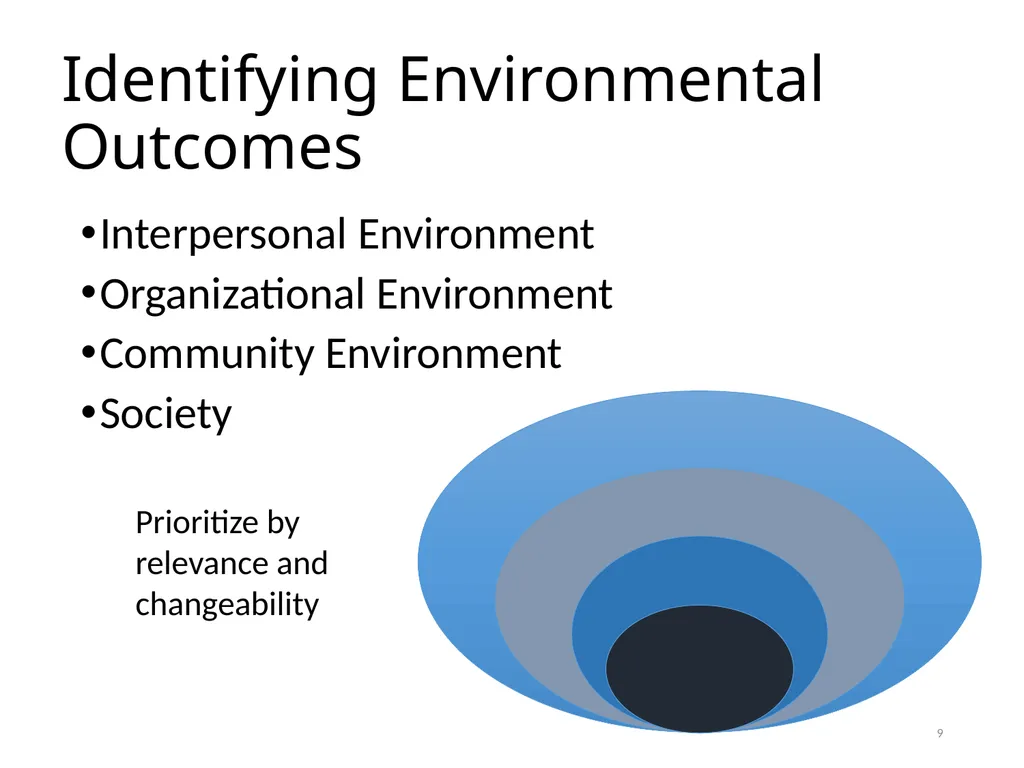
Identifying Environmental Outcomes 9 Interpersonal Environment
Organizational Environment
Community Environment
Society Prioritize by relevance and changeability<br>
Organizational Environment
Community Environment
Society Prioritize by relevance and changeability<br>
10
Environmental Factors Related to Health Outcomes 10 Social or physical conditions
Act as a direct cause of the health problem
Or, cause the health problem indirectly through behavior<br>
Act as a direct cause of the health problem
Or, cause the health problem indirectly through behavior<br>
11
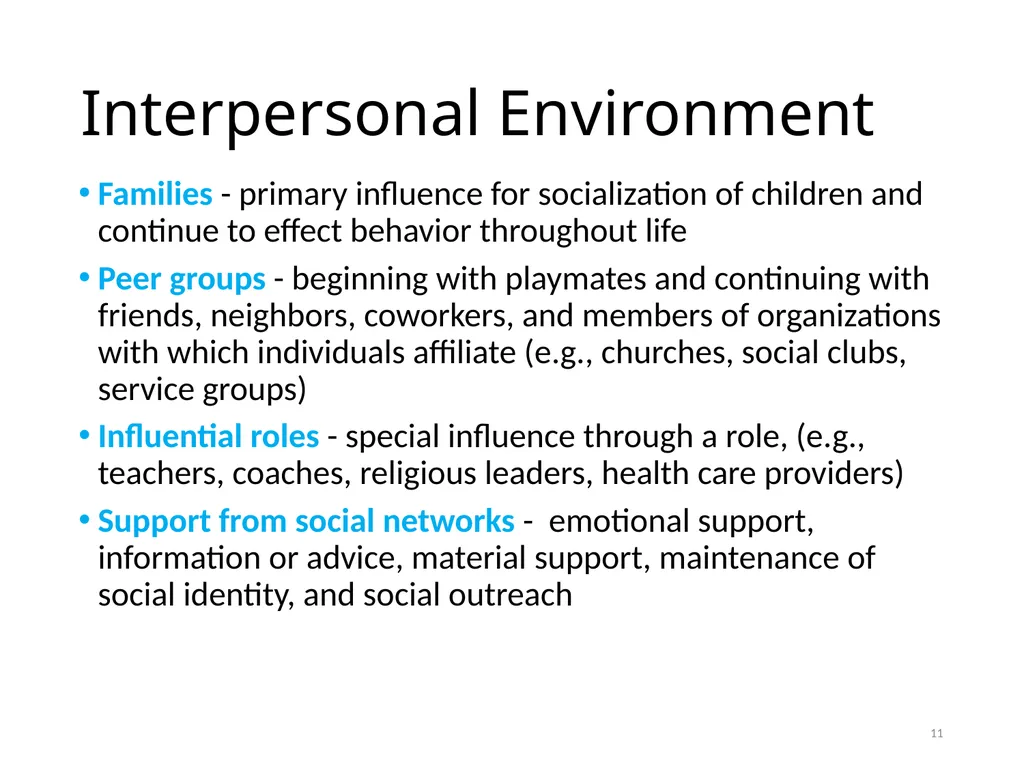
Interpersonal Environment 11 Families - primary influence for socialization of children and continue to effect behavior throughout life
Peer groups - beginning with playmates and continuing with friends, neighbors, coworkers, and members of organizations with which individuals affiliate (e.g., churches, social clubs, service groups)
Influential roles - special influence through a role, (e.g., teachers, coaches, religious leaders, health care providers)
Support from social networks - emotional support, information or advice, material support, maintenance of social identity, and social outreach<br>
Peer groups - beginning with playmates and continuing with friends, neighbors, coworkers, and members of organizations with which individuals affiliate (e.g., churches, social clubs, service groups)
Influential roles - special influence through a role, (e.g., teachers, coaches, religious leaders, health care providers)
Support from social networks - emotional support, information or advice, material support, maintenance of social identity, and social outreach<br>
12
Organizational Environment Norms
Policies
Practices
Facilities
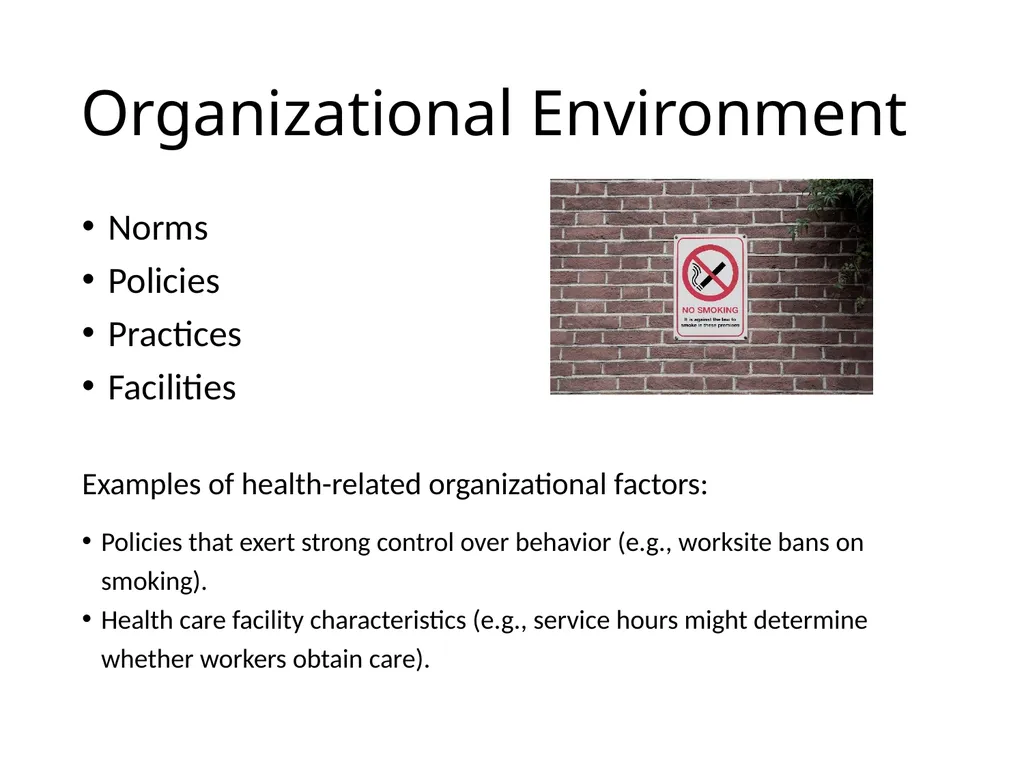
Examples of health-related organizational factors:
Policies that exert strong control over behavior (e.g., worksite bans on smoking).
Health care facility characteristics (e.g., service hours might determine whether workers obtain care).<br>
Policies
Practices
Facilities
Examples of health-related organizational factors:
Policies that exert strong control over behavior (e.g., worksite bans on smoking).
Health care facility characteristics (e.g., service hours might determine whether workers obtain care).<br>
13
Community Level Environment 13 Access to health care
Availability of recreational resources
Smoking and other health ordinances
Treatment resources for social problems such as child abuse, violence, and drug addiction
Social capital (capacity of the community to form and maintain health-promoting coalitions)<br>
Availability of recreational resources
Smoking and other health ordinances
Treatment resources for social problems such as child abuse, violence, and drug addiction
Social capital (capacity of the community to form and maintain health-promoting coalitions)<br>
14
Societal Level Environment 14 Legislation
Enforcement
Regulation
Resource allocation
Policies, programs, and facilities of large political and geographic groups<br>
Enforcement
Regulation
Resource allocation
Policies, programs, and facilities of large political and geographic groups<br>
15
Stating Environmental Outcomes Stated in terms of the environmental outcome to be accomplished as a result of the health promotion program
Parents/caregivers support preschoolers to be more physically active
Food service directors modify purchase order specifications to reduce the fat content of vendor-prepared foods and to increase fresh fruits and vegetables
Off-premise alcohol outlets comply with underage drinking laws
State legislators prohibit smoking in all enclosed public places in the state 15<br>
Parents/caregivers support preschoolers to be more physically active
Food service directors modify purchase order specifications to reduce the fat content of vendor-prepared foods and to increase fresh fruits and vegetables
Off-premise alcohol outlets comply with underage drinking laws
State legislators prohibit smoking in all enclosed public places in the state 15<br>
16
Task 2: Specify Performance Objectives for Behavioral and Environmental Outcomes Performance Objectives for Behavior
What do the participants in this program need to do to perform the behavior stated in the behavioral outcomes?
Sub-steps of behavioral outcomes 16<br>
What do the participants in this program need to do to perform the behavior stated in the behavioral outcomes?
Sub-steps of behavioral outcomes 16<br>
17
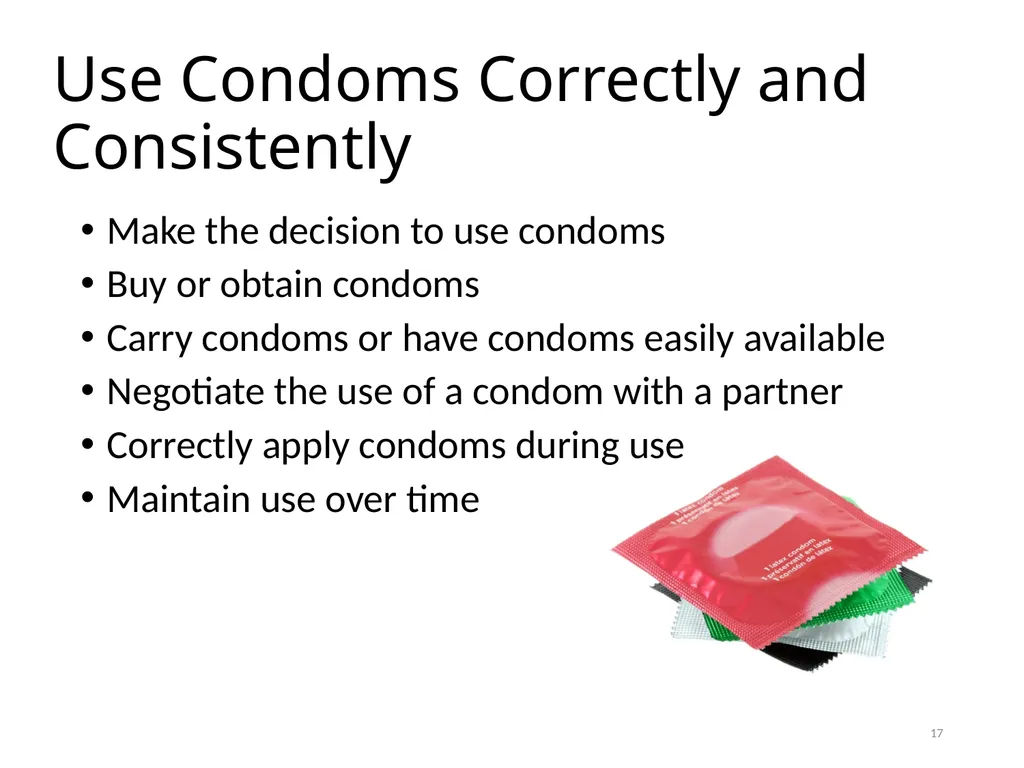
Use Condoms Correctly and Consistently 17 Make the decision to use condoms
Buy or obtain condoms
Carry condoms or have condoms easily available
Negotiate the use of a condom with a partner
Correctly apply condoms during use
Maintain use over time<br>
Buy or obtain condoms
Carry condoms or have condoms easily available
Negotiate the use of a condom with a partner
Correctly apply condoms during use
Maintain use over time<br>
18
Take Antiretroval Treatment (ART) as Prescribed 18 Follow and integrate the treatment plan properly in the daily routine
Handle situations in which ART is difficult to take
Cope with side effects
Interact and deal with health professionals
Maintain relationships with resources person and immediate social circle<br>
Handle situations in which ART is difficult to take
Cope with side effects
Interact and deal with health professionals
Maintain relationships with resources person and immediate social circle<br>
19
Performance Objectives for Environmental Outcomes 19 What does someone in the environment need to do to accomplish the environmental outcome?
Performance objectives for environmental outcomes must include “Who” will perform the action<br>
Performance objectives for environmental outcomes must include “Who” will perform the action<br>
20
Specifying Performance Objectives for Environmental Outcomes Food service directors will modify menus so that all meals contain three choices of fruits and vegetables with no added sugar
Food service directors will modify purchase order specifications to reduce the fat content of vendor-prepared foods and to increase fresh fruits and vegetables
Nutritionists will modify recipes to find appetizing/attractive presentations of fruits and vegetables
Nutritionists will replace most desserts with fruits and grains
Cooks will modify cooking practices to follow new recipes 20<br>
Food service directors will modify purchase order specifications to reduce the fat content of vendor-prepared foods and to increase fresh fruits and vegetables
Nutritionists will modify recipes to find appetizing/attractive presentations of fruits and vegetables
Nutritionists will replace most desserts with fruits and grains
Cooks will modify cooking practices to follow new recipes 20<br>
21
Validating Performance Objectives 21 Self-report by individuals performing behavior or changing environment
Observation of behavior or environment change
Expert consensus
Performance objectives predict or correlate with behavior<br>
Observation of behavior or environment change
Expert consensus
Performance objectives predict or correlate with behavior<br>
22
Task 3: Select Determinants for Behavioral and Environmental Outcomes Factors associated with the performance of the health behavior of the priority population
Factors associated with the behavior of environmental agents that have control or influence over environmental outcomes 22<br>
Factors associated with the behavior of environmental agents that have control or influence over environmental outcomes 22<br>
23
Types of Determinants Cognitive factors (knowledge, attitudes, beliefs, values, self-efficacy, and expectations)
Capabilities, such as skills
Affective factors (feelings, anxiety, fears, and emotions) 23<br>
Capabilities, such as skills
Affective factors (feelings, anxiety, fears, and emotions) 23<br>
24
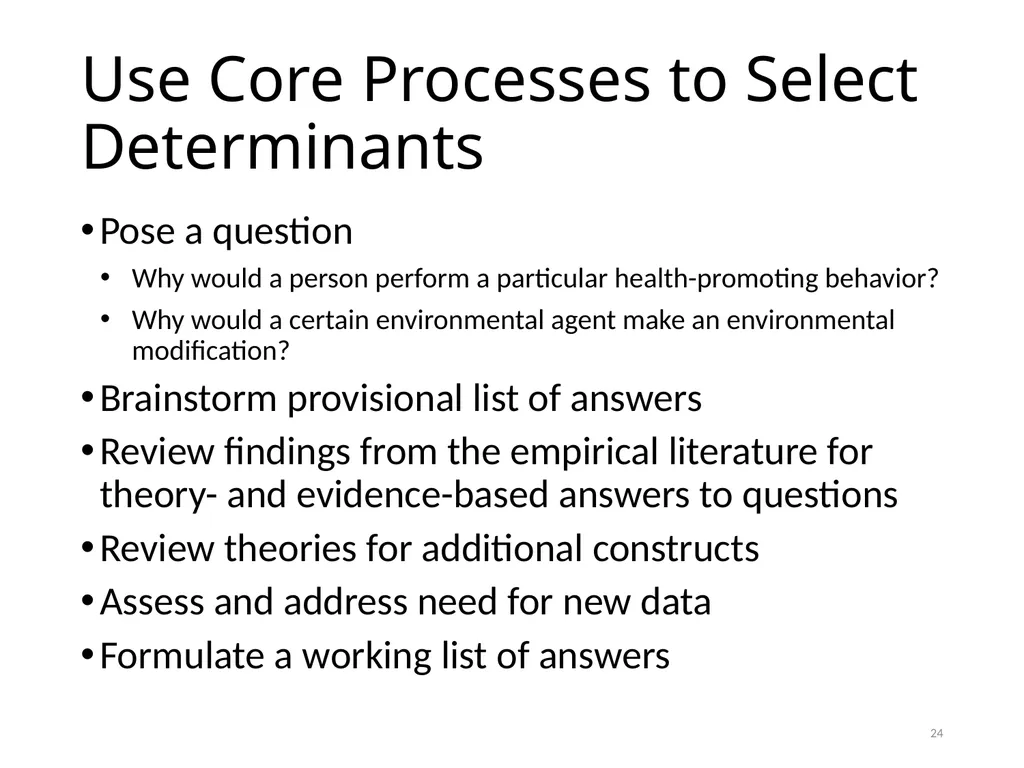
Use Core Processes to Select Determinants Pose a question
Why would a person perform a particular health-promoting behavior?
Why would a certain environmental agent make an environmental modification?
Brainstorm provisional list of answers
Review findings from the empirical literature for theory- and evidence-based answers to questions
Review theories for additional constructs
Assess and address need for new data
Formulate a working list of answers 24<br>
Why would a person perform a particular health-promoting behavior?
Why would a certain environmental agent make an environmental modification?
Brainstorm provisional list of answers
Review findings from the empirical literature for theory- and evidence-based answers to questions
Review theories for additional constructs
Assess and address need for new data
Formulate a working list of answers 24<br>
25
Rate Importance of Determinants Rate each determinant in terms of relevance (strength of association with the behavior) and changeability (how likely it is that health promotion intervention will influence change in the determinant) 25 INSERT Figure 5.6 HERE Figure 5.6<br>
26
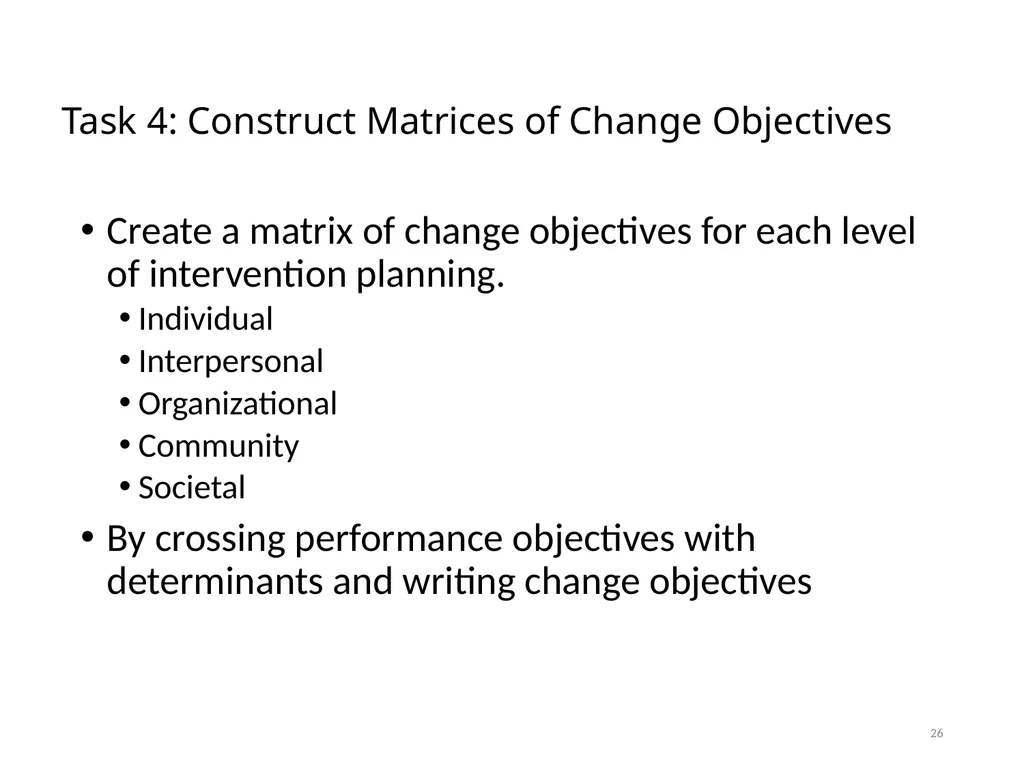
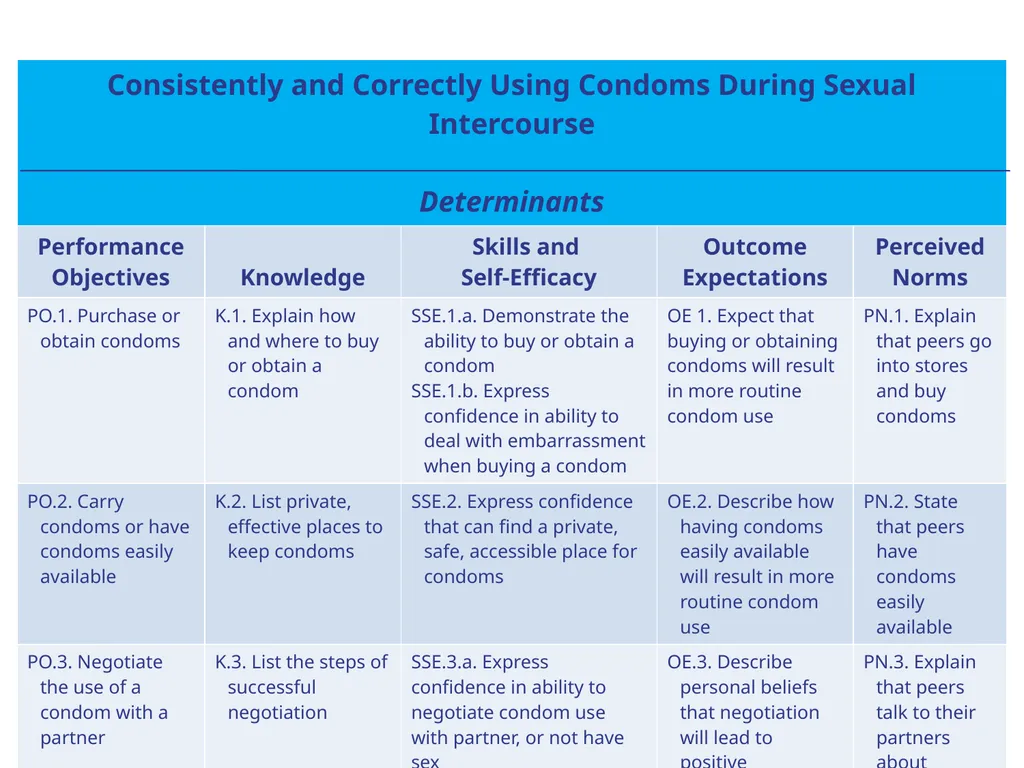
Task 4: Construct Matrices of Change Objectives 26 Create a matrix of change objectives for each level of intervention planning.
Individual
Interpersonal
Organizational
Community
Societal
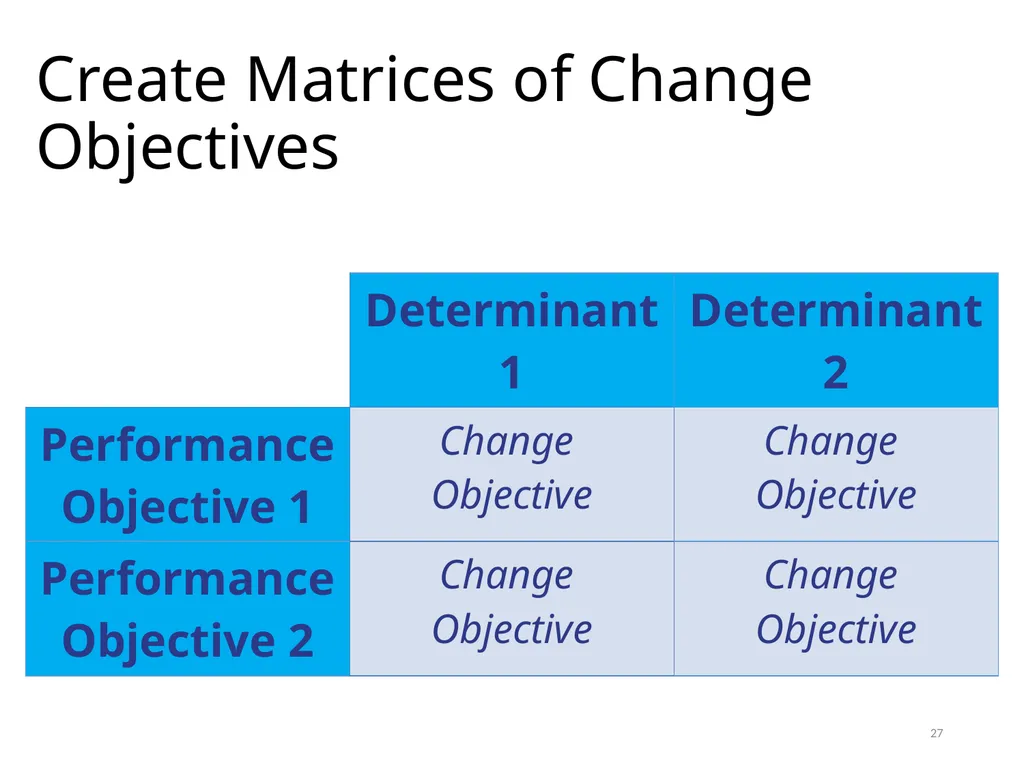
By crossing performance objectives with determinants and writing change objectives<br>
Individual
Interpersonal
Organizational
Community
Societal
By crossing performance objectives with determinants and writing change objectives<br>
27
Create Matrices of Change Objectives 27<br>
28
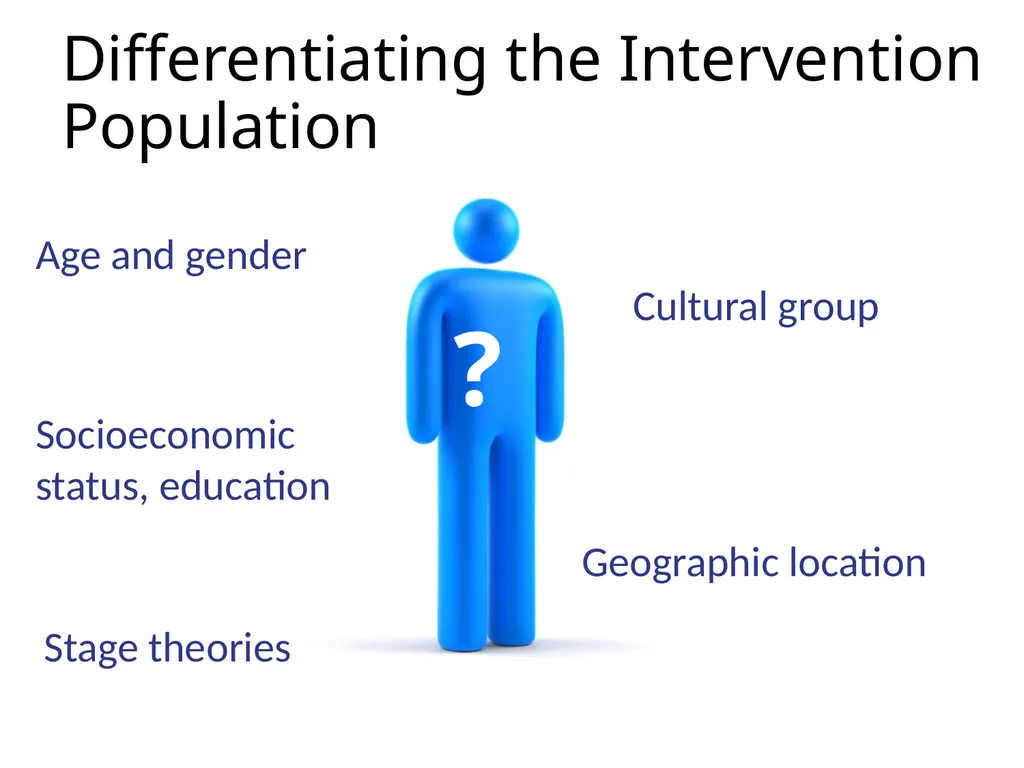
Differentiating the Intervention Population Age and gender Geographic location Socioeconomic status, education Cultural group Stage theories ?<br>
29
Differentiation by Developmental Stage In the Cystic Fibrosis Family Education Program, planners asked: What should the child with cystic fibrosis be able to do to manage the disease?
Because the ages of children in the CF population spanned the range of 4 through 18 years, the planners asked how the performance objectives would be different for the developmental stages represented by:
Preschoolers ages 4 through 6
School-age children ages 7 through 11
Adolescents ages 12 through 18<br>
Because the ages of children in the CF population spanned the range of 4 through 18 years, the planners asked how the performance objectives would be different for the developmental stages represented by:
Preschoolers ages 4 through 6
School-age children ages 7 through 11
Adolescents ages 12 through 18<br>
30
Task 5: Create a Logic Model of Change 31 Figure 5.1 INSERT Figure 5.1 HERE<br>
31
Example It’s Your Game…Keep It Real (IYG)
A sexual health education program for middle school students 32<br>
A sexual health education program for middle school students 32<br>
32
From the need assessment, the planning group identified the primary health-related behavior outcome for the priority population (middle school students) as:
Choose not to have sex
Additional behavioral outcomes:
Have healthy friendships and dating relationships
Use condoms correctly and consistently when having sex
Use an effective method of birth control along with condoms
Obtain regular testing for pregnancy, HIV, and STIs if sexually active 33 Task 1: State Expected Outcomes for Behavior and Environment<br>
Choose not to have sex
Additional behavioral outcomes:
Have healthy friendships and dating relationships
Use condoms correctly and consistently when having sex
Use an effective method of birth control along with condoms
Obtain regular testing for pregnancy, HIV, and STIs if sexually active 33 Task 1: State Expected Outcomes for Behavior and Environment<br>
33
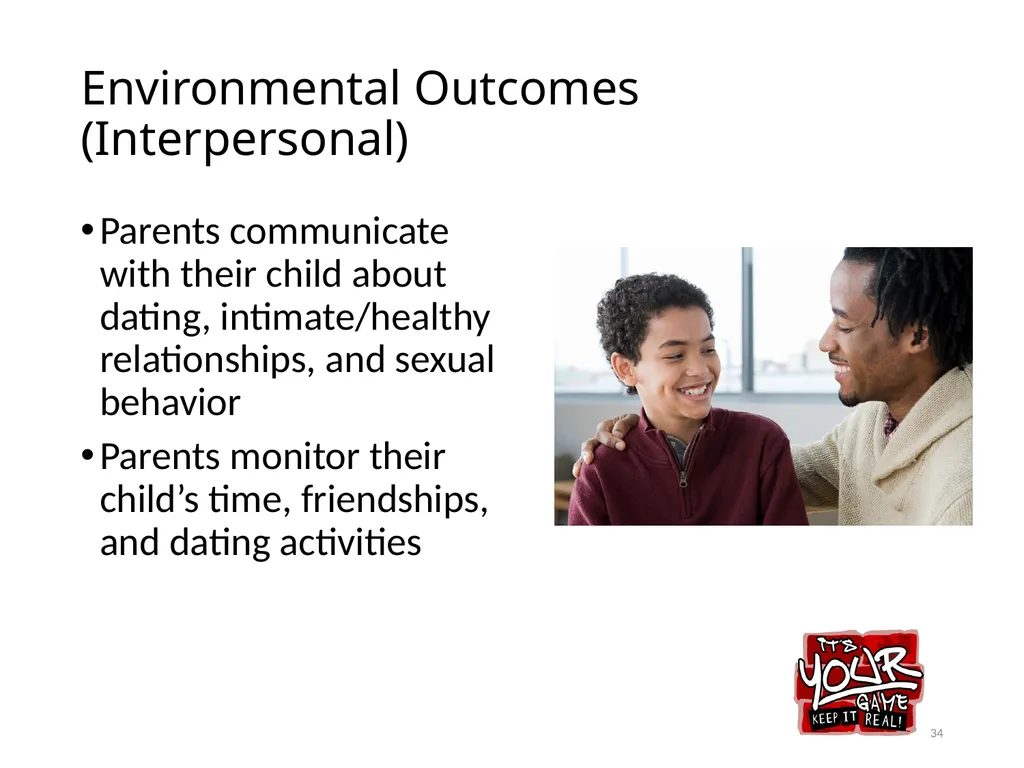
Environmental Outcomes (Interpersonal) Parents communicate with their child about dating, intimate/healthy relationships, and sexual behavior
Parents monitor their child’s time, friendships, and dating activities 34<br>
Parents monitor their child’s time, friendships, and dating activities 34<br>
34
35 Clarify the exact performance expected from someone affected by the program
Observable subset of performance
What do the participants of this program need to do to perform the behavior? Task 2: Specify Performance Objectives for Behavioral and Environmental Outcomes<br>
Observable subset of performance
What do the participants of this program need to do to perform the behavior? Task 2: Specify Performance Objectives for Behavioral and Environmental Outcomes<br>
35
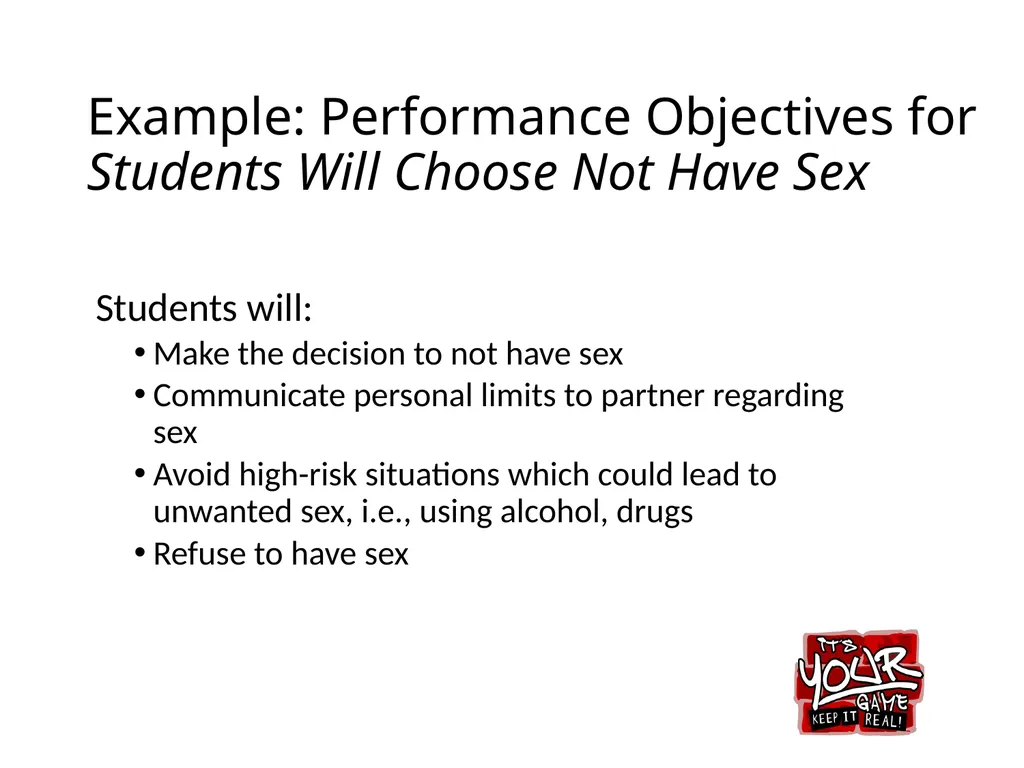
Example: Performance Objectives for
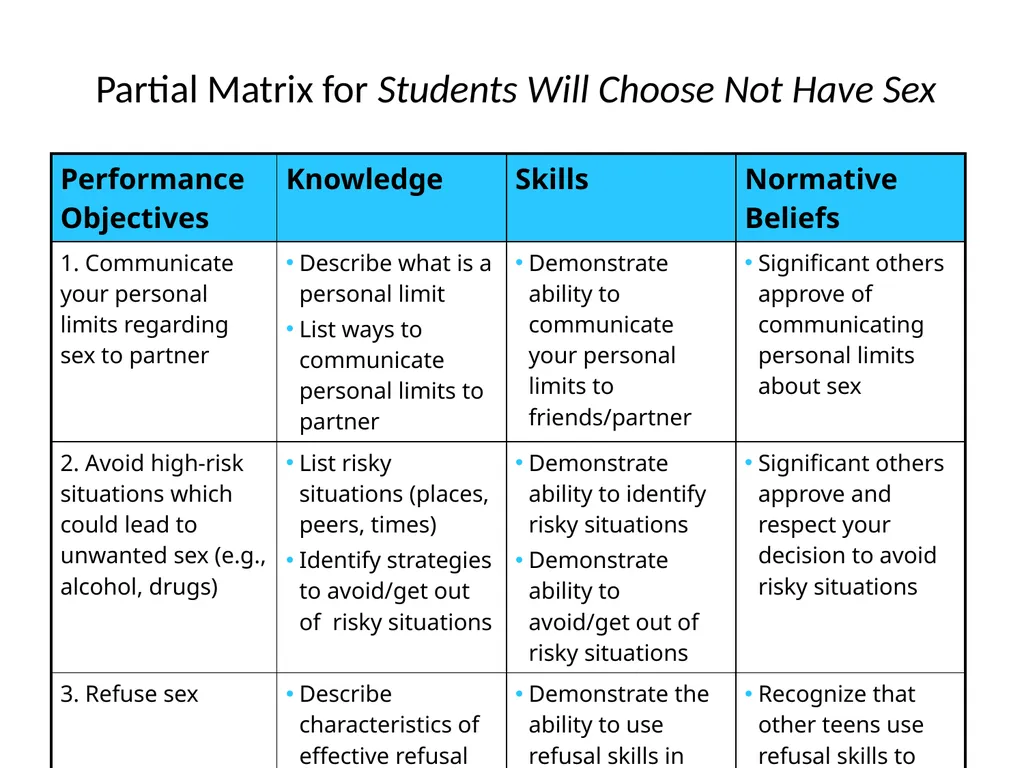
Students Will Choose Not Have Sex Students will:
Make the decision to not have sex
Communicate personal limits to partner regarding sex
Avoid high-risk situations which could lead to unwanted sex, i.e., using alcohol, drugs
Refuse to have sex<br>
Make the decision to not have sex
Communicate personal limits to partner regarding sex
Avoid high-risk situations which could lead to unwanted sex, i.e., using alcohol, drugs
Refuse to have sex<br>
36
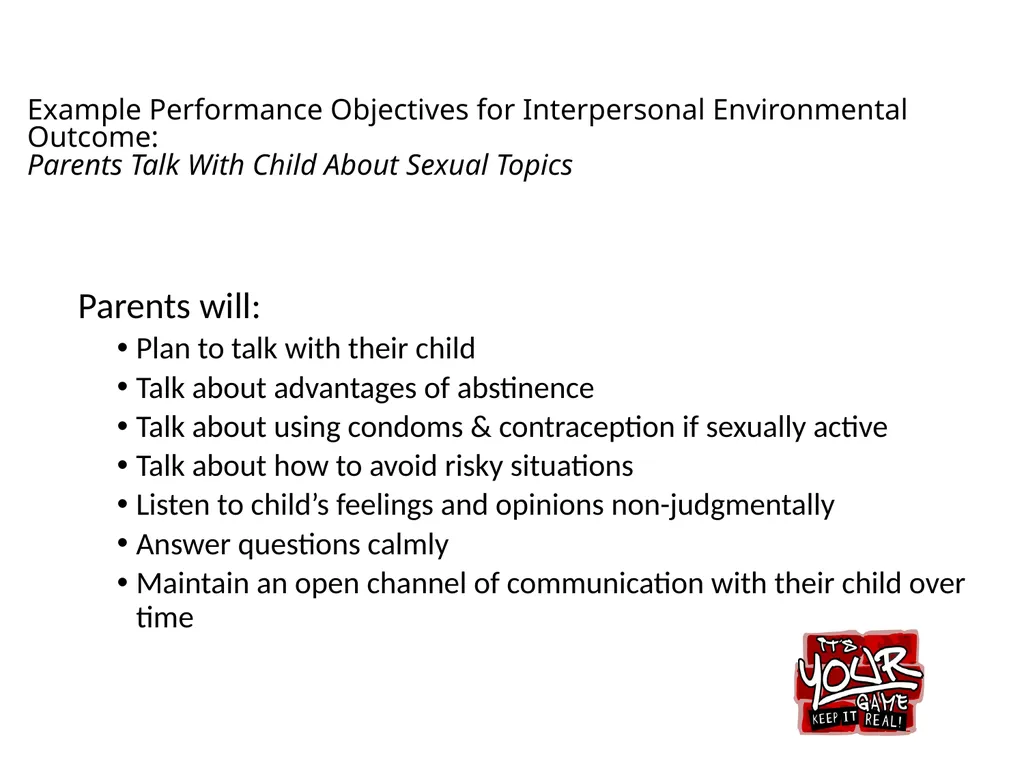
Example Performance Objectives for Interpersonal Environmental Outcome:
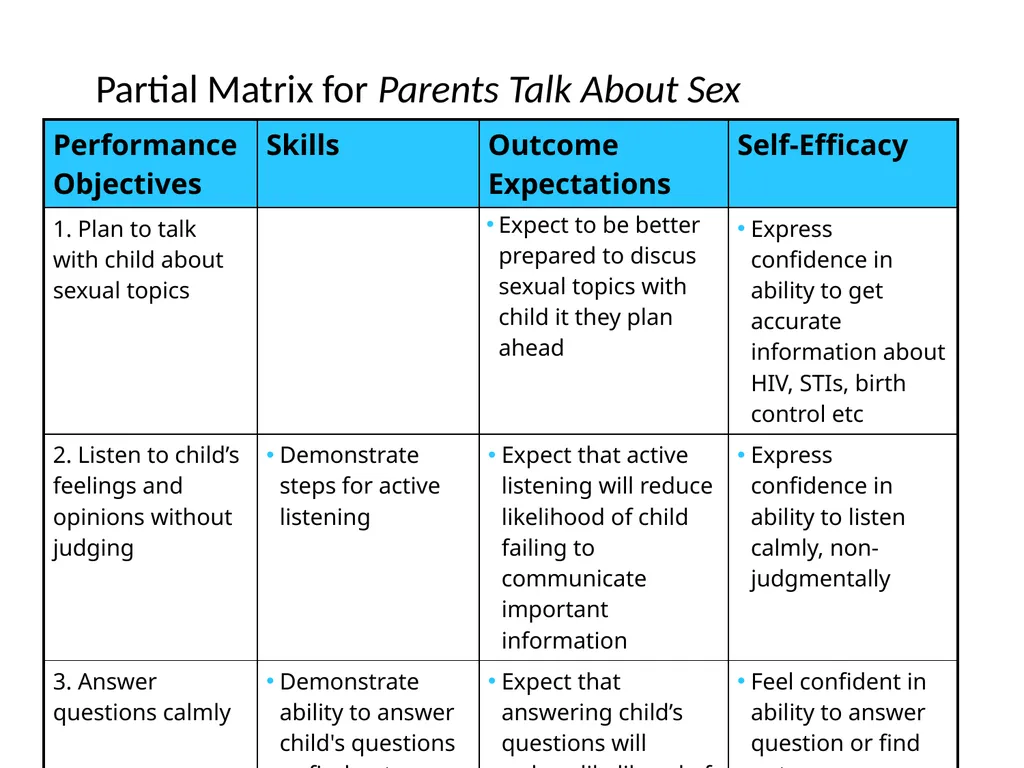
Parents Talk With Child About Sexual Topics Parents will:
Plan to talk with their child
Talk about advantages of abstinence
Talk about using condoms & contraception if sexually active
Talk about how to avoid risky situations
Listen to child’s feelings and opinions non-judgmentally
Answer questions calmly
Maintain an open channel of communication with their child over time<br>
Plan to talk with their child
Talk about advantages of abstinence
Talk about using condoms & contraception if sexually active
Talk about how to avoid risky situations
Listen to child’s feelings and opinions non-judgmentally
Answer questions calmly
Maintain an open channel of communication with their child over time<br>
37
The planning group used data from the needs assessment, focus groups, and literature review to identify relevant and changeable determinant for student and parent outcomes 38 Task 3: Select Determinants for Behavioral and Environmental Outcomes INSERT Figure 5.13 HERE Figure 5.13<br>
38
39 Task 3: Select Determinants for Behavioral and Environmental Outcomes INSERT Figure 5.14 HERE Figure 5.14<br>
39
40 Task 4: Construct Matrices of Change Objectives The planning group created:
Five separate matrices of change objectives for the priority group (middle school students)
Two matrices of change objectives for parents at the interpersonal environmental level<br>
Five separate matrices of change objectives for the priority group (middle school students)
Two matrices of change objectives for parents at the interpersonal environmental level<br>
40
Partial Matrix for Students Will Choose Not Have Sex<br>
41
Partial Matrix for Parents Talk About Sex<br>
42
Task 5: Create a Logic Model of Change 43 Figure 5.2 INSERT Figure 5.2 HERE<br>
43
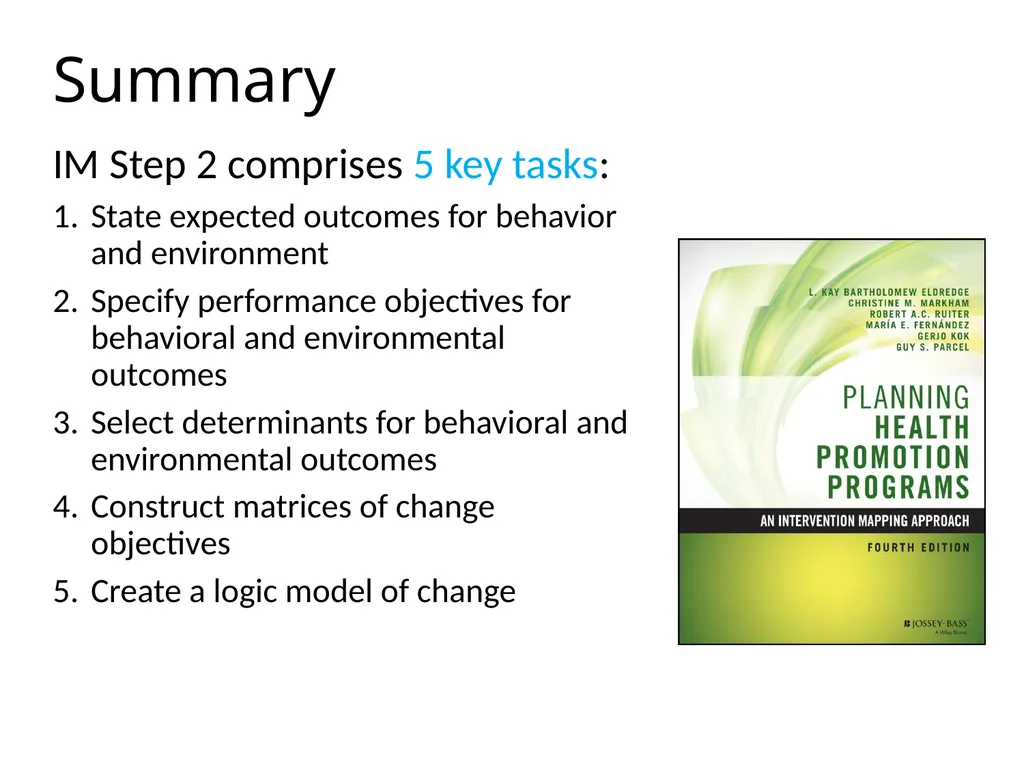
Summary IM Step 2 comprises 5 key tasks:
State expected outcomes for behavior and environment
Specify performance objectives for behavioral and environmental outcomes
Select determinants for behavioral and environmental outcomes
Construct matrices of change objectives
Create a logic model of change<br>
State expected outcomes for behavior and environment
Specify performance objectives for behavioral and environmental outcomes
Select determinants for behavioral and environmental outcomes
Construct matrices of change objectives
Create a logic model of change<br>
44
Questions?<br>