
Karyotype “Karyotype” Definition: A karyotype is
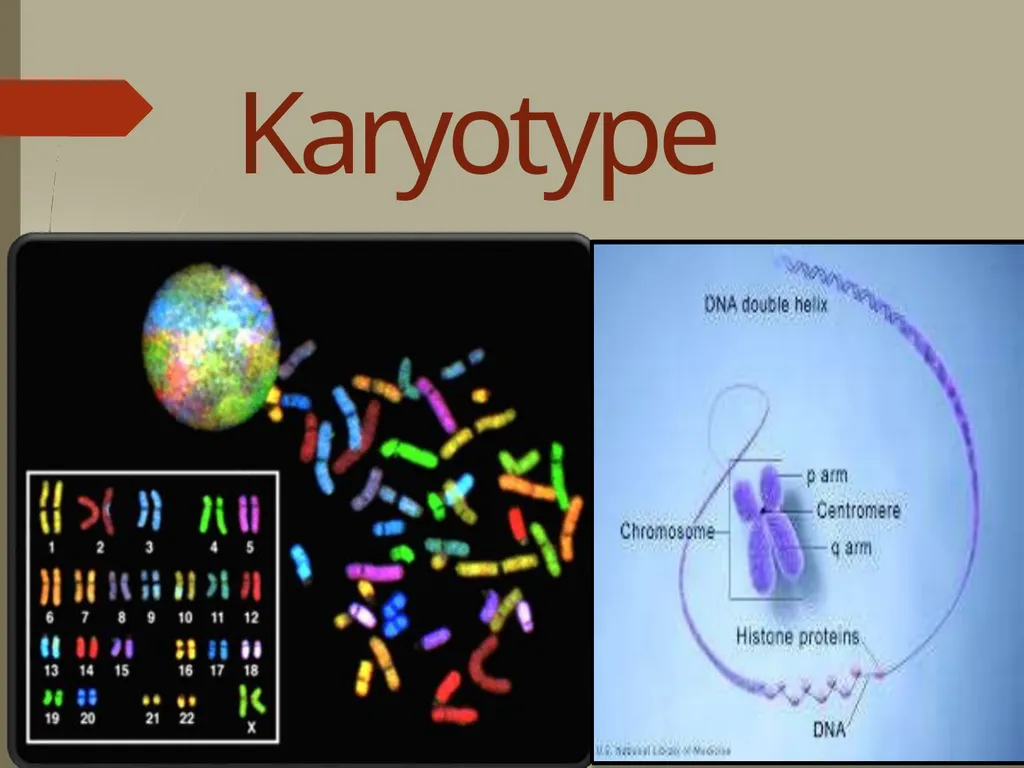
Description: Karyotype Karyotype Definition: A karyotype is the number and appearance of chromosome in the nucleus of a eukaryotic cell The term is also used for the complete set of chromosomes in a species or in an individual organism and for a test
Related Topics
Download Presentation
"Karyotype “Karyotype” Definition: A karyotype is" is the property of its rightful owner. Permission is granted to download and print the materials on this website for personal, non-commercial use only, and to display it on your personal computer provided you do not modify the materials and that you retain all copyright notices contained in the materials. By downloading content from our website, you accept the terms of this agreement.
Presentation Transcript
slide1. Karyotype<br>
slide2. “Karyotype” Definition:
A karyotype is the number and appearance of chromosome in the nucleus of a eukaryotic cell The term is also used for the complete set of chromosomes in a species or in an individual organism and for a test that detects this complement or measures the number<br>
slide3. Karyology & Idiogram Definitions :
The study of whole sets of chromosomes is sometimes known as karyology.
The chromosomes are depicted in a standard format known as a
karyogram or idiogram<br>
slide4. Chromosome DNA packaging into thread-like structure Is called “chromosomes”.
Each chromosome is made up of DNA tightly coiled many times around proteins that support its structure.
Only visible during cell division.
It has specific number in each species e.g.
Humans have 46 chromosomes while dog has 78 & fruit fly has 8 chromosomes.<br>
slide6. Division of chromosome according to centromere location Metacentric
A chromosome that has a centrally placed centromere.. having centromere in the center such that both sections are of equal length.
Sub metacentric
A chromosome whose centromere is placed closer to one end than the other having centromere slightly offset from the center leading to asymmetry.
Acrocentric
A chromosome whose centromere is placed very close to, but not at, one end having centromere severely offset from center leading one very long and one very short section
Telocentric :- having centromere at very end of chromosome.
Humans don’t have this type of chromosomes but found in other species like mice.<br>
slide8. Group A (1-3) – large metacentric chromosomes (but chr. 2 – submetacentric)
Group B (4-5) – large submetacentric
Group C (6-12, X) – medium-sized submetacentric
Group D (13-15) – medium-sized acrocentric
Group E (16-18) – short submetacentric
Group F (19-20) – short metacentric
Group G (21-22, Y) – short acrocentric (but chr. Y – submetacentric)<br>
slide9. Advantages of karyotype Detection of chromosomal abnormalities
Genetic disorders
Gender identification
Identify loss and addition of chromosome
Pre-birth diagnosis of genetic diseases
Identification of chromosomal numbers in different organism
Identification of proper position of genes in chromosomes<br>
slide2. “Karyotype” Definition:
A karyotype is the number and appearance of chromosome in the nucleus of a eukaryotic cell The term is also used for the complete set of chromosomes in a species or in an individual organism and for a test that detects this complement or measures the number<br>
slide3. Karyology & Idiogram Definitions :
The study of whole sets of chromosomes is sometimes known as karyology.
The chromosomes are depicted in a standard format known as a
karyogram or idiogram<br>
slide4. Chromosome DNA packaging into thread-like structure Is called “chromosomes”.
Each chromosome is made up of DNA tightly coiled many times around proteins that support its structure.
Only visible during cell division.
It has specific number in each species e.g.
Humans have 46 chromosomes while dog has 78 & fruit fly has 8 chromosomes.<br>
slide6. Division of chromosome according to centromere location Metacentric
A chromosome that has a centrally placed centromere.. having centromere in the center such that both sections are of equal length.
Sub metacentric
A chromosome whose centromere is placed closer to one end than the other having centromere slightly offset from the center leading to asymmetry.
Acrocentric
A chromosome whose centromere is placed very close to, but not at, one end having centromere severely offset from center leading one very long and one very short section
Telocentric :- having centromere at very end of chromosome.
Humans don’t have this type of chromosomes but found in other species like mice.<br>
slide8. Group A (1-3) – large metacentric chromosomes (but chr. 2 – submetacentric)
Group B (4-5) – large submetacentric
Group C (6-12, X) – medium-sized submetacentric
Group D (13-15) – medium-sized acrocentric
Group E (16-18) – short submetacentric
Group F (19-20) – short metacentric
Group G (21-22, Y) – short acrocentric (but chr. Y – submetacentric)<br>
slide9. Advantages of karyotype Detection of chromosomal abnormalities
Genetic disorders
Gender identification
Identify loss and addition of chromosome
Pre-birth diagnosis of genetic diseases
Identification of chromosomal numbers in different organism
Identification of proper position of genes in chromosomes<br>