Keep Food Safe: Control Food Temperature CACFP
Description: Keep Food Safe: Control Food Temperature CACFP iTrain Simple Lesson Plan Introduction Trainer and Participants Introductions Welcome! Temperature Danger Zone Within how many hours should food sitting at room temperature be cooled to
Related Topics
Download Presentation
"Keep Food Safe: Control Food Temperature CACFP" is the property of its rightful owner. Permission is granted to download and print the materials on this website for personal, non-commercial use only, and to display it on your personal computer provided you do not modify the materials and that you retain all copyright notices contained in the materials. By downloading content from our website, you accept the terms of this agreement.
Presentation Transcript
slide1. Keep Food Safe: Control Food Temperature CACFP iTrain
Simple Lesson Plan<br>
slide2. Introduction Trainer and Participants’
Introductions<br>
slide3. Welcome!<br>
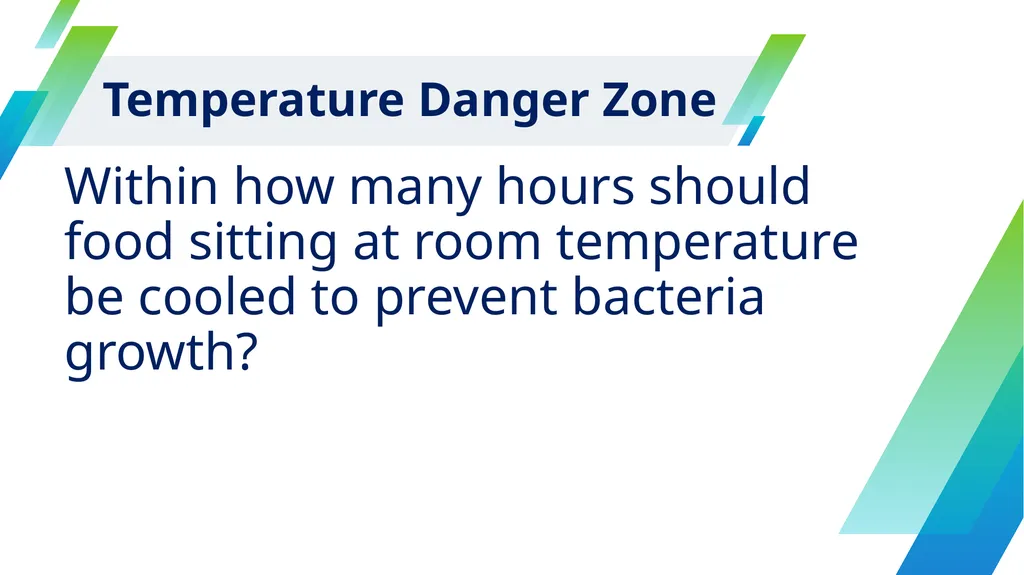
slide4. Temperature Danger Zone Within how many hours should food sitting at room temperature be cooled to prevent bacteria growth?<br>
slide5. Overview<br>
slide6. Define the temperature danger zone. Lesson Objective<br>
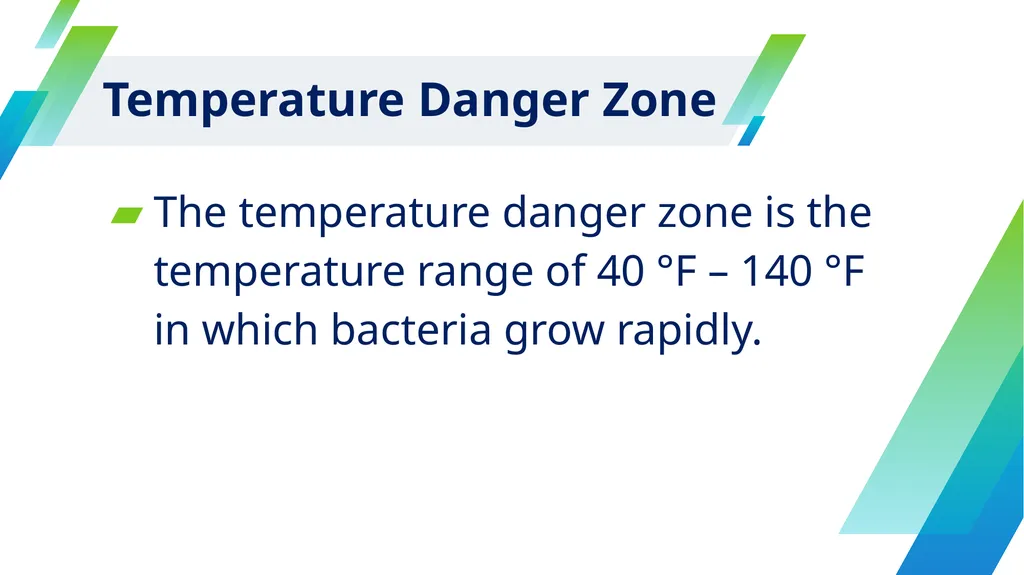
slide7. The temperature danger zone is the temperature range of 40 °F – 140 °F in which bacteria grow rapidly. Temperature Danger Zone<br>
slide8. Buying
Delivering
Storing
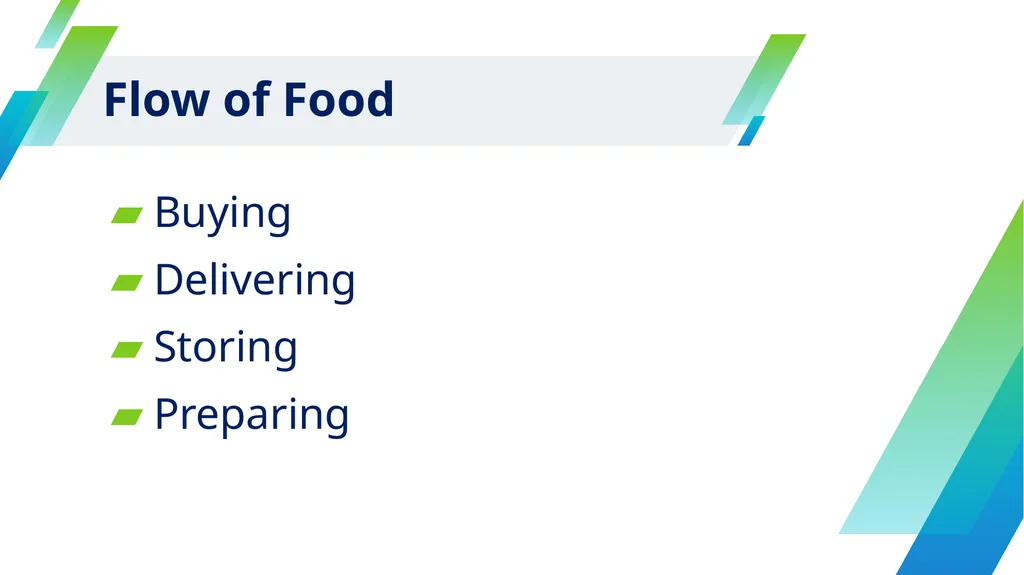
Preparing Flow of Food<br>
slide9. Take coolers and ice packs
Clean and organize refrigerators before receiving groceries
Check refrigerator temperature (38 °F) when putting food away – freezers should be 0 °F Buying Groceries<br>
slide10. Only take foods out of the refrigerator as needed when preparing for a meal
Cook food to the appropriate internal temperature
Always check and record the food temperature during and at the end of cooking Cooking<br>
slide11. Keep hot food at 140 °F or above
Keep cold food at 40 °F or less Holding and Serving<br>
slide12. Bacterial growth is the greatest when cooling foods due to the temperature drop
Be sure to cool foods as quickly as possible
Reheat leftover foods to 165 °F within two hours
Food should not be in the danger zone formore than 4 hours Cooling and Reheating<br>
slide13. Activity Temperature Danger Zone: “Keep Foods Out”<br>
slide14. Conclusion<br>
slide15. Lesson Conclusion Keeping foods below 40 °F or above 140 °F slows the growth of bacteria.
Throughout every step of handling food, keep food temperatures out of the temperature danger zone.<br>
slide16. Activity Speed Action Planning<br>
slide17. The University of Mississippi School of Applied Sciences www.theicn.org 800-321-3054 helpdesk@theicn.org facebook.com/ichildnutrition @ichildnutrition pinterest.com/theicn instagram.com/theicn Follow ICN on Social Media! Thank You!<br>
Simple Lesson Plan<br>
slide2. Introduction Trainer and Participants’
Introductions<br>
slide3. Welcome!<br>
slide4. Temperature Danger Zone Within how many hours should food sitting at room temperature be cooled to prevent bacteria growth?<br>
slide5. Overview<br>
slide6. Define the temperature danger zone. Lesson Objective<br>
slide7. The temperature danger zone is the temperature range of 40 °F – 140 °F in which bacteria grow rapidly. Temperature Danger Zone<br>
slide8. Buying
Delivering
Storing
Preparing Flow of Food<br>
slide9. Take coolers and ice packs
Clean and organize refrigerators before receiving groceries
Check refrigerator temperature (38 °F) when putting food away – freezers should be 0 °F Buying Groceries<br>
slide10. Only take foods out of the refrigerator as needed when preparing for a meal
Cook food to the appropriate internal temperature
Always check and record the food temperature during and at the end of cooking Cooking<br>
slide11. Keep hot food at 140 °F or above
Keep cold food at 40 °F or less Holding and Serving<br>
slide12. Bacterial growth is the greatest when cooling foods due to the temperature drop
Be sure to cool foods as quickly as possible
Reheat leftover foods to 165 °F within two hours
Food should not be in the danger zone formore than 4 hours Cooling and Reheating<br>
slide13. Activity Temperature Danger Zone: “Keep Foods Out”<br>
slide14. Conclusion<br>
slide15. Lesson Conclusion Keeping foods below 40 °F or above 140 °F slows the growth of bacteria.
Throughout every step of handling food, keep food temperatures out of the temperature danger zone.<br>
slide16. Activity Speed Action Planning<br>
slide17. The University of Mississippi School of Applied Sciences www.theicn.org 800-321-3054 helpdesk@theicn.org facebook.com/ichildnutrition @ichildnutrition pinterest.com/theicn instagram.com/theicn Follow ICN on Social Media! Thank You!<br>