Linguistics Chapter One What is Linguistics? Linguistics is the scientific study of language Linguistics aims to define how languages are developed in the human mind and describes how human languages are formed and how they work. This
"Linguistics Chapter One What is Linguistics?" is the property of its rightful owner. Permission is granted to
download and print the materials on this website for personal, non-commercial use only, and to display it
on your personal computer provided you do not modify the materials and that you retain all copyright
notices contained in the materials. By downloading content from our website, you accept the terms of this
agreement.
Presentation Transcript
01
Linguistics Chapter One<br>
02
What is Linguistics? Linguistics is the scientific study of language
Linguistics aims to define how languages are developed in the human mind and describes how human languages are formed and how they work. This includes language structure, sociolinguistics, grammar, syntax, semantics and, phonetics.
The term "Linguists" is considered unsatisfactory, because it may refer to someone who speaks a large number of languages.<br>
03
What are the differences between Linguistics and traditional grammar? Linguistics is descriptive not prescriptive. Linguists are interested in what is said, not what they think ought to be said. They describe language in all its aspects, but do not prescribe rules of correctness, and this is the most important point.
Linguists regard the spoken language as primary, not the written because the speech preceded the writing everywhere in the world, and well as most writing systems are derived from the vocal sounds.
Linguistics does not force languages into a Latin-based framework. Linguist reject the idea that any one language can provide enough framework for all the other languages<br>
04
What is the difference between phoneticians and linguists? Phoneticians Phoneticians are concerned with the actual physical sounds; the raw material of which language is made. They study the position of the tongue, teeth and vocal cords during the production of sounds. Linguists While Linguists are more interested with the way in which language is patterned. They analyze the shape or from of these patterns rather than the physical substance out of which the units of language are made.<br>
05
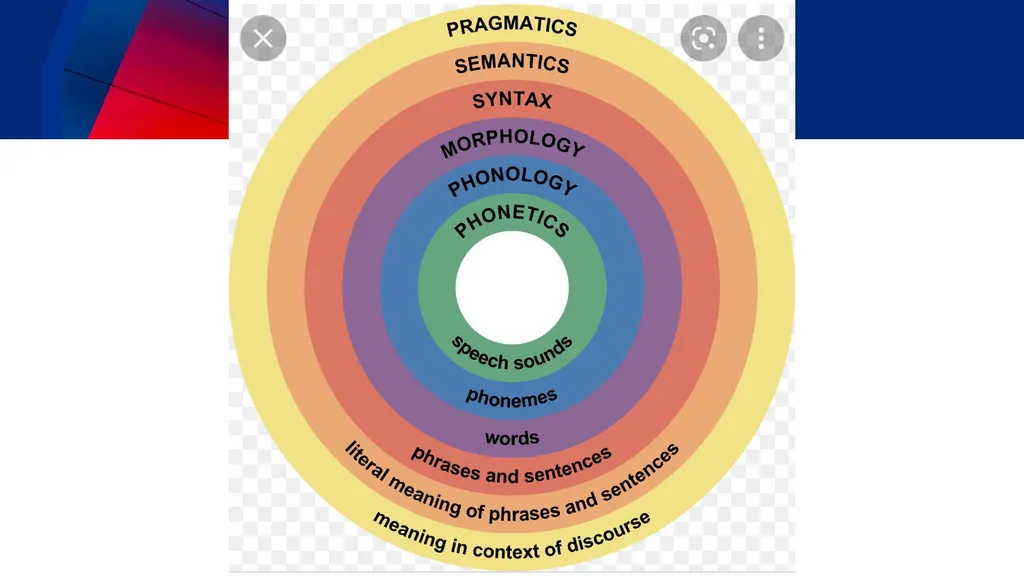
Branches of Linguistics Phonetics: The study of human speech sounds
Phonology: The study of sound patterning of a particular language.
Syntax: It is the part of language which links together the sound patterns and the meaning. (refers to both the arrangement and the form of words).
Semantics: The study of meaning which is concerned with the use of suitable word in the suitable position.
Ali arrived yesterday, not Ali arrived tomorrow.
Morphology, The study of internal structure of words.
e.g. reopened open base, reprefix, ed = suffix.<br>
06
Pragmatics: One of linguistics branches that deals with how speakers use language in ways which cannot predicted from linguistics knowledge alone.
Psycholinguistics: The study of language and mind.
Sociolinguistics: The study of language and society.
Applied Linguistics: The application of linguistics to language teaching.
Computational Linguistics: The use of computers to simulate language and its working.<br>
07
Stylistics: The study of language and literature.
Anthropological Linguistics: The study of language in cross-cultural settings.
Philosophical Linguistics: The study of the link between language and logical thought.
Historical Linguistics: The study of language change since its origin till nowadays, and can be divided into:<br>
08
Synchronic Linguistics: The study of language at a single point in time. e.g. The study of English language in Shakespearean period.
Diachronic Linguistics: The study of language across the whole periods of time since its origin till nowadays.
Linguistics Typology: The study y of different language types.<br>