
Local Anesthesia Systemic Toxicity LA(S)T
SN
Published · 27 slides · 0 views

1 / 1




Description
Local Anesthesia Systemic Toxicity LA(S)T RECOGNITION and Treatment Sallie Poepsel. PhD, MSN, CRNA, APRN Director, AANA Region IV Financial disclosure Objectives STAY AWAKE after Lunch Describe the background information associated with
Related Topics
Share
Embed code
Download this presentation From Below
"Local Anesthesia Systemic Toxicity LA(S)T" is the property of its rightful owner. Permission is granted to download and print the materials on this website for personal, non-commercial use only, and to display it on your personal computer provided you do not modify the materials and that you retain all copyright notices contained in the materials. By downloading content from our website, you accept the terms of this agreement.
Presentation Transcript
01
Local Anesthesia Systemic Toxicity LA(S)T
RECOGNITION and Treatment Sallie Poepsel. PhD, MSN, CRNA, APRN
Director, AANA Region IV<br>
Director, AANA Region IV<br>
02
Financial disclosure<br>
03
Objectives STAY AWAKE after Lunch
Describe the background information associated with Local Anesthetic Systemic Toxicity (LAST)
.<br>
Describe the background information associated with Local Anesthetic Systemic Toxicity (LAST)
.<br>
04
Objectives Recognize the signs and symptoms raising your suspicion of a diagnosis of LAST.
Outline the LIPIDS Rescue Protocol
Use the information from this session, along with your experience in an interactive question session.<br>
Outline the LIPIDS Rescue Protocol
Use the information from this session, along with your experience in an interactive question session.<br>
05
Historical Background rodent model of bupivacaine toxicity
(Weinberg et al 1998)
Rosenblatt et al reported the first clinical application of lipid emulsion therapy in treating LAST (2006)
Anesthesiology. 2012 Jul; 117(1): 180–187.
doi: 10.1097/ALN.0b013e31825ad8de
Rosenblatt MA, Abel M, Fischer GW, Itzkovich CJ, Eisenkraft JB. Successful use of a 20% lipid emulsion to resuscitate a patient after a presumed bupivacaine-related cardiac arrest. Anesthesiology. 2006;105:217–8. [PubMed]<br>
(Weinberg et al 1998)
Rosenblatt et al reported the first clinical application of lipid emulsion therapy in treating LAST (2006)
Anesthesiology. 2012 Jul; 117(1): 180–187.
doi: 10.1097/ALN.0b013e31825ad8de
Rosenblatt MA, Abel M, Fischer GW, Itzkovich CJ, Eisenkraft JB. Successful use of a 20% lipid emulsion to resuscitate a patient after a presumed bupivacaine-related cardiac arrest. Anesthesiology. 2006;105:217–8. [PubMed]<br>
06
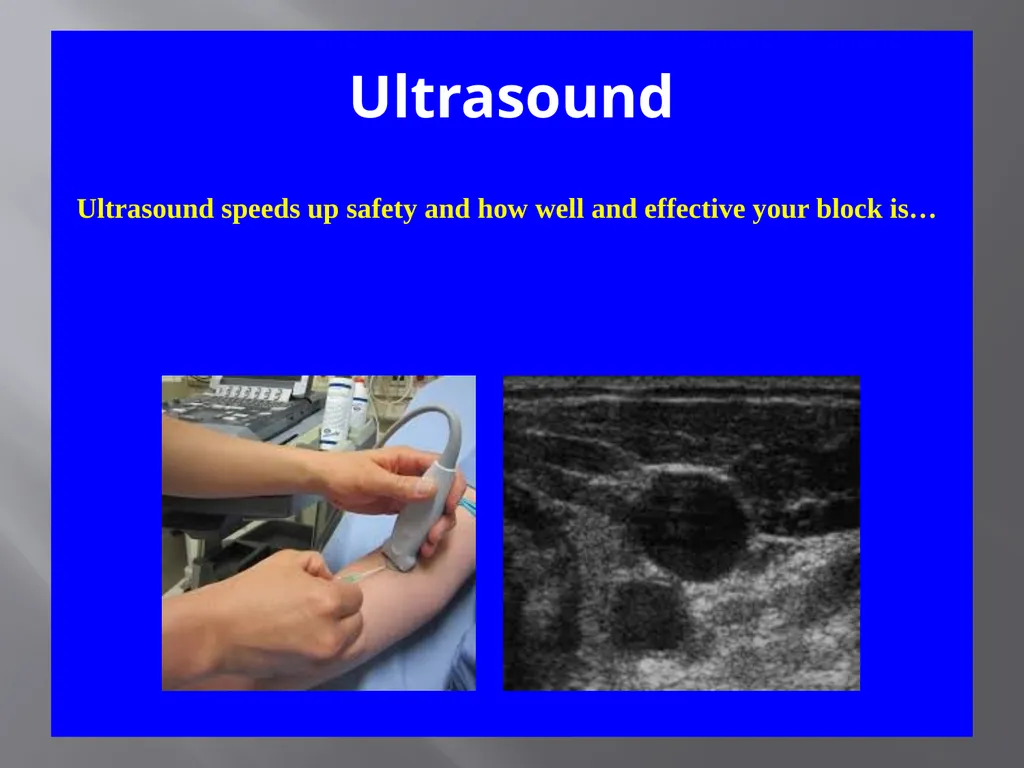
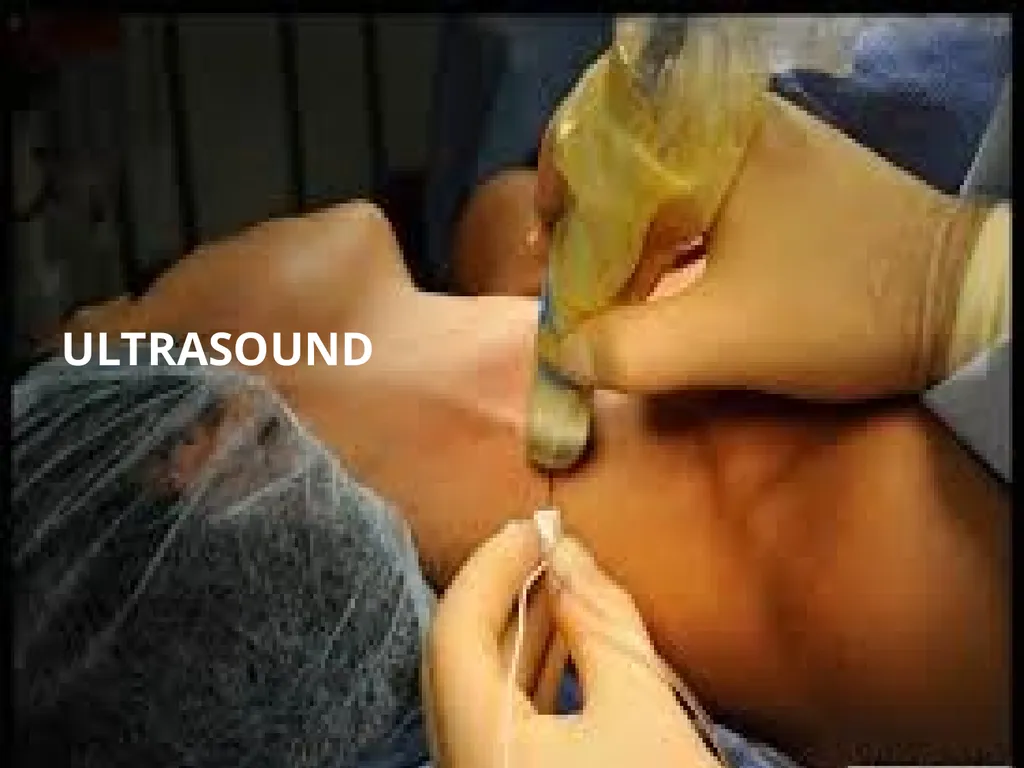
Ultrasound Ultrasound speeds up safety and how well and effective your block is…<br>
07
ULTRASOUND<br>
08
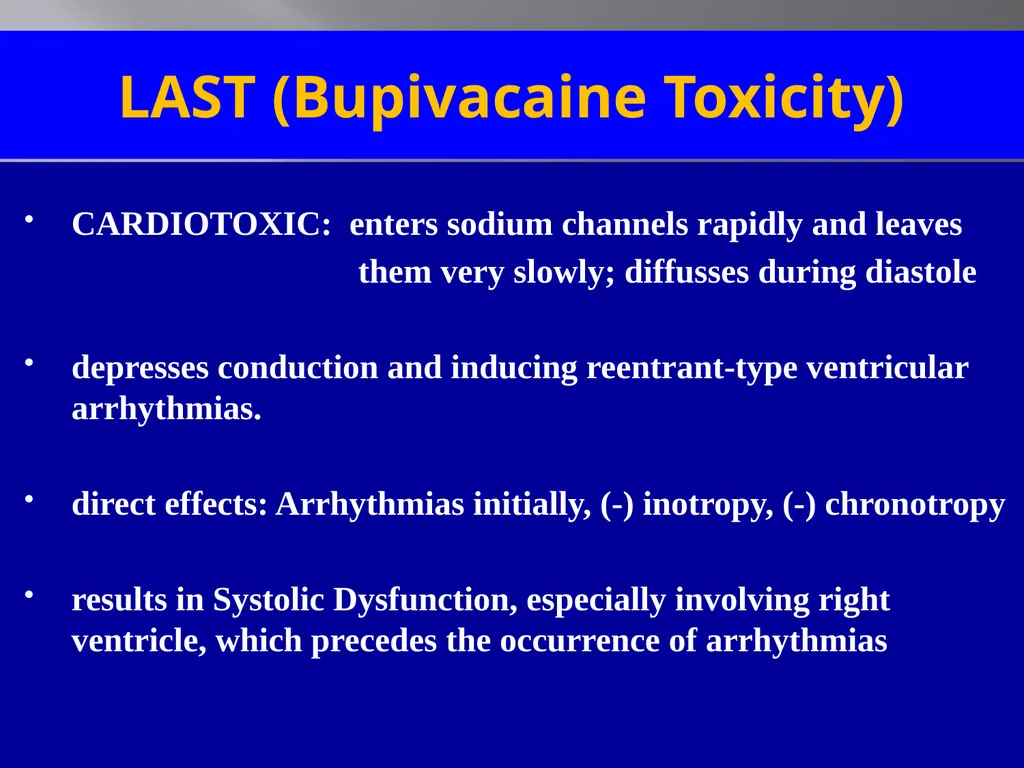
LAST (Bupivacaine Toxicity) CARDIOTOXIC: enters sodium channels rapidly and leaves
them very slowly; diffusses during diastole
depresses conduction and inducing reentrant-type ventricular arrhythmias.
direct effects: Arrhythmias initially, (-) inotropy, (-) chronotropy
results in Systolic Dysfunction, especially involving right ventricle, which precedes the occurrence of arrhythmias<br>
them very slowly; diffusses during diastole
depresses conduction and inducing reentrant-type ventricular arrhythmias.
direct effects: Arrhythmias initially, (-) inotropy, (-) chronotropy
results in Systolic Dysfunction, especially involving right ventricle, which precedes the occurrence of arrhythmias<br>
09
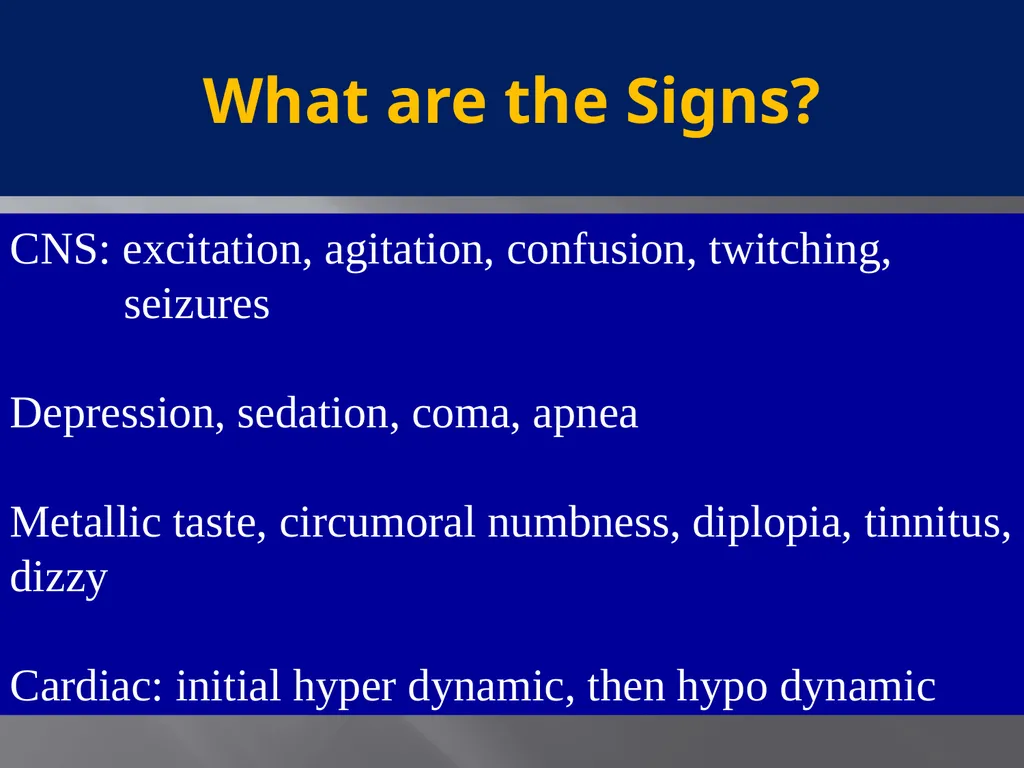
What are the Signs? CNS: excitation, agitation, confusion, twitching,
seizures
Depression, sedation, coma, apnea
Metallic taste, circumoral numbness, diplopia, tinnitus, dizzy
Cardiac: initial hyper dynamic, then hypo dynamic<br>
seizures
Depression, sedation, coma, apnea
Metallic taste, circumoral numbness, diplopia, tinnitus, dizzy
Cardiac: initial hyper dynamic, then hypo dynamic<br>
10
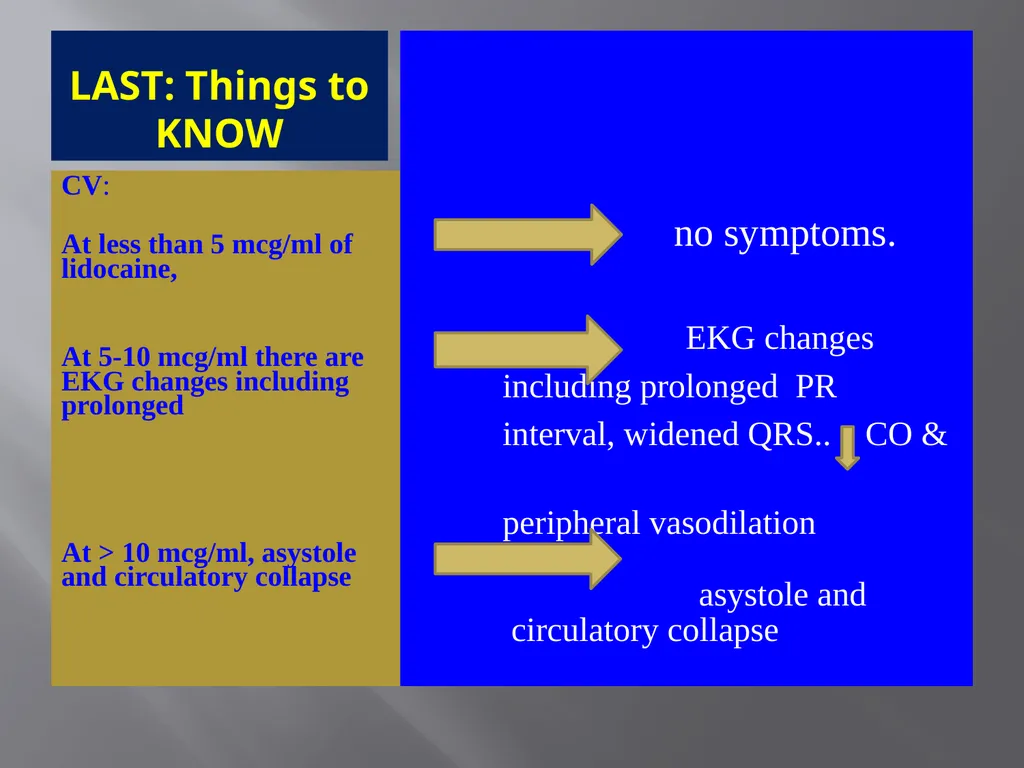
LAST: Things to KNOW CV:
At less than 5 mcg/ml of lidocaine,
At 5-10 mcg/ml there are EKG changes including prolonged
At > 10 mcg/ml, asystole and circulatory collapse no symptoms.
EKG changes
including prolonged PR
interval, widened QRS.. CO &
peripheral vasodilation
asystole and
circulatory collapse<br>
At less than 5 mcg/ml of lidocaine,
At 5-10 mcg/ml there are EKG changes including prolonged
At > 10 mcg/ml, asystole and circulatory collapse no symptoms.
EKG changes
including prolonged PR
interval, widened QRS.. CO &
peripheral vasodilation
asystole and
circulatory collapse<br>
11
LIPIDS RESCUE
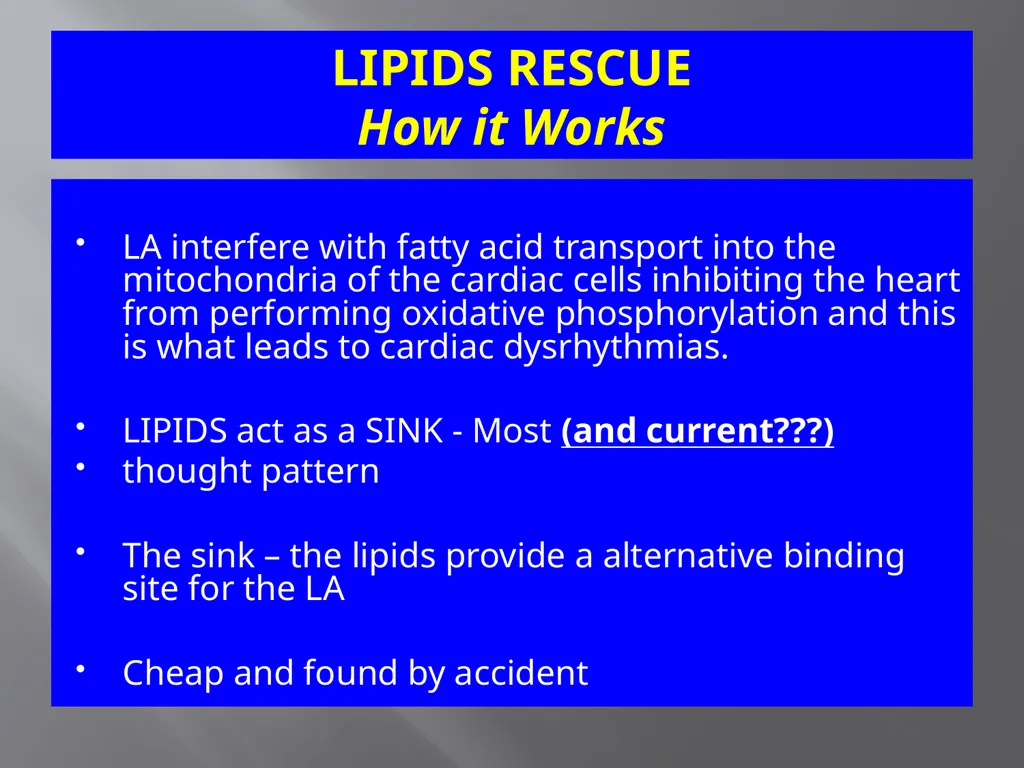
How it Works LA interfere with fatty acid transport into the mitochondria of the cardiac cells inhibiting the heart from performing oxidative phosphorylation and this is what leads to cardiac dysrhythmias.
LIPIDS act as a SINK - Most (and current???)
thought pattern
The sink – the lipids provide a alternative binding site for the LA
Cheap and found by accident<br>
LIPIDS act as a SINK - Most (and current???)
thought pattern
The sink – the lipids provide a alternative binding site for the LA
Cheap and found by accident<br>
12
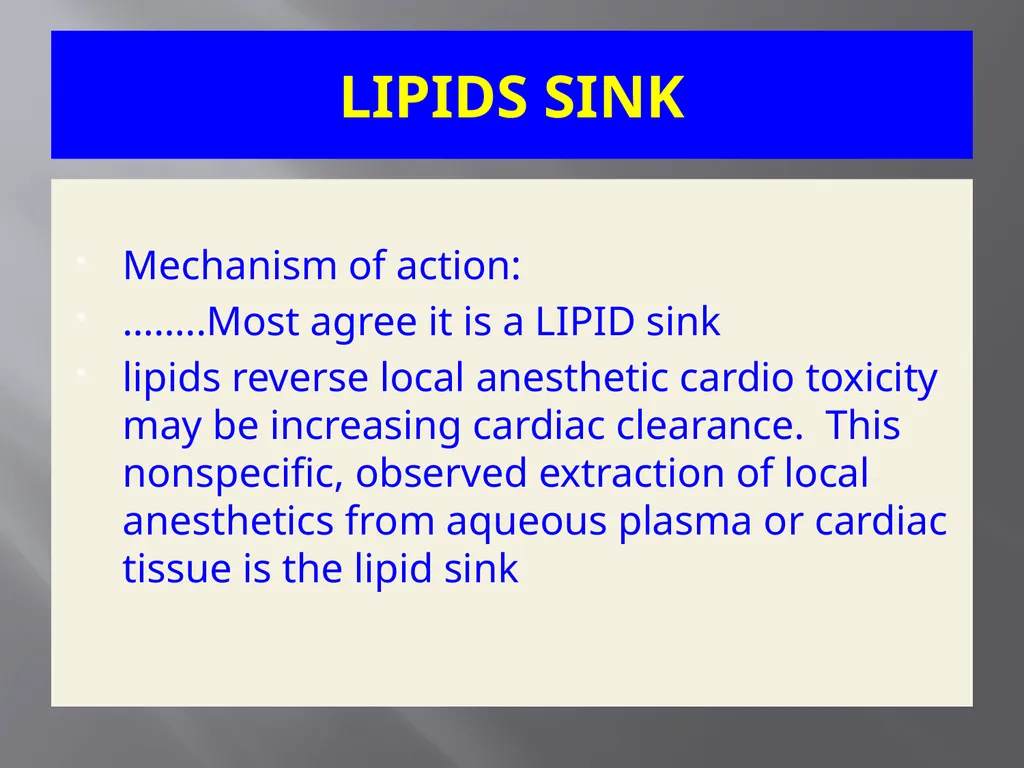
LIPIDS SINK Mechanism of action:
……..Most agree it is a LIPID sink
lipids reverse local anesthetic cardio toxicity may be increasing cardiac clearance. This nonspecific, observed extraction of local anesthetics from aqueous plasma or cardiac tissue is the lipid sink<br>
……..Most agree it is a LIPID sink
lipids reverse local anesthetic cardio toxicity may be increasing cardiac clearance. This nonspecific, observed extraction of local anesthetics from aqueous plasma or cardiac tissue is the lipid sink<br>
13
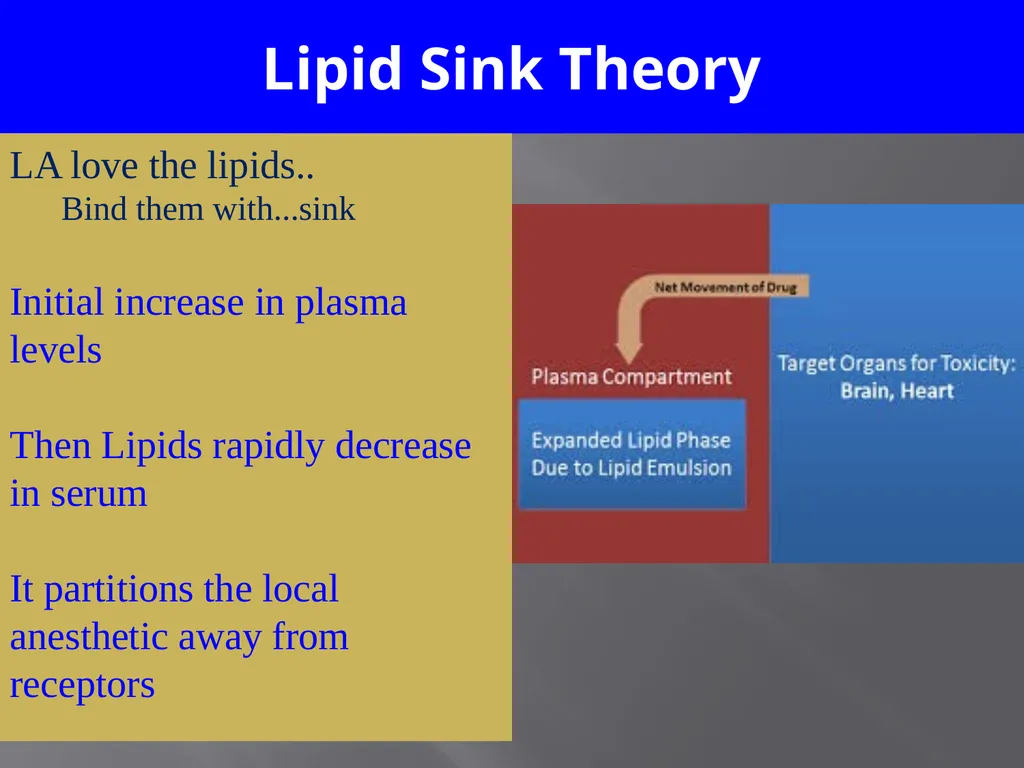
Lipid Sink Theory LA love the lipids..
Bind them with...sink
Initial increase in plasma levels
Then Lipids rapidly decrease in serum
It partitions the local anesthetic away from receptors<br>
Bind them with...sink
Initial increase in plasma levels
Then Lipids rapidly decrease in serum
It partitions the local anesthetic away from receptors<br>
14
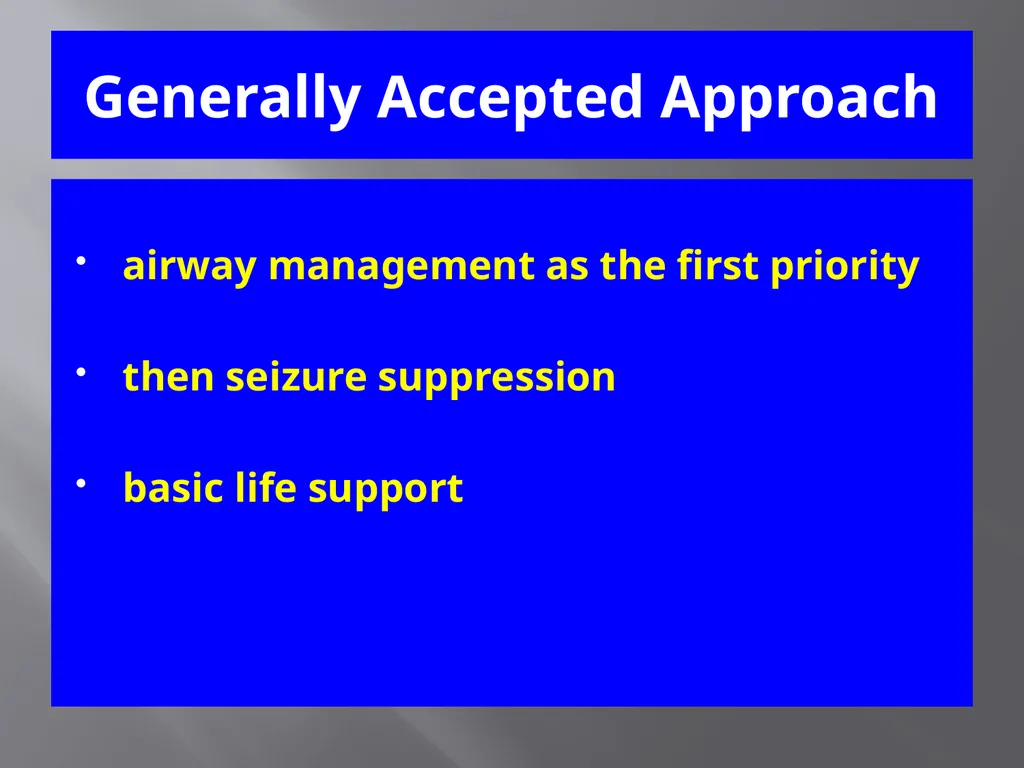
Generally Accepted Approach airway management as the first priority
then seizure suppression
basic life support<br>
then seizure suppression
basic life support<br>
15
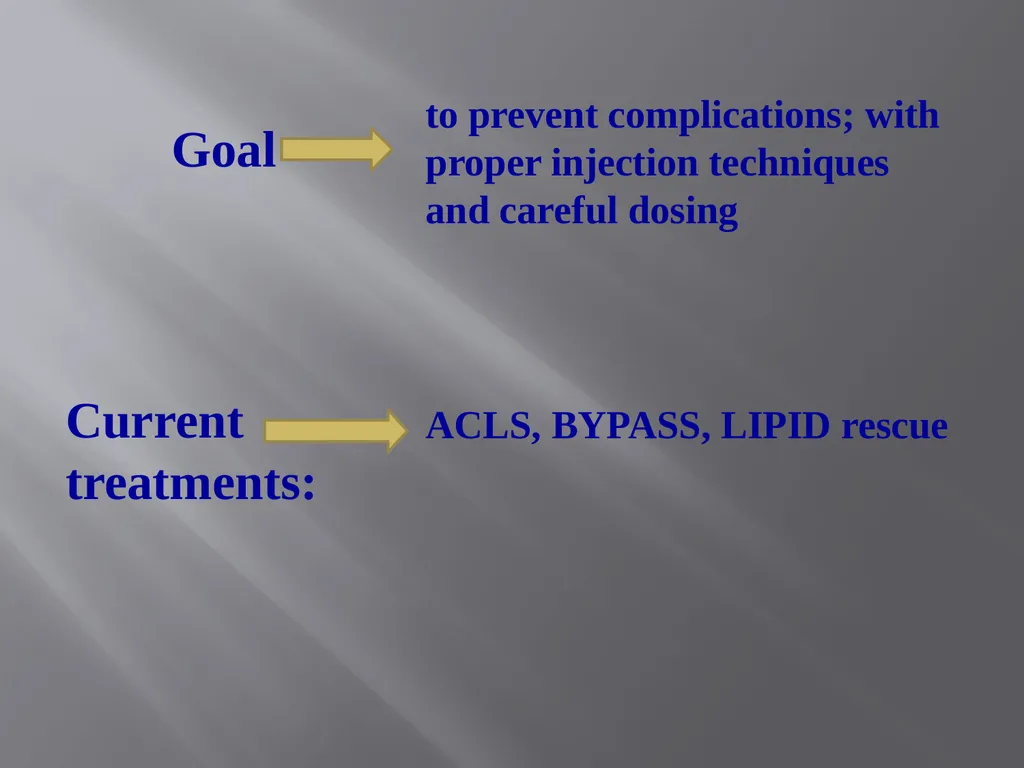
Goal
Current treatments: to prevent complications; with proper injection techniques and careful dosing
ACLS, BYPASS, LIPID rescue<br>
Current treatments: to prevent complications; with proper injection techniques and careful dosing
ACLS, BYPASS, LIPID rescue<br>
16
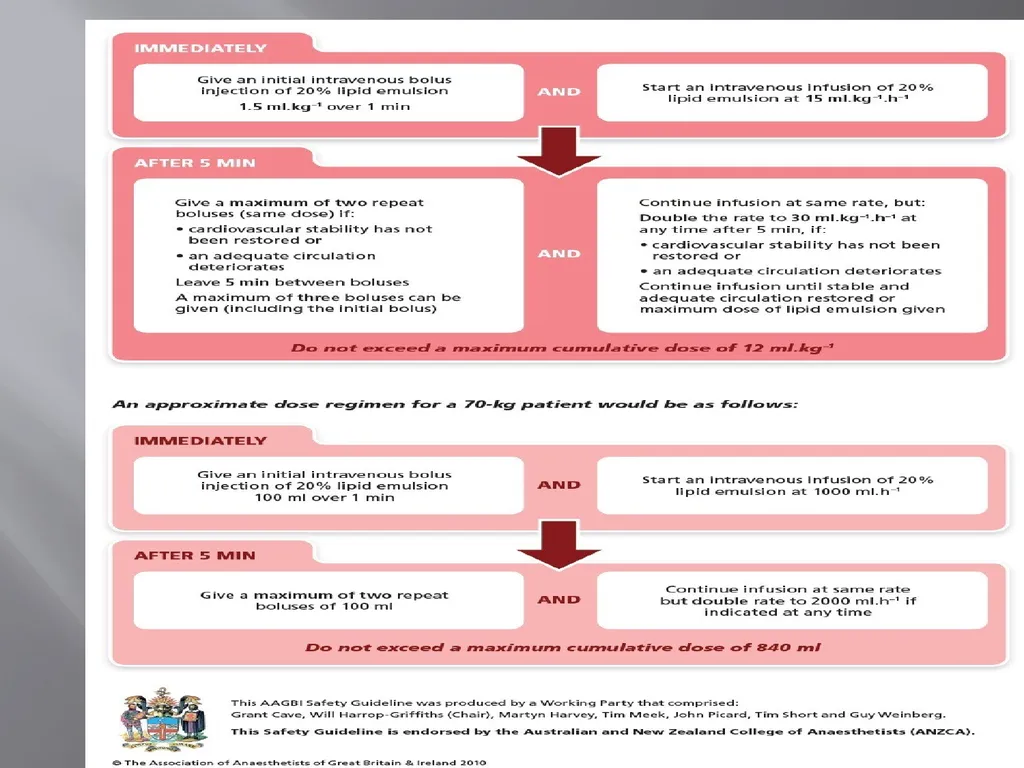
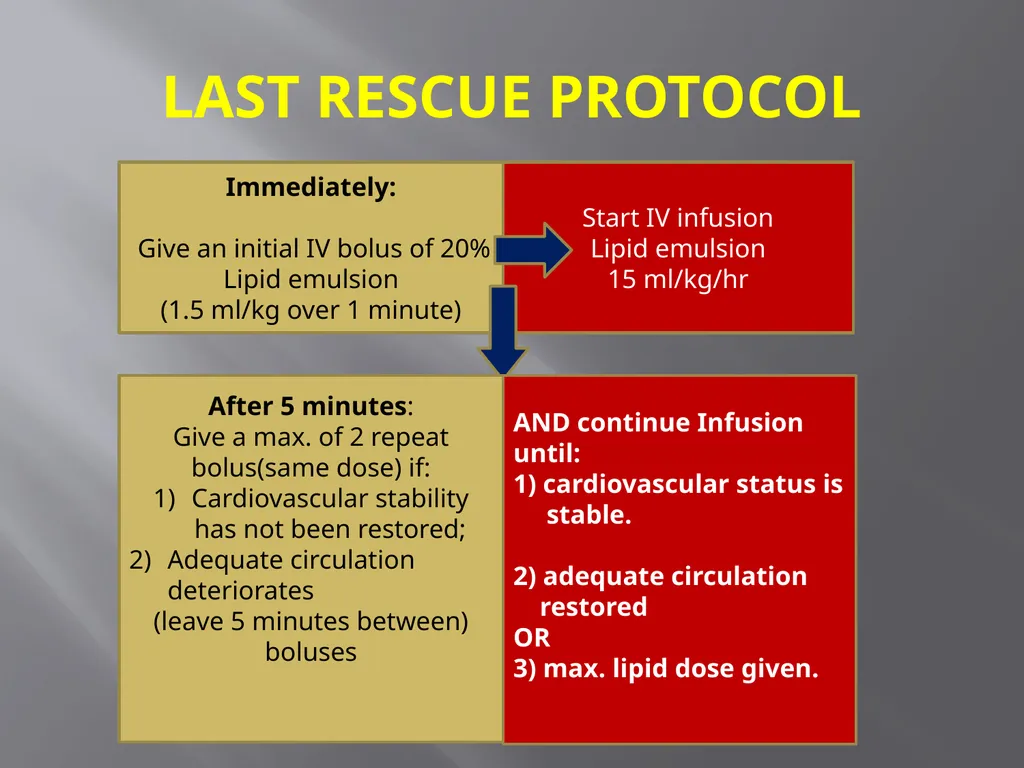
LAST RESCUE PROTOCOL Immediately:
Give an initial IV bolus of 20% Lipid emulsion
(1.5 ml/kg over 1 minute) Start IV infusion
Lipid emulsion
15 ml/kg/hr After 5 minutes:
Give a max. of 2 repeat bolus(same dose) if:
Cardiovascular stability has not been restored;
Adequate circulation deteriorates
(leave 5 minutes between) boluses AND continue Infusion until:
1) cardiovascular status is
stable.
2) adequate circulation
restored
OR
3) max. lipid dose given.<br>
Give an initial IV bolus of 20% Lipid emulsion
(1.5 ml/kg over 1 minute) Start IV infusion
Lipid emulsion
15 ml/kg/hr After 5 minutes:
Give a max. of 2 repeat bolus(same dose) if:
Cardiovascular stability has not been restored;
Adequate circulation deteriorates
(leave 5 minutes between) boluses AND continue Infusion until:
1) cardiovascular status is
stable.
2) adequate circulation
restored
OR
3) max. lipid dose given.<br>
17
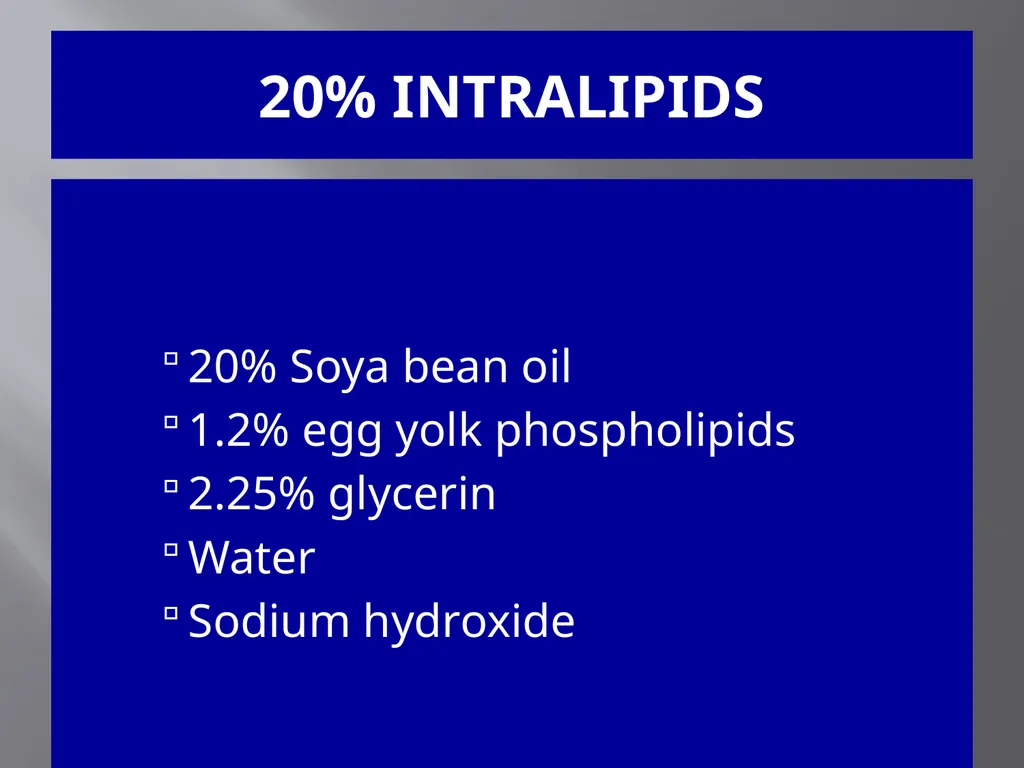
20% INTRALIPIDS 20% Soya bean oil
1.2% egg yolk phospholipids
2.25% glycerin
Water
Sodium hydroxide<br>
1.2% egg yolk phospholipids
2.25% glycerin
Water
Sodium hydroxide<br>
18
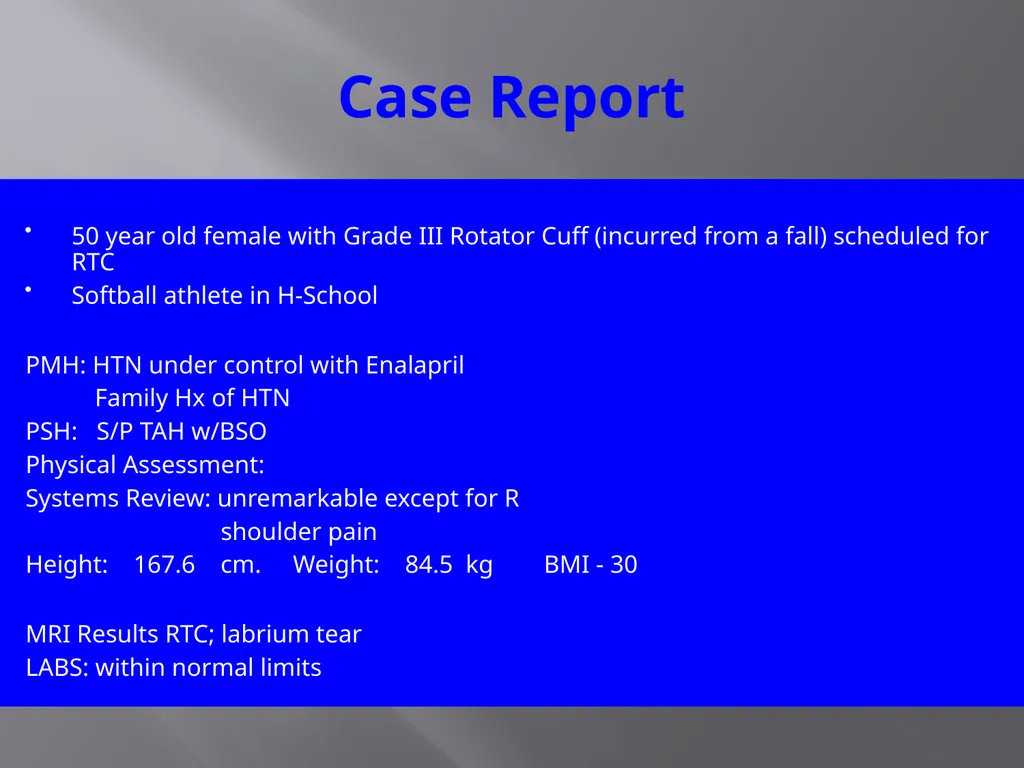
Case Report 50 year old female with Grade III Rotator Cuff (incurred from a fall) scheduled for RTC
Softball athlete in H-School
PMH: HTN under control with Enalapril
Family Hx of HTN
PSH: S/P TAH w/BSO
Physical Assessment:
Systems Review: unremarkable except for R
shoulder pain
Height: 167.6 cm. Weight: 84.5 kg BMI - 30
MRI Results RTC; labrium tear
LABS: within normal limits<br>
Softball athlete in H-School
PMH: HTN under control with Enalapril
Family Hx of HTN
PSH: S/P TAH w/BSO
Physical Assessment:
Systems Review: unremarkable except for R
shoulder pain
Height: 167.6 cm. Weight: 84.5 kg BMI - 30
MRI Results RTC; labrium tear
LABS: within normal limits<br>
19
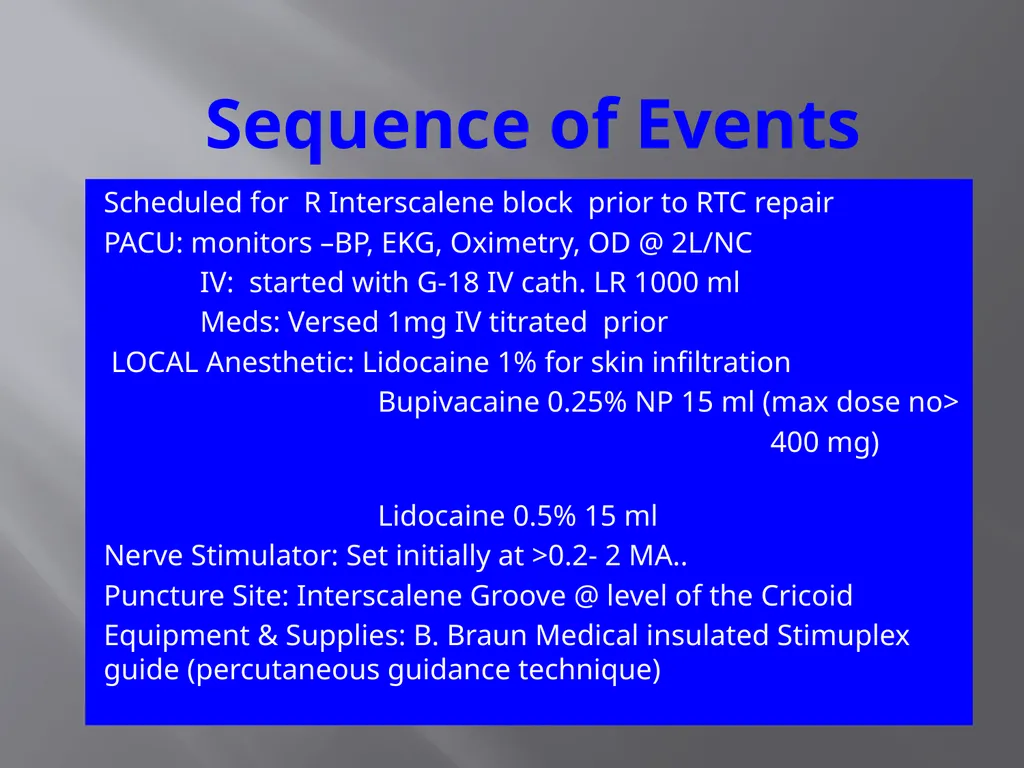
Sequence of Events Scheduled for R Interscalene block prior to RTC repair
PACU: monitors –BP, EKG, Oximetry, OD @ 2L/NC
IV: started with G-18 IV cath. LR 1000 ml
Meds: Versed 1mg IV titrated prior
LOCAL Anesthetic: Lidocaine 1% for skin infiltration
Bupivacaine 0.25% NP 15 ml (max dose no>
400 mg)
Lidocaine 0.5% 15 ml
Nerve Stimulator: Set initially at >0.2- 2 MA..
Puncture Site: Interscalene Groove @ level of the Cricoid
Equipment & Supplies: B. Braun Medical insulated Stimuplex guide (percutaneous guidance technique)<br>
PACU: monitors –BP, EKG, Oximetry, OD @ 2L/NC
IV: started with G-18 IV cath. LR 1000 ml
Meds: Versed 1mg IV titrated prior
LOCAL Anesthetic: Lidocaine 1% for skin infiltration
Bupivacaine 0.25% NP 15 ml (max dose no>
400 mg)
Lidocaine 0.5% 15 ml
Nerve Stimulator: Set initially at >0.2- 2 MA..
Puncture Site: Interscalene Groove @ level of the Cricoid
Equipment & Supplies: B. Braun Medical insulated Stimuplex guide (percutaneous guidance technique)<br>
20
Lidocaine injected @ 3-5 ml increment following aspiration
Bupivacaine injected incrementally similarly following lidocaine.
IS Block completed
within 10 minutes, noticed increased PVC, pt
restless & panicky,
started seizures, unresponsive, progressive
desaturation from 99% to low 60s<br>
Bupivacaine injected incrementally similarly following lidocaine.
IS Block completed
within 10 minutes, noticed increased PVC, pt
restless & panicky,
started seizures, unresponsive, progressive
desaturation from 99% to low 60s<br>
21
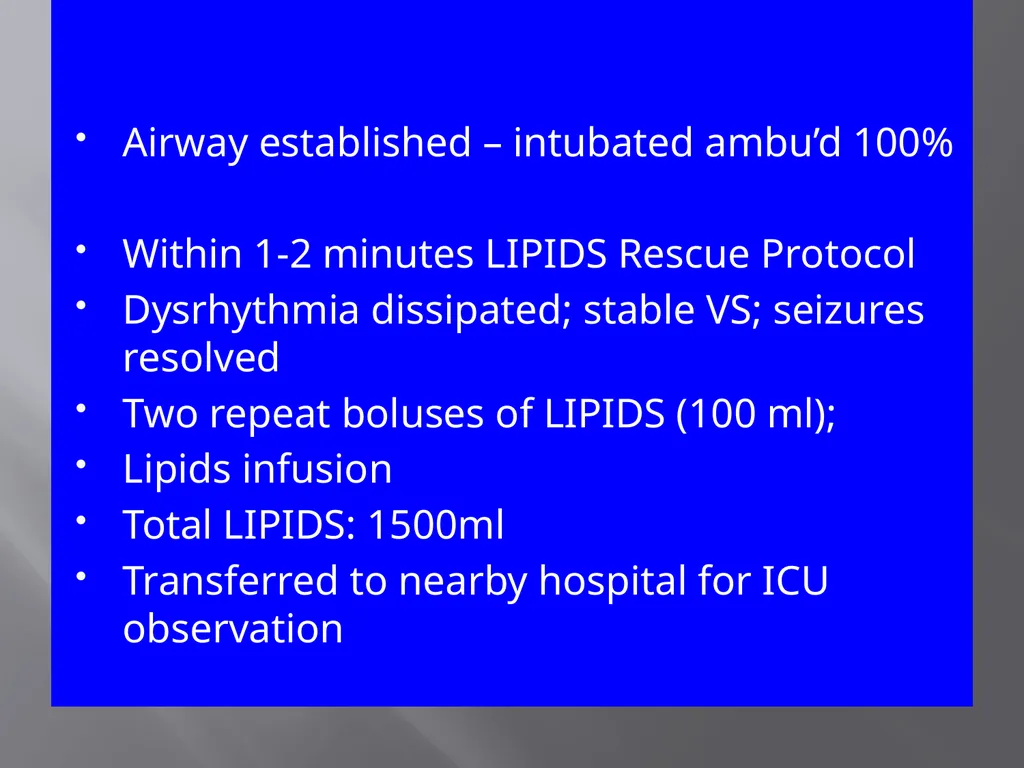
LIPIDS Rescue Airway established – intubated ambu’d 100%
Within 1-2 minutes LIPIDS Rescue Protocol
Dysrhythmia dissipated; stable VS; seizures resolved
Two repeat boluses of LIPIDS (100 ml);
Lipids infusion
Total LIPIDS: 1500ml
Transferred to nearby hospital for ICU observation<br>
Within 1-2 minutes LIPIDS Rescue Protocol
Dysrhythmia dissipated; stable VS; seizures resolved
Two repeat boluses of LIPIDS (100 ml);
Lipids infusion
Total LIPIDS: 1500ml
Transferred to nearby hospital for ICU observation<br>
22
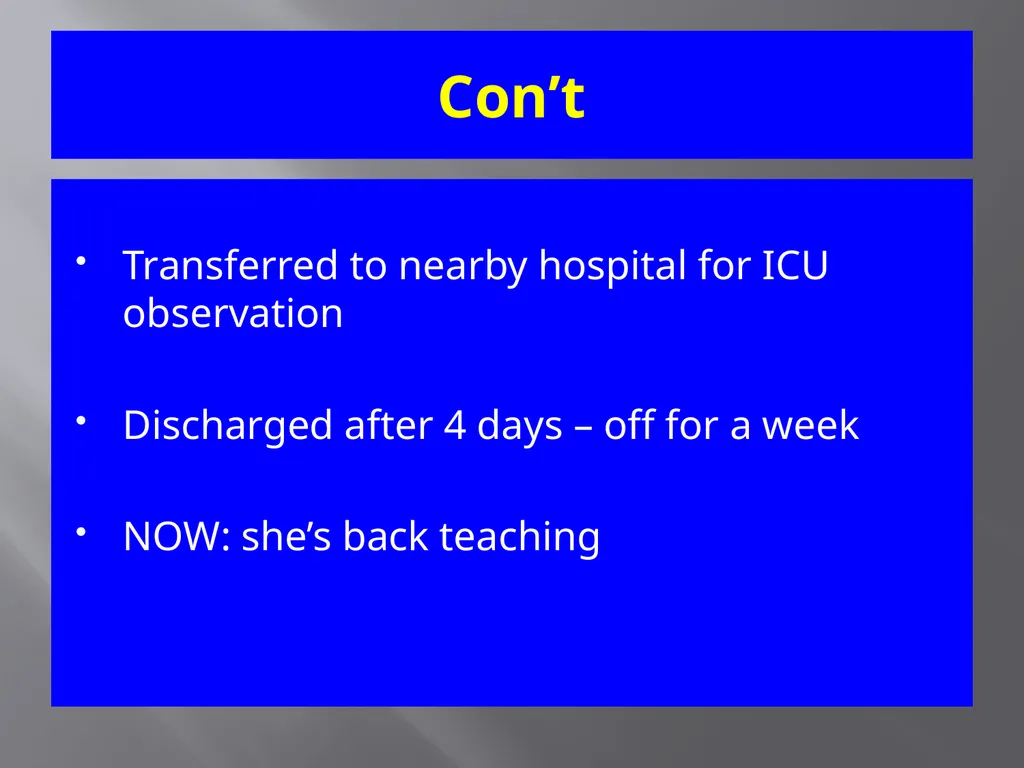
Con’t Transferred to nearby hospital for ICU observation
Discharged after 4 days – off for a week
NOW: she’s back teaching<br>
Discharged after 4 days – off for a week
NOW: she’s back teaching<br>
23
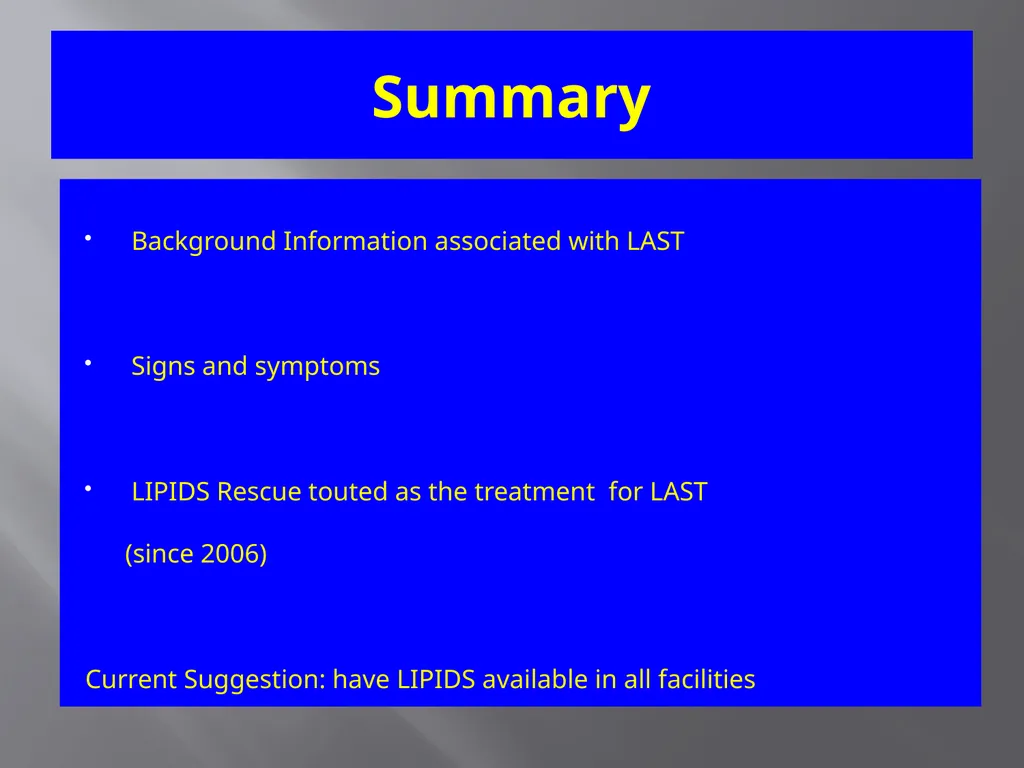
Summary Background Information associated with LAST
Signs and symptoms
LIPIDS Rescue touted as the treatment for LAST
(since 2006)
Current Suggestion: have LIPIDS available in all facilities<br>
Signs and symptoms
LIPIDS Rescue touted as the treatment for LAST
(since 2006)
Current Suggestion: have LIPIDS available in all facilities<br>
24
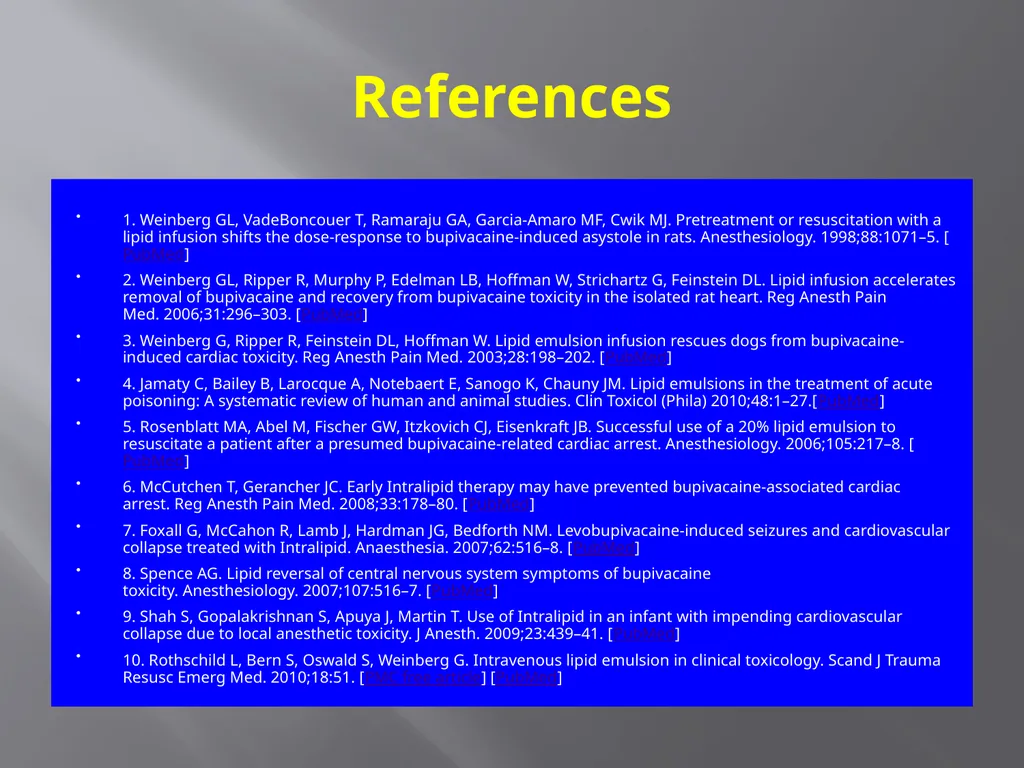
References 1. Weinberg GL, VadeBoncouer T, Ramaraju GA, Garcia-Amaro MF, Cwik MJ. Pretreatment or resuscitation with a lipid infusion shifts the dose-response to bupivacaine-induced asystole in rats. Anesthesiology. 1998;88:1071–5. [PubMed]
2. Weinberg GL, Ripper R, Murphy P, Edelman LB, Hoffman W, Strichartz G, Feinstein DL. Lipid infusion accelerates removal of bupivacaine and recovery from bupivacaine toxicity in the isolated rat heart. Reg Anesth Pain Med. 2006;31:296–303. [PubMed]
3. Weinberg G, Ripper R, Feinstein DL, Hoffman W. Lipid emulsion infusion rescues dogs from bupivacaine-induced cardiac toxicity. Reg Anesth Pain Med. 2003;28:198–202. [PubMed]
4. Jamaty C, Bailey B, Larocque A, Notebaert E, Sanogo K, Chauny JM. Lipid emulsions in the treatment of acute poisoning: A systematic review of human and animal studies. Clin Toxicol (Phila) 2010;48:1–27.[PubMed]
5. Rosenblatt MA, Abel M, Fischer GW, Itzkovich CJ, Eisenkraft JB. Successful use of a 20% lipid emulsion to resuscitate a patient after a presumed bupivacaine-related cardiac arrest. Anesthesiology. 2006;105:217–8. [PubMed]
6. McCutchen T, Gerancher JC. Early Intralipid therapy may have prevented bupivacaine-associated cardiac arrest. Reg Anesth Pain Med. 2008;33:178–80. [PubMed]
7. Foxall G, McCahon R, Lamb J, Hardman JG, Bedforth NM. Levobupivacaine-induced seizures and cardiovascular collapse treated with Intralipid. Anaesthesia. 2007;62:516–8. [PubMed]
8. Spence AG. Lipid reversal of central nervous system symptoms of bupivacaine toxicity. Anesthesiology. 2007;107:516–7. [PubMed]
9. Shah S, Gopalakrishnan S, Apuya J, Martin T. Use of Intralipid in an infant with impending cardiovascular collapse due to local anesthetic toxicity. J Anesth. 2009;23:439–41. [PubMed]
10. Rothschild L, Bern S, Oswald S, Weinberg G. Intravenous lipid emulsion in clinical toxicology. Scand J Trauma Resusc Emerg Med. 2010;18:51. [PMC free article] [PubMed]<br>
2. Weinberg GL, Ripper R, Murphy P, Edelman LB, Hoffman W, Strichartz G, Feinstein DL. Lipid infusion accelerates removal of bupivacaine and recovery from bupivacaine toxicity in the isolated rat heart. Reg Anesth Pain Med. 2006;31:296–303. [PubMed]
3. Weinberg G, Ripper R, Feinstein DL, Hoffman W. Lipid emulsion infusion rescues dogs from bupivacaine-induced cardiac toxicity. Reg Anesth Pain Med. 2003;28:198–202. [PubMed]
4. Jamaty C, Bailey B, Larocque A, Notebaert E, Sanogo K, Chauny JM. Lipid emulsions in the treatment of acute poisoning: A systematic review of human and animal studies. Clin Toxicol (Phila) 2010;48:1–27.[PubMed]
5. Rosenblatt MA, Abel M, Fischer GW, Itzkovich CJ, Eisenkraft JB. Successful use of a 20% lipid emulsion to resuscitate a patient after a presumed bupivacaine-related cardiac arrest. Anesthesiology. 2006;105:217–8. [PubMed]
6. McCutchen T, Gerancher JC. Early Intralipid therapy may have prevented bupivacaine-associated cardiac arrest. Reg Anesth Pain Med. 2008;33:178–80. [PubMed]
7. Foxall G, McCahon R, Lamb J, Hardman JG, Bedforth NM. Levobupivacaine-induced seizures and cardiovascular collapse treated with Intralipid. Anaesthesia. 2007;62:516–8. [PubMed]
8. Spence AG. Lipid reversal of central nervous system symptoms of bupivacaine toxicity. Anesthesiology. 2007;107:516–7. [PubMed]
9. Shah S, Gopalakrishnan S, Apuya J, Martin T. Use of Intralipid in an infant with impending cardiovascular collapse due to local anesthetic toxicity. J Anesth. 2009;23:439–41. [PubMed]
10. Rothschild L, Bern S, Oswald S, Weinberg G. Intravenous lipid emulsion in clinical toxicology. Scand J Trauma Resusc Emerg Med. 2010;18:51. [PMC free article] [PubMed]<br>
25
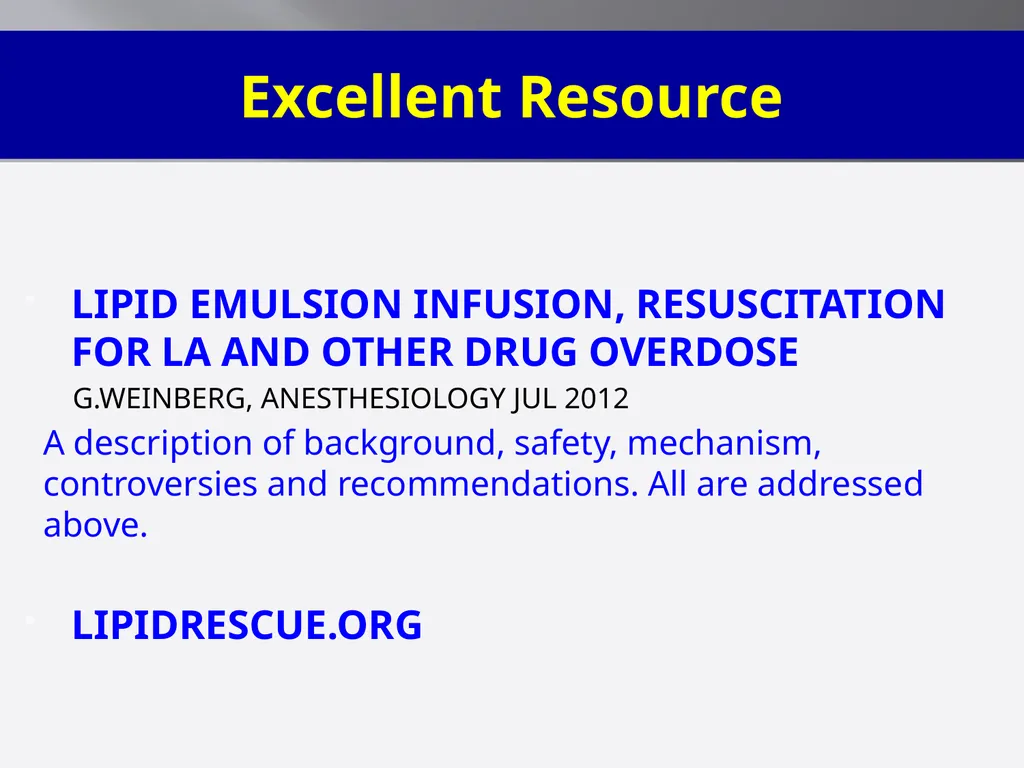
Excellent Resource LIPID EMULSION INFUSION, RESUSCITATION FOR LA AND OTHER DRUG OVERDOSE
G.WEINBERG, ANESTHESIOLOGY JUL 2012
A description of background, safety, mechanism, controversies and recommendations. All are addressed above.
LIPIDRESCUE.ORG<br>
G.WEINBERG, ANESTHESIOLOGY JUL 2012
A description of background, safety, mechanism, controversies and recommendations. All are addressed above.
LIPIDRESCUE.ORG<br>
26
Discussion<br>