04
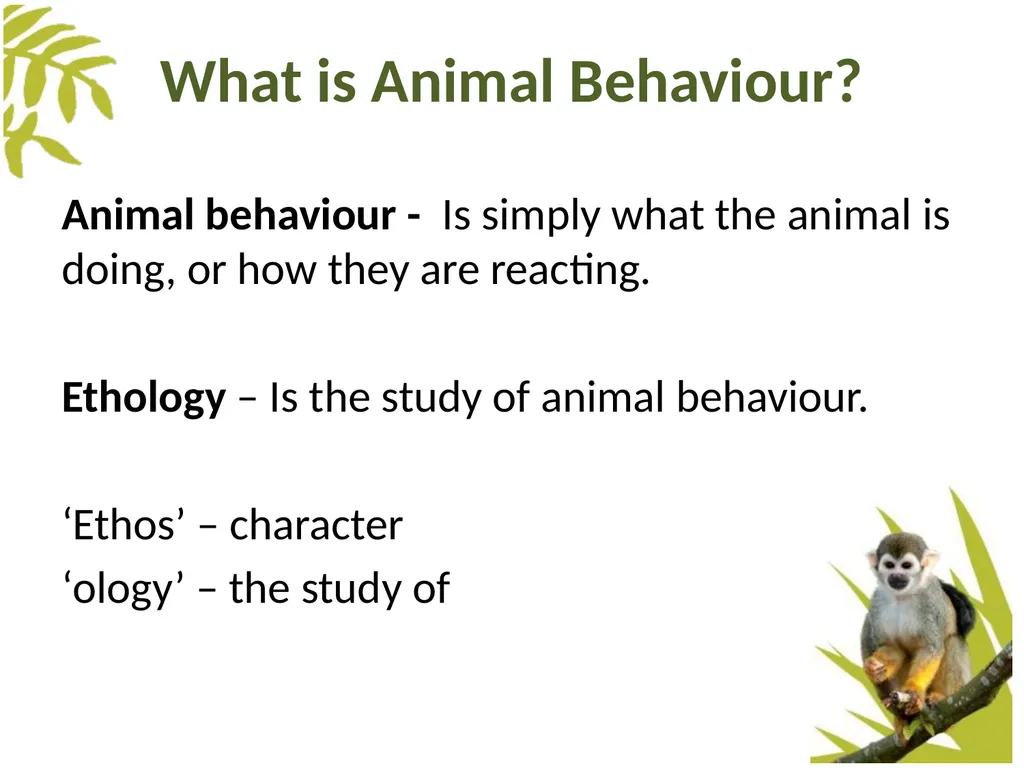
What is Animal Behaviour? Animal behaviour - Is simply what the animal is doing, or how they are reacting.
Ethology – Is the study of animal behaviour.
‘Ethos’ – character
‘ology’ – the study of<br>
05
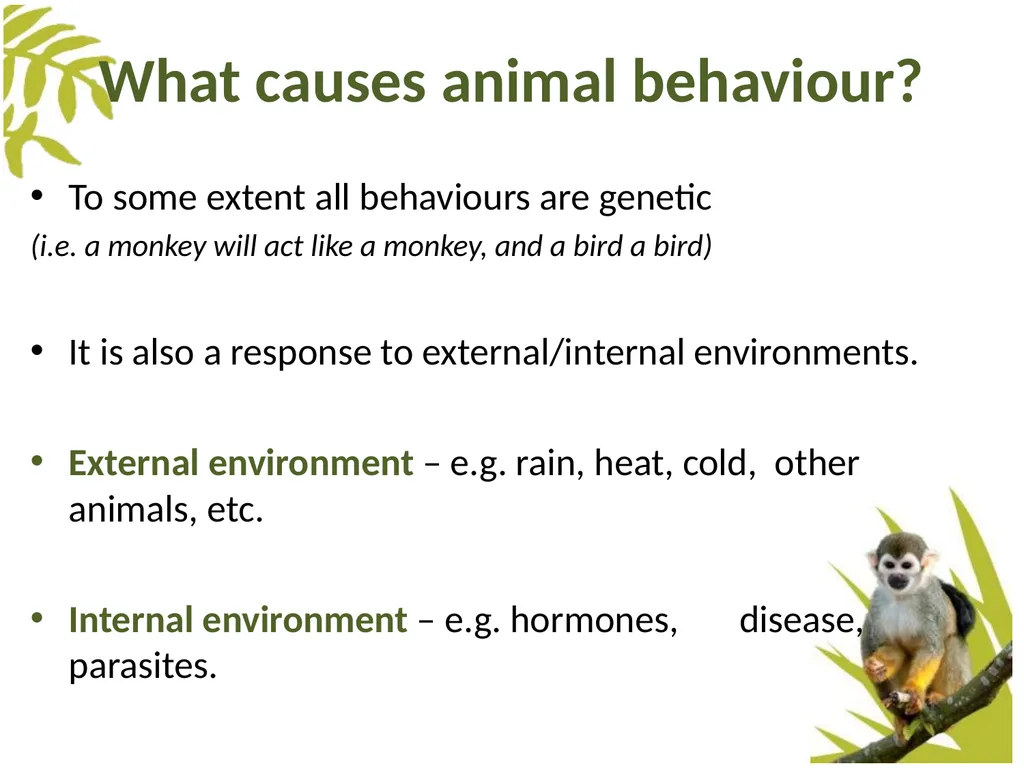
What causes animal behaviour? To some extent all behaviours are genetic
(i.e. a monkey will act like a monkey, and a bird a bird)
It is also a response to external/internal environments.
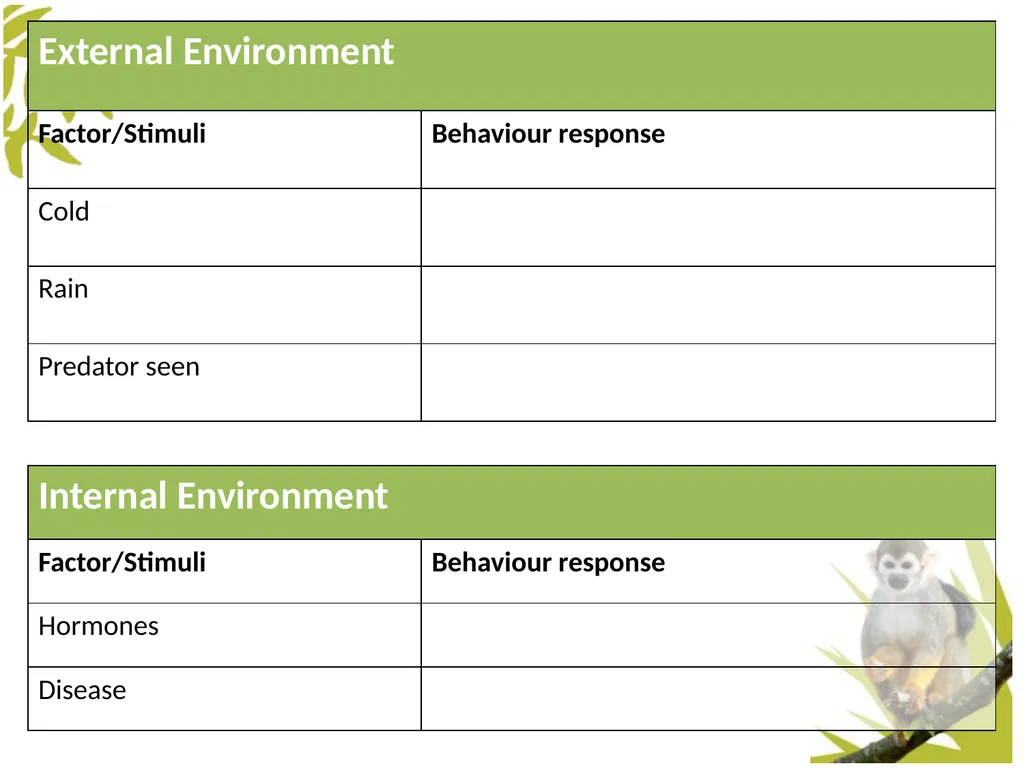
External environment – e.g. rain, heat, cold, other animals, etc.
Internal environment – e.g. hormones, disease, parasites.<br>
06
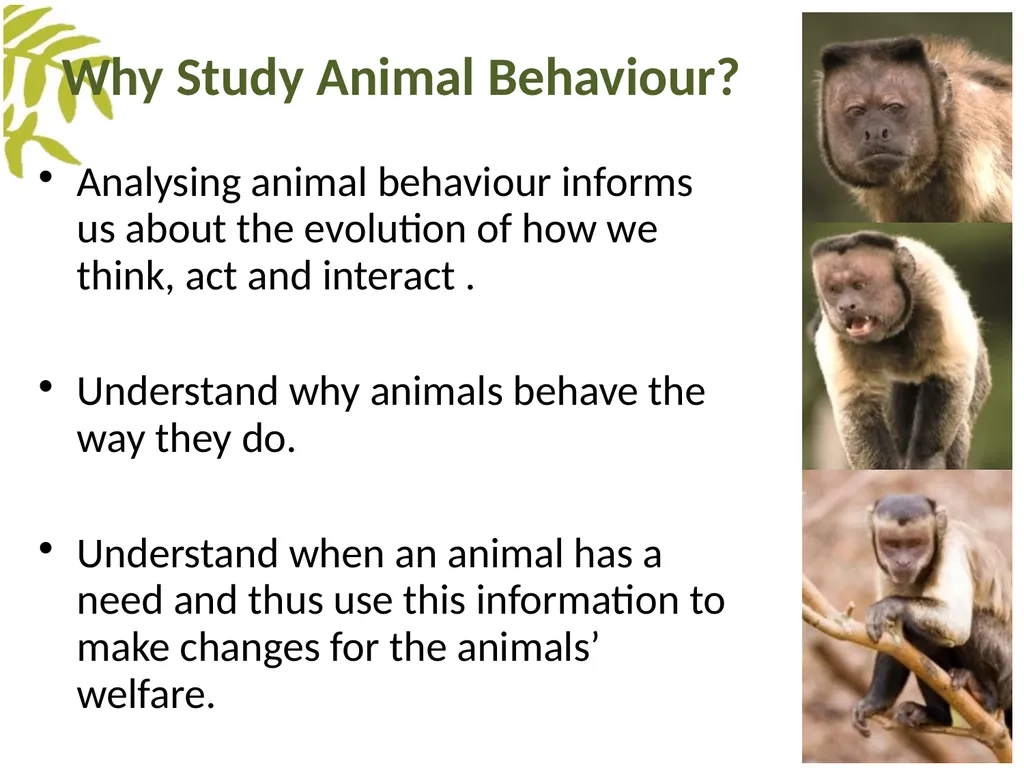
Why Study Animal Behaviour? Analysing animal behaviour informs us about the evolution of how we think, act and interact .
Understand why animals behave the way they do.
Understand when an animal has a need and thus use this information to make changes for the animals’ welfare.<br>
07
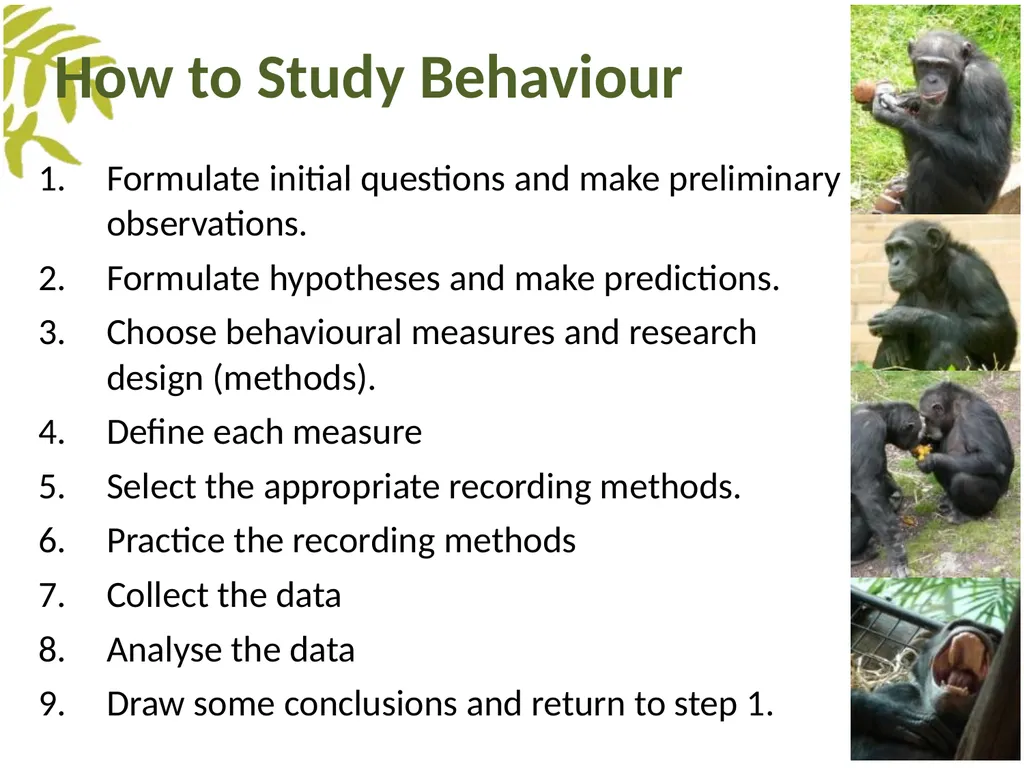
How to Study Behaviour Formulate initial questions and make preliminary observations.
Formulate hypotheses and make predictions.
Choose behavioural measures and research design (methods).
Define each measure
Select the appropriate recording methods.
Practice the recording methods
Collect the data
Analyse the data
Draw some conclusions and return to step 1.<br>
08
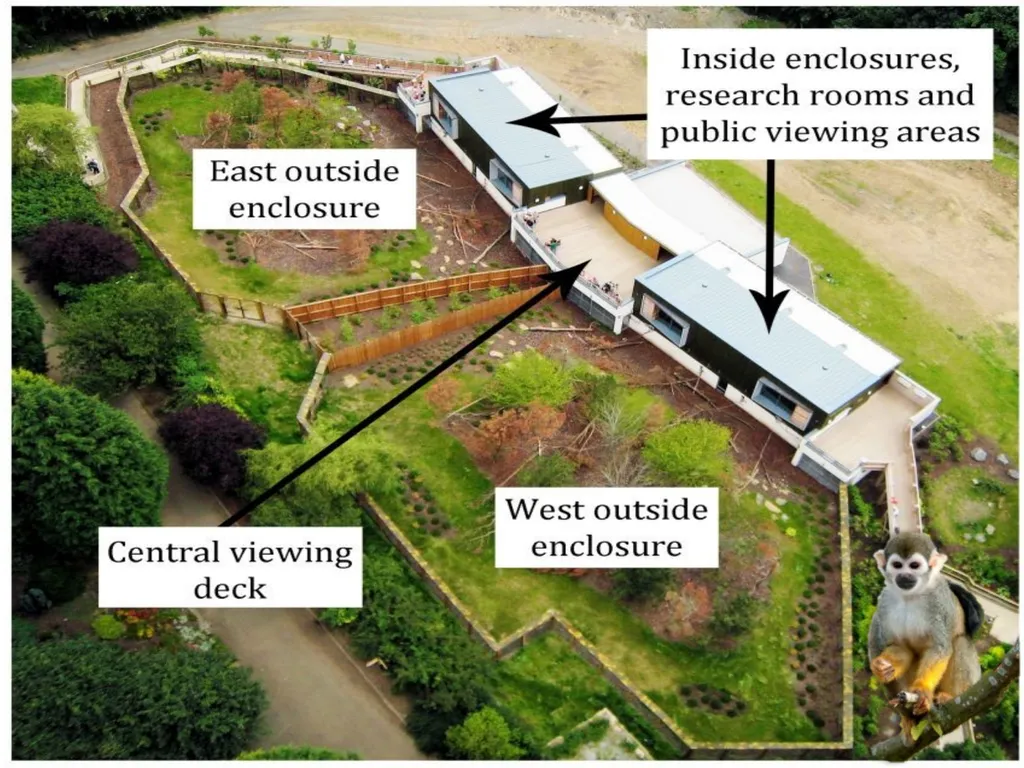
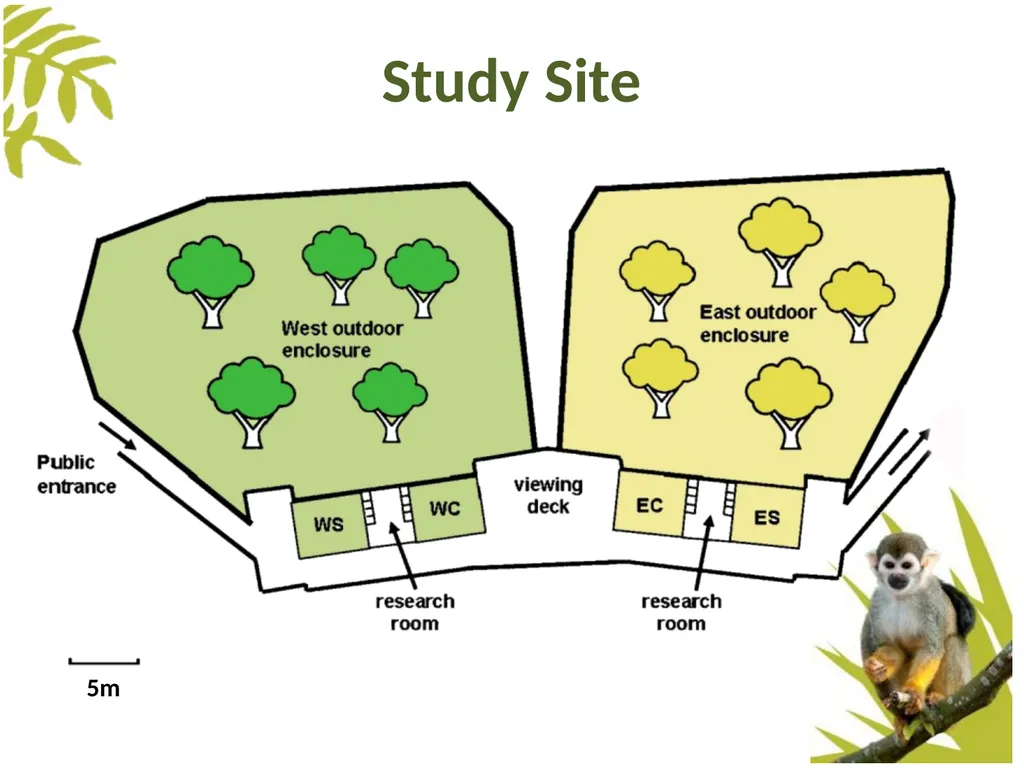
Studying a Mixed Species Exhibit<br>
09
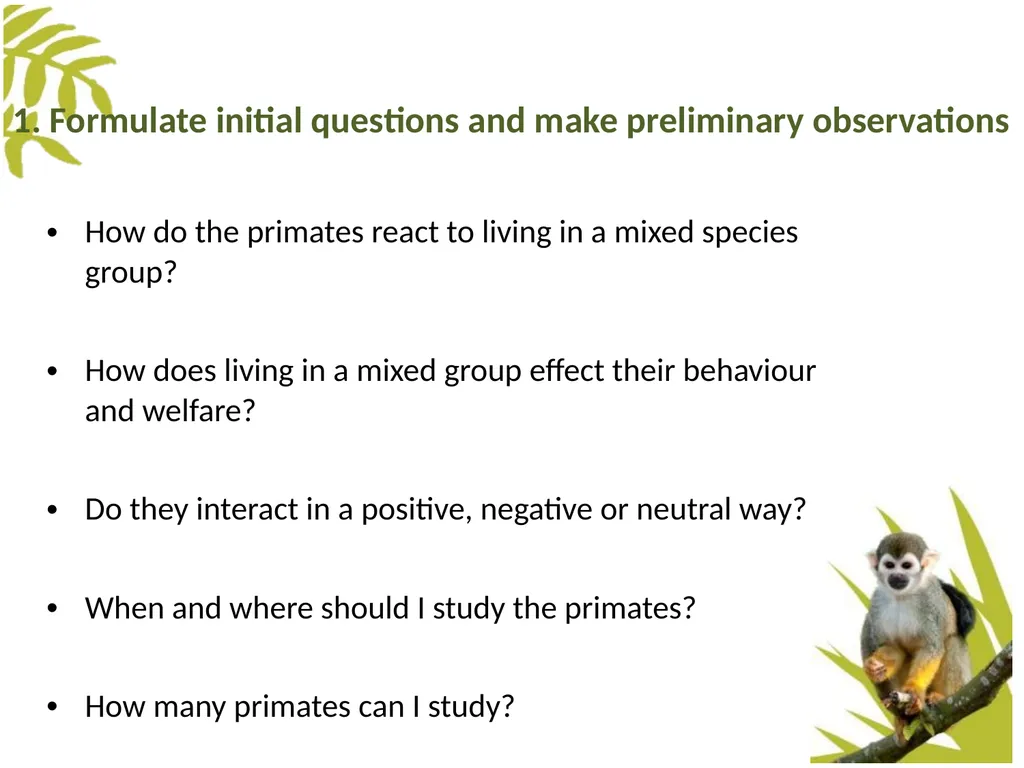
1. Formulate initial questions and make preliminary observations How do the primates react to living in a mixed species group?
How does living in a mixed group effect their behaviour and welfare?
Do they interact in a positive, negative or neutral way?
When and where should I study the primates?
How many primates can I study?<br>
12
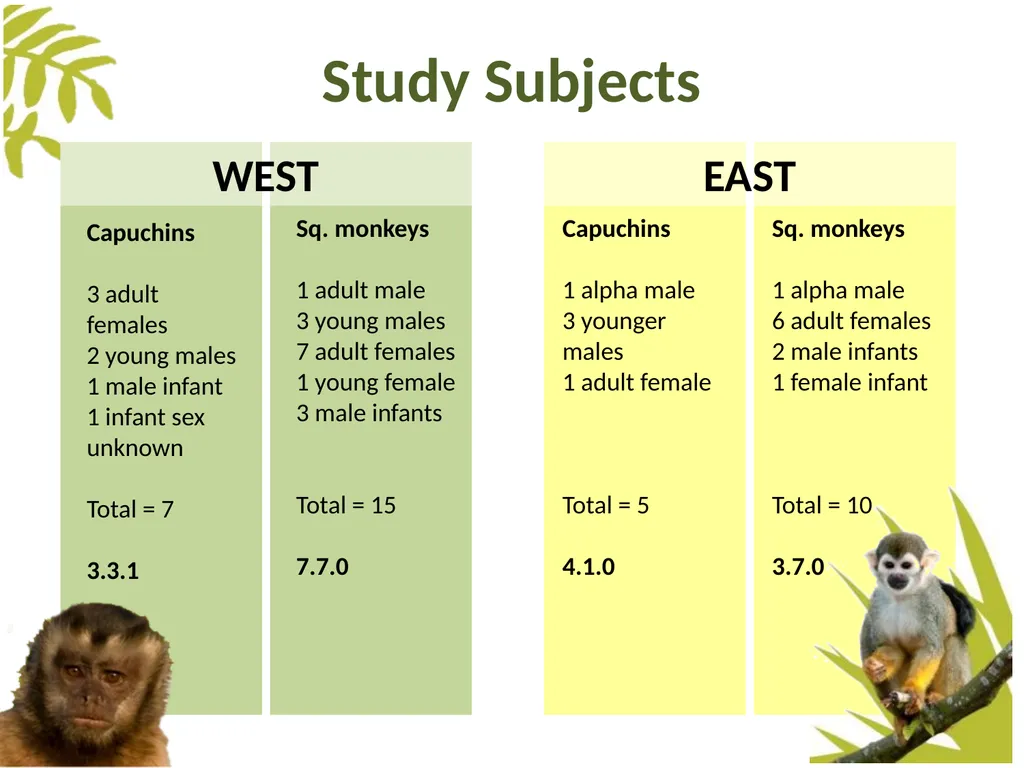
Study Subjects WEST EAST Capuchins
3 adult females
2 young males
1 male infant
1 infant sex unknown
Total = 7
3.3.1 Capuchins
1 alpha male
3 younger males
1 adult female
Total = 5
4.1.0 Sq. monkeys
1 adult male
3 young males
7 adult females
1 young female
3 male infants
Total = 15
7.7.0 Sq. monkeys
1 alpha male
6 adult females
2 male infants
1 female infant
Total = 10
3.7.0<br>
13
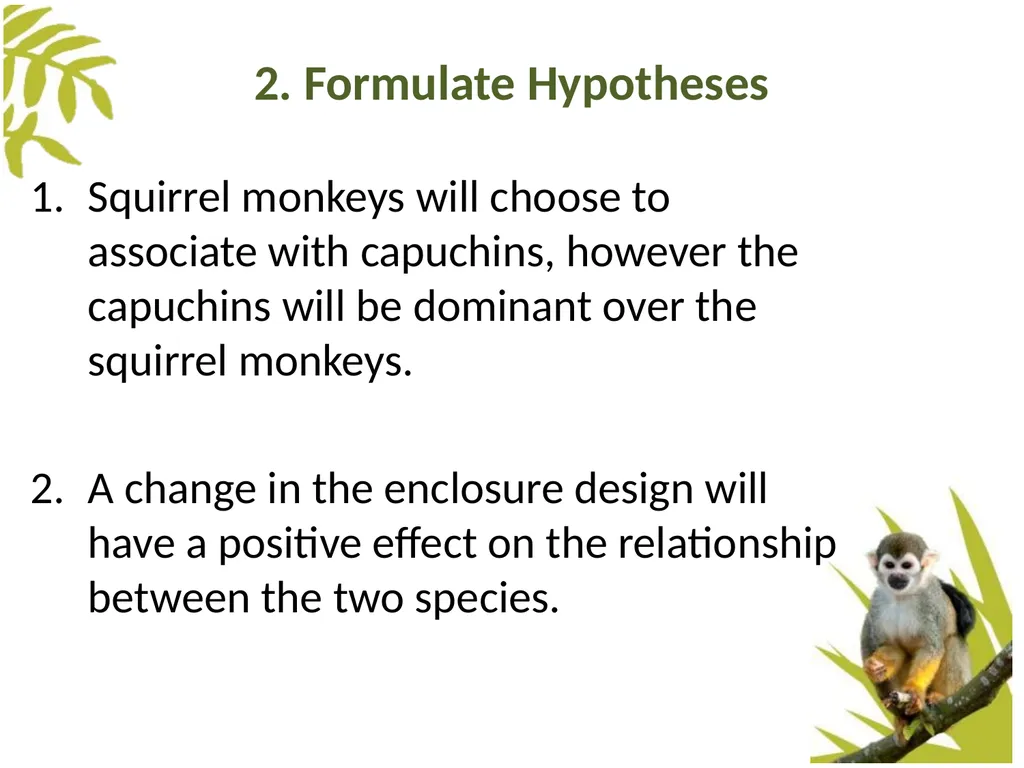
2. Formulate Hypotheses Squirrel monkeys will choose to associate with capuchins, however the capuchins will be dominant over the squirrel monkeys.
A change in the enclosure design will have a positive effect on the relationship between the two species.<br>
14
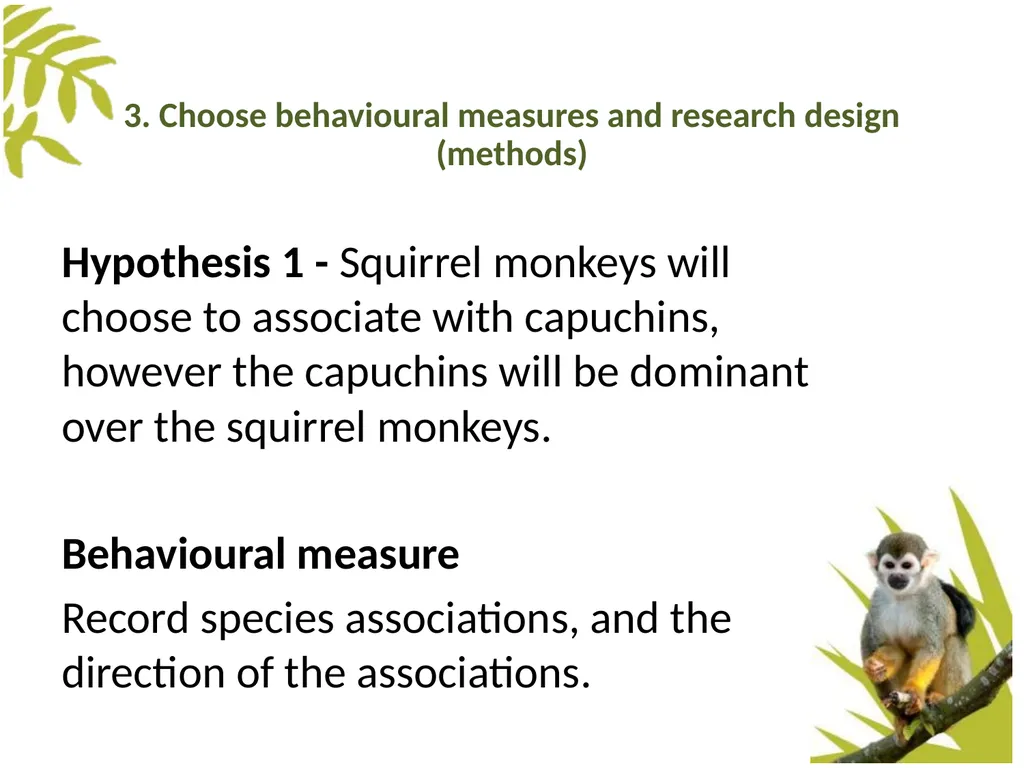
3. Choose behavioural measures and research design (methods) Hypothesis 1 - Squirrel monkeys will choose to associate with capuchins, however the capuchins will be dominant over the squirrel monkeys.
Behavioural measure
Record species associations, and the direction of the associations.<br>
15
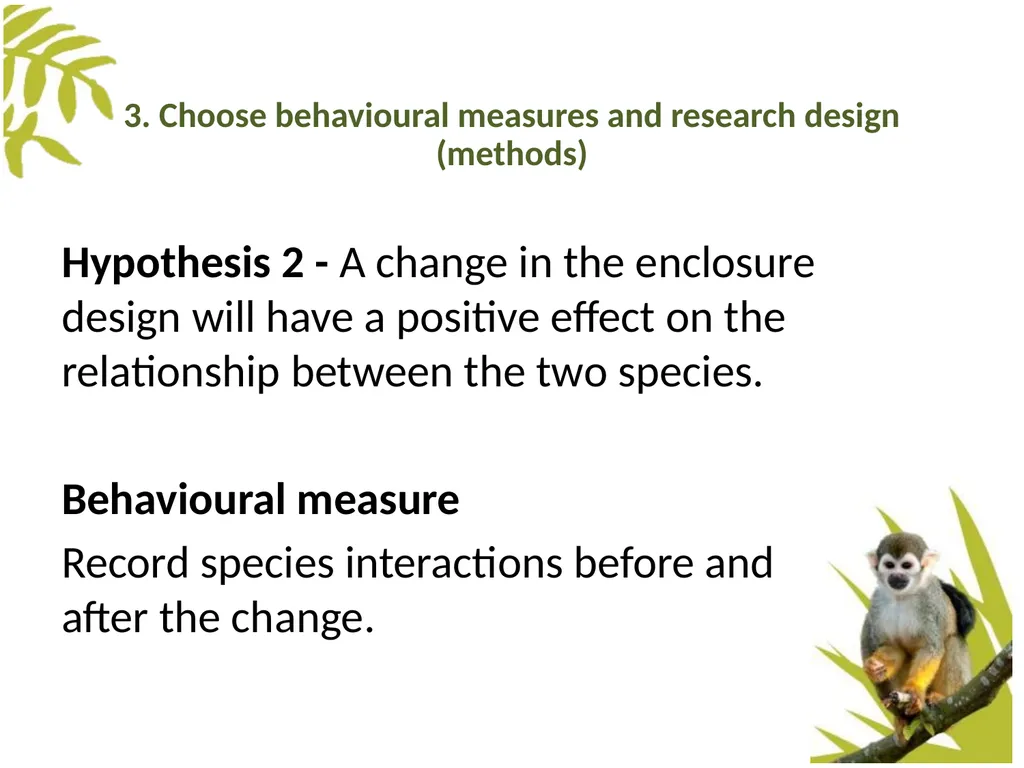
3. Choose behavioural measures and research design (methods) Hypothesis 2 - A change in the enclosure design will have a positive effect on the relationship between the two species.
Behavioural measure
Record species interactions before and after the change.<br>
16
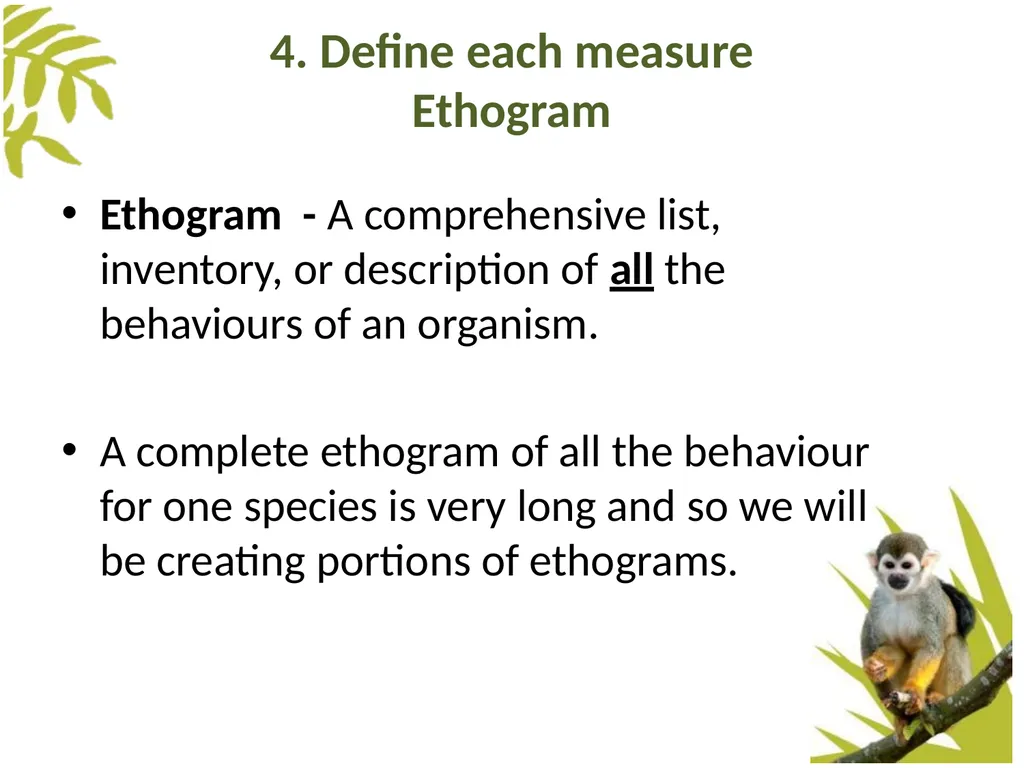
Ethogram - A comprehensive list, inventory, or description of all the behaviours of an organism.
A complete ethogram of all the behaviour for one species is very long and so we will be creating portions of ethograms. 4. Define each measure�Ethogram<br>
17
Say what you see, not what you think ! 4. Define each measure�(Behaviour Categories and Definitions)<br>
18
Design Part of an Ethogram Living Links website - http://www.living-links.org/resources/materials-for-teachers/measuring-behaviour-lesson-plan/
Vimeo - http://vimeo.com/channels/livinglinks/45906210<br>
19
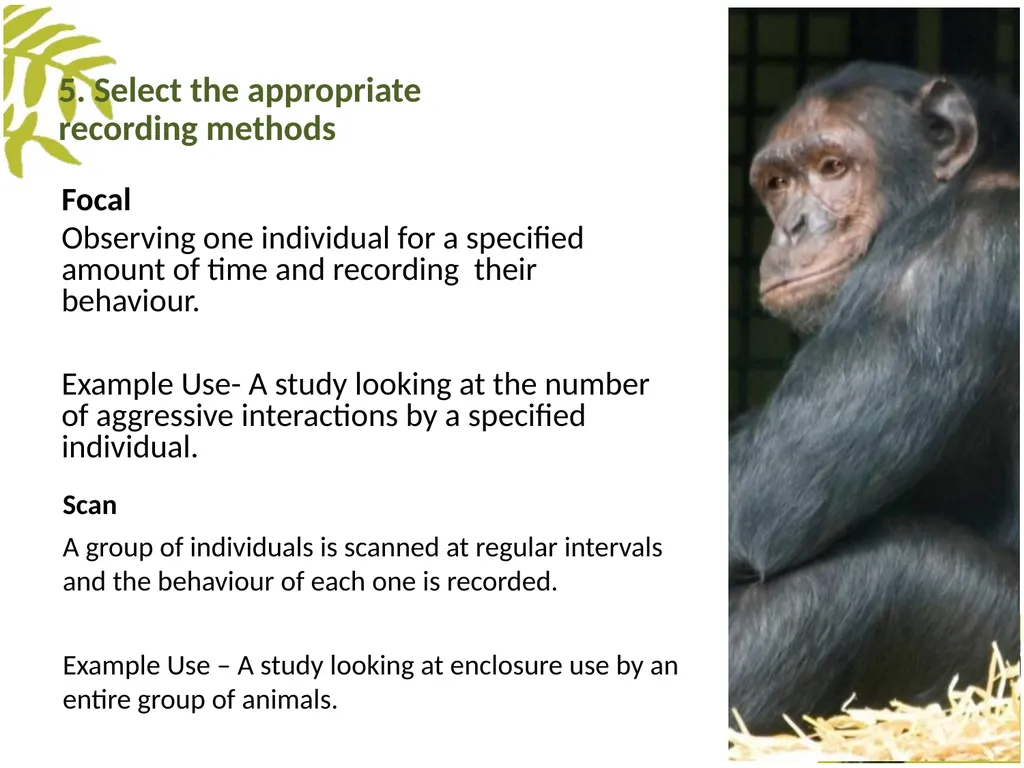
5. Select the appropriate �recording methods Focal
Observing one individual for a specified amount of time and recording their behaviour.
Example Use- A study looking at the number of aggressive interactions by a specified individual. Scan
A group of individuals is scanned at regular intervals and the behaviour of each one is recorded.
Example Use – A study looking at enclosure use by an entire group of animals.<br>
20
What kind of data do you want to record? State
Behaviours that occur for an extended duration.
Examples - Lying, walking, foraging, sleeping. Events
Behaviors that are short in duration and generally counted rather than timed
Examples - Fighting, yawning, sneezing, vocalising.<br>
21
Let’s Try a Focal Living Links website - http://www.living-links.org/resources/materials-for-teachers/measuring-behaviour-lesson-plan/
Vimeo - http://vimeo.com/13796260<br>
22
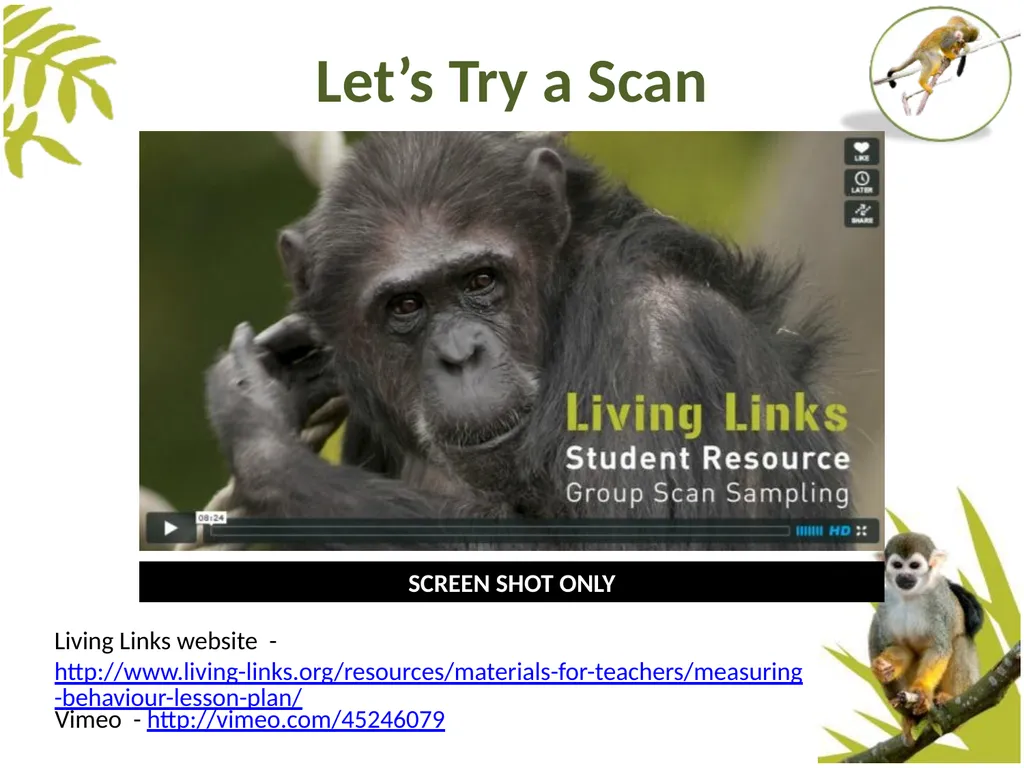
Let’s Try a Scan Living Links website - http://www.living-links.org/resources/materials-for-teachers/measuring-behaviour-lesson-plan/ Vimeo - http://vimeo.com/45246079 SCREEN SHOT ONLY<br>
23
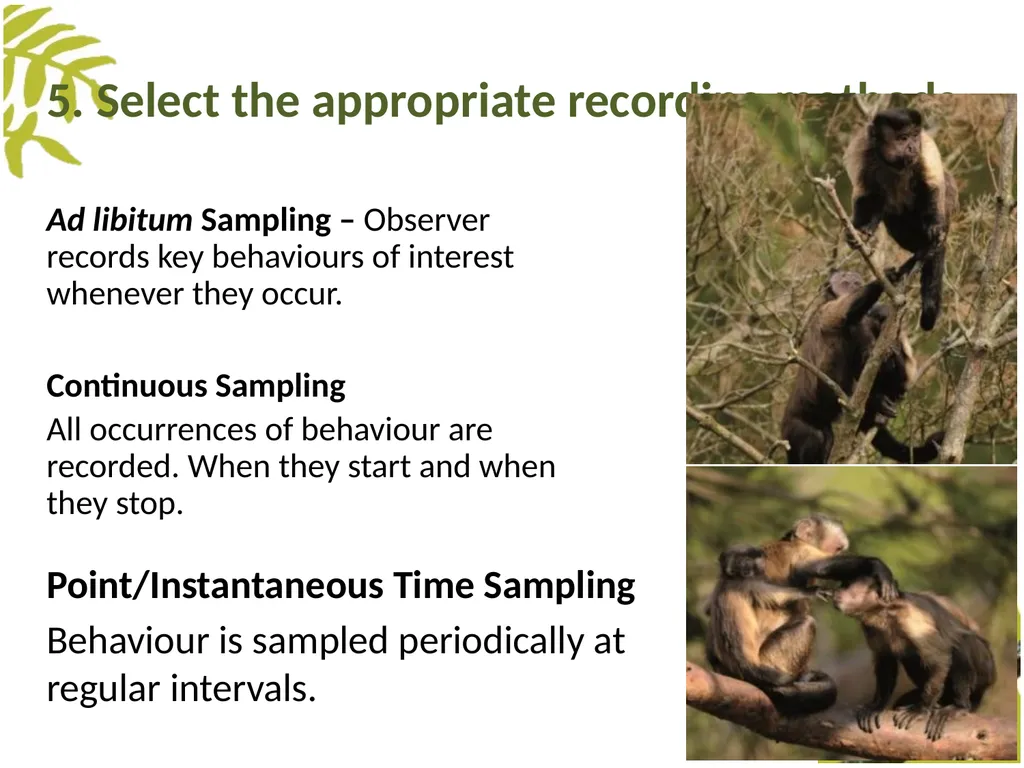
5. Select the appropriate recording methods Ad libitum Sampling – Observer records key behaviours of interest whenever they occur.
Continuous Sampling
All occurrences of behaviour are recorded. When they start and when they stop. Point/Instantaneous Time Sampling
Behaviour is sampled periodically at regular intervals.<br>
24
Which recording methods were used in �Living together? Instantaneous Scan Continuous Focal Ad lib<br>
25
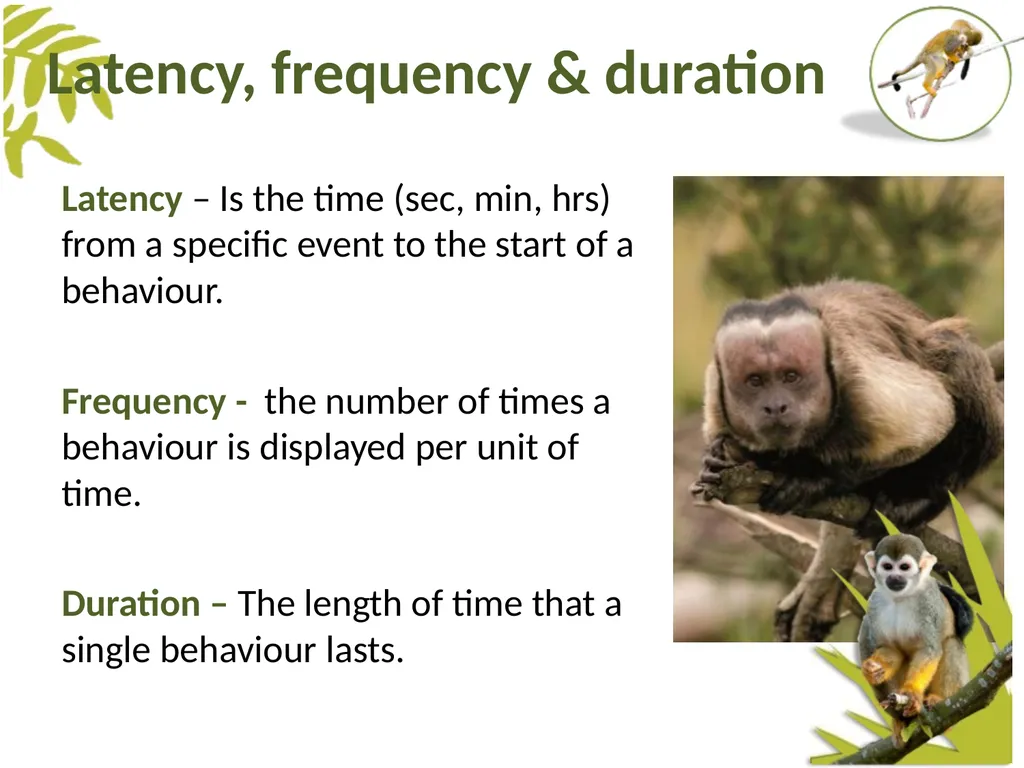
Latency – Is the time (sec, min, hrs) from a specific event to the start of a behaviour.
Frequency - the number of times a behaviour is displayed per unit of time.
Duration – The length of time that a single behaviour lasts. Latency, frequency & duration<br>
26
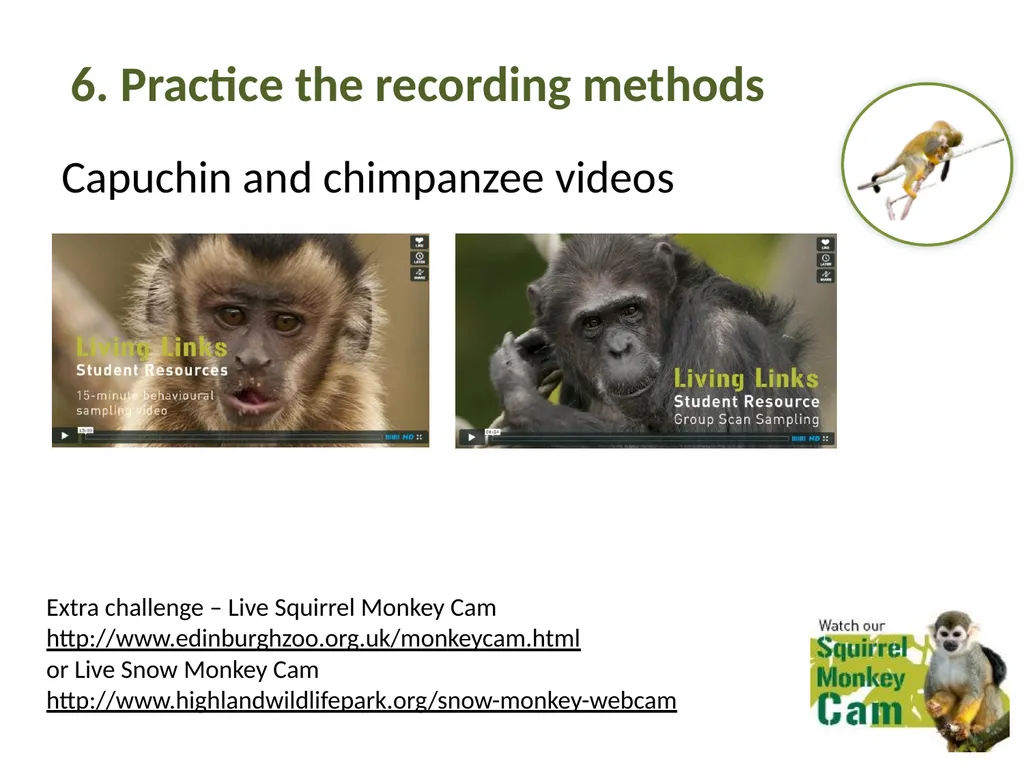
6. Practice the recording methods Capuchin and chimpanzee videos Extra challenge – Live Squirrel Monkey Cam
http://www.edinburghzoo.org.uk/monkeycam.html
or Live Snow Monkey Cam
http://www.highlandwildlifepark.org/snow-monkey-webcam<br>
27
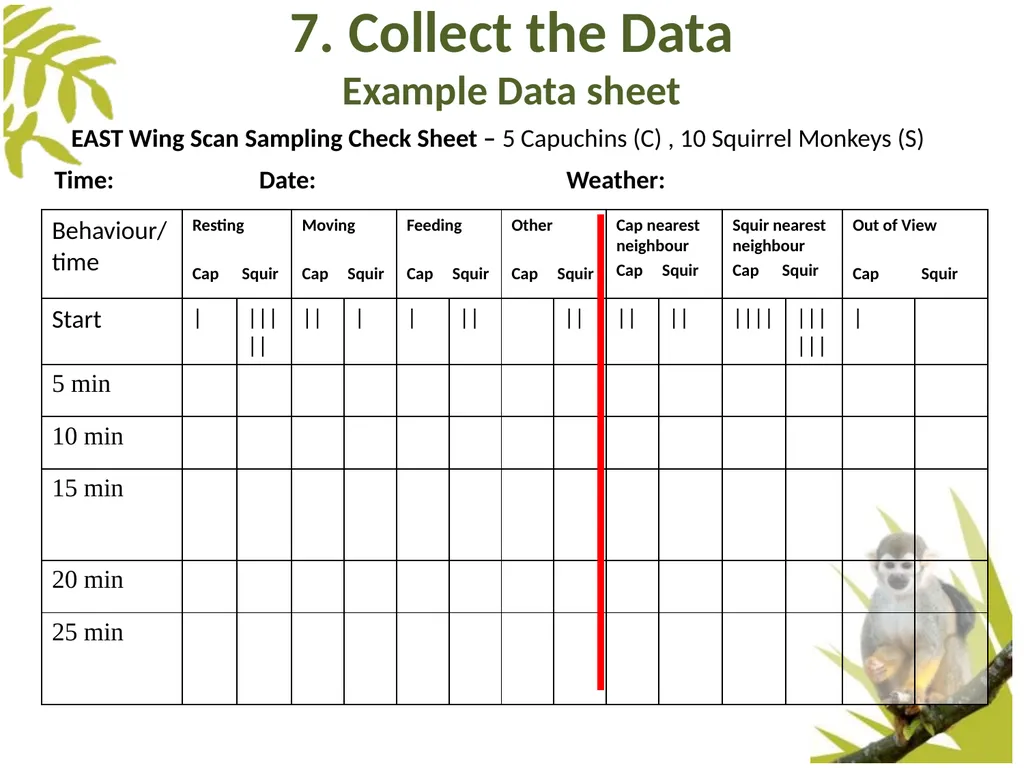
7. Collect the Data�Example Data sheet Time: Date: Weather: EAST Wing Scan Sampling Check Sheet – 5 Capuchins (C) , 10 Squirrel Monkeys (S)<br>
28
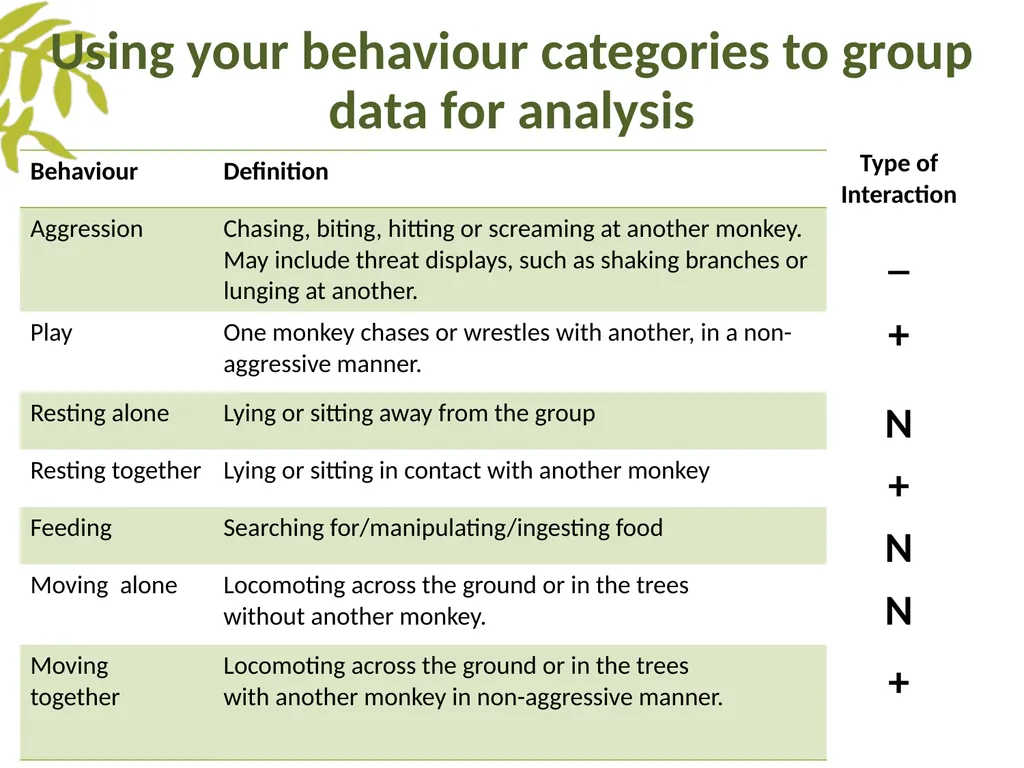
Using your behaviour categories to group data for analysis<br>
29
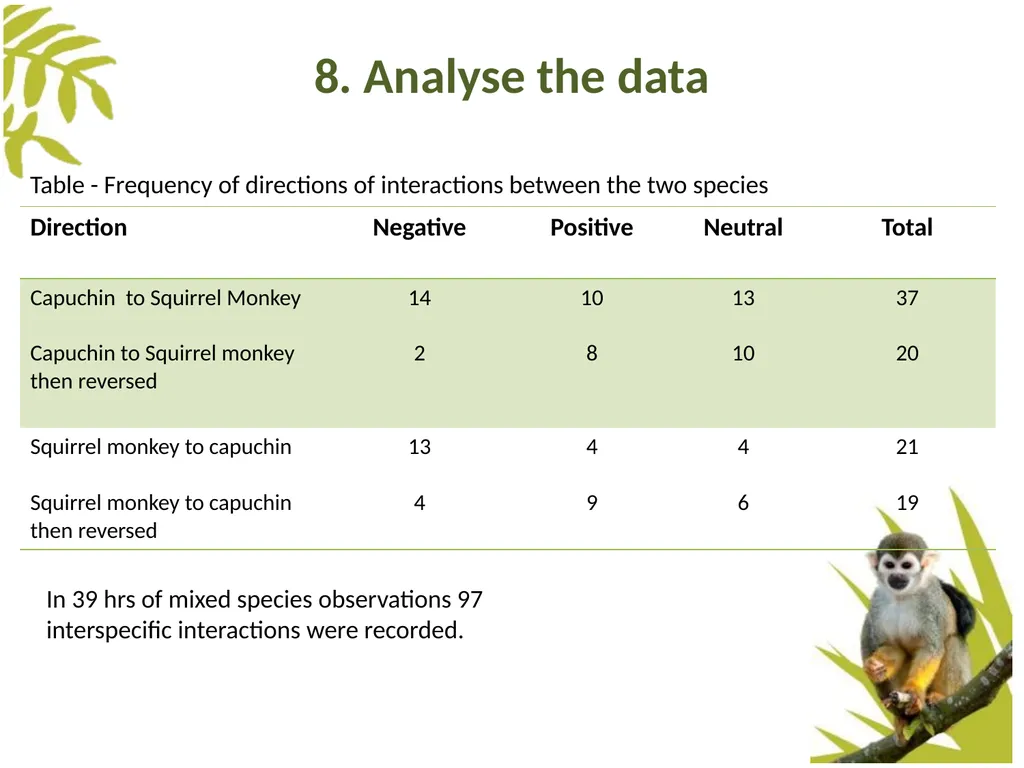
8. Analyse the data Table - Frequency of directions of interactions between the two species In 39 hrs of mixed species observations 97 interspecific interactions were recorded.<br>
30
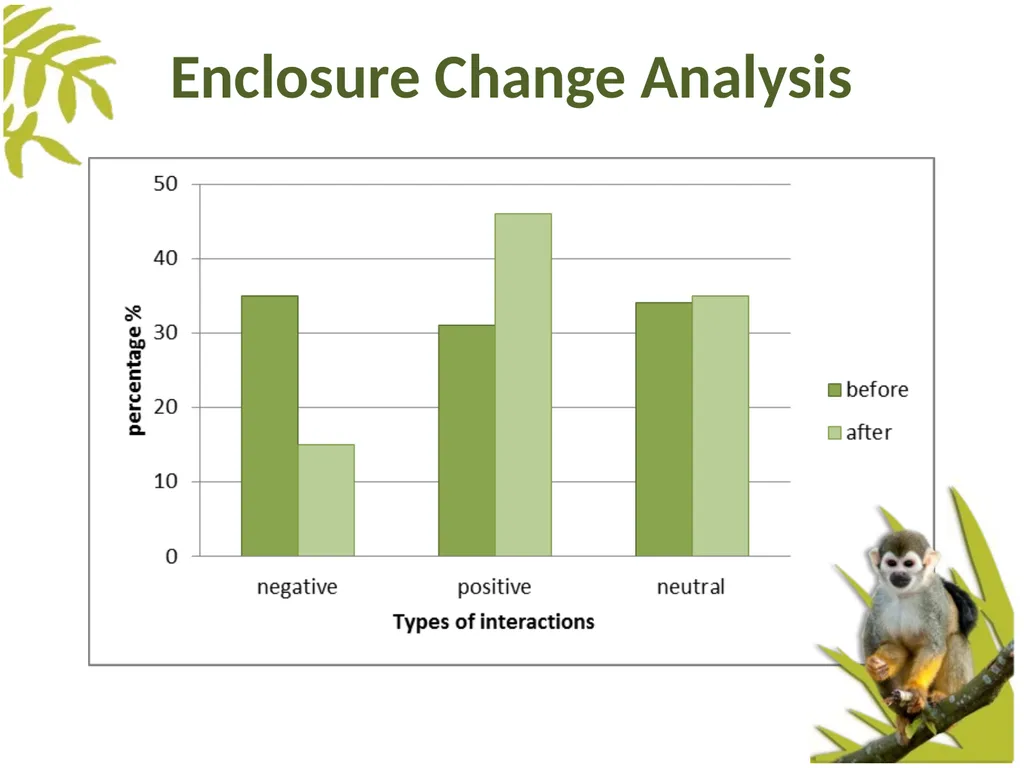
Enclosure Change Analysis<br>
31
7&8. Collect and Analyse the data Collect data and create a simple activity budget for the group of chimps.
Or
Collect the data and create a simple activity budget for the capuchin Popeye.
Or
Collect the data and create a simple activity budget from the “design an ethogram” video.<br>
32
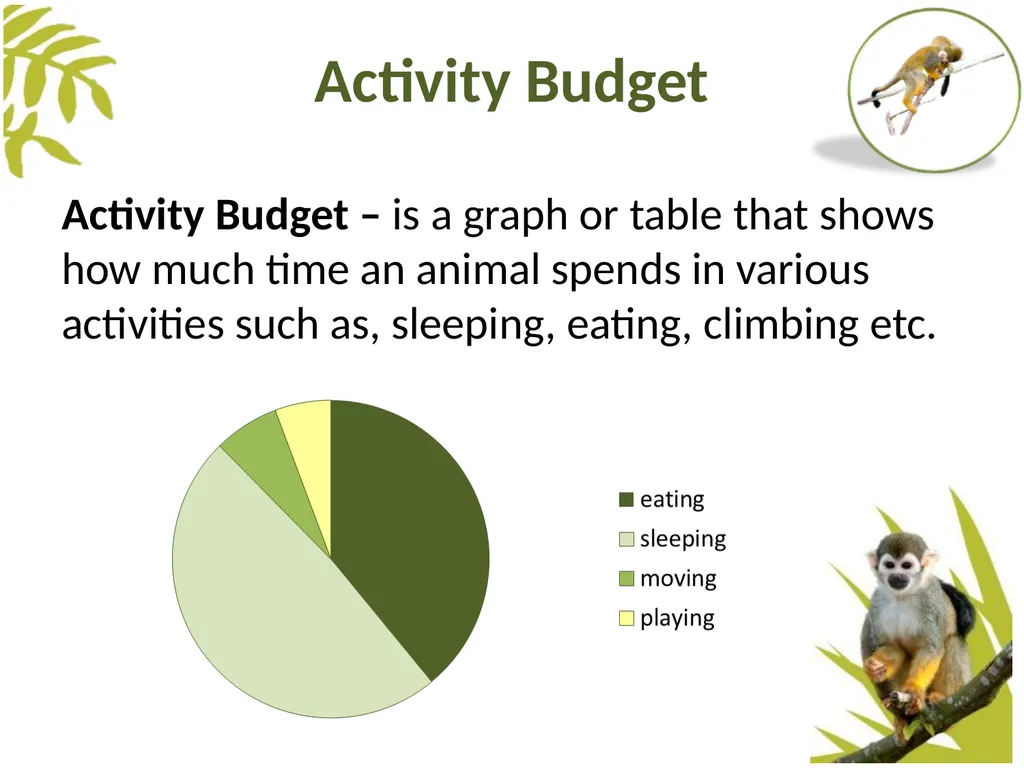
Activity Budget – is a graph or table that shows how much time an animal spends in various activities such as, sleeping, eating, climbing etc. Activity Budget<br>
33
9. Draw conclusions Hypothesis 1 - Squirrel monkeys will choose to associate with capuchins, however the capuchins will be dominant over the squirrel monkeys.
Correct – Squirrel monkeys actively choose to associate with capuchins.
Correct - Capuchins did appear to be the dominant of the two species (in most cases).<br>
34
Hypothesis 2 - A change in the enclosure design will have a positive effect on the relationship between the two species.
Correct – The frequency of interaction between the species stayed the same however the proportion of positive interactions increased and negative ones decreased. Conclusions<br>
35
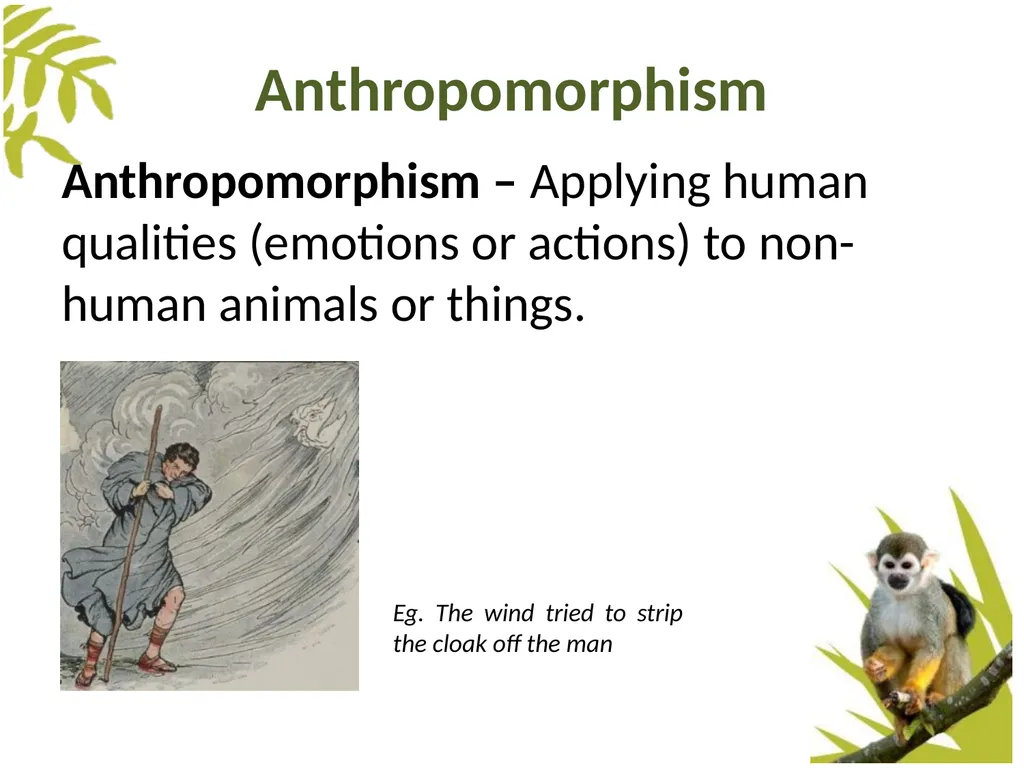
Anthropomorphism Anthropomorphism – Applying human qualities (emotions or actions) to non-human animals or things. Eg. The wind tried to strip the cloak off the man<br>
36
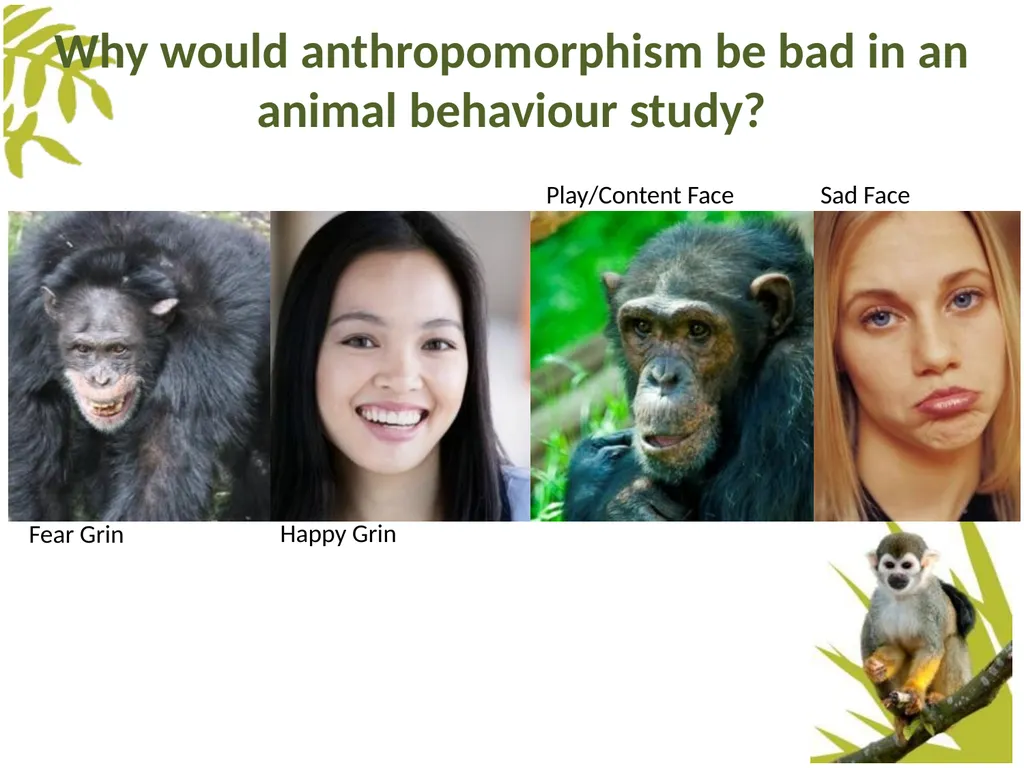
Why would anthropomorphism be bad in an animal behaviour study? Fear Grin Happy Grin Play/Content Face Sad Face<br>
37
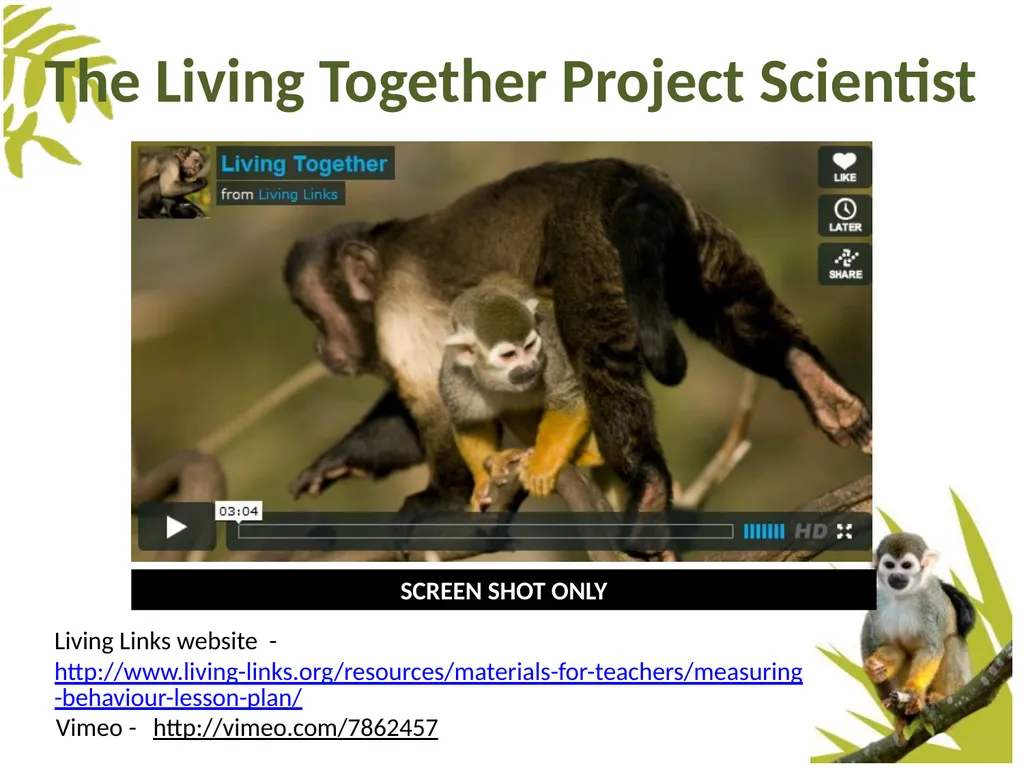
The Living Together Project Scientist SCREEN SHOT ONLY Living Links website - http://www.living-links.org/resources/materials-for-teachers/measuring-behaviour-lesson-plan/ http://vimeo.com/7862457 Vimeo -<br>
38
Alaina Macri – RZSS
Dr Mark Bowler and Prof Andy Whiten – St. Andrews University
Prof Hannah Buchanan-Smith – Stirling University
Wellcome Trust
Kenny Hurst - photographer
The Zoo keepers at Edinburgh Zoo Acknowledgements<br>
39
For more resources visit:
http://www.living-links.org/resources
and
http://www.educationscotland.gov.uk<br>