
Microbiome analysis Conor Meehan (he/they)

Description: Microbiome analysis Conor Meehan (hethey) conor.meehanntu.ac.uk conmeehan Learning outcomes Explain various terminology and concepts associated with microbiomes Recognise the three primary diversity measures Compare and critique various
Related Topics
Download Presentation
"Microbiome analysis Conor Meehan (he/they)" is the property of its rightful owner. Permission is granted to download and print the materials on this website for personal, non-commercial use only, and to display it on your personal computer provided you do not modify the materials and that you retain all copyright notices contained in the materials. By downloading content from our website, you accept the terms of this agreement.
Presentation Transcript
slide1. Microbiome analysis Conor Meehan (he/they)
conor.meehan@ntu.ac.uk
@con_meehan<br>
slide2. Learning outcomes Explain various terminology and concepts associated with microbiomes
Recognise the three primary diversity measures
Compare and critique various methodologies for microbiome profiling<br>
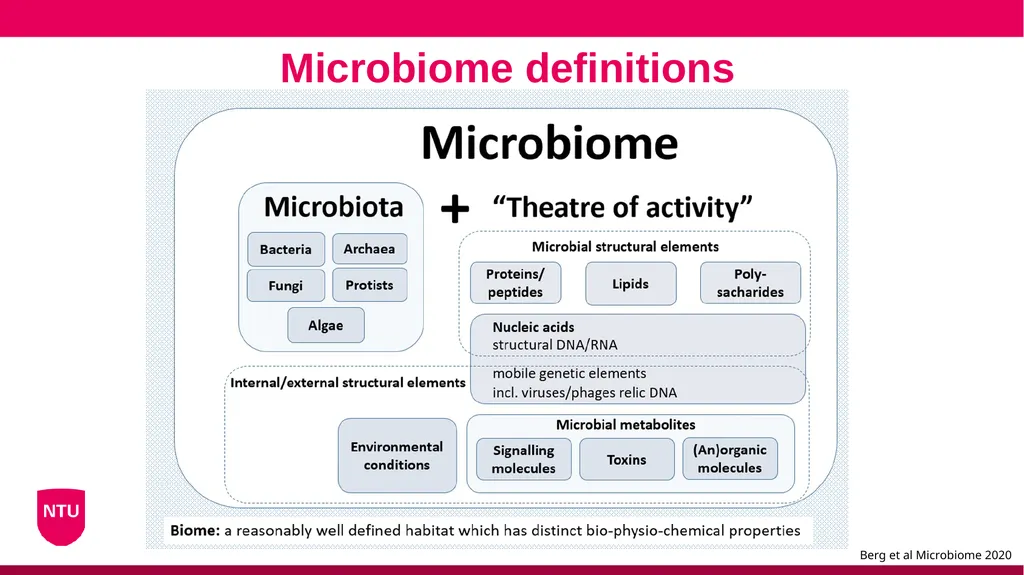
slide3. Microbiome definitions Berg et al Microbiome 2020<br>
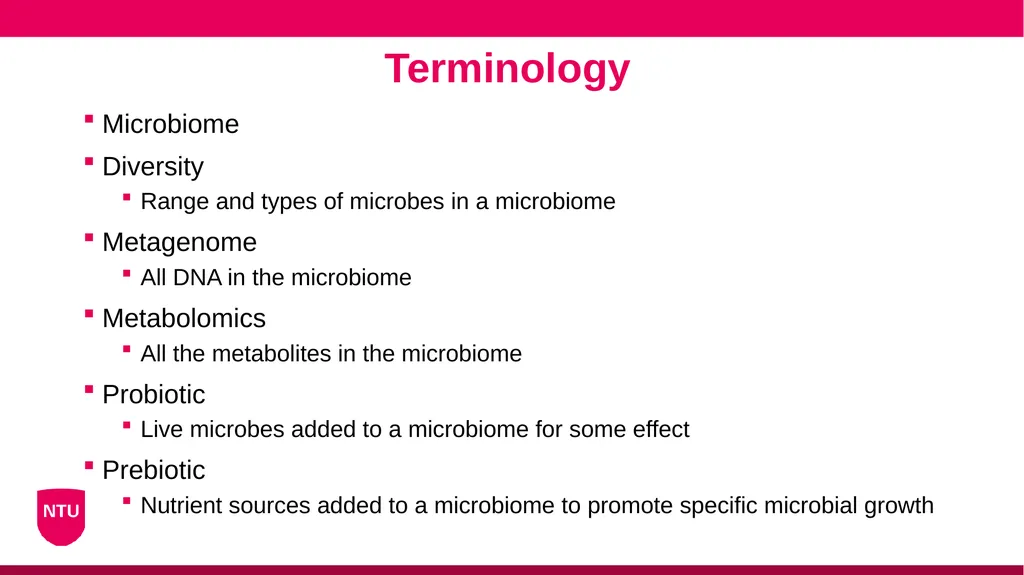
slide4. Terminology Microbiome
Diversity
Range and types of microbes in a microbiome
Metagenome
All DNA in the microbiome
Metabolomics
All the metabolites in the microbiome
Probiotic
Live microbes added to a microbiome for some effect
Prebiotic
Nutrient sources added to a microbiome to promote specific microbial growth<br>
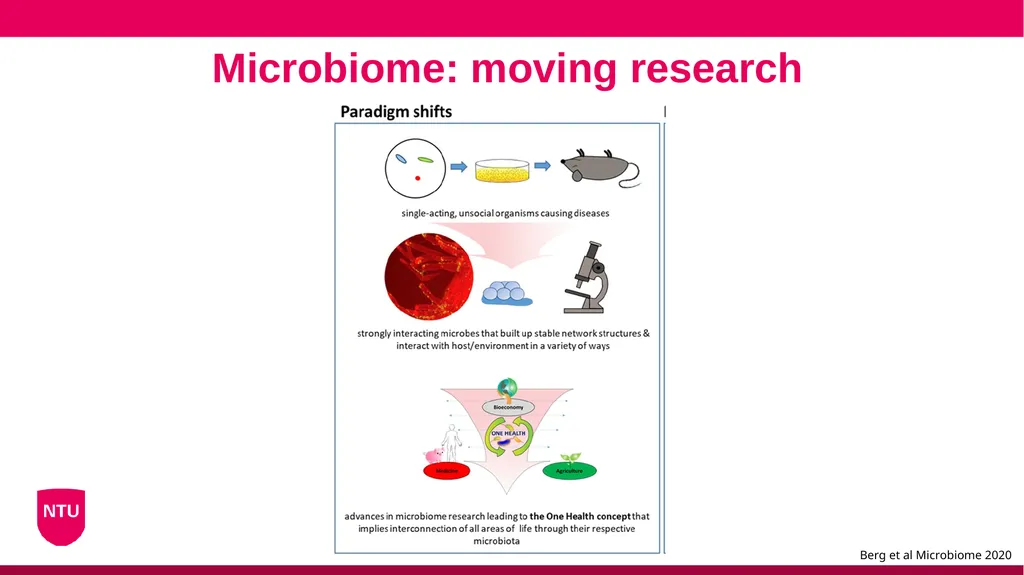
slide5. Microbiome: moving research Berg et al Microbiome 2020<br>
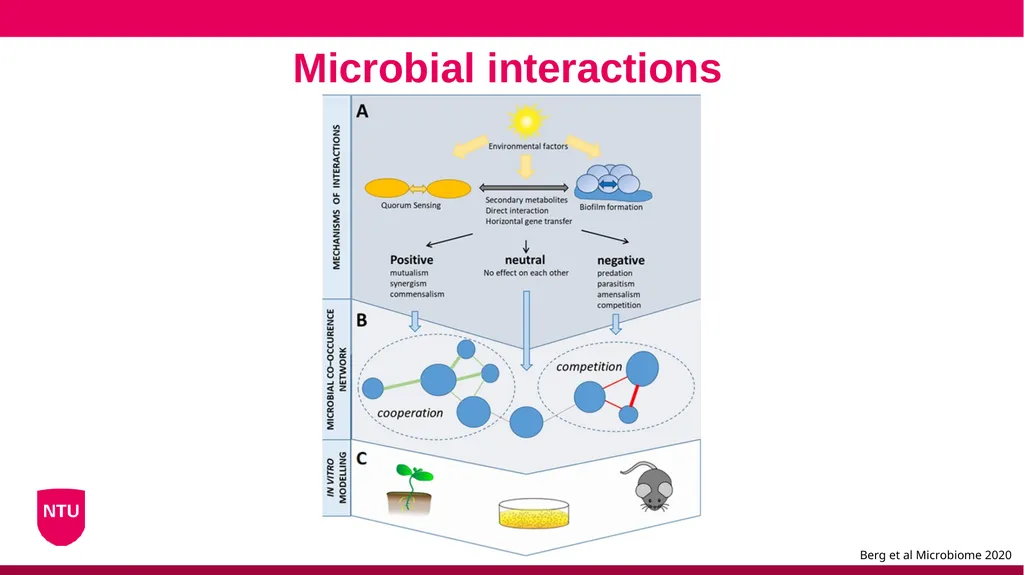
slide6. Microbial interactions Berg et al Microbiome 2020<br>
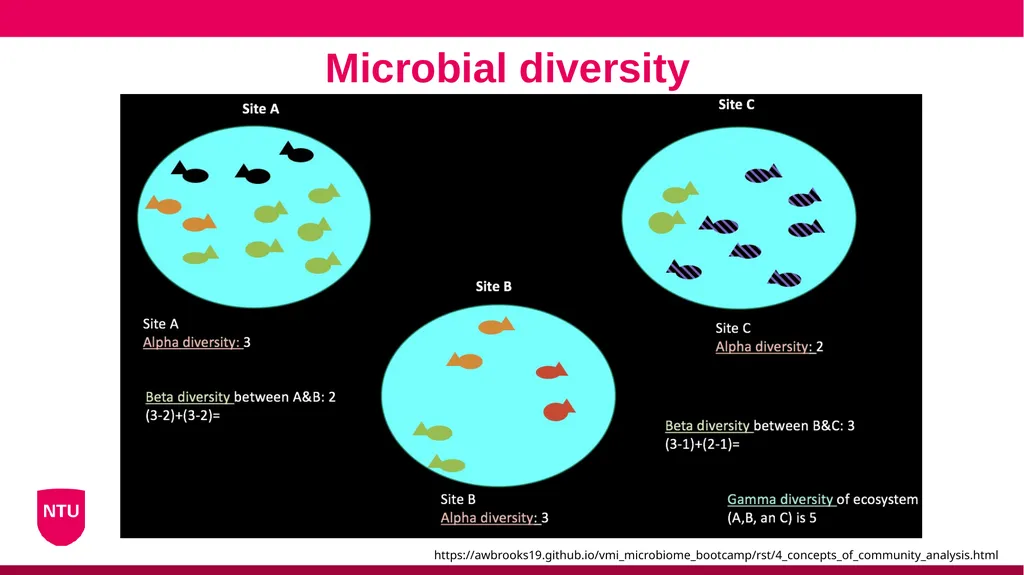
slide7. Microbial diversity https://awbrooks19.github.io/vmi_microbiome_bootcamp/rst/4_concepts_of_community_analysis.html<br>
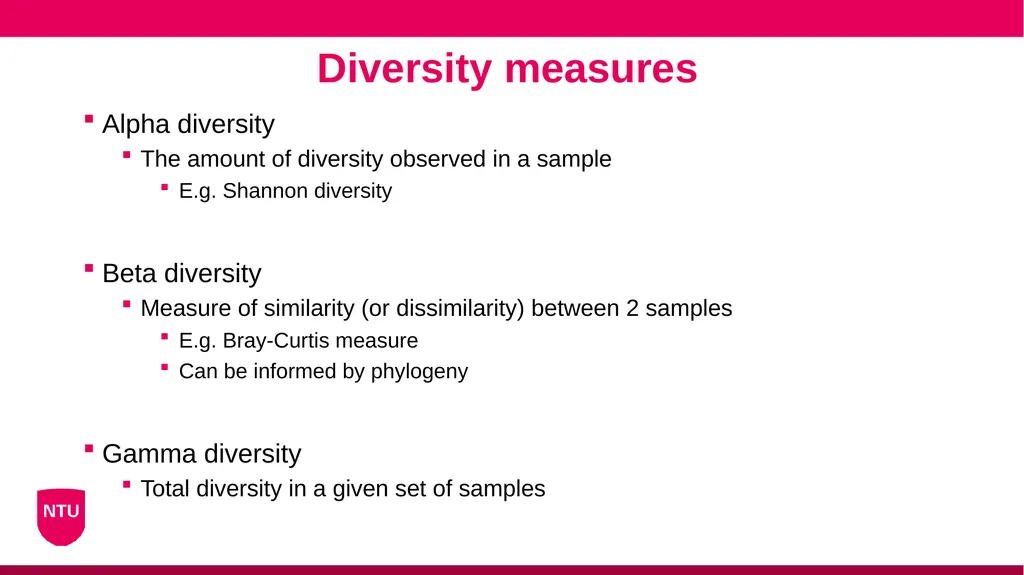
slide8. Diversity measures Alpha diversity
The amount of diversity observed in a sample
E.g. Shannon diversity
Beta diversity
Measure of similarity (or dissimilarity) between 2 samples
E.g. Bray-Curtis measure
Can be informed by phylogeny
Gamma diversity
Total diversity in a given set of samples<br>
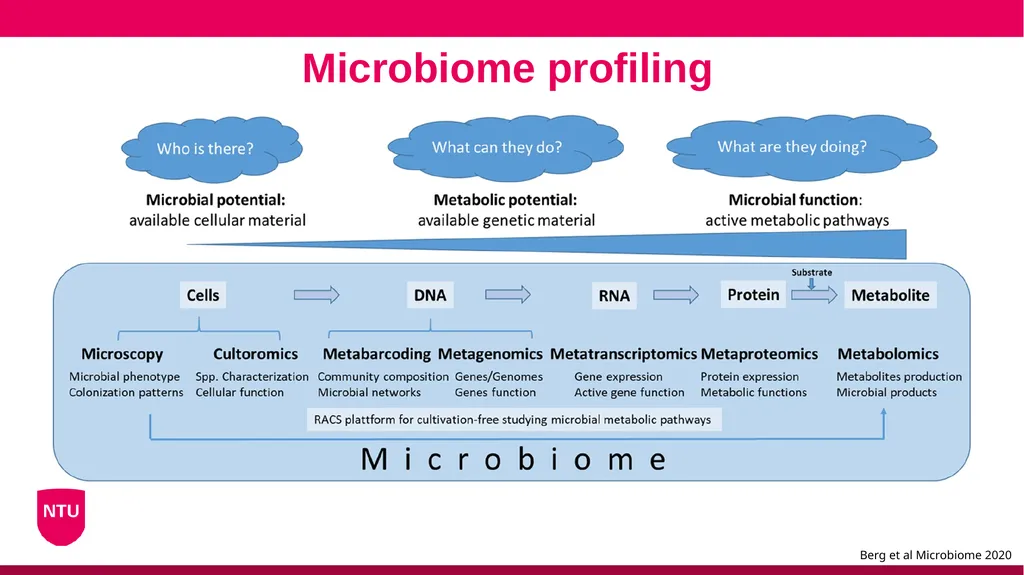
slide9. Microbiome profiling Berg et al Microbiome 2020<br>
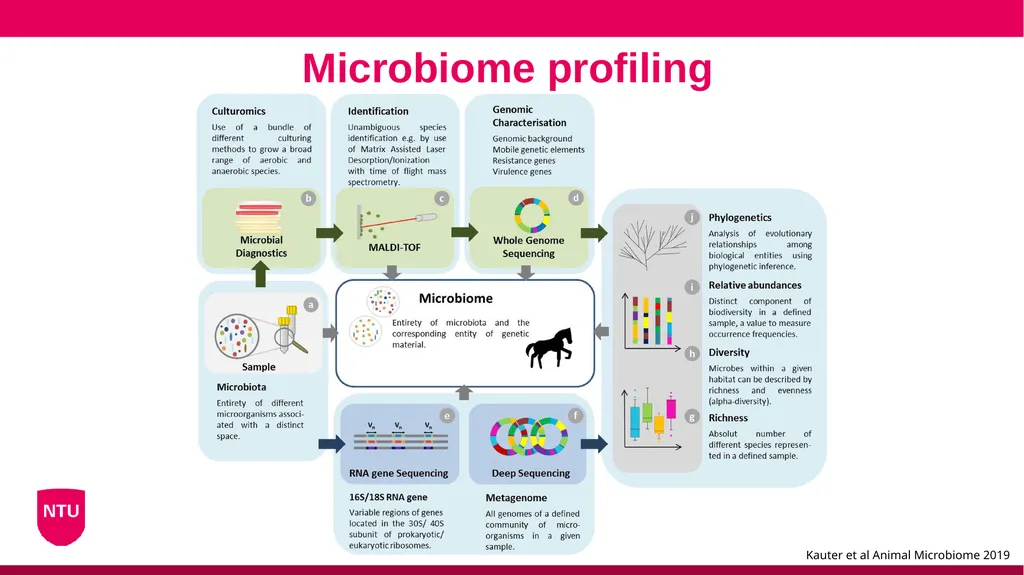
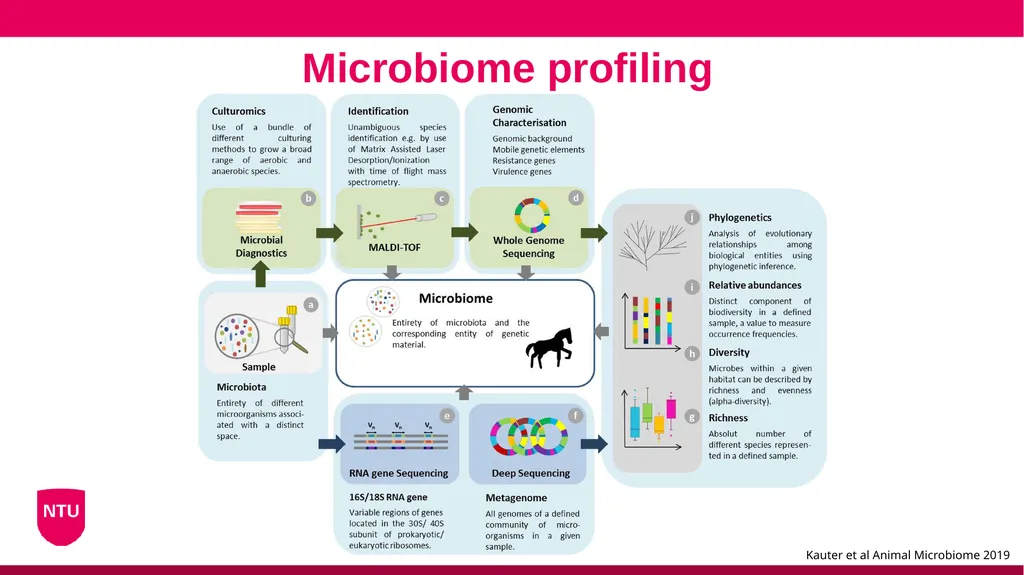
slide10. Microbiome profiling Kauter et al Animal Microbiome 2019<br>
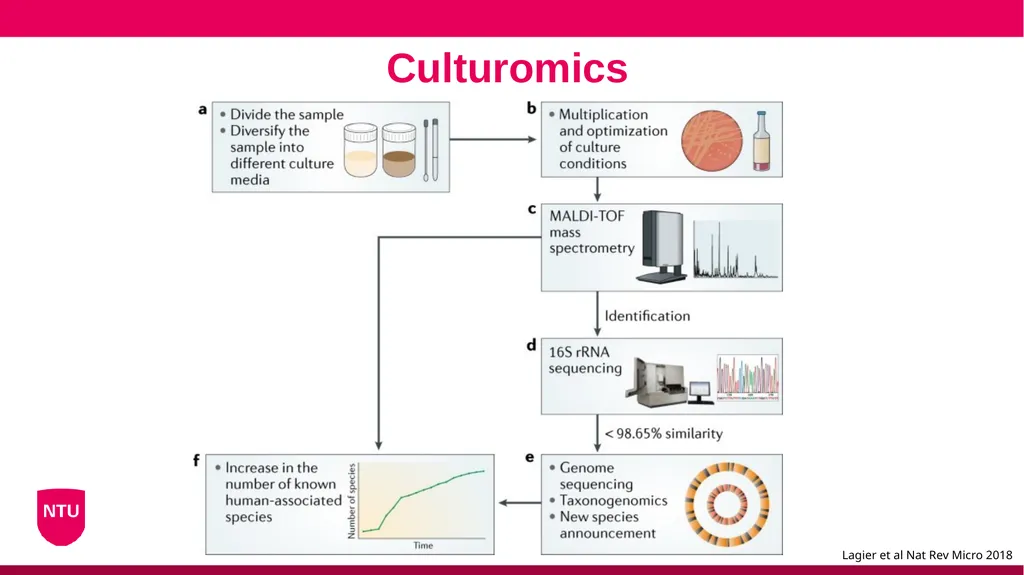
slide11. Culturomics Lagier et al Nat Rev Micro 2018<br>
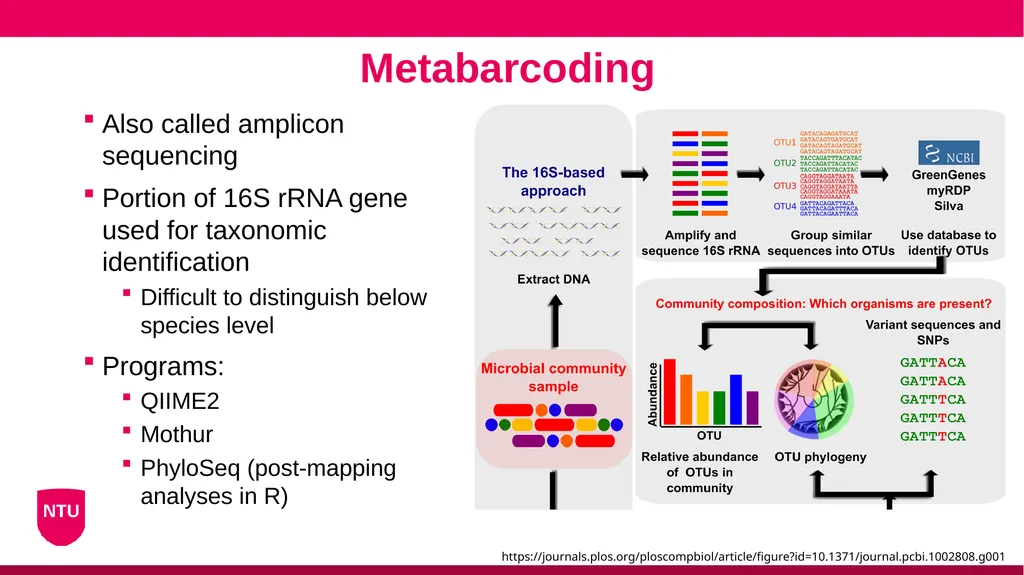
slide12. Metabarcoding Also called amplicon sequencing
Portion of 16S rRNA gene used for taxonomic identification
Difficult to distinguish below species level
Programs:
QIIME2
Mothur
PhyloSeq (post-mapping analyses in R) https://journals.plos.org/ploscompbiol/article/figure?id=10.1371/journal.pcbi.1002808.g001<br>
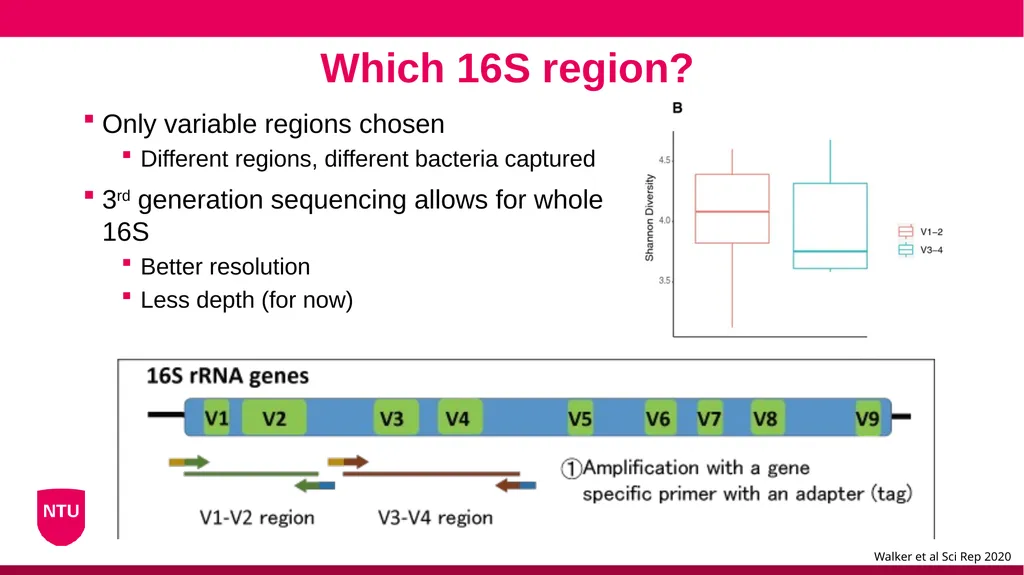
slide13. Which 16S region? Only variable regions chosen
Different regions, different bacteria captured
3rd generation sequencing allows for whole 16S
Better resolution
Less depth (for now) Walker et al Sci Rep 2020<br>
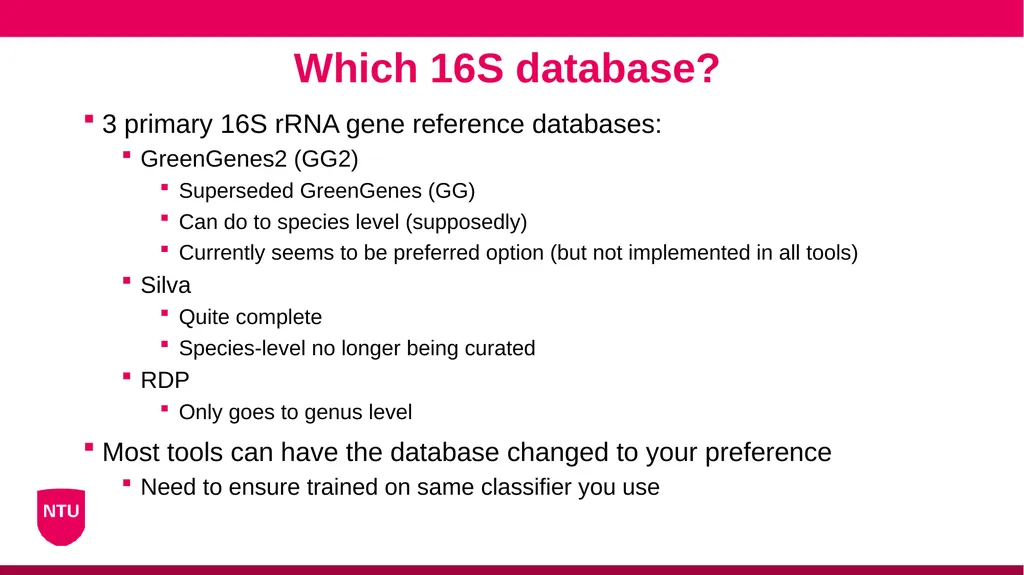
slide14. Which 16S database? 3 primary 16S rRNA gene reference databases:
GreenGenes2 (GG2)
Superseded GreenGenes (GG)
Can do to species level (supposedly)
Currently seems to be preferred option (but not implemented in all tools)
Silva
Quite complete
Species-level no longer being curated
RDP
Only goes to genus level
Most tools can have the database changed to your preference
Need to ensure trained on same classifier you use<br>
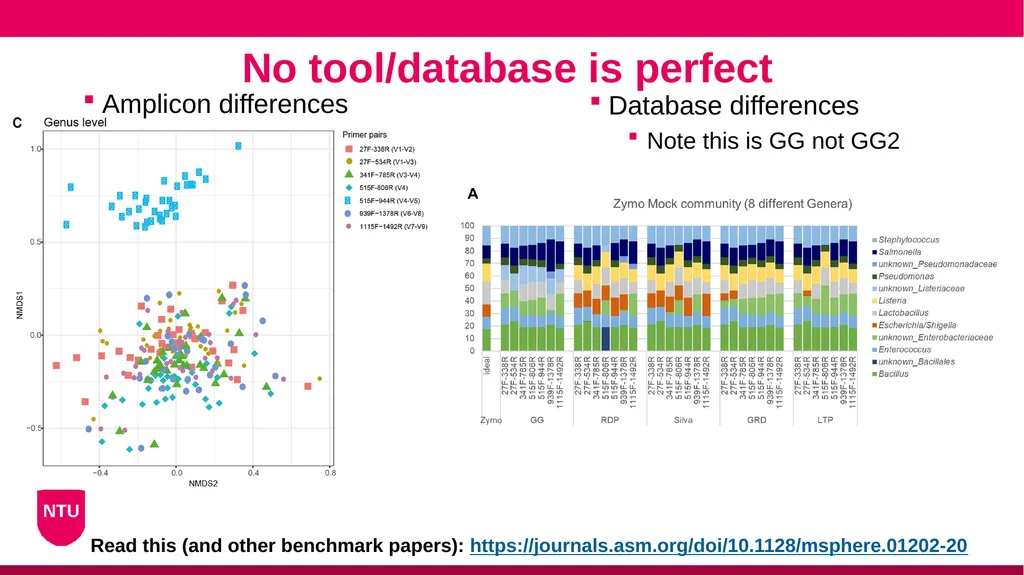
slide15. No tool/database is perfect Database differences
Note this is GG not GG2 Read this (and other benchmark papers): https://journals.asm.org/doi/10.1128/msphere.01202-20 Amplicon differences<br>
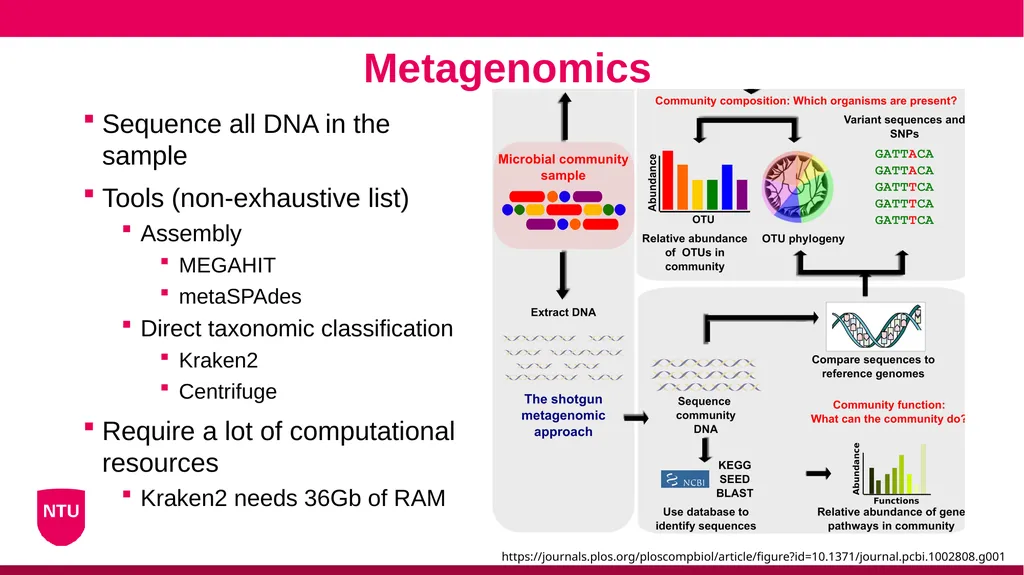
slide16. Metagenomics Sequence all DNA in the sample
Tools (non-exhaustive list)
Assembly
MEGAHIT
metaSPAdes
Direct taxonomic classification
Kraken2
Centrifuge
Require a lot of computational resources
Kraken2 needs 36Gb of RAM https://journals.plos.org/ploscompbiol/article/figure?id=10.1371/journal.pcbi.1002808.g001<br>
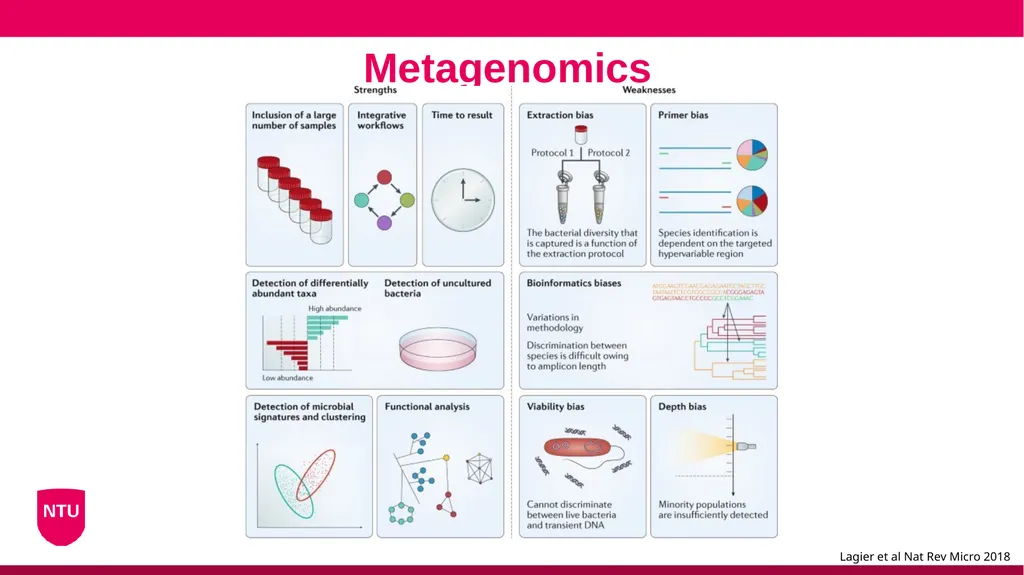
slide17. Metagenomics Lagier et al Nat Rev Micro 2018<br>
slide18. Microbiome profiling Kauter et al Animal Microbiome 2019<br>
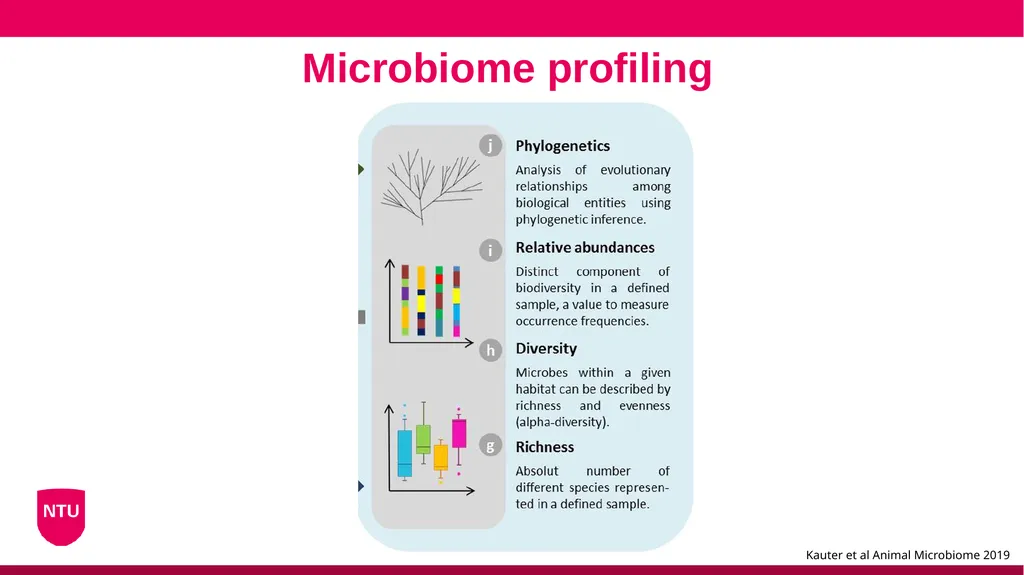
slide19. Microbiome profiling Kauter et al Animal Microbiome 2019<br>
slide20. Amplicon vs metagenomic analyses Claesson et al Nat Rev G&H 2017<br>
slide21. Tools for analyses Growing field
Lots of new things, lots of mistakes
Lots of tools to do different things
Most UNIX- or R-based
Often require a lot of computational resources
Carefully read benchmarking papers and test workflows<br>
slide22. Learning outcomes Explain various terminology and concepts associated with microbiomes
Recognise the three primary diversity measures
Compare and critique various methodologies for microbiome profiling<br>
conor.meehan@ntu.ac.uk
@con_meehan<br>
slide2. Learning outcomes Explain various terminology and concepts associated with microbiomes
Recognise the three primary diversity measures
Compare and critique various methodologies for microbiome profiling<br>
slide3. Microbiome definitions Berg et al Microbiome 2020<br>
slide4. Terminology Microbiome
Diversity
Range and types of microbes in a microbiome
Metagenome
All DNA in the microbiome
Metabolomics
All the metabolites in the microbiome
Probiotic
Live microbes added to a microbiome for some effect
Prebiotic
Nutrient sources added to a microbiome to promote specific microbial growth<br>
slide5. Microbiome: moving research Berg et al Microbiome 2020<br>
slide6. Microbial interactions Berg et al Microbiome 2020<br>
slide7. Microbial diversity https://awbrooks19.github.io/vmi_microbiome_bootcamp/rst/4_concepts_of_community_analysis.html<br>
slide8. Diversity measures Alpha diversity
The amount of diversity observed in a sample
E.g. Shannon diversity
Beta diversity
Measure of similarity (or dissimilarity) between 2 samples
E.g. Bray-Curtis measure
Can be informed by phylogeny
Gamma diversity
Total diversity in a given set of samples<br>
slide9. Microbiome profiling Berg et al Microbiome 2020<br>
slide10. Microbiome profiling Kauter et al Animal Microbiome 2019<br>
slide11. Culturomics Lagier et al Nat Rev Micro 2018<br>
slide12. Metabarcoding Also called amplicon sequencing
Portion of 16S rRNA gene used for taxonomic identification
Difficult to distinguish below species level
Programs:
QIIME2
Mothur
PhyloSeq (post-mapping analyses in R) https://journals.plos.org/ploscompbiol/article/figure?id=10.1371/journal.pcbi.1002808.g001<br>
slide13. Which 16S region? Only variable regions chosen
Different regions, different bacteria captured
3rd generation sequencing allows for whole 16S
Better resolution
Less depth (for now) Walker et al Sci Rep 2020<br>
slide14. Which 16S database? 3 primary 16S rRNA gene reference databases:
GreenGenes2 (GG2)
Superseded GreenGenes (GG)
Can do to species level (supposedly)
Currently seems to be preferred option (but not implemented in all tools)
Silva
Quite complete
Species-level no longer being curated
RDP
Only goes to genus level
Most tools can have the database changed to your preference
Need to ensure trained on same classifier you use<br>
slide15. No tool/database is perfect Database differences
Note this is GG not GG2 Read this (and other benchmark papers): https://journals.asm.org/doi/10.1128/msphere.01202-20 Amplicon differences<br>
slide16. Metagenomics Sequence all DNA in the sample
Tools (non-exhaustive list)
Assembly
MEGAHIT
metaSPAdes
Direct taxonomic classification
Kraken2
Centrifuge
Require a lot of computational resources
Kraken2 needs 36Gb of RAM https://journals.plos.org/ploscompbiol/article/figure?id=10.1371/journal.pcbi.1002808.g001<br>
slide17. Metagenomics Lagier et al Nat Rev Micro 2018<br>
slide18. Microbiome profiling Kauter et al Animal Microbiome 2019<br>
slide19. Microbiome profiling Kauter et al Animal Microbiome 2019<br>
slide20. Amplicon vs metagenomic analyses Claesson et al Nat Rev G&H 2017<br>
slide21. Tools for analyses Growing field
Lots of new things, lots of mistakes
Lots of tools to do different things
Most UNIX- or R-based
Often require a lot of computational resources
Carefully read benchmarking papers and test workflows<br>
slide22. Learning outcomes Explain various terminology and concepts associated with microbiomes
Recognise the three primary diversity measures
Compare and critique various methodologies for microbiome profiling<br>