Mind the gaps! Transforming the value of multidisciplinary risk assessments through dialogue and joined up thinking MODELLING AND UNDERSTANDING THE MINERAL DEPOSIT Geologists with appropriate experience and professional credentials
"Mind the gaps! Transforming the value of" is the property of its rightful owner. Permission is granted to
download and print the materials on this website for personal, non-commercial use only, and to display it
on your personal computer provided you do not modify the materials and that you retain all copyright
notices contained in the materials. By downloading content from our website, you accept the terms of this
agreement.
Presentation Transcript
01
Mind the gaps! Transforming the value of multidisciplinary risk assessments through dialogue and joined up thinking<br>
02
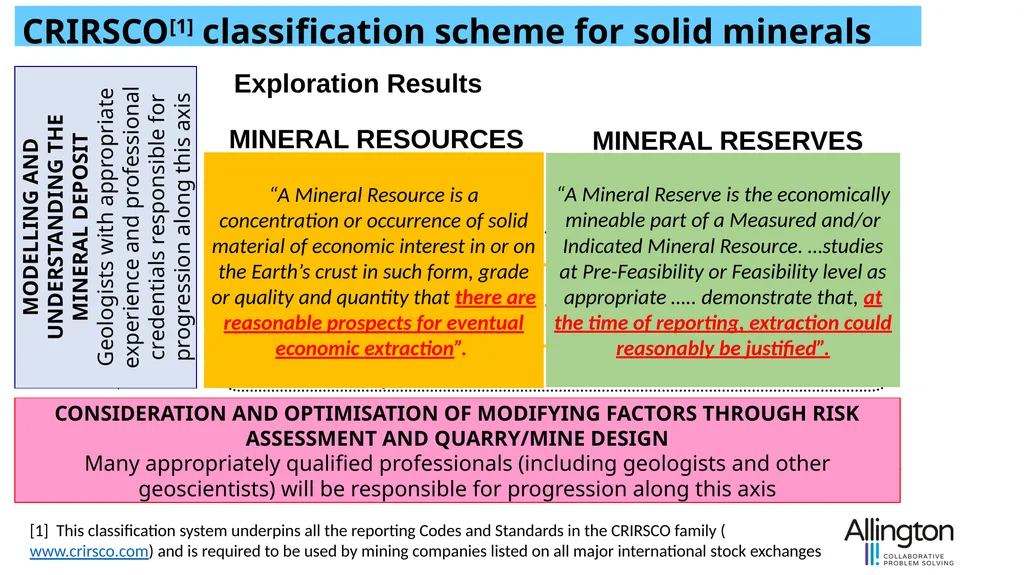
MODELLING AND UNDERSTANDING THE MINERAL DEPOSIT
Geologists with appropriate experience and professional credentials responsible for progression along this axis CONSIDERATION AND OPTIMISATION OF MODIFYING FACTORS THROUGH RISK ASSESSMENT AND QUARRY/MINE DESIGN
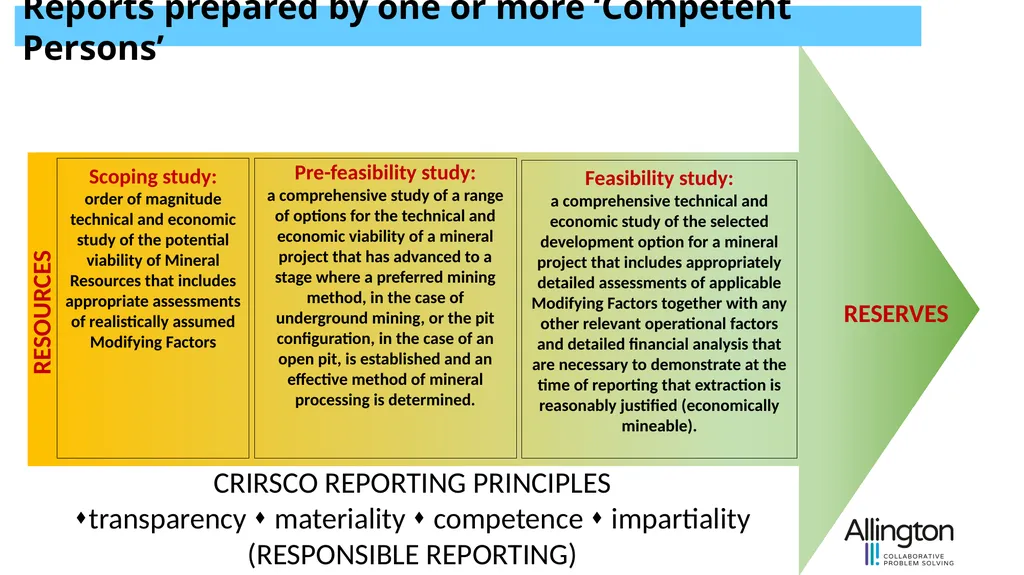
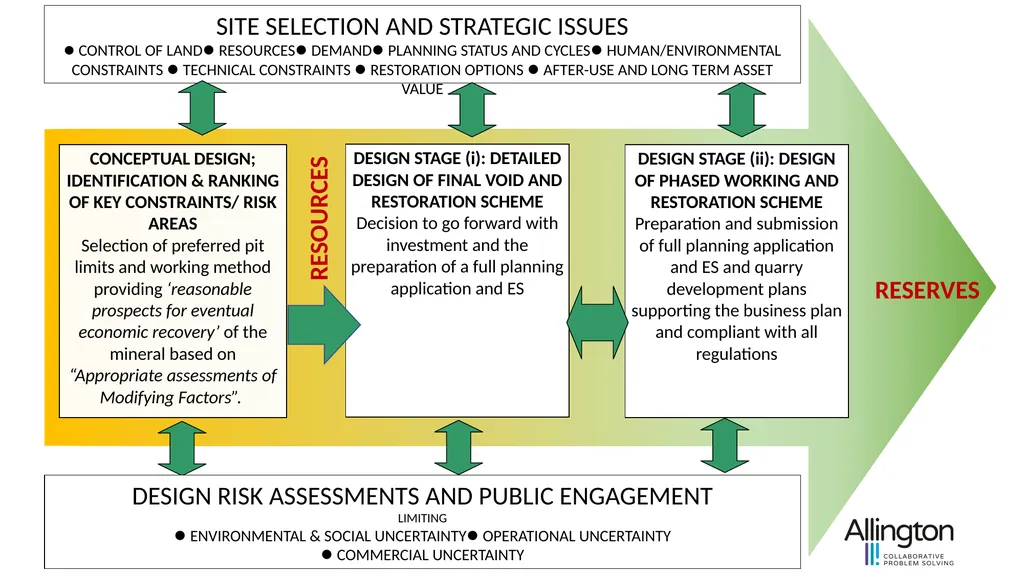
Many appropriately qualified professionals (including geologists and other geoscientists) will be responsible for progression along this axis CRIRSCO[1] classification scheme for solid minerals “A Mineral Resource is a concentration or occurrence of solid material of economic interest in or on the Earth’s crust in such form, grade or quality and quantity that there are reasonable prospects for eventual economic extraction”. “A Mineral Reserve is the economically mineable part of a Measured and/or Indicated Mineral Resource. …studies at Pre-Feasibility or Feasibility level as appropriate ….. demonstrate that, at the time of reporting, extraction could reasonably be justified”. [1] This classification system underpins all the reporting Codes and Standards in the CRIRSCO family (www.crirsco.com) and is required to be used by mining companies listed on all major international stock exchanges<br>
03
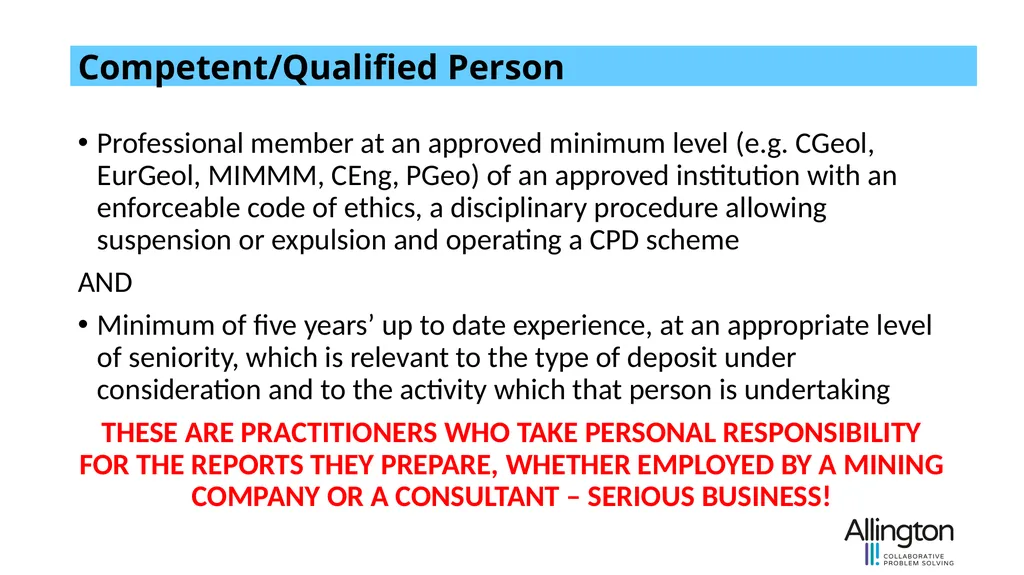
Professional member at an approved minimum level (e.g. CGeol, EurGeol, MIMMM, CEng, PGeo) of an approved institution with an enforceable code of ethics, a disciplinary procedure allowing suspension or expulsion and operating a CPD scheme
AND
Minimum of five years’ up to date experience, at an appropriate level of seniority, which is relevant to the type of deposit under consideration and to the activity which that person is undertaking
THESE ARE PRACTITIONERS WHO TAKE PERSONAL RESPONSIBILITY FOR THE REPORTS THEY PREPARE, WHETHER EMPLOYED BY A MINING COMPANY OR A CONSULTANT – SERIOUS BUSINESS! Competent/Qualified Person<br>
04
CRIRSCO REPORTING PRINCIPLES
transparency materiality competence impartiality
(RESPONSIBLE REPORTING) Reports prepared by one or more ‘Competent Persons’<br>
05
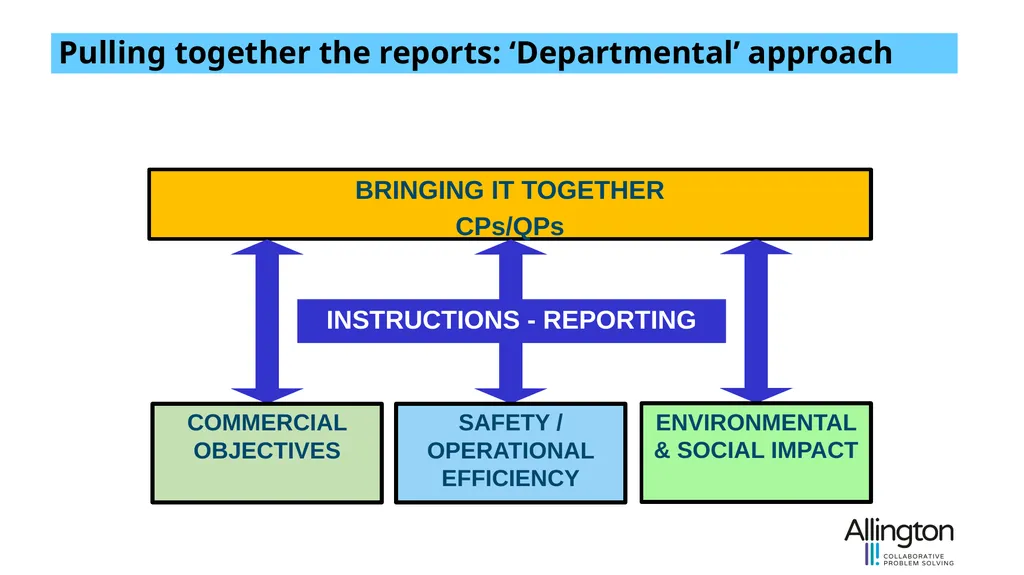
BRINGING IT TOGETHER
CPs/QPs INSTRUCTIONS - REPORTING Pulling together the reports: ‘Departmental’ approach<br>
06
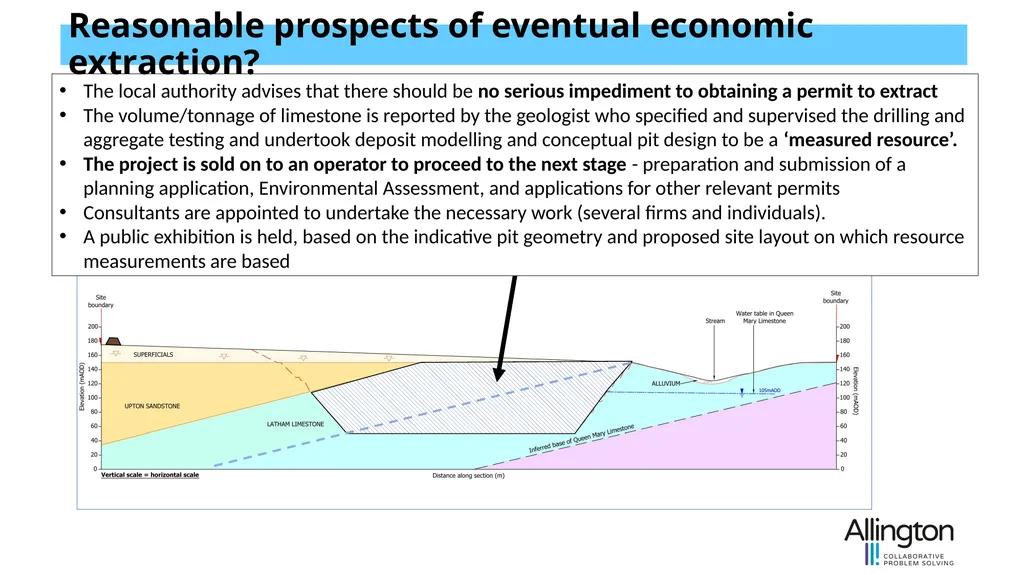
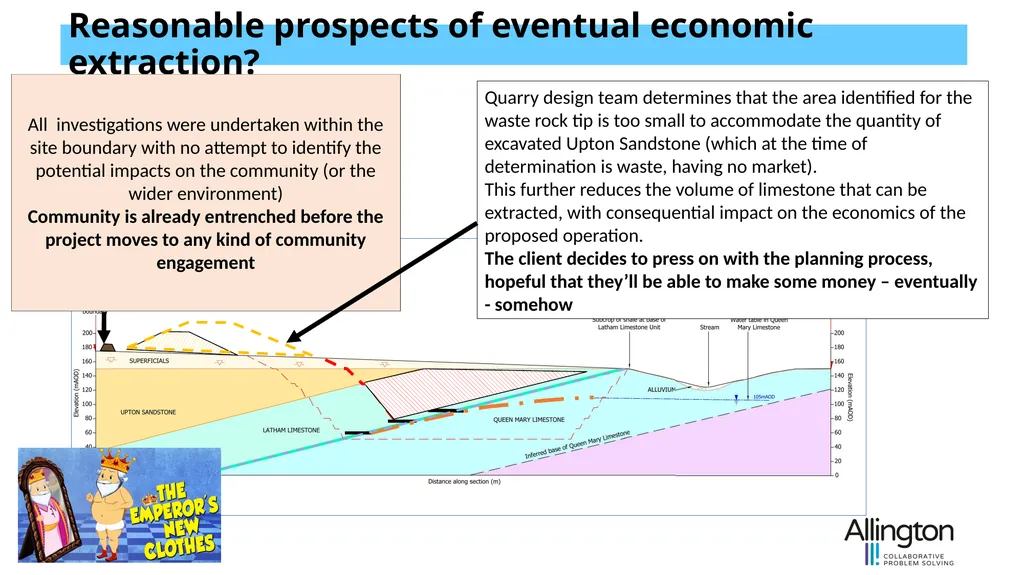
Reasonable prospects of eventual economic extraction?<br>
07
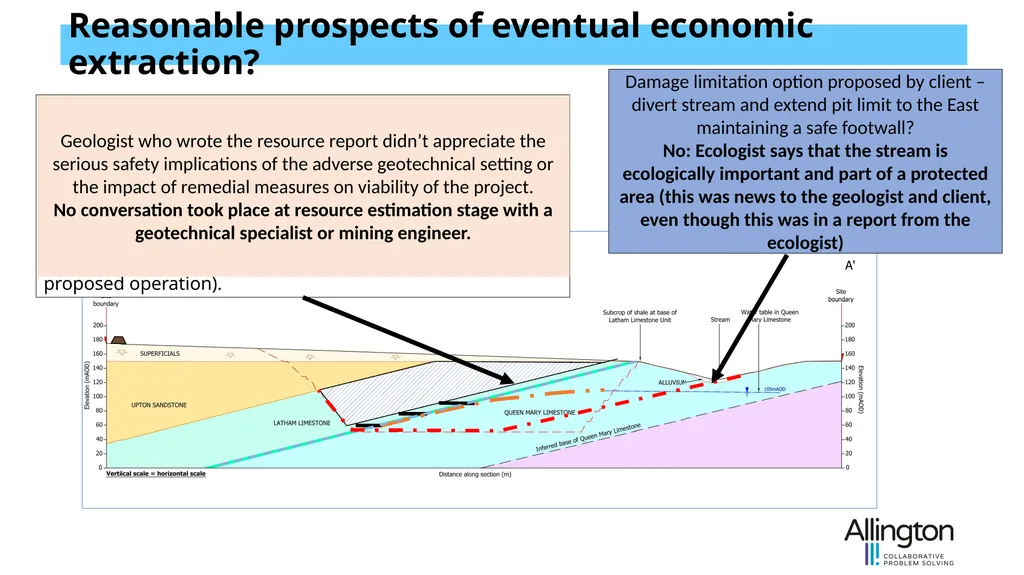
Geologist who wrote the resource report didn’t appreciate the serious safety implications of the adverse geotechnical setting or the impact of remedial measures on viability of the project.
No conversation took place at resource estimation stage with a geotechnical specialist or mining engineer. Reasonable prospects of eventual economic extraction?<br>
08
Reasonable prospects of eventual economic extraction? All investigations were undertaken within the site boundary with no attempt to identify the potential impacts on the community (or the wider environment)
Community is already entrenched before the project moves to any kind of community engagement<br>
09
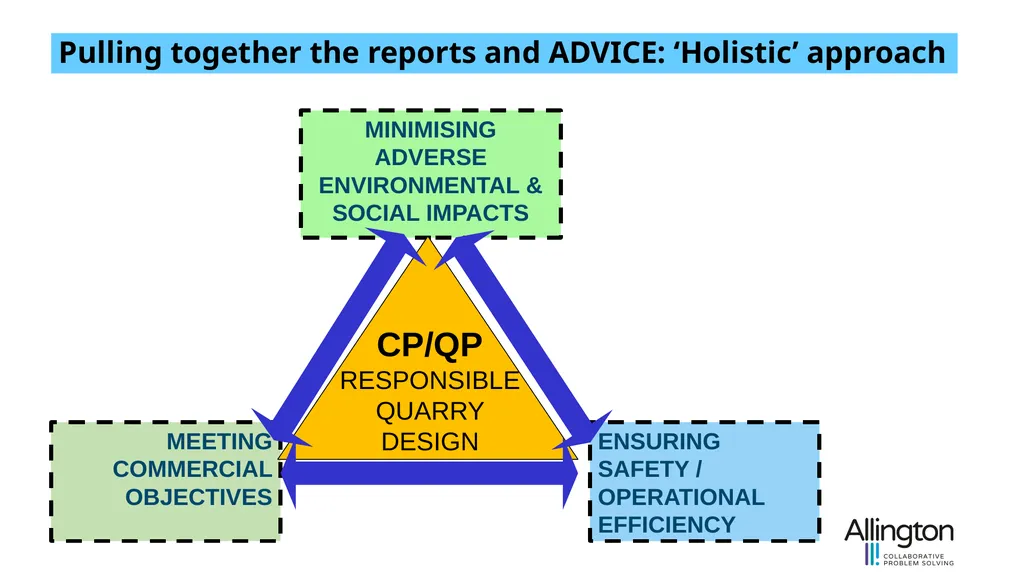
Pulling together the reports and ADVICE: ‘Holistic’ approach<br>
10
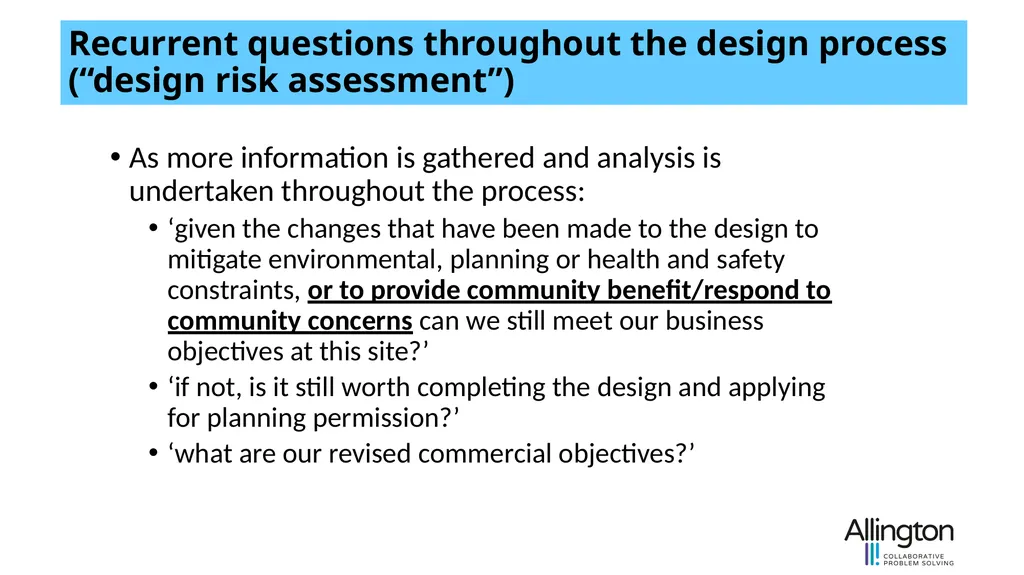
Recurrent questions throughout the design process (“design risk assessment”) As more information is gathered and analysis is undertaken throughout the process:
‘given the changes that have been made to the design to mitigate environmental, planning or health and safety constraints, or to provide community benefit/respond to community concerns can we still meet our business objectives at this site?’
‘if not, is it still worth completing the design and applying for planning permission?’
‘what are our revised commercial objectives?’<br>
11
Consequences of not ‘minding the gaps’ at the earliest stage Missed early opportunities to identify and ‘design out’ non-geological risks that, on their own or in combination, may impact on value and reputation
Missed early opportunities to engage with the public and establish trust, collaboration, and two-way communication to foster understanding of fears and needs
Increased risk of unforeseen (but not unforeseeable) physical, environmental, reputational disasters
Disconnect between corporate and site level – approved management plans and compliance requirements in conflict with each other or impossible to comply with in practice<br>
12
Navigating the gaps and overlaps – beyond professional expertise Corporate governance structures and processes that enable and encourage inter-disciplinary cooperation - break out of the silos
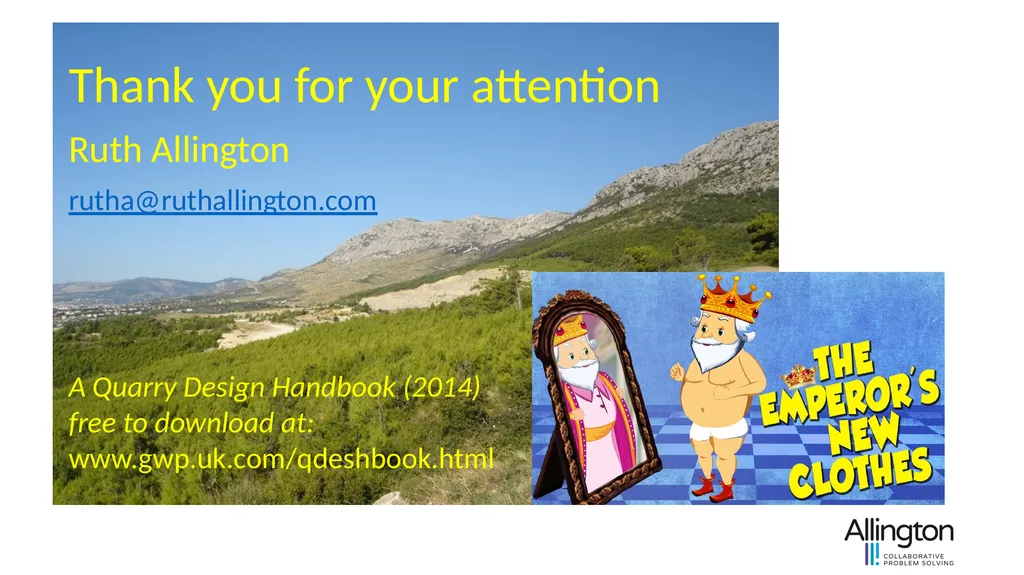
Effective instruction and deployment of consultants – encourage the “Emperor's new clothes” moment
Top to bottom awareness and celebration of overlaps and interrelationships between disciplinary areas – know what you don’t know and when to ‘phone a friend’ (and which one to phone)
Learning to be courageous and skilled in listening mostly and ‘telling people stuff’ less (two ears, one mouth….). What you told someone is not necessarily what they actually heard. What you heard them say to you, is not necessarily what they meant you to hear
Widespread ability and courage to communicate in language accessible to the whole range of internal and external stakeholders ESPECIALLY the public and other professionals – ability to ensure that dialogue occurs with the objective of hearing and understanding
Develop early, genuine and meaningful stakeholder relationships (conversations and cups of tea!). Sometimes helpful to use a neutral third party to kick start, rescue or facilitate this<br>
13
Navigating the gaps and overlaps – final thoughts Because it’s written in a report or risk register does not mean it’s been communicated in any way…..to anyone!
Excellent regulation is essential but is not sufficient in and of itself to guarantee good outcomes
Compliance is vitally important but represents an opportunity missed if it’s just box ticking
The level of professional competence, knowledge, innovation and ingenuity in our industry right through the value chain is astonishingly high, but it’s not always very well ‘joined up’ – this is a barrier to true ‘responsibility’
Forums such as this conference create welcome safe spaces to ask each other fundamental questions to help us understand where our ‘bit’ fits into the whole (“why do you do it that way?”, “what do you need from us?”, “what do you actually mean by…?”)<br>
14
Thank you for your attention
Ruth Allington
rutha@ruthallington.com
A Quarry Design Handbook (2014) free to download at: www.gwp.uk.com/qdeshbook.html<br>