
MIT Institutional Research AKA the Office of


Description: MIT Institutional Research AKA the Office of Incidental Information Staff Lydia Snover, Director Jon Schwarz, Assistant Director Sonia Liou, Assistant Director Jon Daries, Senior Project Manager (Portland, OR) Greg Harris, Senior Project
Related Topics
Download Presentation
"MIT Institutional Research AKA the Office of" is the property of its rightful owner. Permission is granted to download and print the materials on this website for personal, non-commercial use only, and to display it on your personal computer provided you do not modify the materials and that you retain all copyright notices contained in the materials. By downloading content from our website, you accept the terms of this agreement.
Presentation Transcript
slide1. MIT
Institutional Research AKA the Office of Incidental Information<br>
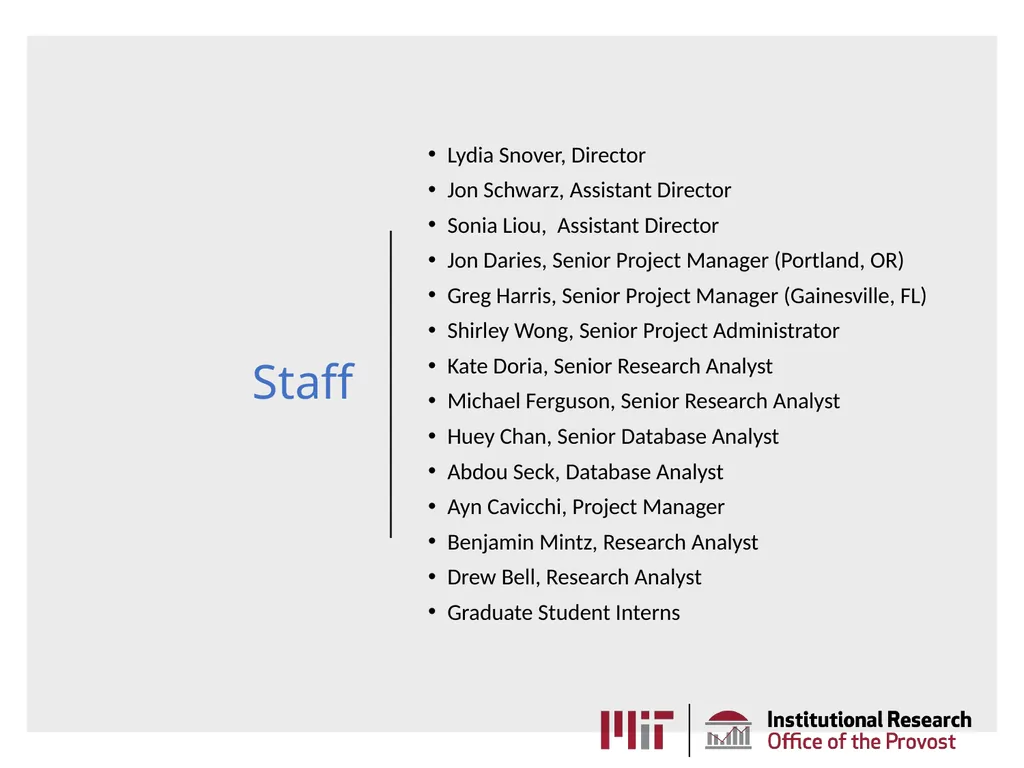
slide2. Staff Lydia Snover, Director
Jon Schwarz, Assistant Director
Sonia Liou, Assistant Director
Jon Daries, Senior Project Manager (Portland, OR)
Greg Harris, Senior Project Manager (Gainesville, FL)
Shirley Wong, Senior Project Administrator
Kate Doria, Senior Research Analyst
Michael Ferguson, Senior Research Analyst
Huey Chan, Senior Database Analyst
Abdou Seck, Database Analyst
Ayn Cavicchi, Project Manager
Benjamin Mintz, Research Analyst
Drew Bell, Research Analyst
Graduate Student Interns<br>
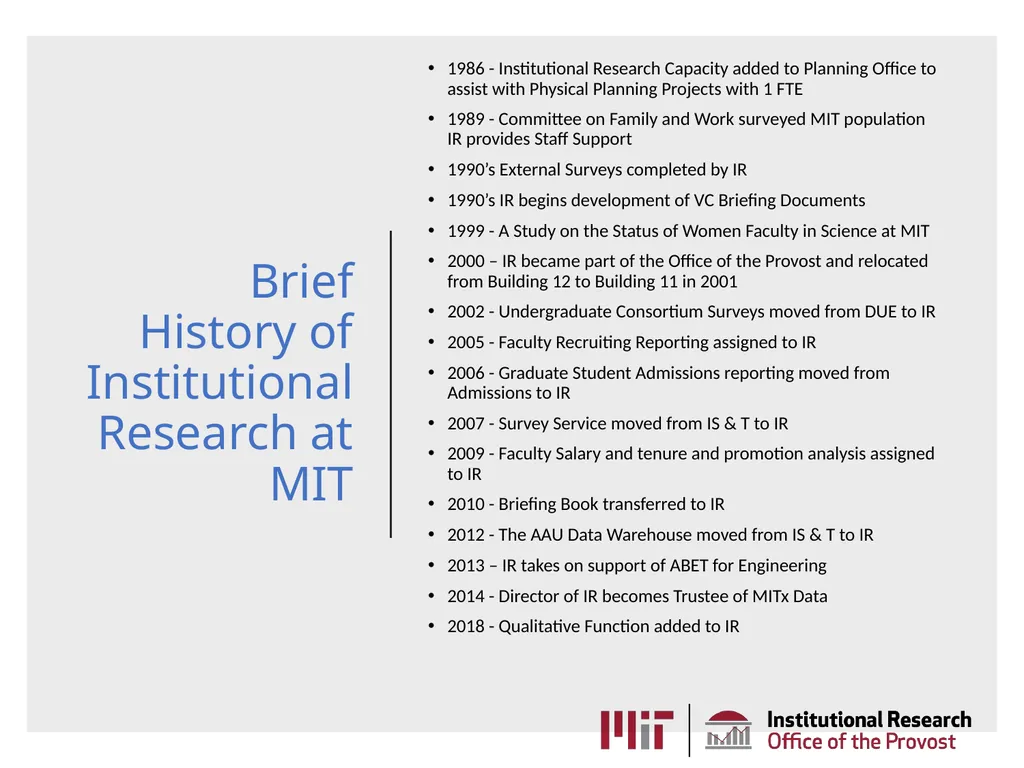
slide3. Brief History of Institutional Research at MIT 1986 - Institutional Research Capacity added to Planning Office to assist with Physical Planning Projects with 1 FTE
1989 - Committee on Family and Work surveyed MIT population IR provides Staff Support
1990’s External Surveys completed by IR
1990’s IR begins development of VC Briefing Documents
1999 - A Study on the Status of Women Faculty in Science at MIT
2000 – IR became part of the Office of the Provost and relocated from Building 12 to Building 11 in 2001
2002 - Undergraduate Consortium Surveys moved from DUE to IR
2005 - Faculty Recruiting Reporting assigned to IR
2006 - Graduate Student Admissions reporting moved from Admissions to IR
2007 - Survey Service moved from IS & T to IR
2009 - Faculty Salary and tenure and promotion analysis assigned to IR
2010 - Briefing Book transferred to IR
2012 - The AAU Data Warehouse moved from IS & T to IR
2013 – IR takes on support of ABET for Engineering
2014 - Director of IR becomes Trustee of MITx Data
2018 - Qualitative Function added to IR<br>
slide4. Operating Principles Collaboration
Transparency
Consistency
Accuracy
Context
Confidentiality
Supporting all members of the community<br>
slide5. What we do and who do we do it for Collect Data
Organize Data
Analyze Data
Indirect Data Governance
Primary Client is the Academic Side of the House with focus on Department Heads<br>
slide6. What we don’t do Draw conclusions
We provide analysis that will allow others (department heads, Senior Officers) committees, taskforce, etc. to decide what the data means
Instead we provide observations and statistical significance
Make Recommendations
Write Reports
IR doesn’t have a point of view<br>
slide7. Collect Data People, Money and Space
MIT Data Warehouse MIT’s Systems of Record
HR, CAO, Registrar, space accounting
IR has some data from the “beginning”, WWII
Surveys
Undergraduate surveys – Consortium
Graduate
Faculty and Staff
Alumni
Others
New Qualitative Function - Interviews and Focus Groups
Web Applications
Electronic Professional Record epr.mit.edu
Outcomes.mit.edu (SOE / ABET)
Peer Schools
Federal Government
External Vendors
Academic Analytics
Ranking organizations<br>
slide8. Organizing Data Excel
Oracle Databases
Google BigQuery
ETL Processes
Tableau (Visualization/Reporting Tool)<br>
slide9. Using Data Program Review – Visiting Committees Briefing Documents
MindHandHeart Reports (NEW)
Departments, Committees, Task Forces (COC working groups, Graduate Tuition Taskforce)
Government Reporting / Compliance
Department of Education
National Science Foundation
Town Gown
Consortium Data Exchanges
Ranking Organizations
HEOA Required posting<br>
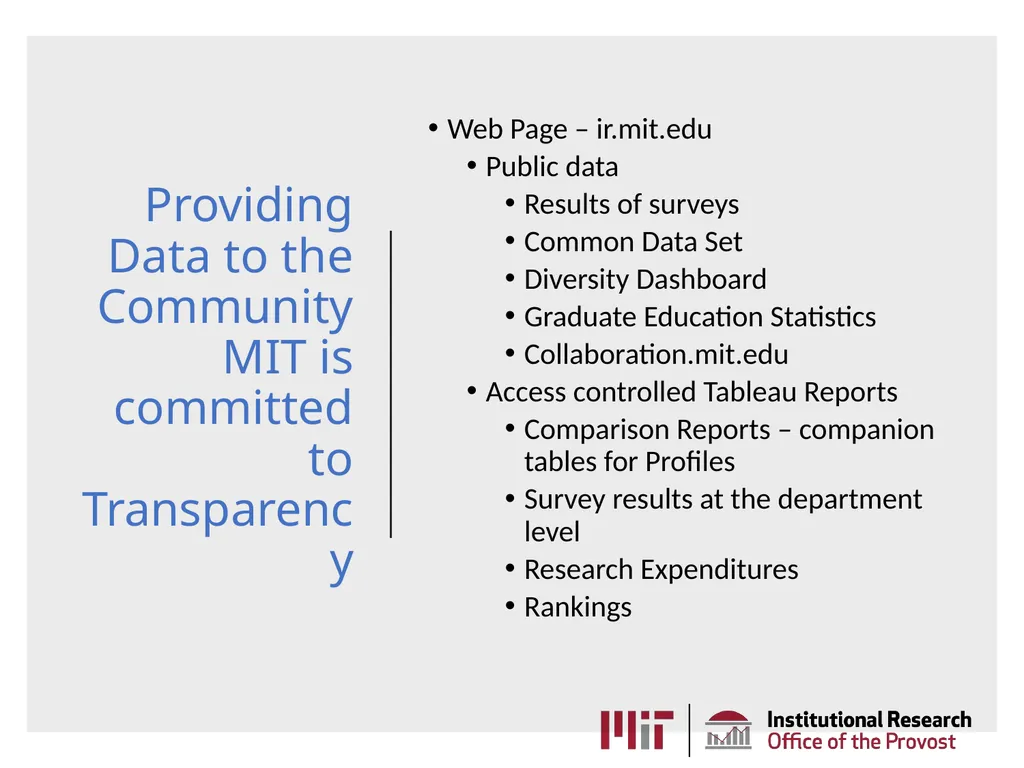
slide10. Providing Data to the Community MIT is committed to Transparency Web Page – ir.mit.edu
Public data
Results of surveys
Common Data Set
Diversity Dashboard
Graduate Education Statistics
Collaboration.mit.edu
Access controlled Tableau Reports
Comparison Reports – companion tables for Profiles
Survey results at the department level
Research Expenditures
Rankings<br>
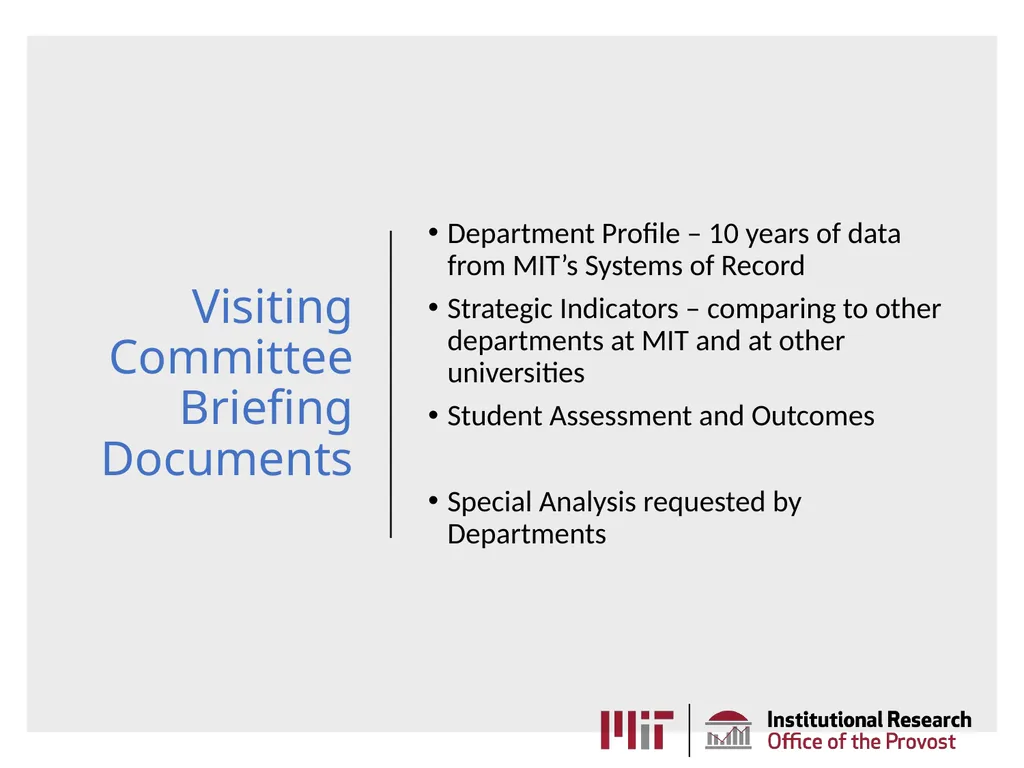
slide11. Visiting Committee Briefing Documents Department Profile – 10 years of data from MIT’s Systems of Record
Strategic Indicators – comparing to other departments at MIT and at other universities
Student Assessment and Outcomes
Special Analysis requested by Departments<br>
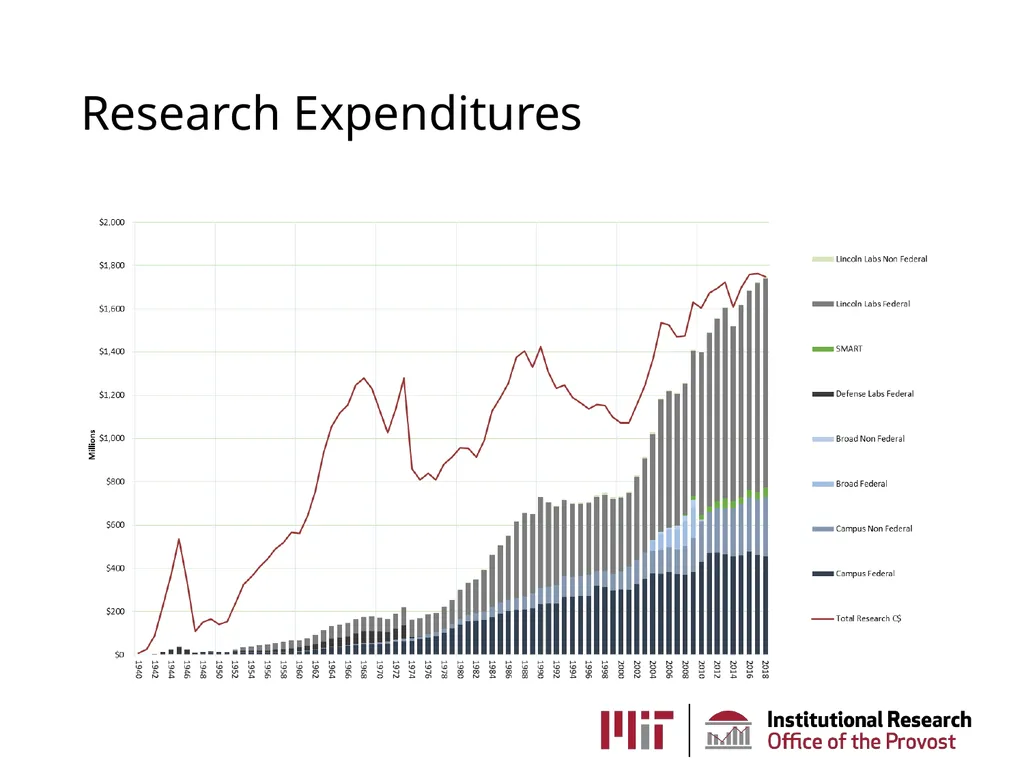
slide13. Research Expenditures<br>
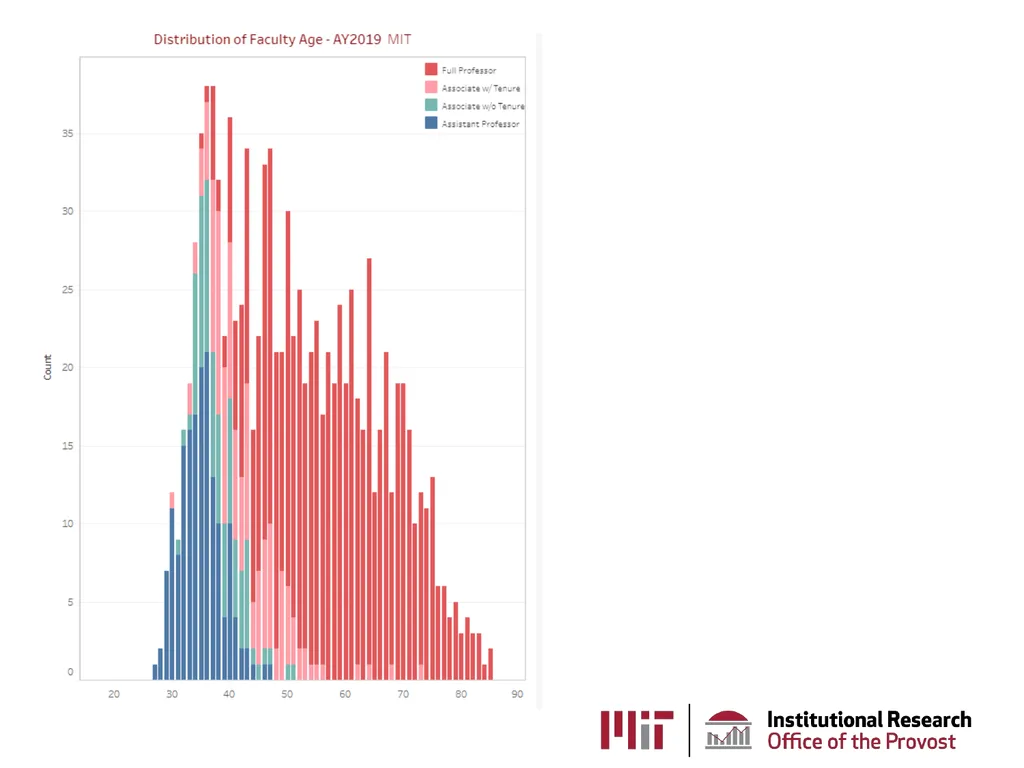
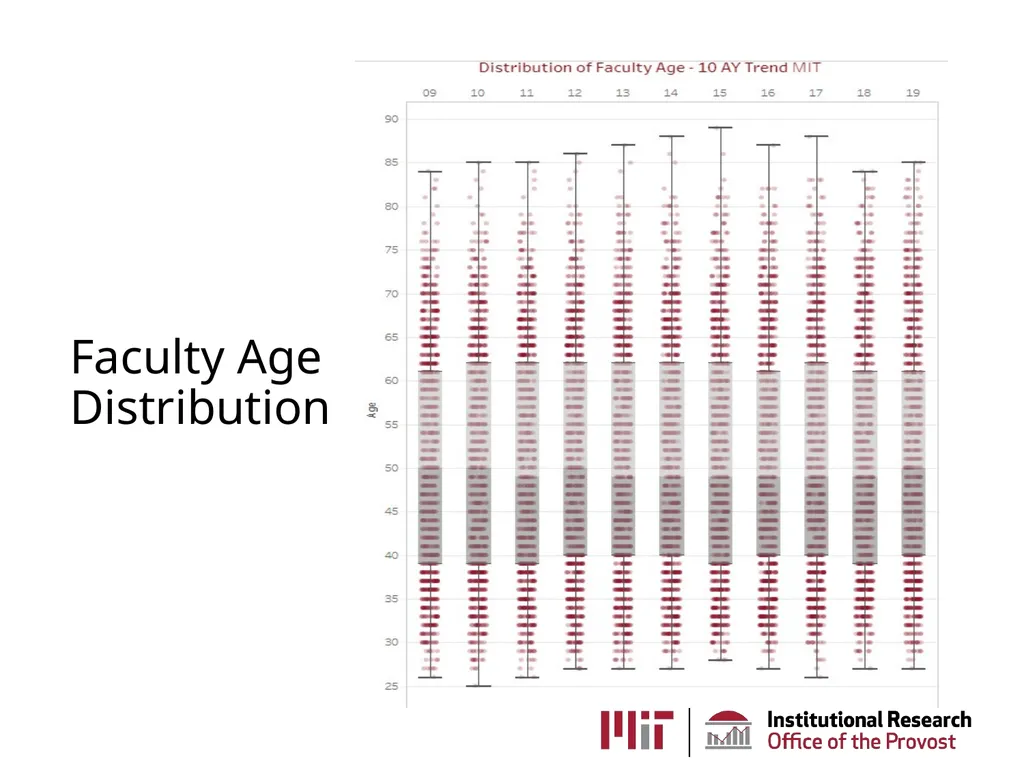
slide15. Faculty Age Distribution<br>
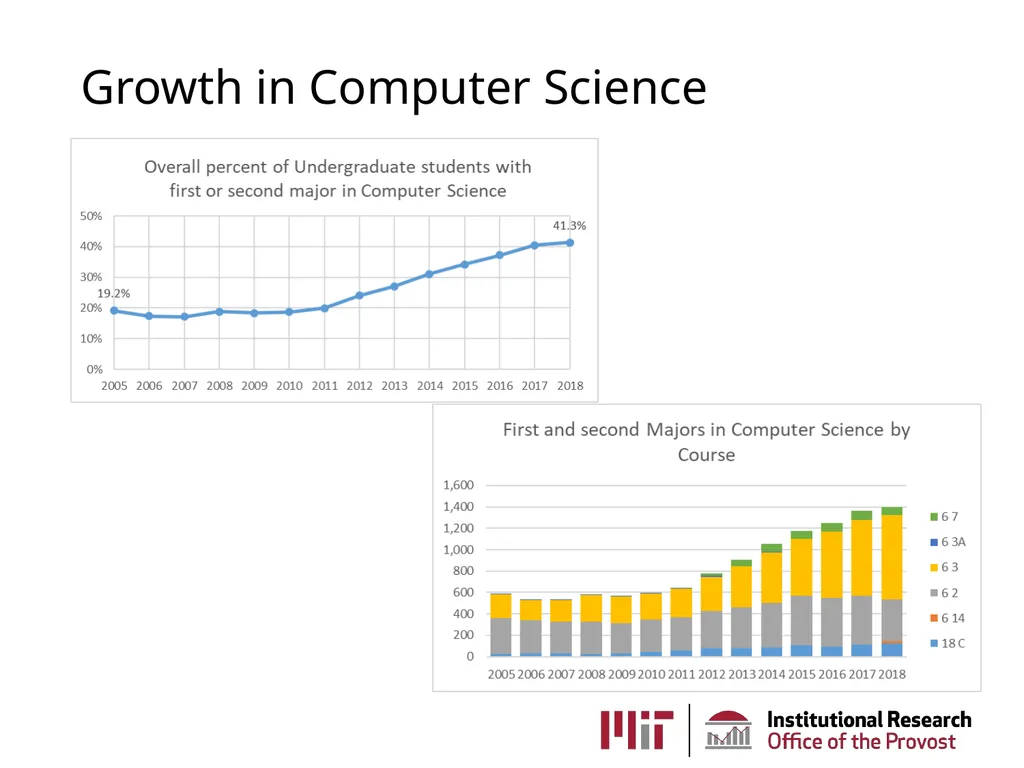
slide16. Growth in Computer Science<br>
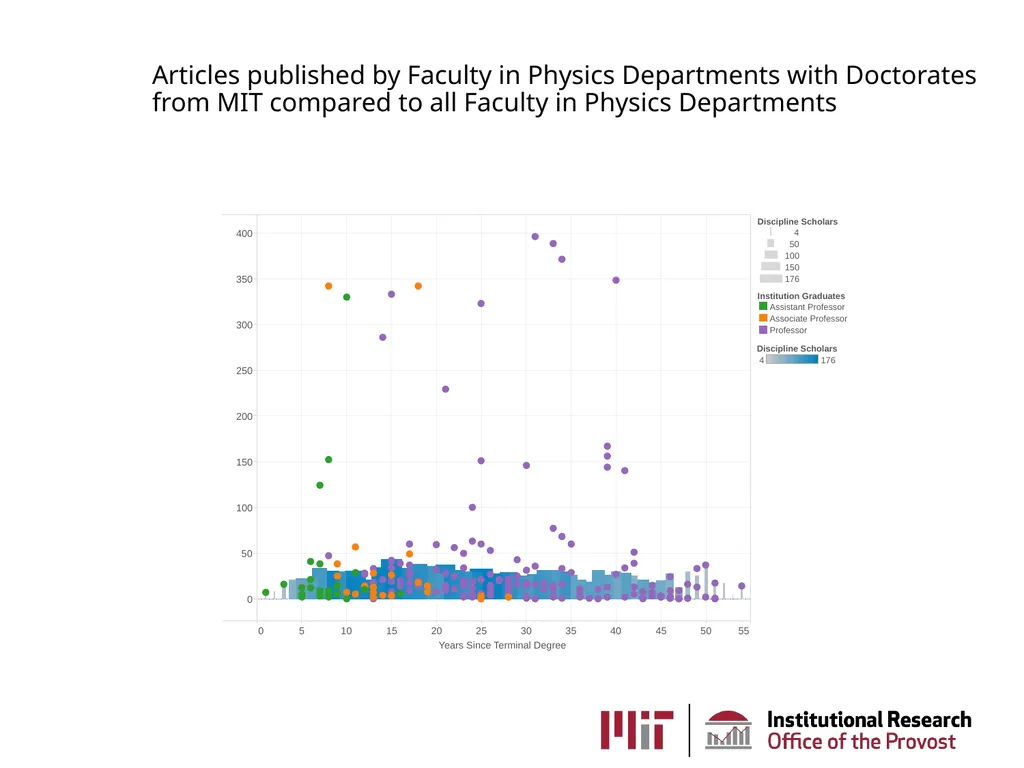
slide17. Articles published by Faculty in Physics Departments with Doctorates from MIT compared to all Faculty in Physics Departments<br>
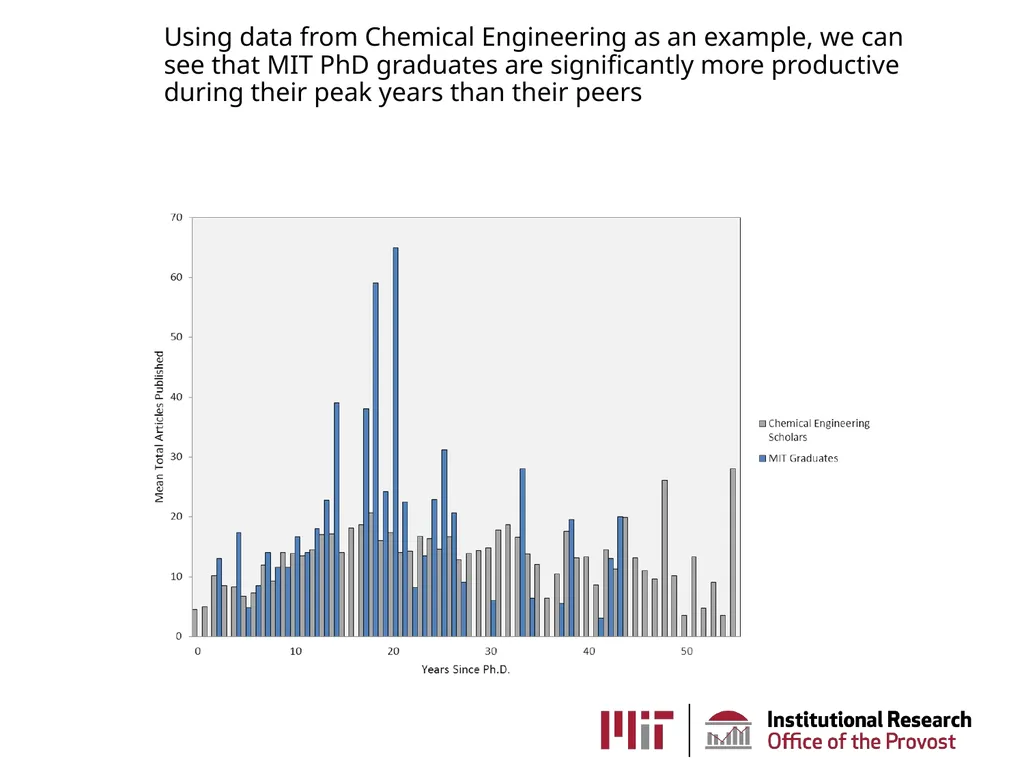
slide18. Using data from Chemical Engineering as an example, we can see that MIT PhD graduates are significantly more productive during their peak years than their peers<br>
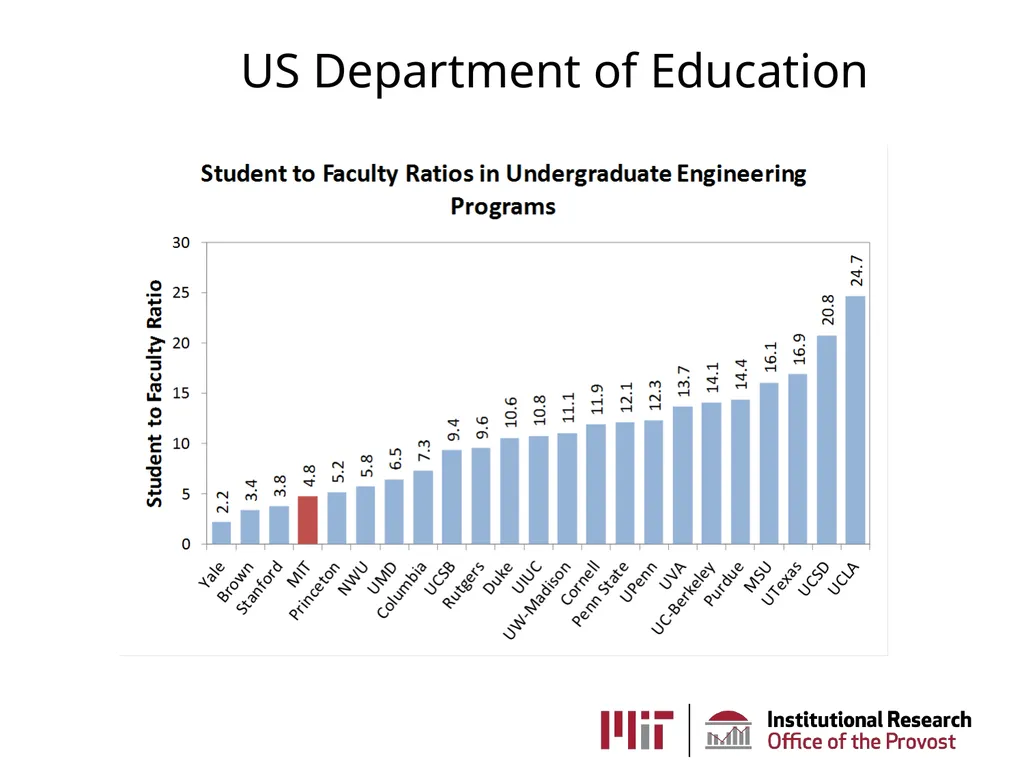
slide19. US Department of Education<br>
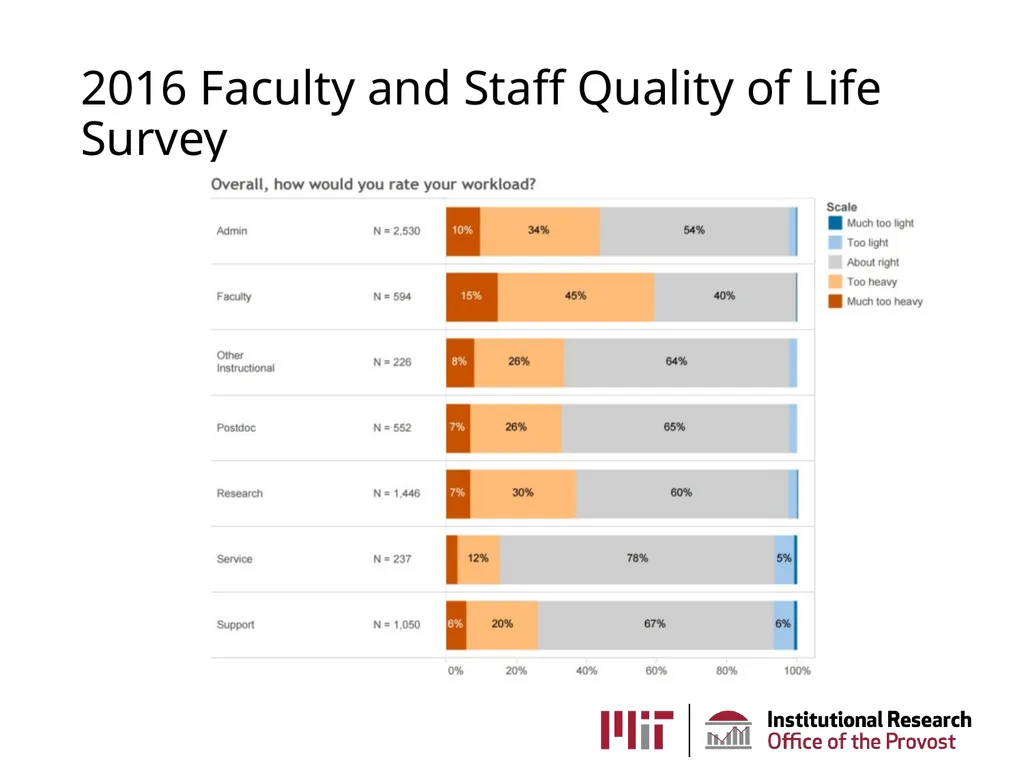
slide20. 2016 Faculty and Staff Quality of Life Survey<br>
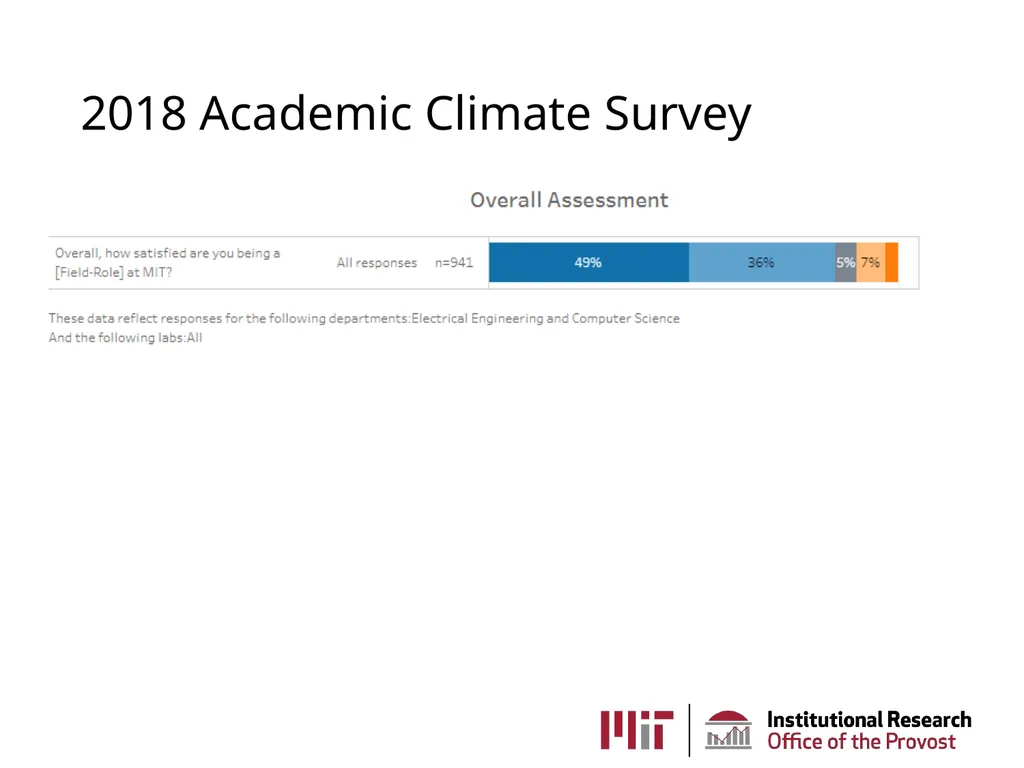
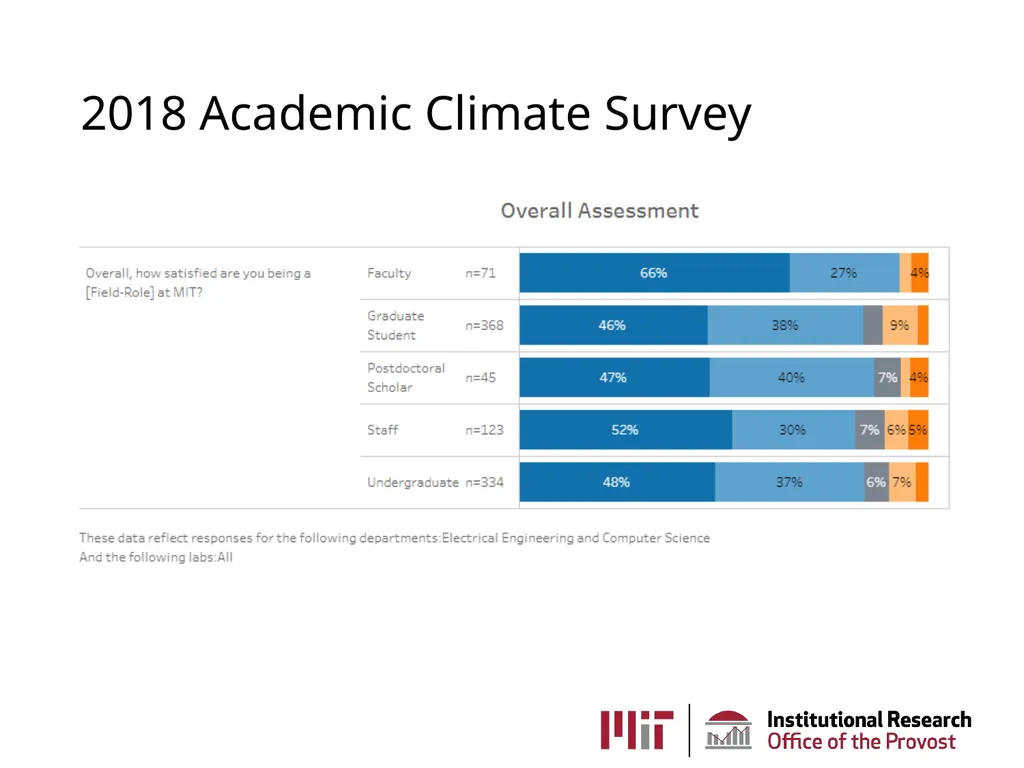
slide21. 2018 Academic Climate Survey<br>
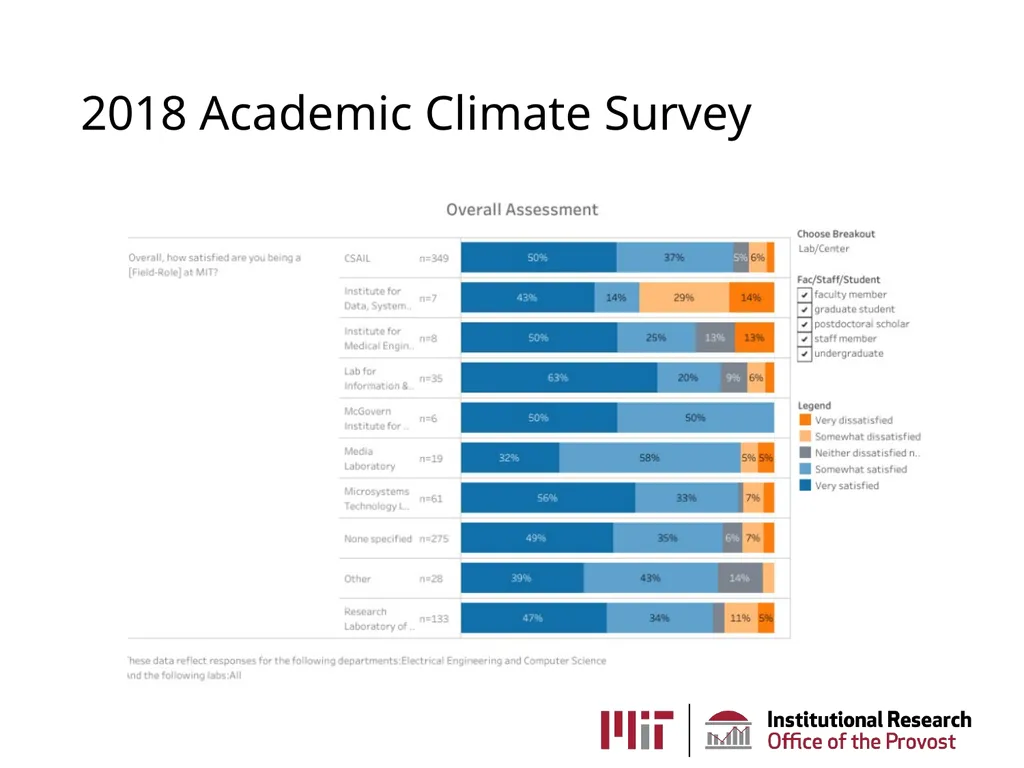
slide22. 2018 Academic Climate Survey<br>
slide23. 2018 Academic Climate Survey<br>
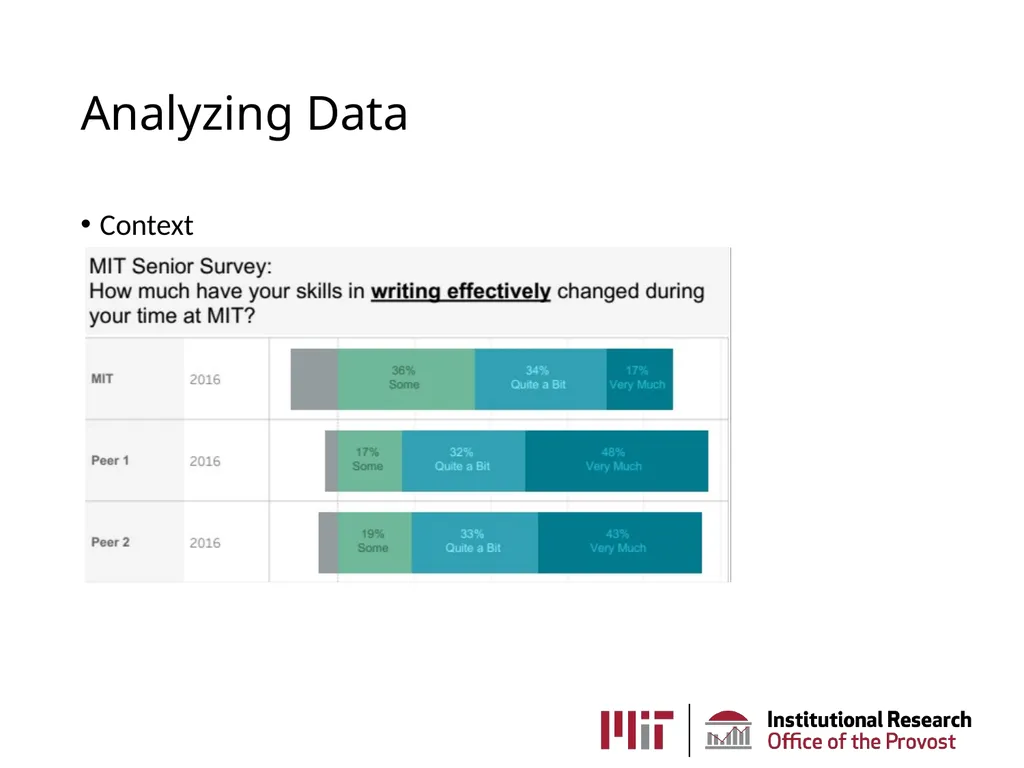
slide24. Analyzing Data Context<br>
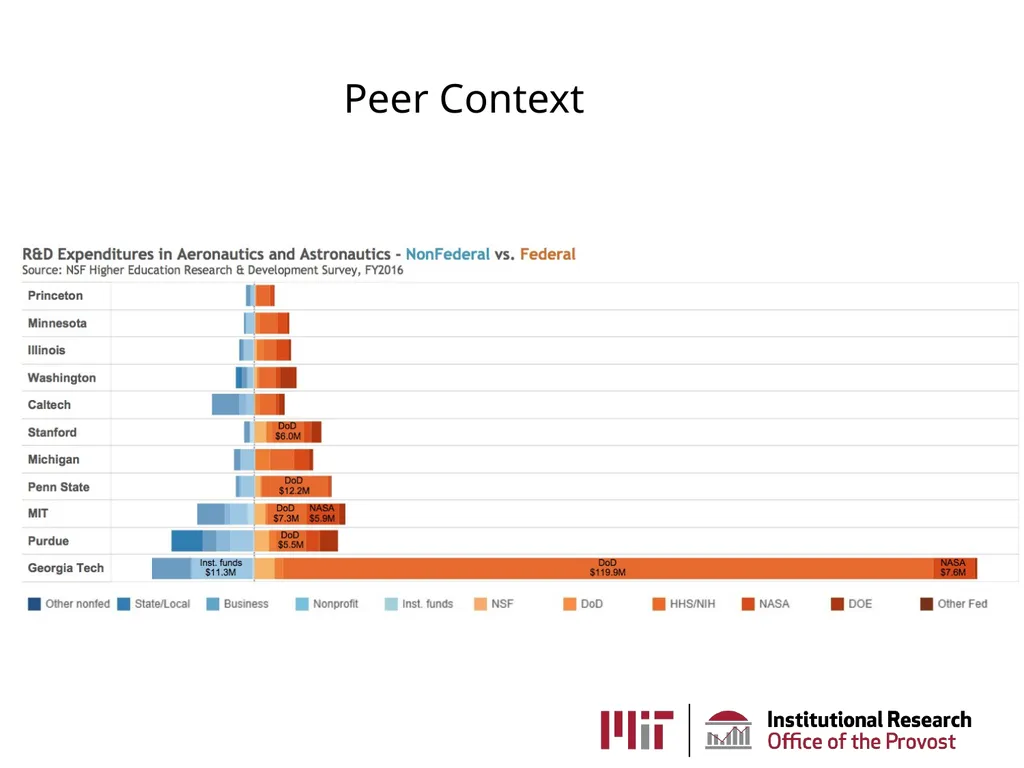
slide25. Peer Context<br>
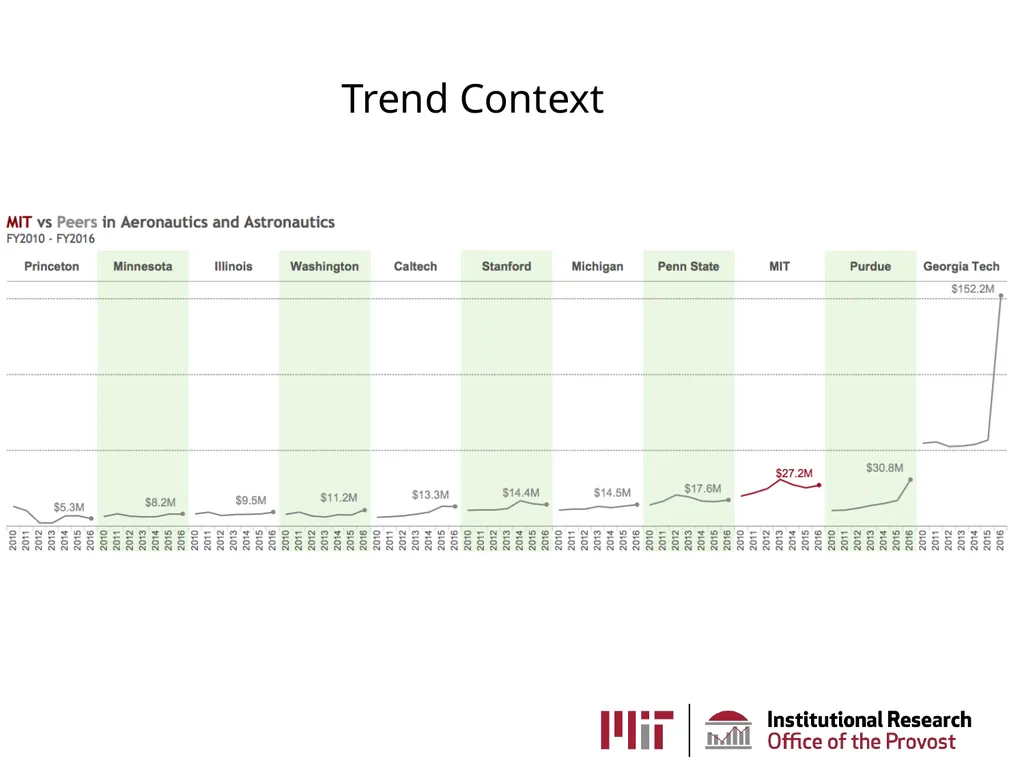
slide26. Trend Context<br>
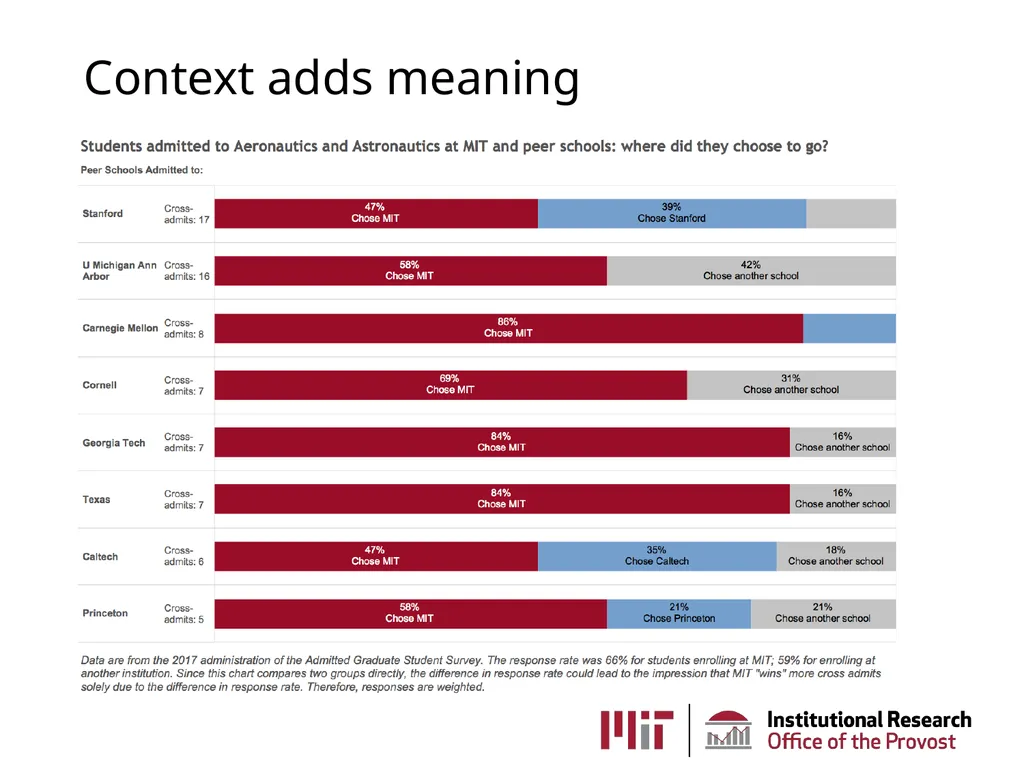
slide27. Context adds meaning<br>
slide2. Staff Lydia Snover, Director
Jon Schwarz, Assistant Director
Sonia Liou, Assistant Director
Jon Daries, Senior Project Manager (Portland, OR)
Greg Harris, Senior Project Manager (Gainesville, FL)
Shirley Wong, Senior Project Administrator
Kate Doria, Senior Research Analyst
Michael Ferguson, Senior Research Analyst
Huey Chan, Senior Database Analyst
Abdou Seck, Database Analyst
Ayn Cavicchi, Project Manager
Benjamin Mintz, Research Analyst
Drew Bell, Research Analyst
Graduate Student Interns<br>
slide3. Brief History of Institutional Research at MIT 1986 - Institutional Research Capacity added to Planning Office to assist with Physical Planning Projects with 1 FTE
1989 - Committee on Family and Work surveyed MIT population IR provides Staff Support
1990’s External Surveys completed by IR
1990’s IR begins development of VC Briefing Documents
1999 - A Study on the Status of Women Faculty in Science at MIT
2000 – IR became part of the Office of the Provost and relocated from Building 12 to Building 11 in 2001
2002 - Undergraduate Consortium Surveys moved from DUE to IR
2005 - Faculty Recruiting Reporting assigned to IR
2006 - Graduate Student Admissions reporting moved from Admissions to IR
2007 - Survey Service moved from IS & T to IR
2009 - Faculty Salary and tenure and promotion analysis assigned to IR
2010 - Briefing Book transferred to IR
2012 - The AAU Data Warehouse moved from IS & T to IR
2013 – IR takes on support of ABET for Engineering
2014 - Director of IR becomes Trustee of MITx Data
2018 - Qualitative Function added to IR<br>
slide4. Operating Principles Collaboration
Transparency
Consistency
Accuracy
Context
Confidentiality
Supporting all members of the community<br>
slide5. What we do and who do we do it for Collect Data
Organize Data
Analyze Data
Indirect Data Governance
Primary Client is the Academic Side of the House with focus on Department Heads<br>
slide6. What we don’t do Draw conclusions
We provide analysis that will allow others (department heads, Senior Officers) committees, taskforce, etc. to decide what the data means
Instead we provide observations and statistical significance
Make Recommendations
Write Reports
IR doesn’t have a point of view<br>
slide7. Collect Data People, Money and Space
MIT Data Warehouse MIT’s Systems of Record
HR, CAO, Registrar, space accounting
IR has some data from the “beginning”, WWII
Surveys
Undergraduate surveys – Consortium
Graduate
Faculty and Staff
Alumni
Others
New Qualitative Function - Interviews and Focus Groups
Web Applications
Electronic Professional Record epr.mit.edu
Outcomes.mit.edu (SOE / ABET)
Peer Schools
Federal Government
External Vendors
Academic Analytics
Ranking organizations<br>
slide8. Organizing Data Excel
Oracle Databases
Google BigQuery
ETL Processes
Tableau (Visualization/Reporting Tool)<br>
slide9. Using Data Program Review – Visiting Committees Briefing Documents
MindHandHeart Reports (NEW)
Departments, Committees, Task Forces (COC working groups, Graduate Tuition Taskforce)
Government Reporting / Compliance
Department of Education
National Science Foundation
Town Gown
Consortium Data Exchanges
Ranking Organizations
HEOA Required posting<br>
slide10. Providing Data to the Community MIT is committed to Transparency Web Page – ir.mit.edu
Public data
Results of surveys
Common Data Set
Diversity Dashboard
Graduate Education Statistics
Collaboration.mit.edu
Access controlled Tableau Reports
Comparison Reports – companion tables for Profiles
Survey results at the department level
Research Expenditures
Rankings<br>
slide11. Visiting Committee Briefing Documents Department Profile – 10 years of data from MIT’s Systems of Record
Strategic Indicators – comparing to other departments at MIT and at other universities
Student Assessment and Outcomes
Special Analysis requested by Departments<br>
slide13. Research Expenditures<br>
slide15. Faculty Age Distribution<br>
slide16. Growth in Computer Science<br>
slide17. Articles published by Faculty in Physics Departments with Doctorates from MIT compared to all Faculty in Physics Departments<br>
slide18. Using data from Chemical Engineering as an example, we can see that MIT PhD graduates are significantly more productive during their peak years than their peers<br>
slide19. US Department of Education<br>
slide20. 2016 Faculty and Staff Quality of Life Survey<br>
slide21. 2018 Academic Climate Survey<br>
slide22. 2018 Academic Climate Survey<br>
slide23. 2018 Academic Climate Survey<br>
slide24. Analyzing Data Context<br>
slide25. Peer Context<br>
slide26. Trend Context<br>
slide27. Context adds meaning<br>