Monosaccharides Class :I B.Sc., Zoology Sub: Organic, Inorganic and Physical Chemistry Sub Code:17UCHA11 Dr. S. SIVAKUMAR Assistant Professor Department of Chemistry Hajee Karutha Rowther Howdia College Uthamapalayam 1 Uses of Glucose and
"Monosaccharides Class :I B.Sc., Zoology Sub:" is the property of its rightful owner. Permission is granted to
download and print the materials on this website for personal, non-commercial use only, and to display it
on your personal computer provided you do not modify the materials and that you retain all copyright
notices contained in the materials. By downloading content from our website, you accept the terms of this
agreement.
Presentation Transcript
01
Monosaccharides Class :I B.Sc., Zoology Sub: Organic, Inorganic and Physical Chemistry Sub Code:17UCHA11 Dr. S. SIVAKUMAR Assistant Professor Department of Chemistry Hajee Karutha Rowther Howdia College Uthamapalayam 1<br>
02
Uses of Glucose and Fructose:
Glucose is used
As a food for patients, growing babies and weak persons.
As a sweetening agent in confectionery and in the preparation of sweets, candies and syrups.
As a reducing agent in silvering of mirrors and vat-dyeing.
As a intravenous injection to the patients with lower glucose content in blood. 2<br>
03
In the processing of tobacco.
As a starting material in the synthesis of vitamin C.
In the preparation of glycerol.
In fruit preservation and in making jams and jellies.
Fructose is used
As a sweetening agent in confectionery.
It is also used as a substitute of cane sugar for patients suffering from diabetes. 3<br>
04
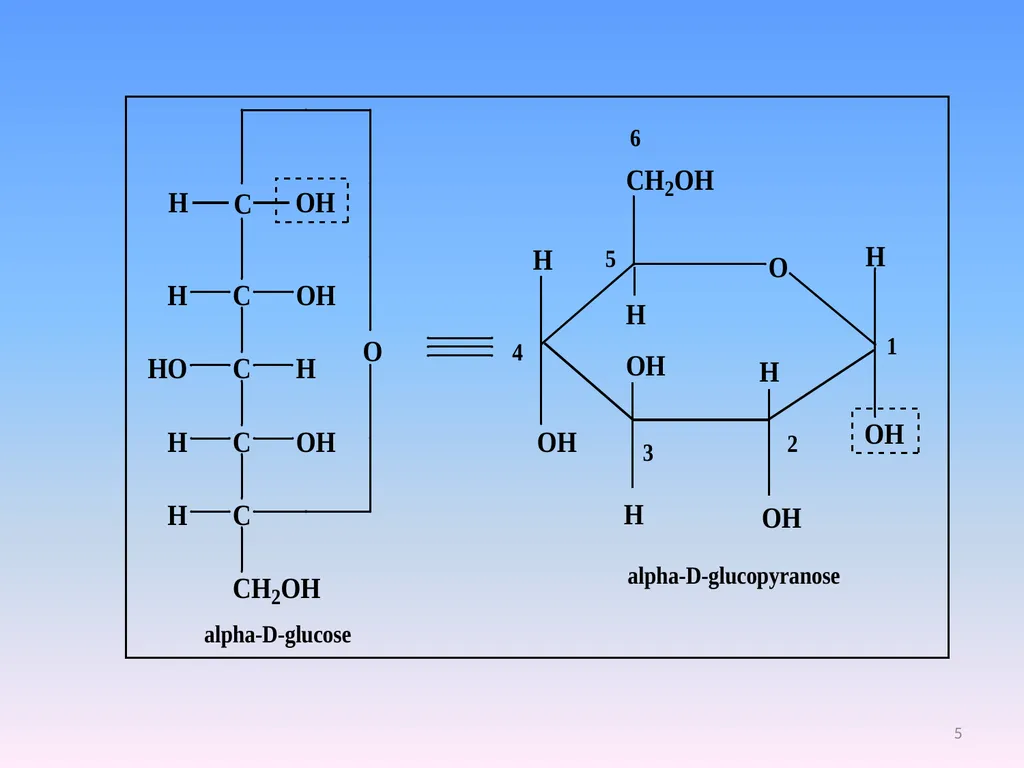
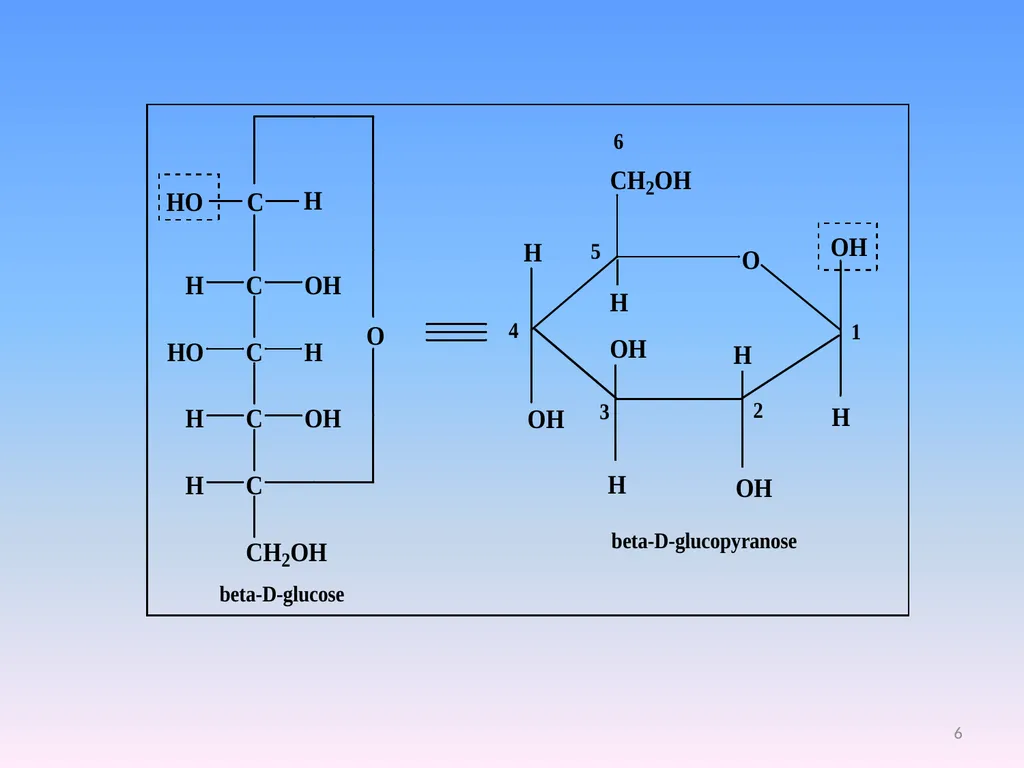
Haworth’s structure of Glucose:
Haworth (1926) related the carbohydrates to the heterocyclic compound pyran.
He proposed the pyranose structure to denote the carbohydrates.
The following figures show how Fischer Projection Formula can be translated into Haworth’s representation 4<br>
05
5<br>
06
6<br>
07
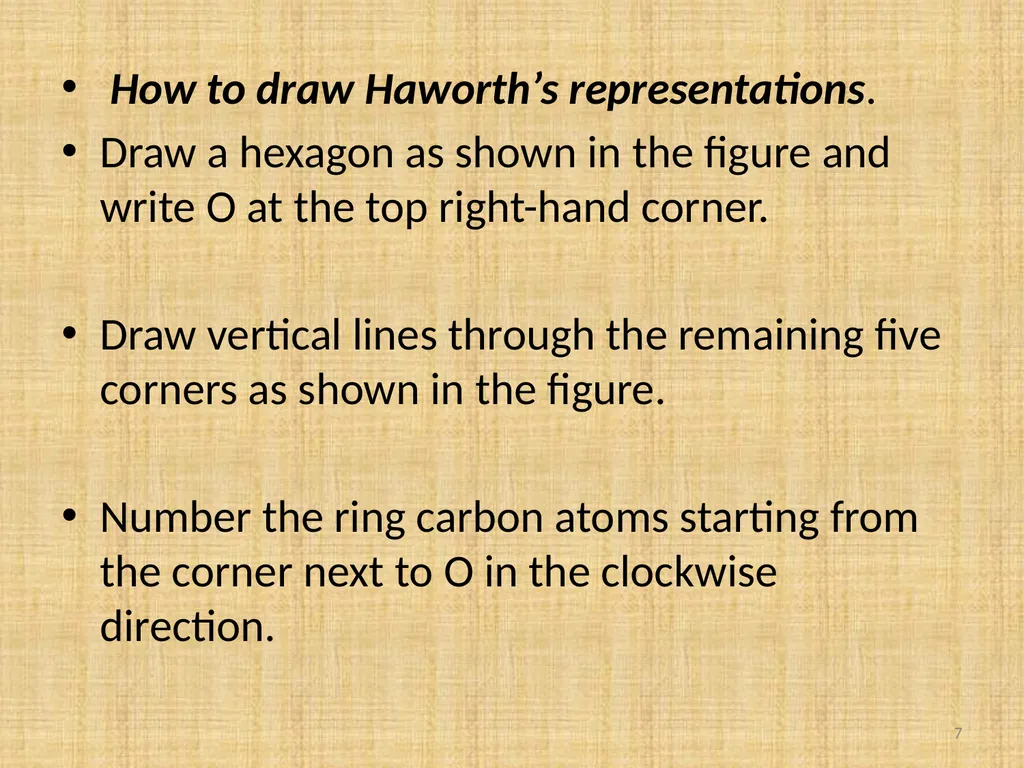
How to draw Haworth’s representations.
Draw a hexagon as shown in the figure and write O at the top right-hand corner.
Draw vertical lines through the remaining five corners as shown in the figure.
Number the ring carbon atoms starting from the corner next to O in the clockwise direction. 7<br>
08
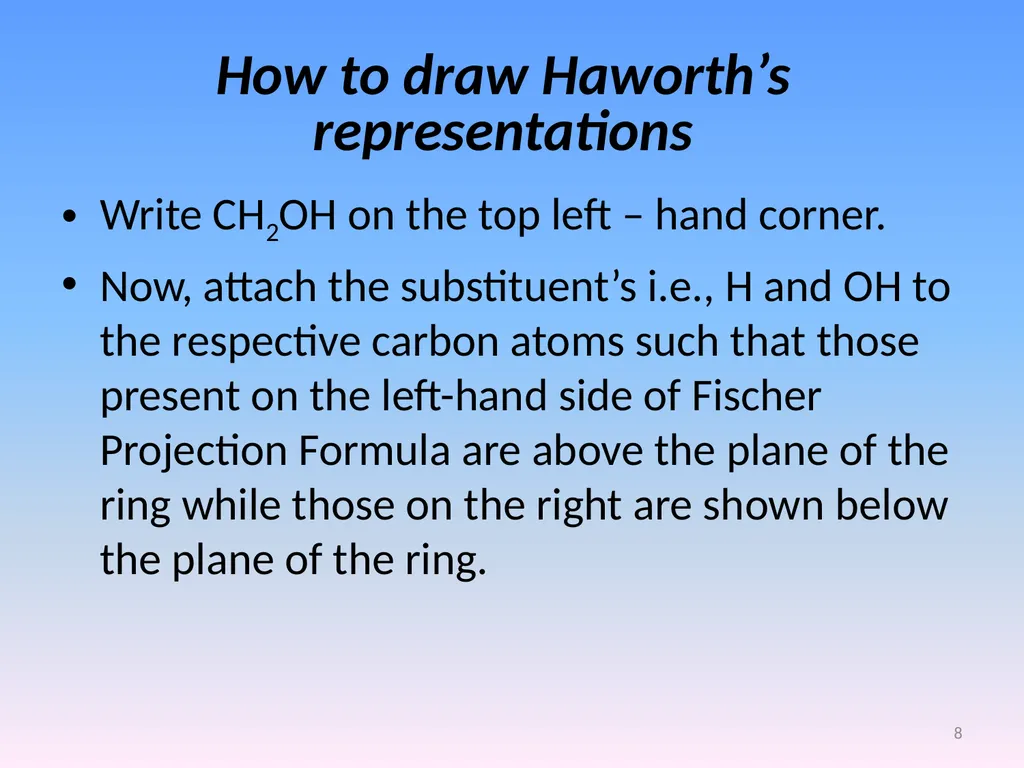
How to draw Haworth’s representations Write CH2OH on the top left – hand corner.
Now, attach the substituent’s i.e., H and OH to the respective carbon atoms such that those present on the left-hand side of Fischer Projection Formula are above the plane of the ring while those on the right are shown below the plane of the ring. 8<br>
09
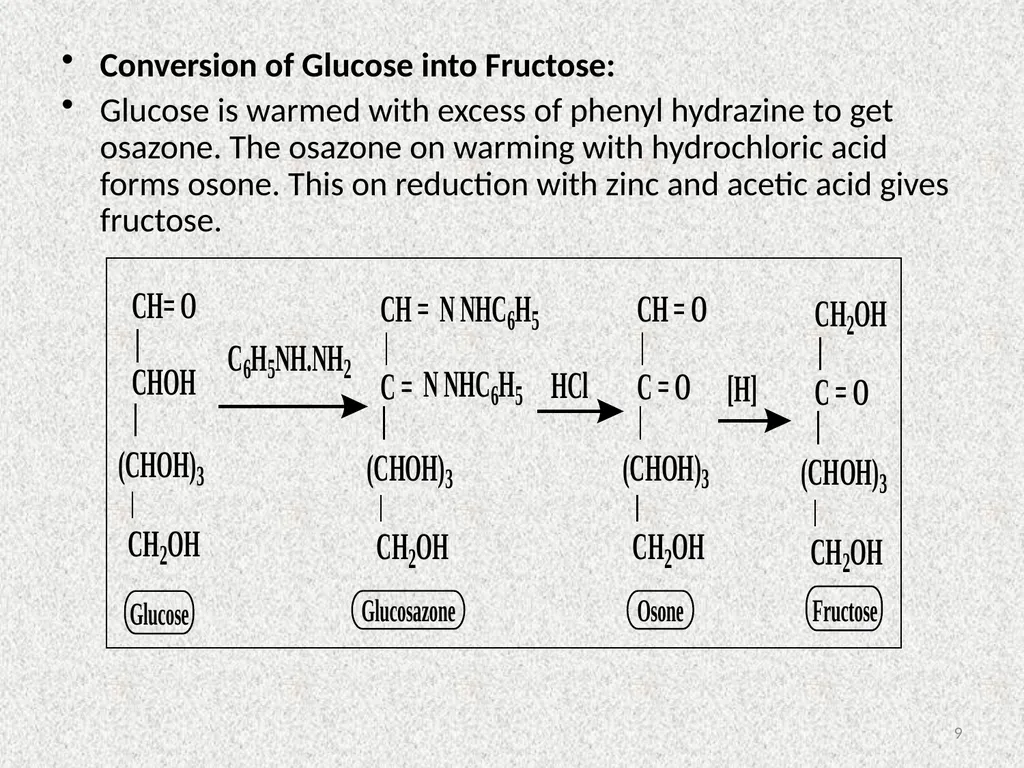
Conversion of Glucose into Fructose:
Glucose is warmed with excess of phenyl hydrazine to get osazone. The osazone on warming with hydrochloric acid forms osone. This on reduction with zinc and acetic acid gives fructose. 9<br>
10
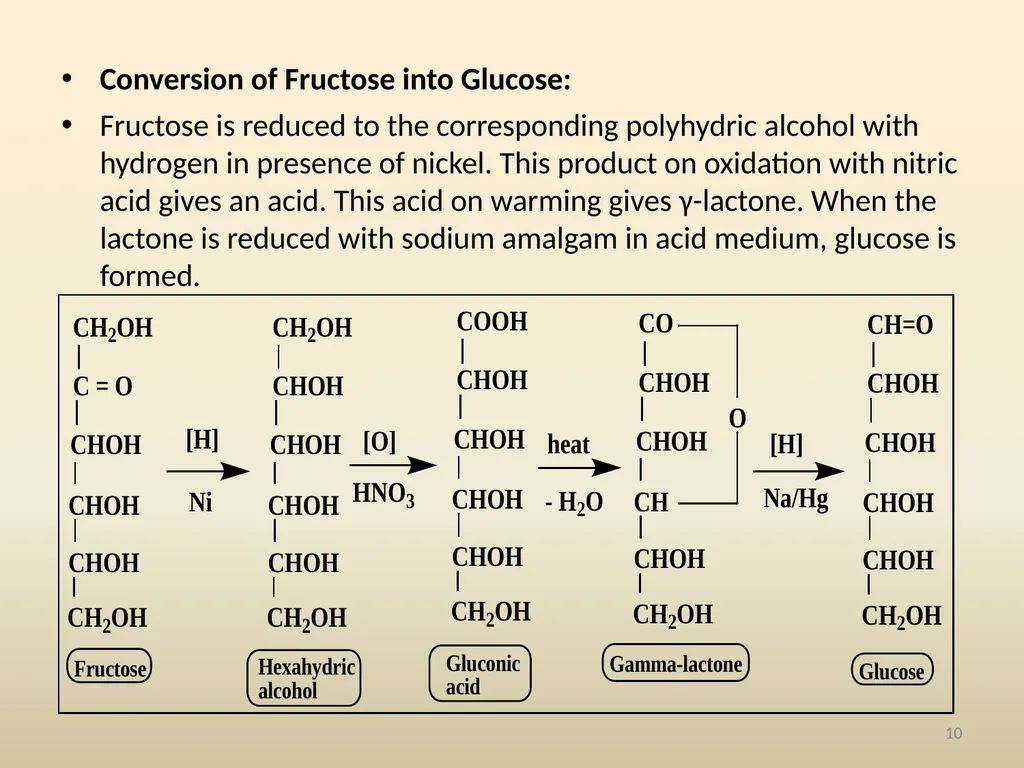
Conversion of Fructose into Glucose:
Fructose is reduced to the corresponding polyhydric alcohol with hydrogen in presence of nickel. This product on oxidation with nitric acid gives an acid. This acid on warming gives γ-lactone. When the lactone is reduced with sodium amalgam in acid medium, glucose is formed. 10<br>