"MPC Metrics: Background, Motivation & Description" is the property of its rightful owner. Permission is granted to
download and print the materials on this website for personal, non-commercial use only, and to display it
on your personal computer provided you do not modify the materials and that you retain all copyright
notices contained in the materials. By downloading content from our website, you accept the terms of this
agreement.
Presentation Transcript
01
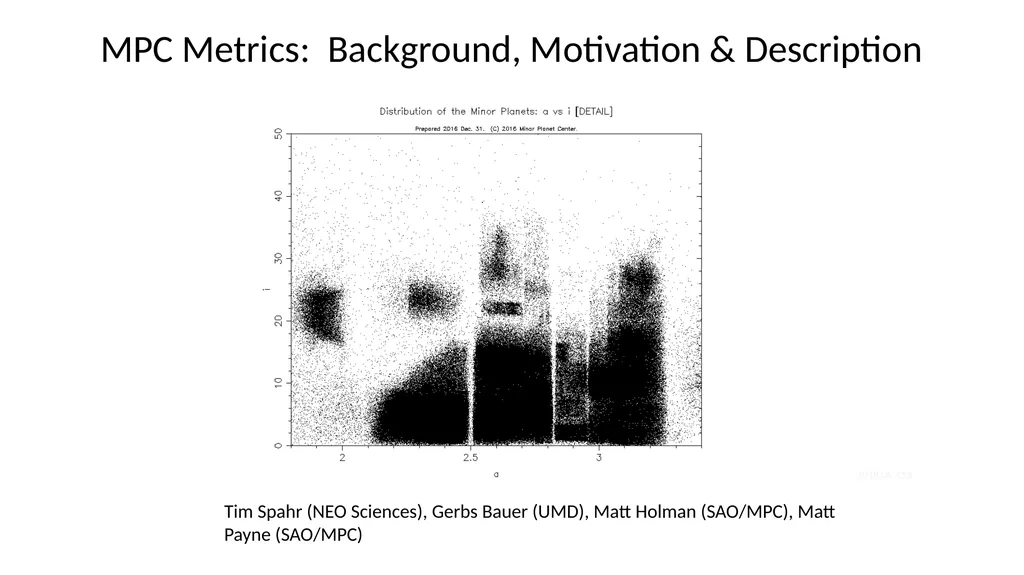
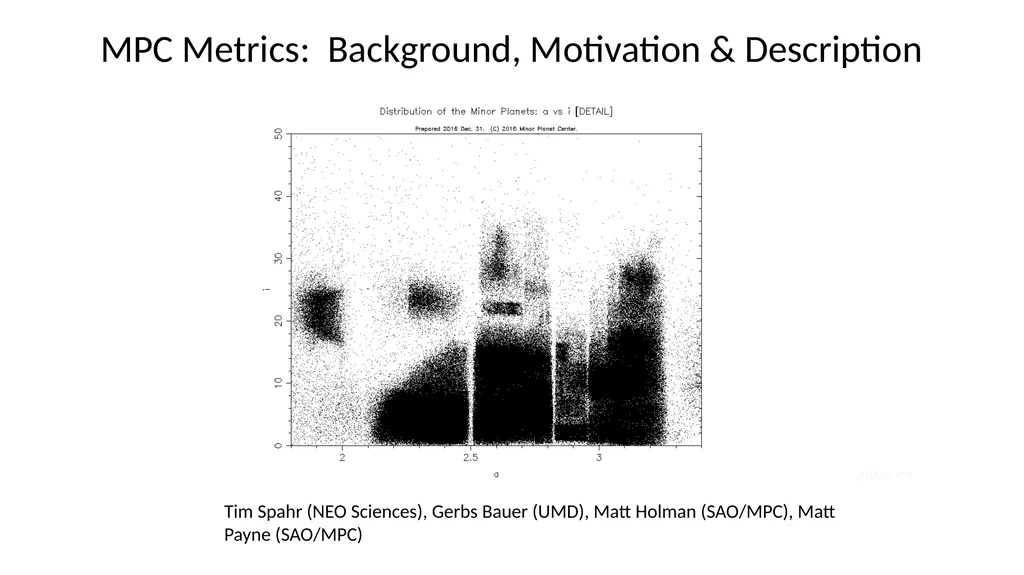
MPC Metrics: Background, Motivation & Description Tim Spahr (NEO Sciences), Gerbs Bauer (UMD), Matt Holman (SAO/MPC), Matt Payne (SAO/MPC) 2018 LA, CSS<br>
02
Outline Motivation & Background for tracking MPC throughput and improvements + survey progress
Introduction and explanation of (some of the) metrics<br>
03
MPC Metrics—what are we talking about ?? Tracking various statistical measures pertaining to observations received and processed by the MPC
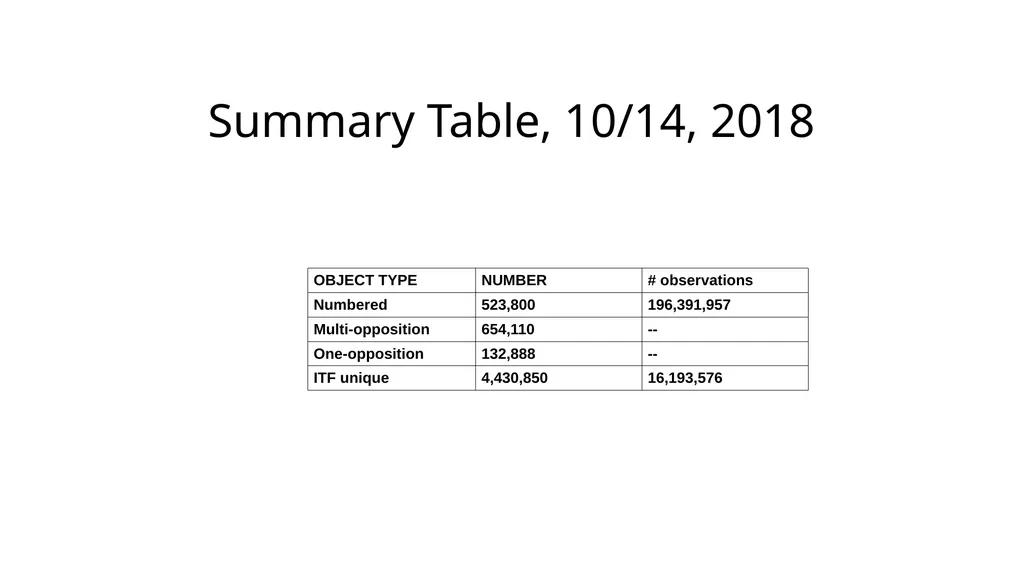
Examples: number of objects in different observational classes (numbered, multi-opposition, etc)
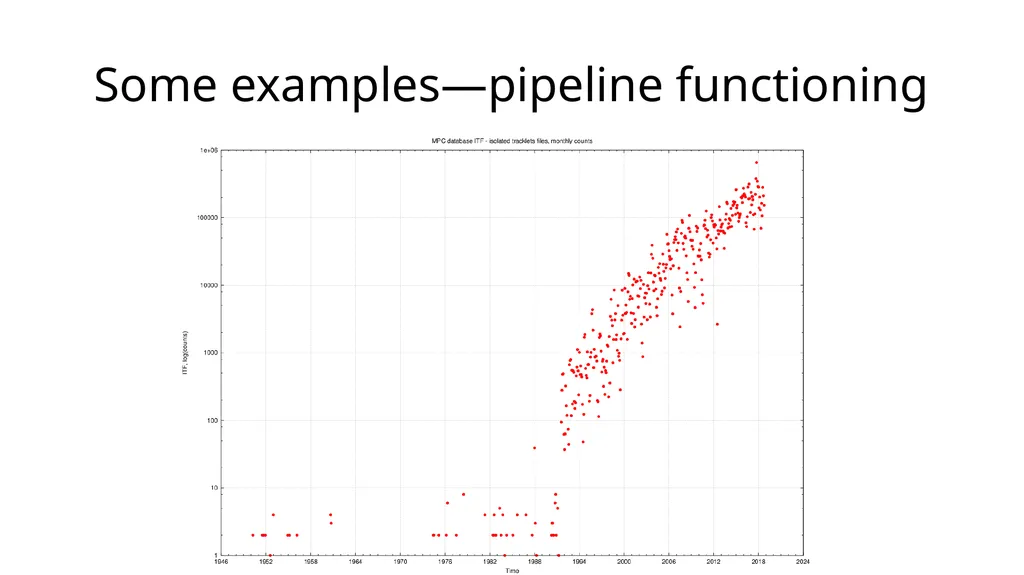
Number of designations & observations in isolated tracklet file (ITF)
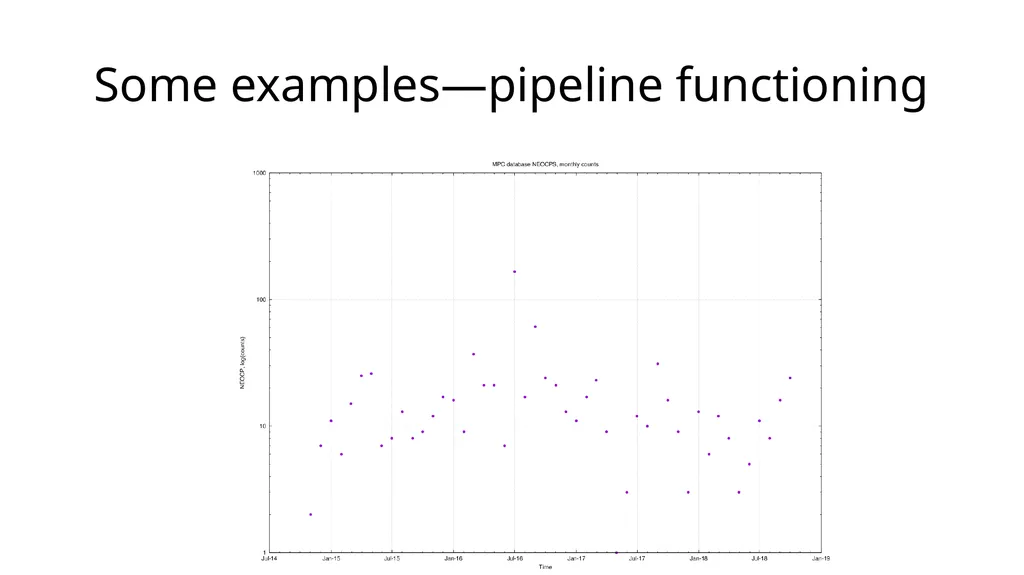
How long do objects stay on the Near-Earth Object Confirmation page (NEOCP)?
How long from submission of tracklet to numbering?
Many more metrics; will show abbreviated list later<br>
04
Motivation Motivation simple—we need statistical means of tracking MPC’s processing throughput
Also Inform community on sheer volume of data received & processed by the MPC
Overall goal is to increase the catalog of NEOs!
Improving MPC throughput improves the catalog of numbered objects
Numbered objects are never lost (orbits good to <~2” for decades)
Orbits are so good that individual positions can be reliably identified and removed from transient stack (major survey implications)
Surely this is some combination of MPC processing + worldwide observing efforts<br>
05
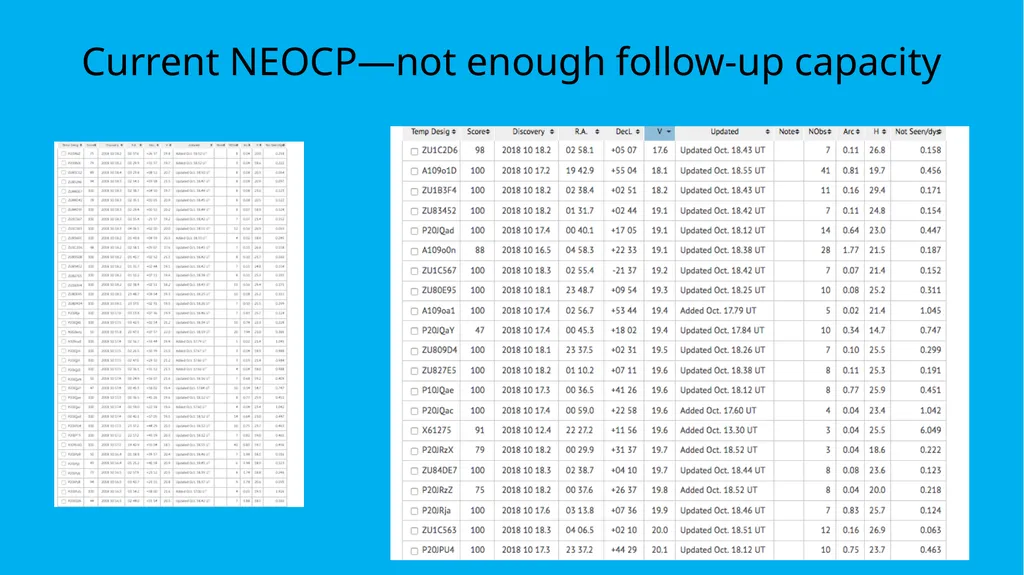
Current NEOCP—not enough follow-up capacity<br>
06
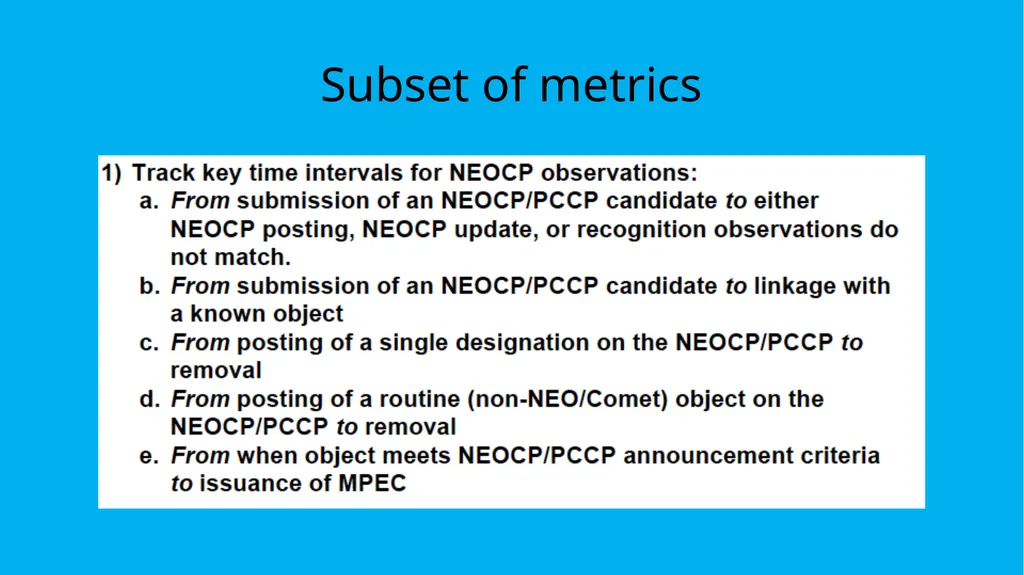
Documentation of metrics Beginning in January, Gerbs, Tim, Matt^2 began drafting metrics document (we took good notes at NEOO Review in Oracle in February, and met twice there)
Metrics broken into sections—follow-up, progress & improvement, NEOCP objects, main-belt objects, tools to assist observers
Metrics document is finalized and some metrics are already being tracked<br>
07
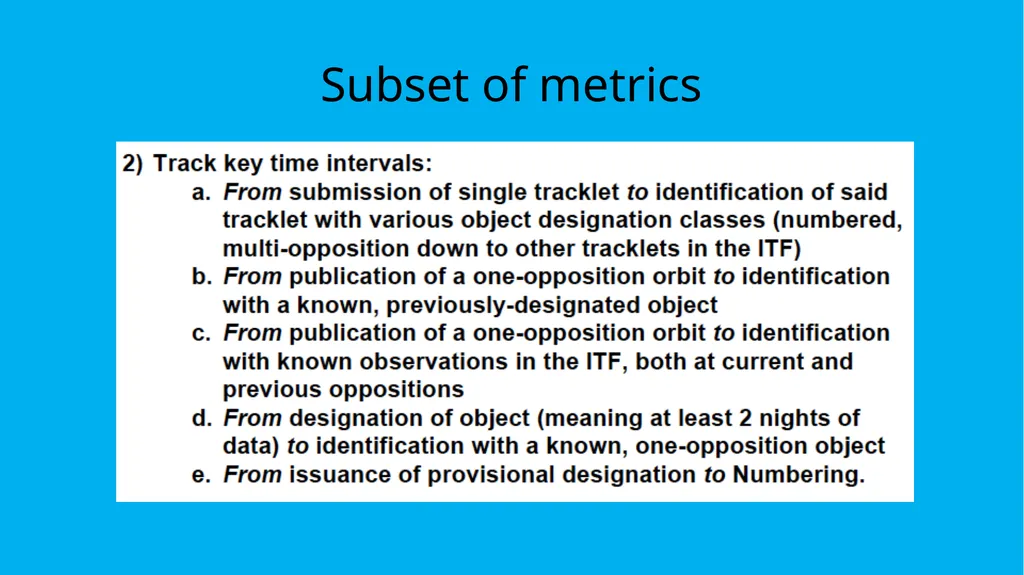
Subset of metrics<br>
08
Subset of metrics<br>
09
Some examples—pipeline functioning<br>
10
Some examples—pipeline functioning<br>
11
Summary Table, 10/14, 2018<br>
12
Progress and some background Heliocentric linking (Holman and Payne work) is helping identify and link objects more quickly
Speedier removal of NEOCP objects
(big subject at the Oracle meeting was a leaner NEOCP; both of these items directly impact that)<br>
13
Progress and some background MPC processed a giant batch of identifications from Rob Weryk (and a second is in the pipeline)
Something like 10% of the ITF; second batch > 20% of the ITF
Also large batch of heliocentric-linking objects fully processed
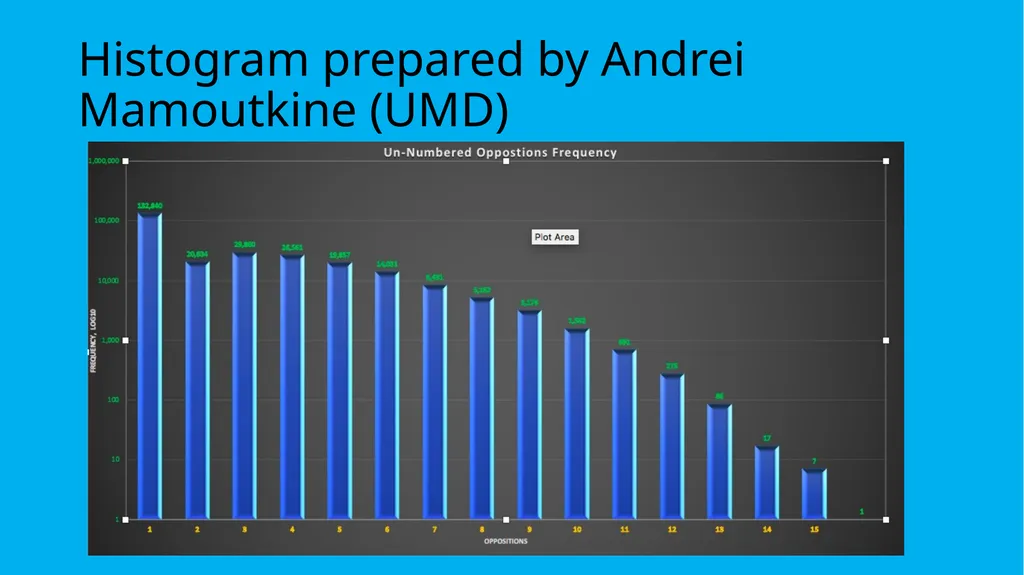
Fraction of multi-opposition orbits has exploded (now more multi-opposition than one-opposition orbits)<br>
14
Histogram prepared by Andrei Mamoutkine (UMD)<br>
15
Summary Metrics were introduced to track MPC throughput
Overall goal of metrics is to guide MPC + survey progress towards a larger numbered asteroid catalog and reduce the time objects spend on the NEOCP and also reduce the number of NEOCP candidates
ITF processing with some new techniques and new players is having major impact on the MPC orbit catalog
Many of the metrics are already being computed on a weekly basis<br>