
Overview Final exam – questions? Complete climate
Description: Overview Final exam questions? Complete climate change lecture Ethics and IR The future of IR Post-midterm review Final Exam Essay (55) Medium answer questions: (TWO at 15 each 30) STUDY FOR FIVE (5) but ONLY ANSWER TWO (2) Expect a
Related Topics
Download Presentation
"Overview Final exam – questions? Complete climate" is the property of its rightful owner. Permission is granted to download and print the materials on this website for personal, non-commercial use only, and to display it on your personal computer provided you do not modify the materials and that you retain all copyright notices contained in the materials. By downloading content from our website, you accept the terms of this agreement.
Presentation Transcript
slide1. Overview Final exam – questions?
Complete climate change lecture
Ethics and IR
The future of IR
Post-midterm review<br>
slide2. Final Exam Essay (55%)
Medium answer questions: (TWO at 15% each = 30%)
STUDY FOR FIVE (5) but ONLY ANSWER TWO (2)
Expect a good answer
Length of each: something like 2, 3, 4 pages
15 multiple choice questions (15% total)<br>
slide3. Final Essay Compare ability of realism, institutionalism, disenfranchised theories to explain patterns of international relations we observe in ONE PAIR of these four issue area pairs.
a) security and human rights,
b) security and environmental affairs,
c) economic affairs and human rights,
d) economic affairs and environmental affairs.
Compare across 3 theories AND across 2 issue areas.
what parts of a given issue area are best explained by one theory and which parts are better explained by another theory
for each theory, whether it does better, worse, or equally well at explaining international relations in one issue area compared to the other issue area you have chosen<br>
slide4. Climate Change Wrapup<br>
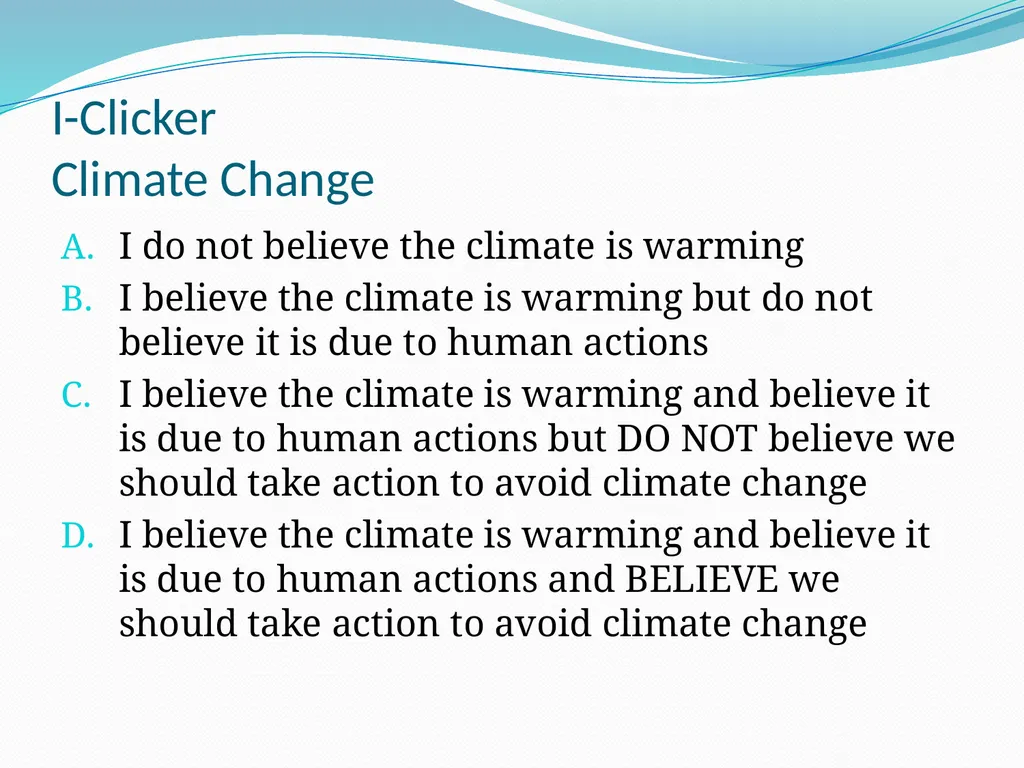
slide5. I-Clicker Climate Change I do not believe the climate is warming
I believe the climate is warming but do not believe it is due to human actions
I believe the climate is warming and believe it is due to human actions but DO NOT believe we should take action to avoid climate change
I believe the climate is warming and believe it is due to human actions and BELIEVE we should take action to avoid climate change<br>
slide6. Trends in Deep Social Causes of Climate Change and their Implications 6<br>
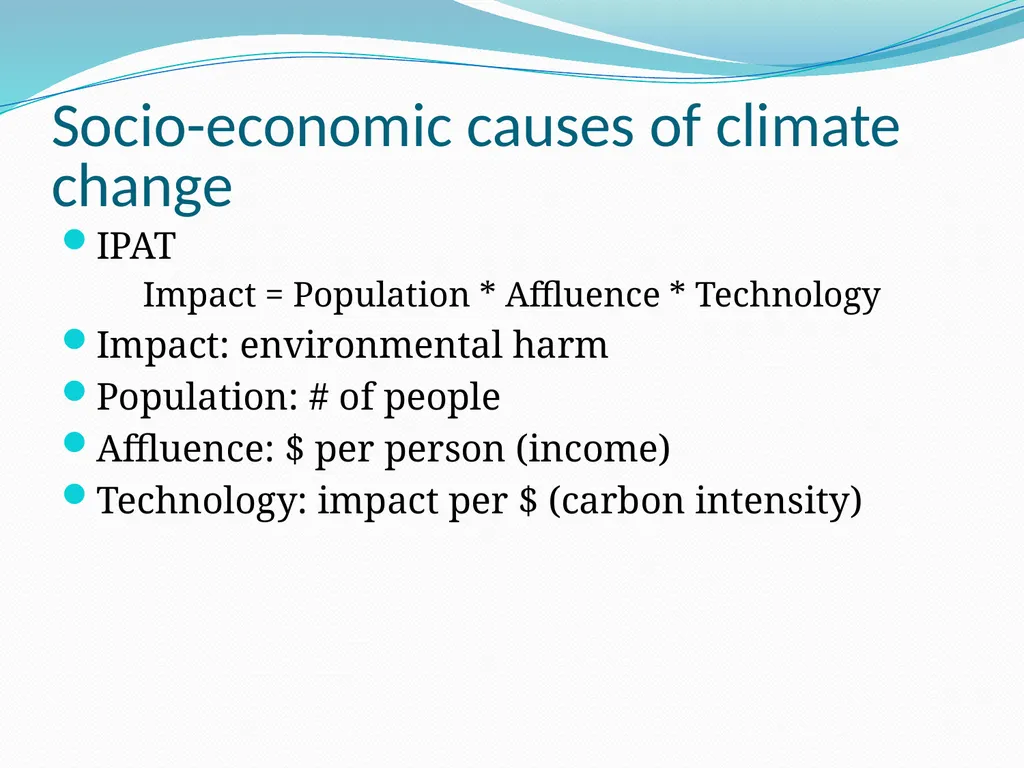
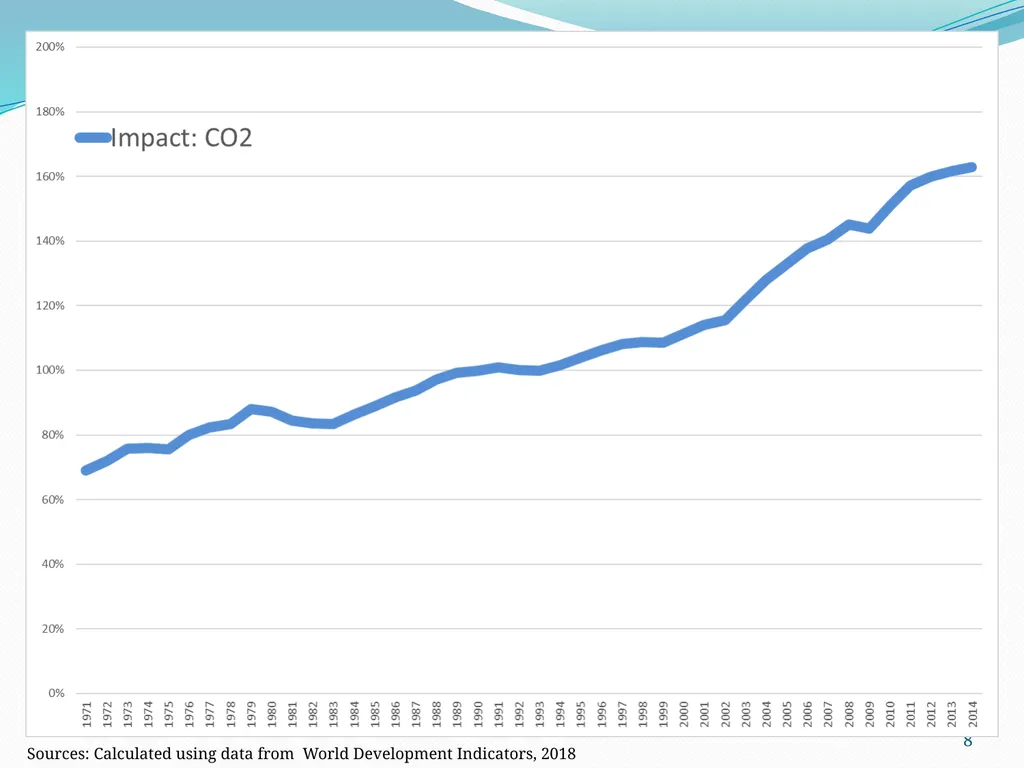
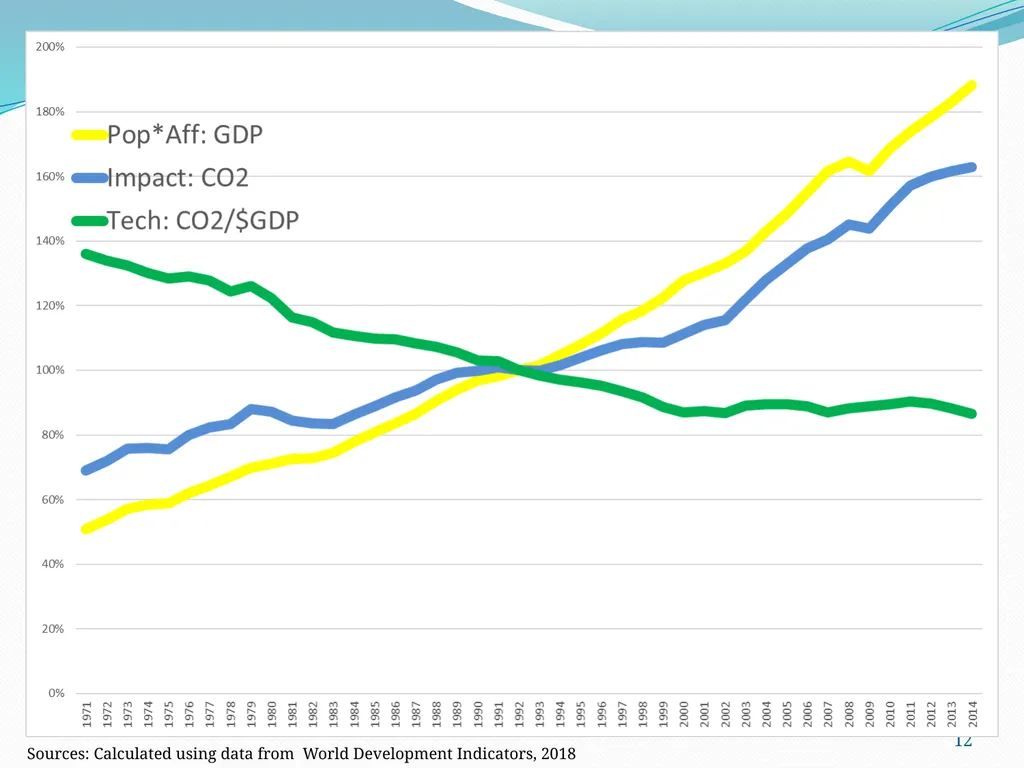
slide7. Socio-economic causes of climate change IPAT
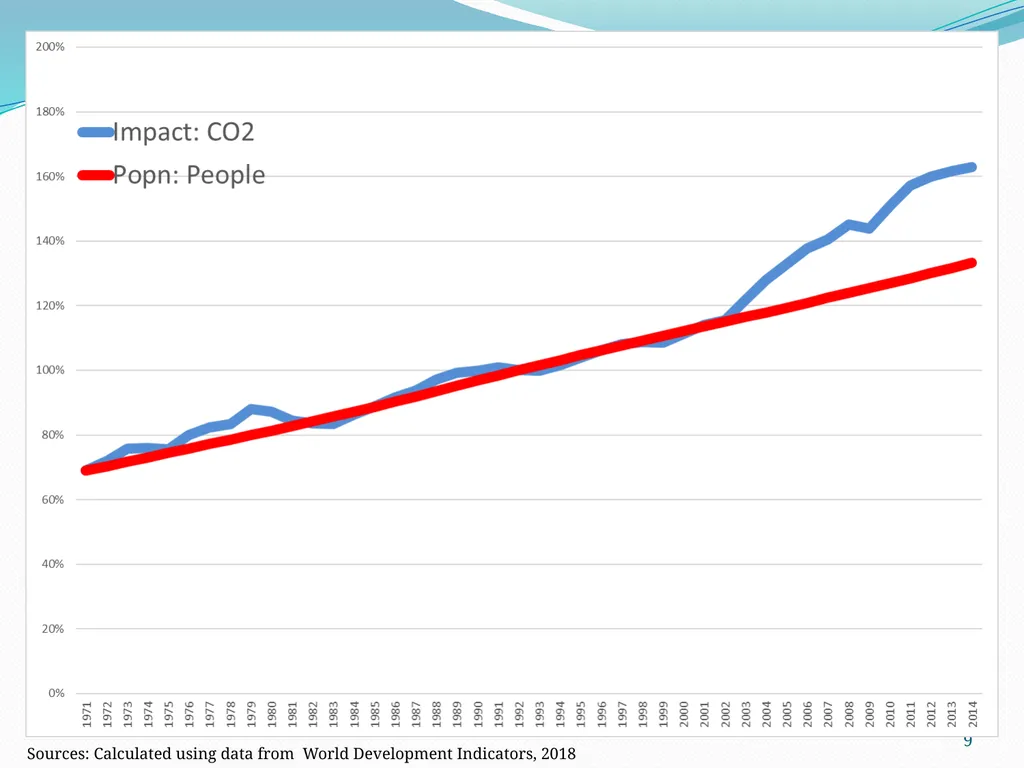
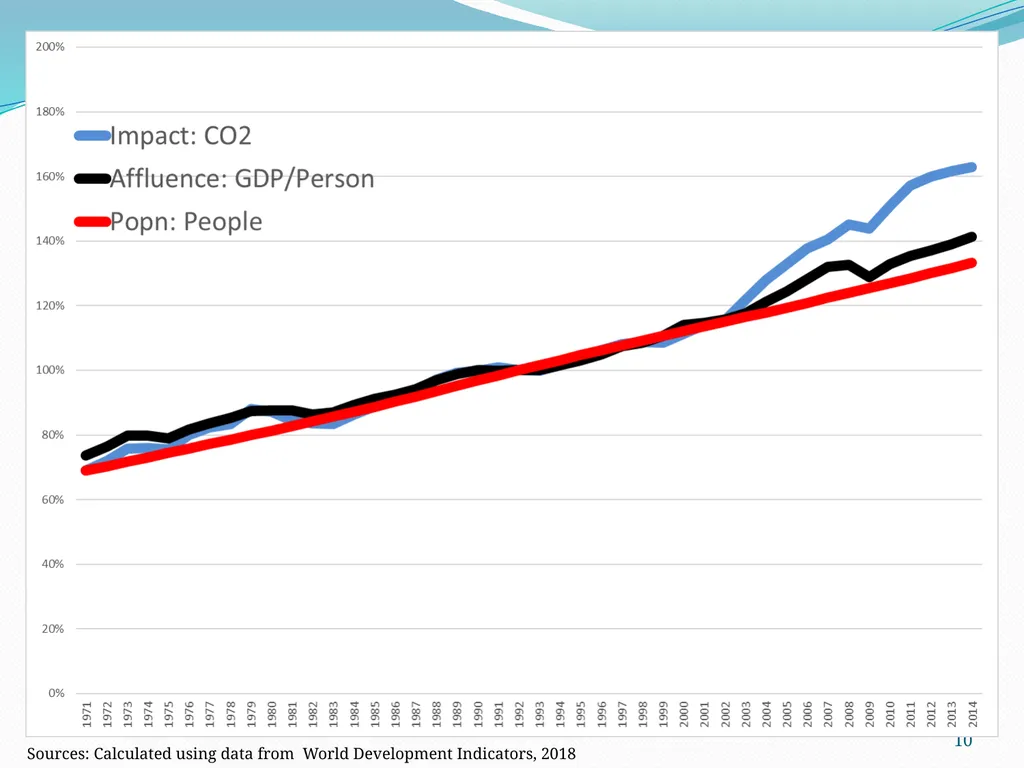
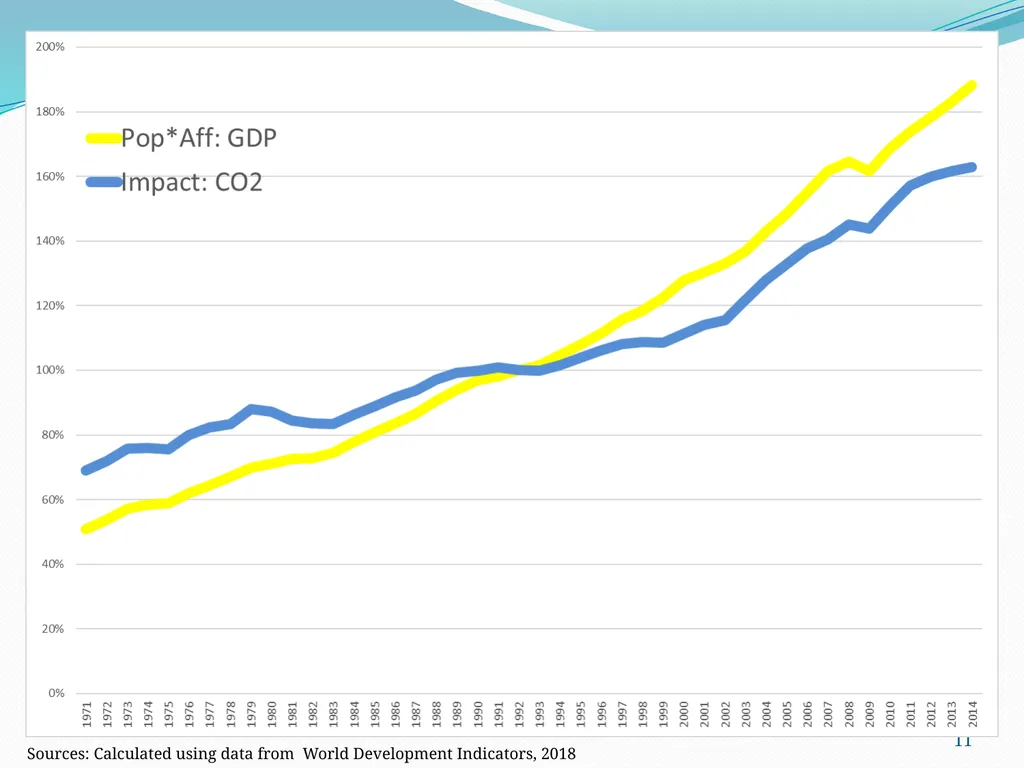
Impact = Population * Affluence * Technology
Impact: environmental harm
Population: # of people
Affluence: $ per person (income)
Technology: impact per $ (carbon intensity)<br>
slide8. 8 Sources: Calculated using data from World Development Indicators, 2018<br>
slide9. 9 Sources: Calculated using data from World Development Indicators, 2018<br>
slide10. 10 Sources: Calculated using data from World Development Indicators, 2018<br>
slide11. 11 Sources: Calculated using data from World Development Indicators, 2018<br>
slide12. 12 Sources: Calculated using data from World Development Indicators, 2018<br>
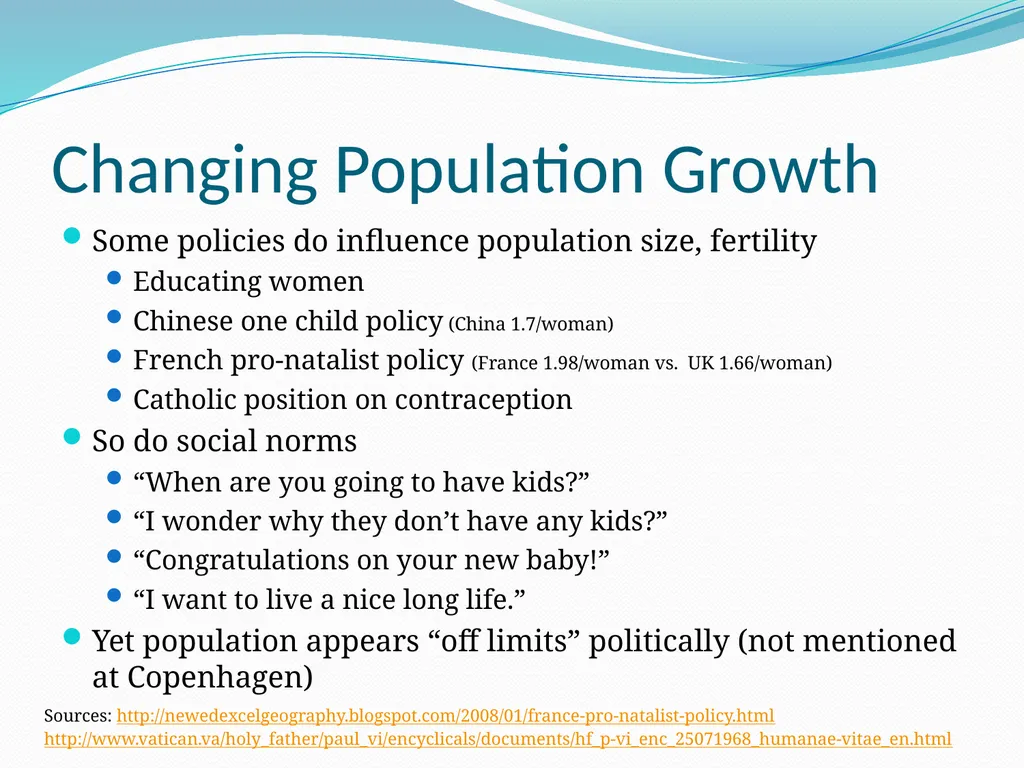
slide13. Changing Population Growth Some policies do influence population size, fertility
Educating women
Chinese one child policy (China 1.7/woman)
French pro-natalist policy (France 1.98/woman vs. UK 1.66/woman)
Catholic position on contraception
So do social norms
“When are you going to have kids?”
“I wonder why they don’t have any kids?”
“Congratulations on your new baby!”
“I want to live a nice long life.”
Yet population appears “off limits” politically (not mentioned at Copenhagen) Sources: http://newedexcelgeography.blogspot.com/2008/01/france-pro-natalist-policy.html
http://www.vatican.va/holy_father/paul_vi/encyclicals/documents/hf_p-vi_enc_25071968_humanae-vitae_en.html<br>
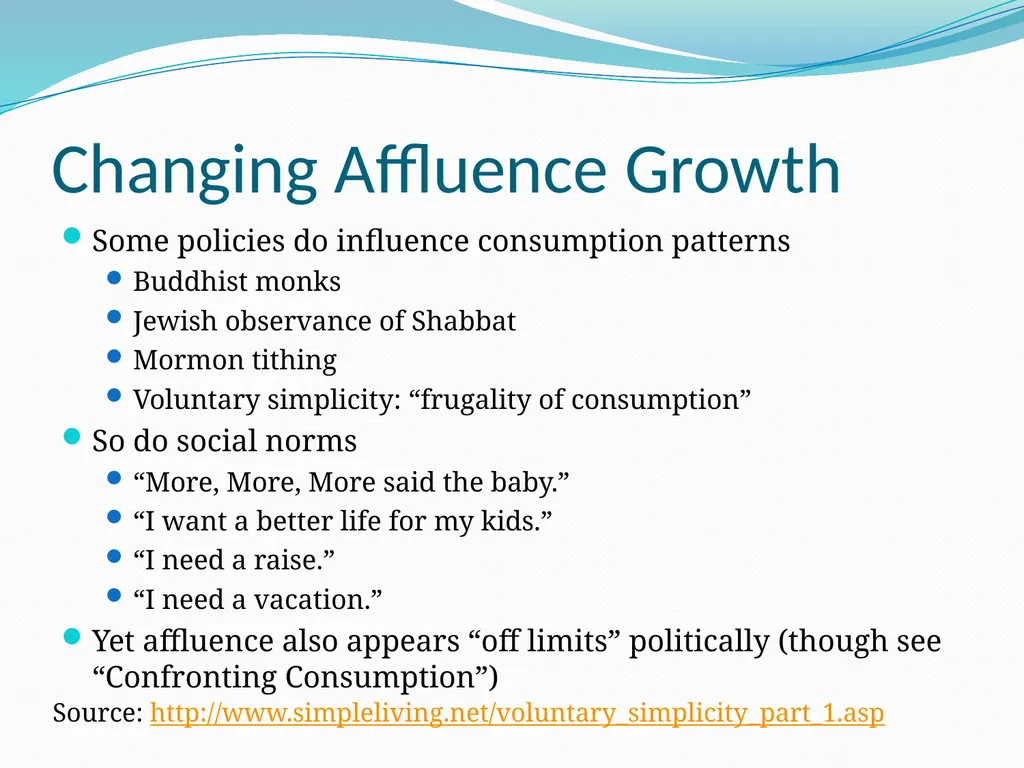
slide14. Changing Affluence Growth Some policies do influence consumption patterns
Buddhist monks
Jewish observance of Shabbat
Mormon tithing
Voluntary simplicity: “frugality of consumption”
So do social norms
“More, More, More said the baby.”
“I want a better life for my kids.”
“I need a raise.”
“I need a vacation.”
Yet affluence also appears “off limits” politically (though see “Confronting Consumption”) Source: http://www.simpleliving.net/voluntary_simplicity_part_1.asp<br>
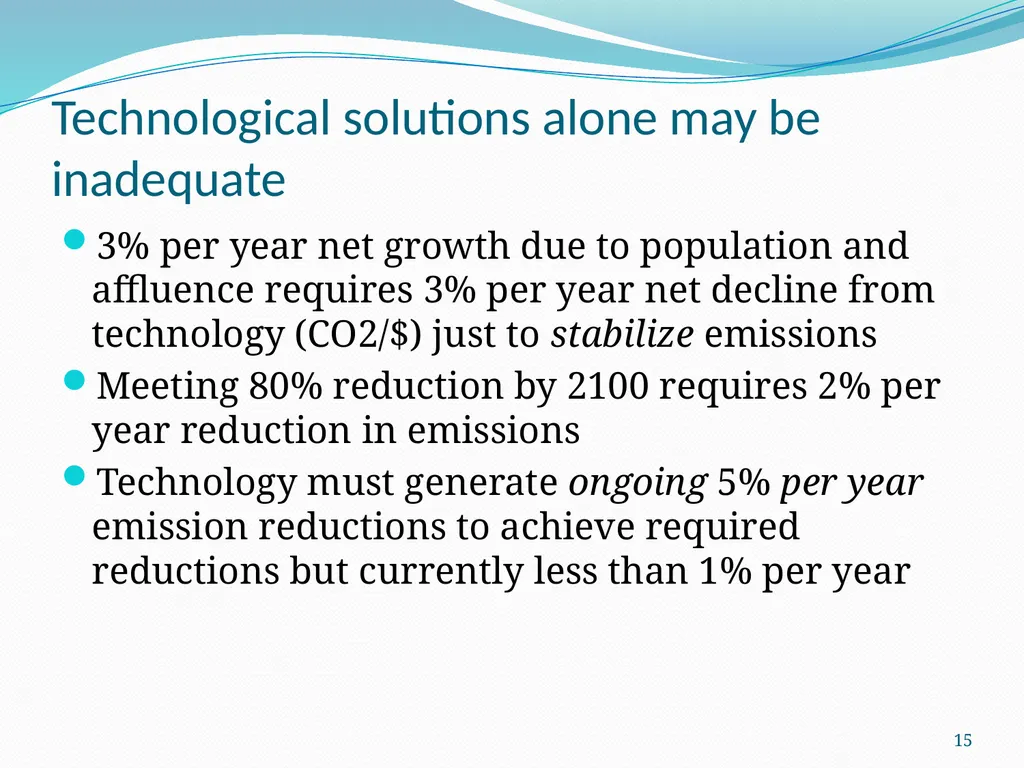
slide15. Technological solutions alone may be inadequate 3% per year net growth due to population and affluence requires 3% per year net decline from technology (CO2/$) just to stabilize emissions
Meeting 80% reduction by 2100 requires 2% per year reduction in emissions
Technology must generate ongoing 5% per year emission reductions to achieve required reductions but currently less than 1% per year 15<br>
slide16. What are the policy options? Mitigation
Adaptation
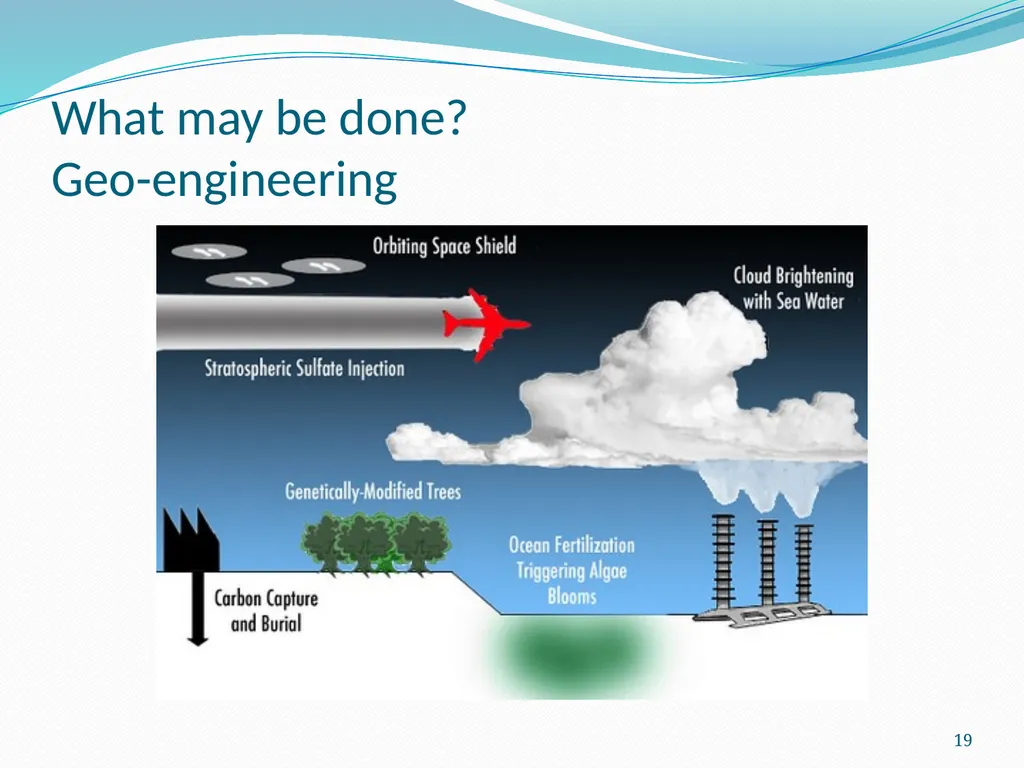
Geoengineering
Grieving and loss<br>
slide17. What is being done? Mitigation UN FCCC 1992; Kyoto Protocol 1997; Paris 2015
Governments: India, China, US, Europe, Japan; Costa Rica: 3.5% carbon tax since 1997
States: Regional Greenhouse Gas Initiative; Western Climate Initiative
Cities: ICLEI-Local Governments for Sustainability: >1000 cities, towns
NGOs/Corporations: WWF, Greenpeace, Nike, Levi’s, etc.
Multinational corporations
Religions: Faith Action on Climate Change, Interfaith Power & Light, Evangelical Environmental Network,
Individuals: Voluntary Simplicity, direct action<br>
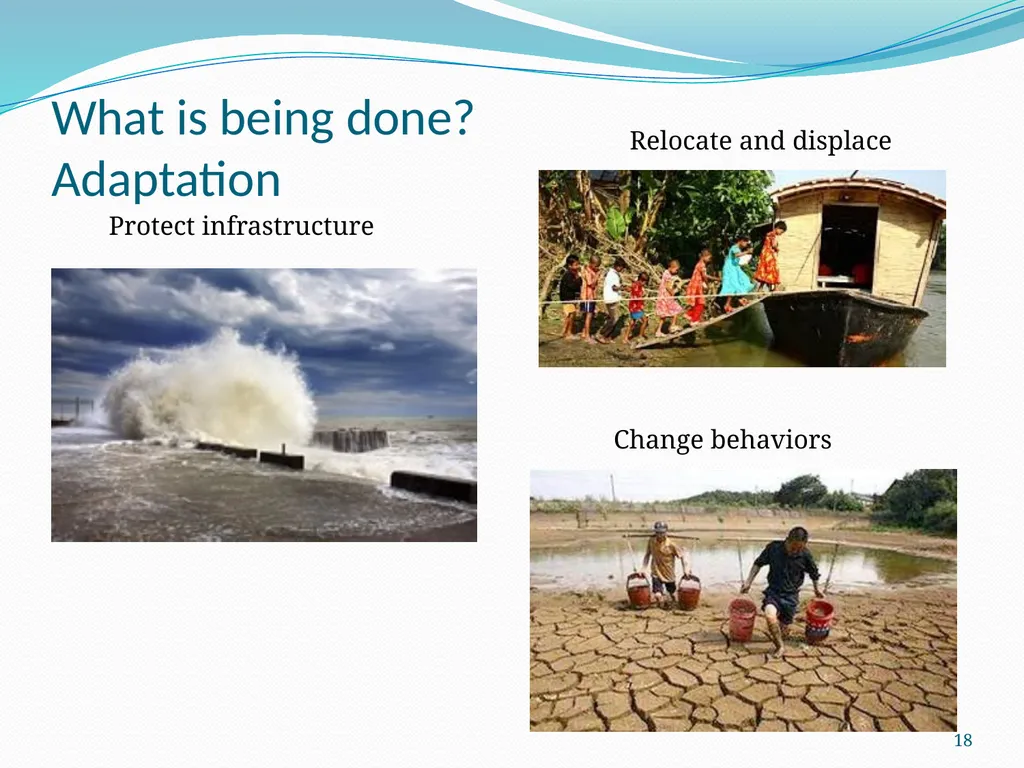
slide18. What is being done? Adaptation 18 Relocate and displace Protect infrastructure Change behaviors<br>
slide19. What may be done? Geo-engineering 19<br>
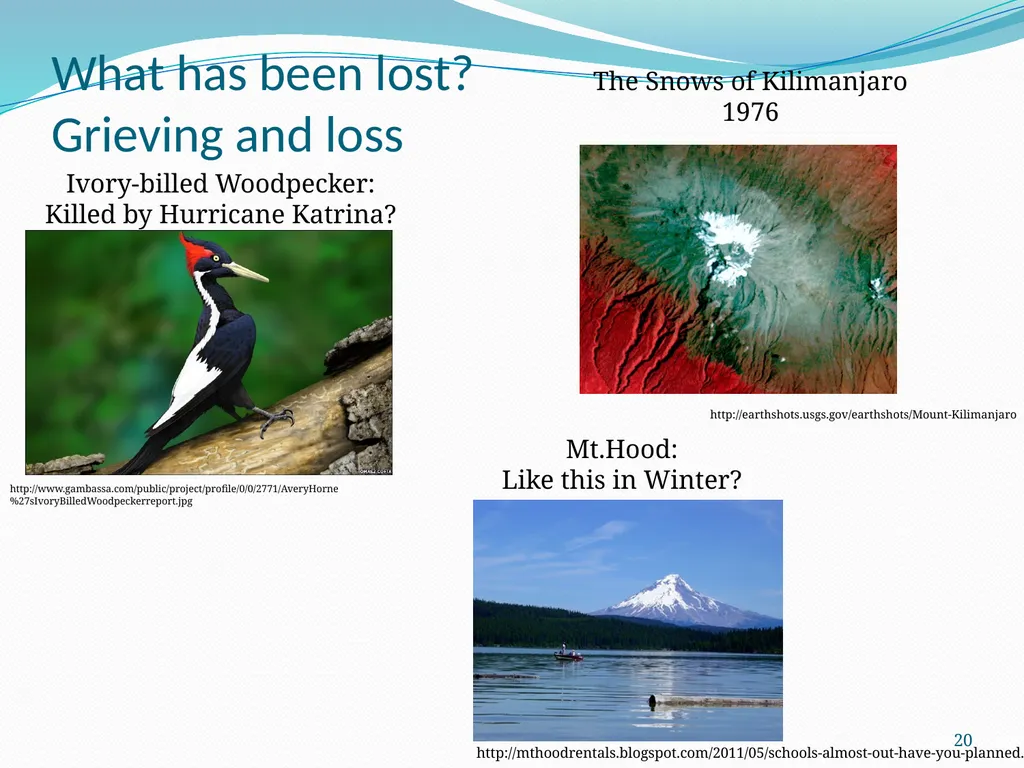
slide20. What has been lost? Grieving and loss 20 Ivory-billed Woodpecker:
Killed by Hurricane Katrina? Mt.Hood:
Like this in Winter? The Snows of Kilimanjaro
1976 http://earthshots.usgs.gov/earthshots/Mount-Kilimanjaro http://mthoodrentals.blogspot.com/2011/05/schools-almost-out-have-you-planned.html http://www.gambassa.com/public/project/profile/0/0/2771/AveryHorne%27sIvoryBilledWoodpeckerreport.jpg<br>
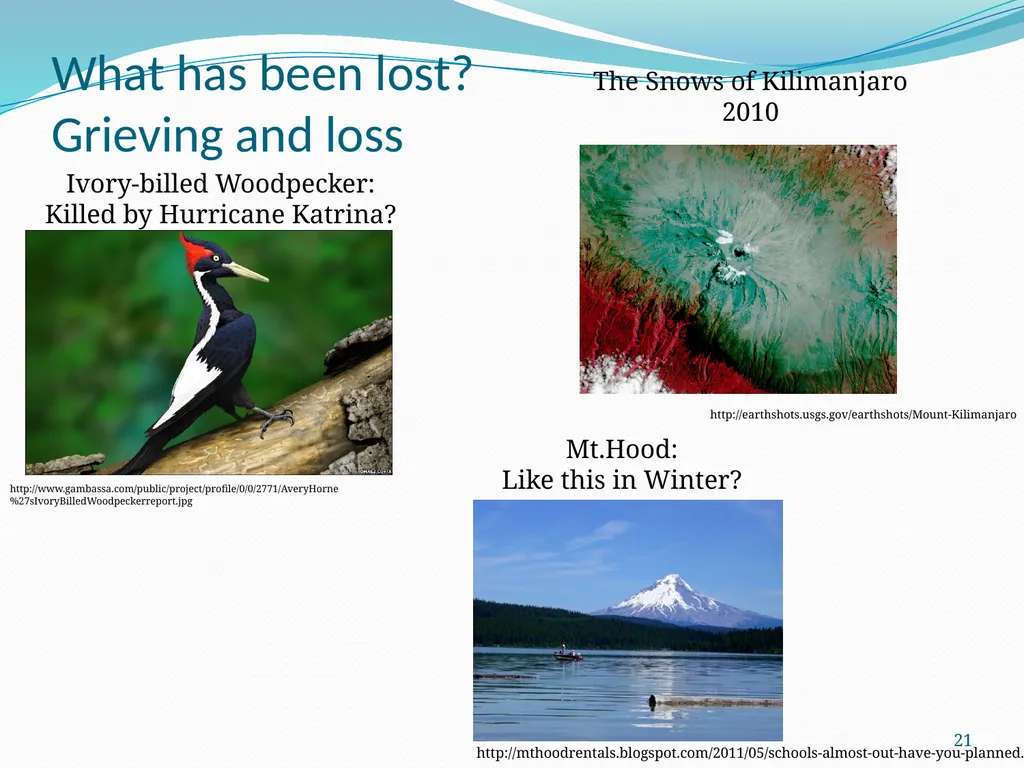
slide21. What has been lost? Grieving and loss 21 Ivory-billed Woodpecker:
Killed by Hurricane Katrina? Mt.Hood:
Like this in Winter? The Snows of Kilimanjaro
2010 http://earthshots.usgs.gov/earthshots/Mount-Kilimanjaro http://mthoodrentals.blogspot.com/2011/05/schools-almost-out-have-you-planned.html http://www.gambassa.com/public/project/profile/0/0/2771/AveryHorne%27sIvoryBilledWoodpeckerreport.jpg<br>
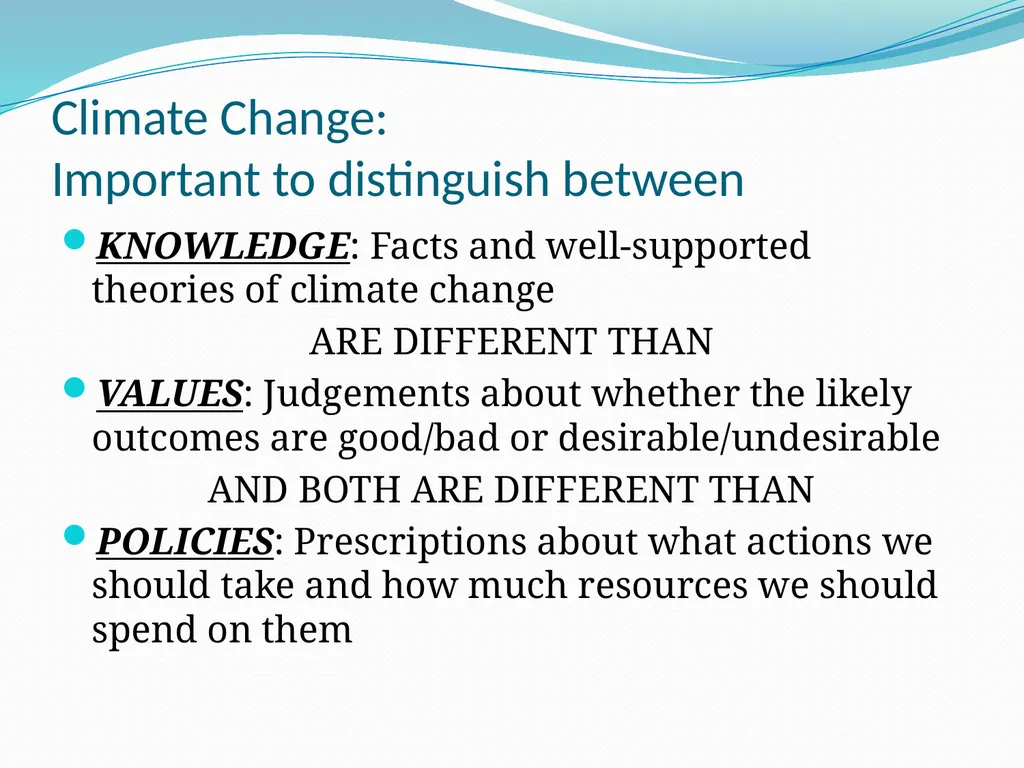
slide22. Climate Change: Important to distinguish between KNOWLEDGE: Facts and well-supported theories of climate change
ARE DIFFERENT THAN
VALUES: Judgements about whether the likely outcomes are good/bad or desirable/undesirable
AND BOTH ARE DIFFERENT THAN
POLICIES: Prescriptions about what actions we should take and how much resources we should spend on them<br>
slide23. A hard and scary problem So, some words to live by Everyone thinks of changing the world, but no one thinks of changing himself. ~Leo Tolstoy
Nobody made a greater mistake than he who did nothing because he could only do a little. ~Edmund Burke
The true meaning of life is to plant trees, under whose shade you do not expect to sit. ~Nelson Henderson
Unless someone like you cares a whole awful lot, nothing is going to get better. It's not. ~Dr. Seuss<br>
slide24. Ethics and International Relations<br>
slide25. Ethics of war What ethical responsibilities do we have to people of other nations during war?
Logic of war - inherently unlimited. Clausewitz’s notion that once go to war, placing limits is simply a sure way to lose.<br>
slide26. Limit of consent - soldiers must have consented Draft vs. all-volunteer army? What if all-volunteer army is recruited "from among desperately impoverished men, who can find no other way of feeding themselves and their families except by signing up" (Walzer).
Soldiers as victims of war<br>
slide27. Just Ends of War Jus Ad Bellum "Justice of War"
Just/moral reasons for going to war
Self-defense against overt aggression
Preemptive intervention
Balancing prior intervention
Rescue people threatened with massacre
Assist self-determination movements when they have demonstrated representative character.<br>
slide28. Just Means of War Jus In Bello "Justice in War"
Just/moral methods of fighting war
How do we distinguish war from murder and massacre?
Last resort
Directed by competent authority
Probability of success
Proportionality
Discriminate
Self-defense
Soldiers not responsible for war itself<br>
slide29. The future of the world: Zakaria article Against realism
Interdependence leads to peace, as institutionalists argue
Actors
Trade
Nationalism<br>
slide30. Review of post-midterm classes European Union
Institutional / regime theory
Economic development
Human Rights and genocide
International environment and climate change<br>
Complete climate change lecture
Ethics and IR
The future of IR
Post-midterm review<br>
slide2. Final Exam Essay (55%)
Medium answer questions: (TWO at 15% each = 30%)
STUDY FOR FIVE (5) but ONLY ANSWER TWO (2)
Expect a good answer
Length of each: something like 2, 3, 4 pages
15 multiple choice questions (15% total)<br>
slide3. Final Essay Compare ability of realism, institutionalism, disenfranchised theories to explain patterns of international relations we observe in ONE PAIR of these four issue area pairs.
a) security and human rights,
b) security and environmental affairs,
c) economic affairs and human rights,
d) economic affairs and environmental affairs.
Compare across 3 theories AND across 2 issue areas.
what parts of a given issue area are best explained by one theory and which parts are better explained by another theory
for each theory, whether it does better, worse, or equally well at explaining international relations in one issue area compared to the other issue area you have chosen<br>
slide4. Climate Change Wrapup<br>
slide5. I-Clicker Climate Change I do not believe the climate is warming
I believe the climate is warming but do not believe it is due to human actions
I believe the climate is warming and believe it is due to human actions but DO NOT believe we should take action to avoid climate change
I believe the climate is warming and believe it is due to human actions and BELIEVE we should take action to avoid climate change<br>
slide6. Trends in Deep Social Causes of Climate Change and their Implications 6<br>
slide7. Socio-economic causes of climate change IPAT
Impact = Population * Affluence * Technology
Impact: environmental harm
Population: # of people
Affluence: $ per person (income)
Technology: impact per $ (carbon intensity)<br>
slide8. 8 Sources: Calculated using data from World Development Indicators, 2018<br>
slide9. 9 Sources: Calculated using data from World Development Indicators, 2018<br>
slide10. 10 Sources: Calculated using data from World Development Indicators, 2018<br>
slide11. 11 Sources: Calculated using data from World Development Indicators, 2018<br>
slide12. 12 Sources: Calculated using data from World Development Indicators, 2018<br>
slide13. Changing Population Growth Some policies do influence population size, fertility
Educating women
Chinese one child policy (China 1.7/woman)
French pro-natalist policy (France 1.98/woman vs. UK 1.66/woman)
Catholic position on contraception
So do social norms
“When are you going to have kids?”
“I wonder why they don’t have any kids?”
“Congratulations on your new baby!”
“I want to live a nice long life.”
Yet population appears “off limits” politically (not mentioned at Copenhagen) Sources: http://newedexcelgeography.blogspot.com/2008/01/france-pro-natalist-policy.html
http://www.vatican.va/holy_father/paul_vi/encyclicals/documents/hf_p-vi_enc_25071968_humanae-vitae_en.html<br>
slide14. Changing Affluence Growth Some policies do influence consumption patterns
Buddhist monks
Jewish observance of Shabbat
Mormon tithing
Voluntary simplicity: “frugality of consumption”
So do social norms
“More, More, More said the baby.”
“I want a better life for my kids.”
“I need a raise.”
“I need a vacation.”
Yet affluence also appears “off limits” politically (though see “Confronting Consumption”) Source: http://www.simpleliving.net/voluntary_simplicity_part_1.asp<br>
slide15. Technological solutions alone may be inadequate 3% per year net growth due to population and affluence requires 3% per year net decline from technology (CO2/$) just to stabilize emissions
Meeting 80% reduction by 2100 requires 2% per year reduction in emissions
Technology must generate ongoing 5% per year emission reductions to achieve required reductions but currently less than 1% per year 15<br>
slide16. What are the policy options? Mitigation
Adaptation
Geoengineering
Grieving and loss<br>
slide17. What is being done? Mitigation UN FCCC 1992; Kyoto Protocol 1997; Paris 2015
Governments: India, China, US, Europe, Japan; Costa Rica: 3.5% carbon tax since 1997
States: Regional Greenhouse Gas Initiative; Western Climate Initiative
Cities: ICLEI-Local Governments for Sustainability: >1000 cities, towns
NGOs/Corporations: WWF, Greenpeace, Nike, Levi’s, etc.
Multinational corporations
Religions: Faith Action on Climate Change, Interfaith Power & Light, Evangelical Environmental Network,
Individuals: Voluntary Simplicity, direct action<br>
slide18. What is being done? Adaptation 18 Relocate and displace Protect infrastructure Change behaviors<br>
slide19. What may be done? Geo-engineering 19<br>
slide20. What has been lost? Grieving and loss 20 Ivory-billed Woodpecker:
Killed by Hurricane Katrina? Mt.Hood:
Like this in Winter? The Snows of Kilimanjaro
1976 http://earthshots.usgs.gov/earthshots/Mount-Kilimanjaro http://mthoodrentals.blogspot.com/2011/05/schools-almost-out-have-you-planned.html http://www.gambassa.com/public/project/profile/0/0/2771/AveryHorne%27sIvoryBilledWoodpeckerreport.jpg<br>
slide21. What has been lost? Grieving and loss 21 Ivory-billed Woodpecker:
Killed by Hurricane Katrina? Mt.Hood:
Like this in Winter? The Snows of Kilimanjaro
2010 http://earthshots.usgs.gov/earthshots/Mount-Kilimanjaro http://mthoodrentals.blogspot.com/2011/05/schools-almost-out-have-you-planned.html http://www.gambassa.com/public/project/profile/0/0/2771/AveryHorne%27sIvoryBilledWoodpeckerreport.jpg<br>
slide22. Climate Change: Important to distinguish between KNOWLEDGE: Facts and well-supported theories of climate change
ARE DIFFERENT THAN
VALUES: Judgements about whether the likely outcomes are good/bad or desirable/undesirable
AND BOTH ARE DIFFERENT THAN
POLICIES: Prescriptions about what actions we should take and how much resources we should spend on them<br>
slide23. A hard and scary problem So, some words to live by Everyone thinks of changing the world, but no one thinks of changing himself. ~Leo Tolstoy
Nobody made a greater mistake than he who did nothing because he could only do a little. ~Edmund Burke
The true meaning of life is to plant trees, under whose shade you do not expect to sit. ~Nelson Henderson
Unless someone like you cares a whole awful lot, nothing is going to get better. It's not. ~Dr. Seuss<br>
slide24. Ethics and International Relations<br>
slide25. Ethics of war What ethical responsibilities do we have to people of other nations during war?
Logic of war - inherently unlimited. Clausewitz’s notion that once go to war, placing limits is simply a sure way to lose.<br>
slide26. Limit of consent - soldiers must have consented Draft vs. all-volunteer army? What if all-volunteer army is recruited "from among desperately impoverished men, who can find no other way of feeding themselves and their families except by signing up" (Walzer).
Soldiers as victims of war<br>
slide27. Just Ends of War Jus Ad Bellum "Justice of War"
Just/moral reasons for going to war
Self-defense against overt aggression
Preemptive intervention
Balancing prior intervention
Rescue people threatened with massacre
Assist self-determination movements when they have demonstrated representative character.<br>
slide28. Just Means of War Jus In Bello "Justice in War"
Just/moral methods of fighting war
How do we distinguish war from murder and massacre?
Last resort
Directed by competent authority
Probability of success
Proportionality
Discriminate
Self-defense
Soldiers not responsible for war itself<br>
slide29. The future of the world: Zakaria article Against realism
Interdependence leads to peace, as institutionalists argue
Actors
Trade
Nationalism<br>
slide30. Review of post-midterm classes European Union
Institutional / regime theory
Economic development
Human Rights and genocide
International environment and climate change<br>