Pathophysiology Dr.Wasfi Dhahir Abid Ali Department of medical sciences College of Nursing University of Basrah STRESS Stress Is a systemic response to a change (stressor) internal or external and may be modified in specific
"Pathophysiology Dr.Wasfi Dhahir Abid Ali" is the property of its rightful owner. Permission is granted to
download and print the materials on this website for personal, non-commercial use only, and to display it
on your personal computer provided you do not modify the materials and that you retain all copyright
notices contained in the materials. By downloading content from our website, you accept the terms of this
agreement.
Presentation Transcript
01
Pathophysiology
Dr.Wasfi Dhahir Abid Ali
Department of medical sciences –College of Nursing –
University of Basrah<br>
02
STRESS<br>
03
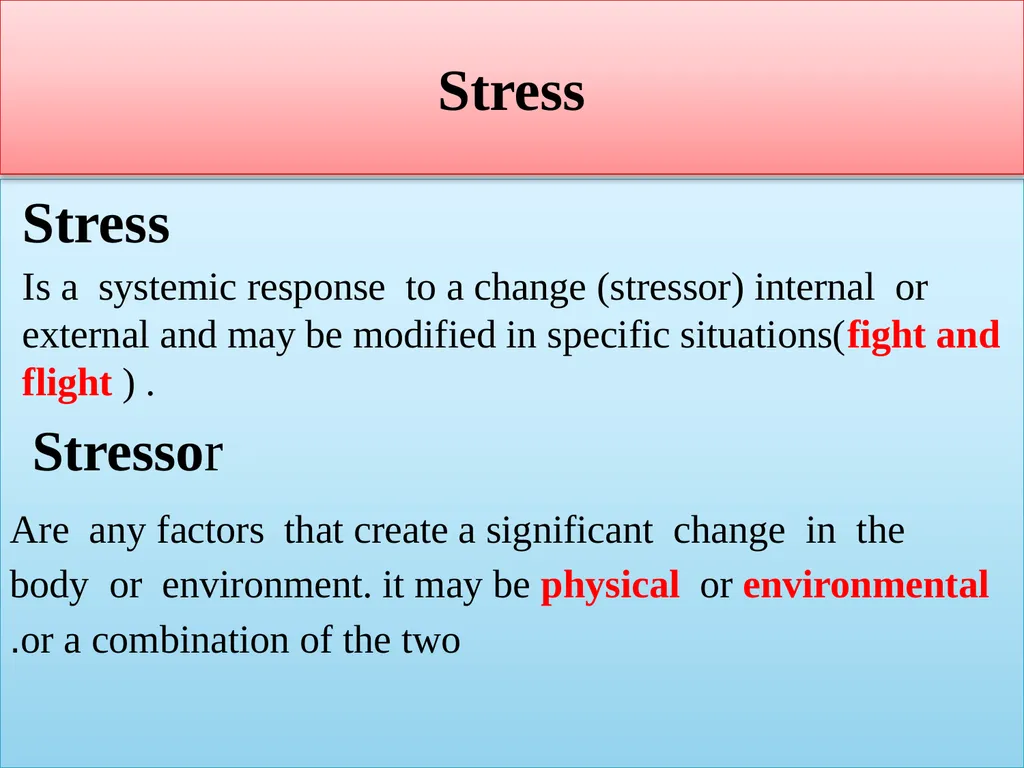
Stress
Is a systemic response to a change (stressor) internal or external and may be modified in specific situations(fight and flight ) .
Stressor
Are any factors that create a significant change in the body or environment. it may be physical or environmental or a combination of the two. Stress<br>
04
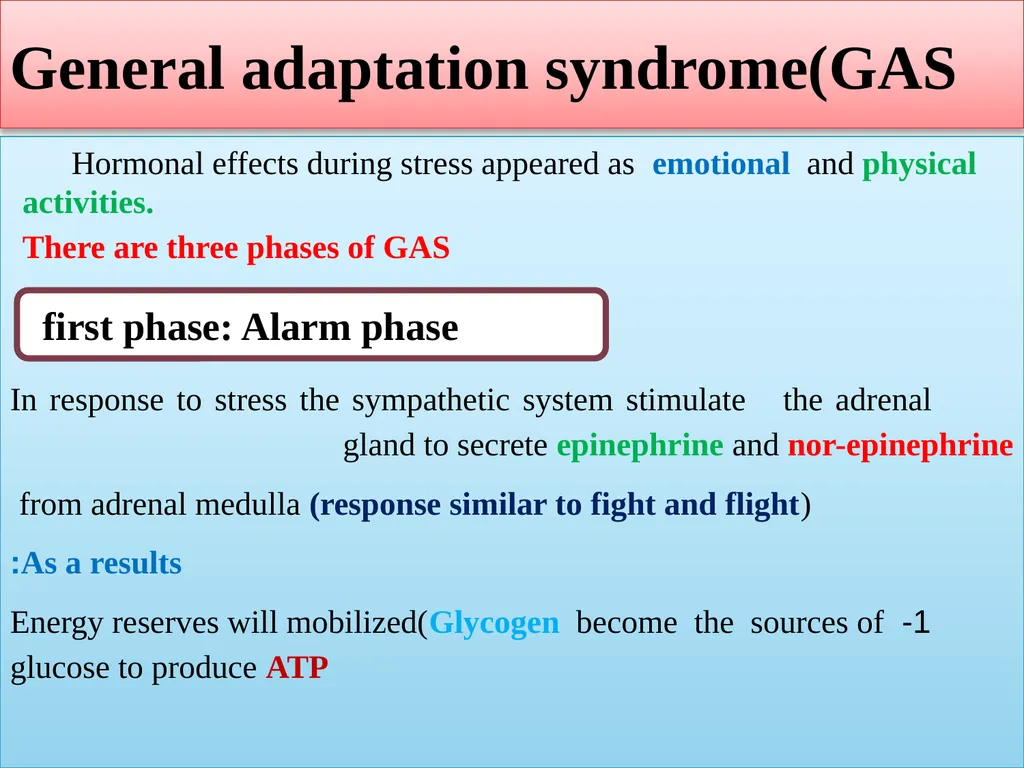
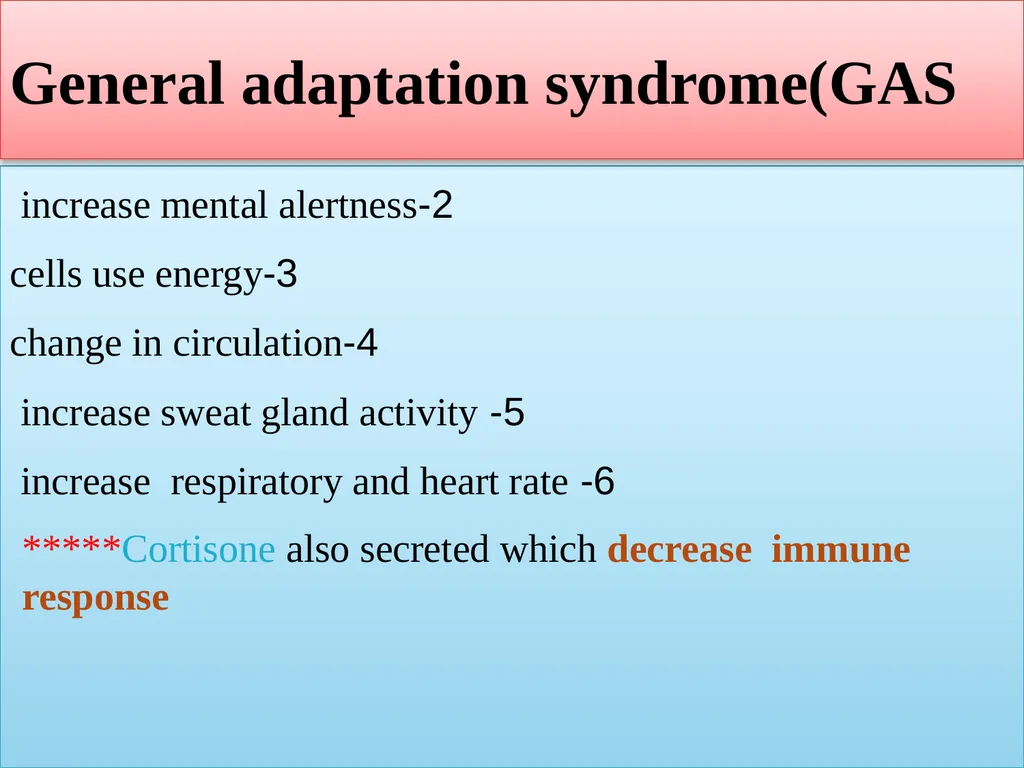
General adaptation syndrome(GAS Hormonal effects during stress appeared as emotional and physical activities.
There are three phases of GAS
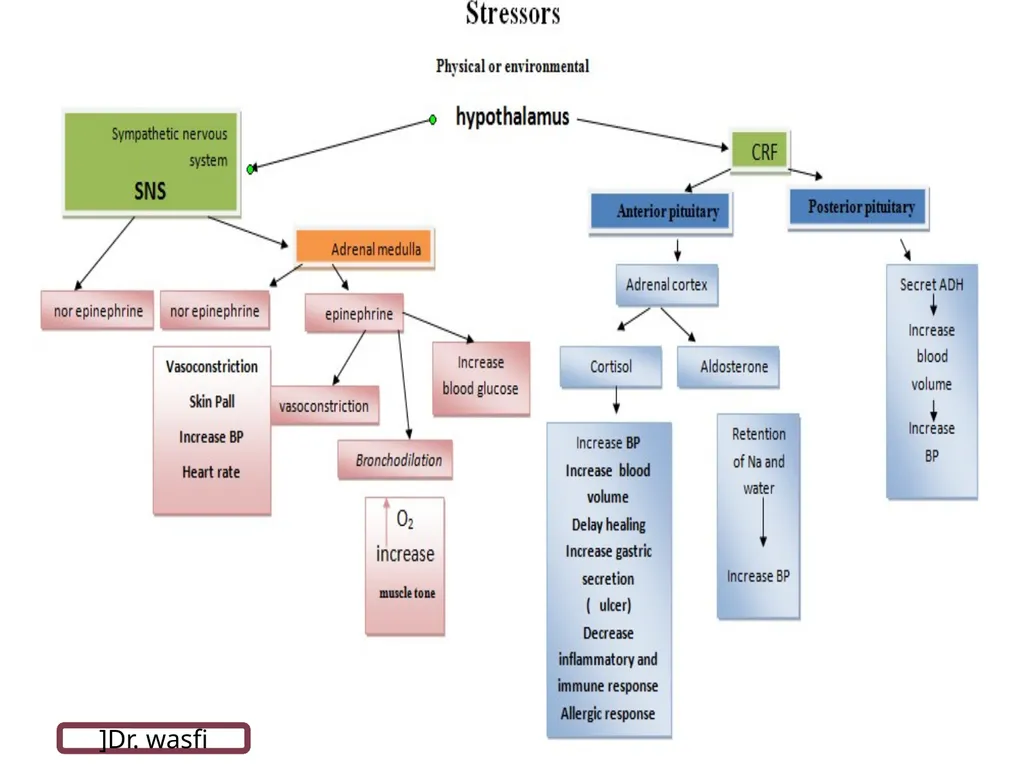
In response to stress the sympathetic system stimulate the adrenal gland to secrete epinephrine and nor-epinephrine
from adrenal medulla (response similar to fight and flight)
As a results:
1- Energy reserves will mobilized(Glycogen become the sources of glucose to produce ATP first phase: Alarm phase<br>
05
2-increase mental alertness
3-cells use energy
4-change in circulation
5- increase sweat gland activity
6- increase respiratory and heart rate
*****Cortisone also secreted which decrease immune response General adaptation syndrome(GAS<br>
06
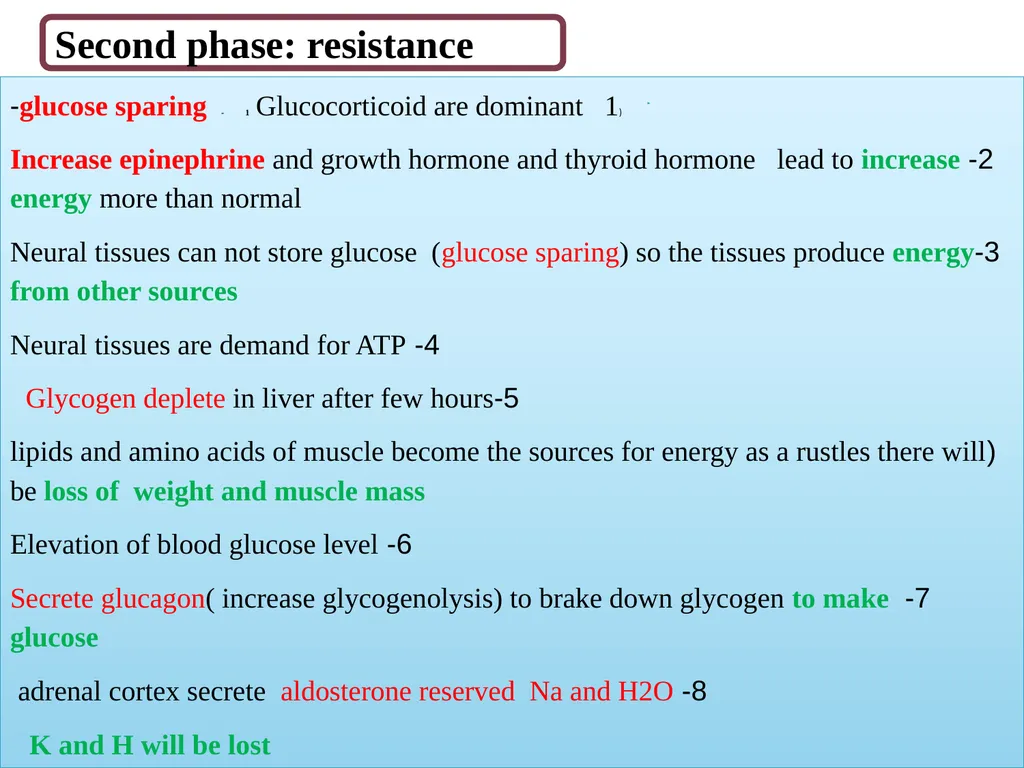
(glucose sparing - 1 Glucocorticoid are dominant 1-
2- Increase epinephrine and growth hormone and thyroid hormone lead to increase energy more than normal
3-Neural tissues can not store glucose (glucose sparing) so the tissues produce energy from other sources
4- Neural tissues are demand for ATP
5-Glycogen deplete in liver after few hours
(lipids and amino acids of muscle become the sources for energy as a rustles there will be loss of weight and muscle mass
6- Elevation of blood glucose level
7- Secrete glucagon( increase glycogenolysis) to brake down glycogen to make glucose
8- adrenal cortex secrete aldosterone reserved Na and H2O
K and H will be lost Second phase: resistance<br>
07
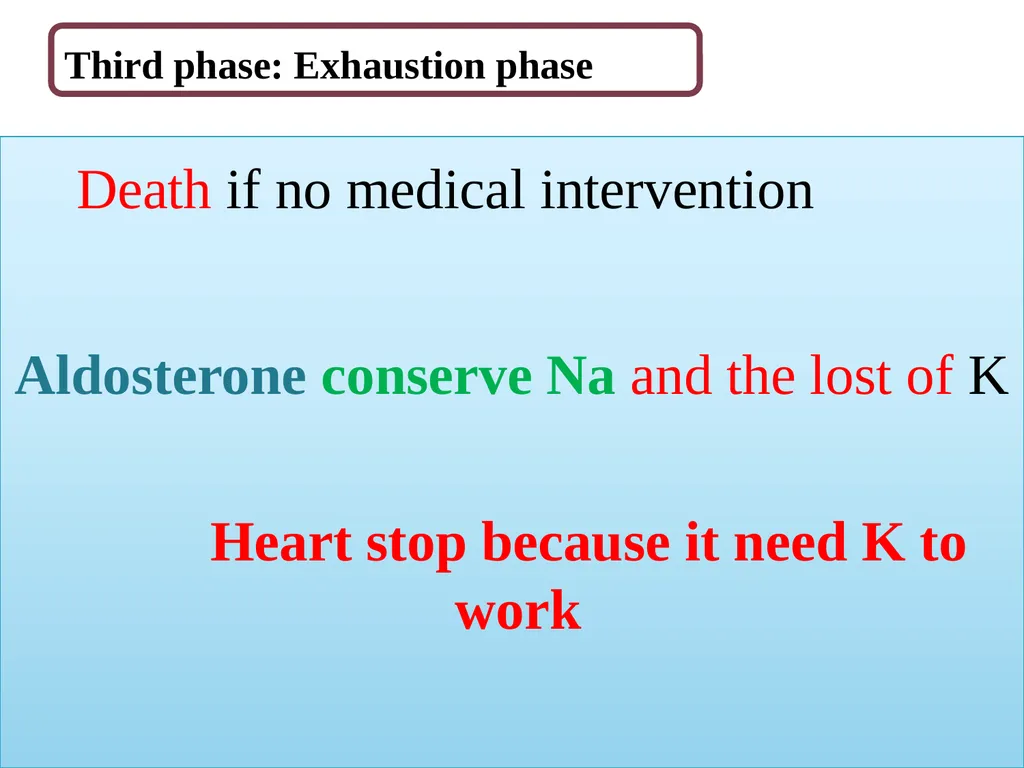
Death if no medical intervention
Aldosterone conserve Na and the lost of K
Heart stop because it need K to work Third phase: Exhaustion phase<br>
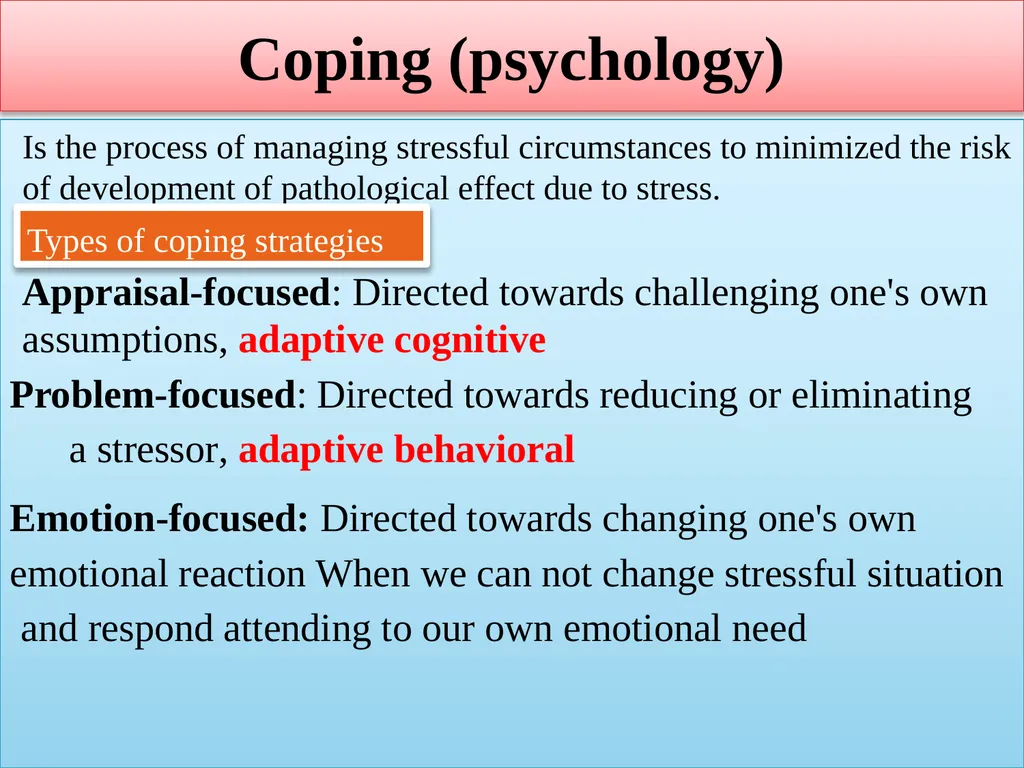
Is the process of managing stressful circumstances to minimized the risk of development of pathological effect due to stress.
Appraisal-focused: Directed towards challenging one's own assumptions, adaptive cognitive
Problem-focused: Directed towards reducing or eliminating a stressor, adaptive behavioral
Emotion-focused: Directed towards changing one's own emotional reaction When we can not change stressful situation and respond attending to our own emotional need Coping (psychology) Types of coping strategies<br>
10
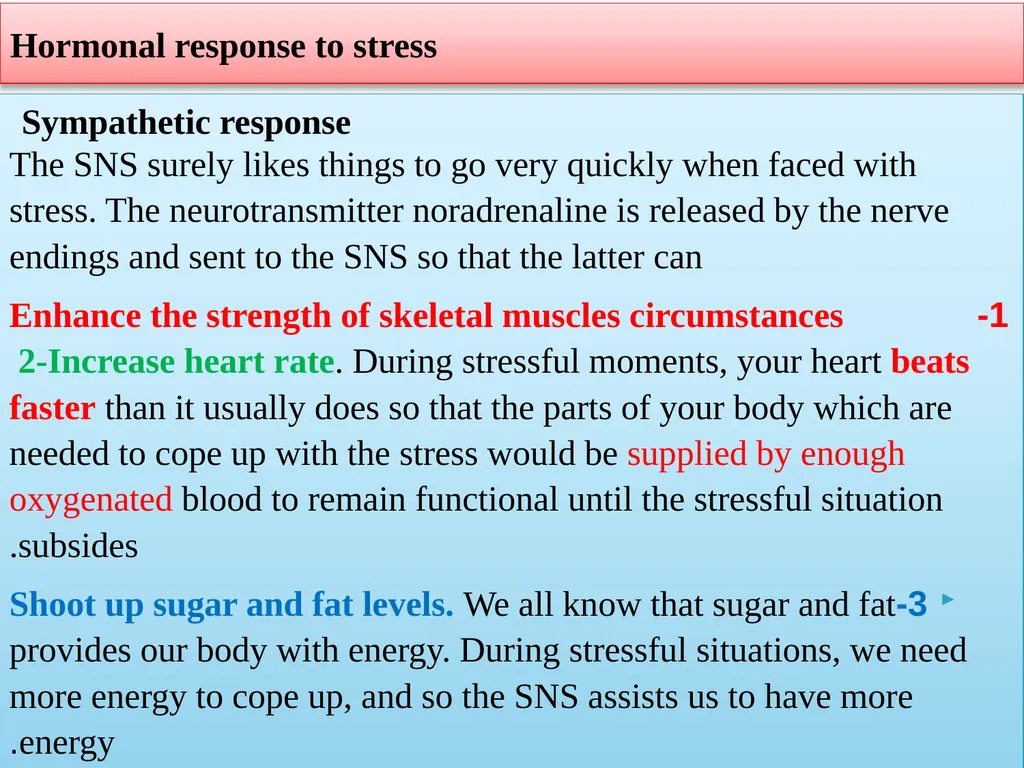
Sympathetic response
The SNS surely likes things to go very quickly when faced with stress. The neurotransmitter noradrenaline is released by the nerve endings and sent to the SNS so that the latter can
1-Enhance the strength of skeletal muscles circumstances 2-Increase heart rate. During stressful moments, your heart beats faster than it usually does so that the parts of your body which are needed to cope up with the stress would be supplied by enough oxygenated blood to remain functional until the stressful situation subsides.
3-Shoot up sugar and fat levels. We all know that sugar and fat provides our body with energy. During stressful situations, we need more energy to cope up, and so the SNS assists us to have more energy. Hormonal response to stress<br>