
PERSONAL STRENGTH TRAINING PLAN LEQ: Can I apply
Description: PERSONAL STRENGTH TRAINING PLAN LEQ: Can I apply my knowledge of the major muscle groups to improve muscular endurance and strength? PROGRESSIVE OVERLOAD Challenge muscles and body by gradually increasing the stress put on them Change
Related Topics
Download Presentation
"PERSONAL STRENGTH TRAINING PLAN LEQ: Can I apply" is the property of its rightful owner. Permission is granted to download and print the materials on this website for personal, non-commercial use only, and to display it on your personal computer provided you do not modify the materials and that you retain all copyright notices contained in the materials. By downloading content from our website, you accept the terms of this agreement.
Presentation Transcript
slide1. PERSONAL STRENGTH TRAINING PLAN LEQ: Can I apply my knowledge of the major muscle groups to improve muscular endurance and strength?<br>
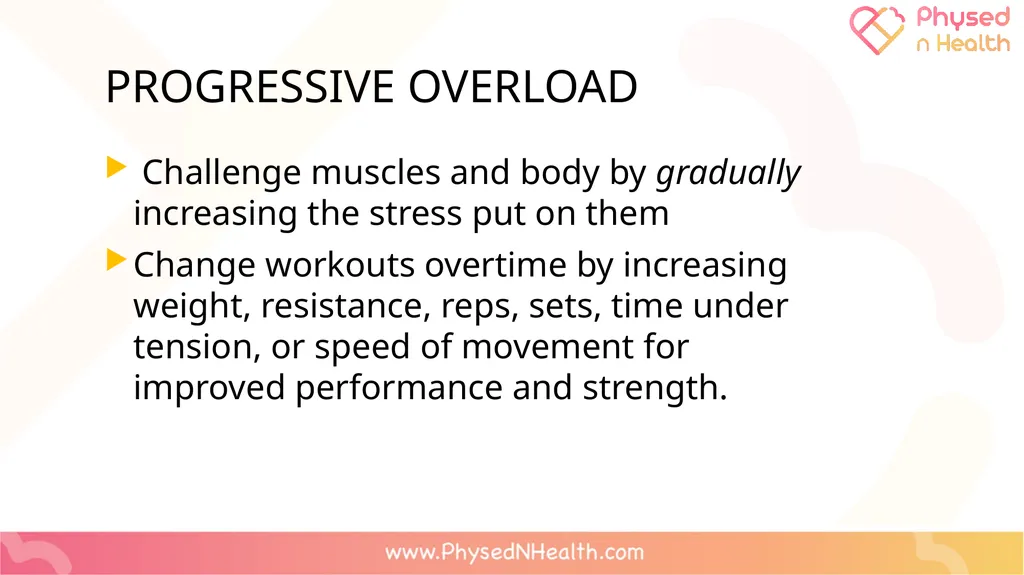
slide3. PROGRESSIVE OVERLOAD Challenge muscles and body by gradually increasing the stress put on them
Change workouts overtime by increasing weight, resistance, reps, sets, time under tension, or speed of movement for improved performance and strength.<br>
slide4. PROGRESSIVE OVERLOAD Use this principle for a strength and conditioning plan or distance running program by gradually challenging yourself as you progress through the exercise program
Progressing too quickly can have a negative impact on performance, lead to injury, excess fatigue, or respiratory infection.<br>
slide5. PROGRESSIVE OVERLOAD Use the 10% rule when increasing distance to a running program by keeping weekly increases less than 10% per week
Consult with a health care provider or exercise specialist if you’re older, have orthopedic issues, recovering from an injury, or have another health condition.<br>
slide6. OVERTRAINING Proper exercise training reduces chance of injury, increases energy, and boosts mood.
Overtraining can lead to hyperkinetic injuries and be harmful to the body.
Feeling tired, sore, and stiff post exercise, especially after trying something new or increasing workout intensity, volume, or another variable is normal.
Rest, recovery, and refueling are essential to prevent negative effects of overtraining.<br>
slide7. SIGNS OF OVERTRAINING Plateau or decline in performance or progress
Perception of increased exertion during typical workouts
Persistent feelings of fatigue and low energy
Continuous feeling of heavy, stiff, or sore muscles
Loss of interest & enthusiasm in movement and exercise
Lack of feeling refreshed after regular rest and recovery
Recurring injuries like sprains, tendonitis, stress fractures<br>
slide8. SIGNS OF OVERTRAINING Difficulty concentrating and performing at work or school
Unusual moods like agitation, irritability, and restlessness
Changes to skin, hair, nails or menstruation
Increase in resting heart rate or blood pressure
Changes in appetite, weight loss/gain, disordered eating
Repeat illness like colds and respiratory infections
Decline in motivation and confidence<br>
slide9. RECOVERY FROM OVERTRAINING Stop training for at least a week in severe cases
Reduce training schedule by 50-80%
Perform active recovery workouts
Get 7-9 hours of sleep per night
Adopt and maintain a consistent sleep routine
Monitor diet for adequate nutrients, including protein
Consume 90-130 oz of water a day for proper hydration<br>
slide10. ACTIVE RECOVERY Adopt proper recovery techniques to avoid burnout and injury due to overtraining
Perform active recovery for about 30-45 minutes on off-days to supplement hard training sessions
Use low-intensity movement to increase blood flow to bring oxygenated blood to tissues and remove cellular waste produced by exercise.
Reduce DOMS, muscle damage, inflammation, and fatigue by moving the body to recover<br>
slide11. ACTIVE RECOVERY Low-impact cardio-respiratory endurance activities like walking, jogging, biking, rowing, and swimming are perfect to balance a training schedule.
Yoga, stretching, or foam rolling are low-intensity movements to incorporate in a training program for recovery and healthy joints.
When done right, active recovery feels like an off-day compared to regular training schedule.<br>
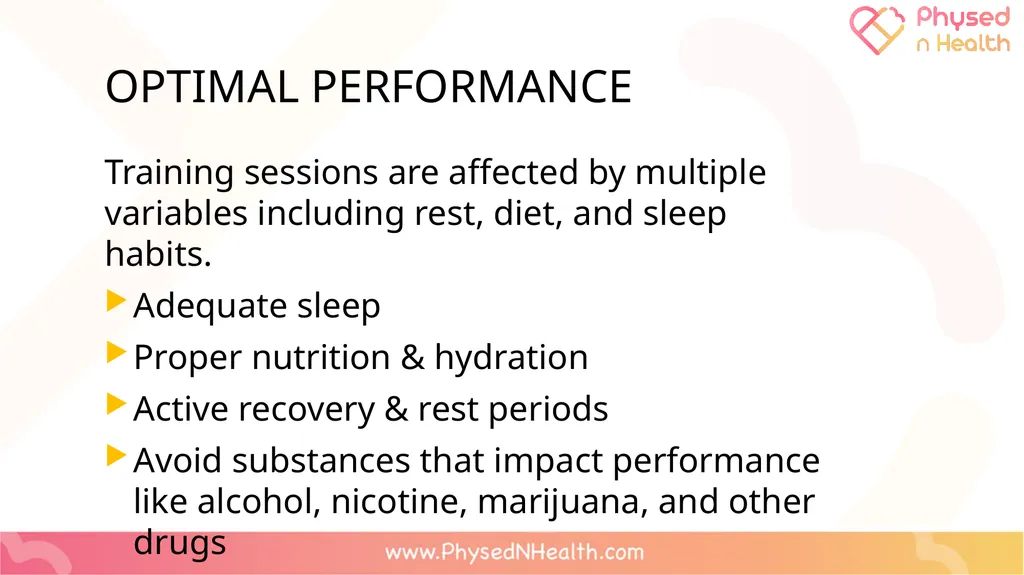
slide12. OPTIMAL PERFORMANCE Training sessions are affected by multiple variables including rest, diet, and sleep habits.
Adequate sleep
Proper nutrition & hydration
Active recovery & rest periods
Avoid substances that impact performance like alcohol, nicotine, marijuana, and other drugs<br>
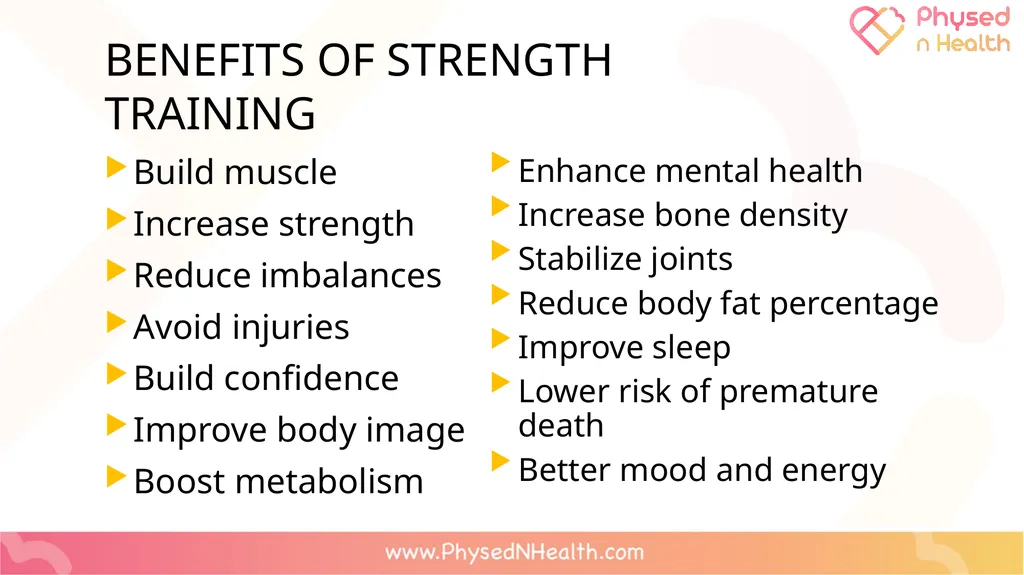
slide13. BENEFITS OF STRENGTH TRAINING Build muscle
Increase strength
Reduce imbalances
Avoid injuries
Build confidence
Improve body image
Boost metabolism Enhance mental health
Increase bone density
Stabilize joints
Reduce body fat percentage
Improve sleep
Lower risk of premature death
Better mood and energy<br>
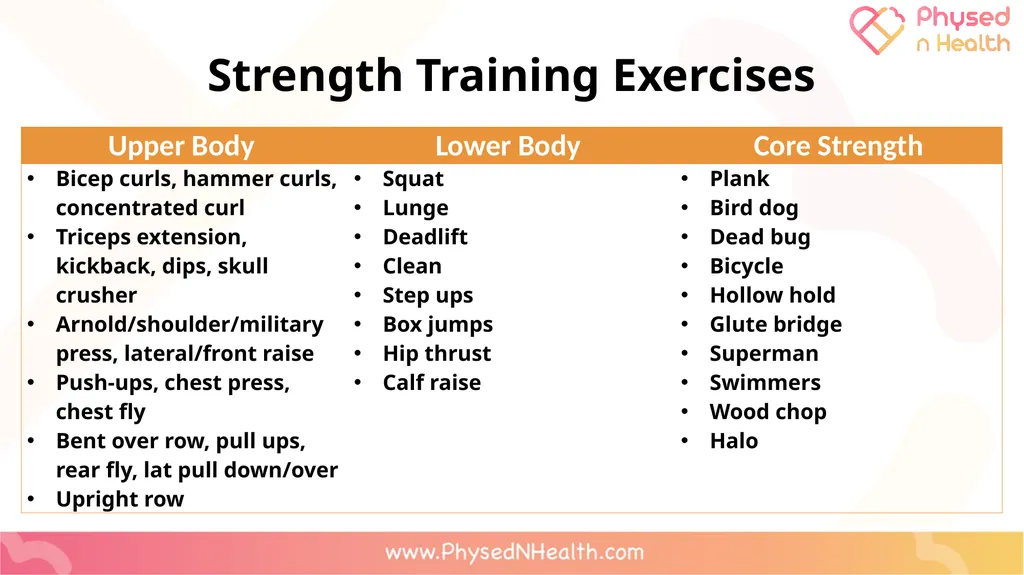
slide14. Strength Training Exercises<br>
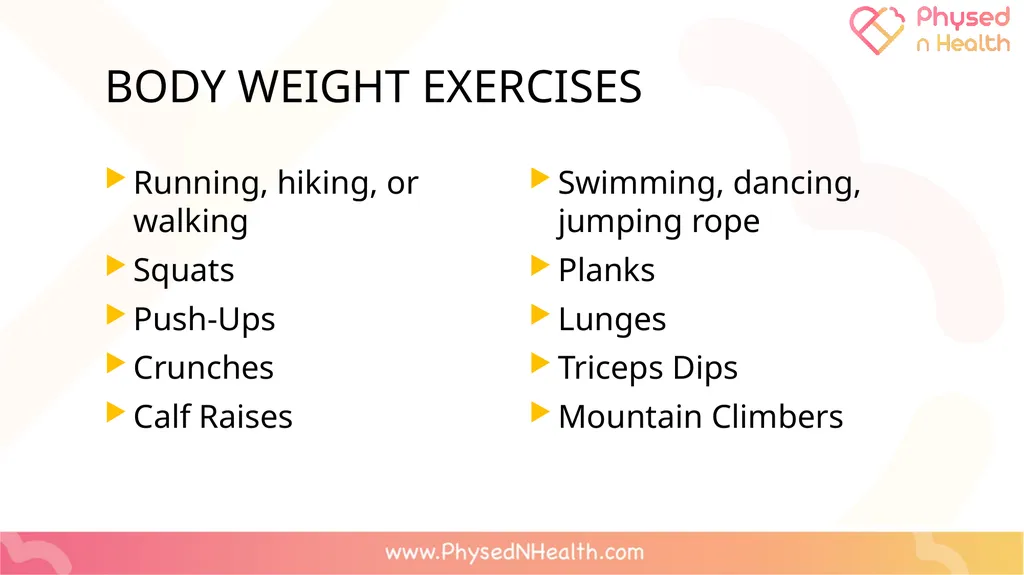
slide15. BODY WEIGHT EXERCISES Running, hiking, or walking
Squats
Push-Ups
Crunches
Calf Raises Swimming, dancing, jumping rope
Planks
Lunges
Triceps Dips
Mountain Climbers<br>
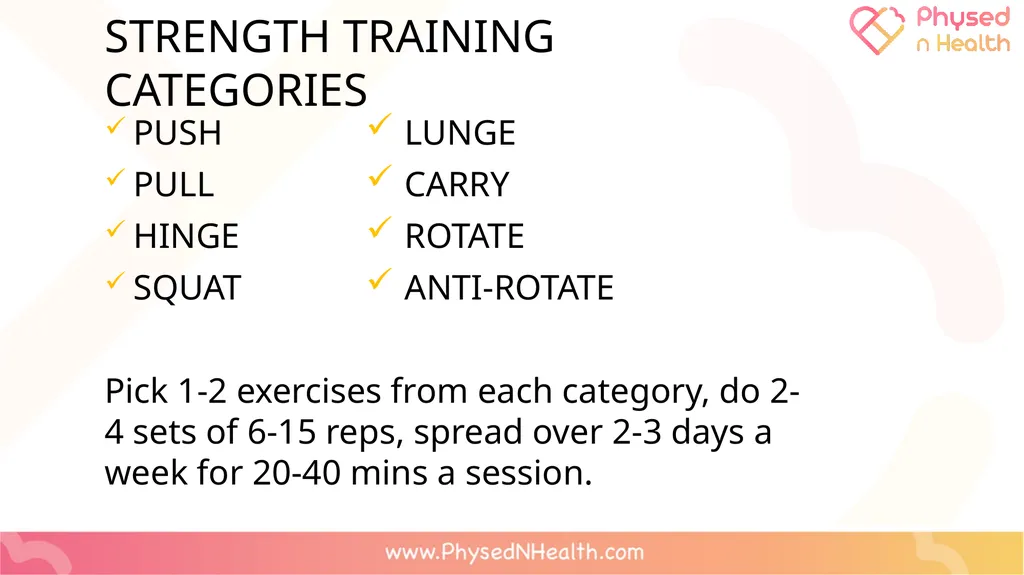
slide16. STRENGTH TRAINING CATEGORIES PUSH
PULL
HINGE
SQUAT
Pick 1-2 exercises from each category, do 2-4 sets of 6-15 reps, spread over 2-3 days a week for 20-40 mins a session. LUNGE
CARRY
ROTATE
ANTI-ROTATE<br>
slide17. PUSH-PULL TRAINING Focus on HOW you move to get stronger with more efficient and effective training schedule
Splitting up your workout week by performing push movements one day and pull movements another ensures different muscle groups are worked while allowing the others to properly recover
You can train each muscle group more often (2x’s a week) in a push-pull workout routine without overtraining<br>
slide18. PUSH-PULL TRAINING Thinking of training through push and pull splits makes it easier to balance out workouts
Incorporate a variety of exercises that require the body and joints to move in different positions ensures you hit the muscles at different angles<br>
slide19. LOWER BODY PUSH PULL ROTATE TRAINING Essential Question: LEQ: Can I apply my knowledge of the major muscle groups to improve muscular endurance and strength? Author: Caitlin Fregelette<br>
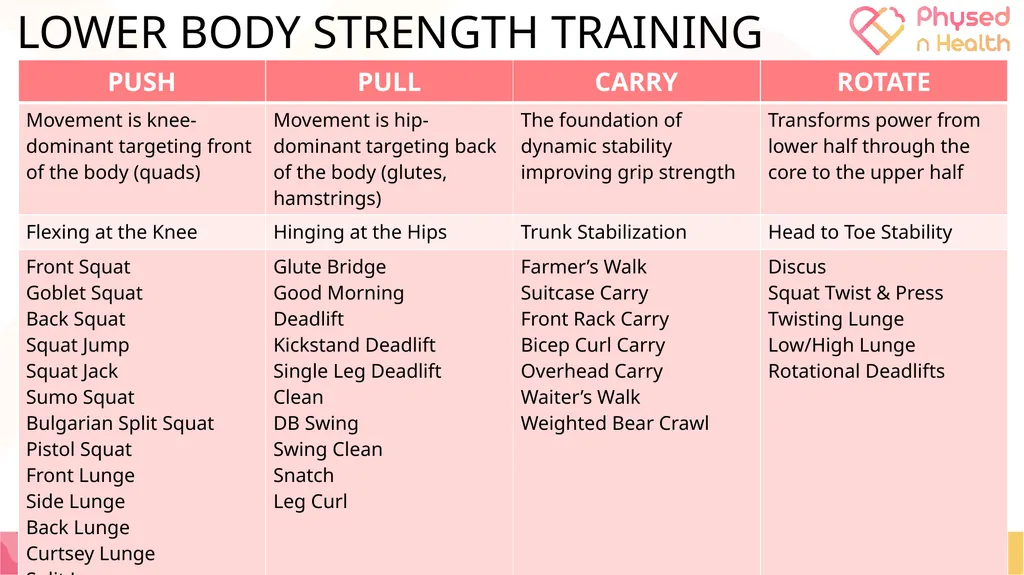
slide20. LOWER BODY STRENGTH TRAINING<br>
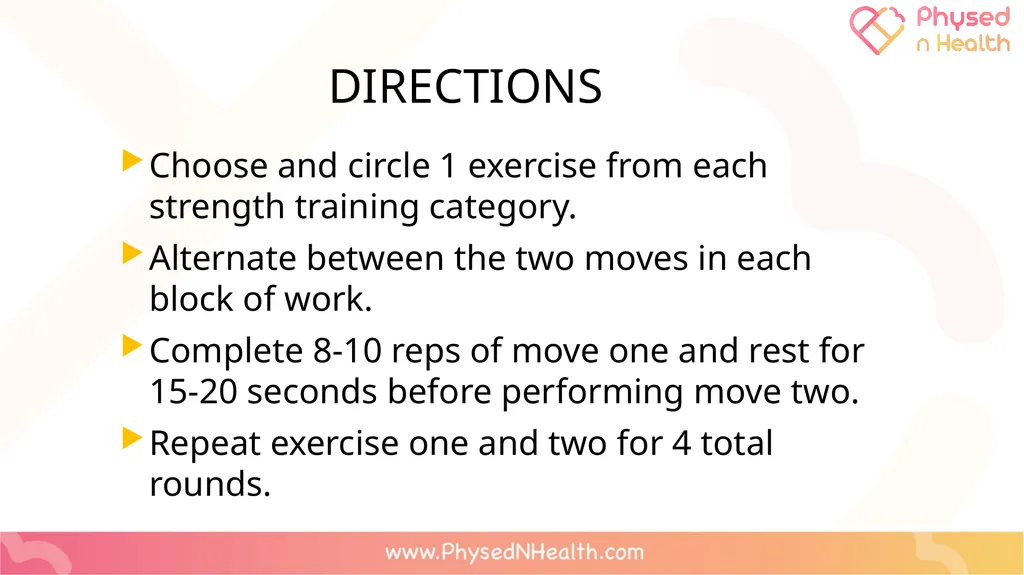
slide21. DIRECTIONS Choose and circle 1 exercise from each strength training category.
Alternate between the two moves in each block of work.
Complete 8-10 reps of move one and rest for 15-20 seconds before performing move two.
Repeat exercise one and two for 4 total rounds.<br>
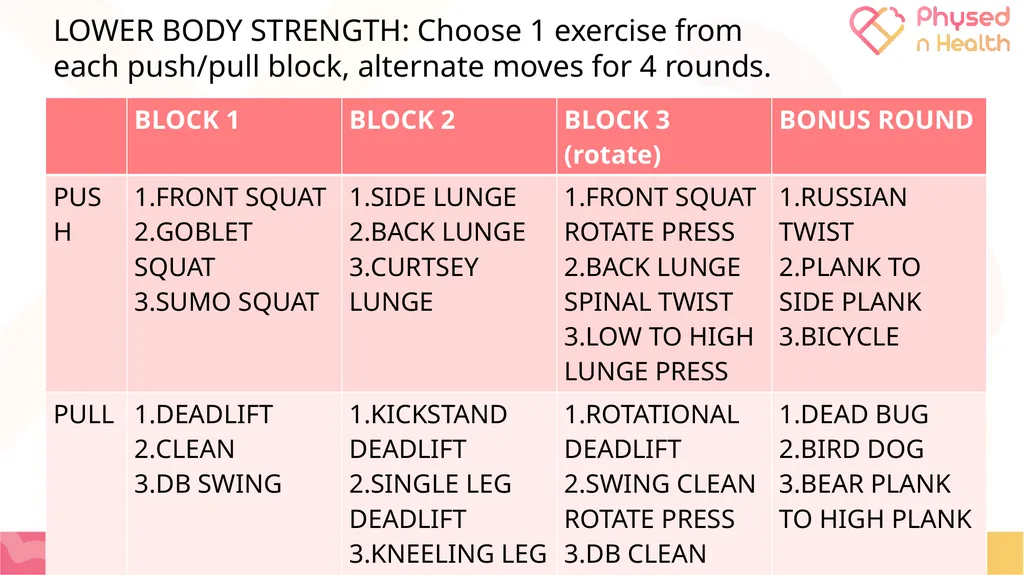
slide22. LOWER BODY STRENGTH: Choose 1 exercise from each push/pull block, alternate moves for 4 rounds.<br>
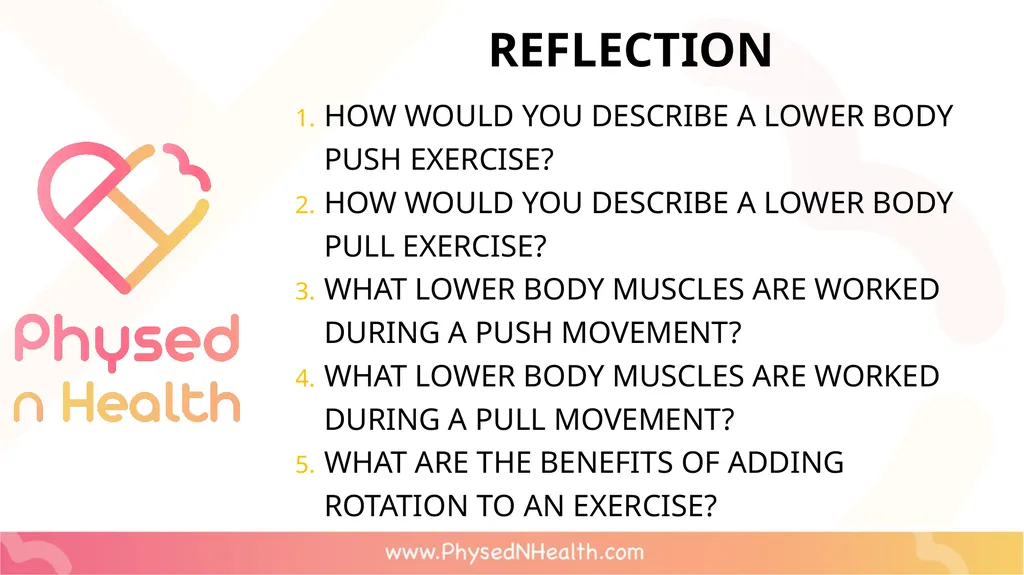
slide23. HOW WOULD YOU DESCRIBE A lower BODY PUSH EXERCISE?
HOW WOULD YOU DESCRIBE A lower BODY PULL EXERCISE?
WHAT lower BODY MUSCLES ARE WORKED DURING a PUSH MOVEMENT?
WHAT lower BODY MUSCLES ARE WORKED DURING A PULL MOVEMENT?
What are the benefits of adding rotation to an exercise? REFLECTION<br>
slide24. UPPER BODY PUSH PULL ROTATE TRAINING Essential Question: LEQ: Can I apply my knowledge of the major muscle groups to improve muscular endurance and strength? Author: Caitlin Fregelette<br>
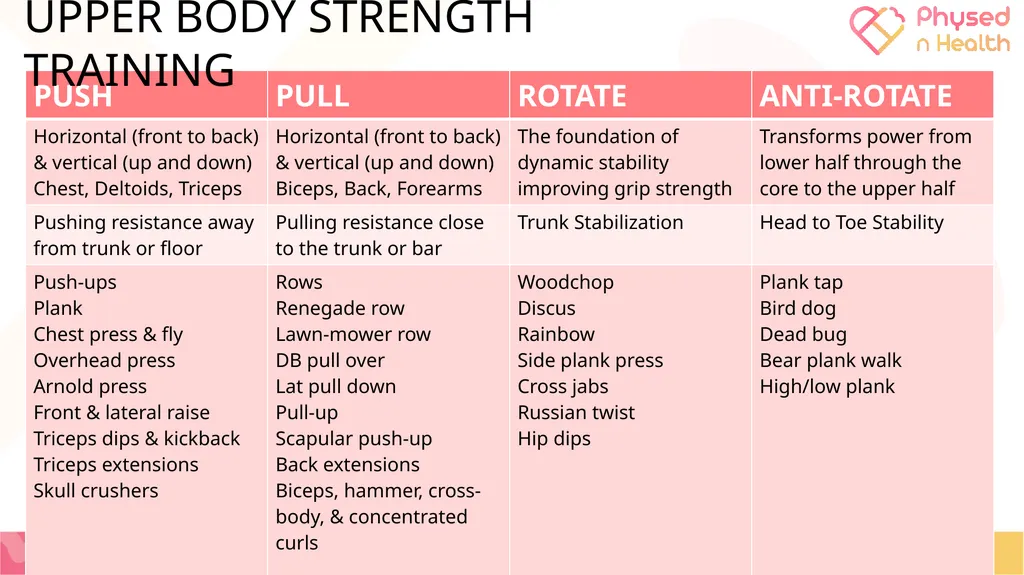
slide25. UPPER BODY STRENGTH TRAINING<br>
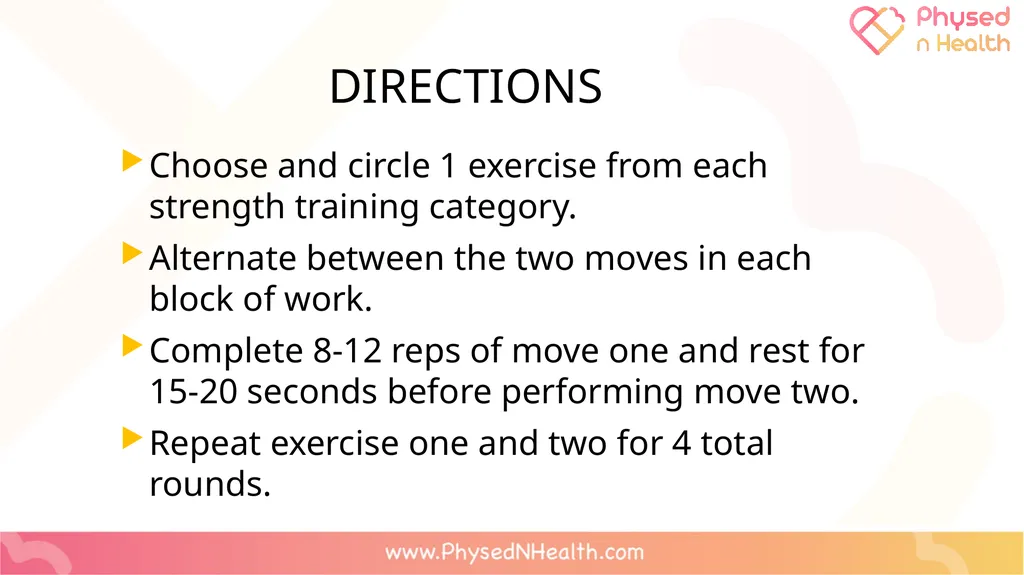
slide26. DIRECTIONS Choose and circle 1 exercise from each strength training category.
Alternate between the two moves in each block of work.
Complete 8-12 reps of move one and rest for 15-20 seconds before performing move two.
Repeat exercise one and two for 4 total rounds.<br>
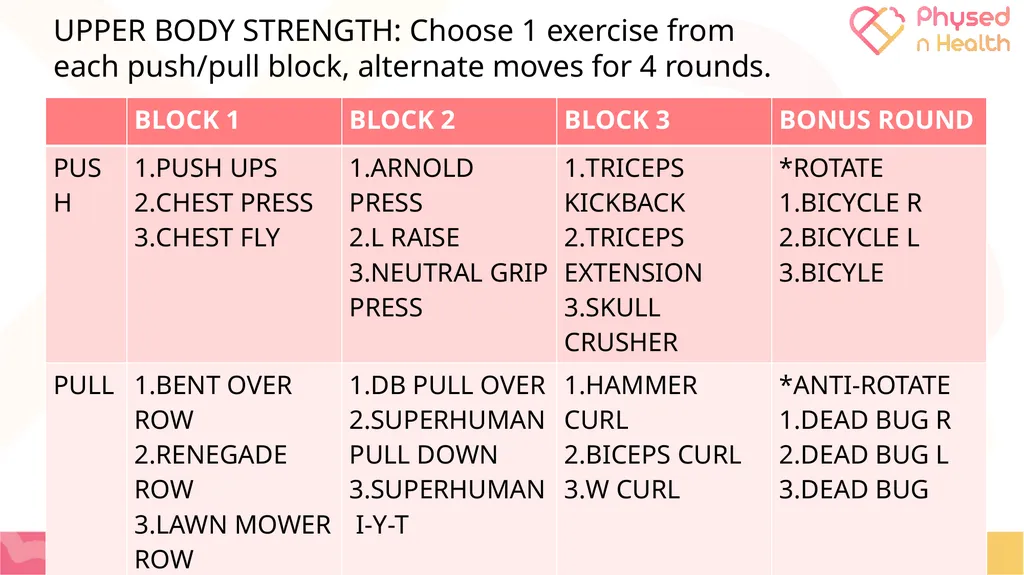
slide27. UPPER BODY STRENGTH: Choose 1 exercise from each push/pull block, alternate moves for 4 rounds.<br>
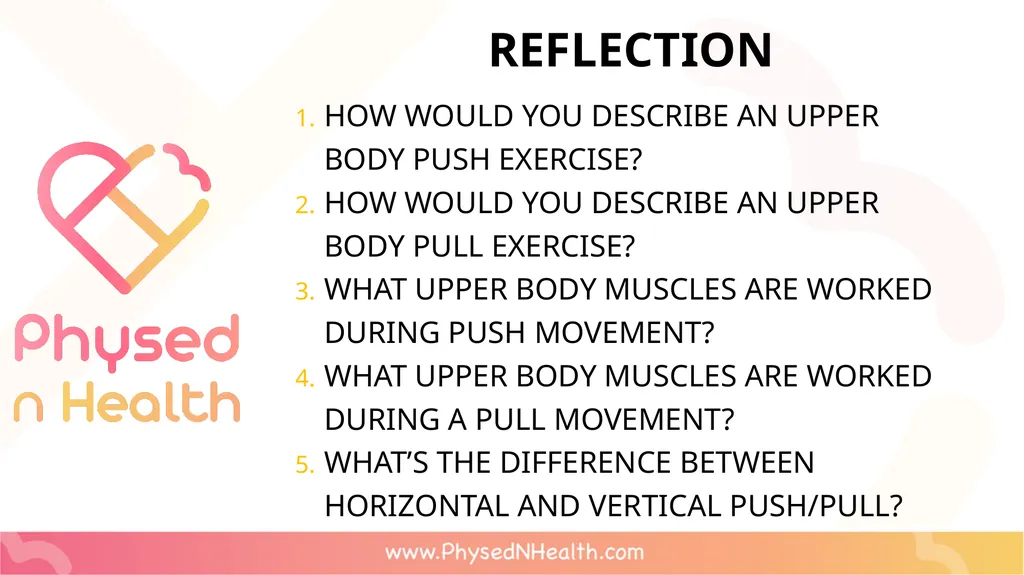
slide28. HOW WOULD YOU DESCRIBE AN UPPER BODY PUSH EXERCISE?
HOW WOULD YOU DESCRIBE AN UPPER BODY PULL EXERCISE?
WHAT UPPER BODY MUSCLES ARE WORKED DURING PUSH MOVEMENT?
WHAT UPPER BODY MUSCLES ARE WORKED DURING A PULL MOVEMENT?
WHAT’S THE DIFFERENCE BETWEEN HORIZONTAL AND VERTICAL PUSH/PULL? REFLECTION<br>
slide29. TOTAL BODY PUSH PULL ROTATE TRAINING Essential Question: LEQ: Can I apply my knowledge of the major muscle groups to improve muscular endurance and strength? Author: Caitlin Fregelette<br>
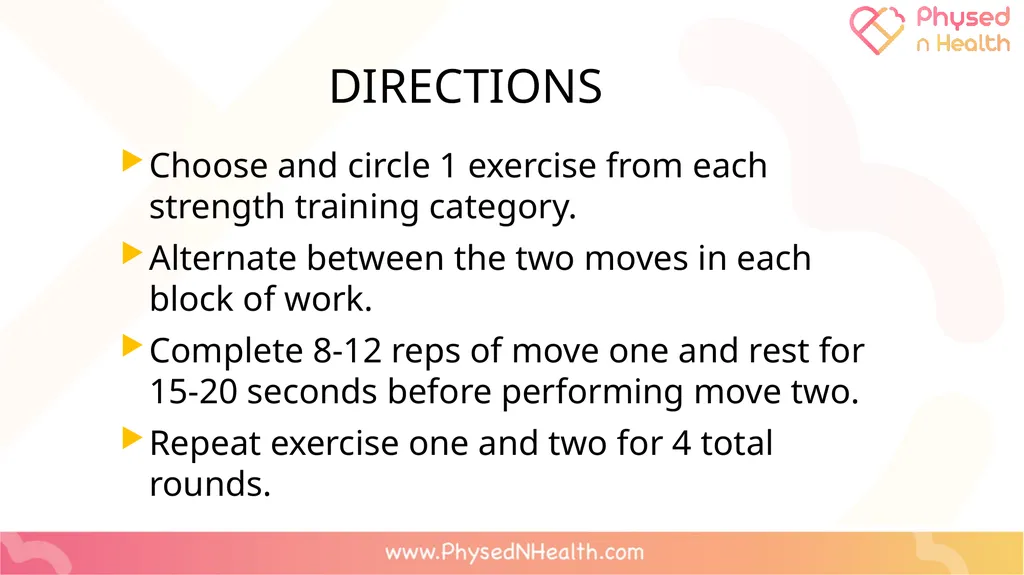
slide30. DIRECTIONS Choose and circle 1 exercise from each strength training category.
Alternate between the two moves in each block of work.
Complete 8-12 reps of move one and rest for 15-20 seconds before performing move two.
Repeat exercise one and two for 4 total rounds.<br>
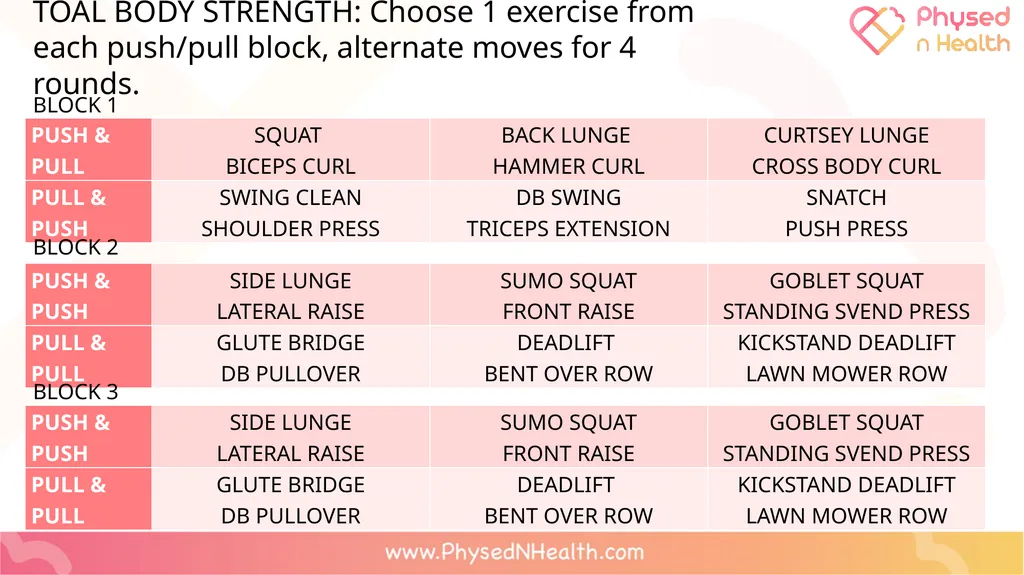
slide31. BLOCK 1 TOAL BODY STRENGTH: Choose 1 exercise from each push/pull block, alternate moves for 4 rounds. BLOCK 2 BLOCK 3<br>
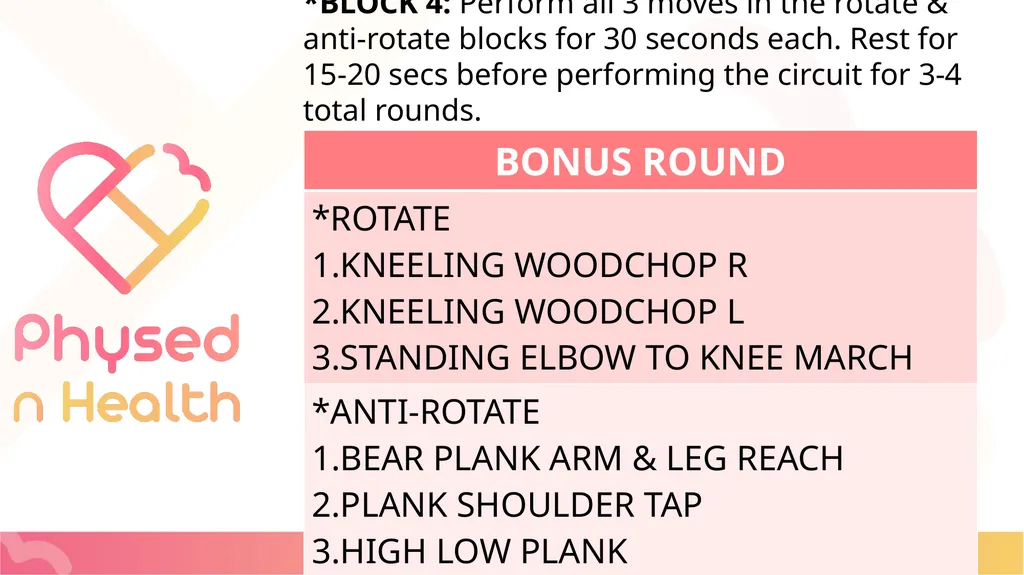
slide32. *BLOCK 4: Perform all 3 moves in the rotate & anti-rotate blocks for 30 seconds each. Rest for 15-20 secs before performing the circuit for 3-4 total rounds.<br>
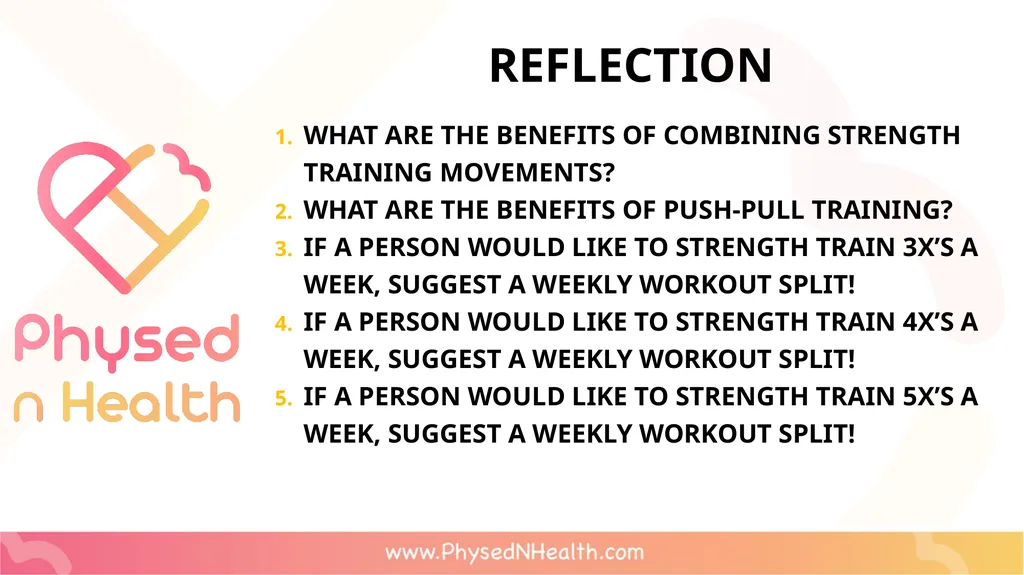
slide33. WHAT ARE THE BENEFITS OF COMBINING STRENGTH TRAINING MOVEMENTS?
WHAT ARE THE BENEFITS OF PUSH-PULL TRAINING?
IF A PERSON WOULD LIKE TO STRENGTH TRAIN 3X’S A WEEK, suggest a WEEKLY WORKOUT SPLIT!
IF A PERSON WOULD LIKE TO STRENGTH TRAIN 4X’S A WEEK, suggest a WEEKLY WORKOUT SPLIT!
IF A PERSON WOULD LIKE TO STRENGTH TRAIN 5X’S A WEEK, suggest a WEEKLY WORKOUT SPLIT! REFLECTION<br>
slide34. STRENGTH TRAINING QUIZ LEARNING ASSESSMENT<br>
slide3. PROGRESSIVE OVERLOAD Challenge muscles and body by gradually increasing the stress put on them
Change workouts overtime by increasing weight, resistance, reps, sets, time under tension, or speed of movement for improved performance and strength.<br>
slide4. PROGRESSIVE OVERLOAD Use this principle for a strength and conditioning plan or distance running program by gradually challenging yourself as you progress through the exercise program
Progressing too quickly can have a negative impact on performance, lead to injury, excess fatigue, or respiratory infection.<br>
slide5. PROGRESSIVE OVERLOAD Use the 10% rule when increasing distance to a running program by keeping weekly increases less than 10% per week
Consult with a health care provider or exercise specialist if you’re older, have orthopedic issues, recovering from an injury, or have another health condition.<br>
slide6. OVERTRAINING Proper exercise training reduces chance of injury, increases energy, and boosts mood.
Overtraining can lead to hyperkinetic injuries and be harmful to the body.
Feeling tired, sore, and stiff post exercise, especially after trying something new or increasing workout intensity, volume, or another variable is normal.
Rest, recovery, and refueling are essential to prevent negative effects of overtraining.<br>
slide7. SIGNS OF OVERTRAINING Plateau or decline in performance or progress
Perception of increased exertion during typical workouts
Persistent feelings of fatigue and low energy
Continuous feeling of heavy, stiff, or sore muscles
Loss of interest & enthusiasm in movement and exercise
Lack of feeling refreshed after regular rest and recovery
Recurring injuries like sprains, tendonitis, stress fractures<br>
slide8. SIGNS OF OVERTRAINING Difficulty concentrating and performing at work or school
Unusual moods like agitation, irritability, and restlessness
Changes to skin, hair, nails or menstruation
Increase in resting heart rate or blood pressure
Changes in appetite, weight loss/gain, disordered eating
Repeat illness like colds and respiratory infections
Decline in motivation and confidence<br>
slide9. RECOVERY FROM OVERTRAINING Stop training for at least a week in severe cases
Reduce training schedule by 50-80%
Perform active recovery workouts
Get 7-9 hours of sleep per night
Adopt and maintain a consistent sleep routine
Monitor diet for adequate nutrients, including protein
Consume 90-130 oz of water a day for proper hydration<br>
slide10. ACTIVE RECOVERY Adopt proper recovery techniques to avoid burnout and injury due to overtraining
Perform active recovery for about 30-45 minutes on off-days to supplement hard training sessions
Use low-intensity movement to increase blood flow to bring oxygenated blood to tissues and remove cellular waste produced by exercise.
Reduce DOMS, muscle damage, inflammation, and fatigue by moving the body to recover<br>
slide11. ACTIVE RECOVERY Low-impact cardio-respiratory endurance activities like walking, jogging, biking, rowing, and swimming are perfect to balance a training schedule.
Yoga, stretching, or foam rolling are low-intensity movements to incorporate in a training program for recovery and healthy joints.
When done right, active recovery feels like an off-day compared to regular training schedule.<br>
slide12. OPTIMAL PERFORMANCE Training sessions are affected by multiple variables including rest, diet, and sleep habits.
Adequate sleep
Proper nutrition & hydration
Active recovery & rest periods
Avoid substances that impact performance like alcohol, nicotine, marijuana, and other drugs<br>
slide13. BENEFITS OF STRENGTH TRAINING Build muscle
Increase strength
Reduce imbalances
Avoid injuries
Build confidence
Improve body image
Boost metabolism Enhance mental health
Increase bone density
Stabilize joints
Reduce body fat percentage
Improve sleep
Lower risk of premature death
Better mood and energy<br>
slide14. Strength Training Exercises<br>
slide15. BODY WEIGHT EXERCISES Running, hiking, or walking
Squats
Push-Ups
Crunches
Calf Raises Swimming, dancing, jumping rope
Planks
Lunges
Triceps Dips
Mountain Climbers<br>
slide16. STRENGTH TRAINING CATEGORIES PUSH
PULL
HINGE
SQUAT
Pick 1-2 exercises from each category, do 2-4 sets of 6-15 reps, spread over 2-3 days a week for 20-40 mins a session. LUNGE
CARRY
ROTATE
ANTI-ROTATE<br>
slide17. PUSH-PULL TRAINING Focus on HOW you move to get stronger with more efficient and effective training schedule
Splitting up your workout week by performing push movements one day and pull movements another ensures different muscle groups are worked while allowing the others to properly recover
You can train each muscle group more often (2x’s a week) in a push-pull workout routine without overtraining<br>
slide18. PUSH-PULL TRAINING Thinking of training through push and pull splits makes it easier to balance out workouts
Incorporate a variety of exercises that require the body and joints to move in different positions ensures you hit the muscles at different angles<br>
slide19. LOWER BODY PUSH PULL ROTATE TRAINING Essential Question: LEQ: Can I apply my knowledge of the major muscle groups to improve muscular endurance and strength? Author: Caitlin Fregelette<br>
slide20. LOWER BODY STRENGTH TRAINING<br>
slide21. DIRECTIONS Choose and circle 1 exercise from each strength training category.
Alternate between the two moves in each block of work.
Complete 8-10 reps of move one and rest for 15-20 seconds before performing move two.
Repeat exercise one and two for 4 total rounds.<br>
slide22. LOWER BODY STRENGTH: Choose 1 exercise from each push/pull block, alternate moves for 4 rounds.<br>
slide23. HOW WOULD YOU DESCRIBE A lower BODY PUSH EXERCISE?
HOW WOULD YOU DESCRIBE A lower BODY PULL EXERCISE?
WHAT lower BODY MUSCLES ARE WORKED DURING a PUSH MOVEMENT?
WHAT lower BODY MUSCLES ARE WORKED DURING A PULL MOVEMENT?
What are the benefits of adding rotation to an exercise? REFLECTION<br>
slide24. UPPER BODY PUSH PULL ROTATE TRAINING Essential Question: LEQ: Can I apply my knowledge of the major muscle groups to improve muscular endurance and strength? Author: Caitlin Fregelette<br>
slide25. UPPER BODY STRENGTH TRAINING<br>
slide26. DIRECTIONS Choose and circle 1 exercise from each strength training category.
Alternate between the two moves in each block of work.
Complete 8-12 reps of move one and rest for 15-20 seconds before performing move two.
Repeat exercise one and two for 4 total rounds.<br>
slide27. UPPER BODY STRENGTH: Choose 1 exercise from each push/pull block, alternate moves for 4 rounds.<br>
slide28. HOW WOULD YOU DESCRIBE AN UPPER BODY PUSH EXERCISE?
HOW WOULD YOU DESCRIBE AN UPPER BODY PULL EXERCISE?
WHAT UPPER BODY MUSCLES ARE WORKED DURING PUSH MOVEMENT?
WHAT UPPER BODY MUSCLES ARE WORKED DURING A PULL MOVEMENT?
WHAT’S THE DIFFERENCE BETWEEN HORIZONTAL AND VERTICAL PUSH/PULL? REFLECTION<br>
slide29. TOTAL BODY PUSH PULL ROTATE TRAINING Essential Question: LEQ: Can I apply my knowledge of the major muscle groups to improve muscular endurance and strength? Author: Caitlin Fregelette<br>
slide30. DIRECTIONS Choose and circle 1 exercise from each strength training category.
Alternate between the two moves in each block of work.
Complete 8-12 reps of move one and rest for 15-20 seconds before performing move two.
Repeat exercise one and two for 4 total rounds.<br>
slide31. BLOCK 1 TOAL BODY STRENGTH: Choose 1 exercise from each push/pull block, alternate moves for 4 rounds. BLOCK 2 BLOCK 3<br>
slide32. *BLOCK 4: Perform all 3 moves in the rotate & anti-rotate blocks for 30 seconds each. Rest for 15-20 secs before performing the circuit for 3-4 total rounds.<br>
slide33. WHAT ARE THE BENEFITS OF COMBINING STRENGTH TRAINING MOVEMENTS?
WHAT ARE THE BENEFITS OF PUSH-PULL TRAINING?
IF A PERSON WOULD LIKE TO STRENGTH TRAIN 3X’S A WEEK, suggest a WEEKLY WORKOUT SPLIT!
IF A PERSON WOULD LIKE TO STRENGTH TRAIN 4X’S A WEEK, suggest a WEEKLY WORKOUT SPLIT!
IF A PERSON WOULD LIKE TO STRENGTH TRAIN 5X’S A WEEK, suggest a WEEKLY WORKOUT SPLIT! REFLECTION<br>
slide34. STRENGTH TRAINING QUIZ LEARNING ASSESSMENT<br>