Post-harvest Losses, Technology, and Value Addition Rosa Rolle Senior Agro-Industries and Post-harvest Officer Forces that Currently Shape the Regions Rice Post-Production Sector Rising incomes and more demanding consumers Urbanization and
Related Topics
Share
Embed code
Download this presentation From Below
"Post-harvest Losses, Technology, and Value" is the property of its rightful owner. Permission is granted to
download and print the materials on this website for personal, non-commercial use only, and to display it
on your personal computer provided you do not modify the materials and that you retain all copyright
notices contained in the materials. By downloading content from our website, you accept the terms of this
agreement.
Presentation Transcript
01
Post-harvest Losses, Technology, and Value Addition Rosa Rolle
Senior Agro-Industries and Post-harvest Officer<br>
02
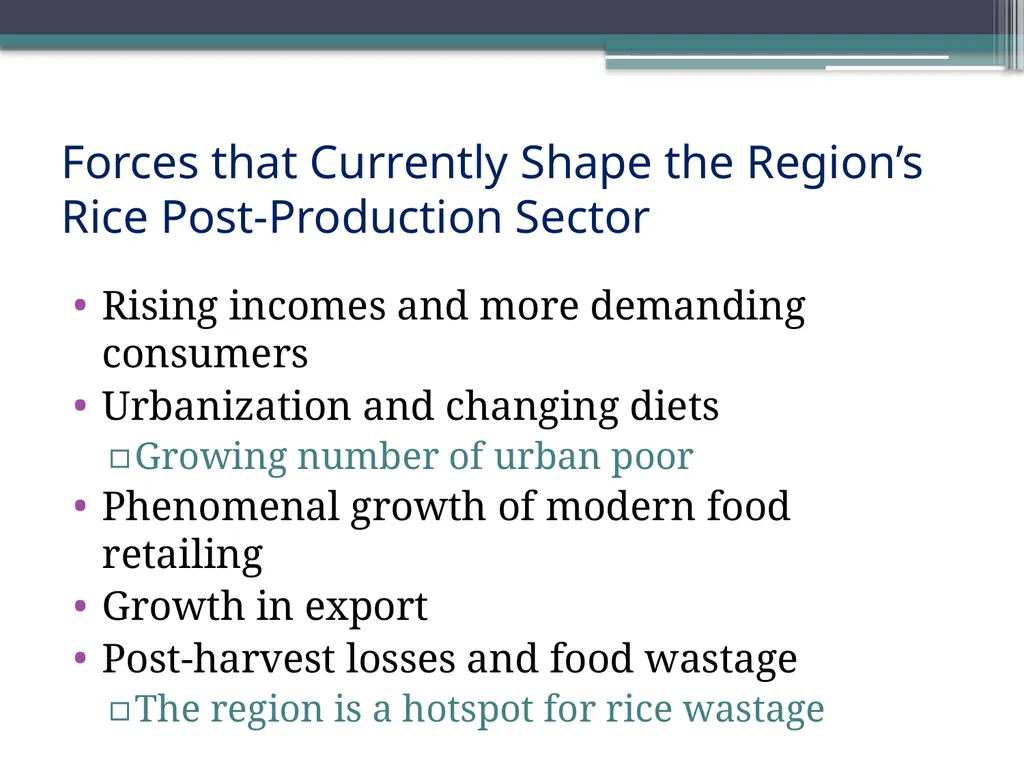
Forces that Currently Shape the Region’s Rice Post-Production Sector Rising incomes and more demanding consumers
Urbanization and changing diets
Growing number of urban poor
Phenomenal growth of modern food retailing
Growth in export
Post-harvest losses and food wastage
The region is a hotspot for rice wastage<br>
03
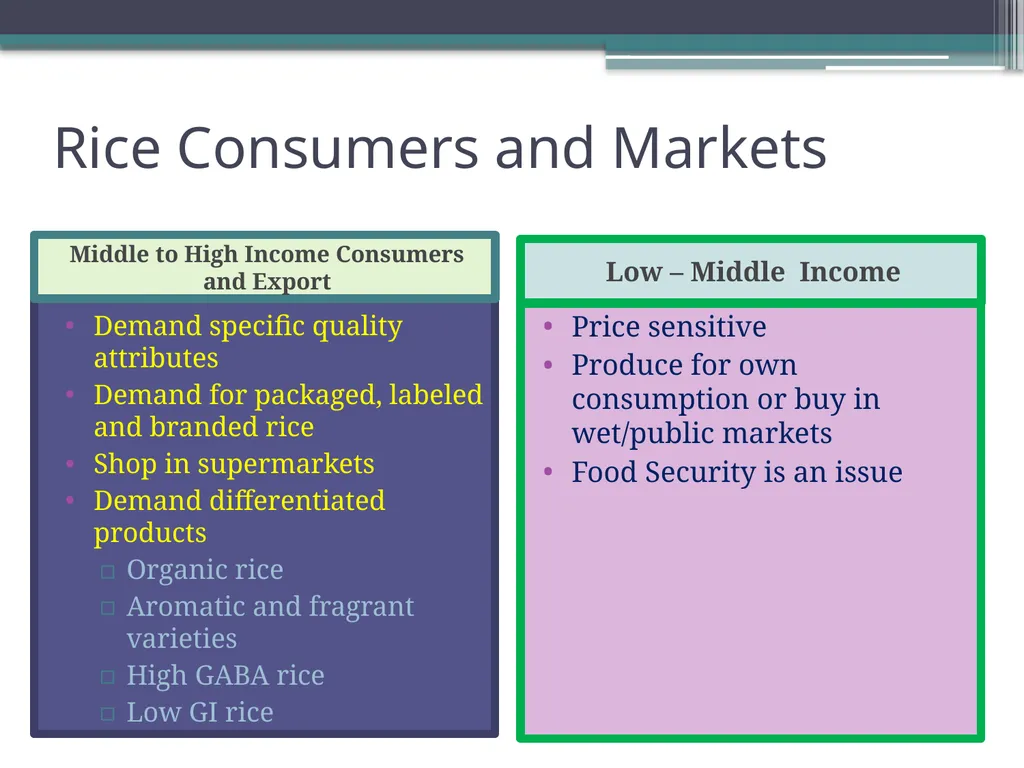
Rice Consumers and Markets Middle to High Income Consumers and Export Low – Middle Income Demand specific quality attributes
Demand for packaged, labeled and branded rice
Shop in supermarkets
Demand differentiated products
Organic rice
Aromatic and fragrant varieties
High GABA rice
Low GI rice Price sensitive
Produce for own consumption or buy in wet/public markets
Food Security is an issue<br>
04
Rice Consumption Trends Since the 1990s, rice consumption patterns in many Asian countries have shown a declining trend with increasing dietary diversification.
Associated with these consumption trends is the increasing amount of table waste, i.e. cooked rice that is never consumed in the region.
Total wastage of cooked rice in the Philippines was estimated at 308,000 metric tons which is about 36% of the volume of rice imports of the country in 2011(BAS, 2011).<br>
05
The Rice Post-harvest System Current Status<br>
06
Categorization of Rice Producing Countries in the Region Rice surplus countries which are also rice exporters include
Thailand, Vietnam, India, Pakistan and Myanmar
Self sufficient countries
PRC, Bangladesh, Cambodia, Lao PDR, Japan, Republic of Korea and Republic of China.
Deficit countries
The rice deficit countries which are struggling to attain self sufficiency status include the Philippines, Indonesia and Malaysia<br>
07
“Traditional” Supply Chains Farmer > village miller > consumer (farmer)
Farmer > miller > wholesaler > retailer > consumer<br>
08
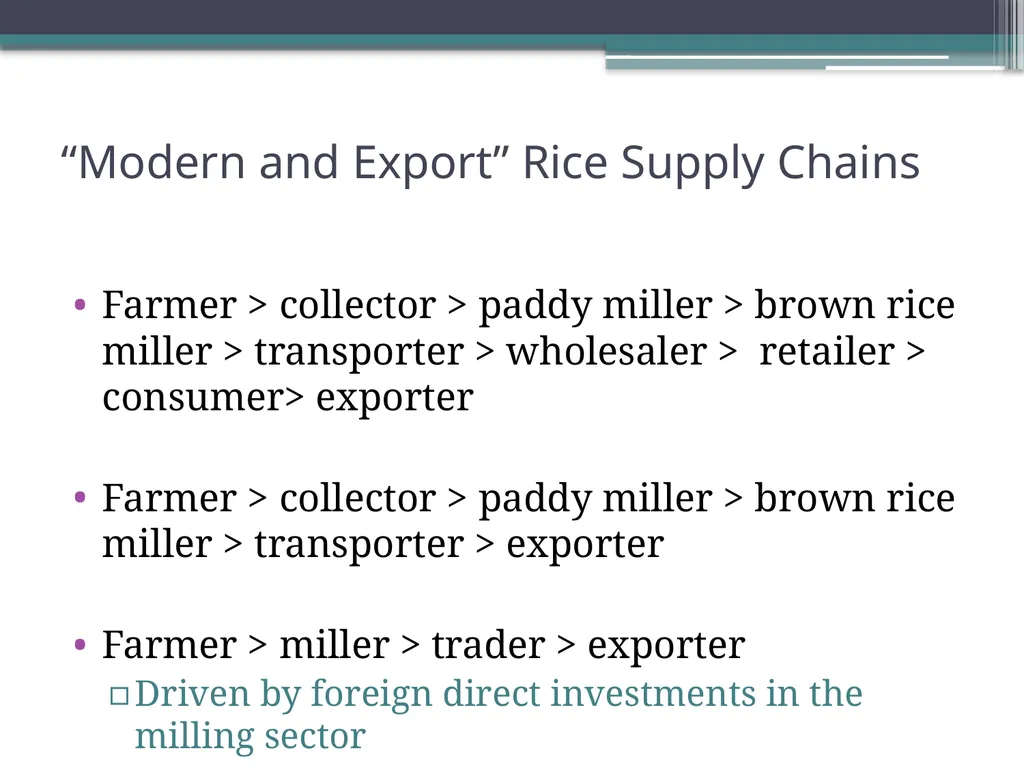
“Modern and Export” Rice Supply Chains Farmer > collector > paddy miller > brown rice miller > transporter > wholesaler > retailer > consumer> exporter
Farmer > collector > paddy miller > brown rice miller > transporter > exporter
Farmer > miller > trader > exporter
Driven by foreign direct investments in the milling sector<br>
09
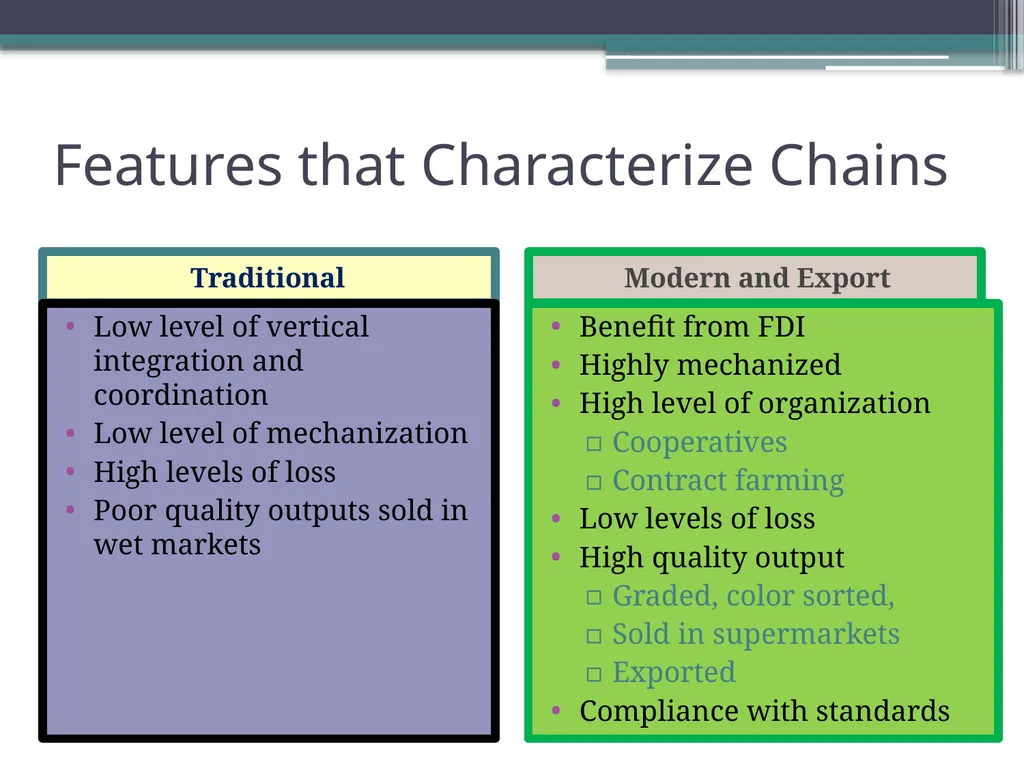
Features that Characterize Chains Traditional Modern and Export Low level of vertical integration and coordination
Low level of mechanization
High levels of loss
Poor quality outputs sold in wet markets Benefit from FDI
Highly mechanized
High level of organization
Cooperatives
Contract farming
Low levels of loss
High quality output
Graded, color sorted,
Sold in supermarkets
Exported
Compliance with standards<br>
10
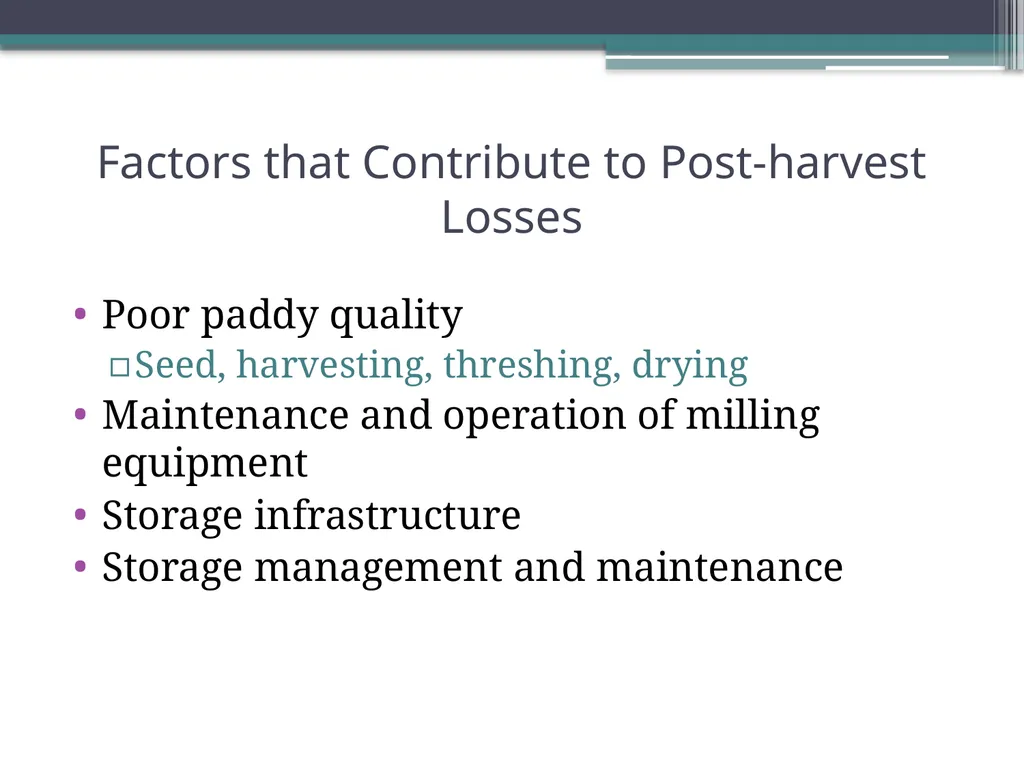
Factors that Contribute to Post-harvest Losses Poor paddy quality
Seed, harvesting, threshing, drying
Maintenance and operation of milling equipment
Storage infrastructure
Storage management and maintenance<br>
11
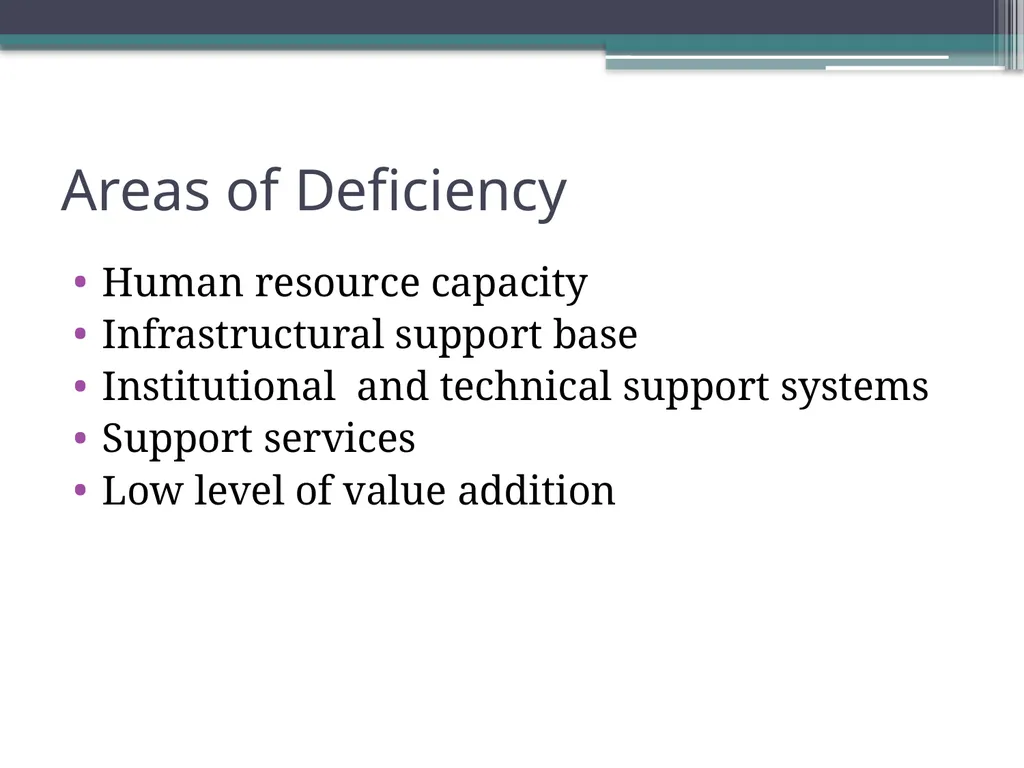
Areas of Deficiency Human resource capacity
Infrastructural support base
Institutional and technical support systems
Support services
Low level of value addition<br>
12
The Future: Vision 2030 Improved quality, reduced losses and wider market opportunities for rice in “modern and export chains.”
Improved traditional systems contributing to food security of the poor and vulnerable.
Value added rice-based products that respond to changing consumption trends, reduce waste and promote resource efficiency in the rice production system<br>
13
Approaches and Actions Required Human resource capacity development to support quality improvement, innovation and efficiency in the rice post-harvest sector.
Technical, safety and quality aspects of post-production
Operation, management and maintenance of post-harvest mechanization and infrastructure
Investment in research, piloting and mainstreaming of appropriate levels of clean harvest and post-harvest technologies that reduce losses and prevent waste generation<br>
14
Approaches and Actions Required Public and private investments in technology, research, development and extension to support value addition to rice
A specific focus is required on ensuring affordability of value added convenience food products – i.e. low income consumers must be a target group for product outputs.
Investments for research into, and the piloting of innovations to maximise the use of rice by-products for food and energy production.
Government investment in- and support for traditional supply chains that contribute to the food security of poor and vulnerable groups<br>
15
Approaches and Actions Needed Policy support for the development of more inclusive and better organized rice value chains.
Policy support to promote private sector investment and public-private partnership in supporting development of rice post-harvest systems.
Policy and regulatory frameworks for scaling out the adoption of contract rice farming in the region.
Essential Enablers
Improvement of the infrastructural support base – basic and post-harvest specific (storage) - and support services for rice post-harvest systems
Improved support services – extension, credit, etc<br>
16
Cumulative Investment Requirements
for East Asia - 2005/07 to 20501 1Source: Capital Requirements for Agriculture in Developing Countries to 2050. FAO Rome (2009)
(All numbers are in 2009 US$ values) Thank you<br>