
PROGRESS ON IMPLEMENTATION OF A RING-FENCED MIG
Description: PROGRESS ON IMPLEMENTATION OF A RING-FENCED MIG PROGRAMME BY DSAC BRIEFING TO THE SPORT, ARTS AND CULTURE PORTFOLIO COMMITTEE: Date: 20 SEPTEMBER 2022 PROGRESS ACHIEVED SINCE 201617 Since inception of the ring-fencing intervention, DSAC
Related Topics
Download Presentation
"PROGRESS ON IMPLEMENTATION OF A RING-FENCED MIG" is the property of its rightful owner. Permission is granted to download and print the materials on this website for personal, non-commercial use only, and to display it on your personal computer provided you do not modify the materials and that you retain all copyright notices contained in the materials. By downloading content from our website, you accept the terms of this agreement.
Presentation Transcript
slide1. PROGRESS ON IMPLEMENTATION OF A RING-FENCED MIG PROGRAMME BY DSAC BRIEFING TO THE SPORT, ARTS AND CULTURE
PORTFOLIO COMMITTEE: Date: 20 SEPTEMBER 2022<br>
slide2. PROGRESS ACHIEVED SINCE 2016/17 Since inception of the ring-fencing intervention, DSAC has so far made the following allocations:
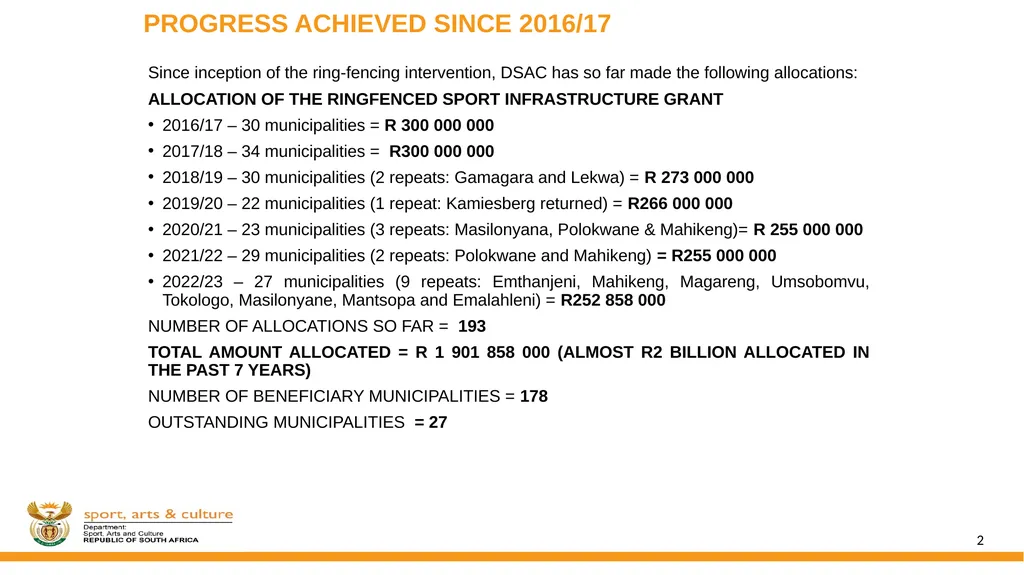
ALLOCATION OF THE RINGFENCED SPORT INFRASTRUCTURE GRANT
2016/17 – 30 municipalities = R 300 000 000
2017/18 – 34 municipalities = R300 000 000
2018/19 – 30 municipalities (2 repeats: Gamagara and Lekwa) = R 273 000 000
2019/20 – 22 municipalities (1 repeat: Kamiesberg returned) = R266 000 000
2020/21 – 23 municipalities (3 repeats: Masilonyana, Polokwane & Mahikeng)= R 255 000 000
2021/22 – 29 municipalities (2 repeats: Polokwane and Mahikeng) = R255 000 000
2022/23 – 27 municipalities (9 repeats: Emthanjeni, Mahikeng, Magareng, Umsobomvu, Tokologo, Masilonyane, Mantsopa and Emalahleni) = R252 858 000
NUMBER OF ALLOCATIONS SO FAR = 193
TOTAL AMOUNT ALLOCATED = R 1 901 858 000 (ALMOST R2 BILLION ALLOCATED IN THE PAST 7 YEARS)
NUMBER OF BENEFICIARY MUNICIPALITIES = 178
OUTSTANDING MUNICIPALITIES = 27<br>
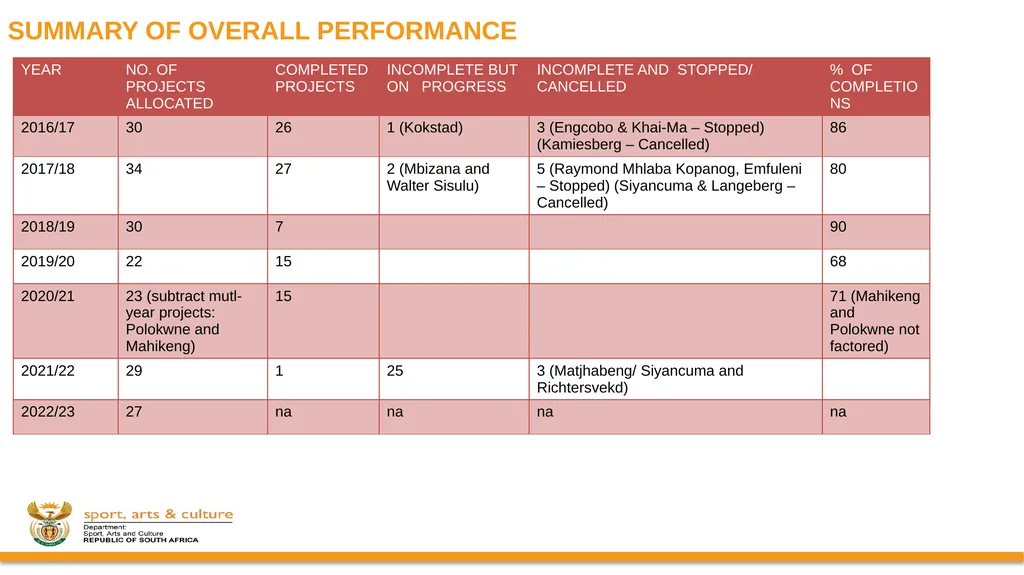
slide3. SUMMARY OF OVERALL PERFORMANCE<br>
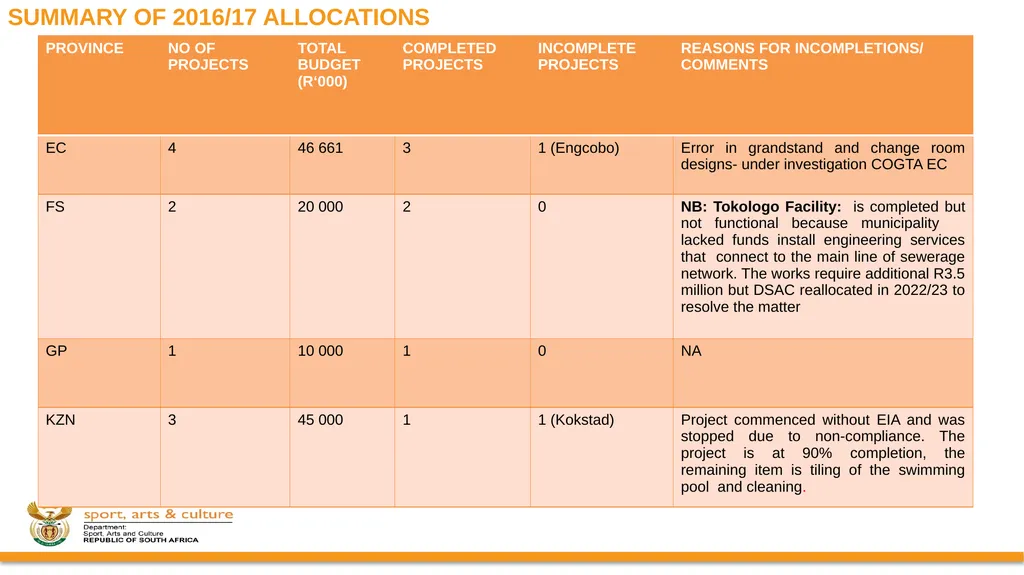
slide4. SUMMARY OF 2016/17 ALLOCATIONS<br>
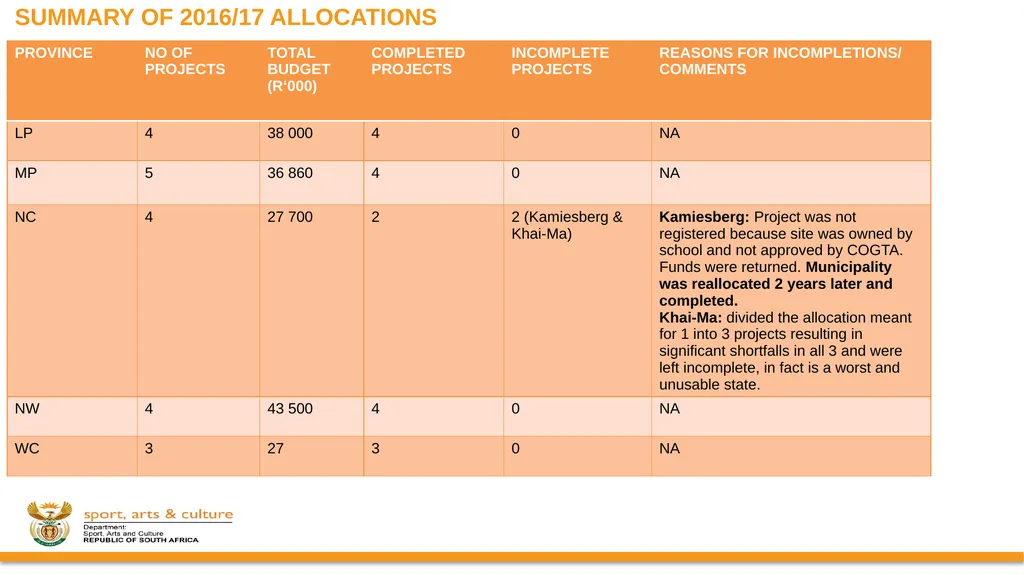
slide5. SUMMARY OF 2016/17 ALLOCATIONS<br>
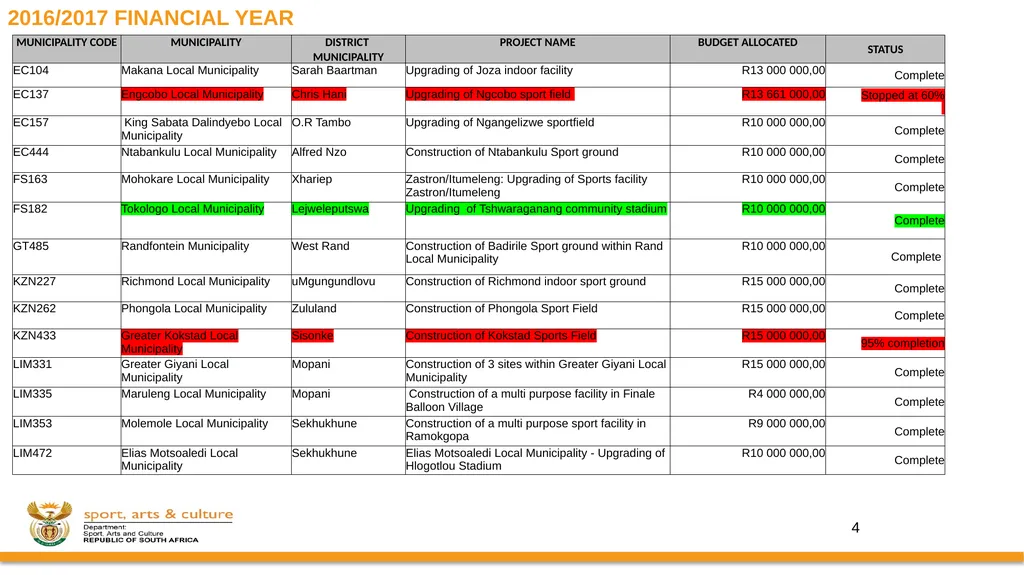
slide6. 2016/2017 FINANCIAL YEAR 4<br>
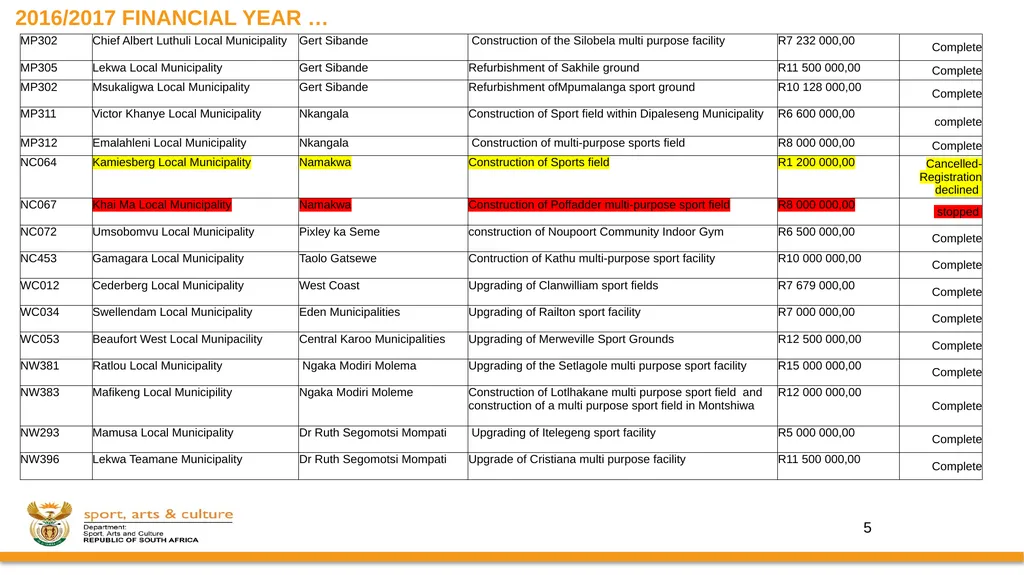
slide7. 2016/2017 FINANCIAL YEAR … 5<br>
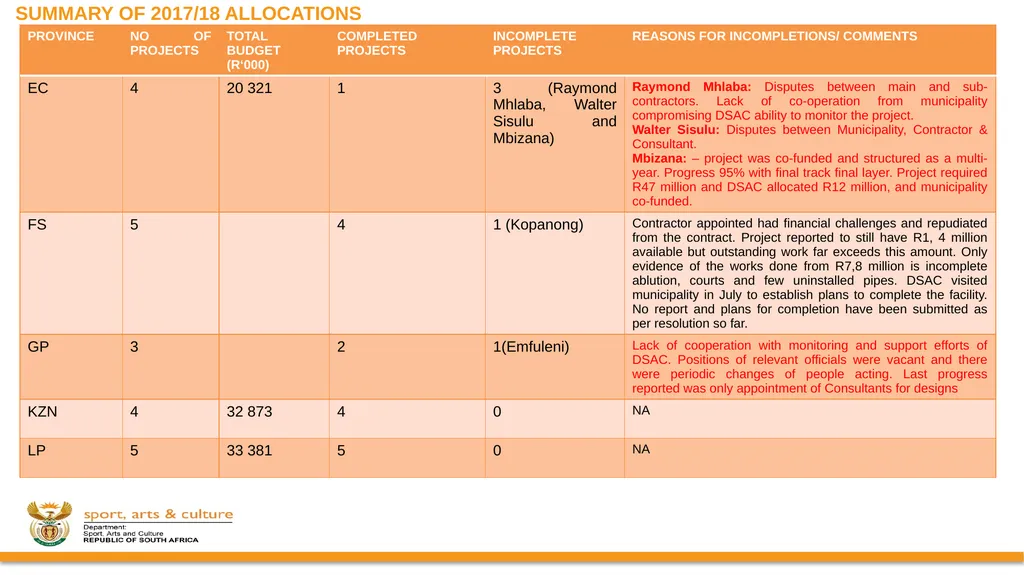
slide8. SUMMARY OF 2017/18 ALLOCATIONS<br>
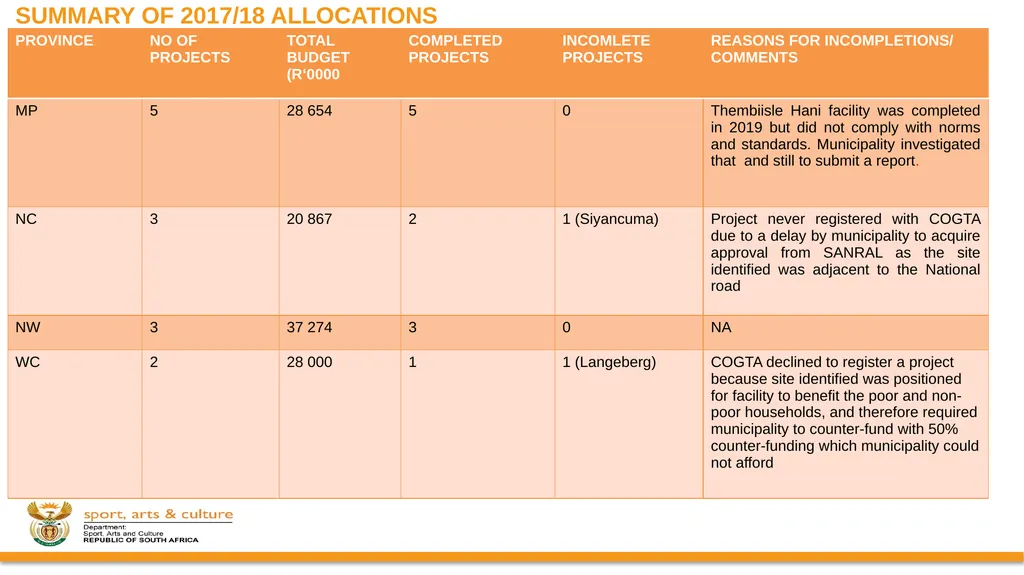
slide9. SUMMARY OF 2017/18 ALLOCATIONS<br>
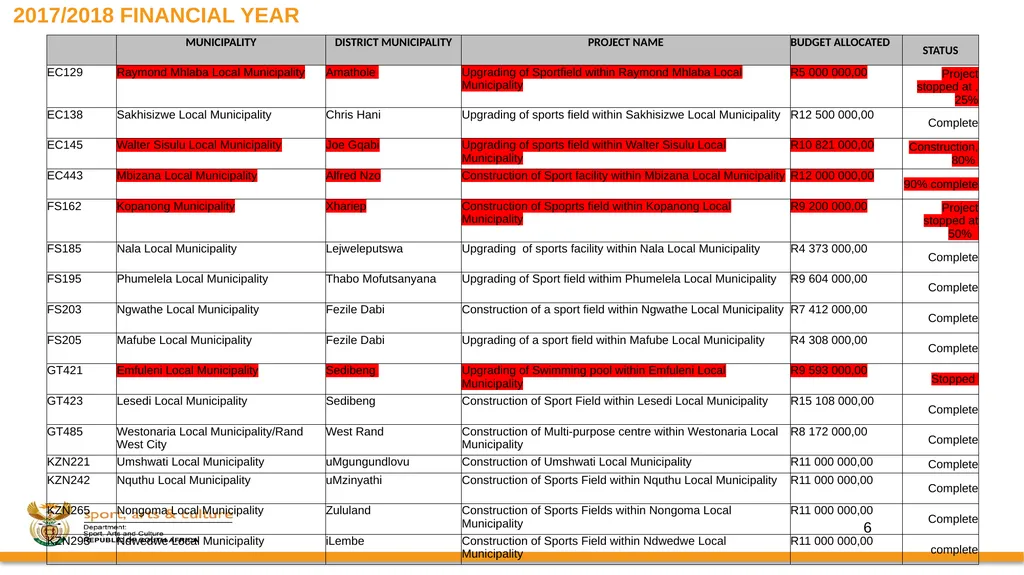
slide10. 2017/2018 FINANCIAL YEAR 6<br>
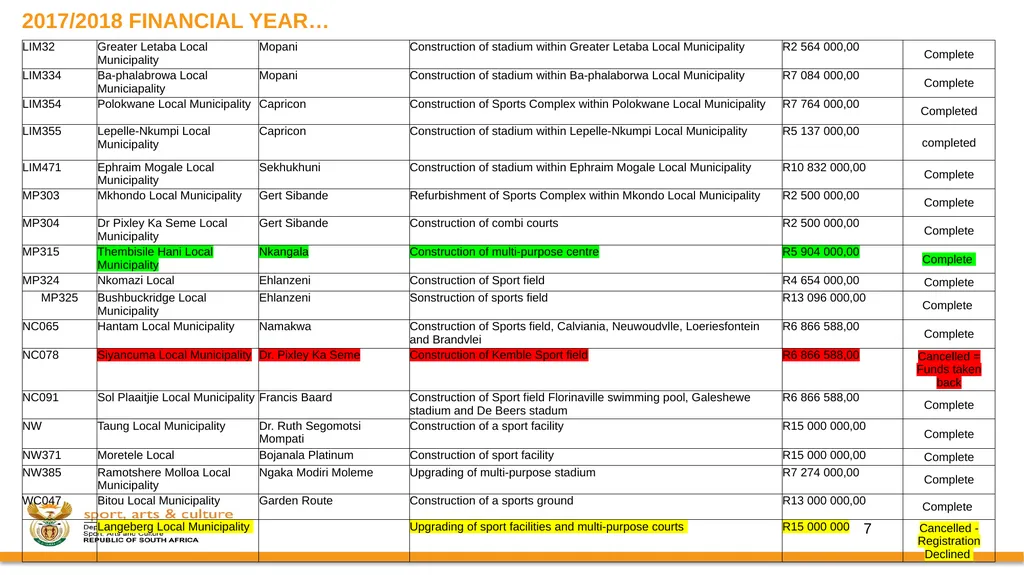
slide11. 2017/2018 FINANCIAL YEAR… 7<br>
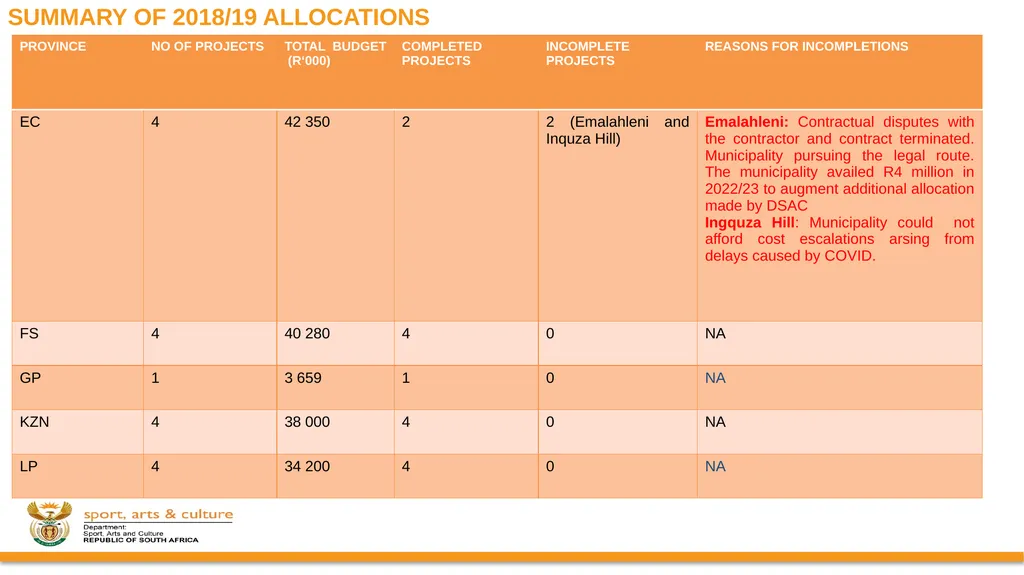
slide12. SUMMARY OF 2018/19 ALLOCATIONS<br>
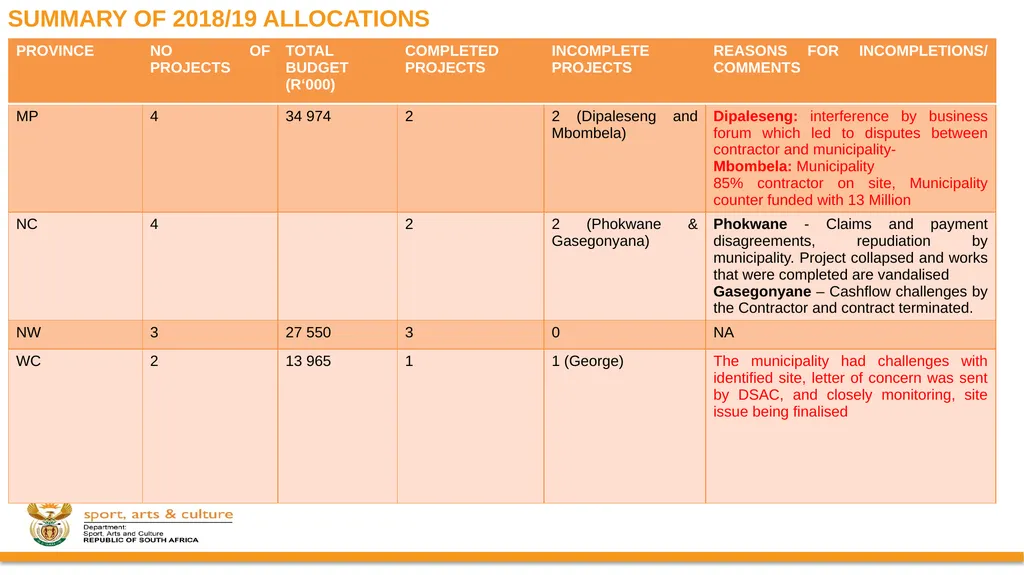
slide13. SUMMARY OF 2018/19 ALLOCATIONS<br>
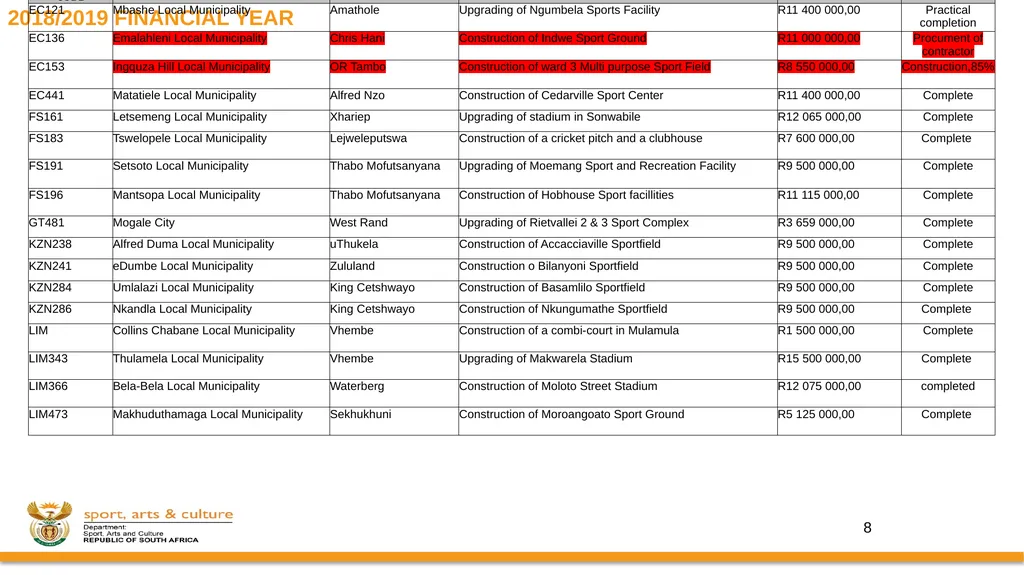
slide14. 2018/2019 FINANCIAL YEAR 8<br>
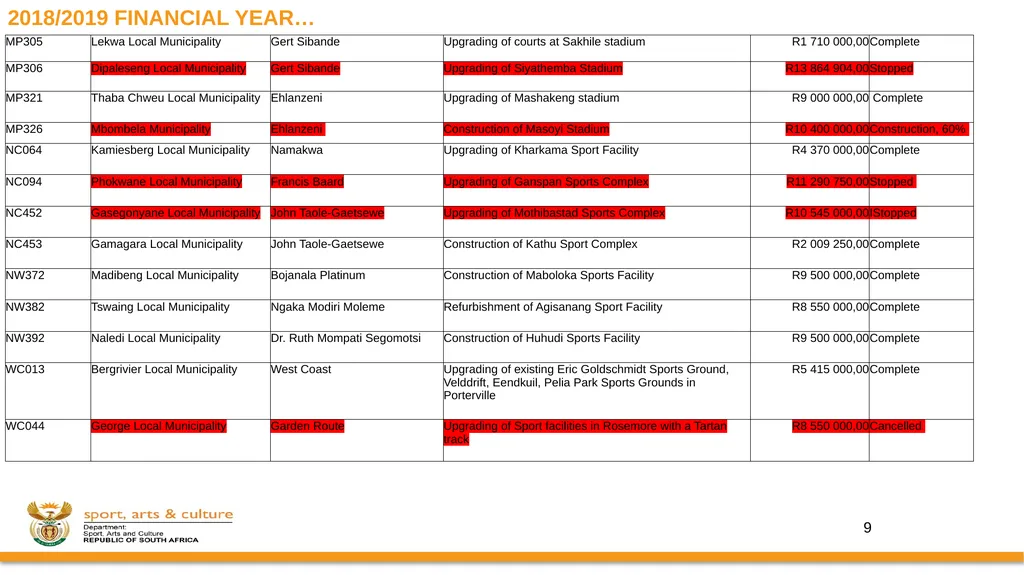
slide15. 2018/2019 FINANCIAL YEAR… 9<br>
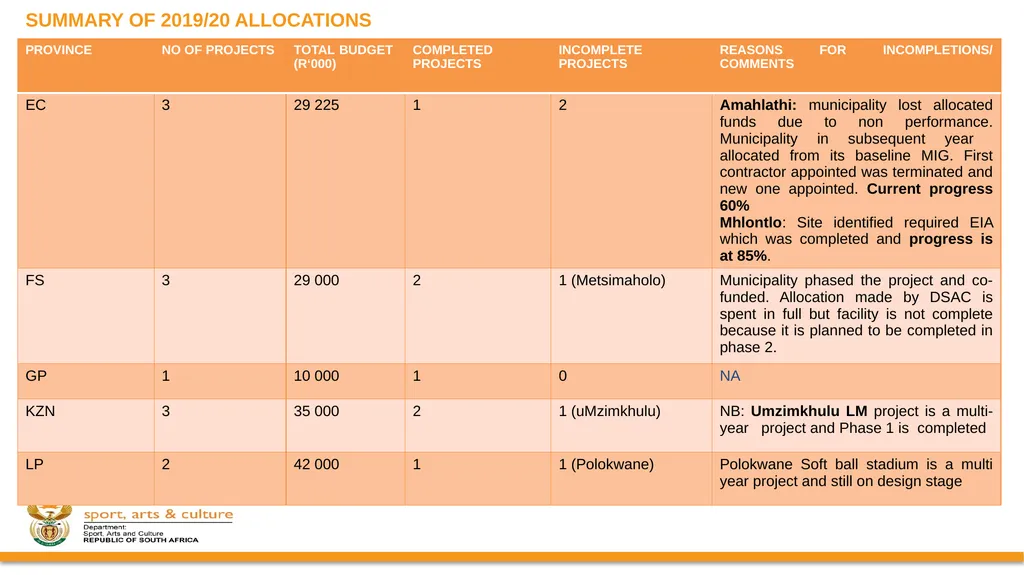
slide16. SUMMARY OF 2019/20 ALLOCATIONS<br>
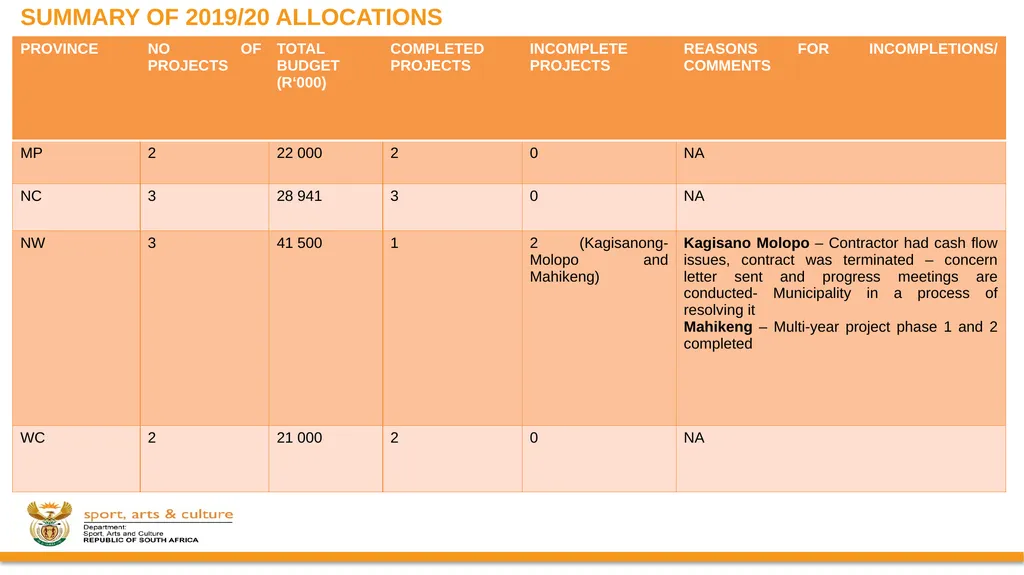
slide17. SUMMARY OF 2019/20 ALLOCATIONS<br>
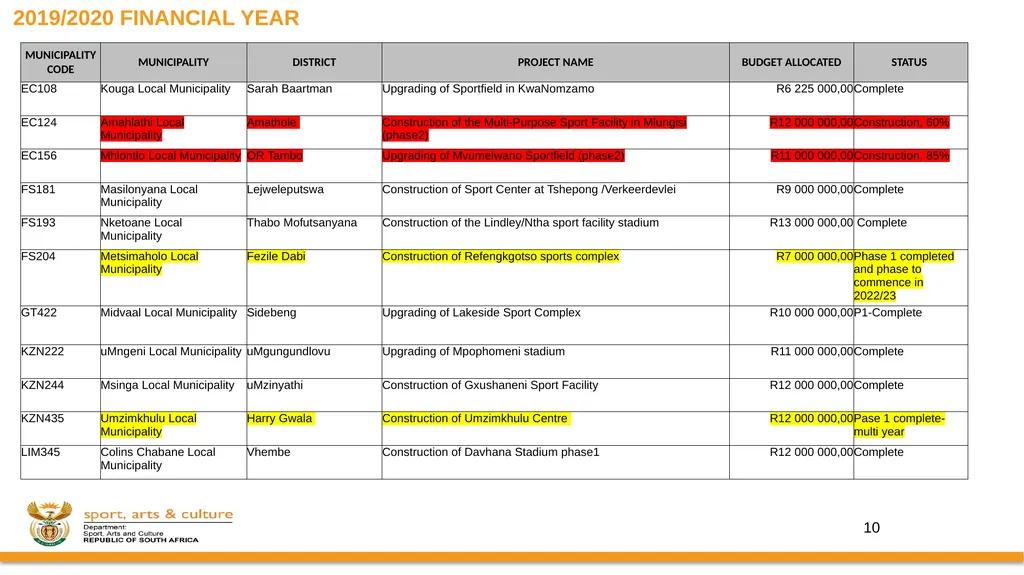
slide18. 2019/2020 FINANCIAL YEAR 10<br>
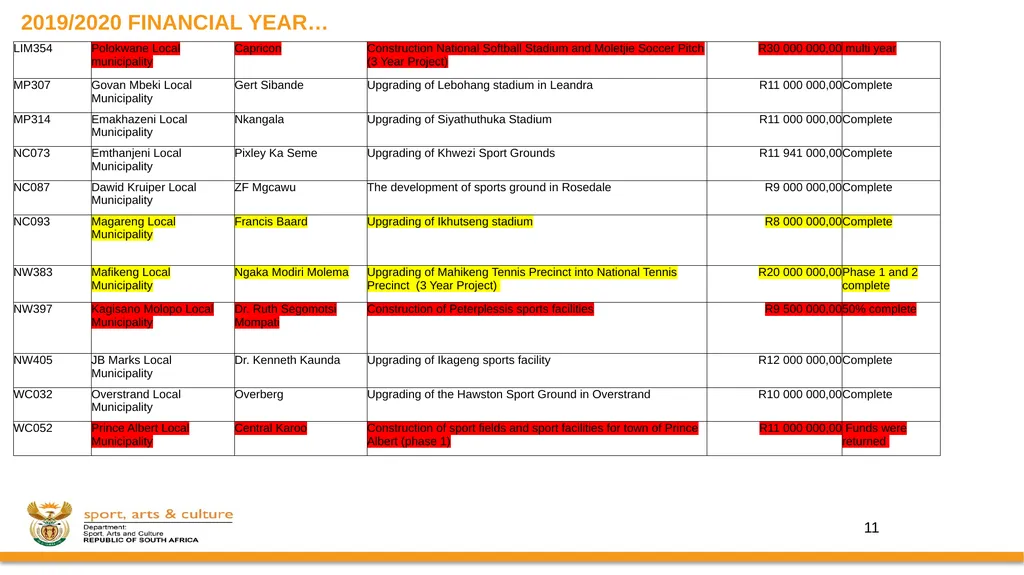
slide19. 2019/2020 FINANCIAL YEAR… 11<br>
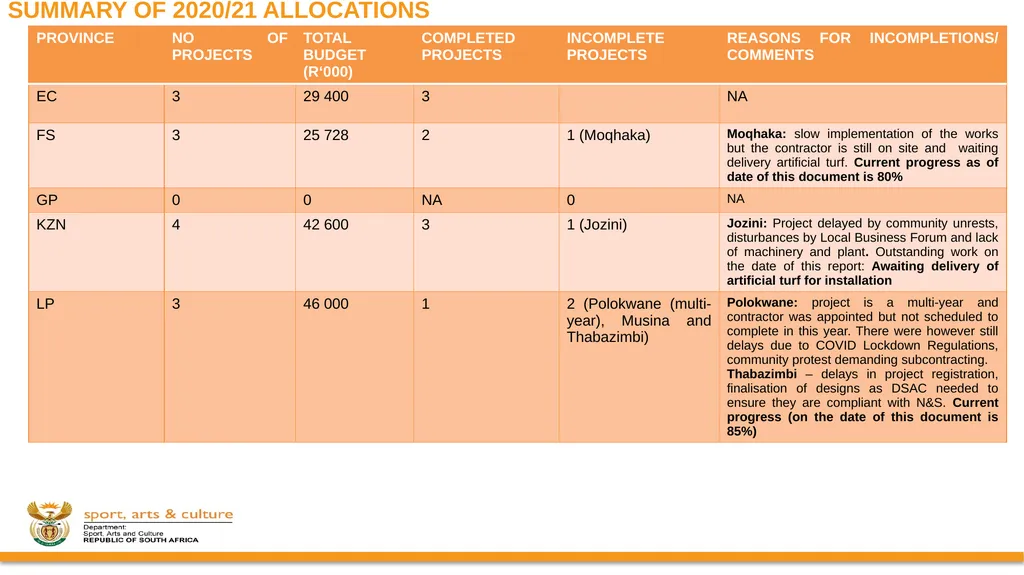
slide20. SUMMARY OF 2020/21 ALLOCATIONS<br>
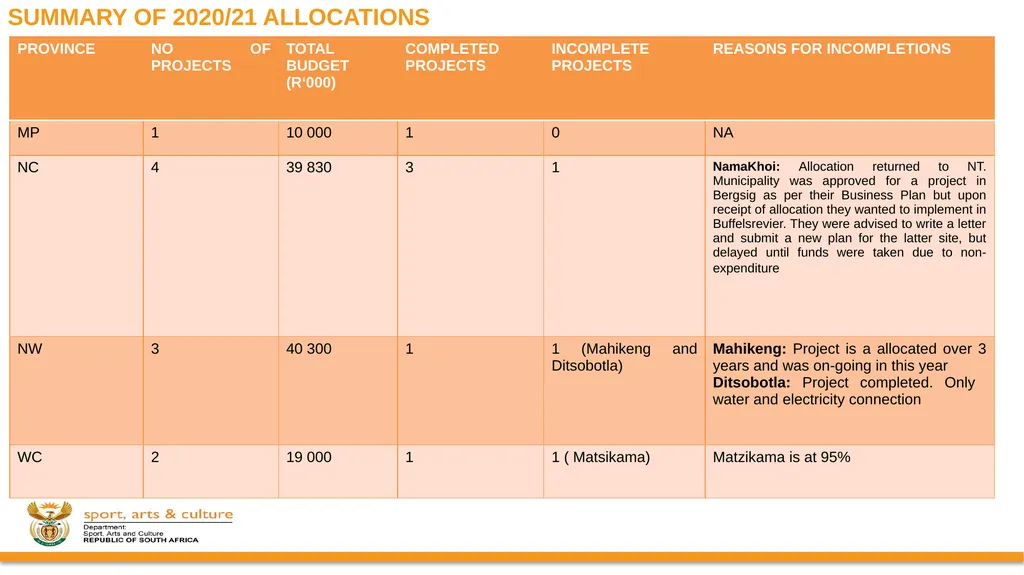
slide21. SUMMARY OF 2020/21 ALLOCATIONS<br>
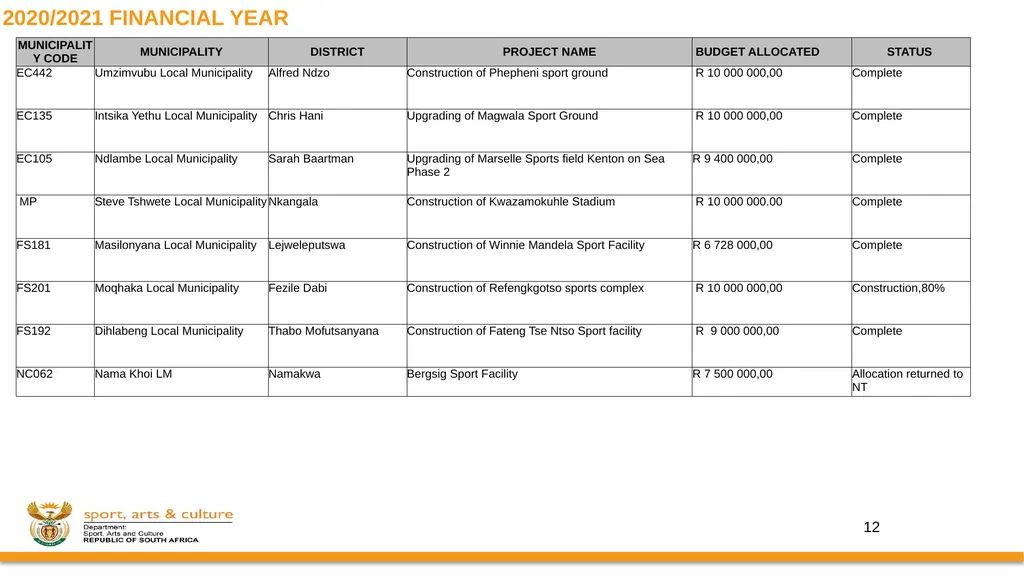
slide22. 2020/2021 FINANCIAL YEAR 12<br>
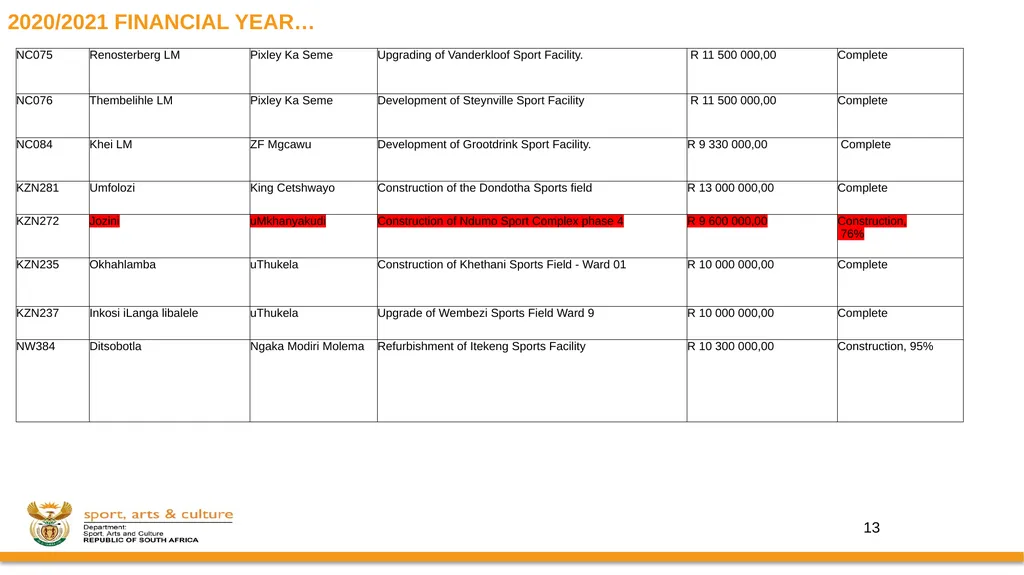
slide23. 2020/2021 FINANCIAL YEAR… 13<br>
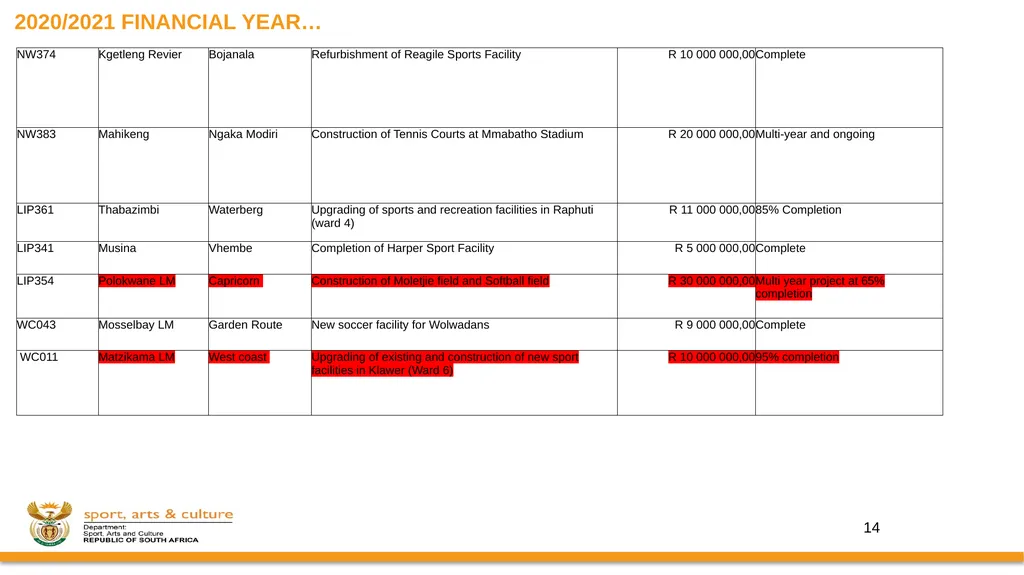
slide24. 2020/2021 FINANCIAL YEAR… 14<br>
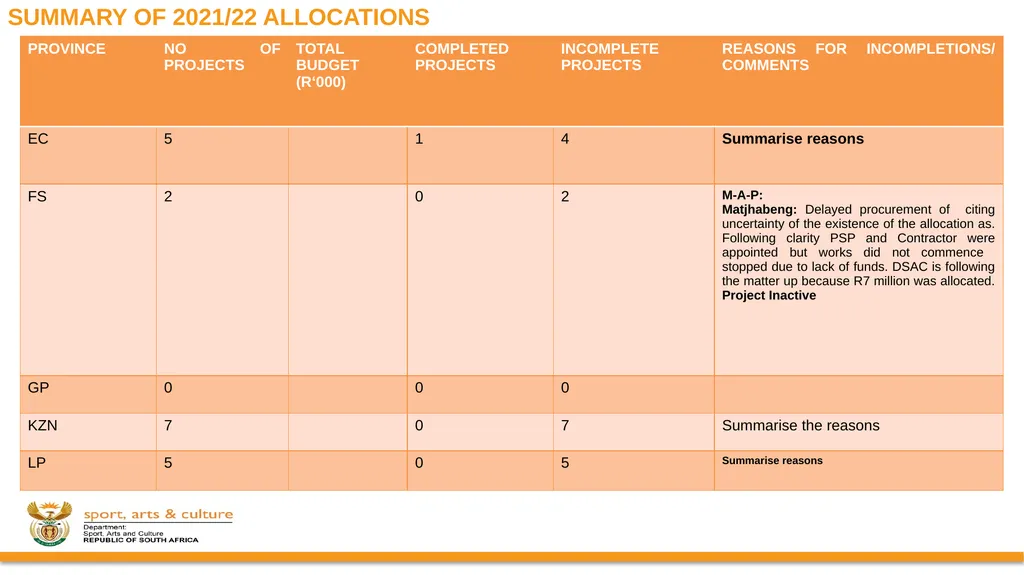
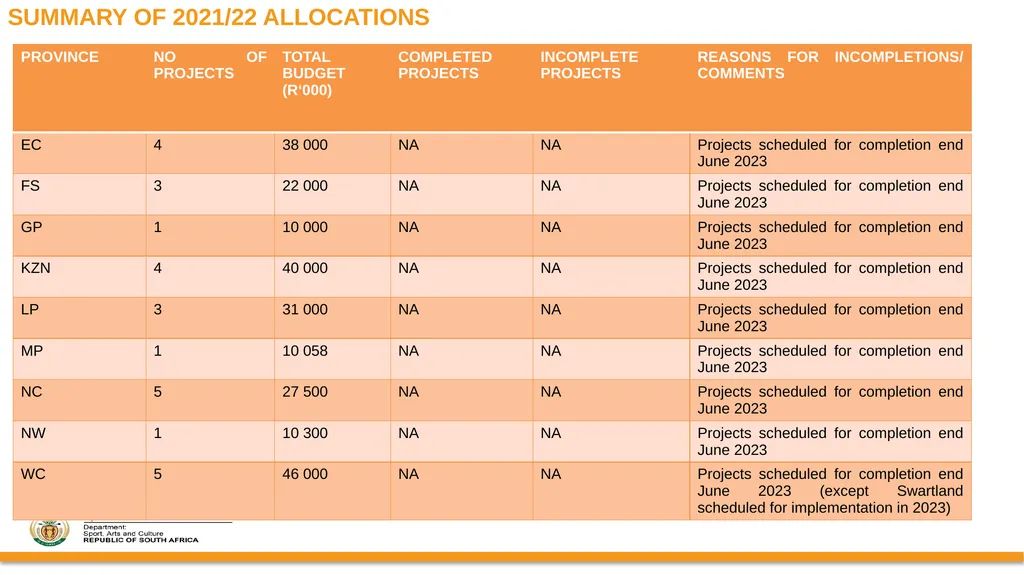
slide25. SUMMARY OF 2021/22 ALLOCATIONS<br>
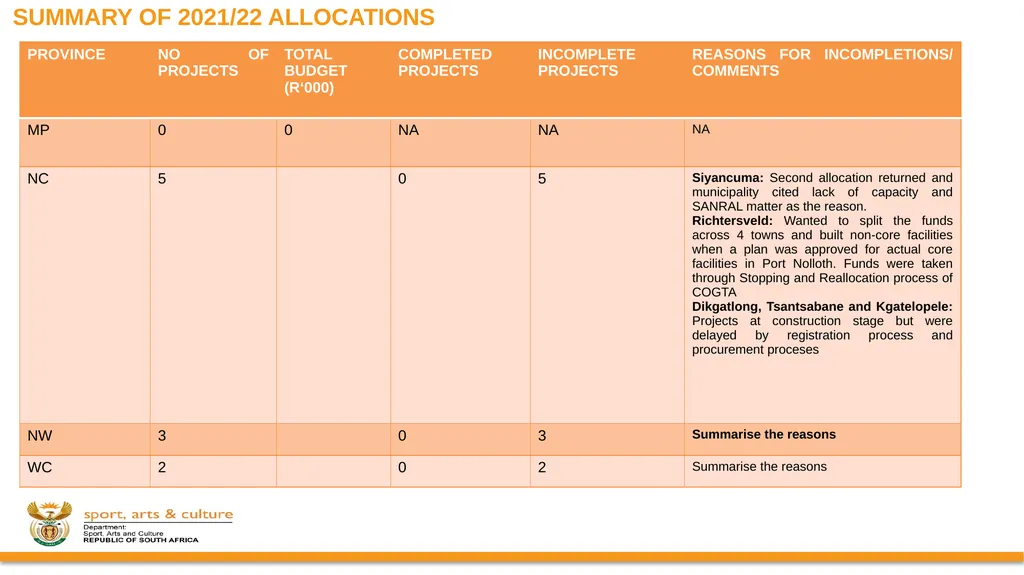
slide26. SUMMARY OF 2021/22 ALLOCATIONS<br>
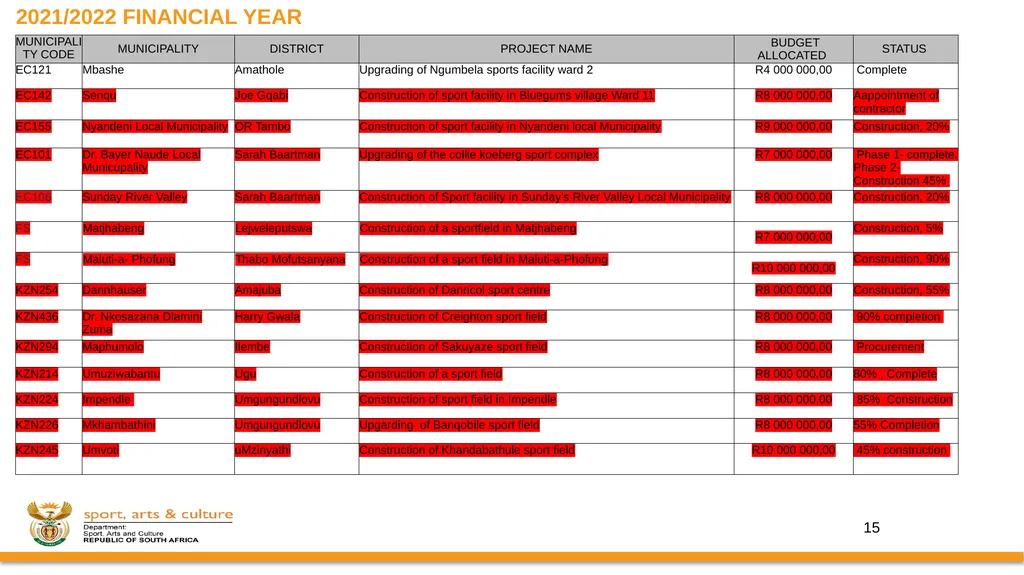
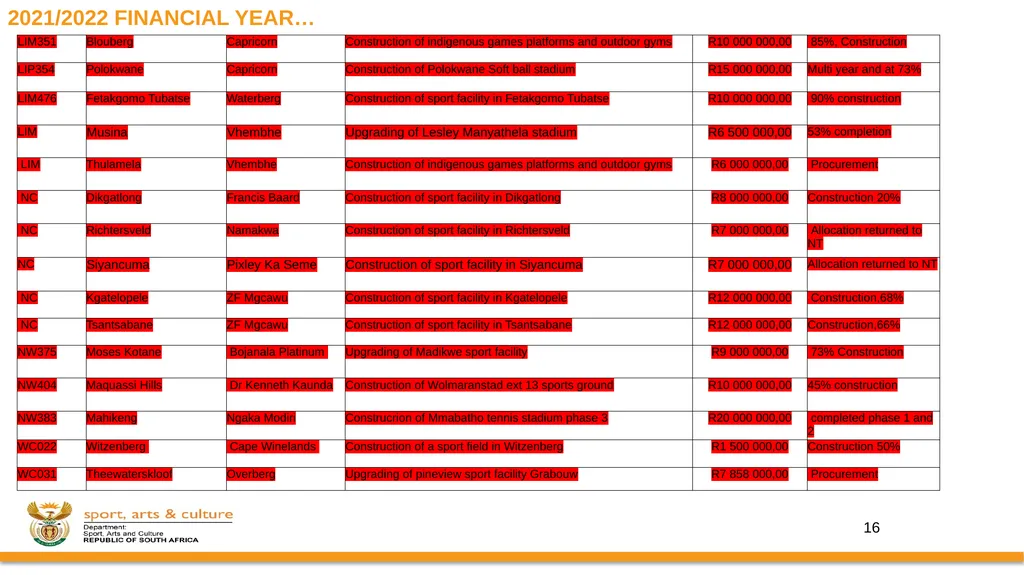
slide27. 2021/2022 FINANCIAL YEAR 15<br>
slide28. 2021/2022 FINANCIAL YEAR… 16<br>
slide29. SUMMARY OF 2021/22 ALLOCATIONS<br>
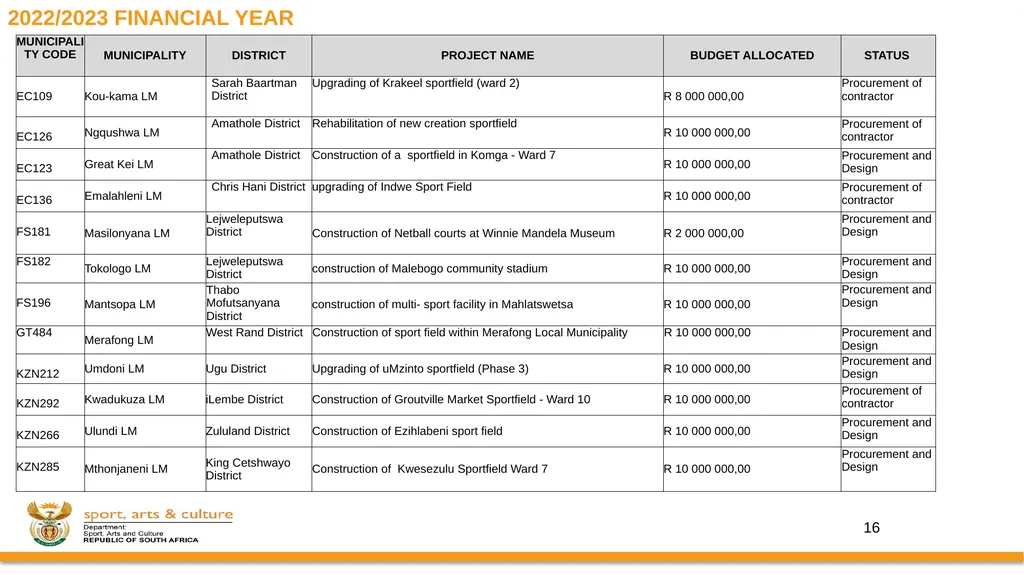
slide30. 2022/2023 FINANCIAL YEAR 16<br>
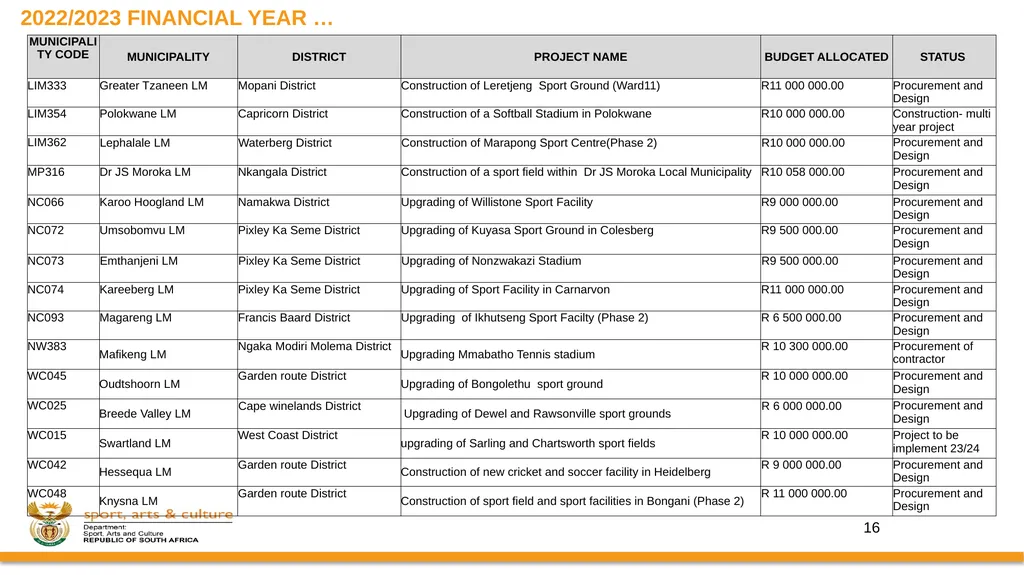
slide31. 2022/2023 FINANCIAL YEAR … 16<br>
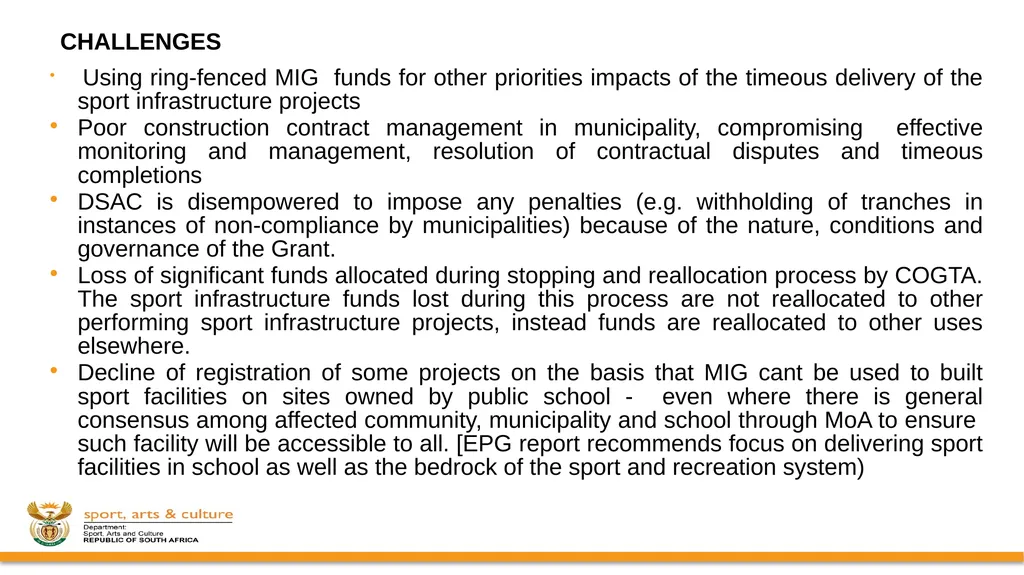
slide32. CHALLENGES Using ring-fenced MIG funds for other priorities impacts of the timeous delivery of the sport infrastructure projects
Poor construction contract management in municipality, compromising effective monitoring and management, resolution of contractual disputes and timeous completions
DSAC is disempowered to impose any penalties (e.g. withholding of tranches in instances of non-compliance by municipalities) because of the nature, conditions and governance of the Grant.
Loss of significant funds allocated during stopping and reallocation process by COGTA. The sport infrastructure funds lost during this process are not reallocated to other performing sport infrastructure projects, instead funds are reallocated to other uses elsewhere.
Decline of registration of some projects on the basis that MIG cant be used to built sport facilities on sites owned by public school - even where there is general consensus among affected community, municipality and school through MoA to ensure such facility will be accessible to all. [EPG report recommends focus on delivering sport facilities in school as well as the bedrock of the sport and recreation system)<br>
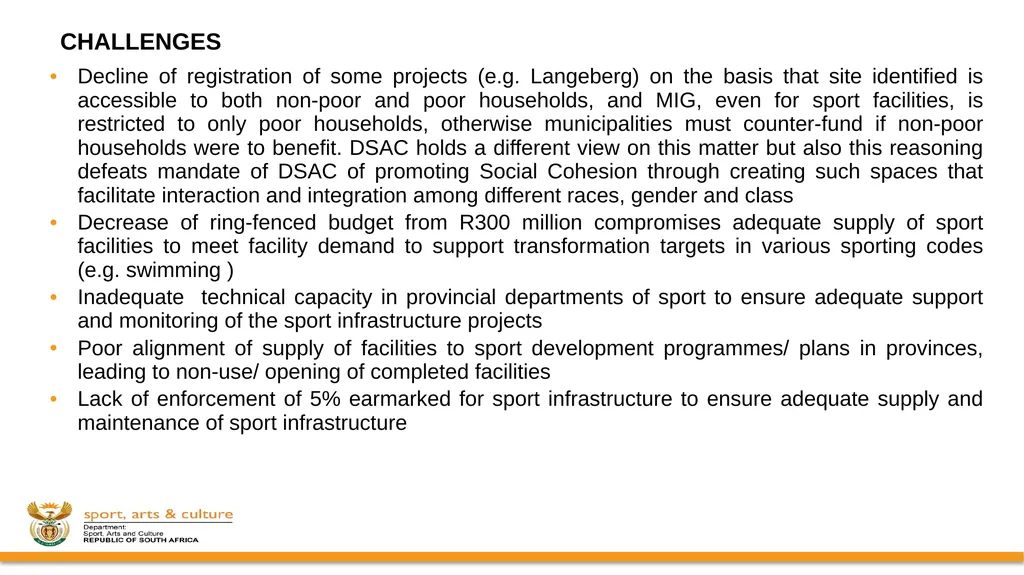
slide33. CHALLENGES Decline of registration of some projects (e.g. Langeberg) on the basis that site identified is accessible to both non-poor and poor households, and MIG, even for sport facilities, is restricted to only poor households, otherwise municipalities must counter-fund if non-poor households were to benefit. DSAC holds a different view on this matter but also this reasoning defeats mandate of DSAC of promoting Social Cohesion through creating such spaces that facilitate interaction and integration among different races, gender and class
Decrease of ring-fenced budget from R300 million compromises adequate supply of sport facilities to meet facility demand to support transformation targets in various sporting codes (e.g. swimming )
Inadequate technical capacity in provincial departments of sport to ensure adequate support and monitoring of the sport infrastructure projects
Poor alignment of supply of facilities to sport development programmes/ plans in provinces, leading to non-use/ opening of completed facilities
Lack of enforcement of 5% earmarked for sport infrastructure to ensure adequate supply and maintenance of sport infrastructure<br>
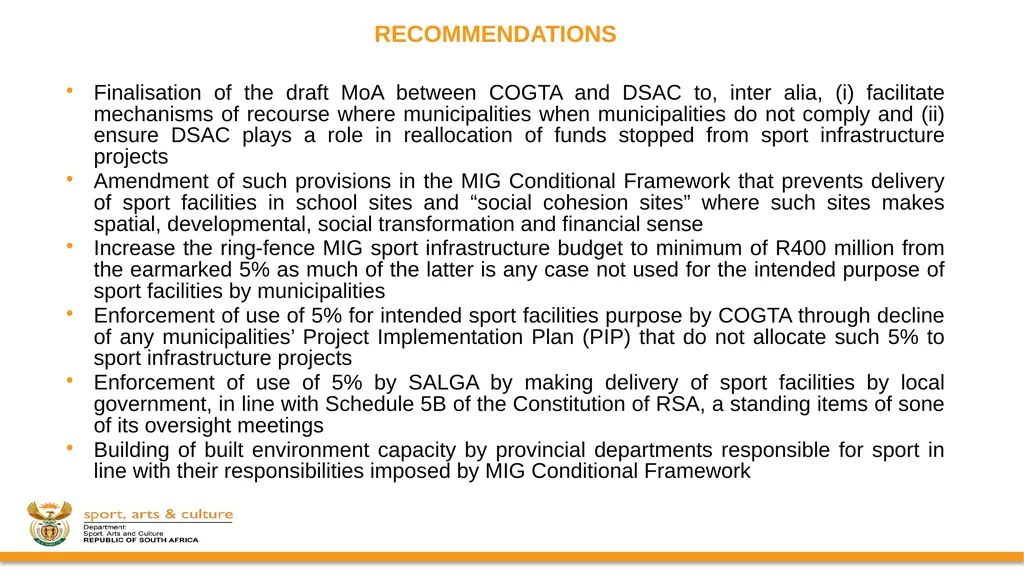
slide34. RECOMMENDATIONS Finalisation of the draft MoA between COGTA and DSAC to, inter alia, (i) facilitate mechanisms of recourse where municipalities when municipalities do not comply and (ii) ensure DSAC plays a role in reallocation of funds stopped from sport infrastructure projects
Amendment of such provisions in the MIG Conditional Framework that prevents delivery of sport facilities in school sites and “social cohesion sites” where such sites makes spatial, developmental, social transformation and financial sense
Increase the ring-fence MIG sport infrastructure budget to minimum of R400 million from the earmarked 5% as much of the latter is any case not used for the intended purpose of sport facilities by municipalities
Enforcement of use of 5% for intended sport facilities purpose by COGTA through decline of any municipalities’ Project Implementation Plan (PIP) that do not allocate such 5% to sport infrastructure projects
Enforcement of use of 5% by SALGA by making delivery of sport facilities by local government, in line with Schedule 5B of the Constitution of RSA, a standing items of sone of its oversight meetings
Building of built environment capacity by provincial departments responsible for sport in line with their responsibilities imposed by MIG Conditional Framework<br>
PORTFOLIO COMMITTEE: Date: 20 SEPTEMBER 2022<br>
slide2. PROGRESS ACHIEVED SINCE 2016/17 Since inception of the ring-fencing intervention, DSAC has so far made the following allocations:
ALLOCATION OF THE RINGFENCED SPORT INFRASTRUCTURE GRANT
2016/17 – 30 municipalities = R 300 000 000
2017/18 – 34 municipalities = R300 000 000
2018/19 – 30 municipalities (2 repeats: Gamagara and Lekwa) = R 273 000 000
2019/20 – 22 municipalities (1 repeat: Kamiesberg returned) = R266 000 000
2020/21 – 23 municipalities (3 repeats: Masilonyana, Polokwane & Mahikeng)= R 255 000 000
2021/22 – 29 municipalities (2 repeats: Polokwane and Mahikeng) = R255 000 000
2022/23 – 27 municipalities (9 repeats: Emthanjeni, Mahikeng, Magareng, Umsobomvu, Tokologo, Masilonyane, Mantsopa and Emalahleni) = R252 858 000
NUMBER OF ALLOCATIONS SO FAR = 193
TOTAL AMOUNT ALLOCATED = R 1 901 858 000 (ALMOST R2 BILLION ALLOCATED IN THE PAST 7 YEARS)
NUMBER OF BENEFICIARY MUNICIPALITIES = 178
OUTSTANDING MUNICIPALITIES = 27<br>
slide3. SUMMARY OF OVERALL PERFORMANCE<br>
slide4. SUMMARY OF 2016/17 ALLOCATIONS<br>
slide5. SUMMARY OF 2016/17 ALLOCATIONS<br>
slide6. 2016/2017 FINANCIAL YEAR 4<br>
slide7. 2016/2017 FINANCIAL YEAR … 5<br>
slide8. SUMMARY OF 2017/18 ALLOCATIONS<br>
slide9. SUMMARY OF 2017/18 ALLOCATIONS<br>
slide10. 2017/2018 FINANCIAL YEAR 6<br>
slide11. 2017/2018 FINANCIAL YEAR… 7<br>
slide12. SUMMARY OF 2018/19 ALLOCATIONS<br>
slide13. SUMMARY OF 2018/19 ALLOCATIONS<br>
slide14. 2018/2019 FINANCIAL YEAR 8<br>
slide15. 2018/2019 FINANCIAL YEAR… 9<br>
slide16. SUMMARY OF 2019/20 ALLOCATIONS<br>
slide17. SUMMARY OF 2019/20 ALLOCATIONS<br>
slide18. 2019/2020 FINANCIAL YEAR 10<br>
slide19. 2019/2020 FINANCIAL YEAR… 11<br>
slide20. SUMMARY OF 2020/21 ALLOCATIONS<br>
slide21. SUMMARY OF 2020/21 ALLOCATIONS<br>
slide22. 2020/2021 FINANCIAL YEAR 12<br>
slide23. 2020/2021 FINANCIAL YEAR… 13<br>
slide24. 2020/2021 FINANCIAL YEAR… 14<br>
slide25. SUMMARY OF 2021/22 ALLOCATIONS<br>
slide26. SUMMARY OF 2021/22 ALLOCATIONS<br>
slide27. 2021/2022 FINANCIAL YEAR 15<br>
slide28. 2021/2022 FINANCIAL YEAR… 16<br>
slide29. SUMMARY OF 2021/22 ALLOCATIONS<br>
slide30. 2022/2023 FINANCIAL YEAR 16<br>
slide31. 2022/2023 FINANCIAL YEAR … 16<br>
slide32. CHALLENGES Using ring-fenced MIG funds for other priorities impacts of the timeous delivery of the sport infrastructure projects
Poor construction contract management in municipality, compromising effective monitoring and management, resolution of contractual disputes and timeous completions
DSAC is disempowered to impose any penalties (e.g. withholding of tranches in instances of non-compliance by municipalities) because of the nature, conditions and governance of the Grant.
Loss of significant funds allocated during stopping and reallocation process by COGTA. The sport infrastructure funds lost during this process are not reallocated to other performing sport infrastructure projects, instead funds are reallocated to other uses elsewhere.
Decline of registration of some projects on the basis that MIG cant be used to built sport facilities on sites owned by public school - even where there is general consensus among affected community, municipality and school through MoA to ensure such facility will be accessible to all. [EPG report recommends focus on delivering sport facilities in school as well as the bedrock of the sport and recreation system)<br>
slide33. CHALLENGES Decline of registration of some projects (e.g. Langeberg) on the basis that site identified is accessible to both non-poor and poor households, and MIG, even for sport facilities, is restricted to only poor households, otherwise municipalities must counter-fund if non-poor households were to benefit. DSAC holds a different view on this matter but also this reasoning defeats mandate of DSAC of promoting Social Cohesion through creating such spaces that facilitate interaction and integration among different races, gender and class
Decrease of ring-fenced budget from R300 million compromises adequate supply of sport facilities to meet facility demand to support transformation targets in various sporting codes (e.g. swimming )
Inadequate technical capacity in provincial departments of sport to ensure adequate support and monitoring of the sport infrastructure projects
Poor alignment of supply of facilities to sport development programmes/ plans in provinces, leading to non-use/ opening of completed facilities
Lack of enforcement of 5% earmarked for sport infrastructure to ensure adequate supply and maintenance of sport infrastructure<br>
slide34. RECOMMENDATIONS Finalisation of the draft MoA between COGTA and DSAC to, inter alia, (i) facilitate mechanisms of recourse where municipalities when municipalities do not comply and (ii) ensure DSAC plays a role in reallocation of funds stopped from sport infrastructure projects
Amendment of such provisions in the MIG Conditional Framework that prevents delivery of sport facilities in school sites and “social cohesion sites” where such sites makes spatial, developmental, social transformation and financial sense
Increase the ring-fence MIG sport infrastructure budget to minimum of R400 million from the earmarked 5% as much of the latter is any case not used for the intended purpose of sport facilities by municipalities
Enforcement of use of 5% for intended sport facilities purpose by COGTA through decline of any municipalities’ Project Implementation Plan (PIP) that do not allocate such 5% to sport infrastructure projects
Enforcement of use of 5% by SALGA by making delivery of sport facilities by local government, in line with Schedule 5B of the Constitution of RSA, a standing items of sone of its oversight meetings
Building of built environment capacity by provincial departments responsible for sport in line with their responsibilities imposed by MIG Conditional Framework<br>