Project Based Learning Outcomes Dr. Asha Latha Assoc. Professor Dept. of AIML SIT, Kalaburagi Contents What is Research What is Research Design What is Research Methodology Step by step procedure Project based learning outcomes Research
"Project Based Learning Outcomes Dr. Asha Latha" is the property of its rightful owner. Permission is granted to
download and print the materials on this website for personal, non-commercial use only, and to display it
on your personal computer provided you do not modify the materials and that you retain all copyright
notices contained in the materials. By downloading content from our website, you accept the terms of this
agreement.
Presentation Transcript
01
Project Based Learning Outcomes Dr. Asha Latha
Assoc. Professor
Dept. of AIML
SIT, Kalaburagi<br>
02
Contents What is Research
What is Research Design
What is Research Methodology
Step by step procedure
Project based learning outcomes<br>
03
Research Methodology What is Research?
“Research is a process of steps used to collect and analyze information to increase our understanding of a topic or issue”.
At a general level, research consists of three steps:
1. Pose a question
2. Collect data to answer the question
3. Present an answer to the question<br>
04
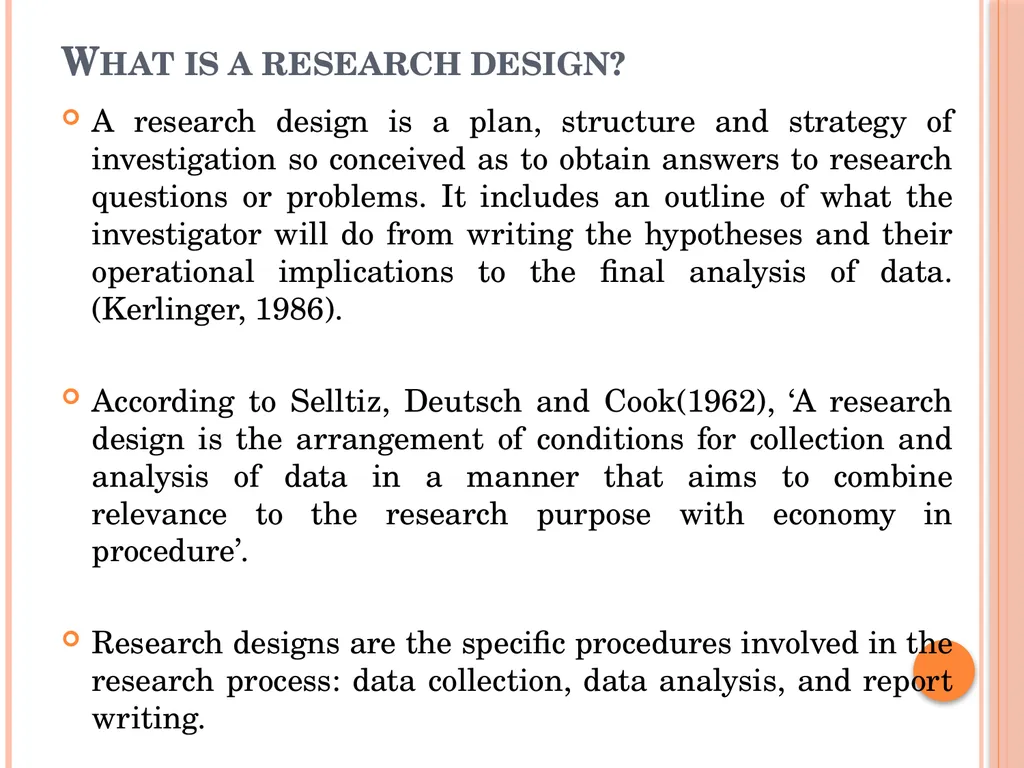
What is a research design? A research design is a plan, structure and strategy of investigation so conceived as to obtain answers to research questions or problems. It includes an outline of what the investigator will do from writing the hypotheses and their operational implications to the final analysis of data. (Kerlinger, 1986).
According to Selltiz, Deutsch and Cook(1962), ‘A research design is the arrangement of conditions for collection and analysis of data in a manner that aims to combine relevance to the research purpose with economy in procedure’.
Research designs are the specific procedures involved in the research process: data collection, data analysis, and report writing.<br>
05
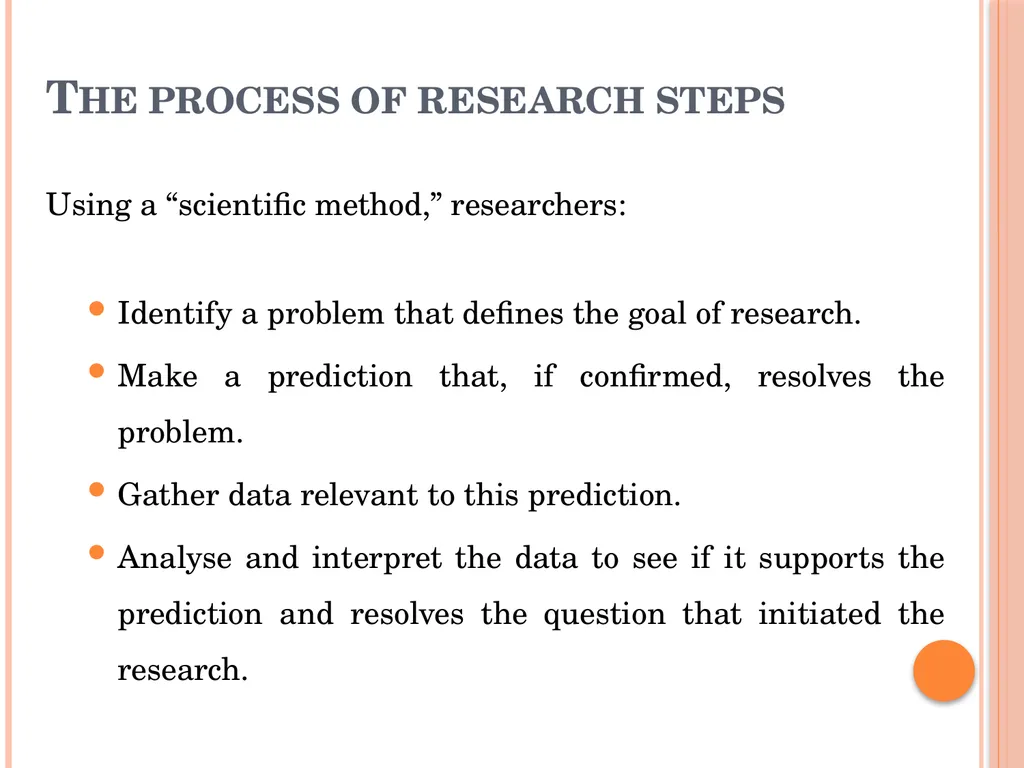
The process of research steps Using a “scientific method,” researchers:
Identify a problem that defines the goal of research.
Make a prediction that, if confirmed, resolves the problem.
Gather data relevant to this prediction.
Analyse and interpret the data to see if it supports the prediction and resolves the question that initiated the research.<br>
06
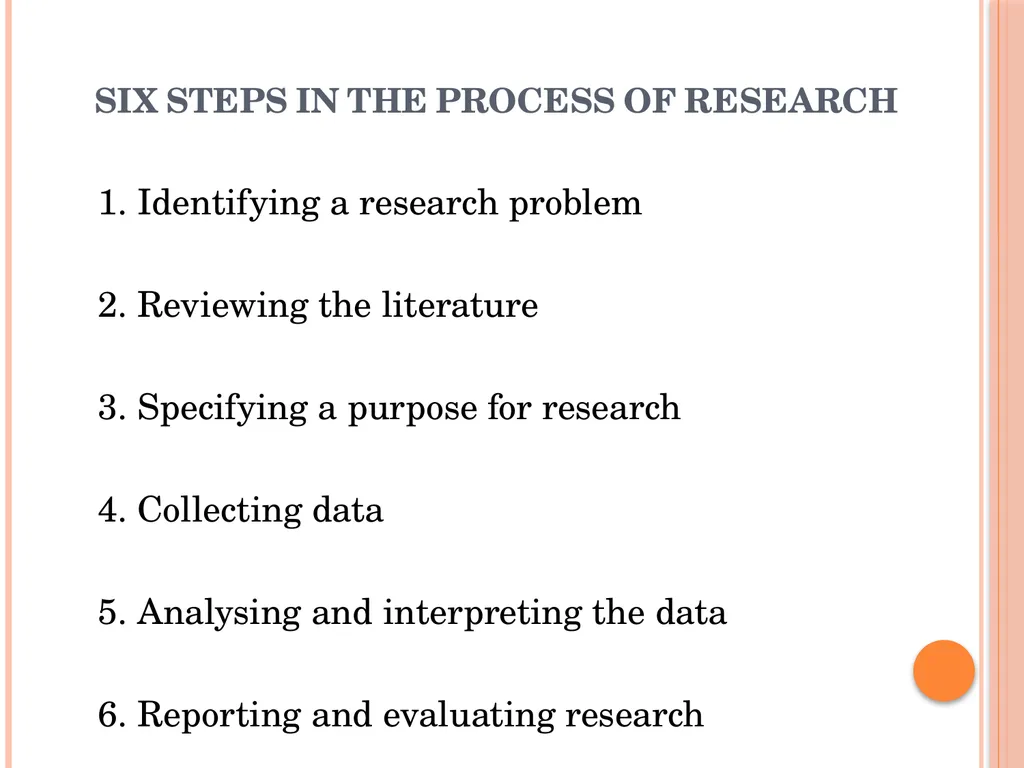
1. Identifying a research problem
2. Reviewing the literature
3. Specifying a purpose for research
4. Collecting data
5. Analysing and interpreting the data
6. Reporting and evaluating research SIX STEPS IN THE PROCESS OF RESEARCH<br>
07
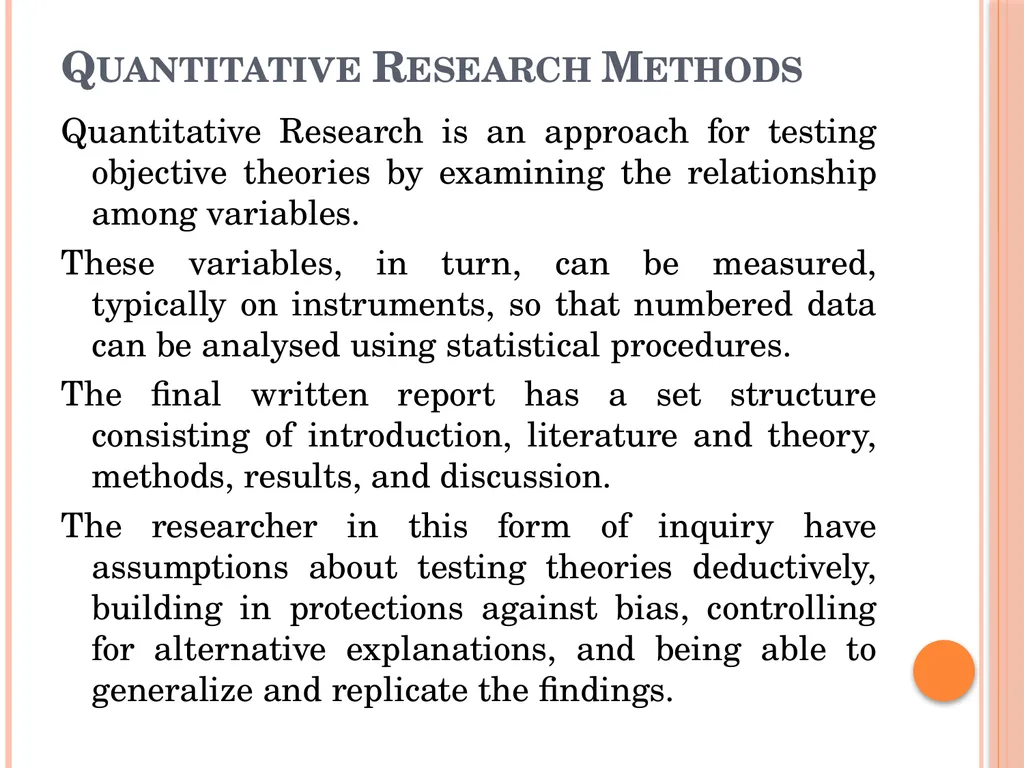
Quantitative Research Methods Quantitative Research is an approach for testing objective theories by examining the relationship among variables.
These variables, in turn, can be measured, typically on instruments, so that numbered data can be analysed using statistical procedures.
The final written report has a set structure consisting of introduction, literature and theory, methods, results, and discussion.
The researcher in this form of inquiry have assumptions about testing theories deductively, building in protections against bias, controlling for alternative explanations, and being able to generalize and replicate the findings.<br>
08
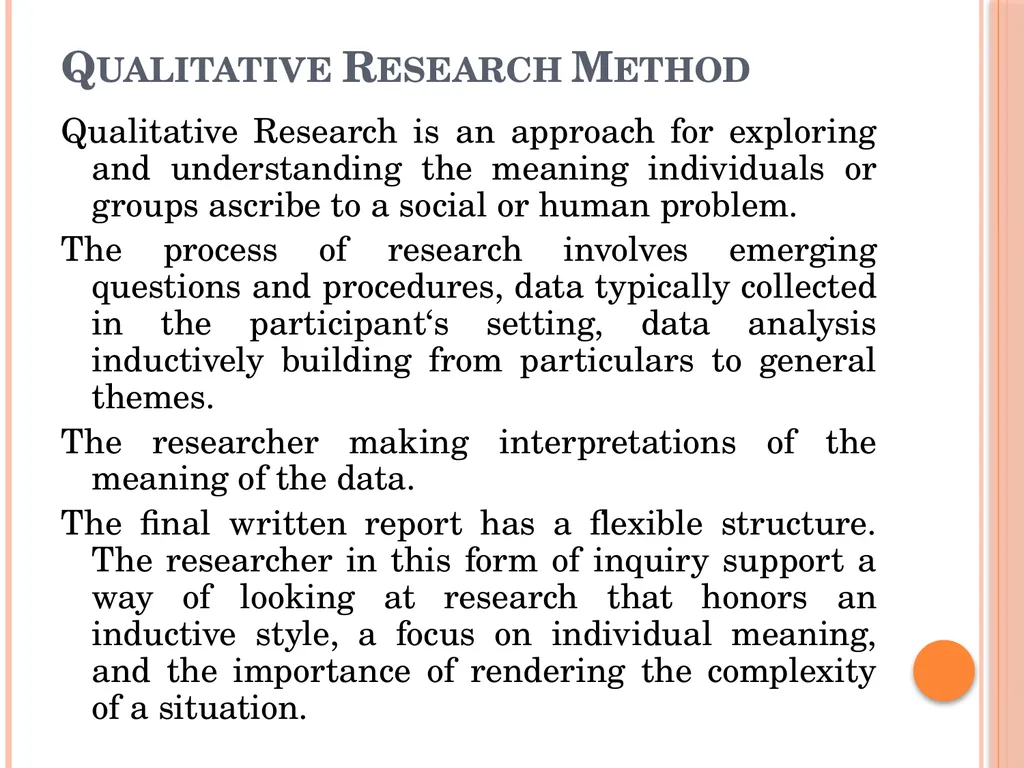
Qualitative Research Method Qualitative Research is an approach for exploring and understanding the meaning individuals or groups ascribe to a social or human problem.
The process of research involves emerging questions and procedures, data typically collected in the participant‘s setting, data analysis inductively building from particulars to general themes.
The researcher making interpretations of the meaning of the data.
The final written report has a flexible structure. The researcher in this form of inquiry support a way of looking at research that honors an inductive style, a focus on individual meaning, and the importance of rendering the complexity of a situation.<br>
09
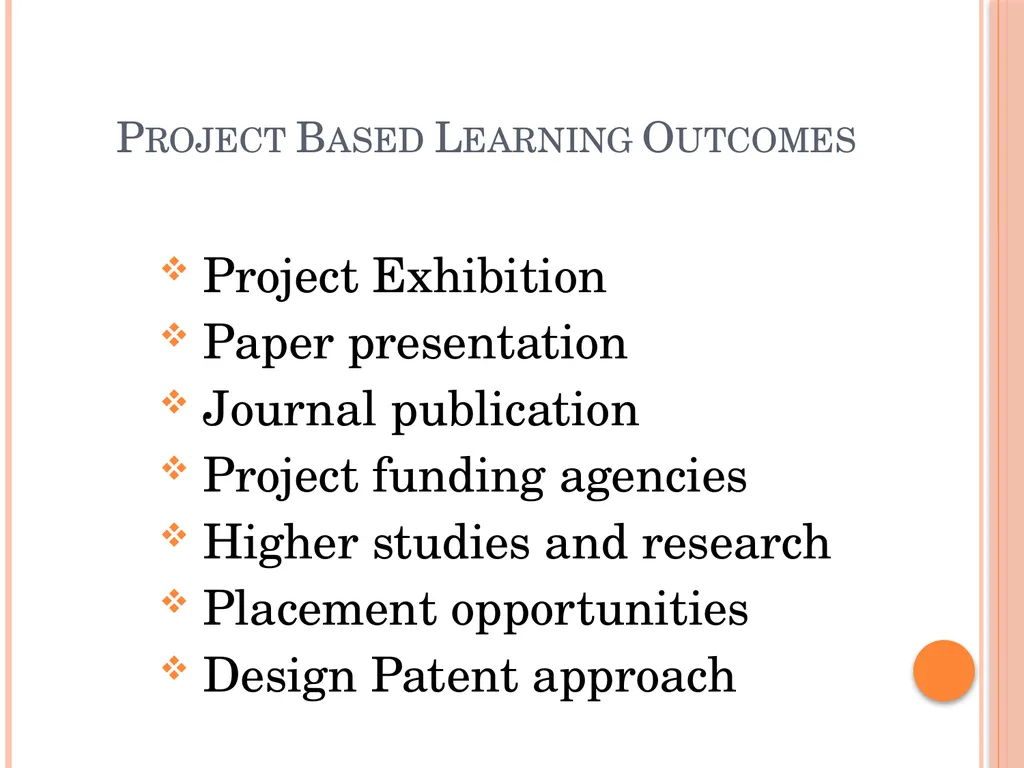
Project Based Learning Outcomes Project Exhibition
Paper presentation
Journal publication
Project funding agencies
Higher studies and research
Placement opportunities
Design Patent approach<br>
10
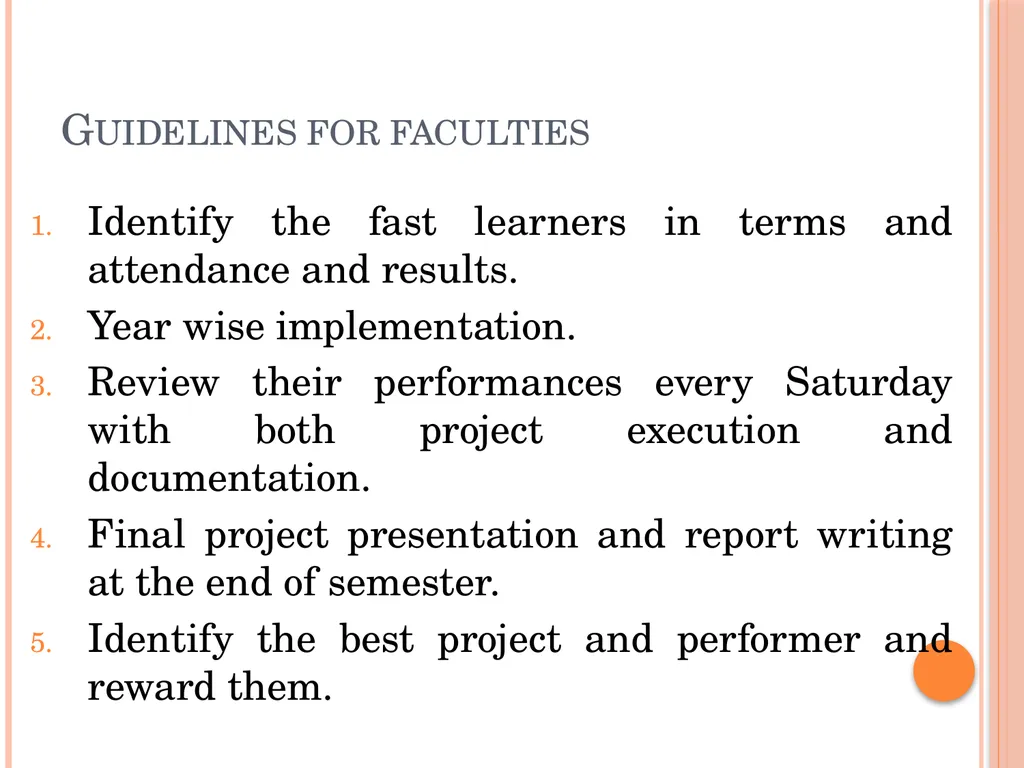
Guidelines for faculties Identify the fast learners in terms and attendance and results.
Year wise implementation.
Review their performances every Saturday with both project execution and documentation.
Final project presentation and report writing at the end of semester.
Identify the best project and performer and reward them.<br>
11
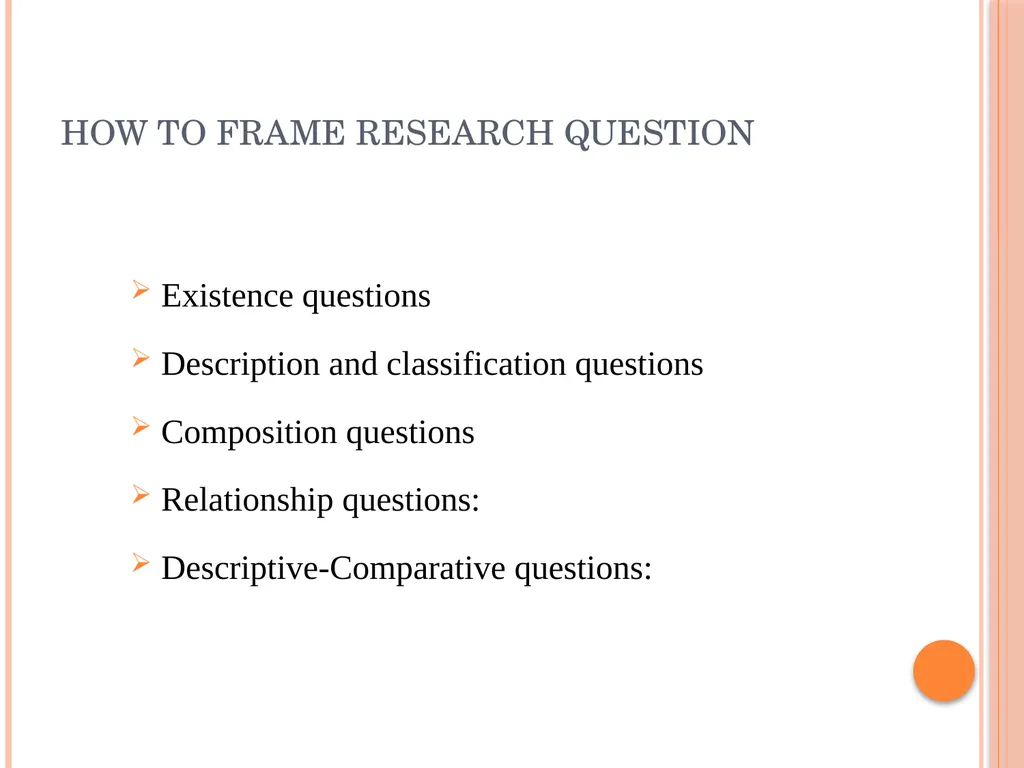
how to frame research question Existence questions
Description and classification questions
Composition questions
Relationship questions:
Descriptive-Comparative questions:<br>
12
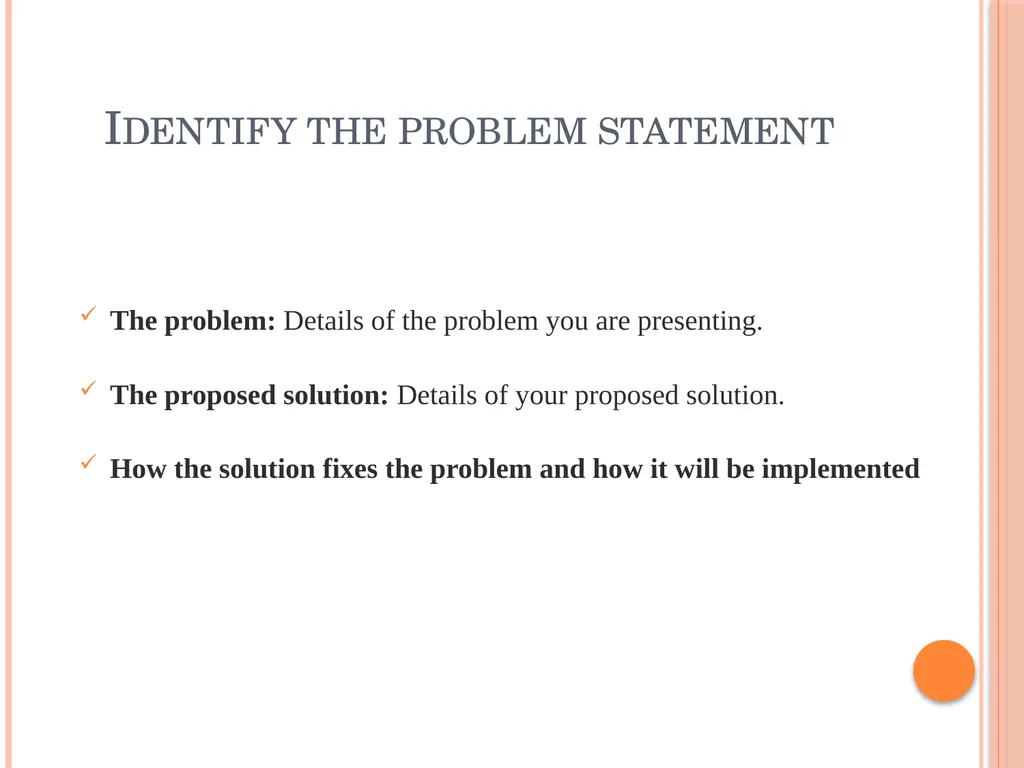
Identify the problem statement The problem: Details of the problem you are presenting.
The proposed solution: Details of your proposed solution.
How the solution fixes the problem and how it will be implemented<br>
13
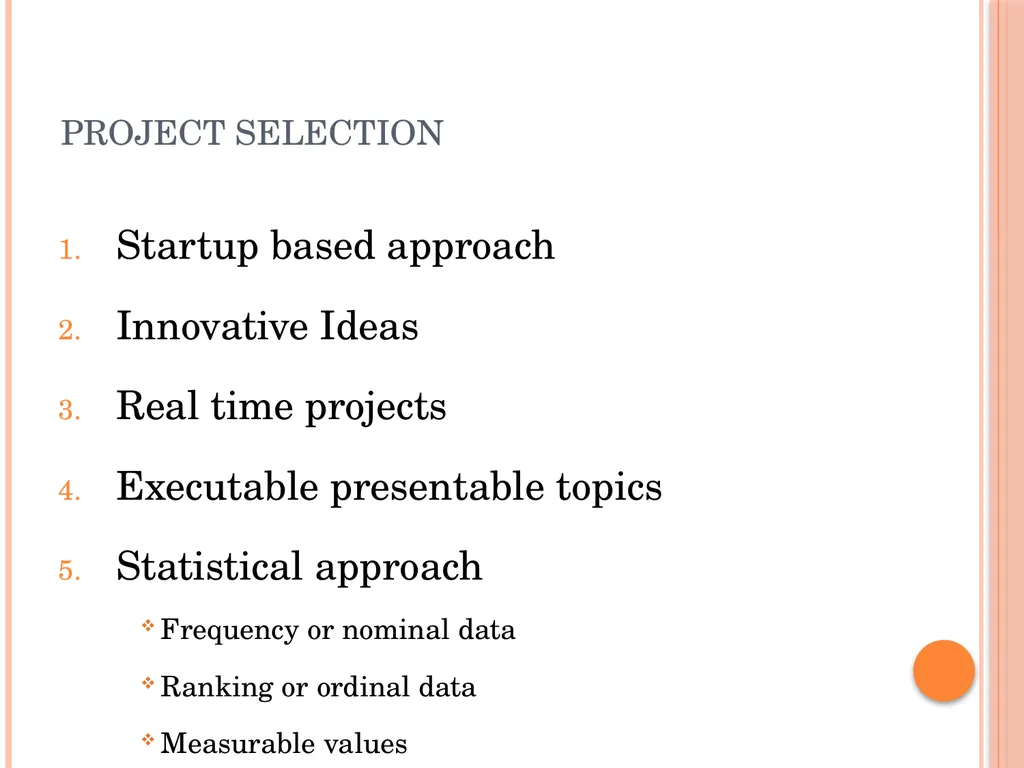
project selection Startup based approach
Innovative Ideas
Real time projects
Executable presentable topics
Statistical approach
Frequency or nominal data
Ranking or ordinal data
Measurable values<br>
14
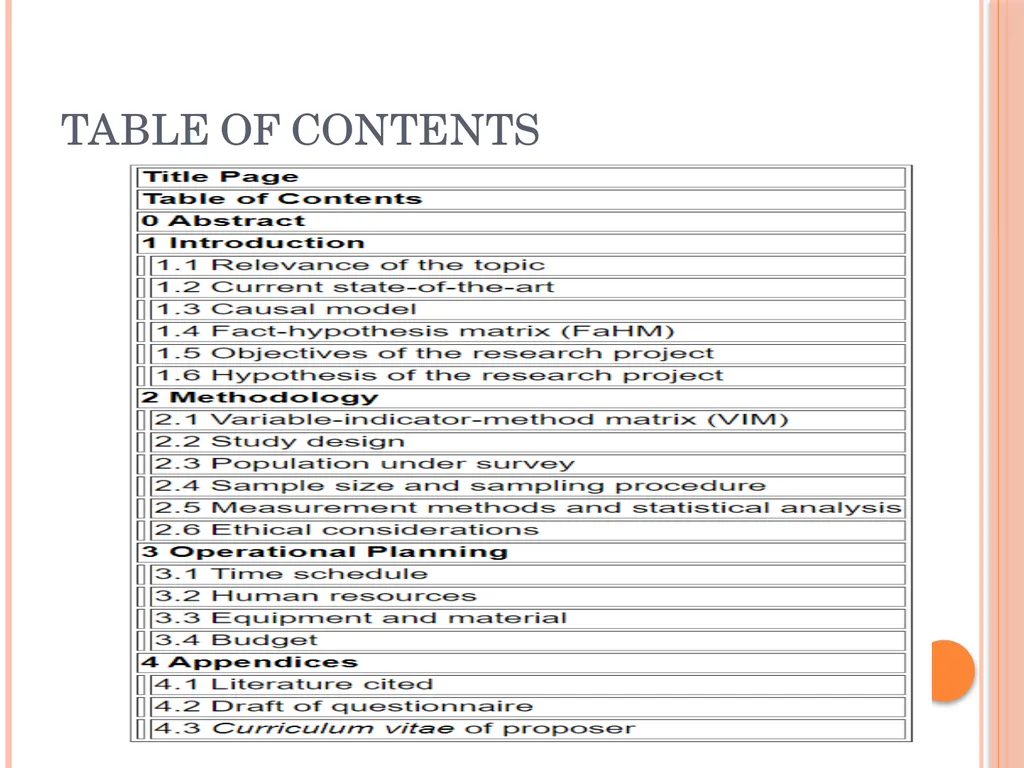
TABLE OF CONTENTS<br>
15
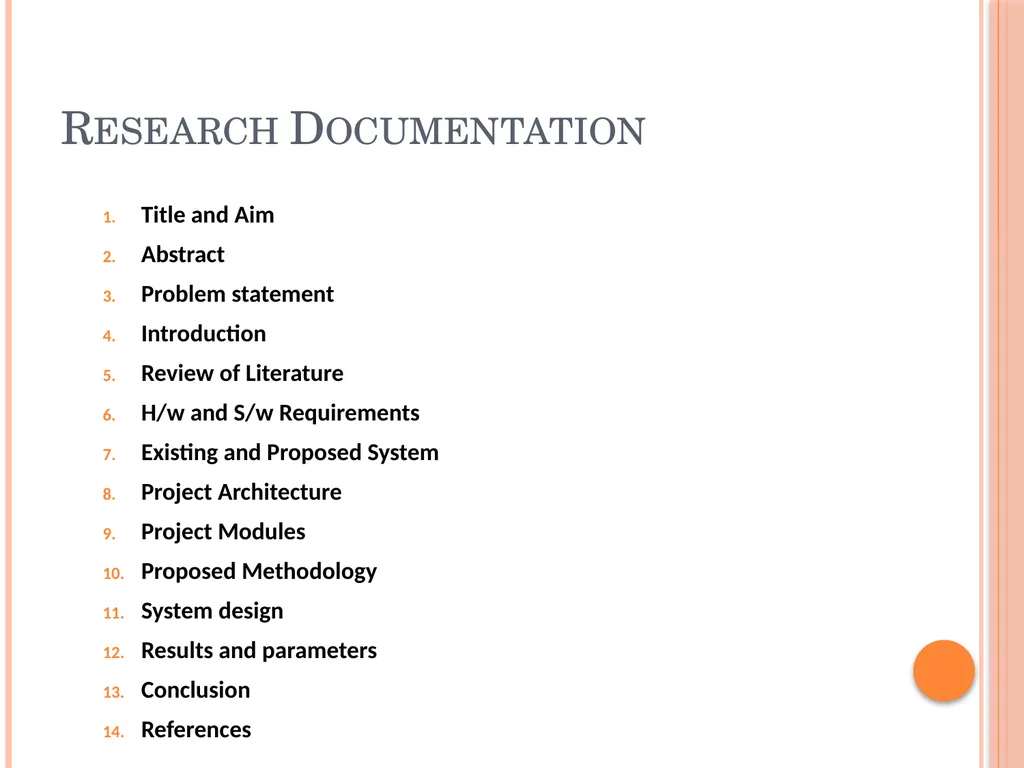
Research Documentation Title and Aim
Abstract
Problem statement
Introduction
Review of Literature
H/w and S/w Requirements
Existing and Proposed System
Project Architecture
Project Modules
Proposed Methodology
System design
Results and parameters
Conclusion
References<br>
16
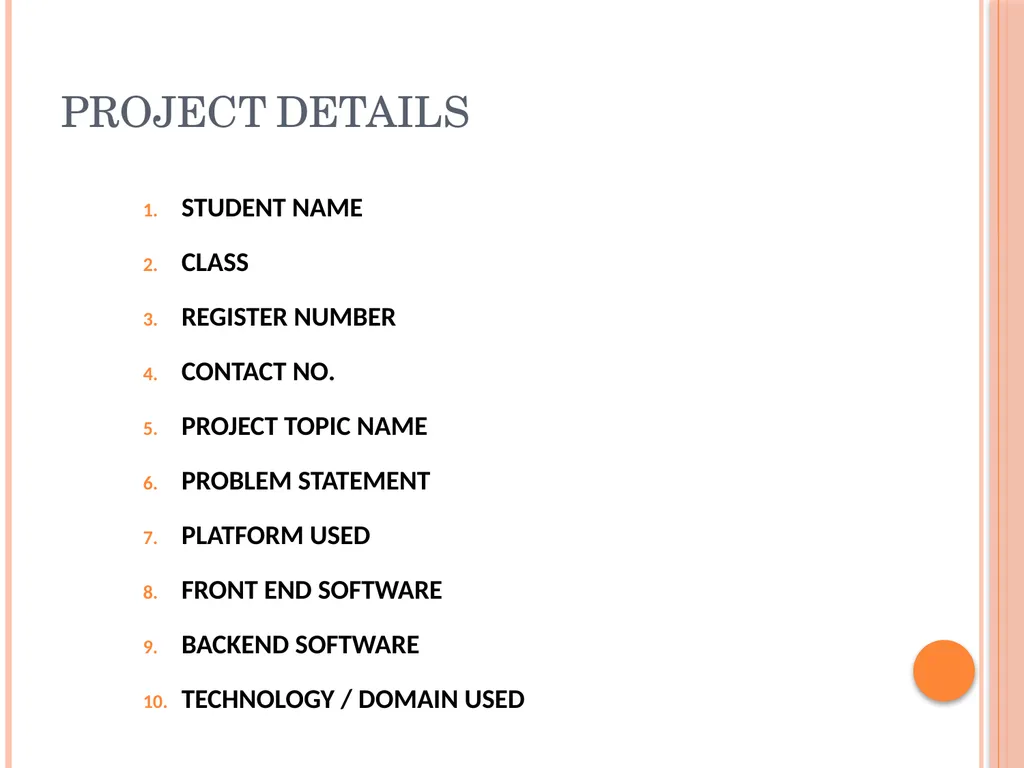
PROJECT DETAILS STUDENT NAME
CLASS
REGISTER NUMBER
CONTACT NO.
PROJECT TOPIC NAME
PROBLEM STATEMENT
PLATFORM USED
FRONT END SOFTWARE
BACKEND SOFTWARE
TECHNOLOGY / DOMAIN USED<br>