Project Management Advanced Topics In Planning And
Description: Project Management Advanced Topics In Planning And Scheduling: Agile And Critical Chain Topic 11 LEARNING OUTCOMES After completing this chapter, you should be able to: Understand why Agile Project Management was developed and its
Related Topics
Download Presentation
"Project Management Advanced Topics In Planning And" is the property of its rightful owner. Permission is granted to download and print the materials on this website for personal, non-commercial use only, and to display it on your personal computer provided you do not modify the materials and that you retain all copyright notices contained in the materials. By downloading content from our website, you accept the terms of this agreement.
Presentation Transcript
slide1. Project Management Advanced Topics In Planning And Scheduling: Agile And Critical Chain
Topic 11<br>
slide2. LEARNING OUTCOMES After completing this chapter, you should be able to:
Understand why Agile Project Management was developed and its advantages in planning for certain types of projects.
Understand the key features of the Extreme Programming (XP) planning process for software projects.
Understand the logic behind Theory of Constraints and its implications for Critical Chain scheduling.
Distinguish between critical path and critical chain project scheduling techniques.
Understand how critical chain methodology resolves project resource conflicts.
Apply critical chain project management to project portfolios.<br>
slide3. Outline Agile Project Management
Extreme Programming
Theory of Constraints dan Critical Chain
The Critical Chain Solution to Project Scheduling
Critical Chain Solutions to Resource Conflicts
Critical Chain Project Management<br>
slide4. Agile Project Management<br>
slide5. Agile PM Agile Project Management (Agile PM) reflects a new era in project planning that places a premium on flexibility and evolving customer requirements throughout the development process.
Planning the work and then working the plan
Customer needs may evolve and change over course of project
Importance of evolving customer needs leads to incremental, iterative planning process<br>
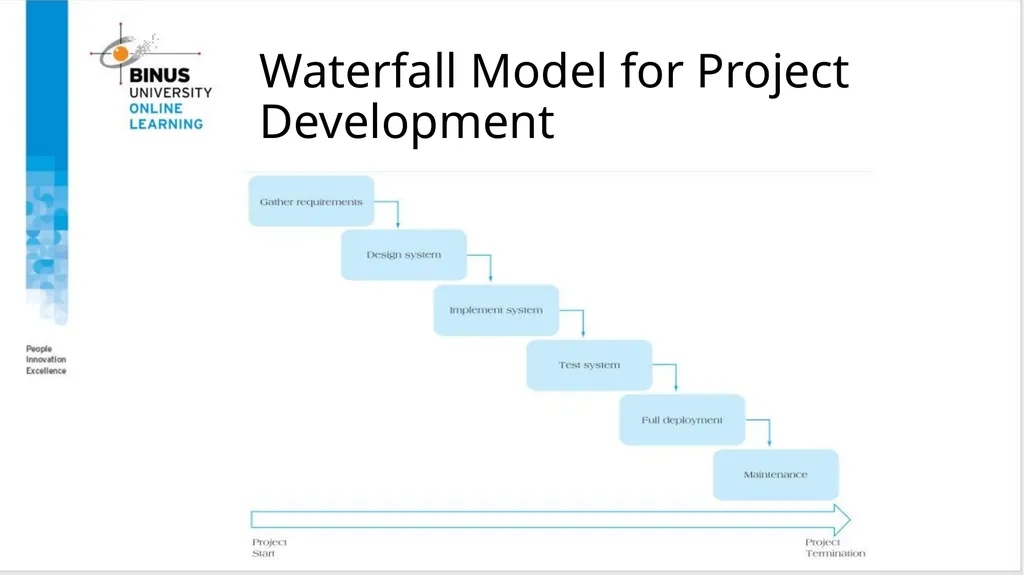
slide6. Waterfall Model for Project Development<br>
slide7. Waterfall Model Waterfall model Waterfall project development process works well when:
Requirements are very well understood and fixed at the outset of the project.
Product definition is stable and not subject to changes.
Technology is understood.
Ample resources with required expertise are available freely.
The project is of short duration.<br>
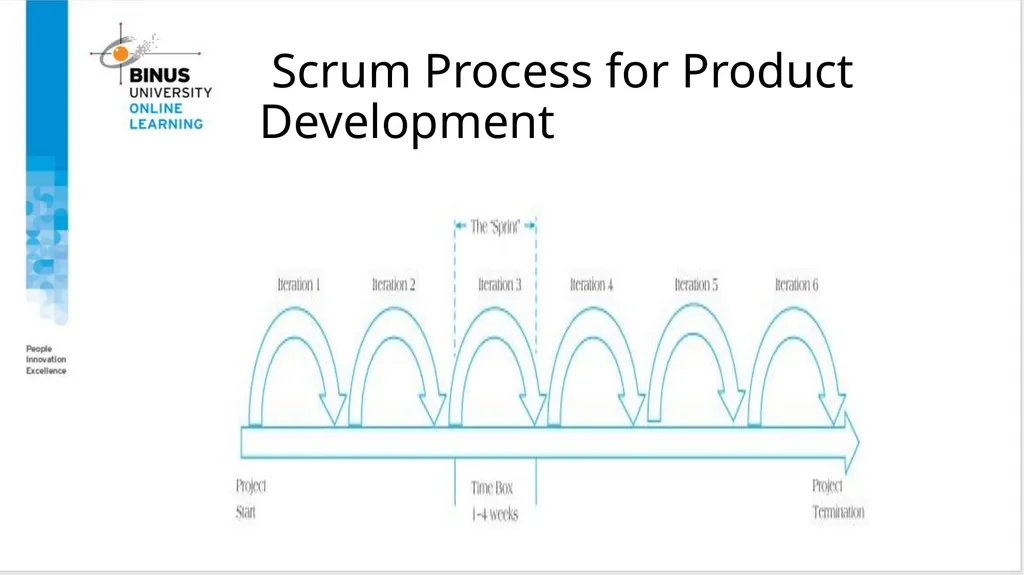
slide8. Unique feature of Agile PM Agile PM, referred to as Scrum, recognizes mistakes of assuming once initial project conceptualization and planning are completed, project will be executed to original specifications.
Example, software projects are prone to constant changes.
Flexible, iterative system designed for the challenge of managing projects in midst of change and uncertainty
“Rolling wave” process of continuous plan-execute-evaluate cycle
Emphasis on adaptation, flexibility, and coordinated efforts of multiple disciplines<br>
slide9. Scrum Process for Product Development<br>
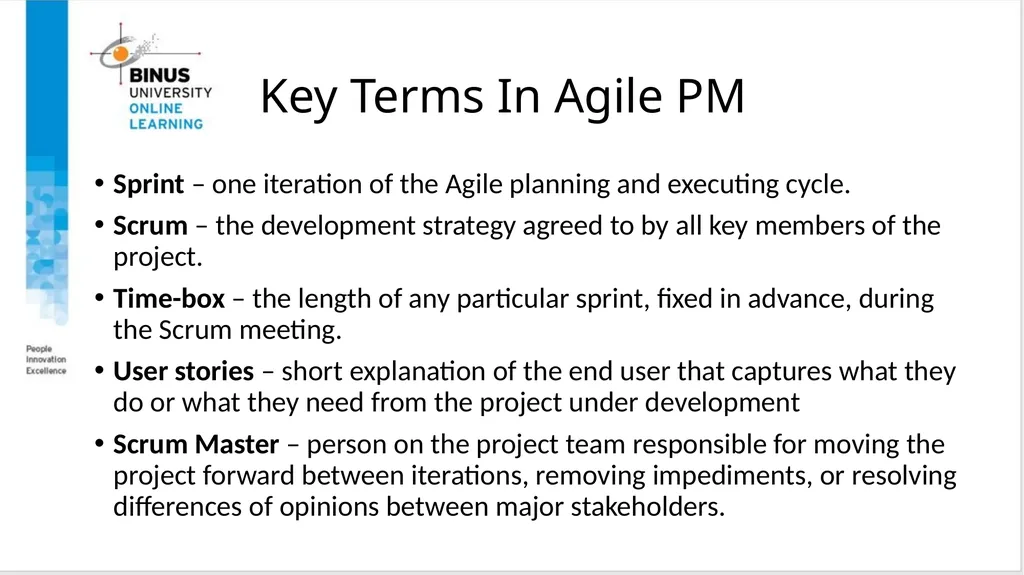
slide10. Key Terms In Agile PM Sprint – one iteration of the Agile planning and executing cycle.
Scrum – the development strategy agreed to by all key members of the project.
Time-box – the length of any particular sprint, fixed in advance, during the Scrum meeting.
User stories – short explanation of the end user that captures what they do or what they need from the project under development
Scrum Master – person on the project team responsible for moving the project forward between iterations, removing impediments, or resolving differences of opinions between major stakeholders.<br>
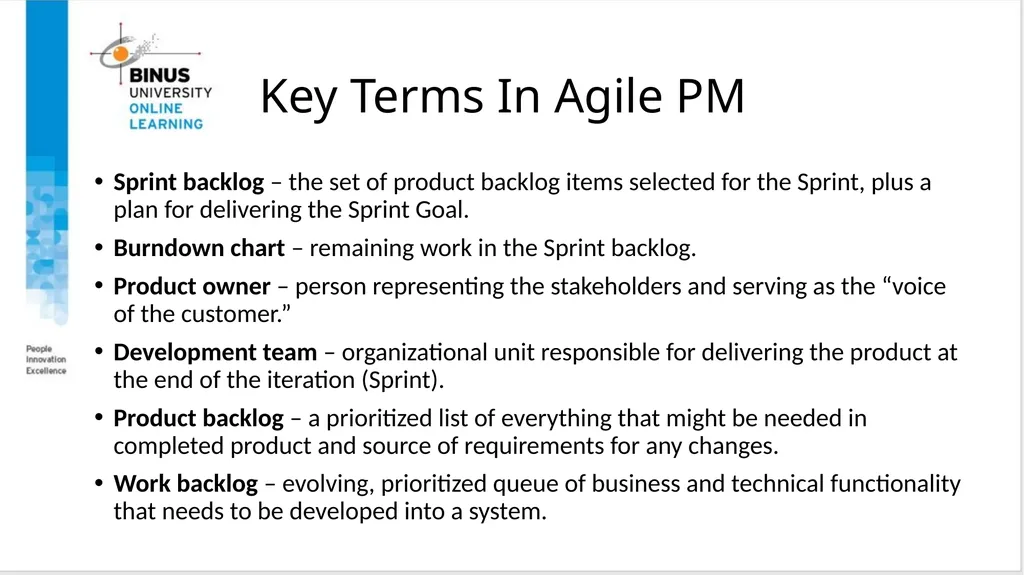
slide11. Key Terms In Agile PM Sprint backlog – the set of product backlog items selected for the Sprint, plus a plan for delivering the Sprint Goal.
Burndown chart – remaining work in the Sprint backlog.
Product owner – person representing the stakeholders and serving as the “voice of the customer.”
Development team – organizational unit responsible for delivering the product at the end of the iteration (Sprint).
Product backlog – a prioritized list of everything that might be needed in completed product and source of requirements for any changes.
Work backlog – evolving, prioritized queue of business and technical functionality that needs to be developed into a system.<br>
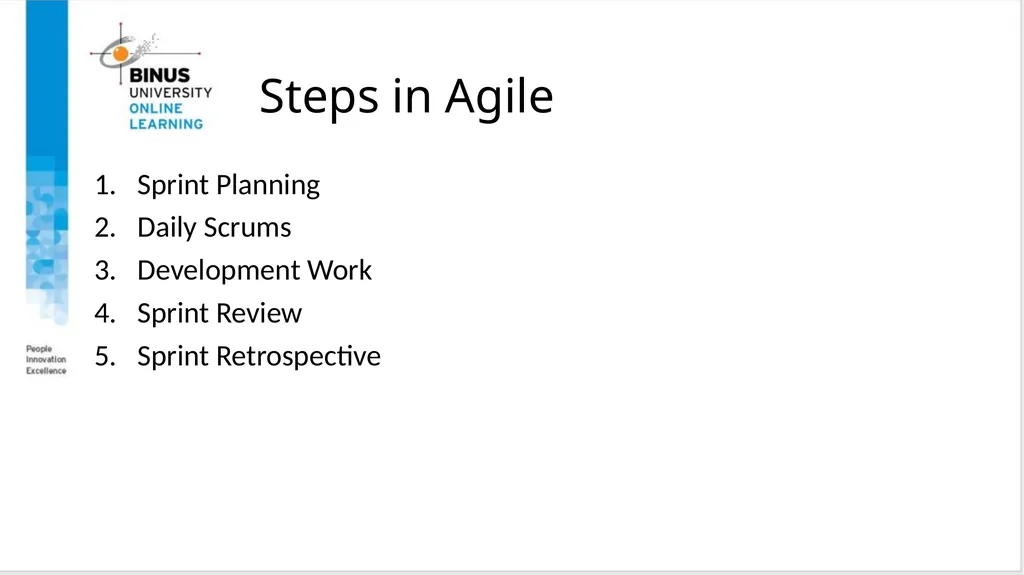
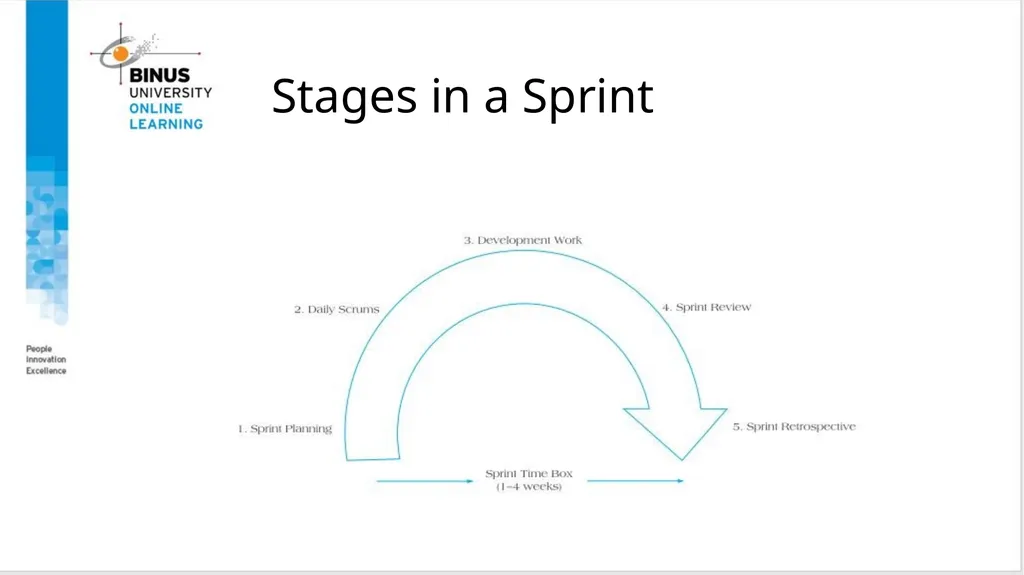
slide12. Steps in Agile Sprint Planning
Daily Scrums
Development Work
Sprint Review
Sprint Retrospective<br>
slide13. Stages in a Sprint<br>
slide14. Keys To Success With Agile Cross-functional teams
Empowered team members
Shared accountability
Servant leadership
Continuous flow of value.
Attention to technical excellence
Rapid risk reduction
Early feedback and adaptation
Total openness and transparency
Trust<br>
slide15. Problems With Agile Active user involvement and close collaboration of the Scrum team are critical throughout the development cycle.
Evolving requirements can lead to potential for scope creep.
It is harder to predict at beginning of project what the end product will actually resemble.
Agile requirements are kept to minimum, which can lead to confusion about the final outcomes.
Testing is integrated throughout lifecycle, which can add cost to project.
Frequent delivery of project features puts a burden on product owners.
If it is misapplied to traditional projects, it can be an expensive approach without delivering benefits.<br>
slide16. Extreme programming (XP)<br>
slide17. Extreme programming (XP) A more aggressive form of Scrum; a software development methodology intended to improve software quality and responsiveness to changing customer requirements.
Two guiding features of XP:
Refactoring
Pair programming
Advantage of XP is whole process is visible and accountable.
Agile PM and XP have grown out of need to combine the discipline of project management methodology with the needs of modern enterprise to respond quickly.<br>
slide18. Theory of Constraints & Critical Chain Project Scheduling<br>
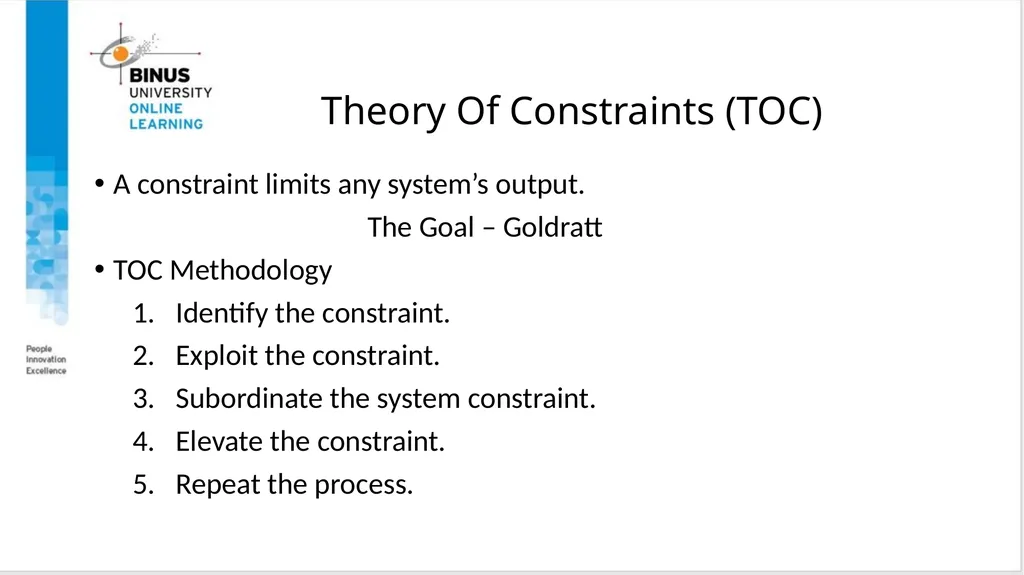
slide19. Theory Of Constraints (TOC) A constraint limits any system’s output.
The Goal – Goldratt
TOC Methodology
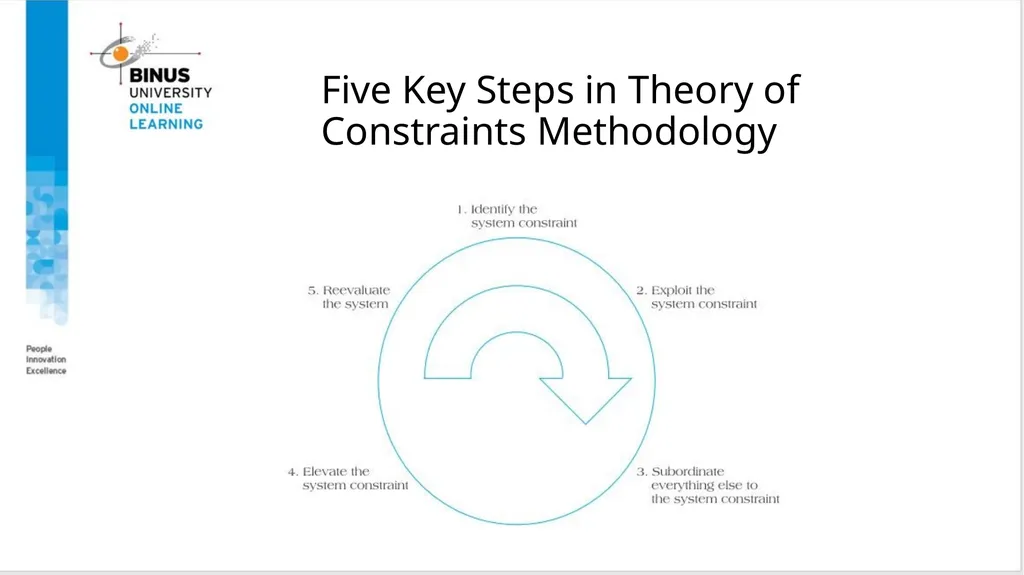
Identify the constraint.
Exploit the constraint.
Subordinate the system constraint.
Elevate the constraint.
Repeat the process.<br>
slide20. Five Key Steps in Theory of Constraints Methodology<br>
slide21. Critical Chain Solution to Project Scheduling<br>
slide22. Critical Chain Solutions Central Limit Theorem
Activity durations estimated at 50% level
Buffer reapplied at project level
Goldratt rule of thumb (50%)
Newbold formula
Feeder buffers for non-critical paths<br>
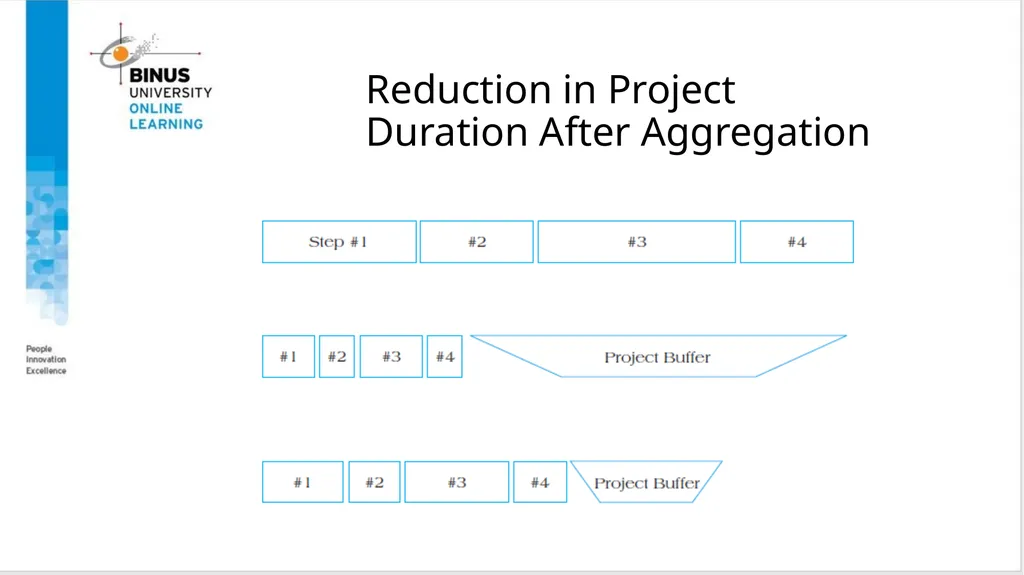
slide23. Reduction in Project Duration After Aggregation<br>
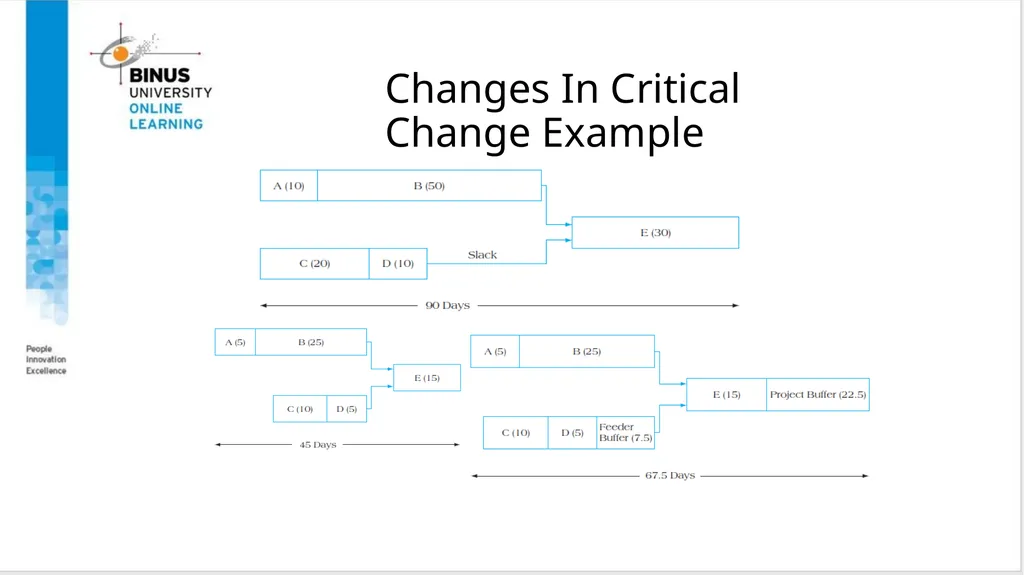
slide24. Developing The Critical Chain Activity Network Resource leveling is not required because resources are leveled within the project in the process of identifying the critical chain.
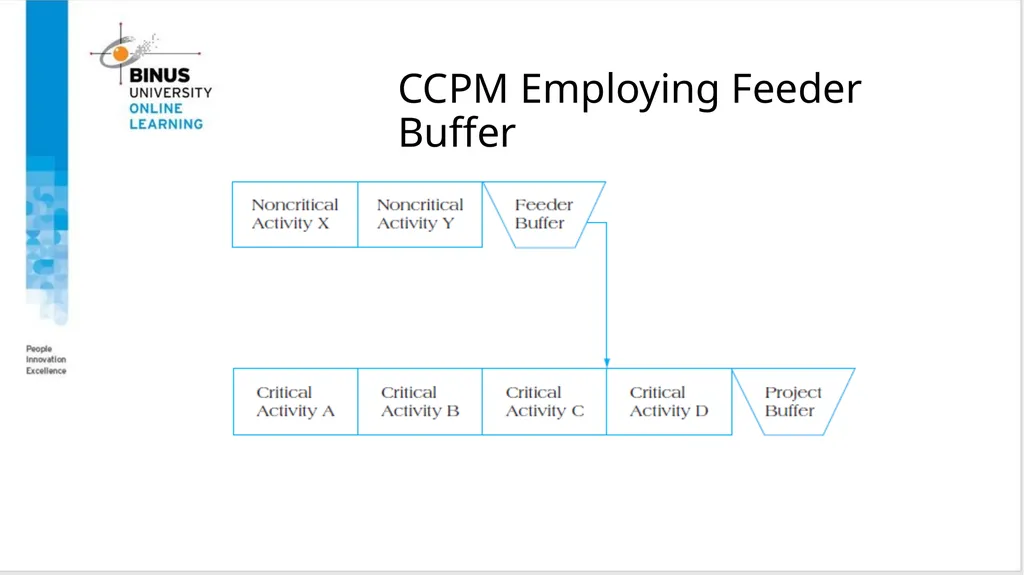
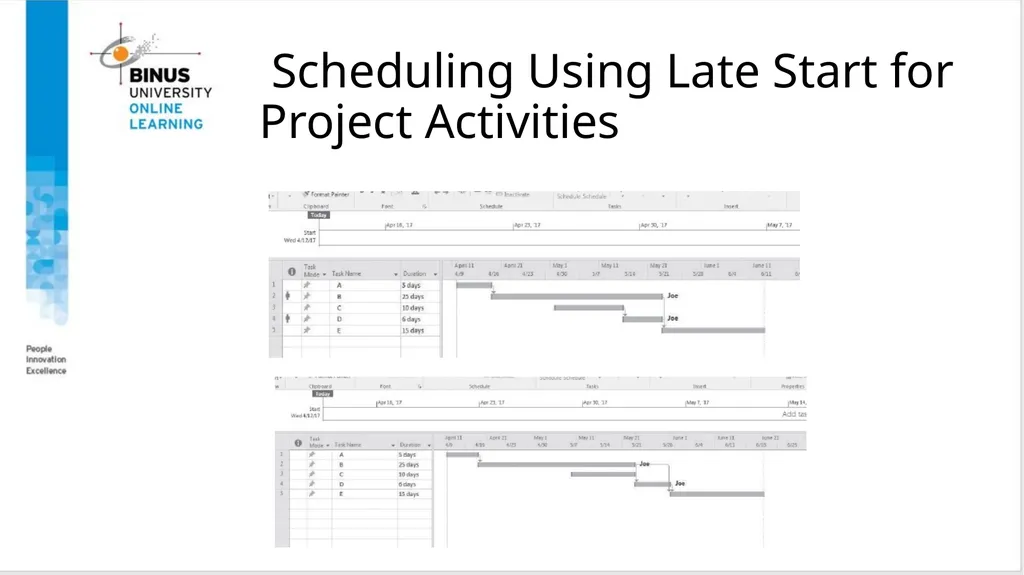
CCPM advocates putting off all noncritical activities as late as possible, while providing each noncritical path in the network with its own buffer.
Noncritical buffers are referred to as feeder buffers.
Feeding buffer duration is calculated similarly to the process used to create the overall project buffer.<br>
slide25. CCPM Employing Feeder Buffer<br>
slide26. Changes In Critical Change Example<br>
slide27. Critical Chain Solutions to Resource Conflicts<br>
slide28. Scheduling Using Late Start for Project Activities<br>
slide29. Critical chain project portfolio management Capacity constraint buffer (CCP) refers to a safety margin separating different projects scheduled to use the same resource.
Drum buffers are extra safety applied to a project immediately before the use of the constrained resource to ensure that the resource will not be starved for work.<br>
slide30. Critical Chain Project Management<br>
slide31. Critiques of CCPM Lack of project milestones
The “newness” of CCPM
CCPM argues for dedicated resources
Evidence of success with CCPM is still almost exclusively anecdotal and based on single-case studies
A review of CCPM contended that although it does offer several valuable concepts
Critics also charge that Goldratt’s evaluation of duration estimation is overly negative and critical
underestimates the difficulties associated
with achieving the type of corporate wide cultural changes necessary to successfully implement CCPM<br>
slide32. Reference Jeffrey Pinto, 2021, Project Management Achieving Competitive Advantage, Fifth Edition, Pearson Education Limited, United Kingdom, ISBN 978-1-292-26914-6. Chapter 11<br>

Topic 11<br>
slide2. LEARNING OUTCOMES After completing this chapter, you should be able to:
Understand why Agile Project Management was developed and its advantages in planning for certain types of projects.
Understand the key features of the Extreme Programming (XP) planning process for software projects.
Understand the logic behind Theory of Constraints and its implications for Critical Chain scheduling.
Distinguish between critical path and critical chain project scheduling techniques.
Understand how critical chain methodology resolves project resource conflicts.
Apply critical chain project management to project portfolios.<br>
slide3. Outline Agile Project Management
Extreme Programming
Theory of Constraints dan Critical Chain
The Critical Chain Solution to Project Scheduling
Critical Chain Solutions to Resource Conflicts
Critical Chain Project Management<br>
slide4. Agile Project Management<br>
slide5. Agile PM Agile Project Management (Agile PM) reflects a new era in project planning that places a premium on flexibility and evolving customer requirements throughout the development process.
Planning the work and then working the plan
Customer needs may evolve and change over course of project
Importance of evolving customer needs leads to incremental, iterative planning process<br>
slide6. Waterfall Model for Project Development<br>
slide7. Waterfall Model Waterfall model Waterfall project development process works well when:
Requirements are very well understood and fixed at the outset of the project.
Product definition is stable and not subject to changes.
Technology is understood.
Ample resources with required expertise are available freely.
The project is of short duration.<br>
slide8. Unique feature of Agile PM Agile PM, referred to as Scrum, recognizes mistakes of assuming once initial project conceptualization and planning are completed, project will be executed to original specifications.
Example, software projects are prone to constant changes.
Flexible, iterative system designed for the challenge of managing projects in midst of change and uncertainty
“Rolling wave” process of continuous plan-execute-evaluate cycle
Emphasis on adaptation, flexibility, and coordinated efforts of multiple disciplines<br>
slide9. Scrum Process for Product Development<br>
slide10. Key Terms In Agile PM Sprint – one iteration of the Agile planning and executing cycle.
Scrum – the development strategy agreed to by all key members of the project.
Time-box – the length of any particular sprint, fixed in advance, during the Scrum meeting.
User stories – short explanation of the end user that captures what they do or what they need from the project under development
Scrum Master – person on the project team responsible for moving the project forward between iterations, removing impediments, or resolving differences of opinions between major stakeholders.<br>
slide11. Key Terms In Agile PM Sprint backlog – the set of product backlog items selected for the Sprint, plus a plan for delivering the Sprint Goal.
Burndown chart – remaining work in the Sprint backlog.
Product owner – person representing the stakeholders and serving as the “voice of the customer.”
Development team – organizational unit responsible for delivering the product at the end of the iteration (Sprint).
Product backlog – a prioritized list of everything that might be needed in completed product and source of requirements for any changes.
Work backlog – evolving, prioritized queue of business and technical functionality that needs to be developed into a system.<br>
slide12. Steps in Agile Sprint Planning
Daily Scrums
Development Work
Sprint Review
Sprint Retrospective<br>
slide13. Stages in a Sprint<br>
slide14. Keys To Success With Agile Cross-functional teams
Empowered team members
Shared accountability
Servant leadership
Continuous flow of value.
Attention to technical excellence
Rapid risk reduction
Early feedback and adaptation
Total openness and transparency
Trust<br>
slide15. Problems With Agile Active user involvement and close collaboration of the Scrum team are critical throughout the development cycle.
Evolving requirements can lead to potential for scope creep.
It is harder to predict at beginning of project what the end product will actually resemble.
Agile requirements are kept to minimum, which can lead to confusion about the final outcomes.
Testing is integrated throughout lifecycle, which can add cost to project.
Frequent delivery of project features puts a burden on product owners.
If it is misapplied to traditional projects, it can be an expensive approach without delivering benefits.<br>
slide16. Extreme programming (XP)<br>
slide17. Extreme programming (XP) A more aggressive form of Scrum; a software development methodology intended to improve software quality and responsiveness to changing customer requirements.
Two guiding features of XP:
Refactoring
Pair programming
Advantage of XP is whole process is visible and accountable.
Agile PM and XP have grown out of need to combine the discipline of project management methodology with the needs of modern enterprise to respond quickly.<br>
slide18. Theory of Constraints & Critical Chain Project Scheduling<br>
slide19. Theory Of Constraints (TOC) A constraint limits any system’s output.
The Goal – Goldratt
TOC Methodology
Identify the constraint.
Exploit the constraint.
Subordinate the system constraint.
Elevate the constraint.
Repeat the process.<br>
slide20. Five Key Steps in Theory of Constraints Methodology<br>
slide21. Critical Chain Solution to Project Scheduling<br>
slide22. Critical Chain Solutions Central Limit Theorem
Activity durations estimated at 50% level
Buffer reapplied at project level
Goldratt rule of thumb (50%)
Newbold formula
Feeder buffers for non-critical paths<br>
slide23. Reduction in Project Duration After Aggregation<br>
slide24. Developing The Critical Chain Activity Network Resource leveling is not required because resources are leveled within the project in the process of identifying the critical chain.
CCPM advocates putting off all noncritical activities as late as possible, while providing each noncritical path in the network with its own buffer.
Noncritical buffers are referred to as feeder buffers.
Feeding buffer duration is calculated similarly to the process used to create the overall project buffer.<br>
slide25. CCPM Employing Feeder Buffer<br>
slide26. Changes In Critical Change Example<br>
slide27. Critical Chain Solutions to Resource Conflicts<br>
slide28. Scheduling Using Late Start for Project Activities<br>
slide29. Critical chain project portfolio management Capacity constraint buffer (CCP) refers to a safety margin separating different projects scheduled to use the same resource.
Drum buffers are extra safety applied to a project immediately before the use of the constrained resource to ensure that the resource will not be starved for work.<br>
slide30. Critical Chain Project Management<br>
slide31. Critiques of CCPM Lack of project milestones
The “newness” of CCPM
CCPM argues for dedicated resources
Evidence of success with CCPM is still almost exclusively anecdotal and based on single-case studies
A review of CCPM contended that although it does offer several valuable concepts
Critics also charge that Goldratt’s evaluation of duration estimation is overly negative and critical
underestimates the difficulties associated
with achieving the type of corporate wide cultural changes necessary to successfully implement CCPM<br>
slide32. Reference Jeffrey Pinto, 2021, Project Management Achieving Competitive Advantage, Fifth Edition, Pearson Education Limited, United Kingdom, ISBN 978-1-292-26914-6. Chapter 11<br>