
Provider Directory Advisory Group Meeting
PM
Published · 29 slides · 0 views
1 / 1

Description
Provider Directory Advisory Group Meeting September 20, 2017 Welcome! Roll call and agenda review 5 min Provider Directory updates 10 min HIT Commons update 25 min Common Credentialing update 15 min Provider Directory procurement 5 min
Related Topics
Share
Embed code
Download this presentation From Below
"Provider Directory Advisory Group Meeting" is the property of its rightful owner. Permission is granted to download and print the materials on this website for personal, non-commercial use only, and to display it on your personal computer provided you do not modify the materials and that you retain all copyright notices contained in the materials. By downloading content from our website, you accept the terms of this agreement.
Presentation Transcript
01
Provider Directory Advisory Group Meeting September 20, 2017<br>
02
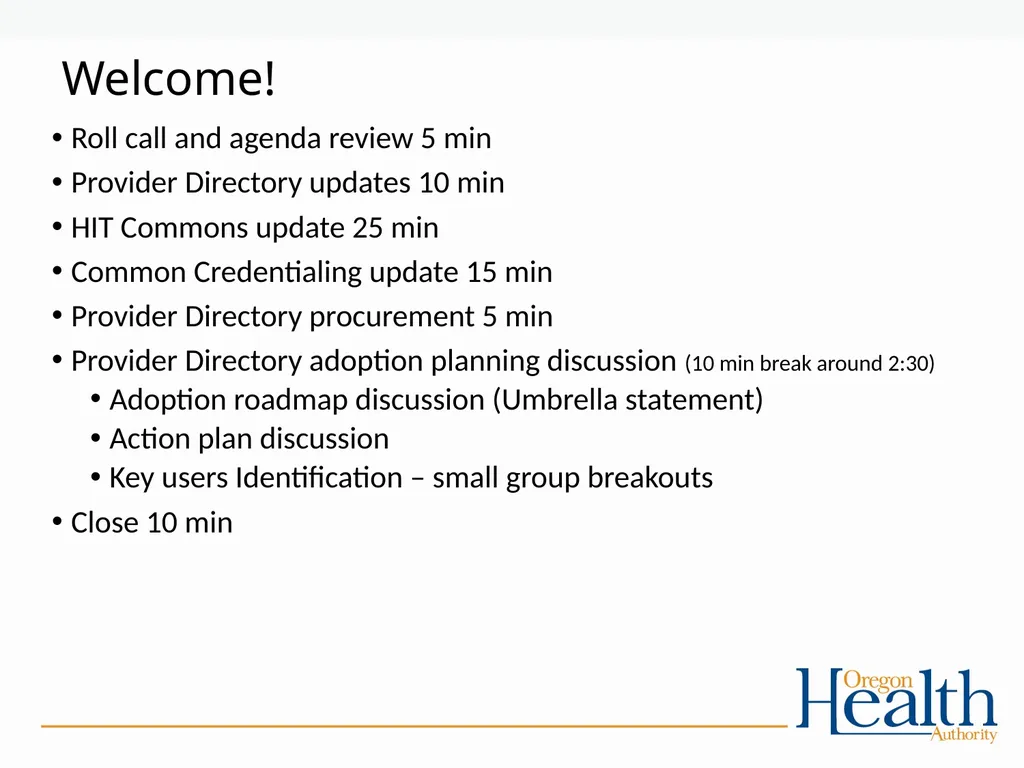
Welcome! Roll call and agenda review 5 min
Provider Directory updates 10 min
HIT Commons update 25 min
Common Credentialing update 15 min
Provider Directory procurement 5 min
Provider Directory adoption planning discussion (10 min break around 2:30)
Adoption roadmap discussion (Umbrella statement)
Action plan discussion
Key users Identification – small group breakouts
Close 10 min<br>
Provider Directory updates 10 min
HIT Commons update 25 min
Common Credentialing update 15 min
Provider Directory procurement 5 min
Provider Directory adoption planning discussion (10 min break around 2:30)
Adoption roadmap discussion (Umbrella statement)
Action plan discussion
Key users Identification – small group breakouts
Close 10 min<br>
03
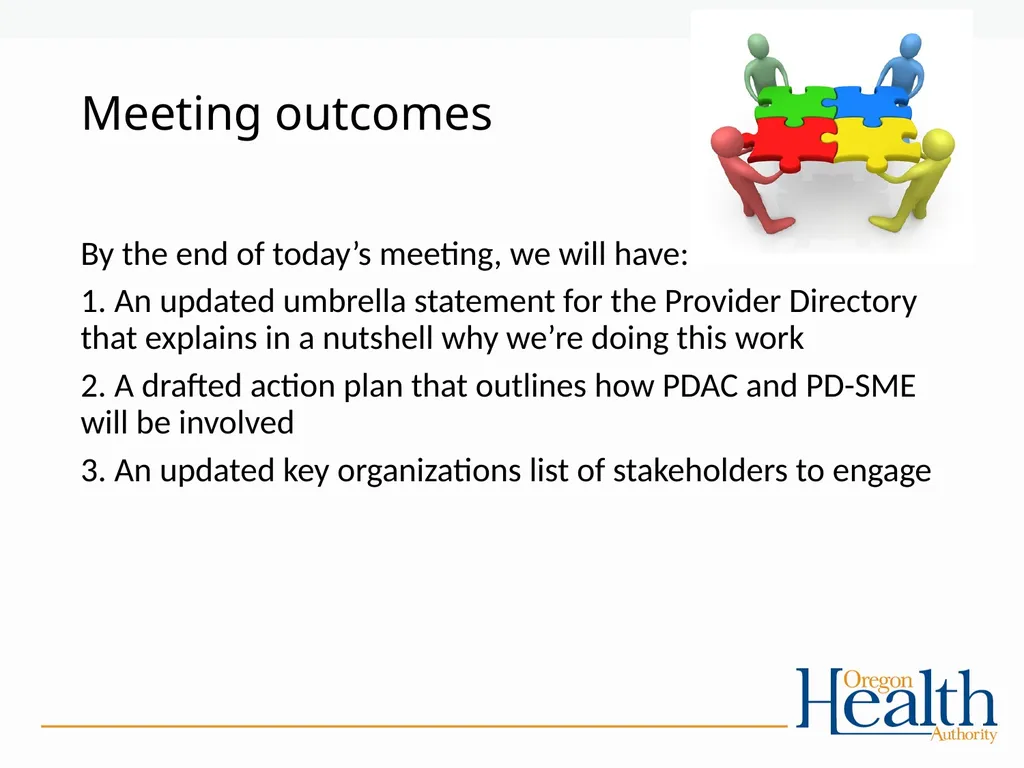
Meeting outcomes By the end of today’s meeting, we will have:
1. An updated umbrella statement for the Provider Directory that explains in a nutshell why we’re doing this work
2. A drafted action plan that outlines how PDAC and PD-SME will be involved
3. An updated key organizations list of stakeholders to engage<br>
1. An updated umbrella statement for the Provider Directory that explains in a nutshell why we’re doing this work
2. A drafted action plan that outlines how PDAC and PD-SME will be involved
3. An updated key organizations list of stakeholders to engage<br>
04
Provider Directory Updates Karen Hale<br>
05
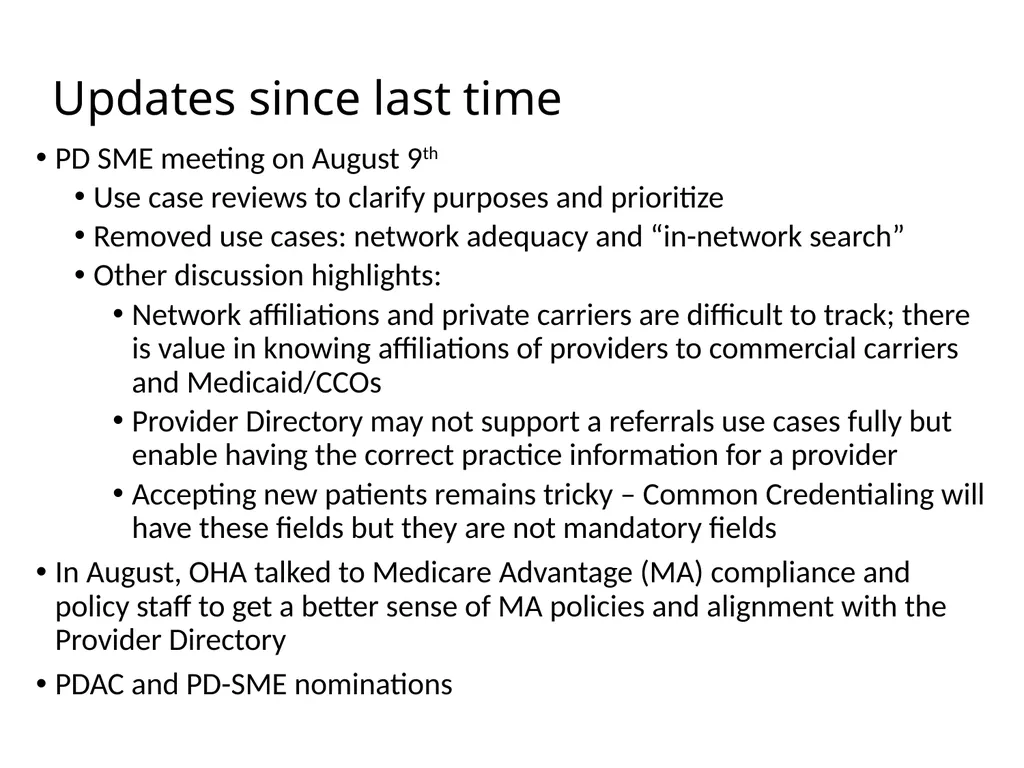
Updates since last time PD SME meeting on August 9th
Use case reviews to clarify purposes and prioritize
Removed use cases: network adequacy and “in-network search”
Other discussion highlights:
Network affiliations and private carriers are difficult to track; there is value in knowing affiliations of providers to commercial carriers and Medicaid/CCOs
Provider Directory may not support a referrals use cases fully but enable having the correct practice information for a provider
Accepting new patients remains tricky – Common Credentialing will have these fields but they are not mandatory fields
In August, OHA talked to Medicare Advantage (MA) compliance and policy staff to get a better sense of MA policies and alignment with the Provider Directory
PDAC and PD-SME nominations<br>
Use case reviews to clarify purposes and prioritize
Removed use cases: network adequacy and “in-network search”
Other discussion highlights:
Network affiliations and private carriers are difficult to track; there is value in knowing affiliations of providers to commercial carriers and Medicaid/CCOs
Provider Directory may not support a referrals use cases fully but enable having the correct practice information for a provider
Accepting new patients remains tricky – Common Credentialing will have these fields but they are not mandatory fields
In August, OHA talked to Medicare Advantage (MA) compliance and policy staff to get a better sense of MA policies and alignment with the Provider Directory
PDAC and PD-SME nominations<br>
06
HIT Commons:
Update and Progress Sean Carey
Lead Analyst, OHA<br>
Lead Analyst, OHA<br>
07
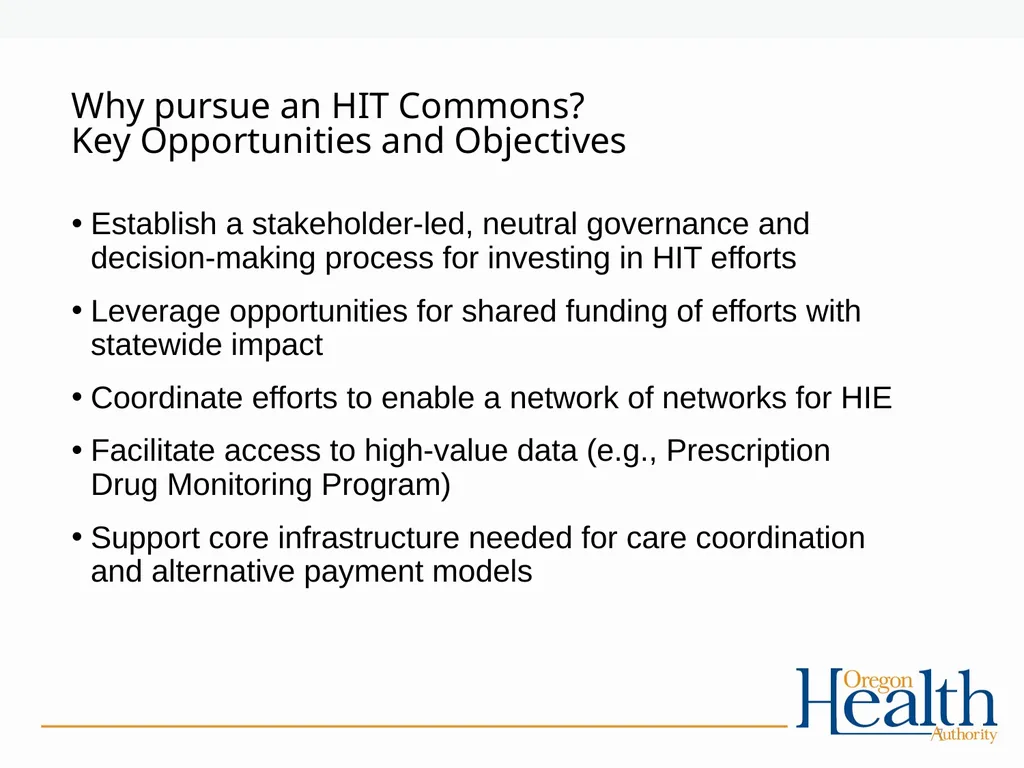
Establish a stakeholder-led, neutral governance and decision-making process for investing in HIT efforts
Leverage opportunities for shared funding of efforts with statewide impact
Coordinate efforts to enable a network of networks for HIE
Facilitate access to high-value data (e.g., Prescription Drug Monitoring Program)
Support core infrastructure needed for care coordination and alternative payment models Why pursue an HIT Commons? Key Opportunities and Objectives 7<br>
Leverage opportunities for shared funding of efforts with statewide impact
Coordinate efforts to enable a network of networks for HIE
Facilitate access to high-value data (e.g., Prescription Drug Monitoring Program)
Support core infrastructure needed for care coordination and alternative payment models Why pursue an HIT Commons? Key Opportunities and Objectives 7<br>
08
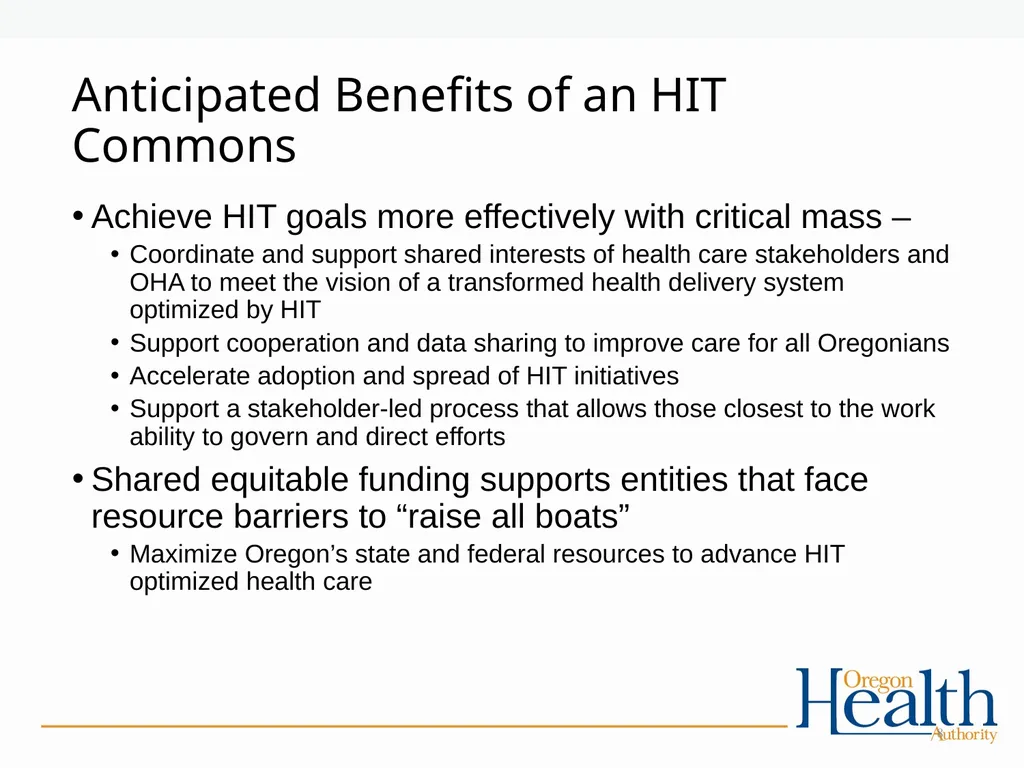
Achieve HIT goals more effectively with critical mass –
Coordinate and support shared interests of health care stakeholders and OHA to meet the vision of a transformed health delivery system optimized by HIT
Support cooperation and data sharing to improve care for all Oregonians
Accelerate adoption and spread of HIT initiatives
Support a stakeholder-led process that allows those closest to the work ability to govern and direct efforts
Shared equitable funding supports entities that face resource barriers to “raise all boats”
Maximize Oregon’s state and federal resources to advance HIT optimized health care Anticipated Benefits of an HIT Commons 8<br>
Coordinate and support shared interests of health care stakeholders and OHA to meet the vision of a transformed health delivery system optimized by HIT
Support cooperation and data sharing to improve care for all Oregonians
Accelerate adoption and spread of HIT initiatives
Support a stakeholder-led process that allows those closest to the work ability to govern and direct efforts
Shared equitable funding supports entities that face resource barriers to “raise all boats”
Maximize Oregon’s state and federal resources to advance HIT optimized health care Anticipated Benefits of an HIT Commons 8<br>
09
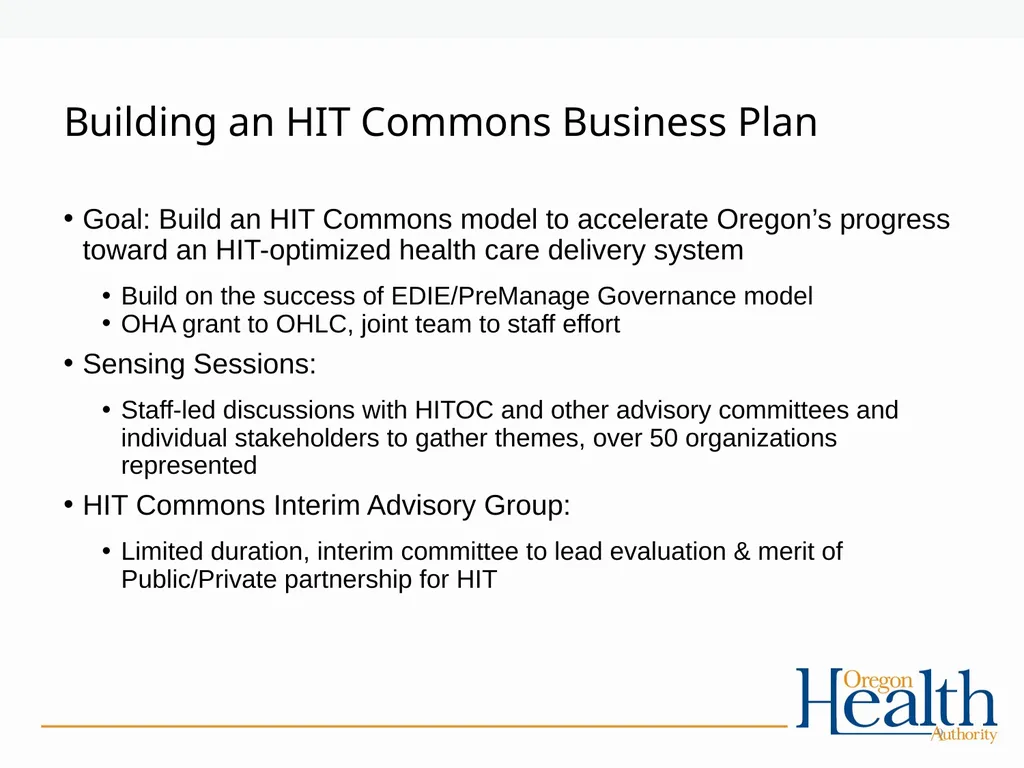
Building an HIT Commons Business Plan Goal: Build an HIT Commons model to accelerate Oregon’s progress toward an HIT-optimized health care delivery system
Build on the success of EDIE/PreManage Governance model
OHA grant to OHLC, joint team to staff effort
Sensing Sessions:
Staff-led discussions with HITOC and other advisory committees and individual stakeholders to gather themes, over 50 organizations represented
HIT Commons Interim Advisory Group:
Limited duration, interim committee to lead evaluation & merit of Public/Private partnership for HIT 9<br>
Build on the success of EDIE/PreManage Governance model
OHA grant to OHLC, joint team to staff effort
Sensing Sessions:
Staff-led discussions with HITOC and other advisory committees and individual stakeholders to gather themes, over 50 organizations represented
HIT Commons Interim Advisory Group:
Limited duration, interim committee to lead evaluation & merit of Public/Private partnership for HIT 9<br>
10
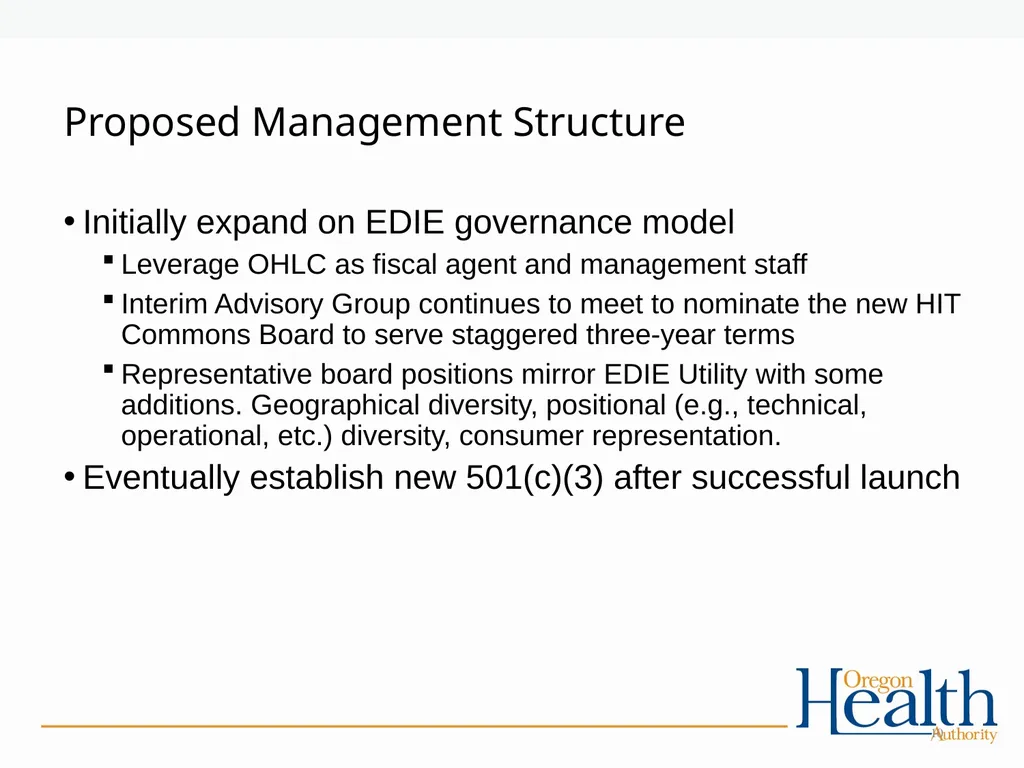
Proposed Management Structure Initially expand on EDIE governance model
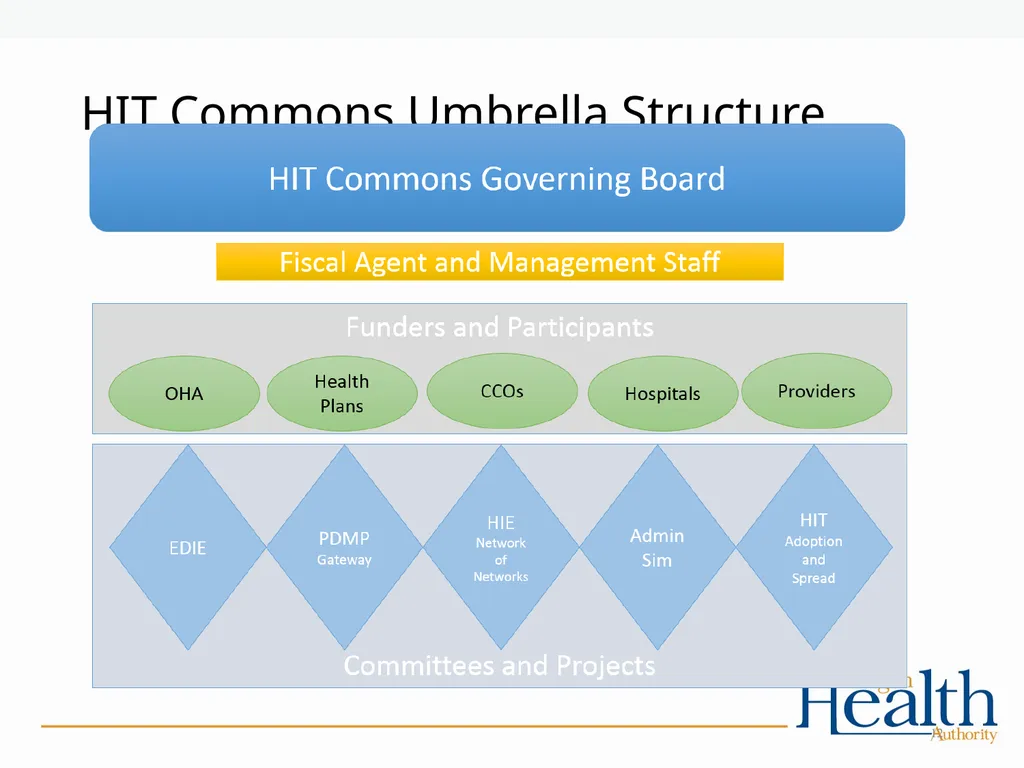
Leverage OHLC as fiscal agent and management staff
Interim Advisory Group continues to meet to nominate the new HIT Commons Board to serve staggered three-year terms
Representative board positions mirror EDIE Utility with some additions. Geographical diversity, positional (e.g., technical, operational, etc.) diversity, consumer representation.
Eventually establish new 501(c)(3) after successful launch 10<br>
Leverage OHLC as fiscal agent and management staff
Interim Advisory Group continues to meet to nominate the new HIT Commons Board to serve staggered three-year terms
Representative board positions mirror EDIE Utility with some additions. Geographical diversity, positional (e.g., technical, operational, etc.) diversity, consumer representation.
Eventually establish new 501(c)(3) after successful launch 10<br>
11
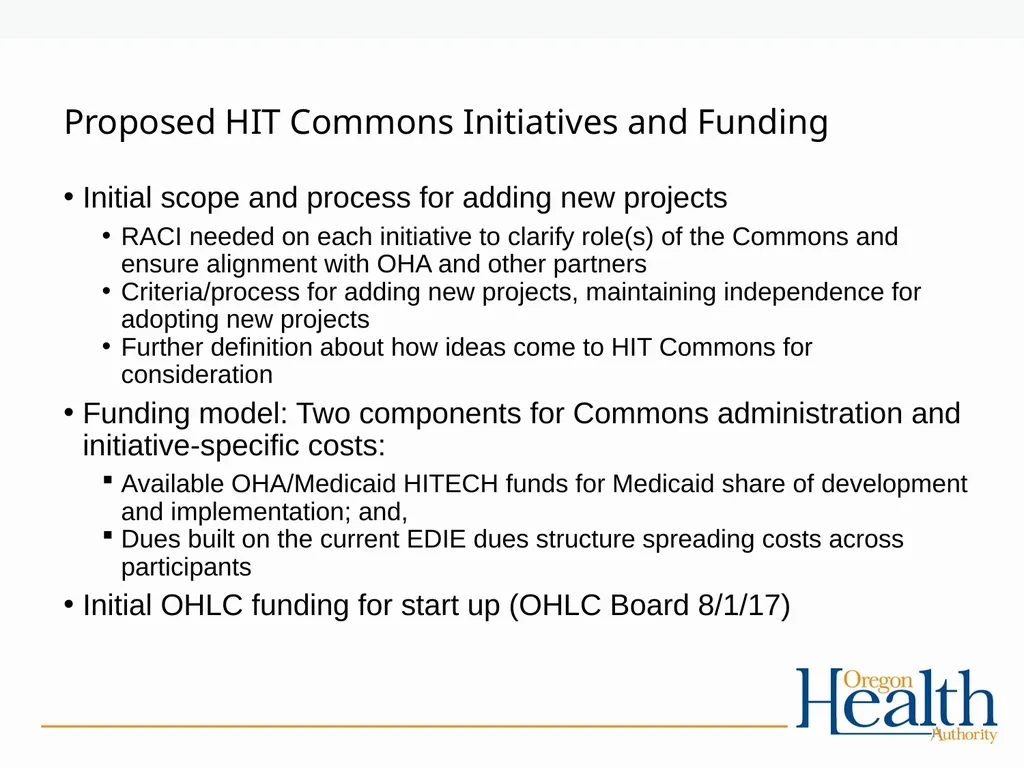
Proposed HIT Commons Initiatives and Funding Initial scope and process for adding new projects
RACI needed on each initiative to clarify role(s) of the Commons and ensure alignment with OHA and other partners
Criteria/process for adding new projects, maintaining independence for adopting new projects
Further definition about how ideas come to HIT Commons for consideration
Funding model: Two components for Commons administration and initiative-specific costs:
Available OHA/Medicaid HITECH funds for Medicaid share of development and implementation; and,
Dues built on the current EDIE dues structure spreading costs across participants
Initial OHLC funding for start up (OHLC Board 8/1/17) 11<br>
RACI needed on each initiative to clarify role(s) of the Commons and ensure alignment with OHA and other partners
Criteria/process for adding new projects, maintaining independence for adopting new projects
Further definition about how ideas come to HIT Commons for consideration
Funding model: Two components for Commons administration and initiative-specific costs:
Available OHA/Medicaid HITECH funds for Medicaid share of development and implementation; and,
Dues built on the current EDIE dues structure spreading costs across participants
Initial OHLC funding for start up (OHLC Board 8/1/17) 11<br>
12
HIT Commons Umbrella Structure 12<br>
13
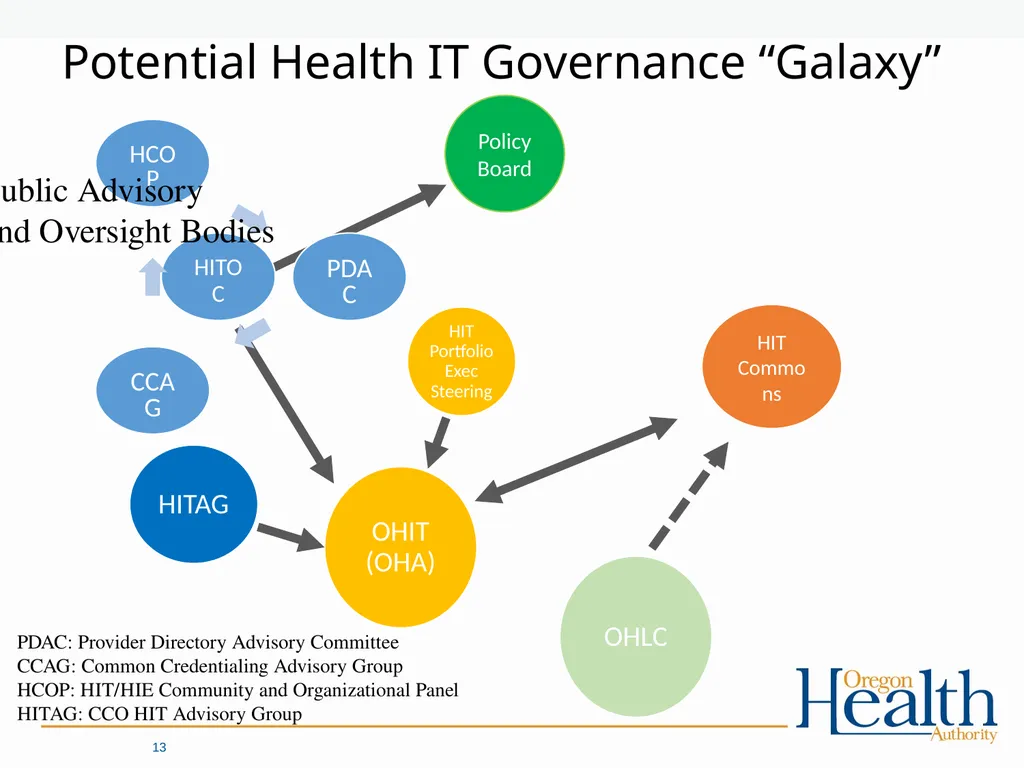
Potential Health IT Governance “Galaxy” 13 Public Advisory
and Oversight Bodies OHIT (OHA) Policy Board HIT Portfolio Exec Steering OHLC HITAG PDAC: Provider Directory Advisory Committee
CCAG: Common Credentialing Advisory Group
HCOP: HIT/HIE Community and Organizational Panel
HITAG: CCO HIT Advisory Group<br>
and Oversight Bodies OHIT (OHA) Policy Board HIT Portfolio Exec Steering OHLC HITAG PDAC: Provider Directory Advisory Committee
CCAG: Common Credentialing Advisory Group
HCOP: HIT/HIE Community and Organizational Panel
HITAG: CCO HIT Advisory Group<br>
14
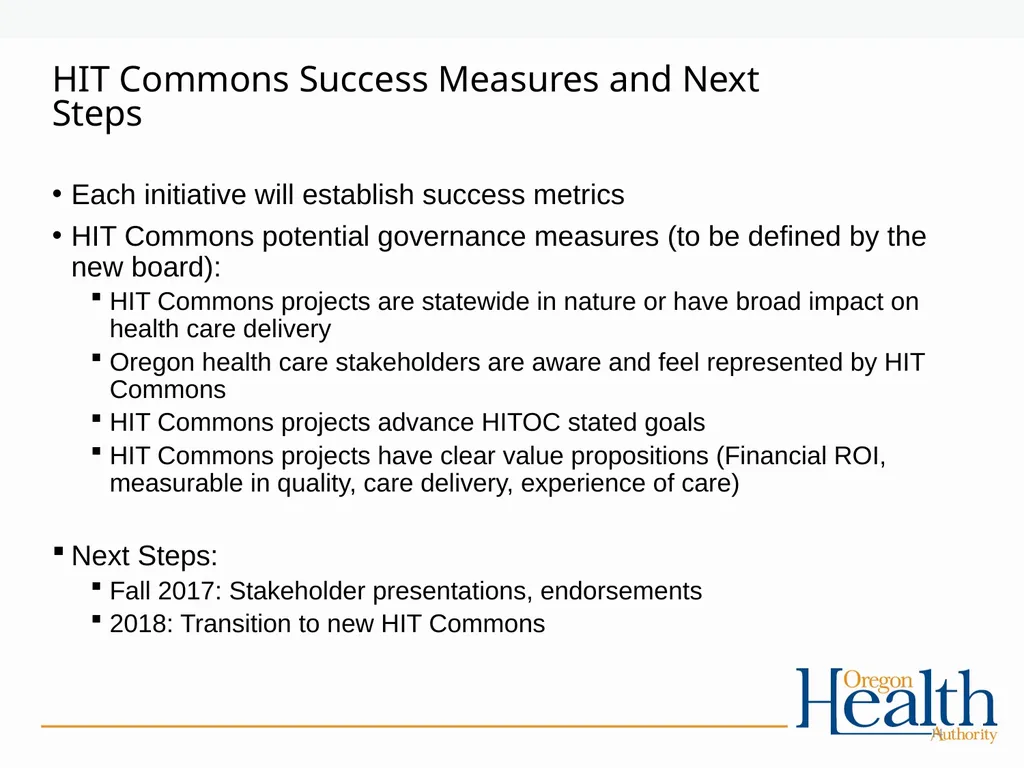
Each initiative will establish success metrics
HIT Commons potential governance measures (to be defined by the new board):
HIT Commons projects are statewide in nature or have broad impact on health care delivery
Oregon health care stakeholders are aware and feel represented by HIT Commons
HIT Commons projects advance HITOC stated goals
HIT Commons projects have clear value propositions (Financial ROI, measurable in quality, care delivery, experience of care)
Next Steps:
Fall 2017: Stakeholder presentations, endorsements
2018: Transition to new HIT Commons HIT Commons Success Measures and Next Steps 14<br>
HIT Commons potential governance measures (to be defined by the new board):
HIT Commons projects are statewide in nature or have broad impact on health care delivery
Oregon health care stakeholders are aware and feel represented by HIT Commons
HIT Commons projects advance HITOC stated goals
HIT Commons projects have clear value propositions (Financial ROI, measurable in quality, care delivery, experience of care)
Next Steps:
Fall 2017: Stakeholder presentations, endorsements
2018: Transition to new HIT Commons HIT Commons Success Measures and Next Steps 14<br>
15
Common Credentialing Update Melissa Isavoran, Common Credentialing Program Manager 15<br>
16
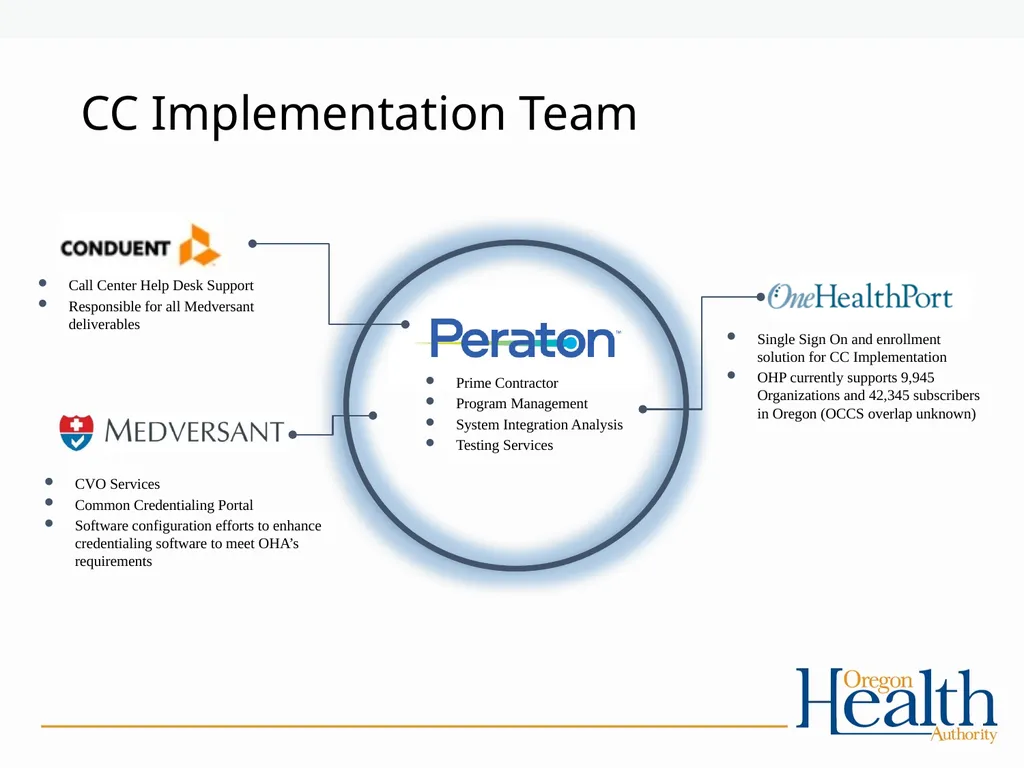
CC Implementation Team Call Center Help Desk Support
Responsible for all Medversant deliverables Single Sign On and enrollment solution for CC Implementation
OHP currently supports 9,945 Organizations and 42,345 subscribers in Oregon (OCCS overlap unknown) Prime Contractor
Program Management
System Integration Analysis
Testing Services CVO Services
Common Credentialing Portal
Software configuration efforts to enhance credentialing software to meet OHA’s requirements<br>
Responsible for all Medversant deliverables Single Sign On and enrollment solution for CC Implementation
OHP currently supports 9,945 Organizations and 42,345 subscribers in Oregon (OCCS overlap unknown) Prime Contractor
Program Management
System Integration Analysis
Testing Services CVO Services
Common Credentialing Portal
Software configuration efforts to enhance credentialing software to meet OHA’s requirements<br>
17
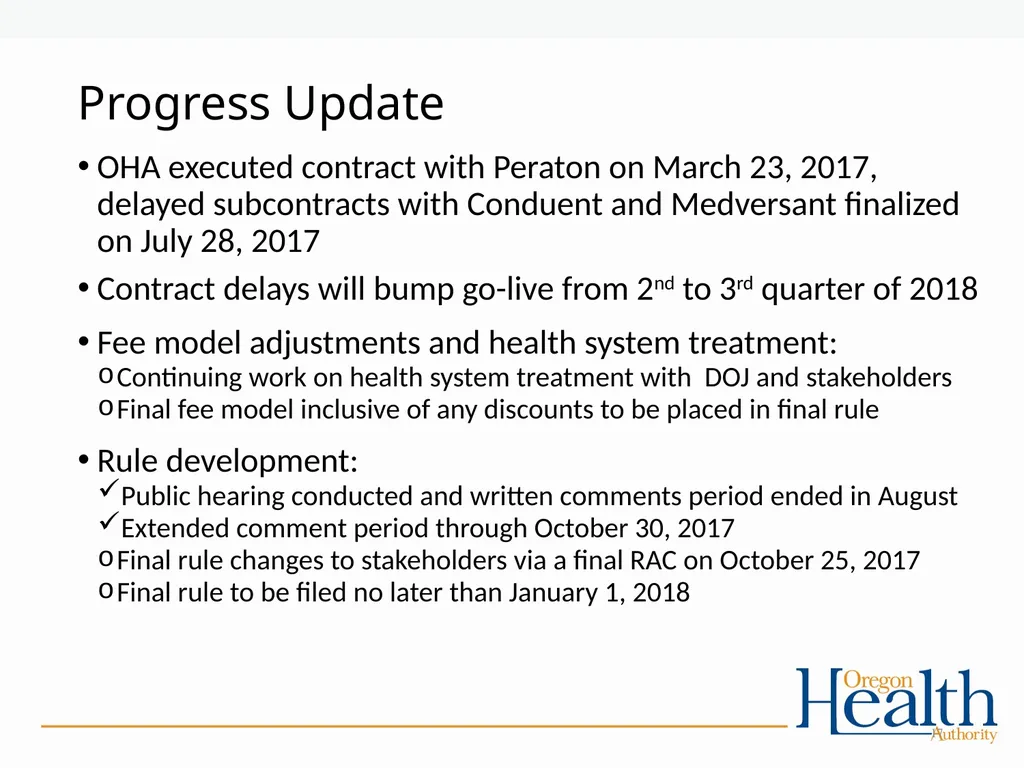
Progress Update OHA executed contract with Peraton on March 23, 2017, delayed subcontracts with Conduent and Medversant finalized on July 28, 2017
Contract delays will bump go-live from 2nd to 3rd quarter of 2018
Fee model adjustments and health system treatment:
Continuing work on health system treatment with DOJ and stakeholders
Final fee model inclusive of any discounts to be placed in final rule
Rule development:
Public hearing conducted and written comments period ended in August
Extended comment period through October 30, 2017
Final rule changes to stakeholders via a final RAC on October 25, 2017
Final rule to be filed no later than January 1, 2018 17<br>
Contract delays will bump go-live from 2nd to 3rd quarter of 2018
Fee model adjustments and health system treatment:
Continuing work on health system treatment with DOJ and stakeholders
Final fee model inclusive of any discounts to be placed in final rule
Rule development:
Public hearing conducted and written comments period ended in August
Extended comment period through October 30, 2017
Final rule changes to stakeholders via a final RAC on October 25, 2017
Final rule to be filed no later than January 1, 2018 17<br>
18
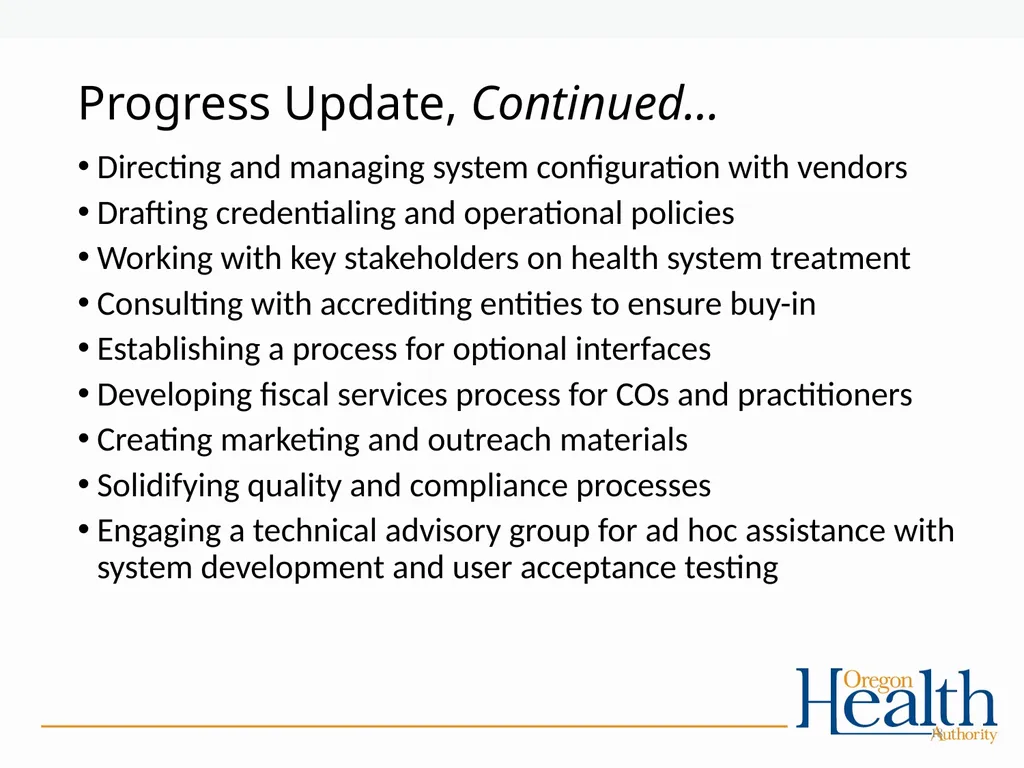
Progress Update, Continued… Directing and managing system configuration with vendors
Drafting credentialing and operational policies
Working with key stakeholders on health system treatment
Consulting with accrediting entities to ensure buy-in
Establishing a process for optional interfaces
Developing fiscal services process for COs and practitioners
Creating marketing and outreach materials
Solidifying quality and compliance processes
Engaging a technical advisory group for ad hoc assistance with system development and user acceptance testing 18<br>
Drafting credentialing and operational policies
Working with key stakeholders on health system treatment
Consulting with accrediting entities to ensure buy-in
Establishing a process for optional interfaces
Developing fiscal services process for COs and practitioners
Creating marketing and outreach materials
Solidifying quality and compliance processes
Engaging a technical advisory group for ad hoc assistance with system development and user acceptance testing 18<br>
19
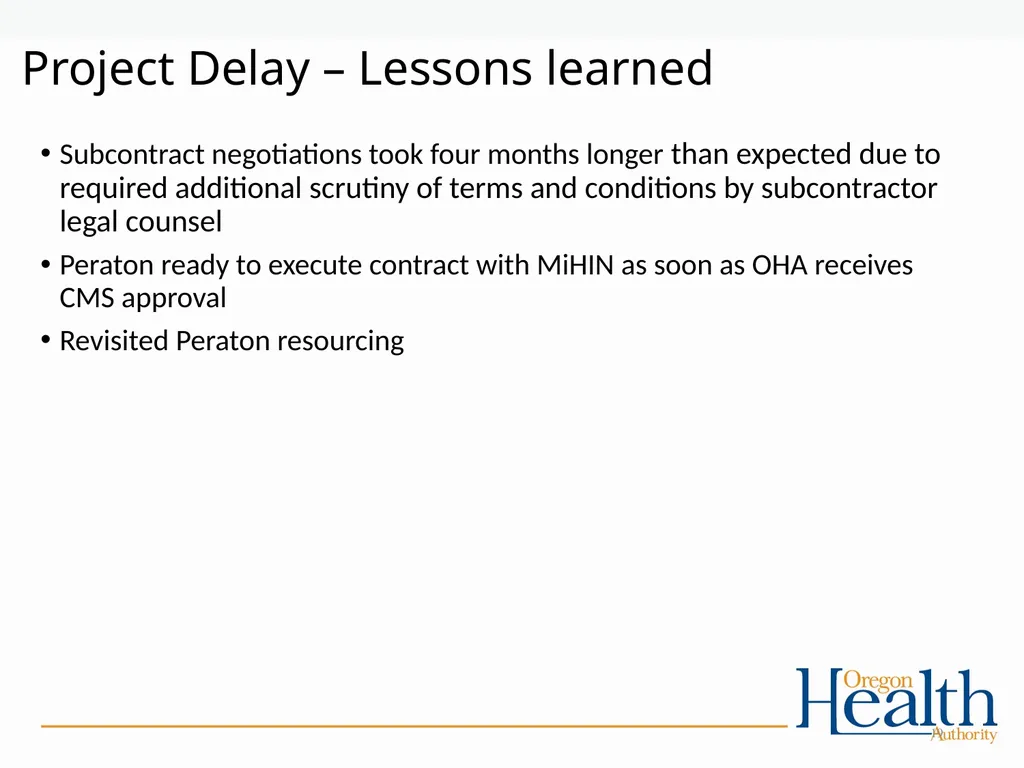
Project Delay – Lessons learned Subcontract negotiations took four months longer than expected due to required additional scrutiny of terms and conditions by subcontractor legal counsel
Peraton ready to execute contract with MiHIN as soon as OHA receives CMS approval
Revisited Peraton resourcing 19<br>
Peraton ready to execute contract with MiHIN as soon as OHA receives CMS approval
Revisited Peraton resourcing 19<br>
20
Provider Directory Implementation update Rachel Ostroy, Implementation Director<br>
21
Adoption Planning<br>
22
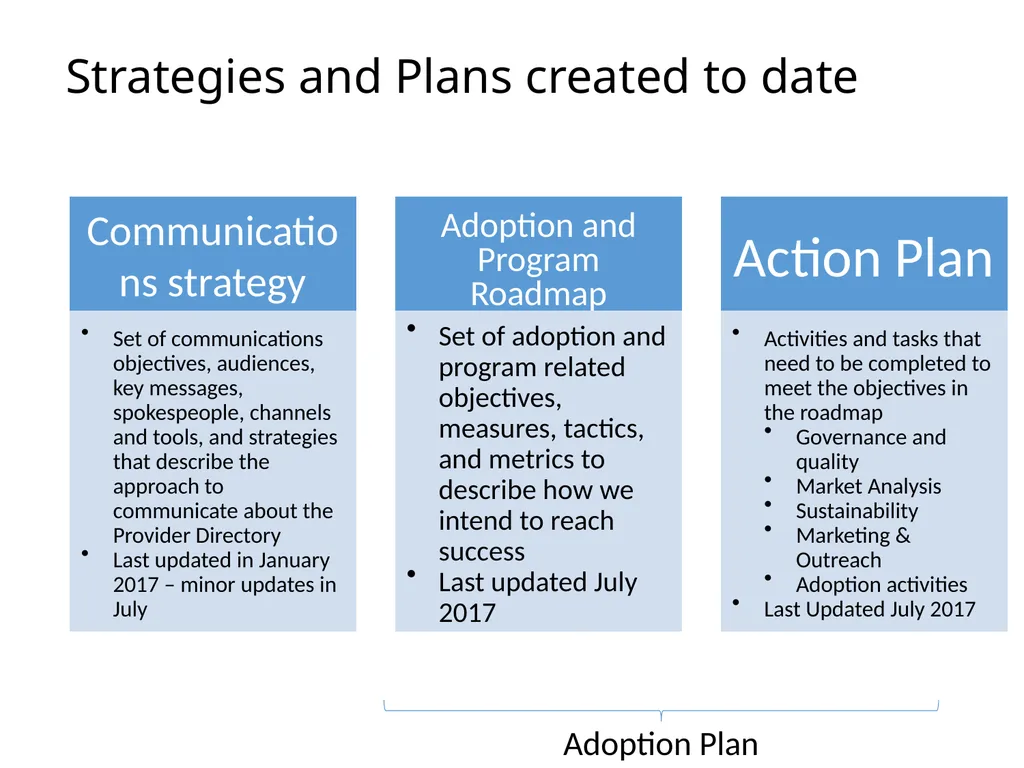
Strategies and Plans created to date Adoption Plan<br>
23
Review and update roadmap New draft based on feedback from last meeting Need to update today<br>
24
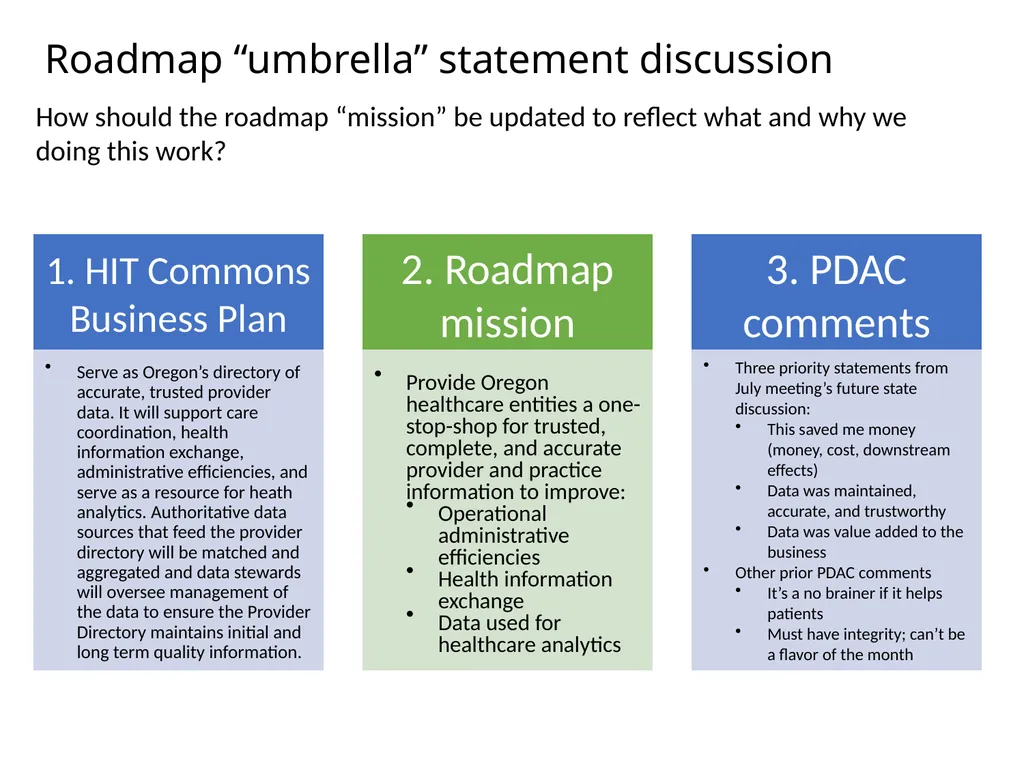
Roadmap “umbrella” statement discussion How should the roadmap “mission” be updated to reflect what and why we doing this work?<br>
25
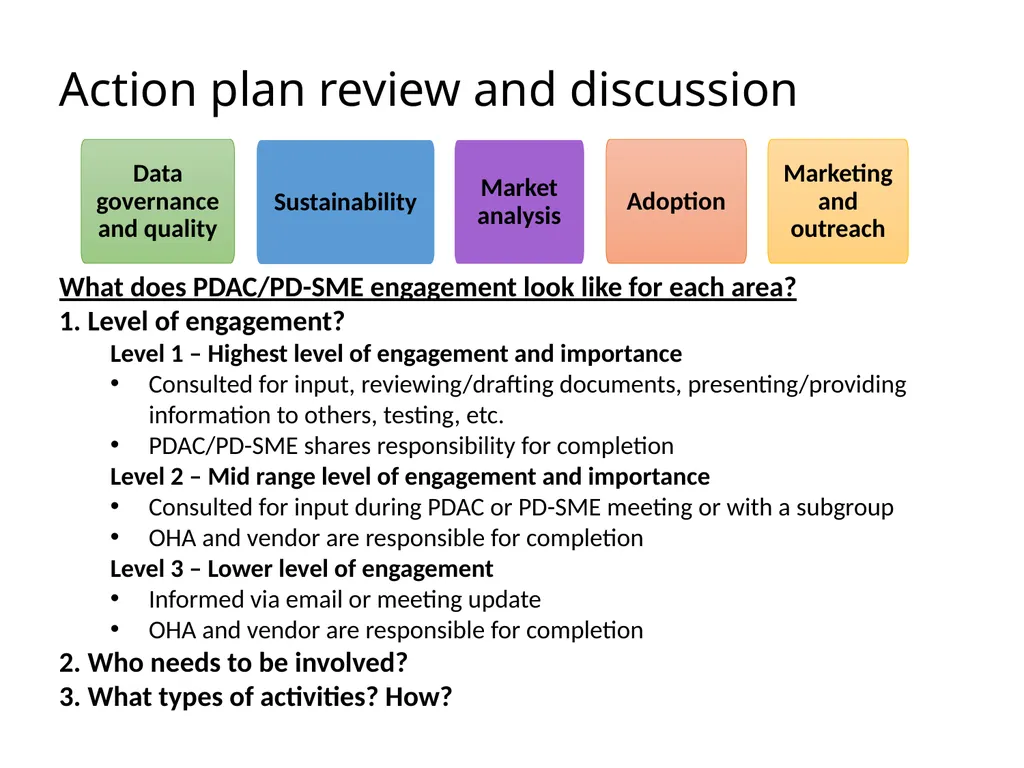
Action plan review and discussion What does PDAC/PD-SME engagement look like for each area?
1. Level of engagement?
Level 1 – Highest level of engagement and importance
Consulted for input, reviewing/drafting documents, presenting/providing information to others, testing, etc.
PDAC/PD-SME shares responsibility for completion
Level 2 – Mid range level of engagement and importance
Consulted for input during PDAC or PD-SME meeting or with a subgroup
OHA and vendor are responsible for completion
Level 3 – Lower level of engagement
Informed via email or meeting update
OHA and vendor are responsible for completion
2. Who needs to be involved?
3. What types of activities? How?<br>
1. Level of engagement?
Level 1 – Highest level of engagement and importance
Consulted for input, reviewing/drafting documents, presenting/providing information to others, testing, etc.
PDAC/PD-SME shares responsibility for completion
Level 2 – Mid range level of engagement and importance
Consulted for input during PDAC or PD-SME meeting or with a subgroup
OHA and vendor are responsible for completion
Level 3 – Lower level of engagement
Informed via email or meeting update
OHA and vendor are responsible for completion
2. Who needs to be involved?
3. What types of activities? How?<br>
26
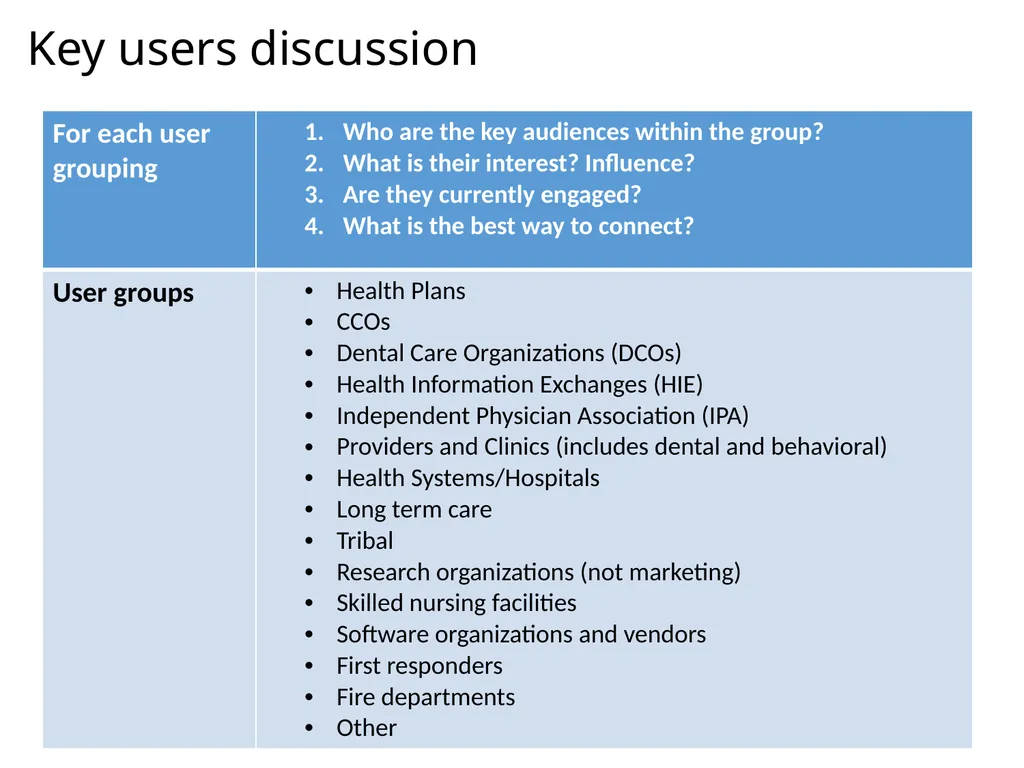
Key users discussion<br>
27
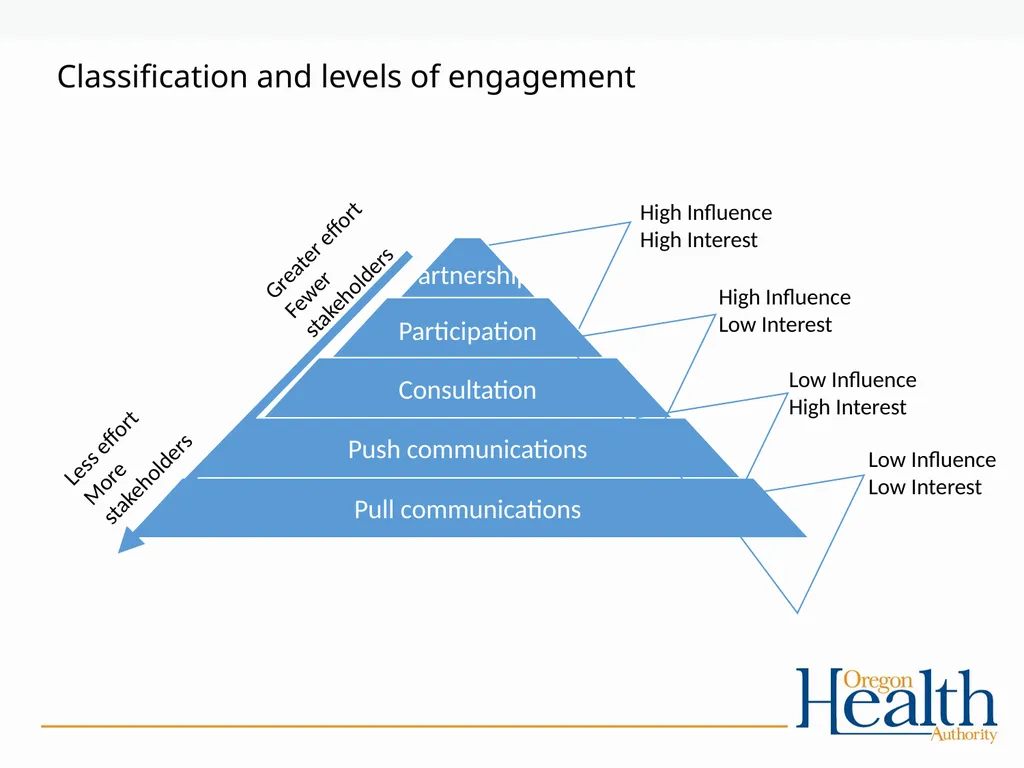
Classification and levels of engagement Less effort
More stakeholders<br>
More stakeholders<br>
28
Public Comment<br>
29
Close What worked well?
How can we improve?
Next PDAC meeting is November 15th
Next PD-SME meeting is October 11th<br>
How can we improve?
Next PDAC meeting is November 15th
Next PD-SME meeting is October 11th<br>