PT Fitness Exercise After a Stroke Aphasia-friendly toolkit Feb 2024 Disclaimer: These materials were created using funding from the Provincial Community Stroke Rehabilitation Initiative and crafted by Aran Oberle, Speech Language
"PT Fitness & Exercise After a Stroke" is the property of its rightful owner. Permission is granted to
download and print the materials on this website for personal, non-commercial use only, and to display it
on your personal computer provided you do not modify the materials and that you retain all copyright
notices contained in the materials. By downloading content from our website, you accept the terms of this
agreement.
Presentation Transcript
01
PT
Fitness & Exercise
After a Stroke
Aphasia-friendly toolkit Feb 2024 Disclaimer: These materials were created using funding from the Provincial Community Stroke Rehabilitation Initiative and crafted by Aran Oberle, Speech Language Pathologist, with input from regional rehab programs. They are not meant to replace professional expertise. Readers should seek advice from a qualified healthcare provider for any concerns. The content of this PowerPoint can be adjusted to suit the needs of healthcare professionals. Users are accountable for confirming the accuracy and suitability of the information for their unique situations.<br>
02
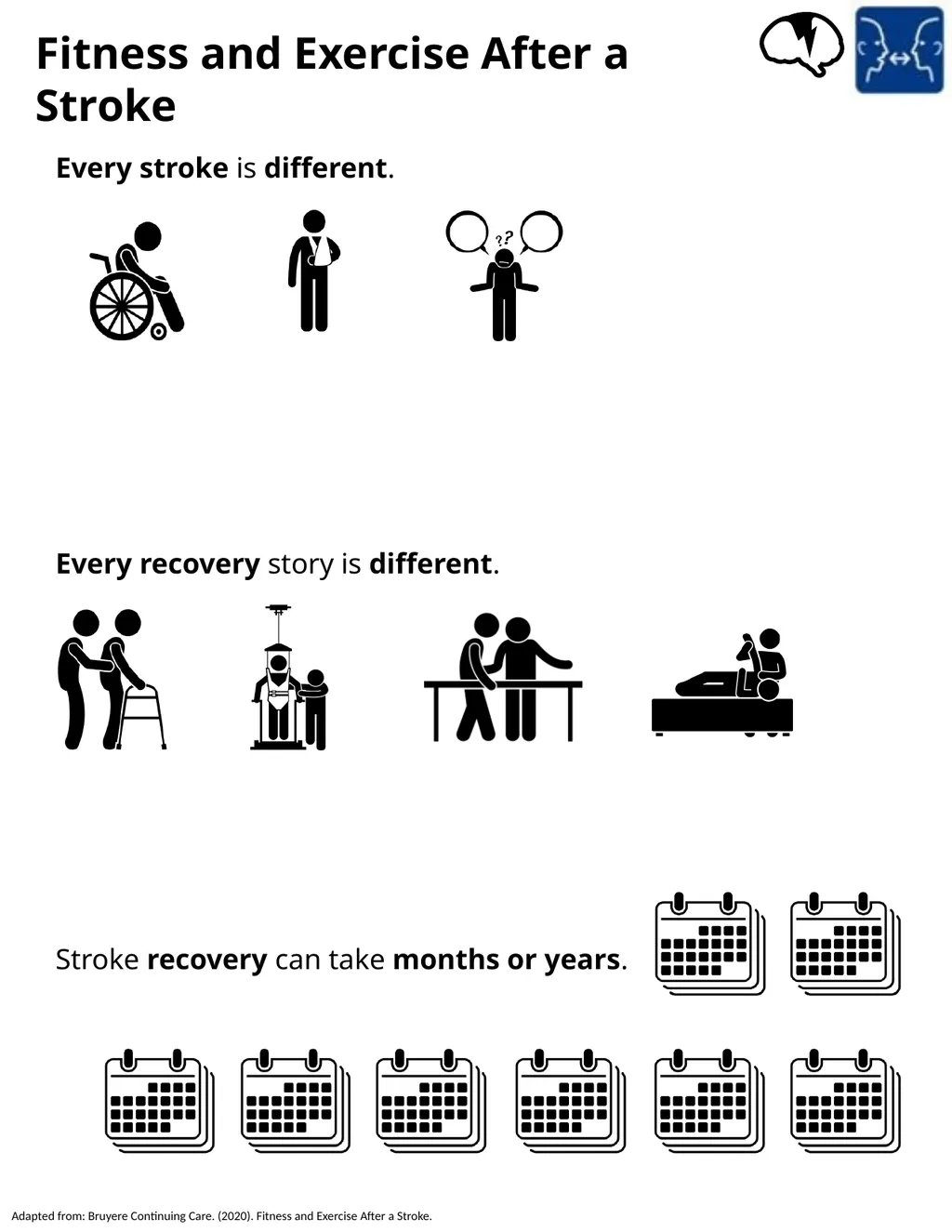
Fitness and Exercise After a Stroke Every stroke is different.
Every recovery story is different.
Stroke recovery can take months or years. Adapted from: Bruyere Continuing Care. (2020). Fitness and Exercise After a Stroke.<br>
03
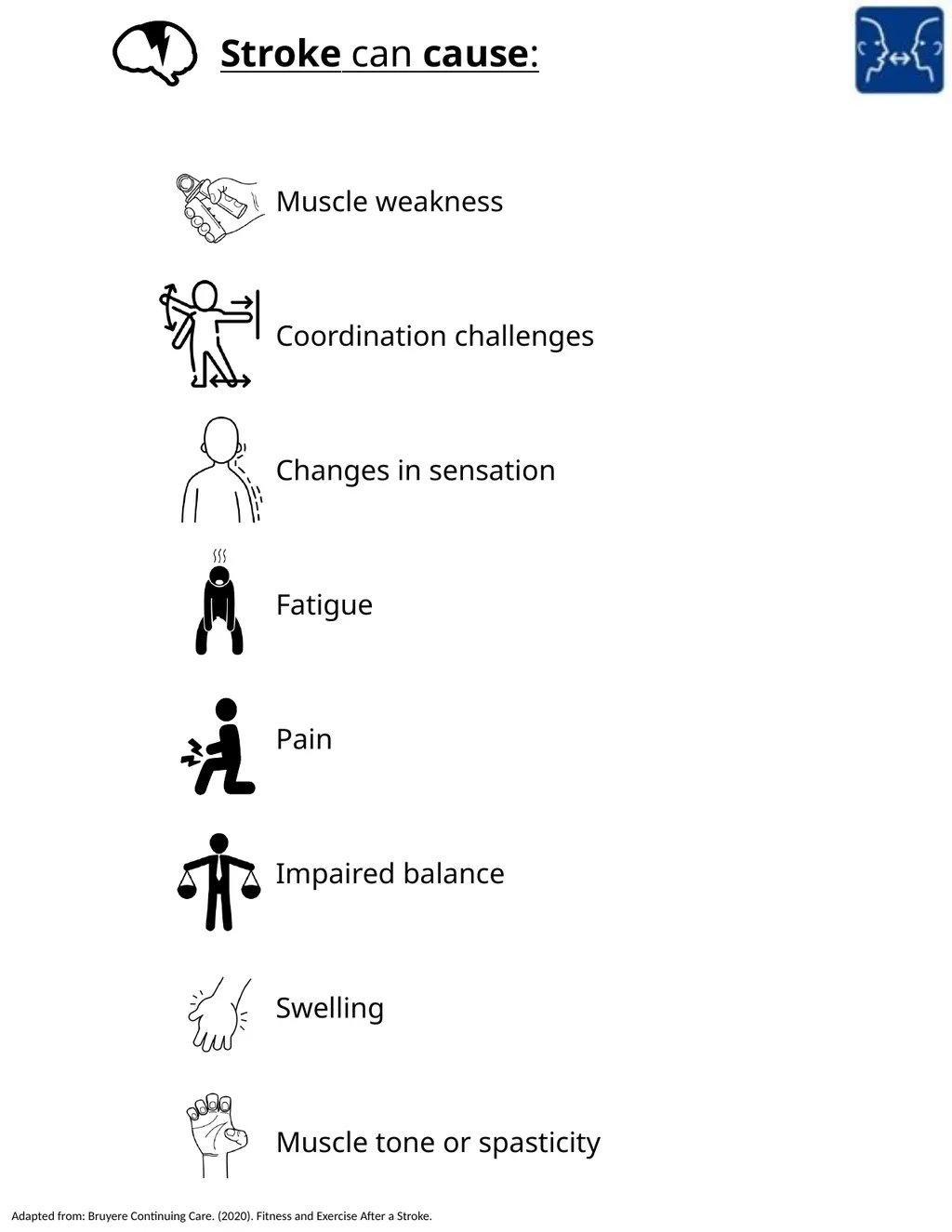
Muscle weakness
Coordination challenges
Changes in sensation
Fatigue
Pain
Impaired balance
Swelling
Muscle tone or spasticity Adapted from: Bruyere Continuing Care. (2020). Fitness and Exercise After a Stroke. Stroke can cause:<br>
04
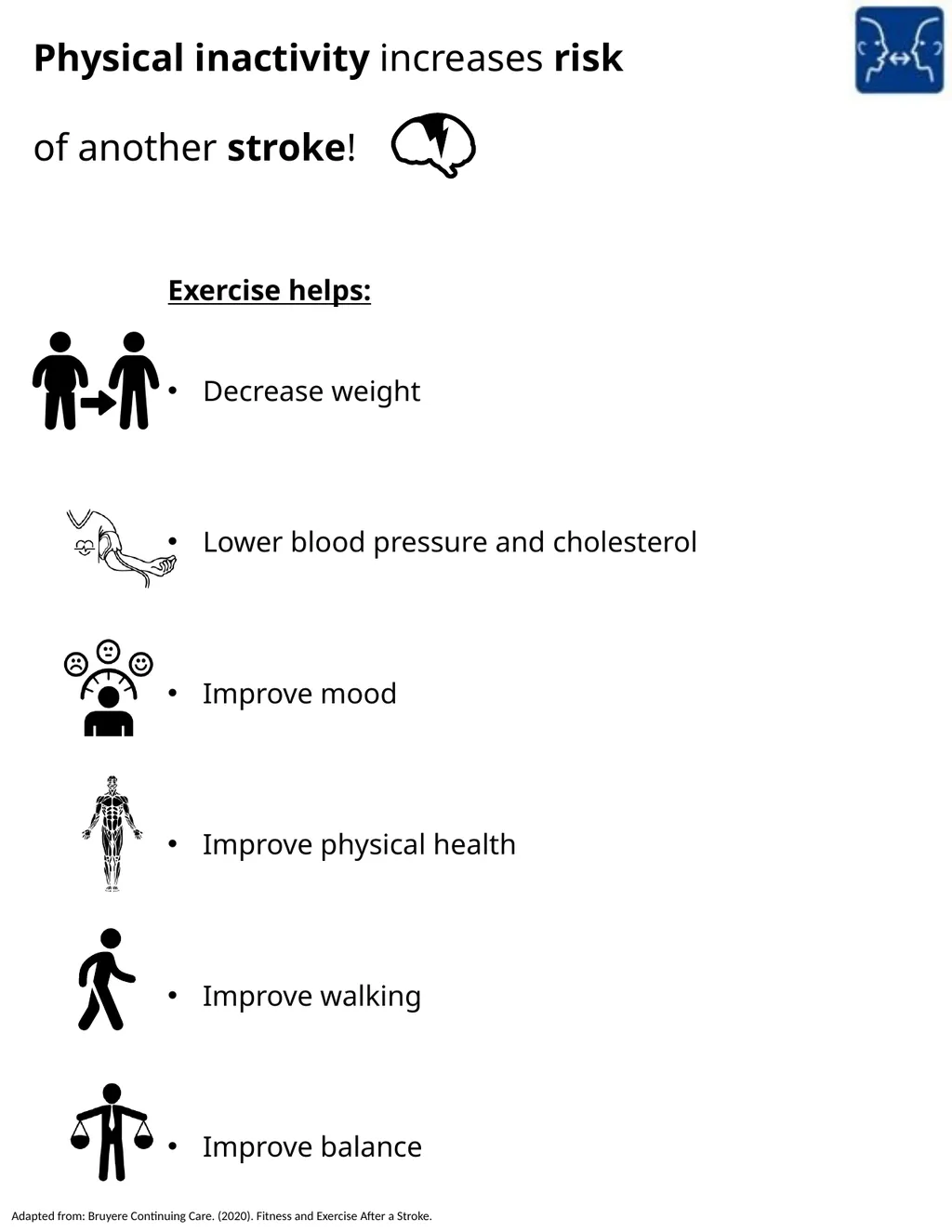
Exercise helps:
Decrease weight
Lower blood pressure and cholesterol
Improve mood
Improve physical health
Improve walking
Improve balance Adapted from: Bruyere Continuing Care. (2020). Fitness and Exercise After a Stroke. Physical inactivity increases risk
of another stroke!<br>
05
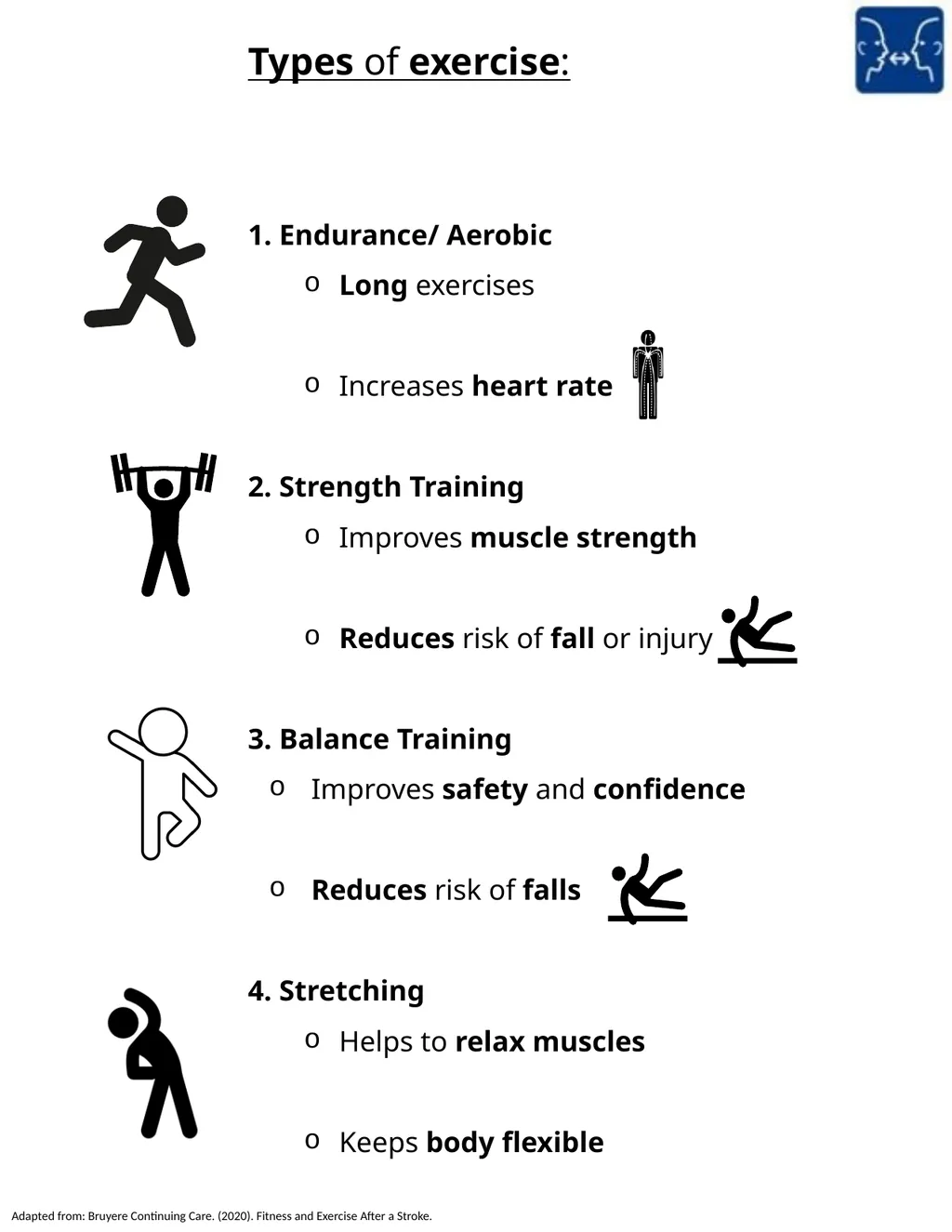
Types of exercise:
1. Endurance/ Aerobic
Long exercises
Increases heart rate
2. Strength Training
Improves muscle strength
Reduces risk of fall or injury
3. Balance Training
Improves safety and confidence
Reduces risk of falls
4. Stretching
Helps to relax muscles
Keeps body flexible Adapted from: Bruyere Continuing Care. (2020). Fitness and Exercise After a Stroke.<br>
06
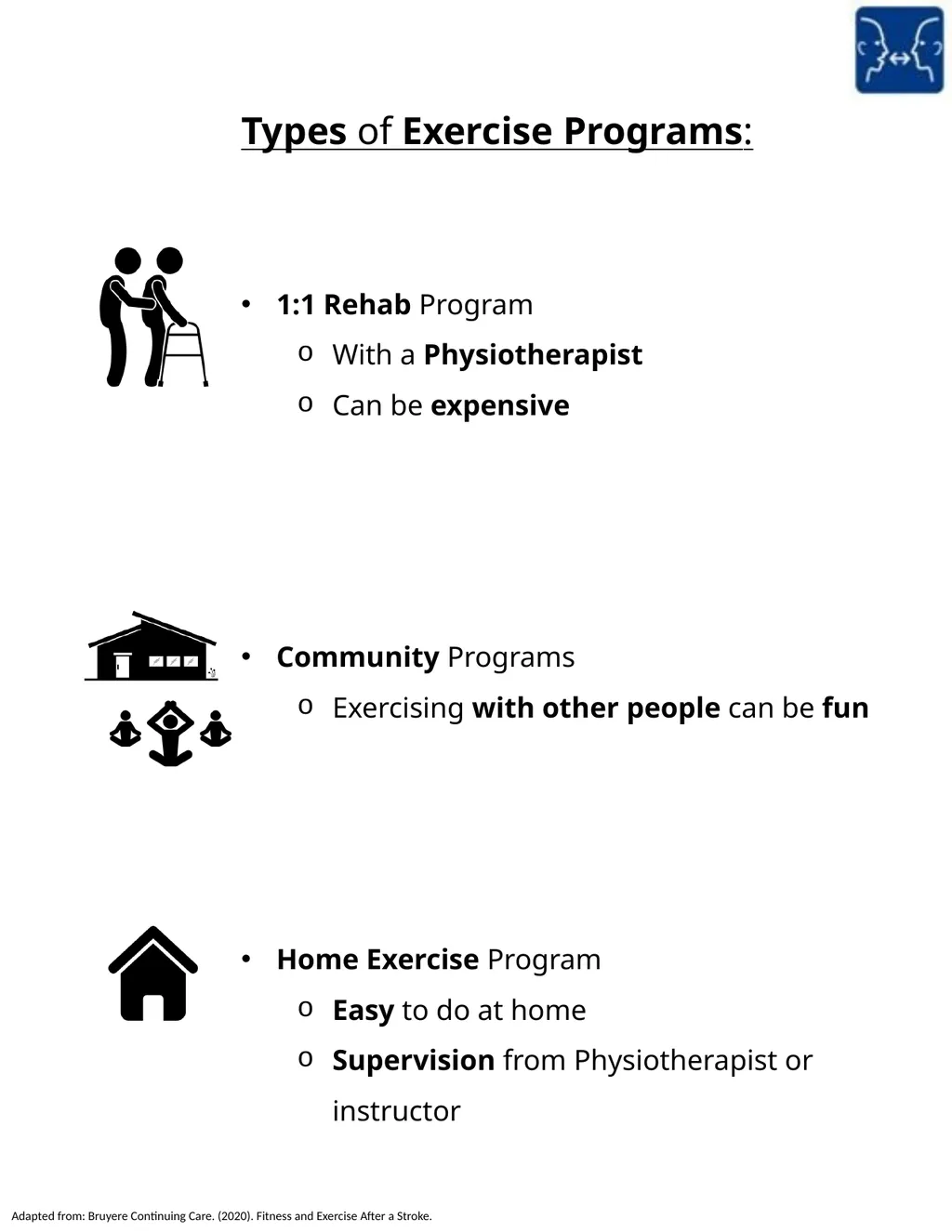
Types of Exercise Programs:
1:1 Rehab Program
With a Physiotherapist
Can be expensive
Community Programs
Exercising with other people can be fun
Home Exercise Program
Easy to do at home
Supervision from Physiotherapist or instructor Adapted from: Bruyere Continuing Care. (2020). Fitness and Exercise After a Stroke.<br>
07
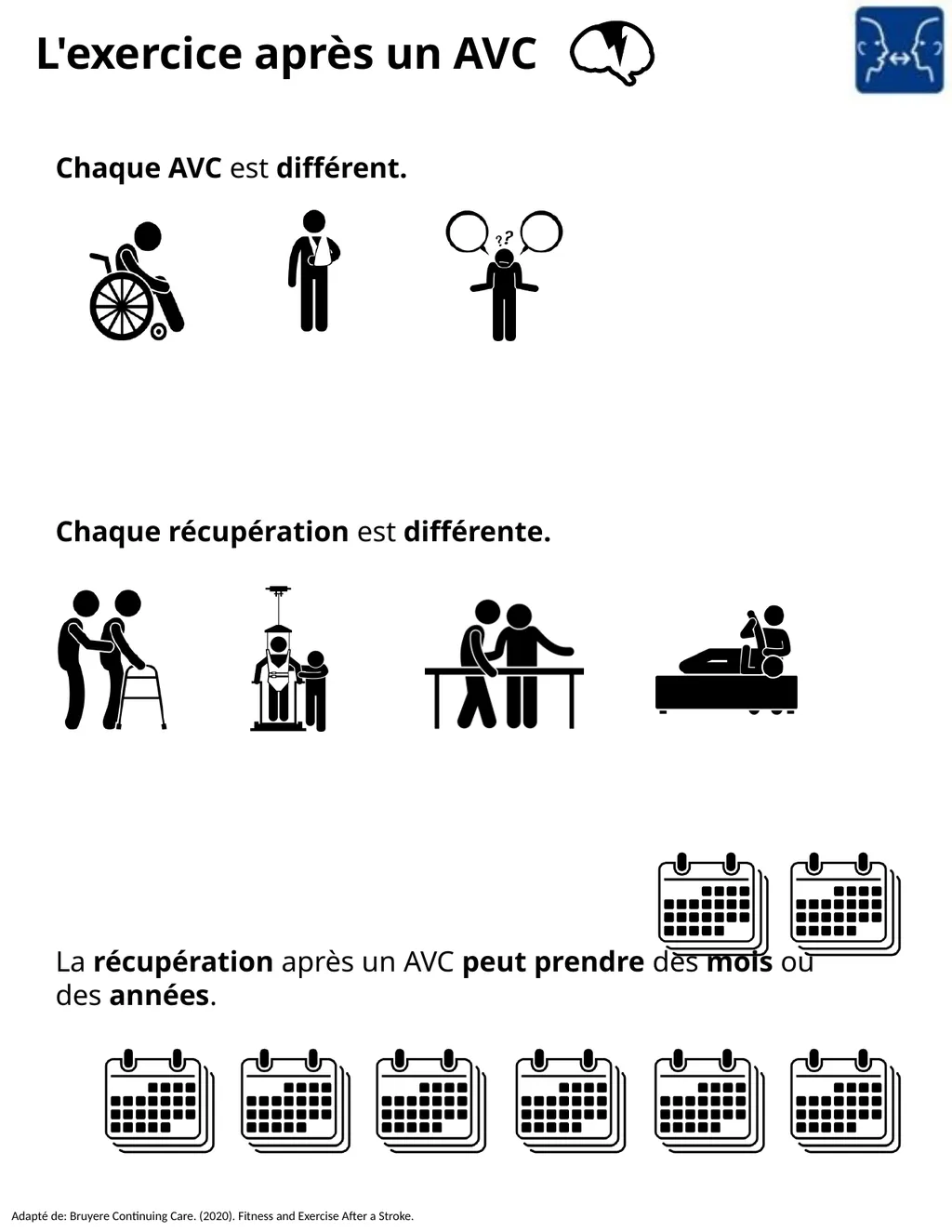
L'exercice après un AVC Chaque AVC est différent.
Chaque récupération est différente.
La récupération après un AVC peut prendre des mois ou des années. Adapté de: Bruyere Continuing Care. (2020). Fitness and Exercise After a Stroke.<br>
08
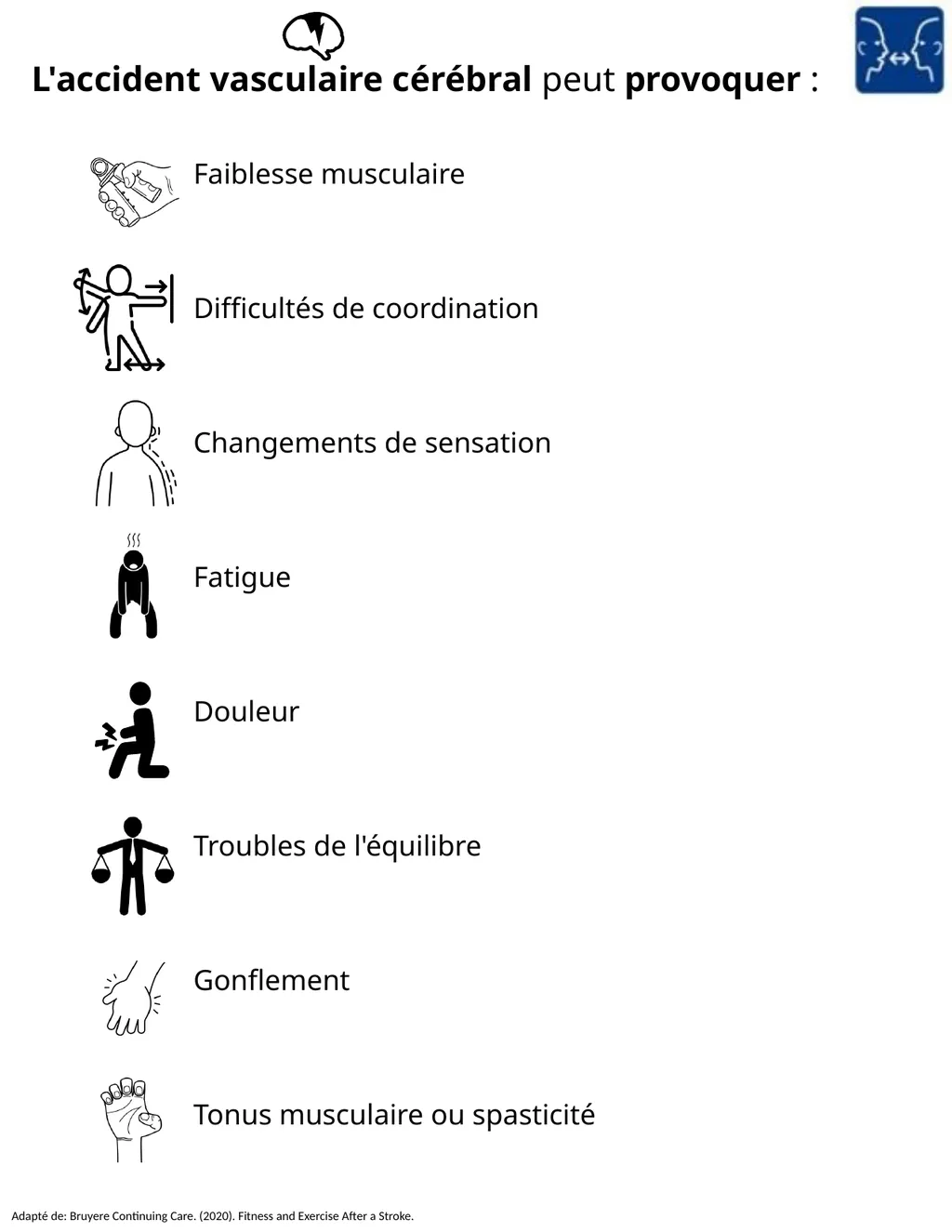
Faiblesse musculaire
Difficultés de coordination
Changements de sensation
Fatigue
Douleur
Troubles de l'équilibre
Gonflement
Tonus musculaire ou spasticité Adapté de: Bruyere Continuing Care. (2020). Fitness and Exercise After a Stroke. L'accident vasculaire cérébral peut provoquer :<br>
09
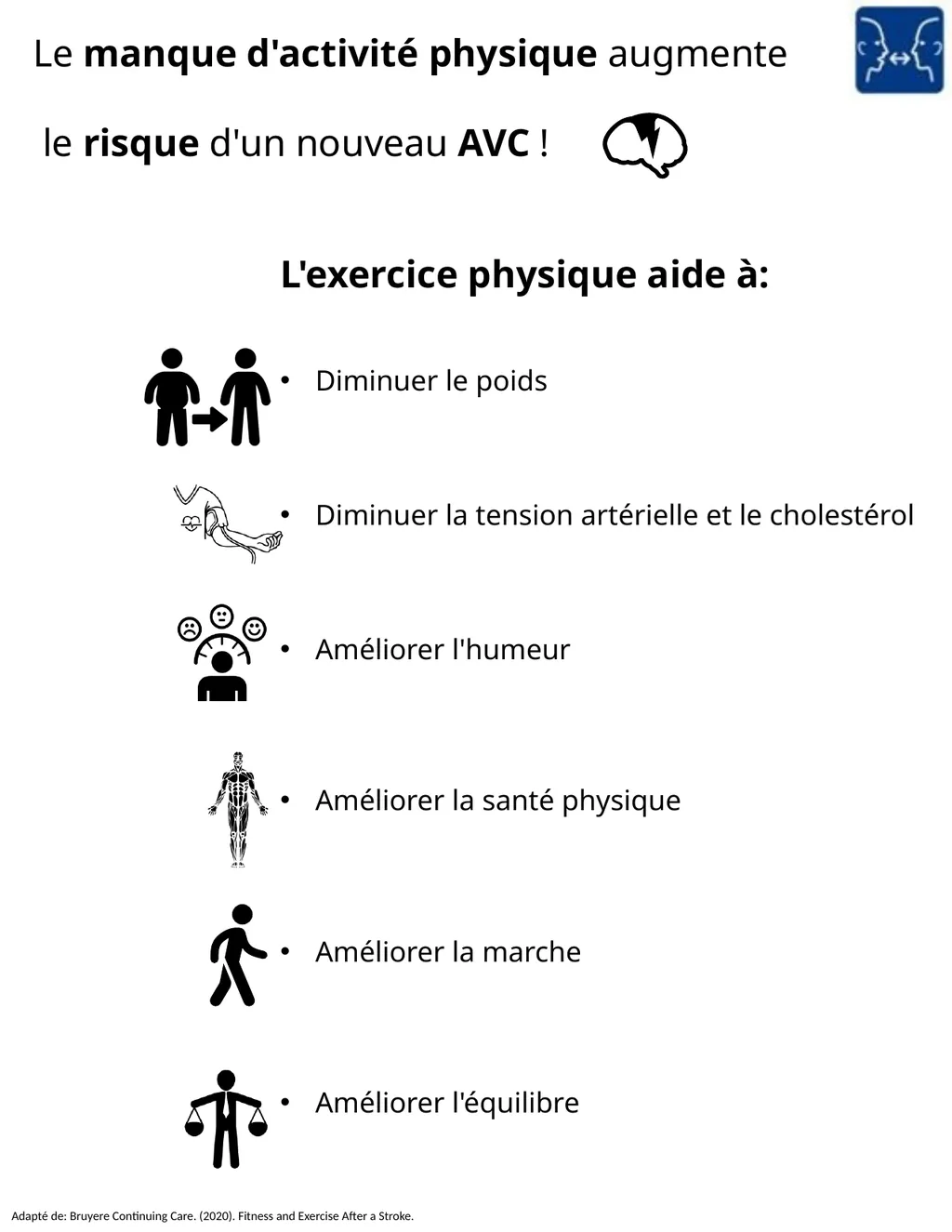
Adapté de: Bruyere Continuing Care. (2020). Fitness and Exercise After a Stroke. Le manque d'activité physique augmente
le risque d'un nouveau AVC ! L'exercice physique aide à:
Diminuer le poids
Diminuer la tension artérielle et le cholestérol
Améliorer l'humeur
Améliorer la santé physique
Améliorer la marche
Améliorer l'équilibre<br>
10
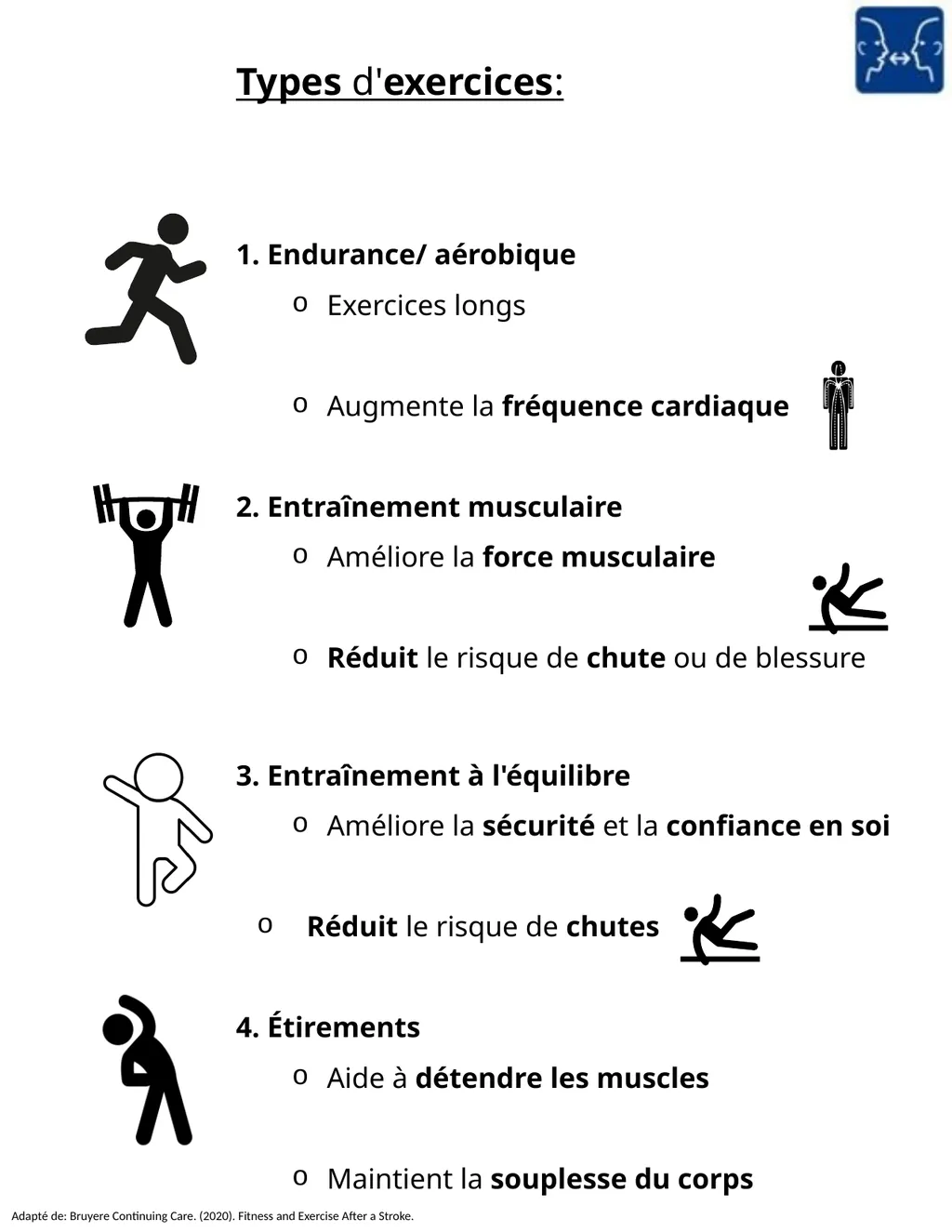
Types d'exercices:
1. Endurance/ aérobique
Exercices longs
Augmente la fréquence cardiaque
2. Entraînement musculaire
Améliore la force musculaire
Réduit le risque de chute ou de blessure
3. Entraînement à l'équilibre
Améliore la sécurité et la confiance en soi
Réduit le risque de chutes
4. Étirements
Aide à détendre les muscles
Maintient la souplesse du corps Adapté de: Bruyere Continuing Care. (2020). Fitness and Exercise After a Stroke.<br>
11
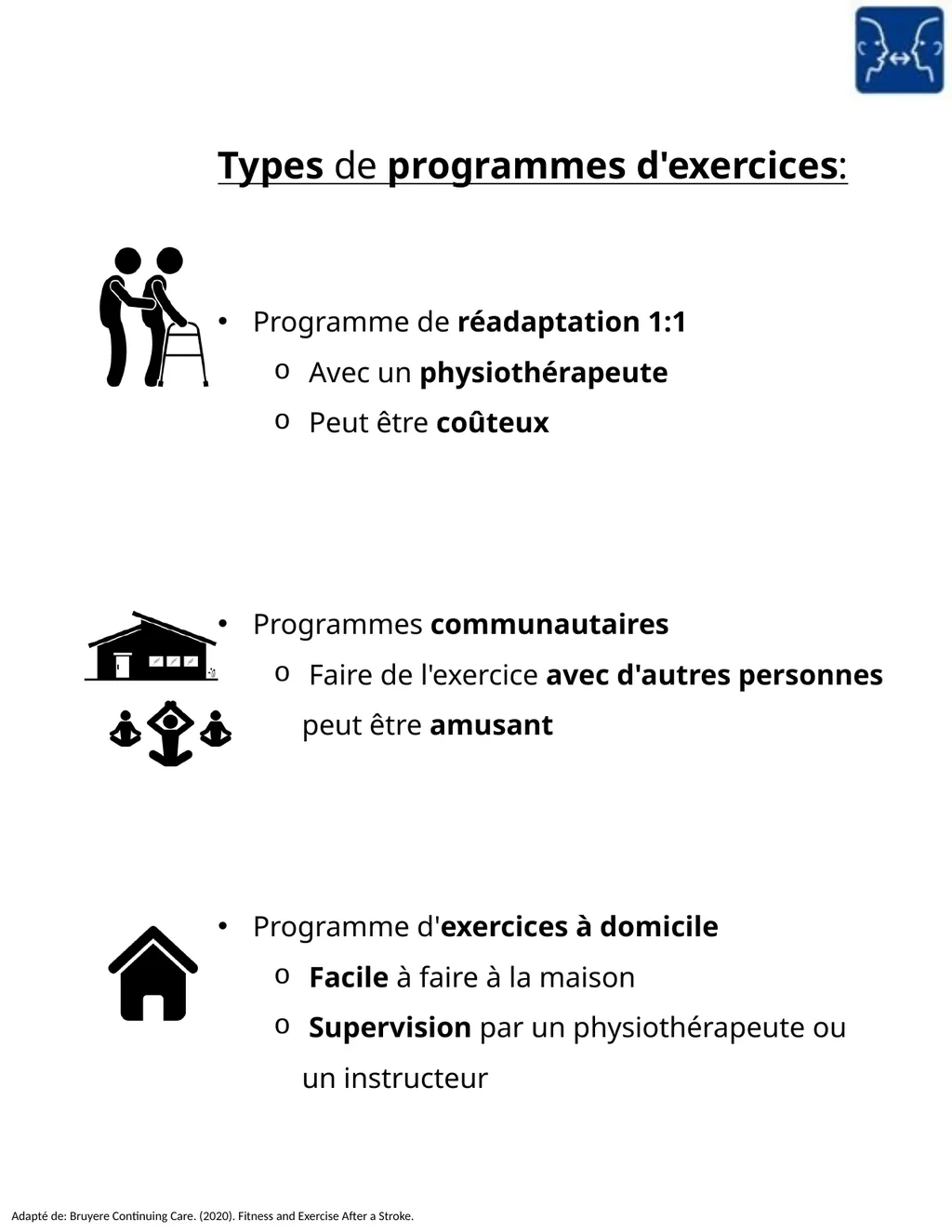
Types de programmes d'exercices:
Programme de réadaptation 1:1
Avec un physiothérapeute
Peut être coûteux
Programmes communautaires
Faire de l'exercice avec d'autres personnes
peut être amusant
Programme d'exercices à domicile
Facile à faire à la maison
Supervision par un physiothérapeute ou
un instructeur Adapté de: Bruyere Continuing Care. (2020). Fitness and Exercise After a Stroke.<br>