Rammed Earth Construction in Ghana Leveraging Local Materials for Modern Architecture, Affordable Housing Smart Infrastructure Focus Area: Smart Infrastructure Development Presented by: Emmanuel Owusu-Siaw, PMP PMI ID: 10832650
"Rammed Earth Construction in Ghana Leveraging" is the property of its rightful owner. Permission is granted to
download and print the materials on this website for personal, non-commercial use only, and to display it
on your personal computer provided you do not modify the materials and that you retain all copyright
notices contained in the materials. By downloading content from our website, you accept the terms of this
agreement.
Presentation Transcript
01
Rammed Earth Construction in Ghana Leveraging Local Materials for Modern Architecture, Affordable Housing & Smart Infrastructure
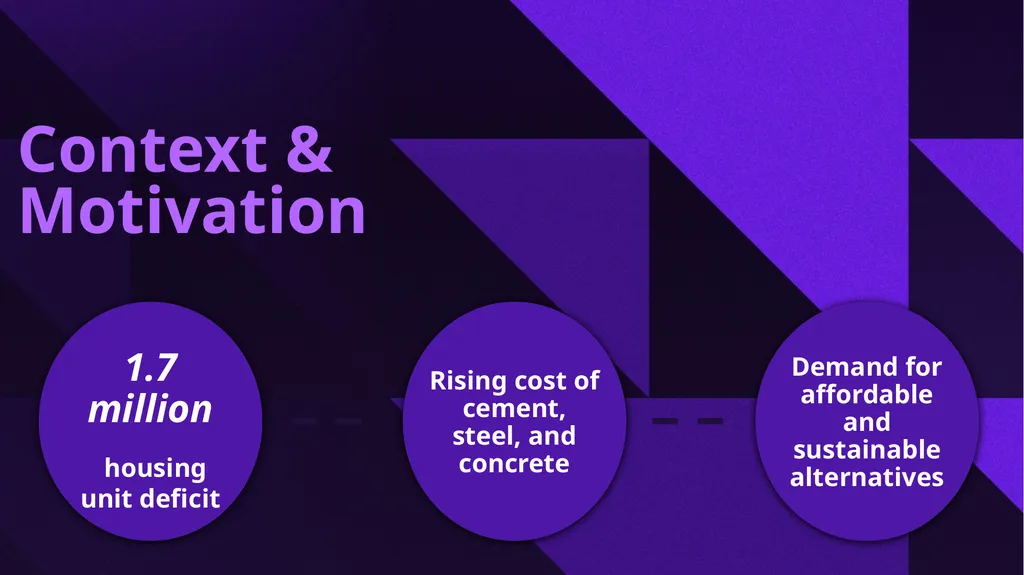
Ghana faces a significant housing crisis with an estimated deficit of 1.7 million homes as of recent years, a figure that continues to grow due to rapid urbanisation and population growth.
This paper focuses on:
Material availability, construction techniques, economic benefits and challenges.
Proposes a framework for widespread adoption and how project management methodologies can enhance implementation. Introduction<br>
04
What is Rammed Earth Construction? Uses compacted clay and laterite, sand, gravel, and stabilizers. Stabilizers such as lime or cement.
Ancient method with modern relevance.
Durable, low-carbon, thermally efficient.<br>
05
Ghana’s rammed earth technology dates back thousands of years with evidence of its use in ancient civilisations across Africa, Asia and Europe. In modern contexts, rammed earth has gained traction for its sustainability. It relies on locally sourced materials, reducing embodied energy and transportation costs and produces minimal waste. Its thermal properties also help regulate indoor temperatures.
However, challenges such as durability in high rainfall areas and limited awareness of the technique have hindered mainstream adoption in Ghana. Background of Rammed Earth Technology<br>
06
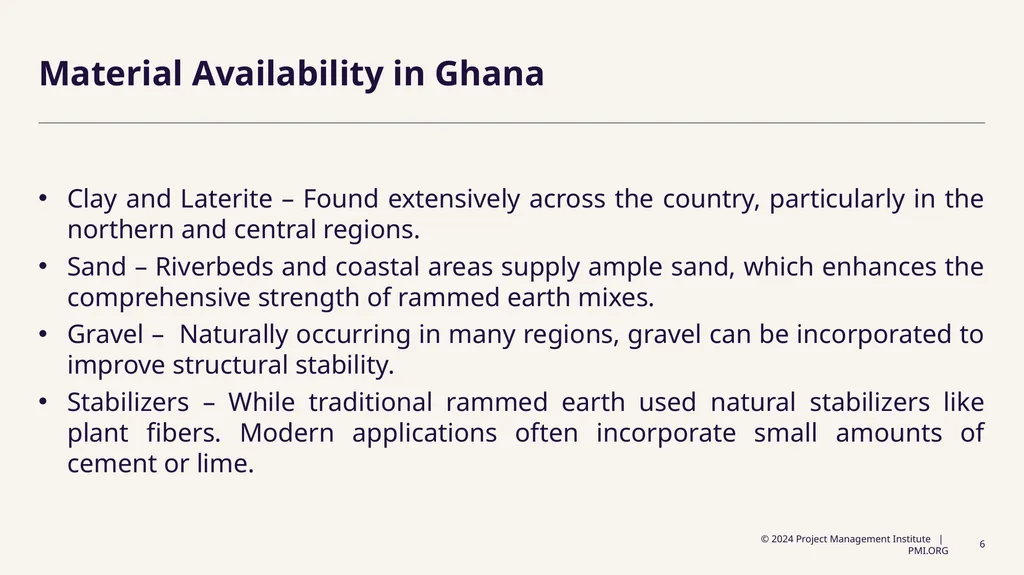
Material Availability in Ghana Clay and Laterite – Found extensively across the country, particularly in the northern and central regions.
Sand – Riverbeds and coastal areas supply ample sand, which enhances the comprehensive strength of rammed earth mixes.
Gravel – Naturally occurring in many regions, gravel can be incorporated to improve structural stability.
Stabilizers – While traditional rammed earth used natural stabilizers like plant fibers. Modern applications often incorporate small amounts of cement or lime.<br>
07
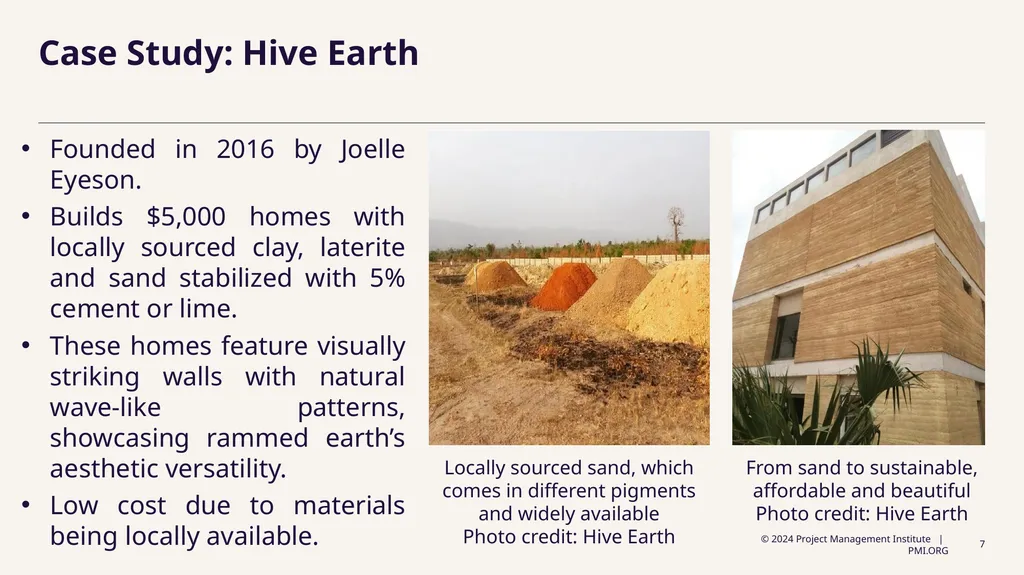
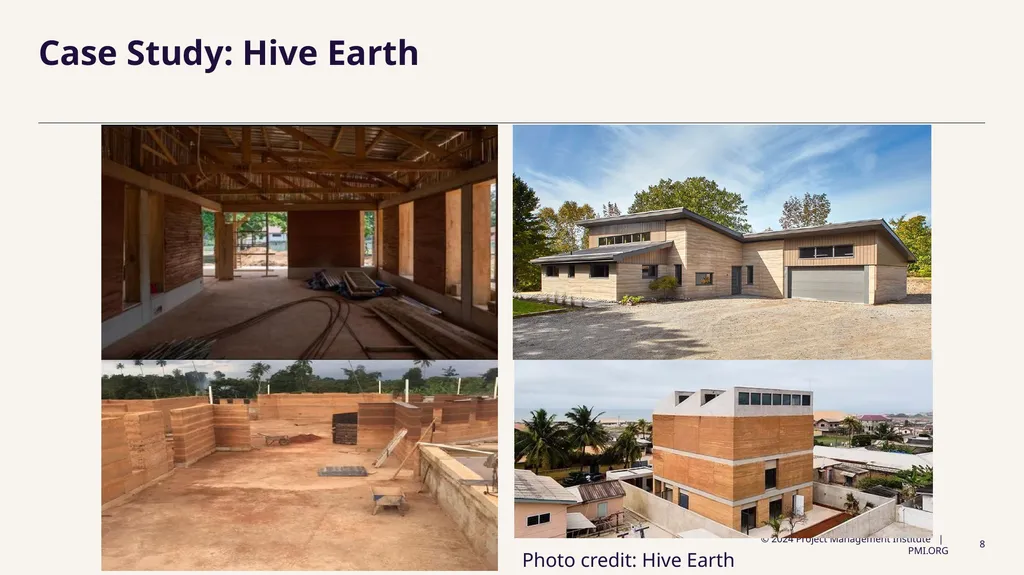
Case Study: Hive Earth Founded in 2016 by Joelle Eyeson.
Builds $5,000 homes with locally sourced clay, laterite and sand stabilized with 5% cement or lime.
These homes feature visually striking walls with natural wave-like patterns, showcasing rammed earth’s aesthetic versatility.
Low cost due to materials being locally available. Locally sourced sand, which comes in different pigments and widely available
Photo credit: Hive Earth From sand to sustainable, affordable and beautiful
Photo credit: Hive Earth<br>
08
Photo credit: Hive Earth Case Study: Hive Earth<br>
09
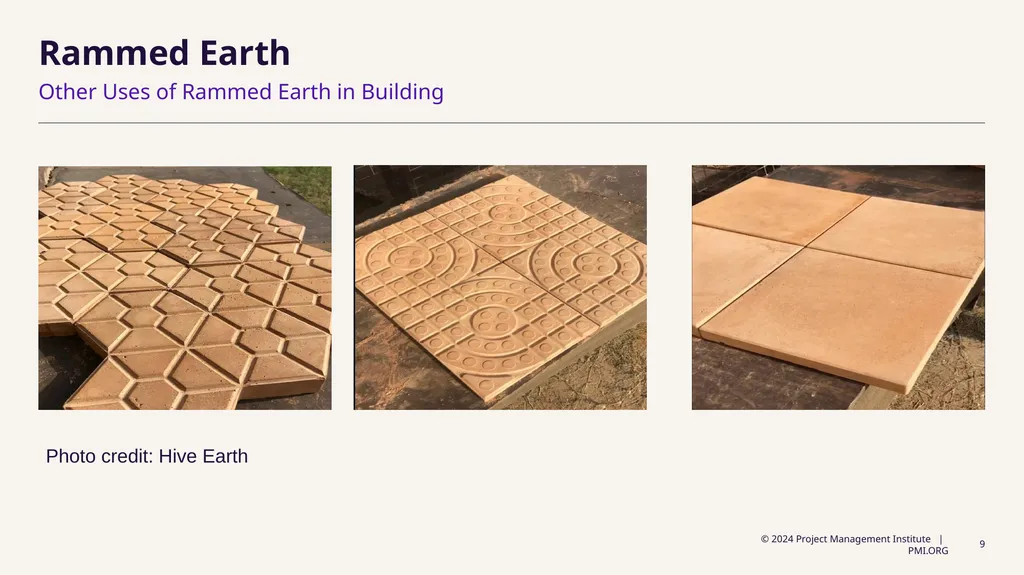
Rammed Earth Other Uses of Rammed Earth in Building Photo credit: Hive Earth<br>
10
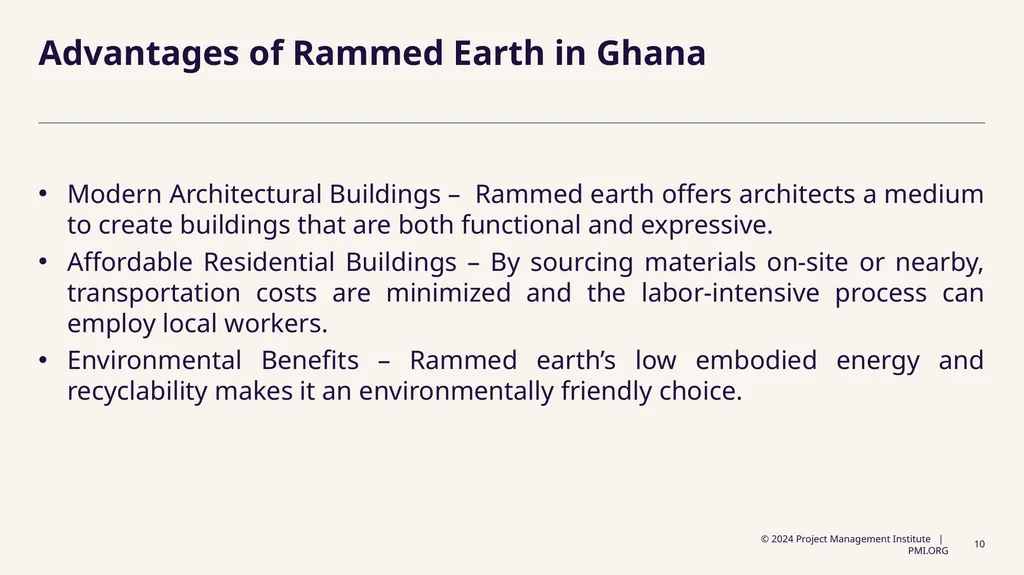
Modern Architectural Buildings – Rammed earth offers architects a medium to create buildings that are both functional and expressive.
Affordable Residential Buildings – By sourcing materials on-site or nearby, transportation costs are minimized and the labor-intensive process can employ local workers.
Environmental Benefits – Rammed earth’s low embodied energy and recyclability makes it an environmentally friendly choice. Advantages of Rammed Earth in Ghana<br>
11
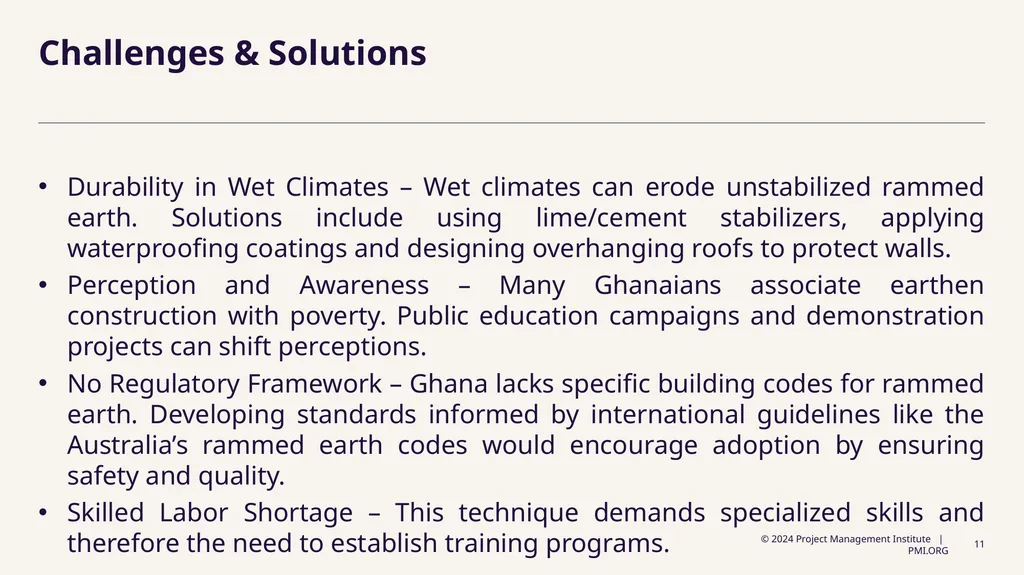
Durability in Wet Climates – Wet climates can erode unstabilized rammed earth. Solutions include using lime/cement stabilizers, applying waterproofing coatings and designing overhanging roofs to protect walls.
Perception and Awareness – Many Ghanaians associate earthen construction with poverty. Public education campaigns and demonstration projects can shift perceptions.
No Regulatory Framework – Ghana lacks specific building codes for rammed earth. Developing standards informed by international guidelines like the Australia’s rammed earth codes would encourage adoption by ensuring safety and quality.
Skilled Labor Shortage – This technique demands specialized skills and therefore the need to establish training programs. Challenges & Solutions<br>
12
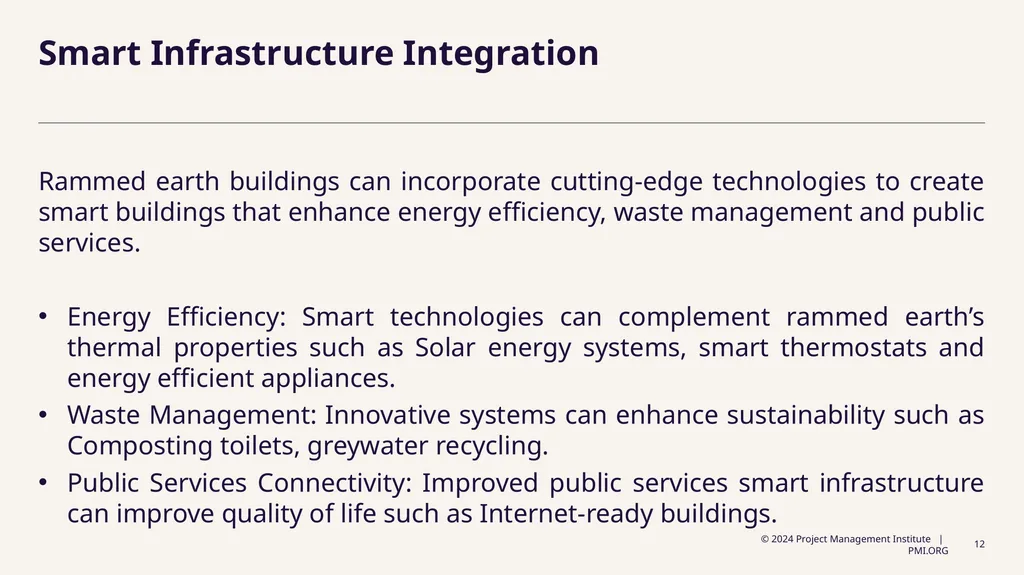
Rammed earth buildings can incorporate cutting-edge technologies to create smart buildings that enhance energy efficiency, waste management and public services.
Energy Efficiency: Smart technologies can complement rammed earth’s thermal properties such as Solar energy systems, smart thermostats and energy efficient appliances.
Waste Management: Innovative systems can enhance sustainability such as Composting toilets, greywater recycling.
Public Services Connectivity: Improved public services smart infrastructure can improve quality of life such as Internet-ready buildings. Smart Infrastructure Integration<br>
13
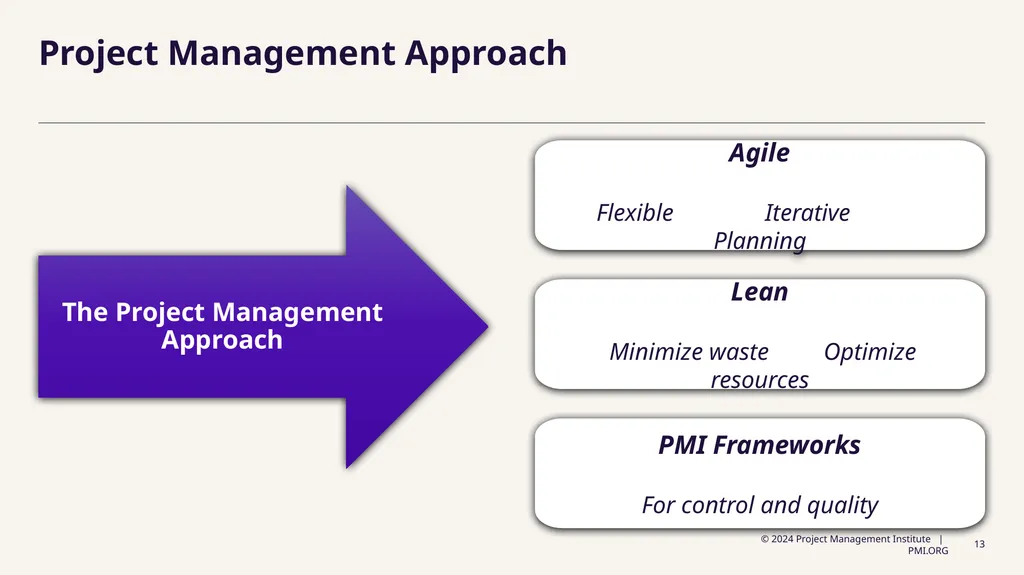
Project Management Approach<br>
14
To maximize rammed earth’s impact in Ghana, the following strategies are proposed:
Material Testing and Optimization – Conduct regional soil analyses to determine optimal mixes, ensuring structural integrity and weather resistance.
Training Programs – Establish workshops, such as those planned by Hive Earth, to train architects and builders in rammed earth technologies.
Urban and Rural Pilot Projects – Build model homes and public structures in urban and rural areas to demonstrate feasibility and attract investment. Implementation Strategies<br>
15
Policy and Incentive Alignment – Advocate for government incentives, such as subsidies for sustainable construction and integrate rammed earth into national housing policies.
Architectural Innovation – Encourage collaborations between local architects and international experts to design modern rammed earth buildings that resonate with Ghanaian culture. Implementation Strategies<br>
16
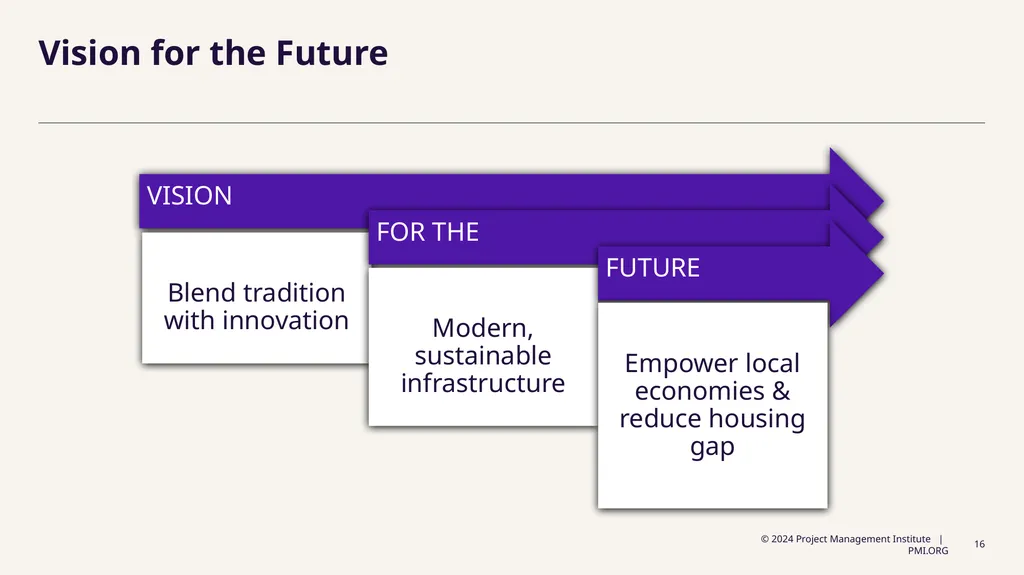
Vision for the Future<br>
17
Thank You / Q&A Let’s build Ghana’s future with earth – sustainably, affordably, beautifully.
owususiaw1993@gmail.com<br>