Research integrity a healthy research culture James Parry Chief Executive, UK Research Integrity Office What is research integrity? Research integrity is another term for good research practice. It is about: Ensuring research is high
"Research integrity & a healthy research culture" is the property of its rightful owner. Permission is granted to
download and print the materials on this website for personal, non-commercial use only, and to display it
on your personal computer provided you do not modify the materials and that you retain all copyright
notices contained in the materials. By downloading content from our website, you accept the terms of this
agreement.
Presentation Transcript
01
Research integrity & a healthy research culture James Parry
Chief Executive, UK Research Integrity Office<br>
02
What is research integrity? ‘Research integrity’ is another term for good research practice. It is about:
Ensuring research is high quality and of high ethical standards
Trust, reliability, reproducibility, credibility and accountability
Identifying, reflecting on, and overcoming challenges and pressures when conducting research
This is both for individual researchers – ‘what can I do’ – and for the research community – ‘what can we all do?’
Making sure research systems and environments safeguard and enhance good practice– often described as research culture. 1<br>
03
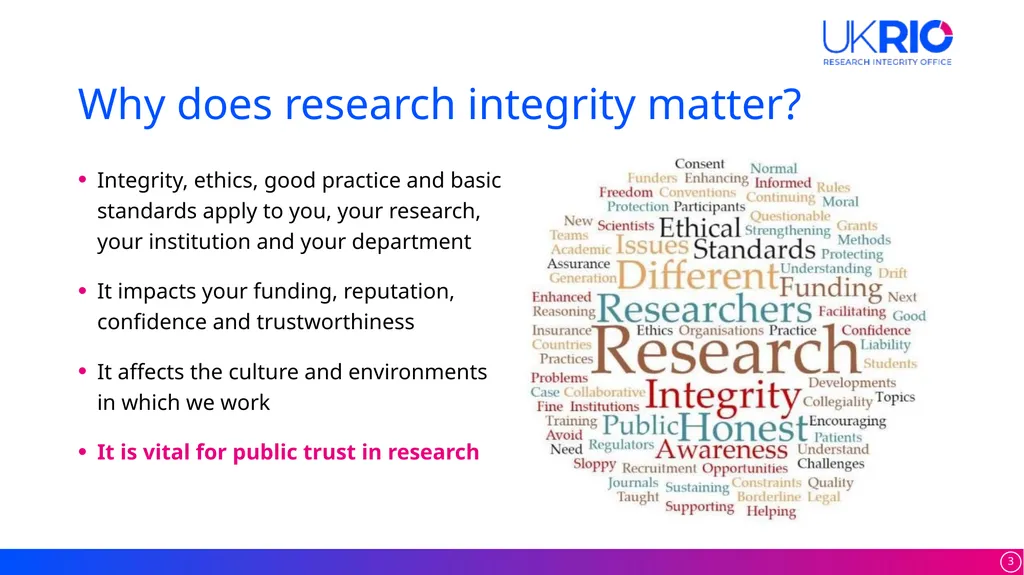
Why does research integrity matter? 2 Integrity, ethics, good practice and basic standards apply to you, your research, your institution and your department
It impacts your funding, reputation, confidence and trustworthiness
It affects the culture and environments in which we work
It is vital for public trust in research<br>
04
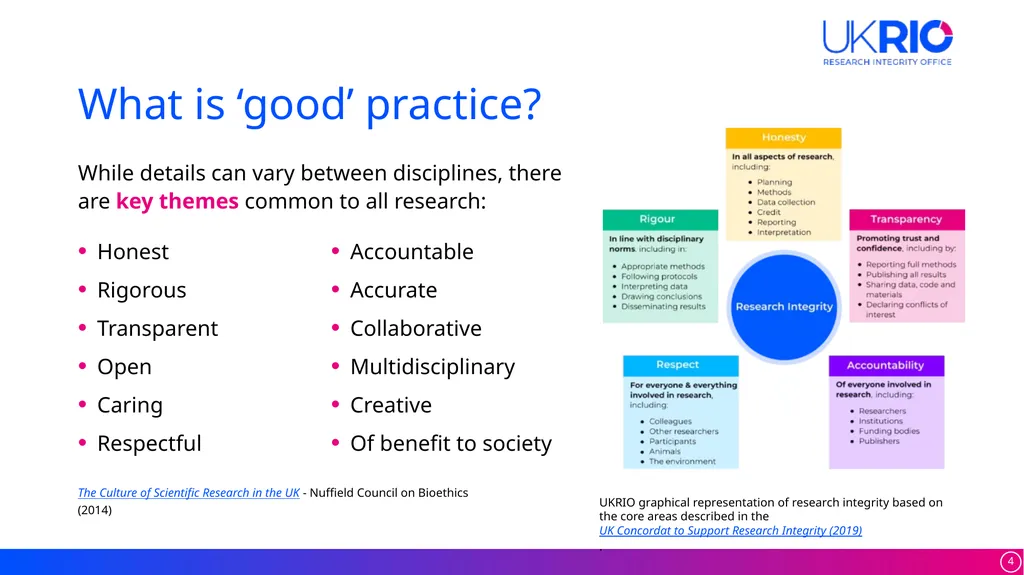
What is ‘good’ practice? UKRIO graphical representation of research integrity based on the core areas described in the UK Concordat to Support Research Integrity (2019)
. 3 Honest
Rigorous
Transparent
Open
Caring
Respectful
Accountable
Accurate
Collaborative
Multidisciplinary
Creative
Of benefit to society While details can vary between disciplines, there are key themes common to all research: The Culture of Scientific Research in the UK - Nuffield Council on Bioethics (2014)<br>
05
What is ‘good’ practice? 4 These key themes of good research practice are an everyday part of being a researcher. They apply to:
All disciplines
All career stages
All elements of your research: from beginning to end
Research integrity is enabling for research, not restrictive, and it is essential to safeguard trust in research
But these fundamental standards can be challenging to put in practice
What are the barriers you face when trying to achieve good research practice? For guidance, see the UKRIO Code of Practice for Research: https://doi.org/10.37672/UKRIO.2023.04.codeofpractice<br>
06
Why does research culture matter? 5 Systemic ignorance and a dismissive attitude towards research integrity contribute to the overall health of a research environment.
When researchers are burdened and under pressure, they may resort to undesirable practices to achieve goals in order to accommodate a ‘publish or perish’ culture. This pressure can come from multiple sources:
How research is funded, monitored, disseminated and assessed
Career structures
Employers
Research group leaders
Unhealthy competition<br>
07
What problems can arise? 6 A research environment that fails to prioritise education & training and leadership & support for researchers can expect ignorance, poor compliance of good practice and key research integrity issues to arise:
Increased rate of avoidable errors and mistakes
Questionable research practices
Research misconduct
Authorship disputes
Ethical concerns
Unhealthy research culture UKRIO has a wealth of resources and guidance on our website: https://ukrio.org/resources/?res_topic=ALL&res_tag=ALL&res_srch=<br>
08
7 UKRIO is a registered charity, supported by over 110 institutions, and has provided its unique, independent and expert support since 2006:
Education – guidance and support through publications, training and our comprehensive events programme
Sharing best practice – clear and honest development for the research community through facilitated discussions about important issues; informing national and international initiatives; improving research culture
Expert guidance – confidential and expert advice and guidance for institutions, individual researchers and the public How we help you<br>